window

Ryanair passengers queue 90 minutes then look out window and are left horrified

A group of 24 passengers watched in disbelief as their plane took off after spending over an hour navigating airport security delays at Tours Airport in France

Ryanair passengers were left stunned when they glanced out the window after enduring 90 minutes queuing through security. A group of 24 travellers watched in complete disbelief as the aircraft they were supposed to be boarding departed without them whilst they remained stranded in the terminal.

The service, departing from Tours Airport in France, was scheduled to fly to Marrakech in Morocco at 12.15pm on Wednesday, 11 March. With just 15 minutes remaining before departure, the pilot took the decision to shut the doors and proceed as planned, leaving a quarter of his passengers behind.

According to Ici, the pilot instructed that the passengers’ luggage be offloaded from the aircraft in order to keep to his timetable. And whilst he acknowledges the carrier is perfectly entitled to take such action, French holidaymaker Maxime says he was left absolutely astonished when he discovered what had occurred.

The 37-yea-old maintains he turned up at the airport nearly two hours ahead of his scheduled take-off time. He said: “It’s a completely crazy situation.

“Going through customs and security took ages. We spent over an hour and a half there. At one point, we realised the pilot had decided to take off without us, knowing that our suitcases were already on the Ryanair plane.”

Maxime claims his baggage stayed on the tarmac as the aircraft departed at 12.57pm, 42 minutes beyond its scheduled take-off. He branded it a “completely absurd situation”.

Louis Chaumont, director of Tours Airport, described the circumstances as “regrettable”. He clarified that pilots are permitted to depart during their allocated take-off slot to prevent having to wait for another to become available.

He indicated this was one of three key factors that resulted in the passengers missing their flight. He stated: “The first was an unannounced inspection by the gendarmerie brigade across the entire airport. The second is the introduction of a new measure, the ESS (Entry/Exit System).

“This is a measure introduced by the EU which requires customs checks on all passengers entering and leaving the Schengen area, so passengers travelling to Marrakech are affected.

“Previously, the screening rate was 10%, and it takes time to implement this measure, which takes three to four minutes per passenger. Added to this is the third factor: the pilot of this flight had a designated take-off slot. If he doesn’t comply, he has no idea when he’ll be able to get another one to fly. So he’s perfectly within his rights to close the doors of his plane and take his slot.”

Whilst the director stopped short of promising full refunds for passengers, he confirmed compensation claims will be evaluated individually. He indicated the airport “will investigate what happened and determine who is responsible.”

In a statement to French media outlets, Ryanair maintained its policy is to guarantee a “punctual departure”. The airline asserted the delays within the airport were “entirely beyond our control”.

A spokesman informed ICI: “Had these passengers arrived on time, they would have boarded this Tours–Marrakech flight alongside the 155 other passengers who arrived at the gate on time. We regret that these delays, caused by security checks at Tours Val de Loire Airport-which are entirely beyond our control-resulted in some passengers missing this flight.”

Source link

Contributor: The window to declare success in Iran is closing

If you’re looking for the most elegant way to wrap up our “little excursion” in Iran, it’s this: President Trump should follow what might politely be called the “declare victory and head for the airport” strategy.

You know the drill: Announce that we’ve set back Iran’s nuclear programs a decade, pounded their navy into submission, and turned the ayatollah into a fine mist. Mission accomplished! Thank you for flying the friendly skies, and please return your seat backs to their full upright and locked position.

Don’t get me wrong. This “cut and run” routine is less than ideal. Trump will have signaled to the world he (we) can’t endure any insurgent resistance, empowered the Islamic Revolutionary Guard Corps to run the country and likely angered Israel in the process.

But his domestic political base will believe he won, and fan service has always been his top political priority.

Besides, once you’ve entered a war without a coherent justification, clearly defined goals or a credible exit strategy, you’re lucky to get out at all. A salutary outcome no longer exists; that ship has already sailed.

Speaking of which, as I write this, we are drifting toward what feels like a point of no return. Mining the Strait of Hormuz, which Iran is now attempting to do, is the ultimate trump card.

Using mines to shut down this narrow shipping lane — which contributes about 20% of the world’s oil supply, not to mention natural gas and fertilizer — could result in a crippled global economy, mass casualties and a situation in which the president can no longer save face while cutting and running.

As retired U.S. Navy Adm. James Stavridis writes, “Iran has been planning a Strait of Hormuz closure operation for decades and probably has more than 5,000 mines; just one hit can severely damage a thin-skinned tanker.”

Yes, once laid, minefields can be cleared. But Stavridis predicts it would take “weeks, if not a month or two” to clear thousands of mines. He warns: “The global economy needs to be prepared for a month or two shutdown.” (Complicating matters is the fact that our dedicated minesweepers were recently decommissioned.)

The Iranians are not idiots. They watch American politics. They understand that Trump’s pressure point isn’t Tehran — it’s the S&P 500. A bad week on Wall Street makes him jumpier than a long-tailed cat in a room full of rocking chairs.

Trump, whatever else you say about him, is a transactional materialist who approaches geopolitics the way a real estate developer approaches zoning disputes: What’s the angle, where’s the leverage, and can everybody just settle already?

Unfortunately, the fellows running Iran are religious zealots who believe — deeply, sincerely and somewhat alarmingly — in something larger than quarterly economic indicators. Their strategic plan appears to consist of two options: survive (which they see as tantamount to victory), or die gloriously while insisting they meant to do that all along.

Which makes their current behavior grimly logical.

The Iranian regime, such as it is, doesn’t have much to lose. But they know exactly what Trump has to lose: His popularity and political legacy are now tied to the price of oil.

Releasing U.S. strategic oil reserves will help to some extent, but this is not a long-term solution. And Iran is betting that when the price at the pump for U.S. consumers starts looking like a luxury car payment, Trump will do what critics like to summarize as TACO — “Trump Always Chickens Out.”

Lots of American political observers agree. And it’s not just moderates or RINOs who are teasing this.

Referring to the U.S. military, former Speaker of the House Newt Gingrich told Larry Kudlow on Fox Business: “They have to keep the Strait of Hormuz open. I don’t care what it costs.”

“If they can’t keep it open,” Gingrich continued, “this war will, in fact, be an American defeat before very long, because the entire world, including the American people, will react to the price of oil if the strait stays closed very long.”

Perhaps the U.S. military can pull off a delicate trick: keep our “armada” in the region, keep the Strait of Hormuz open, clear any mines that are laid and prevent some unlucky tanker from being hit by a mine — or, for that matter, by a drone or missile fired from the Iranian coast. That final risk is why some military analysts believe reopening the strait would require a ground operation.

Imagine that the U.S. manages to thread these needles. Then what?

Total and complete surrender? Regime change? Boots on the ground?

Absent a swift exit (like, tomorrow), we’re left with the two classic options of power politics: a delayed and more ignominious retreat or increased escalation.

And, historically speaking, American presidents are more likely to double down — with tragic results.

Matt K. Lewis is the author of “Filthy Rich Politicians” and “Too Dumb to Fail.”

Source link

Universal to keep its movies in theaters for at least five weekends

Universal Pictures will now keep its new films in theaters for at least five weekends, a reversal from the studio’s previous policy of at least 17 days that was set during the pandemic.

The change takes place immediately, the studio said Thursday. That means it will apply to its newest film, the Colleen Hoover romance “Reminders of Him,” which is out in theaters this weekend. Other upcoming films include Christopher Nolan’s “The Odyssey,” which will be released in July.

“Our windowing strategy has always been designed to evolve with the marketplace, but we firmly believe in the primacy of theatrical exclusivity and working closely with our exhibition partners to support a healthy, sustainable theatrical ecosystem,” Donna Langley, chair of NBCUniversal Entertainment, said in an email to the New York Times, which first reported the news.

Focus Features, Universal Pictures’ specialty film arm, will keep its existing theatrical exclusivity policies, which vary on a case-by-case basis. Chloé Zhao’s “Hamnet,” for instance, was in theaters for 99 days, while 2024’s “Nosferatu” played for 58 days. The minimum is 17 days.

The amount of time films are available exclusively in theaters — known as “windowing” in industry jargon — has become a contentious topic of conversation in Hollywood.

That debate ramped up during the pandemic, when some studios shortened theatrical exclusivity periods in order to move films to release for video on demand or streaming.

Prior to the pandemic, those windows could be as long as 90 days. Now, the average is around 30 days.

Theater owners have argued that shorter windows cut into box office profits and train audiences to wait to watch a movie at home. Distributors have countered that a one-size-fits-all approach doesn’t necessarily work for smaller or mid-budget films, which may find a bigger audience via at-home viewing.

At last year’s CinemaCon trade conference, top theater lobbyist Michael O’Leary called on distributors to establish a minimum 45-day window, arguing there needed to be a “clear, consistent starting point” to set moviegoers’ expectations and affirm commitment to theatrical exclusivity.

The debate has become even more fierce as box office profits still have not recovered from the pandemic. Last year, theatrical revenue in the U.S. and Canada totaled about $8.87 billion, just 1.5% above 2024’s disappointing $8.74-billion tally.

Source link

Prep talk: ECR’s Jackson Sellz learns lesson on where to park car

There was some excitement this week at El Camino Real High during batting practice.

JJ Saffie, the best power hitter on the baseball team, hit a ball down the line and over the left-field fence. When a teammate went to retrieve the ball, he discovered that the rear windshield of a car driven by pitcher Jackson Sellz was shattered. He took a photo and showed it to Sellz, who worried what his parents would say.

“We had a good laugh,” father Stu Sellz said.

It turns out the Sellz family has been on the opposite side of breaking windows by hitting home runs since the 1990s. Stu and brothers Scott and Brandon played at Chatsworth. Scott was the family’s best window breaker. Stu’s other son, Braden, also has broken windows.

Now Jackson and the insurance company are paying for him parking too close to the foul pole off Burbank Boulevard.

“This is the baseball god getting back at us,” Stu said.

Jackson usually parks closer to center field, but his preferred parking spot was taken before school began in the morning.

What lesson was learned?

“He now knows to get to school earlier,” Stu said.

This is a daily look at the positive happenings in high school sports. To submit any news, please email eric.sondheimer@latimes.com.

Source link

NASA to roll back Artemis II for troubleshooting; will miss March launch window

Feb. 24 (UPI) — NASA has delayed the first crewed launch of its Artemis program after encountering a problem with its rocket system.

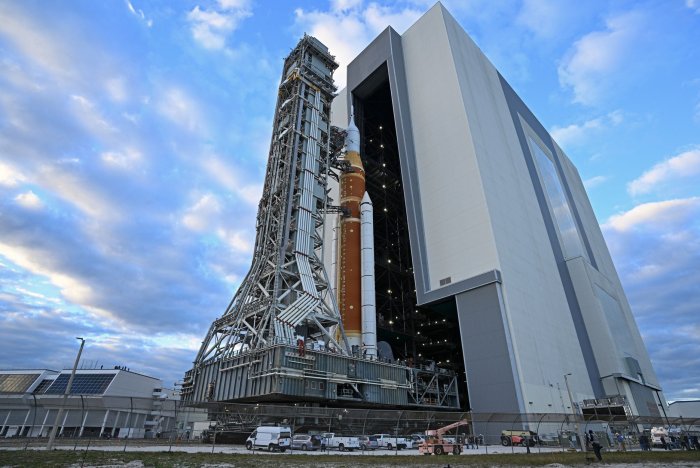
The space agency said it plans to roll the Artemis II Space Launch System and Orion spacecraft off the launch pad and back into the vehicle assembly building to address the problem Wednesday. The Artemis II SLS rocket has been on launch pad at NASA’s Kennedy Space Center in Florida for more than a month, undergoing testing and rehearsals.

On Tuesday, NASA determined there was an issue with the flow of helium to the upper stage of the rocket. They’ve scheduled the rollback for Wednesday due to high winds Tuesday.

The agency said workers observed the interrupted flow of helium to the interim cryogenic propulsion stage of the rocket on Saturday. The upper stage uses the helium to maintain environmental conditions in the engine and to pressurize liquid hydrogen and liquid oxygen propellant tanks.

NASA said the helium system worked during its wet dress rehearsal earlier this month.

“Teams are reviewing potential causes of the issue, including in the interface between ground and rocket lines used to route helium, in a valve in the upper stage, and with a filter between the ground and rocket,” a NASA blog post said. “They are also reviewing data from Artemis I in which teams had to troubleshoot helium-related pressurization of the upper stage before launch.”

NASA said the rollback means Artemis II will miss its previously planned March launch window. The agency is now eyeing a possible April launch window pending the results of troubleshooting.

Artemis II is NASA’s first crewed mission aboard the SLS rocket and Orion spacecraft. It’s the second flight of the SLS and the first crewed mission near the moon since 1972.

Over 10 days, Artemis II will travel around the moon and back to Earth as the crew tests whether the spacecraft operates as it should in deep space. The long-term goal of the Artemis program is reestablish a human presence on the moon in preparation for the ultimate aim of putting a human on Mars.

NASA’s Space Launch System rocket emerges on Saturday morning from the Vehicle Assembly Building to start its journey to Launch Complex 39B at the Kennedy Space Center in Florida. Photo by Joe Marino/UPI | License Photo

Source link