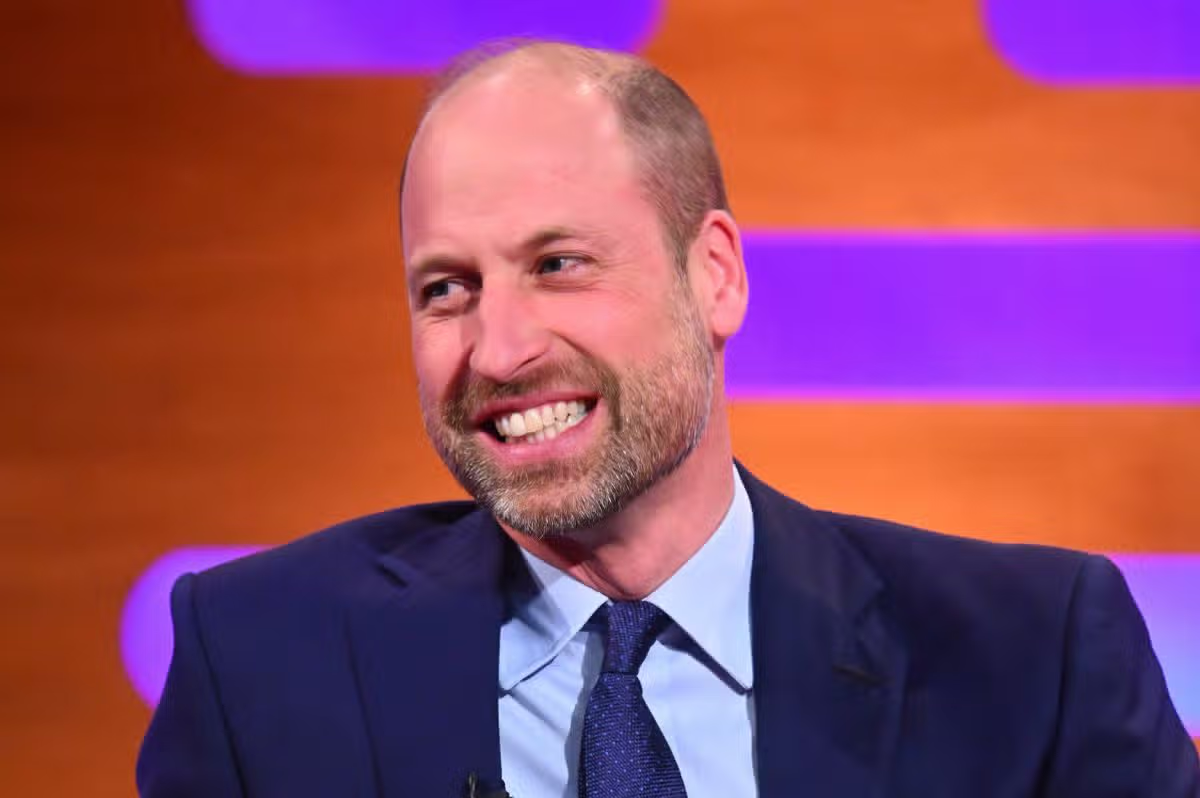
Prince William revealed he met with Ross Kemp recently and confirmed “he was really jumpy” as he opened up on his family’s love for The Celebroity Traitors on The Graham Norton Show
(Image: PA Wire)
The Prince of Wales has revealed his family’s love of The Celebrity Traitors, adding that he even touched paranoid faithful Ross Kemp “to see what reaction I got from him”.
The EastEnders star had been on alert about being murdered in plain sight through touch since the first episode of the BBC One series. The paranoia proved justified in Thursday’s episode, when he was indeed murdered in plain sight by traitors James Acaster and Maya Jama.
But instead of touch, he was murdered by yawning and inhaling a poisoned perfume. Discussing the star-studded programme during a surprise appearance on an Earthshot Prize edition of The Graham Norton Show, William said: “I love it, the family love it. Charlotte and Louis are obsessed with it. It’s really good telly.
“I saw Ross Kemp the day after the first episode and I couldn’t help but try – in the most appropriate way – to touch him to see what reaction I got from him. Turns out he was really jumpy!”
To see more of the stories you love from The Mirror and to find them easily in Google, then make us your preferred source. Free and easy to do, just click on the link here to find more from The Mirror at the top of your feed.
Asked how he switches off, he said: “It is music and film. I love getting immersed in deep-thinking films. I like action films too, but I like something a bit different. I’m a big fan of everything Christopher Nolan does. His films are fantastic – The Dark Knight series is psychologically dark and deep and I absolutely love that.
“He takes concepts that are completely out there and makes them incredibly entertaining.”
William joined Cate Blanchett, Robert Irwin and Hannah Waddingham on the chat show to gasps from the audience to speak about the environmental award, which connects all four guests.
Blanchett is an Earthshot Prize council member, Irwin is a global ambassador for the prize and Waddingham hosted the 2023 Earthshot awards in Singapore.
Mumbai will stage the Earthshot Prize next month where the future king will meet Bollywood stars as he learns about India’s hugely popular film industry, play with cricketing royalty and preside over the ceremony awarding £5 million in prize money.
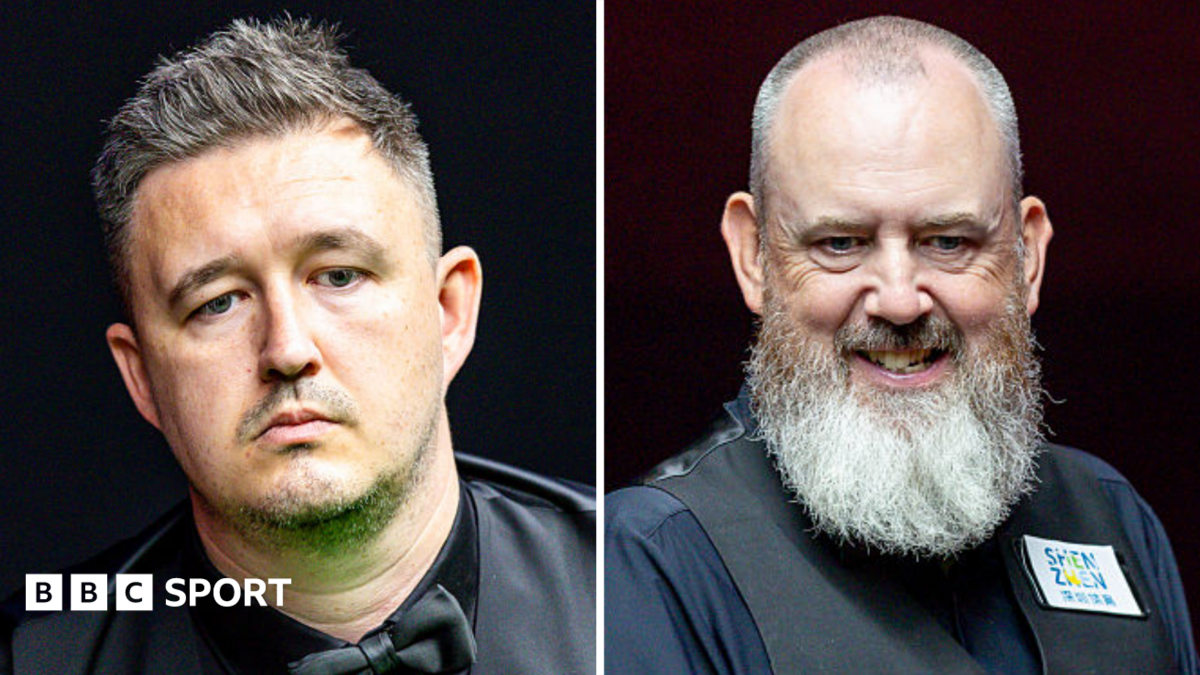
Former Northern Ireland Open champions Kyren Wilson and Mark Williams remain on course for a potential meeting in the final of this year’s tournament in Belfast after winning their respective quarter-finals on Friday.
World number nine Wilson ran out a convincing 6-1 winner over Anthony McGill in the afternoon session at the Waterfront Hall, while Williams, who sits one place higher in the rankings, defeated David Gilbert 6-4 during the evening’s play.
Wilson, who claimed both the world title and the NI Open crown in 2024, established a 4-0 lead over his Scottish opponent with the help of breaks of 77, 75 and 122.
McGill took the next with a run of 66 but the Englishman eased home to progress and secure a first semi-final appearance at a ranking event since March 2025, with compatriot Sam Craigie his next opponent.
Craigie advanced to only his second-ever ranking event semi-final by beating Elliot Slessor 6-2.
Slessor took an early lead after compiling an 82 but Craigie reeled off five frames in a row and ultimately clinched a comfortable passage to the last four.
Gilbert built a 3-1 lead over Williams with the help of breaks of 62, 95 and 60, but after they shared the next two, Williams scored three centuries in consecutive frames as he took the next four to seal victory.
The 51-year-old three-time world champion and 2017 NI Open winner will take on fellow Welshman Jak Jones in Saturday’s second semi-final.
Jones, who has already collected the British Open and Championship League titles this season, edged out Scott Donaldson 6-5 in a late-night thriller, a break of 84 in the decider proving decisive in booking his berth in the last four.
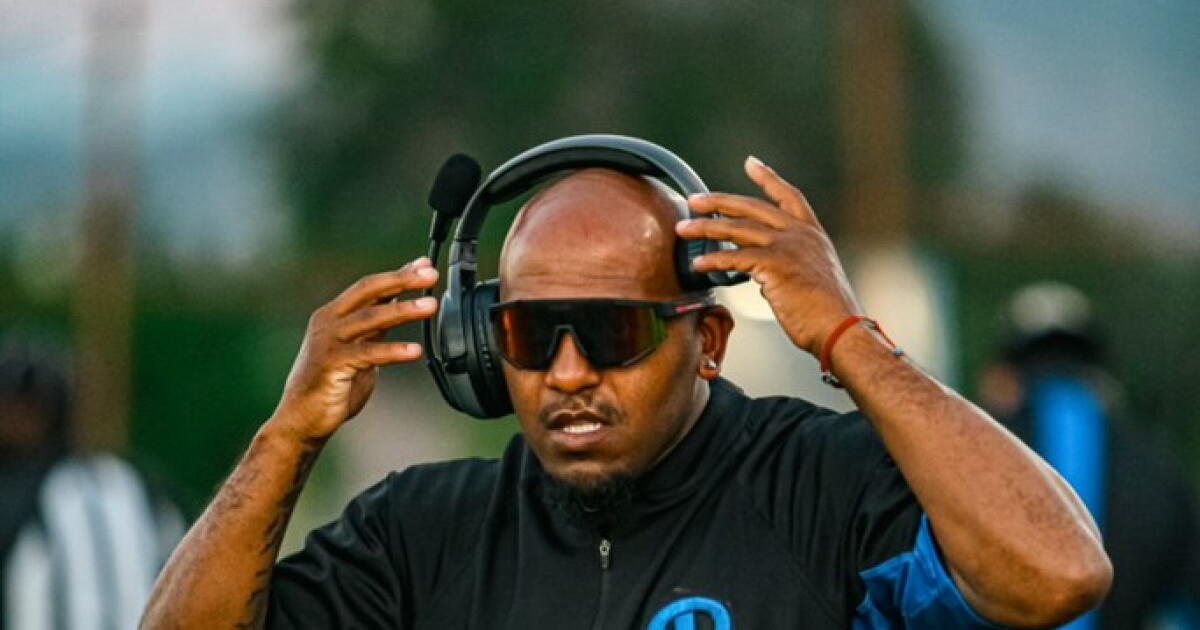
After spending years as an assistant football coach at Sylmar and San Fernando, Boo Williams arrived at Sun Valley Poly this season with a mission to turn around a program that always seemed to have talent but rarely put together many victories.
In his rookie season, Williams has Poly with a 7-1 overall record and a 5-0 mark in the East Valley League going into the final games against Verdugo Hills and Arleta.
Justice Brown has rushed for more than 1,000 yards. King Exudus has been an impact player on defense.
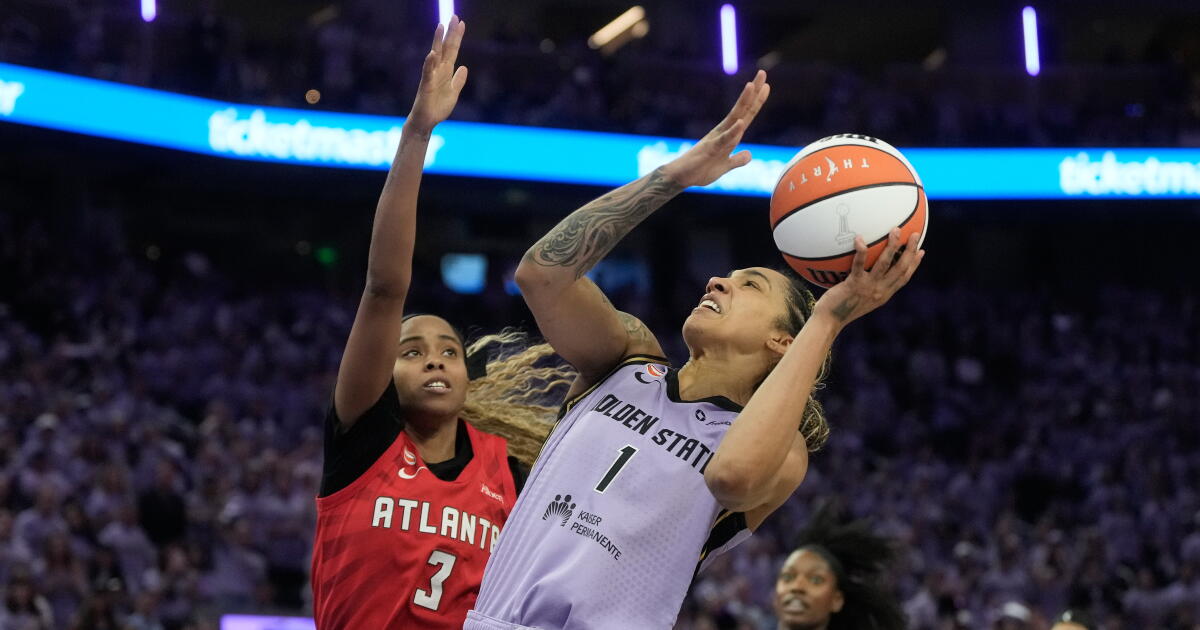
Williams scored 26 points as the Golden State Valkyries came back to take the lead at home against the Atlanta Dream.
By AFP and The Associated Press
Published On 18 Oct 202618 Oct 2026
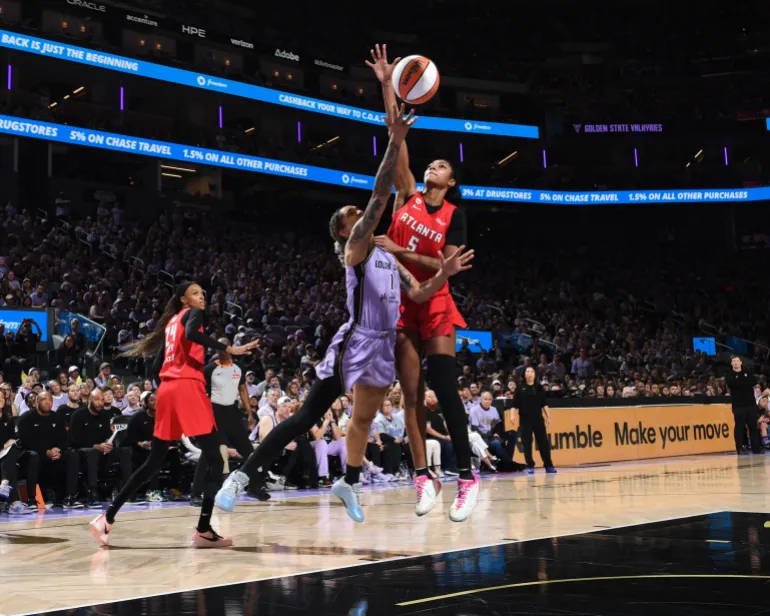
Gabby Williams scored a game-high 26 points, including four key free throws in the final 78 seconds as the Golden State Valkyries held off the Atlanta Dream 68-64 in game one of the WNBA Finals.
Williams, runner-up to Atlanta’s Angel Reese in Defensive Player of the Year voting, has emerged as an offensive force for the Valkyries in the playoffs and carried the scoring load on a tough shooting night for the hosts, who did not have another player score in double figures on Saturday.
Reese blocks the shot from Williams during the game [Noah Graham/Getty Images via AFP]
The French star took some time to warm up, going scoreless in the first quarter as the Valkyries got off to a tentative start in front of a raucous crowd at Chase Center.
“Once we all started having fun and the excitement got out, we started to kind of find our way,” Williams, who erupted for 16 points in the second quarter, said in an on-court interview.
“There was a lid on that basket tonight, but that’s why we rely on our defence,” she said.
Golden State trailed by one with 1 minute and 18 seconds remaining when Williams seized the rebound off a miss by Atlanta’s Allisha Gray and was fouled by Reese.
Williams made both free throws to put the Valkyries up 65-64 and added another pair of free throws to seal the win with 4.1 seconds left.
“It came down to getting stops and that’s been our bread-and-butter all year,” noted Williams, whose team has allowed 335 fewer points than any other in the WNBA this season. “That’s why we harp on it so much, because we’ve built such great defensive habits.”
Gray, the Dream’s leading scorer, returned after missing two games with a hand injury and scored 19 points, but she was scoreless in the fourth quarter, when Atlanta made just two of their 19 attempts from the floor.
Angel Reese of the Atlanta Dream reacts after the 68-64 loss [Ezra Shaw/Getty Images via AFP]
Reese added 14 points and 12 rebounds, and Rhyne Howard scored 12 for Atlanta.
Atlanta scored just two in an overall eight-point fourth quarter, where Gray was scoreless over the final 10 minutes and Reese scored all of her 14 points in the first half.
“I don’t think they really did anything,” Reese said. “Maybe that was just on me; I wasn’t aggressive enough with the ball and trying to get the ball and get to my spot. I’m definitely going to do a better job of that next game.”
The Valkyries will host game two of the best-of-seven series on Monday.
Both teams are chasing a first WNBA title. The Dream have come up empty in three prior trips to the Finals, most recently in 2013.
The Valkyries, who last year became the first WNBA expansion franchise to reach the playoffs in their inaugural season, are now contending for the title in their second.
Golden State Valkyries players celebrate at the end of game one [Jeff Chiu/AP Photo]
SAN FRANCISCO — Gabby Williams converted two free throws with 1:18 left to put Golden State ahead, two more with 4.1 seconds to go and finished with 26 points facing constant pressure from Atlanta’s stingy defense, and the Valkyries held off the Dream 68-64 in Game 1 of the WNBA Finals on Saturday.
Williams scored 16 of her points in the second quarter and no other Valkyries reached double figures as they shot 32.1% and seven of 33 from three-point range.
“We always knew we were going to find a way somehow,” Williams said on the microphone postgame as fans chanted “Gabby! Gabby!”
Rhyne Howard missed a three-point try with 1:09 left but Angel Reese made a steal moments later. Naz Hillmon missed from deep. Kiah Stokes missed the first of two free throws with 23.8 seconds left. Then Allisha Gray missed a three with nine seconds left.
Williams then hit the free throws a few seconds later to seal the victory.
Game 2 in the best-of-seven series is Monday night back at Chase Center, where the ear-piercing noise from a raucous “Ballhalla” crowd made for the exact hostile environment Valkyries coach Natalie Nakase requested from the home fans.
One of these two franchises will capture its first championship, and if the first game is any indication it’s going to be an all-out defensive fight.
Gray returned from injury to score 19 points, Reese added 14 points and 12 rebounds.
Jordin Canada contributed eight points, seven assists and five rebounds for the Dream, hitting a timely 13-foot jumper with 4:23 remaining.
Williams’ driving layup with 3:22 to play pulled Golden State within 62-61. Canada banged awkwardly into Williams’ knee on a box out during her late free throws and the Valkyries’ star was being cared for by an athletic trainer on the bench in the waning moments.
Gray was in the starting lineup and had gone through a light practice Friday after missing the last two games of Atlanta’s sweep of the New York Liberty in the best-of-three semifinal series with an injured left ring finger — on her shooting hand.
Golden State guard Tiffany Hayes hit her face hard on the floor trying to make a steal in the closing minutes and was down with 2:38 remaining before walking off the court on her own to the locker room.
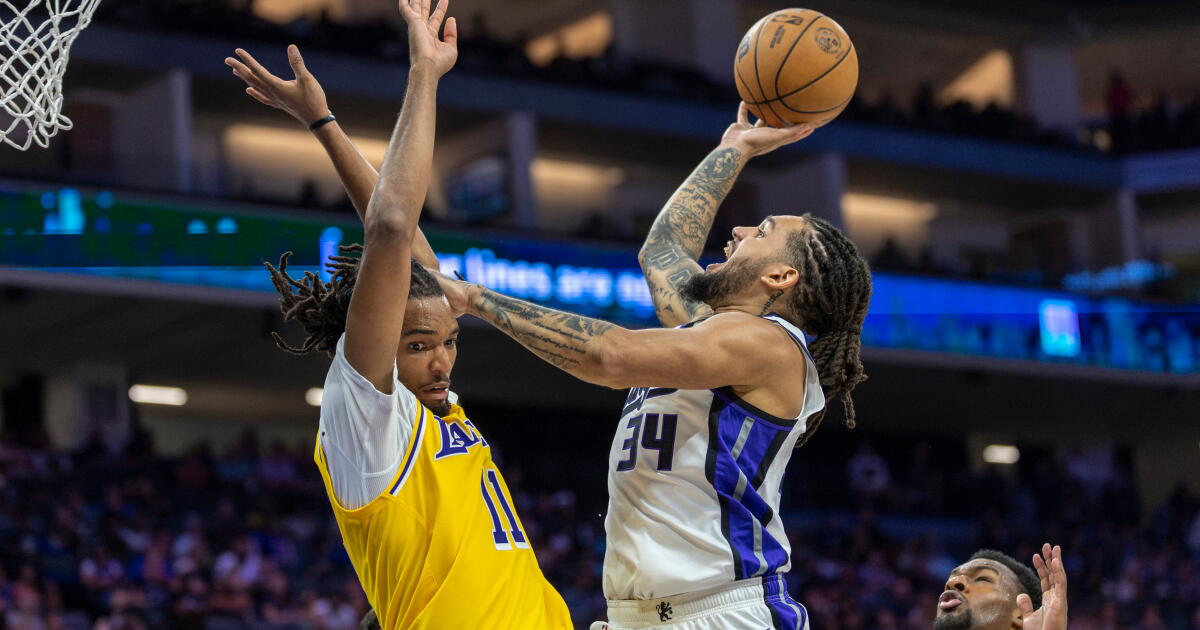
He made one of the biggest splashes in the Lakers’ first preseason game. Ziaire Williams set the tone of the Lakers’ new defensive style, pressuring the ball the full length of the court and injecting energy into his teammates. The Sierra Canyon High alumnus sank three three-pointers in a stellar debut for his hometown team.
Then came the swelling in his left foot.
After a minor injury slowed Williams’ preseason ascent, the 6-foot-9 forward could be in position to return to the lineup for the Lakers’ preseason finale at 7:30 p.m. Friday against the visiting Denver Nuggets. Williams practiced fully Thursday after missing the last three games. He’ll leave the final call up to the Lakers’ medical staff as the team tries to maximize its preseason preparation.
“It’s important, man, just to get game reps with each other, but health is key,” said Williams, who had 13 points and a steal as a starter in the preseason opener against the Sacramento Kings on Oct. 5. “If you can’t go, you just can’t. It’s not the end of the world. Going back to championship identity, we’re looking ahead at the bigger picture. So it’s not worth [it] to risk your body for a game that doesn’t count and then be out for the real games.”
With nine new players, the Lakers needed training camp and preseason games to build chemistry as a group. Small injuries to several players interrupted the process, but with one fewer preseason game than last year and almost double the total practice days, coach JJ Redick said integrating new players still has “been pretty seamless.”
“We would love to have gotten looks with everybody healthy and everybody good to go,” Redick said, “but we also have to be smart with an 82-game season.”
The Lakers debuted new center Walker Kessler only this week, and the star acquisition who jammed a pinky finger early in training camp still has not played in a game with guard Luka Doncic, who was held out of Tuesday’s game for a planned rest day. Doncic participated fully in practice Thursday, as did forward Adou Thiero, who sat out Tuesday because of “maintenance,” Redick said. Rookie Cameron Carr (undisclosed) remained out of practice Thursday after missing the last two games.
Guard Quentin Grimes has been a preseason iron man. The free-agent signing who is angling for a starting position has played a team-high 97 minutes in four preseason games. With Doncic and Austin Reaves playing together only once in the first four games, Grimes has filled a larger ballhandling role than he might have if the Lakers were at full strength. The 26-year-old guard who is on his fifth team in six seasons credited his journeyman history for helping him get comfortable with a do-it-all role.
“I’ve done a good job of just creating offense, creating opportunities whether that be for myself or for teammates, getting everybody involved,” said Grimes, who is averaging 12.3 points and 2.5 assists on 53.3% shooting in the preseason. “I feel like this team allows me to play on the ball, off the ball in any situation. I feel like I’ve played that kind of [role at] every stop.”
Collin Sexton is the only offseason acquisition who has not made his Lakers debut. Battling a lower leg injury, Sexton participated in all of practice except for periods of live play Thursday. After practice, the guard was seen with kinesiology tape snaking up his right calf while working on the court with assistant coaches.
Sexton’s presence could help stabilize the Lakers’ offense, which is averaging 25.3 turnovers during the preseason.
When Sexton was sidelined at the beginning of the preseason, Redick said he was not worried about the guard’s status for the Oct. 21 season opener against Golden State. When asked Thursday about Sexton’s availability, Redick said simply he was “trending in the right direction.”
VOGUE Williams has clapped back at people mum-shaming her after she was accused of ‘breaking maternity laws’.
The Irish presenter welcomed her son Remy Valentine last month and has since returned to some of her work commitments, including co-hosting both of her podcasts.
Vogue Williams has clapped back at people who have been mum-shaming herCredit: Instagram/ @voguewilliamsShe recently welcomed a little boy and started up some of her work commitments again, including her podcastsCredit: My Therapist Ghosted Me
Chatting with comedian and Celebrity Traitors star Joanne McNally on this week’s episode of My Therapist Ghosted Me, Vogue‘s little one made an appearance.
Joanne said: “There’s the baby. Look at the baby. Forgot about him.”
Sign up for the Showbiz newsletter
Thank you!
Vogue then revealed that a fan accused her of breaking a maternity law by being out with her baby so soon, and clapped back at them with a healthy dose of sarcasm.
The star said: “Someone left a comment on my and Amber’s pod and they were like “a mother should not be out with their baby at all from a month old” blah blah blah. Like going on this rant about there’s a maternity law.
Vogue shares the little one with partner Spencer MatthewsCredit: PAThe couple already share three other children togetherCredit: Instagram / voguewilliams
“I was like, there’s no maternity law! And then I was like, hang on a second, I’m quite clearly in my bedroom with the baby as well.
“Anyway, I told her I agreed with her and that women should stay at home for at least one to two years with the baby after giving birth.
“She deleted the comment.”
The clap back comes shortly after Vogue flaunted her unbelievable body three weeks after birth.
Vogue has somehow already gained back the definition in her abs, which she flashed on Instagram while showing off a new clothing collection.
Remy came into the world on September 6, which Vogue announced in a post online.
Taking to Instagram, Vogue captured her baby son dressed in a blue cardigan as he slept soundly in his cot.
She also included pictures of her three older children with Spencer, Theodore, seven, Gigi, five, and Otto, three, as they surrounded their baby brother.
She captioned the post: “Remy Valentine Matthews.”
Confirming Remy’s arrival earlier that week, she wrote: “Our beautiful baby boy has arrived safely… The house is bursting with excitement, love and happiness and we couldn’t be more delighted.”
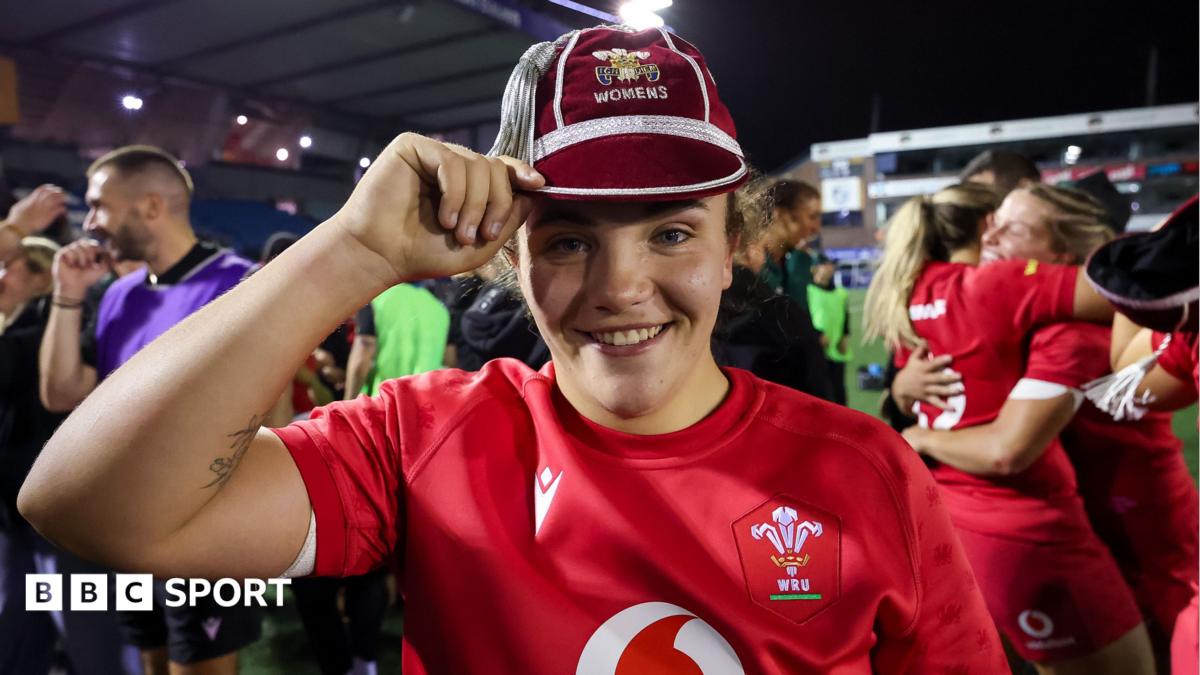
Shanelle Williams has already fulfilled one childhood ambition after making her Wales debut and now she is preparing for another milestone in Japan.
The 19-year-old former Gwernyfed RFC junior came off the bench in Wales’ 50-19 win over South Africa in the WXV Global Series in September.
As a child, Williams had written on her Christmas list that she wanted to play for Wales.
“I didn’t actually know that there was a women’s team,” the hooker said.
“I used to tell my dad that I was going to play for Wales with the boys.
“Then I obviously realised that I actually can play for Wales. Since then, everything I’ve done, rugby’s always been a priority.”
Williams had forgotten about the Christmas list until her older sister reminded her after she won her first Wales Under-18 cap.
“It’s quite a nice reminder that I have been working for this for so long, so it has all been worth it,” she said.
Williams started playing rugby at Gwernyfed aged eight, spending four years there before joining the Red Kites and later moving into the Wales pathway.
She went on to play for Cardiff Quins and Cardiff Rugby before attending Hartpury College.
Her father played a key role, regularly making the journey from home to Cardiff for training.
“Obviously I’m from Gwernyfed, so it was about an hour and a half down to Cardiff,” she said.
“He used to take me for training on Friday nights straight after school.
“I wouldn’t have been able to do it if my dad hadn’t given me that opportunity, so I’m very lucky.”
PHILADELPHIA — It’s rarely sunny in Philadelphia for Sean McVay and the Rams.
Before Sunday’s game against the Eagles, McVay was 1-6 against them, 1-4 at Lincoln Financial Field and 0-4 against Eagles coach Nick Sirianni.
The last time the Rams visited here, the Eagles blocked a field-goal attempt and returned it for a touchdown on the final play.
And for much of the game Sunday, gloom once again engulfed McVay and a team that opened the season as a heavy Super Bowl favorite.
Share via
Gary Klein breaks down what went right for the Rams in their 24-20 comeback win over the Philadelphia Eagles.
But it finally lifted midway through the fourth quarter, with quarterback Matthew Stafford leading two touchdown drives that gave the Rams a come-from-behind, 24-20 victory.
“A lot of gutsy efforts,” McVay said, “and I have a headache from hell right now.”
No doubt stress-induced.
While McVay enjoyed watching Kyren Williams rush for two touchdowns and receiver Puka Nacua rush for another, the Rams had to overcome turnovers, penalties and special teams miscues to improve to 2-2.
After sitting out two games because of a hip injury, Nacua caught nine passes for 125 yards, several during the final two scoring drives.
“I’m excited to get on this plane and get up out of here,” Nacua said. “Hopefully, they have some Philly cheesesteaks for us.”
The Rams had mostly had their fill of Philadelphia after losing an NFC divisional game here in 2024 and last year’s debacle that ended with the blocked field goal and touchdown.
“We obviously haven’t found a way to get it done here,” McVay said, “and our guys found a way today.”
Rams players celebrate with Kyren Williams following one of his two fourth-quarter touchdowns against the Eagles on Sunday.
(Chris Szagola / Associated Press)
The Rams can thank their defense.
The Eagles were without receiver DeVonta Smith and left tackle Lane Johnson, and star running back Saquon Barkley left the game in the first quarter after suffering a hamstring injury.
The Eagles were 0 for 12 on third downs. They converted only one of four fourth downs and managed just 172 yards.
“When it was the time for us to make a play, the defense stepped up,” said edge rusher Byron Young, who had 2½ of the Rams’ four sacks, “and we had to do what we do.”
Despite their elation over Sunday’s victory, the Rams have plenty to fix.
Stafford was great down the stretch but otherwise did not look like the reigning NFL most valuable player. He completed 32 of 51 passes for 317 yards with two interceptions.
The Rams, historically one of the league’s least-penalized teams under McVay, had 13 penalties for 91 yards in last Sunday’s 30-26 defeat by the Denver Broncos. On Sunday, they were flagged eight times for 100 yards.
“Any way you could shoot yourself in the foot — we were doing it on the offensive side of the ball,” Stafford said.
Special teams also continued to be an issue. The Rams gave up a long punt return that set up a touchdown, and usually reliable kicker Harrison Mevis missed a 48-yard field-goal attempt.
But the defense kept the Rams within striking distance.
“You’d like to see [us] play as a team where you go and score, and then hold ‘em, score and hold ‘em and score,” receiver Davante Adams said. “But sometimes that’s not how it plays out.
“[The defense] did their thing to put us in a position to win it, and we went down there and finished the job.”
The Rams trailed, 20-10, at halftime, as the Eagles turned two interceptions into 10 points, and Jalen Hurts tossed two touchdown passes to receiver Darius Cooper.
After Mevis missed, it got uglier.
Near the end of the third quarter, it finally looked like the Rams’ defense would be rewarded for a good play: It stopped Hurts on a fourth-down tush push, giving the offense a first down at the Eagles’ 38-yard line.
But Nacua’s penalty for an illegal block stymied the possession, and Stafford’s fourth-down pass for tight end Tyler Higbee fell incomplete.
McVay rallied the offense on the sideline.
“He said, ‘Make things go. Wipe it. Get to the next play,’” Higbee said.
Stafford said McVay was “trying to put some belief” in the team.
“I think we had it,” Stafford said, “but it was great to hear from him.”
The defense came up big again, stopping the Eagles on downs at the Rams’ two-yard line.
On came Stafford, who ranks fourth all time in fourth-quarter comebacks.
“We call it the Mamba period,” said Williams, who rushed for 80 yards in 15 carries and had 10 receptions for 67 yards. “We knew we had to get things done. … Matthew, man, he got us all together. He said ‘Let’s freakin’ do it’ and we did the dang thing.”
Stafford engineered a nine-play, 98-yard drive that Williams finished with a one-yard touchdown run to cut the deficit to 20-17 with less than four minutes left.
Stafford got the ball back with 2:55 left at the Rams’ 21-yard line. He connected with Nacua three times and Higbee once before Williams scored on a seven-yard run with 1:10 remaining.
Rams quarterback Matthew Stafford slides after running the ball against the Eagles on Sunday.
(Matt Slocum / Associated Press)
The play included Williams’ trademark second and third efforts.
“I wasn’t looking at any defender,” Williams said. “I wasn’t looking at any blocks. I was just having that smell, that nose for the end zone.”
Next up: Josh Allen and the 3-1 Buffalo Bills, a 29-26 loser Sunday against the New England Patriots.
The Rams will go into the game a .500 team riding the high of a comeback victory rather than trying to get out of a 1-3 hole.
At some point, the Rams will welcome back edge rusher Myles Garrett, defensive lineman Aaron Donald, who sat out because of a sore back, and tight end Terrance Ferguson, who like Garrett is on injured reserve. They are still more than capable of becoming the team that was hyped throughout the offseason.
So Sunday’s victory — rather than another loss in Philadelphia — could pay dividends.
“Hopefully,” Stafford said, “it was really important come later in the year.”
The knives were already out. The boos were already ringing.
At the end of an already brutal week at USC, during which the nation was ready to dance on the graves of the Trojans and their coach, it seemed for much of Saturday that any last shreds of faith in coach Lincoln Riley might melt away in the beating Southern California sun. Not only had the aftermath of their Oregon loss gone as poorly as possible, but now the Trojans were tripping over themselves again, trailing Washington, a middling Big Ten team down to its fourth-string running back, and a chant began to rise above the fray, from the USC student section.
“FIRE LINCOLN!” they roared.
That refrain had only been heard in hushed tones until this past week. But Saturday, before the No. 18 Trojans pulled away with a 25-21 victory, it felt as if their embattled coach stood at the edge of a certain Rubicon, one he may not return from with one wrong step.
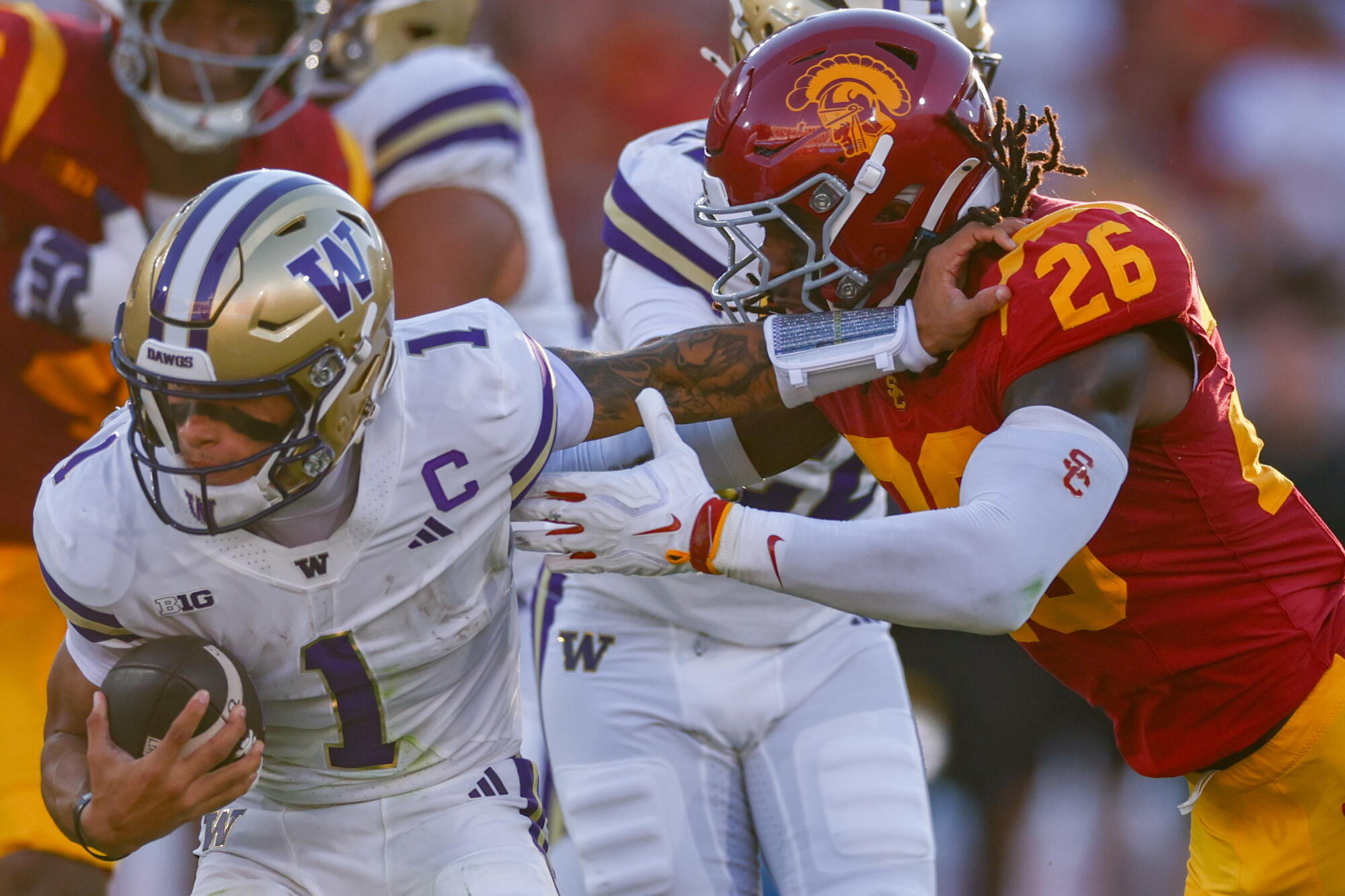
That tension still hung thick over the Coliseum until late in the third quarter, when linebacker Elijah Newby came roaring around the edge toward Washington quarterback Demond Williams Jr. He swatted the ball out of his right hand, and defensive tackle Jahkeem Stewart scooped it up. He sprinted 48 yards on a sore foot for a go-ahead score — and joked afterward that he hit 22 mph on his scoring scamper.
Just two minutes earlier, the Trojans had been down 21-10, and it wasn’t hard to envision how their season could continue spiraling from there. One mistake, one missed opportunity, one penalty after another brought them to this point, despite the fact that the Huskies actually struggled to move the ball on USC’s defense throughout.
It looked, for most of Saturday, like that unit took a step forward after the past two weeks, when both Rutgers and Oregon marched on them. Through one half, USC held Washington to just 44 passing yards. Through three quarters, Washington was averaging fewer than six yards per play.
“The bounce back was huge for us,” freshman defensive end Luke Wafle said.
Washington quarterback Demond Williams Jr., left, tries to fend off USC linebacker Elijah Newby during the second quarter Saturday at the Coliseum.
(Ronaldo Bolaños / Los Angeles Times)
USC’s defense nearly came apart in the fourth quarter, though, at the worst possible time. Washington hadn’t converted a single third down until its final drive, when Williams converted a third-and-11 pass, then hit a fourth-and-two bomb for 43 yards. The Huskies got as close as the USC 12-yard line, before the Trojans finally shut the door.
“We had to dig deep for this one,” Riley said. “Especially as sloppy as we played.”
USC (5-1, 2-1) did try something a little different on defense, with defensive coordinator Gary Patterson calling the game from the press box instead of the sideline. Riley said the decision was akin to “trying to just move the chess pieces to get everyone in the right position.” He also added that Patterson’s former staff at Texas Christian had a lot more familiarity with Patterson’s scheme, and thus he handled things differently with that staff.
But the communication issues of past weeks appeared less of a problem on defense. The real concerns Saturday actually came on offense, where the Trojans uncharacteristically sputtered. Jayden Maiava was 21 of 34 for 245 yards, with a touchdown and an interception.
Still, judging by the box score alone, you’d be hard-pressed to understand how USC could have nearly squandered a game in which they piled up far more yards (360 to 319) and had the ball for far longer (34:58 to 25:02) and dominated on third down.
“We’re gonna fix it,” Stewart said. “No team comes out perfect. It takes time.”
After a disappointing few weeks on the defensive end, USC actually opened the game by forcing Washington (3-2, 0-2) into back-to-back three and outs.
But the Trojans managed a measly three points from those stops. Their first drive, stalled in the red zone. The next one backed up USC to the one-yard line after wideout Terrell Anderson muffed a punt.
Washington took advantage of the field position on its next drive. Faced with a fourth and seven in USC territory, Williams slipped past pressure and scampered to a first down. It was the first sign of life from the Huskies’ offense, which found its way into the end zone four plays later.
Then, USC gave the ball right back. On the run, Maiava launched a pass off his back foot under heavy pressure. It fell well short of its target and was picked off.
USC’s defense held strong, forcing a third three and out in the Huskies’ first four drives. And its offense finally held up its end of the bargain, with Waymond Jordan punching in an eight-yard touchdown.
USC quarterback Jayden Maiava scrambles during the first half against Washington at the Coliseum on Saturday.
(Ronaldo Bolaños / Los Angeles Times)
Washington continued to struggle moving the ball, but mistakes from USC helped its cause. An illegal formation penalty wiped away a deep Trojan touchdown pass to Kayden Dixon-Wyatt. Then on the ensuing possession, Wafle grabbed Williams’ face mask as he pulled him down for a sack.
USC had more penalty yards (50) than Washington had passing yards (44) in the first half. And those penalties gave the Huskies life at the end of the half, as they drove the length of the field and scored again.
“We felt like we were outplaying them,” Riley said. “We just couldn’t get out of our own way a little bit. That’s probably going to be a defining thing for this team going forward, how much we can do that.”
With a chance to regroup, the Trojans tripped over themselves out of the half too. An unsportsmanlike penalty killed their opening drive. Then, Washington tight end Decker DeGraaf caught a pass and took off down the sideline, running through two feeble-arm tackles on the way to an inexplicable 42-yard touchdown.
After that, the Riley chants rang out from the student section. But the Trojans’ offense mounted a 13-play scoring drive in response. Tanook Hines tore the ball away from a Washington defender in the end zone.
USC coach Lincoln Riley walks back to the sideline after speaking with his players during a timeout in the first half Saturday.
(Ronaldo Bolaños / Los Angeles Times)
Less than two minutes later, Stewart scooped up the fumble and took off. His 48-yard return completed a 12-point swing for the Trojans.
“To overcome all that and still win shows me some of the guts and toughness and culture in this room right here,” Riley said. “We could’ve folded.”
Still, USC couldn’t put Washington away. Down to their last drive, the Huskies converted a third and 11 and two fourth downs to drive deep into Trojan territory late.
But Kameryn Crawford pulled Williams down for a sack — the Trojans’ fifth of the game — and the defense held. And USC, at the end of a long, brutal week, breathed a sigh of relief.
Vogue Williams told of the ’embarrassment’ over divorcing her first husband, singer Brian McFaddenCredit: GettyShe later married Made In Chelsea’s Spencer Matthews and they went on to start a family togetherCredit: voguewilliams/Instagram
Vogue and Brian were married from 2012 until 2017Credit: Getty Images – GettyVogue welcomed her and Spencer’s fourth child, Remy, earlier this monthCredit: Instagram/ @voguewilliams
“I was just going to have to live a life of being single. And I was like, ‘I’m going to enjoy being single for once in my life’.”
Vogue added: “I did enjoy being single and it took about three months because I was so used to being in relationships and then I enjoyed being single.
“Then I met somebody and now I’m sitting on this podcast breastfeedingmy fourth child. So this could be you at 40.”
Market expectations for an October Federal Reserve rate hike tumbled to just over 50% on Tuesday after New York Fed President John Williams indicated he is in no rush to increase borrowing costs next month.