Weiss

Longtime correspondent Sharyn Alfonsi expects to depart ’60 Minutes’ as big changes loom

Sharyn Alfonsi, the longtime “60 Minutes” correspondent who clashed with CBS News Editor-in-Chief Bari Weiss over a story on Trump White House immigration policies, said Wednesday her contract is not being renewed.

“Over the weekend, my contract with CBS News expired, drawing to a close nearly twenty years with the network, including more than a decade at ’60 Minutes,’” Alfonsi, 54, said in a statement to The Times.

“Following an intense editorial dispute over our CECOT story, repeated attempts by my representation to establish a path forward were met with absolute silence from network executives,” she added. “The message could not be clearer: my time at 60 Minutes is apparently over.”

CBS News declined to comment on Alfonsi’s remarks. Her contract expired this past weekend but she remains employed at the division on an “at will” basis, which means she can be terminated at any time, according to people familiar with the discussions. Producers who worked with Alfonsi have been assigned to other correspondents.

Alfonsi made her comments as the “60 Minutes” staff anticipates significant changes in the coming days, which could include shifting the lineup of correspondents. Anderson Cooper has already announced his departure from the program after 20 seasons.

A scene from the "60 Minutes" report "Inside CECOT."

A scene from the “60 Minutes” report “Inside CECOT.”

(CBS News)

The segment at the center of Alfonsi’s likely exit, “Inside CECOT,” detailed the Trump administration’s treatment of hundreds of Venezuelan migrants who were deported to an El Salvador prison known for its harsh conditions.

“Inside CECOT” was scheduled to run Dec. 22 but was pulled the day before air by Weiss, who believed it needed more reporting, including a direct on-camera response from the administration, which did not participate.

Alfonsi protested the decision to hold the story, calling it politically motivated in an email she sent to colleagues that was shared publicly.

Alfonsi said at the time the story was ready for air after being vetted by the network’s attorneys and the standards and practices department.

“It is factually correct,” Alfonsi wrote. “In my view, pulling it now — after every rigorous internal check has been met is not an editorial decision, it is a political one.”

“Inside CECOT” eventually ran on Jan. 18 without any substantial changes to its tone or reporting. Weiss acknowledged internally that pulling the segment after it had already been promoted was a mistake.

The move created the first public relations fiasco under Weiss’ watch and tarnished the strong journalistic reputation of “60 Minutes.” The matter also added to the narrative that Weiss was installed at CBS News to placate the Trump administration as parent company Skydance Media sought government regulatory approval to buy Paramount and its current deal to merge with Warner Bros. Discovery.

The program has been in turmoil since October 2024 when President Trump filed a $20-billion lawsuit against CBS over an interview conducted with then-Vice President Kamala Harris that was settled to help clear the regulatory path for Skydance Media’s acquisition of Paramount last year.

Weiss joined CBS News in October with a mandate from Paramount Chief Executive David Ellison to pull the division to the political center. The founder of the conservative-friendly digital news site the Free Press, Weiss has wanted to make changes to “60 Minutes” but put them off until after the 2025-26 TV season ended this past weekend.

In her statement, Alfonsi predicted CBS News would try to make her exit an administrative decision not related to her work.

“In the coming days, network leadership may attempt to hide behind corporate euphemisms like ‘modernization’ and ‘restructuring’ to explain away my departure,” Alfonsi said. “Don’t be misled. This was not a routine corporate transition; it was a deliberate choice to penalize a journalist for refusing to sanitize factually accurate reporting, and it sends a chilling message to the entire newsroom.”

Insiders at CBS News are uncertain about the extent of the planned overhaul. Weiss has been advised to limit any disruption to “60 Minutes,” which is coming off a strong season of ratings performance.

Nielsen data showed the program averaged 9.1 million viewers in its Sunday time period, up 9% from the previous year. The program’s views across digital and social media platforms were also up substantially.

Source link

Under a giant penguin sign, Mel’s Drive-In marks the end of Route 66

Famous signs along the nearly 2,500 miles of Route 66 include the 66-foot soda bottle at Pops in Oklahoma, the wagging neon tail of Albuquerque’s Dog House and the hand-painted slogans for Snow Cap Drive-In in Arizona. But in L.A., none is so iconic as the giant looming penguin that signifies milkshakes, burgers, oldies playlists and sheer Americana at the end of the road.

Stories, photos and travel recommendations from America’s Mother Road

The Mother Road that stretches from Chicago to the West Coast unofficially ends at the Santa Monica Pier, but at its technical terminus, Mel’s Drive-In declares the “ROUTE ENDS HERE,” inlaid in terrazzo beneath that jumbo tuxedoed penguin. It’s been a beacon for decades, and though the beloved restaurant space recently was listed for sale for $26 million, Mel’s owners hope it remains a diner and destination for generations.

For much of its history, the diner at the end of Route 66 was the 1959-founded Penguin Coffee Shop, a Googie-architecture marvel of angular windows, rock walls and little cartoons of penguins hanging above swivel stools and an open kitchen.

The original penguin sign from the former Penguin Coffee Shop still stands at Mel's Drive-In in Santa Monica.

The original penguin sign from the former Penguin Coffee Shop still stands at Mel’s Drive-In in Santa Monica.

As a very young child I remember sliding into the booths with my father, whose office was nearby on Wilshire. Back then, the tall angled ceilings seemed to soar and the breakfast combos looked mountainous.

“It was a Googie kind of restaurant — you know, we don’t have that many of them around anymore,” my dad recalls. “It had an aura of roadside diner about it. … Everybody would see the giant penguin out there. I don’t think Burgess Meredith ever ate there, though.” The joke takes me a beat before landing; my version of Batman’s Penguin will always be Danny DeVito.

A corner booth seat at Mel's Drive-In in Santa Monica.

“It was a Googie kind of restaurant — you know, we don’t have that many of them around anymore,” the writer’s dad recalls.

We’d visit every month or two, until the Penguin closed its doors in 1991 and transformed into a Western Dental office, which kept the penguin sign but dropped those high ceilings and removed the kitchen along with other hallmarks of its roadside charm. Thankfully, its journey didn’t end there.

The Weiss family, which founded Mel’s Drive-In diner in 1947, had been eyeing the property for years and signed a lease in 2016. Then there was the link to their own history: The prolific Armet & Davis architecture firm designed the Penguin as well as the current home of Mel’s Sherman Oaks.

“When the dentist office went out of business,” said co-owner Colton Weiss, “it seemed like a no-brainer to make it Mel’s and bring it back to the glory days of being a diner.”

What followed were two years of “very expensive” renovations, according to the third-generation Mel’s owner.

Beyond the iconic penguin sign — which obtained “historically or architecturally significant” designation in 2000 — Mel’s pays homage with the large sculptural, custom-made glass globe lights, which replicate the original’s. The Weisses hired garden specialists to review decades-old photos of the Penguin Coffee Shop to determine which varieties of flowers decorated the front of the restaurant, then they replanted them.

Since the building’s reopening in 2018, thousands of guests have ended the journey along Route 66 with a meal in the diner.
2.) Route 66 Burger and Menu at Mel's Drive-In and Diner.

Since the building’s reopening in 2018, thousands of guests have ended the journey along Route 66 with a meal in the diner.

“We’re like Route 66 authorities now.”

— Colton Weiss, co-owner of Mel’s Drive-In

While sledgehammering drywall, they uncovered the diner’s original rock wall. Along a hallway near the bathrooms, a small gallery of Penguin Coffee Shop photos offers another glimpse of the predecessor. This location also features a marshmallow-and-chocolate-sauce Penguin Shake in honor of the tuxedoed mascot of the original.

It wasn’t until they were close to signing a deal that they realized it sat along Route 66.

“We’re like Route 66 authorities now,” said Weiss, whose father, Steven Weiss, was largely responsible for the restoration.

Since the building’s reopening in 2018, the owners say thousands of guests have ended their travels with a meal in the diner. They bustle through the doors after the long journey, sometimes bedecked in Route 66 merchandise, and sometimes buying Mel’s own brand of Route 66 merch while there.

Atmosphere and details of Mel's Drive-In Diner.

Atmosphere and details of Mel’s Drive-In Diner.

“We had a guy do it in a ’67 Chevy, that was on his bucket list: Older guy who did it with his wife, and it was a convertible,” said Weiss. “He did it in summertime, so by the time he showed up he was covered in dust and dirt. He couldn’t be happier to make it to Mel’s and get a burger.”

Another, he said, did the whole route on a bicycle.

The diner offers certificates of completion for those who finish the trek, and devised a burger named for the route. A fish tank at the entrance features a Route 66 theme, as does a mural on a small wall of the parking lot. Two official signs, placed by the city, denote the location’s significance.

“The city knew there’d be renewed interest in a diner being the real ending of Route 66,” Weiss said. “Before, I don’t know anybody who’d want to end their trip at a dentist’s office. Maybe somebody who broke their teeth on the way.”

Mel's Drive In and the end of Route 66 at night.

But the trail’s end could someday see its own end. The property was listed for sale in 2025. Representatives for the building’s management company didn’t respond to requests for comment.

“We’re trying to keep it there as long as possible,” Weiss said. “People really enjoy this location, and it seems like one of the last diners in Santa Monica.” Weiss declined to comment further.

Mel’s assistant manager Yazmin Minguelasays she sees more travelers now because it’s the centennial of Route 66. “But even before that, we still had a lot of visitors.”

She’s worked for Mel’s 22 years, six of which have been spent in the Santa Monica restaurant. Her shifts are full of Westside regulars, celebrities and guests finishing their trip along Route 66.

“Ending on a diner is nostalgia,” my dad mused. “Having a place like Mel’s, which is a substitute for the kind of flea-bitten ptomaine joints that you might get along Route 66, brings back memories to very old people. And very new people ask questions like, ‘Who’s Burgess Meredith?’”

Mel’s Drive-In is open at 1670 Lincoln Blvd., Santa Monica, Sunday to Thursday from 7 a.m. to 11 p.m., and Friday and Saturday from 7 a.m. to midnight.

Source link

White House correspondents’ dinner becomes the news as reporters take cover

A night devoted to celebrating the 1st Amendment and journalism turned into a breaking story of its own.

The attendees at the White House Correspondents’ Assn. dinner Saturday took cover under the tables in the Washington Hilton ballroom when they heard gunshots outside, which led to the evacuation of President Trump and many of his Cabinet officials at the gala.

But instinct kicked in swiftly, and many of the journalists in the crowd of 2,600 people were using their phones to capture video. Uploading pictures to social media was a challenge as the internet coverage in the ballroom was poor, but they would eventually provide a detailed chronicle of the night.

“I reached for my phone as soon as I could and started shooting video to capture as much of the moment as I could,” said Sara Cook, a CBS News producer and press association board member seated on the dais near the president, First Lady Melania Trump and Vice President JD Vance, who were hustled out while a SWAT team swarmed the stage.

“I could hear Secret Service officers saying, ‘Where is it coming from?’” Cook said. “They seemed to be quite confused onstage about exactly what was happening, where the threat was coming from and if there still was a threat.”

Authorities identified the suspect as Cole Tomas Allen, a 31-year-old teacher from Torrance. He was apprehended after rushing a security checkpoint one floor above the ballroom. Law enforcement officials said Allen was armed with a shotgun, a handgun and multiple knives.

After guests were told the evening program would not proceed, many of the TV anchors and correspondents in the crowd headed to their Washington studios. Many didn’t wait. CNN’s Wolf Blitzer, who was returning from a restroom on the floor where the incident occurred, delivered an eyewitness account from the Hilton lobby using a Webex app on a smartphone.

There was at least one fog-of-war moment as well. CNN anchor Kaitlan Collins reported on air that the armed suspect was killed by the Secret Service, attributing it to security for Education Secretary Linda McMahon. She had to correct the report after Fox News said Allen was alive and detained by agents.

“CBS Evening News” anchor Tony Doukopil and CBS News editor-in-chief Bari Weiss walked several blocks from the Hilton to waiting vehicles that took them to the network’s offices and studios on M Street. (Weiss granted a reporter’s request to go behind the scenes to observe the news-gathering operation.)

Four people around a desk.

Matt Gutman, Nancy Cordes, Tony Dokoupil and Bari Weiss at the CBS News Washington bureau on April 25, 2026.

When Doukopil and Weiss arrived at the bureau, CBS News national correspondent Matt Gutman and Nancy Cordes, chief White House correspondent, were already on the air with a special report, showing video shot by its journalists in the ballroom.

Doukopil joined his colleagues, all still dressed in formal wear, and took over the coverage. The newsroom soon filled with executives and producers arriving from the Hilton, several dressed in long gowns and carrying their high-heeled shoes.

CBS News President Tom Cibrowski stood over a large multiview screen, monitoring his network’s broadcast alongside the competition.

When Cibrowski was on the floor of the ballroom when the commotion began, he texted his family to let them know he was OK. He then called David Reiter, the executive producer of special events for CBS News, to alert him that they would be breaking into regular programming on the network, a rarity lately with so many 24-hour news sources available.

Reiter left his seat at a Broadway show and headed to the CBS News studios on the west side of Manhattan to get the feed on the air.

Weiss walked over to the Washington set and consulted with Doukopil, Cordes and Gutman during a break, providing a bipartisan list of government officials and activists who were subjected to politically motivated violence in recent years. She settled in at a workspace to turn out a memo to staff, acknowledging the rapid work of getting its images from inside the ballroom on the air.

“This is what we do,” wrote Weiss, a digital entrepreneur who has dealt with criticism over her lack of experience in TV news since taking on her high-profile role in October. “Most importantly, we are thankful that everyone is safe.”

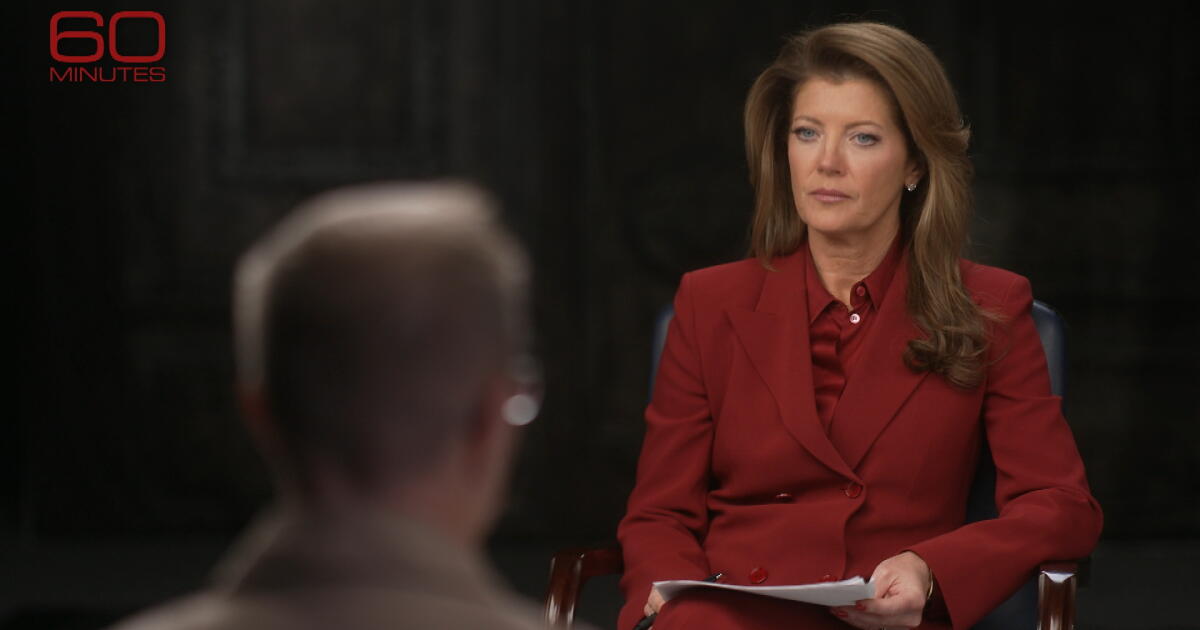
Later, she led a lengthy meeting to plan further coverage, which included Norah O’Donnell interviewing Trump for Sunday’s edition of “60 Minutes.”

After Doukopil finished his special report, he was off to prepare a segment to air on “CBS Sunday Morning.”

“It’s very strange to go from drinking wine to drinking coffee,” Dokoupil said as he departed the set.

Every journalist in the ballroom left with a story.

Tom Llamas, anchor of “NBC Nightly News,” was seated next to Secretary of State Marco Rubio when Secret Service agents pulled Rubio and his wife away as White House officials were evacuated. Llamas had to alert the agents that another, less high-profile Cabinet member, Energy Secretary Christopher Wright, and his wife were at the table as well.

Llamas made his way from the hotel to the NBC News bureau with “Meet the Press” moderator Kristen Welker and veteran Washington correspondent Andrea Mitchell. The anchor took over the network’s special report and felt compelled to explain his attire.

A man in a tuxedo and bow tie.

“NBC Nightly News” anchor Tom Llamas reports on the shooting at the dinner on April 25, 2026.

“It is unusual to come on the air in a tuxedo, but this is a very unusual night,” he told viewers.

Llamas praised the performance of his peers who have seen the image of their profession take a beating in recent years.

“There was a while there, we did not know what was going on,” he said. “For all the crap that is written about our industry, I saw people jump into action immediately, and it was incredible. I was proud of all my colleagues.”

The canceled dinner created a predicament for MS NOW and NBC News, which both planned lavish after-parties late Saturday evening. Many of the big-name on-air talent stars and executives expected to attend were working on the story.

After a half-hour of deliberations, both networks decided their parties would go on. But planned stunts for the MS NOW soiree at DuPont Underground — such as a performance by a university drum line — were scrapped.

NBC’s event at the home of the French ambassador was billed as “The After Party.” A text message told attendees to expect a more subdued affair described as “a gathering for people who wanted to convene, eat and drink and be with community.”

Privately, one network executive explained why the festivities moved forward. “Nobody died,” he said.

Source link