U.S. Makes F-35 Push As Portugal Weighs F-16 Replacement
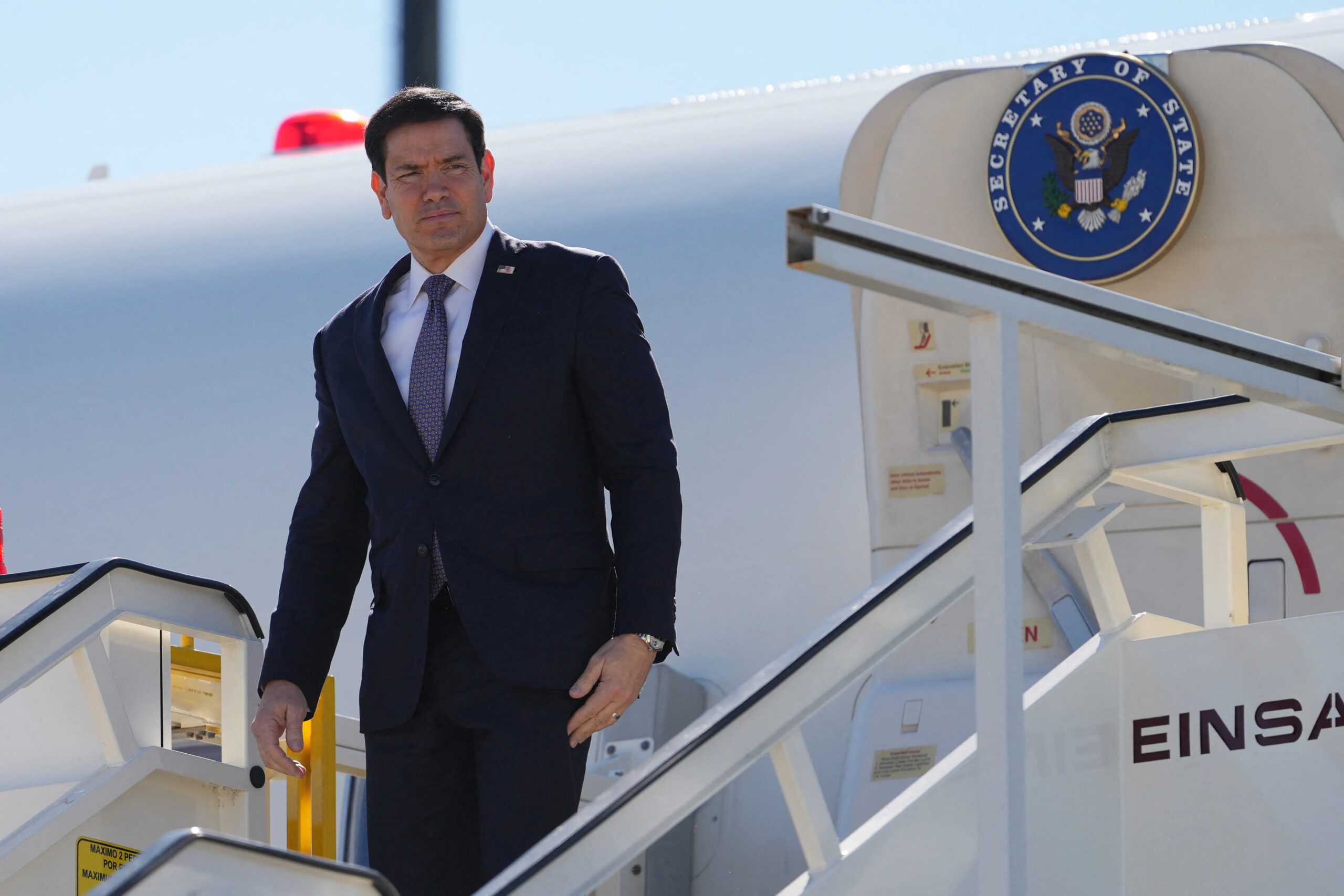
The United States is stepping up its campaign to sell Portugal the F-35. Speaking in Lisbon today, Secretary of State Marco Rubio said the United States would make Portugal a “very competitive” offer to replace its F-16 fleet. The development adds a high-level political push to an increasingly intense competition over the Portuguese Air Force’s next fighter.
Portuguese Foreign Minister Paulo Rangel said after meeting Rubio that Lisbon is seriously considering the American proposal, while emphasizing that other options remain under consideration.

“The Portuguese state will always decide in accordance with the national interest,” Rangel said at a news conference after the meeting. “There is one point that is also clear: we are seriously considering the F-35 proposal, just as we are considering others.”
Portugal currently operates 25 modernized F-16AM/BMs, including 21 single-seat F-16AMs and four two-seat F-16BMs, from Monte Real Air Base, or BA5. The Portuguese Air Force, known as the Força Aérea Portuguesa (FAP), has not yet formally launched a replacement competition, but the aging fleet is increasingly becoming the focus of attention in Lisbon.

Portugal acquired a total of 45 F-16A/B Block 15 aircraft through the Peace Atlantis I and II programs.
The first 20 aircraft were delivered beginning in 1994. These were new-build F-16A/B Block 15OCU aircraft, comprising 17 single-seat F-16As and three two-seat F-16Bs, and were used to equip Esquadra 201 “Falcões.”
A second batch followed in 1999, when Portugal received 25 former U.S. Air Force Block 15OCU aircraft. Twenty-one were F-16As and four were F-16Bs, with several intended as attrition replacements or spares. These aircraft had accumulated roughly 3,000 flight hours and underwent an extensive modernization program to bring them to the F-16AM/BM configuration. This means the aircraft are broadly comparable to the U.S. Air Force’s F-16C/D Block 50/52 fleet.
Esquadra 301 “Jaguares” finally became operational with its upgraded aircraft in 2005, while Esquadra 201 did not receive its upgraded F-16s until 2011.

Since then, the Portuguese Vipers have continued to receive incremental improvements. Their configuration has progressed through several mission-software standards, while the aircraft have been equipped with night-vision goggles, Joint Helmet-Mounted Cueing Systems (JHMCS), and advanced targeting and weapons capabilities.
Among the more important additions are Northrop Grumman Litening II targeting pods, and the ability to employ weapons including GBU-12 Paveway II laser-guided bombs, GBU-31 Joint Direct Attack Munitions (JDAM), and GBU-49 Enhanced Paveway II dual-mode weapons.

Twelve former Portuguese F-16s were transferred to Romania under a deal signed in 2013, with deliveries taking place in 2016 and 2017. Romania subsequently ordered five additional aircraft in 2019.
Structurally, the Portuguese F-16s could potentially remain in service into the mid-2040s. But maintaining their relevance against increasingly sophisticated air forces would require continued investment in avionics, sensors, communications, and self-protection systems.
The F-16AM/BM fleet continues to rely on the old AN/APG-66(V)2 pulse-Doppler radar. Replacing it with an active electronically scanned array (AESA) radar such as Northrop Grumman’s APG-83 would substantially improve detection and tracking performance, but would come at considerable cost.

Portugal faces a choice between continuing to invest in increasingly tired fourth-generation airframes or moving directly into the fifth generation.
Since the end of the Cold War, Portugal has become much more engaged in out-of-area operations and missions in support of NATO.
In the process, the Portuguese F-16 fleet has accumulated an impressive operational record.
The fighters have repeatedly deployed on NATO air-policing missions, including rotations to the Baltic States, Iceland, Romania, and Poland.

The F-35A would give Portugal a fifth-generation fighter built around low observability, sensor fusion, advanced electronic warfare, and networked operations.
The aircraft would also fit naturally into a NATO environment in which an increasing number of European air forces are adopting the F-35.
More than 900 F-35s are already in service or on order across Europe, according to previous comments by U.S. Ambassador to Portugal John Arrigo. Washington has repeatedly argued that joining that community would provide Portugal with a substantial interoperability advantage.

However, European competition includes the Eurofighter Typhoon, Dassault Rafale, and Saab Gripen E, with Airbus preparing an especially aggressive campaign for the Typhoon.
Airbus has said it intends to submit an unsolicited Eurofighter proposal to Portugal in late October or early November. That package is expected to encompass not just the aircraft, but financing, industrial participation and broader military cooperation.
Selecting the American stealth fighter deepens Lisbon’s military relationship with Washington at a time when European governments are wrestling with fundamental questions about their dependence on U.S. military capabilities.
Across the continent, uncertainty over Washington’s stance on NATO is encouraging European allies to examine ways of reducing their reliance on American military technology, even as those same countries continue to increase defense spending and purchase U.S. equipment.

If Washington can combine the F-35’s capability advantages with an attractive acquisition and sustainment package, Portugal could find itself facing a difficult choice between the strategic benefits of joining Europe’s growing F-35 fleet and the industrial and political advantages of selecting a European fighter.
The final decision on the replacement of the F-16 will also determine what combat jet spearheads the Portuguese Air Force for the next several decades.
Contact the author: thomas@thewarzone.com