wednesday

Boras Classic begins Tuesday with No. 1 and No. 2 teams playing

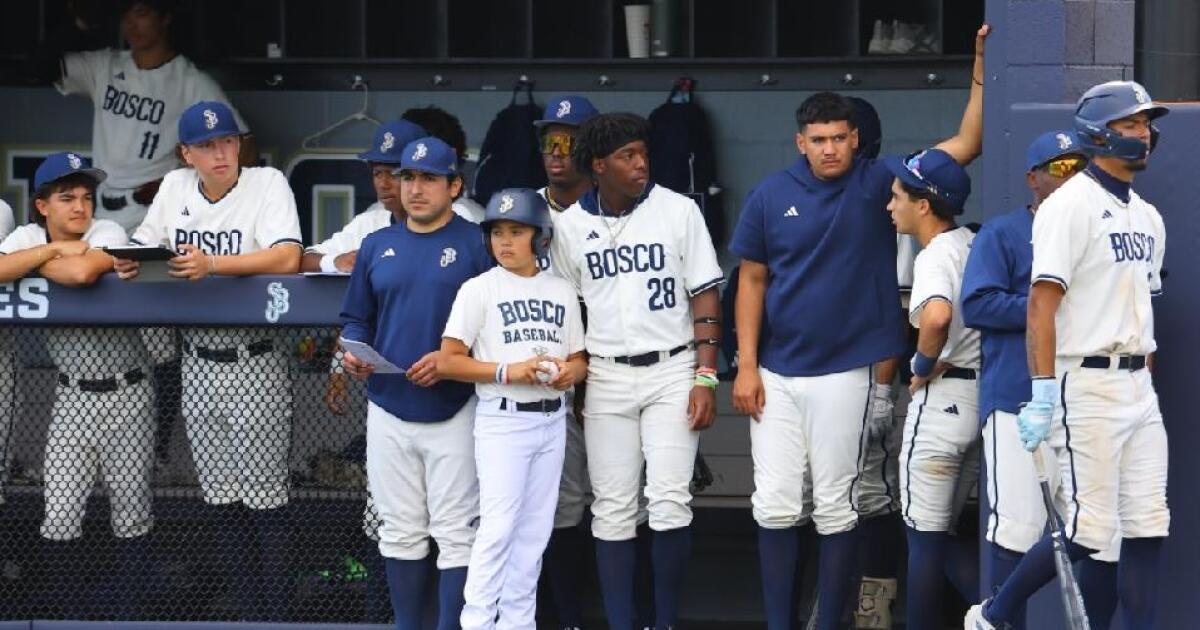
St. John Bosco, the new No. 1 high school baseball team in Southern California after taking two of three games last week from the previous No. 1 team, Orange Lutheran, could end up facing the Lancers (8-3) again at this week’s Boras Classic if both teams make it to Friday’s final at Mater Dei.

St. John Bosco, however, is in the toughest part of the 16-team Boras Classic bracket. The Braves (11-3) face a big challenge in their opener on Tuesday at 9 a.m. at Mater Dei against 12-1 Norco, which has the option of throwing either sophomore star Jordan Ayala or senior Landon Hovermale.

Also on St. John Bosco’s side is Huntington Beach and star pitcher Jared Grindlinger. The Oilers open at noon against Los Osos at Mater Dei.

Orange Lutheran plays Fountain Valley in a 9 a.m. opener at JSerra. Corona could be strongest challenger on Orange Lutheran’s side and plays JSerra in a 6 p.m. opener on Tuesday.

Quarterfinals are Wednesday and semifinals are Thursday.

This is a daily look at the positive happenings in high school sports. To submit any news, please email eric.sondheimer@latimes.com.

Source link

CNN will televise California gubernatorial primary debate in May

CNN will host a California gubernatorial primary debate May 5.

The two-hour debate will take place at 6 p.m Pacific time at a venue in the Los Angeles area that is yet to be determined. CNN anchors Elex Michaelson and Kaitlan Collins will serve as moderators.

The debate will air live across CNN, CNN International, CNN en Español and, for viewers without cable, on CNN’s subscription streaming service.

Participating candidates must have at least 3% support among likely primary voters in two state polls or an average of 3% across two polls that meet CNN’s methodology standards. The polls must be released between Feb. 1 and April 27.

The candidates must also have raised, contributed or lent to their campaigns at least $1 million, based on publicly available data from the California secretary of state.

Candidates from both parties are eligible to participate due to California’s “jungle primary” system, in which all candidates appear on the same ballot regardless of political affiliation. The top two finishers advancing to a November runoff, even if they are both from the same party.

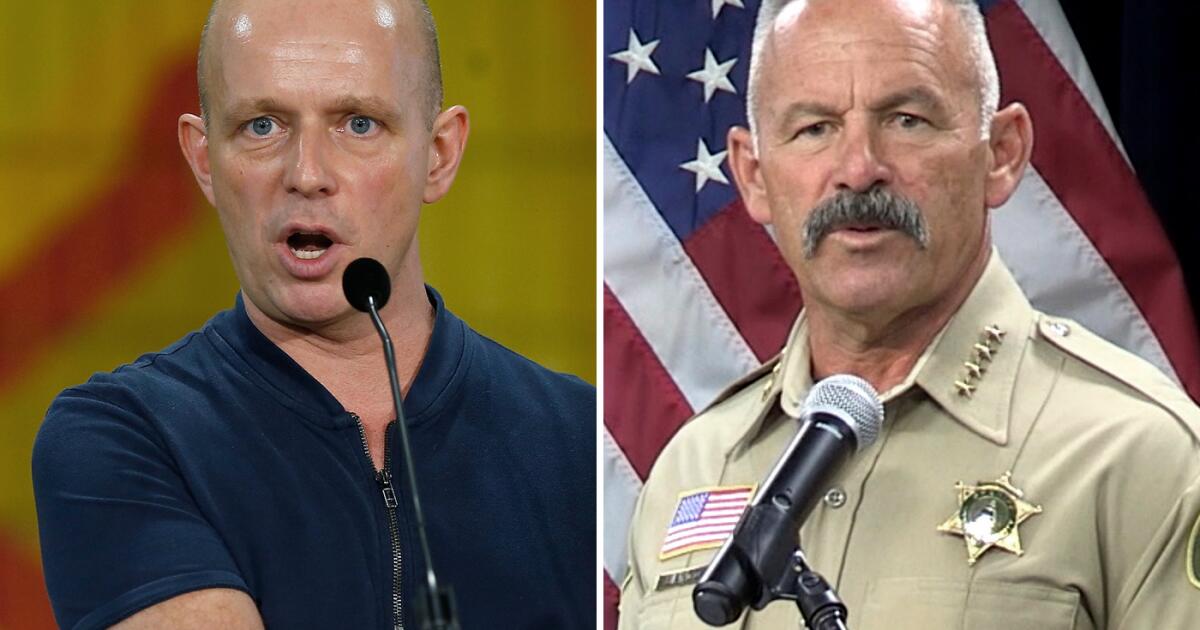
Two Republicans, conservative commentator Steve Hilton and Riverside County Sheriff Chad Bianco, are the leading candidates, according to a poll released Wednesday by UC Berkeley’s Institute of Governmental Studies and co-sponsored by The Times.

The poll showed six Democratic candidates currently qualifying for the debate under CNN’s standards: U.S. Rep. Eric Swalwell, former House Rep. Katie Porter, philanthropist Tom Steyer, former U.S. Secretary of Health and Human Services Xavier Becerra, former state Assembly Speaker Antonio Villaraigosa and San José Mayor Matt Mahan.

CNN typically does not carry debates involving candidates in statewide races, but the network believes that the California contest is significant enough for a national platform.

“One out of approximately every eight Americans lives in the Golden State and it is at the forefront of some of the most complex challenges of our time,” said David Chalian, CNN’s political director and Washington bureau chief. “California’s jungle primary system also allows for the debate to include a wide spectrum of viewpoints and proposals to tackle those challenges that will reverberate across the country in this pivotal election year.”

Source link

Florida and Mississippi enact voter citizenship checks, sparking a lawsuit in the Sunshine State

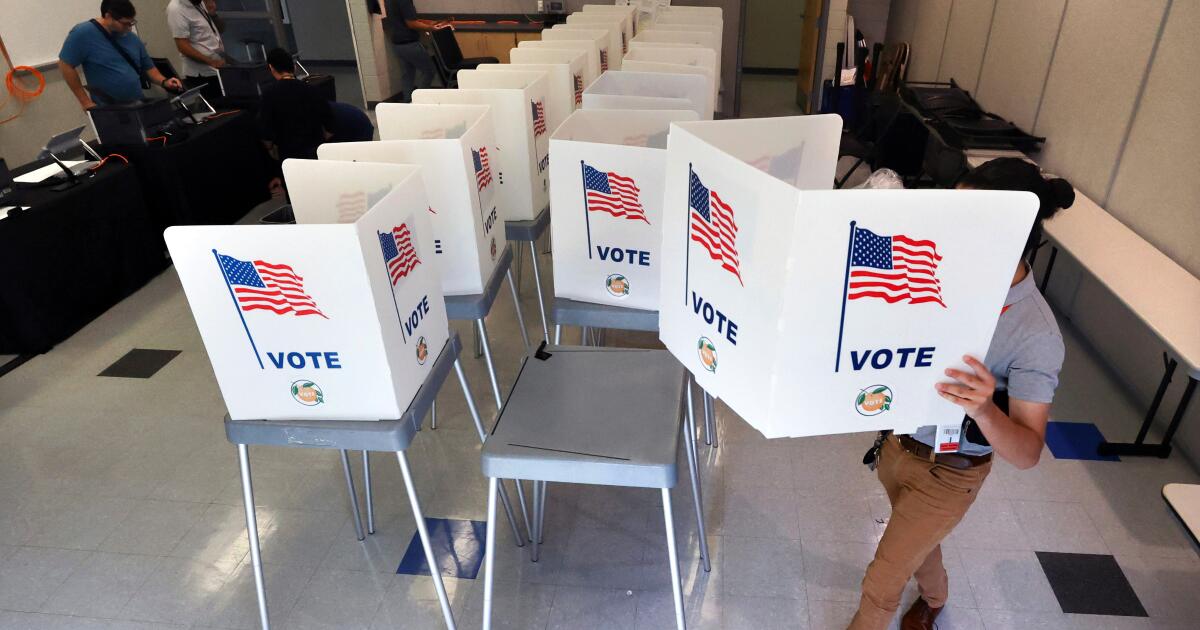
Governors in Florida and Mississippi signed into law measures that require officials to verify the citizenship of voters, just as similar legislation being pushed by President Trump has stalled in Congress.

The law signed Wednesday by Florida Gov. Ron DeSantis was immediately challenged in court by civil rights organizations that said it will make it harder for Floridians to vote.

The citizenship provision of the law goes into effect Jan. 1. It requires voters to provide a birth certificate, passport or naturalization certificate as proof of citizenship if their eligibility to vote is challenged by government officials through cross-referencing voter registration applications with motor vehicle records.

“Many eligible voters do not have these documents and cannot obtain them for a variety of reasons — including because they were born without a birth certificate in the segregated South, because their documents were destroyed in a hurricane, or because they cannot afford the hundreds of dollars it costs to replace them,” the civil rights groups said in a lawsuit filed in federal court in South Florida.

The voting legislation being pushed aggressively by Trump in Congress would mandate that people provide documentary proof of citizenship to register to vote in federal elections, such as a U.S. passport, citizen naturalization certificate or a combination of a birth certificate and government-issued photo identification. It passed the House but was stalled in the Senate before lawmakers took a spring recess.

Under the Florida law, credit cards, student IDs and retirement community identifications can no longer be used as IDs when voting, and the citizenship status of a driver must be reflected on driver’s licenses starting in July 2027.

DeSantis said the law improves the security and transparency of Florida’s election system.

“In Florida, we will always stand up for election integrity,” the Republican governor said.

The new Mississippi law signed Wednesday requires local officials registering people to vote to run additional citizenship checks if applicants don’t have or can’t provide driver’s license numbers on their voter application. The law, which takes effect July 1, also requires the secretary of state to run annual checks of the voter rolls against an online database from U.S. Immigration and Customs Enforcement to flag any potential noncitizens who could be asked to provide proof of their eligibility.

“This is another win for election integrity in Mississippi [and America],” Mississippi Gov. Tate Reeves, a Republican, said in a social media post. “We will continue to do everything in our power to make it infinitely harder — with a goal to make it impossible — to cheat in our elections!”

The Southern Poverty Law Center has said that the law could disenfranchise hundreds of thousands of Mississippians who don’t have a passport, lack a birth certificate or whose last names don’t match their birth certificates because of name changes due to marriage.

Four Republican-led states — Florida, Mississippi, South Dakota and Utah — have enacted laws this year to strengthen proof-of-citizenship requirements for voters. In Michigan, supporters of voter citizenship documentation have submitted 750,000 petition signatures in a bid to get a constitutional amendment on the November ballot.

The Republican-led Kansas Legislature also has passed legislation, though it still must go before the Democratic governor. Gov. Laura Kelly has until next week to decide whether she’ll sign the bill and hasn’t said publicly what she will do, though she has regularly vetoed past GOP-election bills. Supporters would need a two-thirds majority to override a veto — and thanks to Republican dissenters, the bill appeared to be a few votes short of that in the House.

Any efforts in Kansas to prevent noncitizens from registering to vote are shadowed by one of the state’s biggest political fiascos in recent memory — a requirement imposed in 2013 that people registering to vote in the state for the first time provide documentation of their U.S. citizenship.

That law ended up blocking the voter registrations of more than 31,000 U.S. citizens who were otherwise eligible to vote, or 12% of everyone seeking to register in Kansas for the first time. Federal courts ultimately declared the law an unconstitutional burden on voting rights, and it hasn’t been enforced since 2018.

Schneider writes for the Associated Press. AP writers David A. Lieb in Jefferson City, Mo., and John Hanna in Topeka, Kan., contributed to this report.

Source link

Speaker Johnson reverses his scathing criticism of the Senate’s Homeland Security funding plan

Less than a week after he and other House Republican lawmakers rejected a Senate plan to fund the Department of Homeland Security — but not its immigration enforcement operations — Speaker Mike Johnson has made a complete about-face.

Johnson’s embrace of a two-track Senate bill marks a sharp reversal, after he had derided it as a “joke,” and said he was “quite convinced that it can’t be that every Senate Republican read the language of this bill.”

But now that Johnson appears to be fully on board, securing support from his own conference could prove more difficult after a sizable group of House Republicans blasted the Senate-passed bill last week.

President Trump said Thursday he will sign an order to pay all Homeland Security employees who have gone without paychecks during the partial government shutdown that has reached a record 48 days.

Trump used a similar maneuver to resume pay for the Transportation Security Administration after many employees had called out from work, resulting in long delays at airport security lines for travelers. Trump’s latest intervention is expected to apply to other non-law enforcement employees at the department, including many employees at the Federal Emergency Management Agency, U.S. Coast Guard and the agency responsible for coordinating federal cybersecurity efforts.

Despite that unilateral move announced in a social media post, the funding lapse for some Homeland Security needs is likely to stretch into next week as the House contemplates passing the very same Senate plan it previously rejected.

There was no legislative resolution Thursday after both the House and Senate met for just a few minutes in pro forma sessions. Nonetheless, the Republican leadership and Trump have coalesced around a plan to fully fund Homeland Security as part of a two-step process. The agreement puts the congressional leaders on the same page for ending the impasse after they had pursued separate paths that resulted in Congress leaving Washington for its spring recess without a fix.

During the brief sessions, Senate Majority Leader John Thune (R-S.D.) put aside the House plan to fund the entire department for 60 days. Then the House met briefly without taking up the bipartisan Senate plan that had been worked out with Democrats, though Thune is looking toward eventual passage.

“I don’t know the particulars around what the House will do with it,” Thune told reporters. “My assumption is, at some point, hopefully, they’ll move it.”

Johnson’s about-face

Johnson (R-La.) and Thune announced Wednesday that they would return to the Senate measure, which funds most of Homeland Security with the exception of U.S. Immigration and Customs Enforcement and U.S. Border Patrol. Republicans will try later to fund those agencies through party-line spending legislation that could take months to finish.

Neither outcome is guaranteed, and the strategy could potentially still face opposition from the GOP’s ranks even though Trump has given his support.

House Republicans held a conference call later Thursday to discuss the next steps. The GOP leadership indicated to lawmakers that it does not expect to recall them to Washington during the spring recess; they are due back April 14.

Public backlash was swift after lawmakers left Washington last week without a resolution, with the tabloid website TMZ posting paparazzi-style photos of members at airports and out of town. The regularly scheduled break, while drawing criticism, is typically used by lawmakers to reconnect with constituents and travel abroad.

Lawmakers also heard from White House budget director Russ Vought. The White House is expected to release Trump’s 2027 budget proposal on Friday.

Funding ICE remains a hurdle

Democrats in both chambers were aligned last week with the Senate’s plan, and Senate Democratic leader Chuck Schumer of New York blamed House Republicans on Thursday for taking no action on it during the brief morning session.

“The deep division and dysfunction among House Republicans is needlessly extending the DHS shutdown and hurting federal workers who are missing another paycheck,” Schumer said.

Johnson will look to persuade the most conservative lawmakers within his conference to go along with the two-step approach agreed upon with the president, and Trump’s latest social media post could help. The president thanked Thune and Johnson for their work, and sought to project Republican unity.

“Republicans are UNIFIED, and moving forward on a plan that will reload funding for our FANTASTIC Border Patrol and Immigration Enforcement Officers,” Trump wrote.

Many in the GOP conference have taken the stance that ICE and the Border Patrol need to be included as part of any funding agreement.

“Let’s make this simple: caving to Democrats and not paying CBP and ICE is agreeing to defund Law Enforcement and leaving our borders wide open again,” Rep. Scott Perry (R-Pa.) posted on X. “If that’s the vote, I’m a NO.”

Meanwhile, the budget package that Trump wants voted on by June 1 is expected to fund ICE and Border Patrol through the remainder of Trump’s term, as a way to try to ensure those agencies are no longer at risk from Democrats objecting to his immigration enforcement agenda.

Thune acknowledged the potential hurdles to that route, such as efforts to expand the scope of the bill. He said the goal is to keep it “as narrow and focused as possible” in order to pass it “with haste.”

The vast majority of Homeland Security employees have reported to work during the shutdown, but many thousands have gone without pay. As more Transportation Security Administration agents called out from work, there was increasing frustration for air travelers confronted by long waits at some airport security lines. Those bottlenecks appeared to be clearing this week as agents began receiving backpay after Trump signed an executive order.

About 10,000 FEMA workers are being paid because their wages come out of the non-lapsing Disaster Relief Fund. At least 4,000 FEMA employees are furloughed or currently working without pay.

Freking and Cappelletti write for the Associated Press. AP writer Lisa Mascaro contributed to this report.

Source link

Trump speech on Iran war and recent remarks on oil, NATO, daycare costs land with a thud

President Trump’s meandering speech on the Iran war late Wednesday — in which he paired promises of a swift exit with new threats of escalated bombing and denied responsibility for the Strait of Hormuz — did little to assuage U.S. allies and world markets concerned about the conflict’s ongoing disruptions to the global oil supply.

Stocks dropped after markets opened Thursday and oil prices soared, with the price of U.S. crude oil jumping more than 10%, to above $110.

In the wake of the speech, diplomats from more than 40 nations — not including the U.S. — met to strategize on how to lift Iran’s continued stranglehold on the strait, the vital oil corridor that the U.S.-Israeli war drove Iran to restrict but which Trump on Wednesday said wasn’t his problem.

Iranian officials remained unbowed, asserting the U.S. and Israel “know nothing” of its remaining capabilities, that “not a single life will be spared” if either attempts a ground incursion into its territory, and that “every last” Iranian would become a soldier if necessary.

“Iranians don’t just talk about defending their country. They bleed for it,” Iranian parliament Speaker Mohammad Qalibaf, a pugilistic figure and one of Iran’s most prominent wartime voices, wrote on X. “You come for our home… you’re gonna meet the whole family. Locked, loaded, and standing tall. Bring it on.”

Meanwhile, remarks Trump made earlier Wednesday about leaving NATO elicited subtle rebukes from both international and domestic allies, including French President Emmanuel Macron and Senate Majority Leader John Thune (R-S.D.), while the president’s comments about the U.S. not being able to focus on social services like Medicare or other domestic needs such as child care as it wages its foreign war sparked outrage at home.

Far from a call for a unified push to end the war alongside allies, Trump’s speech — his first formal address to the nation since the war began a month ago — further isolated the U.S. and the Trump administration on the global stage.

Trump firmly asserted in his speech that reopening the Strait of Hormuz to oil tanker traffic was not the responsibility of the U.S., despite it causing the war, because it receives less oil from the corridor than other nations.

“The countries of the world that do receive oil through the Hormuz Strait must take care of that passage. They must cherish it. They must grab it and cherish it. They could do it easily. We will be helpful, but they should take the lead in protecting the oil that they so desperately depend on,” Trump said.

“To those countries that can’t get fuel, many of which refuse to get involved in the decapitation of Iran — we had to do it ourselves — I have a suggestion: No. 1, buy oil from the United States of America. We have plenty. We have so much,” Trump continued. “And No. 2, build up some delayed courage.”

He said those nations should have been better assisting the U.S. in its war effort already, but should now “go to the strait and just take it, protect it, use it for yourselves.”

“Iran has been essentially decimated,” he said. “The hard part is done, so it should be easy.”

Trump has consistently downplayed the threat Iran continues to pose in the region. And securing the strait — which runs along Iran’s mountainous coast, full of strategic locations from which Iranian forces can threaten ship traffic — is not an easy task, as was acknowledged by the foreign diplomats meeting to solve the issue without the U.S. on Thursday.

“We have seen Iran hijack an international shipping route to hold the global economy hostage,” said U.K. Foreign Secretary Yvette Cooper.

Meanwhile, Macron, speaking in South Korea, said the U.S. “can hardly complain afterward that they are not being supported in an operation they chose to undertake alone.”

Macron also slammed Trump’s criticism of NATO, which Trump called a “paper tiger” in remarks prior to his speech Wednesday.

“If you cast doubt on your commitment every day, you erode its very substance,” Macron said.

Trump for weeks has suggested that NATO allies who declined to join the U.S. war had failed to live up to their treaty obligations, and that remaining in the alliance may not be worth it for the U.S., though he made no mention of NATO in his Wednesday evening speech.

Trump has no power to unilaterally withdraw the U.S. from NATO. That power sits with Congress — where Trump’s own allies downplayed the idea.

“We got an awful lot of people who think that NATO is a very critical, incredibly successful post-World War II alliance,” Thune said. “I think in the world today, you need allies.”

Trump’s formal speech appeared to be geared in part toward his allies at home, including his MAGA base, where frustrations with the war have mounted among the cohort of Trump supporters who’d championed his “America First” message and campaign promises to extricate the U.S. from foreign entanglements, not start new ones.

Trump said he has promised since his first foray into politics in 2015 that he would never let Iran develop a nuclear weapon. He told Americans listening that the war “is a true investment in your children, and your grandchildren’s future,” because it was making the world safer.

However, Trump exacerbated frustrations over the war’s distraction from domestic priorities with separate comments he made earlier on Wednesday at a private Easter luncheon, video of which the White House posted online and then deleted.

In those remarks, Trump said U.S. military needs had to take priority over social services and other major costs for Americans, such as child care, which maybe states could pay for by increasing taxes.

“It’s not possible for us to take care of daycare, Medicaid, Medicare, all these individual things,” Trump said. “They can do it on a state basis. You can’t do it on a federal. We have to take care of one thing: military protection. We have to guard the country.”

The president’s political opponents leaped on the remarks as out of touch.

“Trump says we can pay for war in Iran but can’t afford childcare,” Rep. Ro Khanna (D-Fremont) wrote on X, before asserting that the billions of dollars the U.S. has spent in Iran could have been used to offset Americans’ daycare costs.

White House Press Secretary Karoline Leavitt, in response, accused Democrats and the media of taking Trump’s remarks “out of context,” and claiming he was only talking about “stopping the scams” and rooting out fraud in such programs.

Democrats also took broader swipes at Trump’s framing of the war.

“Donald Trump’s month-long war with Iran has come at a big cost to taxpayers and has tragically taken the lives of 13 American service members. He dragged our country into a conflict that rattled markets, drove up gas prices, squeezed working families, and further destabilized the Middle East,” Sen. Alex Padilla (D-Calif.) wrote on X. “With his poll numbers falling to record lows, Trump is now trying to cut and run with little to show for it. He started this unauthorized war with no clear or consistent justification and the consequences of his choices won’t disappear when he walks away.”

United Nations Secretary-General António Guterres on Thursday said the war was “inflicting immense human suffering and already triggering devastating economic consequences,” and called directly on the U.S. and Israel to end it. He also called on Iran to “stop attacking their neighbors” and “respect navigational rights and freedoms along critical maritime routes, including the Strait of Hormuz.”

“Conflicts do not end on their own,” Guterres said. “They end when leaders choose dialogue over destruction.”

In addition to defending NATO, Macron and other French politicians on Thursday were also reacting to Trump mocking Macron in his remarks Wednesday. He mimicked a French accent while accusing Macron of only wanting to aid the U.S. war effort once the battle had been “won” and referenced a moment last year when Brigitte Macron was caught on video pushing her husband’s face, which he said was them joking with each other.

“There is too much talk, and it’s all over the place,” Macron said, according to French newspaper Le Monde. “We all need stability, calm, a return to peace — this isn’t a show!”

Yaël Braun-Pivet, president of France’s lower house of parliament, told the French broadcaster franceinfo that the Iran war is “having consequences for the lives of millions of people, people are dying on the battlefield, and we have a president who is laughing, who is mocking others.”

Times staff writer Nabih Bulos in Beirut contributed to this report.
Source link

Kanye West’s comeback show at SoFi Stadium: Here’s what happened

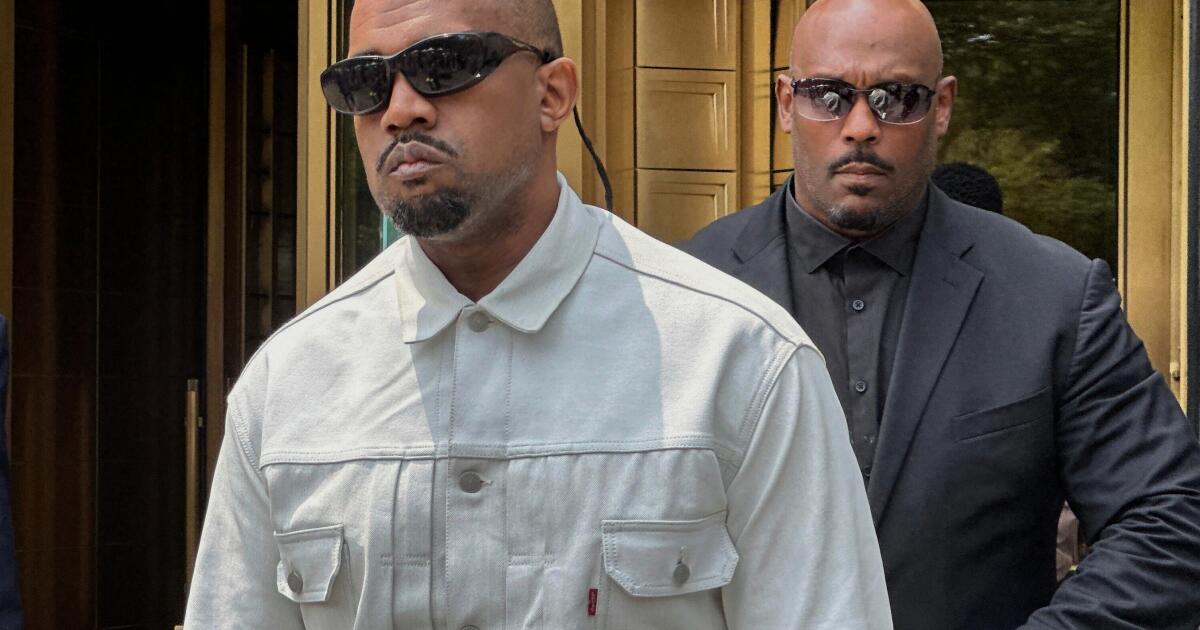
On the first night of Passover, Ye — the superstar rapper, the artist formerly known as Kanye West, the man who once threatened in a tweet to go “death con 3 On JEWISH PEOPLE” — performed for what looked like a full house at Inglewood’s SoFi Stadium.

The first of a pair of Ye concerts this week at the gigantic NFL palace, Wednesday’s show came two months after the 48-year-old musician apologized for his past antisemitic comments, attributing his behavior to injuries he sustained in a 2002 car crash.

More to the point, perhaps, the gig came on the heels of last week’s release of “Bully,” Ye’s first solo LP since 2022’s “Donda 2,” which the trade journal Hits predicts will enter the album chart at No. 2, right behind the latest from BTS.

In other words, Ye’s trying to get a comeback going — and, to judge by the very warm reception he got at SoFi, he might prove successful.

Wednesday’s concert — Ye’s first full live performance in Los Angeles since a 2021 gig at the L.A. Memorial Coliseum — lasted about two hours and featured guest appearances by Don Toliver and Ye’s 12-year-old daughter, North.

The rapper performed atop an enormous dome set up on the stadium’s floor; for much of the night, a spinning globe was projected onto the dome so that Ye looked to be — well, on top of the world is how he might’ve put it.

Early in the set, Ye asked his technical crew to “make the earth move slower,” which somebody made happen.

Accompanied by what sounded like prerecorded backing tracks, Ye opened with a handful of songs from “Bully,” which seeks a middle ground between the soulful, sample-heavy sound of his early work and the gloomier, synthed-up vibe of more recent records like “Donda” and his and Ty Dolla Sign’s “Vultures 1” and “Vultures 2.”

After an extended version of the new album’s “All the Love,” he reached back for an assortment of oldies, including all-timers like “Father, Stretch My Hands, Pt. 1,” “Mercy,” “Black Skinhead” and “Can’t Tell Me Nothing,” which he stopped and restarted after telling the crew to mute the music during the song’s line about getting his money right so that he could hear the crowd join in.

He also did his and Jay-Z’s collaborative 2011 hit — the one whose title contains the N-word — which made you think about how he and his old frenemy are both mounting comebacks at the same time, Jay-Z as a kind of retiree’s victory lap and Ye in hopes of moving past a mess of his own making.

Other classics Ye performed included “Bound 2” and “Heartless,” to name two of his most emotionally potent songs, though thick smoke in the stadium made it hard to feel a sense of connection with him as he moved back and forth atop the dome.

Ye brought out Don Toliver to perform “Moon” and Toliver’s “E85,” then cycled again through the “Bully” tracks he’d done earlier. North West came out to perform “Talking” and “Piercing on My Hand,” after which Ye did his and Ty Dolla Sign’s “Everybody,” which prominently samples the Backstreet Boys’ “Everybody (Backstreet’s Back).”

Then he finished with a sprint through some of his most beloved hits: “All Falls Down” into “Jesus Walks” into “Through the Wire” into “Good Life,” which he restarted several times because he said the lights were “corny.”

“Is this like an ‘SNL’ skit or something?” he asked when nobody made the changes he was looking for.

Ye ended the show with “All of the Lights,” which got a huge pryo display, and “Runaway,” his epic 2010 warning to anyone foolish enough to consider falling in love with him.

“Run away fast as you can,” he sang, and the crowd roared right along.

Source link

Rams star Puka Nacua in rehab after he allegedly bit woman

Rams star receiver Puka Nacua, who was involved in a string of off-the-field situations the last few months, including an alleged biting incident that led to a civil lawsuit, entered a rehabilitation care facility in March, his attorney confirmed Wednesday.

Last week, a woman filed a civil lawsuit against Nacua, alleging that on New Year’s Eve he made an antisemitic statement during a group dinner and later bit her shoulder. Attorney Levi McCathern told The Times before the lawsuit was filed that Nacua denied the allegations and that Nacua would “pursue all available legal remedies in response to these false and damaging statements.”

The California Post reported Wednesday that Nacua had checked into a Malibu rehab facility. A Rams official declined to comment.

In a statement to The Times on Wednesday, McCathern said Nacua “voluntarily entered a private facility to focus on his health, personal growth, and overall development — and I’m really proud of him for doing that ahead of his upcoming season.

“He is committed to using this time constructively so that he can return in the best possible position — both personally and professionally — to continue contributing to his team and the game he loves.”

The Rams are scheduled to begin offseason workouts under coach Sean McVay on April 20. In the statement, McCathern said that Nacua would complete the program in time to participate in Rams organized team activities. That part of the offseason program begins several weeks into the offseason.

“Puka is deeply grateful for the support he has received from his family, friends, Coach McVay, and his teammates,” McCathern said. “It is unfortunate that a trivial lawsuit has drawn attention to him during a time when he is committed to becoming a better person. I am excited to see what the future holds for this exceptionally talented young man.”

The lawsuit was the latest situation involving Nacua that cast a spotlight on the fourth-year pro.

During a livestream last December, Nacua criticized NFL officials and made a gesture regarded as antisemitic. Nacua apologized, and the Rams and the NFL issued statements condemning antisemitism and discrimination. But after the Rams’ loss to the Seattle Seahawks, Nacua criticized officials in a social media post from the locker room. The NFL fined him $25,000.

Nacua, 24, led the NFL with 129 receptions last season, was voted All-Pro and was a finalist for NFL offensive player of the year. He is entering the final year of his rookie contract, and he is eligible for an extension that could equal or surpass the deal Seattle Seahawks receiver Jaxon Smith-Njigba recently signed that includes $120 million in guarantees.

On Monday, at the NFL owners meetings, McVay repeatedly said, “I trust this kid’s heart,” and later said “he understands what the responsibility is, not exclusive to just the production on the field.”

General manager Les Snead described Nacua as “ young man, becoming,” who is “continuing to evolve” as a person and player. Snead and Tony Pastoors, the Rams’ chief operating officer both said on-the-field performance is not the only factor that is taken into account when making decisions regarding contract extensions.

“It isn’t just, ‘OK, turn it on on Sundays and make decisions from there,’” Pastoors said. “We have to take in every data point we can.”

Source link

Trump arrives at Supreme Court to attend birthright citizenship arguments

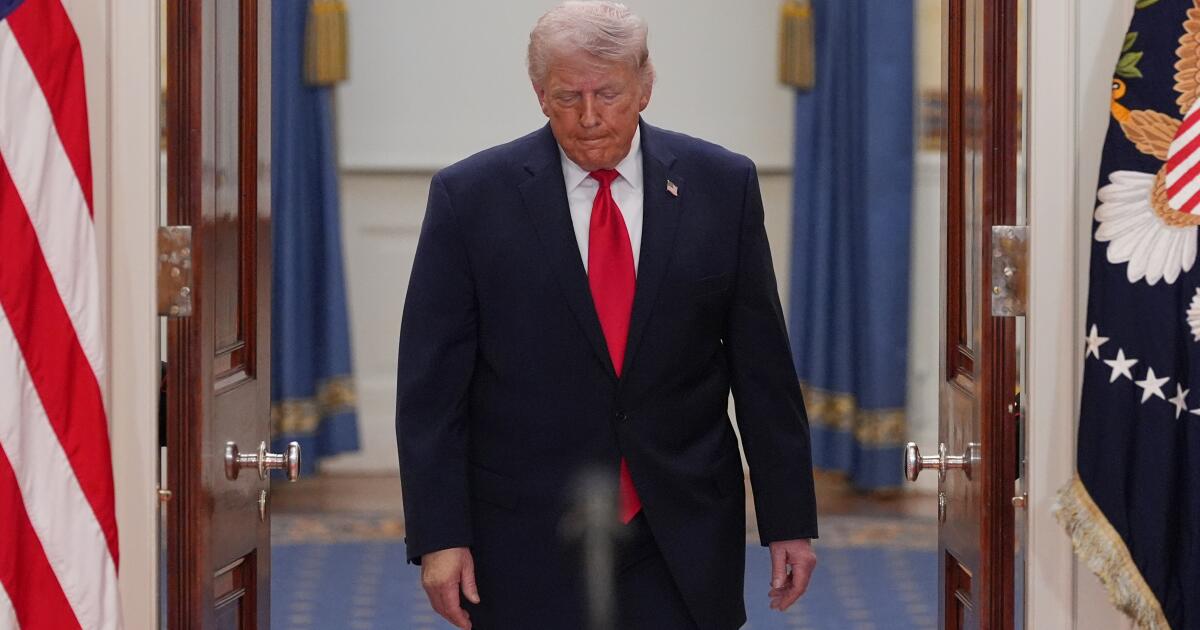
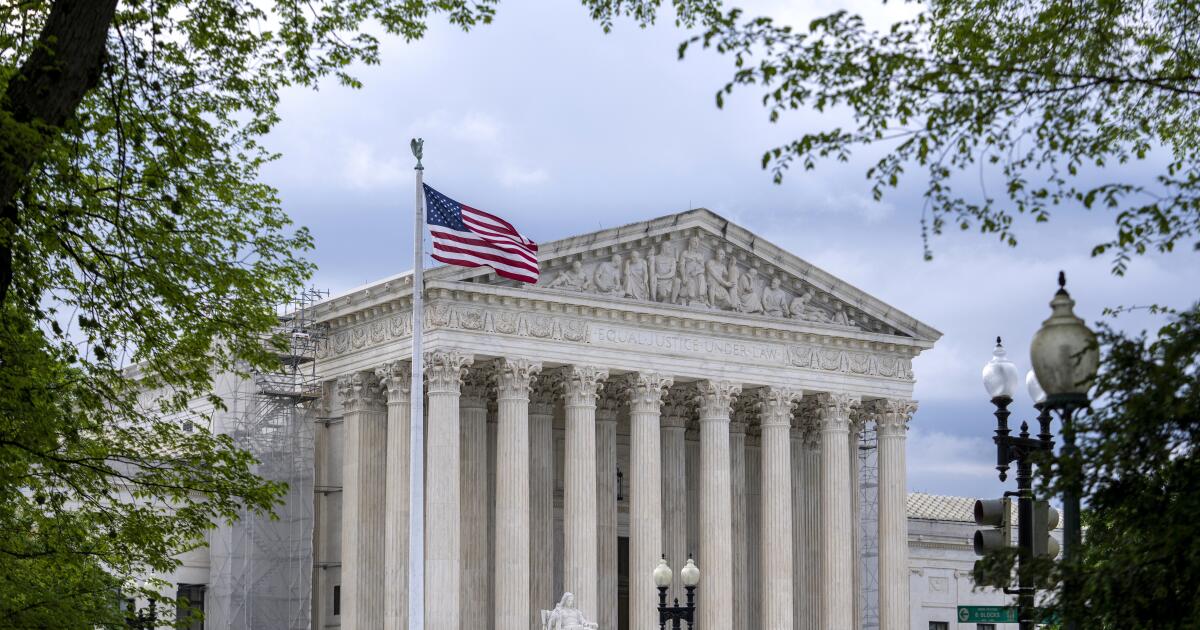
President Trump on Wednesday became the first sitting president to attend oral arguments at the Supreme Court, inserting himself directly into a high-stakes legal battle over one of the most consequential orders of his administration.

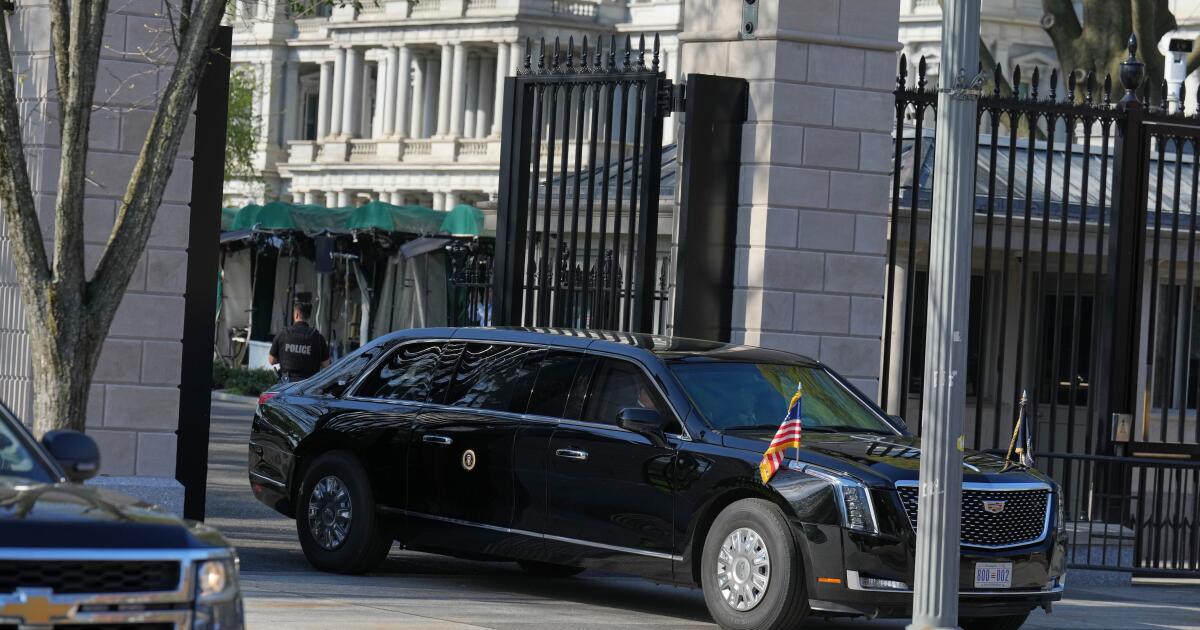
Trump arrived at the court Wednesday morning by limousine for arguments over whether the president has the authority to effectively rewrite the Constitution by ending birthright citizenship for children born in the United States to parents who are in the country unlawfully or temporarily.

In the run-up to Wednesday’s arguments, Trump suggested that Supreme Court justices appointed by Republicans who have ruled against his agenda are “so stupid.”

“Some people would call it stupidity; some people will call it disloyal,” Trump told reporters in the Oval Office on Tuesday.

“Dumb Judges and Justices will not a great Country make!” the president wrote on Truth Social on Monday.

The unprecedented appearance highlights how high Trump believes the stakes are, according to Adam Winkler, a constitutional law professor at UCLA.

“It’s not clear why Trump is attending,” Winkler said. “Maybe he is just interested in the unusual drama of a Supreme Court argument. Or perhaps he is trying to intimidate the justices, like the scene in ‘The Godfather Part II’ where the mob boss shows up at a hearing to scare the witness into recanting his testimony.”

Regardless, Trump’s presence probably won’t change any minds on the bench, Winkler said.

The justices prize their independence, including many who share Trump’s judicial philosophy. Still, it will likely change the mood, Winkler said — most hearings are quiet and academic.

The birthright citizenship order, which Trump signed on the first day of his second term, is a keystone of his administration’s broad immigration crackdown.

Trump has framed the policy as a necessary step to curb what he describes as abuse of the immigration system.

“Birthright Citizenship is not about rich people from China, and the rest of the World, who want their children, and hundreds of thousands more, FOR PAY, to ridiculously become citizens of the United States of America. It is about the BABIES OF SLAVES!”

Every lower court that has considered the issue has found the order illegal and prevented it from taking effect. A definitive ruling by the nation’s highest court is expected by early summer.

This is a developing story and will be updated.

Source link

Spain strikes at 12 airports Wednesday update as unions say planes taking off with unloaded luggage

Aircraft also forced to take off without possessions, Spanish media report

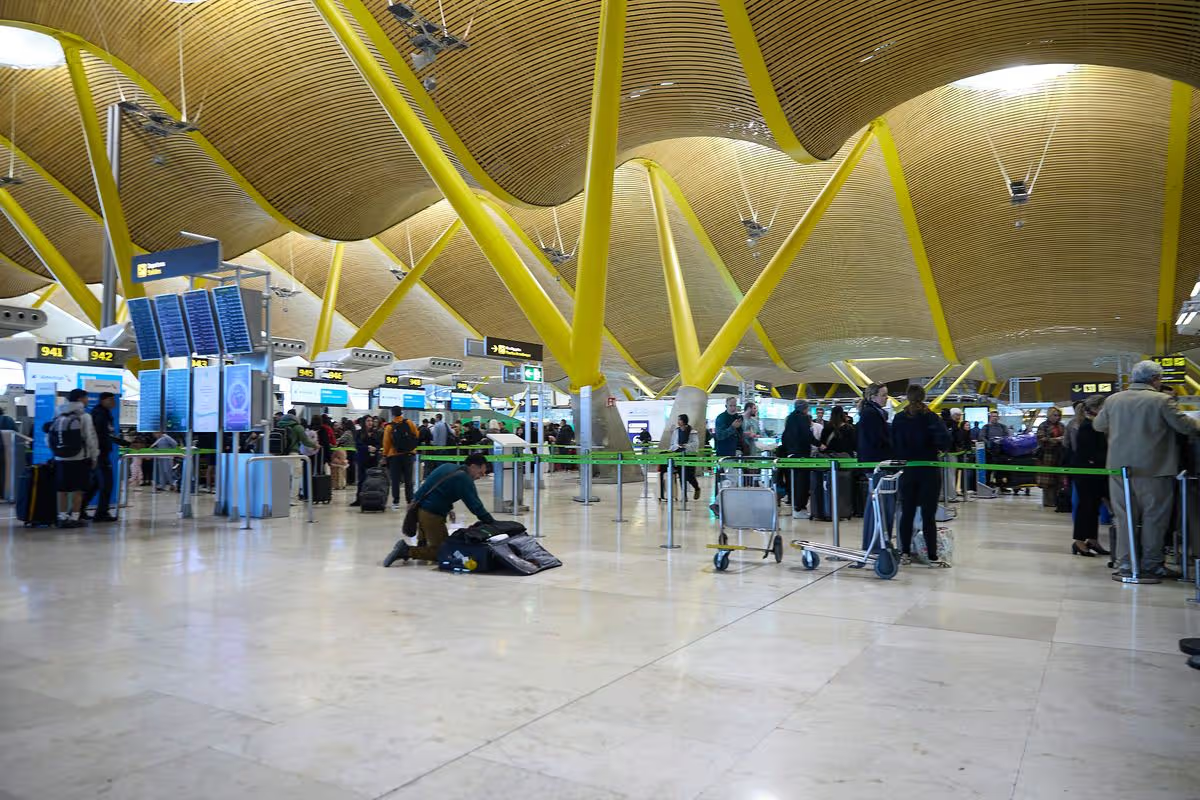
Spanish media have reported that luggage has been left behind or simply not been unloaded from aircraft as a massive strike across 12 airports continues in the run-up to Easter. After the second day of the indefinite strike called at 12 Spanish airports by Groundforce, at least six planes had to depart this Monday from Madrid-Barajas Airport without passengers’ luggage, ABC reported

The strike continues at Groundforce’s ground handling facility, a Globalia group company that provides services to the airports of Madrid, Barcelona, Palma de Mallorca, Alicante, Málaga, Gran Canaria, Valencia, Ibiza, Bilbao, Lanzarote, Fuerteventura, and air cargo in Zaragoza.

These work stoppages, called by the unions CCOO, UGT, and USO due to wage disputes with the company, are scheduled for Mondays, Wednesdays, and Fridays during the morning, afternoon, and night shifts – from 5 to 7am, 11am to 5pm, and from 10pm to midnight.

Some airports have had little disruption, Europress reported. Palma Airport was said to be operating almost as normal early on Wednesday morning, with isolated delays due to a ground staff strike.

Specifically, there have been two delays to departures and four delays to arrivals, according to information from Aena obtained by Europa Press. Ibiza Airport, which is also affected by the ground staff strike, has not reported any incidents.

READ MORE: Spain 12 airports strike Monday update on flights delayed as lawyer says ‘get there 3 hours early’READ MORE: Spain 12 airport strikes Tuesday update as aircraft take off ‘without luggage’

Union FeSMC-UGT said widespread impacts include widespread delays averaging nearly one hour per flight, flights left unattended, with essential ground handling services clearly overwhelmed, and cancellations, especially during peak hours.

They also claimed thousands of bags have been left unloaded or delivered late, generating an unprecedented logistical collapse.

A spokesman said: “All of this constitutes the epilogue to irresponsible management by the company, which has opted for conflict instead of dialogue. A company that, judging by the facts, seems to care very little about its workers, its customers, and the thousands of affected passengers.

“The current situation reflects a complete breakdown in labour relations and an unprecedented deterioration of the internal climate, with an uncertain future if there is no immediate change in attitude.”

Meanwhile, ground handling company Menzies, which provides services to airlines such as Norwegian, EasyJet, and Canaryfly in the Canary Islands, reached an agreement and called off a strike planned for April 2nd, 3rd, 4th, 5th, and 6th, coinciding with the peak days of Holy Week.

The strike, which had been called due to the company’s “organisational insolvency,” was going to affect approximately 3,000 of the group’s employees in Spain, 600 of them in the Canary Islands. It should be noted that the first days of the strike were scheduled for last Saturday and Sunday, but were cancelled due to the start of negotiations between the union representatives and the company.

Negotiations have concluded with an agreement between all parties, representing significant progress in labour rights and improved working conditions, thanks to the “constant effort and advocacy of UGT,” the union stated in a press release.

Source link

Passengers flying to Spain, Greece and Turkey should book before Wednesday

Passengers should act now before flights get more expensive

Passengers thinking of booking flights from the UK should book before Wednesday if they want to avoid an imminent cost increase. Air passenger duty (APD) is going up on April 1, making flights more expensive. As the duty forms part of the cost of each airline ticket, carriers say the adjustment is likely to result in higher fares on some routes, Majorca Daily Bulletin reports.

The amount of air passenger duty per person depends on several things, including ticket class and how far the country’s capital city is from the UK. The amount goes up significantly if you sit in anything but basic economy and if you fly to a country whose capital is more than 2,000 miles away from London.

Travel expert Simon Calder explains that the levy “is unique to the UK and a topic of much controversy”. He adds: “Chancellor Rachel Reeves has imposed an above-inflation increase from April 1, 2026 and one in line with the retail prices index a year after that. By the summer of 2027, a family of four flying premium economy to Orlando will pay over £1,000 in tax for leaving the UK in anything better than basic economy.”

Four different categories of destination

  • UK domestic flights
  • Band A: Countries where capital city is 2,000 miles or less from London — this covers all of Europe
  • Band B: Capital city is 2,001-5,500 miles from London — includes most long-haul destinations
  • Band C: Capital city is over 5,500 miles from London — includes Bangkok, Singapore, Hong Kong, Tokyo, Buenos Aires and Australia.

What are the rates?

From April 1, 2026, they will all rise to the following:

  • UK domestic: £8 (economy) or £16 (anything but economy)
  • Band A: £15 or £32
  • Band B: £102 or £244
  • Band C: £106 or £253

Before April 1, 2026 the rates are as follows:

  • UK domestic: £7 or £14
  • Band A: £13 or £28
  • Band B: £90 or £216
  • Band C: £94 or £224

So you can see, the increases are not huge but could add significant costs to the price of a holiday for a family of four to somewhere that is more than 2,000 miles away.

APD does not apply to children under 16 travelling in basic economy but is payable for all children over two travelling in premium classes.

How much APD will I pay?

A family of four with children between two and 15 will pay the following APD from April 1, 2026:

  • UK: £16 in basic economy, £64 in premium economy or better.
  • Europe: £30 or £128
  • Most long-haul destinations: £204 or £976
  • Ultra-long-haul destinations: £212 or £1,012

But a family of four with children aged 16 and over will pay the following APD from April 1, 2026:

  • UK: £32 in basic economy, £64 in premium economy or better
  • Europe: £60 or £128
  • Most long-haul destinations: £408 or £976
  • Ultra-long-haul destinations: £424 or £1,012

As you can see, the year-on-year increases are not that significant for shorter flights, but can add up more if you are taking older children on longer flights. But if you feel that you want to save every pound possible, if you get your flights booked before Wednesday then you’ll save on APD.

Source link

Prep talk: Troy Randall of Corona Santiago is becoming a baseball standout

One month into the high school baseball season, it’s clear that junior third baseman and relief pitcher Troy Randall of Corona Santiago is headed to standout status.

So far, he’s batting .444 with 20 hits and only two strikeouts in 45 at-bats. As a pitcher, he’s given up no earned runs in eight innings with 13 strikeouts.

“He’s just been maturing,” coach Ty De Trinidad said.

Randall showed up as a 6-foot freshman and played junior varsity. Now he’s 6-2 and healthy after a broken foot last year interrupted his first season on varsity.

He made two terrific defensive plays on Wednesday in a loss to Corona and also had two hits.

His development has been important for Santiago, which is 10-3.

This is a daily look at the positive happenings in high school sports. To submit any news, please email eric.sondheimer@latimes.com.

Source link

USC football focuses on fine details during spring practice

Three weeks into spring practice, USC football coaches are making one thing clear: 95% of their best will not be accepted or tolerated. Wednesday’s practice started with some of the players doing up-downs after forgetting equipment.

“It was a good message from some of our staff and leaders in terms of the approach that we need to have every day that we come out here,” Trojans coach Lincoln Riley said.

A sentiment that was shared by junior defensive tackle Jide Abasiri: “We just have to be better prepared.”

After the hiccup, Riley said the team responded well and it was back to business.

USC defensive tackle Jide Abasiri celebrates after a defensive stop against Michigan at the Coliseum on Oct. 11.

USC defensive tackle Jide Abasiri (97) is pushing himself to be a more vocal leader as a the Trojans help young players get acclimated to the program.

(Gina Ferazzi/Los Angeles Times)

After a spirited day on the field on Tuesday following a one-week spring break, Wednesday’s practice was scripted with the intent to cause stress and create discomfort — stacking multiple two-minute drills after a 6 a.m. team meeting. The goal is to build a no-excuses program.

“It’s invaluable time, invaluable reps,” Riley said. “Coming out and working plays and the techniques, great. When you start putting those guys in real-life situations and you make it really difficult on them, you really start to see who rises up and they’re great teaching moments for these guys and for the team in terms of what we want to be and what we want them to be.”

Regardless of the mental challenges Riley applied, the Trojans’ morale remains positive as players compete for spots in the lineup. The energy of the team comes from within, Riley said.

“It allows us as a staff to really hone in on pushing these guys, and coaching and critiquing and correcting,” Riley said. “And they’re taking it well.”

Attention to detail has always been important at USC, but Abasiri said this year there is an extra emphasis being placed on play-specific details. The staff has implemented drills that focus on a player’s specific movement or job during various plays.

Entering his third season with the Trojans, Abasiri said he felt like he needed to be a team leader. USC landed the No. 1 class in the nation for the first time since 2006. With so many new young players joining spring practice and a limited number of Trojans with three years of experience, Abasiri felt it was his job to lead.

“Just being an older guy, I feel like it’s important for me to … help them just come along,” Abasiri said.

So far, his advice has been to “just have fun with it.”

“I mean, obviously, stay on top of everything and all your stuff, but I feel like people get so stressed and so caught up in what they’re doing that they forget that this is supposed to be enjoyable,” Abasiri said.

The coaching staff, meanwhile, is balancing teaching schemes and the playbook.

“You have to be able to do both at this level,” Riley said. “The new guys that came in did have a pretty good foundation. A lot of them came from really good programs. A lot of them had a pretty good working football knowledge to where when we got started with them, it wasn’t like you felt like you were starting from literal square one.”

Return game is still unsettled

USC is still working to identify its top kickoff and punt return options.

“We haven’t done a lot of live returns yet,” Riley said. “We’re just trying to figure out who really fields the ball well, who understands it, who makes decisions and honestly, the returners, they’re showing us a lot of what they can do just in the offensive and defensive periods.”

The coaching staff has a pretty good idea who some of the best players in that position are, but at the moment, they just want to develop the skills, from a return standpoint.

Source link

Jessi Draper unloads about estranged hubby Jordan Ngatikaura

Escorts. Surveillance. Blackmail. Sex parties?

Jessi Draper of “The Secret Lives of Mormon Wives” is accusing her estranged second husband, Jordan Ngatikaura, of being involved in pretty much all of the above.

Ngatikaura filed for divorce Thursday in Utah after five years of marriage to Draper. Though that was far from the start of their marital problems, she told Alex Cooper during Wednesday’s episode of “Call Her Daddy” — which was taped Friday — that the dissolution filing was something they had agreed to do together. Then he changed his mind, she said, and she got the news via TMZ.

“I’m the one who ended it. I told him on Friday the 13th, so not that long ago, and I just said I want a divorce. He definitely didn’t want it. And now he’s the one rushing to do it, which is a little strange,” Draper told Cooper.

Also strange, in her view, was his choice to state on the documents that she had had an affair, though they had agreed previously that the reason would be the tried-and-true and totally non-gossipy “irreconcilable differences.” Plus Draper had only kissed another man twice, she said. She never had a physical affair with Marciano Brunette of “Vanderpump Villa,” though their emotional affair was a big part of the third season of “Mormon Wives.” Also, Utah is a no-fault state when it comes to divorce.

The Times was unable to contact Ngatikaura on Wednesday for comment on Draper’s allegations.

During the chat, Draper called her estranged husband “calculated” and “emotionally abusive” and said he told her he had been advised by someone to file on his own. She also admitted to Cooper that their marriage most likely was what it was because she went too quickly from divorcing her first husband to starting a relationship with her second.

That said, Draper said that right before Season 1 of “Mormon Wives” dropped on Hulu in September 2024, she was given “proof” that Ngatikaura had been using an escort service in Texas. At the time, she presented her evidence to him, she said, only to have him say it had probably been generated by AI.

Draper also said she had heard rumors of “sex parties” that he allegedly attended, though her sourcing on that allegation was definitely of the friend-of-a-friend-who-was-there variety. She further claimed that Ngatikaura had listened in on her personal conversations via cameras in her house — cameras she said he unplugged when he moved back into the house and she moved to a hotel — and had blackmailed her, threatening to post texts between her and Brunette online.

“Any time he was mad at me, he’s like, ‘I’m going to post them. I’m going to ruin your life,’” Draper told Cooper.

One day, she said, Ngatikaura told her he believed in traditional gender roles and that he should be in his masculine and she in her feminine, and therefore she should do Pilates every day. That led to a fight, during which he threatened to post the texts he had been keeping in a draft in his phone. Nobody knew yet what had happened between her and Brunette, and she worried that exposing everything would hurt her business, where she employs dozens of people.

“I went to go grab his phone. I was like, ‘Jordan, no … This could ruin everything.’ And he goes, ‘OK.’ And I’m freaking out. So, I’m trying to get his phone. I’m kind of chasing him, trying to get it. He pulls out his phone, starts recording me, and he’s like, ‘What are you going to do? What are you going to do? Are you going to be like, “Taylor, should I call the cops?”’ (referring to her embattled co-star and best friend, Taylor Frankie Paul, whose season of “The Bachelorette” was nixed before it aired).

“I was like, ‘Whoa,’ ‘cause he’s friends with Dakota [Mortenson, Paul’s on-and-off boyfriend], so he’s like hearing things like that, obviously, and he’s baiting me and he’s trying to be like, ‘Oh, oh, what are you doing?’ And that was the moment where, for me, I was like, ‘What am I doing? I am chasing around my husband trying to get his phone so he doesn’t blackmail me. This is not healthy.’ And I literally left him the next day,” she said.

“I was like, this can’t happen anymore.”

Source link

Kickoff time set for Rams’ season opener against 49ers in Australia

The date and kickoff time for the Ramsseason opener in Australia is set.

The NFL announced on Wednesday that the Rams will play the San Francisco 49ers on Friday, Sept. 11, at the Melbourne Cricket Ground at 10:35 a.m. Australian Eastern Time. Because of the time difference, fans in the United States will see the game on Thursday, Sept. 10 at 5:35 p.m. PDT.

The league did not announce a broadcast or streaming partner.

It will be the first regular-season NFL game to be played in Australia, where the Rams, Seattle Seahawks, Las Vegas Raiders and Philadelphia Eagles hold global marketing rights.

According to the NFL, “hospitality packages” will be available for purchase through Ticketmaster on April 6, tickets on April 7.

The Rams, who advanced to the NFC championship game last season, are expected to be a favorite to play in Super Bowl LXI at SoFi Stadium.

The Rams have added cornerbacks Trent McDuffie and Jaylen Watson to a roster that includes quarterback Matthew Stafford — the reigning NFL most valuable player — receivers Puka Nacua and Davante Adams and edge rusher Jared Verse among others.

Also on Wednesday, the Rams announced that they re-signed running back Ronnie Rivers to a one-year contract.

Rivers, 27, has been a dependable backup and special teams contributor during his four seasons with the Rams. Last season, he played in 11 games and rushed for 46 yards in nine carries.

Source link

Supreme Court makes it harder for music and movie makers to sue for copyright infringement

The Supreme Court made it harder for music and movie makers to sue for online piracy, ruling Wednesday that internet providers are usually not liable for copyright infringement even if they know their users are downloading copyrighted works.

In a 9-0 decision, the justices threw out Sony’s lawsuit and a $1-billion verdict against Cox Cable for copyright infringement.

Lower courts upheld a jury’s verdict against Cox’s internet service for contributing to music piracy, which the company did little to stop.

Sony’s lawyers pointed to hundreds of thousands of instances of Cox customers sharing copyrighted works. Put on notice, Cox did little stop it, they said.

But the high court said that is not enough to establish liability for copyright infringement.

“Under our precedents, a company is not liable as a copyright infringer for merely providing a service to the general public with knowledge that it will be used by some to infringe copyrights,” Justice Clarence Thomas wrote for the court.

Two decades ago, the court sided with the music and motion picture producers and ruled against Grokster and Napster on the grounds their software was intended to share copyrighted music and movies.

But on Wednesday, the court said “contributory” copyright infringement did not extend to internet service providers based on the actions of some of their users

“Cox provided Internet service to its subscribers, but it did not intend for that service to be used to commit copyright infringement,” Thomas said. “Cox neither induced its users’ infringement nor provided a service tailored to infringement.”

In its defense, Cox argued that internet service providers could be bankrupted by huge lawsuits for copyright infringement, which they said they did not cause and could not prevent.

Source link

Joe Kent’s resignation over Iran war reignites antisemitism fears and debate over Israeli influence

It was no surprise when Joe Kent showed up on Tucker Carlson’s podcast a day after quitting his counterterrorism job in President Trump’s administration. Here was a top official who resigned to protest the war with Iran turning to right-wing media’s leading critic of the conflict.

“The Israelis drove the decision to take this action,” Kent said in Wednesday’s interview.

But before long, the conversation moved in a different direction as Kent nodded to conspiracy theories that pro-Israel forces were behind the assassination of conservative activist Charlie Kirk.

“I’m saying there are unanswered questions,” Kent said.

The conversation encapsulated two schisms within the Republican Party and the right-wing media system, both of which have reached high into the national security establishment of the Trump administration.

There’s a foreign policy debate over the wisdom of Trump’s war with Iran and the future of the United States’ longstanding alliance with Israel.

But there also are fears that the focus on Israel is the leading edge of an antisemitic fringe that has gained ground by portraying Jews as shadowy manipulators, echoing some of history’s most hateful tropes.

Tucker Carlson is playing a central role

At the center of both issues is Carlson, a former Fox News host who remains influential among conservatives. He was previously denounced for hosting Nick Fuentes, a white nationalist and antisemite, on his podcast last year. During the interview, Fuentes complained about “organized Jewry in America.”

On Wednesday, Carlson was sharply critical about Israel, saying “its lobbying in the United States pressured the president.”

Matt Brooks, president of the Republican Jewish Coalition, described Kent’s appearance on Carlson’s podcast as “part of an ongoing problem.”

He noted that his group opposed Kent’s nomination as director of the National Counterterrorism Center because of ties to right-wing extremism. Trump ignored those concerns even though, as he said after Kent’s resignation, “I always thought he was weak on security” and “I didn’t know him well.”

Kent’s resignation letter trafficked in antisemitic conspiracy theories while raising concerns about the war with Iran.

He blamed “high-ranking Israeli officials and influential members of the American media” for encouraging conflict. Indeed, Israeli leaders including Prime Minister Benjamin Netanyahu encouraged Trump to join forces in an attack on Iran.

But Kent also went further, saying it’s “the same tactic the Israelis used to draw us into the disastrous Iraq war.” He also said his wife, a Navy cryptologist who was killed by a suicide bomber in Syria, died “in a war manufactured by Israel.”

Sen. Mitch McConnell, a Kentucky Republican, described the letter as “virulent antisemitism.” Rep. Josh Gottheimer, a New Jersey Democrat, said “scapegoating Israel isn’t just a tired antisemitic trope — it’s anti-American.”

Kent has previously rejected all forms of “racism and bigotry.”

Trump has said nothing about Kent’s remarks on Israel. He previously disputed the idea that Israel pushed him toward war, saying, “I might have forced their hand.”

Unified Republican support for Israel has fractured

Questions about Israeli influence are not unique to right-wing circles. Progressives have also faced accusations of antisemitism for their response to the war in Gaza, which began with an attack by Hamas on Oct. 7, 2023.

But it’s been a widening fault line within the Republican Party, which has been a bedrock of support for Israel over the years. Conservatives are still reckoning with the fallout from Carlson’s interview with Fuentes.

For example, board members and other staff members resigned from the Heritage Foundation after the think tank’s president defended Carlson.

Trump tried to sidestep the issue, declining to criticize Fuentes and praising Carlson for having “said good things about me over the years.” The president previously dined with Fuentes at his Mar-a-Lago estate in Palm Beach, Fla., between his two terms, and Carlson has continued to visit the White House.

Mort Klein, president of the conservative Jewish group the Zionist Organization of America, said Wednesday that he supports Trump but “I’d like him to do more” about antisemitism.

“I want him to be stronger on those issues,” Klein said.

Carlson has said that he is not antisemitic. But he has said that anti-Jewish hate is less pervasive in society than bias against white people and that some Christian politicians who were fervent supporters of Israel were guilty of heresy.

The Iran war is poised to continue fracturing right-wing media.

Ben Shapiro, co-founder of The Daily Wire, called Carlson’s Fuentes interview “an act of moral imbecility” and accused the host of misleading his audience with falsehoods and conspiracy theories.

He’s also feuded with Candace Owens, who has promoted antisemitic conspiracy theories. Dennis Prager, a conservative commentator, wrote in an open letter to Owens that “I cannot think of anyone in public life engendering as much suspicion of Jews, Zionism and Israel as you.”

Megyn Kelly, like Carlson a former Fox News Channel anchor now helming her own independent media empire, said the war was sold to the American people by “Israel firsters, like Mark Levin.” Levin, a radio and Fox personality, has been among Trump’s most fervent supporters of the war.

Levin, for his part, called Kelly an “emotionally unhinged, lewd and petulant wreck.”

It promises to continue.

Levin posted on social media an invitation to Kent to appear on his show in the coming days.

“Sure,” Kent replied. “Let’s go.”

Beaumont and Bauder write for the Associated Press.

Source link

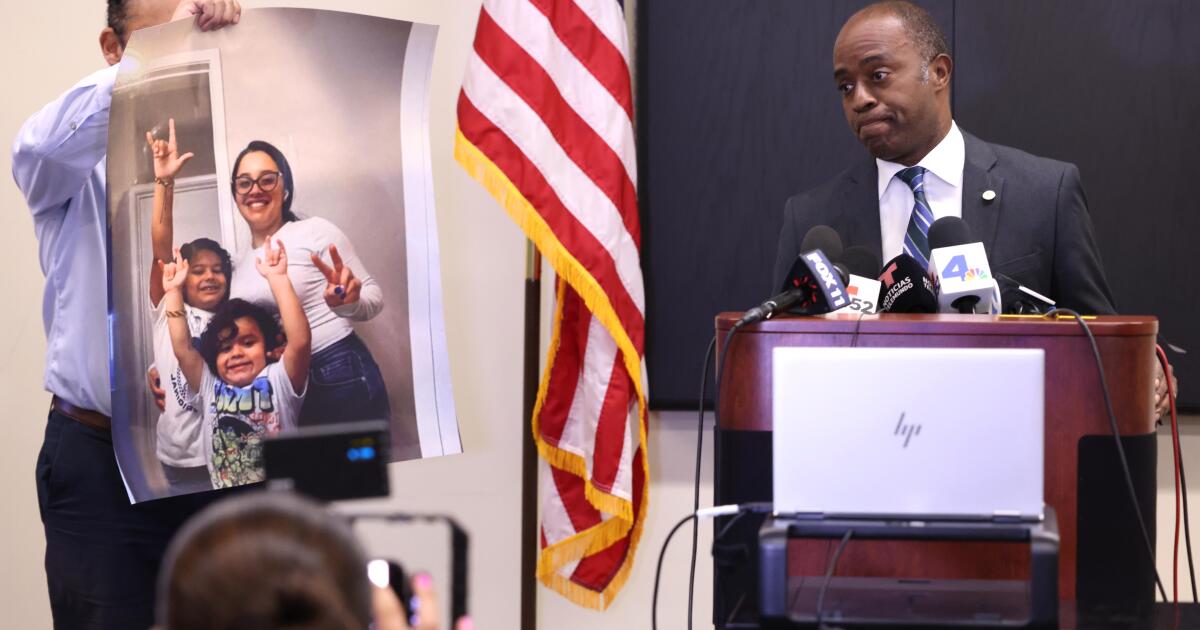
Deported deaf boy, 6, could die in Colombia without medical attention

A deaf 6-year-old boy snatched by immigration agents from Northern California and deported to Colombia this month needs to be returned to the U.S. immediately or he could die, a lawyer representing the child said Wednesday.

Attorney Nikolas De Bremaeker said the boy, Joseph Lodano Rodriguez, was “at risk every day that he is not getting his treatments.” The child has a cochlear implant that requires the same routine maintenance and cleaning he was receiving stateside but may not get in Colombia.

“Joseph is at immense risk for his life if he does not continue the treatment that he was receiving in the United States,” De Bremaeker said at a virtual news conference hosted by California Supt. of Public Instruction Tony Thurmond, a Democratic gubernatorial candidate.

“He is at risk of infection, he is at risk of meningitis, he is at risk of death if he is not given the proper care for his surgical implants.”

Joseph, his 28-year-old mother, Lesly Rodriguez Gutierrez, and another son, 5, were detained by federal agents on March 3 while attending an immigration meeting and deported shortly after.

Rodriguez Gutierrez traveled to the United States in 2022 seeking asylum from domestic violence and lived in Hayward. She was told in the run up to the March 3 meeting that she needed to bring her two children for a routine check-in to update the photos Immigration and Customs Enforcement had of them.

Shortly after arriving, ICE agents “tried to force her to sign a document without explanation, and then pushed the family into a vehicle to be put on a flight to a faraway detention facility, “ De Bremaeker told The Times earlier.

The Department of Homeland Security did not respond to questions sent Wednesday after office hours but has consistently said that Rodriguez Gutierrez was “an illegal alien from Colombia” who “illegally entered the United States in 2022.”

She was issued a removal order on Nov. 25, 2024, according to DHS.

Thurmond, the superintendent, called on the public to lobby Congress and the Trump administration “to return Joseph so he can continue his studies.”

Thurmond showed a 40-second clip of Joseph and his family at a Colombian facility for the deaf.

The child appeared to struggle communicating with his sibling and mother, while his brother repeatedly tried to give directions to him in Spanish with little avail.

Joseph’s only language is American Sign Language, Thurmond said. Joseph was studying at the state-funded Fremont’s California School for the Deaf.

“Joseph is struggling,” Thurmond said. “He does not have the ability to communicate with anyone and in many ways, he can barely communicate with his mom. Like Joseph’s mom, Lesly was just beginning to learn American Sign Language.”

Both California senators — Alex Padilla and Adam Schiff — along with state Democratic congressional members Eric Swalwell, Nanette Barragán, Zoe Lofgren, Kevin Mullin and Lateefah Simon called on the U.S. Department of Homeland Security and the State Department to investigate the deportation.

The group is also calling on both government agencies to return the family to the U.S. through the process of humanitarian parole. That move would allow Joseph to re-enroll in school and receive specialized care.

Celena Ponce, founder of Hands United, a nonprofit organization dedicated to aiding deaf immigrant children and families, said her group was trying to connect the family with the deaf community and services, like interpreters, in Colombia.

She said, however, that Joseph and his family face several challenges. The first hurdle if he ends up staying in Colombia, is that he and his mother will have to learn Colombian sign language, which differs from American sign language.

Ponce added that Joseph also suffered language deprivation, meaning he is delayed in comparison to other 6-year-olds who are hearing.

“Because Colombia does not have residential schools similar to what California has, the ability to be fully immersed in language is not present,” she said.

Whatever gains he made at the California School for the Deaf would likely end, she said.

Times staff writers Clara Harter and Christopher Buchanan contributed to this report.

Source link

Israel kills Iran’s spy chief; government seen as ‘largely degraded’

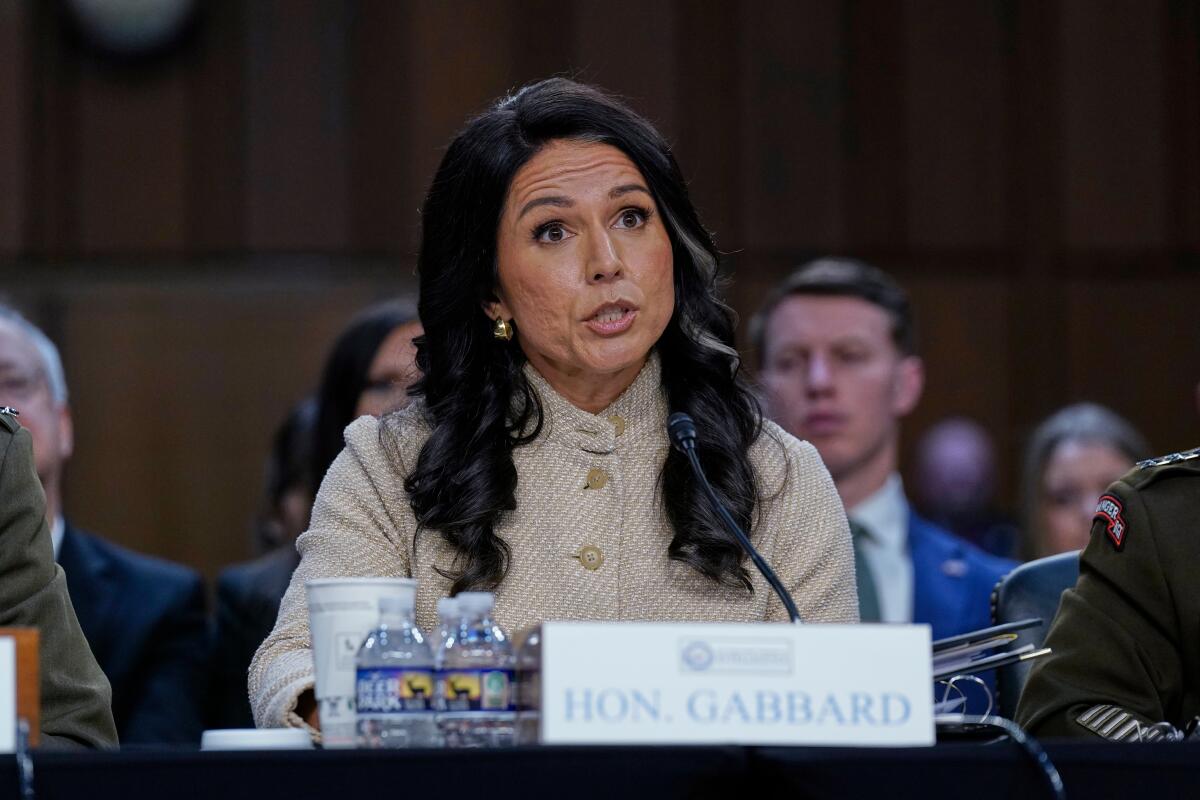
The Iranian government remains “intact but largely degraded,” National Intelligence Director Tulsi Gabbard told Congress on Wednesday, as Israel continued to hunt down the Islamic Republic’s leadership with an overnight airstrike that killed the nation’s spy chief.

The death of Intelligence Minister Esmail Khatib, announced Wednesday by Israel, was the third high-level assassination in roughly 24 hours in a series of strikes that have hollowed out Tehran’s leadership ranks.

Israel ordered strikes Tuesday that killed Iranian security chief Ali Larijani and Basij paramilitary commander Gholamreza Soleimani.

Additional senior Iranian figures could be targeted, Israeli Defense Minister Israel Katz said Wednesday. “Israel’s policy is clear and unequivocal: No one in Iran has immunity — everyone is a target,” Katz said.

Ayatollah Mojtaba Khamenei, Iran’s new supreme leader, issued a rare statement Wednesday addressing Larijani’s assassination.

“Undoubtedly, the assassination of such a person shows the extent of his importance and the hatred of the enemies of Islam towards him,” he wrote, according to the Associated Press. “All blood has its price that the criminal murderers of the martyrs must pay soon.”

Tehran responded with renewed missile and drone attacks on Israel and U.S.-aligned countries across the Persian Gulf, further disrupting strained energy infrastructure and shipping lanes. Fighting has halted oil and gas production throughout the region, as shipping was stalled through the Strait of Hormuz, a key artery for global oil supplies.

The war has triggered a severe global oil shortage that has destabilized electronics, agriculture, pharmaceutical and energy supply chains.

Exacerbating those disruptions, the U.S. and Israel carried out a coordinated attack on the South Pars natural gas field on Wednesday. The strikes drew swift condemnation from Qatar, a U.S. ally that shares the reservoir with Iran. The Qatari Foreign Ministry called the attack “dangerous and irresponsible” and “a threat to global energy security.”

The attack is a major blow to Iran’s supply of electricity too, as most of the country’s energy grid relies on gas, analysts said. The field accounts for about 75% of Iran’s natural gas production.

Tehran promised to respond with more attacks on its Mideast neighbors, the Associated Press reported.

Meanwhile, near-constant Israeli strikes in Beirut and southern Lebanon have displaced over 1 million people, and killed 968 civilians, according to the Lebanese Health Ministry.

With the war in its third week, deaths now number in the thousands across Iran, Israel and neighboring countries.

International reaction has sharpened as the fighting showed no sign of relenting. Russia condemned the “murder and liquidation” of sovereign leadership and called for an immediate ceasefire, while European leaders voiced growing alarm about the war’s trajectory and the risks of broader destabilization.

Director of National Intelligence Tulsi Gabbard testifies Wednesday before the Senate Committee on Intelligence.

Director of National Intelligence Tulsi Gabbard testifies Wednesday before the Senate Committee on Intelligence.

(Jose Luis Magana / Associated Press)

All allies in the North Atlantic Treaty Organization have refused to heed President Trump’s call to send warships to the Strait of Hormuz, signaling a deepening rift in the world’s most powerful military alliance. Trump has sought to sever the U.S. from the alliance.

“We no longer ‘need,’ or desire, the NATO Countries’ assistance — WE NEVER DID! “ he wrote on social media Tuesday.

Trump on Wednesday signaled little appetite for de-escalation, floating the prospect of a decisive military endgame.

“I wonder what would happen if we ‘finished off’ what’s left of the Iranian Terror State,” he wrote on his social media website.

The president visited Dover Air Force Base in Delaware on Wednesday, where the remains of six U.S. service members killed in the crash of a refueling aircraft were returned to their families. The visit marks the second time since the Feb. 28 launch of the war with Iran that Trump has attended the solemn military ritual known as a dignified transfer, the Associated Press reported.

At a Senate Intelligence Committee hearing on “worldwide threats” Wednesday, Democrats grilled Gabbard and other intelligence leaders over their preparation for Iranian retaliation against Mideast energy infrastructure, civilian areas and American military sites and personnel.

Trump has maintained that the U.S. was caught off guard by Iran’s retaliatory strikes.

“Nobody expected that. We were shocked,” he said at a Kennedy Center board meeting Monday. Later in the day, when asked at an Oval Office news briefing whether he had been warned about the possibility of Iranian retaliation, Trump reiterated his surprise.

“Nobody, nobody, no, no, no. The greatest experts — nobody thought they were going to hit,” he said.

Last year, intelligence agencies testified to Congress that Iran was capable of inflicting substantial damage on an attacker, executing regional strikes and disrupting shipping, “particularly energy supplies, through the Strait of Hormuz,” Sen. Ron Wyden (D-Ore.) said at the hearing, reading from last year’s worldwide threats report.

“In other words, every problem we’re seeing now was not only foreseeable, but was actually predicted by the intelligence agencies,” Wyden told Gabbard. “It’s hard to see how you can sit here and say that the intelligence agencies couldn’t provide a clear warning that if attacked, the Iranians would respond by attacking our people.”

Gabbard refused to confirm whether intelligence agencies briefed the president on the subject, saying she “won’t divulge internal conversations.”

She also testified that U.S. strikes on Iran had “obliterated” the country’s nuclear enrichment program, including underground facilities, and said officials are now watching to see whether Tehran attempts to rebuild. So far, she said, Iran has not restarted the program.

But Sen. Jon Ossoff (D-Ga.) challenged that assessment, noting that Trump had used the same word — “obliterated” — to describe strikes just months before. He pressed Gabbard on how serious the nuclear threat was leading up to the February operation, given that timeline.

The intelligence community assessed that Iran “maintained the intention to rebuild and to continue to grow their nuclear enrichment,” Gabbard said adding that the “only person” who can determine what constitutes an imminent threat is the president.

“False,” Ossoff shot back. “It is precisely your responsibility to determine what constitutes a threat to the United States.”

Source link

Cuba is ‘ready’ for talks with U.S. amid growing pressure from Trump

Cuba’s top diplomat in Washington says Havana is prepared to enter diplomatic talks with the United States, reiterating the country’s willingness to engage even as tensions escalate with President Trump asserting that the island nation’s government could soon collapse.

“We are ready to engage with the U.S. on the issues that are important for the bilateral relation, and to talk about those in which we have differences,” Ambassador Lianys Torres Rivera, who leads Cuba’s mission in Washington, told The Times on Wednesday.

Any dialogue would need to respect Cuba’s sovereignty and its “right to self-determination,” the ambassador said.

“We are sure that it is possible to find a solution,” she said.

Her comments in a wide-ranging interview come at a particularly volatile moment for Cuba, which is under mounting economic pressure after the Trump administration imposed an oil blockade that has choked off the island’s energy supplies.

The measures have deepened a humanitarian crisis and prompted Cuban President Miguel Díaz-Canel to call for an “urgent” overhaul to the country’s economic model.

The situation in Cuba worsened after U.S. forces removed Venezuelan President Nicolás Maduro in January, allowing Washington to later cut off oil shipments from Venezuela to its longtime ally. The Trump administration later pressured other suppliers, including Mexico, to reduce deliveries.

“We are doing our best, and we are being very creative, but it has a serious impact,” Torres Rivera said of the blockade. “It is a collective punishment against the Cuban people.”

The White House this week framed Cuba’s worsening economic and humanitarian conditions as a potential opening to pressure Havana into negotiations.

“The country is obviously in a very weak place, economically speaking, the people are crying out for help, and the president believes and knows the Cuban regime wants a deal,” White House Press Secretary Karoline Leavitt said during a news briefing Tuesday.

Rep. Mario Diaz-Balart (R-Florida) told the Miami Herald on Wednesday that the Trump administration had been having secret, high-level conversations with several people in former President Raul Castro’s inner circle, a similar approach that was taken in Venezuela before Maduro’s capture. (The operation to seize Maduro killed 32 Cuban officers stationed in the country.)

Three people in uniform hold portraits of three men, while a row of people above them, also in uniform, wave flags

Cuban President Miguel Díaz -Canel, fourth from right, holds up a Cuban flag during a rally in Havana on Jan. 16, 2026, to protest the killing of Cuban officers during the U.S. operation that captured Venezuelan President Nicolás Maduro.

(Ramon Espinosa / Associated Press)

Another report by the USA Today this week said the Trump administration was close to announcing an economic deal with Cuba that would ease travel restrictions, among other things. A representative with the Cuban government declined to comment on the report.

The White House has not specified what a deal may look like. But Trump has said the United States is interested in a “friendly takeover” and has suggested that the move would allow Cubans to visit the island, a place that many Cuban exiles have worried about returning to while the current regime is in place.

“It is just a question of time before a lot of unbelievable people are going back to Cuba,” Trump said at an event last week.

Several news outlets have reported that the Justice Department is examining possible federal charges against officials within Cuba’s government, a move that could prompt a change in the island’s government.

Torres Rivera said she is aware of the reports but said the “judicial accusations” are an “instrument of political coercion without any legitimacy.”

“It is not something we are losing sleep over,” she said.

As for the potential negotiations, Torres Rivera did not provide specifics but talked about restoring diplomatic ties somewhat to how they existed during the Obama administration.

“We are neighbors,” she said. “We have common challenges, common threats, and we can speak about all that, and we can speak on the basis of respect for each other’s sovereignty and each other’s right of self-determination. We are ready for that.”

President Trump has approached diplomacy with Cuba with a harsher tone.

“As we achieve a historic transformation in Venezuela, we’re also looking forward to the great change that will soon be coming to Cuba,” Trump said Saturday, one week after U.S. and Israeli forces attacked Iran and killed Supreme Leader Ayatollah Ali Khamenei.

He added: “Cuba’s at the end of the line. They’re very much at the end of the line. They have no money. They have no oil. They have a bad philosophy. They have a bad regime that has been bad for a very long time.”

Trump said that he has put Secretary of State Marco Rubio in charge of leading the talks with Cuba and that he believes a “deal would be made very easily with Cuba.”

Torres Rivera did not offer an opinion on Rubio being tapped to lead the negotiations. Rubio is the son of Cuban immigrants who came to Florida three years before Castro’s brother, revolutionary Fidel Castro, rose to power in 1959. She reiterated that Cuba is “ready to engage” in talks regardless of who is leading them.

“We are not talking about persons, we are talking about the government and we are ready to engage with the U.S. to talk about the very important issues that we have in bilateral relations,” she said.

Source link

Negotiations resume over WNBA’s next collective bargaining agreement

The WNBA and its players’ union met again Wednesday, hours after a marathon negotiating session over a new collective bargaining agreement.

The two sides ended a 12-hour negotiation at 5 a.m. EDT without reaching a deal. They started talking again Wednesday afternoon and discussions were ongoing at sundown.

Union executive director Terri Carmichael Jackson said Wednesday morning that there were “a lot of conversations going in the right direction.”

WNBA commissioner Cathy Engelbert came out of the hotel where negotiations took place to talk to reporters briefly.

“It’s complex, but we’re working towards a win-win deal like we’ve been saying, transformational deal for these players. That balances all the things we’ve been trying to balance with continued investment by our owners,” she said. “So, we’re working hard towards that and still have work to do.”

Executive committee members Nneka Ogwumike, Breanna Stewart, Alysha Clark and Brianna Turner once again were at the hotel with Jackson and the union staff. The league was represented by Engelbert, head of league operations Bethany Donaphin and New York Liberty owner Clara Wu Tsai. Connecticut Sun president Jen Rizzotti joined the negotiating team on Wednesday.

Neither side left the hotel during the marathon bargaining session. A day later, both sides were outside during breaks enjoying an unseasonably warm mid-March day in Manhattan.

The sides have been exchanging proposals during the bargaining sessions over the last two days, a person familiar with the negotiations told the Associated Press. The person spoke on condition of anonymity because of the sensitivity of the discussions.

Revenue sharing and housing are key sticking points between the sides, as well as assigning a franchise tag to a player and benefits for retired players.

The league had said that at least a handshake agreement on a labor deal would need to be done by Tuesday to start the season as scheduled.

“We’ve got to get this deal done. We’ve got to get it done soon,” said Engelbert, who didn’t take questions from reporters.

When a deal is reached in principle, the league has said it would need a few weeks to finish off the CBA. After that work is done, the expansion draft for new franchises in Portland and Toronto would be held sometime between April 1-6, according to a timetable obtained by the AP.

Free agent qualifying offers, including franchise player tags, would be sent out April 7-8. Teams would then have three days to negotiate with the more than 80% of players who are free agents. The signing period would take place from April 12-18.

Training camps would open the next day and the season would be able to start on May 8.

But for any of that to happen, the two sides have to figure out a revenue sharing model. The union’s proposal from a week ago had asked for an average of 26% of the gross revenue — revenue before expenses — over the course of the CBA. That would include only 25% in the first year. The league has said that number was unrealistic.

The WNBA’s last few proposals have offered more than 70% of net revenue, with that number going up as the league continues to grow.

Source link

All of the UK flights cancelled today on Wednesday, March 11

Many airlines are operating restricted schedules due to airspace restrictions in the Middle East, with 21,915 of the 38,193 services scheduled to fly since February 28 cancelled

Dozens of flights to and from the UK have been cancelled today as the war in Iran continues.

Many airlines are operating restricted schedules due to airspace restrictions in the Middle East, with 21,915 of the 38,193 services scheduled to fly since February 28 cancelled.

On Wednesday morning, Dubai International Airport was forced to temporarily pause operations due to a drone strike nearby, which wounded four people. Authorities have confirmed that flights have since continued.

Emirates and Etihad are still operating limited schedules from Dubai and Abu Dhabi airports, respectively. Qatar Airways said it is “doing everything possible to support affected passengers and help reunite them with family and loved ones” while Qatari airspace remains closed.

The airline said that operations will resume“ once the Qatar Civil Aviation Authority confirms the safe reopening of Qatari airspace.”

Yesterday, British Airways announced that it has suspended all flights to and from Amman, Bahrain, Doha, Dubai, and Tel Aviv until later this month, while its services to and from Abu Dhabi are cancelled until later this year. The decision means hundreds of BA services will be cancelled over the coming months.

READ MORE: British Airways cancels hundreds of flights ‘until later this year’ with major cities impactedREAD MORE: Brand new sleeper train between two huge cities with £43 bed tickets launching this year

Flight data shared exclusively with the Mirror by analytics firm Cirium shows that 55 of the planned services due to fly today had been cancelled as of 12.45 pm, which is 2.49% of the total scheduled to fly into the UK from the Middle East and vice versa.

UK flights cancelled on March 11

Arrival Country: Flights; Cancelled; Cancel %

  • Qatar: 18; 17; 94.44%
  • United Kingdom: 493; 15; 3.04%
  • United Arab Emirates: 32; 11; 34.38%
  • Bahrain: 3; 3; 100.00%
  • United States: 113; 2; 1.77%
  • Jordan: 3; 1; 33.33%
  • Israel: 7; 1; 14.29%
  • Germany: 116; 1; 0.86%
  • Denmark: 29; 1; 3.45%
  • Cyprus: 20; 1; 5.00%
  • Uganda: 1; 1; 100.00%
  • Ireland: 121; 1; 0.83%

If you are due to fly from or to the Middle East in the coming days, make sure you check your airline’s website for instructions and the Foreign Office website for the latest advice.

What have the airlines said?

  • Aegean Airlines – Greece’s largest carrier cancelled flights to Tel Aviv until March 20; Beirut, Erbil and Baghdad until March 25; Dubai and Abu Dhabi until March 19; and Riyadh until March 14.
  • Air France–KLM – Air France cancelled flights to Tel Aviv and Beirut through March 13, and to Dubai and Riyadh until March 12. KLM suspended flights to Dubai, Riyadh and Dammam until March 10, and to Tel Aviv for the rest of the winter season.
  • Cathay Pacific – Cancelled all flights to and from Dubai and Riyadh until March 31.
  • Delta – Cancelled flights from New York to Tel Aviv until March 22 and from Tel Aviv to New York until March 23.
  • Emirates – Operating a reduced flight schedule but expects to return to full operations within days, depending on airspace availability and operational requirements.
  • Etihad Airways – Resumed a limited commercial flight schedule between Abu Dhabi and several key destinations.
  • Iberia Express cancelled all flights to and from Tel Aviv through March 10.
  • Lufthansa Group – Lufthansa, Austrian Airlines, Swiss and Brussels Airlines suspended Tel Aviv flights through April 2 and Beirut flights through March 28. Flights to Tehran are suspended until April 30, and to Amman, Erbil, Dammam, Dubai and Abu Dhabi until March 15.
  • Norwegian Air – Now plans to start flights to Tel Aviv and Beirut on June 15, instead of the previously scheduled April 1 and April 4.
  • Qatar Airways – Operating a limited schedule to and from Doha, with some flights resuming from March 9 following temporary authorisation from Qatar’s civil aviation authority.
  • Saudia Airlines – Suspended flights to Amman, Kuwait, Abu Dhabi, Doha and Bahrain until March 10, and to Moscow and Peshawar until March 15. Limited operations to Dubai have resumed.
  • Wizz Air – Suspended flights to Israel until March 29, and flights from mainland Europe to Dubai, Abu Dhabi, Amman and Jeddah until mid-September.

Source link