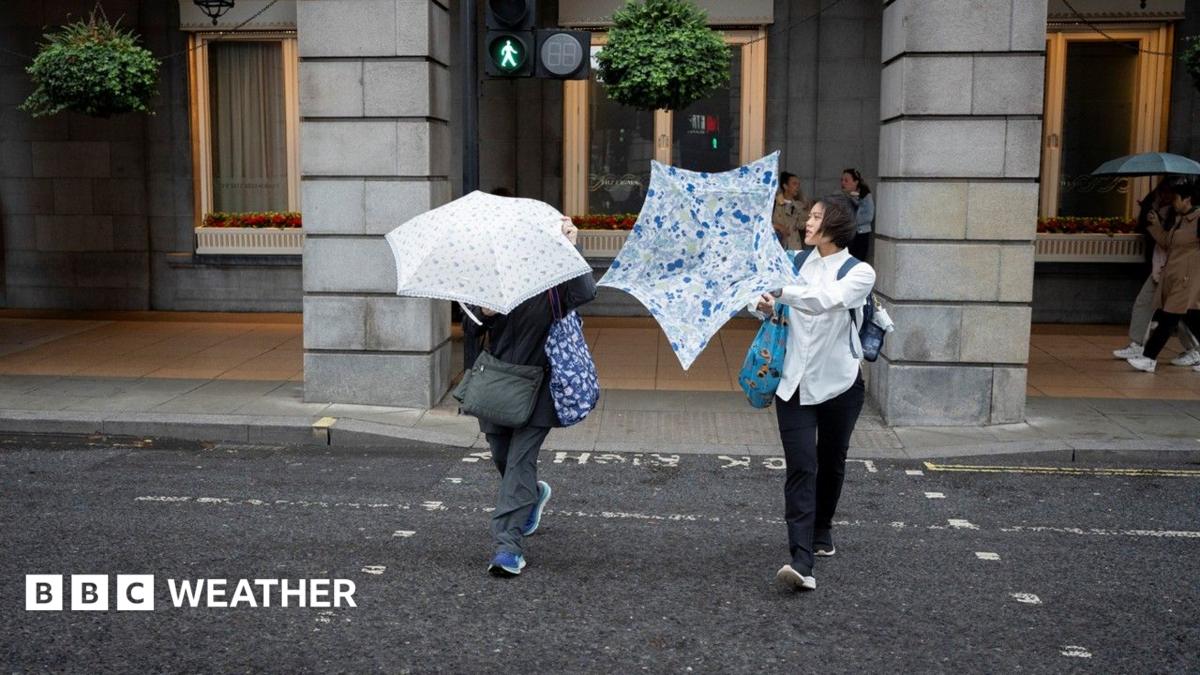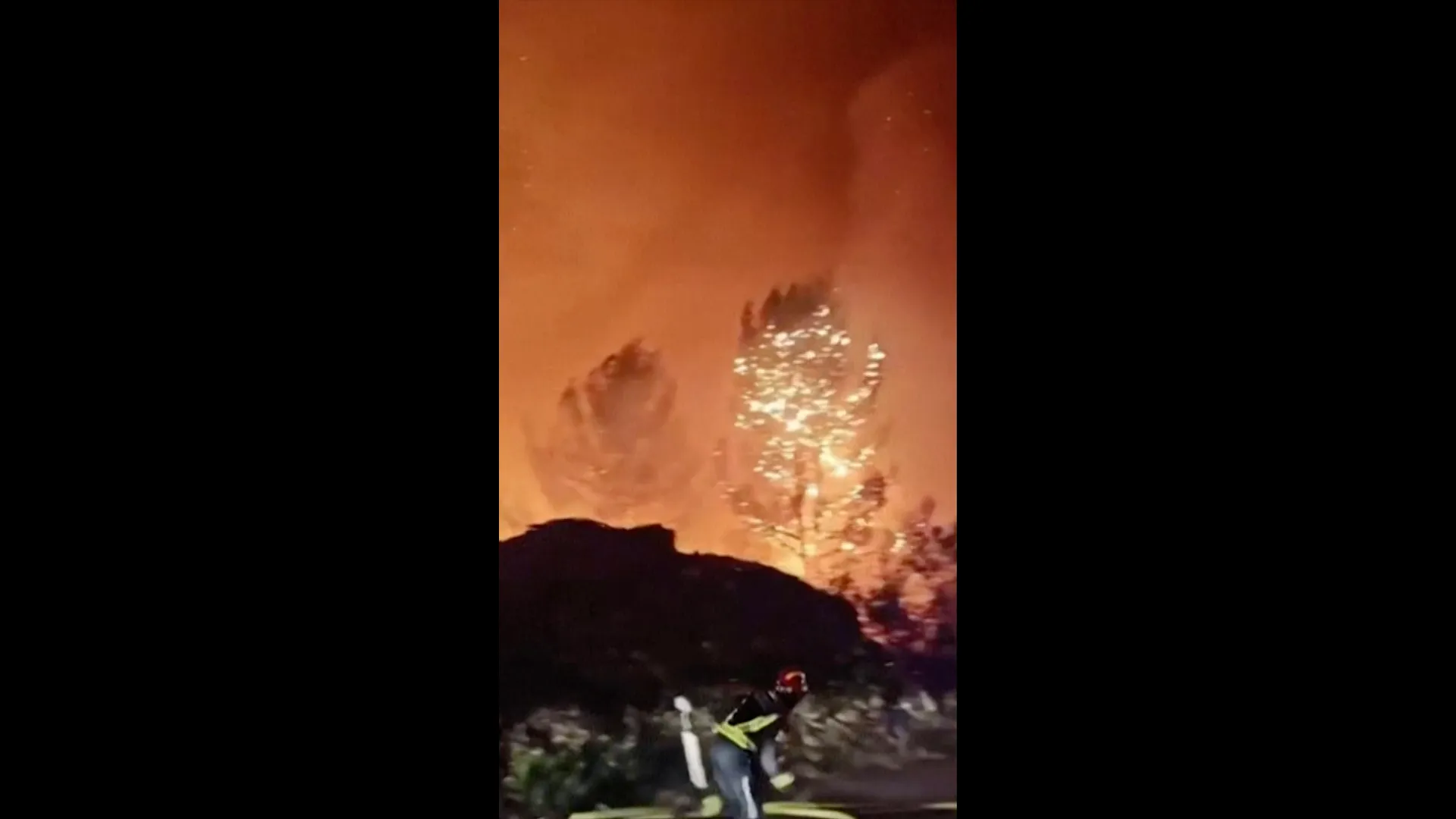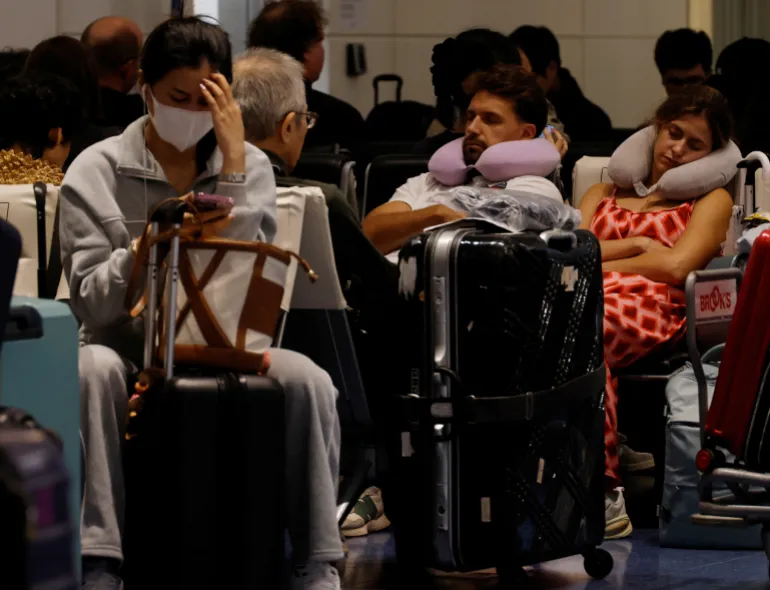
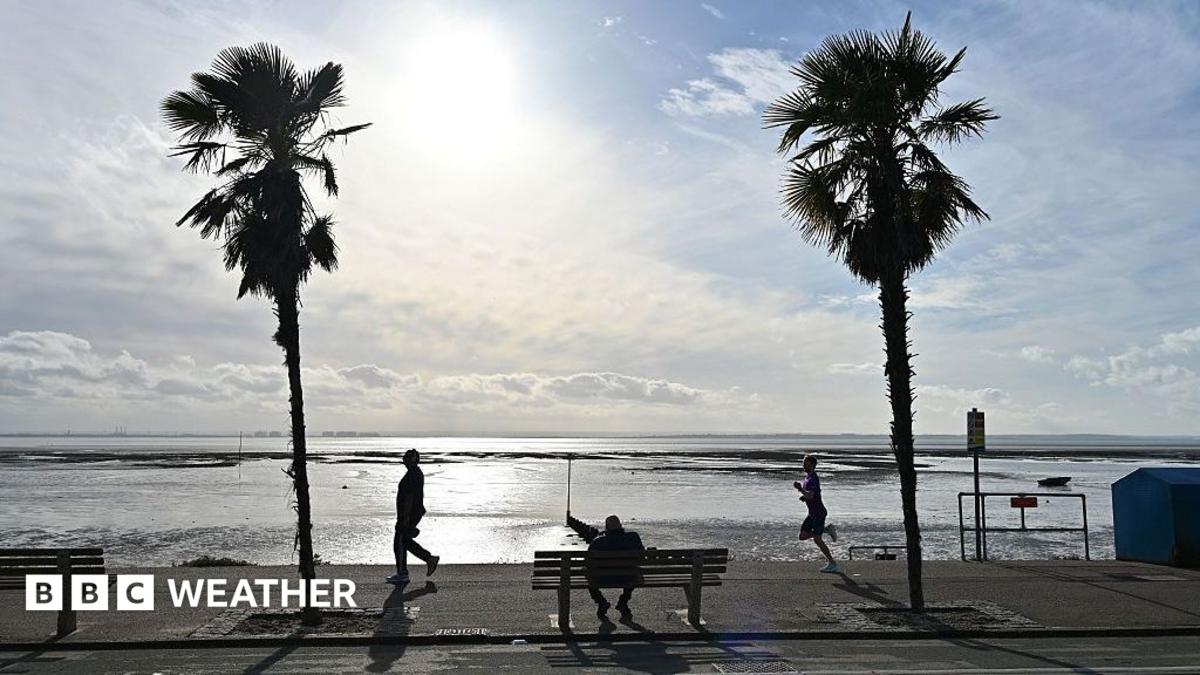

TRAIN passengers have been told to expect significant delays and cancellations over fears of rails ‘buckling’ in the hot weather.
Hundreds of journeys have been affected as temperatures of up to 40C could be recorded in the UK this week.
Sign up for the Travel newsletter
Thank you!
Railway operators face cancelling services over hot weather warningsCredit: tupungatoRailway tracks can buckle if exposed to temperatures above 30CCredit: Kanda Peeraoranan
Railway operators have begun cancelling services, as red weather warnings have been issued in parts of England and Wales for the coming days.
Network Rail has urged passengers to only take essential journeys to, from or within areas affected by extreme heat, and to prepare for the conditions ahead of time.
They added: “For safety reasons, trains will operate at reduced speeds and to amended timetables, meaning journeys will take longer and there is a heightened risk of delays, cancellations and last-minute alterations.”
Several operators, including Avanti West Coast, Great Western Railway and South Western Railway, have planned to run reduced services during the hottest days.
Between Tuesday, Wednesday and Thursday, Chiltern Railways has also ceased more than half its services “to ensure the safe operation of the railway”.
This is over fears of rails “buckling” – a term used to describe steel rails expanding and curving as they heat up – which can occur as temperatures reach 30C.
Lineside fires create another risk to railways, as vegetation near tracks may be set alight from a combination of train sparks and dry conditions.
A number of tube lines, namely the Elizabeth and Mildmay Lines, have been further affected by flooding as a result of overnight thunderstorms as well as the hot weather.
This follows record-breaking temperatures expected this June.
Met Office spokesman, Grahame Madge, said: “The Met Office is flagging 39C as a headline maximum temperature on Thursday, most likely for somewhere in London or the South East.
“It is possible we could see temperatures higher than the 39C.”
Northern Network – Reduced services between several routes
Cleethorpes and Barton-on-Humber – No trains
Transport for Wales – Reduced services between Wrexham General and Bidston, Coryton and Penarth. No services between Shrewsbury and Birmingham International, and services cancelled at 13.00pm between Pontypridd and Cardiff Bay
Avanti West Coast – Reduced services
Great Western Railway – Reduced services
London Paddington and Heathrow Terminals – Severe disruption
Elizabeth Line – Partially flooded
MerseyRail – Speed restriction to Headbolt Lane line
CrossCountry – Routes affected
Chiltern Railways – Lines between Between Birmingham and London Marylebone, Oxford and London Marylebone, and Aylesbury and London Marylebone (via Amersham) severely affected.
The travel specialist has issued a plea for anyone travelling by train over the coming days
11:50, 23 Jun 2026Updated 12:53, 23 Jun 2026
Simon Calder shared his advice on Good Morning Britain(Image: ITV)
Travel expert Simon Calder has issued a new alert for anyone travelling by rail this week, sharing his latest advice for millions of people across the country as a heatwave hits. His warning comes as train passengers face significant disruptions, with operators across Britain reducing services due to the hot weather this week.
According to the Met Office, temperatures could reach 40C in parts of the UK, with the weather agency issuing a red extreme heat warning. Britain is facing what could be its hottest June since 1976.
Appearing on today’s (June 23) episode of Good Morning Britain, the travel journalist and broadcaster offered a word of warning to viewers. He urged people to change their travel plans this week and, if possible, swap to another date due to the severe heat over the next couple of days.
He said: “My advice to anyone booked to travel by rail over the next few days is, please, if you can, move your journey to the end of the week, then do so. It will be much more comfortable and have a higher degree of actually working as it is supposed to. Otherwise, I’m afraid, just be prepared for delays and disruption.”
The rail industry is preparing for problems that can arise from extreme heat, such as sagging overhead power lines, warped tracks, and fires along the tracks. Travellers are encouraged to leave earlier in the day if they can and to bring a water bottle. Online journey planners may not display accurate schedules until the day of travel due to last-minute cancellations.
Content cannot be displayed without consent
What are my rights if my train is delayed or cancelled due to hot weather?
According to Citizens Advice, if your train is cancelled, you can receive a full refund if you can’t catch the next train or choose not to travel. If you’re delayed and reach your destination over 30 minutes late, you can typically get some money back.
Some train companies may even offer compensation if your train is late by more than 15 minutes. Make sure to keep your train tickets to request a refund. It’s best to file your claim within 28 days, although some train companies may allow a longer period.
For those who travelled with Transport for London (TfL), like on the London Underground, you can check its website to see how much you could receive and the process for claiming.
Content cannot be displayed without consent
What have UK railway lines said about the hot weather affecting services?
Avanti West Coast said it plans to run fewer services than usual between Tuesday and Thursday, and “there’s a risk of further disruption”. The company eased ticket restrictions, enabling passengers to use an earlier service than the one they booked at no extra cost. Those with tickets booked for departures between Tuesday and Thursday are eligible for a full refund if they no longer want to travel.
Chiltern Railways has axed more than half its services over those three days “to ensure the safe operation of the railway”. This affects London Marylebone services to and from Birmingham, Oxford and Aylesbury via Amersham.
The operator said: “We strongly advise you to avoid travelling if possible. Trains are running at greatly reduced levels to ensure everyone’s safety, which means you may experience significant delays and very busy conditions.”
Great Western Railway requested that people use its services only for “essential travel” on Wednesday and Thursday, coinciding with a severe red warning from the Met Office. The company explained that extended high temperatures can impact the equipment on its older regional train fleet, including engines and cooling systems.
It is operating fewer trains than usual between London Paddington and Reading until Friday. This is due to Network Rail not moving certain points—metal pieces that allow trains to switch tracks—on that route to reduce the risk of failures, which are more probable in high heat.
LNER said passengers travelling on Tuesday can board an earlier service, adding “we strongly advise that you do not travel across the LNER route” on Wednesday or Thursday. There is disruption across the Transport for Wales network, including between Pontypridd and Cardiff Bay, and between Coryton and Penarth.
South Western Railway issued an alert stating it will run fewer services than normal between Tuesday and Thursday. Its services in Hampton, south-west London were also affected by flooding on Tuesday morning after heavy rain overnight.
Flooding also caused severe delays on the Elizabeth line between Heathrow airport and London Paddington. Several London Underground lines were suffering from major disruption on Tuesday morning. This included the entire Circle line being suspended because of a signalling failure.
The village was once a thriving community, but it was completely submerged to create a reservoir – and visitors can see its haunting memorial today and even spot the buildings if they’re lucky
Everything was taken from the village and its rich heritage (Image: Mirrorpix via Getty Images)
Once a thriving, proud Welsh-speaking community, this cherished village was entirely abandoned and left to disappear beneath the water without a trace.
The submersion of this much-loved settlement remains a deeply painful topic for those in the surrounding area, who fought with every ounce of strength to preserve their homes. Sadly, their determined efforts proved futile, as the UK government flooded the village entirely to provide water to a considerably larger English city.
In 1965, the village of Capel Celyn, tucked away in the Tryweryn Valley in North Wales, was lost forever when it was left to sink beneath the surface of a vast reservoir. It was a deeply contentious decision, to say the least, driven by the Liverpool Corporation to provide water to Liverpool and the Wirral.
For some, it may have appeared to be little more than a straightforward infrastructure project, but for the vast majority, the implications ran far deeper. The devastation it brought to the local area and the broader Welsh community had a profound political impact, fuelling a significant surge in support for Welsh nationalist party Plaid Cymru.
The fight for the village
It was in 1955 that the residents of Capel Celyn first discovered their homes had been earmarked for sacrifice to make way for a new reservoir, marking the start of a grueling decade-long struggle. Before long, the villagers banded together, forming what became known as the Capel Celyn Defense Committee, which debated, protested and condemned the scheme across the country and as far as Liverpool.
On several occasions, this led them to march directly to Liverpool to make their opposition unmistakably clear.
Despite their determined efforts, Liverpool councillors voted overwhelmingly in favour of pressing ahead with the plans, and in 1957, a private bill backed by Liverpool City Council was brought before Parliament.
All 35 Welsh Members of Parliament who cast their votes opposed the bill, yet it was passed regardless in 1962. Three years on, the village and all its buildings, including people’s homes, were submerged beneath the water.
In total, approximately 800 acres of land were consumed by the reservoir, taking with it the school, the post office, the chapel and the cemetery.
Some 48 people lost their homes out of the 67 who had lived in the valley, with many forced to relocate to entirely unfamiliar areas and rebuild their lives from scratch.
What made this so deeply controversial was the wholesale destruction of a traditional Welsh community, as the village had stood as a living symbol of authentic Welsh culture and its endangered language.
The site today
Visitors continue to flock to the site to this day. During particularly dry periods if the water levels drop enough, you can occasionally spot some of the ruins of the houses, school and post office. One TripAdvisor reviewer described the place as “beautiful but sad”.
They wrote: “This wasn’t my first visit to this beautiful area, but after researching the flooding of the village and being Welsh, we spent more time around where the village once stood.
“There is no doubt the scenery is outstanding, but I also found it to be quite sad; people’s lives were completely upturned, and their entire village was drowned. Well worth a visit, especially if you read the history of the village.”
The reservoir offers a breathtaking backdrop, framed by the gently rolling hills of the valley, and many visitors opt to take a stroll around the area. A memorial chapel stands as a tribute to the village that once existed, offering a place for people to reflect on its history.
One visitor remarked: “Poignant and stunning. The heartbreaking history of this reservoir should never be forgotten.”
There is every chance the village could resurface this year, as it only emerges above the waterline during spells of extreme heat. The ongoing heatwave may cause water levels to drop sufficiently, much as they did in 2018.
Earlier on Monday evening, he Met Office announced a thunderstorm warning for several regions across the UK on Monday night, spanning from 5pm to 9pm.
While the weather alert has since expired, communities across south West England are still reeling in the wake of wild storms and flash flooding.
Who did the warning cover? The weather alert applied to parts of East of England, London and South East England, South West England.
What was the full alert? A Yellow weather warning is in effect, continuing until Monday 9pm. The forecast indicates frequent lightning strikes and heavy rain in the impacted regions.
A Met Office forecaster said, in a statement issued alongside the urgent weather alert earlier this evening (June 22): “An area of thunderstorms moving east across the area will bring a spell of frequent lightning, gusty winds, torrential rain, and a few places, hail.
The storms will be moving quickly reducing the potential for widespread large amounts of rain, but there is a few places could see 20-25 mm of rainfall in a short period in the most active storms, which could bring some brief flooding.
“The majority of impacts are likely to come from other hazards however, such as lightning striking buildings and causing power cuts, difficult driving conditions in heavy rain, and some localised damage to vulnerable structures by strong wind gusts or hail.”
THE sun is officially back out and nothing beats a cold beer on a hot day – especially a cheap one and that’s where Wetherspoons come in.
Dotted around the country are plenty of beautiful pubs with huge gardens, courtyard patios, even rooftop terraces, and these ones are the best with pints from £1.49.
Sign up for the Travel newsletter
Thank you!
There are Wetherspoons around the country with rooftops and huge gardensCredit: JD WhetherspoonThe Velvet Coaster is opposite Blackpool Pleasure Beach
Wetherspoons have shared exclusively with Sun Travel their ten best pubs in Britain where you can enjoy some glorious rays with your drink.
We’ve got boozers right on the beach, pubs with lawns as big as a field right in the middle of cities and stunning rooftop bars with fantastic views.
All of them are family-friendly too, with kids menus from just £4.99 that include a meal, a drink, a piece of fruit, that are designed to include at least two of their 5-a-day.
So if you’re looking for a place to spend a sunny day without spending too much of your hard-earned cash then read on…
The Imperial in Exeter has a huge orangery and a large beer garden tooCredit: Alamy Stock Photo
Often dubbed the ‘fanciest’ Wetherspoons in the country, Exeter’s Wetherspoons called The Imperial boasts a vaulted orangery and a huge pub garden.
The grounds on the former hotel turned pub are scattered with picnic tables with a wrap-around patio area shaded by draping wisteria in the springtime.
The Jolie Brise, Teignmouth
The Jolie Brise has a lovely sun trap rooftop gardenCredit: J D Wetherspoon
In the Devonshire seaside town, and just two-minutes from the beach is The Jolie Brise.
On the pretty rooftop garden you still get a beachy-feel thanks to its wooden slatted exterior, palm trees and seagulls gliding overhead.
The Dockle Farmhouse, Swindon
The Dockle Farmhouse in Swindon has two outdoor areasCredit: GILL EVANS
This pub in Swindon actually has two outdoor areas, one with a children’s play area and the other, an adult beer garden with picnic tables and parasols.
You can pick up a glass of Cold Creek rosé for as little as £2.10 and pints from £1.49.
The Old Manor, Bracknell
There’s plenty of greenery at The Old Manor in BracknellCredit: GILL EVANS
Bracknell’s Wetherspoons is inside is one of the oldest-surviving buildings in the town.
It has Tudor-style windows and dark brick which can all be admired from its beer garden and grassy area to the side.
With plenty of greenery, some visitors even say it’s the ‘prettiest’ Wetherspoons gardens they’ve been to.
The Royal Victoria Pavilion, Ramsgate
When the sun shines you want to be on the rooftop Wetherspoons in RamsgateCredit: Alamy
It’s hard to beat the views across Ramsgate Beach from the rooftop of the UK’s largest Wetherspoons .
The outdoor rooftop terrace wraps around the entire building, with enough tables and chairs to fit hundreds.
The best views are found at the very back, with the pub backing onto Ramsgate’s artificial sandy beach.
The Sun’s Deputy Travel Editor, Kara Godfrey said: “It’s definitely huge so you don’t have to worry about being crammed in even on a busy Saturday.
“The pub boasts 11,000 square feet of drinking space – including a huge terrace over the beach – and holds 1,500 punters.
“There are more than 400 seats inside, with another 200 out the back too.
“The downstairs has tables, bar seats and Victorian-style wooden booths, as well a very long bar, so getting around is easy.
“But the best spot is the massive terrace, with incredible views over the sandy beach.”
The Mossy Well, Muswell Hill, London
There’s a ‘cow’ in the garden of The Molly Well as it used to be an Original Express DairyCredit: GILL EVANS
The Mossy Well is one of those Wetherspoons that pays great homage to its roots, especially in its garden.
Formerly an Original Express Diary, visitors will find a wooden cow tucked under one of the tables – and it’s even turned an old milk float into a bar.
The patio area is covered, so you can sit ‘outside’ even in the rain – not that you’ll need to worry about that this weekend.
The Fox on the Hill, Camberwell, London
The Fox on the Hill is inside a huge former hotelCredit: Alamy
Thanks to the pub being inside an old hotel, The Fox on the Hill pub garden has oodles of room to enjoy a pint in the sunshine.
Each table is spread out so you won’t feel too close to other pubgoers either.
This garden is in Zone 2 London, which is incredible because the front lawn is as big as a country field.
The Sun’s Head Of Travel – Digital, Caroline McGuire said: “The Fox On The Hill is the perfect way to spend a sunny afternoon with friends and family.
“The picture above doesn’t even do this pub garden justice, it is absolutely massive so the kids can run around and play far from any punters enjoying their drinks.
“There’s also a covered garden out back, in case it starts to rain.”
Cooper Rose, Sunderland
200 punters can take a seat at the Cooper Rose in Sunderland
The rooftop beer garden at the Cooper Rose opened four years ago and is a whopping 3,000 square feet fitting around 200 punters.
The pretty patio is filled with greenery, flowers, fairy lights – there is a bar upstairs too so you don’t have to leave the sunshine for another drink.
The Kingfisher, Poynton
The Kingfisher is in Cheshire with pints from £1.99Credit: Alamy
Tucked away in Cheshire is the Kingfisher Wetherspoons where customers say you’ll find ‘sun trap tables’ and ‘cheap ale’.
You can pick up a Shipyard Pale Ale for £1.99.
Livery Rooms, Keighley
The Livery Rooms has a huge outdoor courtyard split over two levelsCredit: David Webb
While it’s not strictly quite the classic beer ‘garden’, the Livery Rooms has a pretty outdoor courtyard split over two levels.
It’s filled with plenty of tables, and when the sun goes down during the evening, it’s just as lovely as the area is lit up with string lights.
Mile Castle, Newcastle
The Mile castle has cheap pints and a pretty beer garden tucked away in the city
Dubbed a ‘super Spoons’, the Mile Castle became home to the first Wetherspoons hotel back in 2024 and had a major facelift.
Outside is a 200-cover beer garden set across two floors – and you can enjoy a pint of Ruddles Best from £1.79.
A small all-day brunch, which includes sausage bacon, fried egg, beans and chips is just £7.49
The Navigation Inn, Birmingham
The Navigation Wetherspoons near the village green has a huge patioCredit: Martin Humby 0044+07974764420
The Navigation Wetherspoons is found inside a historic inn near the old village green in Kings Norton.
It not only has a conservatory with a peaked roof, but a large patio garden with lines of tables and gazebos offer shade for when it gets a little too hot.
Scarsdale Hundred, Beighton, Sheffield
The Scarsdale Hundred has a huge curved outdoor seating area around the pubCredit: Dean Atkins
The Scarsdale Hundred Wetherspoons is found inside a distinctive round building in Beighton and can seat 600 punters outside.
The garden is curved around the pub and has a central canopy and can be enjoyed well into the summerevenings permission has just been approved to enjoy pints until 1.30am in 2026.
The Velvet Coaster, Blackpool
The Velvet Coaster in Blackpool has incredible views of the beachCredit: Alamy
Consistently called one of the most beautiful Wetherspoons, The Velvet Coaster sits next to Blackpool’s South Pier within walking distance from its Pleasure Beach.
Named after one of the most-loved rollercoasters in the early 1900s, the pub has impressive views across the promenade, especially from its rooftop garden.
It has plenty of seating in comfy bucket chairs and a glass balcony so you won’t miss any action at the beachfront.
The Wouldhave, South Shields
You can enjoy the sunshine over the weekend at The Wouldhave
It might not be one of the prettiest Wetherspoons in the country, but The Wouldhave in South Shields has a pub garden to shout about.
Sitting in one of Wetherspoons’ signature orange chairs, you can order a refreshing lager from £1.99.
England head coach Thomas Tuchel said the delay to their World Cup warm-up game with Costa Rica gave them a “little taste of what can happen” – but will that prove to be an understatement?
The match was due to start at 21:00 BST in Orlando, Florida, but heavy rain and thunderstorms pushed it back an hour to 22:00 BST.
Weather delays have been a major talking point in the build-up to this year’s World Cup, with several matches in last year’s Fifa Club World Cup in the United States impacted by thunderstorms.
This was not the first tournament warm-up game to suffer delays caused by storms either – and many fans are concerned it could become a theme throughout the World Cup.
“We were aware of that before – now we experience it,” Tuchel told ITV before the game. “It’s no problem.
“It should not be an excuse to lose our mood or patience or to lose our hunger to play the game.
“No problem at all. We realised it when we were still at the hotel so it was easy. We just said half an hour later in the bus and let’s go.”
Fans who had already arrived at Inter&Co Stadium were told to evacuate from the stands and retreat to a safe position on the concourses to avoid lightning strikes.
Thunderstorms in the US are not uncommon, but when it comes to them impacting matches, Fifa has no power to make its own rules and must adhere to the advice of local authorities.
Recommendations of the National Oceanic and Atmospheric Administration (NOAA) are used and they say if any lightning strike is detected within eight miles of a stadium, the game has to be stopped.
A mandatory 30-minute countdown begins and each time there is a lightning strike inside the distance, the countdown clock resets to 30 minutes.
If a full 30 minutes has elapsed, the supporters can go back to their seats and players will have a short warm-up.
Sweaty, shirtless football players lying on the pitch have seldom raised eyebrows as they did last week when photographs of European players struggling to train in the heat sparked concerns over sweltering US summer temperatures at the World Cup.
Scientists have long cautioned that extreme heat could disrupt sporting events. Last month, climate experts warned that one in four World Cup games could be played in very hot conditions, affecting fans and players alike.
Recommended Stories
list of 4 itemsend of list
Those warnings materialised last week; social media was abuzz with sunburnt players — mostly from European teams used to cooler climates — dousing themselves with water to cool off. Norway’s team even opted to wear ice collars around their necks during the friendly against Morocco.
But England captain Harry Kane quickly dismissed speculation over how much the heat would affect players, saying it “won’t be a factor”, thanks to his team’s World Cup training regimen.
So, how much will higher temperatures actually affect players at the World Cup? Al Jazeera takes a look.
What have experts said about heat during World Cup matches?
Th 2026 World Cup could be the hottest on record since the tournament began in 1930 due to a sharp rise in global temperatures, explained Al Jazeera weather presenter Everton Fox.
“Around half a dozen of the venues are prone to extreme heat; places like Dallas, Houston, Miami and the Mexican venues are all likely to swelter,” Fox said.
Daytime temperatures there are expected to average 28C, though the stadiums in Dallas, Houston and Atlanta have air conditioning.
Approximately 26 of the 104 matches could reach at least 26C in the Wet Bulb Globe Temperature (WBGT) index — which measures how effectively the body can cool itself — while five games are expected to be played in conditions of 28C WB or higher, according to World Weather Attribution (WWA), a network of climate scientists.
Of those 26 matches, 17 will be played in stadiums with cooling systems, reducing risks for players and fans.
But more than a third of the games with a one in 10 chance of exceeding 26C will be in venues without air conditioning.
How do hotter temperatures impact athletes’ performance?
Heat stress due to increased humidity, exposure to solar radiation and the effects of wind speed will impact players running around in direct sunlight, Fox said.
“All this makes it harder for the body to cool down as it becomes harder for sweat to evaporate as quickly,” said Fox, a senior meteorologist with more than 30 years of experience.
Physical performance coach Raiyan Abbasi explained that, although the body sweats to achieve thermoregulation – a process that allows the body to maintain its core internal temperature – excessive sweating due to heat could lead to dehydration, cramps and increased fatigue.
Are athletes used to such high temperatures?
“Yes, the majority of athletes will know how to deal with this kind of heat since they’re elite players training and competing in various conditions,” said Abbasi, who has worked as a physical performance coach for British clubs Swansea and West Ham, as well as the Pakistan national side.
Teams will have a performance coach and medical staff to make sure players are ready for the tournament, including through acclimatisation, Abbasi explained – echoing what Kane said over the weekend after his side beat New Zealand 1-0 in Tampa, Florida, where temperatures soared beyond 30C.
Do athletes from hotter nations have an advantage?
World Cup nations whose players train in hotter climates may have a slight advantage when it comes to adjusting to high temperatures in the US.
“But essentially, countries that prepare and perform well can minimise that difference,” Abbasi said, adding that heat can be used positively too.
“Heat is a significant factor in creating good athletes; one way to improve athletic capabilities is to train in the heat.
“It can make big adaptations in your body to improve body temperature.”
Could the World Cup have been held before or after summer in the US?
Fox noted that international tournaments are traditionally in the European domestic off season, which is when the 2026 World Cup is being held.
“Ideally, US weather is most conducive in the spring and autumn, but you’d then be looking at the tornado season in spring and hurricane late summer through autumn before you even begin to think about their domestic sports which locals have more interest in,” Fox said.
What measures has FIFA taken for players and fans?
FIFA said it has carried out heat-risk planning, with measures including three-minute hydration breaks in each half of games, cooling infrastructure for fans and players, adapted work-rest cycles, and enhanced medical readiness that scale according to real-time conditions.
“The hydration breaks probably need to be longer to gain full benefit, but then you risk turning it into a game of four quarters,” Fox said jokingly, although he argued that FIFA could have confined games to northern parts of the US and Canada.
FIFA has also delayed kickoff times for some matches to start outside the hottest afternoon hours.
Hundreds of Bolivian residents are braving near-freezing temperatures to queue for affordable chicken in La Paz, due to more than a month of food shortages.
Spiked prices and protester blockades have affected access to food and medical supplies in the capital.
If you’re dreaming of sitting on a Spanish terrace with a beer in your hand, then you might want to check the weather, as new laws could see outdoor terraces closed to holidaymakers
11:21, 05 Jun 2026Updated 11:23, 05 Jun 2026
The new laws could mean Brits need to take their drinks inside(Image: JOSE JORDAN/AFP via Getty Images)
For many British holidaymakers jetting off to sunnier destinations like Spain, few pleasures compare to dining outdoors for lunch or dinner, basking in the sunshine while enjoying a chilled beer and tapas.
But for Brits heading off to Spain in the next couple of months, new restrictions could put a dampener on plans for al fresco dining, and mean you have to enjoy your paella indoors.
A weather phenomenon known as El Niño, which delivers prolonged warm temperatures across the Pacific Ocean every two to seven years, is predicted to drive up temperatures and could lead to red weather warnings throughout Spain. Currently, forecasts are still being reviewed, but the World Meteorological Organization (WMO) has indicated it could be a ‘strong event’ this year, meaning particularly scorching temperatures in the next couple of months.
This weather news comes shortly after an amendment was made to the National Labour Agreement for the Hospitality Sector (ALEH), which safeguards workers including waiting staff, meaning that during periods of extreme weather bars and restaurants will be required to shut their terrace areas on health and safety grounds.
According to Majorca Daily News, when Spain issues orange or red weather warnings due to soaring temperatures, establishments with outdoor terraces will be compelled to either scale back or stop outdoor service altogether. They can, however, continue serving customers indoors. Businesses must also ensure adequate cooling systems are installed inside, or adjust staff shifts to lessen the impact of the heat.
Businesses that fail to comply with the new regulations – for instance by compelling waiting staff to work outdoors during a red alert – could face fines exceeding €50,000 (around £43,000) imposed by the country’s Labour and Social Security Inspectorate.
Parts of Northern Spain are currently under an orange weather alert after a 40C heatwave was followed by rain and thunderstorms. Earlier this week, a yellow warning was issued in parts of Andalucía as afternoon temperatures hit the 40s, and the weather is likely to become more intense as the busy summer season reaches its peak, which could force diners indoors.
A reduction in al fresco dining isn’t the only change Brits will encounter this summer. Holidaymakers touching down at Spanish and other EU airports will now be required to use the EU Entry/Exit System (EES), which has reportedly triggered lengthy queues at some of the busiest airports.
More Spanish cities, including the port of Vigo, are also introducing tourist taxes in an effort to manage the effects of overtourism, while Barcelona is redirecting cruise ships to a port further from the city centre to tackle overcrowding.
Spain also has a number of existing rules that Brits must abide by, including a crackdown on vaping and smoking in public spaces, restrictions on the type of footwear permitted while driving, and even a ban on going shirtless in certain well-known beach resorts.
Have a story you want to share? Email us at webtravel@reachplc.com
Wales’ preparations for Friday’s Women’s World Cup qualifier in Montenegro have been badly disrupted after the team flight was forced to divert to Italy due to bad weather.
Rhian Wilkinson’s squad took off from Cardiff at 16:30 BST on Wednesday and had been due to arrive in Montenegro around three hours later.
However, they were unable to land in Podgorica due to electrical storms around the Montenegrin capital and eventually diverted to the Italian port city of Brindisi.
After more than three hours on the tarmac in southern Italy, during which Wales had hoped weather conditions would ease, the decision was taken to stay in Brindisi on Wednesday night.
That left Football Association of Wales (FAW) officials scrambling to secure hotel rooms for the travelling party, as well as trying to arrange travel plans for Thursday.
“Due to storms in Podgorica, the Cymru women’s national team flight was diverted this evening, landing safely in Brindisi airport in south Italy,” the FAW said on social media.
“The team will stay overnight in Italy and will arrange alternative travel to Montenegro ahead of Friday evening’s match.”
Wales take on Montenegro in Podgorica in their penultimate Group B1 fixture at 17:00 BST on Friday.
They then host Czech Republic, their rivals to finish top of the group, in their final fixture in Cardiff on Tuesday.
Rescuers face heavy rains, equipment failures in search for two people trapped in central Laos cave by flash floods.
Published On 31 May 202631 May 2026
Heavy rains have threatened to delay the search for two people who remain missing in a flooded cave in Laos, after five others were rescued after being trapped underground for more than a week.
Finnish diver Mikko Paasi, one of the first international rescuers to arrive at the site, told The Associated Press news agency that rains on Sunday had filled the cave up to the second chamber, preventing divers from entering until pumps can lower the water level.
Recommended Stories
list of 3 itemsend of list
A drainage pump also broke, making the situation even more difficult, said fellow diver Yoshitaka Isaji of Japan.
Rescue teams from Laos and neighbouring Thailand have been working together over the past week to rescue the trapped villagers, alongside divers from countries including Finland, Malaysia, Japan, Indonesia, France and Australia.
Seven people entered the cave in a remote mountainous area of central Xaysomboun province last week to look for valuable minerals such as gold, before being trapped by a flash flood that blocked their way out, according to local media reports.
One other person escaped and alerted the authorities.
A Laotian rescue group said on Sunday it had received “substantial” information on the cave system from the five men who were rescued earlier this week. “The hope is that today’s mission will locate both remaining victims,” the group wrote on social media.
The rescued men were being treated at a local hospital and were doing well, Malaysian diver Lee Kian Lie, who is taking part in the operation, told AP.
“We interviewed them about how the deeper part of the cave looks like. We will continue to search based on the information we have, and perhaps we will be able to get to the other two,” he said.
Rescuers said they navigated more than 200m (650 feet) into the cave and discovered five chambers in the system. The five people rescued so far were found in the fifth chamber.
Paasi, the Finnish diver, told AP that the survivors reported a narrow crack in the fifth chamber that could be a passage leading to a deeper part of the cave system.
“This was the only place that we haven’t checked in the mine, where the two lost miners could still be,” he said in a video interview.
The five men who were rescued – identified by their first names as Khamla, Mued, Ee, Ing and Laen – were first found last Wednesday.
The first man was safely extracted on Friday, guided through a narrow flooded passage by an expert diver. The remaining four left the cave on Saturday, after the water receded enough for them to walk out on their own, rescuers said.
Videos posted online on Saturday showed emotional moments as the men emerged one by one from the cave. Some collapsed on the ground at the cave’s entrance, and were hugged by a group of workers who cried with joy.
Later moments showed them lying on stretchers, wrapped in foil blankets and fitted with oxygen masks before being transported out.
“Pressure,” the new World War II movie from director Anthony Maras and writer David Haig, is a hyperfocused look at the days leading up to D-day with a special focus on the weather. It’s a one-setting thriller that unspools in the pressure-cooker environment of General Dwight D. Eisenhower’s war room at an English country estate. The movie works backward from a famous 1961 Eisenhower quip to JFK that attributed his success in Normandy, France, to the Allies having “better meteorologists than the Germans.”
If you’re skeptical about how exciting a movie about the weather on D-day might be, “Pressure” takes that as a creative challenge, an argumentative stance from which to start. For the next hour and 40 minutes, Maras and co-writer Haig, who also wrote the 2014 play from which the film is adapted, explain to us exactly how important the meteorologists of D-day were, beginning with the disastrous D-day rehearsal Exercise Tiger.
With the weather app at our fingertips these days, it can be hard to imagine just how difficult it was to forecast the weather in the 1940s, especially in Northern Europe. That was the predicament facing Eisenhower (Brendan Fraser) just 72 hours before the planned D-day launch of June 5, 1944. But we know that D-day happened on June 6, so the arrival at that date is part of the film’s narrative intrigue.
After a devastating glimpse of Exercise Tiger, red blood mixing with blue ocean waves and white sandy beaches, we’re quickly introduced to our protagonist, Group Capt. Chief Meteorologist James Stagg (Andrew Scott), in his cozy home with his pregnant wife before he’s swept into critical war planning.
He’s stern, terse and no-nonsense. Stagg is the kind of person who wants to be correct more than he wants to be liked and he insists on a careful collection of live data, using weather balloons, phone calls and mathematical charting. His foil is Col. Irving Krick (Chris Messina), a charming American meteorologist and Eisenhower’s chosen weather guru, a yes man who relies on selective historical data and a persuasive speaker whose approach rankles the fastidious Stagg. Eisenhower instructs the two men to come to an agreement and “Pressure” follows the ups and downs of their working relationship over the course of several days.
The movie becomes a two-hander between Scott’s Stagg and Fraser’s Eisenhower, the former convinced that a storm on June 5 will make conditions less than ideal, the latter raging at the uncertainty while simultaneously attempting to placate a phalanx of military personnel. The troops are requisitioned, the destroyers in place, the full moon just right, the secrecy of the invasion delicate. Fraser’s explosive performance underlines the immensity of the stakes, balancing every precarious element of this enormous mission.
Maras, who is known for another terrific one-setting thriller based on a true story, 2018’s “Hotel Mumbai,” both directs and edits and his films are put together like precision clockwork: propulsive and relentless, the pace italicized by Volker Bertelmann’s scores. “Pressure” is skillfully directed, sweeping us into this world with a kind of addictive immediacy, and is also beautifully lensed by cinematographer Jamie Ramsay. Maras and Ramsay make the wise choice to shoot the film with richly saturated color instead of the usual grayish, desaturated look often assigned to period pieces set in this era. It’s not gritty and harsh, but rather stunning and lovely — an eerie contrast to the terror and bloodshed of the day itself.
While Fraser delivers an external performance as the tough American general, Scott offers a restrained, mostly tamped-down depiction of the repressed and methodical Stagg. But when he finally bursts with a cathartic eleventh-hour speech about the inaccuracy of Krick’s historical forecast, Eisenhower listens. Scott, as seen in “All of Us Strangers” and “Blue Moon,” is so good at this kind of acting, processing every emotion internally but allowing just enough to show to let the audience into his character’s emotional state. It’s wildly compelling to watch.
In a quiet conversation with Eisenhower’s close confidant and aide, Kay Summersby (Kerry Condon), she jokes that weathermen are boring. Stagg reminds her that the weather itself isn’t. Weather feeds us, it can destroy us — it rules our existence, he says. “People ask, ‘When will the wind stop blowing?’ No one ever asks, ‘Why does the wind blow? What is the wind?,’ ” revealing himself as a sort of philosophical poet of the weather. His forecast was the crucial edge in D-day and the volatility of the weather is increasingly relevant in our lives, especially with our changing climate.
Boring? Never. Thrilling and history-making? Indeed.
Katie Walsh is a Tribune News Service film critic.
‘Pressure’
Rated: PG-13, for war violence, bloody images, some strong language, and smoking
The success of D-day, a pivotal moment in World War II, partially hinged on the weather forecast. The Allied invasion of Normandy, France, on June 6, 1944, was planned for months as the American and British forces held practice operations in England.
Enormous efforts were made to mislead the Germans about what was coming. The operation was originally scheduled for June 5 but the day before, James Stagg, a meteorologist and group captain in the Royal Air Force, advised the American commander, Dwight D. Eisenhower, to wait for better conditions.
This lesser-known decision is the premise of “Pressure,” a new movie from filmmaker Anthony Maras. It’s an adaptation of David Haig’s play of the same name, in which the playwright himself portrayed Stagg. Haig, who co-wrote the “Pressure” screenplay with Maras, compares it to “The Imitation Game.”
“Some of these heroes who affect history from the sidelines just stay in the sidelines until somebody does research, discovers them lurking and finds they are so quietly heroic that it’s irresistible as a story,” Haig says, speaking via Zoom from London.
Haig began writing a version of the script shortly after the play debuted at the Royal Lyceum Theatre in Edinburgh in May 2014. It moved to the West End in 2018, and opened in North America at Toronto’s Royal Alexandra Theatre in 2023. Maras came onboard after making his 2018 film “Hotel Mumbai,” also based on a true story.
“When I first read the play and the script, I was bowled over by how, with this one decision, so many lives were changed,” Maras says, on a video call from Los Angeles. “Not just the lives of the men on the beach but throughout the Allied world. When you think of a war story, you think of men and now women on the field, but there is so much more to it behind the scenes.”
The film expands Haig’s play and includes additional characters and sequences, including the actual D-day invasion. It stars Andrew Scott as Stagg, Brendan Fraser as Eisenhower, Kerry Condon as Eisenhower’s secretary Kay Summersby, Chris Messina as U.S. Air Force meteorologist Irving P. Krick and Damian Lewis as senior British army officer Bernard Montgomery.
Both Haig and Maras strove to be as historically accurate as possible, even including archival footage from the war. “It is inevitably heightened, as any stage play or film is,” Haig says. “But it is very true.”
“It is absolutely as true as we could get it within the confines of a two-hour runtime,” Maras adds. “We took great lengths to try and be as accurate to the history but also to the deeper story as possible.”
Here’s what is true and what is dramatized in “Pressure.”
The importance of the weather
Brendan Fraser, left, and Andrew Scott in the movie “Pressure.”
(Alex Bailey / Focus Features / StudioCanal)
D-day, secretly known as Operation Overlord, was timed based on several factors, including the weather, the tides and the moonlight. Because the assault was multipronged, with Allied forces coming by sea, land and air, they required good visibility at night and a high tide to ensure less distances between the boats and the defending Germans.
“There were hundreds of meters between low tide and high tide,” Maras says. “So depending on where the boats landed, you either had 50 meters until you made it to the dunes and then the bunkers, or you had to make it 300 meters if it was low tide.”
A clear forecast with low winds and no rain was essential.
“The landing craft were antiquated and flat-bottomed,” Haig says, “and if they had gone on May 5 with the storms that Stagg anticipated coming in with the jet stream, those landing craft would have capsized. The war wouldn’t have been lost, although we do posit that it might have been in the film. In reality, failure would have elongated [the war] and caused countless extra deaths.”
To shoot “Pressure,” the filmmakers used real charts and meteorological instruments. The production design team re-created the famous D-day map from the Allied headquarters in Southwark House. The real one was made in two pieces by separate manufacturers to ensure secrecy.
“When you see that map, it’s a little bit mismatched and our team re-created that,” Maras says. “We got the paper they used to draw the maps from the same mill they used for those maps 80 years ago. A lot of effort was put into the minutiae that adds to the accuracy.”
Exercise Tiger
The film opens with a depiction of an Allied training operation called Exercise Tiger, which took place over several months on England’s Slapton Sands. Because many of the soldiers were young and untested, the Allied leaders wanted to prepare them for the sights and sounds of battle.
“They did a whole series of exercises to try and get together a full-scale dress rehearsal of what D-day would be,” Maras says.
These rehearsals, still widely unknown and spanning from late 1943 through April 1944, involved dangerous friendly fire and suffered from serious coordination errors, resulting in the real-life deaths of at least 700 American and British soldiers.
“That was an absolute disaster and yet we remember D-day as one of the great military triumphs in history,” Haig says.
Maras wanted the film to begin with this moment to emphasize the headspace of the Allied leaders.
“How do you establish what the true consequences of failure are for a story like this?” Maras says. “When we’re in the war room with all of those commanders and officers, they know what the implications of their words mean because they’ve seen it. They’ve lived it. The image of the blood in the water and the young men in that water was to tattoo in the audience’s brain that if these commanders mess up, this could happen again.”
Eisenhower, in particular, felt the magnitude of D-day. “He wrote two letters on the eve of D-day: what happens in success and what happens in failure,” Maras says. “He was sleeping two hours a night. He was a nervous wreck.”
Stagg vs. Krick
In the film, Scott’s Stagg arrives at Southwark House from Dunstable four days before D-day is planned. He is confronted by the American meteorologist Krick, who disagrees with him about the potentially disastrous forecast. Krick believes sun and calm seas are on the horizon thanks to historical analogue charts, but Stagg, using more comprehensive prediction methods, thinks a major storm is coming.
“In actuality, Stagg came onboard in about November 1943 and got to Southwark House a few months earlier,” Maras says. “His transfer came a few months earlier, not a few days earlier. The contours of the relationships between Stagg and Krick and the others are accurate, but they took place in a more compressed timeline.”
Both Stagg and Krick have recounted their version of events in various books, both claiming they were right about the weather. Although Haig and Maras imagine their dialogue and how these conflicts may have played out, the conflicts were real.
“They both adhered to their own meteorological vision,” Haig says, explaining the differences in prediction models from continent to continent. “In the United States, Krick’s system of weather forecasting was viable. If you come to the U.K., you can’t rely on the weather for more than five minutes, so that method doesn’t apply.”
Adds Maras, “They thought, ‘The weather is going to be good. We should hold our nerve and go.’ There was a rhetorically violent disagreement between him and the others.”
In the film, Krick claims that he has never inaccurately predicted the weather ahead of a battle, using his successes in North Africa as evidence. This was technically true.
“He was very good at his job within the context of certain geographical landscapes,” Haig says. “He didn’t make a mistake in North Africa. When Eisenhower challenges Stagg, he says, ‘This man never got it wrong.’ And he didn’t. In the whole of the North African campaign, Krick was spot on.”
After Stagg convinces the leaders to postpone D-day, he is vindicated by a deluge of rain that arrives while everyone is attending church at Southwark House on June 5. There was a church on site, although this moment in the film was dramatized.
“Whether it began raining precisely at that moment I have my doubts,” Haig says. “But it has the framework of truth.”
Ike and Kay
Andrew Scott and Kerry Condon in the movie “Pressure.”
(Alex Bailey / Focus Features / StudioCanal)
Kay Summersby had been an ambulance driver during the Blitz. The film hints at a less-than-professional relationship between Eisenhower and his personal secretary. She was certainly with Eisenhower at Southwark House, although there is less evidence that she had any kind of association with Stagg.
“The biggest fictional thing I did with both the play and the film was to join the third point of the triangle so you’ve got Stagg, Eisenhower and Kay,” Haig says. “The link between Stagg and Kay historically would be tenuous.”
There are differing opinions about Eisenhower and Kay’s relationship. “We know that they were extremely close and they shared a trustful bond,” Maras says. “There are many photos of them together. She was definitely a big force in Ike’s life at that time, and we wanted to pay respect to that.”
“Whatever one’s interpretation of the relationships that she inhabits within the story, her influence was substantial,” Haig adds.
After seeing Peter Jackson’s 2018 World War I documentary “They Shall Not Grow Old,” Maras had the idea to use colorized archival footage in “Pressure.”
“In the D-day sequence at the end, there are various real-life shots of the soldiers landing on the beaches,” Maras says. “We were able to cut between the archival [material] and our footage to increase the scope. And it wasn’t just to get the scale. Yes, we have shots of massive flotillas and ships and trucks, but sometimes it was just for a glance of a soldier where you can see death in his eyes.”
The team ultimately acquired more than 50 hours of archival footage. They hired research editors to go through it and, after a few days, Maras asked if any of the editors could recommend additional crew to help.
Then a man named James Stagg showed up to work. “Stagg’s grandson, 80 years later, walked into our offices and helped edit the archival movie footage that we put in his grandfather’s film,” Maras says.
Stagg’s wife
Andrew Scott in the movie “Pressure.”
(Alex Bailey / Focus Features / StudioCanal)
The play doesn’t include scenes with Stagg’s wife, Elizabeth, but Haig purposefully bookends the film with the couple together. “When he arrives at Southwark House as a terse, brusque, tricky man, you’ve already experienced his level of affection with his wife and that’s really important contextually,” Haig says. “You’re waiting for the end when he goes back to see her and the baby.”
At the time when Stagg went to Southwark House, his wife was pregnant. Stagg was not allowed to make phone calls to her because of the secrecy surrounding D-day. In reality, the hospital where she gave birth was not bombed, as it is in the movie.
“The bombing of the hospital was more reflective of the times that Stagg and his wife had gone through in the lead up to D-day,” Maras says. “That element is to encapsulate that Stagg was fearing for his wife. As he walks down this corridor, he is faced with: Is she alive? Is she dead?”
Truth to power
Ultimately, Stagg tells a room full of military leaders that they have to pause on D-day because of the weather — a truthful inclusion. It was important to Maras to emphasize how he stood up to power.
“Here’s a protagonist who’s not afraid to speak his mind and has the courage to get up in front of a room full of the most powerful military on Earth at that point and tell them something they don’t want to hear,” Maras says.
“When Eisenhower was passing on the baton of leadership at the inauguration for JFK, JFK asked, ‘What gave you the edge on D-day?’ Eisenhower said, ‘We had better meteorologists than the Germans.’ He had the wisdom to trust in the experts. It’s worth heeding that lesson from history.”
Parisians cooled off in the city’s Saint-Martin canal as an unprecedented heatwave pushed temperatures across Europe far above seasonal norms. Swimmers ignored long-standing bans, swimming outside designated bathing sites.
May 27 (UPI) — President Donald Trump said his cabinet meeting on Wednesday afternoon will be at the White House instead of Camp David, as was planned, due to weather.
“Based on the possible bad weather conditions tomorrow, we will be having our Cabinet Meeting in the White House, and will be postponing the Cabinet trip to Camp David,” Trump posted on Truth Social Tuesday afternoon.
The meeting will “highlight recent successes of the administration, including economy and small business wins, Task Force to Eliminate Fraud highlights, and foreign policy updates,” a White House official told ABC News.
Trump hasn’t been to the Presidential Retreat at Camp David in Frederick County, Md., in nearly a year.
Director of National Intelligence Tulsi Gabbard is expected to attend. She will depart her position at the end of June after announcing her resignation last week.
President Donald Trump leaves the White House on Tuesday. Trump is traveling to Walter Reed National Military Medical Center for his annual physical. Photo by Will Oliver/UPI | License Photo
A family of travel enthusiasts were left in awe when they visited what has been hailed the ‘Hawaii of the UK’ that’s the home to white-sand beaches, wild dolphins and seals
People claim to have found the ‘Hawaii of UK’ with sandy beaches and gorgeous clear waters (stock image)(Image: Getty Images)
Travellers have been left stunned after discovering the ‘Hawaii of UK’, which features breathtaking beaches and countryside, and is even home to wild dolphins and seals. While the UK isn’t know for it’s nice and sunny weather, with most tourists imagining grey skies and constant rain, there are some areas that get better weather than others that can be enjoyed with it’s stunning nature.
While Cornwall alone is packed with stunning beaches and natural beauty that can make visitors feel like they’ve travelled abroad. But if you fancy venturing beyond Cornwall, there are plenty of alternatives for a memorable staycation within the UK, with many taking to social media to reveal their favourite staycation recommendations.
The Wirths, a family of travel lovers who regularly use TikTok to document their adventures, frequently share their preferred family-friendly locations with their 69,900 followers.
In a recent clip, the family travelled to what’s been dubbed the ‘Hawaii of the UK’, boasting spectacular scenery, pristine sandy shores and glorious weather that creates the illusion of a tropical escape.
“We thought getting to this tiny island was cool… we weren’t prepared for it to look like this,” the caption declared at the beginning of the footage.
Content cannot be displayed without consent
The clip continued to document their voyage to the destination in question, which involved boarding a compact Skybus aircraft before departure, soaring above dazzling turquoise seas and islands fringed with white sandy beaches prior to touching down at the airport.
“BRB, mentally relocating to Tresco Island,” they wrote in the caption. “Can you believe this is the UK? Welcome to the Isles of Scilly – a tranquil, subtropical archipelago located just 28 miles off the Cornish coast!”
Nestled 28 miles off the Cornish coastline, the Isles of Scilly are an unspoilt, subtropical archipelago that remains one of Britain’s best-kept secrets. Celebrated for their immaculate white-sand beaches, crystal-clear waters and remarkably temperate climate, the islands are frequently dubbed the ‘Hawaii of UK’. Just five of the landmasses are inhabited — St. Mary’s, Tresco, St. Martin’s, Bryher, and St. Agnes.
Tresco itself is a private, car-free island, renowned for its subtropical climate, stunning beaches and the world-famous Abbey Garden. It provides a serene, upmarket retreat complete with fine dining, a spa and an abundance of coastal wildlife.
Although the islands are entirely car-free, getting there is straightforward — hop aboard a Skybus plane and you’ll arrive in just 20 minutes, or take the much-loved Scillonian ferry for a scenic voyage where dolphin sightings are not uncommon.
The family went on to share their personal highlights, including cycling through the island’s traffic-free sandy lanes, spending leisurely days on the beach hunting for shells and spotting seals, exploring ancient castles, and unwinding at the Tresco Spa and its swimming pool.
The family also ventured to Tresco Abbey Gardens, which houses plants from every Mediterranean climate zone. Established in the 19th century, it has become a haven for more than 2,000 exotic species from the southern hemisphere and subtropics — spanning from Brazil to New Zealand, Myanmar to South Africa. The family revealed there’s also an entertaining scavenger hunt available for children.
Regarding the balmy conditions, the Isles of Scilly enjoy an almost tropical feel courtesy of the Gulf Stream, enabling tourists to experience the sensation of an overseas getaway without ever leaving British shores.
Viewers quickly flooded the comments section with their reactions, with many expressing astonishment that such a place existed in the UK.
“I WANNA BE A LOCAL SO BAD,” one individual declared, while another commented: “literally found these islands scrolling on Google maps bored at work once… obsessed ever since.
“I need to visit a Tesco in Tresco just because I’m sad like that,” a third person remarked.
Bryn Edwards left Kidwelly in Wales around a decade ago to start a new life in Sydney, Australia, and says there are two major reasons he would not consider moving back
Bryn Edwards in Sydney(Image: Bryn Edwards)
A Welsh man has revealed two key reasons why he has no plans to return to his former home in Kidwelly after moving to Australia a decade ago. Bryn Edwards was keen to experience life on the other side of the globe after the Global Financial Crisis left the UK feeling “quite depressing”.
He originally travelled on a working holiday visa, but ultimately chose not to return home after establishing his own company, Edwards Carpentry Renovations, and settling down with his young family in Sydney.
Speaking about what drew him to Australia specifically, Bryn explained: “Initially, when I left, it was only meant to be for a year. I found the UK quite depressing after the Global Financial Crisis and the weather was getting to me, so thought a year in sunny Australia would be great.”
Two advantages of Australia
Bryn was far from let down when he touched down in Oz and has since discovered two major benefits, the first being the climate.
He says the balmy weather enables him to embrace an “outdoor lifestyle” and indulge his love of sport throughout the year, even signing up to the Tech Waratah Rugby Club after playing frequently in Wales.
Australia is renowned for its year-round sunshine, with temperatures exceeding 20C during most months.
While he favours the sought-after sun-drenched Australian way of life, which draws thousands of British expats, his hectic schedule means he believes his work-life balance was marginally superior in Wales. He said: “I would say that I used to have a better work-life balance, but now I have my own business I probably work a little too much.”
And this is where the second advantage becomes apparent. Bryn notes “pay over here for trades is a lot better, with more disposable income compared to the UK, where I felt it was barely covering my bills”.
Never returning
When questioned whether he’d contemplate returning to Wales, the father-of-two confessed that the freezing winters and living costs in the UK would discourage him.
He disclosed: “I don’t think I would [move back]. I have a family over here, nice house, and a business. I also don’t think I could deal with the winters anymore.”
Nevertheless, he still “misses his family and friends from back home”, and occasionally experiences nostalgia for “the cold nights, but not very often”.
Bryn also wishes he’d seized the chance to travel more while residing in the UK, as Australia is isolated from other nations by vast stretches of ocean, rendering overseas holidays far more lengthy.
Describing the “distance” as the main drawback to living in Oz, Bryn remarked: “The [downside] is the distance to the UK, also the distance to everywhere else. I wish I had travelled around Europe more when I lived in the UK – it was very accessible.”
Temperatures will continue to soar across the bank holiday weekend following the hottest day of the year so far on Saturday.
Temperatures reached 30.5C at Frittenden in Kent, beating the previous day’s maximum temperature of 28.4C in London.
The Met Office said it was very rare for the UK to record temperatures above 30C in May, with the last time being on 25 May 2012.
The heat is forecast to intensify throughout the long weekend, reaching heatwave criteria in a number of locations.
Daytime highs are forecast to reach the upper 20s Celsius in many areas, with the low 30s Celsius likely in the week ahead.
Amber heat health alerts remain in effect for the Midlands, eastern and south-east England.
Amber alerts mean there is a risk of a significant impact across health and social care services, with children and those aged over 65 at risk of negative health implications.
The remainder of England is under yellow heat health alerts, meaning adverse weather is “likely to affect vulnerable groups”.
People visiting these islands could be at risk of high UV levels
The ultraviolet radiation risk has been raised to “extreme” in parts of the Canary Islands(Image: Getty)
People have been urged to take certain precautions as the ultraviolet radiation risk at a popular holiday destination area has been raised to “extreme”. Health officials in the Canary Islands have elevated the UV risk across several of the islands.
According to the Canary Islands Health Department, UV radiation levels are presently classified as “very high” across all islands. And Fuerteventura, Lanzarote and Gran Canaria have reached the highest “extreme” warning category.
Prolonged exposure to ultraviolet radiation can lead to serious health complications, including DNA damage, severe sunburn, allergic skin reactions, eye conditions and a heightened risk of skin cancer, including melanoma. Health experts also caution that UV exposure can suppress the immune system and even trigger the reactivation of viruses such as cold sores.
The alert particularly impacts those who spend lengthy periods outdoors, whether for work or leisure, as well as individuals with fair skin, light eyes or a family history of skin cancer. Children and older adults are also regarded as especially at risk.
As reported by Canarian Weekly on May 21, health authorities are strongly advising people to avoid direct sunlight between 11am and 5pm wherever possible, seek out shaded areas and wear protective clothing, wide-brimmed hats and approved sunglasses with UVA and UVB protection. The application of SPF 50 sunscreen is highly recommended, even on overcast days.
Authorities also issued a reminder to parents that babies under one year old should never be exposed directly to sunlight, as their skin is particularly sensitive and incompatible with most sun creams. The Canary Islands consistently record some of the highest UV radiation levels across Spain throughout the year, owing to their geographical position and climate.
How to apply sunscreen
The NHS warns that most people do not apply enough sunscreen. As a guide, adults should aim to apply around six to eight teaspoons of sunscreen if you’re covering your entire body.
If sunscreen is applied “too thinly”, the amount of protection it gives is reduced. If you plan to be out in the sun long enough to risk burning, sunscreen needs to be applied twice:
30 minutes before going out
Just before going out
Sunscreen should be applied to all exposed skin, including the face, neck and ears, and head if you have thinning or no hair, but a wide-brimmed hat is better. Sunscreen needs to be reapplied liberally and frequently, and according to the manufacturer’s instructions.
This includes applying it straight after you have been in water, even if it’s “water resistant”, and after towel drying, sweating or when it may have rubbed off. It’s also recommended to reapply sunscreen every two hours, as the sun can dry it off your skin.
Further to this, the NHS recommends you should do the following to stay safe in the sun:
Spend time in the shade between 11am and 3pm
Never burn
Cover up with suitable clothing and sunglasses
Take extra care with children
Keep babies under six months out of direct sunlight
Use at least factor 30 sunscreen – make sure to use enough and re-apply frequently
Storms are common in northern India from March to June, before the annual monsoon rains arrive.
Published On 14 May 202614 May 2026
Duststorms, heavy rain and lightning have killed at least 96 people in the northern Indian state of Uttar Pradesh and damaged homes and other structures, officials said.
According to them, more than 50 people were injured in these weather-related incidents across several districts of Uttar Pradesh, India’s most populous state, on Wednesday.
Recommended Stories
list of 3 itemsend of list
Storms are common in northern India from March to June, before the annual monsoon rains arrive.
Officials said many deaths were caused by falling trees, collapsing structures and lightning. Police and disaster response teams used chainsaws and cranes to clear fallen trees from roads and railway tracks in several districts.
Narendra Srivastava, an administrative official, said emergency teams were deployed across the affected areas and that homes, crops and power infrastructure were widely damaged, particularly in rural parts.
In Prayagraj district, residents were in panic as strong winds tore through neighbourhoods.
“The storm came suddenly, and the sky turned completely dark within minutes,” Ram Kishore said. “Tin roofs were flying, and people ran indoors. We could hear trees falling throughout the evening.”
In neighbouring Bhadohi district, Savitri Devi said her family narrowly escaped after strong winds damaged their mud house. “We rushed outside when the walls started shaking because of the wind,” she said. “Our roof collapsed moments later. We spent the night at a relative’s house.”
Uttar Pradesh Chief Minister Yogi Adityanath ordered officials to complete relief operations within 24 hours and for authorities to provide emergency aid and compensation to affected families.
Tucked inside the downtown skyline, four floors and 50 feet above Olive Street, the Rooftop Cinema Club is hosting daily summer showings of cult classics, blockbusters and an occasional art-house piece. Each ticket holder is provided a pair of wireless headphones, and sunglasses are recommended for earlier showtimes.
Cost: $21 to $27 for patio chairs. $32 to $36 for cushioned loveseat. Parking rates below the building range from $10 to $12.
Next film: “Saved!” on May 14, 8:15 p.m.
Other films: “Twilight,” “Josie and the Pussycats,” “Past Lives,” “10 Things I Hate About You.”
Food options: Outside food and drinks are not allowed. Concession stands carry popcorn, nachos, pretzels and other snacks. Full bar with cocktails, beer and wine.
Dog-friendly? Pets not allowed.
Things to note: Bring-your-own-blanket policy for cold nights. Age requirements vary; most showings are 16+, but select films are 18+ and 21+. If weather conditions become too extreme, showings may be canceled.