President Lai emphasises peace and freedom, vows not to tolerate aggression in Taiwan Strait.
Published On 10 Oct 202610 Oct 2026
Taiwan’s President Lai Ching-te has said the island “cherishes peace” and will “not give up our freedom” in a National Day speech outside the Presidential Office in Taipei.
Lai made the remarks on Saturday before thousands of people, including foreign diplomats.
Recommended Stories
list of 3 itemsend of list
“We are open to exchanges, but will not accept subordination,” he said. “Our aim by increasing investment in national defence is not to provoke; rather, it is to deter war.”
Taiwanese fighter jets and two Chinook helicopters carrying giant Taiwan flags flew over the capital ahead of the speech.
The holiday marks the 115th anniversary of a 1911 uprising that toppled China’s last imperial dynasty and led to the founding of the Republic of China.
Pressure from China
Taiwan’s 23 million people live under the constant threat of an attack by China, which insists the island is part of its territory, has never renounced the use of force to take it, and calls Lai a “separatist”.
Beijing has rebuffed his offers of talks.
Lai said China continued to “apply pressure through military and grey-zone activities in an attempt to alter the status quo across the Taiwan Strait”.
Grey-zone tactics are actions that stop short of open war. “Peace cannot rely solely on wishes, and tolerance cannot become a pretext for aggressors to encroach ever further,” he added.
Lai’s government has set aside a record 1.1 trillion New Taiwan dollars ($34.5bn) for defence in 2027, more than 3 percent of gross domestic product.
China held war games around the island shortly after Lai’s first National Day speech in 2024, but not last year. Its last drills near Taiwan were in late December, after news of an $11bn arms deal with Washington, the largest ever US weapons package for the island.
Lai said he welcomed talks between the United States and China, but insisted “there must be respect for the right of the people of Taiwan to exist”.
He urged democracies in the Indo-Pacific to join forces to preserve peace and stability in the region.
The US switched official diplomatic relations from Taipei to Beijing nearly 50 years ago but remains Taiwan’s most important security backer.
Officials in Washington and Taipei have repeatedly said US policy on Taiwan has not changed under President Donald Trump.
In May, after meeting Chinese President Xi Jinping in Beijing, Trump suggested arms sales to Taiwan could be a bargaining chip with China, which set off alarm across the world.
Taiwan is now waiting for Trump to sign off on $14bn worth of weapons, including the US-made Patriot air defence system.
The dispute dates back to China’s civil war, when the nationalist forces of Chiang Kai-shek retreated to Taiwan in 1949 after defeat by Mao Zedong’s communists.
The Republic of China remains the island’s formal name.
Over the course of Sunday, a dozen B-1B bombers took off from Royal Air Force (RAF) Fairford in western England and flew home to the United States. Their departure abruptly ended the base’s role as a launchpad for US strikes on Iran, which began on February 28.
The base, roughly 160km (100 miles) west of London, is the US Air Force’s only European airfield for heavy bombers and a key forward operating location for deployed bombers.
Over the past two weeks, six people were arrested on suspicion of “terrorism”. They were all released on bail.
US President Donald Trump said on Monday the bombers were moved because “there were some threats”, which he believed were linked to Iran. “So we moved them around a little bit, not very far,” he told reporters at the White House.
Hours earlier, US Secretary of State Marco Rubio played down any link to the alleged plot, saying it was “not unusual to see rotations happen” and that he had confidence in the security of US bases.
What happened at RAF Fairford?
On September 27, police arrested five men on suspicion of plotting to plant explosives near Fairford in the United Kingdom. They were released on bail a day later.
Investigators found petrol but no explosive devices in their vans, though UK officials say the men remain under investigation. On Thursday, police arrested a 25-year-old UK-Iranian dual national in London on suspicion of plotting an attack on the airbase. He was also released on bail on October 3.
UK Prime Minister Andy Burnham suggested that “Iran played a part” in the alleged plot but declined to give details. Iran has denied any such scheme and summoned the UK ambassador in Tehran in protest at the arrests.
What bombers does the US have?
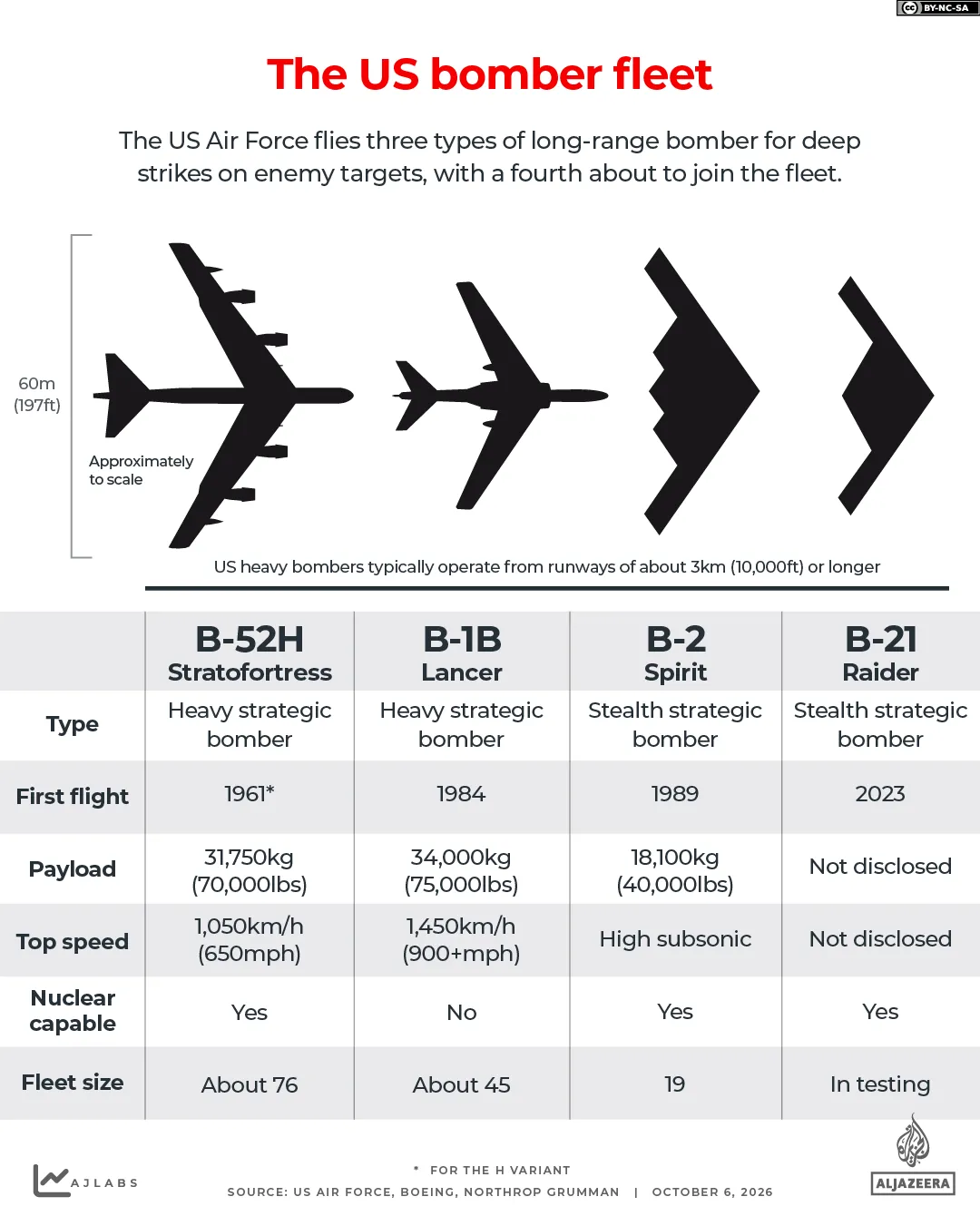
The US Air Force flies three types of bombers, with a fourth on the way.
The B-52 Stratofortress is the oldest. The B-52H model currently in service was built in the early 1960s. With a wingspan of 56 metres (185 feet), it is the largest US bomber and can carry about 31 tonnes of weapons, including nuclear bombs and cruise missiles.
A B-52 Stratofortress takes off from RAF Fairford on March 19, 2026 [Leon Neal/Getty Images]
The B-1B Lancer, which entered service in the mid-1980s, is the fastest of the three. It can reach 1.2 times the speed of sound and has a swing-wing that sweeps back for high-speed flight. It carries the largest conventional payload, about 34 tonnes, but no longer carries nuclear weapons. These were the aircraft that left Fairford.
The B-2 Spirit is a flying-wing stealth bomber designed to slip past air defences. Only 20 were built, of which 19 remain in service. It can carry both nuclear and conventional weapons, including the 13,600kg (30,000lb) “bunker buster” bomb used in US strikes on Iran’s nuclear sites in June 2025.
The B-21 Raider, a smaller stealth bomber, is still in flight testing, and it remains on track for delivery in 2027. Over the next decade and a half, the air force plans to replace the B-1B and B-2, leaving a future fleet of B-21s and upgraded B-52s.
The B-21 Raider, a new high-tech stealth bomber developed for the US Air Force, is seen in an undated photograph in Palmdale, California, US, released on December 2, 2022 [Handout/US Air Force via Reuters]
Where do these bombers fly from?
All US bombers are permanently based in the US, at five main airbases:
B-52H: Barksdale Air Force Base in Louisiana and Minot Air Force Base in North Dakota
B-1B: Dyess Air Force Base in Texas and Ellsworth Air Force Base in South Dakota
B-2: Whiteman Air Force Base in Missouri
B-21: Due to arrive at Ellsworth in South Dakota in 2027
All of these bases have long, wide runways, typically exceeding 10,000 feet (3,048 metres).
That makes bomber runways about as long as those at a big international airport. What limits where bombers can operate is not tarmac but security, weapons storage and support.
For missions abroad, the US rotates bombers through a handful of forward bases. Other important overseas operating locations include Andersen Air Force Base in Guam and Diego Garcia in the Indian Ocean.
Beyond these, the air force sends small groups of bombers to allied airbases for a few weeks at a time, in what it calls Bomber Task Force deployments. Recent rotations have included B-52s at Moron in Spain, B-1Bs at Orland in Norway and Misawa in Japan, and B-52s at Tindal in northern Australia, which arrived in September.
The bombers can also go on a strike mission from the US with the help of aerial refuelling. Bomber missions during the US-Israel war on Iran lasted more than 30 hours there and back. Each group of three bombers needed six to nine tanker aircraft to refuel them along the way.
This image released by the US Navy shows an aerial view of Diego Garcia [File: US Navy via AP]
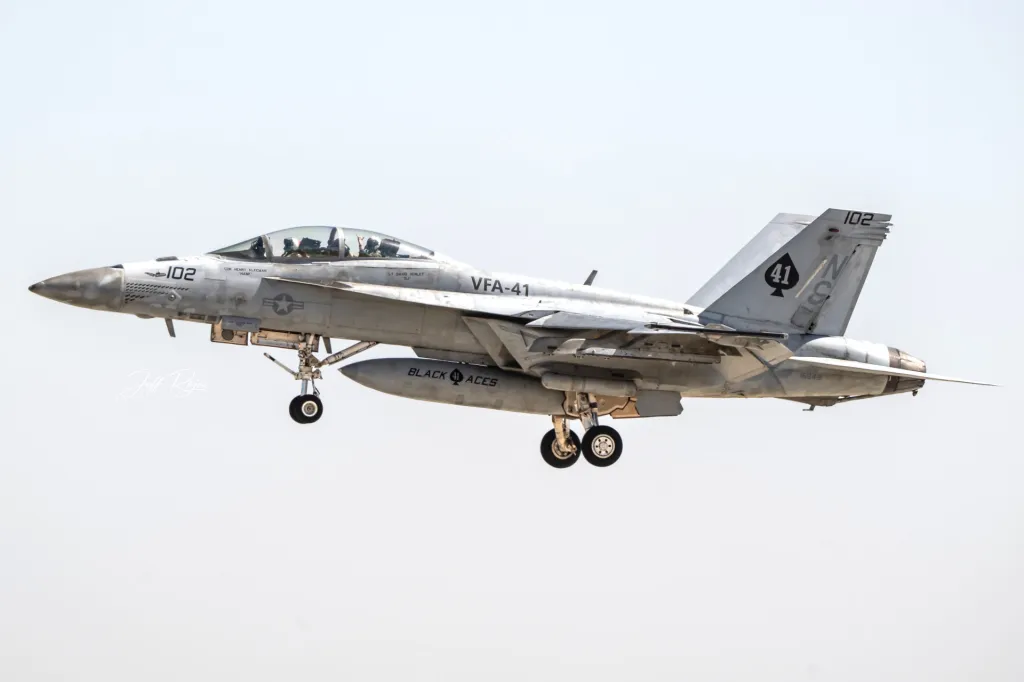
The volume of munitions expended in the course of U.S. operations against Iran this year has been and continues to be a hot topic of discussion, and there has been relatively little official data provided on this front. However, now we know that the F/A-18F Super Hornets of the U.S. Navy’s Strike Fighter Squadron 41 (VFA-41), the “Black Aces,” launched 421 missiles and bombs during their time supporting Operation Epic Fury.
This new insight into VFA-41’s role in the conflict with Iran comes from a photo of a large board listing the squadron’s weapons expenditures during Epic Fury, via Jeff Rojas, who goes by the handle @jro_photography on Instagram. Rojas also shared pictures recently taken of VFA-41’s Super Hornets. The Black Aces were one of the squadrons assigned to the Nimitz class aircraft carrier USS Abraham Lincoln, which has been on a marathon deploymentsince last year. The carrier only left the Middle East region last month and is now set to formally return home to San Diego, California, within days. Per the Pentagon’s official timeline, Operation Epic Fury began on February 28 and concluded on May 5, though U.S. forces have continued to conduct strikes on Iran, on and off, since then.
One of VFA-41’s F/A-18F Super Hornets spotted recently. Jeff Rojas Jeffrey Rojas
The complete tally of munitions employed as shown on the board, broken down by type, from greatest to fewest, is as follows:
The total cost of all of these munitions, using available data from U.S. military budget documents, is very roughly $43,646,000, at least. Unit costs fluctuate regularly due to a variety of factors. Furthermore, the exact price tag for different JDAMs can be somewhat difficult to calculate given how the individual components are budgeted.
The JDAM is really a family of kits that turn standard unguided ‘iron bombs,’ which can vary significantly in the kinds of effects they are designed to produce, into warheads for precision-guided munitions. This is exemplified by the (V)2 and (V)4 subvariants of the GBU-31/B mentioned here, which are built using standard high-explosive and bunker-buster bombs, respectively. No specific subvariants of the GBU-32, GBU-38, or GBU-54 were mentioned in the information provided. Standard JDAMs can also only be employed against static target coordinates. The LJDAM kits add a laser guidance component (akin to what is found on Paveway-series bombs) that enables strikes against moving targets.
A JDAM, as well as a pair of AIM-9Xs, seen under the wing of a VFA-41 Super Hornet in August. NAVCENT
No specific version of AGM-154 is mentioned, either, but the C and C-1 types, which have multi-stage bunker-busting warheads, are the only ones understood to be in service today. Remaining A variants, which were loaded with 145 small bomblets, were removed from U.S. service in 2008 as a result of new guidelines on cluster munitions issued under President George W. Bush. A planned AGM-154B, which would have contained six “smart” Sensor Fuzed Munition bomblets, was never produced. You can read more about the full JSOW family here.
We do not know exactly what targets any of these munitions were employed against. However, a picture that Jeff Rojas grabbed of one of VFA-41’s Super Hornets, seen toward the top of this story and in part below, shows a very interesting broken submarine kill marking, with the added text “Sub Buster.” The jet also has a number of more typical bomb-shaped kill marks.
A close-up look at the broken submarine and other kill marks on one of VFA-41’s Super Hornets. Jeff Rojas Jeffrey Rojas
The video montage in the social media post below includes a clip, starting at 0:13 in the runtime, of a Hellfire missile hitting what looks to be a Ghadir class diesel-electric midget submarine in port.
U.S. forces are degrading the Iranian regime’s ability to project power at sea and harass international shipping. For years, Iranian forces have threatened freedom of navigation in waters essential to American, regional and global security and prosperity. pic.twitter.com/gIBN02mowh
It is extremely likely that the AIM-9Xs and AIM-120s were fired at Iranian drones, though they could have been launched at incoming cruise missiles, as well. At the time of writing, there are no known or reported instances of U.S. military jets engaging crewed Iranian aircraft in the course of the conflict to date. In 2024, the Navy carried out a crash program that increased the total number of AIM-9Xs that F/A-18E/Fs could carry per sortie, specifically in response to Houthi drone threats. Super Hornets loaded with nine air-to-air missiles are now referred to as “Murder Hornets.”
It is also important to remember that this is a discussion of the munitions expended by just one Navy strike fighter squadron. Lincoln‘s air wing includes four strike squadrons, three with Super Hornets and one with F-35Cs, as well as units flying other types of aircraft and helicopters. The carrier was just one part of a much larger array of air, naval, and ground forces that participated in Operation Epic Fury and subsequent operations against Iran. For additional context, consider that the entire Eisenhower Carrier Strike Group, including its entire air wing and escorting ships, fired off 770 munitions in total, by the official count, during very active combat operations in and around the Red Sea between November 2023 and June 2024.
VFA-41 Super Hornets seen flying together recently. Jeff Rojas
As such, the tally of munitions launched from VFA-41 Super Hornets offers a very interesting view into that squadron’s contributions to Operation Epic Fury, as well as the full scale and scope of the conflict with Iran.
Special thanks again to Jeff Rojas for sharing the details about VFA-41’s participation in Operation Epic Fury and his pictures with us.
Crowds cheered and waved national flags as two Shahed drones were paraded through Tehran. Iranian-made, low-cost Shahed drones have become a major feature of modern warfare, used in attacks across the Gulf and extensively by Russia in its war in Ukraine.
Pro-Palestine protesters have marched on Labour’s annual conference in Liverpool, calling for an end to UK arms sales to Israel and the imposition of sanctions. The protest follows Labour’s sanctions on Israeli settlements, but demonstrators say the measures do not go far enough.
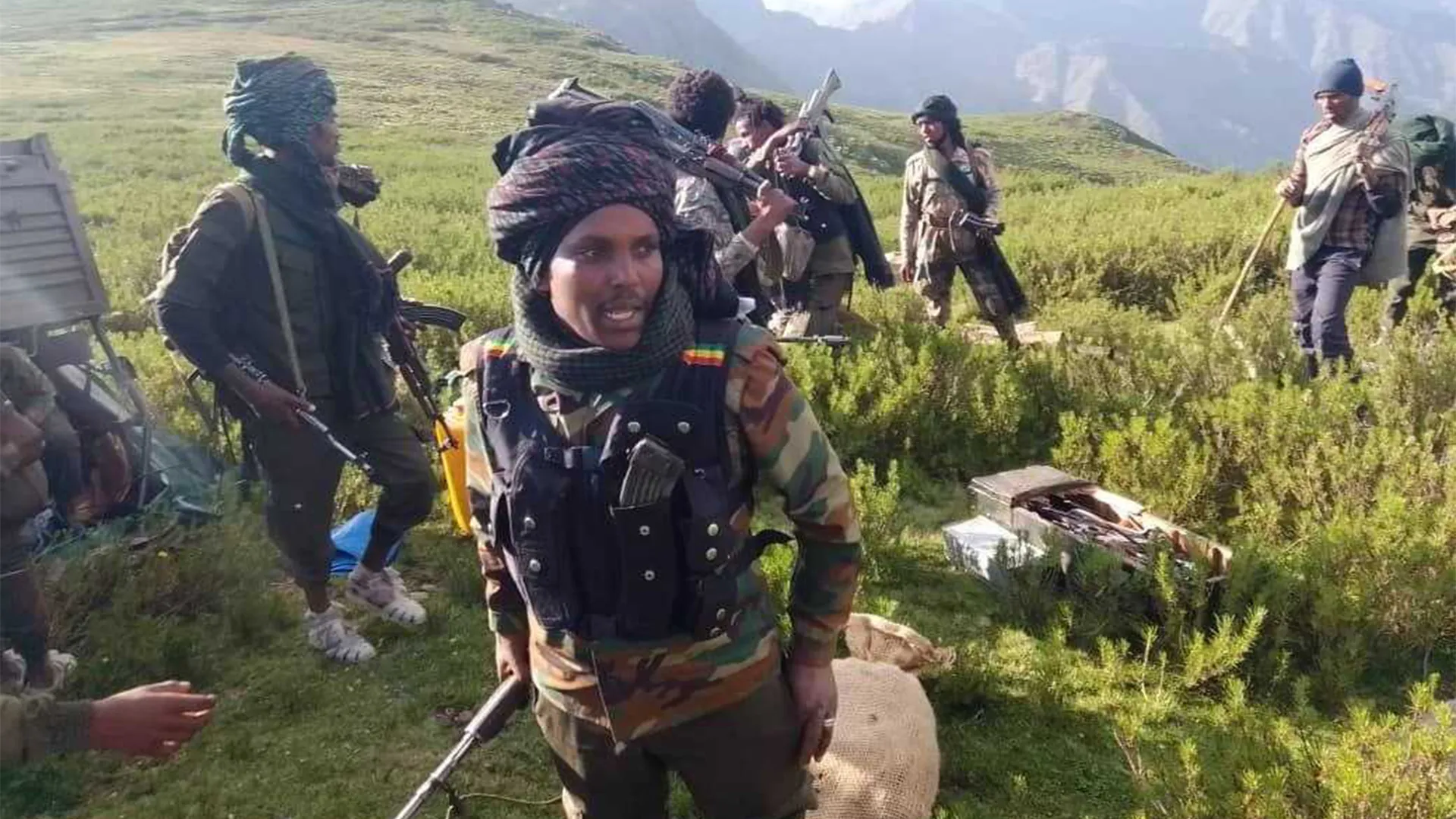
Armed fighters from Ethiopia’s Fano movement claim to have seized more than 10 military trucks carrying ammunition, machine guns and mortar shells in the Amhara region. Fighting in the country has intensified following the formation of a new alliance of seven armed groups seeking to overthrow Prime Minister Abiy Ahmed’s government.
No response by Yemen’s Houthis to a claim by the coalition forces that its missiles targeted Taif and Yanbu.
Published On 24 Sep 202624 Sep 2026
Saudi-led coalition forces fighting Yemen’s Houthis say they have intercepted six ballistic missiles allegedly fired by the Iran-allied group towards cities in Saudi Arabia.
The missiles were destroyed on Thursday in the direction of the Saudi cities of Taif and the strategically important port of Yanbu, according to Major General Turki al-Malki, the spokesman for the Saudi-backed Coalition to Restore Legitimacy in Yemen.
Recommended Stories
list of 3 itemsend of list
Saudi air defences intercepted some of the missiles attempting to target the cities, Al-Malki told the Saudi Press Agency (SPA).
There was no immediate claim of responsibility from the Houthis or other groups.
The coalition statement came as the Reuters news agency reported that an air defence system operated by Greek military personnel in Saudi Arabia intercepted a ballistic missile and a drone on Thursday in the wider Yanbu region, home to major oil refining facilities.
“Both were shot down,” a Greek security source told Reuters, adding that the Greek Patriot system launched two missiles but did not give details on the origin of the drone and the ballistic missile. A second source confirmed the information to the news agency.
Yanbu port is key to Saudi crude when shipments through the Strait of Hormuz are disrupted.
Earlier on Thursday, Saudi Arabia’s General Directorate of Civil Defence issued alerts warning of potential danger in the holy city of Mecca, the northwestern area of Tabuk, the Red Sea areas of Jeddah and Yanbu and the southern area of Taif. They later said the threat had passed and the cities were out of danger.
It was the first time in nearly 10 years that a security alert had been activated in Mecca, home to the Kaaba, Islam’s holiest site.
The Houthis have largely attacked southern areas of Saudi Arabia.
They stepped up attacks on the kingdom after declaring a naval blockade in July, a second theatre for the US-Iran war. The Houthis also seized the whole of Yemen’s western coast in a lightning offensive nearly two weeks ago that brought them to the shores of the Red Sea’s strategic Bab al-Mandeb waterway.
Forces with Yemen’s Saudi-backed internationally recognised government said on Thursday they repelled Houthi attacks along several fronts in Yemen’s southwestern Taiz governorate.
Colonel Majid al-Nuzaili, spokesman for the Yemeni government forces, said that the Houthis launched coordinated attacks on Wednesday night in a bid to reach positions on a key road connecting the Aden, Lahj and Taiz governorates.
Nine protesters blocked access to Elbit Systems’ factory in Staffordshire by attaching themselves to five ‘lock-ons’ to launch the direct-action group ‘Silence Elbit Drones’. Al Jazeera spoke with spokesperson Audrey Corno, who said the group aims to disrupt Elbit’s operations over its supply of military equipment to Israel.
Secretary of the Air Force Troy Meink made a bombshell admission this morning, disclosing that there are on-orbit weapons deployed right now to protect America’s interests in space. Those weapons support a Space Control mission set, and the U.S. Space Force has now also shared additional details about that directly with TWZ.
The first official painting commissioned by the Space Force, seen here, explicitly depicts a duel between a reusable spaceplane and a hostile ‘killer satellite.’ USSF
“Today, we continue to ensure we remain ready to meet the challenges of evolving threats, wherever they exist,” Meink said during his keynote address. “This is why the United States now has on-orbit space control weapons capable of defending the joint force against hostile adversary action.”
“That phrase was very well thought out. So whatever I said before is what I say again,” he said when asked if he could elaborate in any way on those capabilities at a question-and-answer session immediately following his speech. “It is critically important that we maintain our dominance not only in the air, but in space, and so we’ve had to take steps to make sure that when we’re threatened, we can take care of that.”
“Not going to go into specifics on the type of weapon,” Meink said when asked again if he could elaborate at a press roundtable with TWZ and other outlets on the sidelines of the Air, Space & Cyber Conference today. “Just like in air dominance, we need to maintain dominance in space as it becomes more and more important to how we function, how we operate militarily, and economically [and] civilian-wise.”
“There’s a lot of factors that go into how we talk about these things. We spend a lot of time talking about how we’re going to talk about these things,” Meink added at the roundtable when asked about why this disclosure was being made now and its implications for deterring adversaries.
“It is important from a deterrence perspective, but on the other hand, me talking about the details of what we’re doing would actually not benefit that deterrence,” he continued. “So I’m not going to talk about the specifics of what we’re doing, whether we’ve tested or not tested, or anything else.”
Secretary of the Air Force Troy Meink speaks during the change of responsibility ceremony for Chief of Space Operations Gen. Douglas Schiess on Sept. 3, 2026. USAF/Eric Dietrich
TWZ had separately reached out for more information after Meink made his initial remarks this morning.
“It is longstanding policy that the U.S. will protect and defend the Joint Force through all domains,” a Space Force spokesperson subsequently told us. “We are increasing readiness against existing threats, and the U.S. has on-orbit space control weapons capable of defending the Joint Force against hostile adversary action.”
“Space control encapsulates the mission areas required to contest and control the space domain – employing kinetic and non-kinetic means to affect adversary capabilities through disruption, degradation and even destruction, if necessary,” they continued. “These capabilities can be employed for offensive and defensive purposes at the direction of combatant commands. U.S. military operations are conducted in compliance with international law, including the Outer Space Treaty and LOAC [the Law of Armed Conflict].”
The Outer Space Treaty, which came into force in 1967, prohibits the United States and other signatories from placing nuclear weapons and other weapons of mass destruction (WMD) in orbit. It does not impose limits on the deployment of conventional weaponry. After receiving this initial statement from Space Force, TWZ followed up to ask whether the service was confirming that it has kinetic (e.g. physical interceptors) and non-kinetic space control weapons (e.g. electronic warfare jammers) now, and that any such weapons could be employed both offensively and defensively.
“We are confirming that the United States has on-orbit space control weapons capable of defending the Joint Force against hostile adversary actions,” the Space Force spokesperson said in response. “Beyond that, we will not discuss specific operational methods, payloads, technical characteristics, or employment concepts.”
A look inside a U.S. space command center. US Space Command
“As the Space Force continues to mature, our public discussion is intended to clarify doctrine and mission sets, not disclose sensitive operational details,” they added. “What is important is that the U.S. Space Force is committed to the long-term safety, security, and sustainability of the space domain, and our operations are guided by longstanding principles of professional military behavior and international law. That commitment remains central as space operations continue to mature and normalize.”
There are a wide range of means by which a platform on-orbit can attack another or otherwise defend against incoming threats. Not all of those options involve effects that are destructive or even irreversible, either. For instance, a laser could be used to blind optics on a target temporarily without damaging them. Electronic warfare suites could similarly disrupt a threat without causing any kind of permanent harm. Doing so could help provide extra time for a friendly asset to maneuver out of danger. There are, of course, also capabilities that do seek to damage and/or destroy a target, such as physical interceptors, grappling arms, aerosols that can be sprayed on optics and solar panels, or even just using one satellite as a kinetic weapon to smash into something else.
A U.S. Defense Intelligence Agency graphic highlighting some of the ways on-orbit attack can be carried out. DIA
So-called counter-space weapons, as a broad category, are also not limited to space-based capabilities. There are also direct-ascent anti-satellite (ASAT) interceptors launched from the surface and other capabilities deployed from within the Earth’s atmosphere. Prior to today, the only acknowledged anti-satellite weapons the U.S. military had in inventory were ground-based electronic warfare systems. In 2022, under President Joe Biden, the U.S. government had announced a self-imposed moratorium on destructive direct ascent anti-satellite weapons testing. Still, this would not have precluded development of those capabilities using other means, and it’s not even clear if that policy is still in place.
It is important to further note here that plans for new space-based anti-missile interceptors are at the core of the Trump administration’s Golden Dome missile defense initiative.
There is certainly no debate about the absolutely vital role that space-based capabilities – including early warning, general intelligence gathering, weapons guidance, near-real-time communications, and more – play in U.S. military operations today. Similarly, it is well-established at this point that America’s principal global competitors and potential adversaries, especially China and Russia, have been actively developing and fielding increasingly more threatening anti-satellite capabilities. China’s People’s Liberation Army (PLA) has also been dramatically expanding its own space-based capabilities, steadily eroding the U.S. military’s historic dominance in this domain and presenting new threats to U.S. forces.
“From the broadest perspective, maybe the most critical characteristic of the responsive and adaptive national security space architecture called for in the President’s Ensuring American Space Superiority executive order is that survivability matters at least as much as performance,” U.S. Space Force Gen. Stephen Whiting, head of SPACECOM, said in August at the annual Space & Missile Defense (SMD) Symposium. “In space, there is no safe harbor. You can’t dig a trench or build a shield. Our satellites are consistently or predictably in an opponent’s weapons engagement zone. And we can build the most high-performing, exquisite satellites in human history, but if they depend on fragile, targetable supporting infrastructure, their performance will drop to zero on the first day of the next war.”
U.S. Space Force Gen. Stephen Whiting, head of US Space Command, seen speaking at the 2026 DoDIIS Worldwide Conference on August 10, 2026. DIA
Whiting publicly declared at that time that having “credible, acknowledged” options for countering enemy capabilities in space, to include damaging or even destroying them, was a key priority for deterring hostile action and surviving if a major fight in orbit were to break out.
“Protective measures on satellites is just like thinking about protective measures on aircraft, okay? And we’re working through that,” Lt. Gen. Gregory Gagnon, head of the Space Force’s Combat Forces Command (CFC), also told TWZ and others more recently at a roundtable at AFA’s Warfare Symposium back in February. “I won’t provide specifics, because I want those protective measures to work, right? I don’t want to tell Beijing and Moscow what I’ve done.”
“But protecting and defending satellites can’t simply be done by protect and defend. You can’t run away from a bully forever. Sometimes you got to turn around and punch,” Gagnon continued. “So protect and defend, although necessary, is insufficient to deliver space control. We also need, as part of our joint force, the ability to attack.”
U.S. Space Force Lt. Gen. Gregory Gagnon, commander of USSF Combat Forces Command, at center, seen at Schriever Space Force Base, Colorado, in December 2025. USSF
Meink’s remarks today put Gagnon’s prior comments, in particular, in a whole new light.
The Secretary of the Air Force’s new disclosure has prompted additional questions beyond just what actual weapon systems the U.S. military has actually fielded in space. There are long-standing concerns about the potentially wide-reaching ramifications of increasingly weaponizing space. As Meink himself noted today, space-based communications and other capabilities are increasingly central to daily life, in general, and widespread, long-term disruption could have serious negative economic and other impacts.
At the roundtable today, Meink pushed back on a question about these concerns, citing Chinese and Russian anti-satellite developments.
“Is there a question in the room by anybody about whether or not the Chinese and Russians have been developing these sorts of weapons?” he said. “We are focused on making sure we can protect ourselves and operate in that environment.”
“Depends on where you sit, right, you know? But to say that it’s the responsibility for the U.S. government to protect its citizens from emerging threats makes perfect sense to me,” now-retired Chief of Space Operations Gen. Chance Saltzman said last year when asked a similar question in the context of the Golden Dome initiative’s plans for space-based interceptors. “And we clearly see a country like the PRC [People’s Republic of China] investing heavily in these kinds of threats, whether it’s hypersonic [weapons], whether it’s threats from space. And so now it’s time for the U.S. government to step up to the responsibilities to protect American citizens from those threats.”
Though many questions remain, it is now clear that the U.S. military is not just planning to, but has already fielded at least some weapon systems in orbit as the threat ecosystem outside the Earth’s atmosphere continues to expand and evolve.
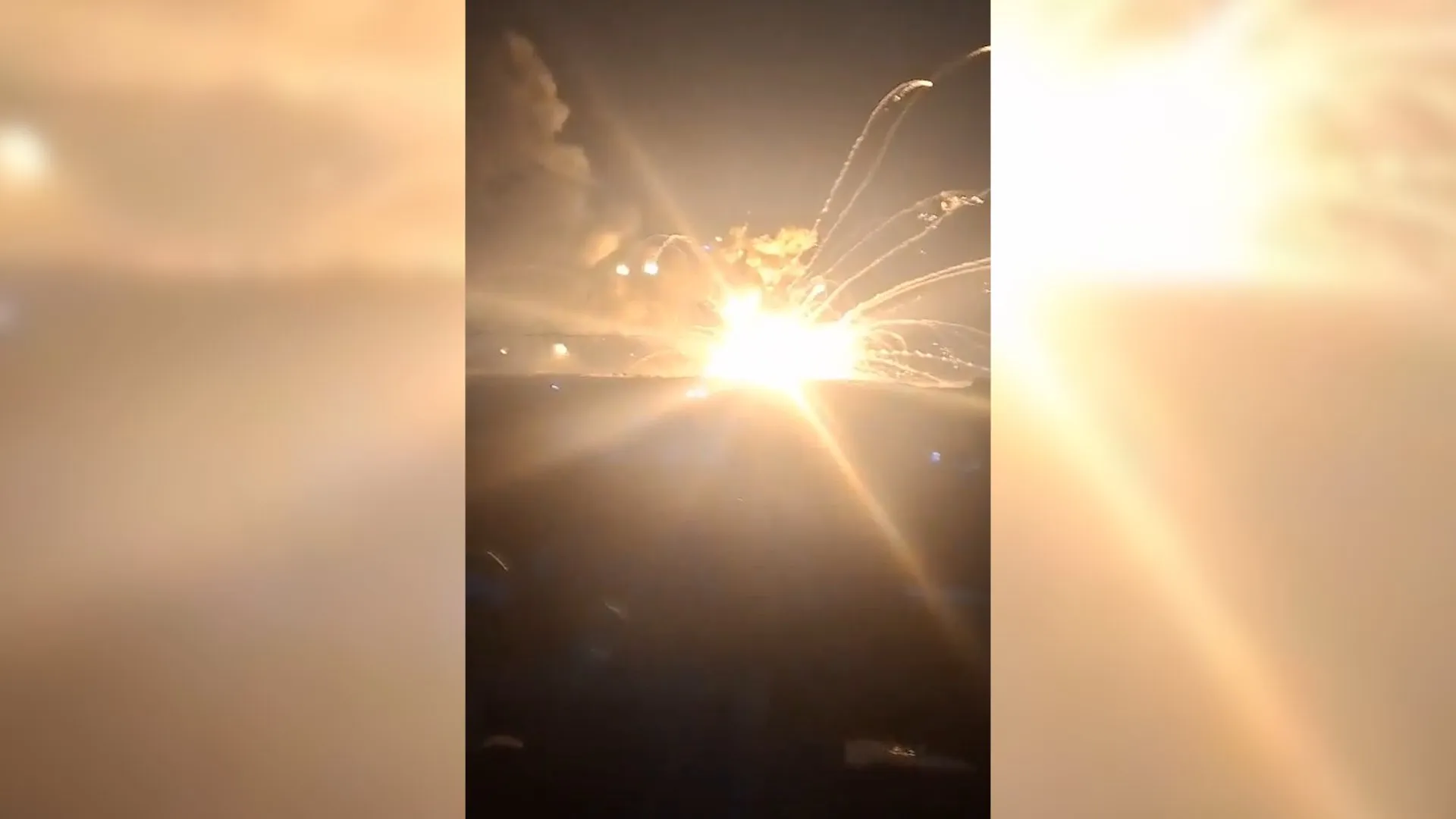
Al Jazeera’s Obaida Hitto reports on explosions that rocked a Syrian army ammunition depot south of Aleppo, injuring at least four people. Exploding missiles and ammunition hampered rescue efforts, while authorities closed nearby roads.
After his existential suburban horror epic “Weapons” became an Oscar winner (for Amy Madigan’s chilling supporting performance as Aunt Gladys), filmmaker Zach Cregger has dashed off a fun little riff on one of his favorite video games. His “Resident Evil” reboot is the eighth film in the big-screen franchise based on the Japanese zombie survival game, though Cregger’s “Resident Evil” is its own beast — put those Milla Jovovich movies out of your head entirely.
There are, of course, a few shared strands of DNA in the screenplay by Cregger and Shay Hatten: an evil company, Umbrella Corporation, responsible for a virus that mutates humans into zombies and all manner of monsters, located in the lovely Raccoon City. But our hero, Bryan (Austin Abrams), a hapless medical courier, knows none of this when he takes a gig delivering what he thinks is an organ on the snowy mountain roads to the metropolis.
Abrams, who was a standout in the ensemble cast of “Weapons,” has another big movie out this fall in which he stars as the lone protagonist, “Whalefall,” and the two films comprise an apt survival thriller double feature. In “Resident Evil,” Abrams’ Bryan spends much of his lonely mission muttering to himself in annoyance and sometimes victory, much like a gamer would. During one self-reflective moment, Bryan yells, “Yeah! Video games!” elated at how his shooting is improving.
Cregger’s approach to “Resident Evil” is to seamlessly blend the cinematic with a gaming experience and his adaptation best mimics the feeling of playing an actual game or watching someone else play one. At one point, Bryan and a comrade he meets along the way (Paul Walter Hauser) marvel at the shooting skills of Maxine (Kali Reis) as if they’re watching her play the game too.
Immediately, Cregger establishes a camera that follows closely behind Bryan, a similar motif to the cinematography he used in “Weapons.” As Bryan starts to encounter the strange beings who appear on the outskirts of Raccoon City, the game mechanisms click into place. Different characters — villains and helpers — pop up along his journey, as well as different tools and weapons. He frequently encounters locked doors, obstacles and empty spaces that he has to explore. Cregger uses first-person-shooter point-of-view shots, with the long barrel of a rifle or automatic weapon lining up our sights; one running gag sees Bryan, completely hopeless with guns, having to shoot the locks off of gates.
What was already a very darkly funny and incredibly gross film gets even more disturbing as Bryan ventures into the Raccoon City hospital, trying to make his delivery. He encounters monsters that vomit acid or explode with zombie rats; one particular ward is full of undulating sacs of bloody viscera.
Cregger remains one of our finest horror image-makers, creating surreal and snowy landscapes that are as beautiful as they are disturbing: the red and blue lights of a flipped police car in a blizzard, dark pools of blood and mysterious footsteps, tentacles greeting and meeting each other, stomach acid decimating an elevator. With impeccable sound design and an eerie score by Ryan and Hays Holladay, Cregger delivers a textured, wholly realized world.
But our guide is just a regular guy, which lends to the charm. Bryan is dealing with relationship problems that add to the urgency of his desire to survive, but he’s also just a dude with questionable self-preservation instincts, which makes for a good adventure. He has an overwhelming desire to help, which leads to some ridiculous circumstances and is a quality that Cregger plays for laughs. Abrams plays the goofball well and we’re constantly rooting for him, even as his fortunes take a turn in a tragic reversal that we’ve seen in monster movies before.
Cregger wears his influences well and they aren’t just video games but pulled from the history of horror. Still, he blends it all into his own vision so it doesn’t feel derivative. While the unwieldy ending might get away from him, the tightly controlled and efficient stretch that precedes it is the work of a new master, one who delivers imaginative, terrifying and hilarious thrills and chills, whether he’s reanimating a dead franchise or dreaming up his own uncanny vibe. “Resident Evil” might be his most playful — and gooey — film yet.
Katie Walsh is a Tribune News Service film critic.
‘Resident Evil’
Rated: R, for strong bloody violence, gore and language throughout
Warsaw also says it has scrambled military planes in response to a Russian attack in western Ukraine, close to its border.
Published On 17 Sep 202617 Sep 2026
Polish Prime Minister Donald Tusk says that intelligence information suggests Russia plans to launch drone and missile attacks against countries supporting Ukraine.
Warsaw’s leader outlined the assessment during an address to parliament on Thursday, saying that the attacks will be meant to weaken NATO’s ability to act collectively in response.
Recommended Stories
list of 4 itemsend of list
“According to intelligence assessments, Russia’s plan … includes hybrid drone and missile strikes against countries supporting Ukraine, including Poland,” Tusk said.
European countries suspect Moscow of being behind a series of acts of sabotage in recent months to put pressure on the allies, especially Germany, helping Kyiv in its bid to resist Russia’s full-scale invasion – something the Kremlin has vigorously denied.
“These potential strikes would be quote-unquote ‘accidental’ in nature, intended to paralyse or at least weaken the resolve of NATO states to invoke the relevant NATO provisions in the event of aggression against a member country,” Tusk added.
He did not elaborate on which intelligence agencies had provided the warning.
He also said such attacks by Russia could coincide with “political changes in certain European countries granting power – or at least a powerful voice – to those who, increasingly invoking noble slogans of peace, pacifism and needless casualties, will call for peace – or rather, the total capitulation of Ukraine”.
Tusk appeared to be referring to the advance of more Russia-friendly parties such as Alternative for Germany (AfD) and National Rally in France.
Air raid near border with Poland
Earlier on Thursday, Poland said it had scrambled military planes in response to a Russian attack in western Ukraine, close to the Polish border.
Airports in Rzeszow and Lublin were temporarily closed, and residents of two eastern regions of Poland received air raid warnings. Local media reported that sirens had sounded and that pupils in some schools had sought shelter.
“Very close to the Polish border, not far from Dorohusk, a petrol station was most likely attacked again,” Tusk said.
On Sunday, a Russian drone hit a passenger train in Ukraine, just two kilometres (1.6 miles) from the Polish border.
Defence Minister Wladyslaw Kosiniak-Kamysz said Poland was strengthening airspace protection.
“We have increased F-16 and helicopter activity, and are reinforcing our air defence and rapid response systems,” he wrote on X.
Tusk said he would visit Ukrainian President Volodymyr Zelenskyy on Friday to discuss cooperation within the Integrated Anti-Ballistic Missile Coalition, a group of European countries developing an air defence system with Ukraine as a cheaper alternative to the US-built Patriot.
Critics say Serbia’s military ties with Israel are rising significantly.
Published On 17 Sep 202617 Sep 2026
Serbia has opened a factory to assemble advanced Israeli-made drones, which will supply the Serbian military and armed forces in other countries.
Serbian President Aleksandar Vucic inaugurated the facility jointly operated with an unnamed Israeli company on Thursday.
“Our plans are huge,” Vucic said in a social media post showing a video of him touring the facility with Israeli Ambassador Avivit Bar-Ilan, adding that at least three more factories will be opened across Serbia with Israeli partners.
Vucic said the facility “will employ around 100 workers and produce state-of-the-art equipment both for the Serbian Armed Forces and the armies of some other countries”.
Vucic did not disclose the factory’s location or the Israeli firm involved, saying journalists were excluded from the opening because of “the confidentiality of the production process”.
Previous reporting by investigative outlet BIRN and Israeli newspaper Haaretz has identified Israeli defence firm Elbit Systems as Serbia’s partner in the drone-manufacturing process.
Elbit has previously been criticised over its role in operations in Gaza and the West Bank.
Last month, Vucic told Serbian news outlet Nezavisne Dnevne Novine that the goal of the factory was to “preserve peace and stability, and to be strong enough to deter all potential aggressors”.
Serbia is one of the few countries in the Western Balkans that is not a NATO member, and it has invested heavily in its military to “preserve neutrality”.
It has faced scrutiny over arms exports to Israel, which BIRN and Haaretz said rose from 1.4 million euros ($1.6 million) in 2023 to 42.3 million euros ($48.5 million) in 2024.
During a visit to Serbia earlier this year, United Nations Special Rapporteur on the occupied Palestinian territories Francesca Albanese said Belgrade remained one of Israel’s “most steadfast and determined allies” despite calls for more countries to restrict weapons exports due to the war in Gaza.
WASHINGTON — The United States has confirmed for the first time that it has deployed weapons in space.
Air Force Secretary Troy Meink told the Air and Space Cyber Conference in Maryland on Monday that the U.S. has fielded “on-orbit space control weapons capable of defending the Joint Force against hostile adversary action.”
Meink did not detail what the weapons were or how they work. In 2024 the U.S. said Russia was developing a new anti-satellite weapon that could be launched from space. At the time the White House said the danger wasn’t imminent.
But reports of the anti-satellite weapon reflected longstanding worries about space threats from Russia and China, given that much U.S. infrastructure is dependent on satellite communications.
In his remarks, Meink also said the Air Force was adding more autonomous systems to its capabilities and predicted the service would look “radically different” by 2032. For example, he foresaw one-way attack drones replacing artillery as the “primary killer.”
“We are increasing readiness against existing threats,” he said.
The United States has acknowledged deploying space weapons in orbit of the Earth.
US Air Force Secretary Troy Meink confirmed on Monday that the so-called “space control weapons” would be used to defend US forces on the planet, marking a significant new chapter in the militarisation of space – or at least the transparency of it.
The announcement, which Meink framed as a message to US rivals China and Russia, could turn Earth’s orbit into an increasingly contested military domain, experts warn. Warfare could include countries targeting each other’s satellites, which provide critical services such as GPS, communications and intelligence to military forces on the ground, as well as civilian infrastructure.
“Space Force doctrine describes ‘space control’ as having the outcome of space superiority, which they define as the ability to operate at the time and place of their choosing, while denying the same to an adversary,” Victoria Samson, chief director of Space Security and Stability for Secure World Foundation, a private non-profit focused on military space and security issues, told Al Jazeera.
So, what do we know about the US-deployed weapons in space? And do some countries already have them?
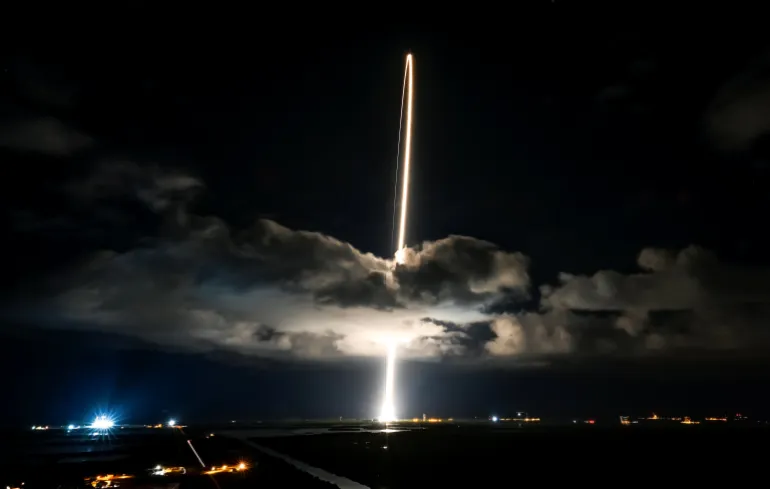
NASA’s Lucy spacecraft, atop a United Launch Alliance Atlas V rocket for a mission to study the Trojan asteroids in the outer solar system, launches from Pad-41 at Cape Canaveral Space Force Station in Cape Canaveral, Florida, the US, October 16, 2021 [Steve Nesius/Reuters]
What do we know about these space weapons?
Not a lot. Air Force Secretary Meink said the US has stationed “weapons” in Earth’s orbit, but did not specify when they were placed there, how many there are, or what they are designed to do.
“Today, we continue to ensure we remain ready to meet the challenges of evolving threats wherever they exist,” Meink said at the Air, Space and Cyber Conference. “This is why the United States now has on-orbit space control weapons capable of defending the Joint Force against hostile adversary action.”
However, he did not give any details about what sort of weapons these may be, where they are positioned or what they are designed to do.
Samson said the keyword from Meink’s announcement is “weapons” in the context of “space control”. “Space control encapsulates the mission areas required to contest and control the space domain – employing kinetic and non-kinetic means to affect adversary capabilities,” Meink said, adding that “these capabilities can be employed for offensive and defensive purposes”.
“That’s the first time any official has acknowledged an actually designed weapon has been placed in space,” Samson told Al Jazeera. “It’s always been ‘systems with capabilities’ prior.”
Experts say these weapons are likely to be space-based communications jammers rather than kinetic ones that launch strikes. Kinetic weapons – for instance, a suicide satellite designed to ram into an adversary’s satellite – would likely cause fast-moving debris to be launched dangerously into space.
Bleddyn Bowen, an associate professor in astropolitics at Durham University in the United Kingdom, told the BBC’s Radio 4 Today programme: “We don’t know exactly what the mechanism of the weapon is. I would expect there to be some kind of electronic warfare or radio-jamming platform. This would be a non-destructive kind of anti-satellite weapon, and these variants already exist on Earth.
“Less likely would be a kinetic kill vehicle of some sort, so a vehicle that would release a projectile of some sort that would ram into a satellite and destroy it.”
US President Donald Trump gestures towards the US Space Force flag during a presentation of the flag in the Oval Office of the White House in Washington, DC, the US, May 15, 2020 [Kevin Lamarque/Reuters]
What is the US Space Force?
The US Space Force is the newest branch of the US military, created in December 2019 under President Donald Trump’s first term, responsible for organising and conducting US military operations in and through space.
Unlike NASA, which focuses on civilian space exploration, Space Force is part of the US Air Force and comes under US Space Command, which is headquartered at the Pentagon in Arlington, Virginia.
Its responsibilities include operating and protecting military satellites, providing satellite communications and positioning services, monitoring objects and potential threats in space, and supporting US forces on Earth.
“China and Russia are developing new space systems to enhance military effectiveness and end any reliance on US space services,” the Space Force’s website says. “China and Russia are also testing and fielding sophisticated counterspace capabilities with the intent to disrupt and degrade US space-enabled capabilities.”
US Secretary of the Air Force Troy Meink speaks during the 2026 graduation ceremony at the US Air Force Academy, in Colorado Springs, Colorado, the US, on May 28, 2026 [Matt Rourke/AFP]
Aren’t there treaties limiting weapons deployments in space?
Yes, but they do not amount to a blanket ban on weapons in space.
The key agreement is the 1967 Outer Space Treaty, which prohibits countries from placing nuclear weapons or other weapons of mass destruction in orbit or stationing them in outer space. It also bans military bases and weapons testing on the moon and other celestial bodies.
However, the treaty does not expressly prohibit conventional weapons from being placed in Earth’s orbit. That means systems such as conventional anti-satellite weapons, electronic-warfare systems, or other counterspace capabilities are not automatically prohibited.
Such gaps leave room for interpretation and are at the heart of current international efforts to enhance military activities in space.
How have Russia and China reacted to the US announcement?
China’s Foreign Ministry opposed the move, warning against the “weaponisation of outer space, turning it into a battlefield, as well as an arms race there”.
“We urge the US side to stop expanding its military capabilities and preparing for war in outer space,” ministry spokesman Guo Jiakun told a news briefing.
Russia called for space to be kept “free of any weapons”.
“We are counting on broad international consolidation to continue working towards the complete demilitarisation of space,” said Kremlin spokesman Dmitry Peskov.
Are Russia and China developing space weapons too?
Independent reports from research groups and think tanks note that both China and Russia are developing a broad range of counterspace capabilities designed to interfere with, disable, or potentially destroy satellites and other space systems.
The Center for Strategic and International Studies (CSIS), a foreign policy think tank based in Washington, DC, identified both countries as possessing or developing kinetic and non-kinetic counterspace weapons.
A 2025 CSIS report notes that both Moscow and Beijing have direct-ascent anti-satellite (ASAT) weapons, as well as capabilities involving jamming, spoofing, and cyber operations.
Samson of the Secure World Foundation (SWF) told Al Jazeera that her team has highlighted in their reports that “China and Russia have space-based jammers”. Therefore, she told Al Jazeera, “I always thought it would be strange that the US didn’t have them too.”
Bowen told the BBC: “In the last 10 years, Russia and China have been doing a lot more manoeuvres in space – rendezvous and proximity operations, as we call them – so, flying up really close to Western satellites, inspecting them, taking pictures. And on another occasion, the Chinese have demonstrated a ‘space tug’ capability. So, a vehicle that goes up to a satellite can grapple it and then move it into a different orbit.”
China has executed such a manoeuvre only with one of its own old satellites, which needed to be moved away from its location, he added.
What about other countries?
The emerging space-weapons race is not limited to the US, Russia and China: India has also demonstrated an ASAT capability and is developing technologies that could allow spacecraft to operate alongside other satellites.
France is also reported to be developing co-orbital capabilities, while the UK has conducted on-orbit cooperative operations with the US.
A 2026 report by SWF also notes how Iran, for instance, illustrates the less visible side of space warfare, relying increasingly on jamming and spoofing satellite-based services. Israel, meanwhile, has developed significant military space and electronic-warfare capabilities, although there is no public record of it conducting a debris-generating ASAT test.
Countries like North Korea and South Korea are also racing to develop more sophisticated space-based tech.
A view of NASA’s Orion spacecraft in the foreground, lit up by the sun as the moon and Earth are visible behind it as photographed by one of the cameras on the Orion spacecraft’s solar arrays during the Artemis II crew’s flyby of the moon on April 6, 2026 [NASA/Handout via Reuters]
Is space the next frontier of war?
Samson told Al Jazeera that the US announcement of deploying weapons in Earth’s orbit is not essentially disruptive in the context of space technology. “What this does is normalise weaponising space,” she said.
“Space has always been a domain with the potential of being a flashpoint for conflict; this just turns up the heat there,” Samson added.
A US Space Force spokesperson told ABC News that the US “capabilities can be employed for offensive and defensive purposes at the direction of combatant commands”. The spokesperson noted that Washington “has warned about Russian and Chinese weapons testing and operationalisation since 2007”.
“Due to their actions, it is no longer a question that space is a warfighting domain,” the spokesperson said. “Open communication strengthens deterrence, prevents adversary miscalculation, and normalises space operations alongside the other services.”
Samson further noted that Meink’s statement “crosses a line”, and would “either encourage China and Russia to also declare weapons in space, or will make US allies and partners want to also place weapons in space”.
“Counterspace capabilities have been proliferating already – this speeds up that trend,” she said, adding that this “is incredibly destabilising and will work against US national security goals”.
“By opening the door to weaponising space, the US loses the most,” Samson noted. “Every person on this planet uses space-based data and services in some way. Any interference with access to or use of space will affect everyone, not just space powers.”
Tetiana Bubynets collapsed on the asphalt after a Russian drone exploded at a gas station in the southern Ukrainian city of Zaporizhzhia.
Despite the violent shockwave and blast of drone shrapnel produced by the attack on July 6, the 18-year-old accounting student had no visible wounds except for a nosebleed.
Recommended Stories
list of 3 itemsend of list
She was rushed to hospital and pronounced dead shortly after, alongside two other civilians, aged 41 and 48.
One of her lecturers, Tetiana Melikhova of Zaporizhzhia National University, said Bubynets was an only child and that her mother “lost the meaning of life” after she died.
“She couldn’t speak. At the funeral, she just lay on the coffin; she couldn’t let her child go,” Melikhova told Al Jazeera.
The strike that killed Bubynets was the first recorded case of Russia’s use of a fully autonomous attack drone powered by artificial intelligence (AI), according to a New York Times analysis.
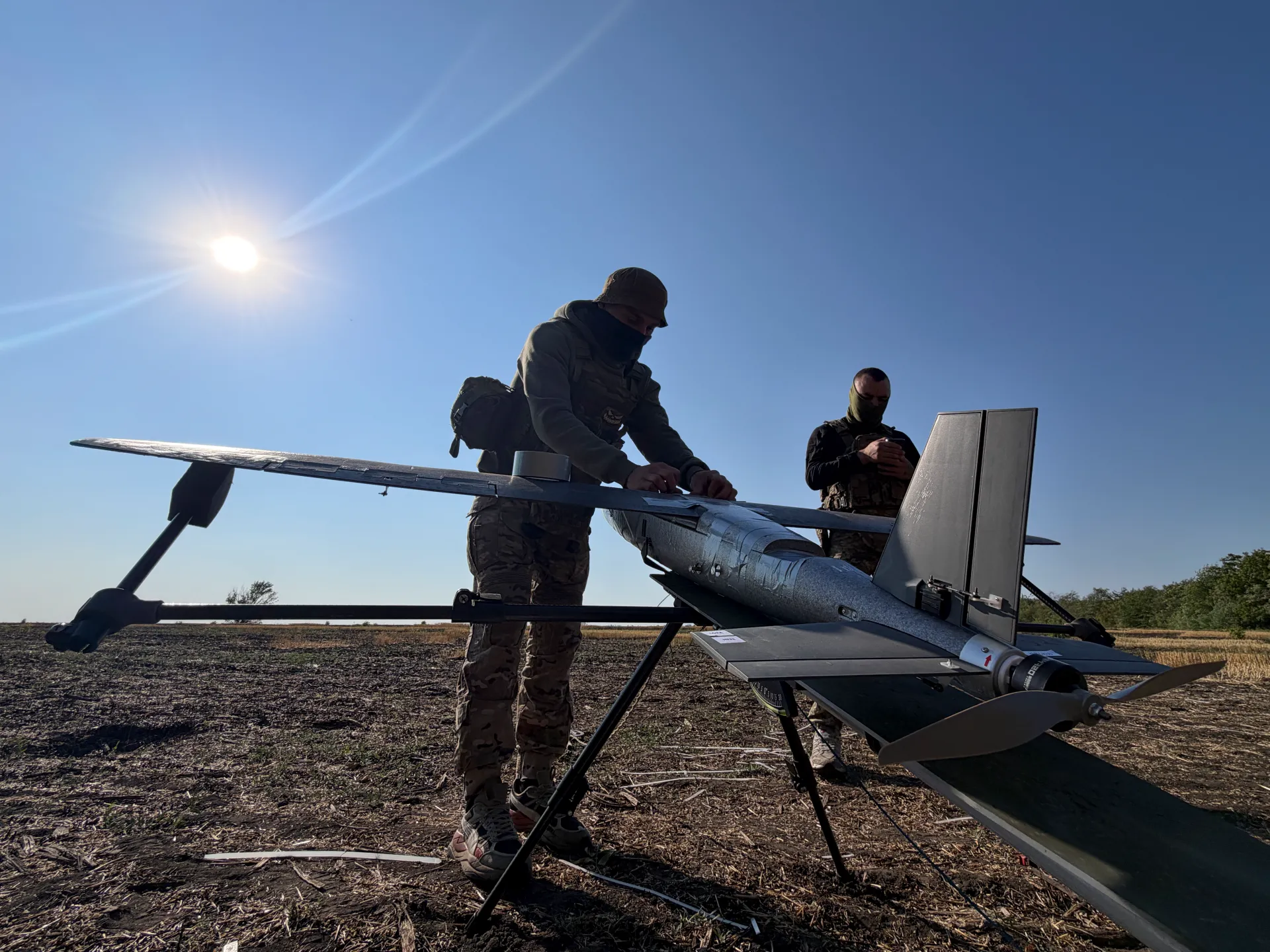
While drone strikes have hammered Ukraine since Russia launched its full-scale invasion in February 2022, Ukrainian officials who examined the wreckage found the unmanned vehicle to be unlike others.
In place of an antenna, it featured an AI-powered minicomputer sold commercially by US technology company Nvidia, which rendered it capable of directing itself to the type of target it was programmed to spot – likely propane tanks in this case – lock on to it and proceed to strike.
AI-powered drones are the tip of the iceberg as Russia and Ukraine race towards boosting tech infrastructure aimed at coordinating reconnaissance and attack, according to analysts.
“It’s not about a drone having AI in it, and then seeing something and striking,” Marina Miron, researcher at the defence studies department at King’s College London, said. “Rather, it’s the drone seeing something, communicating to a software complex which knows how to map the GPS coordinates on a live battlefield map, and notifying the closest artillery unit.”
Referred to as reconnaissance-strike architecture, these unified battlefield management systems act like a central command. They track the location of friendly forces and identify enemy positions.
AI acts as the accelerator, instantly processing massive amounts of data collected through sensors in drones or any other military products, including interceptor missiles or artillery units.
The tactical advantage on the battlefield is given by the system’s ability to compress the kill chain – meaning coordinating and distributing the intelligence to military assets on the ground to find, track and destroy targets in a matter of minutes.
In such an ecosystem, AI-powered automated drones are just pieces of a broader puzzle.
Ukraine is known to be developing its system, which it named DELTA. Following operational trials in late 2025, Russia has been rolling out its version, the Svod Tactical Situational Awareness Complex, to front-line units.
Both sides claim that once the battlefield data is processed, a decision support system (DSS) presents a military commander with options to choose from, keeping a human in the decision-making loop, said Miron.
“In how far that is true is, of course, impossible to find out,” she added.
Acknowledging full AI autonomy would provoke ethical and legal questions.
Even if humans were to retain final decision-making authority, research has shown AI systems subtly shape choices, predetermining outcomes.
“Under time and pressure, commanders often do as AI suggests,” said Miron, whose research focuses on military AI and remotely piloted and autonomous systems.
Towards full automation
Coordinated AI-powered military systems are the next frontier of modern warfare, said Serhiy Beskrestnov, a Ukrainian Ministry of Defence adviser on loitering munitions, known by his callsign Flash.
“That’s what it will all come to,” he posted on his Telegram channel on July 1. “Navigation, search for a target, and attacks will be fully autonomous.”
Drones with some autonomous capabilities are already being deployed at scale.
Heorhii Volkov, commander of Ukraine’s Yasni Ochi drone strike unit, said this is currently mostly used in the final phase of long-distance strikes, where first-person view (FPV) drones are likely to lose radio connection due to electronic warfare or the curvature of the Earth.
The use of AI in so-called last-mile operations solves this battlefield hitch. If the signal is lost, an integrated AI-enabled onboard module takes full control of the unmanned vehicle, autonomously locks on the target and carries the strike to completion.
Yaroslav Azhnyuk, founder of Ukrainian technology company The Fourth Law, which develops AI-powered autonomy software for unmanned vehicles, said Russia and Ukraine were working to deploy a wider range of autonomous systems.
“This is not simply a race to demonstrate a fully autonomous drone. It is a race to make autonomy reliable, affordable and deployable at scale,” Azhnyuk told Al Jazeera. “Electronic warfare, increasingly long engagement distances and the growing number of drones are making human-controlled systems less sufficient. Autonomy solves exactly these constraints.”
Azhnyuk believes autonomy will become a game-changer over the next six to 12 months.
“The decisive advantage will belong to the side that can deploy reliable autonomy across tens or hundreds of thousands of systems, not just demonstrate it in prototypes,” he said.
Kateryna Bondar, senior fellow at the Center for Strategic and International Studies (CSIS), noted the dangers of AI’s reliance on algorithms.
“The system doesn’t understand what it’s doing; it’s just following the algorithm and the rules which people created,” said Bondar, who works at the CSIS’s Wadhwani AI Center. “AI has to be trained to recognise targets and engage these targets,” but writing code that distinguishes between a bus and a tank is easier than between a Russian and a Ukrainian soldier.
Additionally, cost-effective FPV drones have low-quality cameras and their resolution can be lowered further by adverse atmospheric conditions.
Military units using autonomous systems therefore “delegate the decision to a very imperfect technology that cannot distinguish between a civilian and a military person, combatant or non-combatant”, Bondar said.
“This is why there is a conversation around who makes a decision and who has responsibility for mistakes and errors.”