waters

Is China Testing Taiwan’s Defences With a Research Ship Near Its Waters?

Taiwan Warns Chinese Vessel to Leave Sensitive Waters

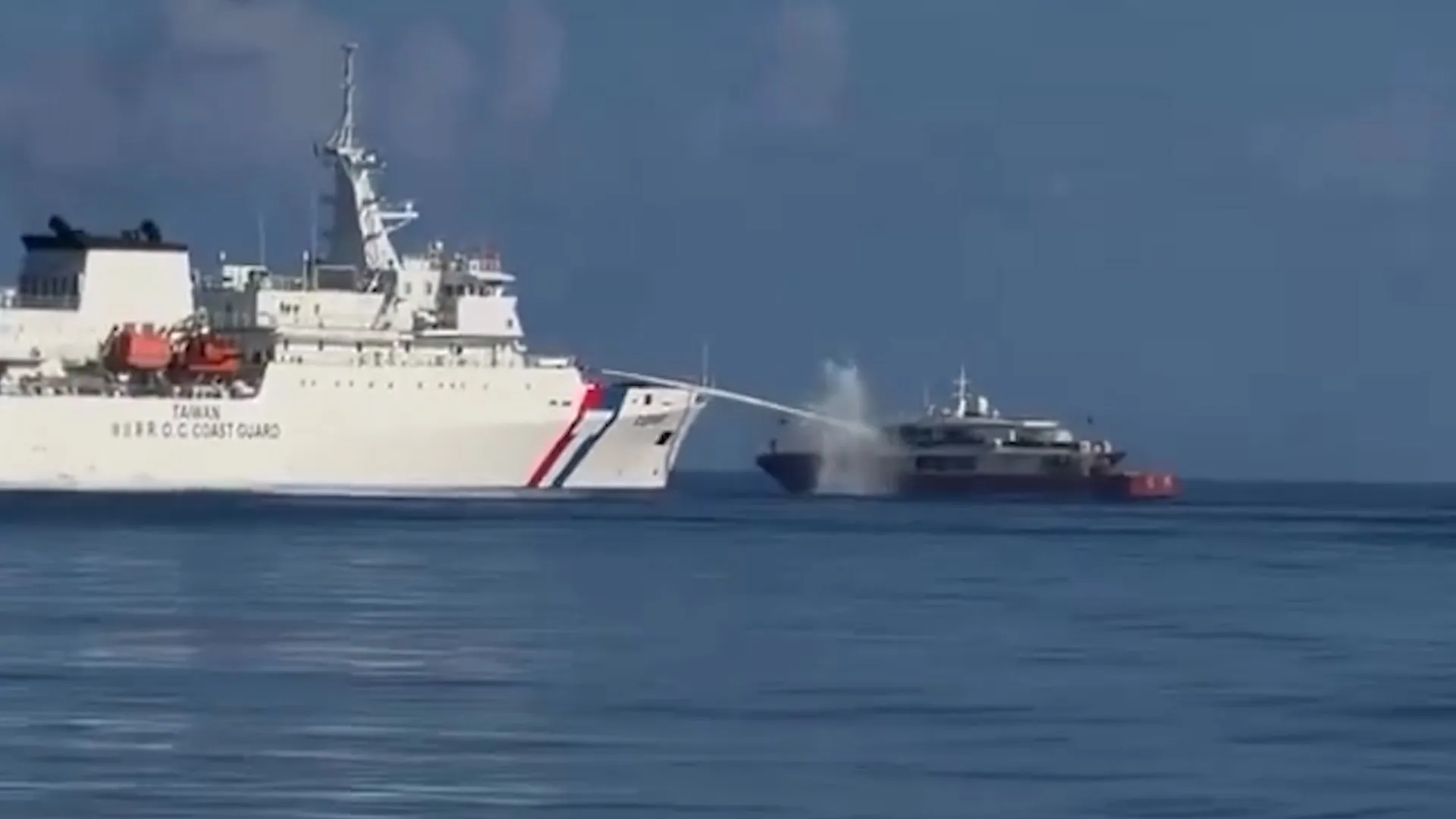
Taiwan’s coast guard said on Friday it had warned off and shadowed a Chinese research vessel operating in sensitive waters west of the island, marking the third time the ship has appeared near Taiwan since May.

The vessel, the Tongji, was spotted late Thursday about 24.9 nautical miles northwest of Taiwan’s Penghu islands, which sit in the Taiwan Strait and host important Taiwanese military facilities.

Taiwan views the repeated presence of Chinese vessels near the island as part of a broader campaign of maritime pressure by Beijing.

Coast Guard Monitors Tongji as It Moves South

Taiwan said the Tongji was not seen deploying or towing scientific equipment during its latest appearance.

Stay ahead of the geopolitical week.

MD Briefing delivers expert analysis across five global fronts — the Indo-Pacific, energy, geoeconomics, European security, and the Middle East — every Monday morning. Free.

The coast guard dispatched a patrol vessel to sail alongside the Chinese ship and issued what it described as strong warnings for it to leave the area.

By Friday morning, the Tongji had moved to around 28 nautical miles west-southwest of Liuqiu island in southern Taiwan, continuing southeast through the Taiwan Strait.

Taiwan’s coast guard said it would continue proactively deploying vessels to respond to Chinese ships and protect the country’s waters.

China’s Taiwan Affairs Office had not immediately responded to a Reuters request for comment.

Why Is the Research Ship Significant?

The Tongji was commissioned only last year and has appeared near Taiwan several times since May.

Taiwan previously reported seeing the vessel lowering ropes into the water, raising concerns that it could have been conducting scientific or survey operations without authorisation.

Chinese state media describes the ship as capable of operating in all weather conditions and carrying remotely operated vehicles, laboratories and unmanned systems.

The latest incident is therefore significant because the vessel’s presence comes amid wider concerns in Taipei over Chinese maritime activity around the island.

Taiwan Sees a Broader Grey-Zone Strategy

Taiwan has increasingly described the activities of Chinese coast guard and other vessels around the island as grey-zone pressure.

Rather than directly launching military action, such operations can create persistent pressure through patrols, maritime activity and the repeated presence of Chinese state vessels in disputed or sensitive areas.

Taiwan argues that these activities can gradually create an impression of Chinese jurisdiction while testing Taipei’s ability to monitor and respond to incursions.

The research vessel’s repeated appearances add another dimension to that pressure because scientific and survey activity can have potential strategic value even when a vessel is not openly conducting military operations.

Chinese Military Activity Continues Around Taiwan

The latest maritime encounter comes against the backdrop of China’s almost daily military activity around Taiwan.

Beijing considers Taiwan part of China and rejects the Taiwanese government’s claims to sovereignty. Taiwan’s government rejects Beijing’s sovereignty claims and maintains control over the island.

This has produced an increasingly competitive environment in which military aircraft, naval vessels, coast guard ships and other Chinese platforms regularly operate around Taiwan.

Analysis: Why the Tongji Matters Beyond Scientific Research

The immediate incident does not appear to represent a direct military confrontation. Taiwan said the Tongji was not observed deploying equipment, and the coast guard’s response consisted primarily of monitoring and warnings.

But the repeated appearance of the same vessel is strategically significant.

Research ships can perform legitimate scientific functions, but their ability to operate sophisticated equipment and collect information in strategically important waters means their activities can also have implications for maritime surveillance and future military operations.

For Taiwan, the challenge is therefore to distinguish between legitimate research and activity that could contribute to China’s broader strategic objectives without unnecessarily escalating tensions.

The incident also illustrates the evolving nature of cross-Strait competition. China does not need to launch a military attack to increase pressure on Taiwan; persistent maritime activity can gradually test Taiwan’s responses, expand China’s presence and challenge Taipei’s control over the surrounding waters.

As Chinese vessels continue appearing near Taiwan, incidents involving research ships, coast guard vessels and military platforms are likely to become an increasingly important part of the island’s security challenge.

With information from Reuters.

Source link

Beijing’s Coalition of Drills: How China Is Renting Normalcy in Contested Waters

By chaining bilateral naval exercises across a widening circle of partners — Russia, Malaysia, Cambodia, Thailand, Vietnam, and now Indonesia — Beijing is not assembling an alliance. It is manufacturing the impression that a Chinese warship’s presence near every regional flashpoint, including the waters off Taiwan, is unremarkable.

On July 29th, the Indonesian frigate KRI I Gusti Ngurah Rai wrapped up a two-day naval drill with the Russian navy in Vladivostok, part of Exercise Orruda 2026. Two weeks later, on August 12th, China’s Ministry of National Defense announced that the same ship, on its way home, would run a “passing exercise” with a Chinese frigate, the Honghe — not in Indonesian waters, not in the South China Sea, but east of Taiwan. Jakarta’s navy described it in the blandest terms available: communications drills, a resupply run, “a universal naval tradition.” Taipei was not reassured. Taiwan’s foreign ministry said it “sternly condemns” the move and complained that Beijing had “unilaterally claimed” Indonesian participation before Jakarta had said a word about where, or why, this was happening.

That gap — between Jakarta’s shrug and Taipei’s alarm — is the story. It is also a useful corrective to how most coverage of Chinese naval activity is currently framed. The default lens is bilateral and confrontational: China versus the Philippines at Second Thomas Shoal, China versus Japan around the Senkakus, China versus Taiwan in the Strait. That lens catches real events, but it misses the connective tissue between them — a growing schedule of joint drills with third parties, each one small and individually deniable as “routine,” that collectively do something the confrontational track cannot: they make China’s presence in the surrounding water look normal to everyone except the state it is actually disputing with.

Indonesia and China have their own maritime dispute: Beijing’s nine-dash line overlaps Indonesia’s exclusive economic zone around the Natuna Islands, and Chinese fishing incursions there froze bilateral naval drills between 2015 and 2021. Those “Sharp Knife” exercises resumed in 2021 and have picked up pace since 2024. That history matters, but it is not what explains this month’s drill, because this drill did not happen anywhere near Natuna. It happened off Taiwan — waters Indonesia has no claim to and, until now, no naval presence in alongside China. Indonesia is simply the newest and most sensitive addition to a list that already includes Russia (the mature anchor partnership, most recently “Joint Sea-2026” in July), Malaysia (“Peace and Friendship 2025” in the Strait of Malacca last October), Cambodia (“Golden Dragon” at the newly built Ream Naval Base logistics center last spring), Thailand (“Blue Strike” and “Falcon Strike,” the latter launched again this month), and Vietnam (a Beibu Gulf coast guard and navy patrol series now past its fortieth iteration). All of this sits alongside a separate, unilateral track — a 100-plus-vessel show of force spanning the Yellow Sea to the western Pacific last December, and routine coast guard patrols around Scarborough Shoal and Second Thomas Shoal.

Stay ahead of the geopolitical week.

MD Briefing delivers expert analysis across five global fronts — the Indo-Pacific, energy, geoeconomics, European security, and the Middle East — every Monday morning. Free.

The claim of this piece is that these two tracks are not separate stories about Chinese assertiveness. They are one story, working in tandem: the unilateral patrols draw the lines, and the bilateral drills erase them, by training a widening circle of regional navies — and the publics who read about them — to treat a Chinese warship’s presence near contested space as routine bilateral traffic rather than a signal.

The Indonesia case is the clearest evidence yet, because the location was Beijing’s choice, not Jakarta’s. Indonesia had no dispute-driven reason to be operating near Taiwan; its dispute with China sits in the Natuna Sea, hundreds of miles away. What Jakarta had was a frigate already at sea, returning from Russia, and a willingness to let Beijing choose the itinerary’s final leg. Global Times, writing for a domestic Chinese audience, called the drill’s timing “of great significance” — language China’s defense ministry does not use for routine port calls. The exercise also landed in the same week that Elbridge Colby, the U.S. Under Secretary of War for Policy, was in Jakarta courting Indonesia’s alignment. Chaining a Chinese passing exercise onto the tail of an Indonesian-Russian one, in waters adjacent to the most dangerous flashpoint in the region, at the exact moment Washington was making its own pitch, is not the profile of a routine bilateral courtesy call.

The strongest objection to this argument comes from analysts of Malaysia’s drills with China, who point out that Kuala Lumpur treats “Peace and Friendship” as a hedging tool it controls, not a concession Beijing extracted — the exercises are deliberately unsophisticated (humanitarian assistance, counter-piracy, no live fire), and Malaysia’s own defense establishment remains wary of Chinese assertiveness even as it participates. That is a fair description of Malaysia’s intent, and it likely holds for Cambodia and Thailand too: these governments are managing great-power competition on their own terms, not capitulating to it. But intent on the partner’s side does not determine the effect on Beijing’s side. Whatever Kuala Lumpur or Phnom Penh tell their own publics, every additional bilateral drill lowers the diplomatic and psychological cost, for Beijing, of being seen operating a warship near water someone else disputes. Indonesia’s case shows why that distinction matters: Jakarta’s intent was almost certainly routine — a frigate coming home. Beijing’s was not. It picked the coordinates.

None of this means China is close to fielding a formal coalition in the NATO sense; nothing here involves interoperability, shared command, or mutual defense. What it means is narrower and, in some ways, more useful to Beijing: a maintenance routine that makes normalization cumulative rather than a single dramatic claim to defend. Each additional partner adds one more government that has, at least once, treated a joint Chinese naval presence near contested water as unremarkable — and one more precedent for the next invitation.

The guest list is also instructive. The one claimant conspicuously absent from it is the Philippines — the country with the loudest ongoing disputes with Beijing, at Scarborough Shoal and Second Thomas Shoal, and the one treaty ally the United States has directly on the South China Sea’s rim. Manila gets unilateral coercion, not invitations: coast guard patrols, water-cannon incidents, and jamming, rather than passing exercises. Every partner on the actual list — Russia, Malaysia, Cambodia, Thailand, Vietnam, Singapore, Indonesia — either has no U.S. mutual defense treaty or, like Thailand, treats its treaty commitments as dormant rather than active. That is not a coincidence; it is a selection criterion. Beijing is not inviting the states most capable of resisting the normalization effect. It is inviting the states most likely to accept it, and saving coercion for the one state structurally immune to the charm offensive.

What happens next

Base case (roughly 55 percent).  The Indonesia relationship deepens but recalibrates location. A higher-tempo revival of the Sharp Knife series continues, concentrated in Indonesian or South China Sea-adjacent waters near Natuna rather than repeated performances off Taiwan. Jakarta absorbs the diplomatic cost of this month’s episode privately — quiet reassurances to Taipei and Washington — while keeping the relationship with Beijing intact. The key assumption: the backlash from Taiwan and the attention from Washington made a second Taiwan-adjacent rerun more costly to Jakarta than its benefit to Beijing.

Downside case.  Beijing repeats the chaining tactic with a second partner within the next twelve months, most plausibly Brunei — the quietest South China Sea claimant, which in February 2025 already agreed to joint oil-and-gas development with Beijing in disputed waters it claims. A first-ever Brunei-China passing exercise, timed to overlap with a Brunei exercise involving another power and staged near a genuinely contested reef rather than international water, would confirm this is a repeatable playbook rather than an Indonesia-specific improvisation — and would be far harder for the U.S. and Japan to counter, since Brunei has never been a vocal claimant to rally around.

Upside case.  Taiwan’s public condemnation, paired with Washington’s trilateral drills with Australia and the Philippines, hardens into an explicit regional habit of naming the chaining tactic itself — not just the individual exercise — making it reputationally costly for the next candidate partner to accept the choreography. The coalition-of-drills strategy stalls not because China stops asking, but because fewer navies say yes.

The takeaway

Beijing did not build a coalition off Taiwan this month; it borrowed one, for two days, from a country with no stake in the fight. That is a cheaper and more durable tool than a formal alliance would be, and it will not show up as a single dramatic escalation — it will show up as a pattern, one passing exercise at a time.

Watch for:  whether Indonesia’s navy does it again, and where. A repeat performance near another sensitive location within the next two quarters would confirm the pattern; a retreat to home waters would suggest Jakarta drew its own line. Watch, too, whether Brunei’s navy — quiet for decades — puts to sea with a Chinese frigate for the first time following its 2025 oil-and-gas pledge in disputed waters.

Source link

California Democratic and Republican candidates are testing the waters with AI ads.

A parody AI chatbot designed by California congressional candidate Scott Wiener’s campaign to mock the record of his opponent attracted the attention politicians crave and criticism most loathe.

The short-lived experiment stirred controversy over the use of artificial intelligence in campaigns ads and drew sharp criticism from former House Speaker Nancy Pelosi, who has endorsed Wiener’s opponent for the coveted San Francisco congressional seat. Wiener quickly pulled the plug.

Candidates on both sides of the aisle have been testing the waters by integrating generative AI into campaign ads. It comes as no surprise to political sociologist Mindy Romero, the director of the Center for Inclusive Democracy, who said candidates have long used all tools at their disposal to reach voters, from the invention of the radio and TV to social media.

“Using AI is just part of the progression,” Romero said. Generative AI is particularly useful for political candidates since it allows them to subconsciously influence viewers by putting words in their opponents’ mouths, she said.

Even as political campaigns experiment with more outlandish applications of the technology, many have already been using AI in quieter ways, including to compose tailored mailings and participate in digital chat rooms, Romero said.

GOP gubernatorial candidate Steve Hilton on July 24 released three cinematic ads made using generative AI, the first of which features fictional portrayals of Kamala Harris and Gavin Newsom, shown sharing a lavish meal.

The ad also depicts a fake Xavier Becerra, his Democratic rival in the governor’s race, who is heard saying, “I believe all the things that Newsom believes.” The ad ends with Hilton facing off against a massive red-eyed robot meant to represent the “Democratic machine.” An AI disclaimer appears in the last five seconds of the two-minute and 29-second video.

“Campaigns have always adopted new technology, from television to the internet to social media,” Hilton campaign spokesperson Hector Barajas said in a statement. “Generative AI is the next step, and we believe it would be irresponsible not to use every lawful, ethical, and innovative tool to communicate with California voters.”

Spencer Pratt, who unsuccessfully ran for L.A. mayor, in May reposted on X a viral Batman-inspired AI-generated video that depicted Mayor Karen Bass as the Joker, the clownish supervillain. Charles Curran, the filmmaker who made the fan video in support of Pratt, appears to now be working with Hilton’s campaign in a more official capacity, with his X account tagged on several campaign social media posts.

“I view this as the evolution of political satire,” Curran said, referring to his AI videos, in an interview with the Washington Times. “Like Mark Twain. Like Tammany Hall.” Curran did not respond to interview requests.

“We’re on the bleeding edge right now,” said Sacramento political consultant Tim Rosales, who ran Republican John Cox’s 2018 gubernatorial campaign. He said he anticipates that campaigns will more fully understand and use AI to its full extent in the next two election cycles.

California campaigns have long been at the forefront of adopting new technologies. In the 1980s, the late political strategist Clint Reilly was among the first political consultants to use voter roll data to segment and target pivotal voters for turnout and persuasion.

Rosales said that because campaigns in California are more expensive and raise more money than those in other states, “You have a lot more tools in your tool box and more toys you can play with.”

Lynn Vavreck, a political science and communications studies professor at UCLA, said the persuasive effects of Hilton’s AI videos are likely “limited” as they are most likely being watched by supporters. The videos, she said, are more akin to “content creation” than to ads.

Romero said AI technology can be beneficial for campaigns, particularly those with limited funds, that may use it to create outreach lists, assist with analysis or generate creative and campaign materials.

But AI-generated video, images and audio are a “double-edged sword,” Romero said. While effective at drawing attention, they may have the unwanted effect of making viewers uncomfortable by blurring the lines of reality — even if the AI use is disclosed. As a result, political campaigns must make a “strategic calculation” when they opt to use them, she said.

Those perils surfaced last week when the campaign of Wiener (D-San Francisco), who is running for the congressional seat held by the outgoing Pelosi, unveiled an AI chatbot that could be accessed on the ConnieChan.ai website.

The site referred to itself as “Connie, the world’s first AI trained to say no to anything you ask.” The footer included a note that the site is not affiliated with or endorsed by Chan, is meant as parody, and is paid for by Wiener’s campaign.

“Bring me an idea and I’ll explain why it can’t, shouldn’t, and won’t happen,” the site said, followed by a box encouraging users to type in a query. The chatbot would then produce a snide response parodying Chan.

When The Times entered the word “housing” into the text box last week, its response came seconds later.

“I built my career opposing new housing in San Francisco,” the chatbot’s response read. “I aggressively defend the status quo, and I’m fine with exploding rents and mass displacement.” It then rattled off examples including Chan’s opposition to Wiener’s state law to streamline housing projects.

Wiener campaign spokesperson Joe Arellano said Wednesday that he came up with the idea of making a chatbot ad shortly after the June primary election, when he saw a video showing a group of people putting up parody tech and AI advertisements in the New York City subway.

“I thought, this is an opportunity to do this right in the heart of innovation here in San Francisco,” Arellano said. “San Francisco right now is having this moment around AI and the billboards. … The overall craze around the industry has become a cultural moment.”

The chatbot cost $5,000 to make, a sum that includes the cost to secure the domain, host the site and obtain the pro version of Anthropic’s Claude AI model, plus staff time, according to Arellano. The campaign spent an additional $20,000 to rent two billboards in San Francisco promoting the bot.

The idea was to highlight Chan’s “record of obstructing progress” through a “chatbot that essentially says no to any kind of policy that you’re proposing,” Arellano said.

Chan’s campaign and her allies saw it differently.

“[It’s] never a good idea for a man to put words in a woman’s mouth — especially when they are falsities fraught with racist and sexist undertones,” Ian Krager, a spokesperson for Chan’s campaign, said in a text message. The chatbot, Krager said, showed Wiener was “bought and paid for by Big AI.”

Chan’s campaign shared several screenshots of interactions with the chatbot with The Times, including one in which the chatbot was asked if it was “from China.” (Chan was born in Hong Kong.)

According to the campaign’s screenshot, the chatbot replied that its “origins are classified under about seventeen different committee review processes.”

Then, it pivoted: “But I’d love to help obstruct something *else* you’re curious about! Here are some of my favorite topics,” and spat out a menu of topics to choose from, which included “blocking housing” and “derailing public transit.”

Wiener’s campaign said the chatbot was created with “strict guardrails” and designed to ignore controversial and malicious prompts and pivot back to Chan’s policy record.

Pelosi, who has endorsed Chan in the race, released a statement Thursday criticizing Wiener’s campaign for the chatbot, calling its use of AI to “fabricate a woman’s voice for ridicule or attack” a “gross misuse of technology.”

At first, Wiener defended himself, writing on X Thursday evening that his rival’s campaign inundated the chatbot with “malicious questions” about her accent, race and citizenship that the chatbot refused. The next day, Wiener reversed course.

“[Our] use of an AI chatbot clearly missed the mark,” Wiener said in a statement Friday. “The conversation became about the tactic instead of the issues that actually matter to San Franciscans.”

Wiener’s campaign on Friday took the chatbot offline and announced plans to take down the billboards.

Romero said experts began to have widespread discussions about how AI could be used to sway voters and affect democracy in the lead-up to the 2024 election when a company sent deceptive phone messages that used AI to mimic President Biden’s voice and discourage people from voting.

Since then, there have been several efforts by California lawmakers to rein in AI-generated advertising.

Gov. Gavin Newsom in September 2024 signed several AI-related bills. They include AB 2839, which banned the distribution of materially deceptive content that could harm a candidate’s reputation or electoral prospects, with exceptions for satire and parody, and AB 2355, which requires a committee that creates a political ad to disclose if it was generated or substantially altered by AI.

U.S. Sen. Adam Schiff (D-Calif.) and Rep. Ro Khanna (D-Fremont) have renewed an effort to update the Federal Election Campaign Act of 1971 to clarify that existing bans on “fraudulent misrepresentation of campaign authority” and the “fraudulent solicitation of funds” also extend to AI-generated content.

“Fraudulent AI advertising has already proliferated in races across the country, and if Congress does not act, this runaway challenge will only get worse as AI becomes increasingly capable of blurring the lines between fact and fiction,” Schiff said in a statement.

Elena Kuhn, a spokesperson for Schiff, said the proposed legislation applies to material that attempts to “speak on behalf of other candidates,” meaning Hilton’s AI-generated cinematic clip of himself fighting a robot would be not be banned — contrary to the Republican candidate’s claims that it would be.

Source link

From ‘unreal’ bright blue waters to pink sand

THE world’s best beaches have been revealed and the top pick has been described as being so beautiful it doesn’t look real.

The coastal spots were ranked from criteria like water-quality, popularity, public opinion, expert input as well as accessibility and climate.

Trunk Bay on the Virgin Islands was declared the best in the world Credit: Alamy
Golden Horn Beach in Croatia has clear waters and is backed by a pine tree forest Credit: Tuul & Bruno Morandi

Beach.com has announced the best beach in the world is Trunk Bay in the US Virgin Islands.

The beach is known for its white sand with clear turquoise water that has been described as looking ‘unreal’ by visitors.

It’s named after the Leatherback turtle (known locally as ‘trunks’), where smaller turtles are known to nest in the summer months.

The publication said that Trunk Bay is “truly the best beach in the world” with “top marks for beauty, water quality and an all-around perfect experience.”

PARK UP

Epic UK holiday parks with waterparks, theme parks & Spoons pubs from £3pp a night


HOL YES

Cheapest summer for holidays in YEARS – with August breaks still on sale for £188pp

Not only is it aesthetically beautiful, but the beach also has a 650ft long underwater snorkelling trail where its easy to spot tropical fish and colourful coral.

The second best beach, Elafonissi Beach in Greece, is no stranger to appearing on these lists.

It’s constantly recognised as being beautiful thanks to its rare pink sand.

The pink shimmer to the sand is essentially down to crushed shells from oyster-like micro-organisms called Benthic foraminifera.

The Sun’s Lizzie Parry who visited the beach a few years ago said: “I won’t lie, wandering down to the water it did just look like any other sandy beach. But the closer we got to the water’s edge it was clear to see what all the fuss was about.

“Dipping my slightly sunburnt toes into the sea, my pink foot blended in perfectly with a stunning stretch of bright pink sand.”

Trunk Bay has ‘unreal’ blue waters according to visitors Credit: Getty

There are little coves to explore away from the mainland and it’s not far to get to from the UK as it’s just a few hours to Crete.

The third best beach is Grace Bay Beach which is found on Providenciales which is the main island on the Turks and Caicos archipelago.

Thanks to its beautiful clear waters, it’s a renowned snorkelling spot- and came in number one spot when it came to public opinion.

Deputy Travel Editor Kara Godfrey who visited said: “Grace Bay Beach is everything you’d imagine from an exotic beach. Soft white sands stretch for miles, with very few tourists if you get up early enough.

“Lined with hotel resorts, wait until the evening and you’ll get pink sunsets too.

Other top beaches include Golden Horn Beach in the Dalmatia region of Croatia – it got its name from its horn shape.

Grace Bay Beach is found on the largest island in Turks and Caicos Credit: Getty
Flamenco Beach in Puerto Rico came in fourth place

The beach has clear waters and is backed by a pine tree forest.

Praia da Falésia has been named one of the best beaches in Portugal, one of the best beaches in Europe and comes in the world’s best at number nine.

Found in the Algarve, it has striking orange-coloured cliffs behind it.

Two beaches on the Canary Islands made the list, the first being Playa de Cofete in Fuerteventura.

Playa de Maspalomas in Gran Canaria came in at number 25 – it’s famous for its sprawling Sahara-like golden sand dunes which lead down to the water.

Sadly, no UK beaches made the cut.

Here is the full list of the world’s best beaches…

  1. Trunk Bay, USVI
  2. Elafonissi Beach, Greece
  3. Grace Bay Beach, Turks and Caicos
  4. Flamenco Beach, Puerto Rico
  5. Golden Horn Beach, Croatia
  6. Palolem Beach, India
  7. Sandy Point National Wildlife Refuge, USVI
  8. Playa Balandra, Mexico
  9. Praia da Falésia, Portugal
  10. Eagle Beach, Aruba
  11. Gulf Shores Public Beach, Alabama, USA
  12. Boulders Beach, South Africa
  13. Playa de Cofete, Spain
  14. Falasarna Beach, Greece
  15. Huntington Beach, California, USA
  16. Seven Mile Beach, Cayman Islands
  17. Magens Bay Beach, St. Thomas, USVI
  18. Mont Choisy Public Beach, Mauritius
  19. Spiaggia Su Giudeu, Italy
  20. Tropic of Cancer Beach, Bahamas
  21. Balos Beach, Greece
  22. South Beach Park, Vero Beach, Florida, USA
  23. Cas Abao Beach, Curaçao
  24. Baby Beach, Aruba
  25. Playa de Maspalomas, Spain


Source link

Coastal town is UK’s ‘answer to the French Riviera’ with turquoise waters

This beautiful seaside town has become a popular staycation destination in recent years

The French Riviera is an enormously sought-after holiday destination, renowned for its breathtaking coastal scenery and magnificent cities. But you don’t necessarily have to travel abroad to find turquoise waters and sandy beaches, as one charming town right here in the UK has been likened to France’s most glamorous stretch of coastline.

Salcombe in Devon has been hailed as a spectacular alternative to heading off to France by one lucky visitor. Taking to Instagram, UK travel content creator Hannah, who shares guides and reviews under @postcardsbyhannah, posted a video of the gorgeous seaside spot.

Questioning why Brits are always quick to moan about living in the UK when “it’s home to places like this,” she drew comparisons between the town and the stunning vistas of the French Riviera region, which takes in Nice, Cannes, Saint-Tropez, Antibes and Monaco.

She wrote: “Welcome to South Devon… Salcombe to be exact! Once a quiet fishing village, it’s now one of England’s most sought-after seaside escapes, where pastel-coloured cottages sprawl down the hillside towards bobbing sailboats on turquoise waters.”

Hannah went on to say that Salcombe boasts a relaxed and understated sense of luxury that feels almost effortless, with family-run boutiques, art galleries, ice cream parlours, and waterside pubs dishing up oysters freshly harvested straight from the estuary.

She continued: “Salcombe’s estuary is stunning, surrounded by rolling green hills and sandy coves reached only by foot or boat. Have a wander round town and visit Cranch’s Sweet Shop, one of the most iconic establishments in the town, selling sweets since the 1800s.”

Salcombe boasts numerous breathtaking beaches, including Salcombe North Sands, with its rockpools and panoramic views of the ruins of the nearby Salcombe Castle, and Salcombe South Sands Beach, regarded by many as one of the most pristine beaches in South Devon.

Another well-loved beach in the vicinity is Hope Cove Bay, where watersports enthusiasts can hire kayaks and paddleboards to venture out onto the water.

One visitor to Salcombe North Sands expressed their affection for the beach on TripAdvisor, writing: “Love this little place.

“Tide was in when we arrived but after a stroll around town and lunch at The Winking Prawn, it had started to go out revealing a beautiful sandy bay with low shallow water for paddling in. Dog friendly too!”

Content cannot be displayed without consent

Meanwhile, another visitor to South Sands penned: “A lovely day to spend the day as a couple or with the family. Beautiful beach, especially when the tide goes out. Spectacular scenery from the beach.

“A small kiosk sells sandwiches and salads along with wine and tin beer and of course tea and coffees and soft drinks. You need to bring your own chairs (no deck chairs) A great place to visit!”

Once you’ve soaked up the stunning beaches, why not pay a visit to Overbecks Garden — a Grade II registered garden dating back to the Edwardian Era, brimming with tender and exotic sub-tropical plants that are well worth exploring at a leisurely pace.

One visitor wrote: “Stunning gardens with absolutely fabulous views. Couldn’t believe the size of the tropical plants! Nice route around the garden.”

Source link

Algae persist in Washington, D.C.’s Reflecting Pool, despite administration’s efforts to clear murky waters.

Just days after the Trump administration completed millions of dollars in renovations on the Lincoln Memorial Reflecting Pool to make it American flag-blue, residents and online users noted it had turned a phosphorescent green.

Here’s why:

The calm, still waters of the Reflecting Pool make it an ideal nursery for algae growth. Algae need nitrogen and phosphorus to grow, and the Reflecting Pool is primarily fed by the Potomac River, which gets heavy doses of those nutrients from nearby urban and agricultural lands.

The Potomac also absorbed one of the largest sewage spills in U.S. history earlier this year when a pipe burst five miles upstream of Washington, although that event probably happened too long ago to contribute to the algal bloom today.

Untreated sewage is high in nitrogen and phosphorus. When nutrient levels are high, feasting algae can quickly reproduce.

The Department of the Interior said when the algae first appeared that it was “residual,” from the supply lines to the pool.

Experts also speculate that the darker blue color may be helping the Reflecting Pool absorb more heat. The higher temperatures promote algae growth by allowing their metabolisms to shift into overdrive.

Summer temperatures in D.C. aren’t helping. This week, temperatures are as high as 95 degrees in the city, prompting a heat alert.

The combination probably explains the excessive growth, turning the water surface an opaque green and preventing onlookers from seeing the new blue hue of the concrete basin.

Algae are important and beneficial organisms when the ecosystem is in balance. They’re the base of the aquatic food chain, fed on by herbivores of all shapes and sizes, including shrimp and juvenile fish, which in turn feed organisms higher up the food chain. The single-celled organisms use the power of the sun to produce energy through photosynthesis, similar to houseplants on your balcony.

In an effort combat the algae in the Reflecting Pool, employees of the National Park Service were seen pouring in gallons of hydrogen peroxide, a chemical commonly used in pool maintenance.

The Department of the Interior also is employing a “high-tech nanobubble ozone technology” to destroy the cells of the algae.

Ozone — yes, the same irritant that is in smog — is a gas composed of three oxygen molecules, and the small size of the bubbles allow the most gas transfer into the water, where it can damage algal cells, similar to how it irritates our lungs.

This only treats the symptoms, however. Generally, ozone nanobubbling is effective as a temporary solution for algae blooms. Longer-term fixes would have to address what makes the Reflecting Pool so ideal for algae, such as its depth, darker color and inflow of nitrogen and phosphorus.

In California, ozone nanobubbles also have been used in a project to improve water quality in the Tijuana River. The 120-mile river that runs near the border in northern Mexico and Southern California was the site of a pilot study in 2025. The U.S. section of the International Boundary and Water Commission reported that the nanobubbling reduced “odors and bacteria,” but the project concluded prematurely after a flood swept some of the instrumentation into the river.

Source link

The Mediterranean island that looks just like the Maldives with turtles and turquoise waters

FANCY some Maldives scenery this summer but don’t fancy the long haul flight or the pricey holiday?

You can also experience a same-style sitting on a small uninhabited island in the Mediterranean.

Suluada is an uninhabited Turkish island you can only get to by boat Credit: Alamy
Collage of travel items including a plane, sunscreen, passport, suitcase, and plane tickets, advertising The Sun's travel Instagram account.

Suluada – which means ‘water island’ – is often dubbed the ‘Turkish Maldives’ thanks to its pristine blue waters (caused by microorganisms called foraminifera) and stunning beaches.

The unique island used to be volcanic and while the island has no restaurants, bars or hotels, it is a great spot to explore bays and relax on the beach.

And if you are lucky, you might even spot some turtles visiting.

Instead of the long-haul flight, you could fly to Antalya which takes between four and four-and-a-half hours.

Read more on travel inspo

TRAVEL TIP

The £2.99 SIM hack that can save Brits HUNDREDS abroad


CHEAP BREAKS

UK’s best 100 cheap stays – our pick of the top hotels, holiday parks and pubs

And while the island is a great day trip – be warned it is a little difficult to get to.

From Antalya, you can book onto a £11 per person day trip with GetYourGuide to the island, which includes a pick- up from your hotel in the city, the two-hour drive to Adrasan Port and then the boat trip across to the island.

Day trips cost from around £11 and you can get picked up from your hotel Credit: Getty

As part of the day trip, you’ll get to explore the island by boat for an hour before hopping off for a couple of hours to swim in the water and chill on the beach.

And it is not the only pretty spot you’ll get to see on the excursion – the boat will also take you to another hidden bay on the island later in the day.

Once back onboard you’ll be given lunch before sailing back to Adrasan.

Don’t worry – most of the boats have loos, so the lack of facilities on the island shouldn’t be an issue.

This boat trip is one of many on GetYourGuide, with others taking place at sunset instead with dinner included or you could book onto one from either Kemer or Belek, if you aren’t staying in Antalya.

Different tours will also provide different things, so make sure to check before booking whether you need to bring your own snorkelling gear and food.

There are a couple of beaches on the island as well as crystal-clear waters Credit: Getty

One recent guest said: “This excursion was, without a doubt, my favourite of the trip!

“I absolutely loved the boat tour and was particularly impressed by the swimming stops, which were definitely the highlight for me.

“The boat itself was perfect, with plenty of comfortable seating, sunbathing areas, and a bar.

“I also have to mention the lunch selection, which was by far the best I experienced during my stay.

“It was an absolute delight from start to finish.”

Flights to Antalya in June cost from around £50 per way and if you are looking for a hotel, there are lots of different options.

For example you could stay at the Crowne Plaza by the beach, with both an indoor and outdoor pool, from £109 per night.


Source link

The VERY affordable European beach town that most Brits don’t know about – with turquoise waters and £60 rooms

OUR Spotlight On column gives you the lowdown on what to see and do in some of the most popular holiday destinations – as well as some lesser-known areas.

This week we’re shining a spotlight light on Kotor Bay in Montenegro, one of Europe’s most spectacular yet underrated seaside escapes.

Here’s everything you need to know about a trip to Kotor Bay this summer Credit: Alamy

The Sun’s Deputy Travel Editor Kara Godfrey recently visited Montenegro.

She said: “The country’s coastal resorts are all stunning, sitting on the turquoise waters.

“But Kotor Bay is a must visit – even if just for a quick stroll around the town.

“One of the most unusual spots is the Kotor Cats Museum, based on the many animals that roam the streets.”

TRAVEL UPDATE

European country to allow Brits to use airport e-gates – and skip queues


DREAM IT

Fairytale city with ‘untouched’ Old Town & punting named hidden gem destination

MUST SEE/DO

Kotor Old Town is the bay’s beating heart, with cobbled alleys, Venetian palaces and fortress walls.

Then a short walk along the waterfront towards Dobrota takes you past a public lido, stone swimming platforms and little cafés right on the water – a calm stretch that’s also one of the safest spots in the bay for an easy sea swim.

A short hop around the bay, Perast is impossibly picturesque, with its baroque houses and tiny islets.

From the harbour, small boats take about ten minutes to reach Our Lady of the Rocks, the postcard-pretty church sitting on its own artificial island.

The historic Ladder of Kotor rises directly behind the Old Town – a zig-zag mule trail with big views the higher you go.

Or head further inland to Lovcen National Park, where the road climbs towards the Njego Mausoleum and its 360-degree mountain panorama.

The Vrmac Ridge trail, between Kotor and neighbouring Tivat Bay, is another great option, an old military road with superb views over both sides of the coast.

Tour operator Untravelled Paths can fix up guided trips taking in everything from honey farms to white water rafting on the Tara river.

Tivat is a great jumping off point for other coastal towns Credit: Alamy

HIDDEN GEM

One of Montenegro’s quirkiest experiences awaits at the Underwater Kraken Wine Cellar.

This unique winery ages its bottles underwater for a flavour like nothing on land. Bottles are lowered roughly 20 metres to the seabed in metal cages and left to age for about a year.

Travellers can join a guided dive to racks of barnacle-covered bottles on the seabed, then sample the results back on shore.

BEST VIEW

The bar Monte 1350 crowns the upper station of the new Kotor-Lovcen cable car, its terrace looking straight down over the bay and out towards the Adriatic.

Visitors can sip a cold drink while watching the sunlight shift across the bay or stay to catch the sunset.

RATED RESTAURANT

Galion is Kotor’s standout dining spot, with one of the most romantic waterfront settings in Montenegro.

The glass-walled restaurant juts out over the water, giving diners views of the bay while they enjoy fresh seafood and local wines.

Perfect for a special evening without the hefty prices of other Med hotspots.

Perast town is a peaceful escape from the other busier towns Credit: Alamy

BEST BAR

Evergreen Jazz Club is a cosy, dimly-lit spot with exposed brick walls and live music ranging from acoustic sets and blues to Balkan fusion.

Its great-value drinks are enjoyed by friendly locals and travellers.

HOTEL PICK

Klinci Village Resort on Lustica peninsula is a peaceful spot with rustic charm, sea views and Montenegrin hospitality, with rooms from around £80 per night.

For something more budget-friendly, Hotel Vardar in Kotor offers comfortable rooms and a prime location near the Old Town from around £60 per night.

Source link

‘Unreal’ coast with turquoise waters and famous cliffs is perfect trip from London

This location is the perfect day trip from London as you can enjoy the colourful coastline, admire the turquoise waters and hop on board a chairlift with the most breathtaking views

Finding something exciting to do at the weekend or as a day trip can be a real challenge. You may have already ticked off village named the “prettiest in England” or explored another which is untouched with no new houses built since 1600s.

But now if you’re tempted to head down south, there’s the “most breathtaking” ride in England that promises absolutely spectacular scenery. This destination truly has everything – from turquoise waters to a vibrant coastline which feels completely “unreal”. One content creator recently documented his day trip to the Isle of Wight, which is surprisingly straightforward to reach from London.

Samual told his TikTok followers: “I think I’ve found the most breathtaking ride in England.”

In his caption, he continued: “The chair lift at The Needles on the Isle of Wight is honestly one of the most breathtaking rides I’ve experienced.

“Gliding down the cliffs at Alum Bay with views of the famous Needles cliffs, turquoise water and colourful coastline feels unreal. This is the perfect day trip from London.”

Content cannot be displayed without consent

How to get to the Isle of Wight:

If you’re travelling from London, you’ll have to take a South Western Railway train to Portsmouth Harbour, which takes around 2 hours. Next you’ll need to hop on board the ferry to Ryde Pier Head, a journey of roughly 22 minutes.

Any other areas of the UK will require you to drive down to Portsmouth before you can take the ferry. Meanwhile, a journey in the car might take a little longer, in some cases around 3-4 hours depending on what area you’re leaving from.

What to do in the Isle of Wight:

The island boasts a wealth of attractions, including iconic landmarks such as Alum Bay and The Needles. You can also travel back in time at Carlsbrooke Castle, where King Charles I was held prisoner, or hop aboard the Isle of Wight Steam Railway.

For family entertainment, marvel at 300,000 specimens at the Dinosaur Isle Museum in Sandown, or let the kids run wild at the UK’s oldest theme park at Blackgang Chine.

Round off your visit by tackling the breathtaking coastal trails, wandering through the lush surroundings of Ventnor Botanic Garden, or simply soaking up the sun at Compton Beach.

Source link

Compton educators are baffled by Rep. Maxine Waters’ snub of school bond

When Compton Unified School Board President Micah Ali checked his mailbox last week, he was in for a shock.

The school district has been making headlines as a state and national leader in student performance gains, and it has been upgrading and replacing its aging campuses to help advance that growth. Next week’s ballot includes a $360-million bond measure called CPT, which would keep that momentum going and replace badly dated Dominguez High School.

So when Ali opened a slate mailer titled “Congresswoman Maxine Waters’ Sample Ballot and Voter Recommendations,” he couldn’t believe her advice on Measure CPT.

Vote “no.”

Given Waters’ stature as a congressional representative for 35 years, Ali said, her slate mailers can swing outcomes.

“Yes, it does carry weight,” Ali said, and the thumbs-down recommendation “can literally cripple our ability to pass this bond.”

Ali was doubly surprised because the mailers went out to voters just a few weeks after Waters attended an unveiling ceremony for the new Compton High School campus. Compton High alums and hip-hop heavyweights Kendrick Lamar and Dr. Dre joined the celebration, and the latter was honored for his $10-million donation to the new performing arts center.

Lunch tables outdoors

Lunch tables and a temporary cafeteria are set up outdoors at Dominguez High School because of a fire three years ago.

(Eric Thayer / Los Angeles Times)

A second district high school, Centennial, is being replaced with a modern campus, and district officials are hoping Measure CPT passes so Dominguez students aren’t left behind, but also because the district’s other schools would get multiple upgrades and repairs, from infrastructure to classrooms to athletic fields.

I met with Ali on Wednesday afternoon at Dominguez, along with Principal Caleb Oliver. The school turned 70 this year, and it shows. The grounds are scruffy, wiring and plumbing are outdated, the gymnasium air conditioning hasn’t worked in years. To walk the campus is to step back in time — to the Eisenhower administration.

While we were talking, Oliver called out to a senior named Angelina Ramirez, referring to her as a superstar student. I asked Angelina what kind of upgrades the campus could use.

Dominguez High School Principal Caleb Oliver.

Dominguez High School Principal Caleb Oliver.

(Eric Thayer / Los Angeles Times)

“Well, I like to use the cafeteria as an example,” she said, pointing to where it used to be.

What happened to it?

“It burned down,” she said. An electrical problem was the suspected cause, her principal added.

That was more than three years ago, and since 2023, the cafeteria has been an outdoor plaza.

“I feel like that’s affected students a lot,” Angelina said.

The big question, of course, is why Waters’ campaign committee — Citizens for Waters — recommended a no vote.

I’d like to tell you why it is that a rapper has written a $10-million check in support of Compton’s students while a congresswoman has told them to go fly a kite. But I’ve asked by phone, text and email, and I still don’t have an answer.

After contacting Citizens for Waters, which referred me to the congresswoman, I called her office and emailed her press office, which sent me this response at 7:43 p.m. Thursday:

“Per US House Ethics rules, we are unable to respond to your request.”

I don’t know what rules those are, but the rulebook needs some rewriting if a congresswoman can’t answer a simple question about why her campaign mailer recommends a no vote on a school bond measure.

“We have no idea, and we’re baffled,” Ali said. “Who would oppose the construction of a new school in a community like Compton?”

In the working-class community, the student population is roughly 84% Latino and 14% Black.

I suggested that Ali consider having students march over to Waters’ district office and ask for an explanation.

“We’d rather have these children’s butts in seats and learning,” Ali said, adding that “we need … to continue driving up these test scores.”

Tana McCoy talks to school board President Micah Ali.

Compton school board candidate Tana McCoy talks to school board President Micah Ali about the mailer.

(Eric Thayer / Los Angeles Times)

It’s not as if there is no reasonable opposition to Measure CPT. These kinds of bonds cost taxpayers real money over the course of many years, and CPT would add about $60 per $100,000 of assessed property to annual tax bills.

That would hit working folks and retirees with an added tax burden of between a few hundred and several hundred dollars a year. And taxpayers have been paying off two previous school improvement bond issues, one passed in 2015 and one in 2022.

In addition to the financial burden, according to district parent Anthonia Limon, who wrote the statement against CPT for the L.A. County sample ballot, safety issues have undermined community trust in district leadership.

“Infrastructure alone does not create safe schools,” Limon wrote.

If Waters has similar concerns, that would be one thing. But to my knowledge, and to Ali’s, there has been no public explanation for recommending a no vote. And when you read the fine print on the slate mailer, which advises voters to “take Congresswoman Maxine Waters’ recommendations with you to vote,” it only raises more questions.

“This document was prepared by Citizens for Waters, not an official party organization. Appearance in this mailer does not necessarily imply endorsement of others appearing in this mailer nor does it imply endorsement of, or opposition to, any issues set forth in this mailer,” it says.

Huh?

Are they endorsements or aren’t they?

The Times reported in 2004 that the rep’s daughter, Karen Waters, “has charged candidates for spots on her mother’s ‘slate mailer,’ a sample ballot that many voters in South Los Angeles use to guide their choices.” Last year, the Waters campaign paid a $68,000 fine for campaign finance law violations following a Federal Election Commission investigation that involved Citizens for Waters.

Rep. Maxine Waters' slate mailer.

Rep. Maxine Waters’ slate mailer.

(Eric Thayer / Los Angeles Times)

Also in the fine print on the current mailer:

“Appearance is paid for and authorized by each candidate and ballot measure which is designated by” an asterisk.

So are these endorsements or paid advertisements? There’s an asterisk on nearly every endorsement in the mailer, from city council to governor to judgeships to Measure CPT. The way I read this is that various parties paid for endorsements, but the mailer does not reveal who paid, or how much they ponied up. Such mailers, by the way, are not uncommon in California, according to election law experts.

“I think this is misleading for voters,” said Erwin Chemerinsky, dean of the UC Berkeley law school. Although he thinks the endorsements are a form of protected free speech, he said this “reflects a very deep problem in our elections with dark money, when we don’t know where the money is coming from.”

On Thursday, I visited Tana McCoy, a Compton High grad and retired city employee who is running for Compton Unified school board. She showed me the slate mailer delivered to her home, but said she’s going to vote yes on CPT despite Waters’ recommendation.

“Children need to feel good about their environment, because that’s all part of their mental health,” McCoy said.

At Dominguez, where graduates have a 96% college acceptance rate, according to district officials, junior Zaiden Ross gave me a tour that included a stop at a gymnasium fountain that he said hasn’t worked in years. Some fountains are dirty, he added, “and some of the pipes on campus produce water that has, like, extremely high amounts of lead and magnesium.”

Student Zaiden Ross demonstrates a nonworking sink in a bathroom

Student Zaiden Ross demonstrates a nonworking sink in a bathroom on the campus of Dominguez High School in Compton.

(Eric Thayer / Los Angeles Times)

Zaiden took me to a classroom to show me water samples he’s still testing. Then we visited the robotics classroom, where he turned on a faucet, and the flow was closer to the color of apple juice than water. The air conditioner was rattling, and teacher G.C. Esiobu, who runs the engineering and robotics club, said there had been an “emergency” fix for a busted system. Zaiden gave me a quick rundown of dated computers and other equipment students use to design drones and robots.

And yet despite all that, a display case was filled with trophies. At competitive meets, Esiobu said, “we have been winning with little or nothing.” With equipment upgrades, she added, “just imagine the level we will go.”

There’s still time, before Tuesday’s election, for Waters to visit Dominguez High and maybe get a tour from Zaiden and Esiobu.

If she does, she might rethink that endorsement.

steve.lopez@latimes.com

Source link