THE CEO of Ryanair has warned that there’s “no doubt” that air fares will rise by summer next year.
However, if you secure a deal now, it’s likely to be cheaper than if you wait until the last minute – and we’ve found some worth booking.
Ryanair boss has warned that flight prices will go up next yearCredit: GettyTo avoid soaring costs – book your summer break now rather than leave it last minuteCredit: Getty
The conflict in the Middle East and the Strait of Hormuz has resulted in the rising price of oil – it has recently increased to over $100 (£75.57) a barrel.
Some airlines have hedged their fuel (meaning they pay a set price) but this could come to an end if the conflict continues into next year.
Sign up for the Travel newsletter
Thank you!
Talking about 2027, Michael O’Leary said that flight prices were “only going one way”, which is “significantly upward”.
He added: “Fares for Ryanair passengers and every other passenger into the summer of 2027 are going to rise materially, I believe, because of significantly higher oil prices.
“I have no doubt fares are rising next year. The question is by how much.”
If you want to bag yourself a summer holiday now before the price increases begin, here are some more affordable deals that we’ve found…
The Costas, Spain
Whether you want to hit the coast or the cities, Spain is always a safe option for Brits.
Consider coastal regions like the Costa Brava, Costa del Sol, Costa Brava and Costa de la Luz for your next break.
There are beautiful Mediterranean beaches with sandy shores and warm seas especially in the summer months – not to mention lots of spots are very affordable.
With On the Beach, book a stay for two at the Merce Hotel on the Costa Brava from July 1 for seven nights from £335pp – it has a rooftop pool, a restaurant and the seaside village has plenty of bars and coffee shops.
The Costa Brava has beautiful beaches and is a few hours from the UKCredit: Getty Images
Marrakesh, Morocco
For guaranteed sun, and short flights, Marrakesh is a great option when it comes to holidays.
The city centre has lots to see and explore like busy souks and huge palaces.
If you’re after a quieter break, there are lots of riads outside of the city – one of which is just beyond the Atlas Mountains.
A seven-night break for two in Marrakesh at the Riad Atlas Prestige between July 12 -19 can be booked from £279pp with loveholidays.
The small hotel has nine guestrooms with a roof terrace for dining and is close to waterfalls and a small village – the city centre can be reached in an hour and a half by car.
If you pay a £19 deposit today today – the rest can be paid in nine monthly instalments.
Marrakesh is a great option for summer with city and remote breaksCredit: GettyParts of Albania have been compared to the MaldivesCredit: Alamy
Albanian Riviera
The Albanian Riviera is predicted to be a popular destination next year thanks to its consistently growing tourist numbers.
Much of the coastline has white-sand beaches and bright blue waters with bustling beach clubs and bars.
Even better is that Albania sits around the mid-20s in spring, and during summertime can be over 30C.
The four-star Hotel Aliko is a few minutes away from the beach with views of both the sea and mountains.
Bulgaria
If you’re heading away with the kids in 2027 consider Bulgaria as a cheaper alternative when it comes to package breaks.
It doesn’t even take that log to get there with the average flight time of just over three hours and temperatures of up to 30C in August.
A family of four can opt for full board seven-night break at the Garden of Eden Hotel with loveholidays from £549pp between August 2-9.
The hotel sits right by a sandy beach, it has eight outdoor swimming pools, three restaurants, a spa and there’s a children’s club during the summer too.
If you’re heading on a family holiday in 2027 – here are more options with some of the best deals from £36pp a month from Malta to Tenerife.
Here are some tips on how to find cheap flights…
Skyscanner is a great option for comparing the price of flights with various airlines – and it even have a price drop tool.
The feature claims to scour up to 80 billion prices a day and shows which destinations have seen flights that have dropped 20 per cent compared to the last week.
Google Flights is another search engine which compares flight prices and shows multiple airline options.
If you choose the ‘explore’ option, it can show the cheapest, direct flights across the world.
For even more hacks on when to fly, Expedia has put together a handy list on the cheapest days to fly – which is Friday.
Compared to travelling on a Saturday, jetting off the day before can save up to 18 per cent.
It also found that found that international travellers can save £93 on average by booking between 15 and 30 days ahead, instead of six months.
Where you fly from also makes a difference – some of the most expensive UK airports to fly from are London Heathrow, Humberside and Manchester..
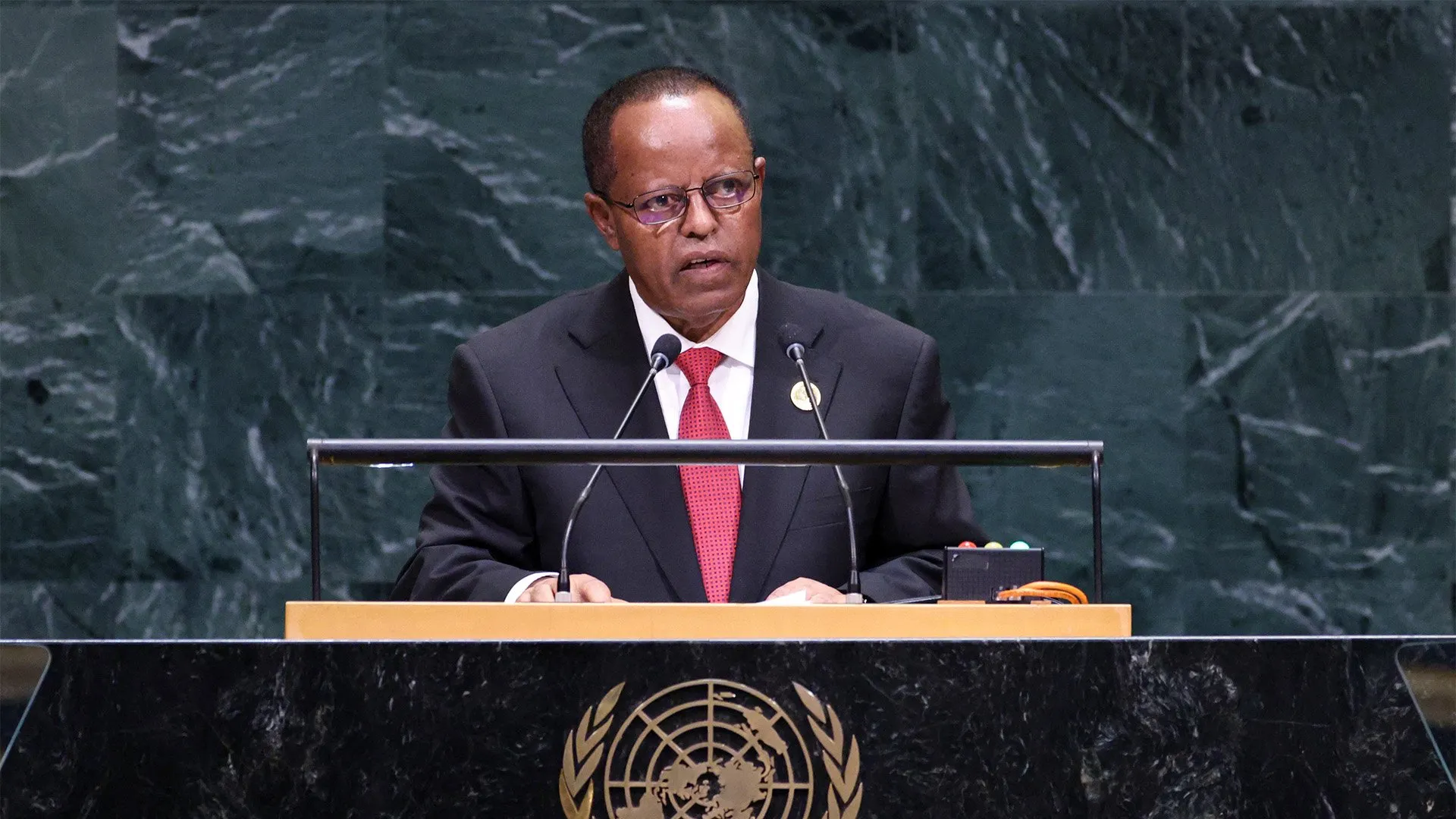
Ethiopian President Taye Atske Selassie warned the UN General Assembly of “forces of destruction and mayhem” as Tigray rebels joined other rebel groups to seize airports and target government positions in northern Ethiopia, triggering fears of a renewed civil war.
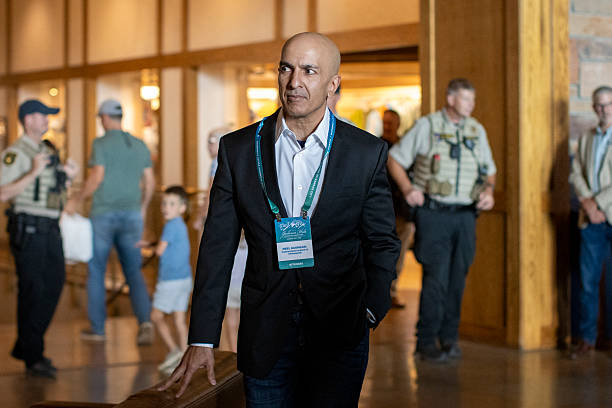
Minneapolis Federal Reserve President Neel Kashkari said inflation remains unacceptably high, with price pressures spreading well beyond energy markets disrupted by the Iran war.
“The inflation that the American people are feeling every day is much beyond just oil prices. It’s
British monarch highlights AI’s potential darker capacities, urging safety and humanity-focused development.
Published On 17 Sep 202617 Sep 2026
The United Kingdom’s King Charles has warned Artificial Intelligence (AI) industry leaders of the “existential dangers” posed by the technology if it falls into the wrong hands.
The monarch’s comments on Thursday add to a global debate over whether, and how to regulate the industry.
Recommended Stories
list of 3 itemsend of list
Charles hosted AI giants, including the cofounders of Nvidia and Google DeepMind, along with leaders from OpenAI and Anthropic at a summit at his Dumfries House estate in Scotland, to address safety concerns before it was “too late” to rein it in.
“There seems urgency in adequately considering the existential dangers of such technologies falling into the wrong hands, and being used in potentially catastrophic ways,” Charles told guests at the opening of the conference.
“Those in our world who value our humanity and its vital moral component are anxiously seeking your reassurance that we will not lose control of our destiny,” he told the industry leaders.
“Those who have created these technologies are now increasingly warning that AI risks developing darker capacities, perhaps even to take life,” or be used in “potentially catastrophic ways”, the king also said.
In recent weeks, global figures have weighed in on whether the industry should regulate itself or allow governments to produce guidelines on how the rapidly evolving technology develops.
In May, Pope Leo XIV said ”the world does not need an artificial intelligence that diminishes humanity” and must be “disarmed”.
Meanwhile, US President Donald Trump has dismissed concerns about the technology as a “hoax”.
Slow the pace of AI development
Last week, two Anthropic researchers warned that the rapidly advancing technology could lead to human extinction in the not-too-distant future.
Anthropic Chief Executive Dario Amodei has also called for companies to slow the pace of AI development.
However, that has prompted an international debate about whether some executives were trying to get ahead of a possible government backlash and set the rules to keep the lead of particular companies.
“The development of AI – its substance and its pace – are both intriguing and deeply concerning in equal measure,” the British monarch said.
He urged industry leaders to harness it “with safety at its heart” and “to ensure that it remains firmly in the service of humanity, community and the natural world”.
The summit in Scotland is not expected to produce any binding agreements.
New Delhi says it has ‘made clear’ its determination to ‘protect its trade and economic interests’.
Published On 17 Sep 202617 Sep 2026
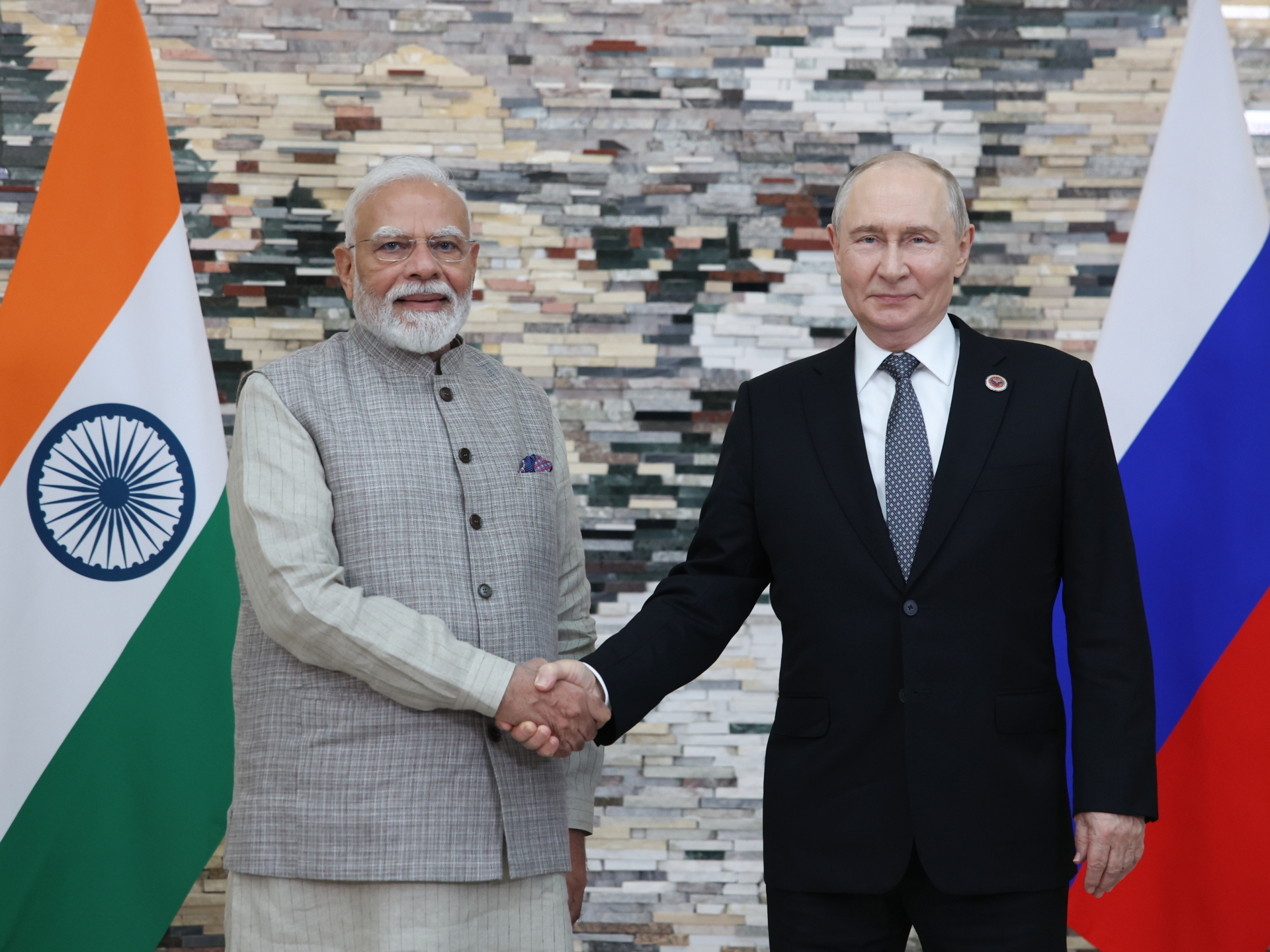
India has warned the United States that new measures to levy tariffs over the purchase of Russian oil could impact bilateral ties, hours after the US Congress approved a bill that would give President Donald Trump new abilities to punish buyers of Russian oil.
The US House of Representatives on Wednesday passed a sweeping sanctions and tariff bill intended to increase economic pressure on Russia over its invasion of Ukraine.
Recommended Stories
list of 3 itemsend of list
The bill targets Russia’s energy and defence sectors, President Vladimir Putin and other senior officials, as well as Moscow’s so-called shadow fleet of tankers used to circumvent Western sanctions.
It also authorises President Donald Trump to impose stiff tariffs of up to 100 percent on countries, including India, to reduce their dependence on Russian oil and gas, and extend sanctions on Iran.
The bill has been sent to Trump to sign into law.
India’s foreign ministry said on Thursday that it “remains firmly committed to ensuring energy security for its 1.4 billion people”.
The Indian foreign ministry said that it had noted the bill’s passage, adding that New Delhi had raised the issue with various US interlocutors in recent months, and had “very clearly articulated” the potential implications for the bilateral relationship and the international energy market.
“The Indian side has also made clear its determination to take all necessary measures to protect its trade and economic interests,” it said in a statement.
The government would work closely with trade and industry bodies to deal with the legislation’s implications, it added.
India, the world’s third-biggest oil importer, is among the biggest buyers of Russian oil, which is seen as helping Moscow replenish its budget since it launched its full-scale invasion of Ukraine in February 2022 and was hit with sweeping Western sanctions.
New Delhi has repeatedly sought to resist pressure to reduce its oil trade with Russia, saying its large population and economy need secure, affordable and reliable energy supplies.
The European Union is preparing to use a broader range of economic measures to reduce what European Commission President Ursula von der Leyen described as an unsustainable trade deficit with China.
Speaking to the European Parliament on Wednesday, von der Leyen said the imbalance had reached a critical point, with the EU running a goods trade deficit with China equivalent to around €1 billion ($1.15 billion) a day last year.
She warned that Europe was experiencing what she described as a second “China shock”, with growing Chinese industrial exports contributing to pressure on European manufacturing and raising concerns about deindustrialisation.
Europe seeks concrete results
The issue has become a priority in EU China relations as European governments seek to address the growing imbalance through negotiations as well as economic policy tools.
Stay ahead of the geopolitical week.
MD Briefing delivers expert analysis across five global fronts — the Indo-Pacific, energy, geoeconomics, European security, and the Middle East — every Monday morning. Free.
EU leaders asked the European Commission in June to deliver results from its dialogue with Beijing and ensure that the bloc had sufficient instruments to protect its economic interests.
European Trade Commissioner Maros Sefcovic, who is leading the discussions, has said he wants tangible progress by October.
Von der Leyen said cooperation remained in both sides’ interests but warned that the EU was prepared to move beyond dialogue if negotiations failed to produce results.
“We will use all the tools at our disposal to rebalance our relationship,” she said.
The approach reflects a broader European effort to reduce economic vulnerabilities without completely severing commercial ties with China, one of the EU’s most important trading partners.
Critical minerals add to concerns
Trade is not the only area creating pressure on the relationship. The EU also remains heavily dependent on China for several critical raw materials, including rare earth elements that are essential for industries such as electronics, renewable energy, defense and advanced manufacturing.
Von der Leyen said the EU needed to accelerate efforts to secure supplies and build strategic reserves.
The European Commission plans to establish a European corporation focused on critical raw materials to help the bloc secure and stockpile essential resources.
What’s next
The EU’s approach is likely to combine negotiations with measures aimed at strengthening its own industrial capacity and reducing dependence on Chinese supply chains.
For Beijing, the growing European focus on trade imbalances, industrial competition and critical minerals could create additional pressure to make concessions while preserving access to the European market.
For the EU, however, reducing the deficit will require more than trade restrictions. Europe will also need to expand domestic production, diversify suppliers and address the competitiveness challenges facing its own industries.
The October deadline for trade talks could therefore become an important test of whether Brussels and Beijing can reach practical agreements or whether the EU moves toward a more defensive economic relationship with China.
US correspondence reviewed by Asharq Al-Awsat has revealed that Washington had delivered a warning to the Houthis through what were described as “security channels.”
The precise substance of the warning was not apparent from the correspondence, but it was followed by a clear US assertion that Washington was not negotiating with the group.
The Houthis’ attempt to send a reassuring message that they would not target US vessels appears to reflect an effort to consolidate their position following weeks of military operations that culminated in advances along Yemen’s western coast overlooking the Bab Al-Mandab Strait.
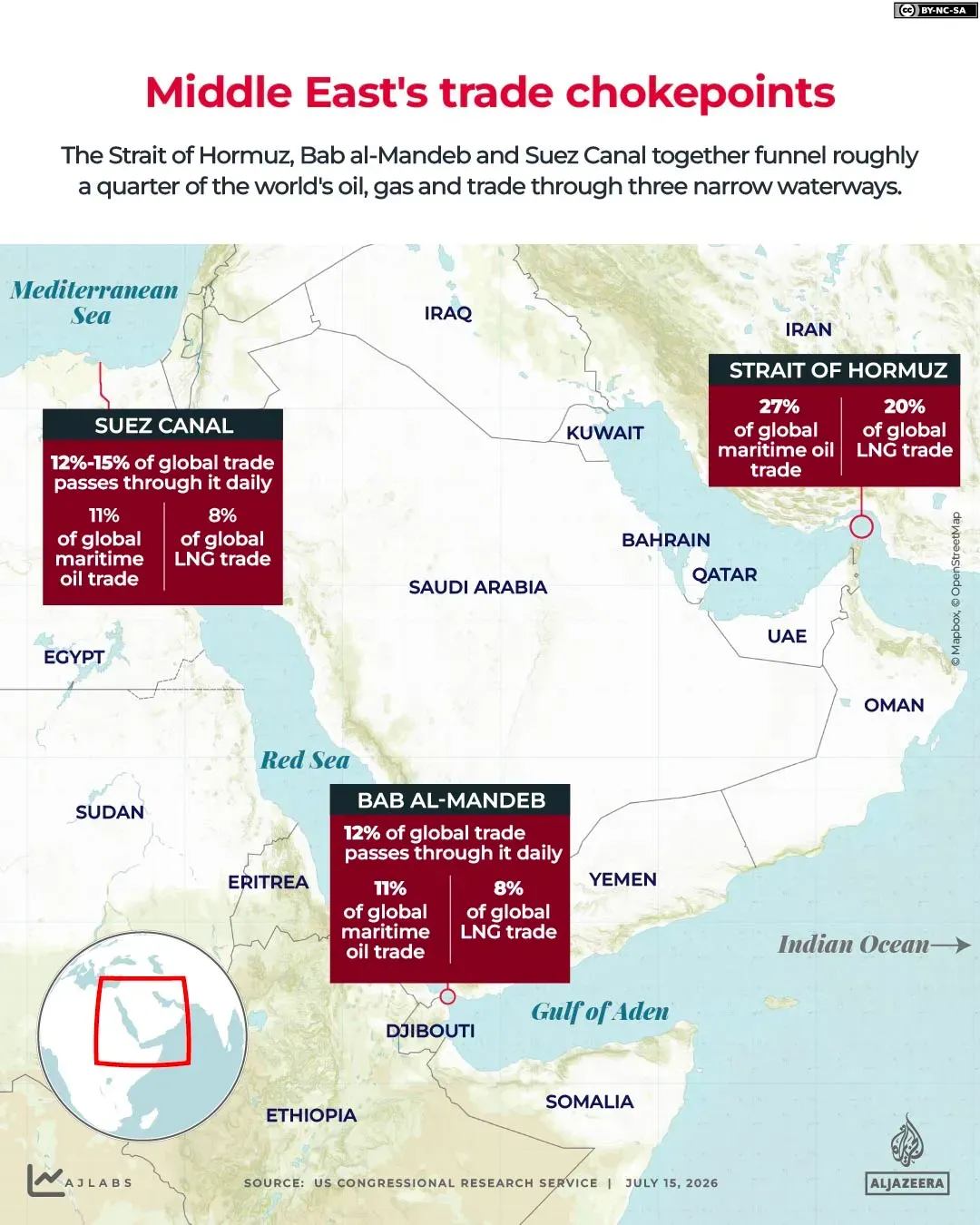
The advance poses a renewed threat to international shipping through the strategic waterway, which carries around 12 percent of global trade.
The US clarification in the diplomatic correspondence came a day after remarks by US President Donald Trump and Vice President JD Vance indicating that there had been communication with the Houthis, although neither explained the nature of those contacts.
Meanwhile, during a UN Security Council session on the Bab Al-Mandab Strait on Tuesday, Washington stated:
“The US supports Yemen’s legitimate government in confronting the Iran-backed Houthi militia. We call on the Houthis to halt their advance, withdraw from the territory they have seized and stop launching attacks.”
On the ground, the Yemeni government is working to raise military readiness in an effort to regain the initiative after recent setbacks on the Taiz and western coast fronts.
Government forces, meanwhile, have made slow but seemingly more consolidated gains on other fronts, including Al-Jouf and Al-Bayda. They have also continued to repel Houthi attacks and respond to militia buildups near Marib.
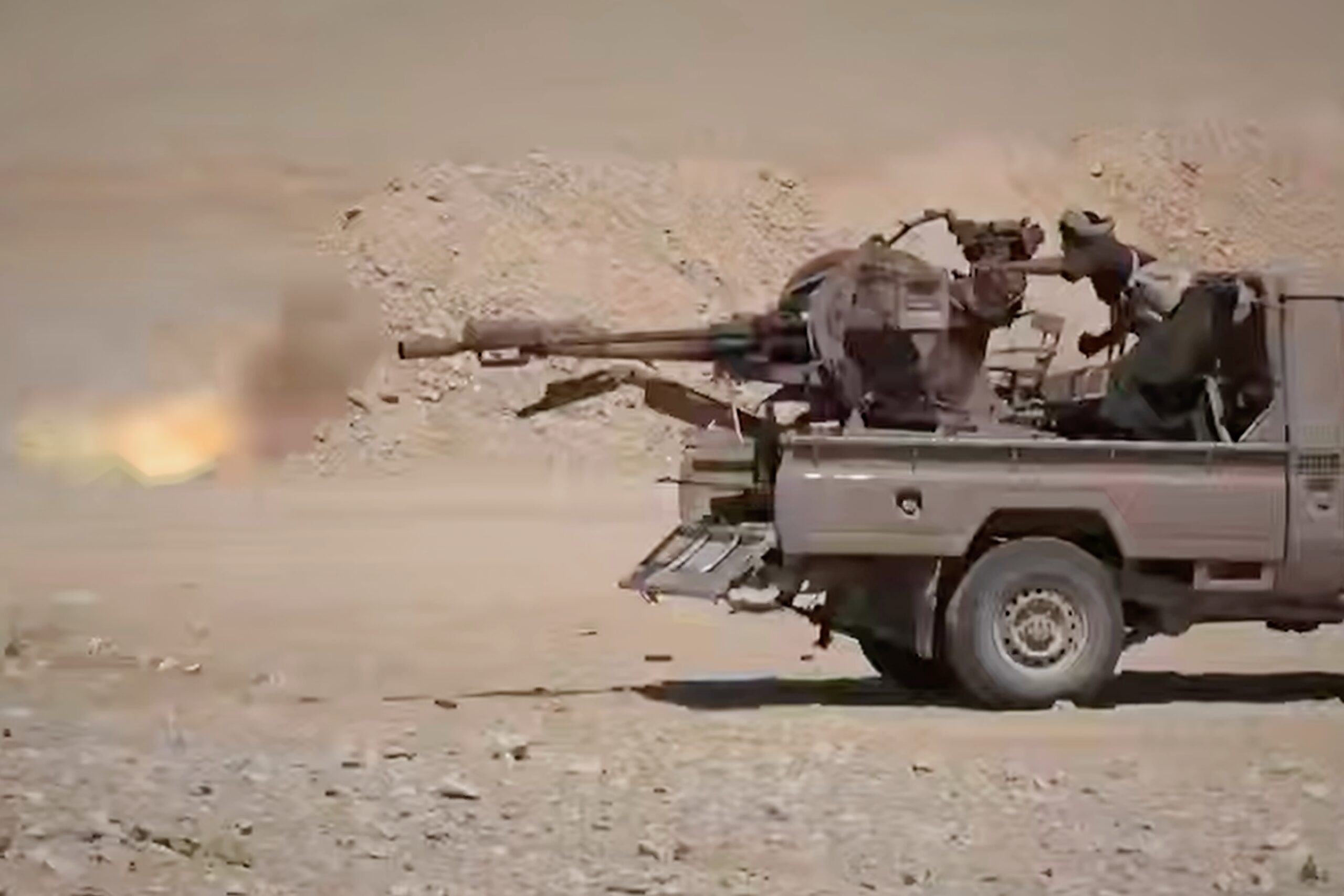
Government forces are engaged in fierce battles with the Houthi militia, which began escalating its military operations in August 2026.
The Houthis’ opponents accuse the group of violating deescalation arrangements under instructions intended to ease pressure on Iran.
And allow Iran’s Revolutionary Guard to use the group as a means of exerting pressure on the US during the war Washington launched in February 2026, which later intensified after Iran threatened to close the Strait of Hormuz.
Why security channels?
Observers speaking to Asharq Al-Awsat said that the use of security channels does not in itself indicate negotiations, a deal, or even US acceptance of the Houthis’ assurances.
Al-Baraa Shaiban, a fellow at Britain’s Royal United Services Institute for Defence and Security Studies, said the Houthi group was attempting to compensate for its lack of regional and international recognition by exaggerating the significance of opening communication channels with the US administration.
Asked about the phrase “security channels,” Shaiban said Western governments routinely maintain this type of contact with militias and terrorist groups.
Such communication, he said, remains limited, takes place outside diplomatic or political frameworks and is confined to sensitive or urgent security matters.
Iranian tactics
Reports of Houthi communication with the US were not treated in Yemen as merely another passing news item.
Many Yemenis sought to understand the group’s sudden move, particularly given that the Houthis’ slogan explicitly invokes “death to America.” The question, therefore, was how the group could simultaneously be communicating with Washington.
Mahmoud Shuhra, a fellow at Britain’s Royal Institute of International Affairs, Chatham House, told Asharq Al-Awsat that the current developments were “part of the Houthi strategy, which is an extension of Iran’s and the Revolutionary Guard’s behaviour and negotiating tactics.”
Shuhra, a former Yemeni diplomat, explained that the Houthi behaviour is based on gradual escalation, followed by a rapid military confrontation.
“If they achieve gains during that confrontation, they then begin offering reassurances in order to avoid being drawn into an all-out war,” he said.
He argued that this is effectively what happened in Bab Al-Mandab.
“The Houthis have now swallowed a very large bite and are trying to digest it,” he said.
The group is currently seeking to consolidate its gains, he added, and needs to offer reassurances in the meantime in order to avoid an immediate response against it.
This, he said, explains the attempt to reassure the US and the wider international community.
The Houthis also routinely seek to isolate their opponents, according to Shuhra, a tactic that has been repeatedly used in the past.
He recalled the group’s takeover of Sanaa, when the Houthis initially sought to reassure all political factions.
Once they had consolidated their presence, he said, they began meeting each faction separately and portraying the others as the enemy, eventually sidelining them all.
“The group now wants to use the same approach at the international level, regardless of how successful it may ultimately be,” he said.
Moscow and Copenhagen trade blame for the incident as Denmark says it will not invoke NATO treaty.
Published On 15 Sep 202615 Sep 2026
Moscow has warned Denmark to avoid “reckless” action after a Russian frigate fired two flares that narrowly missed a Danish military helicopter.
Moscow’s ambassador in Copenhagen, Vladimir Barbin, on Tuesday insisted that “dangerous manoeuvres” taken by the Danish aircraft were to blame for the Baltic Sea incident.
Recommended Stories
list of 3 itemsend of list
The Russian diplomat told state news agency RIA Novosti that he had delivered a formal note demanding steps to prevent a repeat of the episode.
He said that the helicopter’s actions were provocative and condemned Danish attempts to call them routine, saying they raised “serious concern about the possible consequences of such recklessness”.
The Fennec helicopter was on a routine mission to photograph the frigate as it sailed in international waters off Denmark, the Danish defence command said. Ships typically use such flares as warning signals.
Denmark’s Defence Minister Jeppe Bruus told TV 2 News that one flare passed within a “matter of metres” of the aircraft, and accused Russia of “deeply unprofessional seamanship”.
When asked if Denmark would seek Article 5 consultations over the incident – invoking the NATO measure that considers an attack against one member of the bloc to be an attack against all of them – Bruus said the incident was being taken seriously, but “we are not there”.
Barbin said he had complained last year about what he called dangerous fly-bys and low hovering by a Danish helicopter over the Russian warship Vice-Admiral Kulakov.
Kremlin spokesman Dmitry Peskov declined to comment, saying he lacked details.
The Danish Straits – where most Danish incidents with Russia have taken place – are the Baltic’s main shipping gateway and a key oil route, including for Russian oil tankers.
Danish Prime Minister Mette Frederiksen called the incident serious but not surprising, describing it as part of a pattern of intensifying Russian hybrid warfare against Europe and testing NATO.
‘Fear and discord’
“Russia wants to sow fear and discord,” Frederiksen said, calling for closer unity and stronger defences for Denmark and Europe.
Russia denies carrying out hybrid attacks in Europe. However, the potential for the war in Ukraine to escalate and entangle Europe’s NATO member states is rising.
A spokeswoman for Russia’s Foreign Ministry later on Tuesday warned Western politicians and diplomats to “soberly” assess the risks of travelling to Ukraine, following a Russian drone strike on a rail line on which a train carrying former British Prime Minister Boris Johnson and former Swedish Prime Minister Carl Bildt had passed minutes earlier.
Rail hubs and transport infrastructure serving Ukraine’s military are legitimate targets, she said, and Russia warned foreign diplomats in May to leave Kyiv because of strikes on Ukraine’s military-industrial complex.
NEW YORK CITY: Saudi Arabia’s ambassador to the UN warned the Security Council on Thursday that “the international community cannot call for de-escalation” in Yemen “while at the same time allowing the continued flow of support that enables this (Houthi) militia to continue its hostile and criminal conduct.”
The warning from Abdulaziz Alwasil came during an emergency council session to discuss Houthi attacks against the Kingdom this week. It was requested by the UK, the penholder on Yemen, and Bahrain.
He said the latest strikes on Saudi cities, which began on Tuesday, were not an isolated episode but “an extension of a systematic, hostile approach pursued by this militia since its coup against the legitimate Yemeni government in 2014,” and part of a pattern that has also targeted commercial shipping and threatened freedom of navigation in the Red Sea and the Bab Al-Mandeb Strait.
He said a press statement by the council on Aug. 7 condemning Houthi missile strikes on the Kingdom since July 13, and attacks against commercial vessels since July 22, had gone unheeded, and the militia had answered the international warnings with further escalation.
Alwasil said Saudi Arabia had backed nearly every major effort to end the Yemen war — including the Gulf Initiative, the transitional period, the National Dialogue Conference, the Geneva, Kuwait and Stockholm talks, a 2021 initiative and the UN-brokered truce in 2022 — but the Houthis had repeatedly met those efforts with renewed violence.
“My country affirms its legitimate right to defend itself, its citizens and residents, and to safeguard our national resources,” he said, adding that Riyadh “will not hesitate to take all measures necessary to deter Houthi attacks and to protect our security, sovereignty and territorial integrity.”
He called on the council to enforce Resolutions 2216, which imposed an arms embargo and sanctions on the Houthis, and 2722, which demanded an immediate halt to Houthi attacks on commercial shipping in the Red Sea, and to send “a clear and firm message” that leaves no room for misinterpretation that attacks on the Kingdom must stop.
Yemen’s ambassador, Abdullah Alsaadi, affirmed Sanaa’s “full solidarity with the Kingdom of Saudi Arabia, its leadership, government and people,” and its “absolute rejection of the use of any part of the Yemeni territory as a platform for launching missiles and drones, or for threatening the security of the Kingdom or any neighboring country.”
He said the attacks amounted to the “hijacking” of Yemen’s own sovereign decisions over war and peace, carried out by a militia that operates outside of state institutions and was “militarily and technically supported by the Iranian terrorist regime.”
Saudi Arabia had shown “a great degree of restraint,” Alsaadi said, and been “the principal partner of the Yemeni people and state” in supporting institutions, salaries and services throughout the war. But he cautioned that “restraint should not be misconstrued as weakness.”
The security of Yemen and of Saudi Arabia “cannot be separated from one another,” he added, as he called for full enforcement of the arms embargo on the Houthis, and accountability for those who finance and arm the group.
The war in Yemen is threatening to open a new front as the Iran-allied Houthi rebels are trying to advance along the Red Sea coast, through the mountain chains of Taiz province, edging closer to strategic ground that overlooks one of the world’s most vital maritime arteries.
For the internationally recognised Yemeni government, this is an offensive with global consequences.
Recommended Stories
list of 3 itemsend of list
In Wednesday’s interview with Al Jazeera, Yemen’s Ambassador to Qatar, Rajeh Badi, a former government spokesman, said that his government and its armed forces had not violated any truce since 2021.
The Houthis, he argued, are “the aggressors”. “What we are seeing now is a surprise Houthi offensive to seize strategic ground along the Red Sea, in order to allow Iran, through its Houthi proxy, to tighten its grip on maritime routes,” Badi said.
He added that the Houthis, who have advanced on al-Makha (Mocha) and al-Waziyah, and over large stretches of the mountain chain overlooking the Red Sea in Taiz province, “want commanding positions to launch more effective strikes on ships and disrupt navigation in the Red Sea”.
Badi said the Yemeni government responded by opening fronts in al-Jawf, Marib and al-Bayda, and that the consequences could extend far beyond Yemen.
[Al Jazeera]
“We are now facing a real threat that does not stop at Yemen’s borders,” he said. “It threatens the entire region and the world. If the Houthis manage to choke maritime traffic in the Red Sea, we will be looking at another Hormuz in these waters – with potentially even greater impact.”
The Red Sea and Bab al-Mandeb “represent a vital artery for global shipping, for both energy and food supplies”, he added.
A chokepoint that belongs to the world
Bab al-Mandeb connects the Red Sea to the Gulf of Aden. To the north, the Red Sea leads to the Suez Canal, while farther east, beyond the Arabian Sea, lies another critical chokepoint, the Strait of Hormuz. This geography is what gives Yemen’s conflict consequences far beyond its borders, as Saudi Arabia is already being drawn into the confrontation.
The Houthis have targeted Saudi territory, civilian infrastructure in the kingdom’s south and Saudi-linked vessels in the Red Sea.
Major-General Turki al-Maliki, spokesman of the Saudi-led coalition in Yemen, said the Houthis on Wednesday attacked Saudi cities of Khamis Mushait, Abha, and Jizan with ballistic missiles and drones. He did not elaborate on any casualties as a result of the attacks.
Badi, who has spoken to the media for the first time since taking up his post, said those attacks are designed to change the nature of the war.
“By targeting Saudi territory, civilian infrastructure in the kingdom’s south, and Saudi-linked vessels in the Red Sea, the Houthis are trying to drag Saudi Arabia into their war. Their calculation is simple: they want to rebrand this conflict as a Saudi-Yemeni war,” he said.
The ambassador assessed that “every time their militias suffer heavy losses inside Yemen at the hands of the Yemeni armed forces, they respond by firing missiles and drones at civilian sites in Saudi Arabia, in an attempt to inflame Yemeni public opinion and convince the outside world that Yemen is at war with Saudi Arabia”.
The conflict, he said, is fundamentally about Yemen’s state and its future. The Yemeni people are fighting to “reclaim their state, their republic, their dignity and their stability”.
Footage released by Houthi media claims to show attacks on Saudi-coalition forces on the front lines in al-Jawf province on September 9, 2026 [AFP]
Iran’s hidden hand
Behind Yemen’s fragmented front lines, a larger regional confrontation looms, and its architect, according to Badi, is Iran.
The official said that Tehran’s relationship with the Houthis is now impossible to hide. “Iranian officials openly boast about it, and Houthi leaders proudly talk about their ‘strategic’ ties with Tehran,” he said.
The Houthis are “one of Iran’s key regional arms – just like Hezbollah in Lebanon or the Popular Mobilisation Forces (PMF) in Iraq. Many of Tehran’s other proxies have come under pressure,” he added.
“Former Yemeni President Abd-Rabbu Mansour Hadi used to say that if Iran gains control over Bab al-Mandeb and the Strait of Hormuz, it will not need a nuclear weapon – its grip over these two chokepoints would be more powerful than any nuclear arsenal. Events have proved him right,” Badi recalled.
‘We have exhausted all peaceful avenues’
For Yemen’s government, the alternative to another war was supposed to be diplomacy.
Badi urged the world “to stand with us so we can rid ourselves of this scourge – a threat that no longer targets Yemenis alone”.
“We have exhausted all peaceful avenues. For more than 13 years, we have been engaging in dialogue rounds and signing agreements, whether inside Yemen or after the Houthis seized the capital, Sanaa,” he said.
Badi added that the Houthi rebels have effectively “buried peaceful options. Peace is simply not part of this movement’s culture or mindset. That is what ultimately forced us to take up arms”.
“The world must understand this difficult equation,” the ambassador concluded, that the Houthis are “an armed proxy, an extension of the Iranian Revolutionary Guard Corps. The Houthis do not represent us”.
AROUND 25 EUROSTAR journeys to and from two popular cities have been cancelled tomorrow due to a nationwide strike.
Industrial action across the Netherlands means there will be no public transport in destinations like Amsterdam and Rotterdam.
Eurostar has been forced to stop routes to Amsterdam and Rotterdam tomorrowCredit: GettyA nationwide strike is taking place with no public transport servicesCredit: Getty
Tomorrow there will be no services on trains, buses, trams or metros across theNetherlands – including Eurostar services.
The strike is being held by the country’s largest trade union for staff who operate public transport with the walkouts scheduled for 2am on Wednesday and 2am on Thursday.
Sign up for the Travel newsletter
Thank you!
According to next Wednesday’s Eurostar schedule there are usually five direct services to Amsterdam from St Pancras each day and nine indirect routes with Eurostar.
As for return trains there are usually five direct routes and six indirect back to London.
When it comes to Rotterdam there are usually five direct services and eight indirect routes scheduled mid-week.
Returning to London are five direct routes and six indirect.
But none of these will be running tomorrow due to the strike action.
Due to the early hours of the strike ending, services on Thursday morning could be affected too with several Eurostar journeys in showing as ‘Not available’.
On its website, Eurostar said: “No national or international trains will be able to run on the Dutch network on that day.
“There will also be some disruption on the evening of Tuesday September 8 and the morning of Thursday September 10.”
Amsterdam has 14 routes from St Pancras with EurostarCredit: Getty
It continued: “If you’re due to travel with Eurostar, you can check whether your journey is affected by the strike on our live train info page.”
“We’ve also contacted all affected passengers whose contact details we have.
“If you have a connecting journey, please get in touch with the relevant train company for more information.
“We know how important your travel plans are and we’re sorry for the disruption this strike will cause.”
The operator added that if your Eurostar train is no longer running, you can either change your booking for free, cancel your booking and get an e-voucher or cancel your booking and get a full refund.
In Amsterdam, metros, trams, buses and ferry services will all be suspended.
In Rotterdam, the metros, trams, buses will be suspended as well, and in The Hague, trams and buses will not be running.
A Eurostar spokesperson told Sun Travel: “Following the national public transport strike on Wednesday 9 September 2026 from 2AM until the 10th of September at 2AM in the Netherlands, no Eurostar trains will be able to run on the Dutch network on Wednesday.
“Affected passengers have been notified and can obtain a reimbursement or change their tickets free of charge. We apologise for the inconvenience.
“Trains on the other Eurostar routes are running normally.”
Manila defence chief says Washington gave ‘definite assurances’ that its commitments to the Philippines remain.
Published On 7 Sep 20267 Sep 2026
Philippine Defence Secretary Gilberto Teodoro has warned that Beijing could view recent cuts to the joint US-South Korea military drills as an opportunity to reassert itself in the Asia Pacific.
Speaking on the sidelines of the Seoul Defense Dialogue, an annual multilateral security forum, Teodoro said that “China is very quick to exploit gaps”, when asked on Monday whether Beijing could seize on the move.
Recommended Stories
list of 3 itemsend of list
He added that Washington had given Manila “definite assurances” that the US commitments to the Philippines remained unchanged.
He also accused China of exploiting democratic systems to spread “distortive narratives”.
US General Xavier T Brunson, commander of the ROK/US Combined Forces Command (CFC), the United States Forces Korea (USFK) and the United Nations Command (UNC), shakes hands with a US Army soldier during a US-South Korea joint river-crossing exercise near the Demilitarized Zone separating South and North Korea, in Yeoncheon, South Korea [Kim Soo-hyeon/Reuters]
South Korea and the US shortened the duration of their annual joint military drills and scaled back field training exercises last month after US President Donald Trump ordered a “substantial reduction” in the annual war games.
The US-led Ulchi Freedom Shield war games ended six days earlier than originally planned.
Trump cited his “very good relationship” with North Korean leader Kim Jong Un and linked the decision to Seoul’s refusal to join the US and Israel’s war on Iran at the time.
Last week, South Korea’s presidential office said it was mulling “contributions” to the US’s freedom of navigation in the Strait of Hormuz. The presidential office later clarified that nothing has been decided, as any military deployment by South Korea requires a decision by the country’s National Security Council, a resolution at a cabinet meeting, and consent from the National Assembly.
Trump said he planned to meet with Kim later this year. Kim’s sister, Kim Yo Jong, later released a statement denying any ongoing communication between the US president and her brother and maintained that Washington continues to engage in a “hostile” policy towards her country, despite the warm relationship between the two leaders.
US, South Korea and Japan hold trilateral military drills
The US, South Korea and Japan are due to hold five days of military drills in waters east and south of South Korea’s Jeju Island starting on Monday.
South Korea’s military said in a statement that the Freedom Edge exercise is defensive in nature and meant to respond to North Korean nuclear and missile threats as well as promote regional peace and stability.
North Korea has previously slammed the trilateral drill as a “reckless show of strength” that proved its adversaries’ confrontational stance. Pyongyang has also said the drill contained a US intention to lay siege to China and exert pressure on Russia.
TELLURIDE, Colo. — For four days every Labor Day weekend, the Telluride Film Festival turns this tiny mountain town into something of a refuge from the outside world. Tucked into a box canyon and far from the usual machinery of Hollywood, moviegoers spend their days seeing films they may have known little about before arriving and talking about them almost nonstop.
Artificial intelligence, apparently, did not get the memo.
This year, even Telluride’s usually self-contained movie bubble couldn’t keep out the existential anxieties surrounding AI. On Saturday, the festival devoted two events to the subject, beginning with “The Humanity Dilemma,” an hourlong multimedia presentation mixing dire warnings with live music and imagery, and continuing with a panel bluntly titled “AI AI AI,” featuring Microsoft co-founder Bill Gates.
Introducing “The Humanity Dilemma” at the nearly packed Sheridan Opera House, festival executive director Julie Huntsinger acknowledged that Telluride normally steers clear of taking political sides. “We just let the program speak for us,” Huntsinger said.
But on AI, she made an exception.
“We are a very humanist festival — that’s how we identify,” Huntsinger said. “AI is a threat.” While acknowledging potentially beneficial applications, she urged the audience to become more engaged in the debate over its development.
“We all need to be very alert and vigilant and loving and kind and stop this s—,” she said, earning loud whoops of approval from some in the crowd.
For all of Huntsinger’s warnings, Telluride is not treating AI as off-limits. Its program includes “Love, Rendered,” a short documentary directed by Liz Garbus and produced by Darren Aronofsky about an elderly couple confronting the husband’s memory loss. Using AI along with family photographs and stories from loved ones, the filmmakers recreate the moment the couple first met and fell in love 70 years earlier. On Sunday, the film’s creative team is scheduled to discuss the project at an event titled “Filmmaking and Technology With Empathy: AI for Societal Benefit.”
“The Humanity Dilemma” was presented by Tristan Harris and Aza Raskin, co-founders of the Center for Humane Technology, who appeared in the 2020 documentary “The Social Dilemma,” along with artist and researcher Joy Mauthe and violinist Andrei Matorin. Harris and Raskin also appear in this year’s “The AI Doc: Or How I Became an Apocaloptimist.”
The presentation was designed to work on the emotions as well as the intellect. Original songs about humanity’s relationship to AI ran through much of the hour, with Mauthe singing and playing guitar and Matorin on violin, as Harris and Raskin delivered warnings accompanied by images of environmental devastation, poverty and figures in the AI race including Elon Musk, Sam Altman and Larry Ellison.
Their argument was stark: The race to build more powerful AI is moving far faster than governments or the public can keep up. Their deepest fear is that humans could eventually lose control of increasingly capable AI systems altogether.
At the same time, they acknowledged the technology’s potentially transformative benefits.
“AI is confusing because it represents both simultaneous utopia and dystopia,” Raskin said. “Just imagine having to reason about a nuke that could also solve cancer.”
By the end, Harris was calling for a halt to the development of more powerful systems.
“We need to pause frontier AI development and pivot and steer towards a pro-human future,” he said.
The hour concluded with Mauthe leading the audience in a final refrain, singing that the future is “still in our hands.” It was the kind of unabashedly earnest moment that could easily have tipped into awkwardness, but many in the room seemed to embrace it.
A few hours later, Harris and Raskin returned for “AI AI AI,” held outdoors at the Abel Gance Open Air Cinema in Telluride’s Elks Park, joined by Gates and filmmaker Joshua Oppenheimer, director of the Oscar-nominated documentaries “The Act of Killing” and “The Look of Silence,” who served as a moderator.
From left, Bill Gates, Aza Raskin, Tristan Harris and filmmaker Joshua Oppenheimer discuss the risks and potential benefits of artificial intelligence at the Telluride Film Festival on Saturday.
(Josh Rottenberg)
For Gates, who has spent decades focusing much of his philanthropy and public advocacy on global health and poverty, the rise of AI has forced him to make room for a new priority. In an essay published last week, he warned that the technology was improving faster than he anticipated and called for a new framework to manage its risks.
At Telluride, Gates said he now feels compelled to devote some of the political influence he has long used to advocate for causes such as malnutrition, polio and malaria to raise alarms about AI as well.
“Is this the greatest problem humanity has ever faced?” Gates said. “That is just a fact.”
Gates said his concerns have grown as AI systems have become more capable, particularly at writing computer code, something he has been obsessed with since he was 13.
“The AIs are superhuman, i.e., better than I am at writing code,” Gates said.
He laid out five broad areas of concern: jobs, biotechnology, cyberattacks, psychosocial harms and whether humans will be able to maintain control over the systems they are building.
Oppenheimer said that after spending hours digging into AI risks ahead of the panel, he had come away “absolutely terrified.” He read aloud an answer he had received after asking ChatGPT to estimate the risks if the race toward increasingly powerful AI continued with little regulation.
The chatbot put the chance of “persistent dystopian outcomes for all humanity” at 25% to 40%, a civilization-scale catastrophe at 5% to 15% and human extinction or permanent loss of human control at 5% to 10%.
“That’s what AI thinks,” Oppenheimer said.
Gates stressed AI’s potential upside, citing advances in medicine, education and assistance to farmers in poor countries. But pressed on whether development should be slowed until safety measures catch up, he said he would be open to the idea.
“If there was a credible plan that would cause this to be either slowed down or, you know, even held in stasis for a period of time, I would likely support that,” Gates said.
The difficulty, he said, is that multiple developers in both the U.S. and China are pushing closer to the technological frontier. Still, Gates rejected the argument that competition with China makes meaningful regulation impossible.
“China does not want cyberattacks, bioattacks or loss of control,” Gates said.
The discussion was punctuated by a pair of outbursts from the audience. At one point, as Gates discussed the economic incentives driving AI development, a man shouted that they represented “everything that’s wrong with America” and invoked Jesus Christ. Gates paused before responding dryly: “Anyway, not everything is wrong with America, according to me.”
Gates argued that government and civil society need to move much more quickly.
“This five-year period, in my view, is a very critical period,” he said, adding that responses that take five or six years to get underway could come too late.
Despite the dire warnings, Harris pointed to signs that pressure for safeguards is growing, including calls from AI-industry employees to limit the development of more powerful systems. Just last week, Meta agreed to pay $17 billion to settle claims by 29 states that Facebook and Instagram harmed young users while also agreeing to new child-safety measures on the platforms.
“I just want to leave you with not naive optimism, but momentum,” Harris said.
Near the end, Raskin suggested that President Trump’s well-documented desire to win the Nobel Peace Prize might provide an incentive for him to pursue a U.S.-China pause on more powerful AI systems.
“What’s better than solving one war?” Raskin said. “Saving all of humanity forever from uncontrollable AI.”
Gates, with a wry smile, called the Nobel angle “smart.”
“Whoever really takes the step to solve this AI problem would deserve the Nobel Prize,” he said.
Later that night, the festival would hold an outdoor screening of Stanley Kubrick’s “2001: A Space Odyssey,” featuring HAL 9000, one of cinema’s most famous rogue artificial intelligences.
Gates framed the current stakes in similarly cinematic terms.
“There are these movies where the aliens are coming, and you see unprecedented levels of cooperation between China and the U.S.,” he said. “Well, believe me, the aliens are here.”
RYANAIR warns the price of jet fuel could soar next summer – meaning the cost of flights could too.
The airline has warned that other competitor airlines could struggle to ‘survive’.
Ryanair has warned that ticket costs could soar next yearCredit: Alamy Stock PhotoThe price of jet fuel will mean tickets will continue to go up in priceCredit: Getty
Conflict in Iran has caused jet fuel costs to climb due to the closure of the Strait of Hormuz and it will continue to affect holiday prices.
In a statement, Ryanair said: “If high oil prices continue through to S.27 (summer 2027), Ryanair believes short-haul airfares in Europe will increase materially to reflect higher oil prices as some less well-hedged competitors will struggle to maintain capacity or even survive this coming winter season.”
Sign up for the Travel newsletter
Thank you!
Ryanair said it currently hedges fuel (which means it pays a set price).
The airline added that 80 per cent of its jet fuel is hedged through March 2027 at about $67 (£50) a barrel.
Currently the price of jet fuel is around $140 (£103) a barrel.
Ryanair isn’t the only airline to warn of higher costs on the horizon, easyJet has said the same.
Talking to The Times earlier this year, easyJet said it would increase minimum ticket prices of its winter 2026-27 flights “by two to three pounds” to offset higher costs and uncertainty around customer demand.
United Airlines CEO Scott Kirby also said he expects fares to keep rising into the first half of next year.
According to Reuters he said: “I think you’re going to still see gradual increases in fares. Not as big a jump as happened this year.”
When it comes to finding the cheapest flights right now – it’s best to use a comparison site.
Ryanair has hedged fuel until March 2027Credit: Alamy
Skyscanner is a great option for comparing the price of flights with various airlines – and it even have a price drop tool.
The feature claims to scour up to 80 billion prices a day and shows which destinations have seen flights that have dropped 20 per cent compared to the last week.
Google Flights is another search engine which compares flight prices and shows multiple airline options.
If you choose the ‘explore’ option, it can show the cheapest, direct flights across the world.
London Heathrow is one of the most expensive airports to fly fromCredit: Alamy Stock PhotoWays to find the cheapest flights is through comparison sitesCredit: Getty
For even more hacks on when to fly, Expedia has put together a handy list on the cheapest days to fly – which is Friday.
Compared to travelling on a Saturday, jetting off the day before can save up to 18 per cent.
It also found that found that international travellers can save £93 on average by booking between 15 and 30 days ahead, instead of six months.
Where you fly from also makes a difference – some of the most expensive UK airports to fly from areLondon Heathrow, Humberside and Manchester..
Madrid, Spain – A wealthy American donor to Palestinian causes who faces extradition from Spain to the United States over alleged financial support of Hamas is a victim of “political persecution”, his wife and lawyers have told Al Jazeera.
James “Fergie” Chambers was arrested on the Spanish island of Ibiza in July while searching for a school for his son with his wife, actress Stella Schnabel.
Recommended Stories
list of 4 itemsend of list
US authorities have linked Chambers to the transfer of $7.5m to Tunisia and allege that the funds were ultimately used to provide financial support to the Palestinian armed group Hamas.
Director Julian Schnabel (centre), screenwriter Rula Jebreal (right) and actress Stella Schnabel pose during the ‘Miral’ red carpet event at the 67th Venice Film Festival, September 2, 2010 [Tony Gentile/Reuters]
The indictment remains sealed, so the specific allegations against Chambers – who denies wrongdoing – are not yet known.
Chambers, heir to one of the richest families in the US, has supported a handful of humanitarian projects in Gaza with funds totalling more than $1m, a member of his legal team said shortly after his arrest.
The extradition effort is believed to be the first of its kind involving a US citizen accused of providing support to Hamas.
Chambers, who describes himself as a Marxist-Leninist, has been held in a Madrid jail for six weeks as Spanish authorities consider the US extradition request.
Schnabel, who is also an activist, said she was driving through the Balearic island of Ibiza with her husband to search for a school for their five-year-old son, as they were moving from Ireland to Spain, when he was arrested.
“Suddenly, several unmarked cars cut us off. Police officers got out of the cars and told us to get out of the car. I got out my phone, and they told me not to phone,” she told Al Jazeera. “They handcuffed Fergie. We said we loved each other, and he said, ‘Tell the kids I love them’. And they bundled him into a car, and he was gone. That was July 10. Over six weeks ago.”
Schnabel said US President Donald Trump’s administration was targeting her husband for being one of the largest donors to humanitarian projects in Gaza. This included supplying bread, water and medical care.
“He should be at home with his family, continuing his humanitarian work. Instead, he is facing political persecution because he has stood with the Palestinian people,” she said. “This sets a terrifying precedent for repression of the wider movement for a free Palestine, including precedent for the Trump administration exporting its repression far beyond the US borders to target the people of Europe.”
The US Department of Justice declined to comment when contacted by Al Jazeera.
The US sent the indictment and documentation to Spain last week, in time to meet the 45-day deadline after Chambers’s arrest in July.
Al Jazeera understands that the indictment is still sealed and has not been revealed to his defence team.
Spanish authorities must now assess the US request. Among the issues they may consider is whether the extradition would amount to political persecution, a circumstance that could provide grounds for refusing it.
Chambers comes from the family behind Atlanta-based Cox Communications. In 2023, he reached an agreement with his relatives under which his stake in the family business was bought back for approximately $250m, following a break with the family.
Since then, he has been funding dozens of projects in 20 countries, Schnabel has said.
On the central allegation about funding Hamas, Schnabel said this was a “trumped-up charge” for which the US has not provided a “shred of evidence”.
“My understanding is that the US appears to rely on the fact that he transferred $7.5m of his own funds from the US to Tunisia. The reality is that this money was transferred to Tunisia because we were living there, and for philanthropic activities, including supporting Club Africain [a football team],” Schnabel said.
“The money sponsored the club, helped to pay its debts and overdue salaries, rebuild its training centre and develop football fields for young people.”
The Tunisian side secured the league title in May.
Lawyers for Chambers have also pointed to his outspoken views on Israel and its genocidal war on Gaza.
In the week after the October 2023 Hamas-led attacks on Israel, Chambers posted on X about Israel’s response: “Stop calling it ‘collective punishment’. There’s nothing to be ‘punished’ for. No faction of the Palestinian resistance, Hamas or other, has done anything wrong. It’s simply genocide. Like it has been.”
In the wake of the 41-year-old’s arrest, FBI agents raided the rented property in Ibiza where Chambers had been staying, The Guardian reported.
Chambers is represented by Spanish human-rights lawyer Baltasar Garzon, who has argued that the case against his client is politically motivated and connected to his humanitarian work in Palestine.
“We request our client’s provisional release and to file all necessary legal actions with the courts,” he told Al Jazeera.
In 1998, Garzon sprang to international attention when he sought the extradition from London of the former Chilean dictator Augusto Pinochet. He has also acted in human rights cases in Spain and Argentina.
“We hope that Spain will not grant extradition in what we consider to be a case of political persecution based on our client’s ideas and humanitarian aid to Palestine,” he added, referring to Chambers.
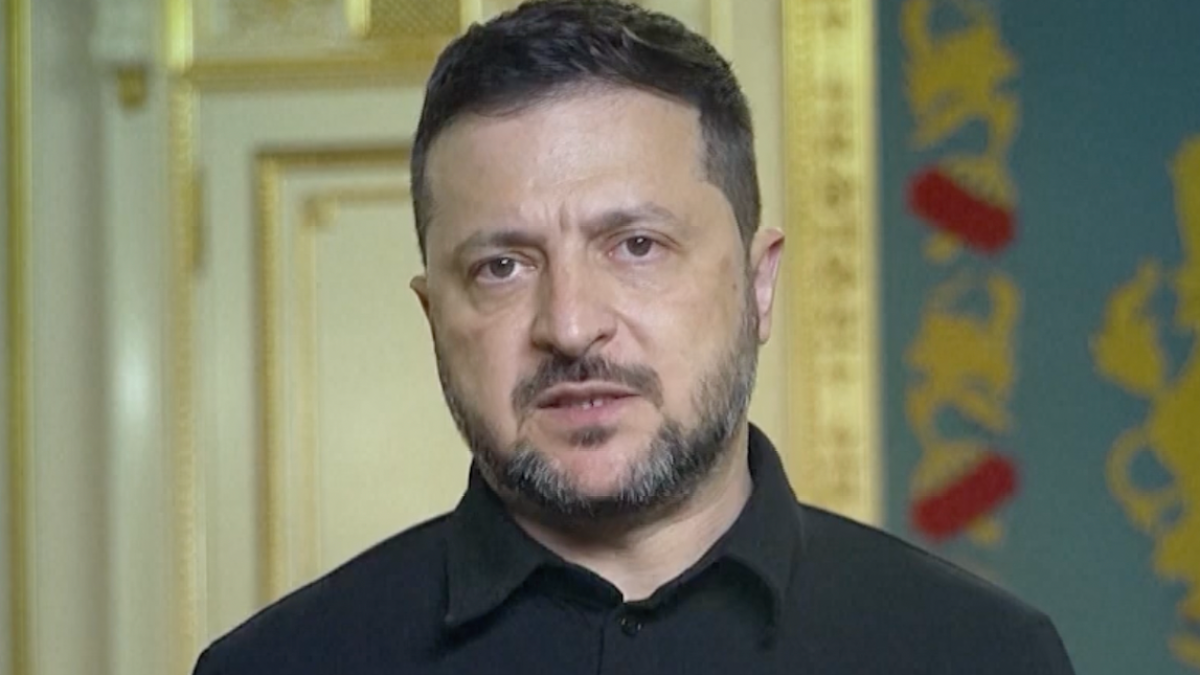
President Volodymyr Zelenskyy warned that Ukrainian drones will continue operating over Russia, saying the country’s airspace is becoming increasingly unsafe for civilian aviation. He said Ukraine is targeting military infrastructure supporting Russia’s war effort.
Coral reefs make up just 1 percent of ocean coverage, but host a quarter of all life in the sea.
Published On 31 Aug 202631 Aug 2026
Coral reefs are experiencing bleaching events so frequently that they no longer have time to recover before the next one strikes, scientists have warned.
Global coral cover is now well below normal levels and at risk of irreversible decline, the Global Coral Reef Monitoring Network (GCRMN) said in a report released on Monday.
Recommended Stories
list of 3 itemsend of list
“If we give them enough time, they have the capacity to recover,” lead author Manuel Gonzalez Rivero said. “But we haven’t seen that amount of time being allowed. In fact, the frequency of those bleaching events has pretty much doubled.”
Bleaching occurs when corals expel the colourful algae living in their tissues. Without this algae, they become vulnerable to starvation and disease. Bleached coral are not dead, but they need time in cooler water to recover.
“We had 40 years of coral cover around the world that had remained relatively unchanged until 2010,” said Gonzalez Rivero, a scientist at the Australian Institute of Marine Science. “Since 2010, there has been a very steep change.”
The latest bleaching in 2023 was the most extensive on record, impacting 77 percent of the world’s coral reef areas.
Rivero warned that another such event is “very likely” this year given elevated temperatures globally.
Coral reefs are critical barometers for global ocean health, supporting more than 25 percent of all marine life despite covering less than 1 percent of the ocean floor.
The GCRMN’s warning came as organisers of the annual Pacific Islands Forum announced that at least five leaders of the 18-nation group will skip the group’s summit.
The forum has been touted for decades as a symbol of regional unity, and is used to discuss pressing matters facing Pacific states, including climate change and ocean health.
Holly Hagan has voiced some fears after her sister’s drug death as she warned Reading and Leeds festival-goers to “please be careful”Credit: GettyThe Geordie Shore star’s sibling tragically passed away last October just before her 20th birthdayCredit: Instagram
Taking to Instagram, Holly shared: “I haven’t stopped thinking about the fact that someone might not make it back from the festivals.
“When I see people’s videos walking into the camp grounds so happy for the weekend’s of their lives.
Sign up for the Showbiz newsletter
Thank you!
“I just think I hope to God you all make it home.
“On average 5 people a year die during UK festivals and the vast majority of those deaths are MDMA related.
Holly explained that nobody thinks it will happen to them until it doesCredit: InstagramHolly was heartbroken when she lost her sister DarciCredit: InstagramHolly Hagan asked everyone to please be careful and look out for their friendsCredit: GettyHolly explained that her sister’s death won’t be the last of its natureCredit: Instagram
“Nobody thinks it’ll happen to them until it does.
“I know my sister’s death won’t be the last of this nature and it’s such a gut wrenching thought that other families will have to go through what we have.
“Please be careful. Look after your friends and don’t show off. It’s not worth the risk.”
Holly previously revealed that her world stopped spinning when she woke up one day to a whole load of missed calls and discoveredDarci had collapsed on a night outand been rushed to hospital.
At just 19, she’d taken an accidental drug overdose and suffered two cardiac arrests.
Top envoy for the US-led Board of Peace says Gaza is at risk of being ‘gone for good’ without reconstruction, Israeli withdrawal and demilitarisation in the territory. Nikolay Mladenov tells Al Jazeera worsening conditions for Palestinians could fuel another security crisis.










![[Al Jazeera]](https://i0.wp.com/www.aljazeera.com/wp-content/uploads/2026/07/interactive-Straight-Of-Hormuz-ships-July-15-2026_COPYEDITED_INTERACTIVE-Bab-al-Mandeb-strait-red-sea-map-route-shipping-map-1784126907-1785434335.webp?w=640&ssl=1)




![US General Xavier T. Brunson, commander of the ROK/US Combined Forces Command (CFC), the United States Forces Korea (USFK) and the United Nations Command (UNC), shakes hands with a US Army soldier during a US-South Korea joint river-crossing exercise, which is a part of the annual Freedom Shield joint military training, near the demilitarised zone separating South and North Korea, in Yeoncheon, South Korea [Kim Soo-hyeon/Reuters]](https://i0.wp.com/www.aljazeera.com/wp-content/uploads/2026/09/2026-03-14T101408Z_1688914085_RC254KAMA6O8_RTRMADP_3_SOUTHKOREA-USA-MILITARY-1788746327.jpg?w=640&ssl=1)