warning

Latest UK passport rules for holidaymakers with £235 warning

UK travellers may not be aware of certain rules

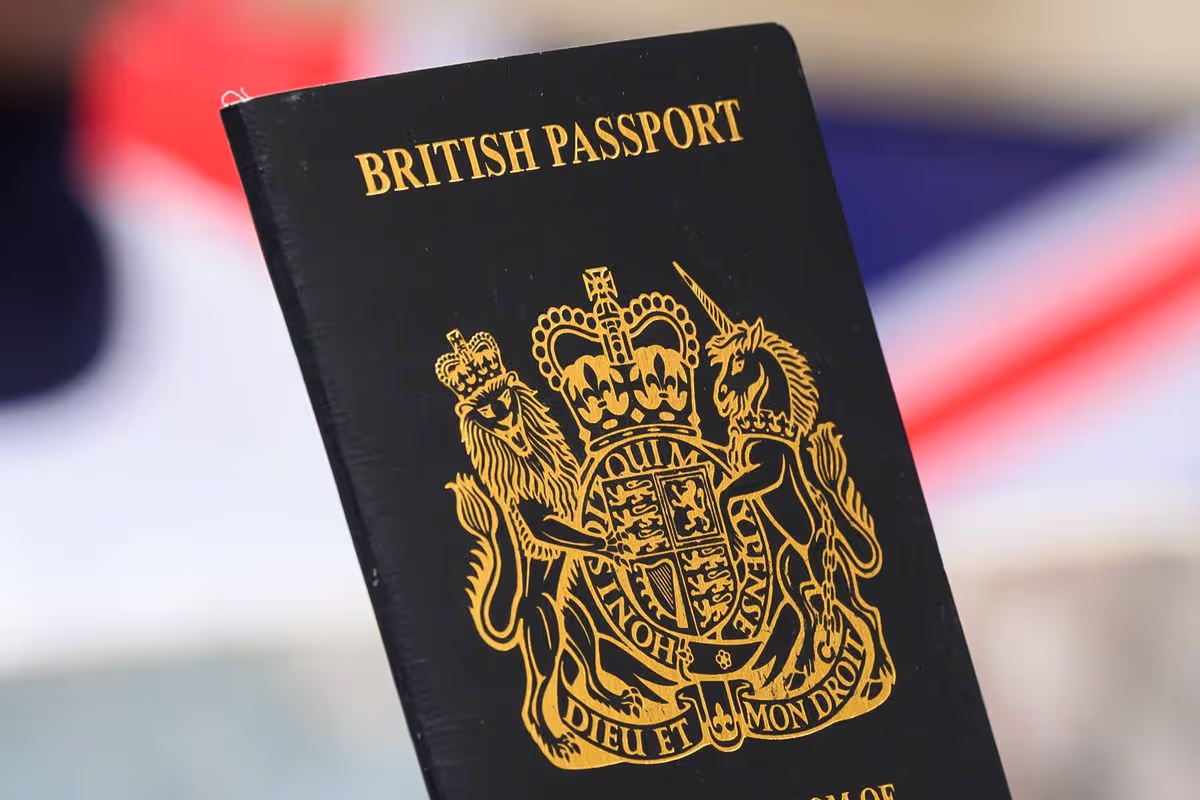
Those planning a holiday are being urged to check their passports, due to lesser-known travel rules that have come into effect post-Brexit. Anyone living in the UK will require a valid passport for international travel.

You can apply for a British passport if you’re a British citizen, a British overseas territories citizen, a British overseas citizen, a British subject, a British national (overseas), or a British protected person. To obtain a new or replacement document, an application must be submitted to HM Passport Office, with the current average processing time standing at three weeks or less.

Travellers should check their passport well ahead of any holiday plans. This is because you could be turned away at the airport if yours isn’t valid.

Alvaro Iturmendi from Confused.com said: “It is easier to get caught out than you might think. Our research found that less than half (43%) holidaygoers, know that if you are heading to the EU, your passport must have been issued less than 10 years before your departure date.”

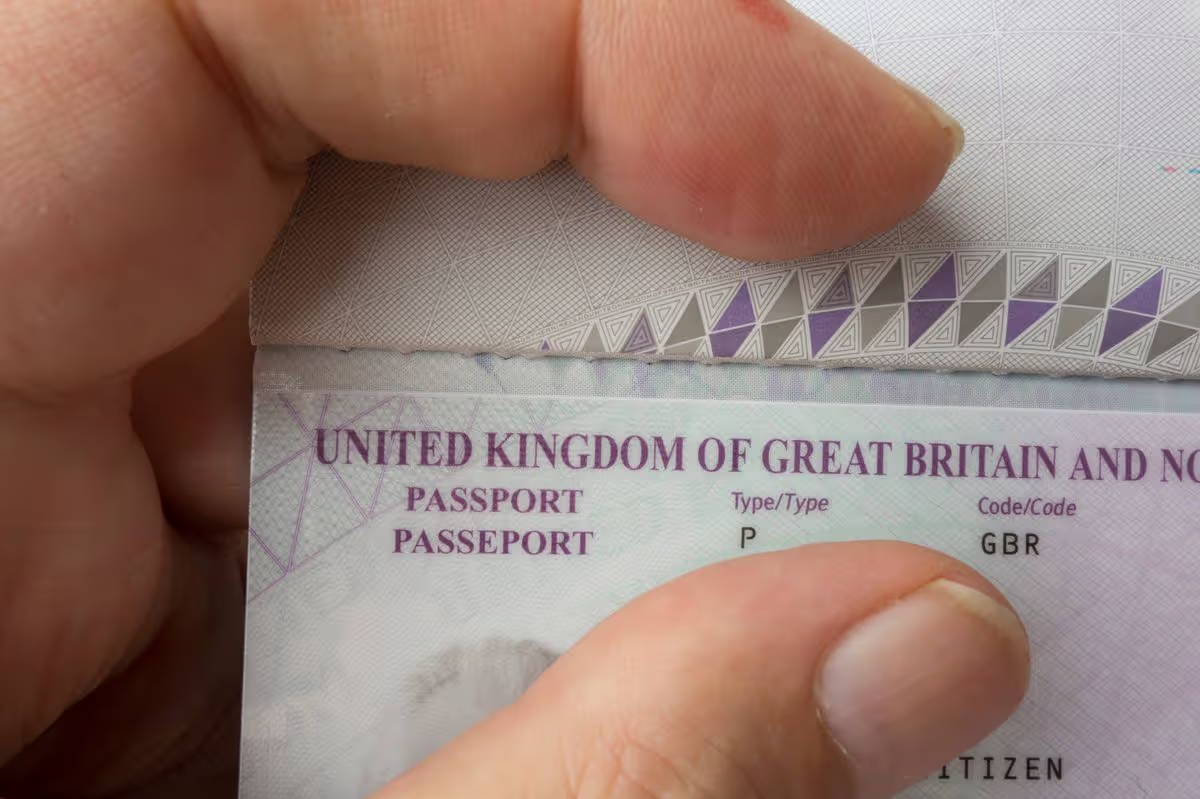
As Mr Iturmendi pointed out, all UK passport holders heading to the Schengen zone must make certain their passport’s “date of issue” is within 10 years of their arrival date. Furthermore, the passport’s “expiry date” must be at least three months beyond their intended departure from the Schengen zone

Should your passport fall short of entry requirements, you’ll almost certainly be refused boarding at your departure airport. So it’s absolutely worth double-checking yours immediately.

And if you need a replacement passport in a hurry, it could cost you as much as £235. The current estimated processing time is a maximum of three weeks, though government officials say it can sometimes take longer “if we need more information, or we need to interview you”.

Those to whom this applies will be contacted within the three-week timeframe. A standard adult passport, for those aged 16 and above, costs £94.50 when applying online, or £107 when using the paper application form.

If you need a passport urgently, a one-week fast track document costs up to £191 for an adult. A one-day premium service costs up to £235.
Source link

Everything you should know as UK red passport warning issued

Everything you should know as UK red passport warning issued – The Mirror


reach logo

At Reach and across our entities we and our partners use information collected through cookies and other identifiers from your device to improve experience on our site, analyse how it is used and to show personalised advertising. You can opt out of the sale or sharing of your data, at any time clicking the “Do Not Sell or Share my Data” button at the bottom of the webpage. Please note that your preferences are browser specific. Use of our website and any of our services represents your acceptance of the use of cookies and consent to the practices described in our Privacy Notice and Terms and Conditions.

Source link

Spain holiday island warning as threat of plague grows worse

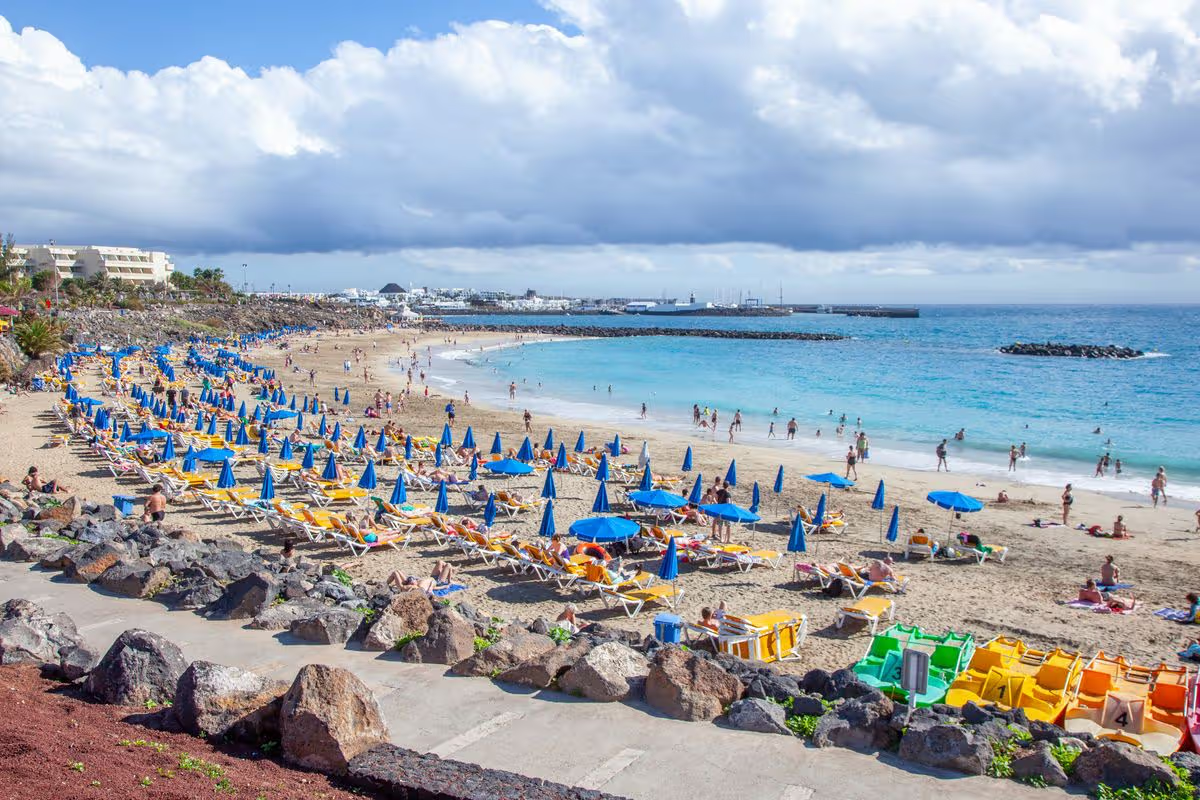
Concern about a plague is growing in the Canary Islands, with officials on alert in the sunny Spanish holiday hotspots of Lanzarote, Tenerife, Gran Canaria and Fuerteventura

The threat of a plague is growing in four Spanish holiday hotspots.

Lanzarote, Tenerife, Gran Canaria and Fuerteventura have seen clouds of locusts descend in recent days. While the short-horned grasshopper breed is not harmful to people, it could pose a threat to agriculture, including vineyards, if the situation escalates into a plague, as happened 20 years ago.

Videos have been posted on social networks showing hundreds of locusts flying around the countryside. The insects have arrived from the western Sahara due to recent wet but warm weather. The locusts have hit several parts of Lanzarote, including the popular tourist locations of Arrecife, Costa Teguise, Famara, Uga and Tahíche.

There have also been swarms on the other Canary Islands, including in the north of Tenerife. Twenty years ago, a plague of this insect affected Lanzarote, wreaking havoc on crops and people’s daily lives. At that time, the number of locusts was so large that teams of firefighters were called in to eliminate them.

Content cannot be displayed without consent

READ MORE: Four airlines now have bans on passengers packing AirPodsREAD MORE: British grandparents face cancelling ‘trip of lifetime’ due to new passport rules

The locust is an insect that, over the centuries, has arrived from the African continent with the winds from the east, along with the suspended dust of the Sahara Desert.

According to the Food and Agriculture Organisation of the United Nations (FAO), it is the most destructive migratory pest in the world and, in response to environmental stimuli, it can form dense and highly mobile swarms.

They have the capacity to destroy crops by ingesting their weight in food each day. A swarm of one square kilometre can contain up to 80 million adults and has the capacity to consume the same amount of food per day as 35,000 people.

Lanzarote’s government has already mobilised its environmental services, which will be vigilant for the next 48 hours. Leaders are confident the swarms will not escalate into a plague.

“The next two days are going to be key. If they are adult specimens that have arrived exhausted, they will die and nothing will happen. If we see copulations, that would mean that they are reproducing. We would have to see it between this afternoon and tomorrow,” said the head of the Environment of the Cabildo, Francisco Fabelo.

“We already experienced this in 2004, and at the end of the eighties, there was another similar episode. On both occasions, it was very striking, with specimens all over the roads, but they did not cause damage inside.”

The Canary Islands experienced one of the most serious episodes of desert locust in October 1958, when large swarms from Africa devastated crops on the islands and, especially, in the south of Tenerife, in municipalities such as Arico, Fasnia, Granadilla de Abona and the Güímar Valley.

Tomato and potato plantations suffered significant damage and the plague forced the mobilisation of planes from the Ministry of Agriculture to fumigate from the air, while residents and farmers tried to combat the insects from the ground with rudimentary methods such as bonfires, noise or poisoned baits.

A similar episode had already occurred in 1954, when another swarm devastated more than 10,000 hectares of crops on the islands. Agricultural leaders on the islands say they do not fear another repeat and have stressed the islands have the means to combat the problem.

Source link