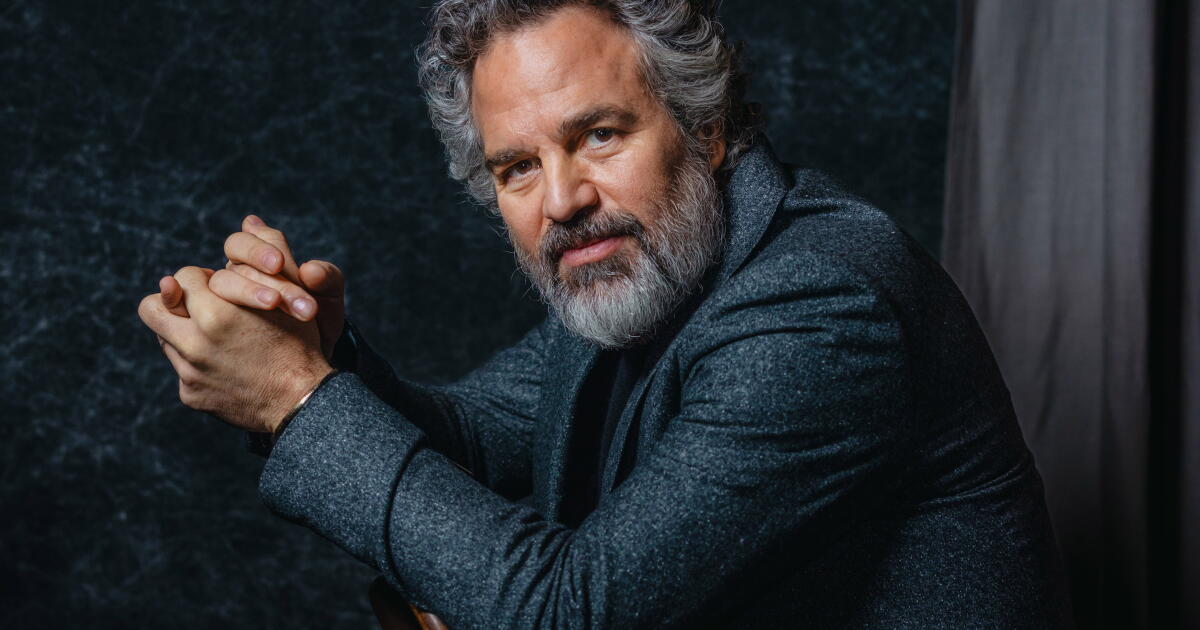
Jewish artists defend Mark Ruffalo amid Paramount’s allegations of antisemitism
Dozens of Jewish artists are defending Mark Ruffalo after Paramount Skydance branded the actor’s criticisms about software company Oracle Corp. as “antisemitic tropes.”
Support for the actor comes as Paramount Chief Executive David Ellison has struggled to get its $111-billion Warner Bros. Discovery merger over the finish line amid considerable opposition.
Ruffalo has long been an irritant to Paramount as he is a leading figure in a high-profile Hollywood campaign to block the merger. In an Instagram post late last month, Ruffalo blasted Larry Ellison’s Texas-based software company Oracle for assisting with technology to help Israeli military efforts, including in Gaza — a conflict that Ruffalo and other progressive activists have opposed because of the killing of Palestinians.
In an open letter, signed by more than 150 filmmakers, academics, writers and even a few rabbis, the group denounced “the outrageous smear campaign against our respected colleague Mark Ruffalo.”
“Enough with the false and dangerous weaponization of charges of antisemitism against those who are brave enough to point out the obvious: that the assault on the Palestinian people and the assault on our liberties at home are deeply interconnected, and there is nothing antisemitic about recognizing that fact,” the group wrote.
Tuesday’s letter was signed by several high-profile filmmakers, including Joel Coen, Hannah Einbinder, Tony Kushner, Lisa Cholodenko, Ilana Glazer, Frances Fisher, Todd Haynes and Sarah Kunstler.
The group tied David Ellison’s merger ambitions to his billionaire father’s expansive network of businesses, which now include TikTok. Larry Ellison is personally guaranteeing the equity needed for Paramount to buy Warner Bros. Discovery, and the family will become controlling owners of the merged entity.
However, the Hollywood merger is stalled because of an antitrust lawsuit brought by California Atty. Gen. Rob Bonta and 11 other Democratic state attorneys general, including from New York, New Mexico, Colorado, Nevada and Oregon. Paramount agreed to pause the transaction until the court case can be decided.
A trial is set for March 2 in Oakland, but Paramount has been agitating for industry leaders and politicians to pressure Bonta to force a settlement that would allow the deal to go through.
“The proposed merger of Paramount and Warner Brothers Discovery is no mere combination of two huge multinational companies,” the group wrote in the letter. “Yes, it will destroy thousands upon thousands of livelihoods. Yes, it will further consolidate the oligarchic control of our media (witness the gutting of CBS News). Yes, it will strangle competition and creativity in film and television production and distribution.”
The group painted the Paramount-Warner Bros. merger as “part of a larger project of tech-driven domination, a project Larry Ellison and his partners have never been shy about trumpeting — and one they themselves have explicitly linked to their support for the ongoing depredations being visited on the people of Palestine and their silencing of critics of those horrors,” the group wrote.
Paramount declined to comment.
The merger fight has grown increasingly ugly in recent weeks after Paramount threatened to leave California if Bonta continued his court fight to unravel the deal. Paramount suggested it would pull up stakes from its Melrose Avenue film studio as soon as this fall.
Then, on Aug. 21, the company accused Ruffalo of injecting “antisemitic tropes” into the opposition campaign to thwart the industry-reshaping merger that would bring HBO, CBS News, CNN, TBS and the Warner Bros. and Paramount film and TV studios under the same roof.
Leaders of prominent Jewish organizations, including the Simon Wiesenthal Center and the Anti-Defamation League, came to Paramount’s defense, blasting the Emmy-winning actor known for playing the Hulk and roles in productions for HBO.
Ruffalo defended himself, saying he was not being antisemitic. He said he was speaking out against Oracle’s use of technology to assist Israel’s military in the war in Gaza, “what we now have come to see as a genocide, which was built on an apartheid system of oppression powered by Oracle,” Ruffalo wrote in his post.
Paramount leaders have branded some of the opposition to the deal as “antisemitic.”
“Pointing out the crucial connections between what is happening in Gaza and what is happening in Hollywood is the exact opposite of antisemitism,” the group wrote in the open letter. “It is, for us, the very essence of Jewish ethical duty.”
The letter cited recent polls that reflect a majority of “American Jews now agree that Israel is committing war crimes in Gaza; and four in ten even agree that these crimes amount to genocide,” the group wrote. “Do those attacking Mark Ruffalo as an antisemite seriously believe that all these American Jews are antisemites too?”
Bonta abruptly canceled settlement talks last week, but extended an olive branch to Paramount by saying he would be willing to meet with the company to discuss ways to address his antitrust concerns.