warner bros. discovery

Paramount sees streaming gains as company continues to pursue Warner Bros. Discovery

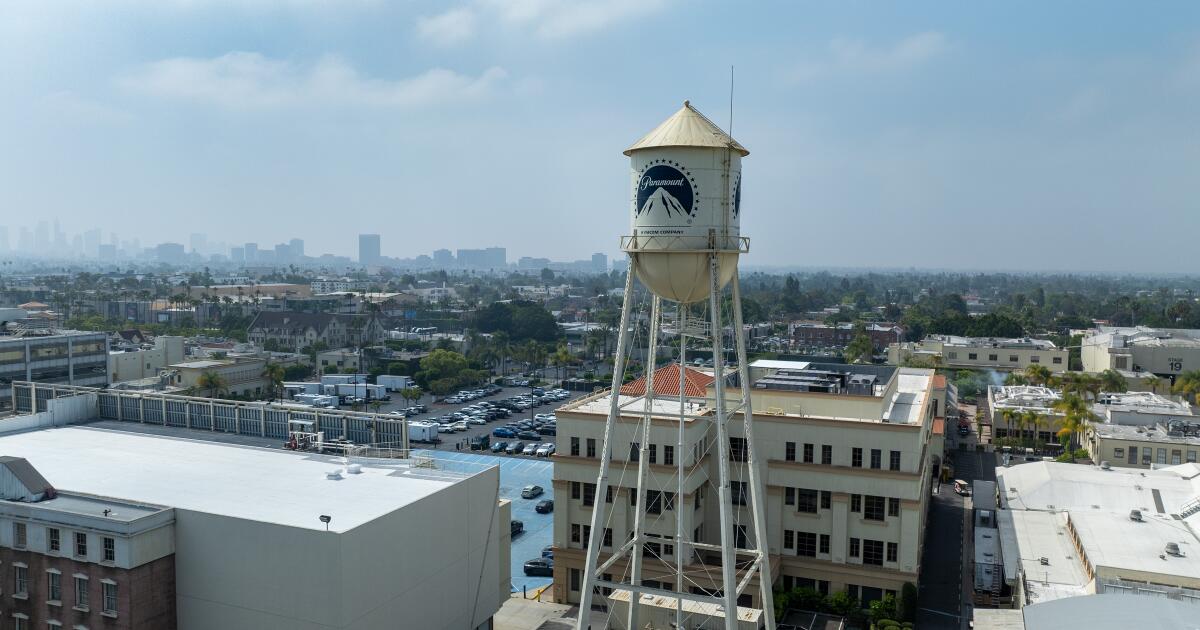
Paramount Skydance is betting its future on its streaming business, as gains at the media and entertainment company’s Paramount+ platform helped boost earnings for the fiscal fourth quarter of 2025.

On Wednesday, Paramount reported $8.1 billion in revenue for the three-month period that ended Dec. 31, up 2% compared to the previous year’s quarter. That was due to growth in its streaming business, which saw a 10% increase in quarterly revenue to $2.2 billion, as well as gains at Paramount’s filmed entertainment segment, which reported revenue of $1.3 billion,an increase of 16% compared to the previous year.

The company’s TV media business, however, had a tougher quarter.

That segment reported revenue of $4.7 billion, down 5% compared to last year, as traditional broadcast networks continue tolose subscribers. Paramount also cited a 10% decrease in advertising, partially due to a drop in political spending and not having the Big 10 championship as it did in 2024.

Paramount reported an operating loss of $339 million, which included $546 million in restructuring and transaction-related costsattributed to its merger with Skydance last year. Diluted losses per share totaled 52 cents, compared to a loss of 33 cents during the prior year.

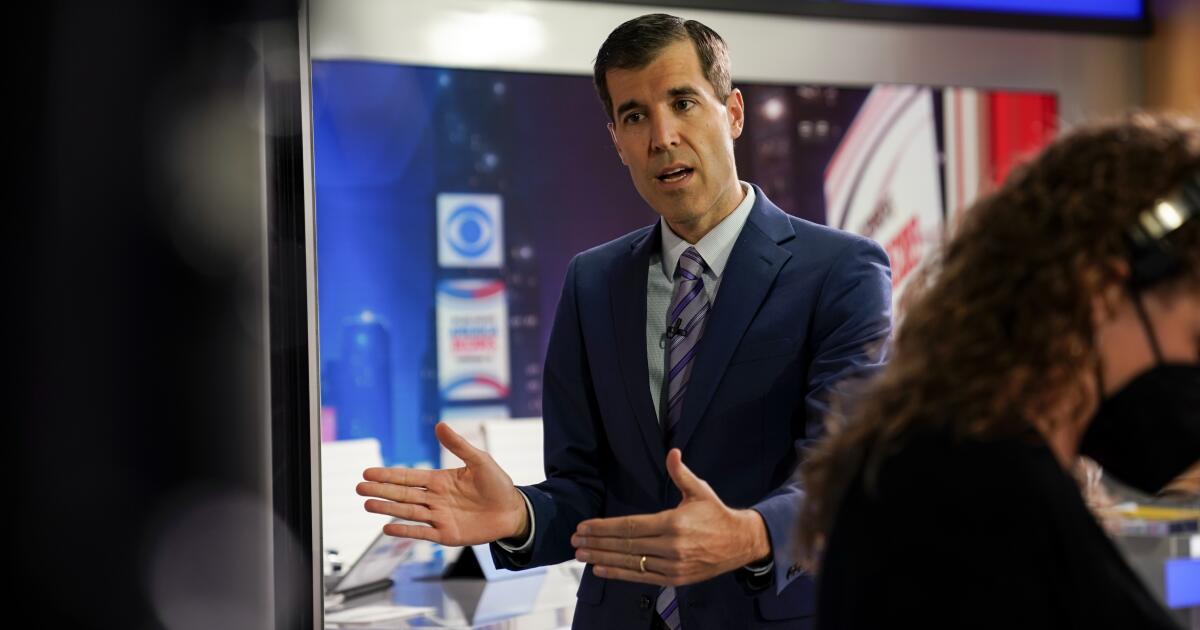
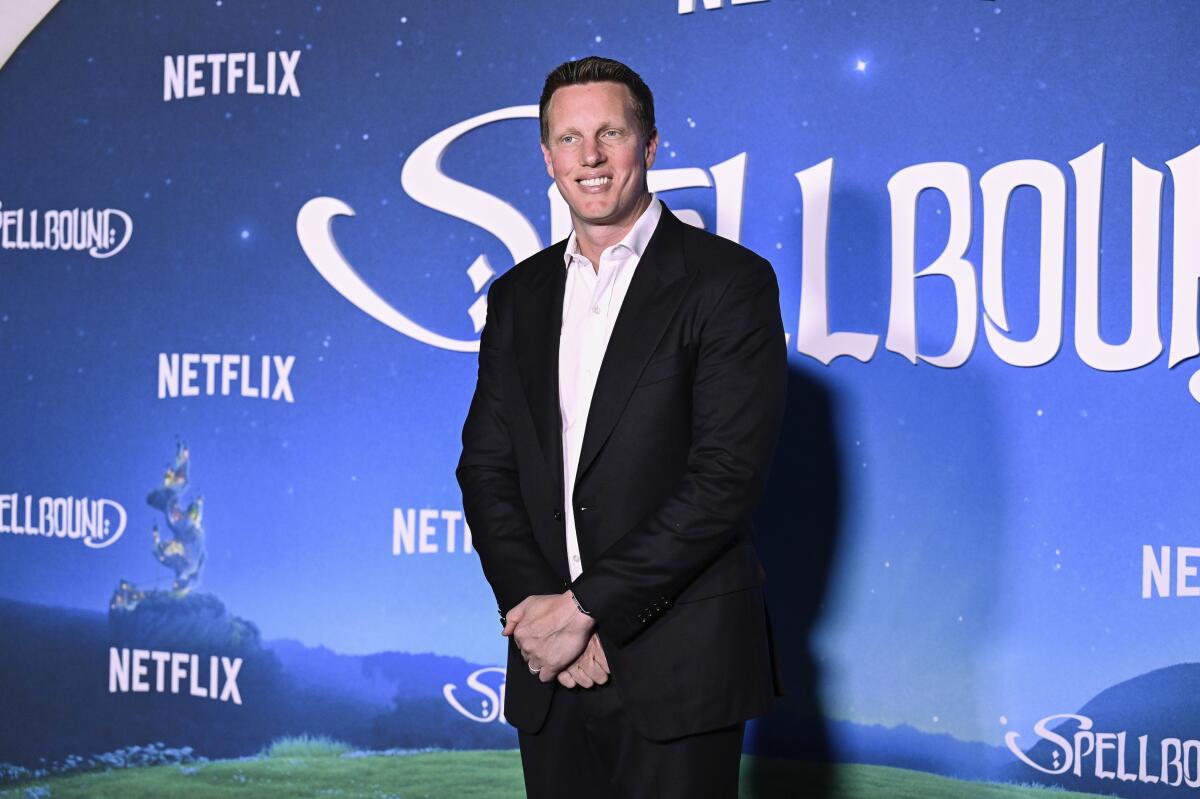
Chief Executive David Ellison praised the company’s progress under his tenure, noting that investments in the film studio, original series, UFC and tech upgrades to Paramount+’s streaming platform and advertising would build momentum in the coming years.

“It’s been six months, but we really do feel good about the work the team has done to date,” he said during an earnings call with analysts Wednesday afternoon. “You can expect that to accelerate into the future quickly.”

The company said it expects total revenue of $30 billion for 2026, which would mark a 4% increase compared to 2025. Paramount signaled the primary driver of that growth will be its streaming business, though the company also anticipates a boost from its studio segment.

Company executives declined to answer questions on the call about Paramount’s bid to acquire rival Warner Bros. Discovery.

The only mention of the ongoing fight was in Paramount‘s letter to shareholders, which noted that the company was “confident” in its standalone strategy and growth trajectory, but that adding Warner would be an “accelerant to achieving these goals more quickly” and in a way that would be “economically compelling” for Paramount’s shareholders.

Paramount submitted a higher bid Monday offering $31 a share in cash to Warner Bros. Discovery investors. Previously, the offer was $30 a share.

The company also agreed to pay $7 billion to Warner should the deal fail to clear various regulatory hurdles. That was a $2 billion increase. (The previous commitment was $5 billion.)

Paramount reaffirmed that it would cover the $2.8 billion termination fee that Warner would owe Netflix if Warner abandoned its deal with the streamer.

Paramount also said it would pay a so-called ticking fee sooner. Now, the company said it would pay an additional $0.25 per quarter to shareholders after Sept. 30 until a Paramount-Warner transaction closed. It also agreed to cover Warner’s potential $1.5 billion in financing costs associated with a planned debt exchange offer.

Additionally, Paramountsaid it “agreed to an obligation to contribute additional equity funding to the extent needed to support the solvency certificate required by PSKY’s lending banks.” That provision was offered because Warner board members have expressed concerns that Paramount may not be able to round up sufficient financing to close such a gargantuan deal.

But the company’s earnings — and the declines its facing in its own TV business — raised concerns about the potential Warner acquisition, John Conca, analyst at Third Bridge, wrote in an email.

“It is becoming questionable why leadership is aggressively pursuing [Warner], a deal that would effectively double their exposure to dying linear networks while also creating even more massive integration headaches,” he said.

Source link

Warner Bros. Discovery says its reviewing Paramount’s new bid

Warner Bros. Discovery said Tuesday that it was “reviewing” a revised offer from Paramount Skydance — the latest twist in the high-profile auction to claim one of Hollywood’s corporate jewels.

The company did not provide any details of Paramount’s bid. Paramount separately confirmed that it submitted a revised offer.

In a short statement, Warner acknowledged that Paramount had submitted a modified proposal to buy all of the company’s outstanding shares and that board members were evaluating the offer “in consultation with our financial and legal advisors.”

“We will update our shareholders following the Board’s review,” Warner said.

The Larry Ellison-backed Paramount had been facing a late Monday night deadline to boost its bid to claim the company that owns CNN, HBO, TBS and the storied Warner Bros. movie and film studios. Last week, the auction’s winning bidder — Netflix — agreed to allow Warner Bros. Discovery to reopen talks with Paramount for seven days to determine whether Paramount would bring more money to the table.

Warner instructed Paramount to present its “best and final” offer.

Netflix has matching rights should Warner Bros. Discovery reverse course and accept the Paramount bid.

The move comes nearly three months after Warner’s board unanimously agreed to sell HBO and studio assets, including its deep library that includes Superman, Harry Potter, Scooby-Doo, “Game of Thrones,” and “The Big Bang Theory,” to Netflix for $27.75 a share.

Netflix’s deal, valued at $82.7 billion, does not include Warner’s basic cable channels, including CNN, TBS and HGTV.

Those channels are slated to be spun off to a new company later this year.

But Paramount, managed by scion David Ellison, has repeatedly cried foul, saying its cash bid for all of Warner Bros. Discovery, including the Warner cable channels, would be more lucrative for shareholders. Paramount, which enjoys friendly relations with President Trump, has also boasted that it has a more certain path to win U.S. regulatory approval compared to Netflix.

But Warner Bros.’ board has stuck with Netflix’s bid, saying the streaming giant’s financing was more secure.

“The Netflix merger agreement remains in effect, and the Board continues to recommend in favor of the Netflix transaction,” Warner said in its Tuesday statement.

Warner Bros. Discovery told Paramount last week that it expected the billionaire Ellison to put more money into the deal.

Paramount has previously said that the tech billionaire would guarantee more than $41 billion in equity financing that was needed to pull of the more than $108-billion take-over.

Under Paramount’s previous offer, the Ellison family was planning to contribute about $12 billion. Another $24 billion was expected to come from the royal families from Saudi Arabia, Qatar and Abu Dhabi.

In recent weeks, Paramount agreed to cover a $2.8 billion break-up fee that Warner would owe Netflix should Warner walk away from the Netflix deal. Paramount also suggested that it would increase its offer to at least $31 a share.

The move comes amid heightened political interest in the monumental deal that would reshape Hollywood.

The Department of Justice is investigating whether a Netflix takeover, or Paramount’s alternative bid, would harm competition.

Republican lawmakers have been critical of the Netflix deal, saying it would blunt competition.

President Trump has said he didn’t plan to get involved in the investigation, but over the weekend he threatened Netflix, writing on social media that Netflix must fire Susan Rice, a former high-level Obama and Biden administration official, from its board or “pay the consequences.”

Warner Bros. Discovery is consulting with investment bankers from Allen & Company, J.P. Morgan and Evercore and the law firms Wachtell Lipton and Debevoise & Plimpton.

Source link

Mid AI scandal, Hollywood studios threaten ByteDance with legal action

After the fake video of Tom Cruise and Brad Pitt fighting went viral, a surge of AI-generated content from Seedance 2.0 flooded the internet.

Some fans were using the new AI video generator, backed by ByteDance, to refashion the finales for shows like “Game of Thrones” and “Stranger Things.” Others created battle scenes between iconic superheroes like Wolverine and Superman or between a Transformer and Godzilla.

As these Seedance videos amassed millions of views on social media, industry guilds like SAG-AFTRA and the Motion Picture Assn. have criticized the AI platform that was launched last week. Now, many major Hollywood studios are threatening to take legal action against ByteDance, the same Chinese parent that oversees TikTok.

Netflix, Warner Bros. Discovery, Paramount and Disney have all sent individual cease and desist letters, detailing the unauthorized reproduction of each of the studios’ copyrighted intellectual property.

Netflix and Warner Bros. Discovery were the latest studios to send cease and desists letter to ByteDance on Tuesday.

Netflix calls Seedance “a high-speed privacy engine” and says that they “will not stand by and watch ByteDance treat our valued IP as free, public domain clip art,” as stated in the letter. The streamer also cites the illegal use of sets derived from “Squid Game,” costumes from “Bridgerton” and character design from “KPop Demon Hunters.”

Warner Bros. Discovery looks to repurposed content, including characters from the “Harry Potter” and “Lord of the Rings” franchises, as well as superheroes like Batman, as “ blatant infringement” by ByteDance. The studio argues that it’s clear that their AI technology was trained on Warner Bros. copyrighted material “without authorization.”

“But the users are not the ones at the root cause of the infringement; they are merely building on the foundation of infringement already laid by ByteDance as Seedance comes pre-loaded with Warner Bros. Discovery’s copyrighted characters,” wrote the studios’ legal executive vice president Wayne Smith. “That was a deliberate design choice by ByteDance.”

Disney and Paramount were the first of the studios to call out ByteDance, sending their letters last Friday and Saturday. Disney accuses ByteDance of loading its Seedance service “with a pirated library of Disney’s copyrighted characters from Star Wars, Marvel, and other Disney franchises.”

“Over Disney’s well-publicized objections, ByteDance is hijacking Disney’s characters by reproducing, distributing, and creating derivative works featuring those characters. ByteDance’s virtual smash-and-grab of Disney’s IP is willful, pervasive, and totally unacceptable,” Disney’s attorney David Singer wrote, per Axios.

Paramount’s cease and desist letter was reviewed by The Times and makes similar assertions about ByteDance’s unapproved use of copyrighted material.

ByteDance has since pledged to implement more safeguards to protect copyrighted material in response to these letters.

“ByteDance respects intellectual property rights and we have heard the concerns regarding Seedance 2.0,” a company spokesperson said in a statement shared with CNBC. “We are taking steps to strengthen current safeguards as we work to prevent the unauthorized use of intellectual property and likeness by users.”

But with or without the safeguards, Dan Purcell, chief executive of Midnight Labs, an AI-powered company that specializes in IP protection for high-value entertainment, said these letters might be a bit of a delayed reaction from the studios.

“Once synthetic content is generated, it spreads instantly and at a massive scale. By the time lawyers engage, the damage is done,” said Purcell in a statement. “The only path forward is strict licensing, real-time enforcement, and consequences that actually hurt. Reactive letters won’t fix this. The industry needs to move at the speed of AI — not the speed of litigation.”

Source link

Paramount sweetens its offer for Warner Bros. Discovery

Paramount Skydance has sweetened its bid for Warner Bros. Discovery, adding a $2.8 billion “break fee” for Netflix and a payment to shareholders set to increase for every quarter after January 1, 2027 that the transaction does not close.

However, it’s not clear the latest move will do much to sway Warner Bros. Discovery’s board, which has endorsed a rival bid from Netflix.

The David Ellison-led company sent notice Tuesday of its revised offer to the Warner Bros. Discovery board, adding that it was open to further negotiation.

“While we have tried to be as constructive as possible in formulating these solutions, several of these items would benefit from collaborative discussion to finalize,” the letter states. “If granted a short window of engagement, we will work with you to refine these solutions to ensure they address any and all of your concerns.”

Paramount’s all-cash offer still stands at $30 a share. In addition to the termination payment and so-called “ticking fee” for shareholders of 25 cents per share — which the company said would total about $650 million in cash value each quarter — Paramount also said it would “eliminate” Warner’s $1.5 billion financing cost associated with its debt exchange offer.

The company also said it would “provide flexibility” for Warner to refinance its existing $15 billion bridge loan.

Ellison said the new additions to Paramount’s bid “underscore our strong and unwavering commitment to delivering the full value [Warner Bros. Discovery] shareholders deserve for their investment.”

“We are making meaningful enhancements — backing this offer with billions of dollars, providing shareholders with certainty in value, a clear regulatory path, and protection against market volatility,” he said in a statement.

Warner confirmed it received Paramount’s new offer and said in a statement Tuesday that it would “carefully review and consider” the revised bid.

However, the Warner board is “not modifying its recommendation” on its agreement to sell its studios, HBO and HBO Max to Netflix, and advised shareholders not to take “any action at this time” on Paramount’s tender offer to shareholders.

Source link