walkable

I found a walkable Italian city with fewer crowds in winter — not Florence or Pisa

Tuscany is often sold on Florence and Pisa, but a walled city I visited in late September stood out for its piazzas, rooftop views and brilliant food. With averages of 15°C in November and 12°C in December — and far fewer crowds — it’s ideal for a winter break.

Nestled in the heart of Italy, Tuscany is celebrated for its gently rolling hills, charming medieval villages, vast vineyards and iconic Renaissance masterpieces. Boasting mouth-watering local food and a relaxed pace of life, the region has something for every holidaymaker seeking the very best of Italian culture.

Tourists can spend their mornings strolling through ancient towns, savour unhurried lunches with vineyard views, and watch the sun dip below the horizon with a glass of locally produced wine in hand. Having visited the region in late September, I find it equally worthwhile to head there in November and December as a winter getaway.

Average temperatures in the city are around 15°C in November and 12°C in December.

Tuscany is made up of 10 provinces, with its capital, Florence, celebrated for its extraordinary Renaissance heritage, iconic artwork and breathtaking architecture.

Other provinces include: Arezzo, Grosseto, Livorno, Massa-Carrara, Pistoia, Prato and Siena.

Florence and Pisa tend to be the first places that spring to mind when Tuscany is mentioned, yet one destination I discovered on my travels left a lasting impression — Lucca.

What is Lucca famous for?

The historic city walls

Among Lucca’s most treasured landmarks is its four-kilometre circuit of Renaissance walls, built between the 16th and 17th centuries. Originally constructed for defensive purposes, the walls today serve as a tree-lined public walkway, giving visitors the opportunity to stroll or cycle while soaking up sweeping views of the ancient city below.

Ensure our latest travel stories always appear at the top of your Google Search by making us a Preferred Source. Click here to activate or add us as a Preferred Source in your Google search settings

Piazza dell’Anfiteatro

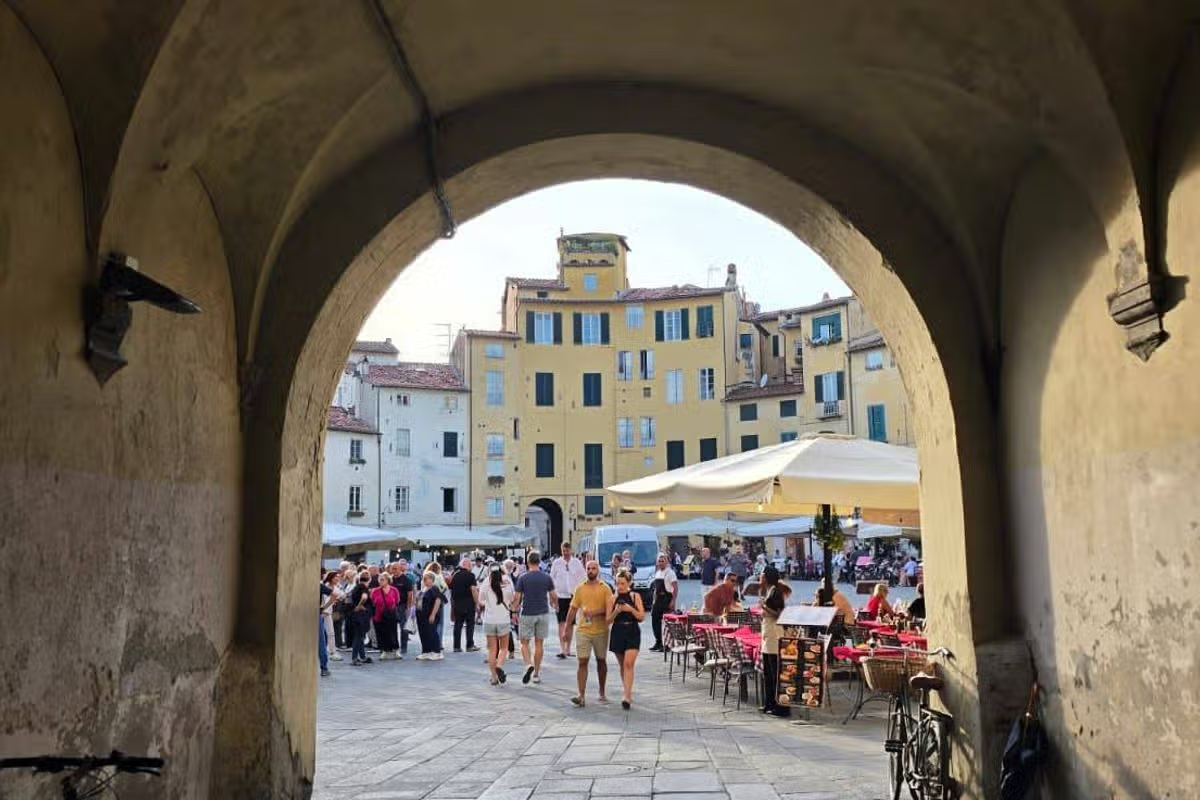
Piazza dell’Anfiteatro stands as one of Lucca’s most striking landmarks. Constructed on the foundations of an ancient Roman amphitheatre, the oval-shaped piazza is surrounded by vibrant buildings, cafés and eateries, creating an idyllic spot to unwind and absorb the city’s ambience.

I stopped for lunch and took in the delightful views across the square. Prices here are typically a touch steeper, though that’s hardly surprising.

I opted for boar ravioli at €9.60 (£8.07). It might not seem expensive, but the serving was modest, leaving me rather peckish afterwards. Worth remembering when dining in a popular tourist area.

Torre Guinigi

The medieval Torre Guinigi ranks among Lucca’s most peculiar attractions, instantly recognisable for the oak trees flourishing in its rooftop garden. Visitors can ascend to the top for panoramic views over the city’s terracotta rooftops and the surrounding Tuscan countryside.

Lucca Cathedral

The Cathedral of San Martino is celebrated for its ornate Romanesque design, beautifully decorated marble frontage and impressive collection of sacred artworks.

Other significant religious sites include the Basilica of San Frediano, distinguished by its eye-catching mosaic exterior, and the Church of San Michele in Foro, positioned in a historic piazza at the city’s centre. When is the best time to visit Tuscany?

Lucca tends to be far less crowded during the winter months, making it an ideal period to discover its museums, historic churches and traditional eateries.

The city is perfectly suited to those who prefer to explore on foot. We covered the whole place in just half a day without relying on public transport, though a full day or longer is recommended if your schedule allows. That said, visitors should be ready for chillier temperatures and a higher likelihood of rain.

How to get to Lucca?

The most straightforward route from the UK to Lucca is to fly into Pisa, then continue onwards by train, taxi, or hire car.

By car, the trip typically takes around 30 to 45 minutes, depending on traffic.

By train, passengers can hop on a service from Pisa Centrale to Lucca railway station, with the journey usually taking around 25 to 30 minutes. Extra time should be factored in to travel from the airport to Pisa Centrale.

Direct return flights from London to Pisa are priced at around £31 in November and £32 in December (at the time of writing).
Source link

I visited ‘world’s most walkable city’ but it’s actually a nightmare for pedestrians

There is no better way to explore a city than by foot, but not all places are as suitable for an adventure as others, as I found out during a recent visit to the world’s most walkable city

There is no better way to explore a city than on foot. Once touched down in a city, bag in the hotel and a fresh pair of socks on, the first thing I do is go for a walk.

It is impossible to get a feel for a place from the back of a taxi or from the elevated vantage point of a coach. You’ve got to start pounding the pavement, ideally without a destination in mind, and see where you end up.

On a recent trip to Rome, I set out from my central station hotel and marveled at the carnage of the Trevi Fountain queues, crossed the Ponte Sant’Angelo, and witnessed a coordinated group of ball-under-cup scammers sweatily fail to take anyone’s money. Last spring, I headed out into Benidorm, finding myself an impossibly cheap roast, a seafront pint of Guinness, and a ‘Good boys go to heaven, bad boys go to Benidorm’ t-shirt.

And so, in April, I applied the same approach to Seoul, a city recently named the most walkable in the world.

Do you have a story to share? Email webtravel@reachplc.com

I was convinced I'd hate £55 Wetherspoons hotel - I was completely wrong

Each year, Time Out conducts an annual city survey, this time around quizzing 24,000 people on how easy or not it is to discover given cities on foot. The ranking is based on the highest percentage of locals who rated their city’s walkability ‘good’ or ‘amazing’, and the South Korean capital tops the list.

“A city doesn’t have to be small to be walkable. In fact, Seoul is one of the largest cities on the list by surface area and population, but its impressive 93 percent approval rating from locals has secured the South Korean capital joint-first position. Why? Well, the city has a reputation as an exceedingly safe place to stroll by day and night, and is home to neighbourhoods such as Myeongdong, Insadong, and Hongdae, which are all primed for exploring on foot,” writes Time Out.

“Then there are the innovative pedestrian walkways, like Seoullo 7017, an 1074m-long elevated ‘sky garden’ which has seen an old inner city highway revamped into a stroll-worthy green space, home to 24,000 different plants. In downtown Seoul, the Cheonggyecheon Stream is flanked by a walkway that not only links many of the city’s central metro stations, but also landmarks such as Gwanjang Market, Jongmyo Shrine and Gyeongbokgung Palace.”

I could not disagree more.

Seoul is a fantastic city. It’s alive with a kind of youthful, optimistic energy that feels far removed from most places I’ve visited; it’s fearlessly trendy, and it’s centered on an urban mountain blanketed with cherry blossoms come the spring.

But walkable it is not. Seoul is a car city.

The almost unbelievably cheap cost of an Uber (we’re talking around £5 for a half-hour ride) means that hopping in a cab is far more common than in the UK, while the wide, four and six-lane roads that dominate much of the city encourage motoring. And produce a lot of fumes.

According to NASA, Seoul is one of the world’s cities with the worst air pollution, beating Los Angeles, Tokyo, Paris, and London. You can certainly feel it. On one crisp morning, I walked up Namsan, the 170-meter-tall hill in Seoul’s center. The view from the top would be spectacular, were it not for the heavy, shimmering cloud that hung over everything.

Walking back down, I started to get the vague feeling I’d done something wrong. I hadn’t accidentally offended a waiter or lost my hotel pass; it was the signs. Seoul is a city of signs. From the expected ‘no smoking’, to the less typical ‘no archery’, to the possibly unique ‘no hiking without a flashlight’, everywhere you look, some kind of rule is being transmitted to you. It doesn’t leave you with a feeling of freedom and exploration, nor do the CCTV cameras placed on tall metal poles in the city’s woodland.

It’s a place that’s big on rules and completely opposed to bins. Having finished a snack, I walked for two hours without finding a trash can. South Koreans are expected to take their rubbish home with them – a system that says a lot about the population’s diligent character, but one I find inherently anti-social.

As I do the lack of pavements that had me regularly sliding down alleyway walls to give way to cars, and the complete, frustrating prohibition of jaywalking. Couple all of this with the fact that the city lacks an obvious centre and is exhaustingly massive, and its status as one of the world’s least walkable cities is clear.

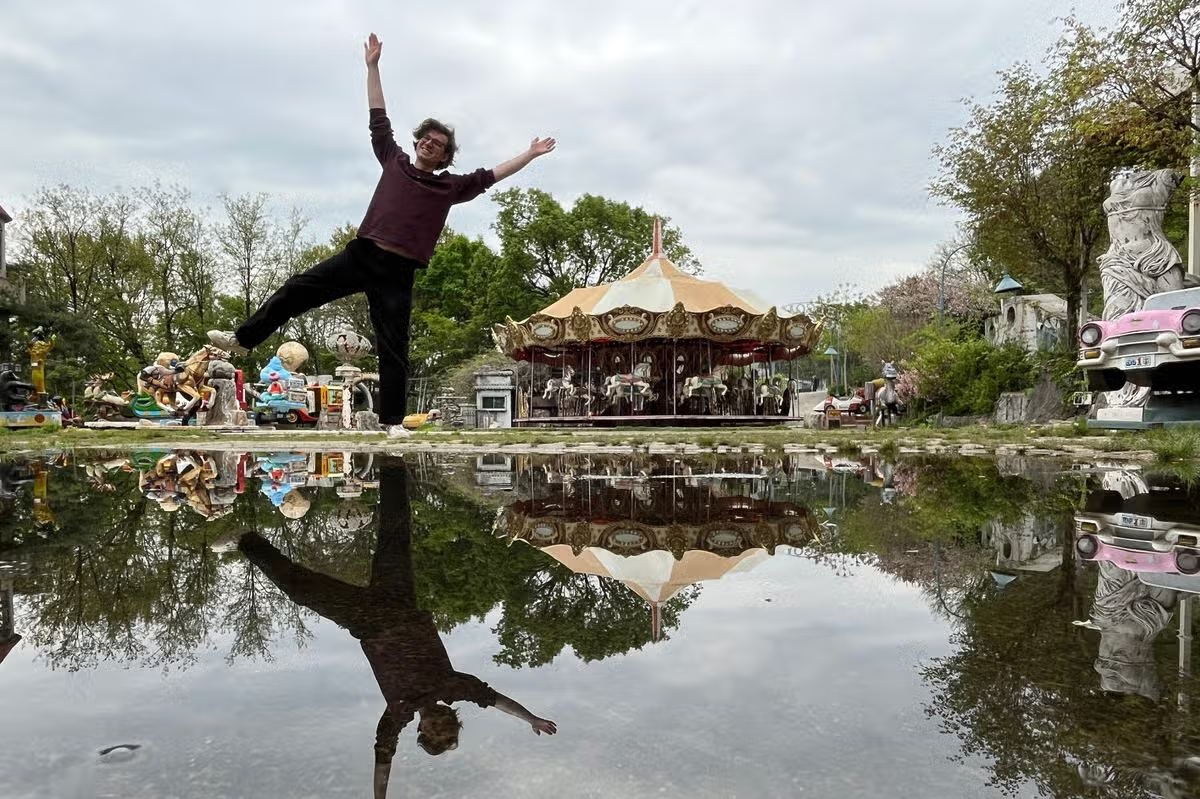
Given my love of treading the tarmac, it says a lot about how fantastic the rest of Seoul is that I left in love with the place. From the fish-filled waters of Cheonggyecheon River, the rusty octopus of Yongma Land, and the impossibly cheap but high-grade cosmetics, it’s a fascinating place that feels like it’s at the centre of the world. Just prepare to order a cab.

Source link