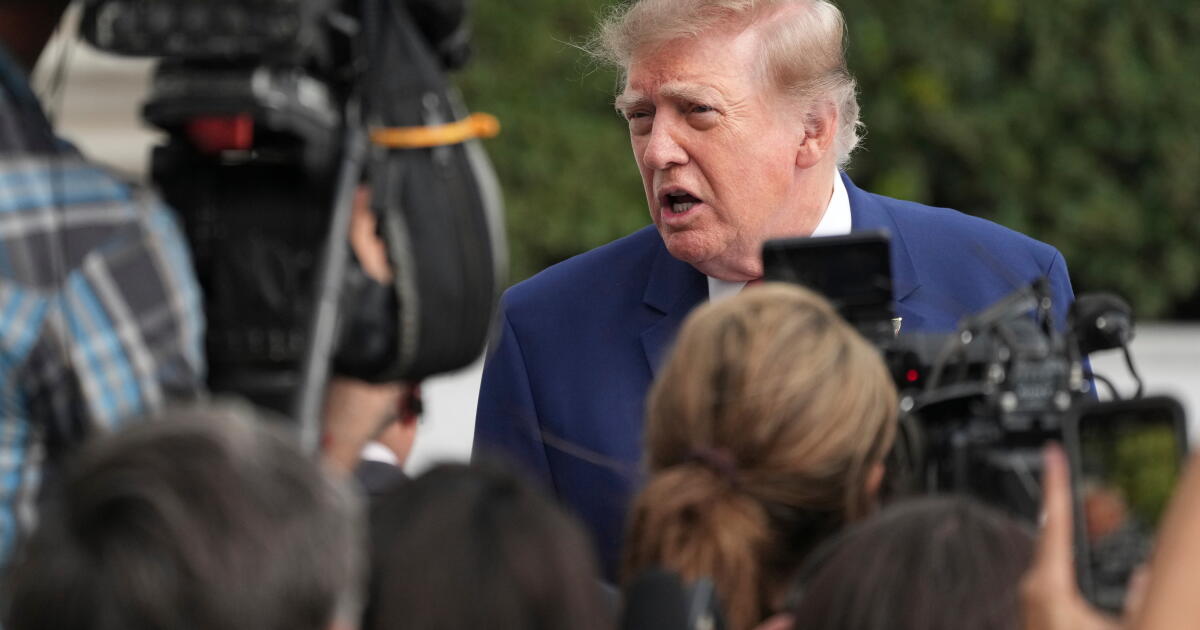
Trump’s decision to waive Russian sanctions outrages Congress, but no quick counter seen
WASHINGTON — President Trump’s abrupt decision to waive sanctions on Russia days before they were to take effect drew outrage Saturday from members of Congress, which had overwhelmingly passed the legislation in a bipartisan display of American support for Ukraine in the war with Russia.
Lawmakers from both parties blasted the executive order late Friday, the latest in a series of steps that the Republican president has taken drawing the United States closer to Russia’s Vladimir Putin. Trump recently announced a diesel deal with Putin to import Russian energy in a long-shot effort to curb high gas prices in the U.S. that are roiling the midterm elections on Nov. 3.
“Beyond irresponsible,” said Sen. Thom Tillis (R-N.C.), on social media, hours after Ukrainian President Volodymyr Zelensky expressed hope that the sanctions that were supposed to take effect Sunday targeting Russian’s economy could be revived.
“What part of enforcing a law passed 86-11 by the Senate does the President and his advisors not understand?” Tillis said. “It’s unconscionable that this administration is capitulating to a Russian dictator who illegally invaded Ukraine.”
Tillis said that if Trump wants to actually bring down energy prices, he should resolve the Iran war, which is largely blamed for the spike at the pump, and “not by doing a solid for Vladimir Putin.”
Republican Sen. John Cornyn of Texas said, “Lindsey would be appalled,” referring to the late Sen. Lindsey Graham (R-S.C.), who worked endlessly on the bill before he died this summer. The bill is known as the Lindsey Graham Russian Sanctions Act.
Sen. Elizabeth Warren (D-Mass.) said Trump is “thumbing his nose” at Congress and “enabling Vladimir Putin to continue his war of aggression.” She urged her colleagues to take action to reverse course.
Trump’s actions come as Ukraine is bracing for a stark winter confronting Russia’s ongoing attacks on its energy infrastructure to heat homes and keep the lights on. Zelensky, who has endured a rocky relationship with Trump but stayed close to the U.S. lawmakers, urged supporters to speak out on behalf of the sanctions.
The next steps are highly uncertain with the House and Senate on recess until after election day. Trump said he was waiving the sanctions indefinitely, citing national security concerns. It is unlikely Congress would be in a position to take any action to challenge Trump’s moves until lawmakers return to Washington.
It took almost a year for Graham to persuade Trump to agree to the Russian sanctions package. It was designed to impose steep tariffs on countries that import large amounts of Russian oil and energy products and was promoted as way to halt the flow of funds fueling Putin’s four-year war against Ukraine.
But even as Zelensky had watched from the visitor gallery as the Senate advanced the package after Graham’s death, skeptics in Congress warned Trump would be unlikely to follow the bill once he had signed it into law a month ago.
Last week, a bipartisan group of senators urged the Trump administration to more quickly clamp down on Russia, particularly the “shadow fleet” of tankers that Moscow is using to transport oil and bypass America’s sanctions. The senators noted that the bulk of the new law’s provisions were to be effective Sunday.
Instead, Trump soon announced the diesel deal with Putin, saying that Russia had agreed to supply tons of fuel to the U.S., where gas prices have skyrocketed in some areas and voters saying affordability issues are a top concern.
Outraged lawmakers have pledged to stop the Trump-Putin deal.
New York Rep. Gregory Meeks, the ranking Democrat on the House Foreign Affairs Committee who had led opposition to the Graham bill — warning that Trump would flout the law — introduced legislation Friday that would block Trump’s diesel deal with Putin.
“At a time when the United States should be increasing pressure on the Kremlin, Donald Trump is cozying up to Putin and striking self-enriching deals instead of standing with Ukraine,” Meeks said in a statement.
He called the deal “corrupt” and said it “goes against everything the United States stands for.”
Mascaro writes for the Associated Press. Associated Press writers Kevin Freking and Mary Clare Jalonick contributed to this report.