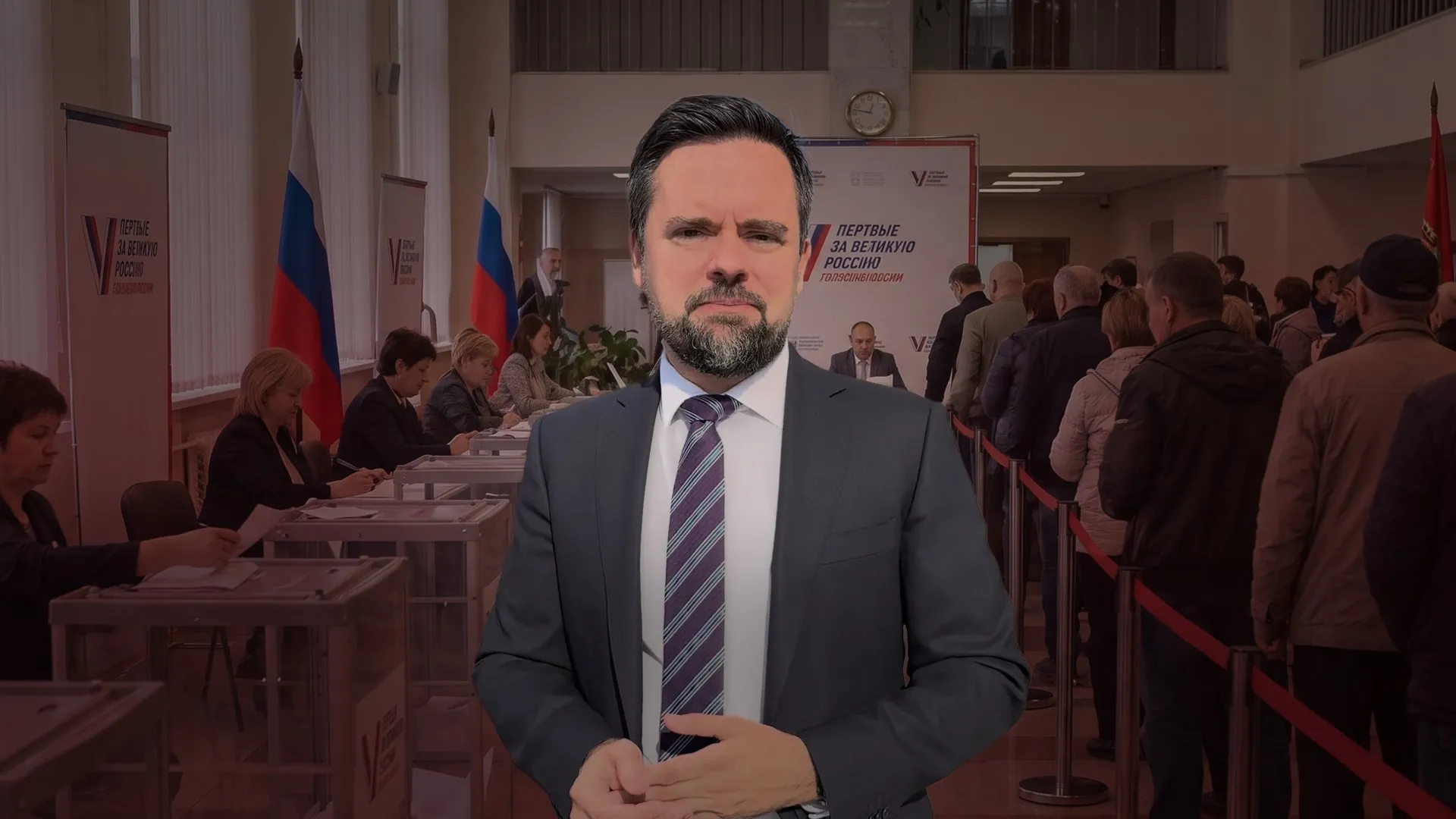
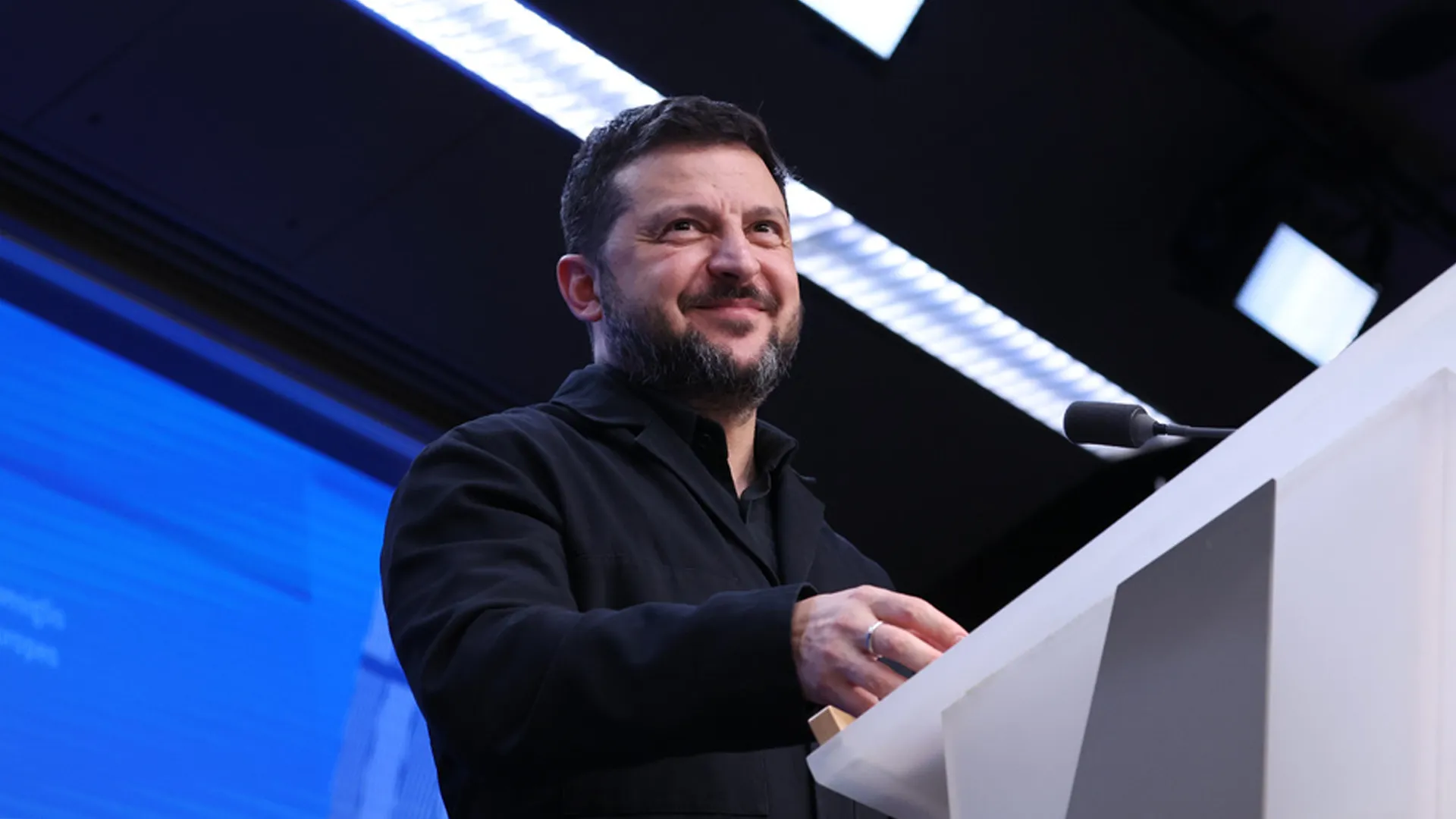
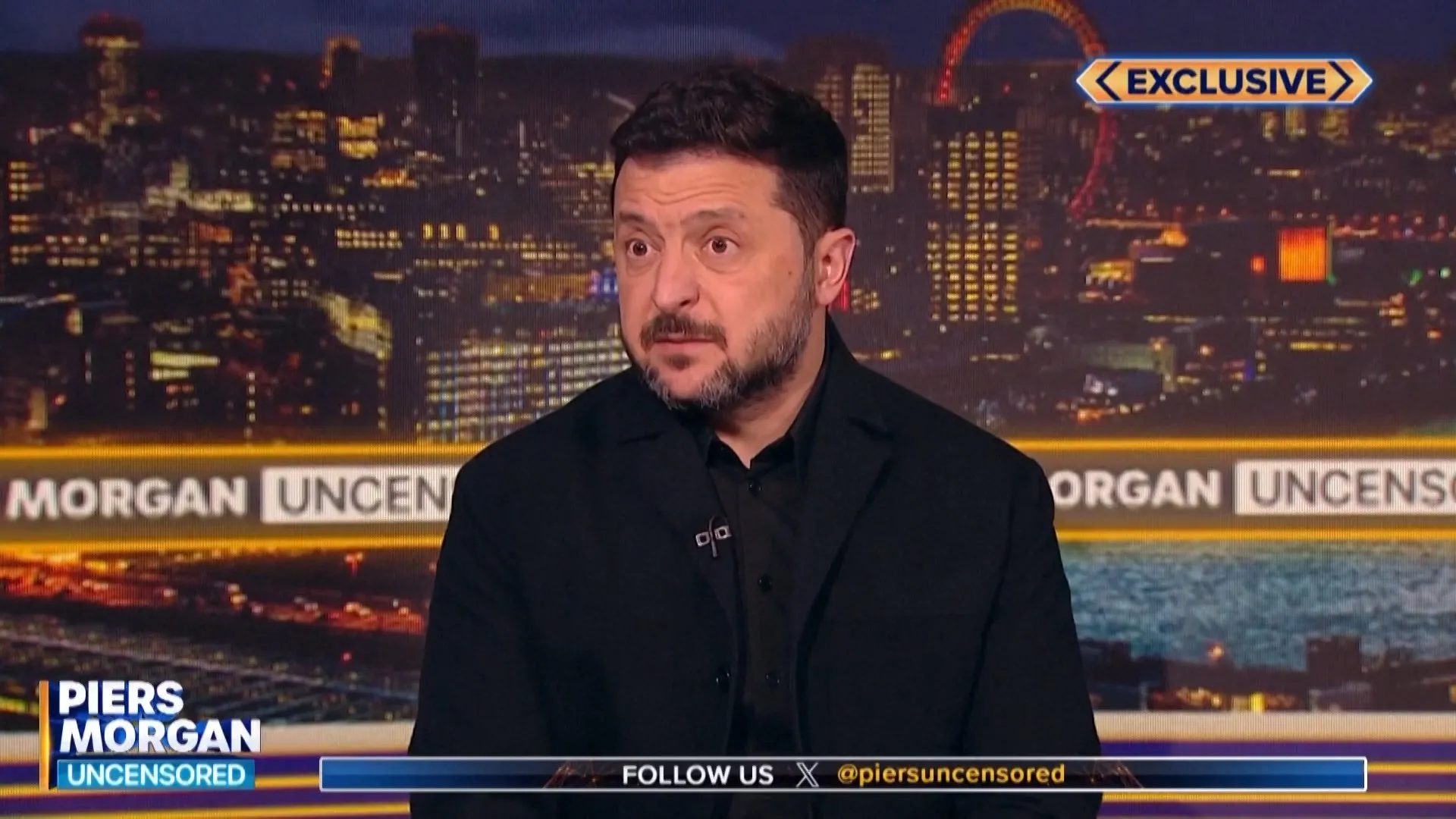
Ukrainian President Volodymyr Zelenskyy warned Russia’s ambitions extend beyond eastern Ukraine, saying its drone attacks threaten NATO. Speaking after an EU summit in Belgium, he also took a jibe at US President Donald Trump for saying he is harder to deal with than Putin.
Ukrainians accuse the US of gambling with their lives as Russian strikes devastated residential buildings in the capital. President Zelenskyy says Donald Trump isn’t on the right side of history as Washington struck a diesel deal with Moscow.
Negotiators aim to present a proposal to Russia in the coming weeks, meanwhile Putin says resumption of talks unlikely.
Published On 10 Oct 202610 Oct 2026
Russian President Vladimir Putin has said an immediate resumption of peace talks with Ukraine is unlikely, citing drone attacks on Moscow during parliamentary elections last month.
In a phone call with US President Donald Trump on Friday, Putin said Moscow was ready to resume negotiations with Kyiv after the parliamentary elections. However, the drone attacks on the capital made the resumption of trilateral peace talks between Russia, Ukraine and the US unlikely.
Recommended Stories
list of 3 itemsend of list
“By launching a large-scale drone attack on Moscow, other cities and polling stations on the most important day of the elections, and by targeting some people involved in organising the elections, the Kyiv regime has, in reality, interrupted the possibility of an immediate resumption of the negotiation process,” said Kremlin foreign policy aide Yuri Ushakov about the call with Trump.
“As the president said, we will now assess when these negotiations can resume,” he added regarding the trilateral talks.
US Secretary of State Marco Rubio said on Thursday that Russia’s war in Ukraine is at a dangerous stalemate and the United States will keep working towards a deal to end the war.
Ukrainian President Volodymyr Zelenskyy said earlier this week that the country was ready to hold trilateral talks with the United States and Russia this month.
US-Russia diesel deal
Earlier on Friday, Donald Trump announced after the call with Putin that Russia agreed to deliver more than 300,000 tonnes of diesel to American and global markets.
The deal was criticised by US lawmakers, Zelenskyy and European allies.
Zelenskyy called the agreement a “gift to Putin”.
“All that money goes toward the war against people, against Ukraine, against all of us. I believe our team is simply being used as a smokescreen. And that is certainly not fair,” he said in a statement.
In response to the US-Russia diesel deal, a government spokesperson said the United Kingdom would continue to “maintain pressure on Russia through the toughest sanctions regime ever imposed by the UK.”
The Russian and Iranian presidents met in Turkmenistan ahead of regional summit.
Published On 8 Oct 20268 Oct 2026
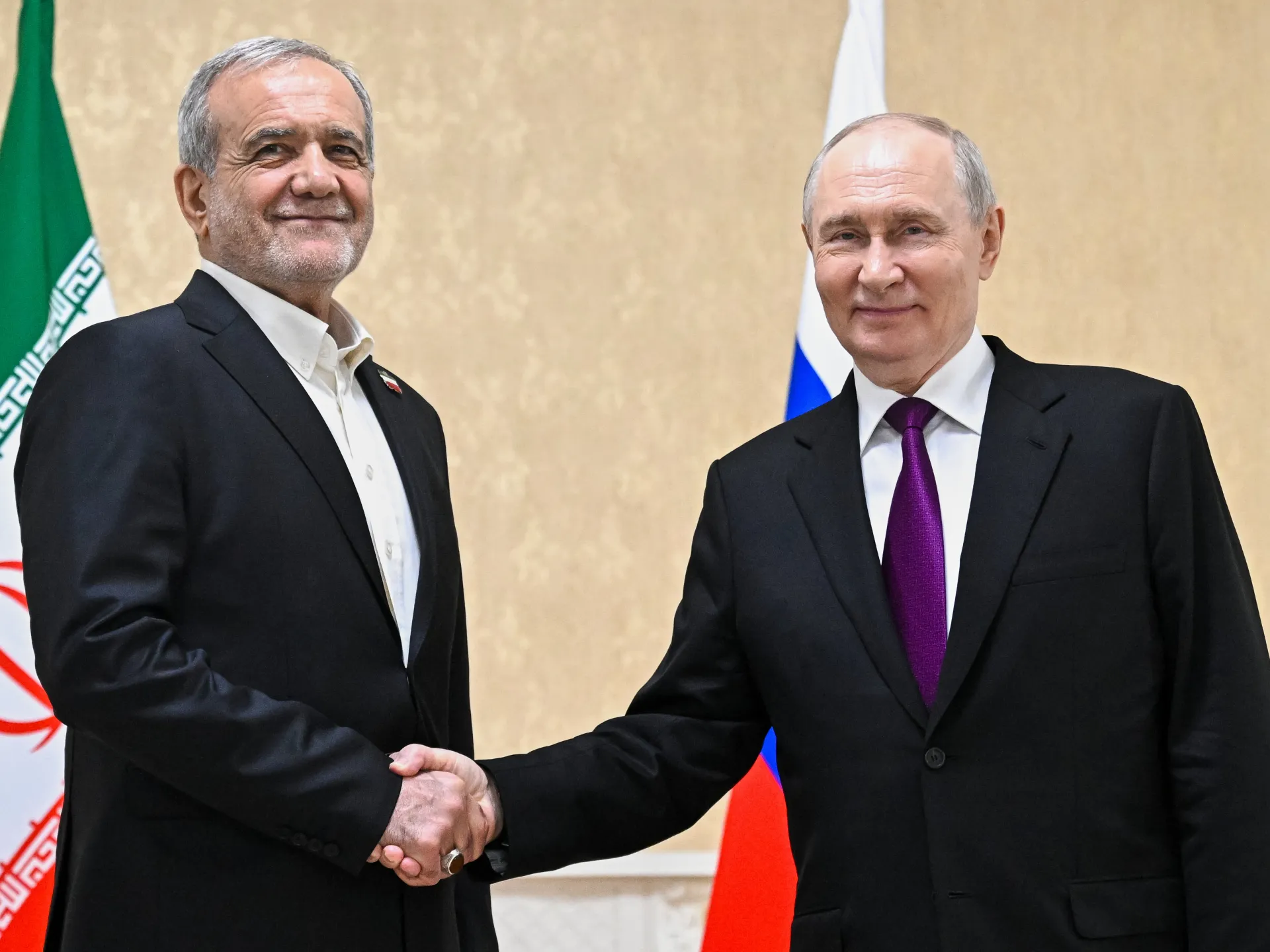
Russian President Vladimir Putin has told Iranian President Masoud Pezeshkian that Russia will “do everything” to help end the United States-led war on Iran, Russian news agencies reported.
The two leaders met in Turkmenistan on Thursday ahead of the summit of the Commonwealth of Independent States, a group of former Soviet nations.
Recommended Stories
list of 3 itemsend of list
“You know our position. On our part, we are ready to do everything we can to help you resolve this situation,” Interfax news agency said Putin told Pezeshkian.
“We know that Iran is making real efforts to end the conflict, which broke out through no fault of its own, no fault of Iran’s,” Putin said, according to Russian media.
Putin also noted what he called a “positive evolution” in Iran-Russia relations.
In a call on Wednesday, Putin told Pezeshkian that Moscow is prepared to mediate efforts to end the war in the Middle East, Iran’s IRNA news agency reported.
The two countries, which are under heavy Western sanctions, have reinforced diplomatic and military ties.
Last year, Moscow and Tehran signed a “comprehensive strategic partnership treaty” that covers areas from trade and military cooperation to science, culture and education.
Ukraine and Western countries have accused Iran of supplying Russia with Shahed drones and short-range missiles for use in the Ukraine war. Russia has also been accused of supplying data to Iran for its attacks on US targets in the Middle East.
The meeting came as Iran-US talks stand at an apparent impasse.
US President Donald Trump said on Thursday that the US will not launch an attack on Iran before the November 3 US midterm congressional elections, saying the two countries are holding “productive” talks about ending the ongoing war.
Diplomatic efforts to resolve Russia’s offensive in Ukraine also appear deadlocked, even as both sides intensify attacks.
Putin warned the West he would deploy nuclear weapons if necessary to defend the Russian Baltic exclave of Kaliningrad.
Published On 1 Oct 20261 Oct 2026
Russian President Vladimir Putin has ruled out a ceasefire on long-range strikes with Ukraine as Moscow steps up its campaign of aerial attacks on Kyiv.
“We are told: ‘Let them stop striking your refineries, and you will stop striking their ships.’ It is simply ridiculous,” Putin said on Thursday at the Valdai political forum in Moscow.
Recommended Stories
list of 3 itemsend of list
The remarks followed a meeting between United States President Donald Trump and Ukrainian President Volodymyr Zelenskyy in New York on September 22, when Zelenskyy said Kyiv was ready to cease strikes on Russian oil refineries and other energy facilities if Moscow also stopped its attacks on Ukrainian energy infrastructure.
Speaking at the forum of the Moscow-based think tank, Putin said Ukraine had “partially achieved its objectives” with these strikes, with attacks on Russian oil refineries having cost the country 1 percent of its gross domestic product (GDP), but added that Russia was now responding in kind.
Russia has ramped up long-range strikes, targeting Ukraine’s steel companies as well as supply chains, notably in the rail sector. Ukraine accuses Moscow of deliberately hitting civilian targets and keeping Kyiv on a near-constant state of alert as it braces for another tough winter.
A Russian drone struck a school in Kyiv on Thursday, according to city officials, as the Ukrainian capital endured relentless aerial attacks. No casualties were reported as children and staff at the school were in shelters when the drone hit.
Putin added that Russia would prefer to end the conflict in Ukraine through talks and wanted it to be a neutral country after the end of hostilities.
The nuclear option
He warned the West not to escalate the standoff over Ukraine by threatening the Russian exclave of Kaliningrad, which is wedged between Poland and Lithuania, and pledged to defend it with nuclear weapons if necessary.
“If it comes to a direct attack on the Russian Federation – in this case, we are referring to Kaliningrad, and perhaps other territories as well – the question of the Russian Federation deploying all the weapons at our country’s disposal will, of course, inevitably and immediately be on the agenda,” he said.
Putin’s comments followed a diplomatic note which NATO said this week it had received from Russia, warning the Western military alliance it would be ready to resort to nuclear weapons if NATO attempted to cut off Russia’s Baltic exclave.
Putin warned that cycles of escalation in international conflict could quickly lead to dangerous scenarios. “We must realise that the moment when nothing can be changed any longer may come very quickly and unexpectedly for everyone. The logic of escalating, increasingly harsh retaliatory measures leads to a fatal point of no return,” he said.
On the contrary, in the event of a “favourable scenario”, Putin said the assets of Western companies that Moscow had seized could potentially be returned. Putin last month ordered the seizure of businesses and assets of Swiss food giant Nestle, French retailer Auchan, the former Leroy Merlin DIY chain and German wholesaler and food retailer Metro.
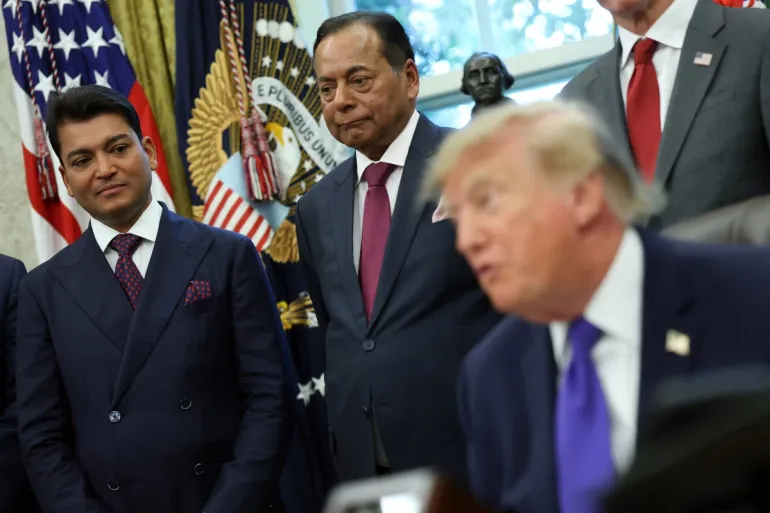
As US President Donald Trump announced a $15bn steel megaplant while seated at his Oval Office desk on Monday, he had a lineup of mostly US politicians standing behind him – from cabinet members to elected representatives from Iowa, where the mill is to be built. There was one exception: an Indian man with a receding hairline and a lilac pocket handkerchief, standing behind the US president’s right shoulder.
Ravi Ruia is a cofounder of the Essar Group, which owns Mesabi Metallics, the Minnesota-based firm that’s building the steel mill, which is expected to be the United States’s largest once it is complete. A decade earlier, in October 2016, his brother Shashi was in the photo frame with a different president during the signing of another major deal: Russian leader Vladimir Putin.
Steel and metallics aren’t Essar’s only association with minerals and natural resources. The conglomerate had been involved for years with oil, before it sold one of India’s largest private oil refineries to a Russian-led consortium in 2016 for nearly $13bn. Essar Oil was rebranded as Nayara Energy.
Today, Nayara Energy is half-owned by Russian gas major Rosneft, which is under heavy US and European sanctions over Moscow’s war on Ukraine. Nayara has also emerged as a supplier of petroleum products to Russia at a time when the country is facing a fuel crisis following multiple Ukrainian attacks on its oil and gas depots.
And as part of a 99-year deal, Nayara is continuing to use Essar’s branding in India, where the company runs thousands of petrol stations. Nayara is under European Union sanctions.
The White House is touting the Iowa steel project, unveiled just before the US midterm elections, as a major economic win for Americans, promising hundreds of jobs and billions of dollars in revenue. And there is no evidence that the steel project is in violation of any Russia-specific US sanctions.
But Trump’s announcement of a mega project with an Indian firm closely tied to Russian investments under Western sanctions underscores how the US has struggled to isolate Moscow economically despite an unprecedented economic pressure campaign.
And the timing of the steel mill announcement raises questions, because it comes days after Trump signed a law that empowers him to punish countries that buy Russian oil with up to 100 percent tariffs. India is Russia’s second-largest oil buyer. But the legacy Indian conglomerate that best epitomises the country’s links to Russian energy is now also behind the US’s biggest steel factory.
Rewant Ruia, left, chairman of Mesabi Metallics, and Ravi Ruia, centre, board member of Mesabi Metallics and director of Essar Capital, listen as US President Donald Trump delivers remarks in the Oval Office at the White House on September 28, 2026, in Washington, DC [Kevin Dietsch/Getty Images]
What’s the steel factory project about?
The new project would integrate its iron ore mining operations in Minnesota’s Mesabi Iron Range with the upcoming steel complex in Iowa.
The White House and the company’s announcements said that the Iowa steel plant is expected to create at least 1,750 permanent jobs – “while continuing to work with suppliers and businesses throughout Iowa and the Midwest” – and support up to 6,000 construction jobs.
Washington also noted that the mill will produce 7.5 million tonnes of steel per year in its first phase, expected to rise to 10 million tonnes. First steel production is expected in 2030.
The first phase of the project is expected to generate $95bn in total economic impact during construction and its first 10 years of operation, according to the White House.
Trump’s commerce secretary, Howard Lutnick, told the reporters that “these are your 232 tariffs, the steel tariffs at work.” He added: “Without those tariffs, this mine and steel plant doesn’t get built.”
Trump chipped in, too. “Soon after my inauguration, I imposed powerful 50 percent tariffs on all foreign steel, and now our steel industry is roaring back to life,” Trump said. “Everyone’s building their plant here because they don’t want to pay tariffs.”
But the steel project is also evidence of how countries and companies have skirted US economic pressure – and how it gives them leverage to continue to do so.
An Essar petrol station with pumps showing no fuel in Stanley, County Durham, UK, September 27, 2021 [Lee Smith/Reuters]
What are Essar’s ties to Russia?
Essar Oil, the group’s energy arm, began refining crude in 2008 at its refinery in Vadinar on the coast of the western Indian state of Gujarat.
But by 2016, the company was in deep debt, listed as a defaulter by the Reserve Bank of India, the country’s central bank, and desperately looking for a buyer who would take over its oil operations. The timing was opportune. President Putin in Russia was at the time trying to get Rosneft, his country’s energy giant, to offload some stakes in exchange for foreign capital.
Indian Prime Minister Narendra Modi played matchmaker, helping stitch together a series of deals between 2014 and 2016 that helped Rosneft and Essar. First, Indian public sector oil majors bought stakes in Rosneft, giving it the cash it needed. Rosneft, in turn, joined hands with other investors to buy the Vadinar refinery, freeing Essar from its debts.
Essar Oil became Nayara Energy – a company in which Rosneft owns a 49 percent stake, and United Capital Partners, a Russian asset management company, owns another 49 percent. The buyers paid Essar $12.9bn for the deal. As part of the agreement, Nayara got to use Essar’s branding – including on thousands of petrol stations across India – for 99 years.
Logo of Nayara is seen at its fuel station on the outskirts of Ahmedabad, India, November 16, 2022 [Amit Dave/Reuters]
Is Nayara under Western sanctions?
Yes. The European Union imposed sanctions on Nayara in July last year as part of the broader 18th package of sanctions against Russian oil.
The sanctions banned the import of petroleum products processed using Russian crude oil and restricted the refinery’s access to EU shipping insurance, as well as financial and other services.
Nayara’s Vadinar refinery in western India has been processing only Russian oil since other suppliers backed out following the sanctions. Since then, Nayara has relied on international traders to import crude and export refined fuels.
In July this year, Nayara Energy sold petroleum to Russia as Ukrainian attacks targeted oil refineries across the country, triggering a fuel crisis.
In recent months, Ukrainian forces have targeted Russian oil facilities, setting them ablaze and causing long lines for fuel across the country, including in the capital, Moscow. The fuel crisis, unprecedented for Russia, a country that is one of the world’s biggest energy producers, has led to rationing in many regions.
These Russian links have brought Nayara Energy under wider scrutiny, prompting companies, including SAP, to suspend services to the refiner, citing sanctions and obligations under EU law.
Nayara challenged the move in the Delhi High Court, which ordered SAP India to restore its services earlier this month.
Are Essar or the steel plant violating any sanctions?
While Nayara is under EU sanctions, Essar does not face any US or EU sanctions.
In October 2016, after Essar struck its deal with Rosneft and United Capital Partners to sell the Vadinar refinery, the US – at the time under the Barack Obama administration – said that the agreement was not in violation of any sanctions.
“I don’t think we see any violation of any US-EU sanctions stemming from this deal,” State Department spokesperson Mark Toner said at the time. Essar also said that the deal was compliant with US sanctions.
There is no evidence of any sanctions breach in Essar’s investment in Mesabi, or in the planned investment to set up the steel factory in Iowa.
But Essar’s relations with Russia have nevertheless attracted scrutiny, including in the United Kingdom, where the Ruia brothers have long had major investments.
At the time of the sale of the Vadinar refinery to Russian buyers, the Russian bank VTB also gave Essar a $3.9bn loan for debt reconstruction.
The bank was hit by major US and EU sanctions in February 2022, right after Russia’s full-fledged invasion of Ukraine. Essar, reporting published in April 2026 by The Guardian and investigative journalism platform SourceMaterial, showed, moved the VTB loan to Mauritius, a tax haven, allegedly to avoid the sanctions. Essar owns the Stanlow oil refinery in the UK.
US President Donald Trump waves as he walks to board Marine One as he departs from the South Lawn of the White House in Washington, DC, on September 26, 2026 [AFP]
Why is the timing of the steel plant announcement significant?
Trump’s Republican Party is heading for crucial midterm congressional elections in November, while his approval rating has been plumbing all-time lows in the face of voter concerns about inflation, the cost of living, and the war on Iran.
In his second term, Trump has made tariffs and a revival of US manufacturing a cornerstone of his economic vision, claiming that higher barriers to imports will drive investment back to the US.
Moreover, Washington introduced legislation that would allow the president to impose tariffs of up to 100 percent on imports from countries that continue economic engagement with Russia or Iran, aiming to put pressure on countries that continue buying Russian energy.
New Delhi is particularly exposed since it became one of the largest buyers of discounted Russian crude after the invasion of Ukraine in 2022. Trump imposed an additional 25 percent tariff on Indian imports in 2025 over the issue, before removing it in February 2026 after India committed to stop buying Russian crude.
Russia has remained India’s largest source of crude, although purchases have declined as the threat of US penalties has grown. The news agency Reuters reported that India imported approximately 2.1 million barrels per day of Russian crude in August.
There is also a recent parallel to underscore the incentives for investment in Trump’s US. In May this year, Washington moved to dismiss the criminal fraud and bribery charges against Indian billionaire Gautam Adani, while his lawyers had told the Justice Department that Adani was prepared to invest $10bn in the United States. A federal judge subsequently dismissed the criminal case in August.
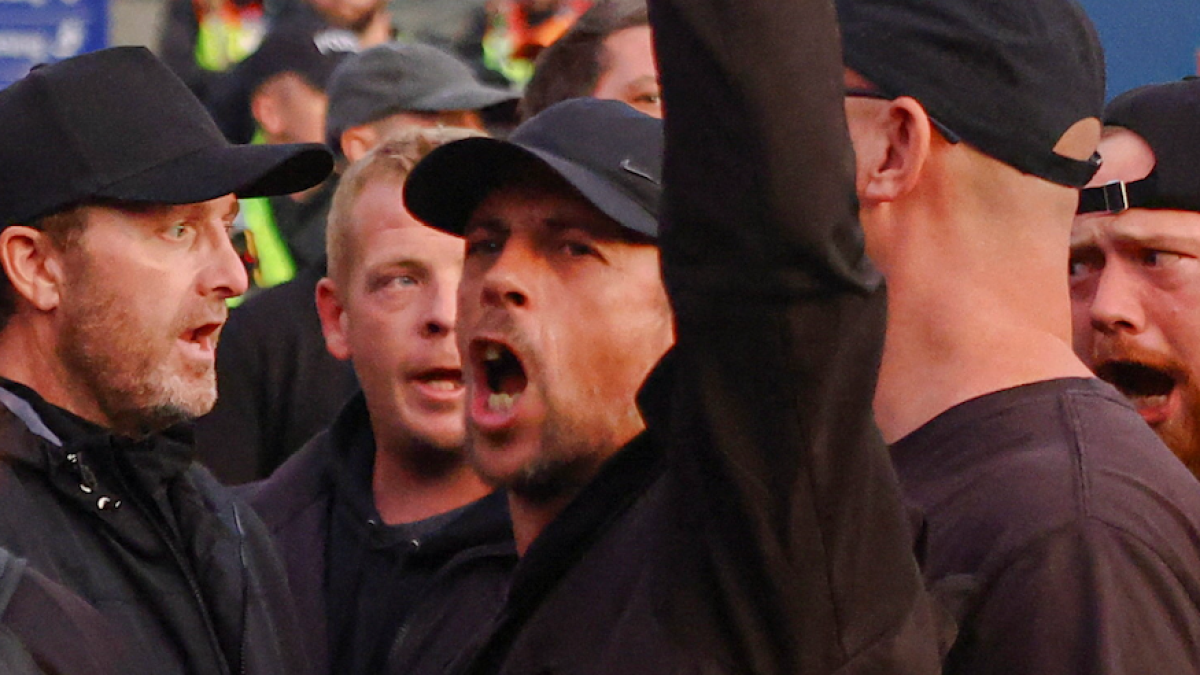
Protesters gathered outside a police station in southern England after far-right activist Daniel Thomas, known as Danny Tommo, was arrested over a video appearing to show him slashing a migrant boat. He has since pleaded not guilty to two charges.
US Secretary of State Marco Rubio says summit would be opportunity for Russian president to engage with global leaders.
Published On 23 Sep 202623 Sep 2026
United States President Donald Trump has invited his Russian counterpart Vladimir Putin to the upcoming G20 summit in Miami, Florida, the latest step meant to build ties between the two countries amid Russia’s ongoing invasion of Ukraine.
US Secretary of State Marco Rubio told reporters on Wednesday that Putin had been invited to travel to the summit in December, saying that he hopes the Russian leader will take the opportunity to meet with global leaders.
Recommended Stories
list of 3 itemsend of list
“In order to solve problems, you have to meet with the people that you disagree with or the people that you might have some issues with,” Rubio said. “So we’ve invited President Putin to the G20.”
“We think it’s an opportunity for him to engage not just with the president, but with other world leaders. We hope that’s an invitation he’ll accept,” Rubio said.
Rubio’s remarks followed a meeting with Russian Foreign Minister Sergey Lavrov on the sidelines of the United Nations General Assembly (UNGA), currently convening in New York City.
During a speech to the UNGA on Wednesday, Ukrainian President Volodymyr Zelenskyy called on the world to place more financial pressure on Russia.
“When someone gives Russia more money through trade, they give this war more time. And that is exactly why we insist on limiting trade with the aggressor, and why we are burning Russia’s revenues ourselves,” he said, adding that he is sceptical that Russia is sincerely interested in taking steps that could end the war.
Trump has searched in vain for an agreement between Russia and Ukraine to end the war sparked by Russia’s full-scale invasion in 2022.
Ukrainian officials have called for a pause on strikes targeting energy infrastructure and for steps to facilitate shipping for the Black Sea. Russia has given little sign that it is interested in such an arrangement.
“We are not going to have a pause in our special military operation,” Lavrov told the UN Security Council on Wednesday, accusing Europe of wanting to pause the fighting in order to “pump the Kyiv regime with weapons”.
Rubio, however, continued to express optimism about the possibility of a temporary ceasefire.
“I think both sides have expressed an interest in some limited ceasefire that involves grain and energy,” he said. “Obviously, you know, that won’t be easy, either.”
Zelenskyy told reporters that Kyiv remains open to a maritime truce in the Black Sea.
“We are waiting for Russia’s response,” he said, adding that his country is ready “to ensure safe shipping and food security in the Black Sea if Russia is ready to take real steps towards de-escalation, too”.
“We have to start somewhere,” he added.
The International Criminal Court (ICC) issued an arrest warrant for Putin in 2023 for the alleged war crime of deportation of Ukrainian children to Russian territory. The arrest warrant obliges member states to arrest Putin if he travels to their countries, but the court has no enforcement mechanism for this. The US is not a member of the ICC.
Victory of United Russia party strengthens Putin’s hand even as the war with Ukraine grows more unpopular.
President Vladimir Putin’s United Russia party has won a record supermajority in tightly orchestrated parliamentary polls that excluded virtually any genuine opposition, near complete official results show.
With over 58 percent of votes secured, United Russia, which has dominated Russian politics for 25 years, is on track to win more than three quarters of the seats in the lower house, the State Duma, according to the results announced on Monday after three days of voting that ended on Sunday.
Recommended Stories
list of 4 itemsend of list
The polls were the first parliamentary vote since Russian forces invaded Ukraine in 2022 and the first to include residents of four Ukrainian regions that were seized and illegally annexed by Moscow later that year.
Reporting from Moscow, Al Jazeera’s Dmitry Medvedenko said the results, along with a high voter turnout of almost 60 percent, “is likely to be seen by Moscow as emboldening, as public support for what it is doing, especially for what it’s doing in Ukraine for the continuation of the war”.
Ella Pamfilova, chair of the Central Electoral Commission, said Yabloko, the only registered anti-war party in Russia, did not win any seats at the national level. It had been removed from the ballot last month by Russia’s Supreme Court and only had a few dozen candidates in single-seat races.
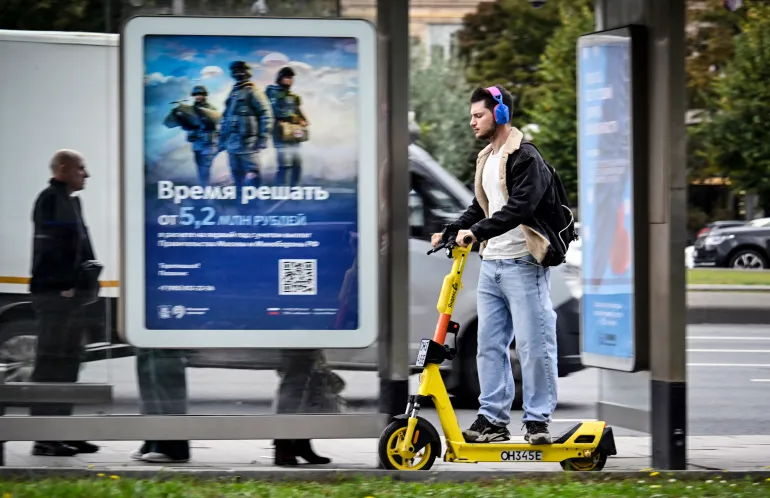
A billboard in western Moscow promoting contract army service and reading ‘Time to Decide’, September 21, 2026 [AFP]
Yabloko did enter the regional parliament in western Russia’s Novgorod region. It said on social media that it received about 12,000 votes – just over six percent of votes and enough to enter the regional legislature.
Yabloko and the Communist Party, which has criticised some aspects of government policy but carefully avoided any criticism of Putin, said many of their observers were turned away from polling stations.
The Communists made it into parliament with 13.8 percent of the vote, securing 40 Duma seats. The nationalist LDPR party won 25 seats and the New People party 20.
Russia did not invite observers from the Organization for Security and Cooperation in Europe (OSCE), which the Foreign Ministry has accused of “double standards” for its criticism of the country. OSCE Parliamentary Assembly President Pere Joan Pons said the decision to exclude observers violated Russia’s commitments as a member.
‘Surprise to nobody’
Many Russians appeared unsurprised by the poll results.
“In the morning, I saw that United Russia was winning. It probably comes as a surprise to nobody,” said Moscow resident Tatyana.
Asked what she would like to change, she said: “Well, I guess everyone knows the most acute thing – the conflict in Ukraine. I’d like to see it end sooner, with peaceful methods if possible”.
The continuation of the war risks entrenching policies, which are increasingly affecting average Russians and the parliamentary supermajority may struggle to change the dynamic.
“Putin, of course, will interpret United Russia’s results as confirmation of the (public) support of the war, even though it is not the case: The overall demand for ending the war is growing,” said Tatyana Stanovaya of the Carnegie Russia Eurasia Center in an online commentary.
“The main question is: What now? There are great concerns about mobilisation, new repressions, harsher measures and escalation,” she wrote.
Western criticism
The EU’s top diplomat Kaja Kallas dismissed Russia’s “so-called” election.
“The Kremlin silenced dissent, barred the only registered party that opposed its war in Ukraine and shut out international election monitors. The veneer of democracy is all that remains in Russia,” Kallas said.
In a joint statement, five countries, including Australia, Britain and Canada, condemned Russia’s “sham” parliamentary elections in areas of occupied Ukraine, branding them “part of a wider system of occupation”.
Moscow mayor reports intercepting 1,600 drones during ‘unprecedented’ attack, accusing Ukraine of election interference.
Published On 20 Sep 202620 Sep 2026
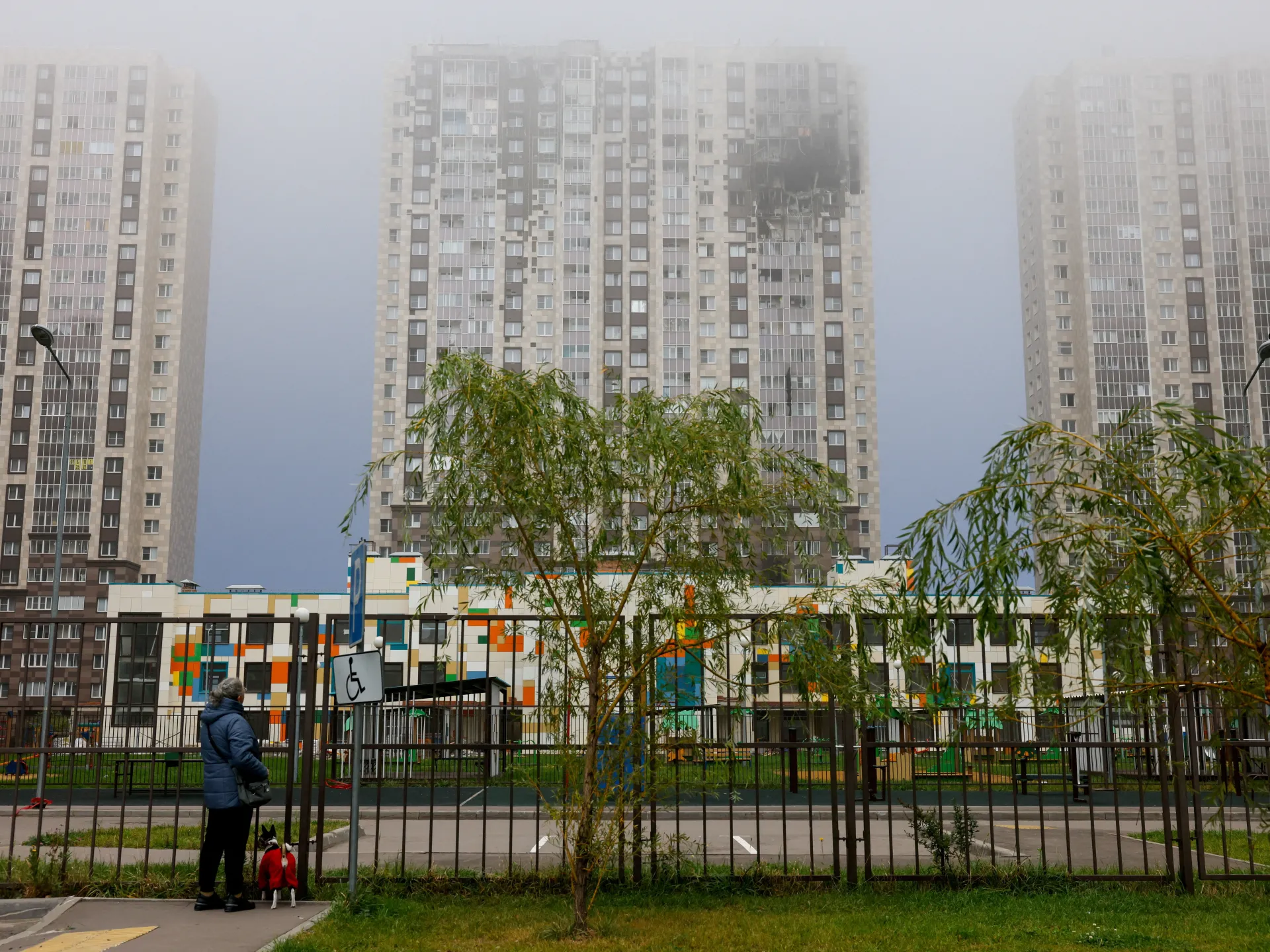
At least two people have been killed and a major refinery has been damaged as hundreds of drones targeted the Russian capital, Moscow, and its surrounding region on the final day of the country’s parliamentary elections.
Moscow’s Mayor Sergei Sobyanin said on Sunday that more than 1,600 drones had been intercepted and shot down, 450 of which were heading for Moscow.
Recommended Stories
list of 3 itemsend of list
He also accused Ukraine of attempting to interfere with a tightly controlled three-day election that is set to tighten President Vladimir Putin’s 26-year grip on power.
“The unprecedented attack was clearly planned with the aim of disrupting the elections. The enemy did not succeed,” he said on Telegram.
Moscow regional Governor Andrey Vorobyov said on social media that a 44-year-old woman and an elderly man were killed in two separate locations.
A fire triggered by a drone crashing into a 21-storey building forced the evacuation of 400 people, Vorobyov said.
The strikes come as Kyiv has intensified its long-range drone campaign against Russia, particularly targeting energy infrastructure to cut off a vital source of Kremlin revenue used to fund its war effort, now in its fifth year.
“A facility on the territory of the Moscow Oil Refinery has been damaged,” Sobyanin added, saying that no casualties were reported so far and emergency services were on the scene.
The major refinery has already been hit by Ukrainian strikes in recent months.
The latest strike follows claims by US President Donald Trump on Monday that Ukraine and Russia had agreed not to target each other’s energy facilities.
It also comes as Russians vote in the country’s first parliamentary elections since Moscow sent troops into Ukraine in February 2022, igniting a war that has killed hundreds of thousands of people. Moscow has also organised voting in parts of Ukraine that it has seized in the four-and-a-half-year war.
Meanwhile, Ukraine’s Air Force Command reported that Russia launched 138 drones of various types across the country overnight, according to the Interfax-Ukraine news agency.
It added that air defences managed to shoot down or neutralise 101 of them.
Acclaimed Russian film director who won 2026 Grand Prix award at Cannes, has been critical of the war in Ukraine.
Published On 18 Sep 202618 Sep 2026
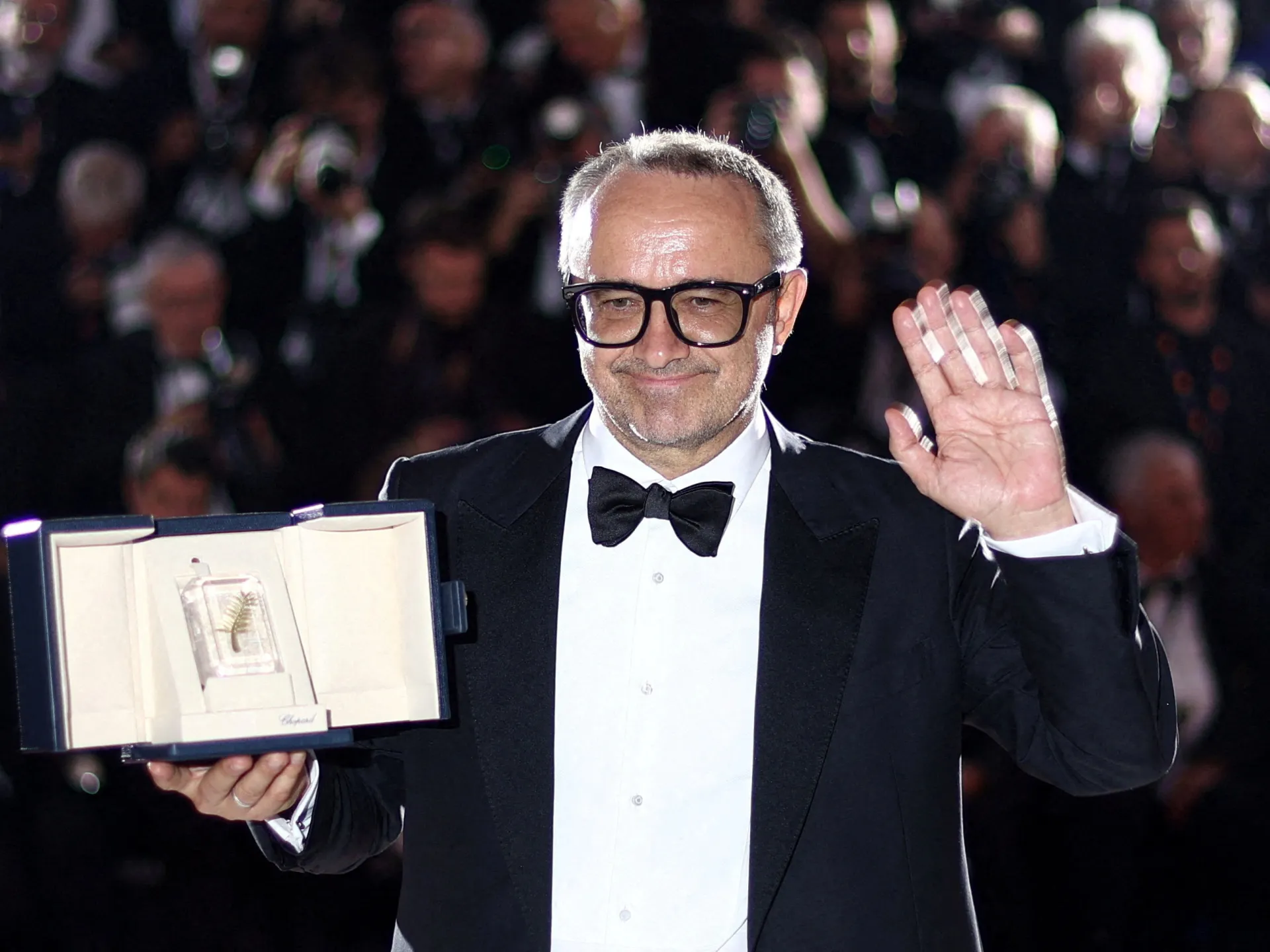
The winner of a prestigious Cannes Film Festival award has been declared a foreign agent by Russian authorities for his criticism of Moscow’s war in Ukraine.
Acclaimed Russian film director Andrey Zvyagintsev was designated a “foreign agent” by the Kremlin on Friday, according to state news agency TASS.
Recommended Stories
list of 3 itemsend of list
Zvyagintsev won the 2026 Grand Prix at the Cannes Film Festival for, Minotaur, a film depicting a Russian businessman who is forced to decide which of his employees should be mobilised to go and fight in Ukraine.
“Millions of people on both sides of the front line dream of only one thing: for the massacres to stop,” Zvyagintsev said in his acceptance speech, adding that Russian President Vladimir Putin was the only person capable of ending the war.
Moscow has kept casualty numbers from the fighting in Ukraine heavily restricted and has not provided timely or complete public updates, but estimates of Russian soldiers killed in the four-year war range from anywhere from 200,000 to half a million.
Russia’s Ministry of Justice on Friday accused Zvyagintsev of disseminating “false information about decisions taken by the public authorities of the Russian Federation and the policies they pursue”.
“He interacted with foreign agents and resides outside the Russian Federation,” it said.
The 62-year-old director, who has lived outside Russia since the COVID pandemic, is known for a series of other films including, The Return, The Banishment, and, Leviathan, a bleak portrayal of life in rural Russia.
People listed as foreign agents are subjected to onerous bureaucratic requirements and restrictions on their income in Russia.
They are barred from holding public office and forced to register their activities with the authorities.
They also have to add warnings on everything they publish, including on social media, that the content was produced by a foreign agent.
The label adds connotations of espionage to numerous people, including public figures, whom it deems to be engaging in anti-Russian activity with support from abroad.
Previously, writer Boris Akunin and rock musician Boris Grebenshchikov have been labelled as foreign agents by Moscow.
Russians head to the polls from Friday to Sunday to elect members of the State Duma, the lower house of Russia’s parliament, in the first parliamentary election to be held since the country launched its full-scale invasion of Ukraine in 2022.
The vote comes as Russians face a slowing economy as well as Ukrainian drone strikes on refineries and warehouses far from the front line.
United Russia, the governing party that backs President Vladimir Putin, is expected to keep its dominant position.
The authorities are presenting the election as a chance for voters to have their say. Critics argue that with no genuine opposition on the ballot, the result is largely settled in advance.
So why are the elections worth watching? Here is what you need to know:
How do Russia’s elections work?
Starting Friday and lasting through Sunday, Russians will elect members of the lower house, the State Duma.
They will also cast ballots in local elections.
Voters in 11 regions will elect their governors, and 39 regions will elect members of regional legislatures.
Voting is spread over three days to boost turnout among the 111 million eligible voters and includes areas Russia occupies in Ukraine. Electronic voting is allowed.
Half of the Duma’s 450 seats are filled by party lists and the other half are contested in single-ballot races.
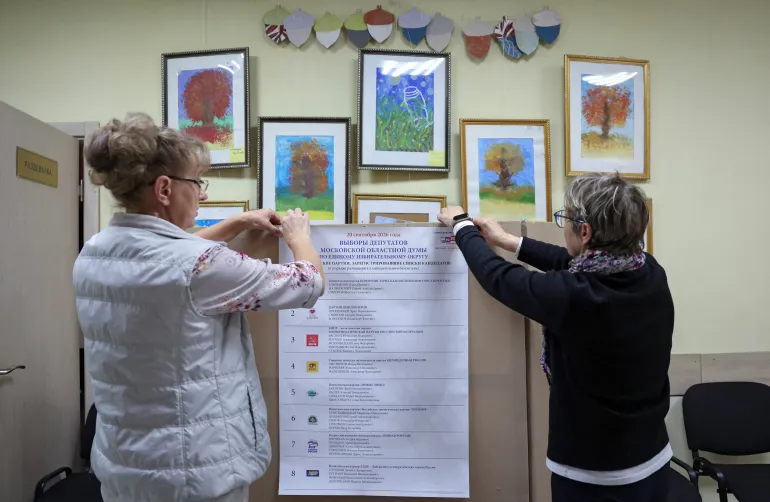
Election officials hang a list of political parties at a polling station before the parliamentary elections in Podolsk, Moscow region [Ramil Sitdikov/Reuters]
What is United Russia?
Russia’s governing party, formed in 2001 from a merger of pro-Kremlin parties, has backed Putin and dominated the parliament ever since.
United Russia won more than two-thirds of the Duma’s seats in the 2021 election. It is again poised to dominate the body.
The party’s list is led by political heavyweights: Foreign Minister Sergey Lavrov, Russia’s top diplomat for 22 years, and Sergei Sobyanin, Moscow’s powerful mayor.
In an apparent bid to add fresh faces to what is widely seen as a party of bureaucrats, its third-highest-ranking official is war correspondent Yevgeny Poddubny, who was badly wounded by a Ukrainian drone.
Members of United Russia have pledged to back the war effort and Putin’s maximalist goals in what the Kremlin calls the “special military operation” in Ukraine.
Deputy Chairman of the Russian Security Council and leader of the United Russia political party Dmitry Medvedev [Ekaterina Shtukina/Sputnik/Government press office/EPA]
Who else is running in Russia’s elections?
Alongside United Russia, other “systemic opposition” parties that vote in sync with the government on key issues are also expected to remain.
The liberal Yabloko Party, the only registered political party that opposes the war, was initially on the ballot, but the Supreme Court ordered it removed in August.
It cited, among other reasons, that the antiwar stance was akin to seeking the violation of Russia’s territorial integrity. Yabloko now runs only single-ballot races.
The Communist Party has been a leading force in the Federal Assembly since the 1990s, led for more than three decades by 82-year-old Gennady Zyuganov, a former Soviet official.
Throughout Putin’s rule of more than a quarter-century, the Communists have criticised some aspects of government policy but carefully avoided any criticism of him. They steadfastly support the war in Ukraine.
Alexander Bratersky, a political analyst and independent journalist, told Al Jazeera that the race for second place is worth watching.
If the Communist Party nab second, it would “suggest voters are angry about economic hardship and falling living standards”.
Russian Communist Party leader Gennady Zyuganov, centre, and Deputy Chairman Dmitry Novikov, second right, take part at the ‘Reds in the City’ all-Russian patriotic rally [Maxim Shipenkov/EPA]
The Liberal Democratic Party, an ultranationalist force that has been a significant presence in the legislature since the early 1990s, will also likely retain some influence in the Duma.
Like the Communists, it staunchly supports the war and boasts of having multiple veterans as members.
Other smaller parties round out the ballot.
The party known as A Just Russia has been on Russia’s political scene for 20 years. A social-democratic party, it competes with the Communists for older and middle-aged voters nostalgic for the Soviet past, and it supports the war in Ukraine.
The New People Party was founded shortly before the last parliamentary election in 2021, seeking to position itself as a liberal voice representing younger voters and technocrats. It won just more than 5 percent of the vote, allowing it to form a small faction.
Bratersky described the party as “a liberal-leaning party backed by some Kremlin people who are more technocratic and more pro-peace”.
He said it appeals to the “middle-class audience”, and after the Kremlin banned Yabloko, it has been viewed as its substitute.
“So, if they come third with a good number of votes, this is a sign that those who are antiwar used them as their legal avatar,” he said.
Other parties seeking seats include Communists of Russia, a small rival of the main Communist Party; the Party of Pensioners; the Green Party; the Party of Direct Democracy; and the Motherland Party.
A candidate for Russia’s liberal Yabloko party running in a single-mandate constituency in the upcoming parliamentary election, hands out flyers to passers-by on a street in Moscow, Russia [File: Yulia Morozova/Reuters]
Why do the elections matter to the Kremlin?
While these elections may seem routine, the fact that they are the first since Russia’s full-scale invasion of Ukraine is what makes them important, Bratersky told Al Jazeera.
He said that Putin has linked the elections to support for the war: Endorsing United Russia at its party congress in August, Putin said the party’s duty was “to do everything for victory” in the war in Ukraine.
“This shows that the Kremlin is a bit worried since the elections are the only legal way to show disrespect for the Kremlin,” Bratersky said. “Even Putin’s core fans hate United Russia as a corrupt force.”
How have past elections gone?
Since Putin first came to power in 2000, United Russia has won every Duma election, usually by a wide margin.
The results have repeatedly been disputed.
In 2011, allegations of vote-rigging set off the largest street protests of Putin’s rule.
After the 2021 vote, independent monitors and statisticians said the party’s real support was far lower than the official count.
The authorities have rejected claims of widespread fraud. Opposition parties and critics of the war have increasingly been kept off the ballot.
Russians head to the polls for the first time since the Russia-Ukraine war began in 2022. United Russia has been the governing party for over two decades, backed by President Vladimir Putin. Do other parties pose a challenge? Al Jazeera’s Dmitry Medvedenko reports from Moscow.



![US President Donald Trump waves as he walks to board Marine One as he departs from the South Lawn of the White House in Washington, DC, on September 26, 2026 [AFP]](https://i0.wp.com/occasionaldigest.com/wp-content/uploads/2026/09/1790693783_407_afp_6ab7d4f7ee67-1790432503.jpg?w=640&ssl=1)