visited

I visited posh seaside town with famous bakery and iconic 700-year-old landmark

It offers world-famous sporting and medieval history, amazing food, and charming independent shops perfect for an Easter weekend staycation

The Easter bank holiday weekend is nearly upon us, and if you’ve managed to get a few days off work and want to make the most of it, a staycation is ideal.

And if you’re after somewhere boasting exceptional food, stunning scenery, rich heritage and an truly charming atmosphere, there’s one destination that’s worth a visit.

Home to one of Britain’s oldest universities, St Andrews on Scotland’s east coast is genuinely one-of-a-kind. Where else could you stumble upon a 170 year old pub just moments away from an Oliver Bonas? It’s a place I’ve returned to so many times, but every visit reveals something different to explore.

On a recent weekend getaway to Lower Largo, a small village in Fife, we decided to spend the afternoon exploring St Andrews. From Edinburgh it’s roughly an hour and a half by car, while from Glasgow it takes about an hour and three quarters.

Whether you’re passionate about the sport or not, most people probably know that St Andrews is best known for its golfing heritage.

The Old Course, one of the world’s most famous courses, features an iconic structure that you have to get a photo with, regardless of how often you’ve visited.

The Swilcan Bridge, built over 700 years ago, was our first stop on this trip. Positioned on the course’s 18th hole, strolling onto the green feels surreal, but it offers the perfect photography moment.

You’ll inevitably encounter fellow tourists there, so you may need to queue briefly for your picture, but it’s worthwhile. Conveniently, there’s a fantastic pub named the Jigger Inn just a two-minute stroll away, which was our next stop for some food.

With roots dating back to the 1850s, the Jigger Inn is a cosy, inviting pub with crackling fires that overlooks the golf course. There’s an excellent array of beverages at the bar, or you can settle down and order food, which is exactly what we did.

You can’t convince me there’s a better combination than a caesar salad, chips and wine, and the Jigger Inn did all of these perfectly.

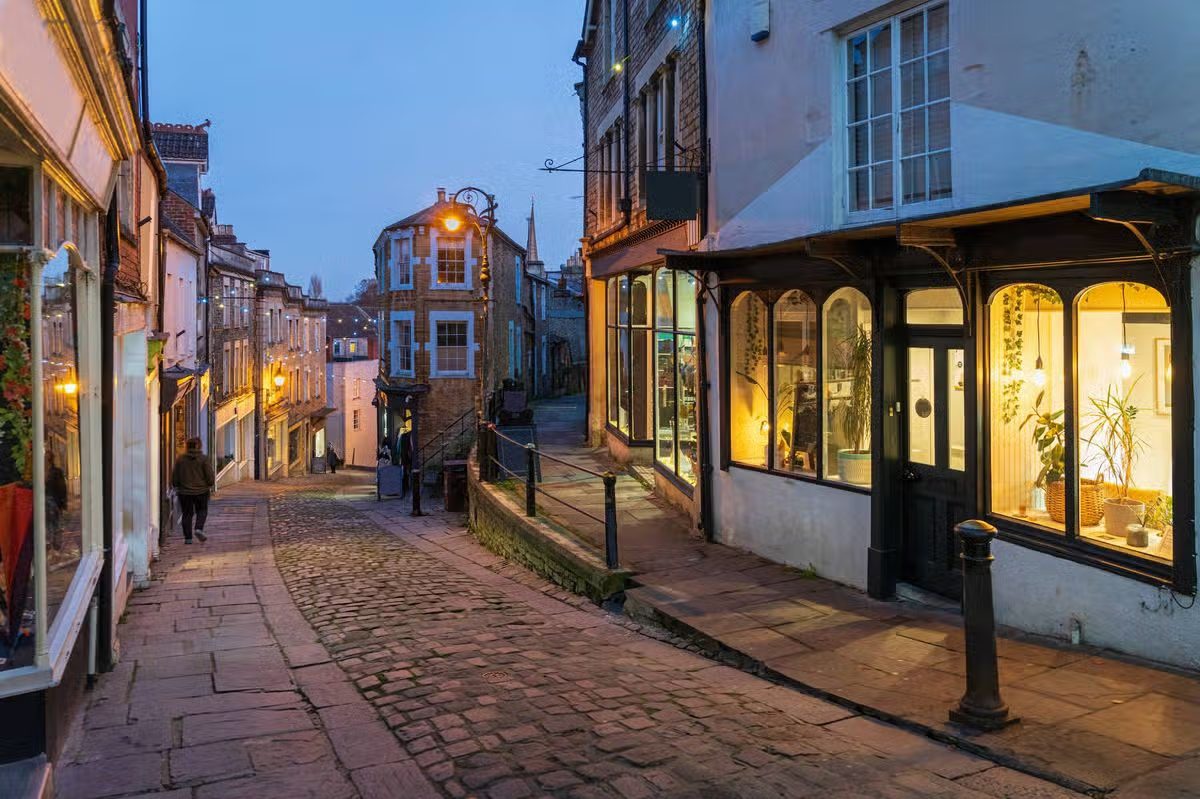
Well nourished, it was then time to venture into the actual town itself. It’s not the biggest, and most of the shops and attractions are located on one of about three main streets, but you could easily wander around for hours without getting bored.

St Andrews is a truly unique place with distinct medieval influences that remain very apparent as you wander around the town. The university began teaching in 1413, which is utterly mind-boggling to think about, especially as it’s still a flourishing educational institution today.

There’s no denying that it’s an incredibly affluent area. Students from across the globe flock here to study, and the multiculturalism only enhances its appeal. It’s also famously the location where William and Catherine met and sparked their romance.

One of the main attractions is the remains of St Andrews Cathedral, situated near the seafront. Constructed way back in 1158, it was formerly Scotland’s largest church. Little remains of the original structure today, and it has since been converted into a graveyard.

Unfortunately, protective barriers surrounded numerous graves due to possible safety concerns, but it’s still a haunting yet fascinating spot to wander through.

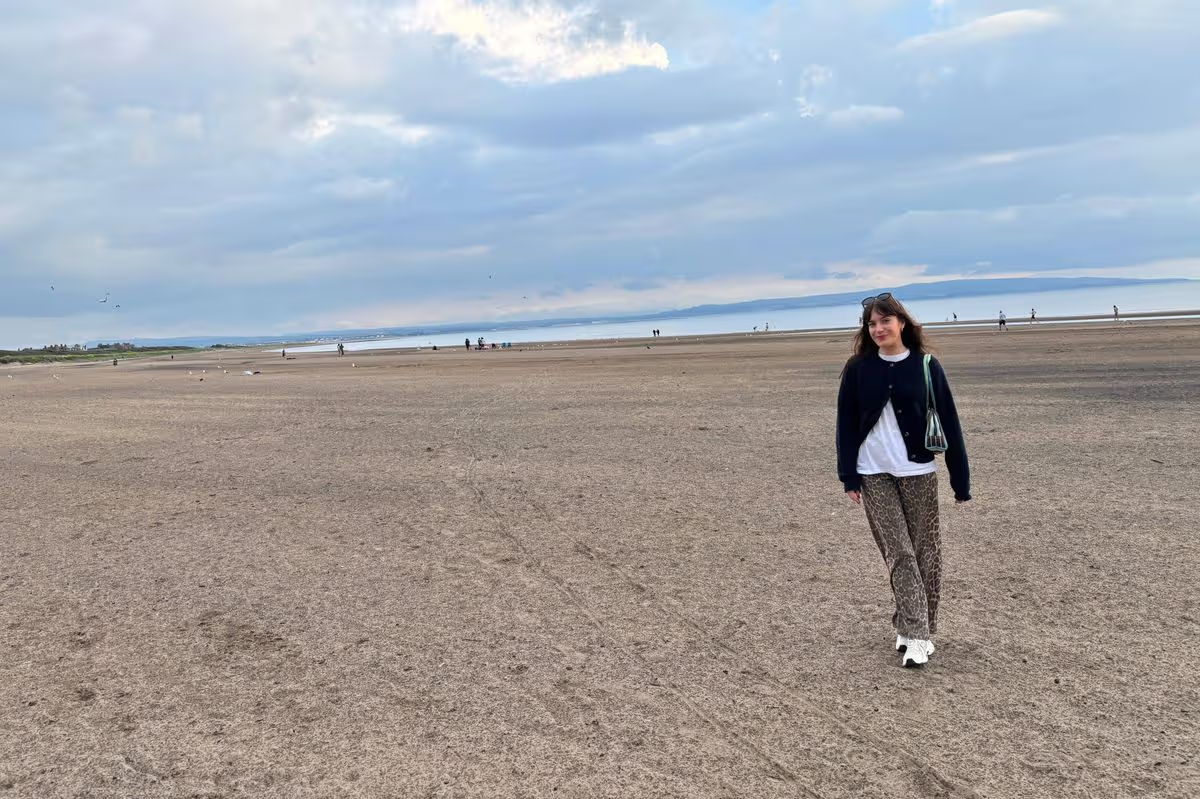
There’s so much going on in St Andrews that you can easily forget that the sea is right there. Just past the Old Course sits the West Sands Beach, which famously appeared in that memorable opening sequence of Chariots of Fire.

Had the weather been warmer, this would have been an ideal spot for a walk, but the fierce wind was battering us from all directions so we opted to retreat to the shelter of the town centre.

St. Andrews boasts an excellent range of shops, from high street names like H&M and Jo Malone to unique boutiques and retailers you won’t find elsewhere. As a passionate book lover, I was eager to check out Topping and Company, a well-known family-run bookshop with a handful of branches throughout the UK.

The team were welcoming and helpful, and the range of titles available was outstanding. An entire display of signed first editions greeted visitors at the shop entrance, and the bookcases appeared to extend upwards and deeper into the shop endlessly.

It’s the sort of place where you could easily spend hours browsing – and rack up quite a bill too. Luckily, I succeeded in limiting myself to just one book, which demonstrated admirable self-control on my part.

There was just one final destination to visit on our trip, and if you like a sweet treat, you’ll want to hear about it.

You can’t visit St Andrews without stopping at Fisher and Donaldson. Founded in Fife in 1919, this family bakery is known for one thing and one thing only – its fudge doughnuts.

Widely regarded as the very best in Scotland, these indulgent delights are filled with fresh custard and topped with a delicious fudge icing.

Naturally there are other cakes and biscuits available, but the fudge doughnut honestly beats everything else on offer. We brought some home to enjoy with a coffee later on, and it’s fair to say they didn’t last very long.

St Andrews is just a wonderful place to spend the day or even the weekend if you prefer taking things at a slightly more relaxed pace. It’s brilliant regardless of the weather, but I can’t wait to return in the summer when it’s a little warmer.

Source link

‘I visited beautiful mountain village that pays you £24k to move in but noticed catch’

The picturesque village, with its postcard-worthy mountain views, rolling hills, and charming houses, may seem like a dream, but anyone hoping to land the cash incentive should be aware of a major catch

A travel vlogger who visited a picturesque European village offering people £24,000 to relocate there has highlighted a significant drawback. Ben Morris travelled to the Swiss Alps to explore a location faced with declining population numbers, which has introduced a financial incentive for anyone willing to make the village their permanent home.

Tucked away in southwestern Switzerland in the canton of Valais, the picture-perfect village of Albinen appears straight out of a postcard, boasting breathtaking mountain vistas, undulating hills, and quaint houses set against a lush green backdrop.

With a reported population of just 262 residents, Albinen’s inhabitants voted to enact a residency scheme offering CHF 25,000 (approximately £24,000 at the time of writing) to those prepared to relocate to the mountains, the BBC reports.

Ben was evidently impressed during his journey to the village by car, describing the scenery as “incredible” whilst driving in. Upon his arrival, he observed the village was “dead silent”, but as he wandered the narrow lanes and soaked up the panoramic views, he was blown away.

In the video, shared on his eponymous YouTube channel, he said: “I actually wasn’t going to come to this town. I just felt so tired and miserable this morning. But just being able to sit here right now and take in this view. It’s worth this alone.”

It appeared baffling that somewhere so stunning would need to provide financial incentives, but he subsequently highlighted the snag: relocating to Albinen comes with a set of requirements that must be adhered to.

He said: “I know what you’re all thinking. This village seems amazing. How do you sign up to receive your money? There is, unfortunately, a few requirements. That’s what makes it slightly less appealing.”

Ben continued: “Here are the requirements for moving to Albinen and getting your money. It’s 25,000 Swiss francs, which is actually a lot more than $25,000.

“You need to purchase, build, or substantially renovate a primary home in Albinen with a minimum value of 200,000 Swiss francs. This home has to be a main residence. It can’t be a holiday home. This one is pretty crazy as well.

“You have to commit to living in the village for at least 10 years. This one’s probably going to let down the majority of you guys watching. You must either be a Swiss citizen or hold a Swiss C permit for permanent residence.”

A seemingly deflated Ben added that once you learn these details, you realise it’s “not as attractive” as it first seemed. According to House Beautiful, you will also need to be under 45.

It explained that these stipulations, as outlined in the 2023 housing regulations, aim to “promote the retention and permanent residence of young people and families in the municipality of Albinen”.

Source link

I visited UK’s number one seaside town – it didn’t matter it was half shut

This seaside town has been named the best in the country and has a resort pedigree that stretches back well over 150 years, but it also has plenty of modern day challenges

Blackpool in winter: grey skies, bright spirit

Everyone has a story to tell about Blackpool. Usually a bad one.

Whether it’s tales of optimistic family holidays that turned into washouts, hotels mysteriously burning down, or stag-dos that bump into far-right protests, it’s the kind of place that people enjoy dunking on.

“What’s going on around here?” I asked the bartender of one town centre pub on my first evening in town.

“F*** all!” he said joyfully, before handing over my £3 pint.

In one, quite literal way, he was onto something. Blackpool has a big problem with emptiness. Specifically, empty shops. Wander five minutes down the road from the Tower, and there are rows of crumbling units with boarded-up windows, clearly long vacated. Others seem occupied but shuttered against the winter winds and lack tourists. It’s a jarring experience, walking from the flashing lights and boinging sounds of the mega-arcades into a deserted lot piled with rubble.

The statistics don’t make for good reading. The town of 144,000 has the third-highest rate of empty shops in the country, according to the Centre for Cities, with 17.6% closed. In some areas, like Central Drive, the figure is 30%. Blackpool also has the second-most abandoned buildings, with one for every 45 people.

Some, such as the £7.6m easyJet Hotel on the prom that never materialised, or the vast, long-empty Odeon, are particularly annoying for residents. And for the newly elected Labour MP for Blackpool North, Chris Webb, who beat Tory Scott Benton partly by promising to tackle the problem.

“I am greatly concerned about it. There are far too many empty properties in the town,” he told the Mirror.

“Once you go past South Pier, you get to Bloomfield. It is the most deprived place in the county. The boarded-up shops there have an impact on whether people travel further out to great places like Waterlow Road and Bond Street.”

While a lot needs to be done, progress is being made. When I visited, builders were hammering away inside the Odeon building, which was adorned with a ‘Coming Soon – June 2026’ banner promising a family entertainment megaplex. An ‘Empty Properties Task Force’ was launched last month to target landlords of long-term vacant properties with Compulsory Purchase Orders, while cash is being splashed on modern retail units and green spaces in Central Drive. Under the new ‘High Street Rental Auctions’ initiative, the council can now sell off five-year leases for shops that have remained empty for over a year, which should help to inject a bit of life into the harder-hit areas.

As much as a lick of paint and Pride of Place funding won’t fix all of Blackpool’s deeply rooted deprivation issues or significantly lower its crime rate, it could help to bring the two versions of the town closer together.

In the summer, Blackpool is the same buzzing pleasure resort that has been enthralling millions of beach-dwelling, rock-chomping Brits since the Victorian age.

In the winter, however, it is a different story.

As soon as I stepped off the train on a dark February afternoon, a frosty gust of wind doused me in the famous North West precipitation. Somehow, I’d arrived in the only part of the country that wasn’t enjoying the first sunny shoots of Spring.

The combination of crumbling properties and miserable weather creates a stark vibe, utterly different from the sandcastle-and-donkey-rich summer months.
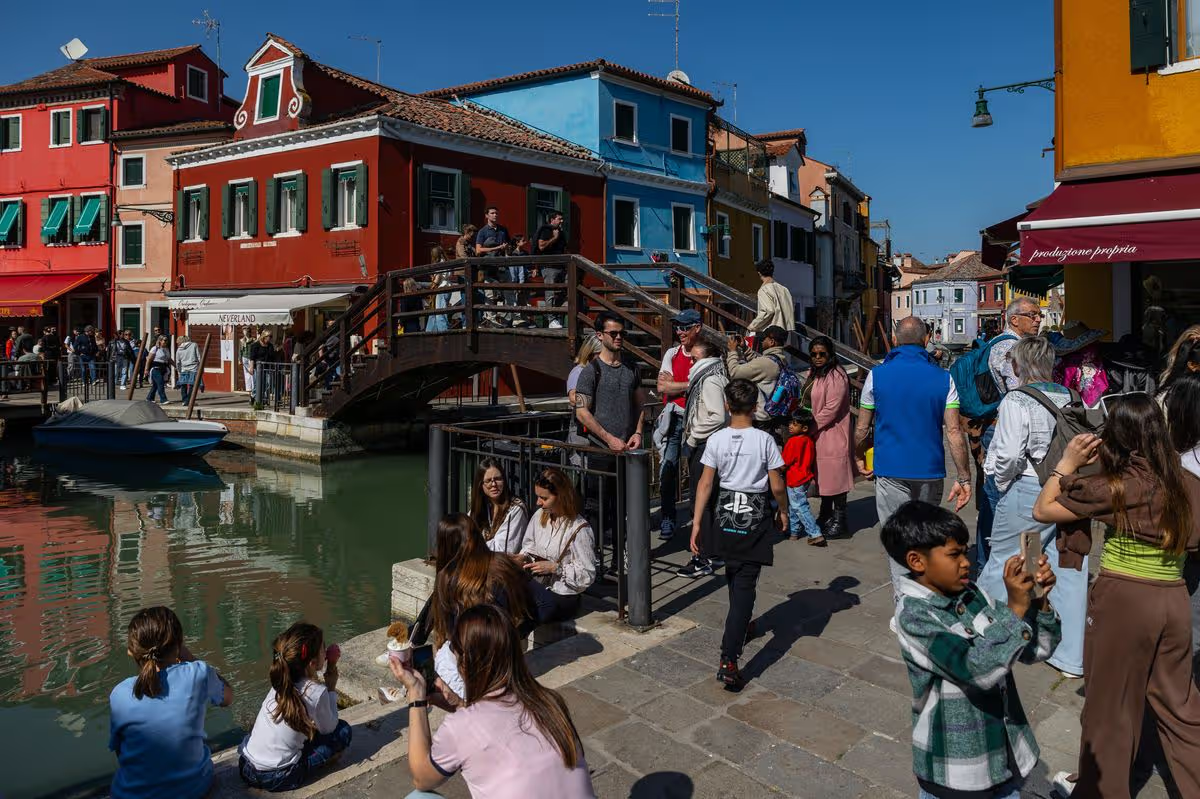
“It’s dead quiet out,” the Holiday Inn hotel receptionist remarked as we watched a few hunched raincoated figures push through the wind. For a town that relies on tourism to bring in £2 billion a year and support 30% of its jobs, becoming a relative winter wasteland is a big problem. And one that Blackpool might finally be answering.

Trainline data show that Blackpool is at the beginning of an off-season popularity boom.

Sajjad Motamed, the firm’s UK country manager, explained: “We’ve seen winter rail trips to Blackpool rise by more than 90% compared to last year, with particularly strong demand for weekend breaks. What’s striking is that the growth isn’t just coming from the North West – we’re seeing demand from right across the UK, for example, bookings from Edinburgh have more than tripled year-on-year. It suggests people nationwide are rediscovering classic seaside destinations outside of the traditional summer season, whether for a short getaway or to explore somewhere they may not have previously considered.”

Although the particular Thursday afternoon I’d turned up on was grim to the point that everyone sensible decided to stay inside, the spike in train bookings to a town recently named the country’s best by the Telegraph is borne out by official council figures. In 2023, Blackpool welcomed a record 21.5million visitors, a 5.3% rise in just a year. There are high hopes that 2024 and 2025 will increase the numbers further, once the stats are in.

So why are people coming in the winter?

One reason is cost. Blackpool was recently crowned the UK’s cheapest seaside resort, thanks to delights such as £1 burgers at Higgitt’s Las Vegas Arcade, £3.90 fish and chips at Bentley’s on Bond Street, and £6 breakfasts at Peekaboos. Come winter, room rates are slashed as hotels fight to fill the thousands of rooms in a town with the third cheapest property prices in England and Wales, according to Land Registry data.

Another is the growing selection of off-season activities.

I dropped into the 2024 opened Showtown Museum, which tells the story of Blackpool’s entertainment history through highly interactive exhibits and tapdancing staff members. Until April, a fascinating exhibition is telling the story of little people in the entertainment industry. It is difficult to imagine today, but the Blackpool Tower’s skygardens were once converted into a miniature village “populated” by little people.

Now visitors to the town can stop off at Showtown before heading up the Tower and down into the dungeons on the same Blackpool BIG Ticket that delivers 50% savings and costs £31

Throughout the year, there are plenty of free exhibitions on show at the listed Central Library, home to the Grundy Art Gallery.

After soaking up a bit of culture, you can head to the town’s iconic, year-round Coral Island. I’d bet a tub of 2ps that there is no bigger, more impressive or absurd arcade in the country. Stretching across a good number of football pitches’ worth of lurid carpeting, Coral Island is packed with one-armed bandits, coin droppers, the latest VR tech, and an indoor rollercoaster that wheels over the heads of the gamblers below.

Who cares if the Pleasure Beach is shut for the winter when you’ve got that?

As much as Mr Webb insists the town’s “reputation for stag and hen dos is greatly diminished”, it’s hard to argue that Blackpool isn’t a booze town. Whatever the season, across its 166 bars and pubs, you’ll find dozens of drinks deals cheap enough to make any Up From Londoner swoon. For a quiet but affordable pint, the Churchill is a good bet. For something a bit more late-night and rowdy, the Galleon delivers live music and a great atmosphere most nights.

For Mr Webb, the “missing piece” to the winter tourism slump puzzle would be an all-purpose indoor arena, designed for expos and eSports. Its arrival is uncertain and some way off yet, but talks with the owners of a Premier League football club are promising, the MP says.

This seems like a natural step for a town with a deep-rooted entertainment pedigree. From Strictly to George Formby, people have long come to Blackpool for a show. When I visited, Derren Brown was at the Grand as part of his Only Human tour. At the start of the performance, he uncorked several big cannisters of laughing gas into the auditorium to lull the crowd into a pliable state before having his mystifying, merry way with us.

Whether the gas was real or not, what wasn’t fake was the uproarious laughter of the audience throughout his two-hour set. Lancastrians are a friendly bunch. Whether it’s the charming staff in Stefani’s Pizza joint, a smily mum who stopped her pram for an impromptu chat, or the jovial reaction of an audience member publicly outed as a thief by Brown, there’s a good chance Blackpool will offer you a warm welcome, however miserable the weather.

Source link

I visited the fairytale French region with £17 Ryanair flights that feels like a real-life movie

IN 2000 film Chocolat, starring Juliette Binoche and Johnny Depp, the fairytale tone is set straight away by the sleepy medieval French village of the opening scenes.  

And especially the beautiful, cobbled street leading up from the river.  

Castle over the river in Beynac-et-CazenacCredit: Getty
Enjoy a market day in MonpazierCredit: Getty
The choice of child and teen-friendly activities seems endless. Castles, caves and canoeing all got the nod from our 12 and 15-year-oldsCredit: Alamy

Now my family and I are walking the same road in Beynac-et-Cazenac, in the dreamy Dordogne region, amazed by the views of the water below and the 13th- century chateau perched proudly on the hill above. 

The Dordogne might sound fancy — all turreted castles, foie gras and ancient villages — but it’s actually a great-value family holiday spot.  

The choice of child and teen-friendly activities seems endless. Castles, caves and canoeing all got the nod from our 12 and 15-year-olds. 

First up we got our bearings with a trip on a gabare — a flat-bottomed river boat which is used to carry timber, wine and other goods. 

SI YA

Beautiful African city an hour from Spain has cheap 5-star hotels & is 20C this week


SPIN THE WHEELS

I went to one of the world’s fastest F1 race tracks with 230mph top speeds

Now, they carry tourists up and down the Dordogne river (adults £8.50, children £4.50, gabarre-beynac.com). On the glassy-still water, we passed churches and castles, and waved to swimmers taking a dip.  

Next stop was Bergerac. The big-nosed, swashbuckling hero Cyrano de Bergerac, played by Gerard Depardieu in the 1990 film based on the real-life novelist, wasn’t from here . . . but the town has embraced him nonetheless. 

Check out the Cyrano de Bergerac immersive experience. There, a virtual actor took us backstage of a pretend production, where we tried on a fake nose and had a go on various interactive exhibits (adults £8.50, kids £3, quai-cyrano.com). 

Weather isn’t guaranteed in the Dordogne, but on drizzly days you can head for the Maxange Caves, which date back 60million years but were only discovered by accident by a quarry worker in 2000.  

He uncovered an incredible cave complex, which is now open to the public (adults £10, kids £8, maxange.com). 

Our guide pointed out huge stalactites and stalagmites as well as crystallizations in weird and wonderful shapes, marvellously called “eccentrics”.  

Many of the activities and experiences are good value. Driving through pretty villages, we would stumble across markets, free evening concerts and chateau visits that were all good value for money

The tiny medieval village of Cadouin is centred around its 12th-century abbey, where Richard the Lionheart is said to have once called by.  

Pop your head in to check out the fancy Gothic cloisters. We timed our visit to coincide with the Wednesday market in the main square, surrounded by honey-coloured cottages, art galleries, cafes and bars.  

Bigger and buzzier is Monpazier, which might be the cutest and best- preserved French village you have never heard of.  

Founded by England’s King Edward I, it’s a medieval time capsule. Where knights once walked, tourists now shop, sip beer and create Insta-stories round every corner — no filter needed.  

By now, the kids were desperate for some more adrenalin-based adventure so we decided to check out the canoeing. 

Gliding down the Vezere River is like floating past a live-action postcard — of ancient cliffs, prehistoric caves and stunning stone villages.  

We chose a gentle three-hour route from Thonac to Tursac, in a couple of two-person canoes. It is downstream so the paddling didn’t take much effort — just enough to feel adventurous without breaking into a sweat.  

Once we got the hang of it, we even pulled into little river beaches and went swimming. You can stand up most of the way, and the river was sparkling-clean. 

Treat yourself to laid back dining in BergeracCredit: Getty
Sunny times for Jonathan and familyCredit: Supplied

Energy fully exerted, we checked in to the converted 17th-century Chateau Les Merles, which has its own tennis court, swimming pools and a great view of the Dordogne valley.  

It is also a great base from which to explore. 

On the riverbank in the nearby village of Creysse, we then ate like locals in the great-value restaurant D’Aujourd’hui.  

It is run by a husband-and-wife team, and the name of the fisherman, who caught the fish we ate that day, was written on a sign on the wall. What a lovely touch.  

The vintage plates come from local flea markets, adding to the authentic vibe. 

A perfect corner of France — and a bon voyage that won’t break the bank. 

GO: DORDOGNE

GETTING THERE: Ryanair flies from Stansted to Bergerac from £16.99 each way. See ryanair.com.

STAYING THERE: Double rooms at the Chateau Les Merles cost from around £110 per night on a room-only basis. See lesmerles.com/en.

Source link

I visited UK’s award-winning zoo for £19 and was blown away by what I saw

It’s easy to see the appeal

Nestled in the undulating countryside of Oxfordshire, you’ll find Cotswold Wildlife Park & Gardens, one of the finest zoos I’ve visited in the UK. In fact, it was recently hailed as the UK’s top zoo in a nationwide poll that evaluated everything from the diversity of animals to visitor satisfaction and value for money. I’m a huge fan of exploring the Cotswolds, so I was thrilled to see what this place had in store.

From the moment you cross the threshold, there’s a sense that every detail has been meticulously planned to ensure both animals and visitors feel comfortable. Spread over 160 acres of parkland and gardens, the ambience is serene and calming — it’s ideal for a leisurely, unhurried day out.

The park is home to over 260 species, each residing in roomy, naturalistic enclosures that integrate effortlessly with the surroundings. As you meander, you’ll come across magnificent creatures from all corners of the globe.

This includes giraffes, white rhinos, lemurs, Asiatic lions, Humboldt penguins and red pandas.

Every animal appears content and well looked after, a perception supported by the park’s high visitor ratings and numerous recent accolades for animal care and guest experience, reports the Express.

One of the highlights of my visit was the giraffe feeding experience, a unique encounter you can arrange as an additional treat.

Approaching these gentle giants at eye-level was a memory I won’t forget, and the keeper was available to impart intriguing facts about their behaviour, diet and conservation.

It was both educational and enchanting to observe their lengthy eyelashes and tongues at such close proximity.

Despite ranking among the UK’s premier wildlife attractions, the park never appeared overcrowded or hurried. The gardens and softly undulating lawns provided numerous places to pause, unwind and appreciate nature.

One of the reasons the park was crowned the best zoo is its outstanding value. Standard day tickets cost around £19 for adults and £13.50 for children aged three to 16, with slightly cheaper online tickets available if booked in advance.

Children under three go free, and parking is included with the ticket. Given the scale of the park, the quality of the animal care, and the range of experiences on offer, I found this incredibly reasonable, especially when compared to other UK wildlife attractions.

Whether you’re a wildlife enthusiast or a family looking for a memorable experience, Cotswold Wildlife Park & Gardens ticks all the boxes.

Its combination of scenery, immersive experiences and variety of animals makes this one of the best experiences I’ve ever had.

If you’re planning a visit, book your tickets in advance, take time to explore slowly, and don’t forget to say hello to the giraffes.

Source link

I visited peaceful coastal village with gorgeous sea views and fell in love

This place deserves far more recognition – it has amazing views, a real sense of community, and a fascinating history too.

There’s genuinely nothing better than those first sunny spring days as we leave winter behind. It immediately makes you crave a visit the seaside, even if there’s still a slight chill and it’s not quite swimming weather yet.

Last weekend, I chose to take advantage of my renewed enthusiasm and positivity for life, and drove to a stunning coastal village that many people have never heard of. Admittedly it’s tiny, and there’s barely anything there, but there’s a welcoming pub and restaurant, breathtaking sea views , and it’s near to another popular seaside destination too. Lower Largo in Fife has a population of approximately 2,300, and it’s one of the most picturesque places I’ve seen.

The compact village overlooks Largo Bay, on the northern side of the Firth of Forth in Scotland. It required roughly an hour and a half to drive from Glasgow, and from Edinburgh, it’s just an hour’s drive away.

Largo is a historic fishing village, divided into two separate sections – Lower and Upper, with the small village of Lundin Links just to the left. Here, you won’t discover amusement arcades or crowds of holidaymakers, and it boasts a far more peaceful atmosphere than other coastal villages I’ve visited lately.

But don’t let the lack of attractions put you off. The more relaxed rhythm of life here was captivating, and already I’m eager for my next opportunity to return.

Waking up to those stunning views was an instant mood-booster, especially when the sun was shining brightly. The chilly temperature didn’t matter – the setting looked perfect, and the fresh coastal air felt wonderfully revitalising, reports the Express.

Lower Largo’s shoreline consists of sand and rocks, and it’s pristine. We noticed plenty of dog walkers enjoying the area, and even saw one brave soul taking a plunge in the sea, which must have felt incredible once she got past the initial cold shock.

The surrounding streets were equally delightful to explore. It’s fairly peaceful, meaning you’ll hardly encounter any traffic, but you will discover some impressively decorated front gardens. The nautical theme ran strong throughout, with garden gates featuring pirates, fish and mermaids.

We had breakfast at The Aurrie, a delightful cafe set within a converted church that offered such a warm and inviting ambience. Artwork from local artists lined the walls and was available to purchase, alongside an excellent range of hot dishes, coffees, and a cake display packed with tempting options. I chose the veggie haggis and potato scone roll with a flat white, and it was absolutely lovely.

During our visit, we also ate at The Crusoe, another wonderfully welcoming four-star hotel featuring a restaurant and pub. It serves all the traditional pub favourites you’d anticipate, from mac and cheese to fish and chips, and my entire family really enjoyed the experience.

Just over the way is the Railway Inn, another pub boasting a real fire that I didn’t manage to pop into, but my parents assured me it was fantastic and the ideal place for a post-dinner drink.

The pub enjoys a prime location right next to an impressive viaduct, now disused but still standing tall. It spans the Keil Burn, and was constructed to serve a section of the Fife Coast Railway Line. It’s been out of service since 1965 due to the reorganisation of British railways known as the Beeching cuts, but it remains a significant landmark and is well worth a look.

Another fascinating aspect of Lower Largo’s past is that it’s actually the birthplace of the man who inspired Daniel Defoe’s Robinson Crusoe – hence the hotel’s name.

Born in 1676, Alexander Selkirk was born in the village, and the house that now occupies his birthplace at 99-105 Main Street showcases a life-sized statue of him gazing out towards the horizon.

A signpost at the harbour points in the direction of the Juan Fernández Islands, some 7,500 miles distant, where he spent over four years shipwrecked.

I’m already looking forward to my next trip to Lower Largo. The overall atmosphere of the place was so welcoming, and it’s clear it has a strong sense of community.

It’s the ideal spot to enjoy a peaceful few days, but if you fancy exploring further afield, the beloved coastal town of St Andrews is just a 20-minute drive away.

While it’s best known for its golfing heritage and as the location where Prince William and Princess Catherine first crossed paths, there’s also a wealth of excellent pubs and eateries, bookshops and cafés to discover.

Source link

I visited two countries in two days for just £99

An image collage containing 3 images, Image 1 shows Aleksander Sikora's trip to Monaco, featuring boats in the harbor with buildings on hills in the background, Image 2 shows Aleksander Sikora and his daughter Wiktoria on a beach day in Lanzarote, Image 3 shows The Monaco Cathedral, a large white stone building, with multiple arched doorways and windows, and palm trees framing it, against a clear blue sky

A MAN has revealed how he managed to visit two countries in two days for under £100 – and was back in time for work the next morning.

Aleksander Sikora, 41, wanted to visit both Nice and Monaco on his two days off.

Aleksander Sikora managed to visit two countries in one trip for under £100Credit: SWNS
He spent his first day exploring Monaco before going to NiceCredit: SWNS
He made sure to visit the free attractions to keep costs downCredit: SWNS

The dad-of-two, who lives in Farnham, Surrey, bought easyJet return flights from Gatwick to Nice for just £48 which departed on Friday, March 13, and returned the next day.

His pre-trip costs included £13 parking, and be paid £19 for a hostel in Nice before departing as well.

After arriving in Nice, he went straight to Monaco by train (£6) to explore the sights of the famous ‘microstate’ – known for its beautiful buildings and wealth.

He visited the area around Monte Carlo’s casino and saw the Promenade des Champions – golden footprints of award-winning footballers.

CASH IN

Perfect day trip for the young & broke: gigs, attractions, food AND drink under £25


GO SI

Spain’s tiny island that thousands of tourists visit – but you won’t have heard of

Aleksander said: “I went to The Cathedral of Our Lady Immaculate, which was free to enter, and I went to the Prince‘s Palace of Monaco on the hill.”

Aleksander fuelled up throughout the day on a packed lunch be brought with him, although did splash out on some pizza from a local market stall.

He got a train back to Nice – squeezing in a visit to the Notre-Dame de Nice in the dark – where he slept and then had breakfast at the hostel the following morning.

The £19-a-night cost amazingly even included a breakfast of croissants, baguettes and coffee for the bargain price.

Aleksander said: “I am from Poland and somehow one of the other men in the hostel was too.

“Another of the men from the hostel suggested to go to the Russian Orthodox Cathedral so the next day that was what I did.”

Entry was free there too, so he explored after stocking up with more snacks and drinks from a local supermarket.

He walked up to the Colline du Chateau, which offers panoramic views of Nice, and took in the sights.

Aleksander then visited a museum to get some more history of Nice, before a gentle walk back to the airport.

He said: “That was another six miles or so, but I just looked around the streets, chilled out and relaxed.

“I put my headphones in, and just thought about nothing, enjoying my break from work.”

After spending his second day exploring Nice, he got back to the airport to catch his 9pm flight back to Gatwick – and was in bed by 11:30pm, ready for work the next day.

He said it was the best way to see as place – as long as you don’t mind a lot of walkingCredit: SWNS
His hostel even included breakfastCredit: SWNS

Aleksander, a retail employee trainer, said: “I saw a lot of historical things, if you like that kind of history it’s great.

“I studied history for three years, it’s a passion of mine and there is lots to discover.

“I walked around 30 miles in two days, but I don’t mind. I just relaxed and enjoyed it.”

And the entire trip cost around £100 thanks to Aleksander’s savvy travelling methods and bringing his own food.

He added: “The main beauty of the trip was the architecture, all the different cultures.

“You can’t compare them but every place is unique, and you can find beauty everywhere.

Full cost of Aleksander’s trip

  • Return flight ticket – £48
  • Car park Gatwick – £13
  • Night in Nice with breakfast – £19
  • Train from Nice to Monaco – £6
  • Train from Monaco to Nice – £5
  • Half a pizza in Monaco – £3.50
  • Croissant & Coffee in Nice – £3
  • Supermarket water and snacks – £2

= £99.50

He was back in time for work the next dayCredit: SWNS

Source link

I visited seaside town with UK’s best fish and chips and can’t wait to return

In this picturesque North Yorkshire town, famed for its seafood and imposing abbey, I indulged in fish and chips, admired the views, and enjoyed a walk up a particularly famous set of steps

A seaside town with award-winning fish and chips, friendly locals, and a literary claim to fame can be summed up in one word. In an enviable assignment last weekend, I paid a visit to the picturesque North Yorkshire harbour town of Whitby, famed for its imposing Gothic abbey ruins, prominent links to Dracula and Captain Cook, and, of course, its nationally renowned fish and chips.

As I drove into town on a bright Saturday morning in March—one of the first truly sunny days of the year—I couldn’t help but notice a sign proclaiming Whitby as the “Home of Scampi” (or words to that effect), which immediately raised my expectations for the day’s task.

Whitby’s reputation for seafood is well known, with an abundance of chippies to choose from. Among them is Trenchers on New Quay Road – the proud winner of this year’s Best Restaurant at the prestigious National Fish and Chip Awards.

In what was perhaps a testament to Trenchers‘ recent culinary acclaim, I was surprised to find a long queue already forming outside the restaurant when I arrived at around 10.30am.

Accompanied by my excitable cocker spaniel, Luna, I opted for Trenchers’ takeaway next door, where I found myself in the company of just one other patron, who was quick to praise the quality of Whitby’s seafood.

Opting for cod, chips, mushy peas and a side of curry sauce for £16 in total, I sat on a bench opposite the eatery and took in the seaside scene, where market traders catered to the busy foot traffic at pop-up stalls.

Quickly polishing off my chippy lunch, a delicious serving of fish with light, crispy (albeit slightly pale) batter and golden chips, I found myself hard-pressed to find anything to criticise, mentally awarding the meal a comfortable 8.5 out of 10.

Having disposed of the rubbish, I decided to take a stroll into the harbour area towards Whitby Swing Bridge over the River Esk, so I could access the other side of the town and the looming abbey on the hillside.

As I breathed in the sea air and admired the views across the water, my attention was drawn to an impressive ship, which I later discovered was The Whitby Endeavour restaurant.

Luna and I set off on a walk to the bridge, only to discover that it was temporarily closed. It meant that I had to walk some distance around to reach the other side, according to some friendly locals, but I was keen to walk off my meal, so we set off.

As I crossed a larger bridge, I was offered spectacular views over the entire town, the river flowing beneath me and many boats resting on the bank next to the train tracks awaiting their next outing.

I eventually worked my way around to the other side and passed the Tolkien-themed Middle Earth Tavern as I entered the narrow, shop-filled Church Street. There, I found myself ogling the many books, trinkets and baked goods on display.

Next, I made my way to the famous 199 Steps on Whitby’s East Cliff, which lead up to St Mary’s Church and the breathtaking 7th-century Whitby Abbey beyond.

In Bram Stoker’s Dracula, the titular vampire takes the form of a dog and bounds up the steps to the church. In similarly exuberant fashion, Luna hauled me up all 199; though, in my case, it was likely a blessing for my fitness.

Stopping for several photos along the way, I couldn’t help but be left awestruck by how beautiful Whitby is; it’s something that you really notice as you ascend the steps, each level revealing a different angle of the town.

Once you arrive at the church, its distinctive Gothic atmosphere is palpable – dozens of gravestones overlook the town below, while a sharp sea breeze envelops you as you admire the coastal vistas.

Whitby Abbey is also a sight to behold, a majestic ruin that’s sure to inflame the imagination of any visiting history buffs, and to top it all off, there was a dog-friendly café nearby.

After a quick latte and a Twix – while Luna enjoyed some water and a few meaty dog treats – we made our way back down the steps, just as the crowds began to gather in the early afternoon.

In a surprising but touching twist that may offer some insight into the beauty of the town, I even spotted a man going down on one knee and proposing to his girlfriend outside the church.

Once we were safely back in the car, I ultimately found myself wishing that I could have stayed longer. Whitby has found itself a lifelong fan, one who will most definitely be returning.

And, if I had to sum it up in one word, although this is a hard task with a place I like so much, it would probably have to be stunning.

Source link

I visited Amsterdam-alternative city named a top holiday destination for 2026 with speakeasy bars and unique spicy cakes

THE Netherlands’ best-kept secret is out . . . Utrecht is now stealing the spotlight from Amsterdam.

With historic streets, lively bars and quirky shops, it is quickly becoming Europe’s must-visit city.

Find out why Utrecht is stealing Amsterdam’s thunderCredit: Getty

Lonely Planet has tipped it as one of 2026’s hottest destinations and people are already flocking to see what all the fuss is about.

With architectural wonders, canal-side restaurants and intriguing after-dark hotspots, it is easy to see why visitors are falling head over heels for the Dutch delight . . . 

WHY SHOULD I GO?

WITH a labyrinth of canals and charming gabled houses, Utrecht’s streets brim with character.

It delivers all the allure of capital Amsterdam, but without the crowds.

SWISS GRAND TOUR

I went on Europe’s ‘Route 66’ with 46 attractions and beautiful beaches


TEMPTED?

Tiny ‘Bali of Europe’ town with stunning beaches, €3 cocktails and £20 flights

Beyond the medieval charm, Utrecht offers far more than fairytale backdrops.

It has a vibrant arts and music scene where Johnny Marr, Ride and Wolf Alice have performed.

For a bird’s-eye view of the city, head to the Dom Tower.

Soaring 112 metres, it is the tallest church spire in the Netherlands and has been a landmark since 1382.

Climb right to the top for your panoramic views.

STREETS MADE FOR WALKING?

UTRECHT is one of the world’s most walkable cities, with 75 per cent of locals on foot or bike.

Explore the old town, or hop on a 90-minute canal cruise to discover historic wharves and charming houses — all brought to life by tales from a skipper.

Go full Dutch and cycle the streetsCredit: Getty

ANYTHING FOR BUCKET LIST?

GO underground at DOMunder and wander through 2,000 years of history beneath the streets, including Roman ruins and medieval cellars.

Art lovers will swoon at the Rietveld Schroder house, a Unesco-listed modernist gem.

Meanwhile, the Museum Speelklok lets visitors relive history with its whimsical self- playing musical instruments.

WHERE SHOULD I EAT?

KICKSTART your day at Bunk, a chic spot in a converted church.

The Dutch Breakfast (£16) serves up Eggs Benedict, a cheesy pancake, and a Dutch speciality — a spicy slice of cake for a quirky but delicious way to start your day.

Head to on-trend Café Olivier for refreshmentsCredit: Alamy

For a laid-back lunch, head to Il Pozzo, tucked away on the waterfront. Its wood-fired pizzas are perfect for a lazy meal as you watch the boats drift by.

On the go? Toque Toque sells toasted sandwiches starting at £7.

For an elegant dinner, try Jack Rabbit, with its oversized shimmering rabbit on the walls.

There are small plates of tuna sashimi and sea bass ceviche, crafted cocktails and a buzzing, hip vibe.

If you are after something heartier, Broadway Steakhouse sizzles with a relaxed, stylish setting.

I FANCY A DRINK

CANAL-SIDE sips and cocktail bars set the scene for an evening out.

Kick things off at the on-trend Café Olivier, a converted abbey with vaulted walls serving Belgian beers from £3.90.

Then wander along the Oudegracht to De Rechtbank, a buzzing hotspot with inventive cocktails and a lively terrace.

For a more laid-back vibe, check out Vino Vero, where the expertly chosen wines come at surprisingly great prices.

If you are after something more exotic, duck into the city’s cellars to The Rum Club, where rum cocktails and reggae beats transport you to the Caribbean.

Café DeRat, with a rotating selection of local brews, keeps regulars coming back for more.

And for a touch of glamour, head to Café Lebowski, a speakeasy-style bar where cocktails are expertly crafted in an intimate setting.

WHERE TO STAY

THE Moxy Utrecht is a fun, budget-friendly option in the city centre.

With stylish rooms, a buzzing bar, playful decor, oversized chess sets and complimentary bike hire, it’s the perfect base.

Rooms start from £92 a night.

For those ready to splash out, Grand Hotel Karel V, housed in a former 14th-century monastery, is pure indulgence.

It combines historic charm with modern luxury and also has a Michelin-starred restaurant and a great wellness centre.

GO: UTRECHT

GETTING THERE: Several airlines fly to Amsterdam Schiphol, including easyJet, BA and KLM from London, plus Manchester and Liverpool.

Fares start from £71 return.

From Schiphol, it is less than 30 minutes by train to Utrecht.

STAYING THERE: Rooms at The Moxy Utrecht from £92 per night, Grand Hotel Karel V rooms from £229.

See moxyhotels.com and karelv.com.

OUT & ABOUT: Take a scenic canal tour of Utrecht from £16 per person via GetYourGuide.

MORE INFO: See visitutrecht.com.

Source link