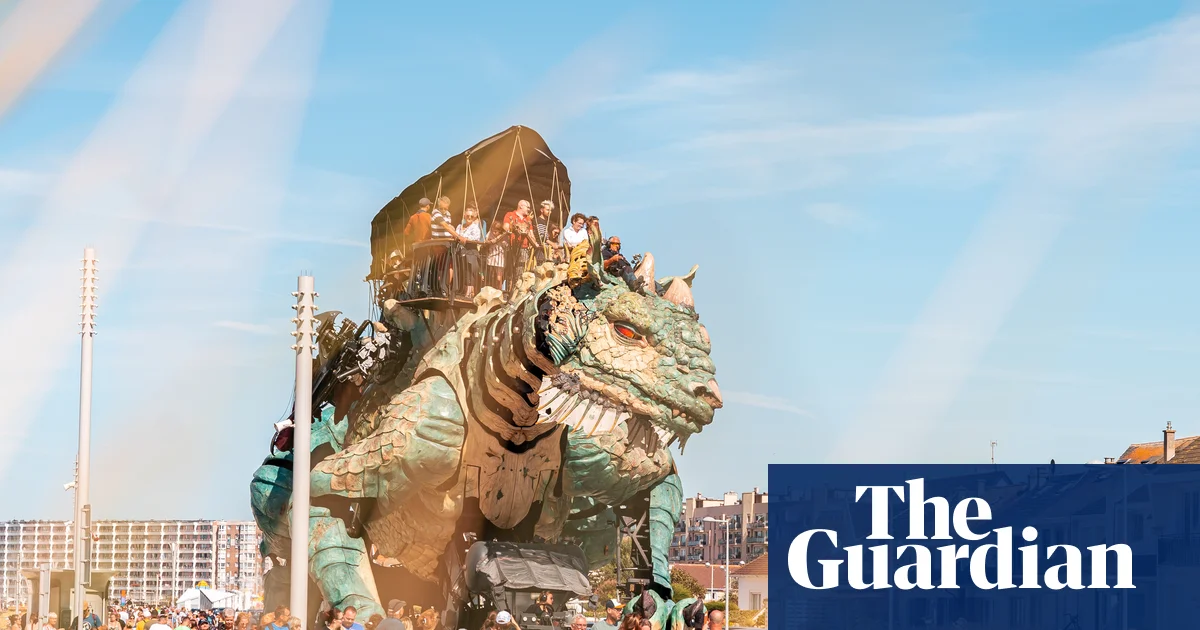
You don’t need to venture too far into France to find its wow factor. Indeed, within minutes of exiting the ferry or Channel Tunnel, you can be staring a fire-breathing dragon in the face. The Dragon de Calais is a 25-metre-long mechanical beast that stomps along the renovated sea front carrying 48 passengers on its back (adult ticket €9.50), emitting jets of fire, steam and water from its nostrils. It was created by the team behind Les Machines de L’île, a collection of steampunk wonders including a 12-metre elephant, in Nantes.
This year, Calais’ dragon is joined by Le Varan, a giant iguana that crawls around the town and the old fishing district with room for 25 passengers (adults €8.50). While you’re there, explore the beaches along the coast at Hardelot-Plage and visit the Chateau d’Hardelot, with its history of Franco-British relations.
Celebrate Monet in Rouen
Rouen cathedral, which Monet painted more than 30 times. Photograph: SC Stock/Getty Images
This year marks the 100th anniversary of Claude Monet’s death and many galleries and venues in Normandy and Paris have events planned. You don’t need to face the crowds at Giverny or the Musée d’Orsay to appreciate the great artist’s work, though. Instead, visit Rouen, where Monet found the ever-changing, silver-grey light on the intricate and imposing facade of the cathedral so inspiring he painted it more than 30 times (from the window of what was, at the time, a ladies’ undergarment shop opposite).
The Musée des Beaux-Arts de Rouen has the largest collection of French impressionist works outside Paris, including one of the cathedral paintings and works by Camille Pissarro and Alfred Sisley. While you’re there, explore the Boucles de la Seine natural regional park, where you can cycle between the loops of the River Seine through orchards and past the ruined Abbaye de Jumièges.
Visit a postman’s palace in Drôme
The Palais Idéal, created by Ferdinand Cheval. Photograph: DV Travel/Alamy
The Dauphiné region, close to Grenoble, combines breathtaking scenery and curious attractions. Chief among them is the Palais Idéal, a whimsical monument built over 33 years from the late 19th century by Ferdinand Cheval, a postman whose inspiration came from the travel journals and postcards he delivered on his 20-mile round. On the facade of the 10-metre-high palace, you’ll see mythical creatures and mysterious grottoes, Egyptian temples and Swiss chalets, while the small on-site museum recounts the stories of Cheval’s tragic life, and those who fought until the 1960s to have the structure recognised as a listed monument.
Nearby, explore the jaw-dropping Vercors mountains, with precipitous roads such as the Combe Laval route, which was chiselled out of the rock in the 19th century to transport timber. Also visit the fascinating Grotte de Choranche underground caves, with curious, spaghetti-like stalactites, and the town of Pont-en-Royans, where medieval houses hang high over a gorge.
Discover Brittany by bike
A cyclist on the Traversée Bretonne passes a chateau in Nantes. Photograph: Un Monde à Vélo
Cyclists have always been spoiled by the smooth, car-free cycle paths throughout France, and now the Traversée Bretonne, a new route through the heart of Brittany, offers a fresh challenge. Starting in the city of Nantes, the 14-stage route takes riders past the curious mid-century architecture of Saint-Nazaire (such as the Soucoupe, a sports centre shaped like a flying saucer), then on to the “Atlantic Riviera” at La Baule, with its belle époque villas and vast beach.
Further along, the lively city of Rennes is perfect for rehydrating: Rue Saint-Michel is nicknamed Rue de la Soif (thirsty street) because it has a bar approximately every 7 metres. The route finishes with a nice flat stage at Mont-Saint-Michel. traversee-bretonne.com
Celebrate figs in the Var
Figs for sale at the Fête de la Figue in the village of Solliès-Pont. Photograph: Laurent Parienti
Plan a late-summer sojourn in the Vallée du Gapeau, inland from Toulon, which is renowned for its fig orchards: local people say the trees like their heads in the sunshine and their feet in the water. At the end of August, the start of the harvest is celebrated with the lively Fête de la Figue in the village of Solliès-Pont. As well as the bountiful market, there are tours of the groves and a lively four-course dinner with music in the village’s main square.
While you’re there, hike in the wooded valley and admire the curiously shaped “elephant rock”. Visit the local olive oil mill at Moulin à Huile du Partégal (entry free) to explore its ancient grove and taste its oils; and stroll the unspoiled villages of Solliès-Ville and Solliès-Toucas. valleegapeau-tourisme.fr
Taste cheese in the Jura mountains
Cheese at La Maison du Comté. Photograph: Hemis/Alamy
To truly understand the flavours of French cheeses, it pays to visit the landscapes in which they are made. One of the most enchanting areas for a foray in fromage is the Jura mountains, the home of comté cheese. Here, as part of the Routes du Comté, you can visit the so-called cathedral of comté at the Fort Saint-Antoine (tour reservations essential, €11), where Fromageries Marcel Petite ages its 100,000 wheels of comté between the stone arches of a 19th-century military fort. Nearby, next to the Lac de Malbuisson, Restaurant du Fromage offers a comté and savagnin wine fondue in its Swiss-chalet-like surrounds.
An hour west, the town of Poligny is home to La Maison du Comté, a visitor centre dedicated to explaining how the cheese is made and infused with the flavours of the 130 plants from the spectacular landscape on which the cows graze. montagnes-du-jura.fr
Hunt for bric-a-brac in Normandy
A flea market in Honfleur. Photograph: Peter Andrew Richardson/Alamy
Take a road trip to the bucolic Perche regional natural park in southern Normandy, an area of rolling hills, cider farms and charming villages. It is ideal, too, for those who love hunting for vintage treasures and bric-a-brac. Near the towns of Bellême, Mortagne-au-Perche and along the D923 road between La Ferté-Bernard and Nogent-le-Rotrou, you will find many brocante shops and warehouses with artfully displayed items on offer.
The area is a popular weekend destination for Parisians, hence the abundance of good restaurants. In the village of La Perrière, La Maison d’Horbé B&B and wine bar (rooms from €142.50) is set in an antiques shop, while in Saint-Hilaire-le-Châtel, the Hotel les Prés has its own restaurant (rooms from €142). perche-tourisme.fr
Relive history in the Vendée
Cahriot racing at the Puy du Fou theme park. Photograph: Arthur Aumond
You need never utter the word Disney once you’ve discovered the Puy du Fou, a theme park like no other, in the countryside of the Vendée. With bombastic historical re-enactments of Viking invasions, Roman chariot races, medieval jousting and more than 2,500 actors across the park, many of the shows are big on wow factor.
Yet there are also experiences that evoke a quieter sense of wonder – walk through the cabins and hull of the 18th-century ship La Pérouse and see its myriad flora and fauna gathered from around the world, before it sinks in a storm in the South Pacific. Moving, too, is the Amoureux de Verdun experience, which puts you in the trenches of Verdun in the first world war, where actors play out a love story. Adult tickets from €47, puydufou.com
Swim in a tidal pool in Brittany
Saint-Malo’s Piscine de Bon Secours. Photograph: JJ Farquitectos/Getty Images
There are several tidal swimming pools along the Emerald Coast in Brittany. At Dinard, the Piscine de Mer overlooks the vast main beach, alongside stately belle époque villas and maritime pines; and from Saint-Malo’s Piscine de Bon Secours, you can walk at low tide to the island of Grand-Bé for a great view back to the walled town.
The Emerald Coast is good for hiking too, so make a point to stroll out to the dramatically perched Fort La Latte on the Cap Fréhel headland. dinardemeraudetourisme.com
Explore the wild Aubrac plateau
The volcanic landscape of the Aubrac plateau. Photograph: Hemis/Alamy
Many holidaymakers speed through the centre of France on the autoroute known as La Méridienne (A75), bound for busy beaches of the Med. Those who prefer more solitude, however, should exit sooner (exit 39 to be precise) and venture west on to the extraordinary, volcanic landscape of the Aubrac plateau. Here, stone-walled meadows abound with wild flowers and the buron huts that once housed cowherds and cheesemakers have been converted into welcoming rustic restaurants, such as the Buron de Born, serving local potato and cheese dishes such as aligot and truffade. At night, the total absence of light pollution makes it ideal for stargazing. tourisme-en-aubrac.com
JUST off the coast of Portugal is a tiny archipelago that very few tourists visit, or even know about.
The little-known collection of Berlenga Islands consists of three islands – Berlenga Grande, Estelas and Farilhões-Forcado
Sign up for the Travel newsletter
Thank you!
The Portuguese archipelago is only open from March to OctoberCredit: AlamyBerlenga Grande has its own fort where you can camp in a cell overnightCredit: Alamy
Berlengas is primarily a nature reserve, home to lots of birds like the yellow-legged gull, guillemot, and sea life which you might spot while snorkelling.
Due to it being protected, and reasonably small, the islands have a daily limit of 550 visitors – and it can only be accessed between March and October.
With the weather this time between 18C and 25C, it’s the perfect time to visit and spend time on its beach – which is one of the prettiest in Europe.
This is Praia da Berlenga Grande, which is also the most famous beach on the island and ideal for relaxing on the golden sands.
It’s also a good spot for swimming with one visitor saying the clear waters reminded them ‘of the Caribbean‘.
Just be prepared for it to be chill, seeing as the islands are in the Atlantic Ocean.
National Geographic called it one of Portugal’s best beaches with ‘desert vibes’.
One visitor advised to visit in September as it was quieter and they had the beach all to themselves for an hour.
Another popular way to explore the island is by boat with plenty of tours throughout the day.
Bobbing around on the water means you can see the caves that have naturally formed into the cliffside.
One of Berlengas’ most famous rock formations is the Elephant’s Trunk – which literally looks like an elephant’s head and trunk which dips into the ocean.
Another is Dream Cave, or Cova do Donho, which is where fishermen used to spend the night because of its calmer waters.
Visitors can bring their own tent onto Berlengas IslandsCredit: AlamyOne popular boat trip is around ‘elephant cave’Credit: Alamy Stock Photo
Visitors can actually stay on the island if they wish and enjoy quieter evenings when the daytrippers leave.
There’s a hotel called Berlenga Bed & Breakfast which has just five rooms and sits on the clifftop so it has incredible views across the ocean.
You can check them out from the hotel’s pretty terrace bar and restaurant.
Anyone feeling brave and wants to sleep within nature can camp out at Forte São João Baptista.
The island’s fort has camping spots and is said to give an “immersive, authentic experience”.
Visitors can sleep in an old cell and have to bring their own sleeping bags or bedding.
There’s a campsite too where visitors can literally pitch up with their own tent with rates from €8 (£6.92) per night – pitches must be booked in advance with the tourist board.
As for how to get there, ferries go to the island three times from Peniche.
The journey between the mainland and the island takes around 30-minutes with tickets costing between £15 and £35.
Get Your Guide has tours on offer to explore the island, like a Cave Tour from €41 (£35.48).
There are also catamaran tours with snorkelling stops from €42 (£36.35) and round-trip boat tours of the islands from €29 (£25.10).
Peniche is a just over an hour’s drive from Lisbon which has direct UK flights for as little as £15.
Shortly before the trip was announced on Tuesday, President Trump lashed out at the UK and other countries over the Iran war, telling them to “go get your own oil” from the Strait of Hormuz and “the USA won’t be there to help you anymore, just like you weren’t there for us”.
These stunning destinations are exempt from the new system launching in April.
14:45, 31 Mar 2026Updated 14:45, 31 Mar 2026
These countries will not use the Entry/Exit system(Image: Getty)
Following months of preparation, the new Entry/Exit System (EES) will finally be implemented across the Schengen area from April 10.
The new EES will require all non-EU nationals travelling to 29 European countries to register their biometric data, such as a facial scan and fingerprints, rather than receiving a traditional passport stamp. Numerous popular holiday destinations including Portugal, Italy and Spain will be impacted by the new system.
However, there are 14 countries (15 including the UK) outside the Schengen Area and therefore not implementing the new travel system.
Laura Evans-Fisk, head of digital and engagement at eurochange, anticipates a surge in travellers heading to non-Schengen countries as a consequence, reports the Express.
She said: “The introduction of this new border control system may be off-putting to some people who want to book last-minute trips this Easter, especially those who like to keep travel as fuss-free as possible.
“I think we should expect to see an increase in Brits travelling to countries that are exempt from the legislation over the next few months – including the Easter and summer holidays.”
For those looking to sidestep the hassle and make their travels a little more straightforward, Laura has identified three fantastic holiday destinations that will be unaffected by the EES, meaning British tourists can explore freely without the need to provide biometric data.
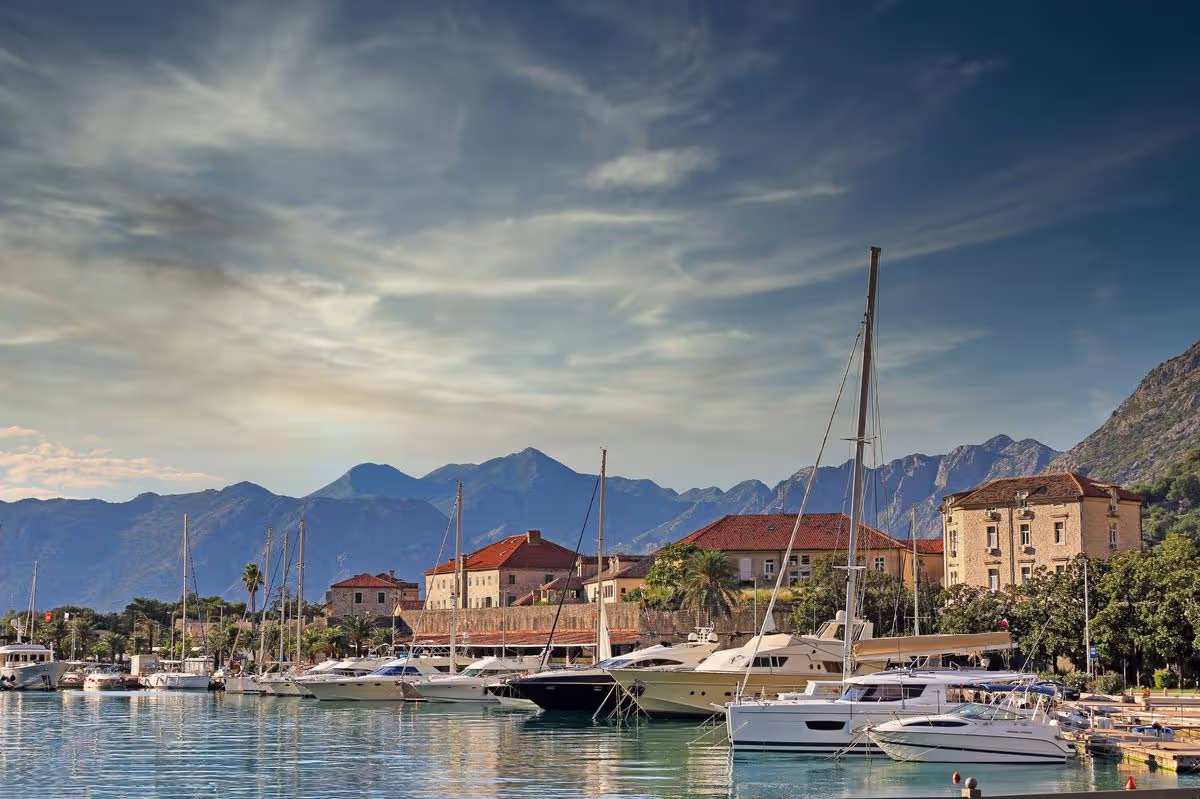
Kotor, Montenegro
She explained: “Montenegro is quickly becoming one of the most popular up-and-coming destinations in Europe. A less crowded alternative to Croatia, it offers similar quaint towns, gorgeous beaches and a stunning coastline, but it is around 20-30% cheaper.”
For instance, accommodation in Montenegro begins at £23 per person per night, while a three-course meal will cost you £31.78.
Kotor sits on the coast, boasting stunning beaches and a relaxed atmosphere, ideal for unwinding. Laura remarked: “This is a great spot if you’re after a chilled, slow-paced holiday, without having to pay huge prices.”
Tirana, Albania
This vibrant capital city is brimming with culture and a food lover’s dream destination. Laura noted: “One of the best ways to explore is by taking a stroll through the streets, following the eccentric street art, graffiti and murals.
“Remember to order Albanian favourites, Fërgesë Gjize (baked cheese with peppers) and Trilece (a tasty pie made with sponge cake and three different kinds of milk) for dessert.”
Sarajevo, Bosnia
Laura said: “It is one of the only places where you can visit a Mosque, a Catholic church, an Eastern Orthodox church and a synagogue in one place.
“Tucked inside a long, thin valley and surrounded by forested mountains, the city has a picture-perfect backdrop. Its broad mix of cultural influences means its architecture is also absolutely beautiful, and its restaurant scene is an eclectic mix of Turkish and Bosnian-inspired offerings.
“And, with prices averaging just £30 per person for a three-course meal, your money really does go far here.”
Pakistan’s Naseem Shah under fire for slamming politician’s presence at start of closed-doors PSL game in Lahore.
Published On 28 Mar 202628 Mar 2026
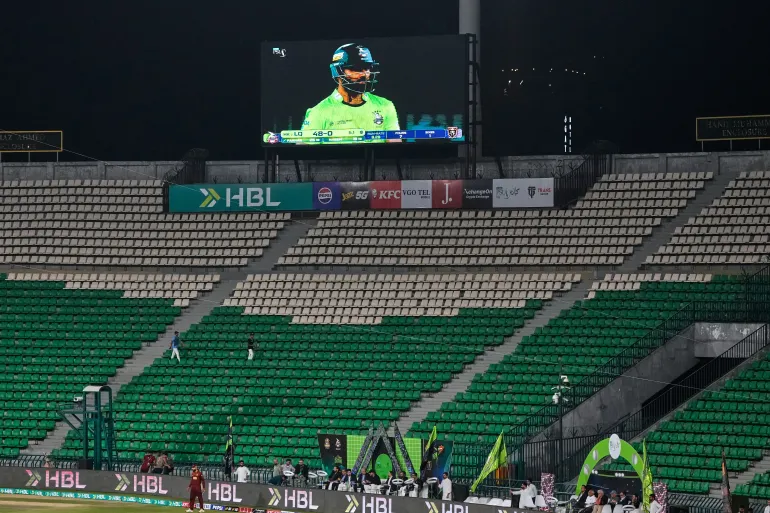
The Pakistan Cricket Board has attacked fast bowler Naseem Shah for criticising a politician’s presence at the start of the opening game of the Pakistan Super League, which is being played behind closed doors.
Fans are barred from attending games at the country’s premier domestic tournament, which was originally scheduled for six venues but now reduced to just two — Lahore and Karachi.
Recommended Stories
list of 3 itemsend of list
The Middle East conflict has resulted in exorbitant fuel hikes in the region, and Pakistan’s government is urging people to restrict travel and to work from home.
Chief Minister of Punjab Maryam Nawaz was invited to Lahore’s Gaddafi Stadium on Thursday, along with other dignitaries, and was introduced to officials of the eight franchises and players ahead of the opening game of the tournament between defending champion Lahore Qalandars and first-timers Hyderabad Kingsmen.
Shah commented on a tweet about the opening game by the PCB, with the bowler saying on X, “Why is she treated like the queen at Lord’s?” in an apparent reference to Nawaz’s presence at the stadium. He deleted the post soon afterwards and later said his account had originally been hacked.
A view inside the Gaddafi Stadium, where the opening cricket match of the Pakistan Super League between Lahore Qalandars and Hyderabad Kingsmen took place without spectators [KM Chaudary/AP]
The PCB said in a statement that Shah had been issued a notice for violating the terms of his central contract as well as media policy and regulations.
“The show-cause notice has been served in accordance with the PCB’s disciplinary framework,” the PCB said. “Naseem Shah is required to provide a response within the stipulated time. Upon receipt and review of his response, the PCB will decide on any further action in line with the regulations.”
Last year, Pakistan all-rounder Aamer Jamal was slapped with a fine of $4,000 for displaying a slogan in favour of cricket great Imran Khan, Pakistan’s imprisoned former prime minister.
Shah is scheduled to play for new PSL franchise Rawalpindi Pindiz in Saturday’s game against Peshawar Zalmi, led by former Pakistan all-formats captain Babar Azam.
Shah, a right-arm fast bowler, has taken a total of 152 wickets while representing Pakistan in 20 Test matches, 34 one-day internationals and 37 T20 games.
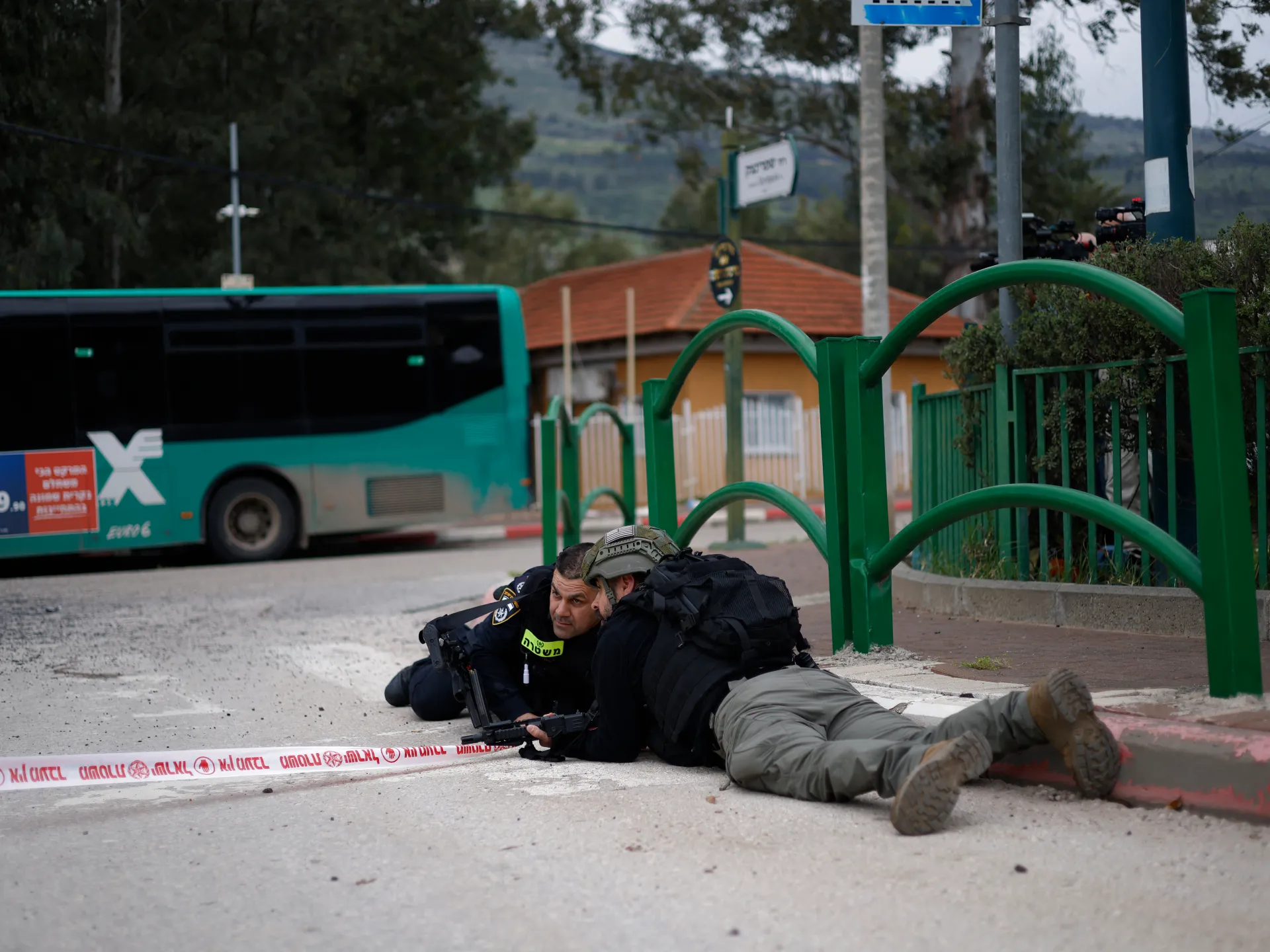
Israeli President Isaac Herzog was forced to take cover as a missile struck nearby shortly after he gave a press conference in the northern Israeli town of Kiryat Shmona. During the speech, Herzog aid Israel cannot return to last year’s ceasefire and must secure “strategic depth inside Lebanon.”
Plus, every time you drive, you can see the escalating average cost for a gallon of gas throughout the state that ranges from $5.77 in Orange County, $5.78 in San Diego County, $5.80 in Los Angeles County and $5.86 in San Francisco County to the high of $6.57 in Mono County, according to AAA.
It can easily make anyone think having fun is unaffordable.
Fortunately, our Travel and Experiences team has put together a list of 75 fun things to do for under $20.
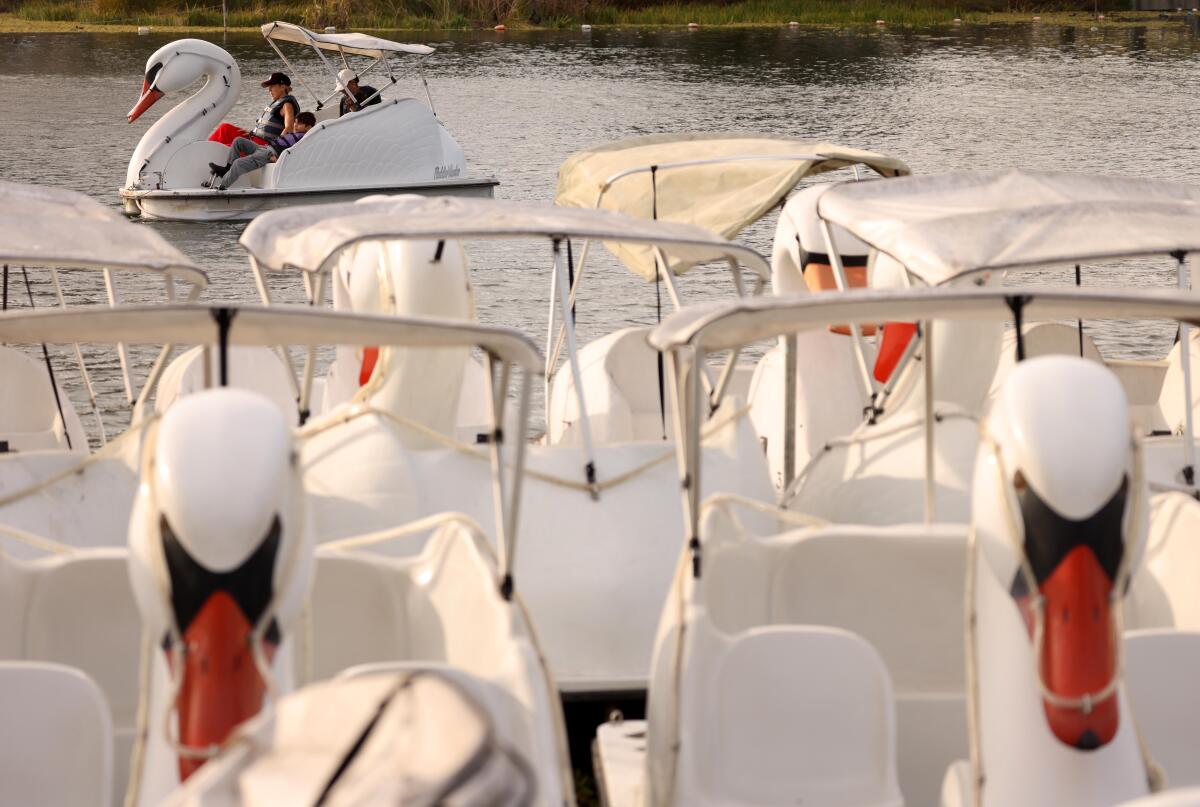
On warm days, it’s hard to beat a ride on the swan boats at Echo Park.
They’re powered by foot paddles, and the pedaling is easy because you’re in no hurry. Maybe you’ll want to do a circuit of the lake (really a man-made reservoir). Maybe you’ll sidle up to the towers of whitewater rising from the mid-lake fountain.
Maybe you’ll wait until after dark (because the swans light up).
(Christina House / Los Angeles Times)
Experience L.A.’s esoteric history at the Philosophical Research Society (Los Feliz)
Cost: Free to visit, workshops and lectures from $10 and up.
Located at the intersection of Los Feliz and Griffith Park boulevards, the Philosophical Research Society has long been a place of mystery, intrigue and, for some, apprehension.
The Mayan Revival campus painted in Southwestern shades of clay, cream and sage was built in 1935 by the celebrated author and esoteric lecturer Manly P. Hall.
Today, it hosts a dizzying array of events each week including poetry readings, death cafes, sound baths, a weekly class on Buddhism, tarot and astrology salons and musical performances — some of which have a suggested donation of just $10.
If you visit, make sure to make time to browse the excellently curated metaphysical bookstore.
(Gina Ferazzi / Los Angeles Times)
Find the perfect meditation spot at the Self-Realization Fellowship Lake Shrine (Pacific Palisades)
Cost: Free.
Whether or not you’re familiar with the work of Paramahansa Yogananda, who founded the Self-Realization Fellowship in 1920, if you live in Los Angeles you owe him a debt of gratitude for the smattering of lush, meditative gardens in Southern California that are still open to the public today.
Among those is Lake Shrine, a beautifully landscaped 10-acre property in the Pacific Palisades surrounding a spring-fed lake that is dotted with quiet meditation spots.
It is free to visit, but you will need to make a reservation online before you go. (Reservations open each Saturday at 10 a.m. for the week ahead, and they can fill up quickly.)
(Wally Skalij / Los Angeles Times)
Cozy up with a flick at the Paramount Drive-In Theater (Paramount)
Cost: $14 per adult, $7 per kid (ages 3-11).
For a night out that feels as cozy as a night in, head to the Paramount Drive-In Theater. In the comfort of your own car, you can spread out, munch popcorn and make all the commentary you want without getting looks from other moviegoers.
Tickets are purchased on arrival, and the parking lot is huge, so you’re bound to secure a good view of the big screen. There is a concession store on site with candy, chips and drinks, but you are free to bring all the snacks you want from home. Recline your seat all the way back, relax and enjoy the show.
You’re reading the Essential California newsletter
Sign up to start every day with California’s most important stories.
By continuing, you agree to our Terms of Service, which include arbitration and a class action waiver. You agree that we and our third-party vendors may collect and use your information, including through cookies, pixels and similar technologies, for the purposes set forth in our Privacy Policy such as personalizing your experience and ads.
The week’s biggest stories
(Irfan Khan / Los Angeles Times)
Heat wave and environmental news
Los Angeles mayor, city council news
Cesar Chavez fallout
California governor’s race
Crime, courts and policing
What else is going on
Must reads
Other meaty reads
For your downtime
(Illustrations by Lindsey Made This; photograph by Myung J. Chun / Los Angeles Times)
Going out
Staying in
L.A. Affairs
Get wrapped up in tantalizing stories about dating, relationships and marriage.
Have a great day, from the Essential California team
Jim Rainey, staff reporter Hugo Martín, assistant editor, fast break desk Kevinisha Walker, multiplatform editor Andrew J. Campa, weekend writer Karim Doumar, head of newsletters
I have never managed to score a reservation to Bar Cecil, the restaurant that opened in April 2021 as an homage to Sir Cecil Beaton, the famously flamboyant British photographer, designer, author and all-around Renaissance man who died in 1980. It remains, almost comically after five years in business, the most difficult place to book a table in the Coachella Valley. Long ago I made my peace with lining up before the restaurant opens at 5 p.m. and starting early at the unreserved 12-seat bar, or slipping in between 6:30 p.m. to 7:15 p.m. when the first wave of bar seating turns over. We all show up, whenever we can, for potent drinks and chef and partner Gabriel Woo’s menu, a worldly mix of Continental swagger, global-minded modernism and California realness.
In January, the same team branched out with Beaton’s at Bar Cecil, a posh affair next door that flips the script on the restaurant: more cocktail-centric, mostly snacky food you stretch into a meal. Tufted red velvet cascading from the ceiling drives the louche vibes. The mid-20th-century-era sketches and prints adorning the walls are significant enough that the staff composed a booklet full of descriptions and biographies. (You’ll need a phone light to read through it.) There’s an enclosed terrace where VIPs seeking privacy tend to hang out as the night wears on. Precision-engineered cocktails cover the spectrum of tastes: not-too-sweet Singapore slings, a sharp-tongued Vesper with lemon oil, a retro-chic grasshopper blending Creme de Menthe and pandan for a nightcap. I have always been fascinated that certain Hollywood hangouts serve pigs in a blanket, and here they are, mustardy and easy to down one after another alongside shrimp cocktail, duck-meat bao, oysters, fries and, of course, caviar. Beaton’s also takes reservations but walk-ins, however variable the wait, are welcome. Try your luck. This is absolutely the place to be in Palm Springs right now.
With trade between the two countries at a record high, Charles is using the two-day visit to highlight the pair’s deep cultural and commercial links.
Published On 18 Mar 202618 Mar 2026
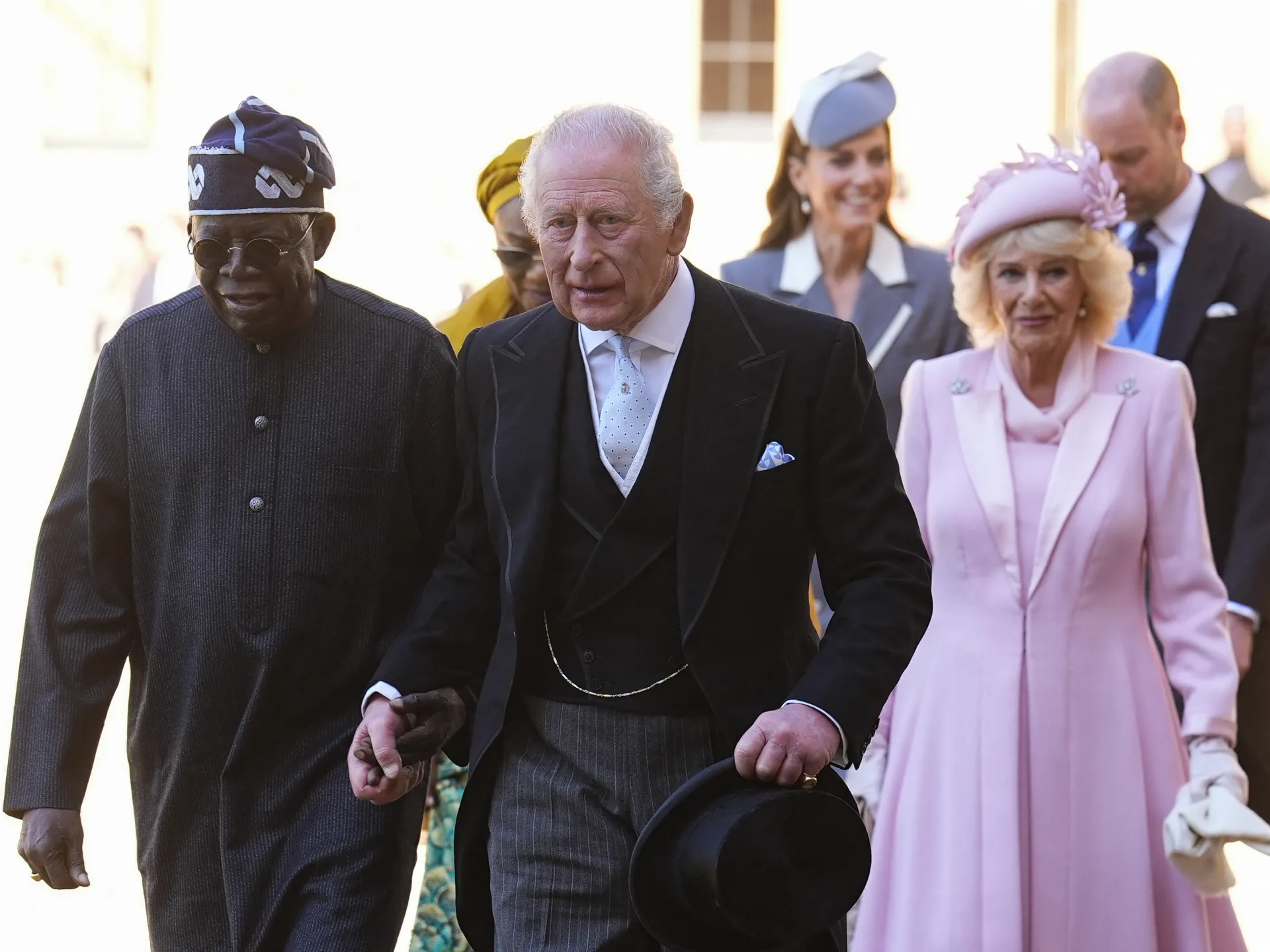
The UK’s King Charles III has welcomed Nigerian President Bola Tinubu at Windsor Castle in the first state visit by the leader of Africa’s most populous nation in nearly four decades.
More than 1,000 soldiers were out in force on Wednesday for the diplomatic show of soft power by the royal family.
Recommended Stories
list of 3 itemsend of list
With trade between the two countries at a record high, Charles is using the two-day visit to highlight the pair’s deep cultural and commercial links.
Tinubu has made less formal visits to the United Kingdom several times during his tenure, and the two countries remain major partners in trade, aid and defence. London is also home to a large Nigerian diaspora of about 300,000 people.
Nigeria’s presidency said the visit signalled a “renewed chapter” and reflected a shared commitment to “advancing trade and strengthening diplomatic ties”.
Calling the visit “historic”, London announced Nigerian companies, including banks, are expanding operations and creating hundreds of jobs in the UK, strengthening it as a global hub for African business.
Nigerian flags and Union Jacks
King Charles and Queen Camilla greeted the president and his wife in Windsor, west of London, as artillery fired salutes.
Both Nigerian flags and Union Jacks fluttered amid the procession.
The Nigerian president and his wife earlier chatted with heir-to-the-throne Prince William and his wife Catherine, at a hotel in the town.
The party then rode in carriages to the historic Windsor Castle.
Later, the king and queen showed the president and first lady items from the UK’s colonial rule of Nigeria, which existed until 1960.
Later on Wednesday evening, a lavish state banquet took place.
On Thursday, Tinubu is expected to meet British Prime Minister Keir Starmer, as well as members of the Nigerian community abroad, according to the official schedule.
Missing from the official schedule is the traditional meeting between the visiting head of state and the British opposition.
Conservative Party leader Kemi Badenoch, who is of Nigerian descent, has repeatedly publicly criticised the country she was raised in over corruption and violence.
The last Nigerian state visit to the UK took place in 1989, although Tinubu was received by Charles in September 2024.
Before the death of his mother, Queen Elizabeth II, in 2022, Charles also visited Nigeria four times as prince of Wales.
Tinubu’s visit went ahead, despite a deadly bombing in northeastern Nigeria’s Borno State on Monday, which killed 23 people and injured more than 100, with the president condemning the attacks and insisting “Nigeria will not succumb to fear.”
TOKYO — Japanese Prime Minister Sanae Takaichi is traveling Wednesday to the United States for what she expects to be a “very difficult” meeting with President Trump after he called on Japan and other allies to send warships to secure the Strait of Hormuz.
The three-day visit to Washington was originally expected to focus on trade and strengthening the U.S.-Japanese alliance as China’s influence grows in Asia. It is now expected to be overshadowed by the war the United States and Israel launched against Iran on Feb. 28.
”I think the U.S. visit will be a very difficult one, but I will do everything to maximize our national interest and to protect the daily lives of the people when the situation changes daily,” Takaichi told parliament on Wednesday, hours before her departure.
Takaichi held her first meeting with Trump in October in Tokyo, days after becoming Japan’s first female prime minister. A hard-line conservative, Takaichi is a protege of former leader Shinzo Abe, who developed a close friendship with Trump.
Her initial plan was to focus largely on China and strengthen the Japan-U.S. alliance ahead of Trump ‘s highly anticipated diplomatic trip to China that had been planned for months. The White House announced Tuesday that it is being delayed due to the war in the Middle East.
Takaichi will be in the hot seat figuring out what best to offer to Trump. Experts say showing commitment and progress in investment deals is key to a successful summit.
Japanese officials say the two sides will work to deepen cooperation in regional security, critical minerals, energy and dealing with China.
No plan to send warship to the Strait of Hormuz
A key U.S. ally in Asia, Japan has carefully avoided clear support for the U.S.-Israel strikes on Iran or a decision over a warship deployment. That’s mainly because of Japan’s constitutional constraints but also due to a legal question over the U.S. action and strong public opinion against it.
She told parliament that Japan hopes to see a de-escalation of the war, which has disrupted deliveries of oil and gas that Japan is highly dependent on.
“Without early de-escalation of the situation, our economy will be in trouble,” she said. “Early de-escalation is important for both the U.S. and global economy.”
Japan also hopes to secure its traditional ties with Iran, where most of Japanese oil imports come from.
Takaichi and her ministers have denied that Washington officially requested Japanese warships sent to the Strait of Hormuz. Trump on X asked a number of countries, including Japan, to volunteer. He then said he no longer needs them, complaining about a lack of enthusiasm.
That takes some pressure off Takaichi.
“We have no plans to send warships right now,” Takaichi told the parliamentary session Wednesday. A dispatch for survey and intelligence missions are possible but only after a ceasefire, she said. Some Japanese experts have commented that minesweeping would be a mission that the country could carry out when hostilities end.
“I will clearly explain what we can do and cannot do based on the Japanese law,” Takaichi said. “I’m sure (Trump) is fully aware of the Japanese law.”
China and security
Takaichi wants to discuss China’s security and economic coercion and ensure the U.S. commitment in the Indo-Pacific region, especially as some U.S. troops stationed in Japan are being shifted to the Middle East — a change seen by Japan as a potential risk for Asia as China’s clout grows.
Takaichi plans to reassure Trump of Japan’s military buildup, emphasizing the acceleration of long-range missile deployment to enhance offensive capabilities. This breaks from Japan’s postwar self-defense-only principle and reflects closer alignment with the U.S.
At the summit, Takaichi is expected to convey Japan’s interest in joining America’s “ Golden Dome “ multi-billion dollar, multi-layered missile defense system.
Japan considers China a growing security threat and has pushed a military buildup on southwestern islands near the East China Sea.
Takaichi has pledged to revise Japan’s security and defense policy by December and seeks to further bolster Japan’s military with unmanned combative weapons and long-range missiles.
Her government is to scrap a lethal arms exports ban in the coming weeks to promote Japan’s defense industry and cooperation with the United States and other friendly nations.
Oil in Alaska, rare earths in Japan
A resource-poor nation, Japan is seeking to diversify oil suppliers and is finalizing a Japanese investment for increased oil production in Alaska and stockpiles in Japan, according to media reports. A Japanese investment in small modular reactors and natural gas in the U.S. is also a possibility.
If agreed, the projects would be part of a $550 billion investment package that Japan pledged in October. In February, the two sides announced Japan’s commitment to the $36 billion first batch of projects — a natural gas plant in Ohio, a U.S. Gulf Coast crude oil export facility and a synthetic diamond manufacturing site — whose progress is also to be disccused with Trump.
Japan reportedly plans to propose a joint development of rare earths discovered in undersea soil around the remote Japanese island of Minamitorishima as part of the investment package.
Diplomatic and trade disputes have escalated further since Takaichi’s comment that any Chinese military action against Taiwan could be grounds for a Japanese military response.
March 17 (UPI) — Speaking to the British Parliament on Monday, Ukrainian President Volodymyr Zelensky warned that the rise of artificial intelligence and inexpensive drone technology has made “mass drone warfare” quicker and more common across the globe.
“The evolution of threats never stops,” he said in a speech touting Ukraine‘s advances in technology allow the country to defend against and monitor attacks by Russia.
During his visit to Britain, Zelensky also met with King Charles III and Prime Minister Keir Starmer, with whom he agreed to a partnership to boost global defensive capabilities across Europe to protect against a rise in low-cost, high-tech military technology. The agreement capitalizes on Ukraine’s technological expertise and Britain’s industrial ability to manufacture and supply resources, the British government said.
Britain plans to invest $667,000 in an AI center in Kyiv.
Zelensky told Parliament that Ukraine faces nearly nightly attacks from Russia and uses nearly 1,000 interceptor drones each day to protect the country. He said Ukraine can produce interceptors on that scale, but the country needs a system in place to stop the attacks by Russia and Iran, which is using weaponry made from Russian supplies.
Zelensky pointed to the military bases in Cyprus as an example, The Guardian reported.
“This is what our security proposal could look like. Our experts would place interception teams and set up radars and acoustic coverage, and these would all work if Iran launched a large-scale attack similar to Russian attacks,” he told Parliament.
“We would guarantee protection. This is the kind of reinforcement we offer, and it may soon be needed across Europe.”
During their meeting at No. 10 Downing Street, Starmer told Zelensky that “the focus must remain on Ukraine” despite new conflict in Iran, the BBC reported.
Russian President Vladimir Putin “can’t be the one who benefits from a conflict in Iran, whether that’s oil prices or the dropping of sanctions.” He was referring to the United States’ recent easing of sanctions on Russian oil to combat rising gas and diesel prices.
Zelensky offered his thanks to Starmer for the support from Britain.
“You have stood with us all through this difficult winter,” Zelensky said.
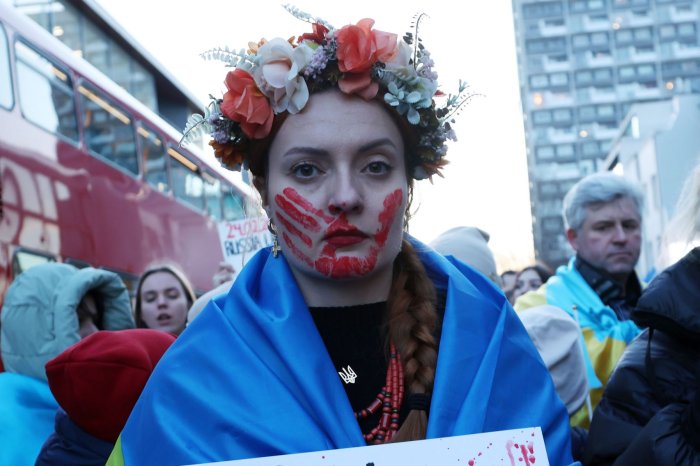
Ukrainians march together through the streets of London to the Russian Embassy to mark the first anniversary of the Russian invasion of Ukraine on February 24, 2023. Photo by Hugo Philpott/UPI | License Photo
V&A Storehouse was named one of TIMEs best places in 2026Credit: PAAs a working museum, the concept is more seeing behind the scenesCredit: PAIt has some fascinating pieces if you know where to lookCredit: Getty
The Foreign, Commonwealth and Development Office (FCDO) has been refreshing its travel advice for nations across the globe amid ongoing conflict in the Middle East, continuing to wreak havoc on international movement.
Beyond severely disrupting travel plans, the ongoing crisis is set to have far-reaching consequences for inflation, interest rates and commodity markets. British citizens have already been airlifted from Oman, the United Arab Emirates, and neighbouring regions, with Whitehall organising charter flights to repatriate nationals safely.
Those most at risk will receive priority booking on these evacuation flights, with the Foreign Office pledging to reach out to anyone who has registered their whereabouts in the affected zone, reports the Liverpool Echo.
In its guidance covering numerous Middle Eastern nations, the Foreign Office said: “Regional escalation poses significant security risks and has led to travel disruption. Stay away from areas around security or military facilities. Follow the instructions of the local authorities and monitor local and international media for the latest information.”
The advice went on: “If local authorities advise you to take shelter, stay indoors or move to the nearest safe building immediately. The greatest risk is from falling debris caused by intercepts, and you are safest inside a secure structure.
“Choose an interior stairwell or a room with as few external walls or windows as possible for additional protection.”
Political strife, natural calamities and safety issues are among the factors leading the UK Foreign Office to advise Brits against travelling to certain locations.
Afghanistan
Travel to Afghanistan is strongly discouraged. The security climate is unpredictable, with previous tensions between Afghanistan and Pakistan resulting in violent skirmishes in border areas.
Travelling across Afghanistan poses extreme risks, and several border crossings are currently closed.
The likelihood of British nationals being detained in Afghanistan is significantly high. If you’re a Brit and find yourself detained in Afghanistan, you could be looking at a lengthy prison sentence spanning months or even years.
The FCDO’s capacity to assist you is severely restricted, and in-person support in Afghanistan is not feasible.
Belarus
The FCDO strongly advises against all travel to Belarus. If you’ve ever participated in activities now deemed illegal by the Belarusian regime, you run a substantial risk of arrest.
There’s also a minor risk that direct conflict related to the war in Ukraine could spill over into Belarus.
In the unlikely event of conflict breaking out, the FCDO’s ability to aid British nationals will be drastically limited. Ignoring advice from the FCDO could invalidate your travel insurance.
Burkina Faso
The FCDO advises against all travel to Burkina Faso due to the threat of terrorist attacks and kidnappings, coupled with the country’s unstable political situation.
There is no British Embassy in Burkina Faso and all consular support is provided from the British Embassy in Accra, Ghana. They cannot provide in-person assistance.
If there is serious violence, unrest or a deterioration in the security situation, it could be difficult to leave safely.
Haiti
The FCDO advises against all travel to Haiti owing to the unstable security situation. There are currently no British consular officials in Haiti and its ability to provide consular assistance is severely limited and cannot be delivered in person in Haiti.
If you choose to travel to or remain in Haiti against FCDO advice, attempt to avoid all crowds and public events, and take appropriate security precautions.
Iran
The FCDO advises against all travel to Iran. If you are a British national already in Iran, either resident or visitor, the Foreign Office said: “carefully consider your presence there and the risks you take by staying”.
British and British-Iranian dual nationals face significant risk of arrest, questioning or detention. Possessing a British passport or links to the UK can be reason enough for the Iranian authorities to detain you.
Iraq
The FCDO advises against all travel to Federal Iraq and the Kurdistan Region of Iraq. This is due to recent escalation in regional conflict.
There is significant risk of further escalation, and events are fast-moving and unpredictable. The Foreign Office said: “Regional escalation poses significant security risks and has led to travel disruption. The border crossing from Iraq into Kuwait is closed.
“British nationals wishing to cross into Kuwait must contact the British Embassy in Kuwait 24 hours in advance. The British Embassy will share names and passport details with the Ministry of Foreign Affairs who will determine entry.”
Israel
The FCDO advises against all travel to Israel and Palestine: “Regional escalation poses significant security risks and has led to travel disruption. Stay away from areas around security or military facilities.”
Britons should inform the UK government of their presence in Israel, and register if they’re in the region for ongoing updates. You should adhere to instructions from local authorities and keep abreast of local and international media for the most current information.
Mali
The FCDO advises against all travel to Mali in its entirety owing to volatile security conditions. If you’re currently in Mali, you should depart “immediately” via commercial flight if you deem it safe to do so.
“The international airport in Bamako is open, and commercial flights are available. Do not try to leave Mali by overland routes to neighbouring countries as this is too dangerous. This is due to terrorist attacks along national highways.”
There remains a significant threat of abduction and criminal behaviour throughout Mali, including within the capital city of Bamako.
The Foreign Office warned: “If you choose to remain in Mali, you do so at your own risk. You should have a personal emergency plan that does not rely on the UK government.”
Niger
The FCDO advises against all travel to Niger. Officials said: “This is due to the rise of reported terrorist and criminal kidnappings of foreign nationals which have taken place this year in Niger. There is an ongoing risk of terrorist attacks throughout Niger including in the capital, Niamey.”
Support for British nationals is extremely limited in Niger. Assistance is delivered remotely from the British Deputy High Commission in Lagos.
Face-to-face help is unavailable. Should serious violence, civil unrest or a worsening security situation occur, departing safely could prove challenging.
Palestine
The FCDO advises against all travel to Israel and Palestine. UK citizens currently in the region should inform the Government of their whereabouts in Palestine and register their presence to receive ongoing updates.
Should you determine it’s safe to proceed and intend to use commercial departure options, verify the latest information from your airline or tour operator, alongside guidance from local authorities and the status of border crossings prior to travelling.
The Foreign Office cautioned: “The situation could escalate quickly and poses significant risks. Regional tensions may cause international borders (air and land) to close.”
Russia
The FCDO warns against all travel to Russia owing to the dangers and threats stemming from its ongoing invasion of Ukraine, including security incidents such as drone strikes and Russian air defence operations, a shortage of flights back to the UK, and restricted capacity for the UK government to offer assistance.
The Foreign Office said: “There is an increased risk of British nationals being detained in Russia, including if the Russian authorities suspect you of engaging in or supporting activities against Russian law, even if activities took place outside Russia.”
South Sudan
The FCDO warns against all travel to South Sudan due to the threat of armed violence and criminal activity.
“The political and security situation remains unpredictable. Political tensions are high and the security situation across the country could deteriorate rapidly and unpredictably.
“If the unstable security situation deteriorates, routes into and out of South Sudan may be blocked. Juba airport may close or be inaccessible. Flights may be cancelled at short notice.”
Syria
The FCDO warns against all travel to Syria owing to volatile security conditions and the risk of terrorist attacks. Consular support is unavailable from the British government within Syria.
The FCDO may learn of assistance offered by other organisations which can be shared with British nationals. Should you require help, contact the FCDO in London on +44 (0)20 7008 5000.
Yemen
The FCDO warns against all travel to Yemen in its entirety owing to unpredictable security conditions. The guidance states: “If you’re in Yemen, you should leave immediately.”
Assistance for British nationals is extremely restricted in Yemen. The British Embassy in Sana’a has suspended operations, with all diplomatic and consular personnel evacuated.
The UK government is unable to assist British citizens departing Yemen. No evacuation arrangements are currently in place.
Should you decide to stay in Yemen, you ought to keep movement around the country and within urban areas to a minimum, stay informed about changes in the local security landscape and observe other safety measures.
Brazilian President Luiz Inacio Lula da Silva says Darren Beattie was ‘prohibited from visiting’ Bolsonaro in prison.
Published On 13 Mar 202613 Mar 2026
Share
The government of Brazil has revoked the visa of Darren Beattie, a far-right adviser to United States President Donald Trump who had planned to visit ex-President Jair Bolsonaro in his prison cell in Brasilia.
Brazilian President Luiz Inacio Lula da Silva confirmed on Friday that Beattie’s visa has been pulled. He equated it to the US pulling visas from Brazilian officials in Washington, DC.
Recommended Stories
list of 3 itemsend of list
Among them was Brazilian Health Minister Alexandre Padilha, whose US visa was revoked last year.
“That American guy who said he was coming here to visit Jair Bolsonaro was prohibited from visiting, and I forbade him from coming to Brazil until they release the visa for my health minister,” Lula said during an event in Rio de Janeiro.
Separately, Brazilian officials told news services, including the AFP, that Beattie had lied about the purpose of the visit on his visa request.
Bolsonaro is a far-right ally of President Trump, and he is currently serving a 27-year sentence for his role in a coup plot after Brazil’s 2022 election.
Friday’s decision shows the continued tension between the Brazilian and US governments, even as Trump and Lula have enjoyed warming relations.
Last August, Trump placed Brazil under heavy tariffs — some of the highest in the world — in protest against Bolsonaro’s prosecution. He demanded that the country’s legal system drop the case against Bolsonaro and accused Brazil of persecuting right-wing voices.
After Trump met Lula at the United Nations General Assembly in September and again at a summit for the Association of Southeast Asian Nations (ASEAN) in October, relations between the two leaders improved.
Lula also reached out by telephone in October in a bid to ease the cumulative 50-percent tariffs on certain Brazilian products. On November 20, Trump responded by issuing an executive order “modifying the scope of tariffs” on Brazilian exports like beef and coffee.
But speculation has remained high that Trump could again intervene in the country’s domestic politics to boost the prospects of the Brazilian right.
Brazil is set to hold a new presidential election in October, where Lula is facing off against Bolsonaro’s eldest son, Flavio.
Lawyers for the imprisoned Bolsonaro had asked the Brazilian Supreme Court to approve a visitation request from Beattie this week, but the court rejected that request on Thursday.
Beattie, a strong critic of Lula’s government, was fired during Trump’s first term in office following reports that he had attended a white nationalist conference.
Bolsonaro, meanwhile, was placed in intensive care on Friday, with hospital officials saying the 70-year-old had a “high fever, a drop in oxygen saturation, sweating and chills” linked to pneumonia.
THE top 50 cities to visit in 2026 have been revealed, and the UK hasn’t done too badly.
Time Out has teamed up with Intrepid for its annual Best Cities of 2026, speaking to 24,000 people living in cities around the world.
Sign up for the Travel newsletter
Thank you!
Time Out’s annual Top Cities study has named Melbourne as the best in the worldCredit: AlamyLondon squeezed into the top five best citiesCredit: Alamy
A panel of 100 Time Out city experts were also asked about the most exciting cities in the world, looking at data from 44 different criteria.
This includes food and drink, green spaces, culture, sense of community and Gen Z appeal.
While Melbourne came out on top, Edinburgh came in third, followed by London in fourth.
Edinburgh was praised for its famous Fringe Festival, as well as its “cherry-blossom-lined parks, cobbled alleyways and distinctive neighbourhoods that offer hours of exploration”.
It was also one of the happiest cities in the survey, with it highly rated for both food and green spaces.
When it comes to London, its the new attractions that were praised such as the Museum of London in Smithfield.
And 99 per cent of Londoners praised its art and culture.
Bath snuck into the full top 50 at number 26, praised for its new hotels, good community feel and the celebration of 20 years of the Thermae Bath Spa.
Time Out Travel Editor Grace Beard said: “Every year, we survey locals in cities all over the planet to create our definitive annual ranking.
“Now in its tenth anniversary year. Time Out’s Best Cities with Intrepid Travel is not only a global snapshot of city living, but a celebration of the fun, culture and community that defines urban life.
“For 2026, we expanded our survey to reach 150 cities and added questions that dig deeper into the everyday lives of locals, including new categories for love, romance and community feel.
“The result is a truly diverse and exciting list of destinations, deeply informed by local insight and Time Out expertise, with smaller and second cities slotted between the world’s major metropolises.”
Outside of the UK, the highest rated city in mainland Europe was Zurich, coming in 11th place.
This was followed by Copenhagen (13), Krakow (16) and Porto (17).
Zurich was the highest rated city in mainland EuropeCredit: AlamyThe best Spanish city was Madrid, in 19th placeCredit: Alamy
Top 50 Best Cities in the World, according to Time Out
Melbourne, Australia
Shanghai, China
Edinburgh, United Kingdom
London, United Kingdom
New York, United States
Cape Town, South Africa
Mexico City, Mexico
Bangkok, Thailand
Seoul, South Korea
Tokyo, Japan
Zurich, Switzerland
Rio de Janeiro, Brazil
Copenhagen, Denmark
Sao Paolo, Brazil
Hong Kong, Hong Kong
Krakow, Poland
Porto, Portugal
Guadalajara, Mexico
Madrid, Spain
Valencia, Spain
Sydney, Australia
Paris, France
Singapore, Singapore
Marrakesh, Morocco
Hanoi, Vietnam
Bath, United Kingdom
Bilbao, Spain
Berlin, Germany
Adelaide, Australia
Beijing, China
Antwerp, Brussels
Chiang Mai, Thailand
Naples, Italy
Amsterdam, Netherlands
Medellin, Colombia
Lima, Peru
Vancouver, Canada
Ho Chi Minh City, Vietnam
Osaka, Japan
Athens, Greece
Chicago, United States
Cairo, Egypt
Buenos Aires, Argentina
Vienna, Austria
Dublin, Ireland
San Francisco, United States
Lagos, Nigeria
Auckland, New Zealand
Lisbon, Portugal
Bogota, Colombia
The Spanish cities of Madrid and Valencia snuck into the top in 19th and 20th, respectively.
For long-haul destinations, New York, Bangkok and Tokyo all made the top 10.
Shanghai was praised for being easier to travel to this year, following the scrapping of visas until the end of 2026, while Seoul was one of the most popular with Time Out staff.
Paris has some great festivals, such as Cercle (22-24 May), with dance music stars against the backdrop of planes and rockets in an outdoor aerospace museum, but the most accessible and democratic is Fête de la musique, which began in Paris in 1982 but is now popular across the country. It is a loose event encompassing dozens of free, semi-impromptu outdoor performances all over each host city, including plenty in Lille, which is even cheaper and quicker to get to than Paris on the Eurostar from London.
While the UK may cock its ear occasionally to English-singing bands like Phoenix and the “French touch” scene that birthed Daft Punk, Justice and more, Fête de la musique is a chance to immerse yourself in the music that rarely crosses the Channel, from spirited chanson to Francophone hip-hop and the breakneck carnival styles of shatta or bouyon, where MCs rattle through commands on tracks of more than 160 beats per minute.
If you don’t mind changing trains after arriving in Amsterdam or Rotterdam on the Eurostar, there are several Dutch festivals to choose from. Le Guess Who? in Utrecht (5-8 November) is celebrating its 20th year this year, and hands over some of the curation to a series of invariably excellent left-field musical guests: the likes of Animal Collective, Lonnie Holley, Mabe Fratti and Stereolab have held the reins in recent years. Rewire in The Hague (9-12 April) is even more out-there, calling on a global array of dynamic artists, from the most pristine ambient to the most audiologist-troubling extreme noise.
But the most prestigious is Roadburn, hosted in the little visited (by Brits, anyway) university town of Tilburg, which is also accessible via a change in Brussels. It has ringfenced its own black, slippery zone of adventurous heavy music, encompassing alt-metal, noise, desert rock, drone and the fringes of punk, hip-hop and electronics. Bands often play albums in full – or two albums, in the case of Japanese legends Boris this year – and thanks to a relative dearth of hotels and B&Bs in Tilburg, many festivalgoers stay on a municipal campsite complete with its own noisy (but not sleep-disturbing) live sets. 16-19 April, €284 (£247); two-day and day tickets also available, roadburn.com
The Black Lights, Blackpool
Photograph: Maurice Savage/Alamy
With rail-friendly Glastonbury taking a fallow year this year, June has a festival hole that needs filling – so the timing is perfect for the arrival of the most promising new British festival in years, the Black Lights. Conceived by the White Hotel, a Salford venue that has become a cornerstone of northern underground culture, it will be hosted across multiple venues – including the beach, hosting “a modern-day War of the Roses in brass”, as brass bands from Lancashire and Yorkshire perform together.
The rest of the music programme draws from the fraying edges of rave culture, ambient, rap and dream-pop, with artists including the Caretaker – whose ultra-poignant compositions have made him an unlikely hero to gen Z on TikTok – as well as industrial-trance producer Evian Christ, lo-fi singer-songwriter Joanne Robertson, and film composer and alt-pop icon Mica Levi playing with the BBC Philharmonic Orchestra.
Blackpool’s location, halfway up the British Isles and close to dozens of large conurbations across north-west England, makes it quick and accessible via train to millions, including direct routes from London, and only one change involved from Glasgow, Newcastle, Sheffield or Bristol. 26-28 June, £150, theblacklights.uk
Westival, Pembrokeshire
Getting top points for rail accessibility is this boutique festival at the south-western tip of Wales, now in its eighth year. It’s just five minutes’ walk from Manorbier, a very sleepy single-track, single-platform station that nevertheless has direct trains from Cardiff, making it surprisingly accessible from London, the Midlands and the north-west.
Sets span the bass continuum, from drum’n’bass kingpins Shy FX and High Contrast, euphoric breakbeat by 4am Kru, and some very well chosen vocalists: ravey soliloquies from Antony Szmierek, and a tour through dub, hip-hop, speed garage and beyond from Ms Dynamite. There’s a wellness area with sound baths, yoga and the like added this year, and if you bring your bike you can get to a lovely sandy beach within a few minutes, or to beautiful alternatives Freshwater East or Barafundle with a bit more westward effort. 2-5 July, £200, westival.wales
North Sea Jazz, Rotterdam
Like the Montreux Jazz festival in Switzerland – itself slightly forbidding but do-able by train on a London-Paris-Lausanne-Montreux journey – the boundaries of North Sea Jazz have been broadened well beyond jazz itself.
Certainly there are classy, populist and yet boundary-pushing jazz names, such as Esperanza Spalding, Nils Petter Molvær and Joshua Redman this year – its 50th anniversary – but there’s plenty of soul (both neo and classic), R&B, disco and African pop, plus artists from the funk-fringed edges of hip-hop: this year the Roots are joined by two brilliant singers in Jon Batiste and Bilal.
The variety of events and the boldness of the programming in the Netherlands makes the UK look often timid by comparison. Amsterdam’s finest gem is the unmissable annual Dekmantel, held in the forested parkland of Amsterdamse Bos to the south of the city.
The festival is now so successful that its title has become a byword for a certain type of euphoric yet cerebral left-of-centre techno and bass music, and its main stage – a circular arena of wraparound lights and screens – is a pilgrimage of sorts. This year’s most eye-catching bookings include the debut of Jeff Mills’s new show Stargate, all-female DJ supergroup Sass, and collaborations between Actress and Carl Craig, Saul Williams and Underground Resistance, and RHR and Skrillex. 29 July-2 August, €250 (£217), dekmantelfestival.com
C2C, Turin
For an affordable and relatively far-flung festival that can be reached from London in a single day, head to C2C in Turin, requiring just one change in Paris. Not to be confused with the UK country music fest of the same name, those letters stand for “club to club”, and while the festival started out rooted in dance culture, it has lengthened its stride over the course of 25 years, now with one foot in each of the overground and underground.
The first names announced for this year include deep house legend Theo Parrish, playing an extended DJ set, Swedish alt-rap sweethearts Yung Lean and Bladee, Kenyan ambient doyen KMRU, and names from the tastemaking end of pop: Robyn, Oklou and Kelela. It’s also located in the grounds of Turin’s historic Fiat building – the one with the nothing-so-Italian flourish of putting a test track on the roof – now converted into an open-air gallery (the artworks are a little twee, but the setting is dramatic). 29 October-1 November, €152 (£132), clubtoclub.it
WARMER weather is on the horizon, so why wait until summer to visit your favourite holiday hot spots?
Spain is still top of Brits’ holiday lists and the coming months are a great time to visit this beautiful country, with mild temperatures just right for exploring when it’s not too crowded.
Sign up for the Travel newsletter
Thank you!
If you’re a foodie, San Sebastian won’t disappointCredit: Getty
Sophie Swietochowski shares her pick of springtime destinations in Spain and its islands with tips from experts who know the area.
THIS northern port city may not attract as many fly-and-flop holidaymakers as the southern costas, but its coastlines are no less beautiful.
Temperatures can reach the low 20Cs during spring in Bilbao, so Sara Di Lenardo, Destination Manager at British Airways Holidays, recommends hitting the shores.
Bilbao may not attract as many fly-and-flop holidaymakers as the southern costas, but its coastlines are no less beautifulCredit: Getty
She says: “There are several wild beaches in the Basque Country. The rocky shores are dramatic and incredibly photogenic.
“Walk along stunning coastal paths with the Pyrenees as the backdrop — they might possibly still have snowy peaks in spring.”
The month of May is a great time to visit for music fans, thanks to several big concerts and events.
Sara advises to keep your eyes peeled for the Trikitixa, a traditional basque instrument that’s a bit like an accordion.
STAY: Two nights’ room-only at the 5H Melia Bilbao is from £349pp including flights from Gatwick on selected dates in May. Price includes 10 per cent discount. Book by March 31.
THE White Isle only starts awakening for its big party season in spring, after a slow winter hibernation — and for travel expert David Mason, this is one of the best times to visit the party isle.
He reveals: “You have all the optimism of a new season commencing, cheap accommodation and flights, plus lots of local food festivals.”
Ibiza only starts awakening for its big party season in spring, after a slow winter hibernationCredit: Getty
Throughout this month, up until early April, you’ll be able to experience the Pintxa Run food festival in San Antonio, close to the ocean, David says.
Every Thursday throughout the month, dozens of small bars and restaurants dish up tapas and a drink for just three euros with everything from steakhouses to pizzerias participating.
David adds: “The festival includes a free novelty train that takes you from stop to stop — perfect if you’ve had a few too many cervezas on the route.”
STAY: Seven nights’ all-inclusive at the 4H Invisa Figueral Resort Hotel Cala Blanca is from £562pp including flights from Manchester on April 7.
Sara di Lenardo says this is the top place to sample pintxos in the traditional way (small bites served on a mini slice of bread).
Wash it down with a local beverage for a truly authentic experience.
Sara adds: “Spring is cider season. Try the local drink txakoli — it can be found in most bars in town, but if you have time, make sure to visit Getaria where it’s produced.”
For those seeking seaside relaxation, Sara recommends La Concha, a horseshoe-shaped beach right in the city, offering gorgeous views of the blue Med.
STAY: Seven nights’ B&B at the 4H Bancal Hotel & Spa is from £599pp including flights from Gatwick on selected dates in May. Book by March 31.
THIS vibrant student city, which sits a little south of Alicante, is fascinating for history lovers, with its 14th-century cathedral taking pride of place in the city centre.
Tom Wilkinson, product manager at Explore Worldwide, says: “This lesser-known southern gem enjoys 320 days of sunshine each year, with mild winters and a semi-arid climate.”
Murcia sits a little south of Alicante and is fascinating for history lovers, with its 14th-century cathedral taking pride of place in the city centreCredit: Getty
The sights are best explored on two wheels, says Tom — on a cycle tour you’ll pass through white-washed villages and historic Moorish towns, pausing to watch the sun set.
Fruit and veg are at the forefront of cuisine here and you can expect rich stews as well as freshly baked cakes.
Try Keki, not far from the cathedral, which serves up a Murcian cheesecake to die for.
STAY: A seven-day Cycle Southern Spain tour costs from £970pp including six breakfasts, all accommodation, cycle gear and flights from selected airports on May 10.
HOLIDAYMAKERS jetting off to Menorca in spring can expect rugged landscapes backed by chalky white cliffs and sandy bays overlooking vibrant blue seas.
“The beaches are some of the most beautiful in the world, offering Caribbean-style scenes without the time difference,” says Kate Bigger, destination manager at British Airways Holidays.
Expect rugged landscapes backed by chalky white cliffs and sandy bays overlooking vibrant blue seas on MenorcaCredit: Getty
She suggests strolling the impressive Cami de Cavalls, adding: “This is a walk that goes through the length of the island, with spring being the perfect time to do this.”
Vineyards are scattered across the island and many of them invite visitors to meander among the vines, sampling wines as part of a tasting lunch or dinner.
STAY: Seven nights’ B&B at the 5H Melia Cala Galdana is from £1,099pp (includes €28pp tourism tax, payable locally) including flights from Gatwick on selected dates in May. Book by March 31.
DOH! Homer – no, not the Simpsons character, I mean the ancient Greek poet – must have got it wrong when he penned his classic Odyssey saga some 3,000 years ago.
For legend has it that the tiny Dodecanese island of Lipsi is his fabled Ogygia, where a saucy siren called Kalypso kept Trojan war hero Odysseus a prisoner for seven years.
Sign up for the Travel newsletter
Thank you!
The picturesque harbor of Lipsi island, Dodecanese, Greece is the type of place nobody should ever want to leaveCredit: AlamyThe rural landscape of Lipsi island shows how laid back life on the archipelago really isCredit: Getty
Now, according to Homer, Odysseus was desperate to escape from Ogygia and flee home to his wife Penelope in Ithaca, on the other side of Greece.
But after my week-long stay in Lipsi I can’t imagine anyone wanting to leave this lovely, laid-back island, lapped by the clear blue water of the Aegean Sea.
Especially with the cooling Meltemi breeze ensuring that, although the temperature can hover in the 30s in summer, it never feels oppressively hot.
Certainly Sally Vavoulas, from Tenterden, Kent, has not wished to leave.
She arrived in Lipsi in 2001, fell under its spell — and is still there.
These days she helps run the island’s excellent winery with husband Manolis. But more of that later.
Lipsi is not one island but an archipelago.
Only three of its 24 isles are occupied — and one has just two residents — while most of the 800-strong population are clustered in a sprawling village on the main isle.
Ferries chug into the little harbour every day from Kos and Samos, a two-hour cruise away — and twice a week from Athens, a longer nine-hour voyage.
Berthed alongside them are millionaires’ luxury superyachts, which have sailed from faraway spots such as the Caribbean and the United States.
Winemaker Sally Vavoulas came to Lipsi in 2001 and has never looked backCredit: Supplied
And tied up farther down the jetty are the locals’ tiny but colourful fishing smacks.
Fortunately, though, those huge skyscraper-like cruise ships are banned from Lipsi.
Lining the quay are a cluster of excellent tavernas — such as Pefko, where owner Nikos looks annoyed when I ask which is the best dish on that night’s menu.
“None is best,” he replies sternly, before breaking into a beaming smile and adding: “Everything’s superb.” Hmm, as I soon discover, Nikos isn’t wrong!
Just down the road there’s Kalypso, a restaurant owned by the brother of village mayor Fotis Mangos and named after the aforementioned siren.
Well, if she dished up a delicious sea bass like the one I tucked into, then no wonder Odysseus stayed for seven years.
Fotis, I have been warned, has a habit of suddenly breaking into song.
He doesn’t after joining me for dinner, but plays a YouTube video of him duetting with a Greek rapper on a little ditty called “Come With Me To Lipsi”.
Malcolm visited the apiary in Lipsi, discovering how the honey is infused with thymeCredit: Supplied
Former PE teacher Fotis is justly proud of his “hidden gem” of an island, and would love to see more British holidaymakers venturing there. September, he says, is ideal as the kids are back at school yet the sun is still hot and the sea remains comfortably warm.
Not too many tourists, though, because Fotis doesn’t want to turn the place into another overcrowded Santorini or Kos.
Probably unlikely, because there are no discos or nightclubs blaring out raucous music.
Nor will you find any sunbeds, parasols or pedalos on the tiny beaches scattered around its coves.
A couple do boast tavernas where you can sip a cold beer or the local aniseed-based ouzo over lunch. But most are virtually deserted and often you have them to yourself.
Two other restaurants in the village worth visiting are Manolis Tastes, whose chef was once voted Best in the Mediterranean, and Plateia, where Despina makes ice cream that is to die for.
One morning I take a 50-minute ramble along winding dirt tracks, following colourful hand-painted signs through the hills to Monodendri — which means “One tree”. It’s supposed to be a nudist beach, although none of the three sun-worshippers stretched out on towels are baring all when I arrive. And I don’t, either.
Small shops on the island give it a very authentic feelCredit: Supplied
But it’s an idyllic, peaceful spot where you hear just the gentle waves. Grand feast
I’ve hired a little runabout car from George’s Rentals but rarely use it. Lipsi is only some 16 square kilometres and you can walk to most places.
One day, hiking past lemon and fig trees, grapevines and donkeys, I bump into Dimitri, the island’s cheesemaker.
He doesn’t speak much English and only makes goat cheese — not surprising as there are twice as many goats as people on the island — but he offers me some. It’s delicious, at 13 euros a kilo.
The island is dotted with white, blue-domed churches, most just tiny family chapels with barely room to swing a cat (of which there are many on Lipsi).
One local tells me there are 400 churches, another reckons about 150.
So I ask the island’s priest as he sits sipping coffee outside a taverna. He reckons 57. And as from time to time Fr Georgios is called out to preach in all of them, he should know.
The biggest is Panagia Charou, or the Virgin Mary of Death Church, where a revered but rather strange icon shows her clutching a crucified Christ on the cross.
Every year on August 23, it seems that a bunch of withered lilies left there by a schoolgirl in 1943 miraculously bloom back to life.
The occasion is marked by a grand feast “filled with dancing and singing, eating and drinking, drawing believers from all corners”.
Panagia Charou is the biggest church on the island of Lipsi, one of at least 50Credit: Shutterstock
Out on another walk, I meet Nikiforos, who makes the island’s honey. He doesn’t speak English but happily shows me round his apiary.
Much of the honey is infused with the taste of thyme, which grows all over Lipsi. But, sadly, time isn’t on my side, and the holiday is almost over.
I manage to squeeze in a visit to Sally’s Lipsi Winery, where I taste four of their locally produced tipples.
One, a sweet red wine called Aposperitis, was served by the Greek President to Charles and Camilla during a state banquet in Athens a few years ago.
Sally wants to know which I prefer. So I umm and aah, before suggesting perhaps I should try a second glass of each.
Which is why, on my last night, I’m afraid I ended up rather tipsy in Lipsi.
GO: Lipsi
GETTING THERE: Jet2, Tui, easyJet, British Airways and Ryanair fly to Kos with return fares this September from £106pp, and from there Dodekanisos Seaways operate daily ferries to Lipsi for around £60 return.
STAYING THERE: The delightful Lipsi Blue Boutique Hotel, a ten-minute stroll from the village, boasts wonderful views of sunsets over the Aegean, and yoga sessions on the terrace. Four nights’ B&B costs from £540.
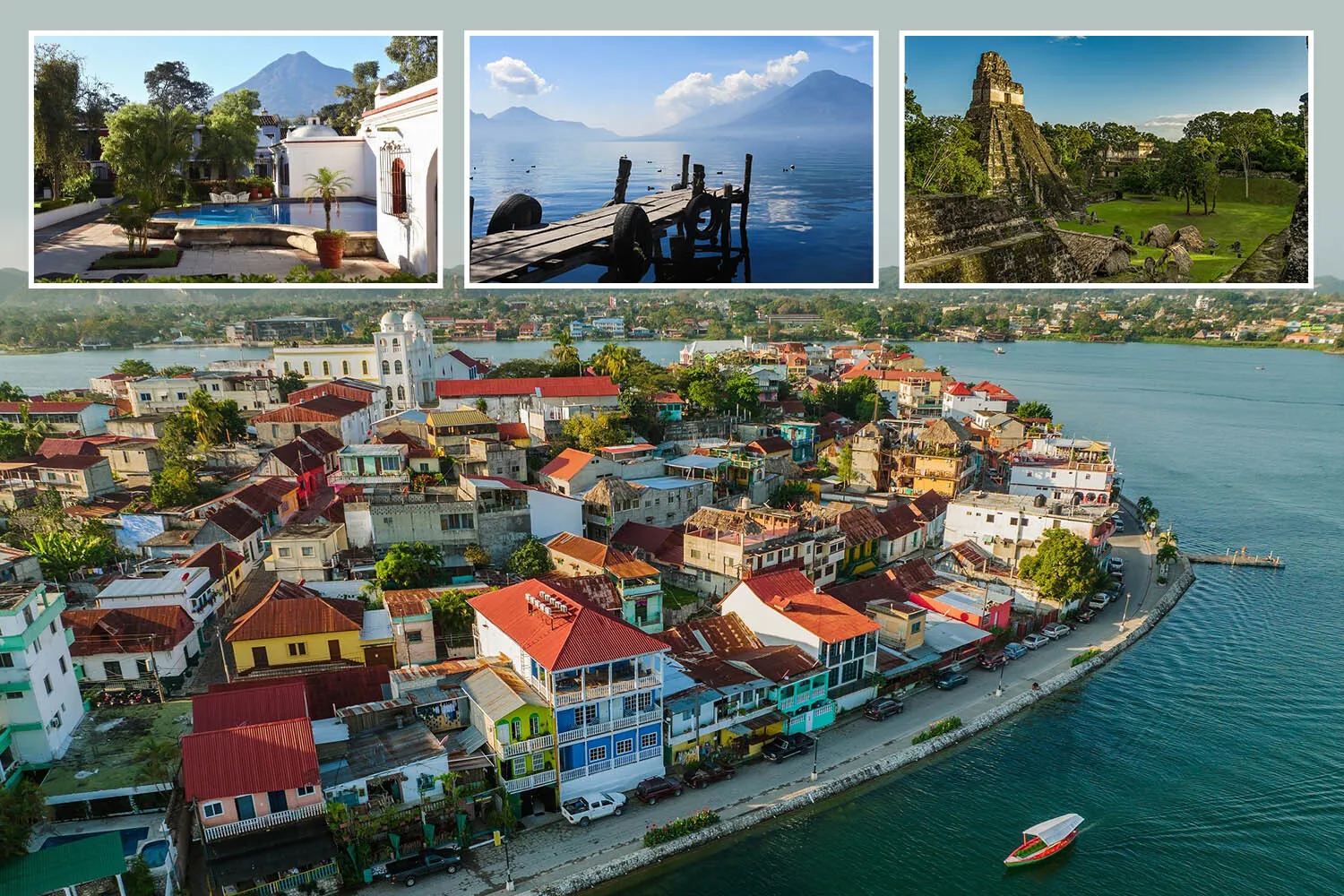
SPECTACULAR volcanos, breathtaking lakes and ancient jungle cities – explore this Central American gem before the crowds hit, says Picture Director Alan Gittos.
Here’s why it’s time to head to the central American country.
Sign up for the Travel newsletter
Thank you!
At hotel Villa Colonial, in former capital city Antigua, you can breakfast on the magnificent terrace with a great view of Fuego’s volcanic plumes
1 – Majestic Volcanos
As your flight descends into Guatemala City, you can’t miss the giant volcanoes that guard the highlands and stir the clouds.
Volcán de Fuego (Volcano of Fire) in the Sierra Madre mountains is one of the world’s most active stratovolcanoes.
And at hotel Villa Colonial, in former capital city Antigua, you can breakfast on the magnificent terrace with a great view of Fuego’s volcanic plumes. Stays cost from £77 per night (Villasdeguatemala.com).
To get even closer to playing a real game of The Floor Is Lava, take a trail ride up Volcán Pacaya, an hour’s drive from the city.
Let your horse carry you across dark ash soil to the base of the cone, then toast marshmallows on the geothermal vent – yes, really!
A six-hour horse-riding tour costs £67 per person (Pacayatours.com).
2 – Punchy Plates
For classic dishes in Antigua, head to charming La Fonda de la Calle Real
Breakfast is a big deal here. Try the traditional feast of eggs, black beans and tortilla somewhere atmospheric, such as Raíces Restaurant on the edge of Lake Petén Itzá – it will only set you back £3 (@Raicesrestaurante).
For classic dishes in Antigua, head to charming La Fonda de la Calle Real and order the delicious Chiles Rellenos De Res – battered roasted peppers stuffed with beef mince, £9 (Lafondadelacallereal.com).
After modern fusion cooking? Dig into a trio of ceviche at Maxán, £14, followed by Buñuelos – moreish plantain fritters laced with cardamom, £3 (@Maxangt).
3 – Floating Flores
Visit this small town on a tiny island in Petén as it was the last Mayan kingdom to resistCredit: Getty Images
This small town on a tiny island in Petén was the last Mayan kingdom to resist. Set sail on Lake Petén Itzá to spot kingfishers, vultures and maybe even a crocodile or two.
Expect to pay around £37 for a boat ride from the shore. Once back on dry land, browse the brightly painted shops for textiles, ceramics and souvenirs, then sip a refreshing, bright-green limonada con chaya, made with lime juice and local chaya leaves, £3.40, at La Danta restaurant as the sun sets (Ladantarestaurante.com).
After dark, settle into a charming cabin at nearby Hotel Villa Maya and drift off to the sounds of the rainforest.
Lake Atitlán was described as ‘the most beautiful lake on Earth’ by German explorer Alexander von Humboldt, and at sunrise it is truly bewitchingCredit: Getty Images/iStockphoto
Lake Atitlán was described as “the most beautiful lake on Earth” by German explorer Alexander von Humboldt, and at sunrise it is truly bewitching.
Stroll the water’s edge in Panajachel, then hop on a boat to the sleepy lakeside villages.
Stop off at San Juan La Laguna to meet women-run weaving cooperatives, watch natural-dye workshops and grab a large bag of fresh Arabica coffee, £8, from Café San Juan (Cafesanjuangt.com).
Day tours cost from £74 per person (Getyourguide.com). Finally, be sure to make the short, steep climb to Kaqasiiwaan Viewpoint for a stunning panorama – the £4 entry fee is well worth it.
At the top, sip cold Gallo beer crowned with spiced cucumber rings, £2, from the kiosk. Heaven!
5 – Cacao + Coffee
Marvel at the natural beauty all aroundCredit: Alamy Stock Photo
For thousands of years, maize and cacao have been Guatemala’s sacred crops.
In San Juan La Laguna, stop by Deleite Ancestral and learn to make traditional dishes, such as tz’utujil chicken stew with handmade tortillas – expect to get hands on! – then sample the mouth-watering results (@Deleiteancestral).
In Antigua, join a lively chocolate workshop at Ek Chuah to hear all about cacao’s history, while making sweet treats to take away.
An hour’s workshop costs £19 per person (Chocolateantigua.com). Coffee is the latest big Guatemalan obsession, and at 5,000ft above sea level, Antigua’s volcanic-soil plantations grow some of the world’s finest.
Take a tour of Finca Filadelfia to find out why shade-grown beans taste richer, why only women can plant the seedlings and why medium roast is the national sweet spot.
Finish with a tasting that’s both jittery and blissful. A 90-minute tour costs £19 per person (Facebook.com/fincafiladelfia).
6 – Gemstone shopping
Antigua Guatemala is a UNESCO World Heritage Site, with cobbled streets lined with ceramics, leather goods and exquisite jade jewelleryCredit: Getty Images
Antigua is a UNESCO World Heritage Site and its cobbled streets are filled with shops selling locally made ceramics, leather goods and exquisite jade jewellery. Discover why it’s the Mayans’ favourite gem with a free tour of Casa Del Jade’s museum (Casadeljade.com).
Later, check out the impressive 18th-century Convent of La Merced, with its giant fountain shaped like a water lily, and the Arch of Santa Catalina, £2 entry. But for the most dramatic view, head for Cerro de la Cruz (the hill of the cross) to snap vistas of the city beneath the incredible backdrop of Volcán Agua.
7 – Jungle adventures
Explore Tikal and climb Temple IV for one of the Americas’ most breathtaking views – seen in the first Star Wars filmCredit: Getty Images
Want to hear howler monkeys roar like dinosaurs and spy pyramids emerging from the jungle canopy?
Hit Tikal, a vast site built by the ancient Mayans using only stone-age tools, and climb Temple IV for one of the most extraordinary views in the Americas – it even featured in the first Star Wars film.
Tikal is also a UNESCO World Heritage Site for its biodiversity – back at ground level, coatimundis scramble across paths, spider monkeys hang from branches and leafcutter ants march across the jungle floor.
Tikal is also a UNESCO World Heritage Site for its biodiversityCredit: Getty Images/iStockphoto
Or to channel your inner Indiana Jones, head for the Belize border and pay the £8 entry to explore Yaxhá, a site whose origins are even older than Tikal.
It only receives about 80 visitors a day, so you may feel like the first to discover its huge plazas and temples.
Look out for the famous ball court, where Ancient Mayans played pok ta pok – a game with high stakes, where losing teams faced being sacrificed!