New attacks near Bethlehem and Hebron underscore intensifying Israeli violence in occupied Palestinian territory.
Israeli settlers have launched two major arson attacks on Palestinian villages near Bethlehem and Hebron amid a wave of rising violence by Israel in the occupied West Bank.
Dozens of settlers rampaged through the village of al-Jaba, located 10km (six miles) southwest of Bethlehem, on Monday, torching three Palestinian homes, one shack and three vehicles, according to Dhyab Masha‘la, the head of the local council.
Recommended Stories
list of 3 itemsend of list
Masha‘la told Palestinian news agency Wafa that the attackers caused extensive damage to the village, but that locals had managed to extinguish the flames. No casualties were reported.
Earlier on Monday, Wafa said settlers set fire to a home and two vehicles, and physically assaulted several civilians in Sa’ir town, northeast of Hebron, under the protection of Israeli forces.
The Israeli settlers beat the Palestinians with batons and sharp instruments, resulting in injuries to a number of women, with Israeli forces blocking fire engines and ambulances from reaching the scene, the agency reported.
Violence in the West Bank has broken new records this year, with settlers carrying out almost-daily attacks on Palestinians that have involved killings, beatings and the destruction of property, often under the protection of the Israeli military.
Last wek, settlers set a mosque ablaze in the village of Deir Istiya in the north of the West Bank.
The Palestinian Authority’s Colonization and Wall Resistance Commission says that Israeli forces and settlers carried out 2,350 attacks across the West Bank last month alone in an “ongoing cycle of terror”, which has been taking place in the shadow of the war in Gaza.
The violence is rarely prosecuted.
Referring to the attack on al-Jaba, an Israeli military spokesperson said security forces were “searching for those involved” after being deployed to the village following reports of “dozens of Israeli citizens” torching and vandalising houses and vehicles.
Israeli Prime Minister Benjamin Netanyahu, who has overseen the rapid expansion of settlements, denounced Monday’s attack, calling the assailants a “small, extremist group” and signalling that he would convene cabinet ministers to address the problem.
Defence Minister Israel Katz said on X that the government would “not tolerate the attempts of a small group of violent and criminal anarchists who break the law to take the law into their own hands and tarnish the settler community”.
But his statement backed the continued expansion of illegal settlements on Palestinian land.
The government, Katz said, would “continue to develop and foster the settlement enterprise throughout Judea and Samaria”.
Last year, the International Court of Justice – the top United Nations tribunal – ruled that the Israeli occupation of the West Bank is illegal and called for removing Israeli settlements from the territory.
Settler violence has spiked as members of Israeli Prime Minister Benjamin Netanyahu’s far-right government push to formally annex the area, which has long operated under a system of apartheid, according to leading rights groups.
The United Nations’ human rights office warned in July that the settler violence was being carried out “with the acquiescence, support, and in some cases participation, of Israeli security forces”.
Last week, in a rare public rebuke, Israeli President Isaac Herzog and army chief Eyal Zamir condemned the burgeoning settler attacks.
A village named the world’s prettiest by Forbes in 2025 is introducing new bans and restrictions to stop visitors from frustrating locals and overwhelming the place
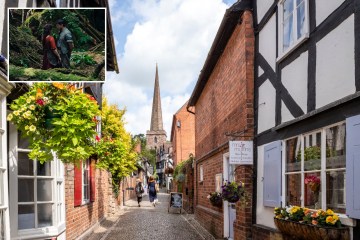
Locals complain of being overwhelmed by visitors (Image: Mike Kemp, In Pictures via Getty Images)
A UK village named the most beautiful in the world is considering new ways to keep visitors away after strict rules were introduced this summer.
Bibury, in the Gloucestershire Cotswolds, is an undeniably picturesque location. It features honey-coloured stone cottages, a gently meandering river, and a historic, fairytale ambience. Its appeal prompted Forbes to crown it the world’s prettiest village for 2025, roughly 150 years after poet William Morris dubbed Bibury “the most beautiful village in England.”
The cottages of Arlington Row are frequently described as the most photographed and stunning cottages in Britain. Constructed in 1380 as a monastic wool store, it was subsequently transformed into a row of weavers’ cottages in the 17th century.
It’s not difficult to understand why Bibury receives such high praise, with lodging choices including the Swan Hotel and The Catherine Wheel pub both inviting inside and adorned with climbing plants outside. The village’s appeal has placed Bibury firmly on the tourist map. And now, some residents say, things are becoming unmanageable.
Chairman of the local parking action group, Mark Honeyball, who has lived in Bibury for 10 years, has endured very unpleasant encounters with visitors. He told the Express that he asked a coach driver to move on from some double yellow lines before the unthinkable happened.
He said: “I’ve been physically attacked four times now, but once really quite badly two weeks ago, I was kicked in the chest and stomach and kneed and punched in the face full force by a driver that I’d just asked simply to move on from double yellows at the top of the village.
“The coach drivers themselves are being pushed here by their coach companies, they don’t really want to be here, they find it really difficult to park. The tour operators are the key behind this, the coach operators are doing what the tour operators ask them to do, primarily with people from China, India, and South Korea at the moment.”
As many as 20,000 visitors descended on Bibury in a weekend, with up to 50 coaches parking there daily. That’s an enormous figure for a village with just 600 inhabitants. Now, following a trial during the summer months, Gloucestershire County Council is planning to introduce permanent restrictions on coaches entering the village.
Councillor Lisa Spivey, leader of the council, told the BBC: “Bibury is one of the Cotswolds’ most iconic destinations, but its popularity has created real challenges. These proposals aim to safeguard the village, curb congestion, and preserve its unique charm.
Additional proposals have been put forward to control the chaos. These include:
Banning coaches from driving through the centre, except at specified drop-off/pick-up points.
Extending yellow lines to prevent illegal parking and congestion.Introducing pay-and-display parking for visitors, with exemptions for residents.
Improving short-term parking access, particularly near the village school and church.
Adding raised kerbs and seating to further pedestrianise parts of the centre and enhance safety.
Restrictions on coaches entering the village were introduced in May. At that time, parking bays in the centre of the village were closed and new public bus stop clearways were installed. The aim was to halt “unsafe coach manoeuvres.
Plans to make these changes permanent are backed by a group called Bibury One, which includes representatives from the local community, parish councillors, coach and tour operators, the county council, as well as Gloucestershire Constabulary.
If approved, the measures could be implemented by early summer 2026.
The picturesque village is home to a 16th-century bridge now buckling under the strain of a staggering 40,000 vehicles rumbling through each month during busy periods.
On the lamp-lit steps of a sombre gothic church, a young woman stands before a microphone. Beside her, a man plucks a slow melody from his guitar. Arrayed on chairs and cobblestones in front of them, a large crowd sits in an expectant silence. From a nearby balcony, laundry sways in the sultry Calabrian breeze.
The guitar quickens, and the woman issues a string of tremulous notes with all the solemnity of a muezzin. She clutches a hand drum, beating out a rhythm that draws the crowd to its feet. As people surge forward, stamping and whirling around the square, the singing intensifies and the drum’s relentless thud deepens. The festival of Sustarìa has begun.
“Sustarìa is a word in the dialect of Lago,” says Cristina Muto, who co-founded the festival in summer 2020. “It is a creative restlessness, which doesn’t let you sit still.” We’re speaking at a drinks party the evening before the annual event, on a terrace overlooking Lago’s clay-tiled roofs, when her brother Daniele appears with a jug of local wine in hand. “Welcome to Lagos Angeles, Calabrifornia,” he winks, pouring me a cup.
‘Creative restlessness’ … The festival of Sustarìa, in Lago.
Lago is a hilltop village in the province of Cosenza, overlooking the Mediterranean. It’s surrounded by sprawling olive groves and small plots where families cultivate figs, chestnuts and local grains. Cristina and Daniele were born and raised in this grey-stoned hamlet, a medieval outpost of the Kingdom of the Lombards. Although their pride in Lago is palpable, few of the Laghitani I meet live here all year round. Like many young people from southern Italy, they have left in search of opportunities that are scarce in Calabria.
It’s against this backdrop that Cristina co-founded Sustarìa. “The trend is longstanding and severe,” she tells me, “but people still live here, and there are communities that thrive despite the problems. If more people stay or return, things will get better.” By spotlighting the allure of the region’s heritage, she hopes to play a part in this.
With agriculture historically shaping Calabria’s economy and its inhabitants’ daily lives, many traditions have agrarian roots. The dance that erupted on the festival’s first night was the tarantella. It features distinctive footwork, with dancers kicking their heels rapidly. “It’s a dance of the field workers,” Cristina says. “Some say it began as a way to sweat out venom from spider bites during harvests; others say tired workers in need of a creative outlet danced slowly and just with their feet, and over time the pace and range of movement increased.”
Olive groves at Agriturismo Cupiglione which offers guest rooms close to Lago
The vocals on display that night told of another aspect of the region’s history: its frequent colonisation. Calabria was variously conquered by Greeks, Romans, Byzantines, Normans, Arabs, Lombards and Bourbons. The folk songs we heard were replete with Greek scales and Arabic cadences, a melting pot of Mediterranean timbres.
After the concert, the crowd migrated to a field by a small waterfall on the outskirts of Lago for dinner featuring regional dishes: rosamarina (the pescatarian version of nduja, known as “Calabrian caviar” made from tiny fish); fried courgette flowers; cipolla rossa di Tropea (red onions from the popular beachtown of Tropea); and pecorino crotonese, a sheep’s cheese from the Crotone province.
Over dinner I spoke with two other festival organisers, Claudia and her husband Alberto. Claudia, a Lago native, returned permanently, after a career in aerospace engineering, to run the B&B Agriturismo Cupiglione with Alberto. Nestled in woodland a few kilometres from Lago, Cupiglione was founded 25 years ago by Claudia’s parents as a restaurant with guest rooms. After closing during the pandemic, it was renovated and reopened in 2023 as a B&B with seven rooms for up to 18 guests (doubles from €40). The change in direction paid off, and Cupiglione has since welcomed hundreds of visitors to the area, evenly split between Italian and international travellers.
During my stay, I’m lodging in a house on the edge of Lago, thanks to the Sustarìa team. Hospitality runs deep during the festival; organisers open up their homes and those of their relatives to anyone who enquires through social media. Other options abound during the festival and year-round, including B&Bs such as Cupiglione and A Casa di Ely (doubles from €60), a short walk from where I stayed.
A musician playing the zampogna, an ancient form of bagpipes. Photograph: Valentina Procopio
The following afternoon, I return to the field before aperitivi, where I meet up with Cristina, who explains the growth of her initiative: “Initially, it was just locals who came to Sustarìa, but then people from other parts of Italy and even other countries started coming. Every year it grows.” This year, there are nearly 600 people in attendance.
Eric, a Londoner studying in Zurich, is one such international guest. Eric also attended Felici & Conflenti, a festival in late July hosted by friends of the Sustarìa team, which focuses on preserving and reviving the region’s ancient music. It has held 11 editions over as many years, each one featuring a winter and summer instalment, to which more people flock each year. It takes place in Conflenti, a small inland village nestled at the foot of the Reventino mountain, at the confluence of two small rivers (hence its name).
“Thanks to their work and research, instruments that were becoming extinct, like the zampogna [Italian bagpipe], are finding new life,” Cristina says.
The three of us sit chatting over plates of crisp taralli(wheat crackers)as twilight fades, and a reedy piping starts up from across the field. I stroll over, and catch sight of someone playing the zampogna, which looks like a set of bagpipes improvised from foraged materials, and is truly ancient – it counts the Roman emperor Nero among its historical admirers.
The next morning, we head to the hilltop town of Fiumefreddo Bruzio, a short drive from Lago and officially recognised as one of “Italy’s most beautiful villages”. Clinging to the western slopes of the Apennines, this medieval village offers panoramic views of the swelling coastline, which traces the Tyrrhenian Sea. Its narrow, meandering streets are lined with squat houses made of the local grey stone, quarried from the surrounding mountains. We wander around Il castello della Valle, a sprawling 13th-century Norman castle partly destroyed by Napoleonic troops, but retaining a splendid portale Rinascimentale – or Renaissance gate – still in excellent condition.
Castello della Valle in Fiumefreddo Bruzio, one of ‘Italy’s most beautiful villages’. Photograph: Yuriy Brykaylo/Alamy
At Palazzo Rossi, on the edge of town, we take a seat at a cafe and sip local craft beer as we admire the view of the active volcano Mount Stromboli, across the water.
“You should see it in the winter,” Cristina says. “The air is cooler, so it becomes even clearer. Everything here is completely different in the winter, but most people don’t see it as visitors come mainly in the summer,” she adds with a note of regret.
The sun starts to sink into the horizon. In the square, a band starts setting up for an evening gig. A waiter brings over a plate of bread and olives to our table, on the house. “Things are quieter but not empty. There are almost as many events as in summer. And you get to see how the locals live during the rest of the year.” Cristina tears off a piece of bread. “And, of course, the hospitality never changes – people are always welcomed with open arms.”
Sustarìa will return to Lago for its sixth instalment on 1-3 August 2026. There is a winter edition of Felici & Conflenti in Calabria on 27-29 December 2025; its next summer instalment is in July 2026