Nestled on the Norfolk coast, this village boasts a stunning dog-friendly beach, famous striped cliffs and the Old Town Beach Cafe serving afternoon tea by the sea
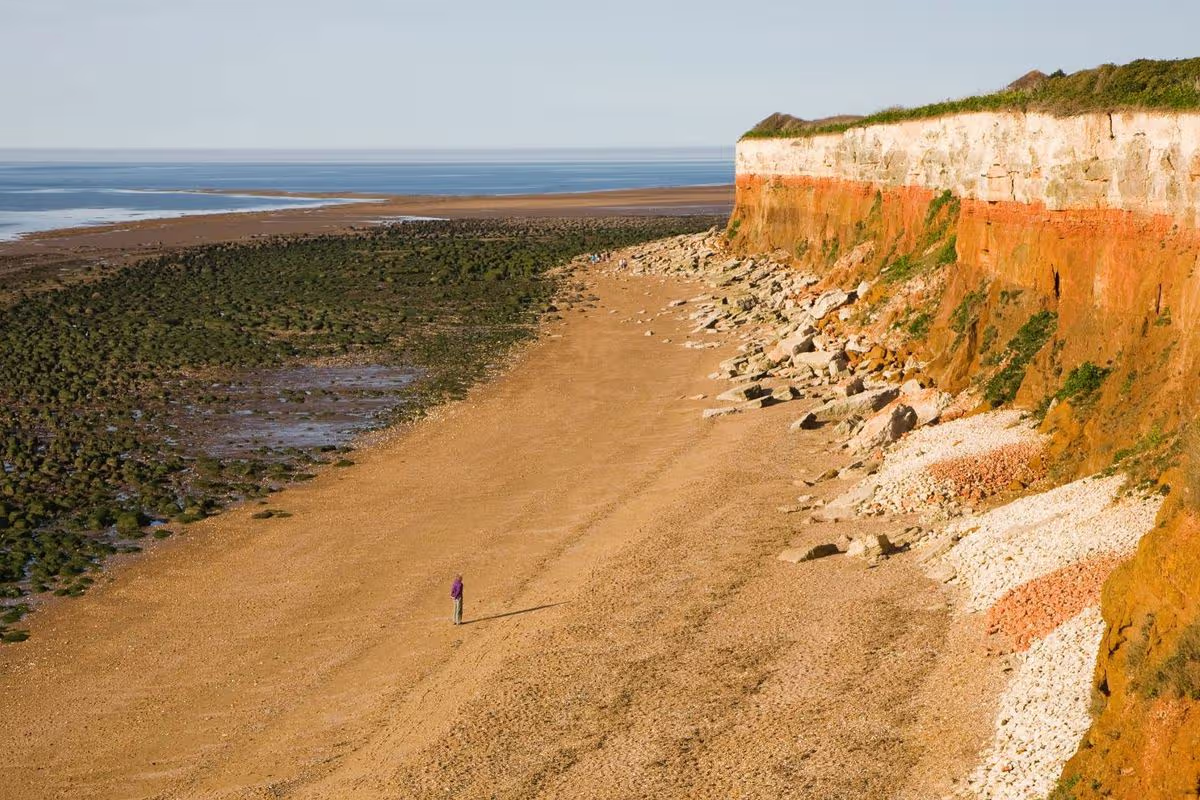
There’s a café right on the beach (Image: Universal Images Group via Getty Images)
If a peaceful coastal retreat is on your wish list, this charming village delivers seaside serenity in spades, along with plenty of spots to grab a decent cuppa.
Nestled along the Norfolk coastline, this quiet gem boasts a breathtaking beach and dramatic clifftops, offering sweeping vistas and a welcome escape from the daily grind.
Old Hunstanton sits shoulder-to-shoulder with its bigger neighbour, the more well-known resort of Hunstanton – also called New Hunstanton – but it would be a mistake to overlook it. Its unhurried charm appeals to those who’d rather skip the hustle and bustle of a busy seaside town, with leisurely strolls and striking striped cliffs to admire.
The undisputed highlight of the village is Old Hunstanton Beach, a gorgeous sandy stretch that warmly welcomes families and four-legged friends alike, perfect for a paddle when the sun deigns to make an appearance.
Indeed, its dog-friendly reputation is a major draw for keen walkers and visitors eager to give their pooches a proper run around. One tripadvisor reviewer said: “Old Hunstanton Beach is a top pick for dog owners. Dogs are welcome year-round with no leash required on the spacious sands, offering true freedom.”
“This likely reflects the beach’s size and a culture of responsible dog ownership. Enjoy the beautiful cliffs and calm waters with your happy dog by your side!”
Forming part of this stunning landscape are the cliffs, famously banded with three distinct colour layers – red, brown and white. Their striking natural stripes make the beach particularly eye-catching and are believed to represent a geological site of special interest dating back to the Cretaceous Period.
Another notable feature of the area is the historic Old Hunstanton Lighthouse, originally constructed in 1844, perched atop the renowned cliffs. This provides a delightful walk on a pleasant day and delivers breathtaking views across the region.
Café on the beach
Located on picturesque Old Hunstanton Beach, directly opposite the RNLI, is Old Town Beach Cafe, which offers a diverse menu championing locally sourced produce. For those seeking a more traditional pit stop, they also happen to dish up a lovely afternoon tea.
An afternoon tea right beside the sea sounds idyllic, yet it’s entirely achievable, with diners choosing lunch and breakfast options too. You can settle outside in the sand and gaze out at the blue shades of the rolling waves while you sip away.
One diner commented on Tripadvisor: “I visited the old boathouse café twice this week, once for breakfast and again another day for afternoon tea. It’s in a great location just on Old Hunstanton Beach, and the food and service is excellent. A really great place to call into after a walk on the beach.”
Another hailed the venue as an “outstanding little café Hunstanton” while someone else highlighted the spotlessness of the establishment.
One customer gushed: “Spotlessly clean throughout, lovely friendly staff, excellent quality, cater for gluten-free, freshly cooked, served piping hot, mega breakfast excellent as were homemade sweet potato patties gluten-free. Would definitely recommend.”
The hidden gem offers a unique blend of charm reminiscent of a Greek island
13:13, 27 May 2026Updated 13:14, 27 May 2026
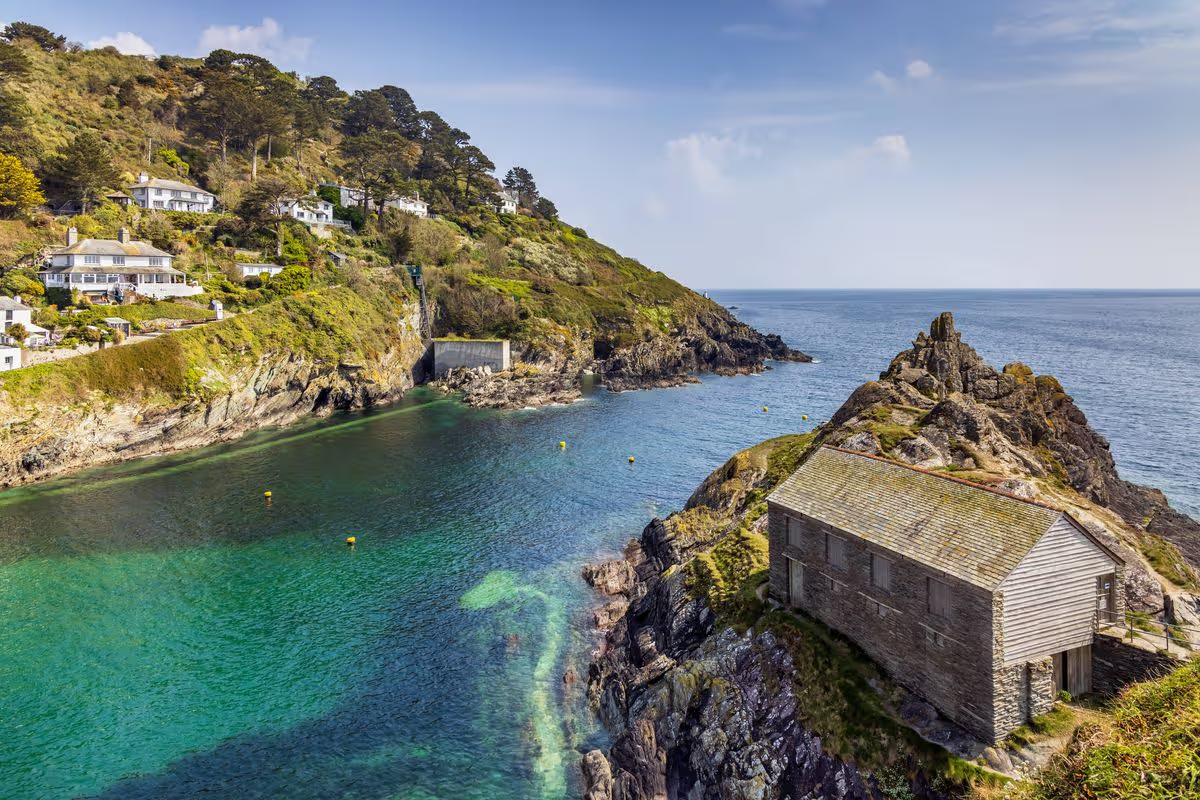
This gorgeous spot is perfect for a staycation(Image: Jim Monk via Getty Images)
For Brits dreaming of a Mediterranean escape but keen to stay on home turf, a hidden treasure tucked away in Cornwall could be the ideal answer. Nestled along the stunning south coast, Polperro boasts a distinctive mix of charm and tranquillity that feels far more like Greece than your typical Cornish fishing village.
According to experts at Park Holidays: “With whitewashed cottages and boats bobbing in the tiny harbour, Polperro feels more like a tucked-away Greek island than a Cornish fishing village.”
Framed by towering cliffs and lush greenery, the village enjoys a breathtaking backdrop to its peaceful bay. What truly makes Polperro stand out, however, is its unspoilt beach, which on bright sunny days appears to take on the colours of the Aegean Sea, turning an “Aegean shade of turquoise”.
It’s this winning combination of scenery and serenity that makes Polperro such a coveted destination for those seeking a taste of the Mediterranean without ever boarding a plane, reports the Express.
As the experts note: “Narrow, winding streets lead to cafés and shops with serious Santorini charm.”
While souvlaki and baklava may not feature on any local menus, the village’s wonderful selection of fish and chip shops and ice cream parlours offers a thoroughly British yet equally delightful alternative to Greece’s beloved tavernas.
For those with a passion for both history and the great outdoors, Polperro delivers on all fronts, with its rich maritime heritage proudly on display at its lively harbour, where local vessels have dropped anchor for centuries.
During the 18th and 19th centuries, Polperro was a bustling hub for pilchard fishing and smuggling. According to Holiday Cottages Polperro, “pilchards were caught in huge numbers by Polperro Gaffers, large gaff-rigged boats of which there were once 40 operating out of the harbour.”
“The fish once caught were processed in the village and this provided work for many women and children. There were three factories by the harbour involved in this and here the pilchards were salted and then cured.”
Stunning coastal walks along the surrounding clifftops offer breathtaking panoramas of the sea below, with the famous South West Coast Path weaving directly through the village itself.
What makes Polperro all the more attractive is how conveniently situated it is within Cornwall. Just a short drive from well-loved spots such as Fowey and Looe, it serves as an ideal base from which to explore the wider region.
My local village has been named one of the best in the UKCredit: The SunCockington is full of pretty thatched cottagesCredit: The Sun
Follow The Sun’s award-winning travel team on Instagram and Tiktok for top holiday tips and inspiration@thesuntravel.
The South Devon village of Cockington in Torquay has just been named one of the prettiest places for a day trip or staycation in the UK this summer.
Named by The Independent as the fourth prettiest village in the UK, the publication commented that Cockington is a “chocolate-box village” and the “old thatched cottages, rural countryside and Cockington Court manor house are sure to charm”.
Having grown up nearby and popping down to the village most summer weekends, I couldn’t agree more.
There’s also Cockington Court, a 16th century manor house with cafeCredit: The SunIn front of the manor house, is a huge open field ideal for picnicsCredit: The Sun
If you are driving from Torquay seafront, it takes around five minutes to reach the main car park – though, due to being a small village, the small car parks can get extremely busy in the summer months.
Instead, do what my family always did to avoid nightmare parking by walking from the seafront, which to the entrance to the village’s woodland walking trails, takes about 10 to 15 minutes from the beach.
The trails lead directly to the village, which takes about 20 minutes to reach through shady woodland and across small streams.
And trust me, you’ll know when you have reached the village as you see houses change to cottages, all with thatched roofs.
Each cottage has its own character too, including Rose Cottage, painted in a dark pink shade with sprawling, pristine gardens (this used to be a restaurant with someone always playing the piano in the garden, and while it is now sadly closed, the building is still stunning to see).
In the centre of the village, you’ll find a crossroads and from here whatever direction you go in you can expect pretty walks.
In the centre of the village, there are a couple of shops as wellCredit: The SunIncluding Cockington Forge where you can buy horse brassesCredit: The Sun
Sat on the crossroads is one low-roof thatched cottage that is actually a souvenir shop with a ton of horse brasses for sale – an item that links to Cockington’s long history as a blacksmith’s forge.
Directly opposite, you’ll see two more cottages.
One is Sanctuary Coffee – a small coffee shop that also sells gifts and doggy items, from adorable bandanas to handcrafted toys.
The shop has a wonderful story of starting out not too far from where I now live in London, before moving to the 11th- century village last year to open their first shop.
The other cottage is the Weavers Cottage Tea Garden, which is a must- visit for afternoon tea lovers (after all, you are in Devon).
I’ve lost count of the number of warm, fluffy scones I’ve polished off in their sunny stone-walled garden over the years.
In Sanctuary Coffee, you can grab some gifts and homeware itemsCredit: The SunMake sure to get a cream tea from Weavers Cottage as wellCredit: The Sun
And what’s better is that it costs under a tenner – a cream tea costs £7.95 for a fruit or plain scone, with strawberry or handmade raspberry jam and a pot of tea, or without the tea just £5.
Then if you want a cheese tea, this costs £8.45 and you get a choice of cheddar or cream cheese to go with it, as well as either chilli jam or red onion chutney – and again you can get it without the tea for £5.50.
Sitting in their garden is a treat in itself, with large umbrellas to make it more shady in the heat, their resident 16-year-old spaniel called Dolly and roses climbing up the stone walls.
Just remember the golden rule of a Devonshire cream tea is to pop the cream on the scone first, then the jam.
When leaving Weavers Cottage, make sure to leave via the back entrance which leads to a gravelled courtyard where you’ll find the visitor centre.
Inside you can learn all about Cockington, as well as see historic postcards from the English Riviera and browse locally made items, such as jewellery, books and artwork.
The village has a visitor centre too, where you can learn about the local areaCredit: The SunIn the summer months, make sure to see the roses in the walled rose gardenCredit: The Sun
If you need a drink after exploring, the village pub is another go-to of mine – The Drum Inn.
The sprawling pub garden is my favourite place to sit at the pub, whilst soaking up the sunshine and sinking a £5.70 pint and perhaps a portion of fish and chips, pie of the day or pizza from £15.25.
Near the pub there is a gateway which you can walk through to head to Cockington Green, where you will find Cockington Court – a 16th-century manor house – and the cricket green.
Inside Cockington Court, you can explore the craft centre, full of work by local artists.
And if you are thirsty, you can grab a pint from The Drum InnCredit: The SunThere are also lots of local makers in the old stablesCredit: The Sun
The large open field is the perfect spot for picnics, but you can also grab some food and drink from the Seven Dials Cafe inside Cockington Court.
The field makes up just a small part of the sprawling 450 acre estate which visitors can explore.
Other parts of the estate include scenic walking trails, lakes, a Tudor rose garden and the Walled Art Garden.
One of my favourite parts about Cockington can be found just behind the manor house – the craft studios.
Spread across several units and also the former stables, I often enjoy perusing the local makers which include everything from florists and bakers to jewellery makers and lamp designers.
I have a lot of childhood memories eagerly watching sparks fly as blacksmiths worked and makers blew glass into different shapes – both of which you can still see take place today.
Including glass blowers and a blacksmithCredit: The SunFor kids needing to let off steam, there is a play park as wellCredit: The Sun
In the old stables, you can even see glass being blown and blacksmiths at work.
History lovers can visit a church that’s next to the manor house as well, and there’s also The Gamekeeper’s Cottage, which is a Grade II-listed building used by the estate’s gamekeeper in the 19th and early 20th century to breed and raise birds.
If visiting the village with little kids, by the craft studios there is also a play park to let off steam.
And to make your visit even better, Cockington is set just behind England‘s very own riviera, formed of the beach towns Torquay, Paignton and Brixham.