TO the untrained eye, he was just a bloke in a shiny police helmet singing about staying at the YMCA.
But behind the tight trousers and macho character in disco group Village People, Victor Willis was a musical hitmaker who co-wrote songs that will provide the soundtrack to every wedding, birthday and office party for years to come.
Sign up for the Showbiz newsletter
Thank you!
Victor Willis (pictured bottom-centre) died after a short, aggressive illness, his family confirmedCredit: GettyDonald Trump stands next to Victor during a rally the day before the now-President was scheduled to be inaugurated for his second termCredit: Reuters
“It is with profound sadness that I must announce the death of my husband,” she said.
“Victor passed away on Tuesday, June 30, 2026, as a result of a short but aggressive illness.”
Long before he was commanding crowds to put their hands in the air to anthems that defined an era, including YMCA, Go West and In The Navy, Victor was singing gospel music in his Baptist minister father’s church.
He grew up in San Francisco and his high school band, The Ballads, supported The Temptations.
He sat in on sessions with American jazz trumpeter Dizzy Gillespie, before becoming an actor and singer.
A role in the Las Vegas production of musical Hair earned him a place in Broadway productions of Two Gentlemen Of Verona and The Wiz.
In the late Seventies, he caught the attention of flamboyant French producer Jacques Morali, who was creating a musical group based on the macho stereotypes and gay pin-ups of New York’s Greenwich Village.
Victor and Karen Huff-Willis in 2009 in San Diego, CaliforniaCredit: GettyVictor with first wife, future Cosby Show star Phylicia RashadCredit: Getty
Their four-track demo, called The Village People, earned the group a record deal, and Jacques asked Victor to become the frontman.
While the rest of the line-up were recruited from dance studios and clubs for the roles of the cowboy, the Native American, the biker, the construction worker and the soldier, Victor was thought to be the only straight member.
After albums Macho Man in 1978, and Cruisin’ in ’79 which gave us YMCA, they put out Go West and its title track became a gay anthem, later covered by The Pet Shop Boys.
It also featured In The Navy, which the US Navy co-opted for a recruitment campaign, before realising they were using the ultimate camp parody.
It was around then that Victor met and married his first wife, future Cosby Show star Phylicia Rashad.
They split in 1982.
After battling growing frustrations within the group, Victor walked out in 1979.
But his departure triggered a downward spiral.
He struggled to escape the group’s flamboyant reputation and establish credibility on his own.
His 1979 solo project, Solo Man, remained unreleased for more than 30 years until 2015.
Pop group Village People pictured in London in July 1980Credit: News Group Newspapers LtdTrump dances to Village People’s YMCA at a rallyCredit: AP
The Eighties and Nineties became a blur of substance abuse, addiction, and brushes with the law.
In 2015, he said: “I got very depressed over the years.
“I got kind of drugged out, because I was disappointed with the way things were and got frustrated, and gave up for a bit.”
He began to turn things around in 2006 after he received court-ordered substance abuse treatment and completed three years of probation.
After getting clean, he turned his energy towards a battleground between him and ruthless record executives who had pocketed the lion’s share of the royalties from the Village People’s catalogue.
This led Victor to meet his second wife Karen, an attorney who helped him fight his copyright case against the companies who controlled Village People’s hits.
They married in 2007.
Victor, armed with a gritty determination, launched a historic, multi-year lawsuit under a loophole in the 1976 US Copyright Act, which allows artists to reclaim their work after 35 years.
In a legal victory that sent shockwaves through the music industry, the US courts ruled in his favour in 2013.
Willis co-wrote and sang on a string of disco classics including YMCA and Macho ManCredit: GettyVillage People frontman Victor Willis passed away aged 74Credit: Jam Press
Victor clawed back up to 50 per cent of the lucrative copyright percentages for YMCA and his other hits, becoming a hero to older musicians everywhere.
The resolution paved the way for his return to the group in 2017.
Older, wiser, but with that same thunderous voice, he toured the world to packed arenas, watching three generations of families throw their arms in the air to spell out those four famous letters.
“I don’t endorse Trump, I’ve never endorsed Trump, nor have the Village People,” he told the BBC in 2020.
However, he surprised fans last year by agreeing to take part in the politician’s second inauguration saying: “Our song YMCA is a global anthem that hopefully helps bring the country together after a tumultuous and divided campaign where our preferred candidate lost.”
In his tribute yesterday, Trump claimed: “He was a great and happy guy who loved that I used YMCA at my rallies.”
This picturesque English gem boasts rich history, stunning stone houses and scenic nature walks that keep drawing visitors from around the globe
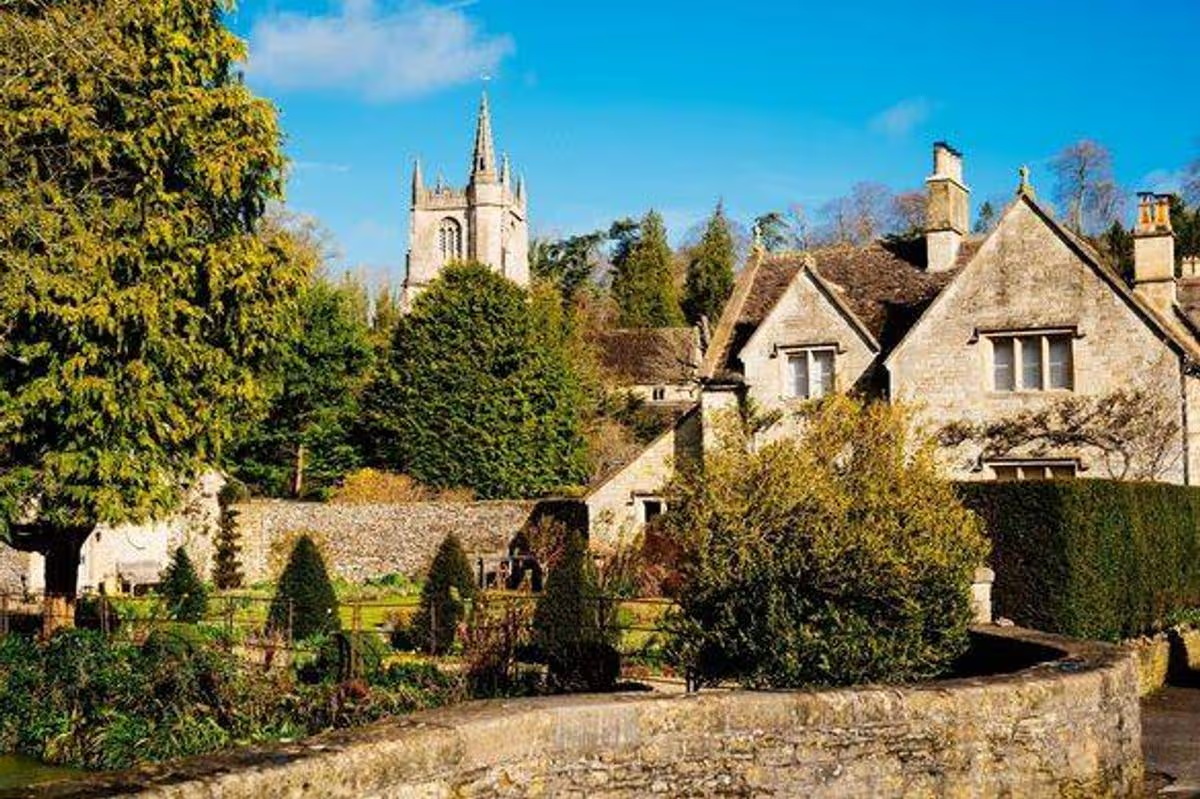
The village is located in Wiltshire and boasts Somerset as its neighbour(Image: Getty)
When it comes to getting away, sometimes a staycation is the ideal choice. Not only do you avoid the hassle of travelling to and from the airport, sidestep delays and save a small fortune on parking fees, but the UK really is quite remarkable.
One English village has previously been named among the finest in the world. In 2021, FBM Holidays named Castle Combe in Wiltshire as the prettiest place in the UK.
Meanwhile, property experts handpicked the location as part of The Daily Mail’s list of 24 villages to live in 2025.
Castle Combe boasts a fascinating history and is utterly charming thanks to its stone cottages and scenic countryside walks.
The village itself sits on the borders of Gloucestershire, Berkshire, Dorset to the south and Somerset, so you can expect to be immersed in breathtaking scenery.
Castle Combe is not only beautiful but has also appeared in numerous films, including The Wolf Man, Stardust and War Horse. Not to mention it featured in the original Dr Doolittle film and featured in popular TV show Downton Abbey.
Things to do in Castle Combe, Wiltshire
St Andrew’s church is among the must-see attractions, with the building dating back to the 13th century.
It features a faceless clock which ranks as one of the oldest functioning clocks in Britain. The church holds a Google rating of 4.6 online, with one visitor commenting: “Very picturesque church from the outside. We had a wander around inside.
“It’s free to get in but with a suggested £1 donation which is reasonable. There’s a faceless clock inside which I’ve never seen before!”
Another wrote: “Was not able to go inside but nice to walk around outside. A typical English village church in a very nice setting.”
A third simply commented: “St Andrews Church is set in the beautiful village of Castle Combe.”
Another historic landmark in Castle Combe is The Market Cross, which dates back to the 14th century.
Visitors flocking to the site have awarded it an impressive 4.4 Google rating, with one traveller writing: “Nice historical place. Really preserved well and very scenic.”
Another commented: “Great when you finally get to take a photo with no people sitting all around it.”
A third said: “Scenic, dreamy, beautiful place, almost hidden away. We had a great experience, visited on a weekday, it was decently crowded. It could be difficult to find a parking spot especially, on weekends. Nevertheless, I recommend this place.”
NEW YORK — David Clayton-Thomas, the lead singer of Blood, Sweat & Tears, whose husky, high-strung tenor on “Spinning Wheel,” “And When I Die” and other hits helped make the so-called brass rock band among the most popular acts of the late 1960s, has died at age 84.
Spokesperson Eric Alper said that Clayton-Thomas died peacefully Wednesday at St. Michael’s Hospital in Toronto. Alper did not cite a specific cause of death.
Clayton-Thomas was a onetime street fighter and petty thief from Canada who briefly became a rock superstar, the front man of a nine-member group that sold millions of records and won two Grammys for “Blood, Sweat & Tears,” which beat out the Beatles’ “Abbey Road” for best album of 1969. Calling out amid a jazzy parade of horns, keyboards and percussion, Clayton-Thomas’ urgent shout was a signature voice of the era, preaching love on the Motown cover “You’ve Made Me So Very Happy,” a lasting legacy on Laura Nyro’s “And When I Die” and a cool head on his own “Spinning Wheel.” Meanwhile, Blood, Sweat & Tears helped inspire a wave of horn-led bands, among them Chicago, the Electric Flag and Ten Wheel Drive.
“A lot of the guys [in Blood, Sweat & Tears] would play a Broadway show matinee, then go up to Harlem and play Latin music or R&B and funk at night, or come down to the Village and play pure jazz the next night,” Clayton-Thomas told Bestclassicbands.com in 2023. “I was just a blues player: Give me three chords and I’ve got a song.”
At its peak, Blood, Sweat & Tears’ appeal was so broad it helped lead to the band’s downfall.
Hip enough to perform at the 1969 Woodstock festival, where they were among the highest paid acts, they also were known enough to the establishment to tour Eastern Europe the following year on behalf of the State Department. When Clayton-Thomas and other band members denounced the Communist regimes on the other side of the Cold War, Rolling Stone’s David Felton wrote that “the State Department got its money worth.” Counterculture Yippies would turn up at a 1970 Blood, Sweat & Tears show at Madison Square Garden, carrying obscene banners outside and dumping manure by the front gate.
The band had practical reasons for going along with the government: Clayton-Thomas, who had allegedly wielded a gun at his girlfriend, had been denied a green card and faced deportation. But after topping the charts in 1970 with the album “Blood, Sweat & Tears 3,” their appeal soon faded. A burned-out Clayton-Thomas left the group in 1972, and neither he nor the remaining musicians ever regained their old stature. Blood, Sweat & Tears would continue recording over the next few years, and even briefly reunited with Clayton-Thomas, who went on to release more than a dozen solo albums and tour on his own for decades.
Beginning under a licensing agreement reached in 1984, Clayton-Thomas toured as “Blood, Sweat Tears” for 20 years with a revolving roster of bandmates. A 1994 Times review of a show at the Coach House in San Juan Capistrano reported that “BS&T’s formula has legs, that its music has withstood the test of time. Indeed, in a world full of today’s pop harmonic minimalism, the sound of trumpets, trombones, guitar and sax backing a singer somehow seems fresh, even if it has been around for so long,” and Clayton-Thomas “still has all the enthusiasm and buzz-saw roughness that gave his voice its distinctive quality way back when.”
In 2005, BS&T re-formed (without Clayton-Thomas, who continued his solo career) and has toured since with various lead singers.
Clayton-Thomas was inducted into the Canadian Music Hall of Fame in 1996. “Spinning Wheel,” covered by everyone from James Brown to TV star Barbara Eden, was voted into the Canadian Songwriters Hall of Fame a decade later.
Born David Henry Thomsett on Sept. 13, 1941, in Kingston upon Thames, near London, and raised near Toronto and Ottawa, he was the son of a Canadian World War II veteran and of a pianist-entertainer who helped inspire her son’s interest in music. Thomsett was lucky to have the chance. He fought violently with his father, was living in the streets by his mid-teens and by age 20 was serving time in a reformatory for vagrancy, assault and other crimes.
An old guitar, left behind by a fellow inmate, changed his life. He taught himself to play and began spending extensive time in the early 1960s around Toronto’s Yonge Street music “strip,” where peers included the American rockabilly star Ronnie Hawkins, a mentor to Robbie Robertson and other future members of the Band and a guide for Thomsett early in his career.
Eager to reinvent himself, he changed his last name to Clayton-Thomas while leading his own groups. In the mid-’60s, he released such albums as “Sings Like It Is” and had a hit single with the antiwar rocker “Brainwashed.” He would also befriend a rising star, Joni Mitchell, whose childlike “Circle Game” helped inspire “Spinning Wheel,” and the venerable John Lee Hooker, who would indirectly contribute to Clayton-Thomas’ breakthrough in the U.S.
The band Blood, Sweat & Tears, including David Clayton-Thomas, far right, from the documentary “What the Hell Happened to Blood, Sweat & Tears?”
(Sony Music Archives)
Hooker had encouraged Clayton-Thomas to move to New York, where the American bluesman had an engagement at the Cafe Au Go Go in Greenwich Village. When Hooker unexpectedly departed for a tour of Europe, club owner Howard Solomon needed a replacement and recruited Clayton-Thomas.
“So I played him a couple songs on the guitar,” Clayton-Thomas told Bestclassicbands.com. “He said, ‘Do you have a band?’ I said, ‘Sure,’ and went out into Greenwich Village looking for anybody carrying a guitar case or even looking like a musician, and we put together a little band and we opened there that night. We ended up staying there for several months.”
Around the same time, session man-producer Al Kooper was looking to form a jazz-rock group and was joined by such musicians as guitarist Steve Katz, drummer Bobby Colomby and horn players Randy Brecker and Jerry Weiss. They called themselves Blood, Sweat & Tears, releasing the debut album “Child Is Father to the Man” early in 1968. Although praised by Rolling Stone publisher Jann Wenner as “a fine, exemplary group,” members were torn between those allied with Kooper and those who thought his vocals too weak to attract a substantial audience.
By the end of the year, Kooper and others had departed, and the band was seeking a new singer. After Judy Collins saw Clayton-Thomas perform, she recommended him to Colomby.
“I got home and just a couple of days later, Bobby Colomby called me up and said, ‘Hey, Kooper’s gone. We got four guys left out of the nine. And we still got a record contract with Columbia. Do you want to come down and try out for the band?’ ” Clayton-Thomas told Bestclassicbands.com. ”I said, ‘You’re damn right.’ I knew [bassist] Jim Fielder real well and I knew they were superb musicians. So I was on the next plane. We had a rehearsal that afternoon, an audition, and it was instant magic. We just knew right off the bat.”
Clayton-Thomas is survived by his daughters, Ashleigh Clayton-Thomas and Christine Graham.
IF you’re looking for a staycation with all the beauty of the Cotswolds but fancy somewhere different – maybe head to East Sussex this summer.
Rye has all the charm of the region and even better – it’s just 10 minutes away from the seaside.
Sign up for the Travel newsletter
Thank you!
Rye is a Cotswolds-alternative town in East SussexCredit: GettyIt has cobbled streets, historic houses and independent shopsCredit: Getty
Country lifestyle experts at Welligogs say that Rye is one of the UK’s most beautiful small towns and even dubbed it the “new Cotswolds”.
While it might be miles away from Oxfordshire and Gloucestershire, Rye actually shares lots of the same qualities as towns found in the Cotswolds.
Some of the most famous spots near the Cotswolds include Castle Combe, Bibury and Bourton-on-the-Water which have honey-coloured stone buildings and pretty streets.
In East Sussex, Rye has a similar look with cobbled streets lined with cottages and plenty of independent shops.
Tess Annan, manager at Welligogs said: “Part of Rye’s appeal is its storybook atmosphere.
“For those who love culture, you can spend the morning exploring antique shops and independent boutiques, before wandering up to Mermaid Street for some of the most photographed views in the UK.
“The 14th century Ypres Tower (Rye Castle) is also always worth a trip. Then head towards the nearby beaches for sea air and treat yourself to freshly-caught fish and chips.”
While the Cotswolds has plenty of rivers running through the villages, Rye offers a beach escape for those who want the delights of the seaside instead.
Camber Sands is just 10-minutes away in the car to get from the village to the dunes.
Rye is just 10-minutes from the delights of Camber SandsCredit: Alamy
Caroline said: “The medieval town of Rye in East Sussex isn’t strictly seaside, but you can see the sea from its cobble streets and it has a harbour where boats sail out to the English Channel.
“Plus, if you go back as far as the 15th century, the sea came much closer to the foot of the hill the town is built on.
“It’s the perfect place to spend a day out – taking an hour and six minutes on the train from Kings Cross St Pancras.
“If you fancy a morning on the beach, a bus runs from the town to the stunning Camber Sands beach – a three-mile stretch of golden sand backed by dunes.
“Or you can for a six-mile circular walk from Rye to Winchelsea beach. Back in the town after lunch, there are plenty of fantastic pubs to choose from, my favourites being the 12th century Mermaid Inn and the George In Rye, as well as the Globe Inn Marsh on the outskirts of the town.
“Equally, you could book a taxi and check out Tillingham vineyard in nearby Peasmarsh, with its Michelin Green Star wine tours and excellent pizzas.
“Make sure to save some time to rummage through the many, many antiques shops, as well as Knoops hot chocolate shop and the wonderfully old fashioned Britcher and Rivers sweet shop.”
The prettiest village in the UK draws visitors from around the world with its stunning stone cottages and river bridge
It’s easy to see why it’s voted as England’s prettiest village(Image: Sophie Harris)
The Cotswolds stand as one of England’s most celebrated regions, spanning multiple counties across the south-west. I’m absolutely smitten with the Cotswolds and have explored every village, returning to some while others remain a one-time visit.
The area is renowned for its undulating countryside, independent retailers and charming villages. A substantial portion has been designated as an Area of Outstanding Natural Beauty, drawing tourists from across the globe.
Amongst its idyllic villages sits Castle Combe. It’s consistently labelled and routinely crowned as the prettiest village in the UK.
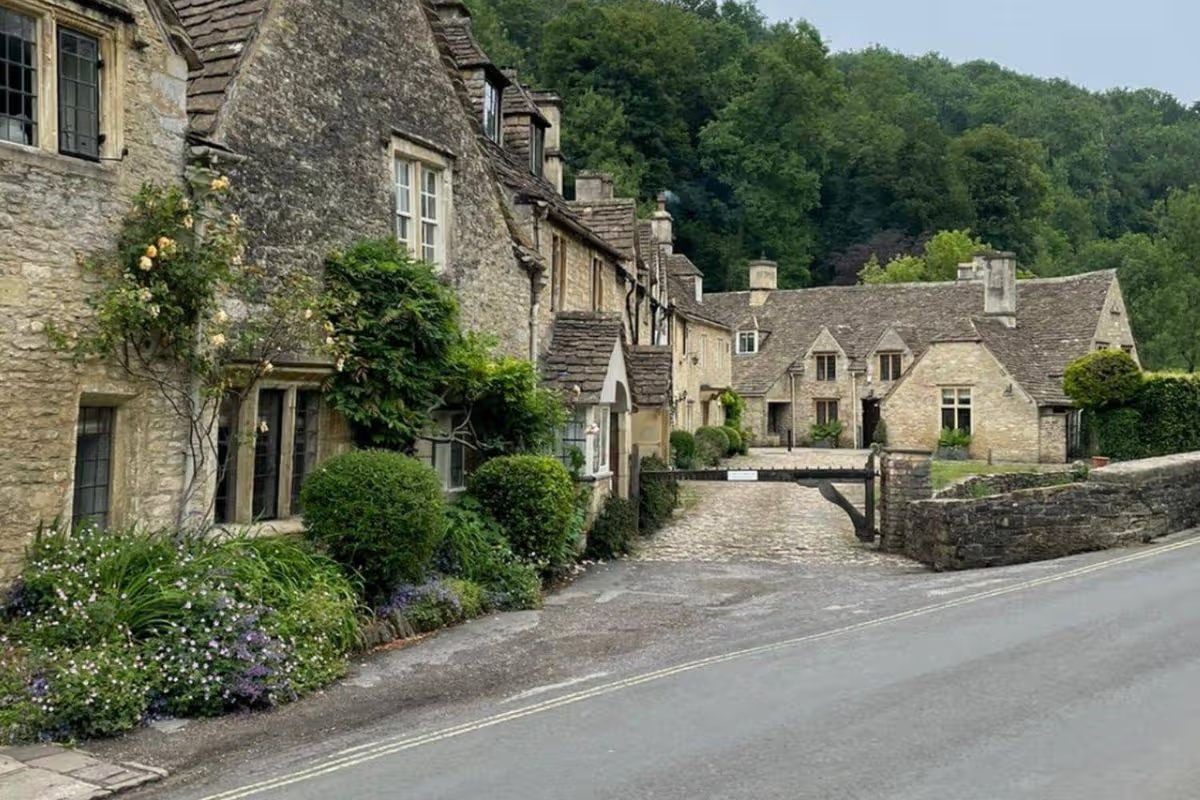
This accolade stems from its narrow streets, stone bridge spanning the River Bybrook, and rows of classic Cotswold cottages.
I chose to visit Castle Combe during a trip to the region, anticipating a tranquil, serene experience, typical of much of the Cotswolds.
Upon arrival, I found myself parking a considerable distance away, which turned out to be essential considering how restricted and strictly managed parking is in and around the village.
When I finally reached the village, my initial reaction genuinely lived up to its standing. The settlement was unquestionably breathtaking.
The stone structures, the waterway and the tight lanes resembled something plucked from a film set.
However, the visit wasn’t particularly pleasant. It was extremely crowded, considerably more than I’d anticipated.
Tour parties, photography enthusiasts and day visitors were literally everywhere, all attempting to capture identical shots and vistas.
Naturally, I was engaged in exactly what everyone else was doing, but I simply hadn’t bargained on it being quite so heaving. Given how compact Castle Combe is, even a modest crowd can leave it feeling somewhat swamped.
Fortunately, returning early the next morning made a world of difference.
With significantly fewer visitors around, I was able to truly soak it all in and snap some stunning photographs of the village.
The stark contrast between the village’s tranquil charm and the hordes of tourists all jostling for the perfect picture was quite something to witness.
There isn’t an enormous amount to keep you busy there, and it’s very much a place to admire, stroll through and appreciate for its sheer beauty. Once you’ve wandered down the main street, crossed the bridge and taken in the scenery, you’ve essentially seen the best of what it has to offer.
Castle Combe is utterly breathtaking — arguably as close to a quintessential English village as you’re ever likely to find — and that’s precisely what draws visitors from far and wide.
Tokyo isn’t one city. It’s many cities, and each is its own universe.
Occasionally — at a certain subterranean bar big enough for only seven people, or a sushi counter on the fifth floor of a random office building — I feel as if I’m stepping into another time or dimension.
Finding your way to any of the millions of restaurants, cafes, bars and shops (some are micro-businesses in an alley in a village in the city) can be like figuring out a many-layered puzzle. Like Tokyo, each experience is dense.
Use these handy dining guides for all of your summer travel, near and far.
The Japanese word for hospitality is omotenashi. But its meaning goes far beyond just customer service. Even the translations “wholehearted, selfless hospitality” or “flawless care” don’t cover all of the philosophies that make up omotenashi: magokoro (“true heart” or “sincere feeling”), ichigo ichie (“one time, one meeting”) and kuuki wo yomu (“reading the air”). The last refers to the intuitive ability to anticipate guests’ needs before they ask — an idea rooted in tea ceremony, which is rooted in Buddhism. It’s hard to grasp that level of selflessness.
Here are some of our favorite places to lose yourself in Tokyo. — Betty Hallock
The village was once a thriving community, but it was completely submerged to create a reservoir – and visitors can see its haunting memorial today and even spot the buildings if they’re lucky
Everything was taken from the village and its rich heritage (Image: Mirrorpix via Getty Images)
Once a thriving, proud Welsh-speaking community, this cherished village was entirely abandoned and left to disappear beneath the water without a trace.
The submersion of this much-loved settlement remains a deeply painful topic for those in the surrounding area, who fought with every ounce of strength to preserve their homes. Sadly, their determined efforts proved futile, as the UK government flooded the village entirely to provide water to a considerably larger English city.
In 1965, the village of Capel Celyn, tucked away in the Tryweryn Valley in North Wales, was lost forever when it was left to sink beneath the surface of a vast reservoir. It was a deeply contentious decision, to say the least, driven by the Liverpool Corporation to provide water to Liverpool and the Wirral.
For some, it may have appeared to be little more than a straightforward infrastructure project, but for the vast majority, the implications ran far deeper. The devastation it brought to the local area and the broader Welsh community had a profound political impact, fuelling a significant surge in support for Welsh nationalist party Plaid Cymru.
The fight for the village
It was in 1955 that the residents of Capel Celyn first discovered their homes had been earmarked for sacrifice to make way for a new reservoir, marking the start of a grueling decade-long struggle. Before long, the villagers banded together, forming what became known as the Capel Celyn Defense Committee, which debated, protested and condemned the scheme across the country and as far as Liverpool.
On several occasions, this led them to march directly to Liverpool to make their opposition unmistakably clear.
Despite their determined efforts, Liverpool councillors voted overwhelmingly in favour of pressing ahead with the plans, and in 1957, a private bill backed by Liverpool City Council was brought before Parliament.
All 35 Welsh Members of Parliament who cast their votes opposed the bill, yet it was passed regardless in 1962. Three years on, the village and all its buildings, including people’s homes, were submerged beneath the water.
In total, approximately 800 acres of land were consumed by the reservoir, taking with it the school, the post office, the chapel and the cemetery.
Some 48 people lost their homes out of the 67 who had lived in the valley, with many forced to relocate to entirely unfamiliar areas and rebuild their lives from scratch.
What made this so deeply controversial was the wholesale destruction of a traditional Welsh community, as the village had stood as a living symbol of authentic Welsh culture and its endangered language.
The site today
Visitors continue to flock to the site to this day. During particularly dry periods if the water levels drop enough, you can occasionally spot some of the ruins of the houses, school and post office. One TripAdvisor reviewer described the place as “beautiful but sad”.
They wrote: “This wasn’t my first visit to this beautiful area, but after researching the flooding of the village and being Welsh, we spent more time around where the village once stood.
“There is no doubt the scenery is outstanding, but I also found it to be quite sad; people’s lives were completely upturned, and their entire village was drowned. Well worth a visit, especially if you read the history of the village.”
The reservoir offers a breathtaking backdrop, framed by the gently rolling hills of the valley, and many visitors opt to take a stroll around the area. A memorial chapel stands as a tribute to the village that once existed, offering a place for people to reflect on its history.
One visitor remarked: “Poignant and stunning. The heartbreaking history of this reservoir should never be forgotten.”
There is every chance the village could resurface this year, as it only emerges above the waterline during spells of extreme heat. The ongoing heatwave may cause water levels to drop sufficiently, much as they did in 2018.
The historic abandoned village is steeped in history and is said to have inspired an iconic novel Jane Eyre
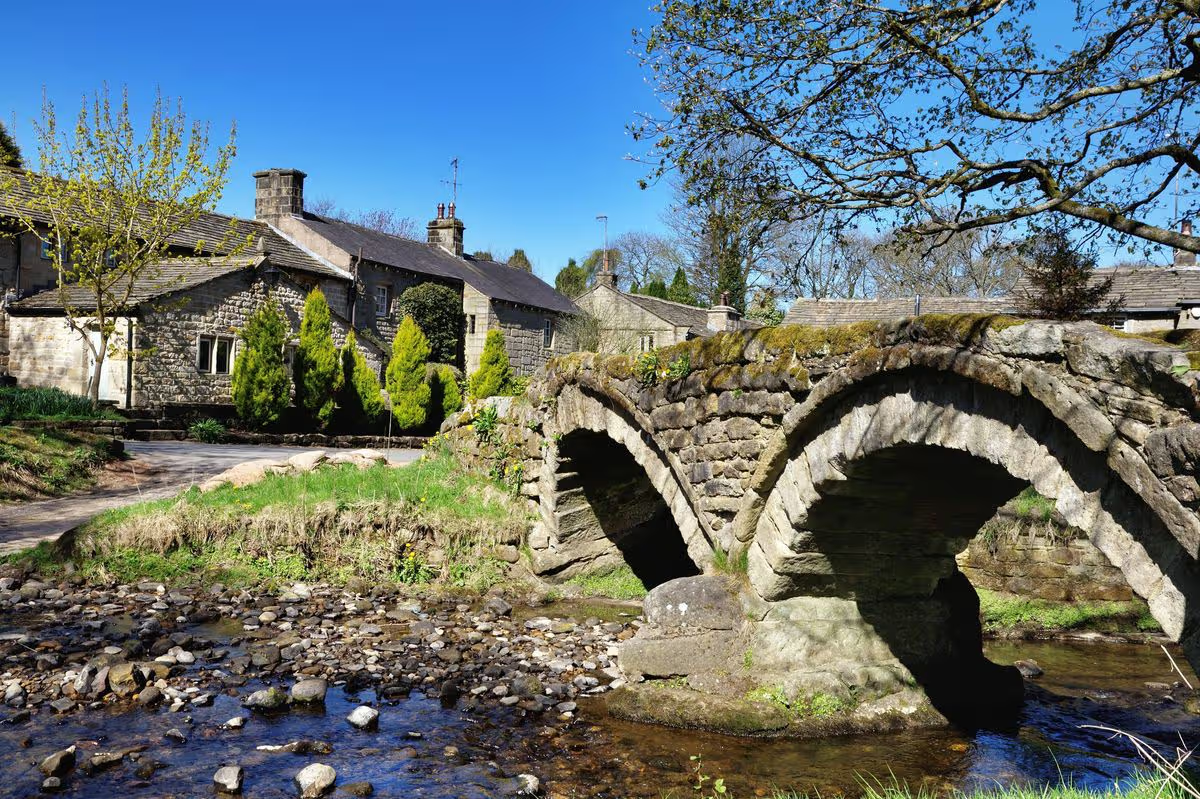
There is a 13th century packhorse bridge(Image: Khrizmo via Getty Images)
Just four miles from Colne sits the historic village of Wycoller, providing a remarkable glimpse into a long-forgotten era, boasting ancient ruins and a compelling literary heritage.
This abandoned village is particularly celebrated for its ties to the legendary Brontë sisters, who made their home in nearby Haworth.
In her seminal novel Jane Eyre, English author Charlotte Brontë created a fictional setting, Ferndean Manor, widely believed to have been inspired by the present-day ruins of Wycoller Hall.
From the 16th through to the 18th century, the hall stood as the village’s centrepiece, dominating the surrounding landscape and almost certainly catching the eye of the author during her travels through the region.
The novelist was known to visit Gawthorpe Hall as a guest of the Kay-Shuttleworth family, and it is widely thought that on these journeys, this striking structure fired her imagination.
The telling clue lies in her depiction within the novel of the approach to the Manor along the old coach road, which bears a striking resemblance to Wycoller Hall. Sadly, today only rubble and remnants remain of what was once a vibrant and picturesque community, reports Lancs Live.
After years of abandonment, local volunteers stepped in to save the village during the 1940s, with Lancashire County Council later taking ownership of the site. Now forming part of Wycoller Country Park, the site is open to all those who wish to explore and wander amongst its historic remains.
Among the heritage highlights, visitors can discover several bridges spanning the peaceful beck that winds through its heart.
Clam Bridge stands proudly amongst these ancient structures, regularly crossed by park visitors, with origins stretching far beyond the 19th century and the era of the Brontës. This bridge is believed to be an ancient monument, over 1,000 years old – and it’s not the only testament to the area’s deeply-rooted history.
Another equally impressive bridge in Wycoller is Sally’s Bridge, which earned its fame by featuring in the film The Railway Children. It has stood the test of time, with origins traced back to the 13th-15th century.
Clapper Bridge likewise comprises substantial gritstone slabs resting on piers, thought to date from as early as the 16th century.
Artefacts unearthed amongst the remnants of this deserted village reveal evidence of human settlement stretching back to the Stone Age.
The site continues to draw visitors today, who come to explore the ruins and uncover the stories of those who once called it home.
Preservation measures are firmly in place to protect its unspoilt charm, keeping modern intrusions well away. This includes a car-free zone, meaning no accessible roads reach the village, which can only be approached on foot, unless you are a resident holding a permit.
One visitor documented their trip on TripAdvisor, writing: “Wycoller is such a cute, picturesque little place. It has a lovely stream for sitting by or paddling in. There’s plenty of shade in summer, from the huge trees.
“There was also a small exhibition, some ruins and well preserved stone bridges. It’s not a long walk but it’s perfect for a picnic and/or for the kids to paddle in the stream.”
Another added: “Beautiful place to go with amazing sights and a lovely shop for snacks and a warm drink. There are also different little trails and bridges to go over and plenty of ducks to feed. I recommend this to anyone who fancies going out for the day to be in touch with nature.”
The abandoned village was once home to 2,000 people who worked at the nearby Quarry – but in 1927, they were all relocated to a brand new village, leaving their old home to be reclaimed by nature
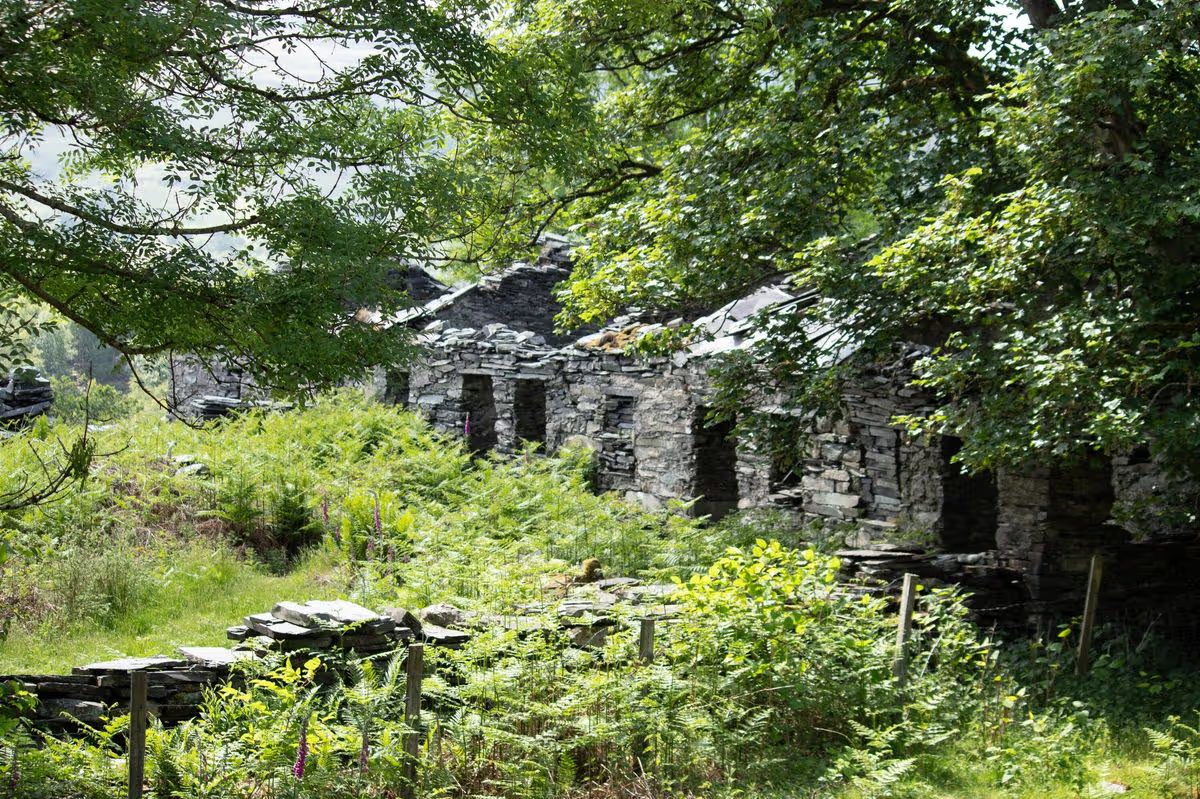
The slate quarry’s decline saw the village crumble(Image: Getty)
An entire village was created after all 2,000 of its residents were forced to up sticks and relocate. All that remains of what was once a bustling community are buildings completely reclaimed by nature, smothered in moss and vegetation.
The deserted village of Talysarn, nestled in the Nantlle Valley of Gwynedd, North Wales, is a former settlement that has been slowly swallowed up by the earth as the years have passed. It was once home to workers and industrial buildings serving the nearby Dorothea Quarry slate mine.
Throughout the 19th century, these mines provided a vital source of income for thousands of people across Wales, but as the quarries expanded, the village was forced to grow alongside them. Eventually, when 1927 arrived, the decision was taken to move thousands of residents to a brand new village built from scratch.
By the 1840s, production at Dorothea had climbed to a remarkable 5,000 tonnes annually, but output would soon soar even higher. By the 1870s, that figure had surged to more than 17,000 tonnes — well over three times what had been produced just 30 years earlier.
Despite the quarry’s seemingly promising future, it was plagued by severe flooding problems. This was tragically highlighted in 1884, when several men lost their lives after the pit was overwhelmed by water while they were working on site.
In response, the river was realigned and deepened to better manage the flow, and while this resolved the issue temporarily, it would go on to cause further problems further down the line. To combat the problem, a Cornish beam engine was constructed on the site to replace the waterwheels, and it still stands there to this day.
Indeed, this is one of the abandoned village’s most impressive sights — a towering structure with its original machinery still intact.
Another focal point of the old village is its 18th-century hall, which has remained untouched since 1946 and now stands as an ivy-covered building, heavily daubed with graffiti, its brickwork slowly crumbling away.
The abandoned village as a whole has become a hugely popular destination for avid explorers and walkers eager to unearth its secrets and snap an eerie photograph of the overgrown ruins. Today, the site sits within the UNESCO Slate Landscape of Northwest Wales and is protected as a piece of history, frozen in time.
Wild Guide Wales author Daniel Start wrote about what remains of the site, likening the ruins to a Welsh Angkor Wat. He said: “Only the baboons are missing. It’s a vast, wild site with many fascinating, overgrown ruins, including a Cornish beam engine and the overgrown remains of the chapel at Plas Talysarn.”
The quarry finally closed in 1970 and has since flooded, creating a lake reportedly exceeding 100m in depth in certain areas. This too forms part of the Slate Landscape of Northwest Wales World Heritage Site.
One visitor left spellbound by the village’s remnants is photographer Tony Harnett, who runs the website Gems of Snowdonia. He previously told WalesOnline: “I’d seen photos of Plas Talysarn and knew it was an interesting place, but I thought that’s all there was.
“When I went there, I did not expect to find so many other old buildings in the area. Some I just stumbled across, others I could see in the distance but didn’t have time to visit.
“I arrived late in the day, for the golden hour for photography, so I only had two hours there. But I could easily have stayed for the whole day, there’s so much to explore.”
THERE are some destinations around the world that are so beautiful, they don’t look real.
The pretty fishing village of Cudillero in Spain is one of those, having even been called ‘staged’ it’s so perfect.
Sign up for the Travel newsletter
Thank you!
Cudillero has been called so beautiful that it looks ‘staged’Credit: AlamyThe fishing village has bright-coloured stacked housesCredit: Alamy
The village is in the north of the country looking out directly over the Bay of Biscay and sits in a horseshoe shape at the bottom of the Cantabrian Mountains.
It’s known for its brightly-coloured stacked houses at the front of the harbour that have led visitors to describe it as ‘charming’ and even ‘staged’.
One even called it “the most beautiful village in Spain” and like “stepping back in time”.
The village dates back to the 13th century and is well known for its fishing, which it continues with today.
You’ll even see the traditional methods being used like hanging fish out to dry in the streets.
But thanks to this, there are plenty of seafood restaurants to explore like Casa Julio and Sidrería El Remo which have been recommended by visitors.
Not only is fish popular here, but it’s also known to serve the region’s speciality cider which is a little different to what you’ll find in the UK as it isn’t bubbly.
Lots of restaurants will serve local cider and pour it traditionally as well.
They use a technique called ‘escansiado’ which translates to ‘throwing’.
The drink is poured from a height, often above the waiter’s head into a glass held near their waist.
Cudillero has a ‘charming’ horseshoe-shaped harbourCredit: Alamy
Thanks to its surrounding hills and mountains, a popular activity to do in Cudillerois hike to one of its viewing points.
One of the most popular is Mirador de la Garita where hikers can see over across the village to the lighthouse.
Many say it’s a ‘must-do’ whilst in Cudillero, not to mention it’s the perfect spot for photos.
Being a harbour town, Cudillerodoesn’t have beaches of its own, but there are some nearby.
Playa de Aguilar is a 10-minute drive away and is a long-stretch of golden sand, but don’t expect the sea to be too warm as its in the north of the country.
It’s described as a family beach as it’s got fine sand as well as lifeguards during peak summer periods.
Playa de Aguilar is a nearby family-friendly beachCredit: Alamy
If you’re visiting on June 29 then you will get caught up in Cudillero’s annual festival where there are fanfares, street parades and bands.
It celebrates the village’s maritime history and it’s completely free to go down and see the live events.
A visit doesn’t have to cost a lot either, Sun Travel found a one-night stay in July at Pensión El Pozo from £30pp.
The room has a private bathroom with mountain views and there’s even a picnic area.
To get to Cudillerofrom the UK, the quickest way would be to fly directly to Santander.
Flights depart from London Stansted, Manchester, Birmingham and Edinburgh – which you can do for as little as £16 each way.
Then drive just over two hours along the coast to Cudillero.
IT SEEMS like everyone has either been to Bali, is planning to go to Bali, or wants to go to Bali.
But what about heading to one Indonesian neighbourhood the tourists don’t make a beeline to?
Sign up for the Travel newsletter
Thank you!
When heading to Bali, many people head to Canggu but next door there is a trendy and quieter neighbourCredit: Getty
The seaside village of Pererenan was recently named the third coolest neighbourhood in the world by Time Out.
Time Out stated: “While the tourist hordes pack into Canggu, those in the know are heading to neighbouring Pererenan.
“This place will remind you of what made Canggu famous in the first place – pristine beaches, cosy cafés, eclectic shops, and a certain laidback cool, devoid of noise and traffic.”
You won’t miss out on the classic Bali charm though, as the area is great for surfers and those who like to sunbathe.
One top spot that’s a must-visit is Pererenan’s black-sand beach – which gets its colour due to the volcanic activity on the island.
The beach tends to be less crowded than its neighbours as well, and is known for having amazing sunsets.
The seaside village has a black-sand beach which is ideal for surfingCredit: AlamyPererenan was recently named the third coolest spot in the worldCredit: Alamy
When heading to the beach, make sure to lookout for the Gajah Mina Statue, which is of a mythical creature that has the head of an elephant and the body of a fish.
One recent visitor said: “This place was quite lovely. Was able to watch surfers, grab a bite to eat, catch the sunset and watch the tide rise in the evening.
“Lots of restaurants and surfing options – it was very peaceful.”
You can also walk from Pererenan Beach to Echo Beach – one of Bali’s most famous surfing spots in the busier village of Canggu – just 500 metres away.
According to Ministry of Villas, “blending in with trendy Canggu, Pererenan is becoming more popular but still maintains a more relaxed Balinese feel”.
Around the beach you will also find a few spots to grab a bite to eat.
And there are a number of restaurants nearbyCredit: Alamy
While there aren’t as many restaurants as there are in other neighbourhoods, there is Hippie Fish Pererenan Beach which looks right over the beach.
The Mediterranean-inspired seafood restaurant serves a variety of dishes include red snapper and black cod and also has a rooftop bar where you can grab a cocktail.
There are a number of Balinese temples across the village as well including the Pura Batu Mejan (Kahyangan Jagat) temple, which sits at the edge of the beach.
One visitor commented: “Pura Batu Mejan Canggu is a beautiful temple, unique, highly respected and holds great spiritual significance.
“Visitors can feel a calm and relaxed atmosphere, while enjoying beautiful panoramas at Pererenan Beach.”
One recommended place to stay is Further Hotel which features a unique architecture across its one and two bedroom suites.
One top spot to stay at is Further Hotel, which is spread across several buildingsCredit: Refer to source
window.itgHolidayConnectHolidayDealsFrames =
window.itgHolidayConnectHolidayDealsFrames || [];
window.itgHolidayConnectHolidayDealsFrames.push({
cid: “3a7668b3”,
pid: “8925dc20-49c7-4663-9c7c-547ad29879e4”,
config: {
“poweredBy”:”icelolly”,”intro”:”Best value TUI deals “,”title”:”The Sun Travel TUI deals under £500pp”,”brandId”:”1224″,”maxPrice”:”50000″,”maxDepartureDate”:”plus60″,”utm_campaign”:”The Sun Travel TUI deals under £500pp”,”layout”:”carousel”,”container”:”false”
},
});
And if you do want to head out of Pererenan then you can visit central Canggu, which is 10 minutes away and home to Bali’s most popular beach clubs and nightclubs.
Around 30 minutes away is also Tanah Lot Temple, which is one of the most famous temples in Bali, sat on a rock offshore.
Flights to Bali from the UK cost from £660 return, per person, in June.
I visited a seaside village where you have to pay just to get in(Image: Jonathan Buckmaster/Getty)
They may enjoy some of the country’s most stunning coastal views but for residents in the UK’s seaside towns and villages life by the sea comes with less visible challenges. While tourists might nip in for a day trip here and there, for people who spend their lives here factors such as over-tourism, anti-social behaviour and limited job opportunities can contribute to lower levels of happiness and wellbeing.
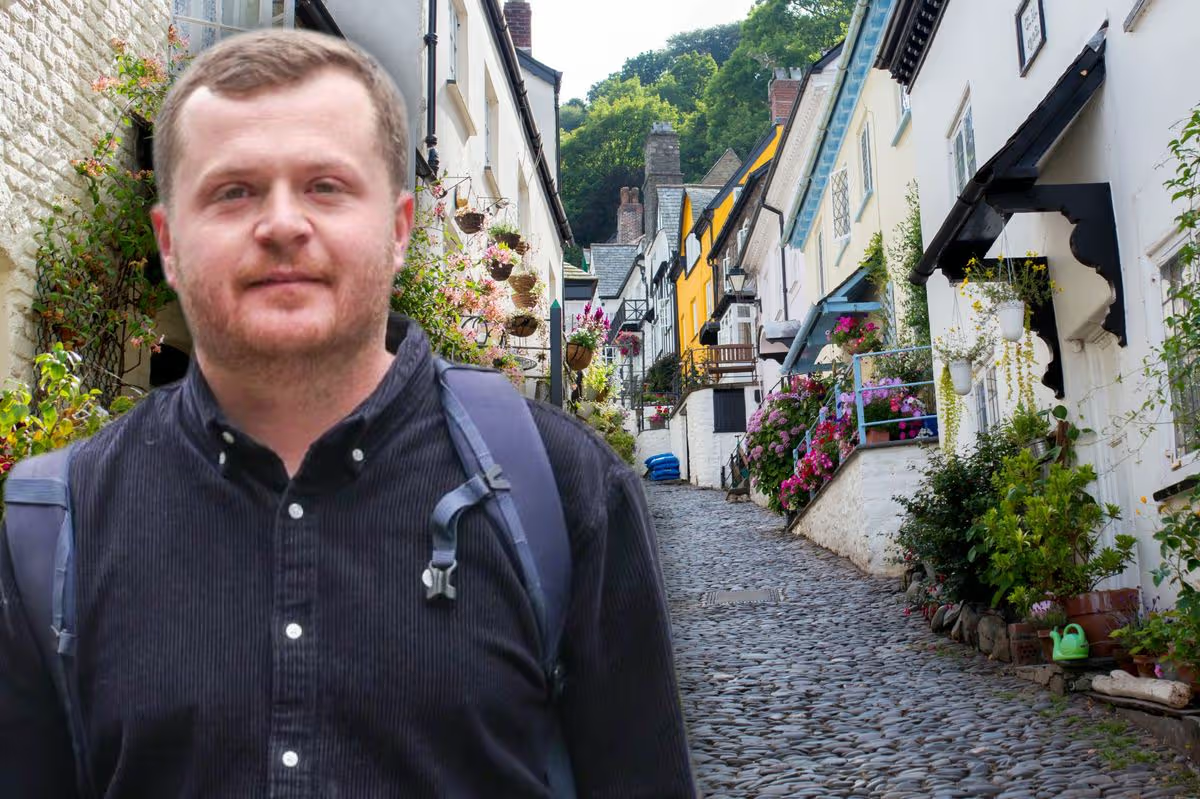
But when I visited this unique fishing village in north Devon I was greeted by nothing but warmth and happiness, with locals ready with a smile, a friendly greeting and a genuine sense of hospitality. After paying £10.90 just to get into Clovelly, I instantly felt at home. It is a truly unique village for a number of reasons. Perched on a 400ft cliff, the village is entirely owned by one man, John Rous.
The 75-year-old, who inherited the village from his mother, Countess Mary Rous, in 1983, is the sole landowner and operates every property in Clovelly. Everyone who lives or works in the village rents their home or shop directly from Mr Rous.
All prospective tenants are interviewed to ensure they fit the community, ensuring the harmonious atmosphere is maintained without any disturbance.
And unlike other villages and towns across the UK there is a fee to enter Clovelly. Visitors must pass through a visitor centre and pay £10.90 for adults and £6.25 for children aged seven to 16. You may think this strange, especially at a time where millions of Brits face soaring bills and increasing supermarket prices, but there is a very good reason: the money does not go to lining the pockets of the owner but is instead redistributed in the village, including on the upkeep and maintenance of homes.
The car-free village has around 250 residents living in 80 cottages. It also welcomes around 150,000 tourists every year — and everyone seems happy. As soon as I arrived and strolled down The Hobby Drive and onto the cobbled High Street, I felt welcome. There were no strange looks from locals, wondering who I was or how long I would be there.
Instead, people gave a passing smile and were happy to stop and chat. It was clear they revelled in the peaceful environment, with their lives centring around tradition and respect. It was the same in both The Red Lion Hotel, an 18th century four-star inn that stands on the quay alongside the stunning harbour, and the Bay Tree Cafe, which sits at the top of the village. Every member of staff I encountered had a smile on their face and couldn’t do enough for me.
The village’s strong sense of community became even more apparent when I spoke with residents. They were quick to ask whether I was enjoying my visit and were always eager to recommend other locals to meet or places to explore. As the village is set on steep, cobbled streets, all vehicles are prohibited which ensures the air remains clean and the atmosphere quiet. There is no such thing as rush hour traffic, car crashes or miles of congestion in Clovelly.
All of the homes in Clovelly are occupied by full-time residents who rent from Mr Rous. This means that, unlike some seaside resorts, there are no empty holiday rentals or abandoned hotels.
It’s easy to describe the views in any seaside town or village “amazing” but this truly is the case in Clovelly. The cobbled streets wind down to a serene ancient harbour which offers sweeping views over Bideford Bay. It’s fair to say that Clovelly is unlike any seaside village or town that I’ve ever visited. It is truly unique and one of the happiest places I have ever been.
A picturesque Northumberland seaside village has secured a coveted spot in Time Out’s top 10 best UK seaside towns for 2026, outranking popular destinations including Bamburgh and Berwick
The town is finally getting the credit it deserves (Image: by Marc Guitard via Getty Images)
The Northumberland coastline is grabbing attention this summer as holidaymakers hunt for wallet-friendly getaways, and with the newly opened King Charles III Coastal Path, the entire UK shoreline can now be explored on foot.
Thanks to the coastal path encircling the whole country, enthusiastic walkers and adventurers are scouting their next staycation, and this peaceful village offers an ideal starting point.
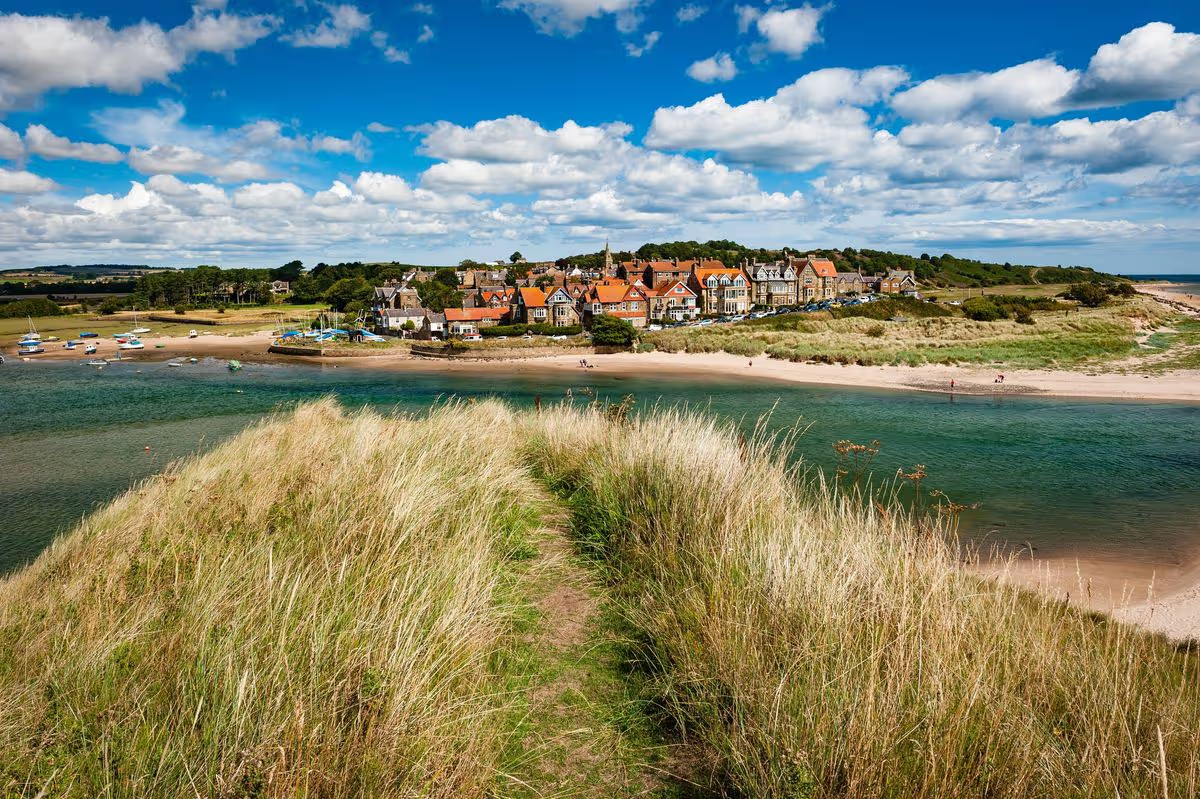
Time Out unveiled their ranking of the finest UK seaside towns to visit in 2026, and an overlooked treasure in Northumberland secured a spot in the top 10. Alnmouth is celebrated for its wild natural beauty and soft sands, discreetly positioned along the coastline, sitting between Newcastle and Edinburgh.
Outranking some of the nation’s most beloved seaside resorts, including St Ives and Brighton, and climbing above its nearby neighbours Bamburgh and Berwick, it’s evident that Alnmouth is one to keep an eye on this year.
The beach
Alnmouth lies within one of Northumberland’s Areas of Outstanding Natural Beauty, and consequently, it brims with unspoilt corners and abundant wildlife. Alnmouth Beach is precisely one of these treasured locations, cherished by both tourists and locals for its expansive stretch of sand, providing a delightful day by the sea.
One recent visitor shared on TripAdvisor: “Nice wide sandy beach with convenient shops and cafes nearby. Parking right behind the beach. Not over-commercialised.”
Another visitor added: “Really lovely beach! Was nice and quiet when we went so was so peaceful. Great place to chill on a day out. Good fun wading in the water! Would definitely return!”
The beach warmly welcomes four-legged friends, making it a brilliant destination for the whole family. It’s divided into three sections, offering ample room to spread out and have fun.
Many visitors choose to arrive via the Northumberland Coast Path, making their way from neighbouring towns and villages while taking in the stunning coastline in its entirety.
Restaurants
According to TripAdvisor reviews, the top spot for a hearty meal in the village is Bistro 23, which serves up brunch and coffee during the day alongside evening dining in the bistro.
One delighted diner left a glowing review: “Wonderful food and super service at this amazing restaurant. We have visited a number of times and have never been anything other than delighted.”
For a touch of elegance, the delightful Whittling House is a country restaurant that prides itself on using locally sourced produce packed with flavour. It also boasts 10 guest rooms, making it the perfect base for a full weekend away, with their exceptional food and drink keeping you going throughout your stay.
For something a little more traditional, The Red Lion — which also operates as a bed and breakfast — offers an extensive pub grub menu. Well-behaved dogs are made to feel at home in the bar and beer garden, where you can enjoy a pint while soaking up views of the boats.
Art Gallery
Celebrating the work of local talent, The Old School Gallery makes for a wonderful pit stop during a day spent exploring the coastline, nestled inside a charming period school building. It boasts an accessible collection of inspiring artwork from artists across Northumberland and beyond, all of which can be enjoyed alongside a delicious coffee from their very own in-house café.
One reviewer wrote: “Very friendly staff with a warm welcome. The gallery is varied to suit all tastes and budget. We only went for a coffee and ended up buying a print by a local artist.”
Another visitor added: “A lovely old English school turned into a gallery and café, what couldn’t you love about this? The food is great and they have an amazing gift shop.”
Whether you’re wrapping up for a bracing winter stroll along the shore or seeking out a tranquil spot to soak up the summer sun, the quaint village of Alnmouth is the perfect place to take a breather and drink it all in.
This once charming village has been abandoned since a tragic accident decades ago.
The village was devastated by a plane crash(Image: Getty)
Just a stone’s throw from one of the world’s most bustling capital cities lies a town that has been eerily silent for four decades, deserted by all those who once made it their home. Goussainville-Vieux Pays sits roughly half an hour’s drive north of Paris, and once upon a time, it was the picture of a quintessential French village.
Yet as the world moved on, a cruel twist of fate consigned Goussainville-Vieux Pays to history. The beginning of the end for this charming French settlement was the scene of a harrowing disaster
In 1973, a Russian aircraft had been performing aerobatic manoeuvres at the Paris Airshow when it stalled at low altitude and came crashing down.
The plane plummeted into the village, claiming 14 lives – including six crew members .
The wreckage obliterated 15 homes and the local school.
In the wake of the devastating incident, the village desperately tried to rebuild, but fate dealt another cruel blow.
The very next year, in 1974, Charles de Gaulle Airport opened its doors, placing Goussainville squarely beneath the flight path of one of Europe’s busiest airports.
The relentless roar of overhead aircraft proved not only an unbearable disruption for local residents, but served as a constant and harrowing reminder of the tragedy that had torn through their community just a year before, reports the Express.
Most villagers simply upped and left, many without even bothering to sell their properties.
The airport was subsequently compelled to purchase more than 100 of the deserted homes and pledged to maintain them.
Sadly, those houses have since been left to crumble.
Among the most arresting sights in this abandoned village are the crumbling remains of a sprawling old manor house, set within an overgrown and neglected garden.
Graffiti has spread across the settlement, and nowadays its only genuine signs of life are inquisitive tourists arriving to catch a glimpse of the village that time forgot.
This picturesque coastal village offers spectacular scenery and a peaceful atmosphere – ideal for a summer escape away from busy tourist hotspots
This article contains affiliate links, we will receive a commission on any sales we generate from it. Learn more
This beautiful village has so much to offer(Image: Southern Lightscapes-Australia via Getty Images)
Summer holidays are on the horizon and many people are starting to map out their getaways. With jet fuel costs climbing, jetting off abroad might not be the most affordable option, but fortunately, there are countless beautiful destinations right here in the UK.
Plenty of people travel overseas to the same spots year after year, but the UK is actually home to numerous hidden treasures that provide just as much natural beauty for a fraction of the cost, and with far fewer crowds.
From seaside escapes to woodland getaways there’s so much to choose from.
Hazel Rickett, travel expert at small-group tour operator Rabbie’s, said: “Some of the UK’s most memorable summer escapes can be found in the lesser-known towns, villages and coastal communities that people tend to overlook.
“For travellers hoping to avoid overcrowded tourist hotspots, long airport queues or the rising cost of overseas travel, these destinations offer the chance to slow down and experience a different side of the UK, whether that’s through coastal scenery, historic charm or access to incredible landscapes.”
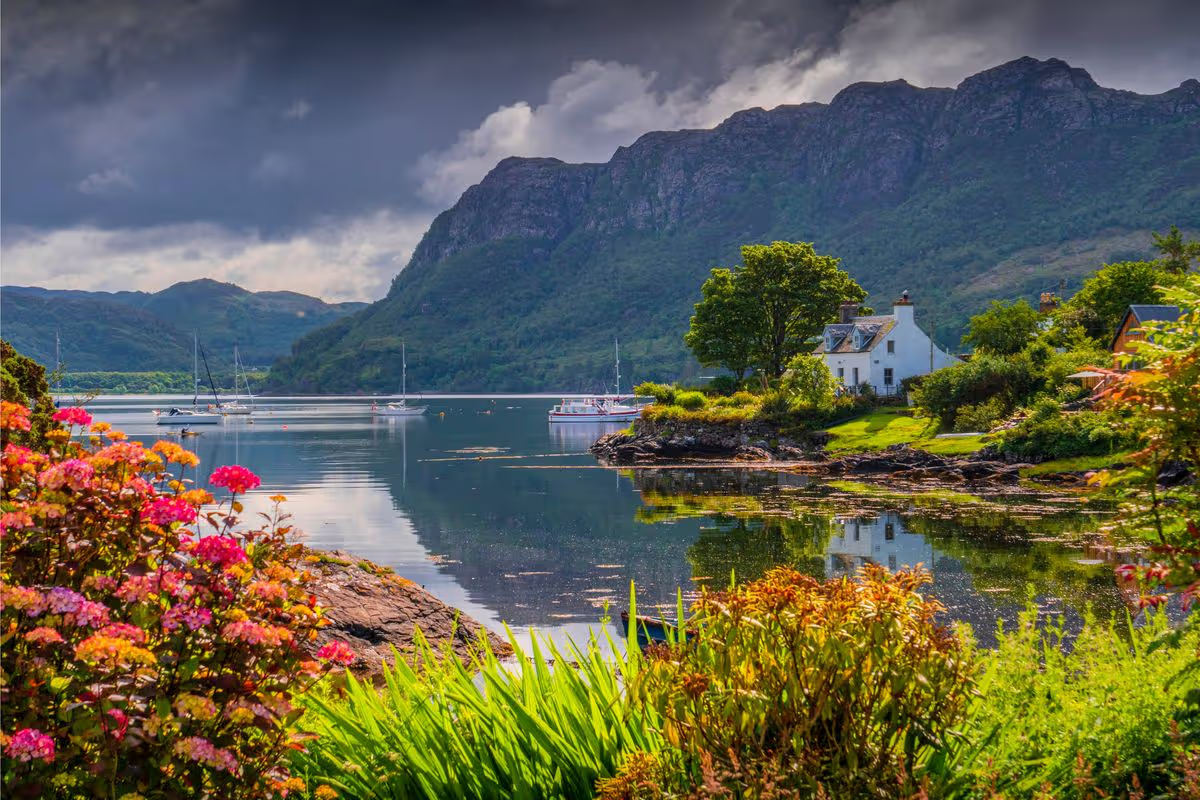
Hazel has revealed one of her top picks for a summer break in the UK – a beautiful coastal village nestled in the Scottish Highlands.
She said: “Plockton is a brilliant destination for travellers looking for a summer escape that combines coastal scenery with a peaceful village atmosphere.”
The village sits on the shores of Loch Carron and is renowned for its breathtaking waterfront.
You can go kayaking, take a boat trip on the lake or simply relax and take in the views.
Plockton is also home to Attadale Gardens, a stunning 20-acre expanse of vibrant blooms, water gardens and glasshouses, reports the Express.
Among its highlights are century-old rhododendrons, while youngsters can seek out hidden sculptures dotted throughout the grounds or try their luck catching frogs and newts in the ponds.
Hazel said: “Plockton offers visitors the chance to experience spectacular Highland scenery while enjoying the charm of a traditional coastal village.
“Its relaxed atmosphere and beautiful setting make it a memorable stop for travellers looking to explore a quieter side of Scotland away from the usual tourist crowds.”
THE premise was sound, I still insist. Whisking sociable teens Reggie and Stanley away from distractions in the run-up to their A-levels and GCSEs for a week of intense relaxation and revision.
And so we headed to Tui’s Magic Life Jacaranda beach-front complex in Antalya, the jewel of Turkey’s Mediterranean coast.
Sign up for the Travel newsletter
Thank you!
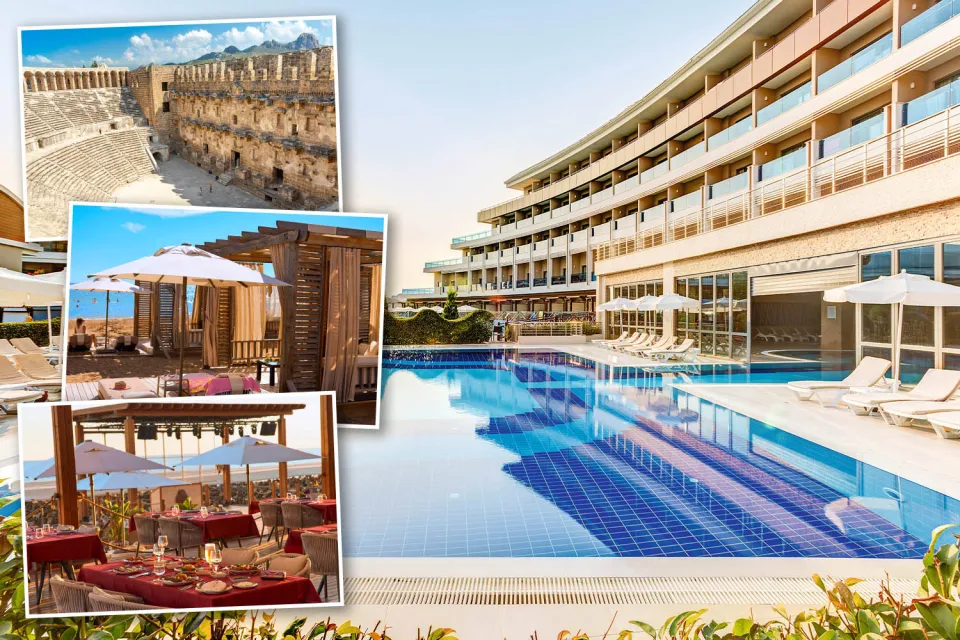
The pool at Tui Magic Life JacarandaCredit: SuppliedThe stunning Roman amphitheatreCredit: Alamy
I realised my “no distractions” argument was a mistake as soon as the boys’ jaws dropped when we rolled up outside the stunning, marble-floored hotel and glimpsed our new home for the week.
Only those popular family theme parks don’t boast 5H opulence, eight swimming pools, a thrilling aqua park, sandy beach, huge buffet diner and six à la carte restaurants.
And for sports-mad youngsters, the complex — the size of 18 football pitches — boasts a gobsmacking array of facilities which makes it feel like you’re living in an Olympic Village.
From tennis, beach volleyball, basketball, badminton and table tennis, to football, archery, darts and cycling, there’s something for everyone.
The hotel puts on daily group sessions and courses, with expert coaches on hand if guests want to pay for extra tuition.
There’s also canoeing or windsurfing, catamaran sailing, water-skiing or wakeboarding off the “Turquoise Coast”, aptly named for its stunning blue waters.
A well-equipped gym is open for more than 12 hours a day — a dream for an 18-year-old and 15-year-old needing to let off steam between hitting the books.
There’s a big indoor pool and spa offering treatments, while classes can also be booked for zumba, Pilates, yoga, aqua aerobics, spin cycling, shuffleboard and trampolining.
And dedicated kids’ and teens’ clubs leave parents free to soak up the sun.
With the boys finding a window between the fun activities to do some revision, I tried out the “abs-blast workout”.
Despite the language barrier between the different nationalities, we were united in grunting and groaning as we were put through our paces in an outdoor fitness hut overlooking the sea.
Meanwhile, the Nordic walking class had a dozen intrepid guests gripping poles and striding off down the beach for a 45-minute cardio-busting thrashing.
Teenagers love their food — and with so many activities going on it’s easy to work up an appetite.
The main buffet was a dream for Reggie and Stan, with chefs rotating special cuisine nights including Turkish, Italian or Tex-Mex.
The fresh salads were incredible and cooks prepared pasta, grilled meats and flatbreads while we waited, mouths salivating.
Easy does it by the seaCredit: SuppliedMake a splash and enjoy windsurf funCredit: Supplied
With breakfast from 7am till 11am, lunch from 12.30 till 4pm, and dinner stretching from 6.30pm till 9pm, it’s hard to imagine ever feeling hungry.
But a coffee house, beach and pool bars offer snacks all day, and the dedicated Wunderbar opens 24 hours, providing drinks and food to insomniac guests.
It’s tempting not to leave the complex. But for guests choosing a break from the idyllic swimming pools, there are day trips offering a chance to learn some of Turkey’s incredible history.
I chose a half-day trip to the nearby ancient port city of Side and its 1,400-year-old ruins.
There’s a huge Roman amphitheatre which used to seat 20,000 locals cheering on gladiators, while the 2nd-century seafront shrines, the Temples of Apollo and Athena, were simply awesome.
Strolling through the modern-day Side, stopping to browse the bazaars selling sizzling kebabs and chunks of delicious Turkish Delight, we stepped on glass walkways, revealing the ancient Roman streets below.
Back at the hotel, the rooms are airy, bright and comfortable.
The vast, five-floor main building offers beds close to the buffet and gym, and glorious views across the sprawling complex.
The main buffet was a dream for Reggie and Stan, with chefs rotating special cuisine nights including Turkish, Italian or Tex-MexCredit: SuppliedReggie and Stanley by the poolCredit: Supplied
Smaller, quieter rooms are available, spread throughout the gardens and closer to the gorgeous beach.
Some lucky guests can even opt for “swim-up” apartments, with a balcony stepping into one of the many shared pools.
The staff are friendly and happy to help.
A huge amphitheatre hosts professional shows at night, as well as movie nights and live music.
There are also themed parties and discos on site, and an indoor nightclub for guests wanting to boogie into the early hours.
Magic Life Jacaranda offers a classic “something for everyone” heavenly holiday — even for youngsters preparing for exams.
What the boys missed out on study hours, they more than made up for in memories that will last a lifetime.
Like most guests who have been lucky enough to experience this perfect holiday destination in southern Turkey — boasting blazing sun for more than 300 days a year — we’ll be returning as soon as possible.
GO: ANTALYA, TURKEY
GETTING/STAYING THERE: Seven nights’ all-inclusive at the 4T+ Tui Magic Life Jacaranda is from £714pp based on two adults and two children sharing a Lake House double room with pool view and balcony.
Price includes flights from Gatwick on September 17, 20kg luggage and transfers.
See tui.co.uk, head to your local TUI holiday store or download our app.
THE release of Rivals series two has thrust the Cotswolds into the spotlight once more.
Brits are seeking out the pretty scenery of Rutshire with its stone cottages, rolling countryside and delightful pubs in beautiful villages like Kemble.
Sign up for the Travel newsletter
Thank you!
Kemble has a ‘vintage’ train station with Victorian featuresCredit: AlamyThe village pub is called the ‘Tavern Inn’ and is considered a ‘gem’ by visitorsCredit: Google maps
Data from Trainline revealed that since Rivals returned on May 18, passengers to Cotswolds ‘gateway stations’ have risen by an average of 22 per cent.
That includes the tiny town of Kemble which is a 12-minute drive away from Cirencester.
Kemble is considered a ‘rail gateway’ for the southern Cotswolds as it’s one of the smaller spots that actually has a train station and a direct link to London.
With Great Western Railway, visitors can get from London Paddington to Kemble in just over an hour.
For those who want a great view of the runway, the airport has its own restaurant called AV8 where visitors sit on the terrace and look out over the airfield.
Other villages in the Cotswolds that have seen an increase in visitors since the release of series two of Rivals are Moreton-in-Marsh and Charlbury.
The residents of this village fled in 1943 and never came back, leaving abandoned buildings that have been suspended in time, and access to this spooky area is still restricted during certain times
15:45, 03 Jun 2026Updated 15:50, 03 Jun 2026
The village is full of incredible relics from the past(Image: Getty Images/iStockphoto)
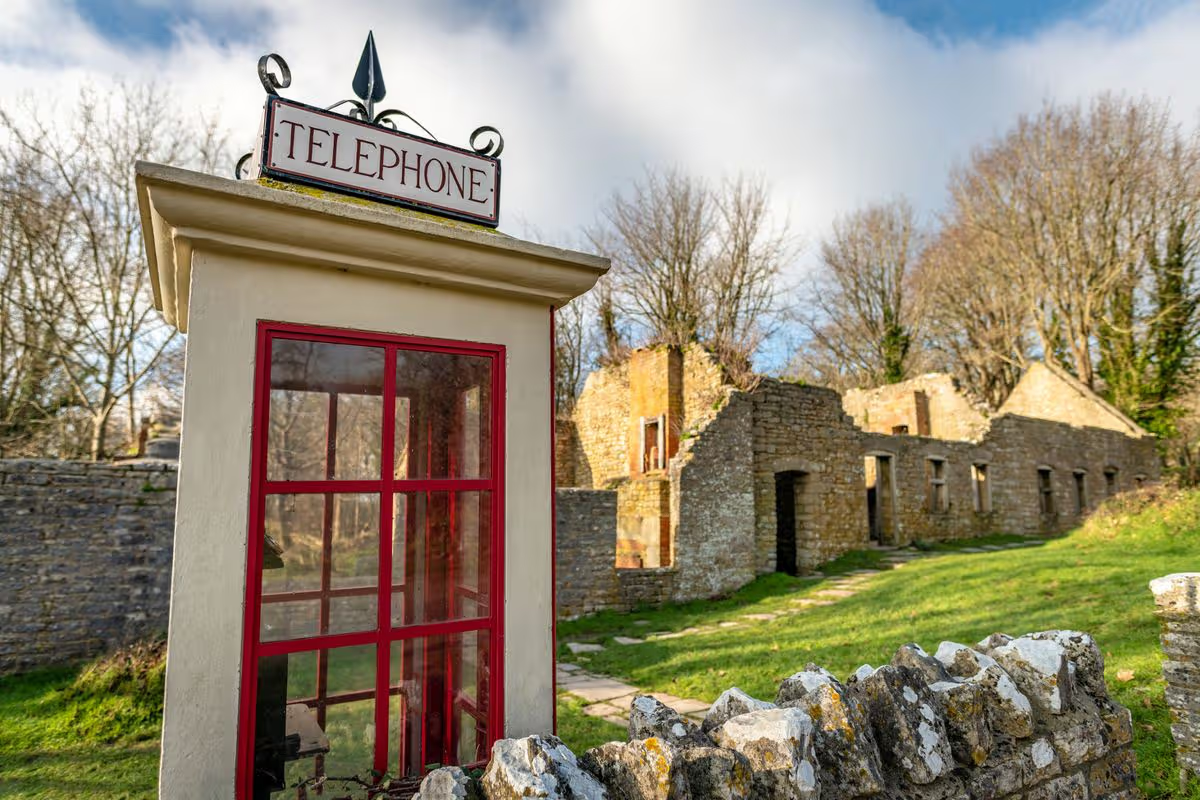
Imagine waking up one day to a letter telling you that your home is being turned into a military zone and that you need to leave within a month. It’s a fate that befell the 225 residents of Tyneham one winter morning.
In November 1943, Britain was still in the depths of World War 2, and needed a strategic location for military testing. The idyllic Dorset village was close to a military firing range, and its peaceful rural location was deemed perfect for D-Day preparation.
Letters were sent to the 102 occupied properties giving them just a month to move out, with the deadline set just before Christmas, with assurances were made that the evacuation was just a temporary measure.
But, decades later, the village is still uninhabited, and increasingly being lost to nature, as its stone cottages and buildings crumble. You can still visit Tyneham to see this old homes up close, but there are restrictions that still need to be followed to this day.
The village is still owned by the Ministry of Defence and is close to an active military firing range, making it inaccessible at certain times. Walkers will need to check the Gov.UK website to see closure dates, and keep in mind that the village is only available to explore from 9am until dusk.
While many of its buildings have fallen into ruin, the church and school were preserved and have become museums dedicated to telling the unique story of Tyneham. You can see photos of the residents and find out about the families who lived in this village through the years.
Tyneham Farm, which was abandoned for many years, is also in the process of being restored, and you can see the remains of the humble cottages where labourers and shepherds once lived in this peaceful, rural spot. However, the reminders of the end of the idyll are all around; some buildings have bullet holes and shell damage scarring their solid stone walls.
About a 20-minute walk away is Worbarrow Bay, an unspoilt shingle beach on the sweeping Jurassic Coast. It has clear, deep blue waters, making it popular with wild swimmers and snorkellers. At low tide, rock pools full of sea creatures can be explored.
At times such as weekends and school holidays, you can often explore Lulworth Ranges which lie within an Area of Outstanding Natural Beauty overlooking the coast. Carry on along the iconic South West Coastal Path and you’ll reach Flower’s Barrow Hillfort, which was built during the iron age. You can still see hut circles where these settlements used to lie.
Nearby, Pondfield Cove is a hidden gem with sand and shingle shores covered in lush green marine vegetation. The sea here is calm and clear, although the sudden depths mean only experienced wild swimming enthusiasts take to the water. However, it’s the perfect place to visit for peaceful fossil hunting away from the crowds.
Have a story you want to share? Email us at webtravel@reachplc.com
Brooke McCree, a 22-year-old recent UCLA graduate, is the first to admit she’s been going to the movies a lot less.
Back when Regency operated the local Village and Bruin theaters in Westwood Village, she would often take advantage of the student discount and see as many movies as possible. But in the two years since the theaters closed, she said moviegoing for many UCLA students has become inaccessible.
“At UCLA, it’s been rough because I’ll have to walk really far or take the bus [to the movies]. There’s nothing really nearby,” said McCree, who recalled fond memories of seeing movies like “Madame Web” and a “Hunger Games” prequel in a dense crowd of excited college students. “I was pretty devastated when it initially closed.”
There is still hope for the Village Theatre, which recently received a breath of new life thanks to some of Hollywood’s biggest names.
The event was reportedly the first of a limited number of premieres and screenings planned for this summer to support a 12-month renovation set to begin this fall.
A representative for Reitman declined to comment on the plans.
Nissan GT-R NISMO sports cars are seen outside the Fox Westwood Village Theatre, promoting the “Gran Turismo” movie in 2023.
(AaronP / Bauer-Griffin / GC Images )
The $25-million restoration, which organizers previously told The Times would be completed next year, includes plans for a restaurant, bar, gallery and a multipurpose space in the lobby for filmmakers and hosting premiere-related events.
Last year, the coalition of directors announced that American Cinematheque would operate the theater, hosting special screenings of new releases and repertory titles and conversations with filmmakers. The film non-profit already runs Santa Monica’s Aero Theatre and co-programs both the Egyptian Theatre in Hollywood and the Los Feliz 3.
Historically, the neighborhood has been a tricky market for businesses, said Jonathan Kuntz, a former lecturer at the UCLA School of Theater, Film and Television. He worked in the area for nearly 40 years and saw much turnover among local businesses due to high rents and inadequate parking.
“We’ve had some great things, like bookstores and eateries that have flourished sometimes for a decade or two, but it faded out,” Kuntz said. “[The theater] will certainly help Westwood if it is a success.”
For that to happen, Kuntz said, 1400-seat theater will need to screen a regular supply of films to a diverse customer base, including nearby students that have long been among its most frequent customers.
Many current UCLA students are already eagerly anticipating the theater’s reopening, said Ingrid Fan, a senior at the university majoring in public affairs.
“It’s been a bummer to have it closed for so long,” said Fan. “My friends and I always talk about how we just wish it opened sooner.”
While the theater’s renovation timeline won’t be complete before she graduates, she’s certain that other students will make good use of it when it reopens.
“Westwood is a college town, and we are always looking for a new source of community. It’s a space a lot of students would definitely flock to,” Fan said.
Broxton Avenue in Westwood Village during one of UCLA’s First Thursdays community events.
(Myung J. Chun / Los Angeles Times)
A historic movie hub
The university and its surrounding village, including the theater, were developed simultaneously throughout the 1920s and 1930s. Designed by Percy P. Lewis, the Westwood Village Theatre originally opened as a part of the Fox Theatres chain in 1931.
Despite launching during the Great Depression, the Westwood Village Theatre had a prime location working in its favor.
Westwood was imagined as a satellite town in West L.A. that would eventually support the growing UCLA campus. The neighborhood became known as the third major movie theater hub, behind downtown and Hollywood. In the 1920s, when the Chinese and the Egyptian theaters opened on Hollywood Boulevard, Westwood was next in line as a booming premiere destination.
“It was much more convenient to those folks than going to downtown Los Angeles, or even to Hollywood,” Kuntz said.
This was an era of moviegoing when premieres were essential to a movie’s box office success, drawing substantial marketing opportunities. The volume of films being produced at the time made it necessary to have multiple premiere-ready theaters around L.A., Kuntz said.
A “Terminator” poster is unveiled at the world premiere of “Terminator 3: Rise of the Machines” in 2003.
(Robert Mora / Getty Images)
Over its 95-year history, the venue has been remodeled a handful of times, including in the 1950s when television became a mainstream medium. Soon, multiplexes emerged, which put the Westwood Village location at a disadvantage. To this day, the theater can only show one film at a time.
In the 1970s, the venue joined the Mann Theatres chain, and in 1988, it was designated a historic cultural monument.
The ticket booth at the Regency Bruin theater in Westwood Village all boarded up, as seen on the afternoon of Nov. 3, 2020.
(Carolina A. Miranda / Los Angeles Times)
Regency continued to operate the two locations until its lease ended in 2024. Although the group of Hollywood directors was quick to bid on the Village (the Bruin was not included in the deal), the theater has remained closed since then, with the exception of the recent Billie Eilish premiere.
“A lot of people in Hollywood want to preserve at least some of what made classic Hollywood successful, like the big screen experience,” Kuntz said. “These folks are the ones who could afford to buy a movie house or two, program it and keep that tradition alive.”
L.A. Times staff writers Josh Rottenberg and Meg James contributed to this report.
A survey of 2,000 UK adults has named the best staycation destinations for 2026, with Cornwall’s St Ives retaining the top spot and Northumberland’s Bamburgh making a surprise new entry into the rankings
This Northumberland coastal village made a surprise entry(Image: Getty Images)
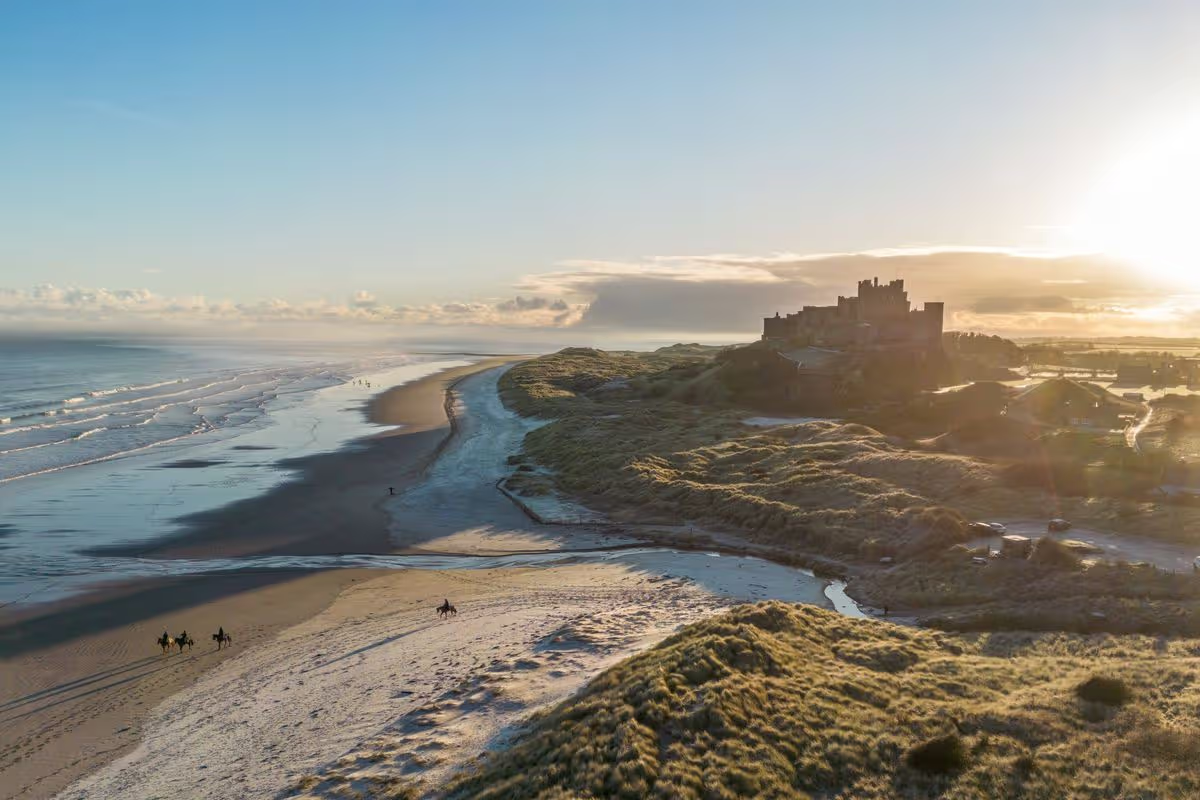
Britain’s top staycation destinations for 2026 have been unveiled, with Cornwall’s St Ives claiming the number one spot yet again and the Northumberland village of Bamburgh securing second place as a fresh addition to the rankings.
The yearly staycation report, drawn from a survey of 2,000 adults, showed that Bourton-on-the-Water and Salcombe have grown in popularity, while other coastal hotspots also experienced shifts in the standings. Brighton overtook Lyme Regis, climbing to sixth place, ahead of the Dorset town, which has moved from fifth last year to seventh.
The study, commissioned by Sykes Holiday Cottages, discovered that 38% intend to take their main holiday within the UK this year, climbing to 53% amongst Gen Z. This is up from 34% of adults who said the same last year, while Gen Z’s appetite for UK holidays has increased from 45% in 2025.
James Shaw, chief commercial officer at the holiday brand which launched the annual Staycation Index Report, said: “The continued popularity of UK breaks demonstrates that staycations remain a key part of how Brits holiday.
“More people are choosing to stay at home and prioritising value, flexibility and reassurance when planning time away, particularly amid ongoing uncertainty around overseas travel.
“What’s especially notable this year is the growing influence of younger travellers, Gen Z is increasingly embracing UK holidays, with more people opting for experience-led trips that combine scenery, food, culture and the chance to explore multiple destinations in one break.
“From seaside towns and national parks to countryside retreats, the UK continues to offer an enormous variety of holiday experiences, and that’s reflected in the strength and diversity of destinations featured in this year’s rankings.”
The study revealed that 64% are planning to — or have considered — a multi-destination road trip, stopping off at an average of three locations. Coastal spots are the most sought after, followed by rural areas and national parks.
Tourist attractions (48%) were also a deciding factor when choosing where to visit, alongside locations with fond memories (38%) and positive reviews and ratings (35%).
Of those hoping for a break in the UK, 48% said it’s simply the time they have to switch off and relax.
The study, conducted via OnePoll, found 14% have been swayed by a film or TV show, with Peaky Blinders proving the most influential following its film release this year (11%), set in Birmingham.
Similarly, Northern Ireland, home of the Game of Thrones prequel, House of the Dragon; and Northumberland, which was a location for Jurassic World, were also popular choices.
James Shaw, added: “For many people, holidays remain one of the most important opportunities in the year to properly switch off and spend quality time together, even as budgets remain under pressure.
“What this research highlights is that UK travel continues to appeal because it offers both convenience and variety – whether that’s a coastal escape, a countryside road trip or revisiting places that hold personal memories.
“We’re also seeing more travellers embrace flexible, multi-stop breaks, with people increasingly keen to experience more of what the UK has to offer in a single trip.”
TOP 50 UK STAYCATIONS
St Ives (Cornwall)
Bamburgh (Northumberland Coast)
Ambleside (Lake District)
Grasmere (Lake District)
Robin Hood’s Bay (North Yorkshire Coast)
Brighton (East Sussex)
Lyme Regis (Dorset – Jurassic Coast)
Bakewell (Peak District)
Salcombe (Devon)
Bourton-on-the-Water (Cotswolds)
Alnwick (Northumberland)
Lerwick (Shetland)
Tenby (Pembrokeshire)
Conwy (North Wales)
Fort William (Gateway to Ben Nevis & the Highlands)
A military vehicle patrols on the road in Yangon, Myanmar, in February 2022. An accidental explosion in a rebel-held part of the country on Sunday killed 55 people and injured many more, rebel leaders said. File photo by Stringer/EPA-EFE
May 31 (UPI) — Fifty-five people were killed, including six children, in an accidental detonation of mining explosives in a rebel-held area of Myanmar, the armed group said Sunday.
The Palaung Self Liberation Front/Ta’ang National Liberation Army, also known as the PSLF/TNLA, said in a statement that many others were also hurt in the blast, which happened Sunday afternoon local time in northern Shan State.
Rescuers told the Shwe Phee Myay News Agency the entire village of Kaung Tat in Namkham Township had been virtually destroyed and that “dozens” had been injured in the disaster.
Local officials have sent out an urgent call for blood donations as emergency workers tried to free victims trapped in rubble.
The PSLF/TNLA confirmed that many homes in the village were damaged when soft gunpowder stored for mining operations accidentally exploded at around 12:30 p.m.
The fatalities included 25 females and 30 males, they said, adding that the cause of the explosion will be investigated in detail.
Authorities, they said, “will take action in accordance with the law.”
The Ta’ang National Liberation Army is one of the main ethnic rebel groups in Myanmar fighting for independence from the central government, which along with its ally the Palaung Self Liberation Front comprise a front of resistance to the country’s military government.
The Devon village that was destroyed in just one night(Image: Getty)
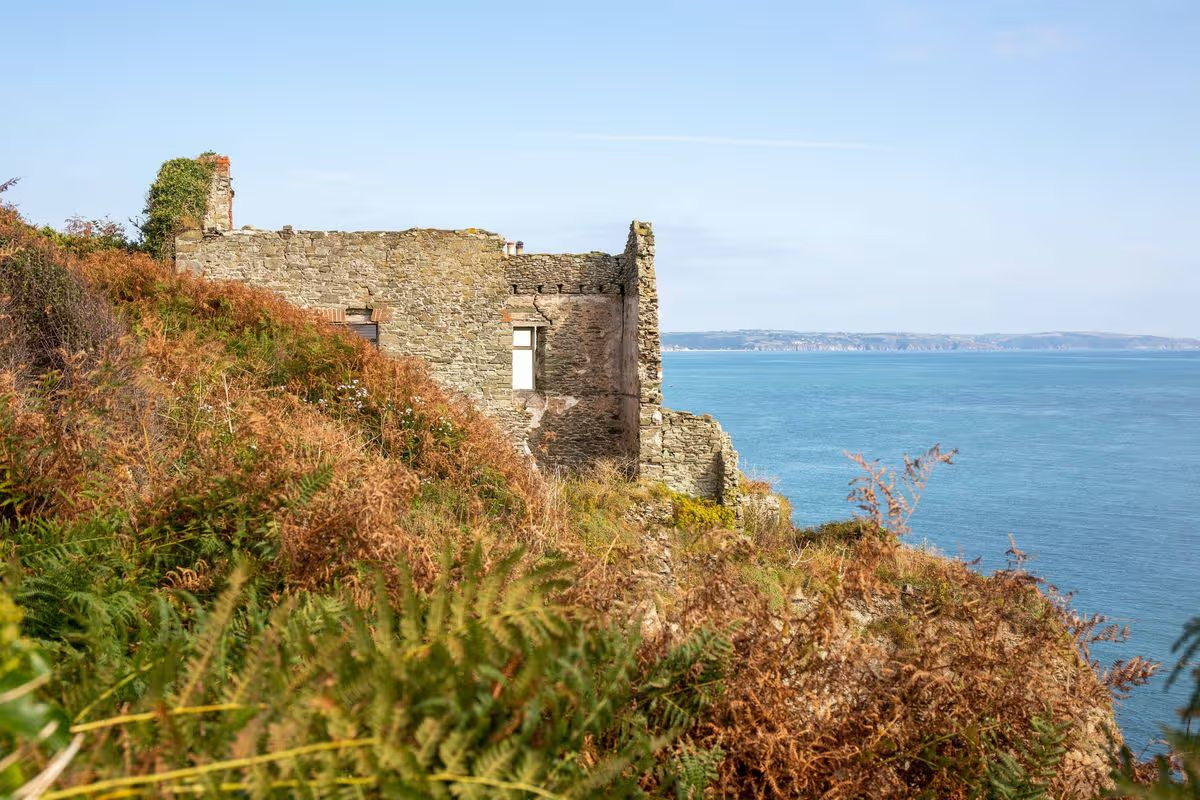
A Devon fishing community was obliterated by a ferocious storm, back in 1917. By daybreak, only a single dwelling remained intact, forcing the town’s inhabitants to seek refuge in nearby settlements.
Hallsands, situated between Beesands to the north and Start Point to the south, boasts a heritage dating back to the 1600s. By 1891, the settlement had fostered a close-knit community of just 159 people.
Yet merely 26 years later, these residents would face catastrophe when all but one would see their homes claimed by the sea.
Luckily, nobody was injured, and while the inhabitants lost their dwellings, they all made it through the night. But their ordeal didn’t end there — it would take another seven years before they secured compensation for what they’d lost.
While it was a deadly combination of howling gales and surging tides that razed the village in a single night, this wasn’t the full picture — Hallsands had fallen prey to Government blunder.
During the 1890s, the UK Government determined that the naval dockyard at Keyham, near Plymouth, required expansion. To source the concrete needed for this project, the stretch between Hallsands and Beesands was dredged.
Despite fierce objections from Hallsands locals that this would endanger their community, the dredging pressed on until 1902. By 1900, the beach had begun to drop noticeably, and that autumn a storm swept away part of the sea wall.
This sparked fresh outcry from local residents — and this time, the Government started to take notice.
In September 1901, roughly a year after the town’s sea wall was lost, a Board of Trade inspector determined that future severe storms posed a real threat of significant damage and advised that dredging should cease.
Once dredging was halted, beach levels managed to recover to some extent, though storms kept battering the village and surrounding area.
Catastrophe then hit in 1917, when a storm caused the village to tumble into the sea, leaving just one house standing intact.
That house belonged to Elizabeth Prettyjohn, who steadfastly refused to abandon the village and lived there with her chickens until her death in 1964. The property remains to this day.