Vatican

A defining week in Africa: between moral voice, political tensions, and economic reality

Africa has shown itself in the past week again as a continent of dramatic contrasts, in which moral leadership, political turmoil, and financial aspiration come into collision in a manner that would not only chart its own future but also that of the world. The continent is going through a time that is both precarious and radical, as the potent moral rhetoric of a papal visit gives way to an ever-worsening political persecution and systemic economic disparities.

A Moral Voice in a Fractured Continent

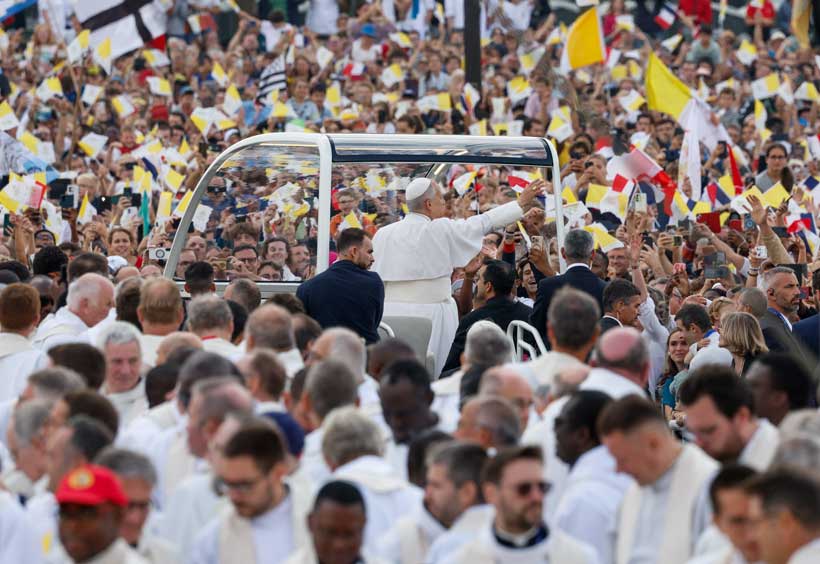
The visit of Pope Leo in some parts of Africa, such as Angola and Cameroon, has been one of the most intriguing this week. His message attracted crowds of more than 10,0000 people, and it was not only religious but also very political, declaring Africa a beautiful but wounded continent and demanding unity, justice, and an end to violence.

It is not only the size of the meetings but also the content of the message that is important. The Pope was outspoken in an attack on corruption, inequality, and exploitative governance systems—the problems that are at the core of most of the struggles in Africa today. His words about people being more important than corporate interests are well-received in a continent where natural resource wealth has not always translated into widespread prosperity.

This visit was, in a sense, a symbol of a greater fact: Africa is not merely economically or politically challenged; it is morally and structurally challenged. The unity cry in Angola, the nation that is yet to overcome the adverse effects of decades of civil war, is a symptom of the bigger continental necessity to mend the wounds of the past and deal with the inequalities of the present.

Political Tensions and Disappearance of Space of Dissent

As the moral pleas of unity reverberated in stadiums, political realities on the ground painted an even more disturbing scenario. The South African arrest of activist Kemi Seba is part of an increasing trend in some parts of Africa, where there is an increased crackdown on dissenting voices.

Seba, the anti-colonial and anti-Western rhetoricist and critic of Western influence, now risks extradition to Benin on charges of inciting rebellion. His detention highlights a broader conflict: the fight between state power and political activism in an area where the democratic institutions are not yet balanced.

This is not a one-time event. Governments all over the continent are striking a fine balance between ensuring stability and political expression. In other instances, this equilibrium is leaning towards control over being open, and this leaves one worrying about the future of democratic governance.

The consequences are not confined nationally. The political situation in Africa is a topic of keen interest to the rest of the world, not just due to its size and population but because it offers one of the final avenues of democratic growth in the 21st century. Political space is reduced here, causing ripples way beyond the continent.

Structural Gaps in Economic Promise

Africa is still a puzzle economically. On paper, the figures are encouraging. Recently, South Africa obtained the promise of billions of investments, which indicates a great interest of other countries in the areas of green energy, infrastructure, and digital development. But the facts speak otherwise. Of these promised investments, only around 42 percent have been translated into real economic activity—much less than world averages. This delivery gap is indicative of an ongoing problem: it is one thing to attract investment and another to implement it.

Simultaneously, the recent climate financing agreement of South Africa with Germany that provides hundreds of millions of euros of loans and green energy assistance reminds us about the increased role of the continent in the global climate plan. Africa is also being increasingly viewed not only as a beneficiary of aid but also as a prime actor in the shift to sustainable energy.

However, structural problems are quite rooted. The effectiveness of economic initiatives is still hampered by policy inconsistency, poor infrastructure, and governance issues. Even the most ambitious plans of investment have a chance of failing without these underlying problems being addressed.

The Overlooked Crisis: Environment and Illicit Economies

The other trend of importance this week has been the further increase in wildlife trafficking in Nigeria, even though the legislation has been taking measures to reduce it. A lack of complete legislation on wildlife protection has allowed the illegal trade to continue, with several seizures of endangered species over the past few months.

The problem is indicative of a larger problem: that of a nexus between environmental degradation and ineffective enforcement. Africa has one of the most biodiverse regions in the world, but it is rapidly being threatened by illegal trade, climate change, and the exploitation of resources.

The inability to adequately deal with such problems not only damages the ecosystems but also weakens the governance and the stability of the economy. In places where there is poor regulation, illegal economies flourish and, as a result, establish parallel economies that undermine state power and promote corruption.

Africa: Moment between Opportunity and Uncertainty

Collectively, what happened this last week shows a continent at a crossroads. On the one hand, there is an increasing international appreciation of the significance of Africa, be it in climate policy, economic investment, or geopolitical strategy. Conversely, internal threats persist to restrict its ability to exploit these opportunities to their full potential.

The message of unity and justice that the Pope is calling for is the spirit of this moment. Africa is not poor in resources, talent, and potential. The greater challenge it confronts is alignment itself, leadership and citizens, economic growth and social equity, and global engagement and local realities.

Conclusion: A Turning Point, Not a Passing Moment

The events of this week do not represent one-off headlines, but they are evidence of larger trends that are defining the future of Africa. The continent is not just responding to the global events—it is steadily becoming one of the main arenas where the global issues are acted out.

The doubt now arises whether Africa will be able to utilize this moment of attention to become a changed continent. Will investment be translated into development? Will politics become more open? Do ethical demands of cohesion result in practical change?

The responses are unclear. Nevertheless, there is one thing that is clear: Africa is never at the periphery of world affairs any longer. It is here in the center, and what occurs here during times of this kind will make the continent and indeed the world.

Source link

Iran war: What is happening on day 46 of the US-Iran conflict? | US-Israel war on Iran News

The US started a blockade on Iranian ports, but Trump said there is still a chance for Tehran to reach a deal.

President Donald Trump said there is still room for Iran to strike a deal, despite the US blockade of Iranian ports, as Israel intensified its invasion of southern Lebanon.

Iran has accused Washington of “piracy” as thousands rally in Tehran against the move, which targets shipping through the Strait of Hormuz.

Recommended Stories

list of 1 itemend of list

The Associated Press news agency reported on Tuesday that diplomatic efforts to revive US-Iran talks are continuing, with Pakistan offering to host a second round of negotiations in Islamabad this week.

Here is what we know:

In Iran

  • US blockade and protests: The US measures are now being enforced, prompting Iranian accusations of “piracy” and demonstrations in Tehran against the restrictions on maritime traffic.
  • Tehran calls blockade ‘illegal’: Iran’s armed forces condemned the move as unlawful, warning that targeting its ports could put shipping across the Gulf at risk.
  • IRGC warns of escalation: A Revolutionary Guard spokesperson said Iran still has “unused capabilities” and could deploy new tactics if the conflict deepens.
  • Tehran backs pope: Iran’s Parliament Speaker Mohammad Bagher Ghalibaf praised Pope Leo XIV for condemning the war, calling his stance “fearless”.
  • Russia withdraws nuclear staff: Russia has pulled most of its personnel from Iran’s only nuclear power plant, built with Moscow’s support, according to the head of the country’s atomic energy agency.

War diplomacy

  • Qatar urges mediation: Qatar’s Foreign Minister Sheikh Mohammed bin Abdulrahman bin Jassim Al Thani urged Iran and the US to engage constructively in mediation efforts.
  • Pakistan says truce ‘holding’: Prime Minister Shehbaz Sharif said the ceasefire between the US and Iran was “holding”, with efforts ongoing to reach a deal after weekend talks failed.
  • Shipping disruption grows: A UN spokesperson said there is “no military solution”, warning that instability in the Strait of Hormuz is worsening global economic fragility. About 20,000 vessels are reported stranded, with supply chains, including fertiliser, under strain.
  • Push to include Lebanon: The United Kingdom urged Lebanon’s inclusion in a broader US-Iran ceasefire framework, which currently excludes fighting involving Hezbollah.
  • Talks planned with Lebanon despite fighting: Israeli and Lebanese ambassadors will hold talks on Tuesday in Washington, DC, aimed at halting the war.
  • Hezbollah rejects negotiations: Hezbollah leader Naim Qassem on Monday urged Lebanon to cancel the planned meeting in Washington, reiterating his group’s opposition to any direct engagement with Israel.
  • Russia to accept Iran’s uranium: The Kremlin has repeated an offer to accept Iran’s enriched uranium as part of a potential agreement with the US. In comments carried by Russia’s state-owned RIA Novosti news agency, Kremlin spokesman Dmitry Peskov said the proposal “was voiced by President [Vladimir] Putin in contacts with both the United States and regional states”.

INTERACTIVE_LIVETRACKER_IRAN_US_ISRAEL_MIDDLEEAST_ATTACKS_April 13_2026_GMT1645-1776099548

In the US

  • Iran ‘wants a deal’: Trump said Iranian representatives had reached out to pursue a peace agreement after talks in Pakistan ended without a breakthrough. “They’d like to make a deal. Very badly,” he told reporters, without specifying who made contact.
  • No apology over pope remarks: Trump said he had “nothing to apologise for” after criticising Pope Leo XIV for calling for an end to the conflict. He described the pope as “weak” on key issues, including Iran.
  • Warning over Iranian vessels: Trump said US forces would destroy any Iranian “fast attack ships” approaching the naval blockade now in effect.
  • Domestic politics and war powers: Senate Democrats, led by Chuck Schumer, are pushing for another vote to curb Trump’s authority to wage war on Iran. Schumer criticised the campaign as an “epic fail”, citing rising US fuel prices, while previous efforts have been blocked by Republicans.
  • Arrests of protesters: Police in New York City have arrested about 90 protesters in Manhattan as they stopped traffic to protest against the war on Iran and the US’s arms sales to Israel. Jewish Voice for Peace, the group leading the protest, said those taken into custody included whistleblower Chelsea Manning, actor Hari Nef and New York City Council Member Alexa Aviles.
  • Trump rails at pope: Trump has doubled down on his criticism of Pope Leo XIV, saying the pontiff’s opposition to the war in Iran was “wrong” and accusing him of being “weak on crime”.

In Israel

  • Israel pushes ‘buffer zone’: Israel’s military is continuing ground operations and air raids across southern Lebanon, bulldozing buildings in border towns such as Naqoura as part of efforts to create a “buffer zone”.
  • Hezbollah steps up attacks: Fighters have launched rockets and drones at Israeli troops and vehicles in areas including Bint Jbeil and Biyyada.
  • Accusations against Israel: Hezbollah chief Qassem accused Israeli Prime Minister Benjamin Netanyahu of pursuing a “Greater Israel” agenda with US backing.
  • Tensions with Italy: Israel summoned Italy’s ambassador after Foreign Minister Antonio Tajani condemned attacks on Beirut as “unacceptable”, following reports of more than 300 deaths.
  • The Israeli military said one soldier has been killed and three others have been wounded during battle in southern Lebanon.

In Lebanon

  • Israel continues to attack Lebanon: Israel has intensified its invasion of southern Lebanon, as the death toll from Israeli attacks since March 2 rises to at least 2,089.
  • An Israeli drone attack has hit a car travelling near southern Lebanon’s Nabatieh, killing at least two people, the National News Agency reported on Tuesday. Our colleagues at Al Jazeera Arabic say Israeli forces have launched two raids on the towns of Machgharah and Sohmor in the eastern Bekaa Valley.
  • Public opinion divided: Lebanese citizens appear split about negotiations, with some expressing fatigue from the war and hoping for a diplomatic breakthrough, while others remain sceptical of Israel’s intentions and doubt any deal will hold.
  • Canadian Foreign Minister Anita Anand confirmed in a statement posted on X that a Canadian national has died in southern Lebanon. The minister did not provide details on the events that led to the Canadian’s death.

Strait of Hormuz and energy crisis

  • The Reuters news agency is reporting that a Chinese tanker sanctioned ⁠by Washington has passed through the Strait of Hormuz despite a ⁠US blockade on the waterway. The tanker and its ‌owner, Shanghai Xuanrun Shipping Co Ltd, were previously sanctioned by the US for dealing with Iran.
  • US Energy Secretary Chris Wright said oil prices could keep rising until “we get meaningful ship traffic through the Strait of Hormuz”.

Source link

‘Terrible for foreign policy’: Trump attacks Pope Leo after peace appeal | Donald Trump News

Leo, ​who last year became the first US-born pope, has emerged as an outspoken critic of the US-Israeli ⁠war on Iran.

United States President Donald Trump has unleashed a storm of criticism at Pope Leo XIV, calling him “weak on crime” and “terrible for foreign policy”.

Trump delivered the unusual criticism of the head of the Catholic Church in a Sunday night post on social media, saying he does not “want a Pope who criticises the President of the United States”.

Recommended Stories

list of 3 itemsend of list

Trump’s outburst appeared to be triggered by recent remarks from Pope Leo critical of the US-Israel war on Iran.

Last week, Leo issued a rare direct rebuke of Trump’s threat to destroy Iranian civilisation, calling it “truly unacceptable“. And then, on Sunday, the 70-year-old pontiff implored leaders to end ongoing bloodshed, condemning what he described as a “delusion of omnipotence” fuelling war – comments that appeared directed at Trump.

The pope has also previously questioned the Trump administration’s hardline immigration policies, saying, “I don’t know if that’s ⁠pro-life.”

Taking to Truth Social, Trump wrote: “I don’t want a Pope who thinks it’s OK for Iran to have a Nuclear Weapon. I don’t want a Pope who thinks it’s terrible that America attacked Venezuela.”

“Leo should get his act together as Pope, use Common Sense, stop catering to the Radical Left, and focus on being a Great Pope, not a Politician,” said the US president.

Trump also claimed credit for Leo’s leadership in the Catholic Church, suggesting the Vatican picked the first US-born pontiff – elected last year – to curry favour with the White House. “If I wasn’t in the White House, Leo wouldn’t be in the Vatican,” Trump said.

Asked about the comments later on Sunday, Trump reiterated that he is “not a big fan” of Leo, who he said “is not doing a very good job”.

“He likes crime, I guess,” said Trump. “He’s a very liberal person.”

Trump also had a rocky relationship with Leo’s predecessor, Pope Francis, who criticised Trump’s ‌immigration ‌policy proposals when he first ran for president and suggested Trump was “not a Christian“. Trump had called Francis “disgraceful” in early 2016.

Leo is set to begin an 11-day trip to Africa on Monday, starting with a historic visit to Muslim-majority Algeria.

Source link

A president and a pope: The world’s most influential Americans are at odds over Iran

Donald Trump is accustomed to criticism from coast to coast — Democrats, disaffected Republicans, late-night comedians, massive protests. Yet in his second presidency, Trump’s most influential American critic doesn’t live in the country but at the Vatican.

It’s an unprecedented situation, with the first American pope directly assailing the American president over the war in Iran, where a fragile ceasefire took hold this week. The announcement came after Pope Leo XIV declared that Trump’s belligerence was “truly unacceptable.”

Never before has the relationship between Washington and the Vatican revolved around two Americans — specifically, a 79-year-old politician from Queens and a 70-year-old pontiff from Chicago. They come from the same generation and share some common cultural roots yet bring jarringly distinct approaches to their positions of vast power. And the relationship comes with risks for both sides.

“They’re two white guy boomers but they could not be any more different in their life experiences, in their values, in the way they have chosen to live those values,” said theology professor Natalia Imperatori-Lee of Fordham University. “This is a very stark contrast, and I think an inflection point for American Christianity.”

Polar positions on Iran among U.S. Christians

Experts on the Catholic Church emphasized that Leo’s opposition to the war reflects established church teachings, not the reflexive politics of the moment.

“For the last five centuries, the church has been involved in a project of helping develop strong international norms,” including the Geneva Conventions in recent centuries, said Catholic University professor William Barbieri. “It is a very long-standing tradition rooted in Scripture and theology and philosophy.”

Yet the U.S. administration, which has close ties to conservative evangelical Protestant leaders, has claimed heavenly endorsement for Trump’s war on Iran.

Defense Secretary Pete Hegseth urged Americans to pray for victory “in the name of Jesus Christ.” When Trump was asked whether he thought God approved of the war, he said, “I do, because God is good — because God is good and God wants to see people taken care of.”

The Rev. Franklin Graham, son of iconic Baptist evangelist Billy Graham, said of Trump that God “raised him up for such a time as this.” And Graham prayed for victory so Iranians can “be set free from these Islamic lunatics.”

Leo countered in his Palm Sunday message that God “does not listen to the prayers of those who wage war, but rejects them.” He referenced an Old Testament passage from Isaiah, saying that “even though you make many prayers, I will not listen — your hands are full of blood.”

While it’s not unusual for popes and presidents to be at cross purposes, it’s exceedingly rare for the leader of the Catholic Church to directly criticize a U.S. leader, and Leo later named Trump directly and expressed optimism that the president would seek “an off-ramp” in Iran.

An even stronger condemnation came after Trump warned of mass strikes against Iranian power plants and infrastructure, writing on social media that “an entire civilization will die tonight.” Leo described that as a “threat against the entire people of Iran” and said it was “truly unacceptable.”

Experts: Leo doesn’t see himself as a Trump rival

Imperatori-Lee said Leo’s direct criticism stands out from the church’s more general critiques of political and social systems. For example, Pope Francis urged U.S. bishops to defend migrants without specifically mentioning Trump or his deportation agenda. Leo also previously called for humane treatment of migrants.

“Popes have critiqued unfettered capitalism before, very robustly. The popes have critiqued the Industrial Revolution, right? Things that the U.S. has been at the forefront of,” Imperatori-Lee said, “but it’s never been this specific and localized.”

She said Leo’s commentary resonates in the U.S. — with Catholics and non-Catholics — because he is a native English speaker.

“There’s no question about his inflection and meaning,” she said. “It removes any ambiguities.”

Trump welcomed Leo’s election last May as a “great honor” for the country, and he hasn’t responded to the latest criticisms. The White House did not respond to a request for comment.

“What Pope Leo and Donald Trump have in common is they both lived through the post-war polarization,” including the political upheaval of the Civil Rights Movement and Vietnam War, said Steven Millies, a professor at Chicago’s Catholic Theological Union, one of the pope’s alma maters.

He noted that Leo is a subscriber to The New York Times, plays the “Wordle” game, keeps up with U.S. sports and talks regularly with his brothers, including an avowed Trump supporter.

“In some ways he’s just like us,” Millies said, someone “who understands where our domestic political crisis came from,” unlike the Argentinian Francis, “who did not fully understand the peculiarities of the United States” even as he offered implicit criticism.

Barbieri said Leo’s American savvy still does not change an underappreciated reality of Catholicism and the papacy. “The Catholic Church doesn’t neatly fit into either right or left boxes as they’re understood in U.S. politics,” he said.

Leo’s global focus vs. Trump’s ‘transactional’ politics

Leo spent much of his pre-papal ministry, including all his time as a bishop and cardinal, outside the U.S.

He was educated in Rome as a canon lawyer within the church. He was a bishop in poor, rural swaths of Peru. He led the Augustinian order and served as Francis’ prefect for recommending bishop appointees around the world.

Imperatori-Lee said that global reach gave him a first-hand perspective on how Washington’s economic and military policies — including backing dictators in Latin America — have negatively affected less powerful nations and their citizens.

His varied experiences made then-Cardinal Robert Prevost uniquely suited to be elected pope despite the College of Cardinals’ traditional skepticism toward the U.S. and its superpower status. Millies argued that Trump and his advisers, even Vice President JD Vance, a Catholic convert, may not appreciate those distinctions.

“This is an administration that seems to think only in terms of transactional politics — who’s for us and who’s against us,” he said.

Polarization poses risks for Leo and Trump

Relations between Washington and the Vatican have become so strained that a report of an allegedly contentious meeting involving Pentagon and Catholic Church officials sent shockwaves through both cities.

According to the report in The Free Press, a member of Trump’s administration warned the church in January not to stand in the way of U.S. military might.

The Vatican on Friday issued a statement rejecting the report’s characterization of the meeting, saying it “does not correspond to the truth in any way.”

The U.S. Embassy to the Holy See also pushed back, writing on social media that “deliberate misrepresentation of these routine meetings sows unfounded division and misunderstanding.”

Millies, meanwhile, questioned whether anything the pope or U.S. bishops say can sway individual Catholics. Trump is likely to lose support among Catholics as he loses support across the broader electorate, Millies said, but that’s not necessarily because members of Leo’s flock are applying church doctrine.

“Partisan preferences always trump the religious commitments,” Millies said, describing a “disconnect” between church leaders and many parishioners who look to other sources, politicians included, when shaping their views of faith and politics.

“The icon of Catholicism in American politics now is JD Vance, and it’s more about winning an argument,” he said. “It’s a very different emphasis, but it’s one that may suit the Trump administration very well.”

Barrow writes for the Associated Press. AP reporters Nicole Winfield in Rome and Konstantin Toropin in Washington contributed to this report.

Source link

Pope Leo’s brave stance against Trump

A war for the soul of the world is happening right now that’s straight out of the Bible — and I’m not just talking about the Middle East.

In one corner are President Trump and his minions, who insist that everything they do is divinely mandated. They have consistently invoked a violent version of God as they deport undocumented immigrants, try to make the United States whiter, rip up long-standing treaties with allies, rain down bombs like a biblical plague on supposed narco boats and choke nations they deem a threat or whose resources they covet.

They’re the ones who lecture religious leaders on what Jesus stood for, demanding blessings for Trump’s actions — or else.

Just check out the recent allegations in The Free Press that senior defense officials dressed down the Vatican’s ambassador to the U.S. in January over Pope Leo XIV’s lack of enthusiasm for Trump’s imperialist ambitions. Or Secretary of Defense Pete Hegseth, he of the tattoos hailing the blood thirst of the Crusades (another Middle Eastern forever war that the “civilized” side lost), who compared the rescue of a downed American aviator in Iran over Easter weekend to the resurrection of Jesus.

It’s a playbook straight out of the Book of Revelations, which describes a Beast in the End Times with “a mouth speaking great things and blasphemies” in its quest to hold dominion over the earth.

In the other corner of this existential fight is an actual man of God: Pope Leo XIV.

Rather than cower before a despot who makes the Pharaoh in the Old Testament seem as stable and kind as St. Francis, the first American pope has resisted Trump like a protester at a “No Kings” rally. He has yet to denounce by name anyone in the president’s sordid orbit — but Pope Leo has returned to their actions again and again in his first year as head of the world’s 1.4 billion Catholics.

He began his papacy by greeting a cheering crowd with “Peace be with you all” — what Jesus told his disciples after his Resurrection and a brilliant, biblical way to telegraph where he stands in our bellicose times.

On Palm Sunday a few weeks ago, the pontiff proclaimed during Mass in St. Peter’s Square that God “does not listen to the prayers of those who wage war” — a not-so-subtle rebuke to Hegseth, who prayed shortly after the U.S. launched the Iran war for “every round [to] find its mark” and for “overwhelming violence of action against those who deserve no mercy.”

For his first Easter message, Pope Leo wrote, “Let those who have the power to unleash wars choose peace! Not a peace imposed by force, but through dialogue!”

Meanwhile, President Trump told a reporter that God supports the destruction he’s inflicting on Iran because “God is good. God wants to see people taken care of.”

Secretary of Defense Pete Hegseth

Secretary of Defense Pete Hegseth speaks to reporters at the Pentagon, July 16, 2025, in Washington.

(Julia Demaree Nikhinson / Associated Press)

According to the Free Press article, the Vatican declined an invitation from Vice President JD Vance for Pope Leo to visit the U.S., for fear that Trump would use him as a political pawn. Instead, the man born in Chicago as Robert Prevost plans to spend July 4 — America’s 250th birthday — on a Mediterranean island that has long served as a gateway for migrants trying to make it to Europe.

Critics will accuse Pope Leo of Trump Derangement Syndrome and call him particularly short-sighted, since he stands athwart the desires of many American Catholics.

Though he isn’t Catholic, Trump has favored Catholicism far above any other mainline Christian denomination, from acknowledging feast days to packing his administration and the Supreme Court with adherents in a way that even Joe Biden — a lifelong Catholic — never did.

About 55% of Catholics voted for Trump in 2024, per the Pew Research Center. A survey last year by The Catholic Project at The Catholic University of America found “a clear generational shift away from liberal self-identification” among younger priests. Dioceses across the country are reporting the highest amount of converts in decades, many of them drawn in by orthodox Catholic influencers.

But Trump’s embrace of Catholicism, like everything else in his life, has been conditional on fealty to him. His administration pulled tens of millions of federal funds from Catholic charities because they assisted migrants regardless of legal status — something the American Catholic church has done for over a century. Vance, himself a Catholic convert, accused bishops of being “worried about their bottom line” for daring to criticize the move and his boss’ deportation Leviathan.

The Free Press also reported that Trump’s lackeys invoked the Avignon Papacy — when 14th century French kings exiled a succession of popes from the Vatican and made them their puppets — during their browbeating of the Vatican ambassador.

Re-litigating history is an obsession of the Trump regime, so bringing up a medieval episode amounted to a threat to Leo to shape up — or else.

That’s what makes Pope Leo’s stance against a modern-day Babylon even braver. A pope’s main role is to bear witness to the words of Christ, who said far more about taking care of the meek and turning the other cheek than he did about waging war.

The best popes, from John XXIII to John Paul II, know that their words stand as a challenge for all people, believers and not, to create a better world that paves the way for the world to come. Trump wages war for himself; Pope Leo urges us to stand for something other than ourselves.

At this point in his reign, Trump is a dead ringer for the Antichrist, described in the Second Book of Thessalonians as a “man of sin … the son of perdition who opposeth and exalteth himself above all.”

Pope Leo would never characterize his opposition to Trump in such apocalyptic terms, of course. But his stance against the president’s tyranny is a call to action in the same vein as John Paul II’s exhortation to the free world to oppose the Soviet empire.

“Let us abandon every desire for conflict, domination, and power,” Pope Leo stated on Easter, “and implore the Lord to grant his peace to a world ravaged by wars and marked by a hatred and indifference that make us feel powerless in the face of evil.”

Amen, amen, amen.

Source link