Venezuelan Gov’t, Opposition to Launch US-Supported Dialogue for Electoral Reforms
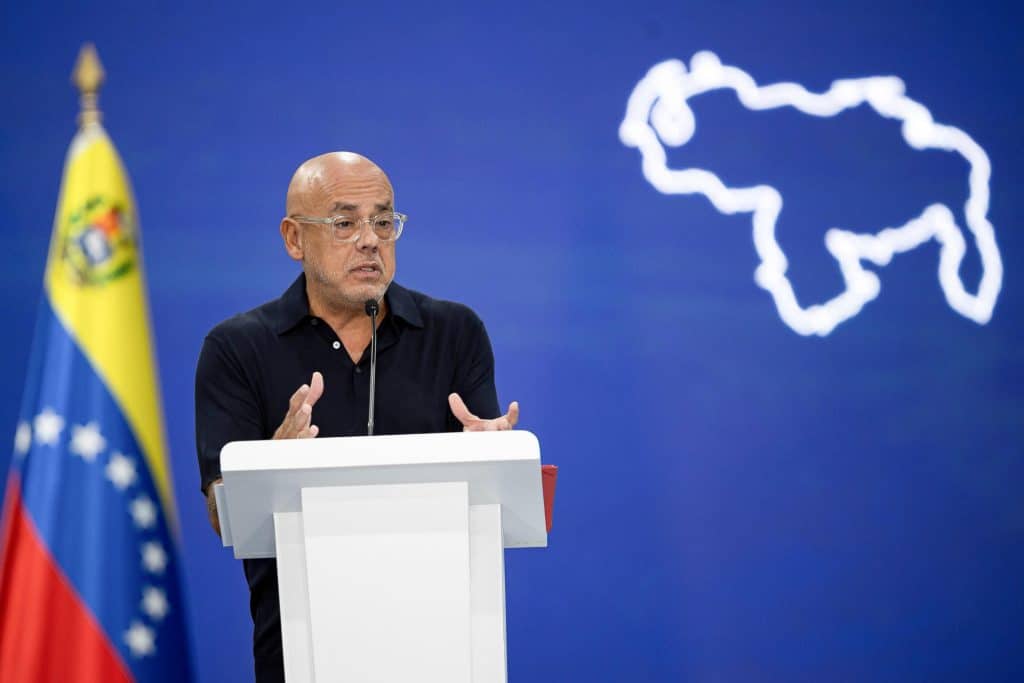
National Assembly President Jorge Rodríguez had dismissed talks on electoral reforms days ago. (Archive)
Caracas, July 15, 2026 (venezuelanalysis.com) – The Venezuelan National Assembly (AN) and a group of former opposition lawmakers who served in the 2015–2020 legislature, led by Dinorah Figuera, announced the launch of a joint working agenda on August 1 aimed at “strengthening democracy” in the country.
National Assembly President Jorge Rodríguez, who is also the Venezuelan government’s lead negotiator, made the announcement on Tuesday via an official statement, reporting that both sides had agreed to “jointly confront the consequences of the twin earthquakes that have plunged the country into mourning.”
“Only in unity can we move forward with the reconstruction while keeping the peace,” the text read.
For its part, the opposition group said in a separate statement that the initiative constitutes a “roadmap to promote stability, democracy, and national recovery,” with the goal of beginning “the construction of a new stage that will lead to a Venezuela of progress and freedoms.” According to the document, the agenda will prioritize “strengthening democratic institutions, reinforcing the electoral system, and restoring guarantees for political participation.”
Figuera told media that the talks will involve 10-team delegations from both sides and claimed that the opposition faction will be involved in choosing new electoral authorities and Supreme Court justices, as well as in reforms to existing electoral laws.
She confirmed that the opposition has already selected several participants, including lawyers Juan Miguel Matheus and Sergio Vergara, businessman Jorge Millán, and former National Assembly Vice President Marco Aurelio Quiñones. No members of the Venezuelan government delegation are presently known.
Figuera took over the opposition-majority 2015–2020 National Assembly in 2023, despite its period having ended two years earlier. The legislature repeatedly renewed its own mandate as it maintained “recognition” from Washington as Venezuela’s legitimate authority. The anti-government group likewise retained control over several Venezuelan state assets frozen by the US and allies.
US Secretary of State Marco Rubio reposted the 2015–2020 National Assembly’s roadmap through his X account. US authorities had endorsed the talks when they were first announced in June. Since the January 3 US military strikes and kidnapping of President Nicolás Maduro, Rubio has insisted on a “three-phase plan” that ends with a political “transition.”
The announcement of impending talks contrasted with Rodríguez stating on Saturday that the country “was not in the right frame of mind” to discuss issues related to the National Electoral Council (CNE), the Supreme Court (TSJ), or elections.
“We are concerned about people who have suffered the unimaginable. It would be disrespectful and insensitive for politicians to meet now to decide who should be appointed to the CNE or the TSJ. There will be time for that,” Rodríguez said.
Instead, he urged opposition leaders to work together on responding to the earthquake emergency, including reforms to the country’s housing laws and identifying land for the new constructions.
Just six days before the devastating earthquakes of June 24, Figuera traveled to Caracas with Washington’s backing to head negotiations with the Venezuelan government. During that June 18 visit, she met with Jorge Rodríguez and opposition leaders before traveling to the United States for additional discussions.
Her return took many opposition figures by surprise, as only weeks earlier María Corina Machado, speaking at a meeting of opposition politicians in Panama, had announced her intention to personally lead negotiations with the government over a future electoral process. The far-right leader announced a closed-door meeting with political allies on Wednesday to discuss the upcoming negotiations between the acting Delcy Rodríguez government and a separate opposition faction.
Amid these political developments, Acting President Rodríguez also appointed Johann Álvarez on July 14 as Venezuela’s new Chargé d’Affaires to the United States, tasking him with “representing the country’s interests and advancing a new stage of dialogue, cooperation, and mutual respect.”
Álvarez most recently served as Venezuela’s Minister of Foreign Trade and Superintendent of the country’s Special Economic Zones (SEZs). He replaces Félix Plasencia, who was chosen by Rodríguez to head the Foreign Ministry after merging it with the Foreign Trade Ministry.
Edited by Ricardo Vaz in Caracas.