USMCA

Ahead of G7, Carney softens tone toward Trump

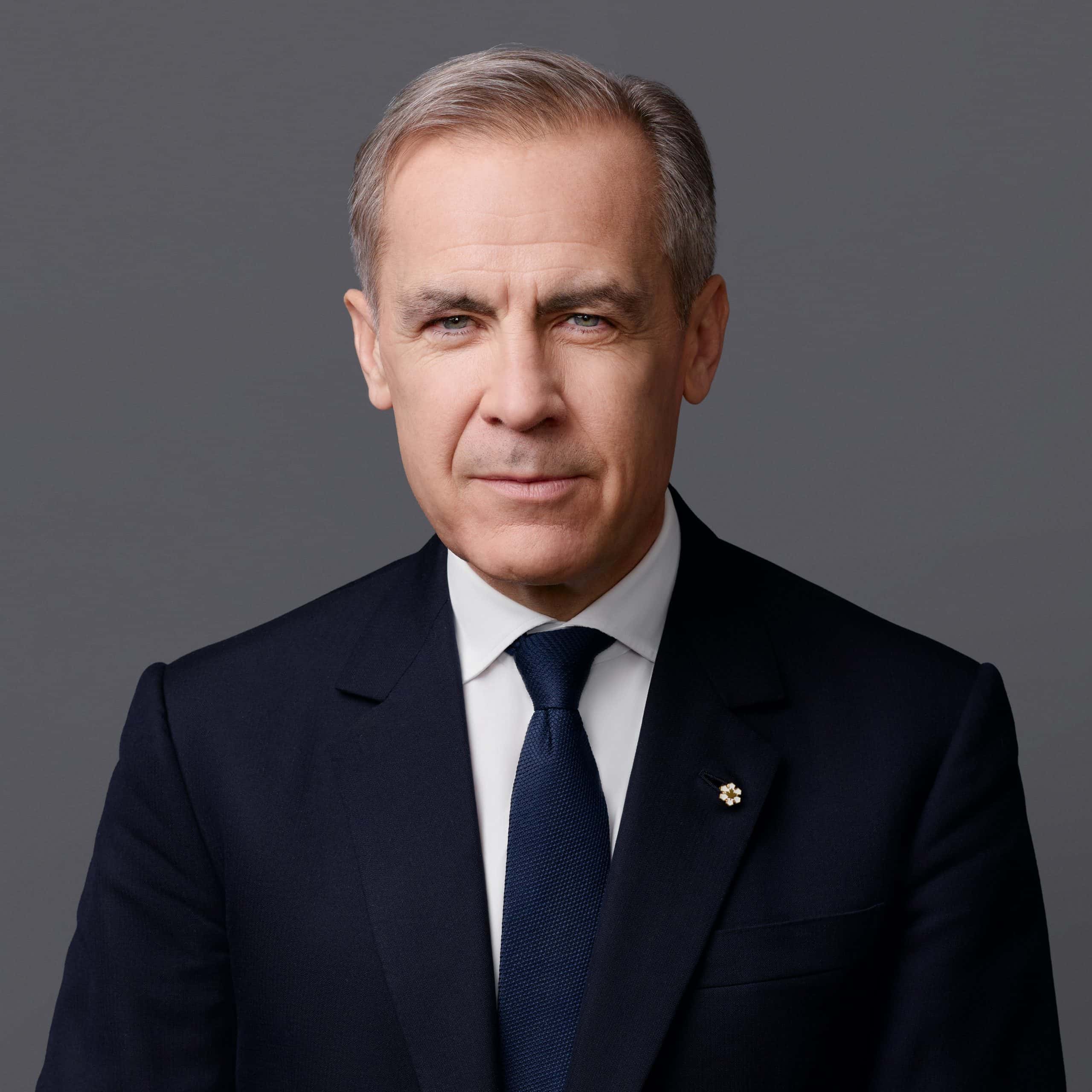
Canadian Prime Minister Mark Carney became a symbol of middle power resistance after a celebrated speech earlier this year, but he is expected to be more muted in his criticism of President Trump at an upcoming summit in Europe.

Carney’s speech at the World Economic Forum in Davos, Switzerland, helped make him an international political star in January, when he declared the global rules-based order over and condemned coercion by great powers on smaller countries. The prime minister received widespread praise and attention for his remarks and upstaged Trump at the gathering.

But the G7 summit of industrialized democracies that begins Monday in France comes ahead of the scheduled July 1 review of the United States-Mexico-Canada Agreement, or USMCA, the latest iteration of the North American free-trade pact that has intertwined the economies of the United States, Mexico and Canada since the early 1990s. It is a crucial moment in trade talks, and Trump said this week that he may not renew the deal.

More than 70% of Canada’s exports go to the U.S., so preserving the accord is critical for Canada.

Canadian historian Robert Bothwell said Trump is more of a problem for Carney “than anybody else because we are more exposed to the United States than anybody else.”

Trump leaves for the G7 summit right after he hosts UFC fights at the White House on Sunday for his 80th birthday.

The summit will unfold as tensions are ramping up between Trump and Canada. One of the world’s most durable and amicable alliances — born of geography, heritage and centuries of common interests — is broken, as seen in several recent examples of tension between leaders.

Ontario Premier Doug Ford, the leader of Canada’s most populous province, had a reception with the U.S. Chamber of Commerce in Washington canceled Monday at the last minute. Vic Fedeli, one of Ford’s ministers, said if Trump forced the chamber to cancel, “Ford should be wearing that as a badge of honor.”

Trump said again this week that the U.S. doesn’t need anything that Canada has. Carney has set a goal for Canada to double its non-U.S. exports in the next decade, saying Trump’s trade war is causing a chill in investment.

In other developments, the opening of a major Canadian bridge across the Detroit River that Trump previously threatened to block was delayed Thursday due to unresolved issues.

Trump’s actions, including launching a trade war and suggesting Canada become the 51st U.S. state, have infuriated Canadians and created the political environment for Carney to win the job of prime minister after promising to confront Trump.

Trump administration officials keep noting that only two countries, China and Canada, retaliated against America in the trade war. U.S. Trade Representative Jamieson Greer says Canada’s retaliatory measures are a major issue in talks.

Daniel Béland, a political science professor at McGill University in Montreal, said Carney seems to have moderated his tone toward the Trump administration to avoid worsening relations.

“There is a clear tension between what Prime Minister Carney said in his Davos speech about middle powers standing up to hegemons and his attempt to nudge the U.S. administration ‘in the right direction’ with regard to the USMCA review and trade policy more generally,” Béland said.

Carney has downplayed Trump’s most recent comments about Canada becoming the 51st state.

Canada and Mexico want the USMCA to be renewed for another 16 years. Trump has mused about withdrawing from it. More likely it will be subject to annual reviews for the next 10 years.

Carney arrived in Paris on Friday morning and will meet with French President Emmanuel Macron in the evening, a few days before the summit in Évian-les-Bains, France.

The prime minister will also travel to Ireland this weekend to meet with the Irish prime minister in a bid to diversify trade away from the U.S.

This is Carney’s ninth trip to Europe in the 15 months since he became prime minister in March 2025.

The U.S. “will clearly remain Canada’s largest trading partner for the predictable future,” Béland said, calling it an inescapable reality that Carney “must keep front of mind even as he seeks to make Canada somewhat less dependent on trade with the U.S.”

Gillies writes for the Associated Press.

Source link

Trump Tariffs ‘Here to Stay’ as US Signals Tough Line in USMCA Talks with Mexico

The Jamieson Greer has told Mexican industry leaders that tariffs imposed by Donald Trump will remain in place, even as negotiations to revise the United States-Mexico-Canada Agreement intensify ahead of a July review deadline.

The remarks, delivered during meetings in Mexico City, signal a major shift from decades of tariff free trade under USMCA and its predecessor NAFTA.

End of Zero Tariff Era

According to multiple sources, Greer made it clear that the United States does not intend to return to a zero tariff framework.

This marks a fundamental change in North American trade policy, where free trade in autos and parts had been the norm for over 30 years. The introduction of tariffs, including a 25 percent duty on automotive imports, has disrupted deeply integrated supply chains across the region.

Impact on Key Industries

The implications for Mexico are significant:

  • More than half of Mexico’s auto and steel exports go to the United States
  • Vehicle exports have already declined, with job losses in the auto sector
  • Steel and aluminum industries face steep duties, some as high as 50 percent

These pressures have weakened Mexico’s competitive position, especially as the United States has negotiated lower tariffs with other partners.

Shifting Trade Rules

U.S. negotiators are also pushing for stricter rules of origin.

Proposals include requiring 100 percent North American sourcing for key components such as engines and electronics, up from current thresholds of around 75 percent. This would force manufacturers to further regionalize supply chains, potentially increasing costs but aligning with Washington’s goal of boosting domestic production.

Mexico’s Position

The Mexican government, led by Claudia Sheinbaum, is seeking relief from tariffs as part of the USMCA review. Officials aim to secure at least partial reductions, particularly in the auto and steel sectors, before finalizing broader trade revisions.

However, the latest signals from Washington suggest that while some easing may be possible, a full rollback is unlikely.

Why It Matters

This development underscores a broader shift in global trade policy away from pure free trade toward managed trade and economic security.

For Mexico, the stakes are high due to its deep economic integration with the United States. Persistent tariffs could reshape manufacturing patterns, investment decisions, and employment across North America.

What’s Next

Formal negotiations are set to begin in late May, with both sides aiming to resolve key disputes before the July deadline.

Key areas of focus will include:

  • Tariff levels on autos and metals
  • Rules of origin requirements
  • Broader economic security cooperation

The outcome will determine the future structure of North American trade.

Analysis

The U.S. position reflects a strategic recalibration rather than a temporary policy shift. By normalizing tariffs, Washington is prioritizing domestic industry and supply chain control over traditional free trade principles.

For Mexico, this creates a structural challenge. Its export driven model, built on open access to the U.S. market, now faces persistent barriers. While some adjustments may preserve competitiveness, the era of frictionless trade appears to be over.

Ultimately, the negotiations will test whether North America can adapt to a new trade paradigm or whether tensions will deepen within one of the world’s most integrated economic regions.

With information from Reuters.

Source link