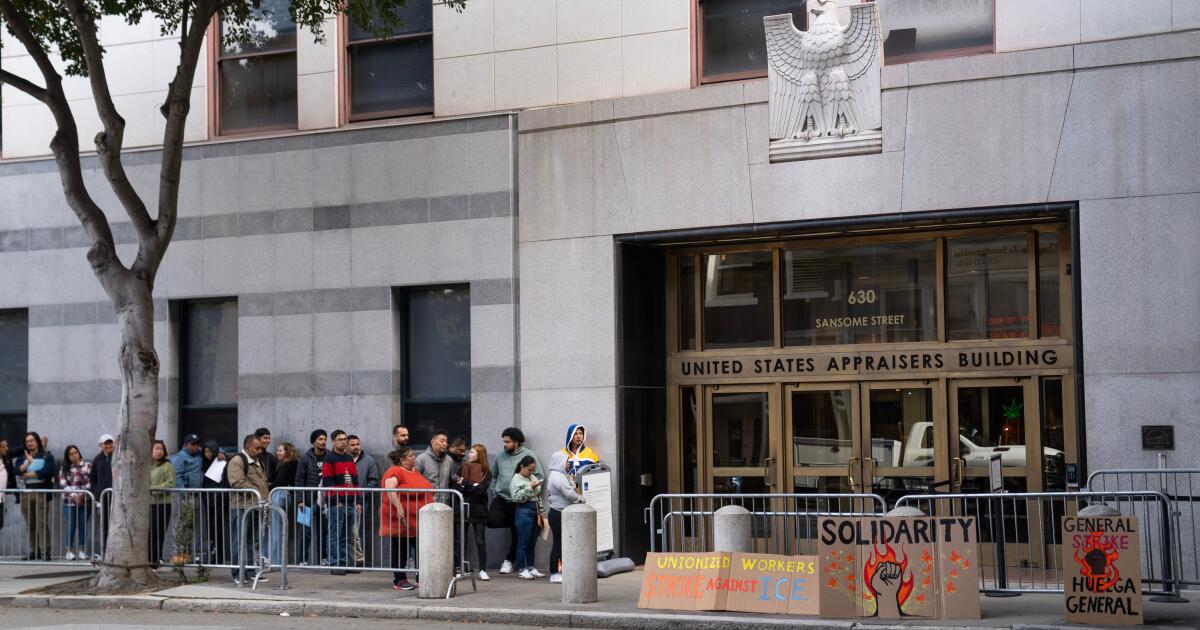
uscis

New federal rule sends hundreds of thousands of asylum cases to immigration courts

In its latest move to restrict the legal immigration system, the Trump administration announced a sweeping change Monday that could lead to the deportations of thousands of asylum seekers.

The change from U.S. Citizenship and Immigration Services allows asylum officers to bypass the need to interview certain applicants and instead refer them directly to immigration judges for removal proceedings.

The agency estimates that up to a third, or 444,000 of the more than 1.4 million asylum cases in its backlog, could be affected by the rule.

The administration framed the move as an effort to streamline the process and reduce the backlog of cases. The interim final rule takes effect Tuesday and is subject to a 60-day public comment period.

“For far too long the asylum system has been exploited for purposes of delay and work authorization, not legitimate claims of protection,” USCIS Director Joseph Edlow said in a news release.

“America’s asylum system exists to protect individuals who genuinely fear persecution and this rule will help ensure that resources are directed to the timely adjudication of those claims instead of to those seeking to use the system as a loophole,” Edlow added.

But advocates for immigrants said the change leaves asylum seekers who tried to follow the law vulnerable to deportation.

Migrants can apply for asylum two ways: affirmatively or defensively.

Those who entered the country legally, such as on a visa, and still have lawful status apply with USCIS and have their cases decided by an asylum officer. Those who crossed the border illegally or who are undocumented can apply after being placed into removal proceedings, where they make their case to an immigration judge.

Immigration courts are not an independent system — they are housed under the Department of Justice and judges are federal employees.

That shift is significant because the Trump administration has fired more than 100 immigration judges and replaced them with military lawyers and former prosecutors for the Department of Homeland Security. Many of the fired judges were appointed during the Biden administration or previously worked as lawyers representing immigrants.

In recent months, immigration courts have approved a dwindling percentage of asylum claims as judges face pressure to approve more deportations. After immigration agents began arresting people in courthouses, many immigrants grew wary of showing up for court proceedings, which has aided the increase in removal orders.

USCIS refers thousands of cases to immigration courts each year, federal data shows. During the first half of this fiscal year, the agency transferred 31,454 cases to immigration courts — a number that was already on track to be higher than the 2025 yearly total of 40,932. The highest yearly total was 61,729 cases in 2019, during Trump’s first presidency.

USCIS said the current policy, which requires an asylum officer to first interview an applicant before deciding whether to send the case to an immigration judge, “essentially allows an alien to get a second chance at asylum.”

Todd Schulte, president of the immigrant advocacy organization FWD.us, noted that the rule change comes just after the Trump administration terminated temporary legal protections for hundreds of thousands of Haitians and others, many of whom entered the U.S. legally and applied for asylum the “affirmative” way. On X, Schulte called the move “a terrible harbinger.”
Source link

A federal judge strikes down Trump administration immigration policy affecting 39 countries

A federal judge on Friday struck down a Trump administration policy enacted after the shooting of two National Guard members that made it harder for immigrants from dozens of countries to stay and enter the U.S.

In a ruling harshly criticizing the administration, U.S. District Chief Judge John McConnell Jr. said the policy “threw the lives of countless immigrants living in the United States into indeterminate legal limbo,” and he accused the U.S. Citizenship and Immigration Services of ignoring the law.

“In enacting its latest immigration policies, USCIS: claims statutory and regulatory authority that it does not possess; makes decisions without the reasoned explanations that it must provide; acts without regard for the reliance interests of applicants that it must consider; and justifies its actions with pretextual concerns of ‘national security’ that mask anti-immigrant sentiments that it is forbidden from letting influence its decision-making,” he wrote. “In legal terms that means USCIS’s actions are contrary to law and arbitrary and capricious.”

A spokesperson for the Department of Homeland Security did not immediately respond to a request for comment.

The policies enacted after the National Guard shooting last year meant that immigrants from 39 African, Asian, Latin American and Middle Eastern countries have been “categorically barred” from receiving final decisions on, among other things, their asylum, work permit, green card and citizenship applications.

“This ruling reaffirms a basic principle: the federal government cannot shut down lawful immigration pathways or discriminate against people based on where they come from,” said Skye Perryman, president and CEO of Democracy Forward, which represented the plaintiffs in the case. “These unlawful policies caused enormous harm to families, workers, asylum-seekers, and communities across the country who were left in limbo, unable to work, access protections, or move forward with their lives.”

The policies apply to U.S. Citizenship and Immigration Services, which approves applications for immigrants to work and become citizens. The agency, which is within the Homeland Security Department, often grants asylum, but only for those already in the United States when they apply. Immigration judges grant asylum to those who are stopped at the border; the ruling does not affect them, and neither do the policies that sparked the lawsuit.

It is part of an ongoing effort by the administration to tighten U.S. entry standards for travel and immigration, in what critics say unfairly prevents travel for people from a broad range of countries. The administration suggested it would expand the restrictions after the arrest of an Afghan national suspect in the shooting of two National Guard troops over Thanksgiving weekend.

In its motion to dismiss, which the court denied, the government argued that Congress gave the executive branch broad authority over immigration policy, including “the entry of aliens into the United States as well as discretion within the statutory scheme to confer as well as withdraw various discretionary benefits.”

“This case rests on a remarkable premise: that a federal court should prevent an agency from issuing the very policy guidance that provides government personnel with the guardrails necessary to ensure consistent, non-arbitrary, and individualized decisionmaking consistent with federal law,” the government wrote in its brief.

Immigration groups celebrated the ruling.

“This ruling sets a powerful precedent that the administration cannot ignore the law as laid down by Congress and cannot arbitrarily bar immigration benefits on the basis of national origin by fiat,” said Jamal Abdi, president at the National Iranian American Council. “Fortunately, this is still a nation of laws, and those who uphold America’s values have recourse to challenge and push back on such discriminatory, arbitrary policies.”

Shawn VanDiver, a Navy veteran who heads a coalition that supports Afghan resettlement efforts called #AfghanEvac, said the ruling was a “significant victory for the rule of law and for thousands of Afghan allies and other immigrants who followed every requirement asked of them.”

“Just this week in Dallas and Fort Worth, we met people who feared losing jobs because delayed work permit renewals threatened their livelihoods, families who postponed education, travel, and homeownership because they did not know when their cases would be resolved, and future Americans who had expected to become citizens only to see their applications stall without explanation,” VanDiver said.

Casey writes for the Associated Press.

Source link