Energy markets remain on tenterhooks as the prospect of prolonged war in the Middle East grows.
Published On 13 Mar 202613 Mar 2026
Share
Oil prices have again risen above $100 per barrel as energy markets see little relief amid the biggest disruption to global energy supplies in a generation.
Brent crude, the international benchmark, surged more than 9 percent on Thursday as traders weighed the prospect of weeks, or even months, of turmoil in energy markets as the United States and Israel wage war on Iran.
Recommended Stories
list of 4 itemsend of list
Brent futures, which are traded outside of regular market hours, were priced at $101.13 as of 03:00 GMT.
Asian stock markets, including exchanges in Tokyo, Seoul and Hong Kong, opened sharply lower on Friday, following steep losses on Wall Street overnight.
The latest surge in oil prices came after Iran’s Supreme Leader Mojtaba Khamenei pledged to maintain the effective closure of the Strait of Hormuz, which normally transports about one-fifth of global oil supplies.
In a statement read out on his behalf on Iranian state television, Khamenei described Tehran’s threats against shipping in the waterway as a “lever” that “must continue to be used”.
US President Donald Trump struck a similarly defiant tone on Thursday, posting on Truth Social that stopping Iran from getting nuclear weapons was of “far greater interest and importance” than rising oil prices.
‘Lack of tangible goals in this war’
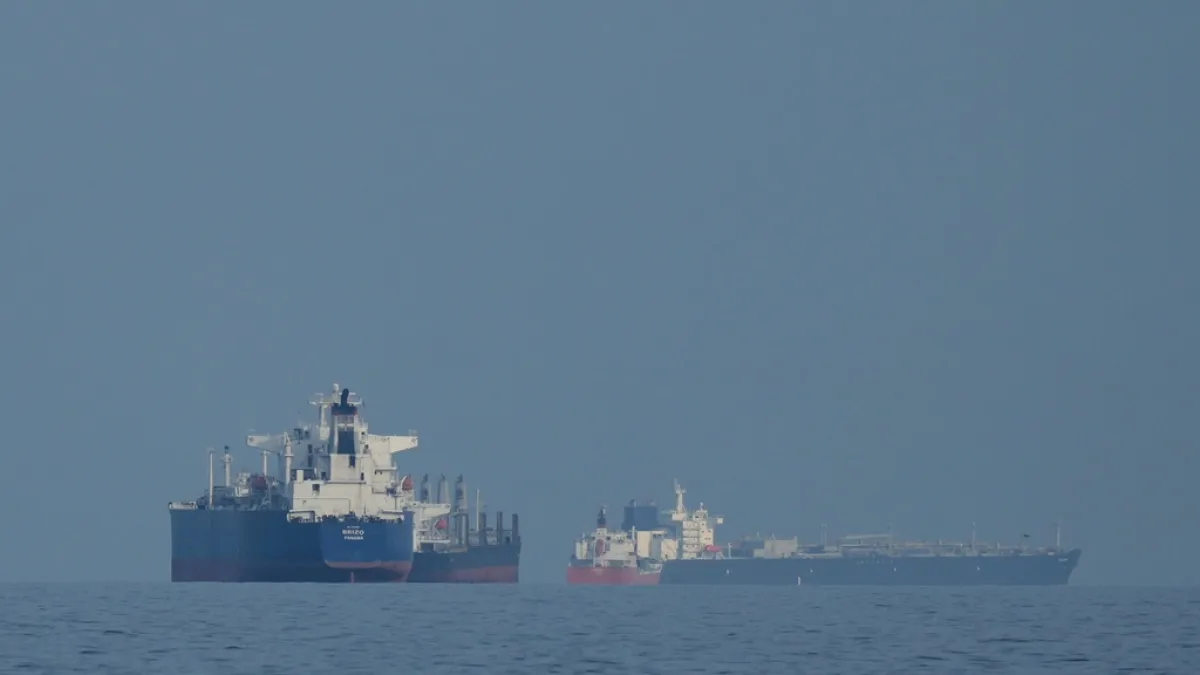
Traffic through the strait has effectively ground to a halt due to Iranian threats, with only a handful of vessels passing through each day, many of them claiming links to China, Iran’s key economic partner.
According to the United Kingdom Maritime Trade Operations (UKMTO) centre, no more than five ships have passed through the waterway each day since the US and Israel launched joint strikes on Iran on February 28, compared with an average of 138 daily transits before the war. At least 16 commercial vessels have been attacked in the region since the start of the conflict, according to the UKMTO.
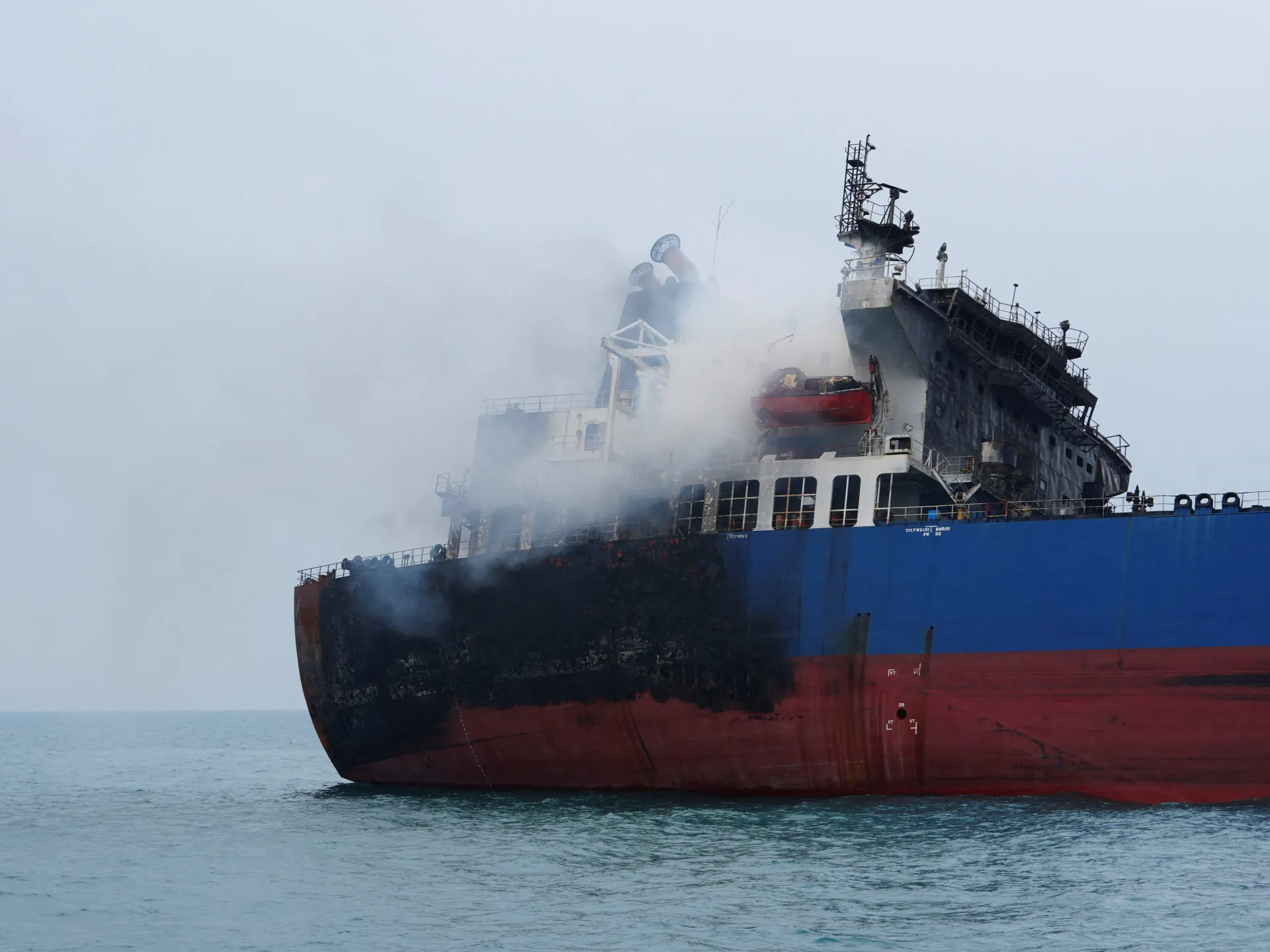
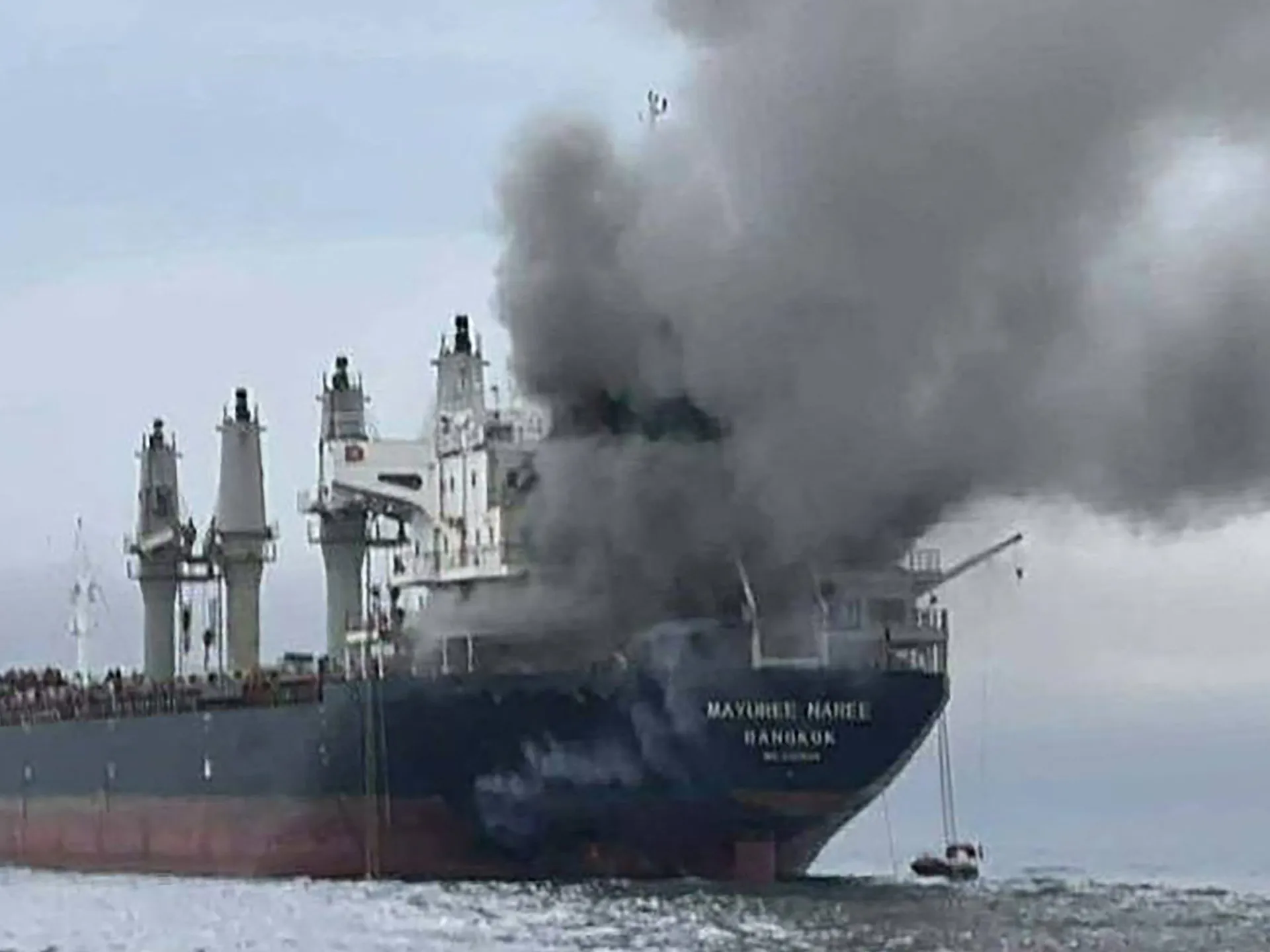
Tehran has claimed responsibility for several of the attacks, including a strike on Wednesday that crippled a Thai-flagged vessel off the coast of Oman.
Efforts to bring calm to the market have so far done little to tame prices, which are up nearly 40 percent compared with before the start of the war.
The International Energy Agency’s (IEA) announcement on Wednesday that member countries would release 400 million barrels of oil from emergency stockpiles drew a tepid response among traders eyeing a daily shortfall in global supplies estimated at 15-20 million barrels.
The US Department of the Treasury’s issuance on Thursday of a temporary licence authorising countries to purchase sanctioned Russian oil that has been stranded at sea also failed to move the market, with Brent crude staying above $100 a barrel after the Treasury announcement.
“The key problem is a lack of tangible goals in this war,” said Adi Imsirovic, an energy security expert at the University of Oxford.
“It makes it hard for oil traders to see the light at the end of the tunnel,” he said.
Trump has repeatedly floated the possibility of using the US Navy to escort commercial shipping through the strait, but the Pentagon has yet to conduct such operations amid concerns about the risks posed by Iranian attacks in the narrow waterway.
In an interview with CNBC on Thursday, US Energy Secretary Chris Wright said that Washington was “not ready” to provide navy escorts but that such operations could begin by the end of the month.
“It’ll happen relatively soon but it can’t happen now,” Wright said.
ideo from northern Israel captured the moment an Iranian missile impacted in a residential area early Friday morning. The aftermath shows a fire and scattered debris next to damaged vehicles and buildings.
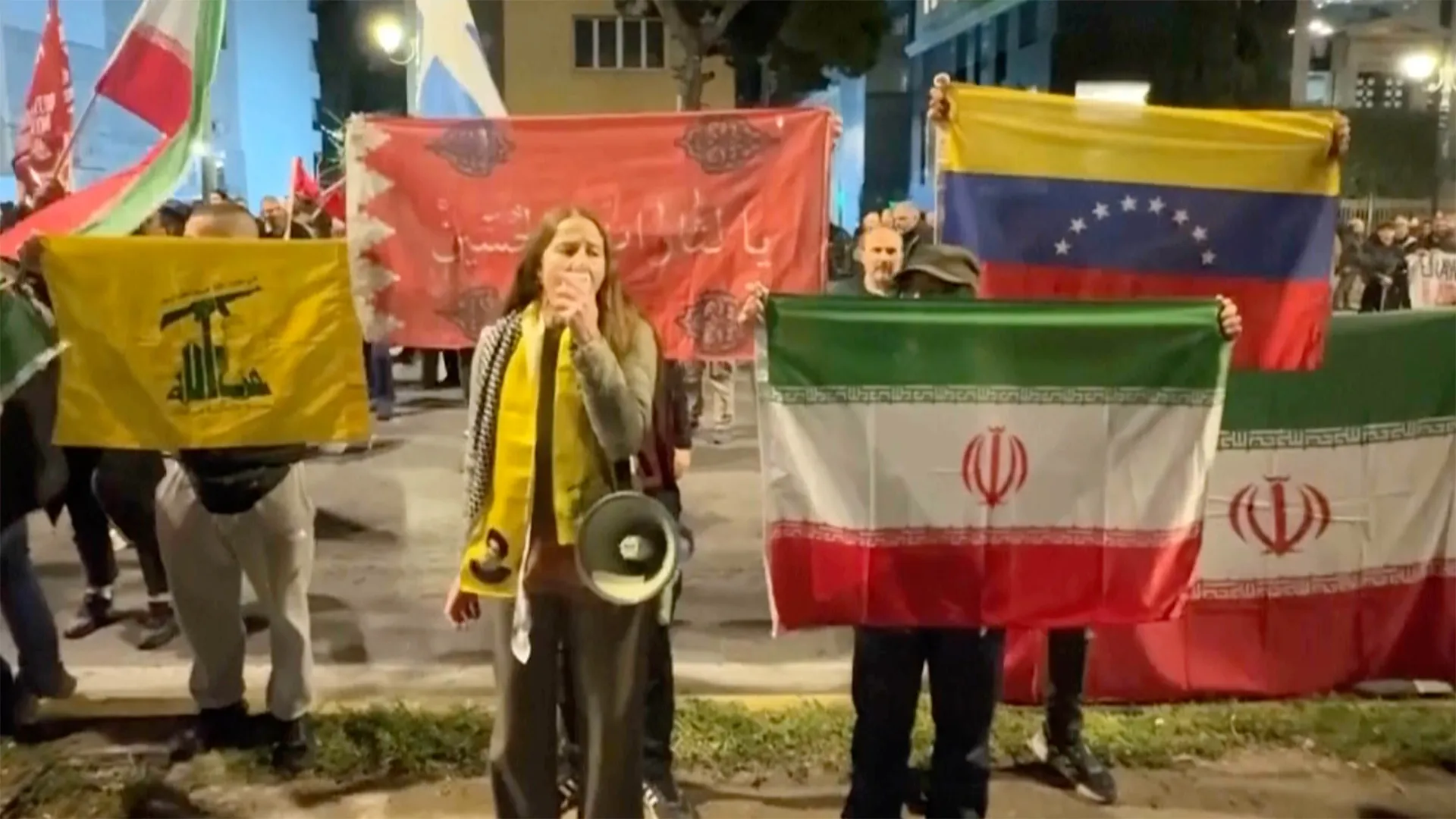
Protesters in Athens have marched to the US Embassy to condemn the US-Israeli attacks on Iran, joining protests held worldwide over the escalating conflict.
Israeli Prime Minister Benjamin Netanyahu said several Iranian nuclear scientists were killed in Israeli strikes. He also said a “new path of freedom” for Iran was approaching and told Iranians the country’s future ultimately depends on them.
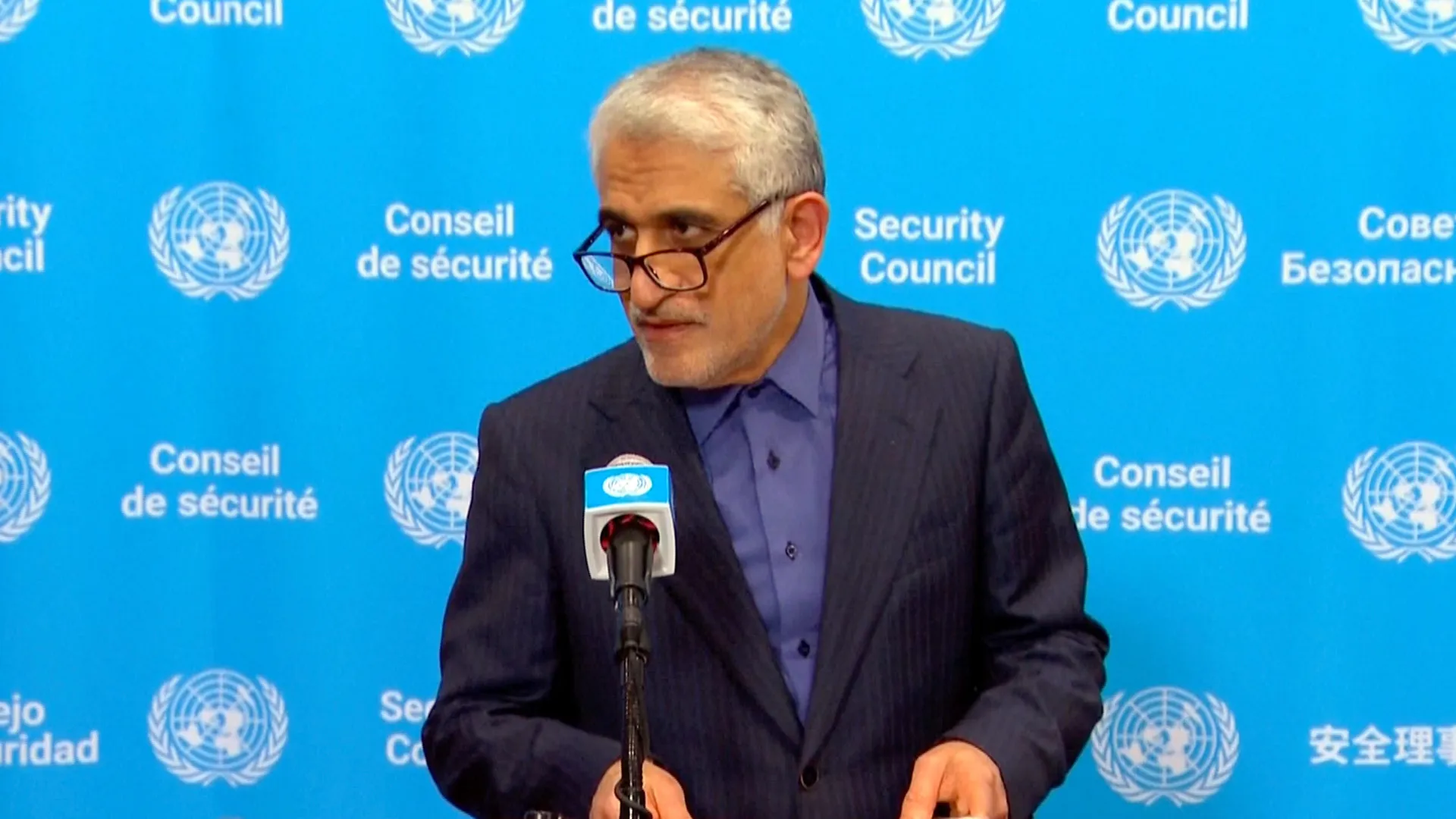
Iran’s UN ambassador Amir Saeid Iravani said Tehran will not close the Strait of Hormuz and remains committed to freedom of navigation. His remarks came after Supreme Leader Mojtaba Khamenei said the waterway would remain closed to pressure Iran’s enemies.
New York City, United States – Rising prices on the back of US-Israel strikes on Iran are adding to the economic pressure facing US consumers despite efforts by US President Donald Trump to paint the war as a success.
On Wednesday, Trump declared, “We won – in the first hour it was over.”
Recommended Stories
list of 4 itemsend of list
Trump’s declaration comes even as the Strait of Hormuz remains closed, cutting off oil from the Gulf amid warnings from Iran, which continues to strike ships, that oil could reach $200 per barrel.
The magnitude of the economic pressure on consumers will depend on how long the war lasts and, crucially, how soon shipping traffic can return to the Gulf.
“If it drags on and especially if it remains at this intensity, prices will be higher, and more volatile for consumers,” said Rachel Ziemba, an adjunct senior fellow at the think tank Center for a New American Security.
“If it ends quickly, and it’s a credible and stable end, then we could see prices fairly quickly normalising”.
If the war lasts more than a few weeks, however, observers say the US economy is more likely to see deepening impacts, like 1970s-style “stagflation” or a recession.
When might we see a recession?
On Thursday, the International Energy Agency said in a report that “the war in the Middle East is creating the largest supply disruption in the history of the global oil market.”
According to Sam Ori, who directs the Energy Policy Institute at the University of Chicago, in the past, when oil prices have reached 4 percent to 5 percent of gross domestic product and stayed elevated, “that’s always triggered a recession.”
The US will not hit that threshold as quickly as it would have in the 1970s, when its economy was more deeply dependent on foreign oil, Ori said, but added he expected a recession if prices remained about $140 a barrel for most of the year.
Alternatively, “the indefinite closure of the Strait of Hormuz would so vastly exceed that number, it would not take a year,” he said.
Ori, who used to run an oil shock war game for US officials, said he would have been “laughed out of the room” if he had proposed a scenario where the strait was closed for six months, because many analysts see it as “too big to fail”.
Ori says that assessment is still likely, but recent developments “are chipping away at that level of certainty”.
The Gulf, which separates the Arabian Peninsula and Iran, provides more than one-fifth of the world’s oil supply via tanker ships through the Strait of Hormuz.
The severity of that threat to the global economy is the “strongest indicator that this is going to get resolved pretty fast, because it’s impossible to fathom what would happen if it didn’t”, Ori said.
He added that the conflict has now entered a phase in which it may be moving out of US control, especially as some countries have turned off the oil wells as they run out of storage.
While those events have now been baked into oil prices, the things that he is on the lookout for include “successful mining of the strait, some kind of structural blockage, or a battlespace development that binds the US into a longer, drawn out conflict”, outcomes that could signal a total loss of the strait for an unknown amount of time and create the “conditions for a complete meltdown”.
Higher prices
The war is already driving petrol prices up for US consumers.
Patrick DeHaan, who leads petroleum analysis for the app GasBuddy, said that the national average as of Wednesday is now $3.59 per gallon ($0.95 per litre) – up 65 cents since February.
The highest increases are near the coasts, where US petrol, diesel and jet fuel supplies are more easily diverted to meet global demand, according to DeHaan.
An end to the conflict could lower petrol prices within weeks, DeHaan said, but “every week that this goes on, we could see another 25 to 40 cent increase”.
Robert Rogowsky, an adjunct professor at Georgetown University’s School of Foreign Service, said lower-income people in particular, “will pay the price for this inflationary burst”.
As the war continues, it will also nudge up prices for consumer goods.
Peter Sand, chief analyst for freight intelligence platform Xeneta, said the backup at the Strait of Hormuz is already causing congestion at ports worldwide.
In the short term, consumers should not feel much of a pinch, Sand said. But if the conflict lasts for a month, some goods will be delayed, “and of course, the price tag on those goods also goes up.”
The war also means that the Red Sea, mostly closed in 2025 due to Houthi attacks, will likely stay closed throughout 2026, Sand said. It was expected to reopen, which could have lowered consumer prices.
Oil and oil byproducts from the Gulf are also used directly in consumer goods, like plastics, pharmaceuticals and fertilisers. Shortages now may mean higher prices later.
Fertilisers from the Gulf, for example, are needed soon for spring planting. Delays could affect crops next year.
A shortage of helium from the Gulf could also impact semiconductor manufacturing, delaying car manufacturing and other industries, Ziemba said.
The spectre of 1970’s-style ‘stagflation’
Higher consumer prices could increase the risk of “stagflation”, when stagnant economic growth occurs alongside high unemployment and high inflation.
That is how the US economy responded to the oil price shocks of the 1970s.
Severin Borenstein, faculty director of the Energy Institute at the University of California, Berkeley’s Haas School of Business, said, “There’s certainly concern about stagflation again.”
That combination of high inflation plus high unemployment, Borenstein said, “is just really tough for the Fed to deal with”.
“They can either juice the economy or slow it down, and the two problems call for opposite solutions”, Borenstein said.
The Fed can lower interest rates to prompt spending and hiring, which can make inflation worse, or it can raise interest rates to lower inflation, which can slow hiring.
Ziemba said higher oil prices likely point to “inflation remaining stickier, which means it’s harder for the Fed to cut interest rates.”
As a result, “mortgage rates and other long-term interest rates might be stuck at their current levels,” Ziemba said. Mortgage rates, which were at 5.99 percent on February 27, are up to 6.29 percent as of March 12.
Even if the war ends tomorrow, it may already be accelerating longer-term shifts.
Rogowsky called US attacks on Iran “an injection of adrenaline” into a realignment already under way, as middle powers seek to reduce their reliance on the US.
That realignment “will affect our terms of trade, which will have a distinct impact on our economy”, Rogowsky said.
Logistics consultant David Coffey said for some businesses, the war is expediting conversations about risk. “They may have been assuming ‘Yes, there’s risk in the Middle East,’ but they may not have been assuming that this would kick off”, Coffee said.
Making supply chains more secure could raise costs for consumers, he said.
Military spending and the US budget
Meanwhile, Heidi Peltier, a senior researcher at Brown University’s Costs of War Project, said war also means long-term expenses around debt payments and veterans’ healthcare.
“We have spent at least $1 trillion in interest on the Iraq and Afghanistan wars – and rising, because it’s not like we’ve paid off any of that principal”, Peltier said.
Military spending, she said, also tends to create fewer jobs than government investment in education or healthcare. “If we’re spending money on this, what are we not spending money on?” Peltier asked.
The United States military is “not ready” to accompany oil ships through the Strait of Hormuz, a top official in President Donald Trump’s administration says as Iran continues to block the strategic waterway.
US Energy Secretary Chris Wright told the CNBC business news channel on Thursday that the markets are experiencing a “short-term disruption”, predicting that the war would go on for “weeks, not months”.
Recommended Stories
list of 3 itemsend of list
Despite Trump’s repeated threats, Iran has largely succeeded in shutting down the strait, which links the Gulf to the Indian Ocean. The closure has sent oil prices soaring.
Wright described the effects of the crisis as “short-term pain for long-term gain”, arguing that the US is “destroying” Iran’s ability to threaten the energy market.
Last week, Trump suggested that the US Navy would escort ships through the Gulf, but Wright said on Thursday that the move “can’t happen now”.
“We’re simply not ready. All of our military assets right now are focused on destroying Iran’s offensive capabilities and the manufacturing industry that supplies their offensive capabilities,” the energy secretary said.
“We don’t want this to be a brush-off for a year or two. We want to permanently destroy their ability to build missiles, to build roads, to have a nuclear programme.”
His comments came as Iran’s new supreme leader, Mojtaba Khamenei, affirmed in his first public comment since being selected to succeed his assassinated father, Ali Khamenei, that the Strait of Hormuz should remain closed during the war.
“The will of the people is to continue effective and deterrent defence,” Khamenei said in a written statement. “The tactic of closing the Strait of Hormuz must also continue to be used.”
The Iranian military has said it would “welcome” the US Navy escorting oil ships, suggesting it is prepared to strike US forces in the narrow waterway.
On Wednesday, three commercial vessels were attacked near the strait.
Wright announced earlier this week on social media that the US Navy had escorted an oil ship through the strait, then quickly deleted the post. The White House subsequently confirmed that the claim was not true.
It is not clear why the statement was released and then retracted.
Assurances by US officials that Washington would open the strait have temporarily calmed markets, only for prices to spike again.
The price of a barrel of oil peaked at about $120 on Sunday, up from about $70 before the US and Israel launched the war on February 28. It has been yo-yoing between $80 and $100 for the past few days.
In addition to the marine blockade, Iran has targeted oil installations across the Gulf.
As one of the world’s largest oil producers, the US is largely self-sufficient. But possible shortages in Asia and Europe have put a strain on prices globally.
According to data from the American Automobile Association, the average price of one gallon (3.78 litres) of petrol in the US is now $3.60, up from $2.94 last month.
Rising energy prices could fuel inflation and affect the cost of basic goods, including food.
But Trump suggested on Thursday that the US is benefitting from skyrocketing oil prices.
“The United States is the largest Oil Producer in the World, by far, so when oil prices go up, we make a lot of money,” the US president wrote in a social media post.
“BUT, of far greater interest and importance to me, as President, is stopping an evil Empire, Iran, from having Nuclear Weapons, and destroying the Middle East and, indeed, the World.”
Iran denies seeking a nuclear weapon, and Trump reiterated for months before the current conflict that US strikes against Iranian facilities in June had “obliterated” the country’s nuclear programme.
Iranian President Masoud Pezeshkian has laid out terms for ending the war with the United States and Israel in what analysts say is a possible sign of de-escalation from Tehran as the US-Israel war on Iran entered its 13th day on Thursday.
In a post on Wednesday on social site X, Pezeshkian said he had spoken to his counterparts in Russia and Pakistan, and that he had confirmed “Iran’s commitment to peace”.
Recommended Stories
list of 4 itemsend of list
“The only way to end this war – ignited by the Zionist regime & US – is recognizing Iran’s legitimate rights, payment of reparations, and firm int’l guarantees against future aggression,” Pezeshkian wrote.
This is a rare posture from Tehran, which has maintained a defiant stance and initially rejected any possibility of negotiations or a ceasefire when war broke out nearly two weeks ago.
Pezeshkian’s statement comes as pressure mounts on the US to halt what has become a very costly mission. Analysts say speculation from Washington that Iran would quickly submit after the killing of Supreme Leader Ayatollah Ali Khamenei were misguided.
Tehran is likely going to determine the end of this war, not the US or Israel, because of its ability to inflict economic pain broadly, they say.
Amid a military pummelling by the US and Israel, Iran has launched heavy retaliatory strikes at US assets and other critical infrastructure in Gulf countries, upsetting global supplies. It has also adopted what analysts call “asymmetric” tactics – such as disrupting the critical Strait of Hormuz and threatening US banking-linked entities – to inflict as much economic pain on the region and wider world as it can.
This is what we know about Pezeshkian’s stance and what the pressures are on both sides to draw the conflict to a close, quickly.
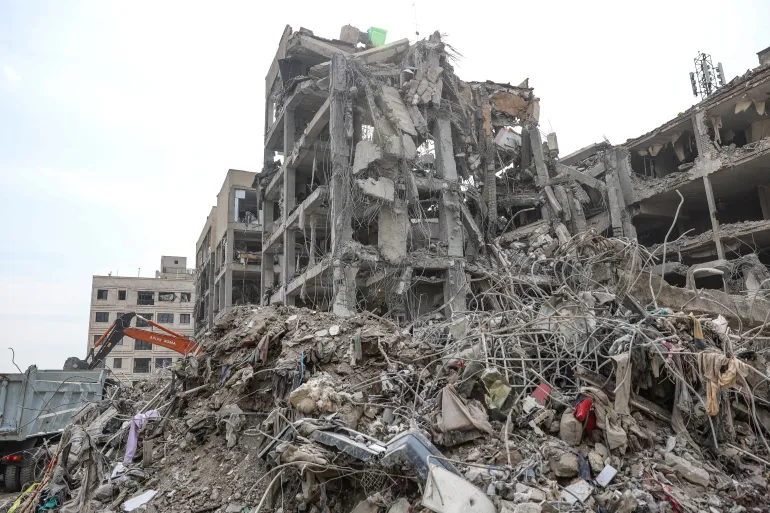
A building lies in ruins after a strike, amid the US-Israeli conflict with Iran, in Tehran, Iran, on March 12, 2026 [Majid Asgaripour/WANA (West Asia News Agency) via Reuters]
What has the war cost so far?
Economically, both sides have weaponised energy. Israel first targeted Iran’s oil facilities in Tehran on March 8, prompting an outcry from global health experts over the potential risk of air and water pollution.
Iran has, meanwhile, tightened its chokehold on the Strait of Hormuz shipping route – the only route to open sea for oil producers in the Gulf – with its military promising on Wednesday that it has the capabilities to wage a long war that could “destroy” the world economy.
Attacks on ships in the strait, through which about 20 percent of global oil and gas traffic normally passes, have effectively closed the route.
Oil prices rocketed above $100 per barrel late last week, up from around $65 before the war, with ordinary buyers feeling the increases at pumps in the US, Europe and parts of Africa.
On Wednesday, Iran upped the ante, saying it would not allow “a litre of oil” to pass through the strait and warned the world to expect a $200-per-barrel price tag.
“We don’t know how quickly it’ll revert back,” Freya Beamish, chief economist at GlobalData TS Lombard, told Al Jazeera. “We do think it’ll revert back to $80 in due course, but the ball is to some degree in Iran’s court,” she said, adding that because Iran needs oil revenue, the price hikes are expected to be time-limited.
The International Energy Agency agreed on Wednesday to release 400 million barrels from the emergency reserves of several member states but it is not yet clear what impact that will have, nor how quickly this quantity of oil can be released.
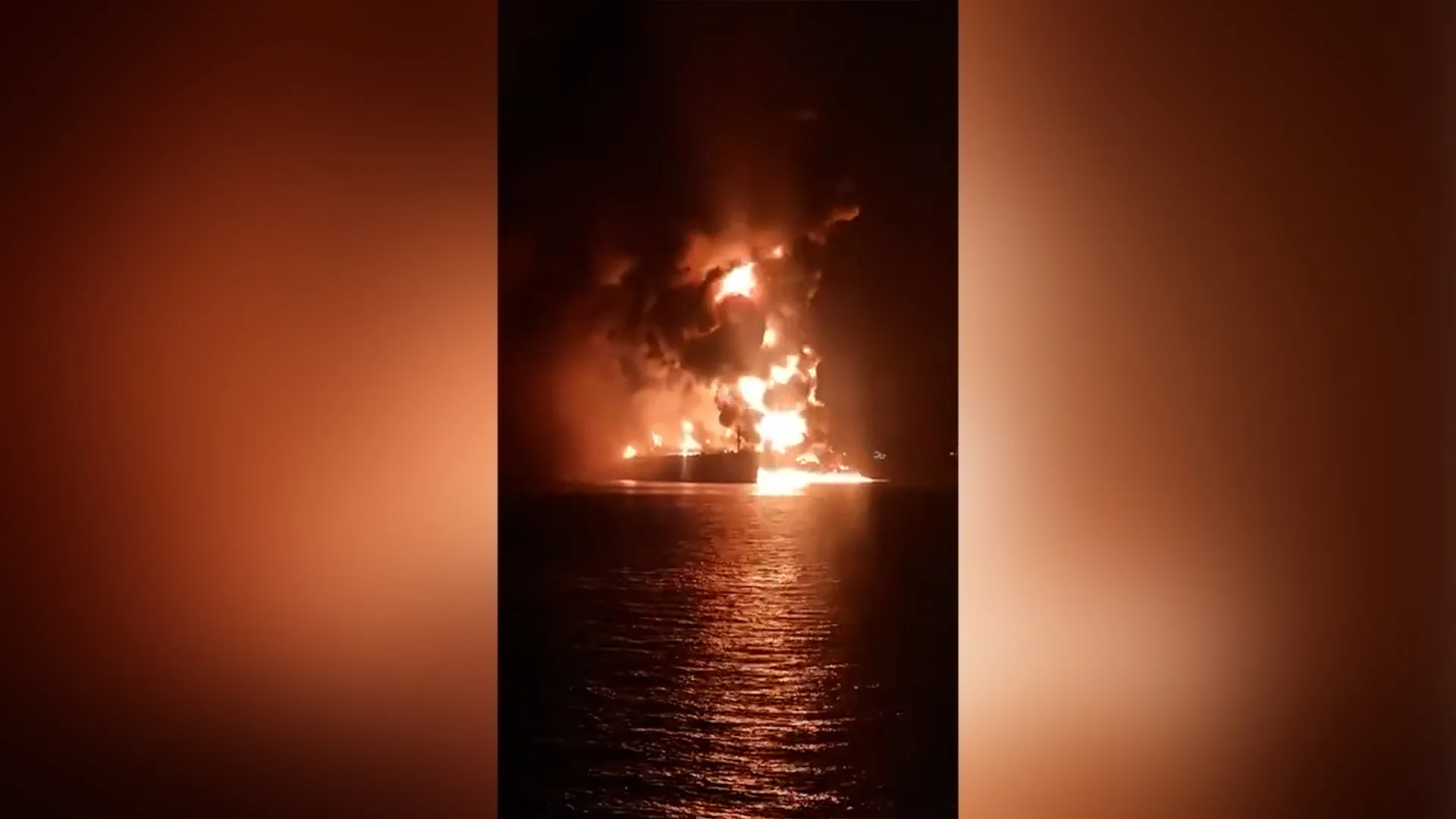
Tehran has also been accused of directly attacking oil facilities in neighbouring countries this week. Iraq shut all its oil port operations on Thursday after explosive-laden Iranian “drone” boats appeared to have attacked two fuel tankers in Iraqi waters, setting them ablaze and killing one crew member.
A drone was filmed striking Oman’s Salalah oil port on Wednesday, although Tehran has denied involvement.
What are Iranian officials saying about ending the war?
There has been conflicting messaging from the Iranian leadership.
Iran’s elite army unit and parallel armed force, the Islamic Revolutionary Guard Corps (IRGC), continues to show defiance, issuing threats and launching attacks on Israel and US military assets and infrastructure in neighbouring Gulf countries.
However, the political leadership has appeared more inclined towards diplomacy, analysts say. On Wednesday, President Pezeshkian said that ending the war would take the US and Israel recognising Iran’s rights, paying Iran reparations – although it’s unclear how much is being asked for – and providing strong guarantees that a future war will not be waged.
In a video recording last week, he also apologised to neighbouring countries for the strikes and promised that Iran would stop hitting its neighbours as long as they do not allow the US to launch attacks from their territory.
“I personally apologise to the neighbouring countries that were affected by Iran’s actions,” the president said, adding that Tehran was not looking for confrontations with its neighbours.
However, it is not known how much sway the political leadership has over the IRGC. Hours after the president’s apology last week, air defence sirens went off in Saudi Arabia, Qatar, the UAE and Bahrain, as strikes continued on the Gulf.
So, what is Iran’s actual position?
“Iran wants to go to the end to make sure that the United States and Israel never attack Iran again … so this has to be the final battle,” Al Jazeera’s Resul Serdar Atas explained.
Indeed, the IRGC sees this as an existential war, but the timing of Pezeshkian’s statement about ending the conflict also shows Tehran is pressured economically, politically and militarily, Zeidon Alkinani of Qatar’s Georgetown University told Al Jazeera.
“These differences and divisions [between IRGC and political leaders] always existed even prior to this war but we may notice it now more, given the fact that the IRGC believes that it has the right to take the front seat in leading this regional war, which is why a lot of the statements and positions are contradicting with the official ones from Pezeshkian,” he said.
The IRGC reports directly to Iran’s Supreme National Security Council (SNSC) and not to the country’s political leadership. That council is led by Ali Larijani, a top politician and close aide to the late supreme leader, Ali Khamenei, who analysts describe as a “hardliner”.
In a post on X on Tuesday, Larijani responded to threats from Trump about attacks on the Strait of Hormuz, saying: “Iranian people do not fear your hollow threats; for those greater than you have failed to erase it … So beware lest you be the ones to vanish.”
The newly elected supreme leader, Mojtaba Khamenei, was once in the IRGC and was put forward by the unit as the next ayatollah after his father was killed on the first day of the war, analysts say. He is thus not expected to follow the reformist, diplomatic ideals of President Pezeshkian and other political leaders which his father managed to marry with the IRGC militarised stance, they say.
Mojtaba Khamenei, son of Iran’s late Supreme Leader Ayatollah Ali Khamenei, attends a gathering in Tehran on March 2, 2016. Iran marked the appointment of Ayatollah Mojtaba Khamenei to replace his father as its supreme leader with a barrage of missiles against Israel and the Gulf states [File: Rouhollah Vahdati/ISNA via AFP]
What do the US and Israel say about ending the war?
There have also been conflicting messages from the Trump administration and Israel regarding when the war mission on Iran, codenamed Operation Epic Fury, is likely to end.
Trump told US publication Axios on Wednesday that the war on Iran would end “soon” because there’s “practically nothing left to target”.
“Anytime I want it to end, it will end,” he added. He had said earlier on Monday that “we’re way ahead of our schedule” and that the US had achieved its goals, even as speculation mounts about a possible US ground mission.
On the other hand, Israel’s Defence Minister Israel Katz said on Wednesday that the war would go on “without any time limit, for as long as necessary, until we achieve all the objectives and decisively win the campaign”.
Analysts say Trump’s stance that the conflict will be quick reflects increasing pressure on his administration ahead of upcoming mid-term elections in November.
Trump’s advisers privately told him this week to find a quick end to the war and avoid political backlash, according to reporting by The Wall Street Journal. That came as polls from Quinnipiac University and The Washington Post suggested that most Americans are opposed to the war in Iran.
In his 2024 presidential campaign, Trump promised to lower prices, and inflation had stabilised at 2.4 percent ahead of the war, according to government data released on Wednesday. Analysts speculate the conflict will likely push it back up.
The US spent more than $11.3bn in the first six days of the war, Pentagon officials told lawmakers in a classified briefing on Tuesday, Reuters reported this week – nearly $2bn a day.
The Washington-based think tank, Center for Strategic and International Studies (CSIS), estimated that the war cost Washington $3.7bn in its first 100 hours alone, or nearly $900m a day, largely due to its expenditure on costly munitions.
“It’s quite ironic that [Trump] chose a war that would make affordability worse, not better,” Rebecca Christie, a senior fellow at the Bruegel think tank, told Al Jazeera’s Counting the Cost.
“Every time the US loses even one object, air defence or a plane or something like that, that represents an awful lot of money that could have been used on some of these issues that have an impact on people’s day-to-day lives in the United States.”
Multiple explosions have been reported across Iran’s capital, Tehran, and other cities as United States-Israeli attacks and Iranian retaliation continue.
As the conflict saw its 13th day on Thursday, Iran’s representative to the United Nations, Amir Saeid Iravani, said at least 1,348 civilians have been killed.
The humanitarian toll continues to mount with more than 17,000 injured in Iran since the US and Israel launched their war on February 28. UNICEF described the situation as “catastrophic”, noting that more than 1,100 children have been reported injured or killed.
The Office of the UN High Commissioner for Refugees (UNHCR) estimated that up to 3.2 million people have been displaced within Iran since the conflict began. “This figure is likely to continue rising as hostilities persist, marking a worrying escalation in humanitarian needs,” UNHCR said in a statement.
Meanwhile, in Lebanon, Israeli attacks since March 2 have killed at least 687 people, including 98 children, according to Information Minister Paul Morcos.
United Nations refugee agency says forced displacement likely to increase as US and Israel continue deadly strikes across Iran.
Published On 12 Mar 202612 Mar 2026
Share
More than three million people have been displaced in Iran since the United States and Israel launched a war against the country late last month, the United Nations says, as concerns mount over a worsening humanitarian crisis.
The UN High Commissioner for Refugees (UNHCR) said on Thursday that as many as 3.2 million people – representing between 600,000 and one million Iranian households – have been forcibly displaced since the war began on February 28.
Recommended Stories
list of 3 itemsend of list
“Most of them are reportedly fleeing from Tehran and other major urban areas towards the north of the country and rural areas to seek safety,” UNHCR official Ayaki Ito said in a statement.
“This figure is likely to continue rising as hostilities persist, marking a worrying escalation in humanitarian needs.”
The US and Israeli militaries have continued to bombard Iran despite mounting international condemnation and calls for de-escalation.
More than 1,300 people have been killed in US-Israeli attacks across the country to date, according to the latest figures from Iranian officials.
While the US and Israel have said they are targeting Iranian leaders as well as military and nuclear infrastructure, Iran says thousands of civilian sites, such as schools and hospitals, have been attacked.
Iran’s Deputy Health Minister Ali Jafarian told Al Jazeera on Thursday that medical teams have been responding to a growing number of casualties as strikes on urban areas have intensified in recent days.
“Most of these people are civilians,” Jafarian said, adding that more than 30 hospitals and health facilities have been damaged due to the attacks.
On Thursday, explosions were heard in several parts of the capital, Tehran, and other Iranian cities as the strikes continued.
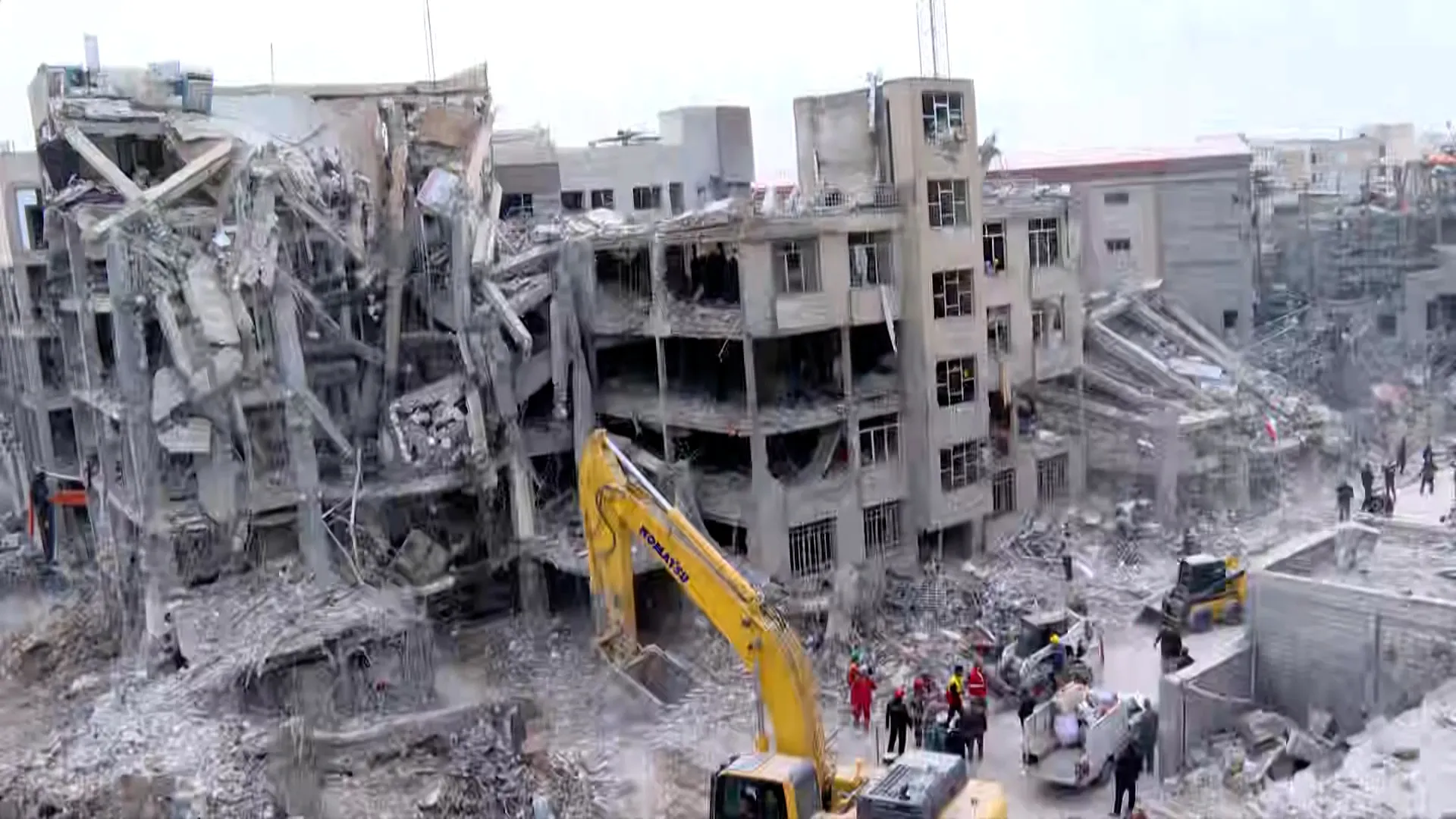
Al Jazeera’s Tohid Asadi said rescuers were digging through mounds of rubble as several multistorey apartment buildings were heavily damaged in recent attacks on a hard-hit eastern neighbourhood of Tehran.
“We saw bodies taken out [of the rubble] … and the situation was far beyond what I can call disastrous,” Asadi said.
Iran has responded to the US-Israeli assault by launching a barrage of missiles and drones at US bases and other sites in countries across the wider Middle East region.
It has also shut down the Strait of Hormuz, a critical Gulf waterway through which about one-fifth of the world’s oil transits, raising serious concerns of disruptions to global energy supplies.
Despite United States President Donald Trump’s repeated declarations of victory in the US-Israeli war on Iran, Tehran’s retaliatory strikes on Israel and US military assets in the region have continued, upending global financial and energy markets.
“We’ve had two decades to study defeats of the US military to our immediate east and west. We’ve incorporated lessons accordingly,” Iranian Foreign Minister Seyed Abbas Araghchi wrote in a post on X on March 1, the day after US and Israeli strikes on Tehran killed Iran’s Supreme Leader Ayatollah Ali Khamenei and other senior Iranian officials.
Recommended Stories
list of 3 itemsend of list
“Bombings in our capital have no impact on our ability to conduct war,” he wrote.
According to analysts, Iran has made use of “asymmetric” warfare tactics while striking the US and Israel. So, are Tehran’s war tactics working?
Here’s what we know:
What is ‘asymmetric’ warfare?
When the balance of capabilities is unequal in a conflict – as it is in relation to weapons in this one – the weaker party can turn to unconventional methods of warfare, John Phillips, a British safety, security and risk adviser and a former military chief instructor, told Al Jazeera.
This is known as “asymmetric” warfare.
This can include the use of guerrilla tactics, terrorism, cyberattacks, use of proxies and other indirect tools, Phillips said, in order “to offset conventional inferiority, avoid the enemy’s strengths, and exploit vulnerabilities in political will, logistics, and legal or ethical constraints”.
“Iran is conventionally weaker than the US and Israel, but relatively strong compared to many neighbours,” he said.
“What makes Iran distinctive is not that it uses these methods at all, but that they sit at the centre of its grand strategy rather than at its margins.”
Why is Iran using asymmetric warfare?
In the ongoing war between Iran and the US-Israel, Washington and Tel Aviv have been using expensive missiles and drones to attack Iran and to intercept missiles Iran has fired back. The Patriot and THAAD defence systems, for example, which launch interceptors to take out incoming drones and missiles, can cost millions of dollars for each missile they fire. This compares with the $20,000-$35,000 cost of each Iranian Shahed drone.
As a result, the US has reportedly spent $2bn a day in its war on Iran and there are fears it could run out of interceptor missiles altogether if the war goes on for more than a few weeks.
It is therefore in Iran’s interests to focus on holding out against strikes and protecting its own weapons supplies while it does so, military experts say.
However, Phillips explained that precision strikes and sabotage by Israel and the US have demonstrated that Iran is not able to fully shield its missile, drone and nuclear‑related assets, while sanctions and domestic pressures have limited its capacity to sustain a very high‑tempo confrontation.
“As a result, Iran’s asymmetric approach is best understood as an effective ‘survival and leverage’ mechanism that produces a chronic, costly ‘shadow war’, rather than a path to decisive regional hegemony or victory,” he said.
Iran began using asymmetric warfare techniques following the 1979 Iranian revolution, which overthrew Shah Mohammad Reza Pahlavi.
“Instead of trying to match high‑end aircraft, precision munitions, or blue‑water fleets, [Iran] has built a ‘forward deterrence’ posture that operates in the grey zone between war and peace,” Phillips said.
“This is backed by large inventories of ballistic and cruise missiles, mass‑produced drones [often handed to proxies], cyber-operations, and a posture of underground, dispersed and hardened facilities that make preemption difficult and preserve some retaliatory capability.”
What asymmetric tactics has Iran been using?
Enemy depletion tactics
Since US-Israeli strikes on Iran began on February 28, Tehran has launched a wave of ballistic missiles targeting Israel and US military bases across the Gulf region.
Using a mix of short and medium-range ballistic missiles, as well as drone swarms through this defence system, Iran aims to deplete Israeli and US interceptor stockpiles.
Economic warfare
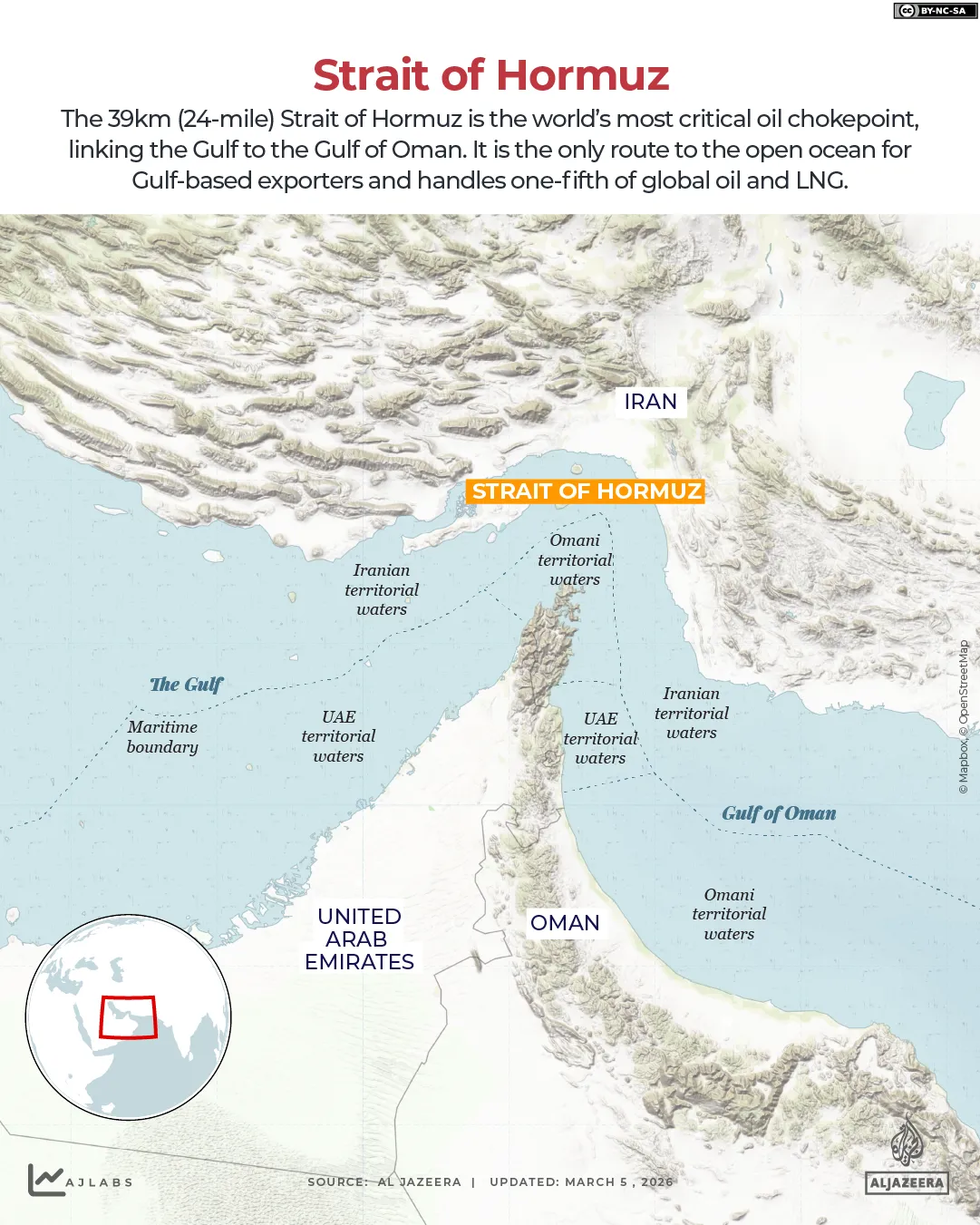
Iran has shut down the Strait of Hormuz through which about 20 percent of global oil and gas supplies are shipped. Linking the Gulf to the Gulf of Oman, the strait is the only waterway to the open ocean available to Gulf oil producers.
On Thursday, Iran attacked fuel tankers in Iraqi waters. Instability in and around the Strait of Hormuz drove Brent crude oil prices past $100 a barrel last week, with wild swings ongoing, prompting fears of a global energy crisis.
Iran has also targeted civilian infrastructure like airports and desalination plants which are crucial for water supply in the region, and it has launched drones targeting oil depots.
(Al Jazeera)
War on global finance
Meanwhile, on Wednesday this week, Iran’s Islamic Revolutionary Guard Corps (IRGC) threatened to attack “economic centres and banks” with links to United States and Israeli entities in the Gulf region after what it claimed was an attack on an Iranian bank, with the war in its 12th day.
Since then, many banks like Citibank and HSBC in Qatar, have begun shutting, further threatening global financial stability.
Top technology companies such as Google, Microsoft, Palantir, IBM, Nvidia and Oracle, as well as the listed offices and infrastructure for cloud-based services, are also located in several Israeli cities and in some Gulf countries, which Iran has also threatened to attack.
Use of proxies
Iran has aimed to keep the much more powerful US military and its allies off balance through proxies in Iraq, Lebanon and Yemen. Hezbollah in Lebanon, for example, has fired missiles and drones into northern Israel since March 2 as part of Iran’s retaliatory strikes.
“At the core of this [asymmetric] approach is a network of proxies and partners – Hezbollah in Lebanon, Shia militias in Iraq, groups in Syria, Hamas and Palestinian Islamic Jihad in Gaza and the Houthis in Yemen – which receive weapons, training, funding and ideological guidance from Iran,” Phillips said.
These actors allow Tehran to threaten Israeli and US forces, as well as regional shipping lanes, on multiple fronts, “often with a degree of deniability and at a fraction of the cost of deploying its own regular forces”, Phillips noted.
‘Mosaic’ defence system
Iran has organised its defensive structure into multiple regional and semi-independent layers instead of concentrating power in a single command chain that could be paralysed by a decapitation strike. This concept is most closely associated with the formation of the parallel military force, the Islamic Revolutionary Guard Corps (IRGC), particularly under former commander Mohammad Ali Jafari, who led the force from 2007 to 2019.
The doctrine has two central aims: to make Iran’s command system difficult to dismantle by force, and to make the battlefield itself harder to resolve quickly by turning Iran into a layered arena of regular defence, irregular warfare, local mobilisation and long-term attrition.
What damage have these tactics done to the US and Israel?
Iran’s asymmetrical playbook has made the war more expensive for the US. It has been forced to spend money on replacing stockpiles of expensive missiles like Tomahawks and defensive systems such as Patriot and THAAD interceptors.
According to the Center for Strategic and International Studies (CSIS), the first 100 hours alone of Operation Epic Fury – the codename for the US-Israeli assault on Iran – cost the US approximately $3.7bn, mostly unbudgeted. Israel, already reeling from the economic strain of its prolonged wars in Gaza and Lebanon, faces mounting domestic pressure as daily sirens force millions into bunkers.
While the Pentagon has not yet announced an official estimate for the cost of the war, late last week, two congressional sources told US broadcaster MS NOW that the war is costing the United States an estimated $1bn a day.
A day later, Politico reported that US Republicans on Capitol Hill privately fear the Pentagon is spending close to $2bn a day on the war.
Meanwhile, officials from President Donald Trump’s administration estimated during a congressional briefing this week that the first six days of the war on Iran had cost the US at least $11.3bn, a source familiar with the matter told the Reuters news agency.
Reporting from Washington, DC, following the publication of the CSIS analysis last week, Al Jazeera’s Rosiland Jordan said the Pentagon had put together a $50bn supplemental budget request in order to replace Tomahawk and Patriot missiles and THAAD interceptors already used in the first week of the war, along with other equipment that had been damaged or worn out so far.
Are Iran’s tactics working?
To a certain extent, they are.
According to a report by The Soufan Center, the “pattern of Iranian counterattacks suggests a layered operational approach designed to generate pressure on Gulf states, create regional disruption on land, sea, and air, while simultaneously attempting to exhaust US and allied defensive resources”.
“Tehran appears to be fighting a war of endurance: prolong the conflict, expand the economic battlefield, make the costs increasingly prohibitive, ration advanced capabilities, and impose steady human and financial costs on its adversaries. All with the hope that political tolerance erodes faster in Jerusalem and Washington than in Tehran,” the report noted.
This may be working. Questions about the cost of the war are already causing a political headache for the Trump administration in Washington.
Congress’s House Minority Leader Hakeem Jeffries told reporters at a Capitol Hill news conference last week that President Donald Trump is “plunging America into another endless conflict in the Middle East” and “spending billions of dollars to bomb Iran”.
“But they can’t find a dime to make it more affordable for the American people to go see a doctor when they need one,” he said. “Can’t find a dime to make it easier for Americans who are working hard to purchase their first home. And they can’t find a dime to lower the grocery bills of the American people.”
Trump won the presidency in 2024 largely on the back of a promise to handle the rising cost of living and he faces mid-term elections this year. It is likely that the cost of the war will not play well with voters, analysts say.
In Israel, opposition politician Yair Golan has also criticised his government’s economic management of the war.
In a post on X on Sunday, he wrote: “The war with Iran has been planned for months. The fact that the Israeli government has not prepared an orderly economic plan to support citizens during the war period is a disgrace.
“The serving and working public should not be the one footing the bill for the war out of its own pocket while billions of shekels go to the evading and non-working sector,” he said, adding that the opposition will soon replace the government.
Ali Vaez, director of the Iran Project at the International Crisis Group, told Al Jazeera that at a fraction of the cost – and despite a significant technological gap – Iran has demonstrated an ability to hold the global economy at risk, to pressure Washington into “blinking first”.
“A steady stream of inexpensive drones and limited missile strikes can disrupt the thriving economies of Israel and the Gulf, sending shockwaves through energy markets and ultimately translating into higher prices at American gas stations,” he said.
Phillips, the British safety, security and risk adviser, said the strategy has worked in important but limited ways.
“It has helped the Islamic republic survive intense sanctions, clandestine campaigns and periodic strikes while maintaining a credible ability to hit US bases, Israeli territory and Gulf infrastructure, which in turn raises the political and military cost of any attempt at regime-change war,” he said.
“Iran’s reach – stretching from Lebanon and Syria to Iraq and Yemen – allows it to shape crises, quickly raise the stakes of local conflicts, and force adversaries to devote substantial resources to missile defence, counter‑UAV systems, naval protection and regional coalition management,” he noted.
“However, there are clear constraints and growing problems. Key proxies such as Hezbollah and various militias have suffered leadership and infrastructure losses; the network has become more fragmented and sometimes less controllable, increasing the risk of unwanted escalation even as its coherence as an instrument of policy erodes,” he added.
Al Jazeera’s Tohid Asadi shows the aftermath of US-Israeli airstrikes on a residential neighbourhood in Iran, where rescue teams have been searching for survivors among the rubble.
Lawmakers express concerns as Trump officials project $50bn more may be needed for Iran war funding.
Published On 12 Mar 202612 Mar 2026
Share
Officials from President Donald Trump’s administration have estimated during a congressional briefing this week that the first six days of the war on Iran had cost the United States at least $11.3bn, a source familiar with the matter told the Reuters news agency.
That figure, from a closed-door briefing for senators on Tuesday, did not include the entire cost of the war, but was provided to lawmakers as they have clamoured for more information about the cost.
Recommended Stories
list of 3 itemsend of list
Several congressional aides have said they expect the White House to soon submit a request to Congress for additional funding for the war. Some officials have said the request could be for $50bn, while others have said that estimate seems low.
The administration has not provided a public assessment of the cost of the conflict or a clear idea of its expected duration. Trump said during a trip to Kentucky on Wednesday that “we won” the war but that the US would stay in the fight to finish the job.
The $11.3bn figure was first reported on Wednesday by The New York Times.
The human cost
The US-Israeli war on Iran has so far killed about 2,000 people, mostly Iranians and Lebanese, as the conflict has spread across the Middle East, with Iranian retaliatory strikes on neighbouring countries hosting US assets, sending energy prices soaring.
The United Nations children’s agency (UNICEF) says the “intensifying conflict” has killed or wounded 1,100 children, creating a “catastrophic” situation for millions of children across the Middle East.
About 800,000 people have already been displaced in Lebanon by relentless Israeli bombardment.
Administration officials also have told lawmakers that $5.6bn of munitions were used during the first two days of strikes.
Members of Congress, who may soon have to approve additional funding for the war, have expressed concern that the conflict will deplete US military stocks at a time when the defence industry was already struggling to keep up with demand.
Democratic lawmakers have demanded public testimony under oath from administration officials about the Republican president’s plans for the war, including how long it might last and what his plans are for Iran once the fighting has stopped.
Trump on Wednesday said the war with Iran may end “soon” because there is “practically nothing left” for the US military to bomb. He did not provide any evidence for that claim.
Israeli journalist and writer, Gideon Levy, says that regime change in Iran is unlikely and the decision to end the war ultimately rests with US President Trump, not Israel.
Iranian explosive-laden boats appear to have attacked two fuel tankers in Iraqi waters, setting them ablaze and killing one crew member, after projectiles struck three vessels in Gulf waters, according to reports.
The ships targeted in late-night attacks on Wednesday in the Gulf near Iraq were the Marshall Islands-flagged Safesea Vishnu and the Zefyros, which had loaded fuel cargoes in Iraq, two Iraqi port officials told the Reuters news agency.
Recommended Stories
list of 4 itemsend of list
“We recovered the body of a foreign crew member from the water,” one port security official said, as Iraqi rescue teams continued searching for other missing seafarers. It was not immediately clear which ship that person was linked to.
One Iraqi port security source said Zefyros is flagged in Malta and provided Reuters with a list of crew names.
Al Jazeera’s correspondent in Baghdad, Iraq, Mahmoud Abdelwahed, said the tankers were loaded with crude oil from the Umm Qasr port in southern Iraq in the Basra province, and were attacked soon after their voyage got under way.
“Iraqi officials say this is a flagrant violation of Iraq’s sovereignty given the fact this act, they say, of sabotage has happened in Iraq’s territorial waters,” Abdelwahed said.
Reuters said that reports of the use of explosive-laden unmanned surface vessels, which Ukraine has used with great effect in its war with Russia, come as Iran has blocked oil shipments from transiting the key Strait of Hormuz, through which one-fifth of the world’s oil transits but has been blocked amid the United States-Israeli war on Iran.
Reuters, citing two unnamed sources, also reported on Wednesday that Iran has deployed about a dozen mines in the strait, while US President Donald Trump said US forces had struck 28 Iranian mine-laying vessels, amid warnings by Trump of severe repercussions should Iran lay mines in the key waterway for global shipping.
Strait of Hormuz sealed
Iran’s Islamic Revolutionary Guard Corps (IRGC) have warned that any ship passing through the Strait of Hormuz will be targeted.
The Thai-flagged Mayuree Naree dry bulk vessel was struck by “two projectiles of unknown origin” while sailing through the strait earlier on Wednesday, causing a fire and damaging the engine room, the ship’s Thai-listed operator Precious Shipping said in a statement.
“Three crew members are reported missing and believed to be trapped in the engine room,” Precious Shipping said.
“The company is working with the relevant authorities to rescue these three missing crew members,” it said, adding that the remaining 20 crew members had been safely evacuated and were ashore in Oman.
Images shared by Thai news outlet Khaosod English showed what were reported to be crew members of the ship after their rescue by Oman’s navy.
The IRGC said in a statement carried by the semi-official Tasnim news agency that the ship was “fired upon by Iranian fighters”, suggesting the first direct engagement by the IRGC, who have previously fired missiles or drones.
The Japan-flagged container ship ONE Majesty also sustained minor damage on Wednesday from an unknown projectile 25 nautical miles (about 46 kilometres) northwest of Ras al-Khaimah in the United Arab Emirates, two maritime security firms said. Its Japanese owner Mitsui OSK Lines and a spokesperson for Ocean Network Express, its charterer, said the vessel was struck while at anchor in the Gulf, and an inspection of the hull revealed minor damage above the waterline.
All crew are safe, they said, adding that the vessel remains fully operational and seaworthy. The owner said the cause of the incident remained unclear and was under investigation.
A third vessel, a bulk carrier, was also hit by an unknown projectile approximately 50 nautical miles (about 93km) northwest of Dubai, maritime security firms said.
The projectile had damaged the hull of the Marshall Islands-flagged Star Gwyneth, maritime risk management company Vanguard said, adding that the vessel’s crew were safe. Owner Star Bulk Carriers said the ship was hit in the hold area while it was anchored. There were no crew injuries and no listing.
The US Navy has refused near-daily requests from the shipping industry for military escorts through the Strait of Hormuz since the start of the war on Iran, saying the risk of attacks is too high for now, sources familiar with the matter told Reuters.
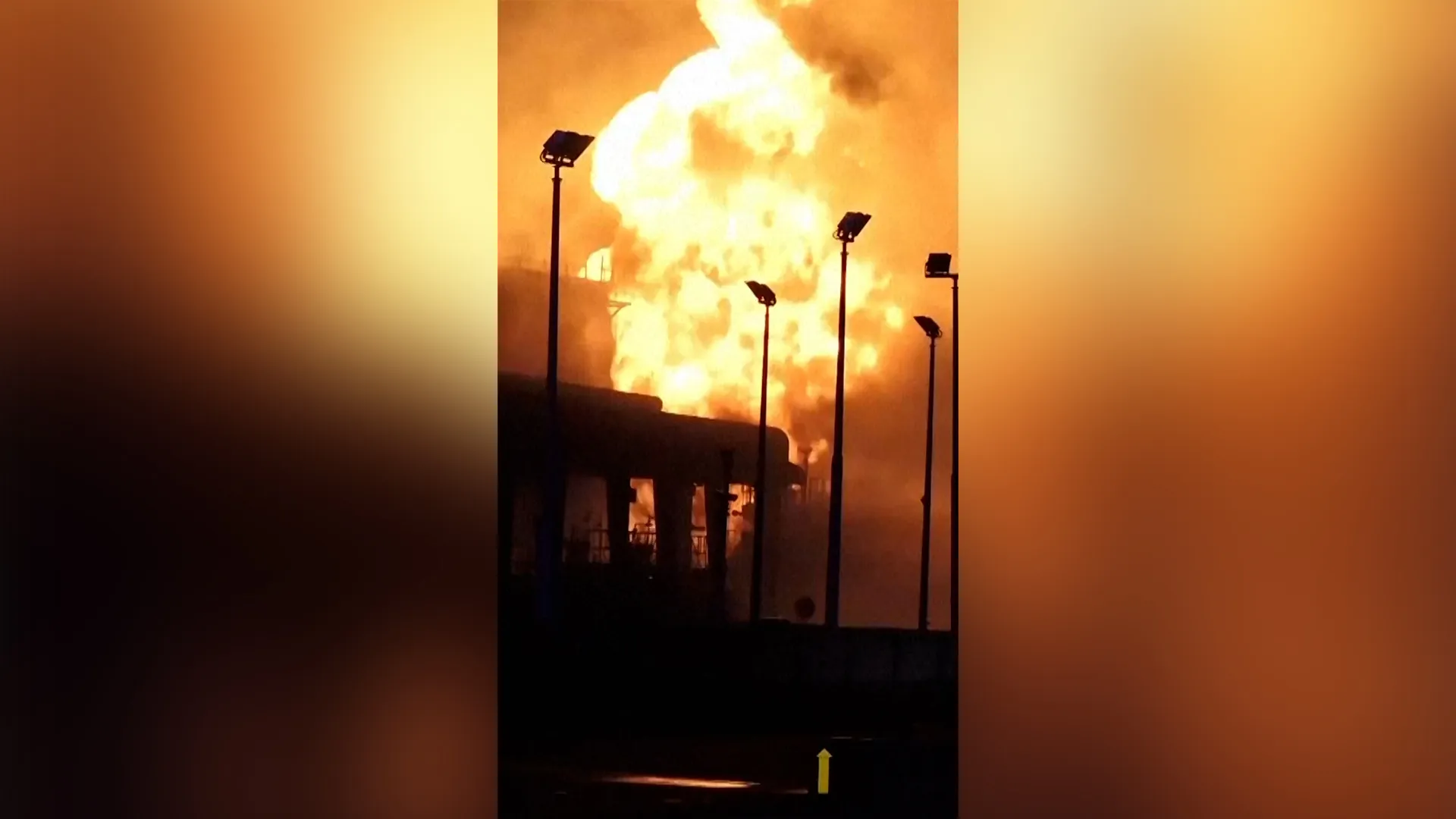
The Bahraini interior ministry released footage of a massive blaze at a fuel storage facility following an Iranian attack. Bahrain hosts the US Navy’s Fifth Fleet and has been consistently targeted amid the US-Israeli initiated war.
Some supporters of the US-Israeli war on Iran are using the treatment of women in the country as a justification for bombing it. Al Jazeera’s Ava Warriner explains.
Two foreign tankers were seen ablaze in Iraqi territorial waters after a strike near the al-Faw port. Authorities say they evacuated 25 crew members but have confirmed at least one death and are battling to control the flames.
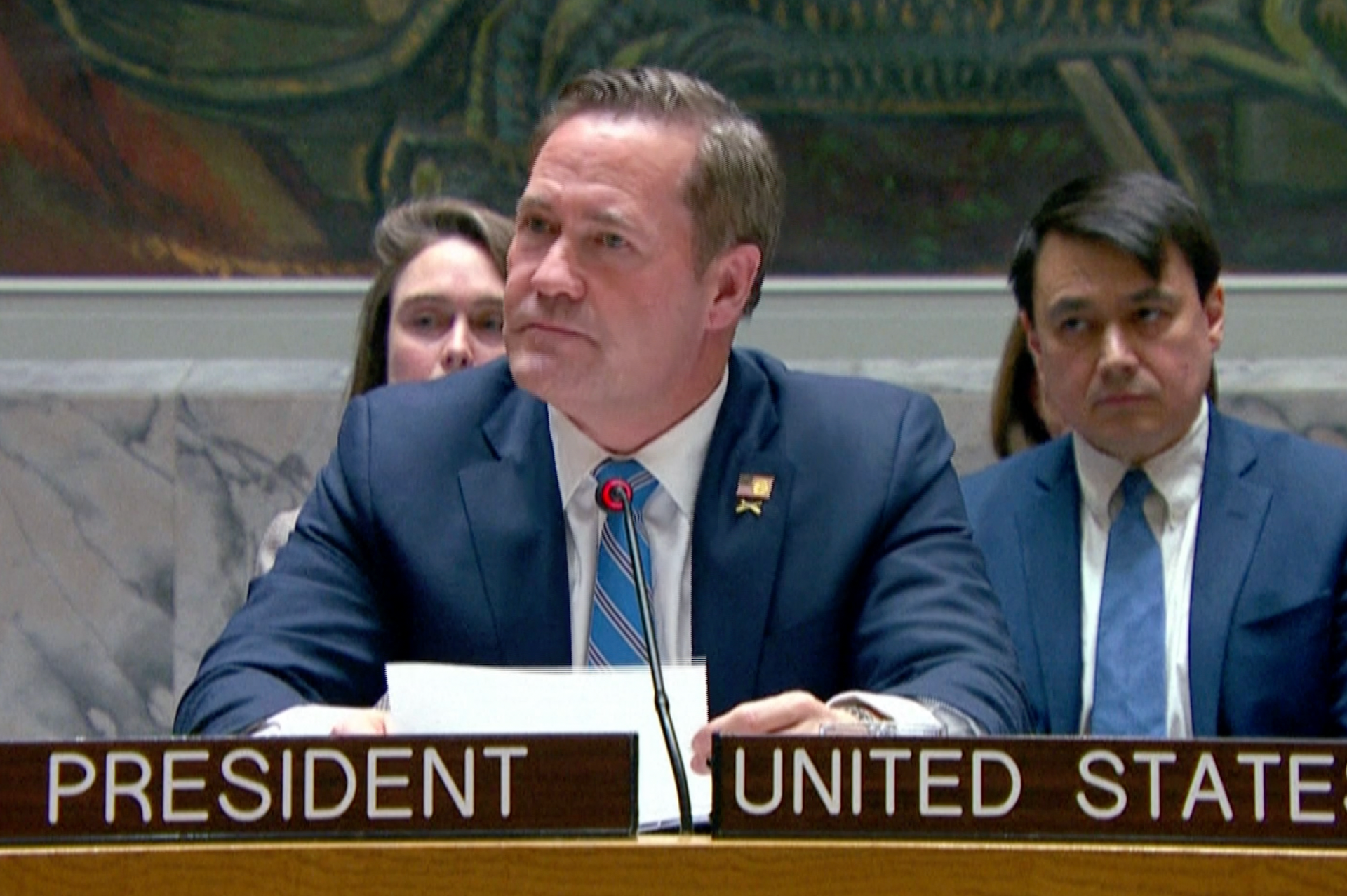
The UN Security Council has passed a resolution put forward by Gulf Cooperation Council members calling on Iran to halt its attacks on Gulf countries. The measure was adopted with 13 votes in favour and two abstentions, while no member states voted against it.
Warning comes as 400 million barrels of oil are being released from global reserves during waterway’s closure.
Published On 11 Mar 202611 Mar 2026
Share
Iran’s Islamic Revolutionary Guard Corps (IRGC) says it will not allow “a litre of oil” through the Strait of Hormuz as the closure of the key Gulf waterway continues to roil global energy markets during the US-Israeli war on Iran.
A spokesperson for the IRGC’s Khatam al-Anbiya Headquarters said on Wednesday that any vessel linked to the United States and Israel or their allies “will be considered a legitimate target”.
Recommended Stories
list of 3 itemsend of list
“You will not be able to artificially lower the price of oil. Expect oil at $200 per barrel,” the spokesperson said in a statement. “The price of oil depends on regional security, and you are the main source of insecurity in the region.”
Global oil prices have fluctuated wildly this week during continued US-Israeli attacks against Iran, which has retaliated by firing missiles and drones at targets across the wider Middle East.
The closure of the Strait of Hormuz, through which about one-fifth of the world’s oil supplies transit, and production slowdowns in some Gulf countries have raised concerns of further disruptions.
Concerns around the duration of the war, which began on February 28 and has shown no sign of abating, are also adding to uncertainty, sending oil prices soaring.
On Wednesday, three ships were hit by projectiles in the Strait of Hormuz, maritime security and risk firms said, including a Thai-flagged cargo vessel that came under attack about 11 nautical miles (18km) north of Oman.
Release of oil reserves
World leaders, including members of the Group of Seven (G7) and the European Union, have been mulling what action to take in response to the war’s impact on global economies.
Christian Bueger, a professor of international relations at the University of Copenhagen and an expert in maritime security, said Europe will be facing “a major energy supply crisis” if the Strait of Hormuz is not reopened.
“For the shipping industry right now, it’s impossible to go through the Strait of Hormuz,” Bueger told Al Jazeera. “And if there are not stronger signals in the near future that they can at least try to go through the strait, then we are looking at a major shipping crisis, which can last weeks if not months.”
On Wednesday, the International Energy Agency (IEA) announced that its 32 member countries had unanimously agreed to release 400 million barrels of oil from their emergency reserves to try to lower prices.
“This is a major action aiming to alleviate the immediate impacts of the disruption in markets,” IEA Executive Director Fatih Birol said during an address from the agency’s headquarters in Paris.
“But to be clear, the most important thing for a return to stable flows of oil and gas is the resumption of transit through the Strait of Hormuz,” he added.
The reserve supplies will be made available “over a timeframe that is appropriate” for each member state, the IEA said in a statement without providing details.
German Economy and Energy Minister Katherina Reiche said earlier in the day that the country would comply with the release while Austria also said it would make part of its emergency oil reserve available and extend its national strategic gas reserve.
Meanwhile, Japan’s Ministry of Economy, Trade and Industry said it would release about 80 million barrels from its private and national oil reserves.
Japanese Prime Minister Sanae Takaichi said the country, which gets about 70 percent of its oil imports through the Strait of Hormuz, would begin releasing the reserves on Monday.
Motorists around the globe are already feeling the impact of the United States and Israel’s war on Iran, with fuel prices sharply rising since the war began.
In the US, a gallon of regular petrol that averaged $2.94 in February now costs $3.58, marking a 20 percent increase, according to data from AAA Fuel Prices, a retail fuel price tracker from the American Automobile Association (AAA).
While each US state sets its own petrol prices, several states have surpassed $4 per gallon, with California exceeding $5 per gallon, the highest level it has been in more than two years.
Which countries have the sharpest petrol price increases?
According to data analysed from Global Petrol Prices, a data platform that tracks and publishes retail energy prices across approximately 150 countries, at least 85 countries have reported increases in petrol prices following the initial attacks on Iran by the US and Israel on February 28. Some nations announce price changes only at the end of each month, so higher prices are expected for many others in April.
Vietnam recorded the highest petrol price increase of nearly 50 percent, rising from $0.75 per litre of 95-octane on February 23 to $1.13 on March 9. Laos follows with a 33 percent increase, then Cambodia at 19 percent, Australia at 18 percent, and the US at 17 percent.
The table below shows the countries that have increased petrol prices at the pumps.
Asian countries pay the biggest price
Asia is disproportionately dependent on the Strait of Hormuz for the delivery of its oil and gas, which has been effectively closed since the start of the war. The strait joins the Gulf – also referred to as the Persian Gulf and the Arabian Gulf – to the Gulf of Oman and is the only passage for the region’s oil producers to the open ocean.
Japan and South Korea are among the most vulnerable, importing 95 percent and 70 percent of their oil from the Gulf, respectively.
Both East Asian nations have enacted emergency measures to stabilise their energy markets. On March 8, Japan instructed its oil reserve sites to prepare for a potential release of strategic reserves. The next day, South Korea introduced a maximum price cap on petrol and diesel for the first time in 30 years.
In South Asia, the impact of the war is more severe than in East Asia because countries like Pakistan and Bangladesh have much thinner financial buffers and smaller strategic reserves.
In an attempt to conserve energy, Bangladesh‘s government has ordered all public and private universities to close immediately. In Pakistan, government offices will now operate a four-day workweek, while schools have closed, and a 50 percent work-from-home policy has been enacted to save fuel.
In Europe, the Group of Seven finance ministers convened an emergency meeting to discuss rising prices, with French President Emmanuel Macron raising the possibility of releasing 20-30 percent of emergency strategic reserves to ease the pressure on consumers.
How high oil costs drive up the price of food
Oil prices and food prices move in lockstep, with energy prices affecting every stage of the food supply chain, from the fertilisers used in the fields to the trucks that carry food from field to supermarket shelf.
Rising oil prices also directly affect shipping and the cost of transport.
“The lifeblood of the global economy is transport,” economist David McWilliams told Al Jazeera. “It’s getting stuff from A to B – it’s a logistics problem, a supply chain problem, and ultimately transportation is the energy of the global economy.”
Fears of stagflation – increasing inflation and rising unemployment, which major oil shocks have historically summoned – are rising. Economists point to the crises of 1973, 1978 and 2008 as evidence that every significant spike in oil prices has been followed, in some form, by global recession.
In lower-income countries, where populations spend a far greater share of their income on food and import large quantities of grain and fertiliser, rising oil prices could rapidly translate into food shortages.
What products are made from oil and gas?
Oil and gas are used for far more than just fuel. They are raw materials for thousands of everyday products.
Plastics, including water bottles, food packaging, phone casings and medical syringes, are all derived from crude oil.
Crude oil is also the hidden ingredient in synthetic fabrics such as polyester, nylon and acrylic, which are used to make everything from sportswear to carpets. It also underpins the cosmetics industry, as it is used to make products such as petroleum jelly (Vaseline), lipsticks and concealers.
Household items also rely on oil-based ingredients, with laundry detergents, dishwashing liquids, and paints all derived from petroleum products.
The global food supply is essentially built on natural gas in the form of fertilisers, used to enhance crop yields and ensure that food production can meet demand.