Iran war live: Trump hints new strikes, says US knocked ‘hell out’ of Iran
Trump indicates new strikes on Iran, saying the US has knocked the 'hell out' of the country.
Source link
Trump indicates new strikes on Iran, saying the US has knocked the 'hell out' of the country.
Source link
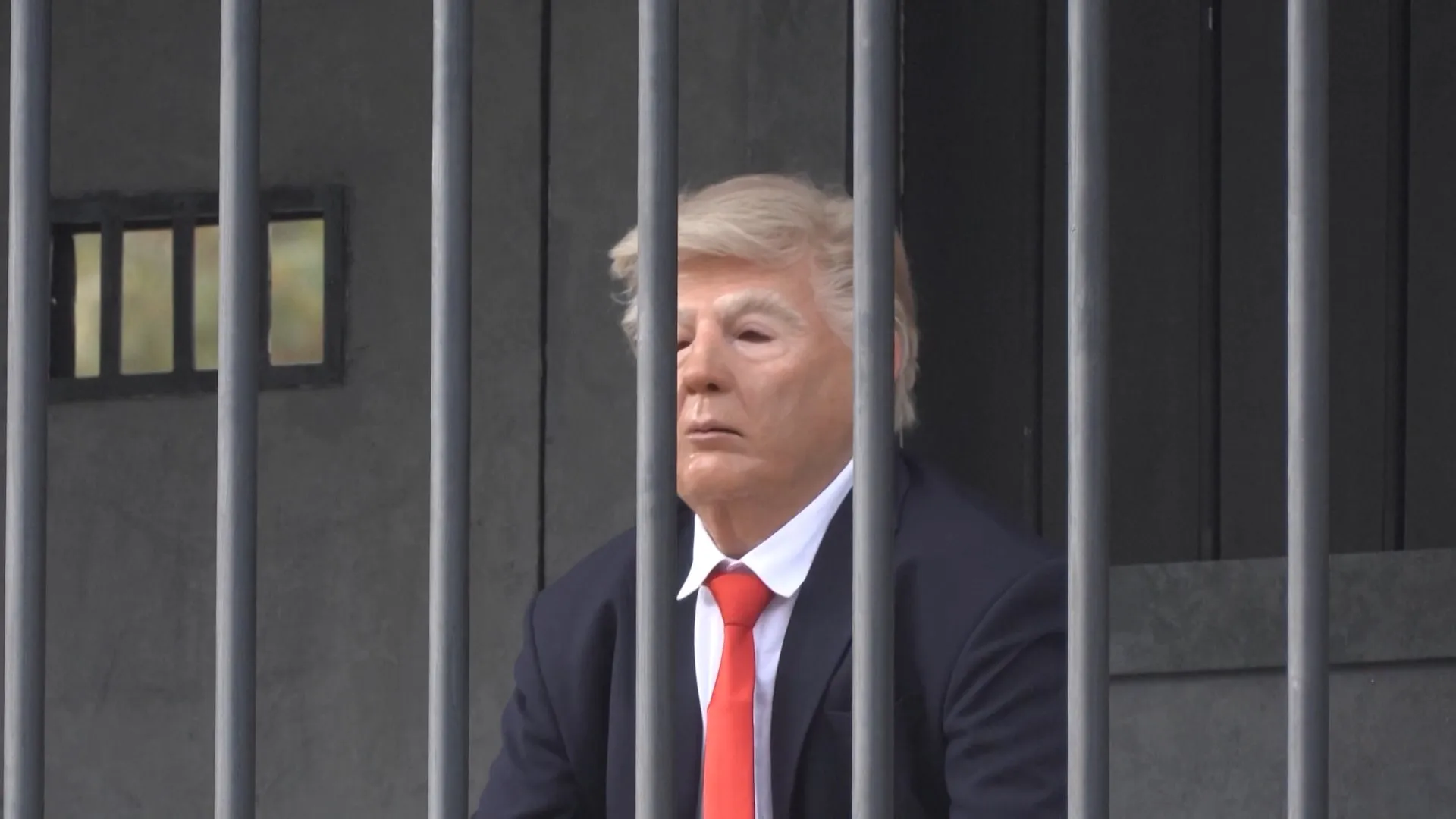
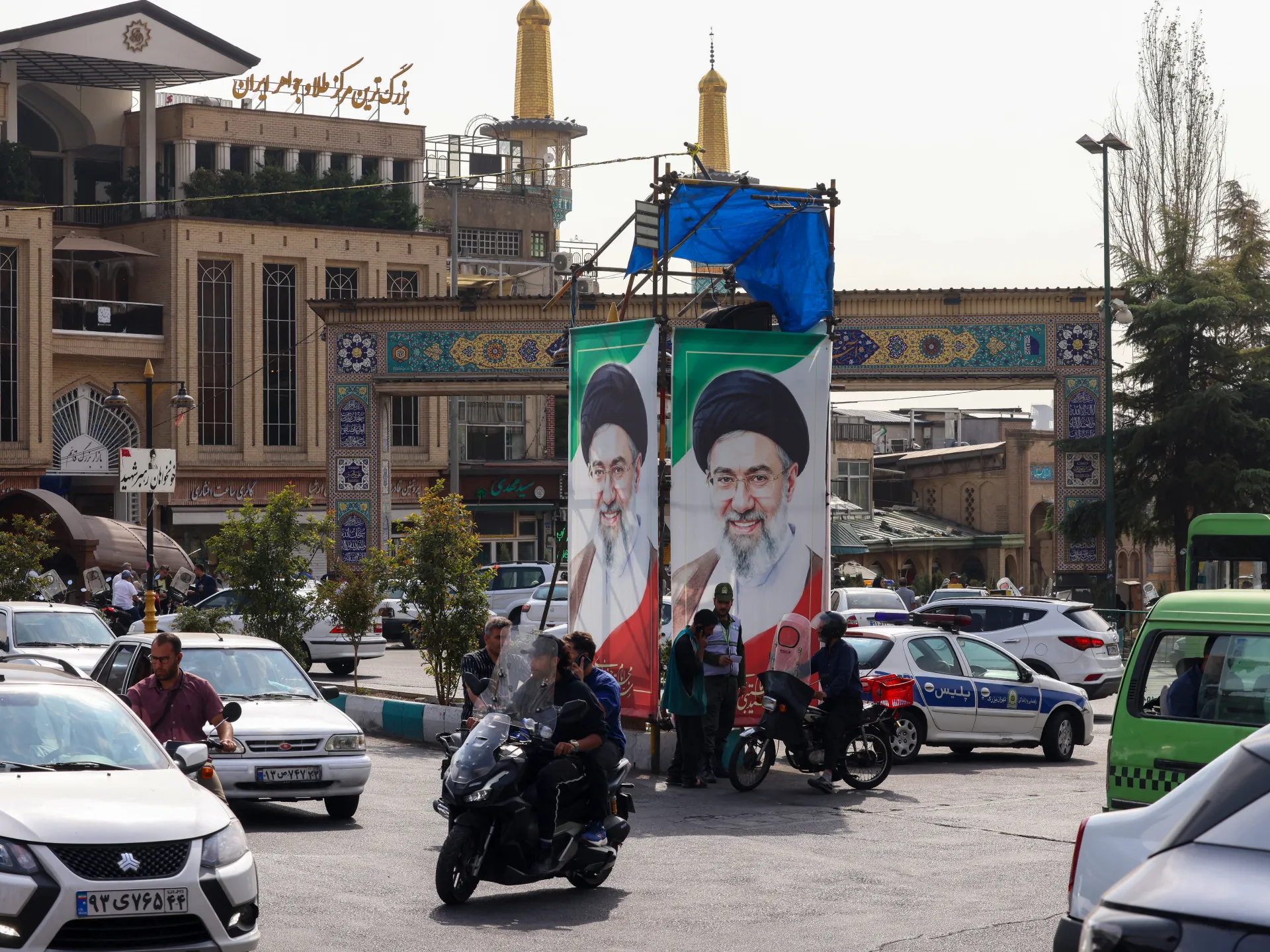
An Iranian performer in Tehran’s busy Tajrish Square has impersonated US President Donald Trump behind bars in an art installation featuring the slogan: “It is a crime not to see this scene.”
Published On 21 Oct 202621 Oct 2026
Share
French president meets Crown Prince Mohammed bin Salman in Riyadh to discuss energy, security, and infrastructure as cost-of-living protests rage at home.

Published On 21 Oct 202621 Oct 2026
French President Emmanuel Macron visited Riyadh on a surprise “solidarity” visit, making him the first Western leader to touch down in Saudi Arabia since the Houthis intensified their attacks this month.
The unannounced trip comes as Saudi Arabia agreed to supply extra diesel to France “for as many months as necessary”, the Elysee Palace told the AFP news agency on Wednesday.
list of 3 itemsend of list
The visit aims to “demonstrate France’s solidarity with the kingdom in the face of the attacks carried out by the Houthis against its territory, and to continue efforts undertaken on securing and diversifying hydrocarbon supplies”, the French presidency said earlier.
The diplomatic push follows days of rioting in France, fuelled by the cost of living, especially as the US-Iran war and Iran’s blockade of the Strait of Hormuz have kept energy prices high.
Faced with criticism of his Gulf tour at home, Macron told reporters he was just “doing his job” in a bid to “ease tensions” over petrol prices, one of the causes of social unrest in France.
“There must be no sign of febrility,” he said. “I am fulfilling my role. I am at my post.”
Macron met Saudi Crown Prince Mohammed bin Salman in the Saudi capital, and the two agreed to consult on expanding security cooperation and on infrastructure projects to bypass the blockaded strait, the palace said.
It did not say how much extra diesel Saudi Arabia would supply.
The deal follows pledges secured earlier in Macron’s Gulf tour. The presidency said on Tuesday that the United Arab Emirates had committed to about 100,000 tonnes a month, with a further 100,000 tonnes monthly to be secured in Bahrain.
Together with Saudi deliveries, France now has commitments for 295,000 tonnes a month, just more than 10 percent of its consumption, it said.
Meanwhile, France is also sending military assets to Saudi Arabia, under an earlier agreement, to help protect the Red Sea port of Yanbu, which has come under attack from the Iran-backed Houthis, an armed group also known as Ansar Allah (Arabic for Supporters of God).
The United Kingdom also announced on Tuesday that it would deploy fighter jets to help shield the kingdom. Both countries say their support is purely defensive.
Analysts say the moves protect Saudi oil exports that matter to Europe’s energy markets and bolster the Gulf alliance as the US shows reluctance to offer direct military help. They also carry risks, analysts say, potentially drawing the two European states into the protracted Saudi-Houthi conflict.
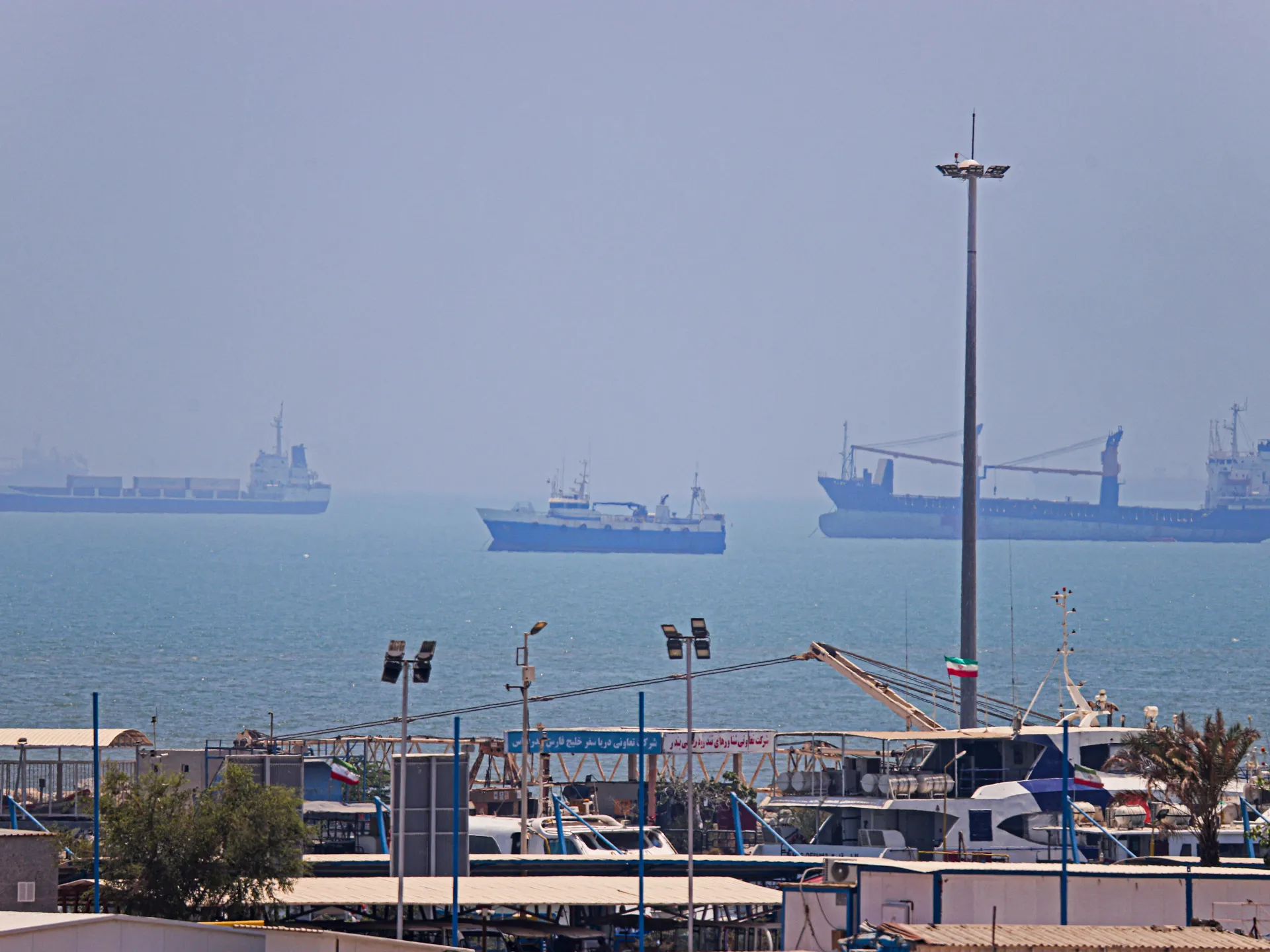
Rubio tells US media that reaching a peace deal with Tehran is extremely difficult while Hormuz attacks continue.
Source link
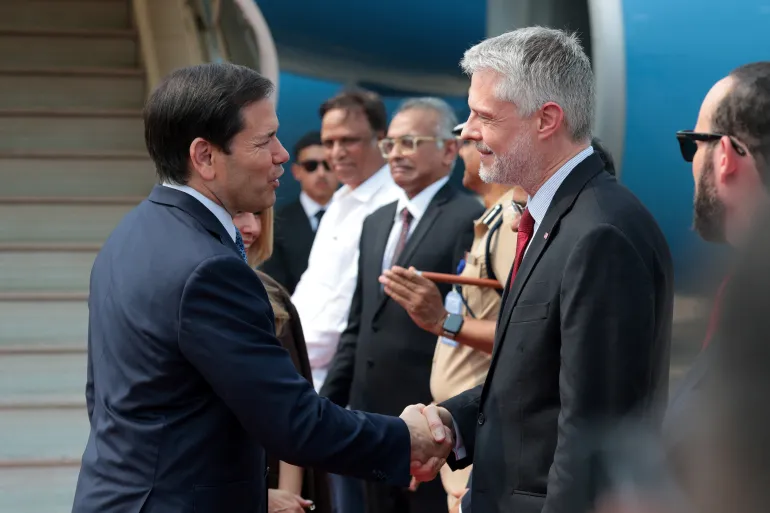
New Delhi, India — United States Secretary of State Marco Rubio has arrived in India for a two-day visit, during which he is set to tour the Jamnagar refinery complex in Gujarat, owned by billionaire Mukesh Ambani’s Reliance Industries, a major player in global oil markets.
Reliance’s crude refinery in Prime Minister Narendra Modi’s home state is the world’s largest single-site refinery. In many ways, Reliance Industries’ businesses sit at the crossroads of the ongoing global energy crisis.
The conglomerate is central to Washington’s efforts to punish Russian energy buyers, while also trying to contain oil prices amid the war on Iran, on top of rising diesel costs in the US, where a crucial midterm election looms. Reliance has also only recently committed to a major investment in the US, which President Donald Trump’s administration has cited as an example of its successes in luring global capital.
Rubio is skipping the capital, New Delhi, at a time when the US-India bilateral relationship has been rocky, strained by a string of friction points — and an elusive trade deal.
So why is the top US diplomat visiting the world’s largest single-site oil refinery?

After meetings in Mumbai, India’s financial hub in the western state of Maharashtra, Rubio will fly to Jamnagar in neighbouring Gujarat, near the Gulf of Kutch. Jamnagar opens into the Arabian Sea and is home to Reliance Industries’ refining complex, a major hub for crude processing and fuel exports, which processes 1.4 million barrels per day (bpd).
Rubio had visited India earlier this year too, but this trip “is a little more business-focused”, the US ambassador to India, Sergio Gor, told reporters last week. A readout from Rubio’s office noted that he would “meet with business leaders to promote opportunities for commercial investment and economic cooperation”.
“[At Jamnagar] he will meet some of the folks at Reliance,” Gor said.

The world’s largest single-site oil-refining complex has a combined crude-processing capacity of 1.4 million bpd. That is nearly 1.5 percent of global refining capacity, according to the company.
The complex comprises two refineries: the original facility, commissioned in 1999 with a capacity of 660,000bpd, and a second, export-oriented refinery commissioned in 2008, adding 580,000bpd, which operates in a special economic zone.
Jamnagar imports crude from international suppliers and exports refined products to global markets. The refinery can process heavy, sulphur-rich crude that many facilities cannot handle efficiently, converting oil into higher-value products.
Reliance said last month that the complex has processed more than 216 crude grades, claiming to be “perhaps the only refinery to achieve this feat”.
The Jamnagar refinery’s capacity is also driving a sharp revival in imports of Venezuelan crude — taken over by the US earlier this year after abducting then-President Nicolas Maduro — as Washington seeks to reshape global oil trade.
Reliance is expected to account for roughly 350,000bpd to 370,000bpd of the October intake, according to estimates from analytics firm Kpler. “We will talk with Reliance about refining more Venezuelan crude,” Rubio told reporters in brief remarks on Tuesday.

Reliance is a central player in keeping global oil markets stable, as one of the world’s biggest suppliers of refined petroleum products. In September, for instance, six of the seven large cargo ships that docked at European Union ports carrying oil products were bearing Reliance goods.
Reliance’s biggest export is diesel, which Trump has been particularly worried about, with prices reaching historic highs in the US ahead of midterm elections early next month.
Though the data on exports by category is not public, an analysis by the Reuters news agency from trade sources noted that Reliance Industries exported 21.66 million tonnes of refined petroleum products in the first half of 2025 from Jamnagar. Diesel accounted for the largest share at 9.81 million tonnes, followed by petrol at 6.14 million tonnes and jet fuel at 2.06 million tonnes.
Europe accounted for the biggest share of the company’s exports, making up 28 percent of Reliance’s refined products during the period. Buyers include BP, ExxonMobil, Glencore, Vitol and Trafigura.
The Jamnagar refinery also shipped about $143m worth of oil products to the US last month, according to data cited by the Centre for Research on Energy and Clean Air (CREA), a think tank in Finland.
CREA noted in its report that the EU’s ban on importing petroleum products made from Russian crude from January 2026 does not adequately prevent products from refineries in third countries from entering Europe when those refineries also process Russian crude. The Jamnagar refinery is a prime example of that loophole.
Rubio’s visit to the refinery also comes as Trump faces his worst approval ratings amid inflation and rising fuel prices ahead of the midterm election in November. Just about 31 percent of Americans are happy with Trump’s performance – the lowest-ever number in his two terms, according to a Reuters/Ipsos survey.
The Trump administration has also reportedly been pushing Ukraine’s President Volodymyr Zelenskyy to stop strikes on Russian energy facilities, which have rattled the global fuel markets.
Reliance is also a critical actor in US efforts to influence how much oil Russia sells.
Since the start of Russia’s full-fledged war on Ukraine in February 2022, India has emerged as the second-largest buyer of Russian oil after China. And Reliance is driving that surge in imports. While only 3 percent of its oil was sourced from Russia before 2022, that share rose to 50 percent by 2025.
So when Trump imposed an additional 25 percent tariff on Indian goods in August 2025 to punish New Delhi for the purchase of Russian oil, Reliance was directly affected. It cut back on Russian crude imports significantly in subsequent months, but it still made up a third of the oil processed by Jamnagar’s refinery during the July-September 2026 quarter.
That was under threat when the Trump administration appeared poised to impose a 100 percent tariff on Indian goods because of continued Russian oil imports, under a new law passed last month.
But Trump has since suspended those proposed tariffs, easing concerns for India and Reliance.
Rubio has said India has been diversifying its import mix away from Russian crude, even as it still buys millions of barrels of Russian oil every day. “You’ve got countries like India, for example, that have voluntarily diversified their energy portfolio, but are still getting a substantial amount of energy from Russia because it’s hard to pivot from one day to the next,” Rubio said on Sunday.
“But they’re also an important ally and partner of the United States.”
Yes, India’s richest man, Mukesh Ambani, the chairman and managing director of Reliance Industries, is investing in the US, primarily through energy-related projects.
It is backing America First Refining’s planned oil refinery at the Port of Brownsville in Texas, also the first major US refinery in about 50 years, announced by Trump in March.
The refinery is expected to cost $3bn to $4bn and process about 60 million barrels of US crude annually. Reliance has signed a 20-year agreement to buy a large share of the facility’s output, with operations expected to start around 2029.
In November 2024, Reliance’s US subsidiary also acquired a 21 percent stake in helium explorer Wavetech Helium for $12m as part of its low-carbon energy strategy.
Last month, Trump announced that India’s Essar Group — an oil major with knee-deep ties to Russia — is planning an $18bn integrated steel investment in the US through its subsidiary, Mesabi Metallics.
Despite Reliance’s investments in the US and Rubio’s upcoming visit to the Jamnagar facility, Elon Musk, the world’s richest man who is also a key Trump ally, recently hit out at Ambani.
His Starlink space telecommunications firm has struggled for years to secure a licence to operate in India.
In a series of X posts recently, Musk accused Prime Minister Narendra Modi’s government of stalling Starlink’s entry to favour market leader Ambani’s telecom firm, Jio. Musk taunted Ambani directly, addressing him as “Prime Minister Ambani” and asking whether he would “consider allowing Starlink to compete”. Starlink, Musk wrote, was being blocked by “oligarchs” protecting their “monopolistic chokehold” on Indians.
In a statement issued on X, Reliance said it has “never feared competition” and has “grown in an India that welcomes investment and innovation, homegrown or international”.
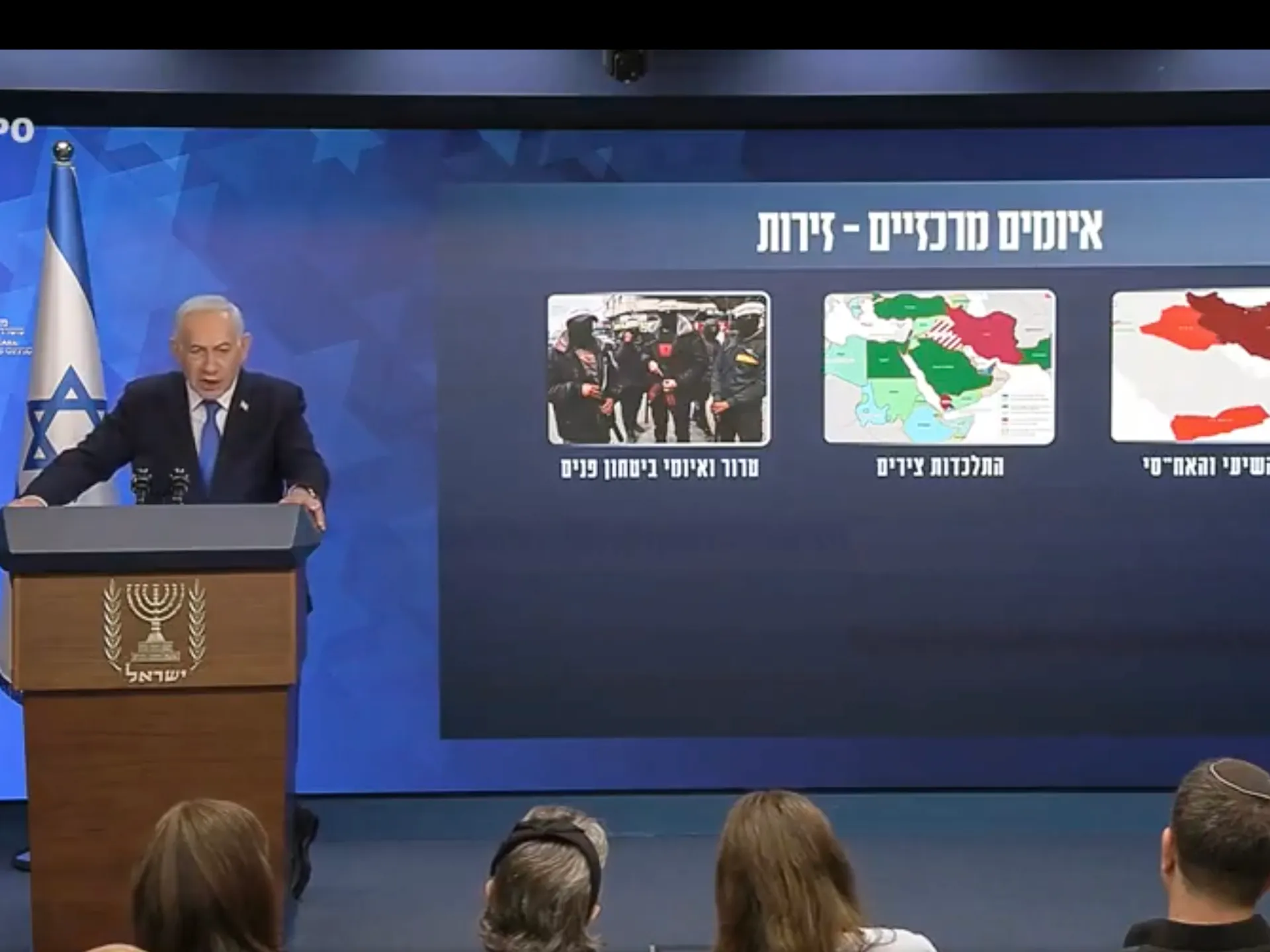
Israeli Prime Minister Benjamin Netanyahu has unveiled an updated national security doctrine and displayed a map of rival regional alignments, signalling a security approach that prioritises preemptive military action, the expansion of buffer zones, and the pursuit of new regional partnerships.
The document was developed with the assistance of Israel’s National Security Council and published by the Prime Minister’s Office on Sunday, just nine days before Israel’s parliamentary elections that could spell the end of Netanyahu’s time in office. It outlines a formal policy of preventing perceived threats through military action rather than containment – a policy that has already been seen in action over the past few years, as Israel pursues multiple wars and attacks on its neighbours.
The timing of the map’s release carries particular political significance, with Netanyahu fighting to retain power amid criticism of his conduct in power, the ongoing corruption trial he faces and his handling of the October 7, 2023, attacks, as well as the wars that followed.
list of 3 itemsend of list
As the October 27 election day draws closer, Netanyahu is attempting to bolster his credentials as Israel’s ‘Mr Security’, hoping to get the votes of Israelis who may not like some of his other policies or behaviour, but still view him as the most likely leader to defend the country.
Netanyahu, who did get the endorsement of US President Donald Trump on Sunday, said during the briefing that Israel could face the possibility of a far less supportive administration in Washington in two years, after the end of the Trump presidency.
“In two years, a president… who is extremely hostile to Israel could come to power [in the United States],” Netanyahu warned.
He therefore argued that Israel must “expand our network of alliances and develop capabilities that make us a valuable asset” to other countries as a way of protecting itself if US policy towards it changed.
The comments, according to analysts, suggest that Netanyahu is seeking to portray his leadership as essential to navigating both Israel’s regional military challenges and its diplomatic isolation, all while keeping a fearful electorate reassured.
Mohanad Hage Ali, deputy director for research at the Malcolm H Kerr Carnegie Middle East Center, explained that the strategic presentation centred on competing regional blocs and buffer zones.
That framework “incubates and nurtures existential fears, which would lead Israeli voters to feel the need for a decisive leader”, Hage Ali noted.
In his assessment, Netanyahu stands to benefit from the Israeli public’s fear of regional threats by presenting himself as a familiar leader capable of managing them, making him “the devil you know”, as the analyst put it, to voters reluctant to embrace political change at a sensitive time.
Netanyahu’s political opponents have been quick to push back against that narrative.
Gadi Eisenkot, one of the prime minister’s main challengers in the upcoming election, said that the published doctrine was “two hollow pages, full of slogans that have nothing to do with a security concept”.
Another, former Prime Minister Yair Lapid, described the document as “superficial”.
The map displayed during Netanyahu’s briefing was originally published in May by Friedrich-Ebert-Stiftung, a German political foundation. It divides the Middle East and parts of Africa into competing blocs, highlighting the region’s complex network of alliances and rivalries.
Those networks include states, unrecognised entities and non-state actors.
The map identifies an Israel-United Arab Emirates alignment, described as the “Hexagon Alliance”, alongside a separate grouping of Egypt, Turkiye, Pakistan and Saudi Arabia – the latter three of which signed the Mecca mutual defence pact in August – labelled the “Sunni Diamond Alliance”. It also depicts Iran and its regional allies as a separate axis.
The map serves to illustrate the issues outlined in the published security doctrine, presenting a region where Israel faces multiple threats, the alliance that Israel is seeking to cultivate across the wider region, and the perceived need for “buffer zones” – the occupation of territory in other countries.
Israel’s existing illegal occupation of territory in Gaza and southern Lebanon illustrates the potential consequences of expanding the buffer zone approach.
Hage Ali warned that continuing to pursue an approach built around expanding military control could lead to “more conflict and more ethnic cleansing” under the guise of security buffers.
A striking element of the map displayed by Netanyahu is its explicit designation of non-state actors as friendly entities.
The map highlights territories controlled by the paramilitary Rapid Support Forces in Sudan and Khalifa Haftar’s self-styled Libyan National Army within an alignment deemed cooperative to Israel and the United Arab Emirates.
Israel views these actors as pragmatic partners or at least cooperative entities in a broader strategic grid, Hage Ali explained. However, the public association of these groups with Israel threatens to damage their domestic standing across the Arab world.
That reflects Netanyahu’s immediate priorities, where “what Israelis think matters more than the reputation of your allies and the viability of these alliances”, Hage Ali added.
The portrayal of the Middle East as a region divided into competing alliances also carries risks for Netanyahu’s broader diplomatic ambitions.
Earlier this year, Netanyahu proposed a “hexagon of alliances”, envisaging cooperation between Israel, India, Greece, Cyprus and unnamed Arab, African and Asian partners, against what he described as “radical” regional alliances.
The proposed grouping has not been established as a formal alliance, and commentators in Israel and the international press have described the project as a branding exercise rather than a binding military pact, noting that countries like India prioritise non-alignment and pragmatic trade over ideologically rigid blocs.
For Tehran and its regional partners, the map also offers potent political leverage.
Hage Ali emphasised that the visual layout “will certainly help their propaganda machine”, providing Hezbollah and other Iranian allies with evidence to reinforce the narrative that Israel seeks to expand and dominate the region.
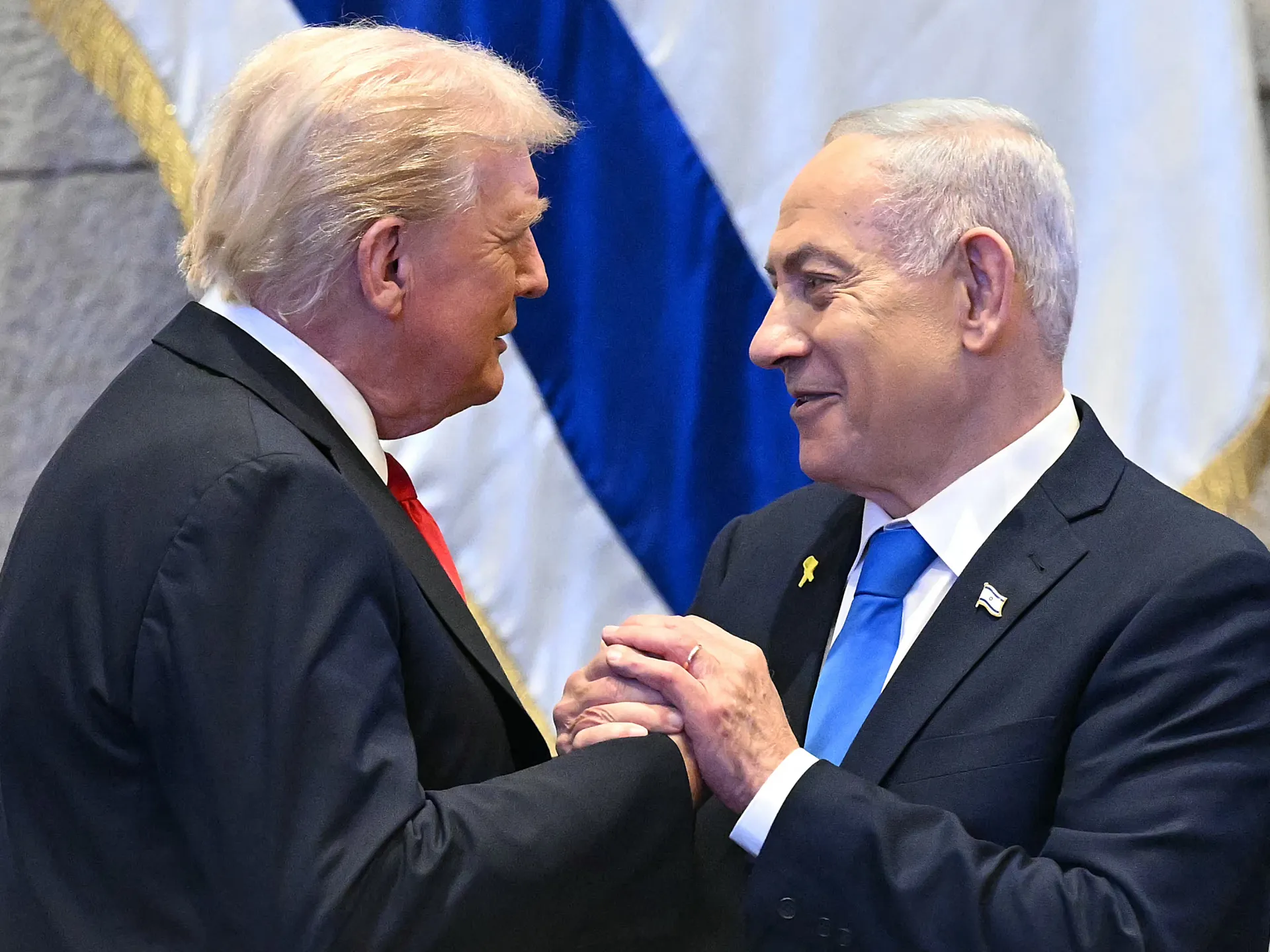
United States President Donald Trump has announced his official endorsement of Israel’s Prime Minister Benjamin Netanyahu’s election campaign after previously refusing to endorse anyone.
Trump posted on his Truth Social platform on Sunday that Netanyahu had been a “great warrior prime minister and an even greater partner for peace”, adding that Iran had been “systematically destroyed both militarily and financially, and unless they change their ways, rapidly, we will soon finish the job.”
list of 3 itemsend of list
“If Israel has the wrong Leader, which would be anyone other than Bibi, America will have to do this work ourselves, and I am not inclined to do so,” Trump wrote.
“Bibi Netanyahu has been Strong, Brave, and Brilliant in the face of tremendous opposition, including that coming from even Israel, itself. Despite all of that, he has endured and, in fact, he has thrived!”.
The president added that normal men and women would have “wilted” under the pressure that Netanyahu was under, but the Israeli prime minister “got stronger”.
“This is the kind of Partner that the United States of America is demanding of Israel, a Country for which it has done so much. Please let this Letter serve to represent my Complete and Total Endorsement of Bibi Netanyahu in his upcoming Race for Re-Election as Prime Minister of Israel. BIBI NETANYAHU WILL NEVER LET YOU DOWN!”, he added.
The Israeli election will be on October 27 . According to Israeli news outlet Haaretz’s tracker, as of Sunday, the opposition alliance led by the Yashar party of Gadi Eisenkot is expected to win the most seats, at 52, with Netanyahu’s Likud party-led coalition taking 51 of the 120 seats in the Knesset.
So far, no party is projected to secure an outright majority.
But Trump’s endorsement comes after he had previously shied away from fully backing Netanyahu’s election campaign.
Earlier this month, when asked twice by TIME magazine if Netanyahu should be given another term, Trump pivoted to his own popularity in Israel and Washington’s actions supporting Israel.
When asked on Thursday by the right-wing US news outlet, Newsmax, if he was planning to get involved in the Israeli elections, Trump said: “They’d like me to be. Yeah, they’d like me to be”.
When asked whether he trusted Netanyahu, Trump replied, “I don’t trust anybody, honestly”.
Still, Sanam Vakil, director of the Middle East North Africa programme at the British think tank Chatham House, explained that Trump’s endorsement of Netanyahu was “politically significant” because it comes after months of tension between the two leaders.
“It allows Netanyahu to reinforce his claim that he is indispensable to Israel’s relationship with Washington,” Vakil told Al Jazeera.
“However, its electoral impact should not be overstated. Israeli voters remain divided over Netanyahu’s leadership and the outcome of the Iran war. The endorsement may help consolidate his existing support, but it does not resolve the wider questions surrounding his record,” she added.
Andreas Krieg, senior lecturer at the school of security studies at King’s College London, said that Trump’s endorsement was a “political gift” to Netanyahu, whose electoral campaign is struggling.
But like Vakil, he cautioned against treating Trump’s endorsement as a game-changer.
“Netanyahu’s problems are structural, involving fragmented right-wing parties, disillusioned ultra-Orthodox voters and the legacy of October 7. Trump may mobilise reluctant Likud voters, potentially worth a seat or two in a close contest, but he cannot manufacture the coalition majority Netanyahu currently lacks,” Krieg told Al Jazeera.
Much of Trump’s endorsement has been heavily focused on the Iran war, at a time when many analysts suggest the US president might be looking to restart attacks, either before or after the midterm elections in early November.
The conflict, which began in February after the US and Israel launched attacks across Iran, is currently at a standstill.
The Strait of Hormuz, which once transported 20 percent of global crude, was effectively shut by Iran after the war started. A US naval blockade of Iranian vessels followed, as each country struck ships passing through the waterway that they accused of not complying with its orders. Oil traffic last month through the strait picked up to pre-war levels as the US Navy shepherded an increasing number of tankers. But a spate of Iranian attacks on vessels early this month has again hit crude exports through Hormuz.
On Monday morning, Brent crude futures stood at $107.57 a barrel, down slightly after reaching their highest since May 19 on Friday, when they briefly touched $110 a barrel.
Last month, Iran presented a proposal to Washington to reopen the waterway within seven days, but negotiations failed after the US did not address Tehran’s seven conditions, which included the lifting of sanctions and the ending of its naval blockade.
Foreign Minister Abbas Araghchi told Iranian media outlets on Sunday that the proposal remained on the table and, if Washington accepts Tehran’s conditions, the strait could reopen within six days, with talks resuming the following day.
At the same time, Araghchi, in a post on X on Sunday night, accused Netanyahu of wanting to restart attacks on Iran with the US to “stay out of jail”.
“Last time you wanted to ‘finish the job’, Iran emerged even stronger. Want to try your luck again? Be our guest. But be careful; we have unfinished jobs too,” he wrote.
“Netanyahu is driving America into another war to stay out of jail, whatever the consequences for Israel – let alone POTUS,” he added.
Krieg said Trump was prioritising the use of “coercive leverage” through his endorsement of Netanyahu but not necessarily “war over diplomacy”.
“The naval blockade is hurting Iran considerably and Washington believes time is working in its favour. Trump’s calculation is that Iran will eventually accept nuclear concessions and reopen Hormuz, without Washington having to offer significant concessions first,” he argued.
“His endorsement reinforces the military threat underpinning that strategy. But it does not mean diplomacy is finished. Trump still wants a deal he can present as a victory. The danger is that Tehran increasingly believes it must escalate to improve its bargaining position.”
Vakil explained that, while Trump’s declaration of support for Netanyahu had signalled renewed political alignment with Israel and left the door open for future joint military action, it also makes it “harder for Trump to distance himself from the war or portray the US as having been reluctantly drawn into it”.
“He is explicitly taking ownership of the partnership and its military campaign against Iran. However, the endorsement does not necessarily mean that the two leaders have agreed on another operation, nor does it settle the question of who initially pushed hardest for war,” she said.
Vakil added that for Tehran, the statement will reinforce the belief of Iranian leaders that there is “little meaningful distinction between US and Israeli objectives.”
“At the same time, Trump’s suggestion that he is reluctant to confront Iran without Netanyahu could be interpreted as evidence of the limits of Washington’s appetite for another war.”
Meanwhile, while Trump has said that he would not attack Iran before the November midterms, several US media outlets have reported that the Pentagon has drawn up plans to relaunch attacks before voters head to the polls.
Last week, US news outlet Axios reported, citing both US and Israeli officials, that both Trump and Netanyahu had spoken about launching a major new operation against Iran ahead of the elections in both countries.
For Krieg, the likelihood that the US and Israel launch an attack on Iran remains low, assuming there is no Iranian strike that forces a response.
“The more dangerous window opens after November 3 [US midterms], when those electoral constraints disappear. Both militaries are preparing for that possibility. The greatest immediate risk is an uncontrolled escalation in Hormuz that forces Washington’s hand before either leader is politically ready,” he said.
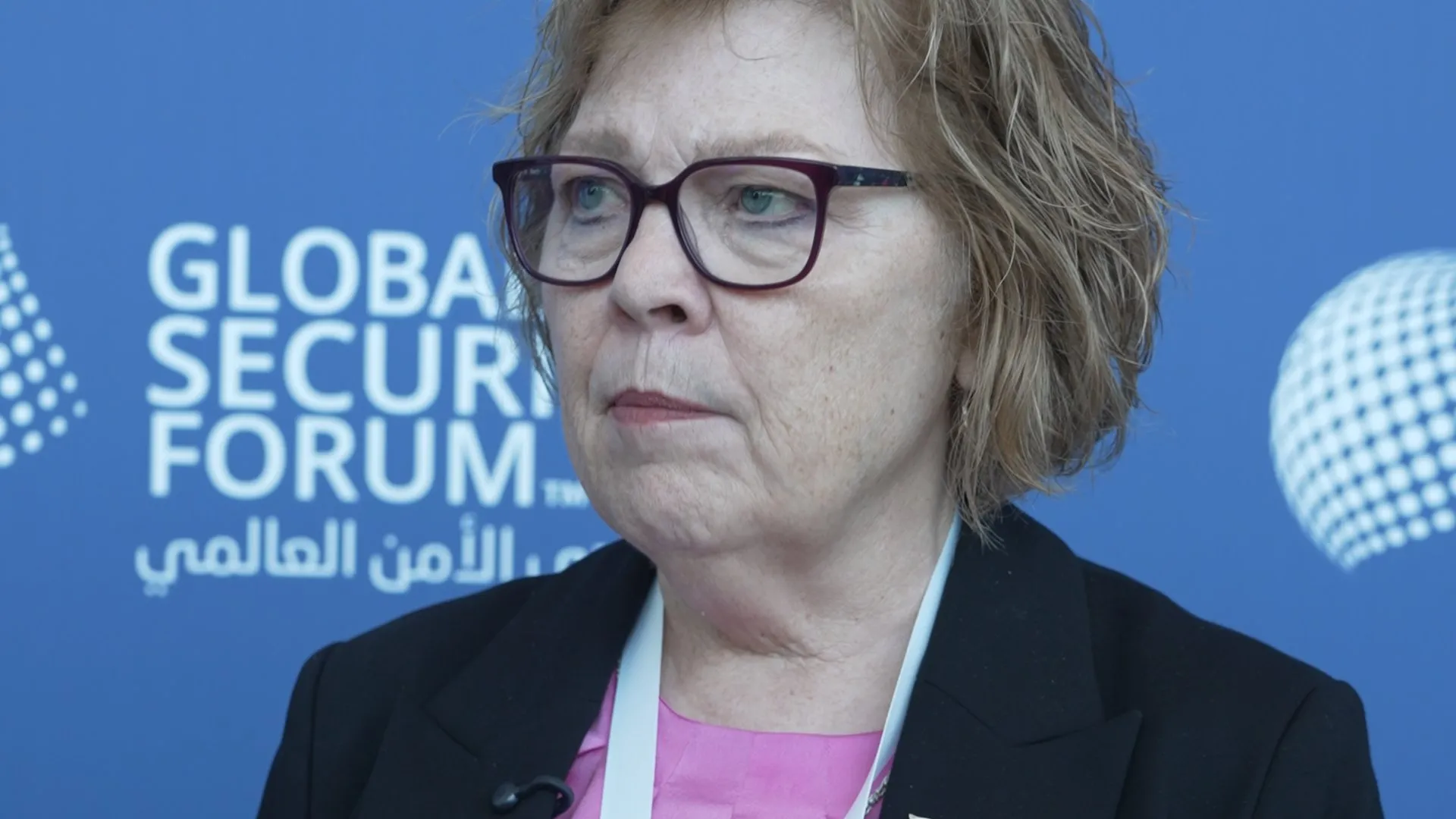
Barbara Leaf, former US Assistant Secretary of State for Near Eastern Affairs, tells Al Jazeera that public opposition to the war with Iran could threaten Republican control of Congress, as economic fallout fuels voter anger.
Published On 19 Oct 202619 Oct 2026
Share
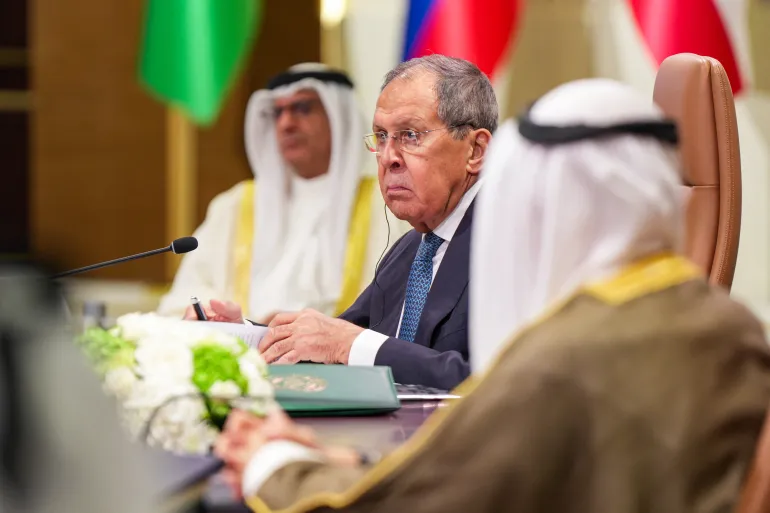
Tehran, Iran – Russia’s Foreign Minister Sergey Lavrov is due to meet with senior Iranian officials in Tehran to discuss the war with the United States and efforts to end it.
Lavrov landed in the Iranian capital on Monday afternoon on his first visit to Iran since February 2025. Moscow said the trip was part of efforts to ease months of tension, since the US and Israel launched their war on Iran on February 28. The Russian minister is scheduled to hold talks with President Masoud Pezeshkian and Foreign Minister Abbas Araghchi later on Monday.
list of 3 itemsend of list
On Sunday, Lavrov was in Bahrain, which was heavily targeted by Iran during the war, to participate in a strategic dialogue session between Russia and the Gulf Cooperation Council (GCC).
He was urged by GCC members to use Moscow’s influence with Tehran to press for “serious dialogue” and restore shipping through the Strait of Hormuz, which has been severely disrupted by attacks on commercial vessels.
GCC chief Jasem Al-Budaiwi said member states had faced more than 7,000 Iranian missiles and drones since the start of the war.
In the council’s closing statement, the six Arab countries said they wanted Iran’s nuclear and missile programmes, as well as its support for regional armed groups, to be included in future talks to end the war.
Nikita Smagin, an analyst and researcher on Iran and Russia’s role in the Middle East, said Lavrov’s trip reflects Moscow’s efforts to maintain working relations with all countries in the region.
He said Lavrov also wants to maintain Russia’s status as a mediator, despite the impact of the Ukraine war on its global reputation.
“The timing of visits to the Gulf monarchies and Iran, taking place almost simultaneously, is a deliberate signal: Moscow wants to show that it approaches relations with all these countries on broadly equal terms and is equally interested in cooperation with each of them,” Smagin said.
Lavrov told GCC ministers in Manama that the region was once again teetering on the brink of a full-scale war and Russia wanted to establish a regional architecture for “collective security”.
He said this could include combining initiatives from countries in the region, along with those put forward by Russia and China, with the aim of restoring maritime traffic and achieving lasting peace. The Russian foreign minister urged other regional states such as Iraq and Jordan, which have also been hit by Iranian strikes, to participate.
Lavrov expressed support for the Memorandum of Understanding (MoU) signed between Iran and the US in June, which later collapsed, as a framework for reducing tension.
Iran has said it wants a return to that agreement, and for Washington to honour a finalised bilateral deal between Iran and Oman to manage territorial waters in the Strait of Hormuz. This has been opposed by the US, which has established its own route in the waterway for shipping.
Intelligence reports cited by US media said that Russia and China are providing military support to Iran in the form of satellite imagery for targeting purposes and components for weapons.
But US President Donald Trump contradicted those reports last week, saying Moscow and Beijing would have “too much to lose” if they helped Iran.
Washington has also issued sanctions waivers for Russia in a bid to lower fuel prices driven up by the war against Iran.

Russia’s position on the Iran war is somewhat unusual, said Smagin. It has a partial interest in the conflict continuing, as higher oil prices and the severe restrictions on Iranian oil reaching China all benefit Moscow.
“Russia and Iran have been competing primarily for the Chinese market, so China is now effectively forced to buy Russian oil at higher prices because Iranian supplies are largely unavailable,” he said.
Smagin added that Russia does not want the conflict to escalate further, as the consequences could be unpredictable, but its leverage over either Iran or the US to influence the course of the conflict remains limited.
Russia will continue to expand relations with Tehran, Smagin said, including through Caspian Sea trade, and limited military cooperation with Iran.
“These efforts appear to be aimed less at generating economic returns than at expanding Russia’s political influence over Iran and the course of events,” he said.
Military strikes by Iran and the US to wrest control of the waterway have continued, with the US midterm elections approaching on November 3 .
In comments to the media, Trump threatened to “soon finish the job” with Iran, to which Iranian Foreign Minister Araghchi replied: “We have unfinished jobs too.”
In the rest of the world, the Israeli PM is often blamed for the Iran war. His opponents say he hasn’t been tough enough with Tehran.

Published On 19 Oct 202619 Oct 2026
When Israel launched a sweeping military assault on Iran with the United States in February, the Israeli government enjoyed overwhelming support from the Jewish Israeli public.
Opposition parties lent their support to the army and backed the audacious step. Enmity towards the government in Iran is an issue mainstream Zionist parties agree on.
list of 3 itemsend of list
Then in June, Israel’s role in the confrontation halted abruptly with an announcement from US President Donald Trump, who said Iran and Israel had agreed to stop attacking each other.
That announcement – and Netanyahu’s decision to abide by it at the time – were unpopular in Israel. According to the Israel Democracy Institute, 65 to 70 percent of Jewish Israelis believe that stopping the war did not serve Israel’s national security interests.
As Israelis prepare to vote in national elections on October 27, Iran remains an important election issue for many. Opposition parties present Iran as an example of what they say are Netanyahu’s many failures. They promise to reset security and foreign policy if they’re elected.
The frontrunner, Gadi Eisenkot, says the conflict is unfinished. While saying that a change in Iran’s government was an unrealistic goal, Eisenkot accuses Netanyahu of doing little to dismantle Iran’s nuclear programme. In September at the inauguration of his new party, Yashar, Eisenkot told supporters: “Ultimately, it must end in the destruction or dismantling of the Iranian nuclear programme, a goal not yet achieved with 440kg [970lb] of highly enriched uranium already there, which could quickly be turned into several nuclear devices.”
Former Prime Minister Yair Lapid, who is now the head of the opposition in the Knesset, accuses Netanyahu of a strategic failure. He recently told the Atlantic Council that toppling the administration in Tehran is a realistic objective that requires a military escalation: “What Israel should do or the alliance should do is bomb all the energy facilities, especially on Kharg Island, but other places as well in order to make sure that the Iranian economy is demolished. And the reason is that it’s the only thing that will overturn the regime.”
Bombing this civilian infrastructure was actually something Netanyahu had lobbied for himself. An international outcry about such bombings likely constituting war crimes and Trump’s refusal to offer backing put the brakes on the plan.
Naftali Bennett, another former prime minister, says Israel must ensure its military dominance over the entire region. For Bennett, toppling the government in Iran and crushing it is a must. But he says that is not enough. The right-wing politician calls Qatar an “enemy” and says Turkiye is “the new Iran”, going as far as saying that military confrontation with the NATO member was inevitable.
“We will build an alliance of moderate forces in the region against the Islamist forces, against Iran, against Qatar, Turkiye and all the radical forces. We will take proactive actions to shape the region,” Bennett recently told supporters.
Eisenkot and other opposition leaders do not rule out renewed confrontations. They focus on their confidence in the military and security establishment in assessing the dangers and dealing with them appropriately.
But opposition leaders have voiced concern that Netanyahu might resort to military escalation before the elections to tilt the balance in his favour or even disrupt them altogether – even though the prime minister said last week that he did not plan to attack Iran before the vote.
Those fears were elevated after Netanyahu posted a video from the Tel Nof Airbase warning that Israel’s enemies might attack before the elections. Other news reports said Netanyahu has shared intelligence on new threats from Iran with the US president.
Netanyahu was quickly rebuked by opposition leaders, who accused him of “political fearmongering”.
Lapid openly questioned Netanyahu’s motives. Lapid also accused him of using the Israeli military and bases as “backdrops” for election campaign videos.
Ultimately, most Israeli opposition parties and leaders aren’t opposed to war with Iran, and many are in fact even more hawkish in their approach towards Tehran than Netanyahu. They just don’t want a new military escalation before the elections.
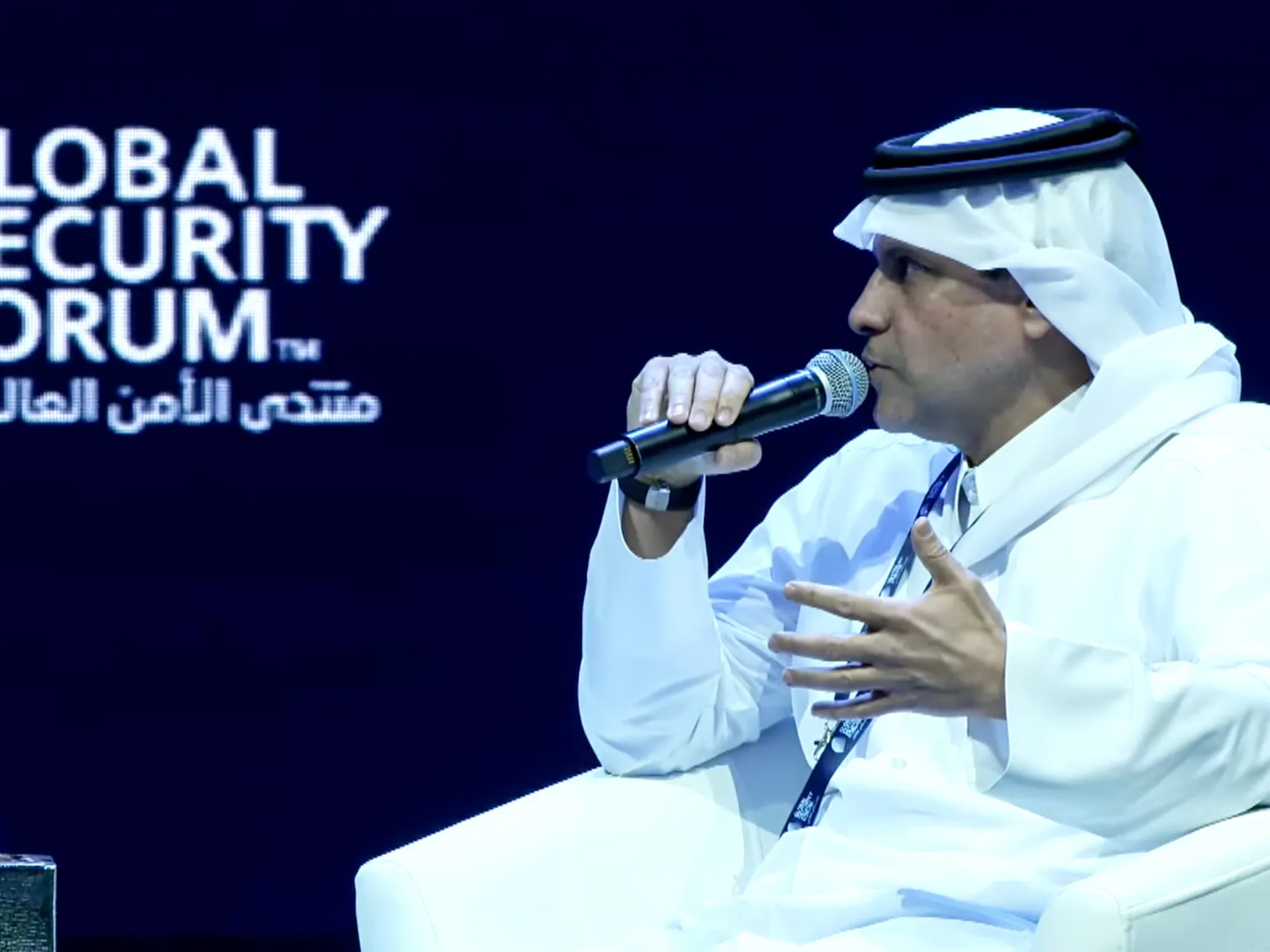
Doha, Qatar — Qatar’s deputy prime minister has warned that global energy shockwaves from the US-Israel war on Iran have yet to reach their peak, raising concerns about further disruption to supplies, international trade and economic growth.
Speaking at the Global Security Forum in Doha on Monday, Sheikh Saoud bin Abdulrahman Al Thani, who also serves as Minister of State for Defence Affairs, identified several threats facing Qatar and the wider Gulf, including risks to sovereignty and disruptions to energy supplies.
list of 3 itemsend of list
“We haven’t reached the peak with respect to energy,” he said, warning of further repercussions “in the coming days and months”.
His remarks come amid continued instability in the Strait of Hormuz – a vital waterway for global oil and liquefied natural gas (LNG) shipments – following the US-Israeli attacks on Iran on February 28, and Tehran’s retaliatory strikes across the region.
Iranian strikes on Qatar’s Ras Laffan industrial complex in March damaged facilities, with repairs expected to take several years.
“We were surprised,” Al Thani said when asked about the attack, adding that there had since been “a lot of discussion with Iran”.
He said Qatar had drawn lessons from the strikes, “to make sure that all of our assets will be protected from any unexpected attack”.
Al Thani also warned against imposing tolls on ships passing through the Strait of Hormuz.
“Transit fees should not be applied,” he said, adding that uncertainty over the waterway would ultimately affect consumers worldwide.
Despite the attacks, Al Thani said Qatar continued to maintain contact with Tehran.
“We never stop our communication,” he said, adding that the two countries remained in touch at different levels despite their disagreements.
He described Qatar’s relationship with Iran before the attacks as one of trust, pointing to their shared offshore gasfield and longstanding economic interests.
Al Thani expressed hope that mediation efforts involving Qatar, Pakistan and Oman would help produce an agreement between the United States, Iran and other parties, including Israel.
He said a sustainable settlement would require broader regional dialogue involving Gulf Cooperation Council (GCC) countries, Pakistan and Turkiye, in consultation with international allies.
“We need to build this on trust,” he added.
Al Thani also suggested developing economic ties with Iran to prevent future conflicts, citing cooperation between France and Germany following decades of hostilities.
“Iran is our neighbour. We need to find ways to live with them,” he said.
Al Thani also highlighted Qatar’s longstanding defence partnership with Washington, saying that “more than 90 percent” of attacks had been prevented through shared expertise and military capabilities developed over the past three to four decades.
He said Qatar was continuing to develop Al Udeid airbase, which hosts US forces and military personnel from other partner countries.
The base was itself targeted by Iran during the conflict, with Qatar reporting that it had shot down two Iranian warplanes during an attack in early March.
Al Thani also announced plans for a new regional defence partnership, saying Qatar was prioritising several aspects including air defence, counter-drone measures and cybersecurity.
“I’m happy to announce today also that soon we’re going to announce a new partnership,” he said, without naming the regional partners involved.
The deputy prime minister stressed that Qatar’s mediation efforts did not diminish its commitment to defending its territory.
“Mediation doesn’t mean that we should not be ready for any defensive action from our side,” he said.

An elderly man was forcibly restrained by police during a protest against Israeli weapons manufacturer Elbit Systems in Ulm, Germany. The man was seen bleeding after officers forced him to the ground.
Published On 19 Oct 202619 Oct 2026
Share
Iran’s Foreign Minister Abbas Araghchi says Israeli Prime Minister Benjamin Netanyahu seeks more war before elections.


Published On 18 Oct 202618 Oct 2026
Share
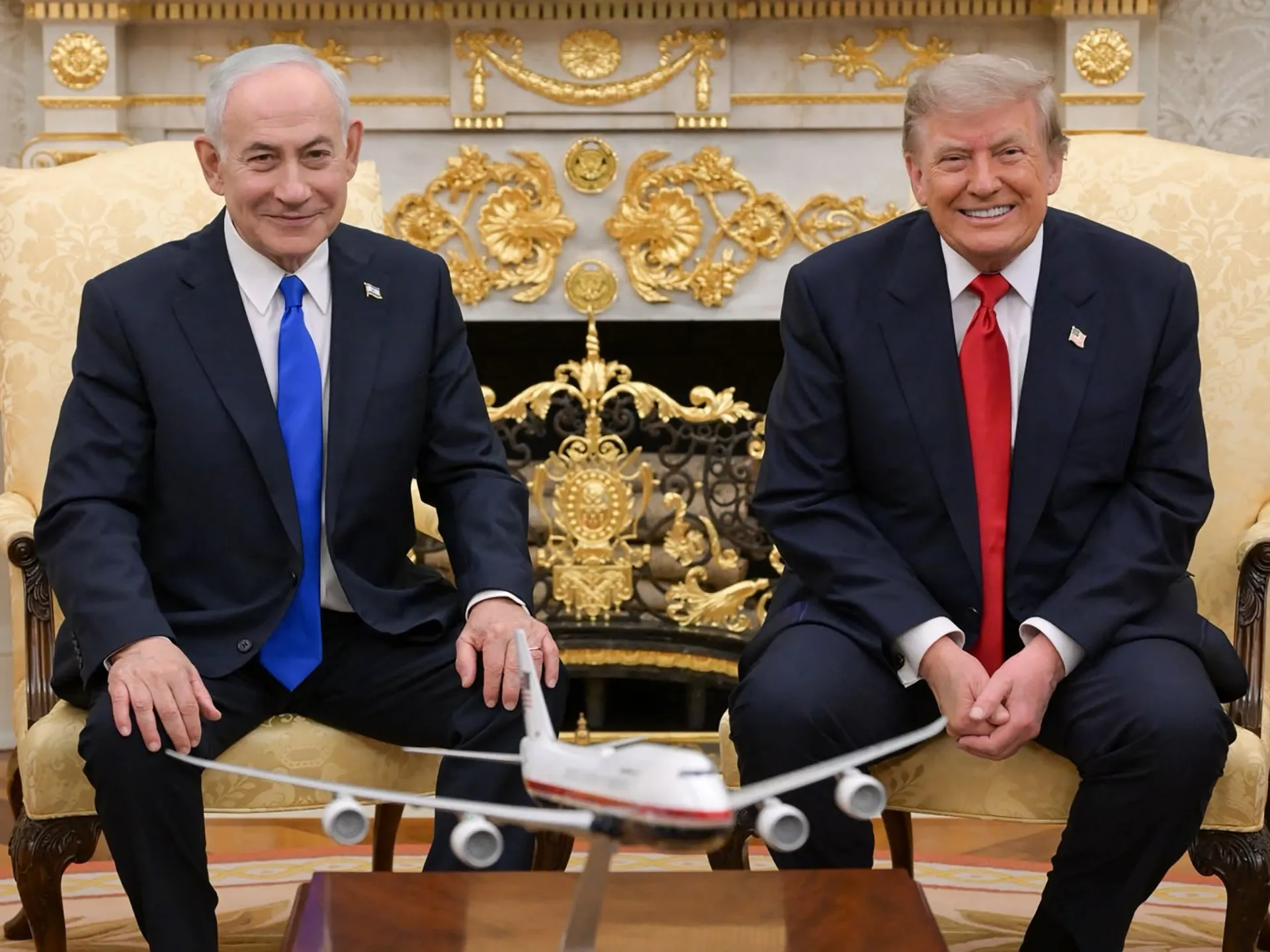
In a social media post ahead of Israel’s October 27 election, Trump calls Netanyahu a ‘Strong, Brave, and Brilliant’ leader.
United States President Donald Trump has issued an endorsement of Israel’s incumbent Prime Minister Benjamin Netanyahu, who is facing a close race in parliamentary elections scheduled for October 27.
In a post on Truth Social on Sunday, Trump praised the Israeli leader for being an ally of the US in its war on Iran. He added that he was giving his “Complete and Total Endorsement” to Netanyahu.
list of 3 itemsend of list
“BIBI NETANYAHU WILL NEVER LET YOU DOWN!” Trump wrote.
The US president’s backing comes nine days before the Israeli election — and after speculation that it might not come at all.
Trump had refused to endorse Netanyahu earlier this month, when asked repeatedly about the Israeli leader’s job performance in an interview with Time magazine.
Instead, when pressed by his interviewer, Trump avoided the subject, shifting the focus instead to his own popularity or security in the Middle East.
The two leaders have met more than a half dozen times since January 2025, but there have been reports of disagreements, including over the war against Iran and other conflicts.
In June, Trump acknowledged calling Netanyahu “f***ing crazy” in a phone conversation where he expressed frustration about Israel’s attacks on Lebanon.
Trump had reportedly asked Netanyahu not to take further action in Lebanon, in an apparent attempt to preserve a short-lived April ceasefire with Iran.
The two leaders had jointly launched a war against Iran on February 28, but the conflict has cost Trump domestic support.
The war has upended the global oil and gas supply, with no clear end in sight.
A Pew Research Center poll found this month that roughly two-thirds of US voters disapprove of Trump’s handling of the war, which has driven up consumer fuel prices and raised concerns about draining military stockpiles.
Trump’s Republican Party is facing a critical midterm election on November 3 that will decide whether it maintains control of the US Congress, as well as other key state and local offices.
Experts have speculated that Trump’s prior reticence to endorse Netanyahu may have come from public perception that Israel may have coaxed the US into the war.
Netanyahu’s Likud Party and its far-right coalition are also facing the prospect of losing the October contest to an opposition bloc led by Yashar party head Gadi Eisenkot.
In his endorsement on Sunday, Trump said it was only a matter of time before Iran would have attacked both the US and Israel.
The war, Trump argued, had already left Iran “systematically destroyed, both Militarily and Financially, and unless they change their ways, rapidly, we will soon finish the job”.
“If Israel has the wrong Leader, which would be anyone other than Bibi, America will have to do this work ourselves, and I am not inclined to do so,” Trump wrote.
“Bibi Netanyahu has been Strong, Brave, and Brilliant in the face of tremendous opposition, including that coming from even Israel, itself.”
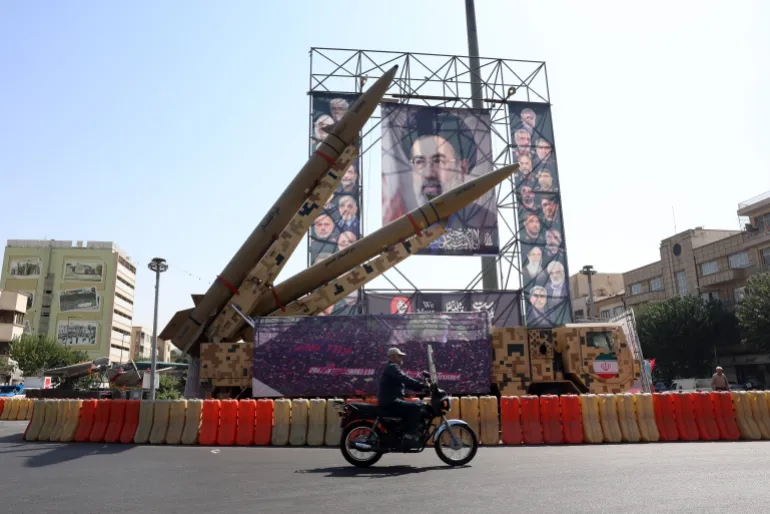
Tehran, Iran – Mehrdad Akhlaghi Ketabchi has been appointed Iran’s defence minister at a time when the war with the United States is expected to escalate.
The 68-year-old was approved on Sunday by parliament, which has convened online since the start of the US-Israel war on Iran on February 28, to assume leadership of the Ministry of Defence and Armed Forces Logistics. In total, 237 lawmakers voted in favour of Akhlaghi’s appointment and 15 against.
list of 3 itemsend of list
Former Defence Minister Aziz Nasirzadeh was killed along with a large number of other senior figures, including Supreme Leader Ali Khamenei, on the opening day of the war.
The position was filled temporarily by Majid Ebn-e Reza, who will now become Akhlaghi’s deputy.
Akhlaghi will be responsible for rebuilding and expanding Iran’s military-industrial infrastructure, which has been heavily targeted by the US and Israel.
The new minister’s defence plans were approved earlier by senior military authorities, President Masoud Pezeshkian and parliament’s Commission on National Security and Foreign Policy.
“The Islamic Republic of Iran will not be the instigator of aggression against any country but will defend the territorial integrity of the country strongly and to the death against any aggression,” Pezeshkian said.

The president said Akhlaghi has more than 42 years of experience in the Defence Ministry and related organisations.
His principal expertise is in ballistic missiles, solid-fuel propulsion, aerospace technology and military-industrial production, according to state media.
Previously, he served as the head of the Shahid Bagheri Industrial Group, the Aerospace Industries Organization and the Defence Industries Organization. Akhlaghi and these entities are all subject to sanctions by the US. He is also under United Nations sanctions.
He has been associated with developing several missile types and related weapons-development projects over the past decades, according to Tasnim, a newspaper linked with the Islamic Revolutionary Guard Corps (IRGC),
Akhlaghi reportedly played a role in expanding the major Sejjil and Zolfaghar family of Iranian ballistic missiles as well as precision-guided weapons, such as the Almas missiles and Yasin guided bombs.
He is also said to have expertise in space launchers, research rockets and infrastructure associated with the Imam Khomeini Space Center in Semnan. These have all been critical elements in Iran’s wars against Israel and the US.
This month, Iran’s Defence Ministry spokesman, Brigadier General Reza Talaei-Nik, told reporters that Akhlaghi’s nomination reflected Iran’s need to increase the quantity and quality of strategic weapons, particularly missiles and drones.
“Offensive arms are being actively improved,” the spokesman said.
The US has repeatedly claimed that it has destroyed most of Iran’s military-industrial capacities, but Tehran has maintained it continues to have considerable offensive and defensive capabilities outside the reach of US and Israeli bombs. These weapons have been upgraded based on Iran’s new war experience, it has insisted.
Akhlaghi told members of parliament this month that he had met with senior military commanders, including the commander-in-chief of the IRGC, Brigadier General Ahmad Vahidi, to develop a better understanding of their requirements during and after the war.
His priorities as defence minister would be faster military-industrial development, air defences, incorporation of emerging technologies using government and private sector firms, improvements in armed-forces welfare and development of international military cooperation, according to reports.
In his first comments as defence minister on Sunday, Akhlaghi taunted the administration of US President Donald Trump, which this month threatened to use the “mother of all bombs” on Iran’s nuclear and energy infrastructure.
“We have made preparations and continue our work with ease of mind,” he told reporters. “The US president must think of getting his forces out of our region in one piece. If he drops one bomb, he must see how many of his troops he will have to evacuate horizontally.”
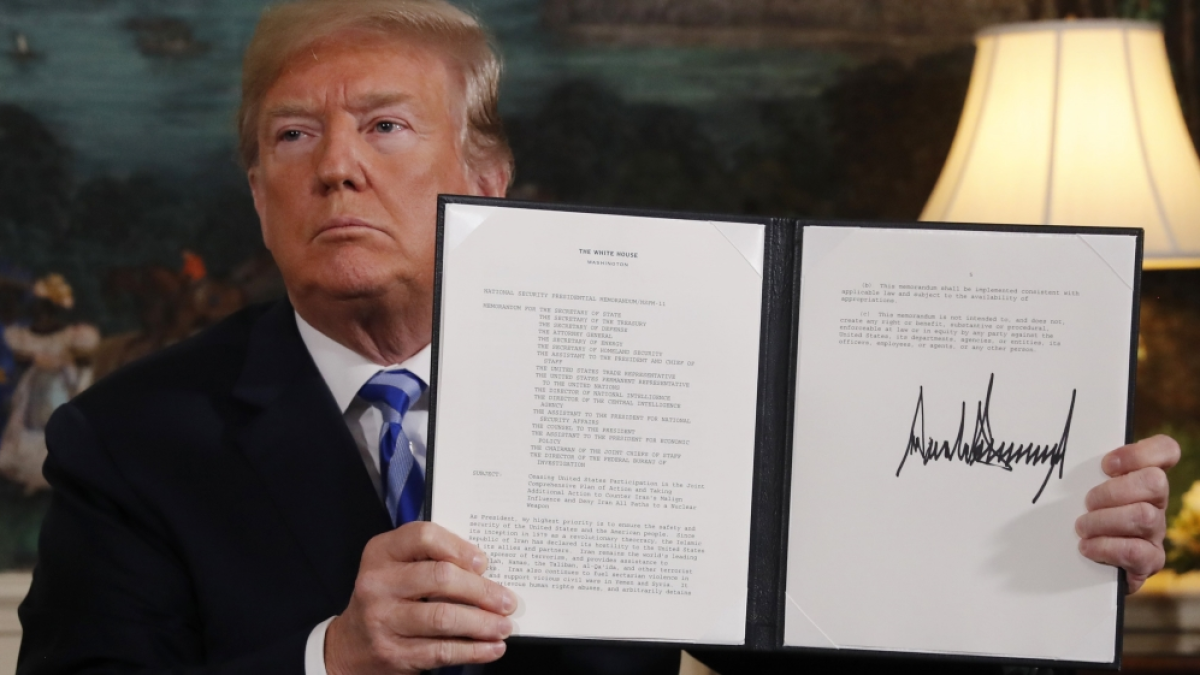
Since the start of the war, there have been several negotiation initiatives between the United States and Iran. Only one – the memorandum of understanding signed in Islamabad on June 18 – was concluded, but it collapsed within days.
While prevailing analyses tend to explain this failure through the details of the provisions, this article proceeds from a different premise: that the diplomatic stalemate between the two sides is shaped by a syndrome that has governed US-Iranian relations for years.
In international relations, psychological syndromes can arise as a result of deep crises that leave their mark on political consciousness and memory, potentially obstructing efforts at rapprochement and negotiation between countries.
In the case of Iran and the US, the syndrome is comprised of two complexes: the complex Washington developed as a result of the 1979 siege of the US embassy in Tehran and the complex Tehran developed as a result of historical US hostility and its withdrawal from the Iran nuclear deal in 2018.
The roots of the rupture between the two countries go as far back as August 1953 when US and British intelligence agencies helped overthrow the nationalist government of Mohammad Mosaddegh after it nationalised the oil industry in 1951. Since then, a perception has become entrenched in Iranian consciousness: that Washington does not accept an independent government in Tehran and it is prepared to sabotage it if it goes against its interests.
From this perspective, Washington’s decision to host Shah Reza Pahlavi, who had just been overthrown by his people, for medical treatment in October 1979 was read in revolutionary Tehran as a prelude to a second coup.
Iranian students stormed the US embassy on November 4 that year and held 52 Americans for 444 days. Diplomatic relations between the two countries were severed and have not been restored to this day.
While the incident is portrayed in the Iranian narrative as a defence of the revolution, in American consciousness, it established the image of Iran as a state that does not respect international norms, whose word cannot be relied upon and whose behaviour should not be rewarded.
That is the embassy siege complex. It is not about the incident itself so much as the informal rule it produced in US decision-making: that Iran must concede first and its concession must be verified before it receives anything in return.
The Iranian complex was shaped by this history as well, but it reached its peak in May 2018 when US President Donald Trump withdrew from the Joint Comprehensive Plan of Action (JCPOA) despite the International Atomic Energy Agency’s (IAEA’s) confirmation that Tehran was complying with it.
Just two weeks later, US Secretary of State Mike Pompeo announced 12 demands for a new deal, only four of which were related to the nuclear file. Seven of them were related to Iran’s regional behaviour in Lebanon, Palestine, Iraq, Yemen, Syria, Afghanistan and the Gulf. In other words, Washington did not merely revoke an existing agreement; it also raised the ceiling of its conditions for any future agreement.
The knot then deepened in June 2025 when the US took part in the Twelve-Day War and struck the nuclear facilities at Fordow, Natanz and Isfahan at a time when a new round of indirect negotiations was scheduled in Muscat. It then reached its furthest point with Washington’s participation alongside Israel in the current war.
Accordingly, a conviction became entrenched in the Iranian consciousness that an American signature guarantees nothing, that any agreement can be overturned with a change of administration and indeed that negotiation itself may be a cover for war rather than an alternative to it.
The informal rule this has produced in Iranian decision-making is that there will be no step taken before binding guarantees and no concession before pressure is lifted.
Thus, the two complexes stand at opposite ends: The first requires Iranian action before an American quid pro quo while the second requires an American guarantee before Iranian action.
A reading of the recent negotiation initiatives shows that every US initiative bears the imprint of the embassy siege complex. The 15-point plan put forward in March demanded the dismantling of the Natanz, Isfahan and Fordow facilities; an end to uranium enrichment; the suspension of Iran’s missile programme; and the abandonment of its allies in exchange for promises to lift sanctions later.
The May draft by White House envoys Steve Witkoff and Jared Kushner linked the release of Iran’s frozen funds to the suspension of enrichment first. The American response in September also stipulated the freezing of enrichment and the entry of inspectors throughout the negotiation period.
What remains constant in the American initiatives is that Iranian action precedes the quid pro quo and verification precedes trust.
The imprint of the JCPOA withdrawal complex in the Iranian initiatives is also a constant. The five-point response in late March demanded guarantees that war would not be repeated. The 10 points put forward in April demanded a binding UN Security Council resolution shielding any agreement from being overturned. And the 14 points in May demanded a nonaggression pledge that includes Israel.
Meanwhile, the seven-day plan proposed by Tehran last month stipulated the lifting of sanctions and the US naval blockade on Iran before the opening of the Strait of Hormuz on the sixth day and the start of nuclear negotiations on the seventh. What remains constant in the Iranian initiatives is that guarantees precede action and the lifting of pressure precedes Iranian concessions.
All these initiatives were dialogue between two complexes with each side drafting its text to protect itself from a repetition of its historical experience with the other, rather than to meet the other halfway. This may explain why the gap in substance has narrowed, but the gap in trust has not.
The Islamabad memorandum represents the exception that proves the rule as it was the closest moment to a settlement because it was formulated to reassure both sides over their core concerns. To reassure Washington, it stipulated the dilution of Iran’s stockpile of enriched uranium and made the lifting of sanctions and unfreezing of funds conditional on Iranian implementation.
To reassure Tehran, it provided for an end to hostilities, respect for mutual sovereignty, a mechanism to monitor implementation and UN Security Council approval of the final agreement. Ballistic missiles were also entirely absent from the text.
But this agreement did not hold. Tehran suspended its participation in the Geneva round of talks because of the absence of a ceasefire in Lebanon, which had been a consistent demand in every Iranian initiative since March. In the Iranian reading, Washington’s inability to rein in Israel confirmed that an American signature was not enough. The JCPOA withdrawal complex immediately kicked in, and the two sides returned to square one.
By late September, the dispute appeared to have shifted definitively from substance to sequencing. Informed sources indicated that it now revolves around the order of steps rather than their content and the stated goal has become a return to an enhanced version of the June memorandum.
Here the two complexes appear in their clearest form: Washington wants the Strait of Hormuz opened and enrichment frozen first because it does not trust Iran while Tehran wants the naval blockade lifted first because it does not trust the US.
A comparison between Pompeo’s 2018 conditions and the June 2026 memorandum shows that US demands have retreated from redefining Iran’s regional role to focusing on the nuclear file and the Strait of Hormuz while Iranian demands have shifted from compensation to be paid by Washington to a conditional investment fund financed by other parties.
In other words, the substantive gap between the two sides has narrowed considerably – something that would have been unimaginable eight years ago.
However, the two complexes have not diminished; indeed, they may have deepened because of the war. Each complex feeds the other until together they have become a single syndrome, and diplomatic deadlock has turned from a passing condition into a stable structure.
Accordingly, any new formula for sequencing the steps, however precise, will remain unable to break this deadlock unless it addresses both complexes at once – something that requires a third party capable of guaranteeing both the action and the reciprocal action simultaneously.
The views expressed in this article are the author’s own and do not necessarily reflect Al Jazeera’s editorial stance.
Fires reported on three tankers in Strait of Hormuz and Sea of Oman, as masked settlers attack European politicians in occupied West Bank.


Published On 18 Oct 202618 Oct 2026
Share
Egyptian president pledges ‘any measure’ to help defend Saudi Arabia ‘if it is requested of us’.
Published On 17 Oct 202617 Oct 2026
Egypt’s President Abdel Fattah el-Sisi has called for an emergency parliamentary session to authorise him to approve any requests from Saudi Arabia for defence assistance, if Riyadh were to ask.
Speaking at a graduation ceremony at the Egyptian Military Academy on Saturday, el-Sisi emphasised Cairo’s readiness to back the kingdom.
list of 3 itemsend of list
Egypt will “carry out any measure to protect” Saudi Arabia “in accordance with the directives of His Majesty King Salman and the directives of the Crown Prince, Mohammed bin Salman”, he said.
“I know that this matter requires the approval of the Egyptian parliament, and I hope that parliament will convene in an emergency session to give us this authorisation, if it is requested of us,” he said.
“I am not speaking in order for us to fight anyone or attack anyone. I am speaking only for defence.”
The request follows a barrage of attacks on the kingdom from Yemen’s Iran-backed Houthis, including airports and oil facilities.
Recent Houthi strikes on Saudi Arabia have mainly targeted key infrastructure on the outskirts of the capital, Riyadh, but they appear to be edging closer to the city centre.
Houthi attacks on Riyadh’s King Khalid International Airport earlier this month killed 14 people and wounded more than 300. Houthi attacks have also been reported on other airports, including Dammam, Abha, Jazan and Najran.
Yemen’s Saudi-backed, internationally recognised government launched a full-scale military campaign against the Houthis this month to recapture territory seized by them.
El-Sisi had backed Saudi calls for secure and unhindered navigation in the Red Sea in a meeting with the Saudi Crown Prince, known as MBS, in Cairo last month.
A statement from the Egyptian presidency then said that “the security of Saudi Arabia and the Gulf states is an integral part of Egypt’s national security”.
That meeting came just days after the Houthis seized Yemen’s Red Sea coast, gaining significant control over the Bab al-Mandeb strait, the southern gateway to the Suez Canal.
Saudi Arabia already has a defence pact with Pakistan and Turkiye, known as the Mecca Alliance for Defence, which was signed in August.
Earlier this month, the three countries agreed to activate “deterrence measures” under the pact and rapidly deploy forces to the Gulf kingdom to counter attacks by Yemen’s Houthis.
Analysts say Riyadh is looking for help to protect the kingdom and Red Sea shipping and that Egypt, whose Suez Canal revenue depends on the same traffic, is an obvious partner.
They say Egypt is eager to prevent Iran and its allies from imposing control over the region, especially over maritime traffic in the Red Sea, given the direct repercussions for the Suez Canal.
Saudi Arabia has accused Iran of encouraging Houthi attacks against the kingdom, a claim Tehran rejects. Iran has offered assistance to halt the conflict between the two sides.
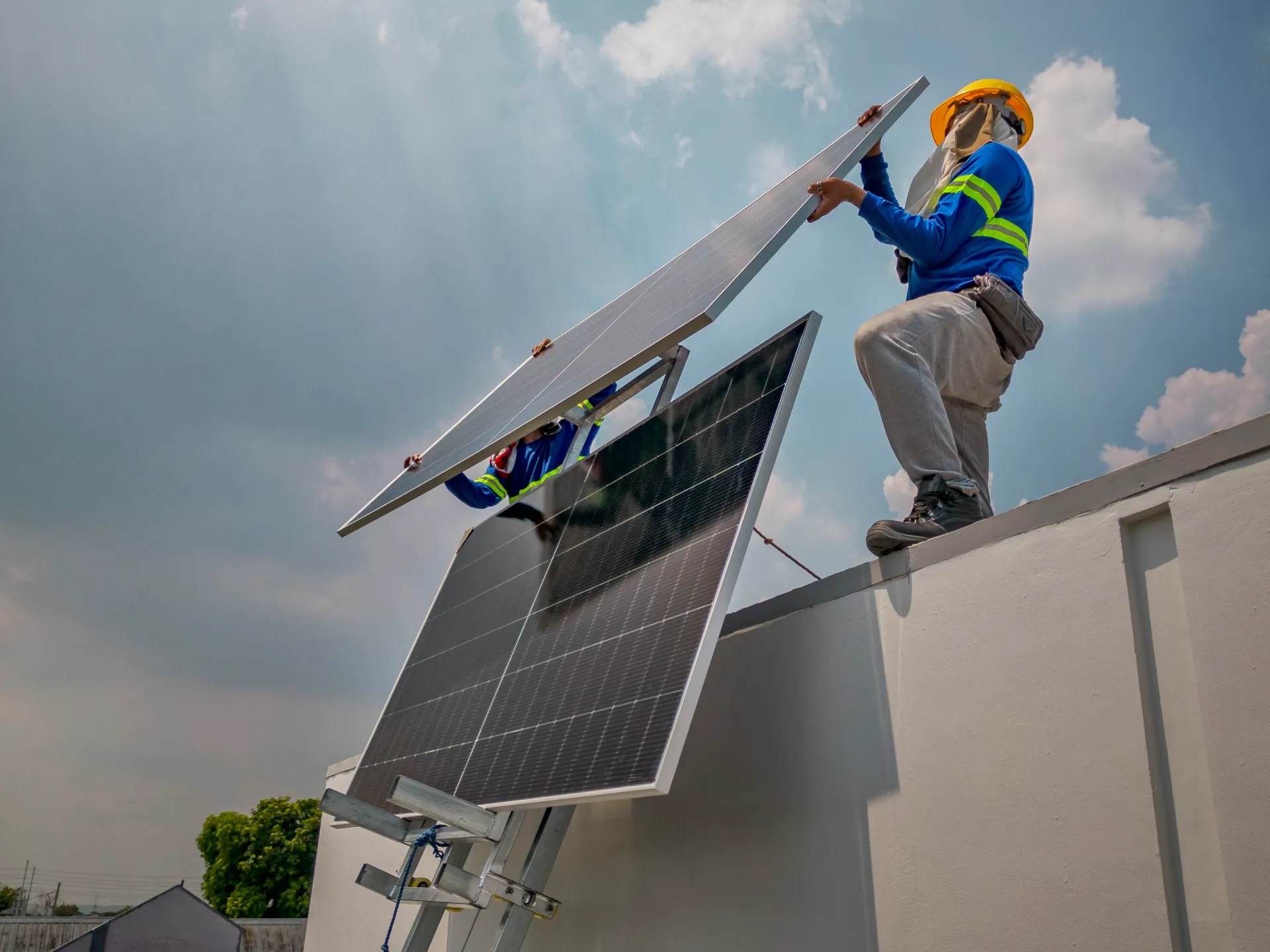
Manila, Philippines – Keith Cantera and his family have been thinking about having their own solar power grid at home for years. But spending up to $5,000 for solar panels was nothing to scoff at, so they put the idea on the back burner.
It all changed this year when the United States-Israel war on Iran rattled global energy markets and sent electricity prices soaring. From paying a monthly bill of about $150 before the war began in late February, Cantera said his family went to forking out as much as $220.
Eight months later, they are having solar panels installed on their rooftop.
“The cost is about the same as paying our electric bills for three or four years based on the current rate,” Cantera said. “But in the fifth year, we’ll have recovered our investment, and electricity will essentially be free.”
Cantera is one of a growing number of Filipino homeowners turning to solar power in a country that had Southeast Asia’s highest electricity costs even before the war. They were comparable only to Singapore, where the average income is more than 10 times higher.
A report by the energy think tank Ember estimated that rooftop panels had nearly doubled in the Philippines since early 2025.
And in the first months of the war from March to May, the rush for solar power led to $407m in panel imports, according to government trade data from China, where most panels are manufactured. The Philippines became the biggest single overseas market for that period. Only the Netherlands bought more, but it redistributes them to the rest of Europe.
Lexus Grepo, CEO of the solar power supplier Solarmaxx, can attest to the boom.
“There is a 30-day wait because solar panel shipments can’t keep up,” Grepo said. “In March, we had 40 projects, which was almost triple our monthly clientele. Since then, we have been setting up 25 to 30 systems a month.”
Grepo does not expect demand to slow down even if tensions in the Middle East ease and shipping routes for energy supplies reopen.
“I think people now realise that the world is an unpredictable place, so they have to be ready for any eventuality. Filipinos now see that they don’t necessarily have to be at the mercy of the global energy market.”
The Philippines, one of the few countries in the region where electricity is not subsidised, relies on imported coal and gas for more than 70 percent of its power mix. The value of its currency, the peso, which has slid to a record low of more than 63 to the US dollar, is making these imports even costlier.
In late March, President Ferdinand Marcos Jr declared a national energy emergency in response to the war and what he described as the “imminent danger” posed to the national energy supply. Still, electricity rates have continued to increase.
The shift to solar is also partly driven by anger at electric companies that have come under scrutiny for charging customers for so-called system losses, which include illegal connections.
Cantera said learning about having to pay for someone else’s electricity consumption was the last straw.
“Who would agree to paying for something that you did not use? It’s not like the money we spend for electricity just fell from heaven,” he added.
But while the soaring demand is real, the upfront cost of a solar power system is still too high for most Filipinos. The government in March launched a new initiative offering loans for residential rooftop installations, but these are available only to public sector workers.
What officials hope can bring power rates down for the majority of people are the dozens of renewable energy projects in the pipeline, including a 3,500-hectare (8,650-acre) solar farm north of the capital, Manila, that is projected to be the largest in the world. When fully operational, the project is expected to generate 850 megawatts of electricity for 2.4 million households.
But some consumers said such projects could take years to complete, leaving them with ballooning electricity bills unless they take action themselves.
“It’s just so unpredictable nowadays. You have the impending El Nino weather pattern. There’s still war, the continuing fuel price hikes and so much more,” Cantera said. “So why not utilise a natural resource?”
The UK Foreign Office says it advises against “all but essential travel” to Saudi Arabia, after attacks by Yemen’s Houthis on the country.


Published On 17 Oct 202617 Oct 2026
Share
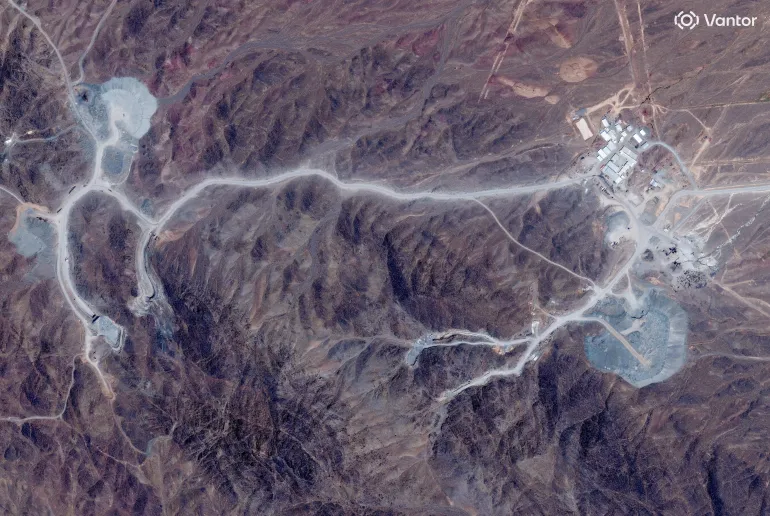
United States President Donald Trump has for the first time explicitly ruled out the use of a nuclear weapon against Iran, but has not denied US media reports that his administration is considering deploying the US’s most lethal non-nuclear munition, nicknamed the “mother of all bombs” in the near future.
In an interview published on Thursday by right-wing American news site Newsmax, Trump suggested he does not plan to use nuclear weapons, but also clarified that the devastating aerial weapon, the GBU-43/B Massive Ordnance Air Blast Bomb (MOAB – ‘mother of all bombs ) “is not nuclear”.
list of 4 itemsend of list
“I wouldn’t use nuclear. We don’t have to. We’re the greatest nuclear power in the world,” he told Newsmax.
The comments marked Trump’s first definitive statement on the nuclear topic following speculation about a possible atomic conflict earlier in the US and Israel’s war on Iran. They also appeared to confirm speculation that another phase of the war is imminent, likely after the US midterm elections on November 3.
Here’s what we know:

Trump told Newsmax that the US might indeed launch another strike on Iran’s nuclear sites, particularly on Pickaxe Mountain, where Tehran is believed to be hiding a nuclear facility deep under layers of granite.
He ruled out using a nuclear weapon or a tactical nuclear weapon.
“I wouldn’t use nuclear. We don’t have to. We’re the greatest nuclear power in the world,” he said.
He also clarified that the MOAB, which CNN reported the US government is considering using, “is not nuclear”.
Responding to a question about whether the MOAB is “tactical nuclear” – meaning smaller nuclear munitions – Trump reiterated that it is not.
“Well, the mother of all bombs is not nuclear,” Trump said. “It’s not nuclear at all. This is just an extremely large bomb.”
Trump declined to say whether he had authorised its use in Iran.
Trump also suggested renewed attacks are likely in the near future. The US cannot end the war now because it has to ensure Iran cannot produce a nuclear weapon, he argued, saying he believes that “if they had it, they would use it, in my opinion, instantaneously”.
Trump also reiterated that the war would end “very soon” whether by force or diplomacy and that oil prices would then drop.
When asked if he would put “troops on the ground”, Trump said: “No, I don’t see that, I don’t see it.” Earlier in the war, Trump had made comments regarding sending in troops, a move analysts said would be devastating for US soldiers because of Iran’s mountainous territory.
The MOAB carries a massive payload of about 8,500kg (18,000 pounds or 8.5 tonnes) of high explosives. It weighs 9,800kg (21,605 pounds or nearly 10 tonnes) – about the same as four cars – and is just over nine metres (about 30 feet) long. Stealth bombers are too small to carry it, so it has to be deployed by larger, Lockheed C-130 Hercules transporters.
It is designed to explode a few metres above the ground, sending out intense fireballs that can blast buildings and other hard-surface structures within a 1km radius, experts have told Al Jazeera. It is so powerful that a mushroom cloud from its blast has been seen 32km (20 miles) away in tests, the US Air Force has said.
“Its large explosive charge can produce devastating blast effects against exposed personnel, equipment and vulnerable structures,” Brussels-based military and weapons analyst Elijah Magnier said. “Its purpose is to generate an exceptionally powerful blast across a surface area.”
However, Magnier said there is doubt about whether using the massive surface explosive would be effective against deeply buried nuclear installations in Iran. He added that the terrain in Iran could be difficult for larger cargo aircraft to access.
Trump has never explicitly mentioned using a nuclear weapon, but he has also never ruled it out.
Speculation regarding whether Washington might use nuclear weapons was rife in the early days of the conflict, largely because of the extreme nature of Trump’s numerous threats against Tehran.
In April, for example, as Iran enforced a blockade on ships in the Strait of Hormuz, Trump posted on his Truth Social site that “…a whole civilisation will die tonight, never to be brought back again”, if Iran did not agree to a peace deal and reopen the strait.
He also threatened to destroy Iran’s infrastructure, saying a bombing campaign “will be Power Plant Day and Bridge Day, all wrapped up in one”, in Iran.
Experts widely interpreted his statements as a threat of nuclear destruction, but one that still failed to force Iran to the table.
Although Trump largely moved away from his sabre-rattling rhetoric in the following weeks, he reiterated at the United Nations General Assembly in New York last month that he could “annihilate” Iran. He also told the assembly that he believed a deal would emerge after the midterms.
“Tactical” nuclear weapons (TNW) are smaller nuclear munitions designed for the battlefield as opposed to strategic nuclear munitions designed for mass destruction.
Some perceive TNWs as having a lesser impact than an atomic bomb, but experts warn that their names are misleading and they can nevertheless be devastating. Their explosive yield, between 0.3 and 50 kilotons, can impact areas within a 500-600km radius.
The US dropped a 15-kiloton nuclear bomb on Hiroshima, meaning that weapon would today be considered a TNW. The US, North Korea and Russia have TNWs in their arsenals, although no country has ever used them. TNWs are not subject to any international treaties and are largely unregulated.
With Trump failing to rule out dropping the MOAB, analysts speculate that the US might launch another – perhaps final – intensive bombing campaign targeting Iran’s nuclear and defence sites, particularly Pickaxe Mountain.
The US could also continue its naval blockade on Iranian ports, while providing escorts for commercial ships through the Strait of Hormuz.
Iran has vowed to respond to escalatory strikes by targeting oil and digital infrastructure in neighbouring Gulf states.
Senior defence officials have also warned that Iran will invade its neighbours if the US launches a ground operation, although Trump appears to have ruled that out.
Earlier in the war, he hinted at the possibility of sending ground forces to retrieve some 400kg of “yellowcake” – highly enriched uranium that Washington and Israel claim Tehran has hidden underground.
Trump’s phone calls in March to Kurdish militia groups fighting Iran provoked speculation that Washington could coordinate with them for an invasion, although that did not happen.
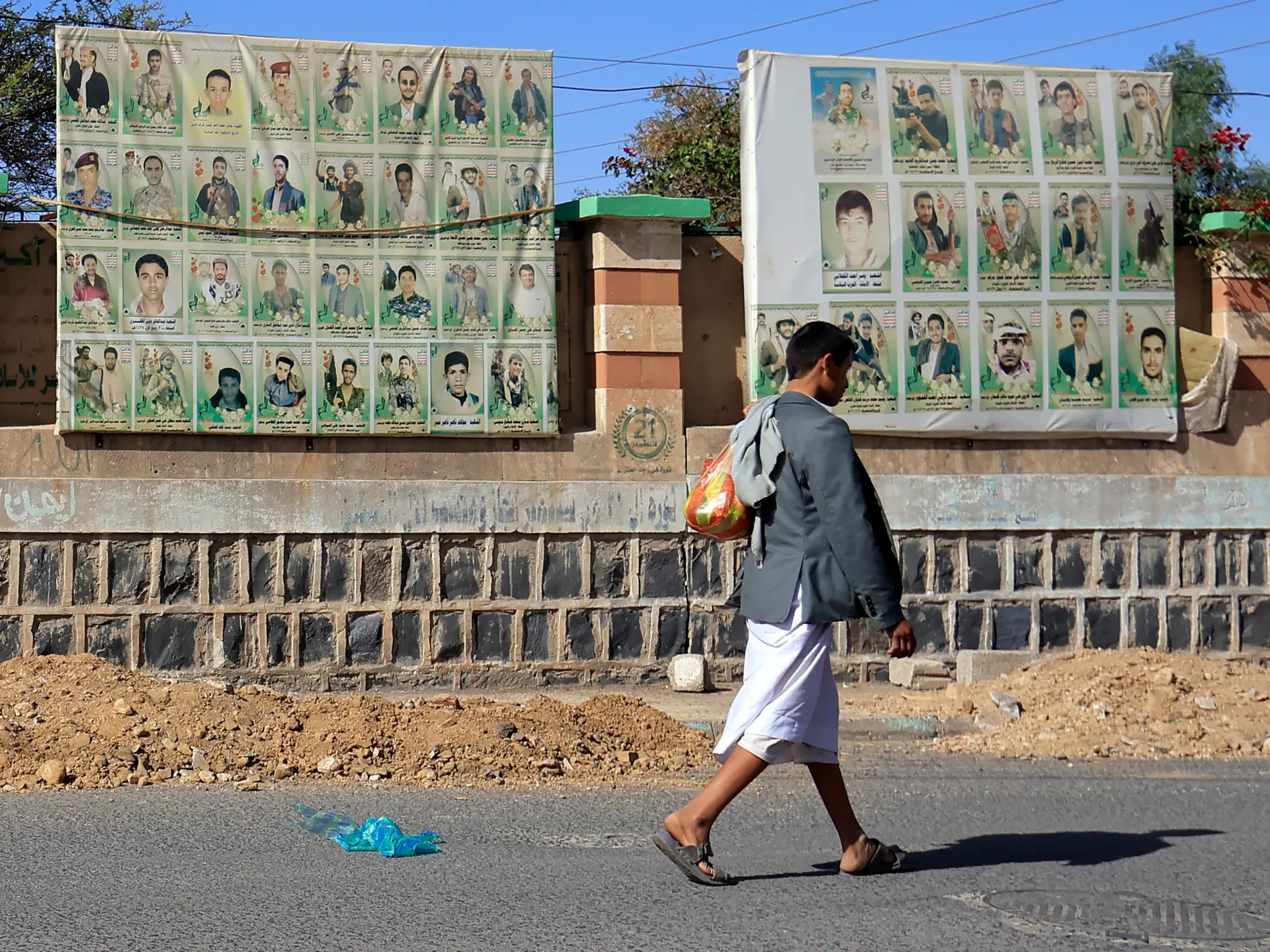
Saudi Arabia calls Houthi attacks 'full-fledged war crimes' while the US warns of possible attacks on Saudi airports.
Source link