Uruguay

Spain weathers adversity, to play knock-out round at SoFi Stadium

Spain, ranked second in the FIFA rankings and the favorite to win the World Cup, did not play its best game, but did enough late Friday to defeat Uruguay 1-0 and eliminate the South American team in one of the most anticipated matches of the first round.

Spain finished first in Group H, while first-time participant Cape Verde advanced in second place with just three points, the result of three draws. Uruguay was eliminated from the tournament with only two points, following two draws and one loss.

For much of the match on Friday, Spain lacked better offensive coordination ahead of facing more dangerous opponents in the upcoming do-or-die rounds.

Alex Baena scored a goal in the 42nd minute by connecting with the ball after a cross from the right. The ball slipped past goalkeeper Fernando Muslera, who at first seemed to have no trouble blocking the shot, but the ball found the back of the net, making all the difference on Friday night in Guadalajara in front of 45,065 fans — most of whom were rooting for Spain. Muslera did not return for the second half and was replaced by Sergio Rochet.

“We have to celebrate because, honestly, it’s hard to finish first in a group like this,” said Baena, a midfielder for Atlético Madrid.

“It was a physically demanding match — extremely intense — and we rose to the occasion,” said Spain coach Luis de la Fuente, who emphasized that winning the World Cup requires winning tough matches against tough teams like Uruguay.

“I’m proud of this team because they want to keep growing. I have complete faith in this team. We’re where we are, and that’s exactly where we wanted to be,” added De la Fuente, who noted that the team needed to improve its fluidity of play.

Uruguay failed to beat Saudi Arabia or Cape Verde — two teams that, on paper, seemed inferior at the start of the tournament. Coach Marcelo Bielsa’s team couldn’t find its rhythm or play at its best.

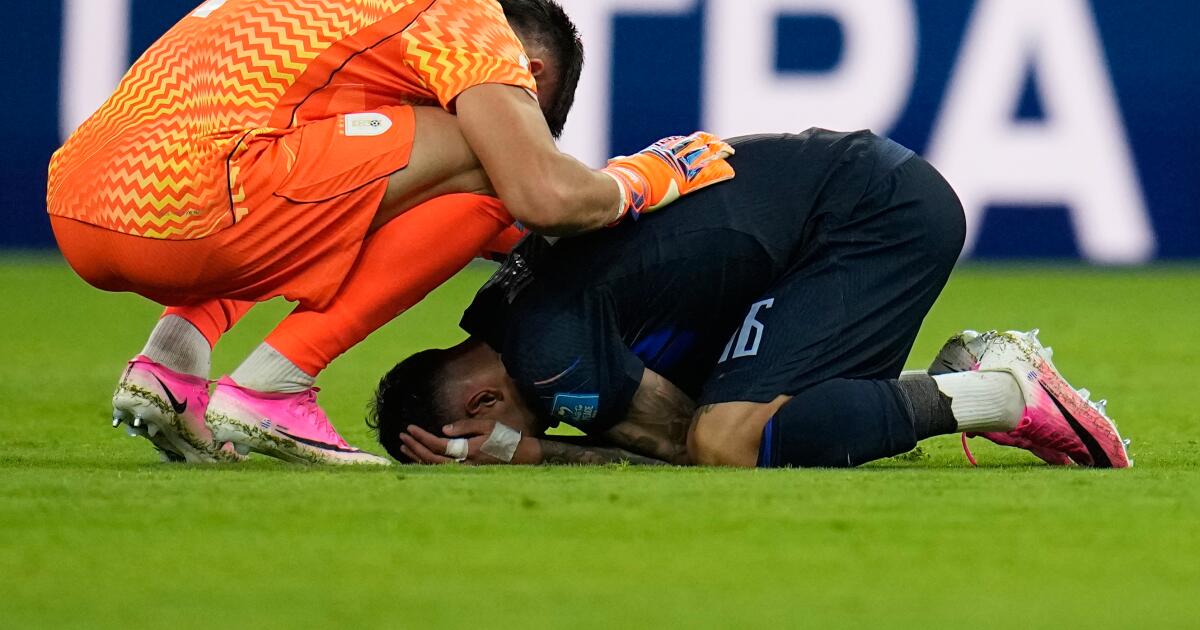
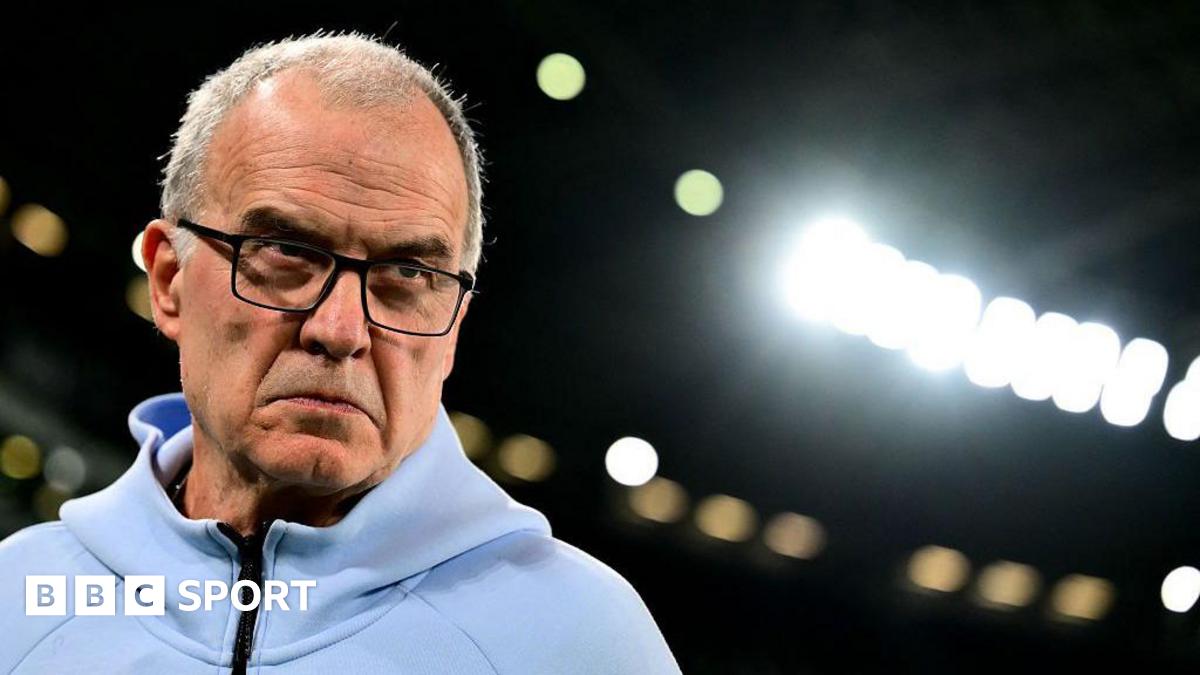
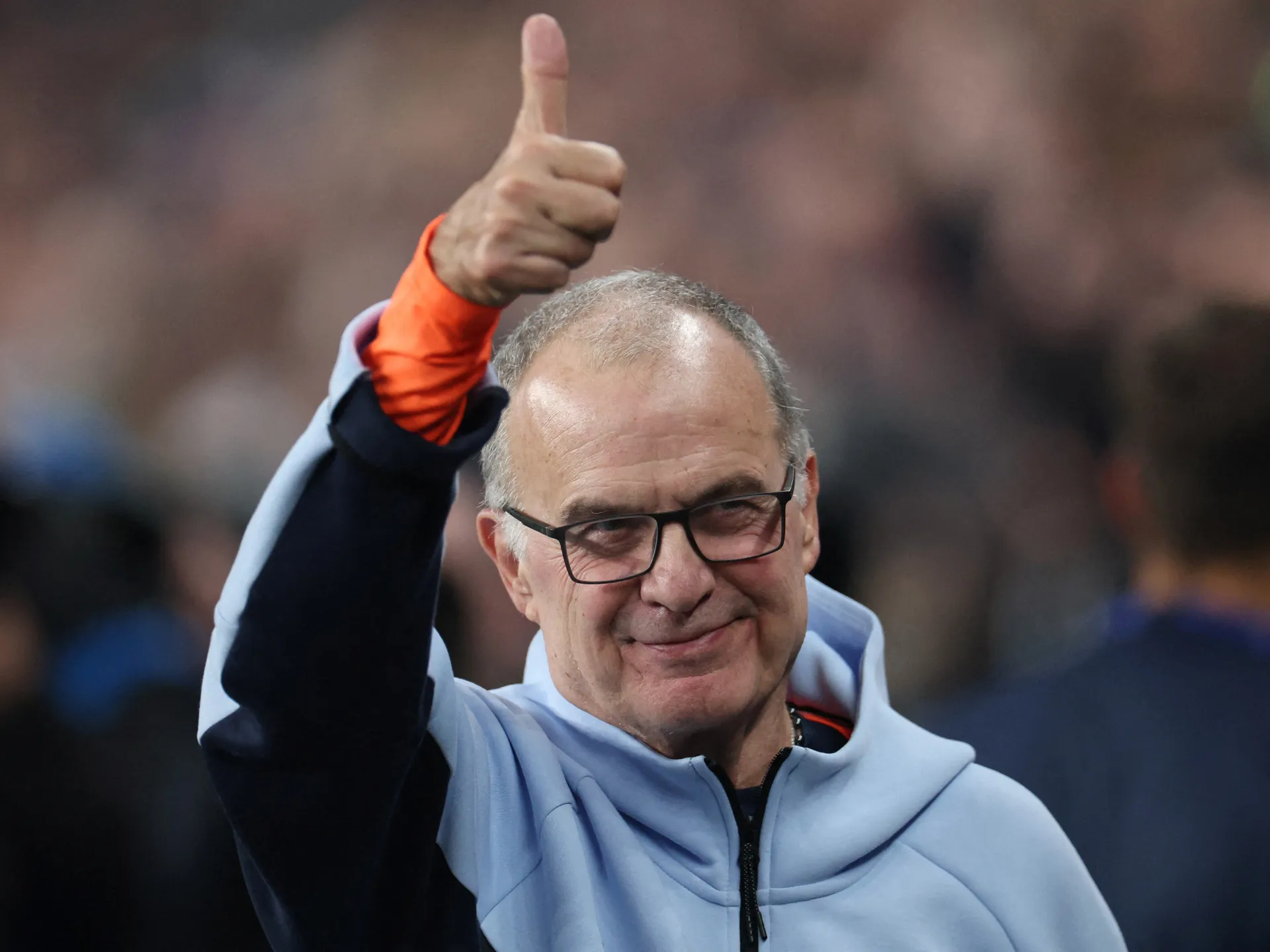
“I wasn’t able to bring out the full potential of Uruguay’s players,” Bielsa said, visibly shaken by his failure with the Uruguayan national team. “What I’m leaving behind for Uruguayan soccer is nothing, because any contribution a coach might make to the soccer of a country where he worked for three years never takes root if results aren’t achieved.”

At the end of the match, Uruguay’s Agustín Canobbio was sent off after committing a hard foul on Spanish defender Pau Cubarsí in the 95th minute, prompting several Uruguayan players to protest the decision by U.S. referee Ismail Elfath.

For Bielsa and Uruguay, this marks the end of an era in which many believe the Argentine coach lost control of the locker room and his relationship with the media became strained because of his eccentric and explosive personality, but, above all, a lack of wins.

Cape Verde will face Argentina in the round of 32 on Friday in Miami. Spain will face the second-place finisher in Group J, which will be determined late Saturday by the match between Algeria and Austria. The game will be played at SoFi Stadium.

The match was the fourth and final World Cup game played in Guadalajara. Before the game began, a minute of silence was observed in memory of the victims of the earthquakes in Venezuela. So far, Venezuelan authorities have reported that more than 900 people have died and that thousands are missing.

Source link

Cape Verde fight back for second World Cup draw 2-2 against Uruguay | World Cup 2026

Uruguay could need a win over Spain next weekend to avoid a second consecutive FIFA World Cup group-stage exit.

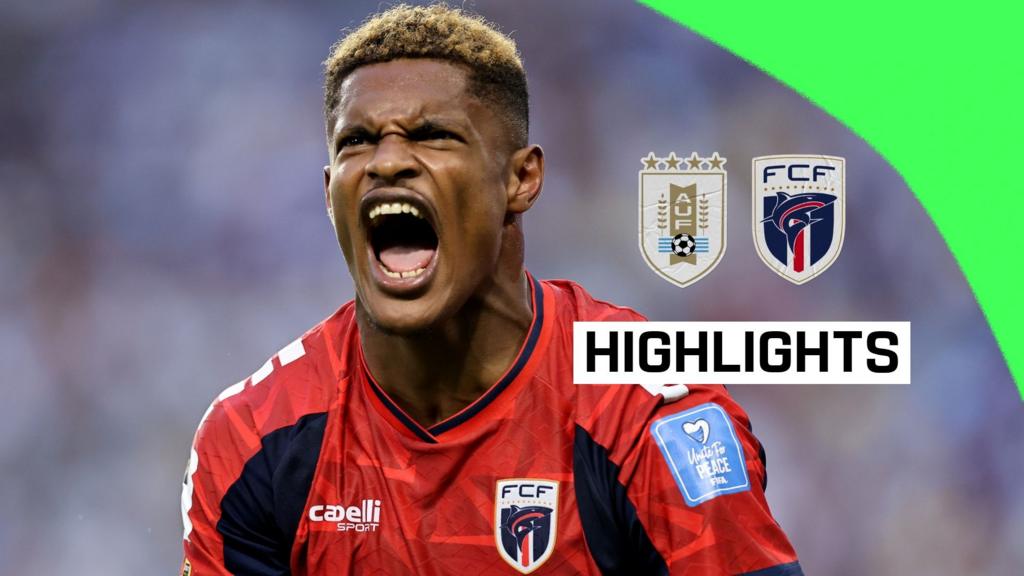
World Cup debutants Cape Verde scored a second-half equaliser to salvage a 2-2 draw against Uruguay in Miami, backing up their shock opening stalemate with Spain.

Cape Verde took a surprise 21st-minute lead as Kevin Pina scored their first World Cup goal from a free-kick, only for Uruguay to strike twice shortly before half-time through Maxi Araujo and Agustin Canobbio.

Recommended Stories

list of 4 itemsend of list

But 40-year-old Uruguay goalkeeper Fernando Muslera’s mistake allowed Helio Varela to grab Cape Verde’s second just after the hour mark, and neither side could find a winner on Sunday.

Cape Verde boosted their hopes of reaching the knockout phase with their second point in Group H.

The African island nation face Saudi Arabia, thumped 4-0 by Spain earlier on Sunday, in their final group game next Saturday, knowing that victory would secure a last-32 berth.

Two-time world champions Uruguay’s hopes of progressing are in serious danger, though, after again being held by lower-ranked opposition following their 1-1 draw with the Saudis.

The South Americans may need to beat European champions Spain next weekend to avoid a second consecutive World Cup group-stage exit.

Uruguay coach Marcelo Bielsa made two changes to the team, which were held by Saudi Arabia, with Al Hilal striker Darwin Nunez dropping to the bench.

Bubista opted for three alterations to his Cape Verde team, all in attacking positions.

Cape Verde started with more intent going forward than they were able to show against Spain, but it was still Uruguay who created the first real opening, when Federico Valverde drilled a left-footed shot wide.

But the tournament debutants forged ahead when Pina crashed a long-range free kick through a poor Uruguay wall and past Muslera.

Uruguay were in desperate need of their equaliser when it arrived in the 44th minute.

Cape Verde’s Sidny Lopes Cabral headed the ball against his own post under pressure from Rodrigo Bentancur, and Araujo stooped to nod in the rebound, with Cape Verde goalkeeper Vozinha stranded.

They completed the turnaround in the sixth minute of first-half added time, as Canobbio turned in Araujo’s header across goal on the volley.

Uruguay appeared in control early in the second half, until Muslera inexplicably raced out of his goal in the 61st minute and Cape Verde substitute Varela took full advantage to roll the ball into an empty net after an excellent first touch.

Vozinha, the hero of Cape Verde’s draw with Spain, fumbled to allow Araujo to tap in, but his blushes were spared by an offside flag.

Real Madrid midfielder Valverde blazed a late free kick over the bar from just outside the box, leaving Uruguay on the brink of a hugely disappointing exit.

Source link

Saudi Arabia draw 1–1 against Uruguay in World Cup opening game | World Cup 2026 News

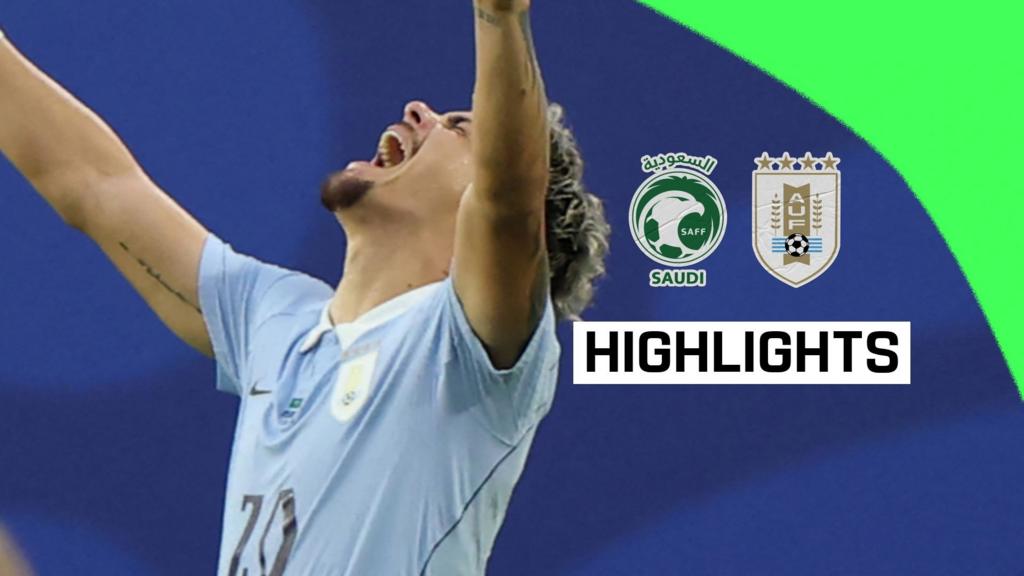
Maxi Araujo scored a late equaliser to salvage a 1-1 draw for Uruguay in their World Cup opener against Saudi Arabia, preventing another stunning upset in Group H after Spain’s earlier goalless draw with Cape Verde.

The Saudis famously beat Argentina 2-1 in their 2022 tournament opener, and they looked on course for another shock, courtesy of Abdulelah Alamri’s 41st-minute strike, until winger Araujo stepped up 10 minutes from time at Miami Stadium on Monday.

Uruguay coach Marcelo Bielsa certainly viewed it as a missed opportunity after European champions Spain dropped two points earlier in the day.

“An opponent we should have beaten; we gave away minutes in the first half that suggest we didn’t do things right,” he said. “We had to win this match.”

The Green Falcons ultimately had goalkeeper Mohammed Alowais to thank for their point, which will give them confidence they can progress to the knockout stage for the first time since the United States last hosted the World Cup in 1994.

“We were very tired at the end, but to play this type of game with this opponent, and to get a point, it’s a positive for us,” said Saudi Arabia coach Georgios Donis.

“I like the spirit and the passion of my players, but I think we have the quality to play better.”

MIAMI, FLORIDA - JUNE 15: Abdulelah Al-Amri #4 of Saudi Arabia scores his team's first goal past Fernando Muslera #23 of Uruguay during the FIFA World Cup 2026 Group H match between Saudi Arabia and Uruguay at Miami Stadium on June 15, 2026 in Miami, Florida. Molly Darlington/Getty Images/AFP (Photo by Molly Darlington / GETTY IMAGES NORTH AMERICA / Getty Images via AFP)
Abdulelah Alamri scores Saudi Arabia’s goal past Fernando Muslera [Molly Darlington/Getty Images via AFP]

Uruguay, World Cup winners in 1930 and 1950, started the match with the swagger of favourites, and in the fifth minute, left winger Araujo turned on the edge of the box and angled a shot at goal, which Alowais parried away.

But barring a Federico Vinas diving header on the half-hour mark, which Alowais also pushed away, the Uruguayans lacked accuracy going forward and often looked a bit casual at the back.

Donis had promised his side would be courageous, and their attack sparked into life in the 36th minute, when left-back Moteb Alharbi skipped through the midfield before being cynically cut down 30 metres (about 30 yards) from goal.

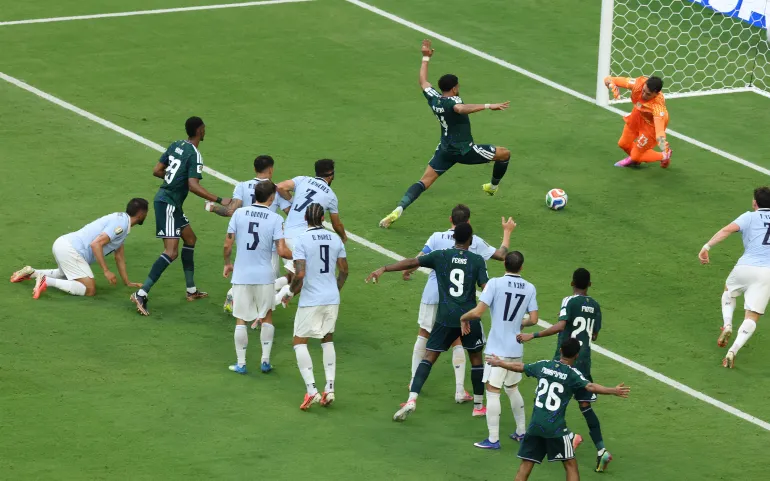
Alamri had a shot from the centre of the box well saved by Fernando Muslera two minutes later, but the Uruguay goalkeeper was powerless to prevent the Saudis from going ahead soon afterwards.

Mohamed Kanno got on the end of a Musab Aljuwayr corner, and although Muslera managed to save his powerful header, Alamri was on hand to tap the ball into the net.

Bielsa made two changes at the break, and Uruguay’s game plan immediately looked more coherent – getting players down the flank to put crosses into the box and producing a string of headers for Alowais to deal with.

Defensive midfielder Manuel Ugarte came within inches of an equaliser when he beat the Saudi keeper in the 60th minute, only for his drilled shot to bounce off the far post.

Vinas had been Uruguay’s best aerial threat all game, and it was no surprise that the breakthrough came from one of his headers 10 minutes from full-time.

Alowais again denied the target man, but the ball fell straight to Araujo, who did well to control it and clip it into the net at the near post.

Uruguay poured forward, looking for a winner in a frenetic finish; Federico Valverde and Jose Maria Gimenez coming closest with rasping shots from either side of the box, which Alowais did well to push past his posts.

“I think the nerves of the debut worked against us, as did the need to go out and score,” said Vinas.

“In the second half, we did a bit more of what the manager wanted. I’m frustrated and angry, but as captain, I’m happy with my teammates’ work.”

MIAMI, FLORIDA - JUNE 15: Fans of Saudi Arabia celebrate as Abdulelah Al-Amri #4 (not pictured) of Saudi Arabia scores his team's first goal during the FIFA World Cup 2026 Group H match between Saudi Arabia and Uruguay at Miami Stadium on June 15, 2026 in Miami, Florida. Alex Slitz/Getty Images/AFP (Photo by Alex Slitz / GETTY IMAGES NORTH AMERICA / Getty Images via AFP)
Saudi fans celebrate [Alex Slitz/Getty Images via AFP]

Source link

Uruguay squad lands in US after flight delay ahead of World Cup opener | World Cup 2026

Uruguay will reportedly arrive in the US less than 24 hours before the kickoff time for their game against Saudi Arabia.

Uruguay’s national team have arrived in Miami after enduring a travel ordeal ahead of their opening World Cup match in the United States.

The squad and support staff landed in Miami on Sunday, less than 24 hours before kickoff in their Group H match against Saudi Arabia.

Recommended Stories

list of 4 itemsend of list

Uruguay pinned the blame for their troubles flying from Mexico to the US on FIFA. They also reportedly faced the threat of sanction if their head coach and captain could not make it to a mandatory news conference on the eve of the match.

The original flight was reportedly not allowed to depart due to administrative issues, including some missing paperwork, and officials had to scramble to line up a new flight.

FIFA is in charge of all travel related to the 48-team World Cup.

Uruguay are training in Playa del Carmen, Mexico, and held a practice there on Sunday. When the traveling delegation reached the airport in Cancun, approximately 72km (45 miles) away, they learned that the group was not authorised to enter the US.

The Uruguay Football Association (AUF) said that a second plane from South Florida was en route to pick up the squad, while the players waited at a resort outside Cancun until its arrival.

“Due to problems beyond the control of the AUF, the departure from Mexico has been delayed,” the association said in a statement. “The squad is resting at the hotel. The new departure time set by FIFA is 4:15pm [21:15 GMT].”

FIFA later released a statement, saying: “Due to an airline permitting error in Mexico, the Uruguay national team’s departure from Cancun to Miami was delayed.

“The airline has apologised for the inconvenience caused. FIFA remained in close contact with the Uruguay national team throughout their delay and worked alongside airport and operational partners to help expedite the process and minimize disruption to the team’s travel arrangements.”

Uruguay coach Marcelo Bielsa and team captain Jose Maria Gimenez missed Sunday’s originally scheduled news conference in South Florida due to the issue. The news conference was pushed back to 8pm Eastern Time (00:00 GMT), and the coach and captain were in attendance.

“The trip went well; we made the most of it and saw it in a positive light,” Gimenez said in Spanish. “We took the chance to rest at the hotel [in Cancun].”

Bielsa was asked what sort of disruption the flight snafu caused his team.

“No, the flight doesn’t cause any complications,” Bielsa said, before changing the subject to his team’s preparation in both the Uruguayan capital of Montevideo and Mexico’s Playa del Carmen.

“In Montevideo, the players had constant obligations, but they also had family time, which I felt was necessary.”

Uruguay and Saudi Arabia will play their first match of Group H at Miami Gardens at 6pm (22:00 GMT), giving them less than 24 hours to settle in before kickoff.

The other members of the group, Spain and Cape Verde, will play in Atlanta on Monday.

Uruguay were the latest to face travel issues at the World Cup.

Top Somali referee Omar Artan was denied entry into the US this week after he was “determined to be inadmissible due to vetting concerns”.

Meanwhile, the Iranian team were granted US visas just 10 days before their first match in Los Angeles. And Iraqi striker Aymen Hussein was interrogated for hours at Chicago’s airport before eventually being allowed entry. The team’s photographer, however, was denied.

Source link

World Cup 2026: Video vault and Leeds litter picking – inside the mind of Uruguay boss Marcelo Bielsa

Born in Rosario, Argentina, Bielsa hails from a family of educated minds, with his brother having worked in politics and his sister a renowned architect.

Both of those professions require analytical thinking – a gift Bielsa also possessed from childhood. However, he was drawn to football, not necessarily playing it but absorbing the tactics.

Every day he would send his mother to the local newsagent to buy football magazines and newspapers, spending hours reading up as much as he could about how teams played and how different managers worked.

Bielsa was still a capable but limited footballer. A defender but lacking in pace, he came through the youth system at his boyhood club Newell’s Old Boys before frustrating spells in the lower leagues of Argentinian football meant he decided to call time on his playing career at the age of 25 to focus on coaching.

His post-playing career started with the Buenos Aires university football team and, after two years there, he secured a position back at Newell’s as a coach of the reserve team.

Bielsa’s frustration with his limitations as a player played a significant part in his coaching philosophy, as he focused on ensuring that any player he coached was able to get the maximum out of their ability.

His training sessions were intense, with lots of focus on repetition – if a player did not have the talent to make something happen naturally then he would be sure to drill the processes into their minds.

Bielsa was appointed Newell’s manager in 1990 and his methods brought instant success as they won the Argentinian championship.

A spell in Mexico followed before Bielsa returned to Argentina in 1997 to manage Velez Sarsfield. There he would be labelled ‘loco’ (crazy) as he insisted on fielding two teenage centre-backs. He would have the last laugh, however, as he immediately helped them to win the league title.

Bielsa, who has said his nickname of ‘El Loco’ actually predates his time at Velez Sarsfield, very briefly became manager of Spanish side Espanyol but left them when he was offered his first international post in 1998 – as Argentina boss.

Source link

Argentina’s ‘El Loco’ faces Uruguay mutiny ahead of World Cup | World Cup 2026 News

Marcelo Bielsa is widely revered as a pioneer of coaching, but his unconventional methods risk ruining Uruguay’s World Cup chances before the tournament has even begun, with rumours of dressing room unrest.

Nicknamed “El Loco”, which means madman, the 70-year-old’s bold, attacking approach has proved an inspiration to a younger generation of coaches, including Pep Guardiola and USA boss Mauricio Pochettino.

Recommended Stories

list of 4 itemsend of list

Yet, his famously demanding standards have often caused friction during a nomadic coaching career, and his stint in Uruguay has been no exception.

The Argentinian’s arrival initially generated huge excitement, which was fuelled by landmark victories over Brazil and Argentina in qualifying.

But they needed that flying start just to make it through after winning just three of their final 12 qualifiers.

The tipping point for many in the squad came at the Copa America in 2024.

Uruguay finished a creditable third, eliminating Brazil along the way, but Bielsa’s intensity during the monthlong tournament did not endear him to his players.

Luis Suarez hit out at Bielsa’s methods after retiring from international football months later, claiming he had reduced former Liverpool striker Darwin Nunez to tears at half-time of a 2-0 win over Argentina, such was the force of his criticism.

Bielsa accepted that after the former Barcelona striker’s backlash, his “authority was affected” with the rest of the dressing room.

Results have also regressed, with Bielsa stating he was “ashamed” by a 5-1 friendly defeat by the USA in November.

Now, as his third World Cup with a third different nation approaches, the question is whether Bielsa can win back the faith of his players for a country so used to punching above its weight on the world stage.

And there are doubts as to how his high-energy style will fare in the gruelling conditions of Miami and Guadalajara, where Uruguay will face Saudi Arabia, Cape Verde and Spain in Group F.

Pochettino hails Bielsa as a ‘genius’

Bielsa made his name winning three league titles in Argentina with Newell’s Old Boys, where the stadium now bears his name, and Velez Sarsfield.

“For me, he’s a person I will always admire,” said Pochettino, whom Bielsa recruited for Newell’s as a 13-year-old.

“He’s a genius. A person with charisma and a personality very different from us, normal coaches, and that’s what makes him special.”

Bielsa’s sides in Bilbao with Athletic Club, where he reached the Europa League and Copa del Rey finals in 2011-12, and Marseille, where he led Ligue 1 at the halfway stage in 2014-15, were also admired but ended up empty-handed as their energy ran out.

In Leeds, murals still bear Bielsa’s face, four years on from his departure, after he led a sleeping giant of English football back to the Premier League for the first time in 16 years in 2020.

His time there ended in familiar fashion with an exhausted squad that was relegated to the second tier the season after he departed.

Yet, the esteem with which he is held for his daring tactical approach endures.

“To be loved is this biggest title, bigger than the Champions League or Premier League or whatever,” said Guardiola, who went to visit Bielsa in Argentina before setting out as a coach at Barcelona.

“To be loved is the most important thing, and I think Marcelo has that more than any other manager in the world.”

Bielsa, who oversaw Argentina’s group-stage elimination in 2002 and Chile’s round-of-16 loss to hosts Brazil in 2014, has already hinted ‌that he may not remain as manager ⁠of Uruguay beyond ⁠July, saying his job with the team ends with the World Cup.

“Our job ends with the World Cup,” ⁠Bielsa said at an event organised by the Uruguayan Football Association last Friday.

Although he did not elaborate on his remarks, local media reported ⁠that the Argentinian will not continue once his current contract expires at the end of the June 11-July 19 tournament.

“It is a miracle in any ‌professional’s sporting career to take part in the World Cup,” he said. “I will be forever grateful to Uruguay for allowing me to enjoy a competition like the World Cup.”

Source link