THE historic Birnbeck Pier is currently undergoing an enormous renovation and will open next year for the first time since the 90s.
First look images have been revealed to show what it could look like when visitors can finally step foot onto the structure again.
Birnbeck Pier is currently being restored at the cost of £44millionCredit: Haverstock ArchitectsThe Pier Master’s Cottage will have a cafe and terrace with views of the pierCredit: Haverstock Architects
Birnbeck Pierconnects the mainland to a rocky island in Weston-super-Mare, but has been closed to the public since 1994.
The pier is being restored at a cost of £44million and it has been well-received by locals and visitors who are calling it “excellent news”.
Sign up for the Travel newsletter
Thank you!
In recently revealed images, it shows that along with work on the pier structure, surrounding buildings will be restored too like the Pier Master’s Cottage.
This will become a visitor centre and shop which will also be connected to a new modern cafe building and terrace, which will offer impressive views to the pier.
Nearby, the Pier View building which has previously been a café, tea room, dress shop, and even military offices during World War Two, will also be restored.
As for what it will become, that’s yet to be decided, but one option being explored is an ice cream parlour.
The Toll House that’s known locally as the ‘shell shop’, will be restored and has potential to reopen as a concession stand.
As for the island, this will also eventually reopen to the public, but it may not be finished in time for when the pier reopens.
When it is complete, visitors will be able to see the restored clock tower and pavilion.
Also on the island will be the refurbished 1888 Boathouse, which will become a cafe on the top floor and an events space below.
Birnbeck Pier has been closed since the mid-1990sCredit: Alamy
Boats will even be able to dock thanks to the restored North Jetty on the island.
The island used to be very popular thanks to its theme park which had small rides including a miniature railway and water chute.
Mike Bell, leader of North Somerset Council, told the BBC last month that work on restoring the pier is already a quarter of the way through.
He added: “When people will be able to walk on the pier for the first time, I think it will be a magical moment for the many people like me who were born in Weston and have lived here all their lives.
The Boathouse will be restored to become top floor cafe with food and drink and sea viewsCredit: Haverstock ArchitectsBelow will be a community and event spaceCredit: Haverstock Architects
He continued: “People who have seen this crumbling jewel will be delighted to see it restored.
“The North Jetty will enable us to bring in passenger and other ferry services to Weston.”
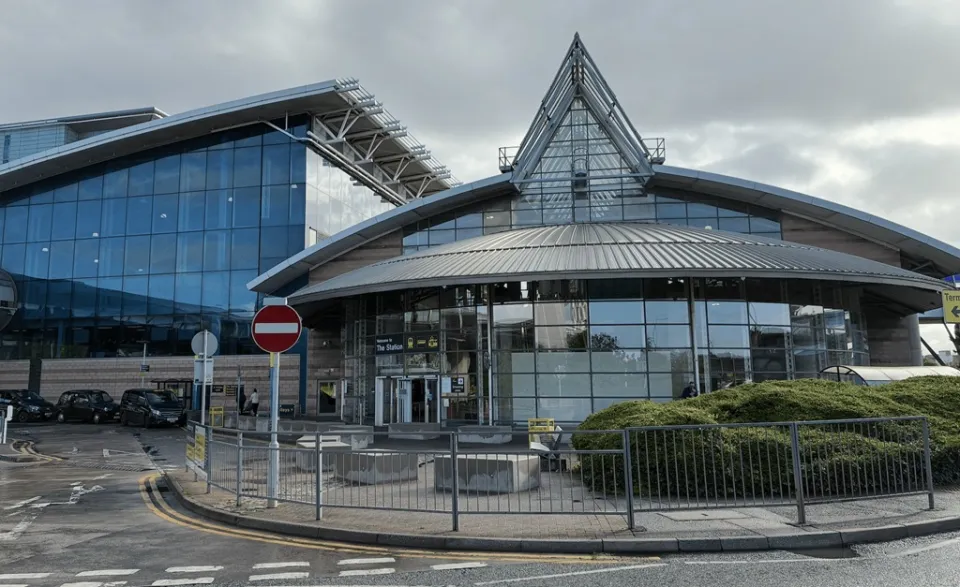
Rail minister Lord Hendy said: “Manchester Airport is a vital transport hub and this £115m investment from government will deliver more reliable services, increase capacity, and improve connections for the millions of passengers who use the station every year.
“This is the sort of improvement Great British Railways will be designed to deliver.
“By bringing track and train closer together under public ownership, we can take a more joined-up approach to investing in the railway, improving performance, putting passengers at the heart of every decision and growing the economy in the North.”
The £115m investment will be delivered by Network Rail and contractor Kier, and is expected to be completed sometime in 2028.
Passengers will face travel disruption as the programme gets underway.
Network Rail senior sponsor, Simon Daly, praised the improvement plan and apologised for any disruptions it may cause.
Daly said: “Manchester Airport station plays a vital role in connecting people across the country so these improvements will create more capacity for passengers, allow longer trains to serve the station and improve the reliability of services for years to come.
“The station closure on 6 December is an important first step in delivering these benefits. We recognise that any disruption is inconvenient and have worked closely with our partners to put plans in place, so passengers are kept on the move.”
The December closures will affect the two Sundays before Christmas, so travellers are being warned to plan ahead.
This will then follow a huge 38-day closure from Christmas Eve (December 24, 2026) to January 31, 2027.
Liam O’Shaughnessy, TRU programme delivery lead for Northern, said: “The work that has been completed over the last 16 days in the Huddersfield area is another crucial step towards delivering the benefits that the Transpennine Route Upgrade will bring for customers across the north.
“We have worked closely with our industry partners to keep customers on the move, and these works have continued, and we would like to thank customers and local communities for their patience and cooperation, whilst these improvement works have been taking place.”
Upgrades include two new track lines through Huddersfield, restoration of the station’s roof and platforms, as well as upgrades at Deighton Station, and nearby road upgrades.
The station dates back to 1850, and named one of the most beautiful by Lonely Planet.
Now, it welcomes 3.1million passengers a year with routes across Yorkshire.
Along with its cosy caravans and lodges, there are some very exciting additions coming its way.
The park has announced it is undergoing a huge £4million upgrade with work starting this November.
Sign up for the Travel newsletter
Thank you!
One of the largest upgrades will be to its existing indoor swimming pool which will be expanded to become 18-metres long.
It will also add a new toddler splash area, designed specifically for little children – and for adults, there will be a new jacuzzi, steam room and sauna.
The pre-existing gym facilities will also be upgraded.
Its entertainment complex is set to be revamped too with new activities and facilities both indoors and outdoors.
Outside will be a new pirate-themed 9-hole adventure golf course, giant chess and lots of things to do like table tennis, curling – and it will install a padel court.
Inside will be a new soft play area with an upgraded games arcade including interactive darts.
The Hunter’s Bar and Restaurant is being refurbished, and will have a brand-new sports bar, as well as a transformed showbar where there will be entertainment for guests.
A new outdoor terrace will be a new spot that guests can enjoy throughout the year with open-air seating through the summer and covered for when the weather doesn’t play ball.
For those wanting sweet treats, there will also be a brand-new ice cream parlour.
When it comes to accommodation, holiday homes and pitches will be added to the site too.
Currently, guests can stay in basic caravans, to luxury lodges including The Hideout and The Hideaway which have outdoor decks and lots of inside space.
Work is due to start in November of this year with a Grand Opening event planned for Easter 2027.
For those who want to book a break that coincides with the new additions, three-night breaks on April 23 start from £219 – or £18.25pppn.
With this break, a family of four can stay in an Essential Clover Caravan which has two bedrooms (one double, one twin), kitchen and living area.
Simon Lane, CEO of Verdant Parks, said: “This is an incredibly exciting time for Verdant Parks, our employees, our owners and our holidaymakers.
“We’re committing our biggest investment to date to Thurston Manor Holiday Park and completely transforming what guests can see, do and experience when they visit.
“From the extended swimming pool and new toddler splash area to the new padel court, pirate-themed adventure golf and transformed entertainment offering, there will be something for everyone to enjoy.
“We’re delighted to reveal our plans for the next chapter of Thurston Manor and we can’t wait to share more details and sneak peeks as the transformation takes shape over the next six months.”
MINI bars at your seat, fancy amenity kits and the ‘world’s biggest business class’ – British Airways’ latest announcement is transforming the way Brits will fly with the flag carrier.
The airline’s huge new upgrades are part of the A380 retrofit programme.
First look at British Airways’ huge new A380 retrofitCredit: British Airways
Set to cost millions, it will see new seats in every single cabin, including in World Traveller – economy – and its premium economy, World Traveller Plus.
It will also have what they are calling the world’s biggest business class as well, with 106 Club Suite seats which will be on the upper deck.
Sign up for the Travel newsletter
Thank you!
This is alongside 12 seats in First, 84 in World Traveller Plus and 215 in World Traveller.
The new amenity kits have been rolled out as well – First Class passengers will get bags designed by Swaine with Wildsmith toiletries, and Business Class will get unique patterned bags with anatome products.
First passengers will be getting a few other upgrades as well.
This includes new pyjamas with a bespoke tartan pattern design, along with slippers and blankets.
A built in mini bar will also mean First passengers can get their own snacks without having to go to the galley, with chocolates, mints and even electrolytes.
A new dining experience will include onboard Bollinger, and a wide cocktail menu. Even racks of lamb and grilled salmon will be on the menu.
A new food and snack menu is being rolled outCredit: British AirwaysIt will have the world’s biggest business class with the most seats onboardCredit: British AirwaysNew seats are being rolled out across all classesCredit: British AirwaysThere’s new amenity kits tooCredit: British Airways
British Airways boss Sean Doyle said: “This is a major milestone for British Airways and the future of our A380 fleet, marking one of the most significant transformations we’ve ever undertaken on any aircraft.
‘We’ve completely reimagined the customer experience, introducing new and updated seats in every cabin, all carefully considered to deliver greater comfort and an elevated customer experience.
“From redesigned interiors and upgraded dining to new amenities and service delivery, every detail has been thoughtfully designed with our customers front and centre, helping them to have a more seamless and memorable experience when they fly with us.”
Off the plane, new airport lounges are also being introduced.
First class passengers get an in-seat mini barThe airline has teamed up with Swaine and Wildsmith for First Class amenity kits
A new lounge at Heathrow Terminal 5 C will open by the end of 2028, while the Heathrow Arrivals lounge is being redesigned.
Lounges across the US including Boston, Newark and San Francisco are being updated, along with Geneva.
ONE of the UK’s biggest cities will see trains cancelled for nearly a week during the busy Christmas period.
No trains will be running at Birmingham New Street from December 24 to 28 while the station undergoes a £13million upgrade.
Birmingham New Street will have no trains for five daysCredit: Network RailDuring this time engineering works will be carried outCredit: Alamy
Services will then resume on Tuesday, December 29.
Upgrades include work on the overhead power lines, which keep the trains moving.
Sign up for the Travel newsletter
Thank you!
The Christmas closure will mark the first phase of the overall three-year project to upgrade the station, with future phases taking place over Christmas 2027 and 2028.
Network Rail has said that it is working to minimise the impact but has warned travellers that journeys will take longer.
During the engineering work, the station building will stay open, which means travellers can still head to the shops.
There will also be staff on hand to help out with queries.
Martin Colmey, route director for Network Rail Central route, said: “Birmingham New Street is at the heart of the rail network, supporting millions of local, regional and national journeys every year.
“Much of the overhead line equipment dates back to the 1960s and needs to be replaced. This £13m investment has been carefully planned to make the railway more reliable.
It is part of a wider three year project at the stationCredit: Alamy
“There is never a good time for this type of work and we have done all we can to reduce its impact as much as possible.
“Christmas is a quieter time, but we know it will affect journeys at an important time of the year.
“We want to make people aware as early as possible so they can plan ahead.
“As soon as tickets are available to buy for Christmas travel, there will be clear, detailed information to help passengers plan their journeys and make informed decisions.”
Indonesia says vessel will be used to aid disaster relief across the archipelago, but its arrival comes amid drive to upgrade the military.
Published On 18 Sep 202618 Sep 2026
Indonesia has welcomed the delivery of its first-ever aircraft carrier with a military ceremony as the vessel arrived at a naval base.
The 41-year-old former Italian navy vessel Giuseppe Garibaldi docked in North Jakarta’s Tanjung Priok seaport on Friday, after sailing from Italy via Colombo and the Malacca strait, Indonesian Navy Chief of Staff Muhammad Ali told reporters.
Recommended Stories
list of 3 itemsend of list
Indonesia’s President Prabowo Subianto says the ship will be used to manage disasters across the archipelago. However, it arrives amid a drive to upgrade the military.
The 180-metre (590-foot) vessel can carry up to 18 helicopters and accommodate up to 830 personnel, a navy spokesperson said in a statement.
The carrier will be renamed KRI Sriwijaya, honouring the Srivijaya empire, a maritime kingdom based in Sumatra that became one of Southeast Asia’s dominant naval and trading powers between the seventh and 13th centuries.
“There are many disasters in this country. So we really need a vessel or platform that could carry many helicopters, because the helicopters can drop logistics quickly to remote areas,” Ali said.
However, he also noted that the ship could “be deployed for combat missions if necessary”.
Bolstering defence
The arrival of the vessel, which was commissioned by the Italian navy in 1985, comes as Prabowo has been pushing to upgrade Indonesia’s military assets and build closer defence cooperation with other countries.
Italy agreed to give Indonesia the carrier in March, after it was retired in 2014. The move was meant to bolster the two countries’ defence engagement.
Italy is seeking deals on submarines and aircraft, and gifting the carrier to Indonesia also saves it the cost of decommissioning the ship.
“Its condition is still very good and hopefully it can be used by the Indonesian navy for the next 15 to 20 years,” navy chief Ali said.
Indonesia’s Finance Ministry approved $450m in financing for the aircraft carrier programme in 2025. Opposition politicians worry the overall bill could be far higher.
However, Prabowo – formerly a general under the Suharto regime – has made building Indonesia’s defence assets and agreements a priority.
Jakarta signed an $8.1bn deal in 2022, when Prabowo was defence minister, to purchase 42 French-made Rafale fighter jets. India confirmed this year that it will supply the country with long-range missiles.
Indonesia has also agreed this year to a “Major Defence Cooperation Partnership” with the Trump administration in the United States, and a security treaty with Australia.
Venezuelan officials flew to London to meet with Foreign Office counterparts. (AVN)
Caracas, September 16, 2026 (venezuelanalysis.com) – Venezuela and the United Kingdom have announced a formal decision to upgrade their diplomatic relations and to re-establish full ambassadorial representation.
London formally presented its policy shift on September 15 in a missive to Parliament through coordinated statements by Minister for Latin America Chris Elmore in the House of Commons and Parliamentary Under-Secretary of State Lord Wood of Anfield in the House of Lords.
In the statements, the cabinet members framed the “diplomatic upgrade” around supporting a “democratic transition” while pursuing pragmatic bilateral engagement with the South American country.
“Developments in Venezuela since 3 January have created an important opportunity for the international community to support the restoration of democracy,” the statement read. “Working closely with the United States and with international partners, the UK considers that this moment calls for pragmatic engagement to help advance a credible transition and to encourage further reforms.”
The communiqué added that London and Caracas “have agreed our intention to upgrade our representation to Ambassador,” emphasizing that the step aims to deepen engagement with Venezuelan authorities and enhance support for British corporate and trade interests.
The Venezuelan government welcomed London’s decision. In an official communication published on Tuesday, the government led by Acting President Delcy Rodriguez celebrated the upgrade in diplomatic status as a positive step toward normalization.
Venezuelan officials stressed that the latest decision should pave the way for the full “sovereign management of the Venezuelan people’s resources,” referencing state assets frozen in British financial institutions.
National Assembly President Jorge Rodríguez and Foreign Minister Félix Plasencia flew to London and held a meeting on Tuesday with Harriet Thompson, the British Foreign Office’s Director for the Americas.
Following the discussions, Rodríguez highlighted progress in multi-sectoral talks and economic outlooks.
“We shared Venezuela’s position regarding political and social dialogue, as well as the progress made regarding oil and gas investments, and how this will translate into significant and rapid economic growth for Venezuela,” he said in a message published on social media.
Rodríguez added that the talks aimed at promoting national peace and political reconciliation, labeling them as “good news for our country and our people.”
Bilateral relations between London and Caracas had been severed for years following former UK Prime Minister Theresa May’s decision in 2019 to follow Washington in recognizing opposition figure Juan Guaidó’s self-proclaimed “interim government.”
That policy led to a protracted legal battle over 31 tons of Venezuelan gold reserves stored in the Bank of England, with successive British governments refusing to return them to Caracas. The reserves are currently valued at over US $4 billion.
During the COVID-19 pandemic, Venezuelan authorities attempted to retrieve the gold through international legal channels, offering to transfer the funds directly to the United Nations Development Programme (UNDP) to purchase emergency medical supplies and food.
However, British courts repeatedly rejected the legal challenges from the Central Bank of Venezuela (BCV), citing No. 10’s political recognition of the opposition parallel administration.
Following renewed political talks in August and September, a Venezuelan government delegation and representatives of the defunct, opposition-controlled 2015 National Assembly agreed to request the release of the UK-held gold reserves under US Treasury Department control and oversight.
According to opposition dialogue delegates, the 31 tons of gold will be transferred into a specialized US Treasury bank account and subjected to external audits by foreign accounting firms before being released.
The funds are reportedly earmarked for housing, healthcare, and infrastructure recovery in the wake of the June 24 double earthquake that left over 6,500 people dead across Venezuela.
France is accelerating work on the Rafale F5 standard, bringing forward development of a major new configuration of its combat aircraft at a time when the country’s planned next-generation fighter with Germany has effectively collapsed in its original form. The contracts cover the equipment judged to have the highest technical risk, ahead of the overall development contract for the F5 standard, expected for the end of this year.
The French defense procurement agency, the Direction générale de l’armement (DGA), ordered the first upstream development work for F5 from Dassault Aviation, Thales, MBDA, and Safran. The contracts cover key areas including navigation, datalinks, radar, electronic warfare, and propulsion, laying the groundwork for the next configuration of the Rafale, which is planned to enter service with the French Air and Space Force and the French Navy starting around 2033.
The most extensive modernization of the Rafale yet, the F5 standard was originally part of a longer transition toward France’s next-generation combat-air capability. But with the Franco-German New Generation Fighter (NGF) effort now effectively dead in its original configuration, the accelerated F5 program is taking on a much larger strategic role.
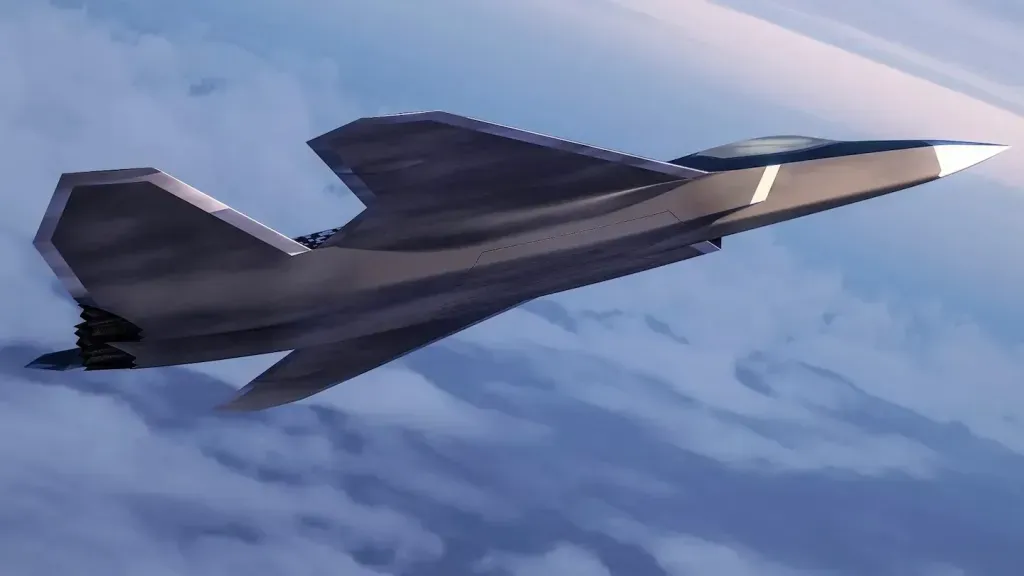
Concept artwork of the NGF future fighter. Dassault Aviation
Rather than simply keeping the Rafale relevant until NGF arrives, France is now developing a version of the aircraft that is set to carry much of the country’s high-end combat-air capability well into the 2030s and potentially beyond.
The increasingly capable F5 could, in turn, reduce the urgency of finding a replacement for the Rafale — while potentially adding to the fighter’s export appeal. After a slow start, Dassault has recorded export sales of 299 new-build Rafales to eight nations.
The DGA’s contracts engage four of France’s principal combat-aircraft industrial players. Dassault Aviation remains responsible for the aircraft and its overall integration; Thales is involved in major sensor, electronic warfare, and communications capabilities; MBDA is responsible for much of the weapons system; and Safran is responsible for propulsion.
The Rafale assembly line at the Dassault Aviation facility in Mérignac, France. Dassault Aviation – V. Almansa ALMANSA
Previous Rafale standards have largely consisted of incremental upgrades, focusing on software and other improvements to the existing aircraft configuration. F5 is notably more extensive, addressing many of the critical systems that determine how the aircraft senses the battlespace, communicates with other platforms, conducts electronic warfare, and generates the power needed to operate increasingly demanding equipment.
The DGA has specifically identified the Thales RBE2-XG radar as one of the major technological advances associated with F5.
The RBE2-XG is expected to feature gallium nitride (GaN) semiconductors. Compared with previous technology, GaN generates less heat and has the capacity to operate at higher voltages, meaning that output power can be increased, while component size can be reduced. Overall, using GaN should help to get more power out of the radar without increasing its size.
According to the DGA, “This new radar will benefit from a substantial increase in power, and consequently in detection range, as well as improvements in the identification of targets with an extremely low radar cross-section (RCS). Its computing capabilities will also be enhanced to facilitate the integration of artificial intelligence.”
The RBE2-XG will also be “designed with collaborative combat in mind, featuring sensors capable of working together without the need for pilot intervention.” It is also planned to have enhanced resilience, including against cyber threats.
France is already working on the concept of a combat drone to accompany the Rafale, with the future F5 standard providing the crewed aircraft around which those systems can operate.
A Rafale during a test mission with a Dassault nEUROn combat drone demonstrator. Dassault Aviation – A. Pecchi
The new radar will be combined with more capable electronic warfare equipment, improved communications and datalinks, expanded processing capacity, and a more capable propulsion system.
To be developed by MBDA and Thales, the forthcoming F5 version of the SPECTRA self-protection suite is intended to significantly improve detection and jamming capabilities, the DGA says, “through a fully digital approach, enabling a complete overhaul of the core electronic warfare system to counter the increasing density and broadening of the threat spectrum, as well as the growing complexity of threat waveforms, expected by 2035.”
Thales à bord du Rafale de Dassault Aviation
Thales will also be responsible for the new Inter-Vehicle Data Link (IVDL) system, described as a “stealthy and resilient datalink.” The DGA says the new datalink will expand connectivity “thanks to a new high-speed, discreet, and jamming-resistant waveform. IVDL will allow the Rafale to penetrate hostile areas where jammers are widespread, while maintaining optimal quality of communication and dialogue between aircraft.”
Safran will begin preliminary design work on the M88 T-Rex engine, which is planned to increase the turbofan’s thrust from around 16,500 pounds to nearly 19,850 pounds, an increase of roughly 20 percent.
M88 T-REX: A 9-ton thrust predator serving the Rafale
In terms of armament, the contract announcement mentions the ASN4G missile, set to be introduced to service by 2035, which will allow the Rafale F5 to continue to serve as the airborne nuclear component. The munition remains in the early stages of development, but it will be capable of hypersonic speeds — defined as speeds greater than Mach 5 — with a range in excess of 1,000 kilometers (621 miles).
Other likely new missiles include a beyond-visual-range air-to-air missile to succeed the current Meteor. As you can read about here, France’s Comet program, apparently led by the French side of MBDA, is already looking into this requirement, with an apparent plan to introduce the weapon around 2030.
An older video from MBDA showing some of the company’s weapons integrated on earlier versions of the Rafale:
PARIS AIR SHOW 2021: MISSILES ON THE RAFALE
For France, the original logic behind the pan-European FCAS program was that Rafale would eventually give way to the NGF as its principal crewed combat aircraft, operating from land bases and aircraft carriers.
With the collapse of the Franco-German effort, France cannot simply wait for a next-generation fighter program whose industrial and political future is uncertain. Instead, the Rafale has to remain capable against rapidly evolving threats throughout the 2030s and beyond.
With the F5 standard, however, France is looking to incorporate some of the concepts envisaged for NGF. These include distributed architectures in which crewed fighters, uncrewed aircraft, remote carriers, missiles, and offboard sensors cooperate across a battlespace.
The nEUROn drone and a Rafale M in flight over the aircraft carrier Charles de Gaulle, during tests to investigate the use of a UCAV in a naval context. Dassault Aviation – A. Pecchi
For now, F5 also sidesteps the central problem in the now-defunct Franco-German effort: whether the two countries could agree on the requirements, industrial structure, and workshare behind a new-generation combat aircraft.
Despite its advances, the F5 airframe remains derived from a design dating back to the 1980s, which first entered French service in the early 2000s. In particular, it falls well short of fifth-generation designs — let alone sixth-generation ones — in terms of low observability. This is one area where collaborative drones could potentially help compensate for the Rafale’s inherent limitations.
France has therefore bought itself some time with the F5 program. But it may eventually decide that it needs a future high-end crewed fighter to provide capabilities that an upgraded fourth-generation airframe cannot fully replicate, particularly in terms of survivability against advanced integrated air-defense systems, signature reduction, internal weapons carriage, and operations deep inside heavily contested airspace.
On an industrial level, F5 is also significant because it brings together the same French industrial heavyweights that would have formed the backbone of its FCAS effort. Dassault Aviation, Thales, Safran, and MBDA are now well-positioned to work together on whatever comes after F5, whether that is a crewed combat aircraft, uncrewed CCA-type platforms, or a combination of both. Based on its experience with the nEUROn program, France would be well placed to develop a UCAV that can work cooperatively as well as independently, taking over the deeper-penetrating fighter mission set, and potentially skipping a sixth-generation fighter altogether.
https://www.youtube.com/watch?v=frNsu7g7r94
Meanwhile, success with F5 — and, in particular, with the wider combat ecosystem planned around it — could put France in an even stronger position when it comes to any future European fighter project.
For the time being, Britain, Italy, and Japan are pursuing the GCAP/Tempest pathway toward a new combat aircraft. Germany and Spain remain tied to the wider FCAS architecture, even as the original Franco-German NGF arrangement has fractured. Sweden’s position is less clear, with indications that it could collaborate with either France or Germany.
France, for its part, is now investing heavily in an increasingly sophisticated Rafale architecture while maintaining its own sovereign industrial base.
In terms of acqusition, France is expected to pursue a mixed approach, buying new-build Rafales while upgrading suitable aircraft already in service to the F5 standard. The oldest jets are unlikely to receive the full F5 treatment, however.
The irony is that the failure of the NGF effort may ultimately make Rafale F5 more important — and potentially more capable — than it was ever expected to be.