unpopular

Have an unpopular opinion? Make your case at this viral event

“It should be OK to say someone’s baby is ugly.”

“Being a pet is forced, unpaid emotional labor.”

“It’s OK to be attracted to your friend’s man.”

“Cartoon Network was better than Disney Channel and Nickelodeon.”

“Men should be required to get a vasectomy after a certain amount of baby mamas.”

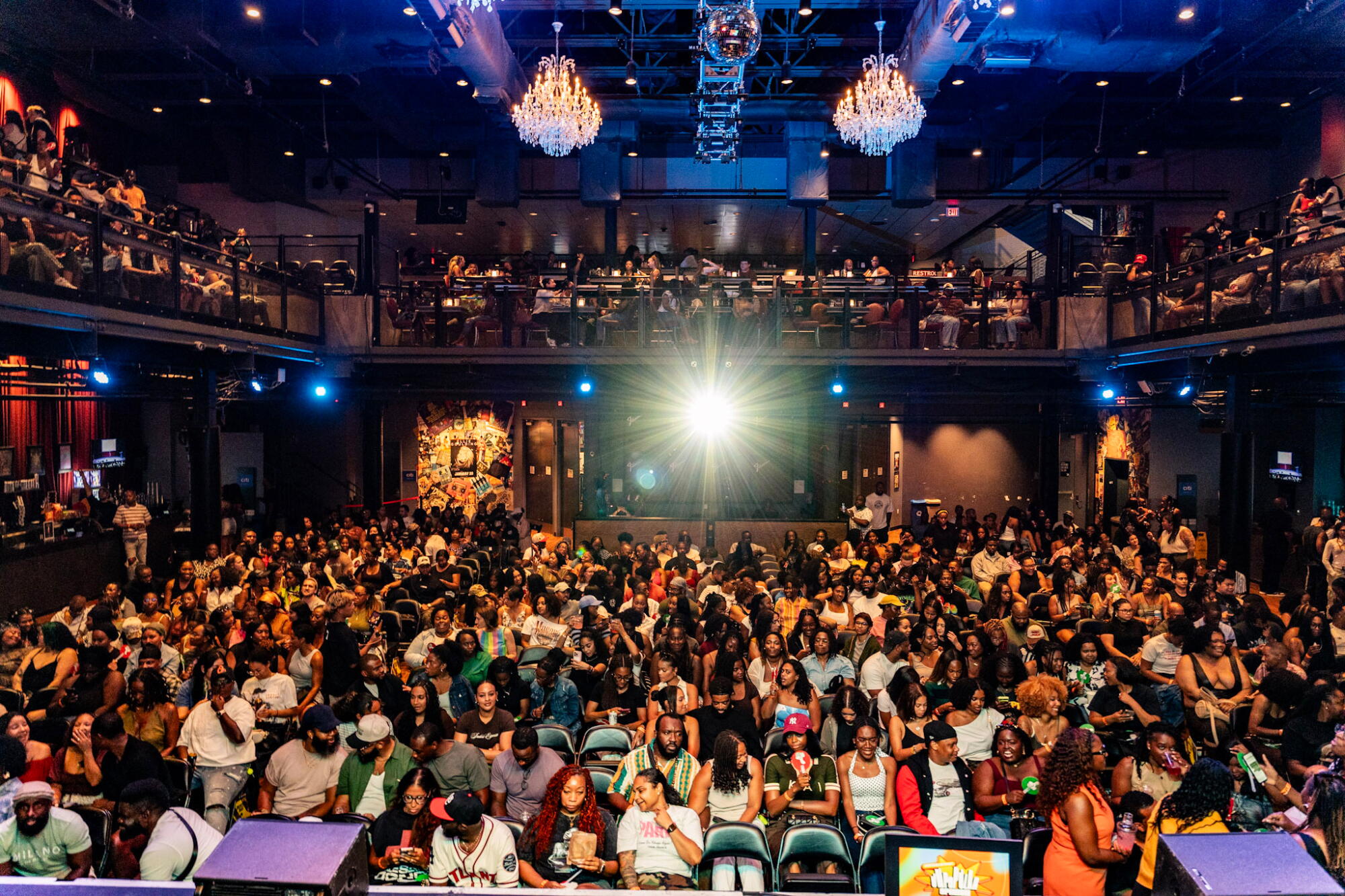
These are just some of the bold, controversial statements that have come up at “Unpopular Opinion,” a live, interactive event where people share and defend their hot takes in front of a spirited audience. To support their claims, they present slide decks filled with graphics and memes on a giant screen. Those in the crowd gasp, cheer and laugh.

The crowd from a past "Unpopular Opinion" event. The viral series is coming to the Regent Theater in L.A.

The crowd from a past “Unpopular Opinion” event. The viral series is coming to the Regent Theater in L.A.

(Quest Hollis / SideQuest Visuals)

The event was created by Chance Albury and Sarah Prince, founders of the Washington, D.C.-based experiential production company Something Different. People were already having these types of impassioned conversations online, Albury says, and they simply wanted to provide that space in real life.

They debuted the series in February, and after recaps of events went viral, they decided to take it on tour. “Unpopular Opinion” makes a stop in Los Angeles on Thursday at the Regent Theater.

“Who knew rage-baiting could be such a unifier?” Albury says.

“Everyone loves to argue,” Prince adds.

Albury says that the success of the show relies on having different perspectives and opinions in the room. The slide decks are also a major draw. Unpopular Opinion is one of several events that takes PowerPoint-style presentations out of their traditional setting — the office or the classroom — and puts them front and center in a social scene. Over the last few years, slide decks have shown up at house parties, matchmaking events and even in bars at gatherings like Lectures on Tap.

Anyone who wants to present can submit their hot take through an application form. Albury and Prince receive roughly 50 submissions for each event, but only about seven to nine are selected.

Presenters defend their hottest takes on stage using slides and passion.

Presenters defend their hottest takes on stage using slides and passion.

(Quest Hollis / SideQuest Visuals)

“There’s just so many topics that you can talk about so it can’t get old,” says Prince, adding that a lot of the speakers are funny and present like stand-up comedians.

Typically hosted at a live music venue, the vibe of “Unpopular Opinion” feels like a boisterous late-night game show. Drinks are available for purchase at the bar. A live DJ plays a mix of hip-hop, pop and other high-energy genres as a host hypes up the crowd. As an icebreaker, audience members are asked to submit their own unpopular opinions to be displayed on the screen for everyone to see.

Then the main event begins. Presenters are given 10 minutes to make their case. Unlike a traditional debate tournament, audience members are encouraged to get involved and make their thoughts known.

Something Different is hosting its viral "Unpopular Opinions" event on Thursday at the Regent Theatre in L.A.

“There’s just so many topics that you can talk about so it can’t get old,” says co-founder Sarah Prince.

(Quest Hollis / SideQuest Visuals)

After each pitch, the host asks audience members to hold up their paddle, which has a green thumbs up and a red thumbs down to indicate whether they agree or disagree. Then a mic is passed around so attendees can share their thoughts or rebuttals.

Though the event is called “Unpopular Opinion,” there are times when the majority of the crowd agrees with the presenter. There are also times when the audience strongly disagrees. In either case, Albury and Prince ask that attendees are respectful to one another.

The presentation topics range drastically, from lighthearted social media discourse (“Women standing behind the DJ booth is more embarrassing than men”) to hot-button dating debates (“Splitting the bill on the first date is fine”) to deeper societal issues (“People hate everything about slavery but Christianity”).

Albury and Prince say they are exploring ways to bring “Unpopular Opinion” “beyond the show doors” for those who can’t make it to a live event. They already post man-on-the-street-style interviews on social media, in which they ask people to weigh in on hot button questions.

Albury says the beauty of “Unpopular Opinion” is that it shows people it’s OK to disagree. “Just because we have different opinions doesn’t mean we can’t talk about it,” she says. “We may not even come to terms on agreeing or disagreeing, but we’ve got that space.”

‘Unpopular Opinion,’ hosted by Something Different

When: Oct. 1. Doors open at 7 p.m. and showtime is at 8 p.m.
Where: Regent Theater, 448 S. Main St., Los Angeles
Info: Tickets start at $48.60 (including fees). Must be 21+ to enter.


Source link

Vance says Iran fight isn’t a ‘war’ as Trump tries to navigate unpopular conflict as election nears

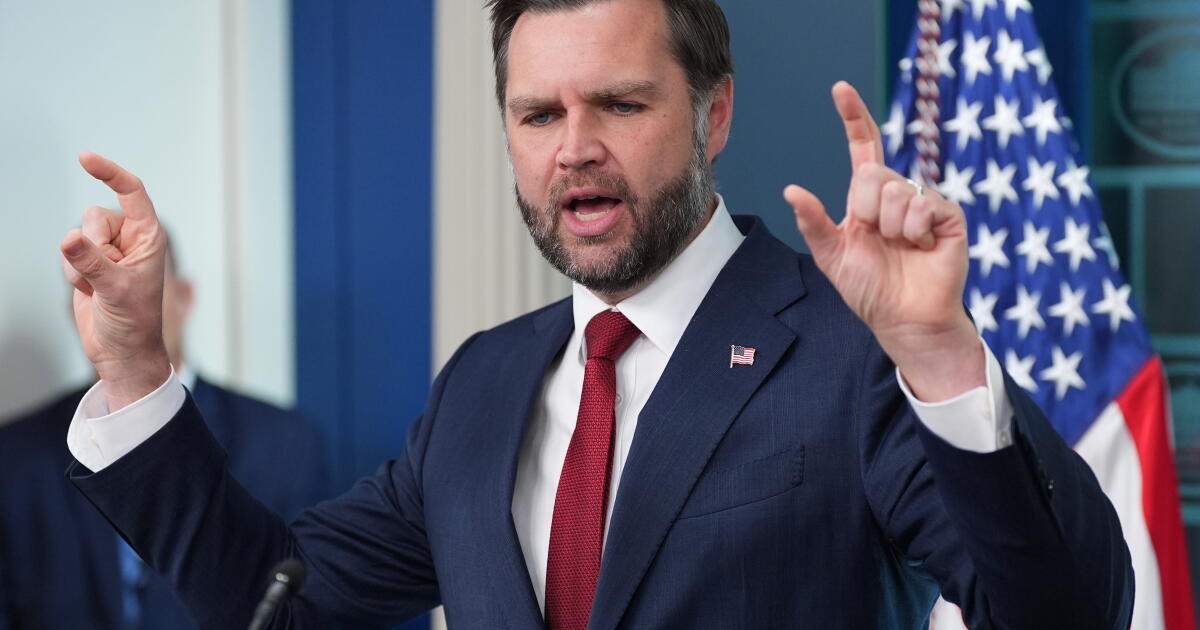
Vice President JD Vance rejected the use of the word “war” to describe the U.S. fighting with Iran as he steered clear of predicting that the six-month-old conflict would be over by November’s midterm elections, in which Republicans are trying to hang on to their narrow majorities in Congress.

“I wouldn’t call it a war,” Vance said Thursday after being asked during a White House press briefing about whether the fighting could end before voters cast their ballots in the Nov. 3 congressional elections. “Right now, there is no active shooting.”

Vance’s assertion came even as Iran fired at U.S. Gulf ally Kuwait on Thursday as it continued to retaliate for rounds of U.S. strikes on Iran earlier in the week.

The vice president said the U.S. had a “responsibility” to carry out this week’s strikes because Iran continued to target commercial vessels passing through the Strait of Hormuz.

Vance’s attempt to minimize the intensity of the fighting illuminates the difficult task at hand for Trump and his administration as he tries to persuade American voters to keep Republicans in control of Congress, even as the unpopular conflict — one the White House said at its outset would last a matter of weeks — has driven up gas prices and left consumers grappling with higher inflation.

Vance said he didn’t want to set “artificial timelines.”

“But when you ask, ‘When will this end?’ You’re asking me a question like, ‘When will the Iranians stop shooting at ships?’” Vance said. “I think the reality is, I don’t know the answer to that question. You would have to ask the Iranians.”

The administration in July faced scrutiny after it reclassified four fallen soldiers as well as dozens of wounded troops in its Defense Casualty Analysis System, which Pentagon officials have repeatedly pointed to as the definitive source on the numbers of dead and wounded from the conflict. Those killed or wounded in fighting after a brief ceasefire between the U.S. and Iran fell apart were classified in a new category called “Overseas Operations” after initially being tallied in the totals from the war.

White House insists more oil is getting out of Gulf, but prices remain high

Brent crude prices hovered above $95 per barrel Thursday. The international benchmark was around $72 per barrel the day before the conflict began.

Still, Trump and his aides have sought to push that the U.S. Navy is in control of the Strait of Hormuz, where about 20% of the world’s traded oil passed before the war. They insist a near prewar level of Gulf oil is now making its way out of the critical waterway.

Vance at Thursday’s press briefing said the U.S. escorted about 15 million barrels of oil on Wednesday. This was after Energy Secretary Chris Wright told CNBC on Wednesday that 17 million barrels were carried through the strait on Monday with assistance from the U.S. Navy. About 20 million barrels of Gulf oil flowed through the strait prior to the start of the war.

But ship traffic through the strait remains well below prewar levels, according to independent firms that track marine traffic.

There were 102 transits last week and 126 the week before, according to shipping data company Lloyd’s List Intelligence, compared with 130 or more per day before the war.

Over the past 28 days, 5 million barrels a day have exited the strait on average, according to TankerTrackers.com. Other recent estimates have varied from 2 million barrels per day to 6 million barrels per day.

Trump has tried to soothe volatile markets

Over the course of the war, Trump has repeatedly reported progress in negotiations or called off threats of military action at the last moment when global markets have become jittery. And markets have reacted swiftly to his public signals of peace or hints of progress.

“The administration is still jawboning oil markets,” said Rosemary Kelanic, Middle East director at Defense Priorities, of the administration’s claims of dramatically increased flows of oil. “And they appear to be doing it again to keep prices from going too high, so that they can extend the timeline before there’s a worse price spike.”

With Iran’s refusal to back down in the face of the U.S. military campaign, Trump has settled on a dual-prong approach that combines economic pressure with threats of an escalation in force, if necessary.

Trump has consistently emphasized that the campaign launched by the U.S. and Israel has been devastating for Iran’s navy and air force. Iranian officials have said the country has suffered $270 billion in direct and indirect damage. Israeli military strikes in the first weeks of the war wiped out much of the theocratic government’s leadership structure, including its Supreme Leader Ayatollah Ali Khamenei.

Still, Iran has found leverage through its own strikes on the strait and Gulf allies of the United States. But the administration has sought to make the case that the waterway will become less important by the day, even as it asserts that more oil is getting through.

Treasury Secretary Scott Bessent said in a Fox Business interview this week that the Strait of Hormuz will become a “worthless piece of water” within two years as new land pipelines planned for the region bypass the energy chokepoint. Trump himself took to social media on Thursday to highlight a news report about Syria’s effort to transform the port of Baniyas on the Mediterranean coast into a westward route to international markets for Gulf exporters.

Meanwhile, Iran and Oman have recently discussed a phased approach to jointly managing ship traffic through the Strait of Hormuz.

Trump settles into holding pattern before midterms, analysts say

The administration maintains it’s making progress economically choking off Iranian hard-liners, including the powerful Islamic Revolutionary Guard Corps. At the moment, it would be a leap for Trump to agree to any plan that puts Iran in position to claim control of the strait, analysts say.

“I find it hard to believe the president would agree to anything that hands back any modicum of IRGC control over the strait that has been wrested away,” said Richard Goldberg, who served as a senior adviser on Iran policy in Trump’s first administration.

Aaron David Miller, a senior fellow at the Carnegie Endowment for International Peace, said Iran does not appear ready to “let Trump out of the box” despite the massive pain being inflicted on its economy.

At the same time, Miller said, Trump seems to have settled into a holding pattern ahead of the midterms — one in which he avoids both a return to the full-throttle bombardment of Iran and making any accommodations to Tehran on the Strait of Hormuz.

“The White House doesn’t want a massive war, and they don’t want to be seen as offering massive concessions,” Miller said. “The tack they are taking avoids both of those things.”

Madhani writes for the Associated Press. AP writers Jonathan J. Cooper and Josh Boak in Washington and David McHugh in Frankfurt, Germany, contributed to this report.

Source link