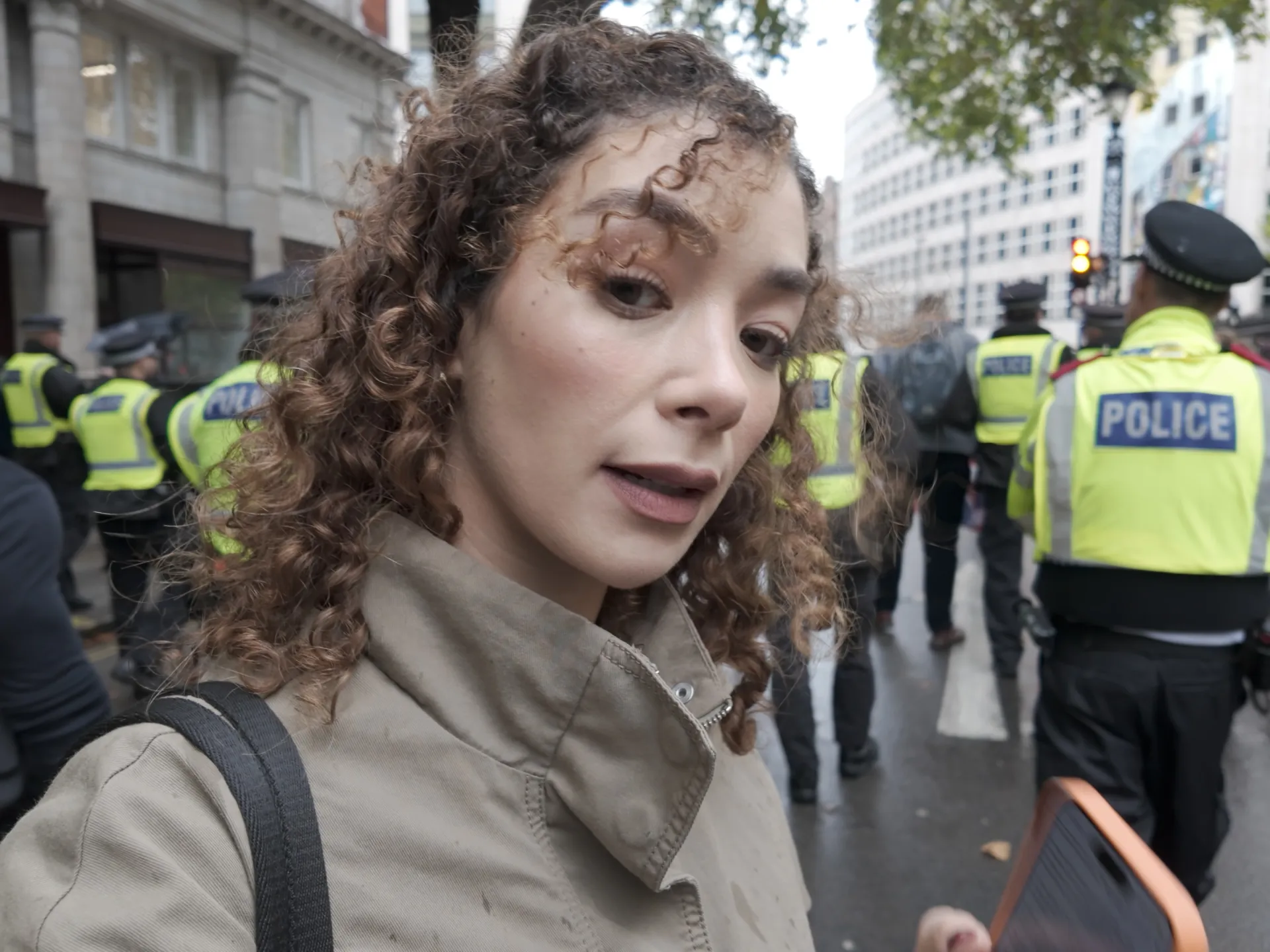
Protesters clashed with police in Buenos Aires as students and teachers vented fury at the government’s refusal to enact a law to boost education funding. President Javier Milei says implementing the law would threaten his budget-balancing plan.
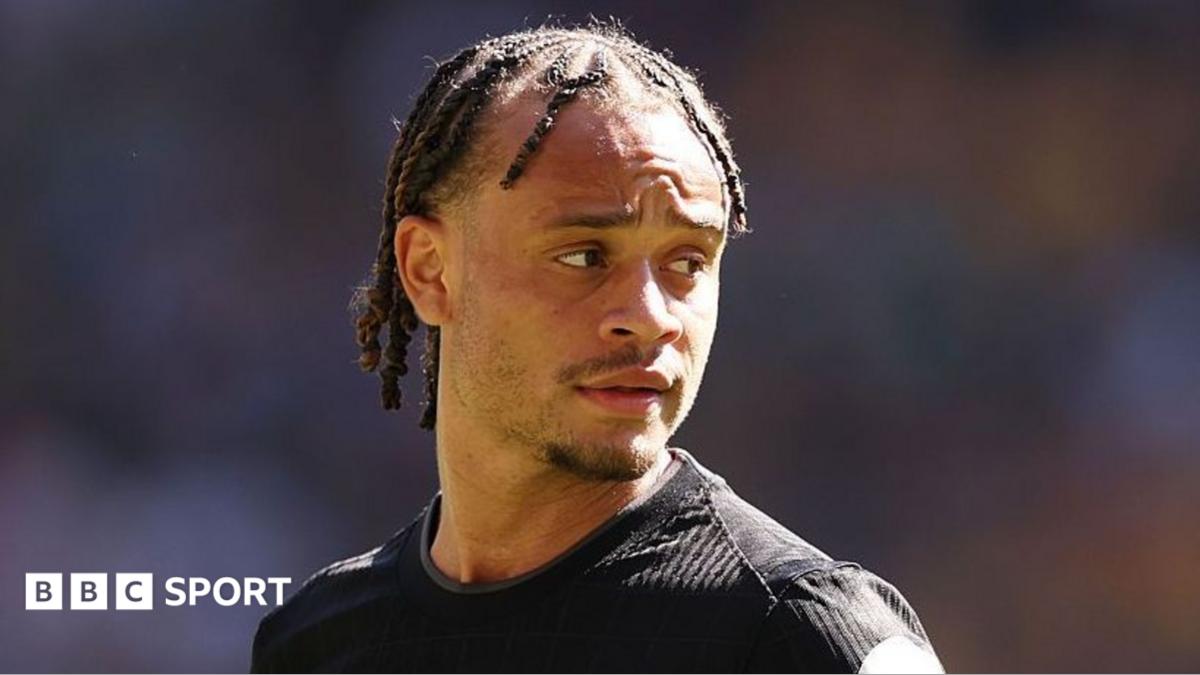
Tottenham midfielder Xavi Simons has enrolled on a course at prestigious American university Harvard while he continues his recovery from a long-term knee injury.
Simons has now joined, external Harvard’s Crossover into Business programme, a course tailored for professional athletes to develop their commercial skills.
The online course pairs athletes with Harvard MBA students to mentor them through practical case studies and enterprise management.
“I’m going back to school,” Simons wrote on LinkedIn.
“During my recovery, I’ve been trying to use my time in the best way possible. Football is still my main focus, but I also want to keep learning and improving away from the pitch.”
Simons recently travelled to the United States to step up his physical rehabilitation while visiting Harvard’s Boston campus.
“Getting back on the pitch is still my number one priority,” Simons added.
“At the same time, I want to use this period to keep learning and invest in myself beyond football. Looking forward to getting started.”
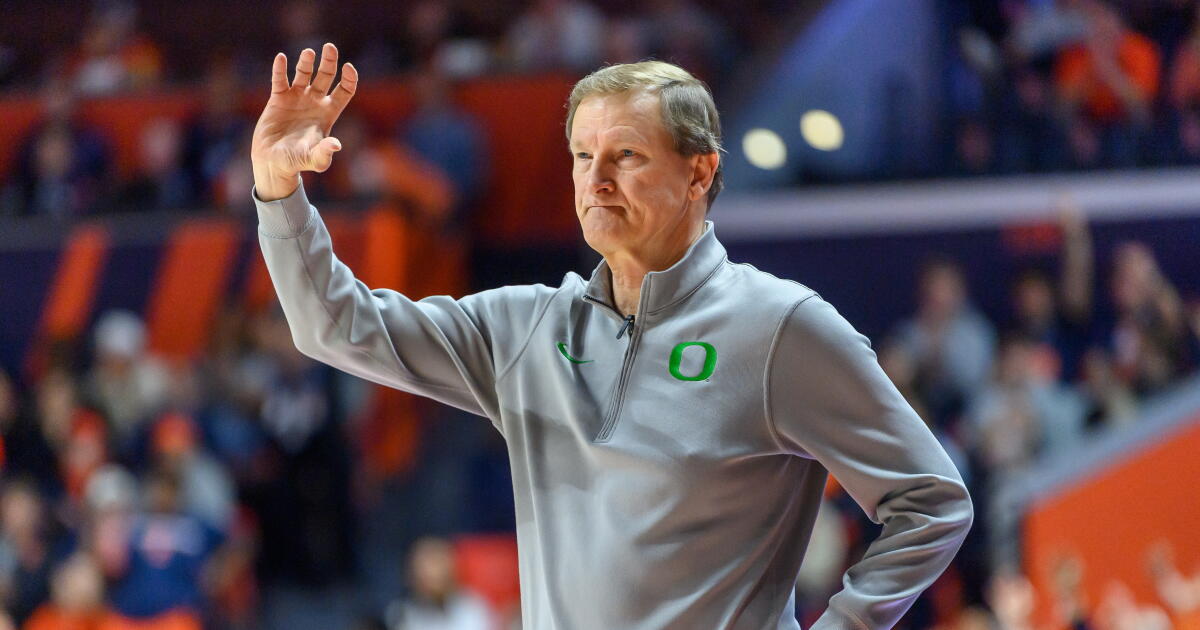
Longtime Oregon Ducks men’s basketball coach Dana Altman is retiring effective immediately, the school announced on Wednesday.
Altman, 68, took over ahead of the 2010-11 season and is the winningest coach in Oregon history with a 382-182 record. The Ducks made nine NCAA Tournament appearances over that span, including a Final Four berth in 2017.
Oregon also won four Pac-12 regular season titles and four Pac-12 tournament titles during his tenure.
Over the course of his 37-year career as a head coach, Altman’s record is 792-425. Before he came to Eugene, Altman was the head coach at Creighton for 16 years.
“I have had to make two really tough decisions in my coaching career,” said Altman. “The first was leaving Creighton, a place my family and I dearly loved, to come to Oregon. This is the second,” Altman said in a statement. “I’ve loved every minute of coaching here, and stepping away is difficult and truly painful. I love coaching, it’s what I know best and what I’ve been fortunate enough to do for almost five decades. I’m going to miss my coaches, my players and our incredible fans more than I can express. But I know this is the right thing to do at this time.”
Oregon will begin the national search for Altman’s successor after the season. Assistant coach Tony Stubblefield will coach the Ducks for the 2026-27 season.
The Ducks struggled last season, going 12-20, and the program lost nine players to the transfer portal and three to graduation in the offseason.
Stubblefield has spent two stints as an assistant to Altman at Oregon. He left to become head coach at DePaul from 2021-24 before returning to the Ducks.
“Winning 382 games over 16 years, including making nine NCAA Tournaments and a Final Four, is an incredible track record. But the record book tells only part of the story,” Oregon athletic director Rob Mullins said. “Dana and Reva have given so much of themselves to this university and to the young men who played for him, and we thank him for all his contributions to Oregon student-athletes, the game of basketball, and the University of Oregon.”
After Israeli soldiers stormed Birzeit University near Ramallah to demolish a stone memorial dedicated to dead students, Rania Washaha, 47, felt the pain of bereavement again.
Her brother, Fadi, 34, was shot in the head by an Israeli soldier near the northern entrance to el-Bireh in the central West Bank in May 2021.
Recommended Stories
list of 4 itemsend of list
His name was among the 38 students from the university killed by Israel and listed on the stone pillar known as the Martyrs’ Monument.
Israeli soldiers raided the university campus at dawn on Monday, accompanied by 10 military vehicles. A bulldozer demolished the pillar, and soldiers took away the marble stone. In its place, the Israelis left a planter containing a fig sapling, bearing the inscription: “Water it twice.”
Targeting the University
This raid marks the fifth Israeli incursion into the campus since the beginning of 2026 and the 28th since 2002.
Birzeit University’s administration condemned the recent raid, describing the destruction of the Martyrs’ Monument as a violation of international law and an attack on education and national memory.
“Bulldozers won’t erase the memory of the martyrs, military vehicles won’t extinguish the light of knowledge, and these assaults won’t break the university’s resolve to pursue its academic and national mission,” a statement by the university pledged.
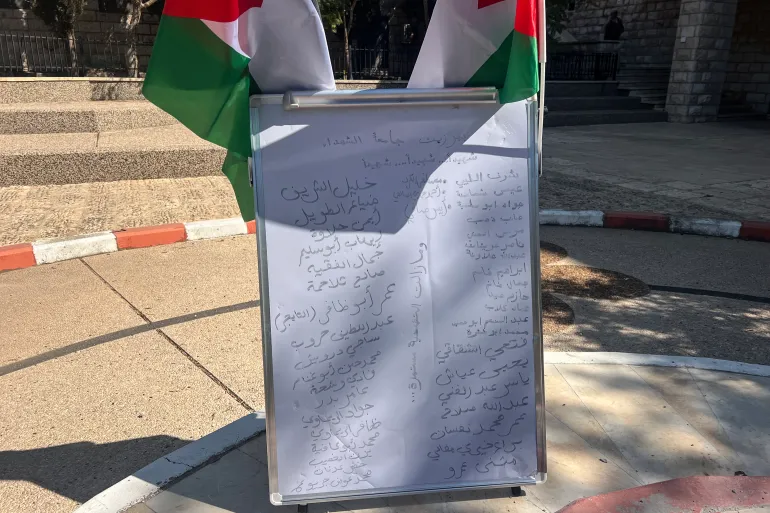
Birzeit University students again wrote the names of martyrs that were inscribed on the memorial [Mohamad Turkman/Al Jazeera]
It came 10 days after another incursion by Israeli forces during the daytime, a day before the start of the new fall semester.
Nardeen al-Memi, the university’s public relations and media officer, told Al Jazeera in the brief minutes of their incursion, Israeli soldiers approached the monument for the first time and photographed it.
The Martyrs’ Monument was erected between 1994 and 1996, bearing the names of students and alumni at Birzeit killed by Israeli forces. The list starts with Sharaf al-Tayyibi, who was shot dead by Israeli forces on the campus in 1984. The names of other students and alumni were added during the years that followed.
“The last name inscribed on the monument was that of student Omar al-Naasan, whom soldiers killed in al-Mughayyir east of Ramallah on September 2 while he was confronting settler incursions,” said Nardeen. “Days after his death, his father came and personally wrote his son’s name on the monument.”
University students organised a protest at the site of the destroyed memorial on Tuesday afternoon, most viewing it as an Israeli attempt to intimidate them.
Sami Adel, a Birzeit student who wanted to use a pseudonym due to his fear of being detained, told Al Jazeera the memorial holds a place in the heart of everyone who has attended the university since the 1990s.
In recent years, Israel has tried to suppress any student activity dedicated to commemorating the martyrs, he said.
“Soldiers detained me for several hours three weeks ago and threatened that if I participated in any political student activity on campus, I would face a long and harsh detention,” he added.
Erasing memory
The removal of the memorial is part of a broader Israeli policy targeting memorials dedicated to Palestinians killed by Israel in the occupied West Bank.
The Israeli far-right has made the issue part of its campaign to erase markers of Palestinian identity.
Zvi Sukkot, a member of the Knesset from the Religious Zionism Party, destroyed one such memorial in the village of Madama, south of Nablus, with a sledgehammer in August. The Israeli military later said that it routinely removes “symbols of incitement”.
The location of the demolished memorial in Birzeit University [Mohamad Turkman/Al Jazeera]
Israeli Finance Minister Bezalel Smotrich submitted a list of approximately 40 Palestinian memorials, proposing their destruction, to Prime Minister Benjamin Netanyahu.
There has been a wider targeting of civic and cultural symbols across the West Bank, particularly in Jenin, by Israeli authorities.
“Jenin Horse”, a monument constructed from the wreckage left behind by an Israeli incursion into the city, was removed. A memorial dedicated to Al Jazeera journalist Shireen Abu Akleh in Jenin was also targeted in 2023.
A cemetery containing the bodies of Iraqi soldiers killed during the 1948 war, also located in Jenin, has been raided by Israelis from illegal settlements.
Other landmarks embedded in the city’s collective memory, including the “Watermelon Roundabout”, have also been targeted.
Crushing resistance
Israel’s targeting of Palestine’s collective memory has coincided with a wider campaign of suppression in the occupied West Bank.
Palestinian universities have been a particular target in this pressure campaign, with campuses raided, students detained, and strict restrictions on activities and events within university grounds.
Israeli authorities are likely focusing on Palestinian universities because they hold a special significance for Palestinian resistance. They historically served as spaces for anti-occupation activism and have been an integral part of the Palestinian political landscape for decades.
Rania Washaha looks at her brother’s photo in her office inside Birzeit University [Mohamad Turkman/Al Jazeera]
Political analyst Mohammed al-Qeeq, who served as president of the Birzeit University Student Council between 2006 and 2007, told Al Jazeera that Israel has targeted writers, influencers, and activists, along with students, to deter any resistance to the occupation.
Universities have historically served as a “fundamental pillar” of Palestinian resilience and identity.
“Israel had also sought to weaken Palestinian political and social cohesion inside universities by deepening divisions between factions and creating chaos”, he said.
Remembering Fadi
For Rania, the memorial served to cement the names of the martyred students in the minds of the next generation of Berzeit students, including her brother’s.
“I cannot deny that I felt a pang of anguish when the memorial was demolished,” she told Al Jazeera. “I realised the goal wasn’t simply to uproot a physical object; I felt the suppressed violence Israel inflicts upon us.”
The memorial, constructed in 1996, stood on the campus when Fadi studied at Birzeit University. He had been arrested multiple times, spending a total of eight years in detention, and Israel denied Fadi the chance to wear a graduation gown.
“He didn’t even complete two years of study due to repeated arrests and injuries from soldiers’ gunfire,” Rania said. “Yet, he loved Birzeit University dearly and would stand by the memorial, contemplating the names of the student martyrs, never knowing that his own name would one day be added to theirs.”
This year, Rania’s son enrolled at Birzeit University as a first-year student. Shortly before classes started last September, an Israeli officer phoned him, threatening him if he participated in any student activities on campus. “Remember what we did to your uncle,” they warned him.
California voters will decide whether to establish a $7.5-billion state scientific research arm — similar to the National Institutes of Health — after Gov. Gavin Newsom signed a bill that will put the proposal on the March 2028 ballot.
The new state fund would aim to blunt federal research cuts by the Trump administration and ensure state and private institutions — including the University of California and California State University — can continue to produce scientific breakthroughs.
If voters approve the measure, $7.5 billion in bonds would fund California scientific and medical research into diseases such as cancer, Parkinson’s and ALS. Other research areas include reducing wildfire risk and fighting pandemics and climate change.
“This is a research and science bond that does the opposite of what Donald Trump is doing that will allow us to double down on what makes this state great — what makes America great,” Newsom said Wednesday during a bill signing atop the Golden Gate Bridge. “We are the tentpole of the U.S. economy because we invest in the future so that we can all do well there.”
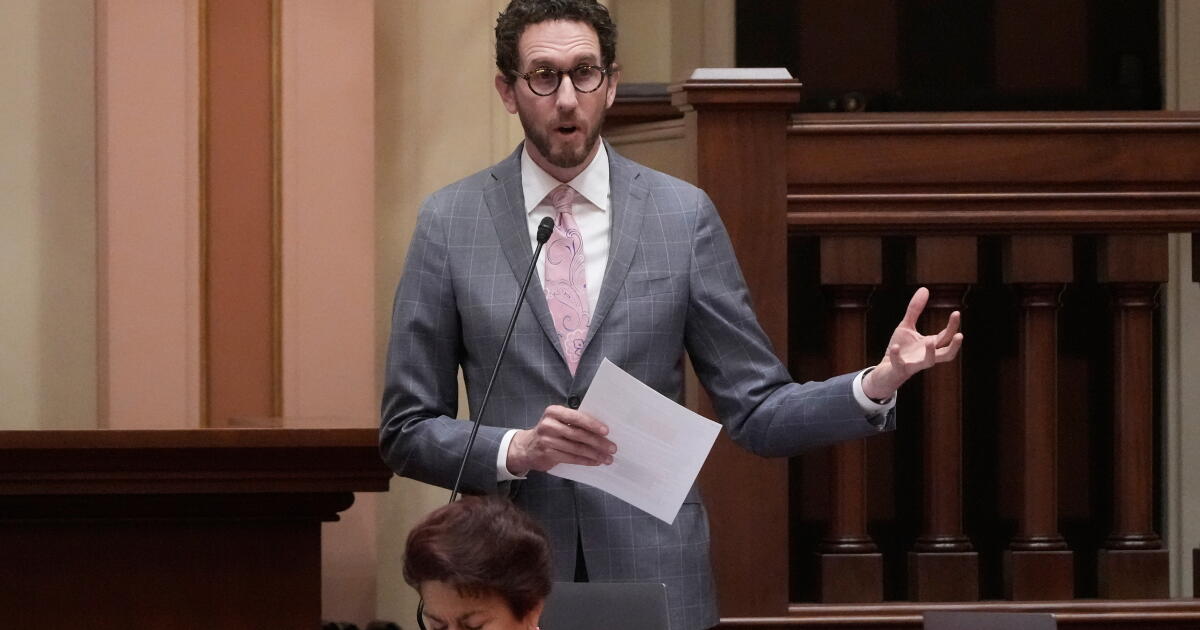
The legislation to establish the bond measure, state Senate Bill 895, was authored by Sen. Scott Wiener (D-San Francisco), who in a statement called it a “bold step to protect science, improve lives, and continue California’s global leadership on innovation for many years to come.”
The bill was sponsored by the Union of American Physicians and the University of California, as well as the United Auto Workers Local 4811, which represents some 60,000 UC academic workers.
The bond measure represents a pullback from what Wiener and supporters first proposed.
Originally conceived as a $23-billion bond measure that the Legislature would approve to go before voters in November, it was whittled down to $12 billion. But lawmakers then did not approve it in time for the November ballot.
Wiener said legislative leaders and the governor’s office then worked out a compromise, deciding on a $7.5-billion bond measure for 2028.
The measure also calls for the new state fund to establish regulations that would allow it to recoup part of its investments while not damaging innovation.
“This is a major achievement, made possible by an extraordinary coalition of people who understand the importance of investing in scientific research,” UC President James B. Milliken said in a statement.
Lovely Professional University in Punjab suspends classes for 10 days due to campus unrest over rape allegations that university officials deny.
Published On 28 Sep 202628 Sep 2026
A university in the Indian state of Punjab has suspended classes for 10 days after protests on campus over an alleged rape last week, a claim that university officials have denied.
In an announcement on Monday, Lovely Professional University in Phagwara also postponed midterm examinations due to the demonstrations, which turned violent.
Recommended Stories
list of 3 itemsend of list
“Students may, in consultation with their parents/guardians, travel to their hometowns during this 10-day period, if they wish to do so,” it said in a statement.
“Students who stay back are advised to stay inside their hostels/places of residence and avoid unnecessary movement or involvement in any unrest-related activities in the interest of their own safety.”
According to posts on social media, a female student was raped on campus. Some claimed the student committed suicide. Police said they were investigating the alleged incident, adding that the identity of the student had not been established, the news magazine India Today reported.
The protests escalated on Sunday as demonstrators clashed with police, and reports in local media said there were incidents of vandalism inside the university.
Protesters allegedly threw stones, smashed windows and set fire to vehicles on campus as well as damaging police vehicles, according to reports. Students also reportedly blocked a nearby highway.
University registrar Monica Gulati denied the rape had taken place, saying on Sunday that there was “no truth” to the allegations.
“The manner in which such false and misleading information is being systematically circulated appears to be a deliberate and concerted attempt to malign the reputation of the university and tarnish its image,” The Times of India, the country’s largest English newspaper, reported.
Meanwhile, three female students residing in the same building where the alleged rape took place appeared in a video featuring Gulati and backing the registrar’s claims that no rape had taken place.
However, according to the news channel NDTV, a separate video emerged later in which the same three students said they were instructed on what statements to make.
Ongoing concerns around sexual violence
The incident comes as the Supreme Court on Monday pushed for accountability over a recent spate of rape cases in the national capital and neighbouring districts, saying they reflected a “failure of law enforcement”.
Hundreds of students protested in Delhi last week to demand better safety for women after a teenager said she was raped by three men at a park in the city.
Last month, a 17-year-old girl was allegedly raped in a moving bus by the driver and conductor, local media reported.
Sexual violence is a major problem across India with more than 80 rapes reported to police every day, according to the National Crime Records Bureau. Activists said that number is a major undercount and many victims do not report rapes because of social stigma or coercion.
Student protests at Lovely Professional University in northern India have turned violent following social media claims that a female student was raped at a girls’ hostel by a worker. The university has denied the allegations as rumours, while police have launched an investigation.
In the second week of the college football season, in a clash of titans, the University of Texas scored 21 unanswered points to surge past Ohio State in the fourth quarter and win, 24-23.
The comeback, Gov. Greg Abbott decreed, was the greatest home victory in more than 130 years of Longhorn football.
A screen grab of one celebratory moment showed a group of students ecstatic beyond belief. They were clad in the university’s signature burnt orange. Two wore cowboy hats. One flashed “Hook ‘em Horns,” the university’s proud hand signal.
To see the picture earlier this month was to witness pure, untempered joy.
Most of the students were darkly complected and apparently of South Asian heritage. French posted the photo and wrote on X, “I heard UT graduation this year looked like this. I didn’t believe it. The problem is now obviously far worse than anyone imagined.”
“Like body-cams exposed criminals, social media is exposing how many Americans have been displaced by foreigners,” French spewed. “It’s everywhere and far worse than any of us could imagine.”
In many places, French’s unapologetic, unvarnished bigotry would be disqualifying. But given Texas’ strong Republican leaning he stands a better-than-even chance of being elected in November to the state Railroad Commission, which, despite its name, oversees Texas’ vast oil and gas industry.
The hateful gibe was perfectly in character. “In some ways in Texas this is old news,” said Brandon Rottinghaus, who teaches political science at the University of Houston.
Last year, as chairman of the Tarrant County GOP, French posted an online poll asking, “Who is a bigger threat to America?” The choice on offer: Muslims or Jews.
Speaking in March at a political conference, he urged President Trump to round up and deport every Muslim in the country, calling the Islamic faith subversive and a clear and present danger to America.
“The Republican Party is used to Bo French making these kinds of outrageous statements,” Rottinghaus said.
Still, the response to French’s latest acrid emission was telling, not least for what it says about reflexive partisanship and today’s political reward structure.
As you’d expect, his Democratic opponent, state Rep. Jon Rosenthal, was scathing. “I spent 25 years as an oil and gas engineer,” he wrote on social media. “Bo French spent Sunday morning sorting our student section by skin color … A man who can’t tell a Longhorn from a foreigner has no business regulating anything in TX.”
The state’s outgoing U.S. senator, Republican John Cornyn, was also quick to denounce French. “This is the Republican nominee for statewide office,” Cornyn said in a post. “Are other Republican elected officials going to condemn the intolerance and racism, or look the other way while it becomes normalized.”
“That is not my message,” Abbott said in a written statement, summoning the moral clarity and political courage of a puff pastry. “We all support our college football teams. The way we win the state is the same way we win football games. We unite under the brand of Texas.”
Then, just to have it both ways, Abbott suggested “that doesn’t mean that Texas cannot also lead in having the toughest immigration laws of any state in America and freezing H1B visas at our universities.” (The overwhelming majority of those holding H1B visas are Asian nationals from India and China.)
Paxton responded by attacking his Democratic opponent, state Rep. James Talarico, for saluting Cornyn for taking a stand against French’s prejudice. “I condemn racism in all its forms,” Paxton wrote on X, adding, “Only one person in this race has a history of dividing Texans by race, and it’s James Talarico.”
A simple, straightforward condemnation shouldn’t have been hard. Lacey Hull, a Republican state representative from Houston, was among those in the GOP who showed how.
“Please delete this,” she urged French on X. “This post breaks my heart. I see college kids cheering on their football team. I see Texans.”
Both need a robust GOP turnout to win in November and neither wants to risk alienating too many within the party’s xenophobic, anti-immigrant wing.
“They’re concerned about turnout,” said Mark Jones, a political scientist at Rice University. “Texas is a red state, but one thing that Republicans are concerned about is that the base may not turn out in as large a number as they need.”
Given French’s loathsome history, Abbott and others in the party establishment worked hard to keep him from winning the Republican nomination, Rice noted. But not Paxton. He headlined the kickoff to French’s campaign and has good reason to be glad he won and is now part of the GOP ticket.
His presence means that Paxton is only the second most odious figure seeking statewide office in Texas in November.