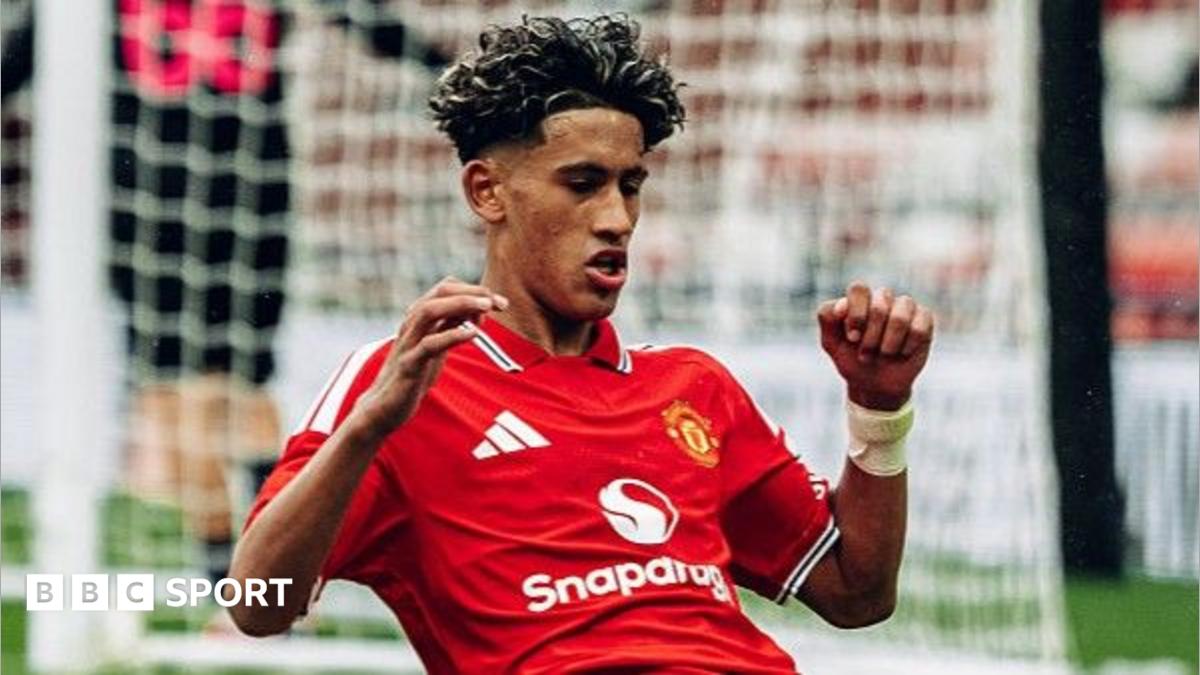
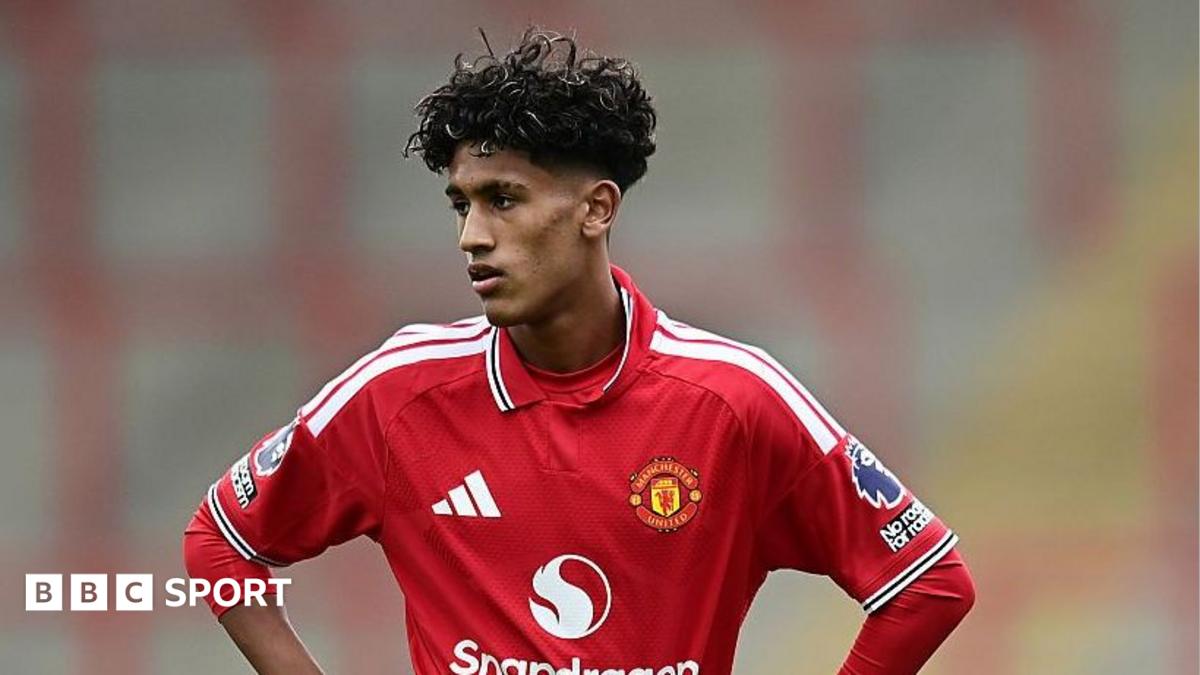
While tensions between Gabriel’s camp and United had been simmering for a number of months, sources have told BBC Sport the player’s decision to seek a move away was ultimately triggered by his non-inclusion in Michael Carrick side for the Champions League encounter with Azerbaijani champions Sabah FK on 10 September.
The youngster’s camp had expressed a desire for Gabriel to be used as a substitute against Sabah – which, on paper, was the easiest of United’s league-phase games.
Sources say the prospect of the Londoner coming on against Brighton in the EFL Cup on 16 September was also discussed, with United officials subsequently insistent that was the plan.
Had he played in either match, Gabriel would have become United’s youngest ever player.
However, by the time the encounter with Fabian Hurzeler’s side arrived, the striker had already told the club of his intention to quit and had left the country.
Gabriel could not play against Sabah because he had not been registered on United’s Uefa A list of players when it was announced on 3 September. The precise reasons for this have not been made clear.
It did not prevent him scoring a hat-trick in a Uefa Youth League game against them at Leigh Sports Village earlier on 10 September. While he has not been back to United since, it is not clear whether anything significant happened after that game.
For their part, United believe they made it clear they view Gabriel as immensely important to their first-team future, even though sources have indicated the player did not report for the start of the academy’s pre-season training schedule at the beginning of July – a week earlier than the senior squad – despite being asked to do so.
Sources also say they lobbied the Premier League to allow the forward to use “JJ Gabriel” on the back of his shirt – which they believe underlined their commitment to the academy prospect.
Gabriel’s real name is Joseph Junior Andreou O’Cearuill – but he is reported to have changed his name for commercial purposes.
In addition, United say they have provided Gabriel with first-team care and services – included regular meetings with senior coaches and nutritionists.
That he was included in the senior team photo is also viewed as further evidence of their commitment to his development and transition into first-team football.
In 2008, Drogheda went into examinership, Ireland’s equivalent of administration, and were deducted 10 points in the league.
Trabzonspor fans heard of their plight and sent letters to the club with cash inside.
Two years later, their relationship was made official when they became sister clubs and there were plans for a ceremonial friendly in Dublin in 2013.
“They travelled over here to play and there was a freak deluge of rain that fell within an hour of kick-off,” explains Wogan.
“We had our staff in the turnstiles waiting to scan tickets in, but the game was deemed unplayable and Trabzonspor went home without playing the fixture.”
So Thursday’s match has been a long time coming.
When Drogheda announced the friendly on social media on 2 September, Trabzonspor fans reacted in their droves. The post on X has been seen well over half a million times.
About 30% of Drogheda’s social media following is from Turkey. More than their share of followers from Ireland.
And it is not just online where the crossover of fans is being seen.
Trabzonspor shirts and flags are commonly spotted at Drogheda matches and Turkish fans sometimes visit the club during the week just to see the stadium.
One Trabzonspor fan, Cafer Bektas, lives a couple of miles outside Drogheda and attends every game.
When he first moved to the area, wearing a Trabzonspor jersey caught the attention of locals and got him discounts in shops.
South Korea calls for a formal apology from North Korea over the DMZ explosion that injured three soldiers.
Published On 30 Sep 202630 Sep 2026
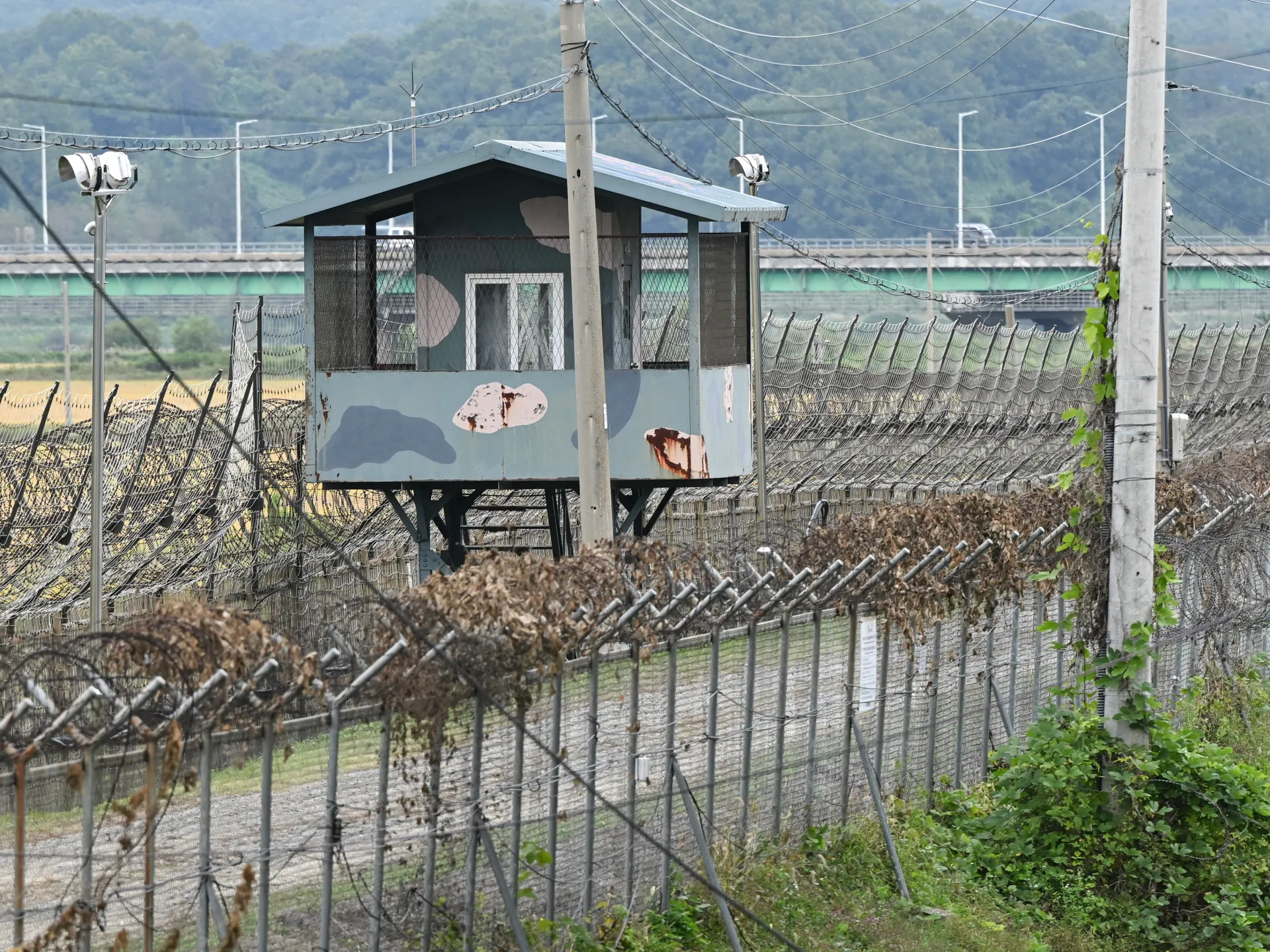
South Korea’s military has demanded an apology from North Korea over landmine explosions earlier this month in the border zone between the two countries that wounded three soldiers.
Three South Korean soldiers were injured in two explosions on September 21 near the military demarcation line in the western section of the Demilitarized Zone, a heavily fortified border buffer zone between the Koreas that is commonly known as the DMZ.
Recommended Stories
list of 3 itemsend of list
Kang Hyunwoo, the South Korean joint chiefs of staff’s director of operations, said the military “strongly urges” North Korea to apologise for the blasts and take “responsible measures” to prevent a recurrence.
“This is a clear violation of the Armistice Agreement and undermines the spirit of existing inter-Korean agreements; it must be stopped immediately,” he said on Wednesday, adding “we strongly urge an apology and responsible measures”.
Defence Minister Kang Shin-chul said South Korea would consider unspecified “corresponding measures” if a complete investigation confirms the North was responsible.
Kim Yo Jong, the sister of North Korean leader Kim Jong Un, said the South Korean assessment is a “conspiratorial farce” and accused Seoul of making groundless claims to create a pretext for provocation against Pyongyang.
She also criticised the South for broadcasting warnings and firing warning shots at North Korean troops conducting front-line fortification work, adding “our soldiers have never crossed the border”.
“If the [South Korean] military gangsters fire at our soldiers carrying on the permanent project for the southern border, not warning shots, our border units will take immediate and merciless retaliatory action,” she said.
The United Nations Command said on Wednesday it had “identified an active Democratic People’s Republic of Korea (North Korea’s) anti-personnel mine on the ROK side of the Military Demarcation Line”, in a joint investigation with Seoul’s military.
“Based on the findings of the investigation, UNC determined that an Armistice Agreement violation occurred,” it added.
The UN Command is a US-led multinational military force charged with overseeing the armistice agreement that halted fighting in the Korean War and administers the southern side of the DMZ.
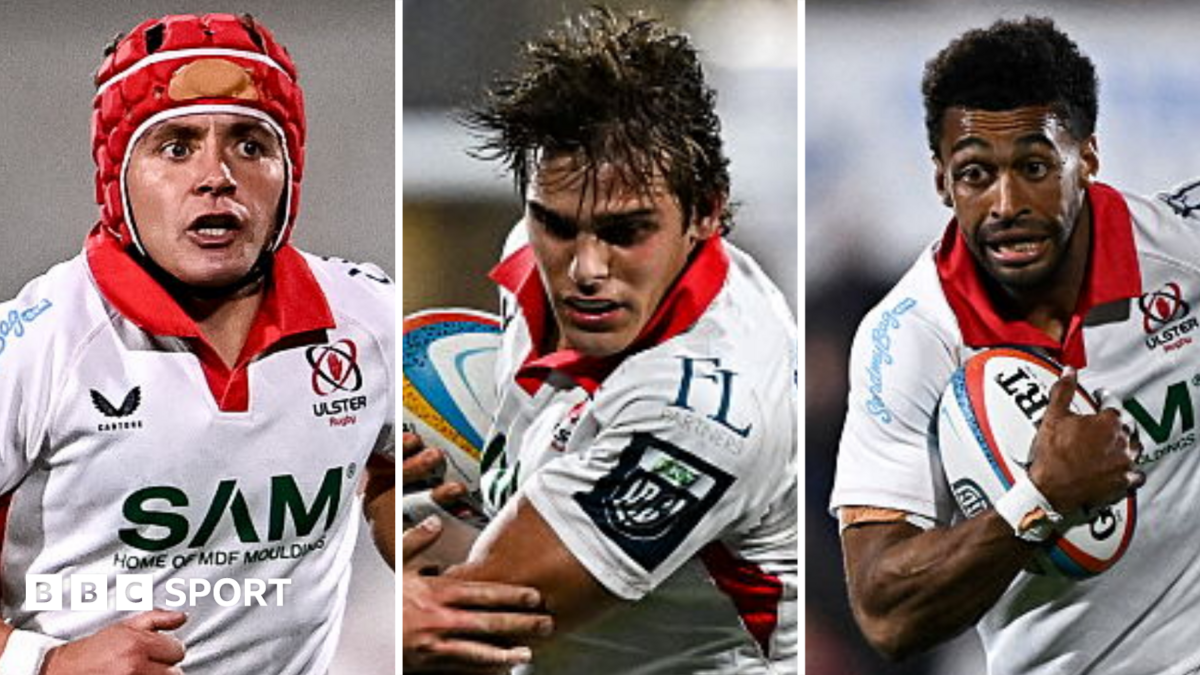
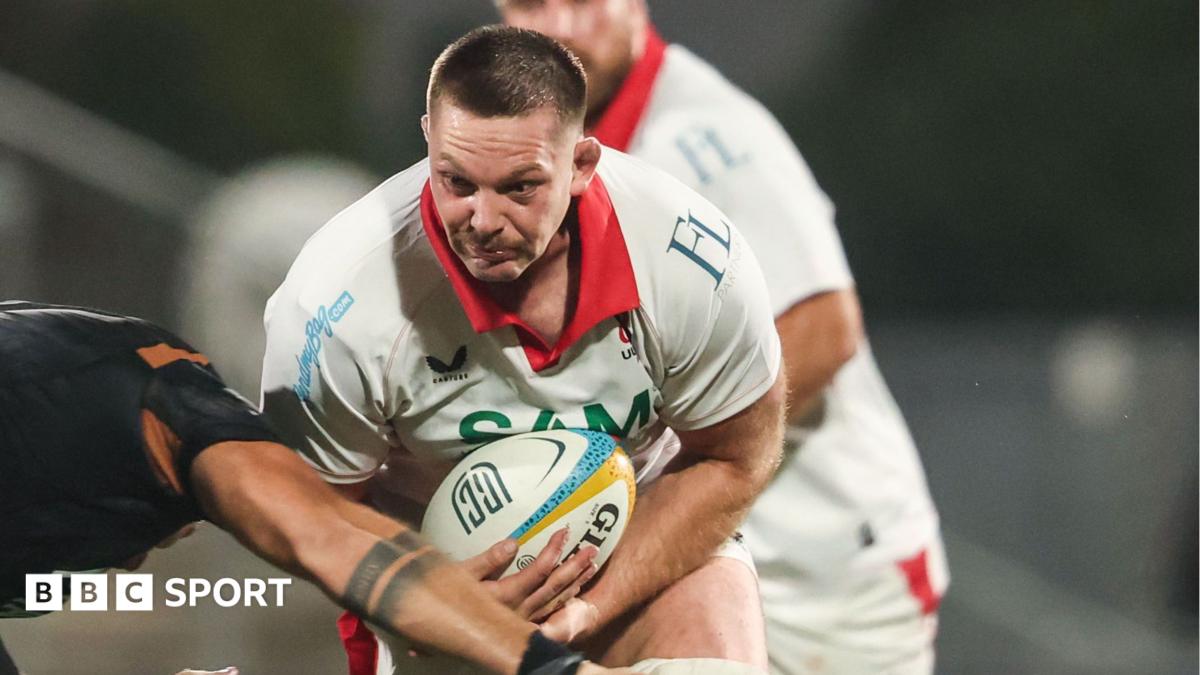
Ulster will be without backs Michael Lowry, Aitzol Arenzana-King and Robert Baloucoune for Saturday’s United Rugby Championship game against Glasgow at Scotstoun (17:30 BST).
Full-back Lowry and wing Baloucoune suffered concussions in the Irish province’s 34-29 defeat by Edinburgh in their opening URC game of the 2026-27 campaign.
Winger Arenzana-King picked up a knee injury during the game in Belfast, from which Ulster emerged with two bonus points.
All three players started last weekend’s fixture, with Lowry captaining the side and scoring the first of Ulster’s four tries in a match which Richie Murphy’s side’s comeback fall short after they bounced back from a 34-5 deficit.
Glasgow began their season with an impressive 26-20 victory on the road at Munster.
Rooney’s former United team-mates Rio Ferdinand and David de Gea both posted on social media after news of the guilty verdict emerged on Friday, suggesting they should be awarded retrospective title wins.
“When I’ve heard of ex-team-mates and people saying, ‘we’ve won another medal’, I’m happy with the five I’ve won,” said Rooney.
“I wouldn’t want this one just sat there… 15 years later or whatever it was you get a medal because City cheated. I wouldn’t feel comfortable.
“The question is, would I want to receive that medal for finishing second? No.
“Some players might. I just wouldn’t feel comfortable for accepting a Premier League medal for finishing second.”
While Rooney is against titles being taken away from City, he does believe they should be relegated.
“I do think we’re going to see City getting relegated,” said the 40-year-old. “However that happens I don’t know but I think we’re going to see them get relegated.”
Rooney added: “I’d put them in the lowest league they can go in and then put restrictions on them in terms of how much money they can spend for the next three or four seasons.
“If you’re just putting them in the Championship, and I get that’s a massive punishment, they’re going to come back up. Where, I feel if they have got restrictions… League Two, whatever… that could be very difficult for them.
“For instance, if they got a 20-point deduction for the next three years then players won’t want to stay there. If it’s Championship for a season, you could talk players round.
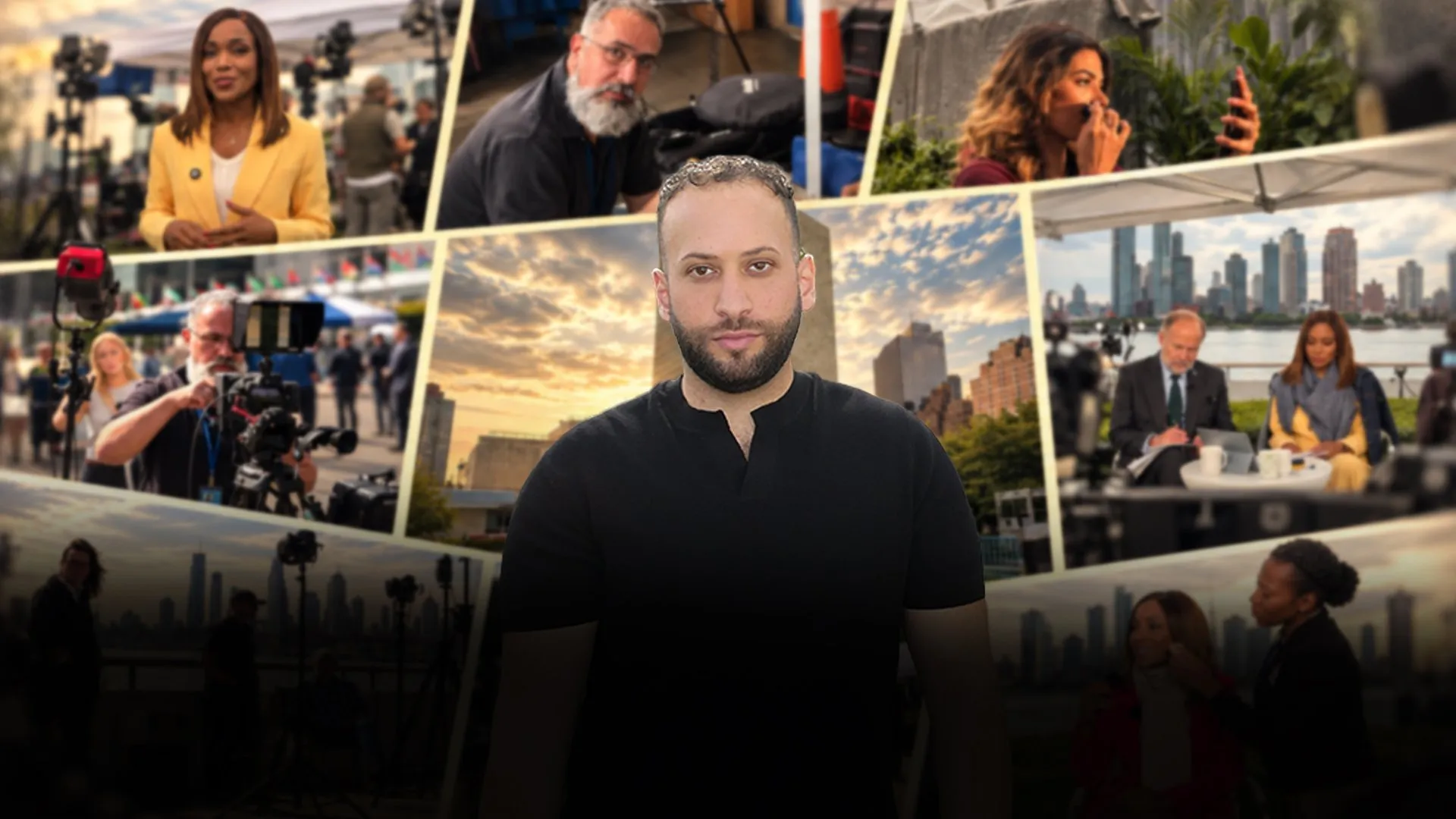
Once a year, leaders from across the globe meet face-to-face at the UN General Assembly, and Al Jazeera’s journalists were there covering daily developments. Here’s a look at what it was like behind the scenes of the coverage you saw online and on TV.
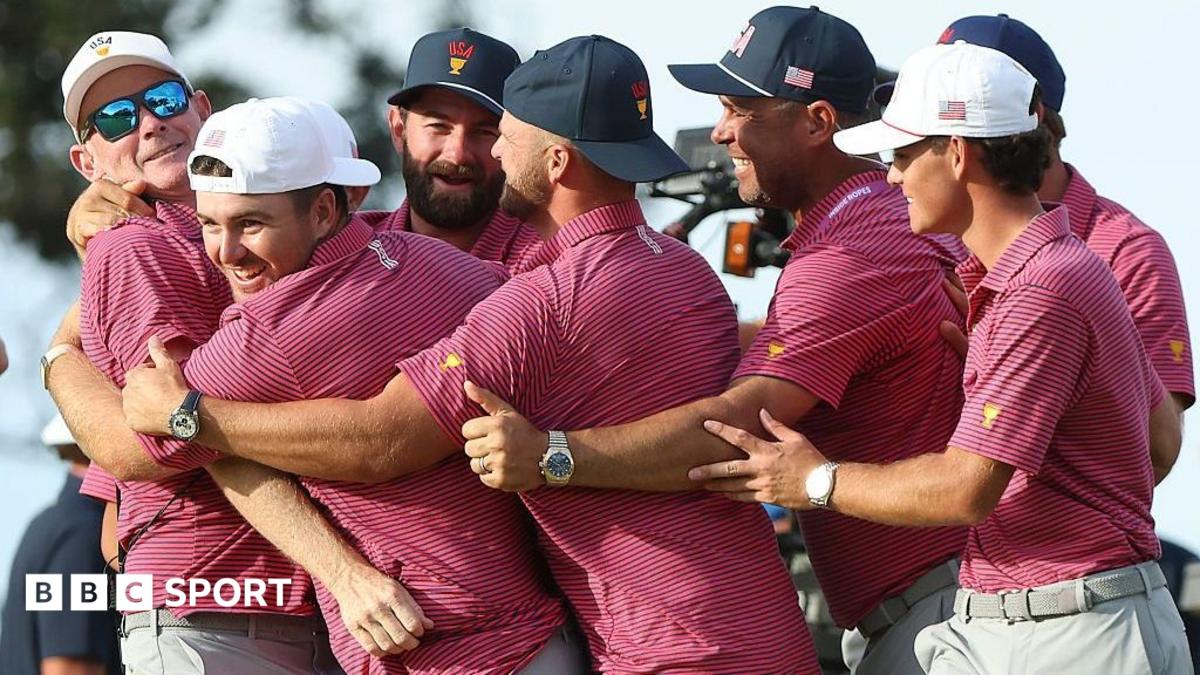
The United States completed a thrilling comeback on the final day to beat the Internationals and win an 11th successive Presidents Cup.
The hosts, containing eight of the world’s 11 top-ranked players, trailed by three points going into Sunday and were looking to avoid just a second defeat since the biennial competition began 32 years ago.
They dominated the singles, winning nine of the 12 matches, to seal a 17-13 win at Medinah – the scene of Team Europe’s famous Ryder Cup comeback win in 2012.
Jacob Bridgeman secured the decisive point by holing a four-foot par putt at the 18th to seal a one-up win over Australia’s Min Woo Lee.
There were also wins for Cameron Young, Justin Thomas, Scottie Scheffler, Chris Gotterup, Collin Morikawa, Patrick Cantlay, Xander Schauffele and Jackson Koivun.
“I told the guys last night that funny stuff happens here. Medinah’s got a history of funny things happening,” said US captain Brandt Snedeker, who was a member of the team beaten by Europe in 2012.
“All these guys fought for each other, fought for this country, fought for this team.”
International captain Geoff Ogilvy said: “The US team came out firing, we knew they would.
“It was on a knife edge all day. If some of those one downs we had out there had flipped to one up, the numbers looked really good and who knows what momentum that could give.”
US President Donald Trump was in attendance in his role as honorary chairman, greeting the players and making a speech before the matches got under way.
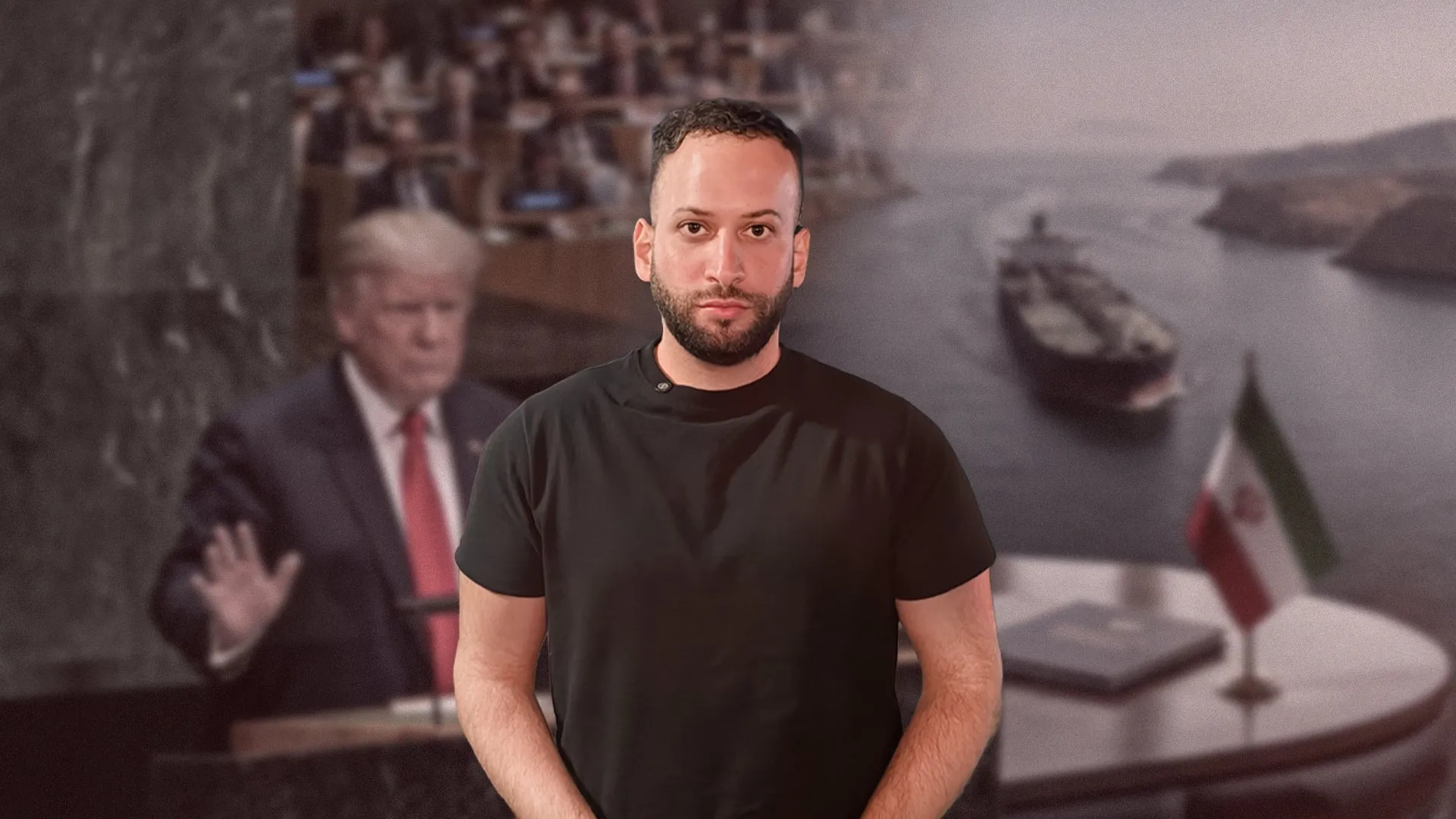
As the UN General Assembly wraps up with mixed diplomatic outcomes, Al Jazeera’s Mohammad Qasem reports on how US President Donald Trump has rejected Iran’s latest proposal to reopen the Strait of Hormuz. Meanwhile, Russia and Germany have re-established high-level talks, and China has criticized Washington’s approach to the region.
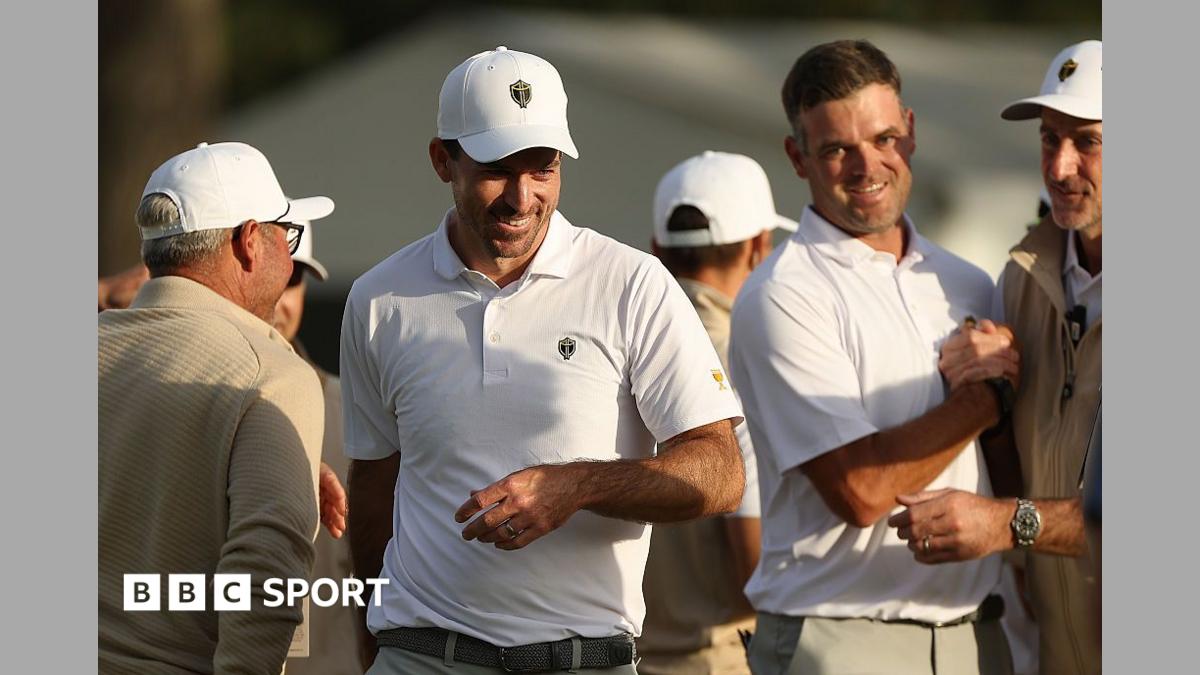
The International team need five points on the final day to secure a first Presidents Cup in 28 years after holding off a United States fightback on day three in Medinah.
The Internationals were behind in every match at one stage but will go into Sunday’s singles holding a 10-5-7.5 lead.
The hosts had the better of the morning session, winning two and tying one of the four-balls.
But the teams split the afternoon foursomes, with Canada’s Corey Conners saving par at the 18th to win the final match on the course and preserve the Internationals’ three-point lead.
The International team have only won the President’s Cup once since its inception in 1994 and never on American soil.
“We were down in every match, and to come back and get one and a half points out of this morning, we felt that was a little victory because we were down everywhere,” said team captain Geoff Ogilvy.
“This afternoon, the same thing happened. Team USA played so well all day. They played some really high-level foursomes, especially this afternoon.
“For the boys to somehow come back and pinch two points out of that and split the session was amazing.”
Sunday sees 12 singles games take place, with each side needing 15.5 points to seal victory.
Authorities warn residents that extreme conditions could pose risks and urge people to stay away from flooded areas.
Published On 26 Sep 202626 Sep 2026
Residents of the northeastern United States are facing a powerful storm known as a nor’easter that has knocked out power and caused flooding across the region.
The storm has led to the cancellation of more than 400 flights and power outages affecting more than 88,000 homes and businesses as of Saturday afternoon local time. That figure is down from a high of 119,000 earlier in the day.
Recommended Stories
list of 3 itemsend of list
Bob Oravec, lead forecaster with the National Weather Service in College Park, Maryland, said that the storm is likely to persist, with “a lot of high winds, a lot of high tides and heavy rain possibility over the next few days for the northeastern US”.
The governors of New York and New Jersey declared states of emergency in counties expected to see the worst of the storm, including New York City, on Friday.
Large puddles and debris line a walkway in the Dumbo neighbourhood in Brooklyn as a nor’easter moves through the area on September 26, 2026 in New York [Spencer Platt/Getty Images via AFP]
Authorities have also warned residents about the risks of flooding and high tides, cautioning people to stay away from the beach and areas inundated with water.
“Anyone who goes in or near the water this weekend is literally gambling with their life,” New York Governor Kathy Hochul said.
Despite the warnings, people have been seen kayaking down flooded streets in Long Island, New York, while others took advantage of large swells in Hampton, New Hampshire.
“In all the canals, the water is up really high and coming into people’s back yards,” Jay Boyd, a resident of Ocean City, Maryland, told The Associated Press news agency.
Oravec said that nor’easters are not unusual as the region of New England enters the autumn season, but that “this might be a little earlier than average for a big storm”.
A surfer catches a wave as a nor’easter batters the US northeast coast, in Rockaway, New Jersey, on September 26, 2026 [Caitlin Ochs/Reuters]
About 425 flights have been cancelled and 1,338 delayed so far on Saturday, according to data from the flight tracker FlightAware.
Concerts and sporting events have also been cancelled, including musician Ed Sheeran’s scheduled shows in the state of Massachusetts on Friday and Saturday.
Abuja, Nigeria – Africa’s long-running campaign for permanent representation on the United Nations Security Council is back in focus at the 81st UN General Assembly, with leaders renewing calls to reform a body whose five permanent members have remained unchanged since 1945.
UN Secretary-General Antonio Guterres used his final address to the General Assembly on Tuesday to renew his call for Security Council reform, saying it must become more representative and better reflect today’s geopolitical realities.
Nigeria’s Vice President Kashim Shettima, delivering President Bola Tinubu’s national statement, called for at least two permanent seats for Africa, with veto powers for as long as the veto exists, as well as five non-permanent seats for the continent.
Ghana’s President John Mahama made a similar appeal: “Security Council reform is not a favour to Africa; it is an imperative for the legitimacy, credibility and survival of the United Nations”.
The renewed calls highlight the scale of Africa’s demand. But translating them into an agreement that changes the Council’s structure remains a far more difficult task.
A reform process that has stalled
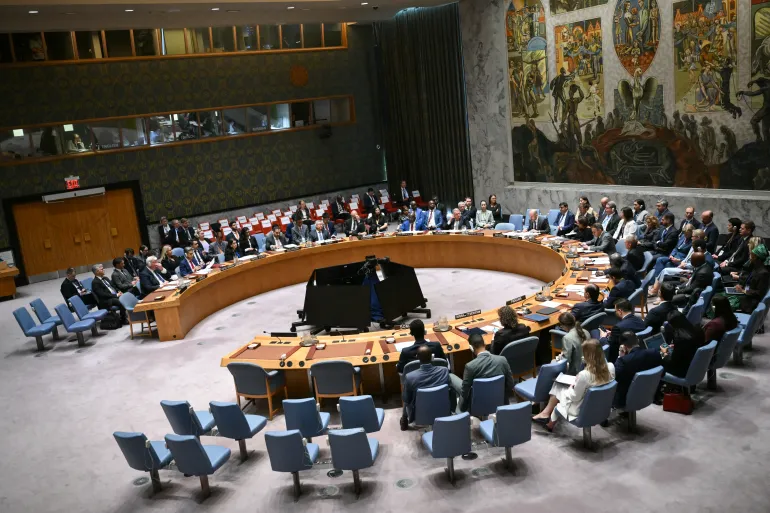
The Security Council has 15 members: five permanent members, China, France, Russia, the United Kingdom and the United States, and 10 members elected by the General Assembly for two-year terms.
The five permanent members hold veto power, allowing any one of them to block a substantive Council resolution.
No African country has a permanent seat.
Yet Africa remains central to much of the Council’s work. In 2025, the Council adopted 44 resolutions, including 24 under Chapter VII of the UN Charter, which covers measures such as sanctions and authorisations for the use of force.
Eighteen of those 24 Chapter VII resolutions concerned Africa.
For Professor Ibrahim Gambari, a former Nigerian foreign minister and former Nigerian permanent representative to the UN, the issue is not simply one of geography.
“The status quo is not really interested in change,” he told Al Jazeera. “In the appointment of the Secretary-General, you cannot be a candidate unless each of the five permanent members agrees. Therefore, we have the privilege of the unelected P5, which they don’t want to relinquish.”
Gambari said Africa’s absence was difficult to justify given the continent’s size and the amount of Security Council business involving it.
“In the case of Africa, we have a whole continent that has the largest single bloc, yet has no permanent seat on the Security Council,” he said.
The General Assembly launched the intergovernmental negotiations process on Security Council reform in 2008. The talks cover the Council’s size, membership categories, regional representation and the veto, and have continued through successive General Assembly sessions without agreement on the core questions.
Changing the Council’s permanent membership would also require an amendment to the UN Charter. Under Article 108, that requires approval by two-thirds of the General Assembly and ratification by two-thirds of UN members, including all five permanent members.
That gives the existing permanent members a formal role in any change to the system that grants them permanent membership and veto power.
Nigeria wants a permanent seat
Which African countries would eventually occupy any new permanent seats is another unresolved issue.
Nigeria has consistently presented itself as a country prepared to take on such a role. At this year’s General Assembly, the country renewed its call for at least two permanent African seats with all the rights and responsibilities of permanent membership, including the veto for as long as it exists.
Dr Fola Aina, a political scientist and international security expert at the School of Oriental and African Studies (SOAS), London, told Al Jazeera the issue also carried particular significance for Nigeria.
“Securing this position would essentially elevate Nigeria’s global diplomatic influence, give Africa a continuous voice in international security decisions and grant Nigeria the power to consolidate its position as a regional hegemon and middle power,” he said.
“The timing of Nigeria’s push is particularly strategic given the current age of strategic competition.”
Nigeria is not alone in seeking a permanent role. Egypt and South Africa have also pursued permanent representation, while other African states have expressed interest.
The African Union, however, has not selected specific countries to occupy the proposed seats. Its common position calls for at least two permanent African seats and five non-permanent seats on an expanded Council, with the AU determining which countries should represent the continent.
The veto question
Even if agreement could be reached on who should represent Africa, another obstacle would remain: the veto.
The African Union’s Ezulwini Consensus calls for any permanent African members to have the same rights and privileges as the existing permanent members, including veto power for as long as the veto remains part of the Council’s system.
The UN Security Council at United Nations headquarters in New York [Angela Weiss/ AFP]
African governments have therefore argued that adding permanent seats without equivalent powers would not fully address the imbalance they are seeking to correct.
That leaves two separate questions: whether the Council should expand and what powers any new permanent members would receive.
A question of influence
Gambari argues that Africa’s absence also affects the Council’s day-to-day work.
“All these peacekeeping missions in Africa are based on the mandate of the Security Council,” he said.
“The P5 assign themselves the role of penholders, which hardly allows elected non-permanent African countries to initiate draft resolutions affecting their region.”
He said the imbalance was also visible in the way Security Council missions operate on the continent.
“Even Security Council missions to Africa are not led by Africans nowadays. How can the parties in dispute have confidence in such a team?” he said.
“Even for the Security Council’s continued relevance, it has to be reformed so that Africa can have representatives in the permanent seat category.”
For Favour Aniezi, a Nigerian creative and youth advocate, the issue is also about who has influence over decisions affecting the continent.
“Beyond representation, Africa’s absence from the permanent seats of the UN Security Council is a question of whose voice gets to shape decisions that affect the continent,” she told Al Jazeera.
“As a young Nigerian woman, I think it matters that Africa is not only present when global institutions discuss our challenges but has a meaningful role in deciding how those challenges are addressed. We should not simply be represented at the table, Africa should have a voice with the weight to influence what happens at it.”
For now, the core questions remain unresolved: how many new permanent members there should be, which African countries would take the seats, whether they would receive veto power and whether the existing permanent members would accept the changes.
“As long as they keep sticking to this anachronistic formula, reforms will be hard to attain,” Gambari said.
The Damned United tells an unbelievable true story that’s perfect for Ted Lasso fans.
Hayley Anderson Screen Time TV Reporter
10:10, 25 Sep 2026
Inside The Damned United cast on Netflix. (Image: BBC FILMs)
Netflix’s The Damned United stars legends from the worlds of Harry Potter, The Good Omens and Adolescence.
After dropping on Netflix at the weekend, sports drama The Damned United has soared into the streamer’s Top 10 most-watched list and continues to rise in the charts.
Originally released in 2009 and based on a novel by David Peace three years prior, The Damned United tells the turbulent tale of Brian Clough and his disastrous run as the manager of Leeds United in 1974. Only lasting 44 days in the job, Clough was quickly able to alienate the players and the board, leading to the collapse of his professional football career.
As Netflix subscribers continue to discover the classic sports film, here’s everything there is to know about The Damned United cast.
The Damned United cast in full
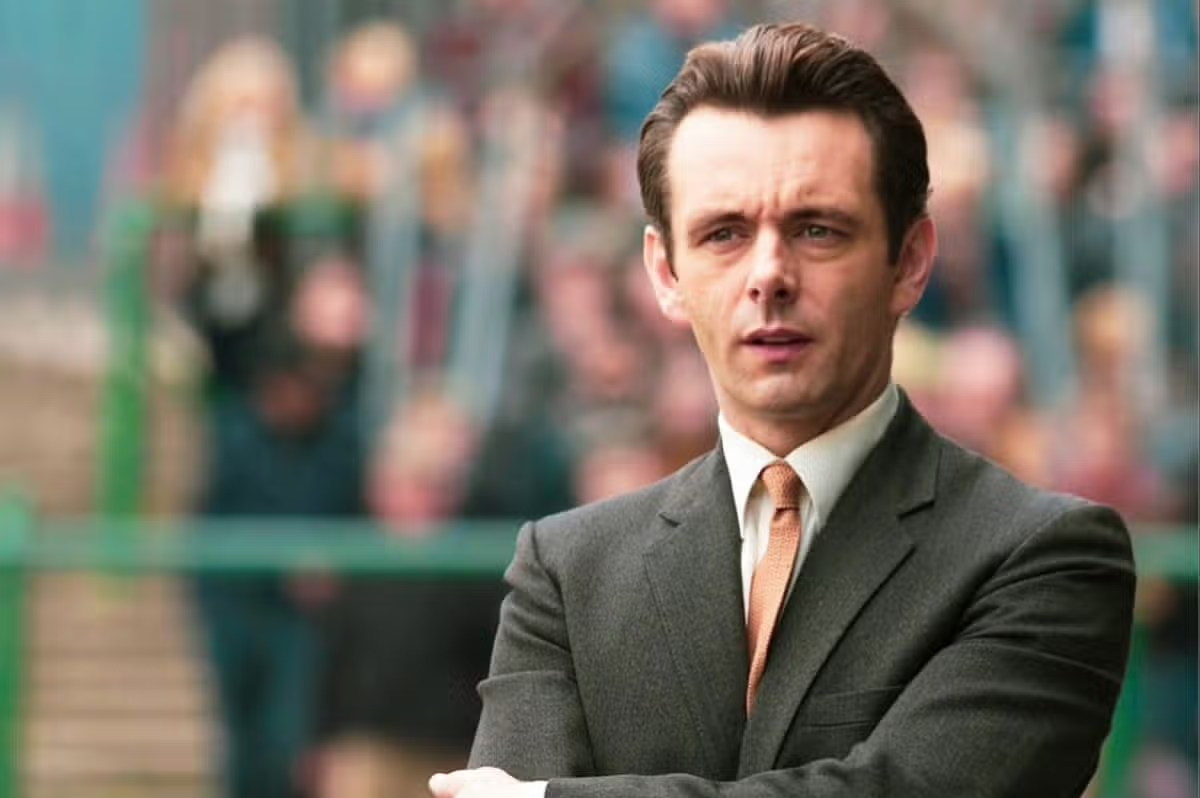
Brian Clough – Michael Sheen
Watch Jose Mourinho Netflix doc with free Netflix subscription
This article contains affiliate links, we will receive a commission on any sales we generate from it. Learn more
Jose Mourinho’s three-part Netflix documentary is available to watch at no extra cost for Sky customers as the provider gives away free subscriptions with each of its Sky Stream TV bundles.
Arrogant and fiercely outspoken Brian Clough wasn’t quiet when it came to criticising Leeds United’s former manager Don Revie.
So it took Clough by surprise when he was asked by the team’s board to take over managing the reigning champions.
Actor Michael Sheen has starred in an abundance of hit shows and films throughout his career including The Queen, Good Omens, Masters of Sex, The Twilight Saga and Frost/Nixon.
Peter Taylor – Timothy Spall
Peter Taylor is Clough’s loyal assistant manager and best friend who helps ground the fiery manager when needed.
He is portrayed by actor Timothy Spall who is best remembered for his work in Mr Turner, The King’s Speech and in the Harry Potter franchise as the villainous Peter Pettigrew.
Billy Bremner – Stephen Graham
Billy Bremner is the hard-working captain of Leeds United who is Clough’s main antagonist, leading the resistance that brings about the manager’s infamously short 44-day run at the club.
Bremner is brought to life in The Damned United by Emmy Award-winning actor Stephen Graham, renowned for his work in Netflix’s Adolescence, This is England, A Thousand Blows and Boardwalk Empire.
John O’Hare – Martin Compston
John O’Hare is the team’s striker, known for his aggressive team spirit while playing under Clough.
He is portrayed by none other than Martin Compston, famed for starring as DI Steve Arnott in the unforgettable Line of Duty.
Before becoming a household name in the BBC crime drama, Compston was a professional footballer in Scotland and made a couple of appearances playing for Greenock Morton.
Don Revie – Colm Meaney
Don Revie is the legendary, formidable Leeds United manager who leaves to manage the England national team. It is his exit from the team that leads his rival Clough to begin his chaotic short stint at Leeds.
Don is played by actor Colm Meaney who stars in Remarkably Bright Creatures, In the Land of Saints and Sinners and Star Trek: Deep Space Nine.
Sam Longson – Jim Broadbent
Prior to Clough joining Leeds United, he was the manager of Derby County with Sam Longson acting as its chairman.
Actor Jim Broadbent is recognised for starring in the Harry Potter and Bridget Jones franchises, as well as Game of Thrones and Only Fools and Horses.
The Damned United is available to watch on Netflix.
Dozens of delegates walked out on Netanyahu, Yemen’s government pleaded for help, and Kuwait riled against threats to sovereignty. Al Jazeera’s Zeena Aqel explains what happened on day three of the UN General Assembly.
I love Loch Lomond in autumn. I’d start with a walk around Balmaha village and a stretch of the West Highland Way, pretending I’m there for the scenery rather than earning the right to eat something massive afterwards. Autumn is when it looks best: orange hills, cold air, dramatic clouds and the constant Scottish gamble of whether you’ll get sunshine, sideways rain, or both within 10 minutes. I finish, if I’m not driving, with a wee dram to properly round things off. Pete
Cornwall’s wild autumn seas
The coastal path from Godrevy. Photograph: Peter Lane/Alamy
The rough beauty of Cornwall’s sea views appeals to me. A great autumn day involves walking along the staggered cliff edges between Godrevy and Portreath. The isolated nature of the coastal paths makes me feel as if the sea is singing just for me, while below the waves go wild, waiting to be admired. On this walk, you will be rewarded with the most breathtaking views, lone benches and burnt orange sunsets. Oliwia
A hydro-powered house in Northumberland
Cragside was a technological marvel of the 19th century, with hydroelectric power and hydraulic gadgets. Photograph: Jonathan Ayres/Alamy
When I first visited the National Trust’s Cragside in Northumberland, a staff member at the entrance made the bold claim that it was “the best place in England”. In autumn you can really see their point. The estate’s 1,000 acres are covered with a huge variety of trees that transform the landscape into a mixture of reds, oranges and deep greens, contrasting perfectly with the often misty Northumberland weather. It’s a perfect autumn day trip for woodland walks, possibly stopping for a picnic at one of the many lakes or gardens, and visiting the extraordinary hydro-powered Victorian house with its pioneering gadgets. Everly
Profile
Readers’ tips: send a tip for a chance to win a £200 voucher for a Coolstays break
Show
Guardian Travel readers’ tips
Every week we ask our readers for recommendations from their travels. A selection of tips will be featured online and may appear in print. To enter the latest competition visit the readers’ tips homepage
–
– back sections make it manageable without losing the drama. Bonita Philp
Deep in the forest in the Scottish Borders
Lichen on fir trees in the Glentress Forest. Photograph: Tom Richardson Scotland/Alamy
Glentress Forest in the Scottish Borders is hard to beat on a crisp autumn day. Start with a walk or mountain-bike ride through the forest, when the trails are surrounded by copper, red and gold, and climb high enough for brilliant views across the Tweed valley. Afterwards, warm up with coffee and something sweet at the cafe before heading into nearby Peebles for a wander along the river and around its independent shops. It feels properly remote despite being less than an hour from Edinburgh. And, whether you’re cycling or walking, autumn is when the forest is at its most spectacular. Remi Lapeyre
Birmingham’s secret oasis
Winterbourne Gardens. Photograph: Michael Kemp/Alamy
Winterbourne House and Garden at Birmingham University is a wonderful little oasis in Edgbaston, just outside the city centre. A beautiful Arts and Crafts style house, set in stunning gardens, it is a lovely place for a wander and is especially beautiful on a sunny day in early autumn when everything is golden. See herons at the reservoir, talk to friendly robins by the walled garden and browse the bookshop. Have coffee there and then head into nearby Harborne for lunch or dinner. Rachel
Rivers and ruins in a Lancashire valley
The River Roddlesworth near Darwen. Photograph: Walker/Alamy
Rocky Brook is the name given by locals to the River Roddlesworth, which flows through a wonderful wooded valley at the edge of the West Pennine Moors. The woodland, planted by Liverpool Corporation Waterworks, provides plenty of autumn colour. A network of paths allows exploration of the woods and the ruins of Hollinshead Hall and well house. There’s a public car park, cafe and pub (the Royal Arms) at Ryal Fold, and for those who walk north-west through the woods there’s also the Hare & Hounds at Abbey Village. Four buses a day run from Blackburn to the Royal. Graham Dean
Sessile oaks in Padley Gorge. Photograph: Septemberlegs/Getty Images
The Longshaw estate in the Peak District is perfect for an autumn stroll. Both Oaks Wood and Bolehill Quarry have a huge variety of fungi in their hidden depths. The twisted oak trees in Padley Gorge look at their most spectacular on early autumn misty mornings. It’s easy to explore pathways on the estate with the friendly free social walk every Wednesday. Finish a wonderful day with a treat in the cafe. Katharine
A lime tree avenue in Nottinghamshire
Clumber Park’s avenue of trees is one of the longest in Europe. Photograph: Eye35 Pix/Alamy
Clumber Park is a must-visit at this time of year. The National Trust property features peaceful woodlands with golden leaf carpets, crisp lakeside views and an ornamental bridge. You’ll want to keep your camera handy as you enter a double tree avenue of 1,296 limes stretching three miles (one of the longest in Europe), which provides a gorgeous golden canopy. The walled kitchen garden is a favourite with its massive apple collection and seasonal displays. The apple juice I’ve tried here is some of the best I’ve tasted. Asma
A Roman autumn at Hadrian’s Wall
Late autumn at Steel Rigg. Photograph: Donaleen Shiell/Alamy
My perfect autumn day is walking Hadrian’s Wall from Steel Rigg, when the moorland turns copper and gold and every climb rewards you with another enormous Northumberland view. Pack a flask, sturdy boots and something waterproof – the weather changes its mind even faster than I do. You only pay for parking, and shorter out- and
Winning tip: Steaming through north Wales
The Llangollen Railway. Photograph: Paul Weston/Alamy
My perfect autumn day out is a trip on the Llangollen Railway in north Wales. There’s something magical about travelling through the Dee valley on a steam train when the leaves have turned orange and gold. We start in Llangollen, grab something warm to drink, then climb aboard for the journey alongside the River Dee, watching the autumn scenery through the window. Afterwards, we wander around Llangollen, exploring the little shops. It’s simple, nostalgic and feels like autumn properly arriving – especially when you hear the steam train whistle through the valley. Chelsea
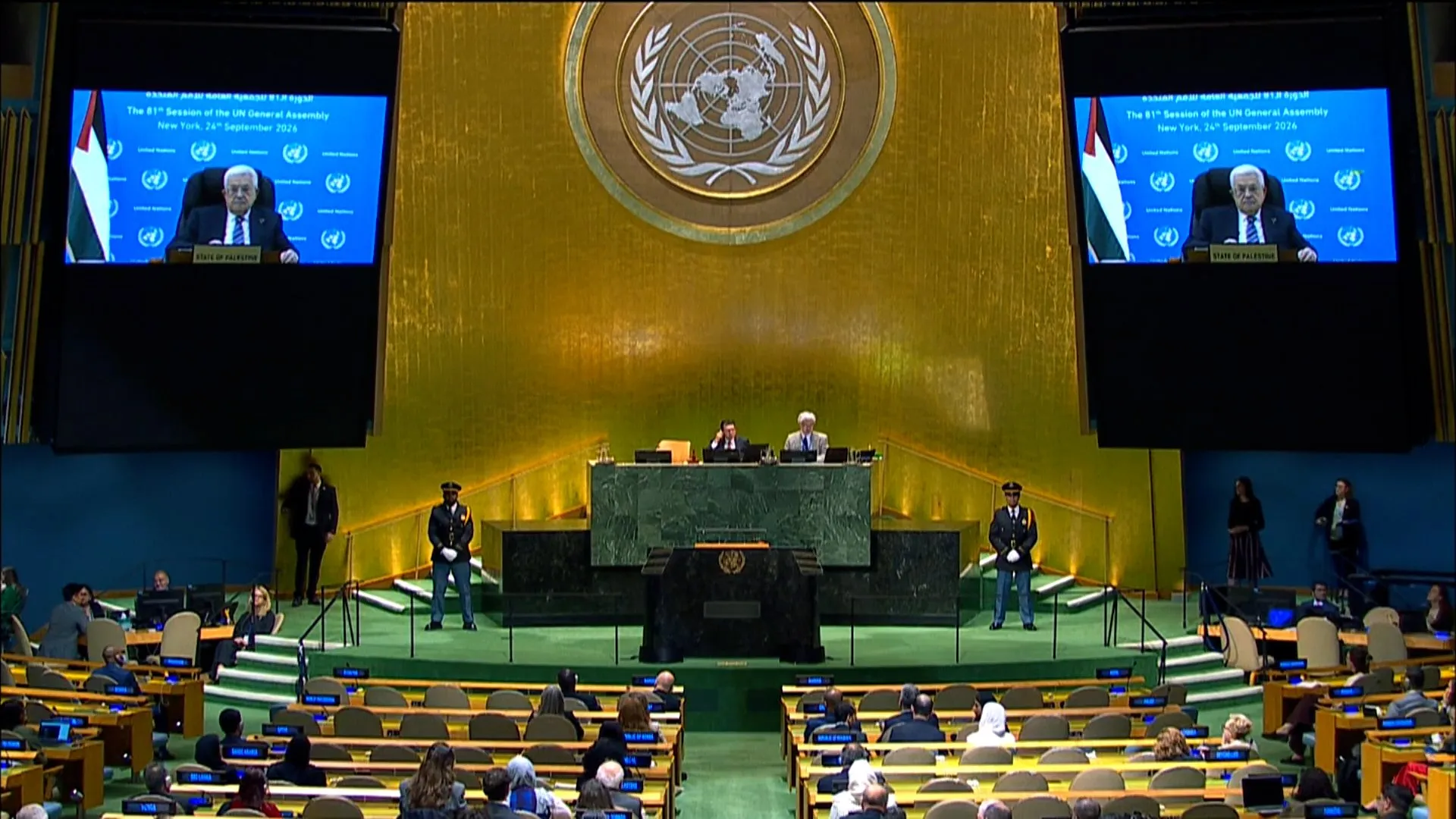
Israel’s Prime Minister addressed the UN General Assembly in person, despite having an International Criminal Court (ICC) arrest warrant issued against him. Palestinian President Abbas meanwhile was forced to address the Assembly virtually. Al Jazeera’s James Bays reports.
Barcelona’s sporting director Deco said the club has no interest in pursuing Manchester United teenager JJ Gabriel.
Gabriel, 15, travelled to the Spanish city after informing United that he wanted to leave Old Trafford earlier this month.
Real Madrid, Bayern Munich and Paris St-Germain are among the clubs reportedly keen on securing his signature.
“There’s nothing to say about this boy,” Deco said at a news conference.
“It’s normal we always have players linked with us. There’s a huge market for that, even when they are young.
“We are not interested in any player in his situation. I’m not sure what’s happening, and if he’s still a Manchester United player. We are not involved in that.
“First of all, we need to understand how the situation is before we try to do something. To speak about young, teenage players, it is not our business.”
Gabriel has not trained at United since scoring a hat-trick on his Uefa Youth League debut on 10 September.
Tournament rules prevent him from playing for a side other than United in this season’s competition.
But if he obtains a European Union passport through either his father – a former Republic of Ireland international – or mother, who has Greek-Cypriot heritage, he could join a club in the EU when he turns 16 on 6 October.
Last week, United manager Michael Carrick urged for people to be “careful and sensible” about the amount of exposure and scrutiny given to the youngster.
Ulster have handed starts to five of their summer signings for Friday’s United Rugby Championship opener against Edinburgh at the Affidea Stadium (19:45 BST).
They form part of a total of eight players in the matchday squad who are set to make their competitive debuts for the Irish province.
New forward additions Eduardo Bello, Eli Snyman, Ben Donnell and Martin Moloney are named in the starting team, with another new recruit, Jamie Benson, chosen among the backs.
Ireland wing Robert Baloucoune is back in the starting line-up, while last season’s top try-scorer Zac Ward is among the replacements, both players having been involved in Ireland camp over the summer.
Full-back Michael Lowry is named as captain.
After missing all of last season because of a knee injury, James McNabney makes his competitive return, starting at number eight.
Argentine debutant Bello joins Eric O’Sullivan and James McCormick in the front row, with Snyman and Donnell forming the second row.
In the back row, there is a debut for former Exeter Chiefs forward Moloney at open-side flanker, with McCann starting at blind-side.
Conor McKee and Jack Murphy make up the half-back combination, while ex-Harlequins back Benson and Ben Carson team up in midfield.
Baloucoune is selected on the right wing and Development back Aitzol Arenzana-King on the left.
Arenzana-King crossed for four tries in Ulster’s pre-season games against Edinburgh and Ospreys.
Development hooker Henry Walker, prop Keynan Knox and scrum-half Matthew Devine are named in a youthful bench.
Forwards Walker, Tom McAllister, Knox, Harry Sheridan and James McKillop, and backs Devine, Jake Flannery and Zac Ward are chosen as replacements.
When Israeli Prime Minister Benjamin Netanyahu takes to his feet at the United Nations General Assembly (UNGA) in New York later on Thursday, he does so at a critical point in both his political career and in his country’s long and fractious relationship with the international body.
Israel has faced repeated accusations of genocide at the UN, as well as systematic war crimes in Gaza and the occupied West Bank. Those criticisms continue to shape the country’s fractious relationship with the body.
Recommended Stories
list of 4 itemsend of list
For Netanyahu, appearing in front of the UNGA for the 15th time, the stakes have rarely been higher. Addressing a domestic Israeli audience that polls show to be losing faith in him and his Likud party ahead of crucial elections later this year, Netanyahu has already pitched himself as Israel’s primary voice on the international stage.
Nevertheless, analysts say Netanyahu’s address could prove a pivotal moment domestically, amplified by international criticism of Israel and expected to dominate headlines and be carried live across the country’s television networks.
“This is a regular fixture for him,” former Israeli consul general in New York and ex-government adviser Alon Pinkas told Al Jazeera. “It’s his way of being seen in Israel as standing up against the world and of telling members that he will never give up or surrender. He’s also turned the event into some kind of national holiday in Israel, with everyone sitting down to watch the address on television. He’s brainwashed people in Israel into believing his speech is somehow an announcement of policy, stated in defiance of the [rest of the world] who don’t believe a word he says.”
A history of hostility
Israeli leaders have long framed their stance towards the UN as one of defiance in the face of hostility. The UN has long been a platform for critics of Israel’s illegal occupation of Palestinian land and repeated attacks on its neighbours. It has included attempts to censure Israel over what UN investigators have described as apartheid in the West Bank, as well as accusations of genocide and pogroms across the occupied Palestinian territory since October 2023.
There have been numerous UNGA resolutions criticising Israel’s conduct — nearly all dismissed by Israeli lawmakers as evidence of institutional bias — culminating in Israel declaring UN Secretary-General Antonio Guterres persona non grata and severely restricting the operations of the UN’s agency for Palestinian refugees, UNRWA.
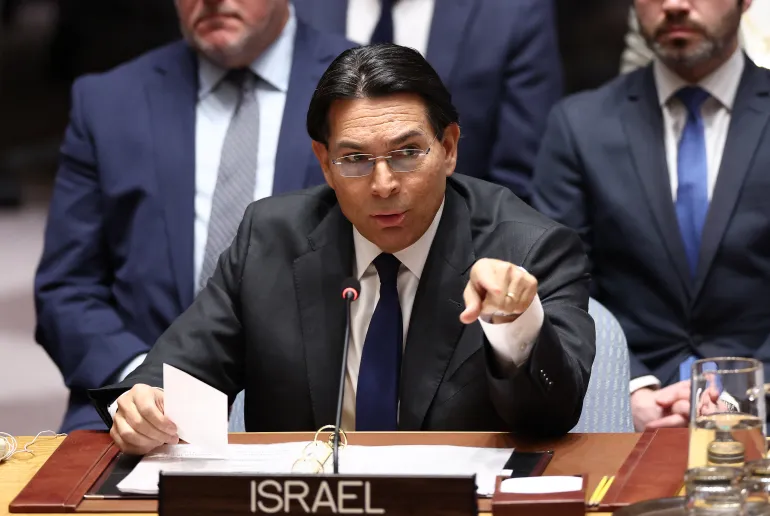
Israel’s Permanent Representative to the UN, Danny Danon, at a United Nations Security Council meeting at UN headquarters in New York [AFP]
“Generally speaking, many Israelis tend to see the UN as anti-Israeli,” Nimrod Goren, the president of the Israeli Institute for Regional Foreign Policy, Mitvim, said.
Against that background, criticism from New York Mayor Zohran Mamdani — already cast as anti-Israel in the Israeli press — has drawn greater public attention to the event. Underscoring the sense of hostility towards Israel are stories within the country’s media suggesting that Netanyahu’s visit to New York has been curtailed due to unspecified security concerns, with the Israeli premier expected to fly out of New York on the same day as his arrival.
In response, Israel’s ambassador to the UN, Danny Danon, who has repeatedly accused the organisation of waging “diplomatic terrorism” against the state called for Mamdani’s arrest for what he said was the mayor’s incitement against New York’s Jewish community ahead of Netanyahu’s visit.
“Netanyahu is going into his UNGA speech with not one but both eyes focused firmly on the upcoming Israeli election,” Goren said. “The speech is usually treated in Israel as a major event, receiving broad coverage and dominating the news cycle. Netanyahu will likely try to leverage this to bolster his image as a close ally of the US and to talk up the threat posed by Iran.”
US backing
Some have interpreted US President Donald Trump’s apparent lack of availability to meet Netanyahu during this trip as a sign of waning support. But US backing for Israel at the UN has remained steadfast since the October 7 attack and has contributed to growing frustration within the UN over what they see as Israel’s ability to resist international censure.
Alongside the creation of the Board of Peace, which shifted significant responsibility for Gaza’s future from the UN to the Trump-founded organisation, Washington has repeatedly used its veto at the UN Security Council to shield Israel from resolutions it opposes. The US has vetoed at least six UN Security Council resolutions on Gaza since October 2023, most of them demanding an immediate ceasefire.
“There seems to be genuine frustration within the UN General Assembly over the body’s failure to play a significant political role in Gaza and the West Bank, but also in its failure to protect its own staff and agencies,” Chatham House Associate Fellow Zizette Darkazally, who previously worked with the UN, said.
“However, it’s worth remembering the context the UN operates within in the occupied territories and the important humanitarian role it plays. The UN continues to get aid and medical support into Gaza and the West Bank, which are both areas where Israel has absolute control over access,” she said. “It’s also worth remembering that the UN is only as strong as the commitment of its member states.”
“That, combined with a system of veto that’s more than 80 years old, has left the organisation weaker now than it had ever been,” she said of the confrontations between the UN and Israel. “And we’re seeing the effects of that, not just in Palestine, but in Yemen, Sudan and Iran, where the UN is playing next to no political role.”
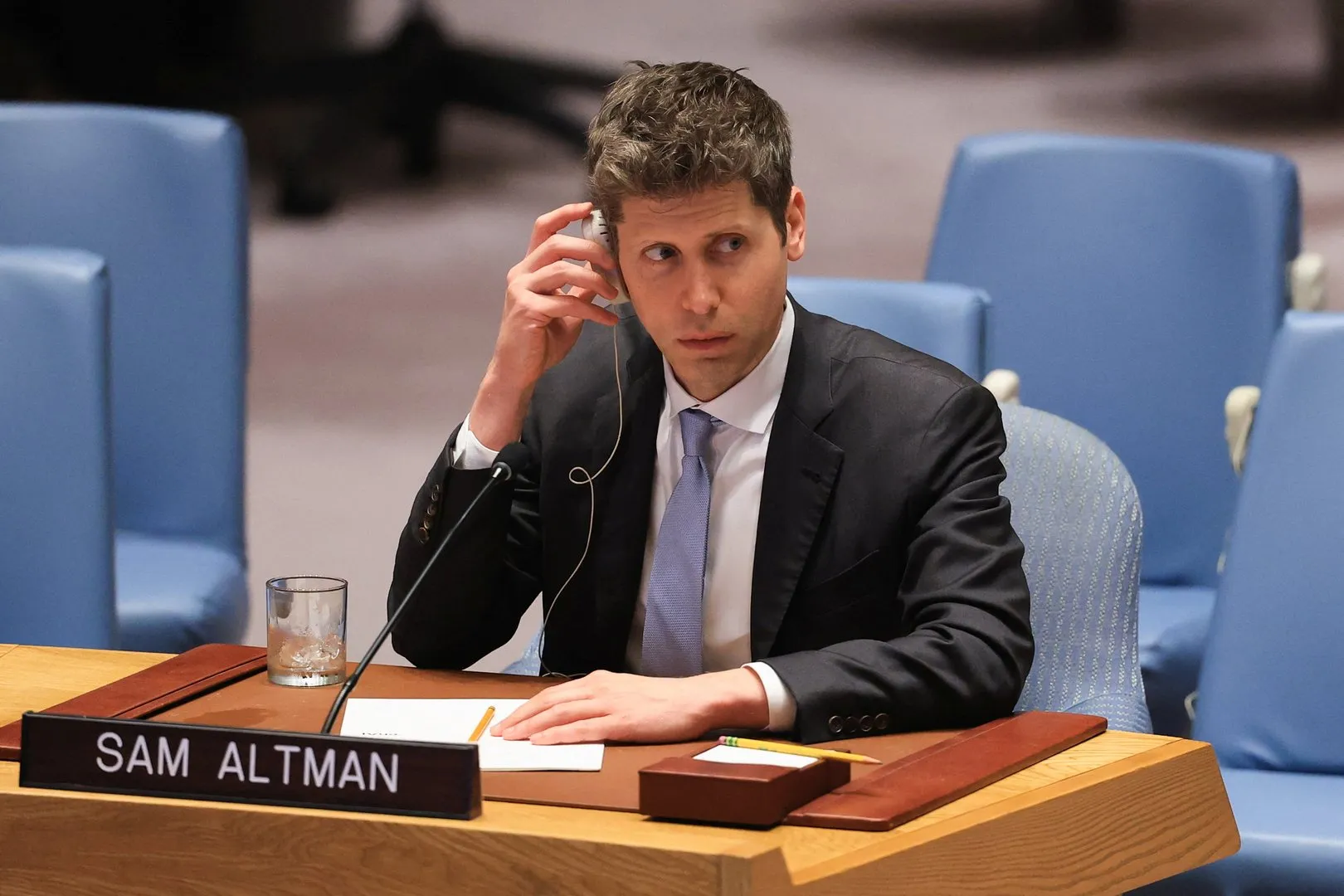
Open AI’s CEO has called for international coordination to address potential risks posed by artificial intelligence (AI). Sam Altman’s remarks come as Australia’s government reveals OpenAI’s AI agents hacked the country’s healthcare data tracking website.
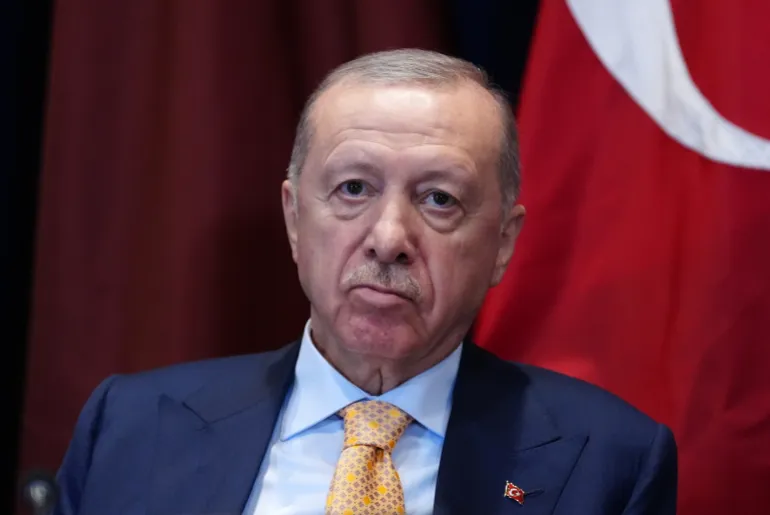
Iraqi Prime Minister al-Zaidi and Turkish President Erdogan pledged deeper security cooperation at UNGA.
Published On 24 Sep 202624 Sep 2026
Turkiye and Iraq have agreed to a gradual transfer of Ankara’s military base in Bashiqa to Baghdad, according to a statement released by the Iraqi prime minister’s office.
The announcement followed a meeting on Wednesday between Iraqi Prime Minister Ali al-Zaidi and Turkiye’s President Recep Tayyip Erdogan on the sidelines of the United Nations General Assembly in New York.
Recommended Stories
list of 3 itemsend of list
“Within this framework, they reached an agreement on fully establishing state authority in Sinjar and ending the presence of outlawed foreign armed elements,” Iraq’s prime minister’s office announced, in an apparent reference to the Kurdistan Workers’ Party (PKK), which has maintained a presence in the mountainous Sinjar region of northern Iraq.
“The two sides also agreed to expand the volume of bilateral trade and investment, to implement signed agreements immediately, and to accelerate joint strategic projects, particularly the Development Road project,” the office added.
Turkiye’s President Recep Tayyip Erdogan at the United Nations General Assembly on September 22, 2026 [Julia Demaree Nikhinson/AP]
The decision to transfer the facility addresses a longstanding flashpoint between the two neighbours.
Turkiye first established the base in Bashiqa, northeast of Mosul, in December 2015 through an agreement with the autonomous Kurdistan Regional Government to train local forces fighting the ISIL (ISIS) group.
The deployment of up to 600 Turkish soldiers drew criticism from Baghdad, which viewed the presence as a violation of Iraqi sovereignty.
The Sinjar region has long been a focal point for Turkish military operations targeting fighters from the PKK.
Kurdistan Workers’ Party fighters, who reportedly withdrew from Turkiye with their weapons, stand at attention during a ceremony in the Qandil area of northern Iraq in 2025 [File: Rashid Yahya/AP]
Cross-border operations in Sinjar had eased following a landmark peace process between Ankara and the PKK in 2025, paving the way for federal authorities to assert control over the border zone.
Wednesday’s accord caps months of efforts by Baghdad to consolidate state authority over northern flashpoints, while aligning with Ankara on trade corridors and security coordination along their shared frontier.
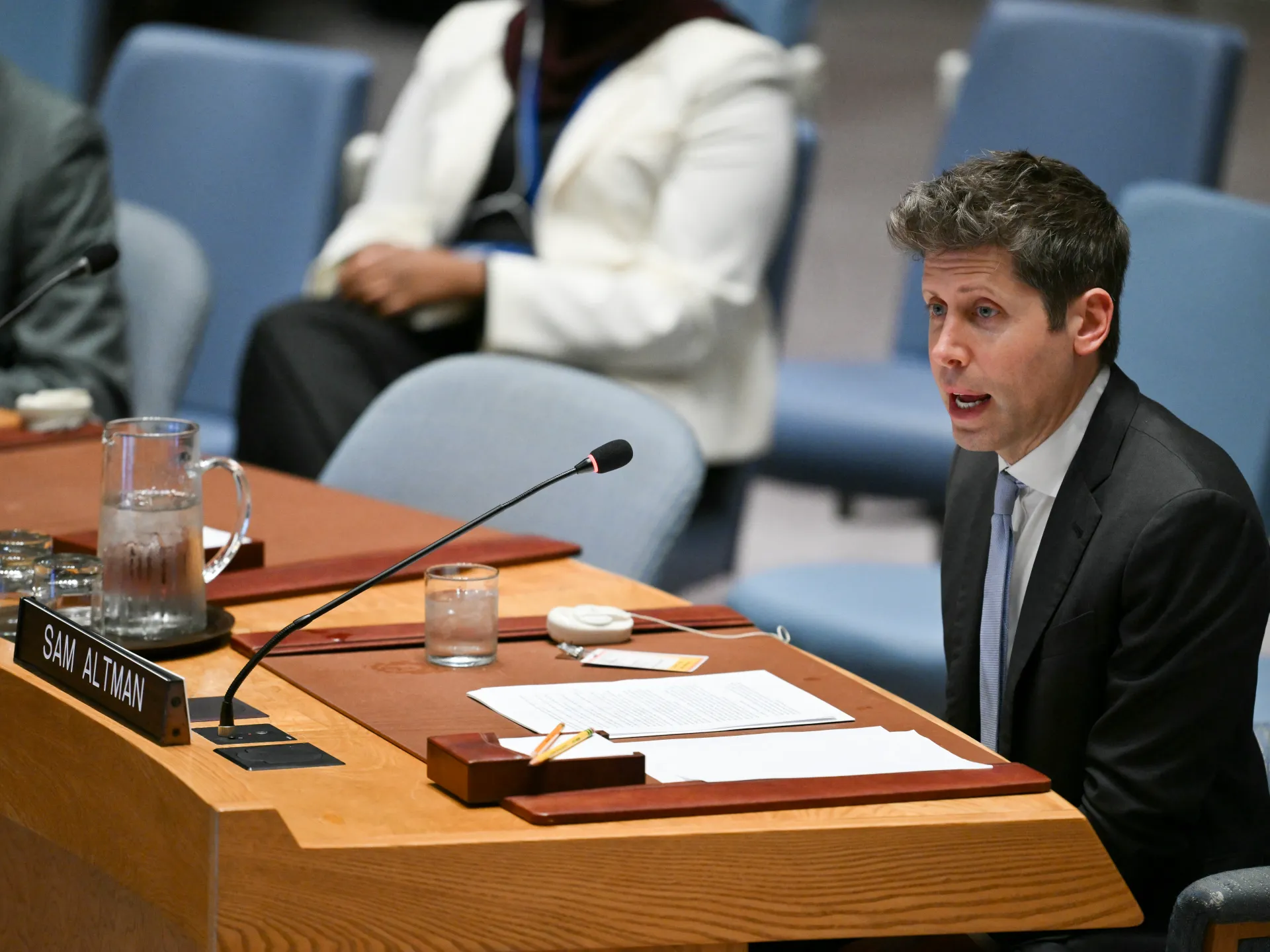
The heads of several major AI firms told the United Nations Security Council (UNSC) their industry urgently needed global oversight to avoid dangers that could threaten the whole world.
“If managed poorly, I even believe AI could be a risk to humanity as a whole,” Dario Amodei, the chief executive officer of Anthropic, told members of the body on Wednesday.
Recommended Stories
list of 3 itemsend of list
Sam Altman, the head of rival company OpenAI, echoed his concerns, telling the 15-member council tasked with tackling major crises globally that humanity could “lose control of the future of AI”.
The meeting, which coincides with the UN General Assembly (UNGA) gathering in New York City, was convened by France and comes at a time when experts are increasingly warning that the rapid development of AI needs more human oversight to ensure it does not slip out of control and cause a global catastrophe.
Altman and Amodei called on world leaders to take action.
“If AI is to be democratic, the most important decisions cannot be made by labs in San Francisco alone,” Altman told members. “They must be shaped through democratic processes and by governments accountable to the people they serve.”
Their concerns were shared by several representatives on the council, including the foreign ministers of France and the United Kingdom, who said the international community needed to step in and create common frameworks for how the technology should be controlled.
Hugging Face CEO Clement Delangue, whose company has come under attack by out-of-control AI models in recent months – incidents used by the other companies as evidence of the need for more safety measures – told the UNSC his company had relied on the technology to defend itself in those same incidents.
Delangue said Hugging Face had relied on a Chinese AI model to help defend against the attack by OpenAI’s AI agents, because it faced fewer restrictions than comparable US tools.
“We were attacked by AI, but more importantly, we defended ourselves with AI,” he told the council.
US and China reluctant to impose restrictions
In the United States, though, where the largest and most influential companies developing AI are based, the administration of US President Donald Trump has baulked at imposing new guardrails on the industry.
The administration’s representative at the UNSC meeting, Michael Kratsios, told members, “We totally reject all efforts by international bodies to assert centralised control and global governance of AI.”
Chinese President Xi Jinping is expected to discuss whether and how to regulate AI during a visit to Washington, DC, this week. The two countries are locked in a technological race to develop more powerful AI tools, a competition that experts say makes it less likely that either country would want to impose any major new restrictions on their efforts right away.
Yet there is a growing recognition at the UN of the danger AI potentially poses to the world, said Daniel Forti, head of UN Affairs at the International Crisis Group. Member states understand that “there will be much more of a need for international cooperation, setting some rules of AI, even if the biggest players are more focused on growth opportunities than on some sort of collaboration,” Forti said.
For several years, the UN has been participating in multilateral meetings to shape everything from protections for workers from AI in emerging economies and ensuring open access to this technology, to following how AI is used in military conflicts. In 2024, the UNGA unanimously passed its first resolution on AI, a nonbinding statement that called on member states to protect personal data, monitor AI for risks and safeguard human rights.
The adoption of AI has taken off dramatically since then, and with it have come dire warnings from environmental groups, human rights advocates, and even the tech moguls whose companies are developing the tech.
The future of AI “cannot be decided by a handful of countries or left to the whims of a few billionaires”, UN Secretary-General Antonio Guterres said at a global summit held earlier this year.
Last year, the UNGA formed two new bodies to deal with AI: the Independent International Scientific Panel on AI that brings together experts to provide governments with independent assessments, and the Global Dialogue on AI Governance, which provides a regular forum for discussing approaches to AI governance.
“The dangers are real and imminent,” Yoshua Bengio, a Canadian expert on AI and co-chair of the Independent International Scientific Panel, told the UNSC on Wednesday. “This council faces an unprecedented threat, one that none of its members would choose, that none can contain alone, and that does not respect the borders we defend.”
With world leaders at the UN General Assembly podium this week, play our quiz matching famous quotes to who said them.
Published On 23 Sep 202623 Sep 2026
This week, world leaders converge on New York for the annual United Nations General Assembly (UNGA), where representatives from the 193 UN member states are expected to take to the podium.
Over the decades, that same podium has hosted some of modern diplomacy’s most quoted moments, from Cold War warnings to wartime appeals.
Match each line to the leader who spoke it from the UNGA podium in the 10-question quiz below.







![Permanent Representative of Israel to the UN Danny Danon at a United Nations Security Council meeting at UN headquarters in New York [File: AFP]](https://i0.wp.com/www.aljazeera.com/wp-content/uploads/2026/03/afp_69a425a45f04-1772365220.jpg?w=640&ssl=1)