united

‘United States of the Middle East?’: Trump posts US flag covering Iran | US-Israel war on Iran News

Latest Truth Social post comes amid ‘delicate diplomacy’, expert says, as US and Iran indicate progress in talks.

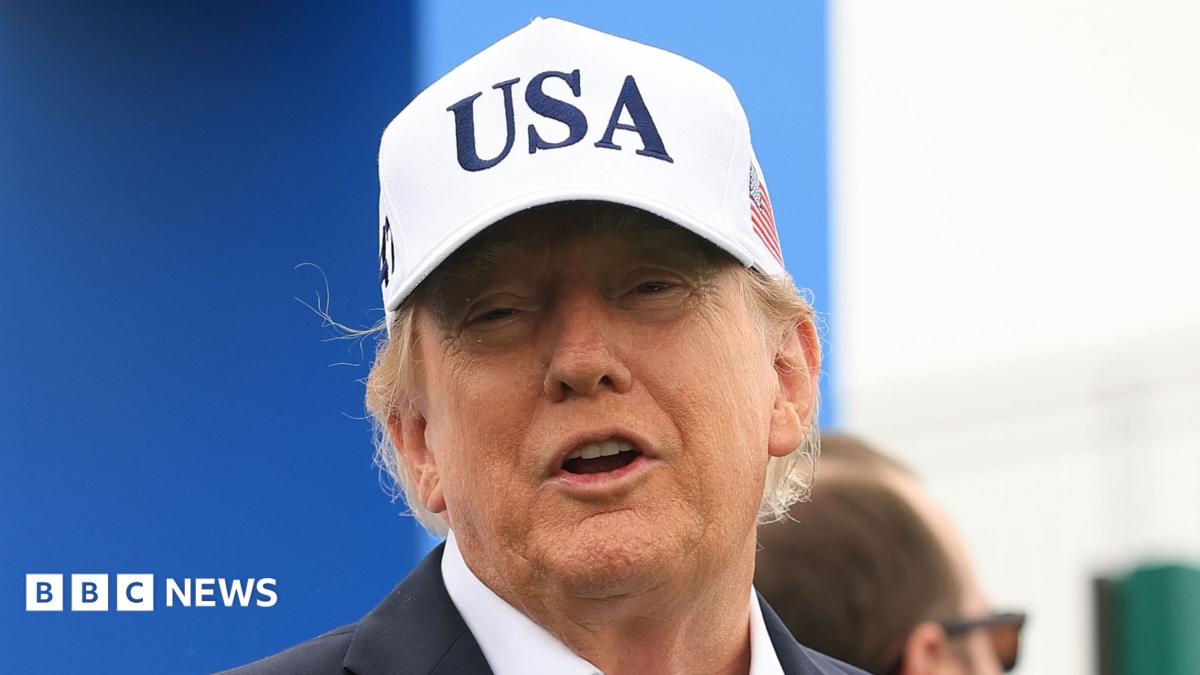
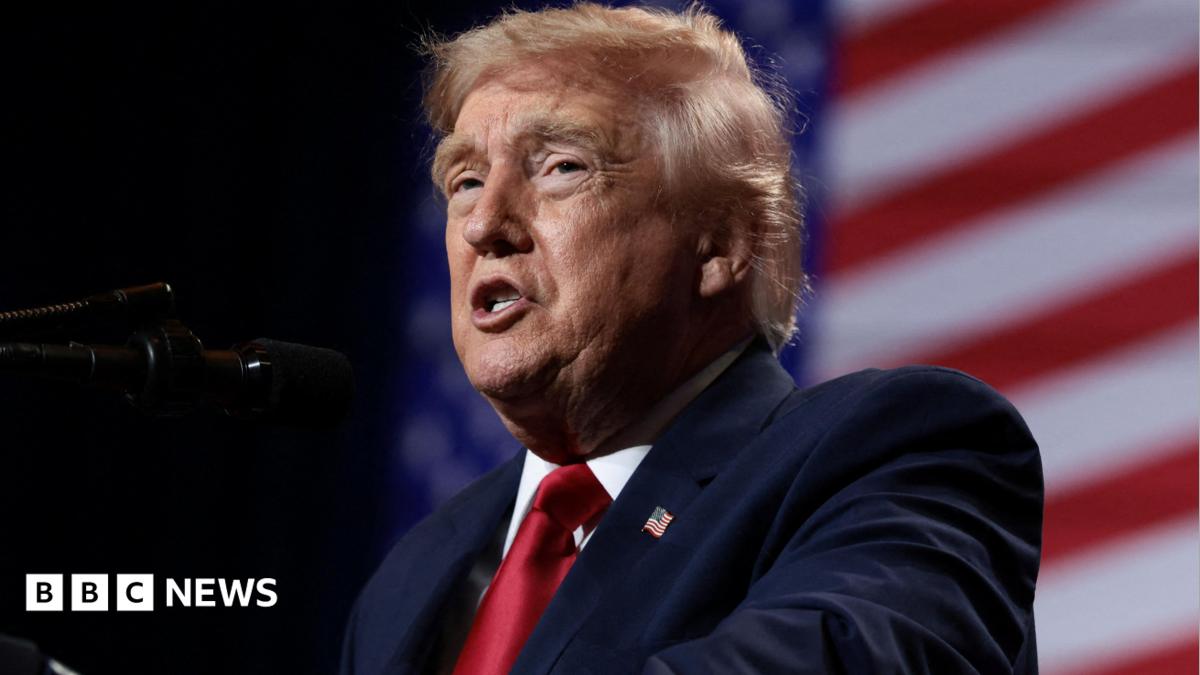
Washington, DC – President Donald Trump has posted a photo of the United States flag covering the map of Iran, with the question: “United States of the Middle East?”

The post on Truth Social on Saturday represented another potentially incendiary message from Trump amid ongoing negotiations for a more lasting ceasefire in the US-Israeli war with Iran, experts said.

Recommended Stories

list of 3 itemsend of list

It carries the potential to roil both regional allies and foes alike given Washington’s past intervention in the Middle East, most notably during the US invasion of Iraq from 2003 to 2011, as well as the Trump administration’s push to increase its influence abroad.

The sentiment also appears to run counter to the Trump administration’s repeated statements that it is not seeking a prolonged occupation of Iran. The US has maintained it is not seeking outright regime change in its war, which it launched alongside Israel on February 28, but that it would welcome such change as a byproduct of the military campaign.

Even for a president known for outlandish social media posts and conflicting messaging on the war, the post could have implications for ongoing negotiations aimed at a more lasting ceasefire, according to Vali Nasr, professor of international affairs and Middle East studies at Johns Hopkins University.

He pointed to Trump’s threat in early April that an “entire civilisation will die” if Iran did not agree to a deal at the time. Hours later, both sides agreed to a pause in fighting.

That pause has held since, save for a handful of flare-ups, with the US continuing to blockade Iranian ports and Tehran effectively closing the Strait of Hormuz.

“First he declared he wanted to eradicate Iran’s civilisation now he is declaring that he wants to turn Iran into an American property,” Nasr wrote on X.

“It is this kind of grotesque behaviour that undermines diplomacy and unites Iranians in defence of their country,” he added. “In the middle of delicate diplomacy he casts doubts on America’s true intentions.”

The White House did not immediately respond to a request for comment.

Fragile negotiations continue

On Saturday, both US and Iranian officials indicated a new deal may be within reach.

Trump told CBS News both sides were “getting a lot closer”. US Secretary of State Marco Rubio said an update could be coming shortly, the broadcaster reported.

Iranian Foreign Ministry spokesperson Esmaeil Baghaei said the two sides were “currently working to finalise” a memorandum of understanding, and that “the opinions have been converging”.

Still, there have been no official announcements related to key sticking points in the standoff, including the future of Iran’s nuclear programme, the fate of its highly enriched uranium stockpile, and its future influence over the Strait of Hormuz.

Trump regularly uses his Truth Social account, which he launched after being briefly banned from Twitter, now X, in the wake of the 2020 election, to make major announcements, attack political enemies, and post AI-generated images and videos.

The foreign policy of his second term has been defined by efforts to grow US influence abroad, particularly in the Americas. That has included the military abduction of Venezuelan leader Nicolas Maduro, continued threats against Cuba, and vows to take control of Greenland, the semi-autonomous Danish territory in the North Atlantic.

The Trump administration has adopted the term the Donroe Doctrine, a reference to the 1823 Monroe Doctrine, which sought to diminish European influence in the Western Hemisphere.

On Saturday, Trump also posted an image of his face peering over a mountain range in Greenland.

“Hello, Greenland!” it said.

Source link

Weird Britain: 10 glorious oddities to visit and marvel at | United Kingdom holidays

One thing unites the British more than anything else. It stands there in plain sight but is rarely spoken about. We may try to hide it; we may not admit it to ourselves; but under the surface, deep down, in the nicest possible way, we are all a little odd. Not in a sinister way, just eccentric, weird, unpredictable and downright wonderful. As a nation we have an artistic and creative zest and boffin-like inventiveness. In fields of innovation, we led the tech world with some of our brave and crazy inventions. Even our landscapes are damn weird, with some of the oldest, most mysterious and diverse geological oddities in Europe, and plentiful legends too. I spent years exploring the enchanting strangeness of Britain, discovering follies, eccentric public art, strange buildings, mysterious ruins and eerie landscapes for my Weird Guide, which features about 300 of these curiosities. Here are some of my favourites.

The Yoxman, Suffolk

In a field not far from the A12 in Yoxford, Suffolk, stands the Yoxman, an artwork of colossal proportions. At 8m (26ft) high and made from bronze, it took creator Laurence Edwards and his team four years to make. The figure is a personal tribute to Suffolk, the artist describing it as a visitor from the past, both from the land and of the land. The result, finished in 2021, is astounding – a fully grown adult barely makes it to the top of his shin, as the Yoxman dwarfs even some of the surrounding trees. From Yoxford village, take the path opposite the shop and follow it through the grounds of the hall to the statue.

Little Italy, Gwynedd

Little Italy is not open to the public but is visible from a footpath. Photograph: Dave Hamilton/Wild Things Publishing

The late Mark Bourne, a chicken farmer, was obsessed by Italy, visiting as often as he could, filling notebooks with sketches of buildings and architecture. When he returned to his remote cottage on the Corris hillside in Gwynedd, Wales, he and his wife aimed to recreate what he had seen in their garden. Both worked on the creation, named Little Italy, well into their 80s, with models of everything from the Leaning Tower of Pisa to Florence’s Duomo. Although Bourne’s old garden is strictly off-limits to passersby, the surrounding wall is relatively low and the buildings are large enough to see from the path. From the Corris Institute, turn left up the hill along the lane then follow a footpath on the right after the youth hostel for about 100m.

Mannakin, Lincolnshire

Dave Hamilton joins the mannakins. Photograph: Dave Hamilton/Wild Things Publishing

Mannakin Hall near Grantham feels like an eerie plastic graveyard. Situated down a narrow Lincolnshire lane, it was set up by Roz Edwards in 2008 when she realised that most mannequins were discarded after no more than five years of service, and began to acquire those destined for landfill. Once repaired or cleaned up, they are hired out and at any given time there are about 15,000 mannequins on site; most are unclothed, but some are dressed up in Halloween costumes or strange outfits. As a working business, Mannakin Hall isn’t open to the public on a walk-in basis but you can prebook and visit as a group, attend one of the regular open days or even stay overnight in your camper van!

White Scar, Yorkshire Dales

The grykes (gaps) between the rocks provide a habitat for rare plants. Photograph: Martin Priestley/Alamy

On the west side of the Ingleborough summit in North Yorkshire, just south of the ancient Roman road, lies one of the country’s most remarkable areas of limestone pavement, known as White Scar. This extraordinary landscape formed during and after the last ice age, as massive glaciers scraped away the surface. Millennia of weathering broke down the soft alkaline stone, revealing intricate miniature canyons, or grykes. These deep fissures have become like terrariums, providing a habitat for rare plants that are normally at home in dark woodlands.

Library, Isle of Arran

The Library was built using trees blown down in a storm. Photograph: Arran Brough/Wild Things Publishing

The woodland Library near Levencorroch on the Isle of Arran, Scotland, is a unique tourist attraction, a cabin with an interior resembling a 3D giant visitors’ book. Built by the woodland’s owner, Albert Holmes, using trees blown down in a storm, the cabin is covered with drawings, poems, messages, words of wisdom and notes from all over the world. Ranging from playful to profound, the papers, which are now about 25 layers deep, are stuck in every conceivable space, including the ceiling. It feels like entering something from a Michel Gondry film, or a strange nest left by a literary woodland creature. Pick up a map at the Eas Mor Ecology cafe, east of Levencorroch, and follow a steep gravel path to the waterfall and on to the library. It’s a 25-minute walk.

Sultan the Pit Pony, Mid-Glamorgan

The earth sculpture was built in the late 1990s. Photograph: Tom Goudsmit/Wild Things Publishing

Measuring close to 200 metres from his nose to the end of his tail, Sultan the Pit Pony sits on the site of the old Penallta colliery north of Caerphilly. Mike Petts used 60,000 tons of coal shale rock to create the sculpture, which he built in the late 1990s to honour the thousands of ponies put to work in British mines throughout the Industrial Revolution. It’s close to Parc Penallta Ponds, with its wonderful wildlife and walking trails.

Painshill Follies, Surrey

The grotto dates from the 18th century. Photograph: T P Holland/Wild Things Publishing

Inspired by the culture, paintings and architecture he experienced during his grand tour of Europe, aristocrat Charles Hamilton began transforming his country estate – Painshill in Cobham, Surrey – into something between a work of art and a garden in 1738. Alongside a temple, gothic tower and lake, he created one of the most spectacular follies in the country, employing grotto builder Joseph Lane to construct a semi-naturalistic cavern with sparkling stalactites made of minerals such as feldspar and quartz. The park fell into ruin in the 1940s, but the local authority acquired it in the late 1970s and though much has been restored, work continues. The crystal grotto was completed in 2013, with builders making every effort to make it look like the original, using paintings of the grotto.

Rock-cut tombs, Lancashire

The tombs are just outside an eighth-century chapel. Photograph: Stephen Gidzey/Wild Things Publishing

There is a local legend that, after being shipwrecked, Saint Patrick was washed ashore and set up a chapel at Heysham, Lancashire, sometime in the fifth century. Considering Saint Patrick was also supposed to have been shipwrecked on Ynys Môn (Anglesey), there may be some doubt about this story! Regardless, during the eighth century a chapel was built in honour of the saint. The remains of this chapel still stand, along with eight rock-cut tombs in one group of six and another of two.

Blackchurch Rock, Devon

The rocks are a walk away from Clovelly village. Photograph: Mark Wordy/Wild Things Publishing

Around 320 million years ago, the great continent of Gondwana collided with Laurasia (present-day Europe, Russia, North America and parts of Asia). The force of the impact was so great that it pushed up the rocks of Blackchurch Rock near Clovelly, Devon, into its present formation (we know the date thanks to fossils found in the stone, including Goniatites). Over time, tidal seas shaped Blackchurch further, carving out the great arch. It’s a 30-minute walk north west along the coast path from Clovelly village.

The Tilted Globe, Highlands

The sculpture at Knockan Crag is made from local moine schists, a type of metamorphic rock. Photograph: Media World Images/Alamy

Joe Smith, creator of The Tilted Globe at Knockan Crag in Assynt, north of Ullapool, first learned how to dry stone in 1961, at the tender age of 11. By the time he was 19, dry-stone walling had become his means of earning a living. Over time, he stopped seeing walls as only functional and instead recognised how the stacking of stones could be beautiful, appreciating their potential for creating artworks. He has collaborated with Andy Goldsworthy on a number of projects around the world, including Slate, Hole, Wall at the Royal Botanic Gardens, Edinburgh. The Tilted Globe is an independent work made from moine schist local to Knockan Crag. The area is of geological importance, as the ancient rock has been moved through tectonic action about 43 miles (70km) west to remain above the line of the younger rocks. It’s a short walk on marked trails from the turf-roofed hexagonal visitor centre.

This is an edited extract from Weird Guide by Dave Hamilton, published by Wild Things Publishing (£18.99). To support the Guardian, order your copy from guardianbookshop.com. Delivery charges may apply. Follow @davewildish

This article was amended on 21 May 2026 to remove an incorrect reference to Sultan the Pit Pony being the largest earth sculpture in the UK.


Source link

United States imposes sanctions on Gaza flotilla activists

Some of the 20 ships taking part in an earlier Global Sumud Flotilla dock in September in the port in Barcelona. The U.S. Treasury on Tuesday imposed sanctions on four activists linked to the flotilla, which has been attempting to carry humanitarian aid to Gaza. File Photo by Quique Garcia/FlEPA

May 19 (UPI) — The U.S. Department of the Treasury on Tuesday announced that it is imposing sanctions on four activists for their alleged involvement in a flotilla seeking to carry humanitarian aid to Gaza during the Israeli blockade.

In a press release, the department said the flotilla was “pro-terror” and “operating in support of Hamas.” Those organizing the Global Sumud Flotilla say that it is a “legal, non-violent humanitarian mission.”

The Israeli military began to intercept the boats of the flotilla and detain the people aboard Monday as they were off the coast of Cyprus. More than 50 vessels are involved in the group.

Its organizers said that they were trying to deliver humanitarian aid while showing solidarity with the Palestinian population. Israel has continued bombing Gaza despite a cease-fire brokered by U.S. President Donald Trump late last year, Al Jazeera reported, and Palestinians are facing shortages in food and medical supplies.

The Treasury’s Office of Foreign Assets Control, however, said the flotilla was organized by Hamas-linked organizations.

“The pro-terror flotilla attempting to reach Gaza is a ludicrous attempt to undermine President Trump’s successful progress toward lasting peace in the area,” said Scott Bessent, secretary of the treasury. “Treasury will continue to sever Hamas’ global financial support networks, no matter where in the world they are.”

The sanctions targeted two people from the advocacy group Popular Conference for Palestinians Abroad and two from Samidoun, a Palestinian prisoners solidarity network. The Treasury said both groups are fronts for Palestinian terror organizations.

Those sanctioned are Saif Hashim Kamel Abukishek, a member of PCPA; Hisham Abdallah Sulayman Abu Mahfuz, president of the PCPA; Mohammed Khatib, European coordinator for Samidoun; and Jaldia Abubakra Aueda, a Samidoun coordinator in Spain.

The sanctions freeze the U.S. assets of those targeted and generally prohibit working with them.

Source link

Iran Demands Reparations and United States Troop Withdrawal in New Peace Proposal

Iran has publicly outlined key elements of its latest peace proposal to the United States, demanding reparations for war damage, the withdrawal of United States forces from areas near Iran, and the lifting of economic sanctions as part of any broader agreement.

According to comments from Iranian Deputy Foreign Minister Kazem Gharibabadi, the proposal also calls for the release of frozen Iranian assets, an end to restrictions affecting Iranian trade and shipping, and a halt to hostilities across regional conflict zones including Lebanon.

The proposal emerged after United States President Donald Trump announced that he had paused a planned military strike against Iran to allow additional time for negotiations regarding Tehran’s nuclear programme and regional security issues.

Iran Pushes for Broader Regional Settlement

Tehran’s proposal reflects an effort to expand negotiations beyond nuclear issues into wider geopolitical and security concerns across the Middle East.

Iran appears to be seeking a comprehensive arrangement that addresses not only sanctions and military pressure but also the broader regional balance of power involving Lebanon, the Gulf region, and United States military deployments.

The demand for reparations is particularly significant because it frames the recent conflict as an act requiring compensation for damage caused by joint United States and Israeli military operations.

Iranian officials also continue insisting that economic sanctions and frozen overseas assets remain central obstacles to any sustainable agreement.

United States Signals Openness but Maintains Pressure

Trump stated that there was a strong possibility of reaching a deal that would prevent Iran from obtaining nuclear weapons while avoiding renewed military escalation.

However, Washington has not publicly confirmed any major concessions in negotiations. Reports suggesting the United States may release a portion of frozen Iranian funds or allow limited peaceful nuclear activity under international supervision remain unverified by American officials.

At the same time, United States officials continue denying claims that sanctions on Iranian oil exports would be fully waived during negotiations.

The situation reflects a complex diplomatic balancing act in which Washington seeks to maintain leverage while preventing a wider regional conflict that could destabilise global energy markets and military alliances.

Regional Powers Push for De Escalation

Regional governments including Qatar, Saudi Arabia, and United Arab Emirates reportedly urged Trump to delay military action in hopes that negotiations could succeed.

The involvement of regional mediators highlights growing concern across the Gulf about the economic and security consequences of another large scale conflict involving Iran.

The Strait of Hormuz remains especially important because it serves as one of the world’s most critical shipping routes for oil and energy exports. Any escalation threatening maritime trade could have severe consequences for global energy prices and economic stability.

Meanwhile, Pakistan has reportedly continued acting as a communication channel between Tehran and Washington after previously hosting peace talks between the two sides.

Ongoing Tensions Despite Ceasefire

Although a ceasefire has largely held since the suspension of major hostilities earlier this year, tensions remain extremely high across the region.

Iran and its regional allies continue facing accusations of supporting drone activity and proxy operations targeting Gulf states and Israeli interests. At the same time, Iran maintains that it has survived military pressure without abandoning its nuclear capabilities, missile programmes, or regional alliances.

Israeli Prime Minister Benjamin Netanyahu and Trump previously justified military operations as necessary to weaken Iran’s nuclear programme and reduce its influence through allied militias across the Middle East.

However, analysts note that Iran still retains significant strategic capabilities despite extensive military strikes and economic sanctions.

Analysis

Iran’s latest proposal demonstrates that Tehran is attempting to negotiate from a position of resilience rather than surrender.

By demanding reparations, sanctions relief, and troop withdrawals, Iran is signalling that it expects recognition of its regional influence and strategic endurance despite months of conflict and economic pressure. The proposal also reflects Tehran’s broader objective of reducing the long term military presence of the United States near its borders.

For Washington, the negotiations present a difficult challenge. The United States wants to prevent Iran from advancing toward nuclear weapons capability while avoiding another prolonged regional war that could damage global markets, strain military resources, and increase political pressure at home.

The talks are also shaped by wider geopolitical realities. Gulf states increasingly prioritise regional stability and economic security, making them more supportive of diplomacy than direct military confrontation. Rising energy prices and fears of shipping disruptions further increase international pressure for a negotiated outcome.

At the same time, deep mistrust continues to define relations between both sides. The United States remains sceptical of Iran’s regional ambitions, while Tehran sees sanctions and military deployments as tools of long term containment.

Ultimately, the negotiations reveal a broader struggle over the future balance of power in the Middle East. Even if temporary agreements are reached, the underlying strategic rivalry between Iran, the United States, and Israel is unlikely to disappear in the near future.

With information from Reuters.

Source link

‘We found a charming alternative to touristy Bath’: readers’ favourite UK trips | United Kingdom holidays

A magnificent medieval cathedral in Somerset

“So this is where Officer Nick Angel [Simon Pegg] chased that swan.” As a fan of Hot Fuzz, I was excited to explore the cathedral city of Wells in Somerset, where much of the film was shot. This charming, compact and walkable city is awash with medieval architecture and magnificent buildings, such as the gothic cathedral, with one of the oldest working clocks in the UK (late 14th century) and the Bishop’s Palace and Gardens. Within easy reach of the Mendip Hills, Cheddar Gorge and the Wookey Hole Caves, Wells makes for a low-key alternative to tourist-soaked Bath.
Alison

Wild camping in the west Highlands

Sanna Bay. Photograph: Jox

The Ardnamurchan peninsula, which includes the most westerly point in mainland Britain at Corrachadh Mòr, is stunning. With my partner, I spent a night wild camping by the shell-sand beach at Sanna Bay, surrounded by the machair grassland and wildflowers. It was absolutely stunning. We walked to Ardnamurchan lighthouse, spotted some dolphins, and swam in the sea in cold but crystal clear waters. The simplicity of the trip and not having to check in at any accommodation was a plus. I would recommend it to everybody.
Jox

Profile

Readers’ tips: send a tip for a chance to win a £200 voucher for a Coolstays break

Show

Guardian Travel readers’ tips

Every week we ask our readers for recommendations from their travels. A selection of tips will be featured online and may appear in print. To enter the latest competition visit the readers’ tips homepage

Thank you for your feedback.

Cinematic light and seabirds in East Lothian

A view of Bass Rock from North Berwick. Photograph: Westend61/Getty Images

North Berwick in East Lothian always feels like a proper holiday without needing a passport. Take the early train, walk straight down to the beach, then continue past the harbour towards the Scottish Seabird Centre, where the light over the Firth of Forth changes by the minute. If the tide is out, the views are cinematic with the sand stretching so wide. On clear early evenings Bass Rock turns gold and you wonder how somewhere so close to Edinburgh can still feel quietly remote.
Michelle

Rock-pooling and picnics in Devon

The beach at Beer. Photograph: Guy Edwardes/Alamy

I visited Beer in east Devon last summer with three friends, all of us women in our 40s, and our six children aged between four and 11. It couldn’t have been a better choice. We stayed at the lovely large YHA hostel, which was relaxed, welcoming and ideal for families. The kids were charmed by the stream running through the village and spent hours rock-pooling on the beach, discovering tiny crabs and sea anemones. We also enjoyed the clifftop walk to Seaton with its incredible views. Don’t miss Woozie’s Deli for fresh treats – perfect for picnics by the sea.
Tara

A cycling tour of the Northumberland coast

Dunstanburgh Castle. Photograph: Ashley Cooper/Getty Images

We cycled the Northumberland coast from Newcastle to Berwick over four days. We visited Dunstanburgh and Bamburgh, two of the most impressive castles in the country, the mining museum at Woodhorn and the RNLI Grace Darling Museum in Bamburgh, and swam from huge, empty beaches. Cycling over the causeway to Lindisfarne was the highlight, an incredible place to visit and awesome watching the road disappear under the sea (after we’d made it back to the mainland).
Ian

Loch Èireasort on Lewis. Photograph: Nagelestock.com/Alamy

Ravenspoint community hostel on Loch Èireasort, south of Stornoway and home to nesting sea eagles and sea otters, feels remote even by Outer Hebridean standards. I shared the hostel kitchen with a father and daughter cycling the Hebridean Way, and a psychiatrist who seemed genuinely quite unsettled by the vastness of the landscape stretching all around. The hostel has a rich history – it is owned by the Co-Chomunn na Pairc, one of the original community co-operatives established in the 1970s, and the profits from it, the shop and tea rooms all go back into keeping vital services open for visitors and locals alike year-round.
Eleanor

Happy days in West Yorkshire’s Happy Valley

Hebden Bridge. Photograph: Kelvin Jay/Getty Images

Sharing my obsession with Happy Valley, my teenage son agreed to a long weekend in Hebden Bridge. Armed with a list of filming locations, we scouted around Sowerby Bridge and Hebden, getting a buzz from the scenes we recognised. We climbed up to Heptonstall to visit Sylvia Plath’s grave, caught a film at the independent Picture House, and hiked along the river and on to the moors beyond Hardcastle Crags. An early morning run along the canal and the best pizza in town topped it off.
Lucy

Cliffs, castles and chips in Ayrshire

Culzean Castle. Photograph: Iain Masterton/Alamy

Ayrshire is beautiful, bucolic, full of family-friendly activities and often overlooked by Munro-baggers heading north to the Highlands. It has excellent local produce, coastal splendour and bountiful historic attractions. Start at Dumfries House with its marvellous gardens, enormous treetop adventure area and interactive water play (much of it free!). Visit the ruins of clifftop Dunure Castle, then stroll along the sandy Croy Bay to Culzean Castle, with its own gardens, play area and spectacular views of Arran and Ailsa Craig. Then pootle up to the Coo Shed for fab local ice-creams, before rounding off your day with some outstanding fish and chips from the Wee Hurrie on Troon harbour.
Dan Ashman

A village idyll in Snowdonia

Fairy Falls near Trefriw. Photograph: Alamy

My wife and I went for a weekend break in Trefriw on the River Crafnant in north Wales. It’s a peaceful village with lively pubs. We stayed at the Fairy Falls hotel, a perfect base for exploring the surrounding river and mountain walks, and for viewing the cascades.
Seamus

Winning tip: Hadrian’s Wall by bus and train

Milecastle 39 on Hadrian’s Wall in Northumberland. Photograph: Stock Solutions/Getty Images

Exploring the Hadrian’s Wall area stands out for us among our UK trips, not only for the places we visited but also because we travelled by train, bus and on foot. This meant the holiday began once we’d boarded the first train, not just once we’d arrived at our accommodation. We stayed at the Sill youth hostel, arriving there using the AD122 bus from Hexham station. This bus stops at several Roman sites between Hexham and Haltwhistle – we used it to visit Housesteads, “Britain’s most complete Roman fort”. Another highlight was the Vindolanda fort and museum around a mile and a half from the Sill.
Sharon Pinner

Source link

United States China Tech Rivalry Delays Nvidia AI Chip Exports

The latest developments surrounding Nvidia’s H200 chip sales to China highlight the growing complexity of the technological rivalry between the United States and China. Although Washington has reportedly approved several major Chinese firms to purchase Nvidia’s advanced artificial intelligence chips, no deliveries have taken place so far.

The situation reflects how geopolitical competition is increasingly disrupting even officially approved commercial agreements in the semiconductor sector.

Nvidia, the world’s leading artificial intelligence chip manufacturer, now finds itself caught between United States export control policies and China’s push for technological self reliance.

What Is the H200 Chip?

The H200 is Nvidia’s second most powerful artificial intelligence chip and is designed for advanced AI model training and data center operations.

The chip is particularly valuable for companies developing large language models, cloud computing systems, and next generation AI applications.

Before export restrictions tightened, Nvidia dominated China’s advanced AI chip market with an estimated market share of around 95 percent.

China also represented a major source of revenue for Nvidia, making access to the Chinese market strategically important for the company’s long term growth.

Which Chinese Companies Were Approved?

According to reports, the United States Commerce Department approved around ten Chinese firms to purchase H200 chips.

These reportedly include major Chinese technology companies such as:

  • Alibaba
  • Tencent
  • ByteDance
  • JD.com

Several distributors were also reportedly approved, including:

Under the licensing terms, each approved customer could reportedly purchase up to 75,000 chips.

However, despite these approvals, no actual sales or deliveries have yet been completed.

Why Have the Sales Stalled?

The delays appear to stem from concerns on both the United States and Chinese sides.

Chinese Concerns

Chinese authorities reportedly fear that reliance on Nvidia chips could undermine Beijing’s efforts to strengthen its domestic semiconductor industry.

China has invested heavily in local AI chip development, particularly through companies such as Huawei.

Beijing increasingly sees semiconductor self sufficiency as a national security priority amid escalating technological competition with Washington.

There are also concerns within China regarding supply chain security and possible vulnerabilities linked to imported American technology.

Recent Chinese regulations aimed at reducing foreign dependence in critical technology sectors have reportedly intensified scrutiny of these chip purchases.

United States Restrictions

The United States has simultaneously imposed strict export control requirements on advanced semiconductor sales to China.

Chinese buyers must reportedly prove that the chips will not be used for military purposes and that adequate security procedures are in place.

Nvidia must also satisfy inventory and compliance conditions under American export laws.

Additionally, reports suggest the Trump administration negotiated an unusual arrangement in which the United States would receive a portion of revenue generated from the chip sales. This reportedly requires the chips to pass through American territory before shipment to China.

Such conditions have further complicated the transaction process.

Jensen Huang’s Diplomatic Push

Nvidia Chief Executive Officer Jensen Huang has emerged as a key figure in efforts to preserve Nvidia’s access to the Chinese market.

Huang reportedly joined President Donald Trump during a diplomatic visit linked to talks with Chinese President Xi Jinping.

His participation underscores the economic significance of the semiconductor dispute and the importance of China to Nvidia’s business strategy.

Huang has repeatedly warned that export controls risk permanently weakening Nvidia’s position in China while encouraging Chinese firms to accelerate domestic alternatives.

The Larger Strategic Battle

The Nvidia dispute reflects a broader struggle between the United States and China over technological dominance in artificial intelligence.

Washington increasingly views advanced semiconductor technology as a strategic national security asset. American policymakers fear that unrestricted access to advanced AI chips could strengthen China’s military and technological capabilities.

China, meanwhile, sees semiconductor independence as essential to reducing vulnerability to foreign pressure and sanctions.

As a result, both sides are attempting to balance economic interests with long term strategic competition.

Implications for the Global AI Industry

The uncertainty surrounding Nvidia’s China business could have major implications for the global artificial intelligence industry.

If Chinese companies lose access to Nvidia chips, they may accelerate investment in domestic alternatives, potentially reshaping the global semiconductor market over time.

At the same time, restrictions on AI chip trade risk fragmenting the global technology ecosystem into competing American and Chinese spheres.

This could reduce international collaboration, disrupt supply chains, and intensify geopolitical competition over emerging technologies.

Future Outlook

Despite current delays, neither the United States nor China appears willing to completely sever technological and commercial ties.

However, the Nvidia case demonstrates that semiconductor trade between the two powers is becoming increasingly politicized and strategically sensitive.

The future of AI competition may ultimately depend not only on innovation, but also on which country can build the most resilient and independent technology ecosystem.

For Nvidia, maintaining its position between the world’s two largest economies will likely remain one of its greatest strategic challenges.

Conclusion

The stalled Nvidia H200 deal illustrates how deeply geopolitical tensions now shape the global technology industry.

Although the United States has approved limited chip exports to China, political distrust, national security concerns, and strategic competition continue to obstruct implementation.

As artificial intelligence becomes central to economic and military power, semiconductor trade is no longer simply a commercial issue. It has become a defining arena in the broader contest between Washington and Beijing for technological leadership in the twenty first century.

With information from Reuters,

Source link

And did those feet in ancient time: walking Britain’s oldest paths | United Kingdom holidays

How often do you look down and wonder who created the path your feet are following? Or ask the cause of its curves and dips? Formed over thousands of years, paths form an “internet of feet” – a web of bridleways and hollow ways, drove roads and ridgeways, coffin tracks, pilgrimage trails and city pavements. Whether you’re hiking a National Trail or pottering along a National Trust footpath, there’s a good chance you’re following ancestral steps.

It’s thoughts like these that led me on a journey to track the evolution of British paths for my book, The Path More Travelled. Eleven thousand years ago ice age hunter-gatherers arrived from Europe’s heartlands, moving through the wilderness along broad “routeways”, that later widened to tracks when horses and then wheels were adopted in the bronze age. For more than 2,000 years, traffic moved no faster than the speed of a horse, until the internal combustion engine drove pedestrians off the road just over a century ago.

In search of the capillaries that gave life to every community in Britain, I revisited coast paths, tramped shepherds’ trails and followed the serpentine curls of rivers. Here are a few of my favourite paths that bring history to life.

Sweet Track, Somerset Levels

A replica of the neolithic Sweet Track though wetland at Shapwick Heath national nature reserve. Photograph: Craig Joiner Photography/Alamy

The hunt for prehistoric paths took me deep into the wetlands of the Somerset Levels, where the Sweet Track was discovered in 1970. Built nearly 6,000 years ago (3806BC) by early farmers who needed access to an island, the collapsed boardwalk was preserved in peat. But a short walk from the Avalon Marshes centre (with an excellent cafe and open-air museum), woodland paths explore Shapwick Heath nature reserve, where a replica section of the Sweet Track teeters through the reeds. Visitors can walk in single file along this narrow, timber causeway and imagine the world of the Neolithic pioneers who colonised Somerset’s reflective waterways long before they were drained and converted to farmland. For modern versions of the Sweet Track, visit the Norfolk Broads and Norfolk coast path, where stilted, planked boardwalks wend their way through reedbeds, salt marshes and swamp woodland known locally as alder carr.

Street of the Dead, Iona

The coffin road leading to Iona Abbey. Photograph: Charles Hutchison/Alamy

Writing this book led me to the far west of Scotland and the tiny island of Iona, where, after decades of tramping Britain’s paths, I walked for the first time along Sràid nam Marbh, the Street of the Dead. Across Britain, coffin roads, or corpse ways, were used by remote communities to convey their dead to cemeteries. Iona’s is no more than a few hundred metres in length, and most of it takes the form of a narrow, kinking lane leading from the ancient landing beach of Port nam Mairtear (Martyr’s Bay) to the site of a monastery founded in 563. Along this ancient road came the bodies of great Gaelic lords, bound for burial close to the monastery. For many, it’s a “thin place”, where the space between this world and the next narrows. You pass the ruins of an Augustinian nunnery established in around 1200, and the MacLean’s Cross, whose intricately carved floral and animal motifs and outstretched Christ captivated pilgrims. Then the abbey appears and the Street of the Dead, angling across the grass, the final section a short avenue of red granite slabs, sunken by the weight of time into the turf of the abbey precinct. There are very few roads in Britain where you can place your feet on to slabs that have been trodden by so many generations.

Bure Valley Path, Norfolk

The Bure Valley Path runs next to a vintage steam train line. Photograph: David Chapman/Alamy


One of my favourite walks traces the banks of the River Bure between the market town of Aylsham and the railway village of Hoveton. It’s a typical, gentle Norfolk valley of slow meanders, cascading willows, kingfishers and herons. It was like this 100 years ago, when huge timber sailing barges, wherries, used to glide silently upriver to Aylsham’s mills. Close to the river ran a steam railway line linking Hoveton and Aylsham. Today, the nine-mile Bure Valley Path is a shared walking and cycling route that follows the course of the old railway, now relaid as a narrow-gauge steam line, the Bure Valley Railway. Cycling the path is fun, but a superb walk awaits those who take the steam train from Hoveton to Aylsham then walk back towards Hoveton on the Bure Valley Path for about two miles, where a footpath on the left drops down to the waterside church of St Mary’s in Burgh-next-Aylsham. From here, riverside footpaths head downstream past white-painted watermills and old navigation locks while occasional steam locomotives contribute to the sylvan backdrop. At Coltishall, you can rehydrate at The Rising Sun, stroll along Anchor Street where wherries were built, and then return to the Bure Valley Path for the final two miles back to Hoveton. I know of no other walk so closely related to the eras of wind and steam.

The Ridgeway, Hertfordshire to Wiltshire

The Uffington White Horse. Photograph: John Henshall/Alamy

The Ridgeway runs for 87 miles from Ivinghoe Beacon high in the Chiltern Hills to the prehistoric stone circle at Avebury in deepest Wiltshire. On its rolling heights, you can walk back to the iron age, when formidable hill forts commanded the vales. The ghosts of warrior-farmers can be sensed most powerfully on the western end of the Ridgeway, where the chalky trail climbs past the ramparts of Uffington, whose banks and ditches – once braced with timber and chalk rubble – enclose an area twice the size of a football pitch. Right beside the fort, a 110-metre long white horse gallops across the down, cut deep into the turf during the late bronze age or early iron age. One mile to the west, the Ridgeway passes the chambered long barrow known as Wayland’s Smithy, which once contained the remains of 14 people dated to between 3590 and 3550BC. The Ridgeway’s knack of time travel has long appealed to writers and photographers, from Thomas Hardy and Richard Jefferies, to Richard Mabey and Fay Godwin, whose book The Oldest Road: The Ridgeway (1975), unravelled the path connecting deep history with a modern national trail.

Holloways, Surrey Hills

A holloway path at Holmbury St Mary in the Surrey Hills, near Leith Hill. Photograph: Matt Mawson/Getty Images

A holloway is a sunken path, an old way worn into the land by centuries of feet and hooves. Holloway walls can be almost vertical, cut back to raw rock and roots. Some are like ravines. Others are virtual tunnels, roofed with living trees. Some appear unexpectedly as gentle troughs in the landscape. They occur most dramatically in softer geologies like chalk, sandstone and greensand. Most are just a few minutes’ walk in length, but there are parts of the country where exploration will produce some very enjoyable clusters. There are three modest holloways right beside the White Horse of Uffington on the Ridgeway, cut perhaps in prehistoric times by cattle being moved from their winter quarters in the vale to the summer grasses of the high downs. In Holloway (2012), Robert Macfarlane wrote so poetically of a buried path in the Chideock valley of south Dorset that it’s become a cause of pilgrimage for those of us who look for these places. The Surrey Hills are laced with secretive holloways. Among my favourites are the sunken tracks on the greensand of Leith Hill and farther west, the old holloways of Hascombe Hill and Hydon’s Ball. It’s along these semi-subterranean trackways that you’re most likely to detect the steady plod of Saxon cattle. Or Hobbits.

The Mass Trespass Walk, Derbyshire

The path up William Clough on the Kinder Scout Mass Trespass walk. Photograph: Acorn 1/Alamy

The story of countryside access is written in the grit of Kinder Scout, whose frowning sandstone forms the highest point in the Peak District. In April, 1932, an excited gaggle of hikers climbed the footpath from the Derbyshire village of Hayfield up towards the brow of Kinder Scout, where they clashed with squads of gamekeepers intent on preventing public access to the moorland. Legislation followed and today the path up William Clough is described on the National Trust website as the Kinder Scout Mass Trespass Walk. A vigorous eight-mile loop along the crags and back down to Hayfield, it offers the full Pennine repertoire in a single outing, from glittering reservoir to whispering moorland and monumental rocks. It includes Kinder Downfall cascade and a section of the Pennine Way, the earliest of Britain’s national trails. I walked the trail one blustery December day, ambushed by snow flurries and sunshine that spotlit Manchester like spilt crystals on the dark plain. I’ve climbed Kinder from many directions, but this is the route that tells the best story.

Nicholas Crane’s new book, The Path More Travelled, The Secret History of Britain’s Footpaths, is published by Weidenfeld & Nicolson (£25). To support the Guardian, order your copy at guardianbookshop.com. Delivery charges may apply.

Source link

Tottenham: Goalkeeper Antonin Kinsky earns redemption with huge save against Leeds United

Two months ago questions were raised as to whether Tottenham goalkeeper Antonin Kinsky would ever play for the club again.

The Czech Republic international endured a nightmare 17 minutes in their Champions League last-16 match against Atletico Madrid in March which saw him concede three goals before being substituted off by then-manager Igor Tudor.

But after making one of the saves of the season to deny Leeds a late winner on Monday – ensuring Tottenham earned a point towards potential Premier League survival – the 23-year-old may just have gone some way to redeeming himself.

Mathys Tel’s 50th-minute strike had put Spurs ahead but the forward conceded a penalty for a high boot on Ethan Ampadu 24 minutes later and Dominic Calvert-Lewin converted from the spot to level at Tottenham Hotspur Stadium.

Both sides probed for a winner in 13 minutes of added time and Leeds thought they had found it in the 99th minute when James Justin played Sean Longstaff through and the midfielder unleashed a powerful strike at the near post from close range.

Enter Kinsky, who stretched to get fingertips to the ball and ensure it clattered off the crossbar and not into the roof of his net.

It is impossible to say how important that save could be come the end of the season but for now it leaves Spurs two points clear of West Ham in the relegation zone with two games remaining.

“That save is one of the saves of the season,” said former Liverpool defender Jamie Carrager on Sky Sports.

“Football is an absolute rollercoaster and who would have thought he would ever play for Tottenham again – and then he does that.

“You would have to have a heart of stone if you weren’t delighted for him. Everyone thought his career was over but that save can be the moment that keeps Tottenham in the Premier League.”

Source link

Kieran Trippier: What next for Newcastle United defender as he prepares to leave?

His approach should not come as a surprise.

Trippier admitted it will be “emotional” to leave Newcastle at the end of his contract, after spending longer at the club than anywhere else in his senior career.

He is determined to end his four-and-a-half-year spell on a high, and could even come back into the side for a final run following injuries to Lewis Miley and Tino Livramento.

There is likely to be a familiar look to the team which lines up against Nottingham Forest on Sunday, as a result.

Nick Pope, Trippier, Dan Burn, Bruno Guimaraes, Joelinton, Sandro Tonali, Joe Willock and Jacob Murphy could start. They all featured when Newcastle ended a 70-year wait for a major domestic trophy by winning the EFL Cup last season.

It was Trippier who set up Burn’s opener in the 2-1 win against Liverpool in the final, before he went on to lift the trophy alongside skipper Guimaraes and previous club captain Jamaal Lascelles at Wembley.

But that had not necessarily been part of Trippier’s “selfless” plan, as former team-mate Callum Wilson explained.

“He was not interested in lifting the trophy,” said the striker, who is now at West Ham.

“It took myself and a few other senior players to say, ‘Go on, get your hands on the trophy and lift it with everybody – all three of you do it together because it’s a team effort’.

“Ultimately, he played a big part in that as well so I felt like that moment really summed him up as a character.”

Such a prospect felt a long way off when the pair spoke on FaceTime to discuss relegation-threatened Newcastle‘s plight – several weeks before Trippier joined the club from Atletico Madrid in January 2022.

The right-back proved a catalyst, as the first signing in the aftermath of the club’s Saudi-led takeover, and convinced others like Guimaraes to follow in the mid-season window.

Yet Trippier’s decision to swap life in the Champions League for an immediate survival battle led to accusations of greed externally.

The reality was a little different.

The Bury native wanted to return to the north of England for personal reasons and took a pay cut to reunite with head coach Eddie Howe, who he previously worked with at Burnley.

There was not even a relegation release clause in his contract.

Rather than being a mercenary, the La Liga title winner’s standards, approach to training and desire to help lifted a group which had only recorded a single victory up to that point.

Trippier’s presence behind the scenes quickly struck former team-mate Jonjo Shelvey.

“He’s a natural leader,” the ex-Newcastle midfielder said.

“He made a move at a time when the club was struggling and came in with his know-how and knowledge, and helped us massively.”

Source link

My God… The F-14 Tomcat May Actually Fly Again Over The United States

The dream of getting an F-14 Tomcat back up in American skies, discussed as a fantasy for the past two decades since the Navy retired the type, may actually become a reality.

Legislation making its way through Congress would allow the Navy to gift three retired F-14Ds to the U.S. Space & Rocket Center museum in Huntsville, Alabama, and open the door to one of the iconic jets potentially being returned to flight status. Companion bills in the Senate and House are both dubbed the “Maverick Act,” a clear reference to the Top Gun film franchise and the fictional Navy Capt. Pete “Maverick” Mitchell, played by star Tom Cruise.

Senator Tim Sheehy, a Montana Republican, introduced the Senate’s version of the Maverick Act on March 23. Senator Mark Kelly, an Arizona Democrat, co-sponsored that bill. Sheehy is a U.S. Naval Academy graduate and former Navy SEAL. Kelly is also a retired naval aviator, who flew A-6 Intruders, and astronaut. In the House, Representative Abe Hamadeh, a Republican from Arizona and U.S. Army veteran, introduced the companion legislation with the same title on April 16. There are nine co-sponsors to Hamadeh’s bill, including one Democrat. The legislation cleared the Senate by unanimous consent on April 28, and the matter is now in the hands of the House.

A Navy F-14D Tomcat is silhouetted against the sun as it flies a mission over the Persian Gulf on Dec. 4, 2005. The Tomcat and its crew are assigned to Fighter Squadron 213 and are operating off of the aircraft carrier USS Theodore Roosevelt (CVN 71). Roosevelt and its embarked Carrier Air Wing 8 are conducting maritime security operations in the Persian Gulf. (DoD photo by Lt. j.g. Scott Timmester, U.S. Navy. (Released))
A U.S. Navy F-14D Tomcat is silhouetted against the sun as it flies a mission over the Persian Gulf on December 4, 2005. DoD photo by Lt. j.g. Scott Timmester, U.S. Navy. (Released) Diana Nesukh

The last Navy F-14 was officially retired in September 2006 after 32 years of service to the fleet. Despite its retirement in the United States, the Tomcat has remained under extremely tight export controls due to its continued service in Iran, the only other country to ever operate the type.

The three Tomcats now earmarked for potential transfer are identified by their Navy serial numbers, or Bureau Numbers: 164341, 164602, and 159437. These are the only three F-14Ds currently in storage at the famed boneyard at Davis-Monthan Air Force Base in Arizona, per U.S. Air Force records. Three A variants and a pair of B models are also currently stored there. The current condition of any of these aircraft is unclear.

A satellite image showing some of the F-14s, as well as other aircraft, in storage at the boneyard at Davis-Monthan Air Force Base in Arizona. Google Earth

Sticking with the text of the Senate version at the time of writing for simplicity, the bill says the transfer of the F-14s to the U.S. Space & Rocket Center, an air and space museum established by the government of Alabama in 1970, would be made at no cost to the government. “Any costs associated with such conveyance, costs of determining compliance with terms of the conveyance, and costs of operation and maintenance of the aircraft conveyed shall be borne by the Commission,” per the proposed legislation.

The bill explicitly states that the aircraft will “not have any capability for use as a platform for launching or releasing munitions or any other combat capability that it was designed to have.” It also lays out a series of conditions for the transfer, noting that the Secretary of the Navy would not be obligated to restore, repair, or otherwise modify the Tomcats before handing them over, but would provide accompanying maintenance and operations manuals along with any excess spare parts available.

A Navy F-14D Tomcat makes a near supersonic fly-by above the flight deck of the USS Theodore Roosevelt (CVN 71) during the final launch of Tomcats as the ship operates in the Atlantic Ocean on July 28, 2006. The F-14 will officially retire in September 2006 after 32 years of service to the fleet. This Tomcat is assigned to Fighter Squadron 31. (DoD photo by Petty Officer 3rd Class Nathan Laird, U.S. Navy. (Released))
A U.S. Navy F-14D Tomcat makes a near supersonic fly-by above the flight deck of the USS Theodore Roosevelt (CVN 71) during the final launch of Tomcats as the ship operates in the Atlantic Ocean on July 28, 2006. DoD photo by Petty Officer 3rd Class Nathan Laird, U.S. Navy. (Released) Chief Petty Officer Nathan Laird

The matter of excess spare parts leads us to the most eye-catching section of the bill:

“The Secretary [of the Navy] shall provide excess spare parts to make one of the F-14D aircraft flyable or able to complete a static display, provided that any part transferred is from existing Navy stock, with no items being procured on behalf of the Commission.”

“The Secretary will not be responsible for transferring any additional parts or providing any additional support beyond what is stated in this section, during or after the conveyance of the aircraft,” the proposed legislation adds. As such, the Secretary of the Navy would allow the Commission to enter into agreements with relevant nonprofit organizations to help with restoring and operating the aircraft “for public display, airshows, and commemorative events to preserve naval aviation heritage.”

The transfer would also be made under the “condition that the Commission shall operate and maintain the aircraft in compliance with all applicable limitations and maintenance requirements imposed by the Administrator of the Federal Aviation Administration,” the bill notes. “The Commission shall not convey any ownership interest in, or transfer possession of, the aircraft to another party without the prior approval of the Secretary.”

The Navy would reserve the right to immediately repossess the aircraft if either of the above terms were breached.

A retired F-14 is moved into position for static display at Naval Air Station Jacksonville (NAS JAX) in 2005. USN

“The Maverick Act of 2026 creates a narrow exception to the post-retirement restrictions that have destroyed nearly all F-14s, ensuring that its legacy is preserved,” according to a press release that Abe Hamadeh’s office put out on May 1. “The Maverick Act allows three of the world’s final Tomcats to be demilitarized and transferred for public display and education under strict national security safeguards. It does not restore combat capability or reopen foreign transfer.”

“I want to thank Senator Sheehy and his colleagues for passing this legislation aimed at preserving for history one of the most iconic aircraft ever flown,” Hamadeh said in an accompanying statement. “As a former U.S. Army officer, I know that many of the men and women I served with felt the same way. That is why I proudly introduced this legislation.”

It is worth noting that retired F-14s are on public display at various military bases and museums in the United States, but none are in flyable condition. Around it’s retirement, there had been unsuccessful pushes in the past to try to get a Tomcat back into the air in private hands, including by the late Dale “Snort” Snodgrass, a legendary naval aviator and F-14 pilot, who performed official Navy Tomcat demos at airshows for many years.

The prospect of getting a ‘warbird’ Tomcat flying has remained a persistent topic of popular discussion, but has long seemed largely impossible due to bureaucratic red tape, as well as the cost and complexity of doing so. TWZ stressed these points when it emerged that a non-flying F-14 would feature in the sequel to 1986’s Top Gun, Top Gun: Maverick, which hit theaters in 2022. The U.S. military was heavily involved in the production of both movies. The original film cemented the place of the F-14 and the Navy’s TOPGUN program in popular culture.

TOP GUN | Official Trailer | Paramount Movies thumbnail

TOP GUN | Official Trailer | Paramount Movies


Top Gun: Maverick - Official Trailer (2022) - Paramount Pictures thumbnail

Top Gun: Maverick – Official Trailer (2022) – Paramount Pictures


A key factor in all of this has been that the story of the Tomcat is inseparably linked to Iran, which received a fleet of F-14As before the fall of the Shah in 1979. The Islamic Republic that emerged afterward continued to operate the jets despite the U.S. government cutting off support. American authorities also moved to impose very tight controls on access to retired F-14 airframes and spare parts, and many of the aircraft were destroyed outright as they left Navy service because of this.

Intriguingly, the prospect of having an F-14 flying again in the United States may have become more likely as a result of the latest conflict with Iran. As TWZ has previously reported, joint U.S. and Israeli strikes between February and April may well have finally put an end to the Islamic Republic of Iran Air Force’s (IRIAF) Tomcat operations for good.

A satellite image taken on March 9, 2026, shows IRIAF F-14s and other aircraft targeted in strikes on the 8th Tactical Air Base in Isfahan. Satellite image ©2026 Vantor

Even before the conflict, Iran likely only had a handful of serviceable Tomcats. For example, only one example appeared at the Kish Air Show in 2024, as you can read about here.

An IRIAF F-14A from the 8th Tactical Air Base at Isfahan participates in the 2024 Kish Air Show. @tower_eye, Tango Six

Still, even if the Maverick bill is passed and signed into law, there would be many more hurdles before an F-14 could return to the air. After many years spent in the desert boneyard, the Tomcat would require deep inspections to ensure its structure and critical subsystems were fully functional and compliant with the Federal Aviation Administration’s certification requirements.

Petty Officer 3rd Class Jesse L. Alvarado ensures the tail hook of a F-14D Tomcat of Fighter Attack Squadron 31 is properly seated during his pre-launch checks aboard the USS Theodore Roosevelt (CVN 71) on March 26, 2005. Roosevelt is currently underway for training in the Atlantic Ocean. (DoD photo by Petty Officer 1st Class James E. Foehl, U.S. Navy. (Released))
Petty Officer 3rd Class Jesse L. Alvarado ensures the tail hook of a F-14D Tomcat of Fighter Attack Squadron 31 is properly seated during his pre-launch checks aboard the USS Theodore Roosevelt (CVN 71) on March 26, 2005. DoD photo by Petty Officer 1st Class James E. Foehl, U.S. Navy. (Released) War.gov

Just getting the F-14 back to flight status would be massively labor-intensive and very expensive. Keeping the jet in the air would also require considerable funds, with the Tomcat being notoriously maintenance-heavy. Flying the jet regularly would impose high costs, including fuel. The F-14 holds roughly 2,280 gallons of fuel internally. So filling up the jet with a single tank of gas would run around $14,500 at today’s jet fuel prices. This jumps up considerably with external fuel tanks, which add another 534 gallons to the price tag. It can burn this fuel load very fast, especially during high-performance airshow routines.

Complex, supersonic swing-wing jets have periodically appeared at U.S. airshows, specifically the Soviet-era MiG-23 Flogger. In 2023, a privately owned MiG-23UB crashed at the Thunder Over Michigan airshow in Ypsilanti, Michigan, highlighting the challenges of operating these kinds of jets in private hands.

Meanwhile, a Tornado F2, another Cold War-era swing-wing jet, is now being returned to flight status by Jared Isaacman. Now the administrator of NASA, Isaacman is also the founder and former CEO of the ‘red air’ adversary support provider Draken International, as well as a tech billionaire, astronaut, and the operator of a pristine MiG-29 Fulcrum personal jet.

The next aviation project has arrived in the hangar. The Tornado F2. She can fly low and very fast w/ a variable-sweep wing. I imagine it will take a year but she will fly again. pic.twitter.com/sdZvbuL4qO

— Jared Isaacman (@rookisaacman) July 1, 2024

Whether or not the Maverick Act becomes law, or if the U.S. Space & Rocket Center returns an F-14 to U.S. skies, the legislation is a notable new development in the Tomcat’s story. It could have broader impacts, as well. On several occasions in the past, members of Congress have proposed legislation to curtail private operators from flying former advanced U.S. military aircraft, in general.

When it comes to the possibility of a Tomcat back in the air, while it is certain to be a big challenge, it is fair to say that no other single aircraft has more of a draw in popular culture and more pull in the public consciousness. There are likely to be many people with a lot of money who would be eager to get behind an initiative to get one of the jets back in the air if the opportunity presents itself.

Overall, turning the idea of a ‘warbird’ Tomcat from fantasy into reality would be extremely welcome among Top Gun movie lovers, loyal fans of the F-14, Naval Aviation veterans and aficionados, and the aviation heritage community at large.

Author’s note: Special thanks to @Osinttechnical on X for bringing this to our attention.

Contact the author: thomas@thewarzne.com

Thomas is a defense writer and editor with over 20 years of experience covering military aerospace topics and conflicts. He’s written a number of books, edited many more, and has contributed to many of the world’s leading aviation publications. Before joining The War Zone in 2020, he was the editor of AirForces Monthly.


Joseph has been a member of The War Zone team since early 2017. Prior to that, he was an Associate Editor at War Is Boring, and his byline has appeared in other publications, including Small Arms Review, Small Arms Defense Journal, Reuters, We Are the Mighty, and Task & Purpose.


Source link

United Airlines flight hits truck, light pole on New Jersey Turnpike

May 4 (UPI) — A United Airlines flight hit a delivery truck and a light pole on the New Jersey Turnpike on approach to Newark International Airport in New Jersey, where it landed safely and nobody was hurt.

The National Transportation Safety Board is investigating the Sunday afternoon incident, which “has been classified as an accident due to the extent of the damage to the airplane.”

“An NTSB investigator arrived in Newark this morning to conduct interviews of the flight crew,” the agency said in a statement posted to X.

“The investigation will examine multiple factors, including flight operations, meteorological conditions, human performance, crew resource management, aircraft performance and air traffic traffic control,” it said.

The flight was on approach from Venice, Italy, into Newark but flew too close to traffic, clipping a delivery truck and then hitting a light pole that reportedly struck a Jeep on the highway, CBS Baltimore and WABC reported.

The flight, which was carrying 221 passengers and 10 crew, landed safely at the airport around 2 p.m., with officials from Transportation Secretary Sean Duffy to the bakery that owns the truck noting that they have no idea how the incident happened.

“Upon its final approach into Newark International Airport, United flight 169 came into contact with a light pole,” United said in a statement.

“The aircraft landed safely, taxied to the gate normally and no passengers or crew were injured,” the airline said. “Our maintenance team is evaluating damage to the aircraft and we will investigate how this occurred.”

President Donald Trump signs a series of executive orders in the Oval Office of the White House on Thursday. Trump signed an order to expand workers’ access to retirement accounts. Trump also signed legislation ending a 75-day partial shutdown of the Department of Homeland Security after the House voted in favor of funding. Photo by Aaron Schwartz/UPI | License Photo

Source link

United Airlines flight strikes turnpike light pole, injuring driver

Travelers walk with a view of a United Airlines airplane at Newark Liberty International Airport on May 22, 2025. On Sunday, the airline said one of its flights struck a light pole on the New Jersey turnpike as it was landing at the airport. File Photo by John Angelillo/UPI | License Photo

May 3 (UPI) — A United Airlines jet struck a light pole while approaching Newark Liberty International Airport on Sunday afternoon, damaging a vehicle traveling on the New Jersey Turnpike, officials said.

United Airlines Flight 169 from Venice, Italy, was on final approach to Newark’s Runway 29 at about 2 p.m. EDT when “the aircraft struck an object over the southbound New Jersey Turnpike, causing damage to a light post and tractor-trailer traveling south on the NJ Turnpike,” the Port Authority Police Department told UPI in an emailed statement.

The driver of the tractor-trailer was taken to the hospital with minor injuries and has been released, the police department said, adding that “minor damage to the aircraft was observed.”

United told UPI that the aircraft, a Boeing 767-400 with 221 passengers and 10 crew onboard, “landed safely, taxied to the gate normally and no passengers or crew were injured.”

“Our maintenance team is evaluating damage to the aircraft,” the carrier said, adding that it will conduct a “rigorous flight safety investigation” into the incident.

“Our crew has been removed from service as part of the process.”

The runway was back to normal operations following an inspection for debris, according to authorities.

The National Transportation Safety Board will lead the federal investigation into the incident, with one of its investigators expected to arrive in Newark on Monday, the agency said in a statement.

United Airlines has been directed to secure and provide both the cockpit voice recorder and flight data recorder to the NTSB as part of its investigation, with a preliminary report expected within 30 days.

New Jersey Gov. Mikie Sherrill said she has been briefed on the incident.

“I’m grateful the aircraft landed safely, and all passengers and crew are unharmed,” she said in a social media statement.

“United is investigating how this occurred.”

Source link

The United States of Conspiracy | Donald Trump

Another assassination attempt on Donald Trump reveals mistrust in the media and conspiracy theories fill the gap.

An assassination attempt at the White House correspondents’ dinner underscored the spectacle, chaos and violence that have defined Donald Trump’s second presidency.

As journalists rushed to report what had happened, a parallel narrative of conspiracy was already taking shape online. Conspiracy theories get far more currency than they merit – and they are a by-product of an information landscape that has been muddied by Trump.

Contributors:
John Nichols – Executive editor, The Nation
Niall Stanage – White House columnist, The Hill
Amber Duke – Editor-in-chief, Daily Caller
Suzanne Kianpour – Cohost, Global Power Shifts podcast

On our radar

Russia’s effort to tighten internet restrictions and throttle Telegram has caused a furious public backlash. The uproar has forced President Vladimir Putin to admit the measures went too far. Ryan Kohls reports.

Israel’s information war on Lebanon

Throughout two years of war, Israeli forces have used drones, AI-powered targeting and the infiltration of Lebanese communications devices and the networks they rely on – to control the population, spread terror and kill people. And it has escalated its information war, using all kinds of propaganda to deepen fear and divisions within Lebanese society. We speak to Justin Salhani about the tactics Israel is using in Lebanon.

Featuring:
Justin Salhani – Senior producer, Al Jazeera Digital

Source link

China urges reversal of UNIFIL departure from Lebanon as conflict escalates | United Nations News

The UNIFIL has faced a growing number of casualties as Israel continues air raids despite a ceasefire and Hezbollah has responded with rockets and drones.

China’s ambassador to the United Nations, Fu Cong, has said there is a need to re-examine the UN Security Council’s decision to terminate the mandate of the longstanding peacekeeping mission in Lebanon, which is due to end later this year.

Speaking to reporters on Friday at the UN headquarters in New York, Ambassador Fu expressed China’s deep concern about the situation in Lebanon as Beijing assumed the council’s rotating presidency for May.

Recommended Stories

list of 3 itemsend of list

He observed that a genuine ceasefire did not exist in Lebanon, describing the current state of conflict as merely a “lesser fire”.

“We do believe that we should revisit the decision, actually, to withdraw the UNIFIL,” Fu said, using the acronym for the UN Interim Force in Lebanon.

“I think at least the view of the overwhelming majority of the Security Council is that this is not the time to really, to withdraw the UNIFIL out of that part of the country,” Fu said.

China is waiting for a report from the UN secretariat, expected in June, “before we take our position”, he added.

Fu also said, “It is incumbent on Israel to stop this bombardment of Lebanon.”

China UN Ambassador Fu Cong addresses a United Nations Security Council meeting, Monday, June 30, 2025. (AP Photo/Richard Drew)
China’s UN Ambassador Fu Cong addresses a UNSC meeting in 2025 [File: Richard Drew/AP]

Created to oversee the withdrawal of Israeli troops after the 1978 invasion, UNIFIL saw its mandate expanded after the 2006 war between Israel and the Lebanese group Hezbollah and was responsible for a demilitarised buffer between the opposing sides.

However, the UNSC unanimously resolved last year to begin withdrawing the UNIFIL mission’s 10,800 international peacekeepers by December 2026.

According to Lebanese authorities, Israeli attacks on Lebanon since March 2 have killed 2,618 people and forced more than one million to flee their homes.

The UNIFIL mission has also faced a growing number of casualties. According to UN officials, at least six peacekeepers have been killed and many others injured since Israel began its attack on March 2.

The deaths include soldiers from various contributing nations, including Indonesia and France, who have been caught in shelling incidents and roadside attacks.

UN Secretary-General Antonio Guterres has condemned these incidents, noting that the UN’s “blue helmets” have come under fire while performing essential duties, such as clearing explosive ordnance and escorting logistics convoys.

UNIFIL Head of Mission and Force Commander Major General Diodato Abagnara pays tribute to Sergeant-Chef Florian Montorio, who was killed while clearing a road in southern Lebanon in an attack that UNIFIL peacekeepers and French officials said was likely carried out by Hezbollah, at Beirut-Rafic Hariri International Airport in Beirut, Lebanon, April 19, 2026. Haidar Fahs/UNIFIL/Handout via REUTERS THIS IMAGE HAS BEEN SUPPLIED BY A THIRD PARTY
UNIFIL head Major-General Diodato Abagnara pays tribute to French soldier Florian Montorio, who was killed while clearing a road in south Lebanon [File: Handout/UNIFIL via Reuters]

Source link

Newcastle United: Saudi Arabian owners’ desire for club ‘unchanged’ says boss Eddie Howe

Head coach Eddie Howe says the desire of Newcastle United‘s owners to get to the top remains “unchanged” after meeting with them this week.

Chairman Yasir Al-Rumayyan, the governor of Saudi Arabia’s Public Investment Fund (PIF), and minority owner Jamie Reuben are among those who have flown in for a two-day annual summit at Matfen Hall in Northumberland.

Although the PIF is to withdraw its multi-billion dollar backing of LIV Golf at the end of the season, senior figures at Newcastle were informed a couple of weeks ago that the pullout would not affect the club.

Newcastle are 14th place in the Premier League, but Howe stressed the “determination to succeed” came through from those above him in the meetings he attended on Thursday.

“The desire is unchanged,” he said. “It’s to try and get to the top of the Premier League, to try and consistently win as many trophies as possible.

“I don’t think that will change while the PIF are our owners, part owners or majority owners. They are very ambitious for the football club.”

Newcastle’s hierarchy have talked of achieving such goals by 2030, but Howe recognised that the infrastructure needed to elevate the club to such a position will take time.

Following a major capital investment, an announcement is expected regarding plans for a new state-of-the-art training ground to underline the owners’ commitment.

There have also been discussions this week regarding the future of St James’ Park as Newcastle weigh up whether to expand the stadium or build a new ground in a bid to turbocharge income streams in the long run and bridge a huge revenue gap on the league’s highest-earning clubs.

“They clearly care so much about the football club [given] the long-term planning that’s going on, on a number of levels,” Howe said of the PIF, who bought an initial 80% stake in 2021 before going on to increase their share.

“[There are] very exciting times ahead for the club, regardless of what happens short-term. The long-term vision is clearly there.”

This gathering of executives, which had been in the diary for several months, was viewed as an opportunity to discuss such infrastructure projects, recruitment plans, the team’s slide down the table and how the club go about addressing it.

Howe was among those to give a presentation on Thursday, as was always planned.

Rather than reacting emotionally, the view internally remains that Newcastle need to respond rationally with the help of cold, thorough analysis.

Howe had “challenging conversations” with those at the top, but the head coach sounded upbeat at his news conference on Friday before the visit of Brighton.

“I was pleased by the level of support given to me, but of course still understanding how football works and knowing we need to get results,” he said. “That will never change.”

Source link

Korea Zinc seeks to replicate its competitive edge in United States

An autonomous forklift operates at Korea Zinc’s smelter in Ulsan, about 250 miles southeast of Seoul, on Wednesday. Photo by Tae-gyu Kim/UPI

ULSAN, South Korea, April 29 (UPI) — Founded in 1974, Korea Zinc began to churn out 50,000 tons of zinc in 1978 at its Onsan smelter about 250 miles southeast of Seoul. Over the next five decades, it expanded annual zinc capacity by more than 11-fold to 560,000 tons.

In addition, Korea Zinc added lead and copper into its production portfolio, a diversified smelting model it says underpins the competitive edge of the world’s largest non-ferrous metal manufacturer.

“In other smelters making just one substance, they have to deal with waste. But we take advantage of them to retrieve other materials,” Korea Zinc engineer Kang Ki-tae said. “That’s why our Onsan smelter is both competitive and environmentally friendly.”

That approach is evident on-site. Korea Zinc is reclaiming a former byproduct storage pond for the construction of a germanium plant targeted for operation in 2028, showing its reduced need for such storage facilities.

As a result, the company’s product portfolio extends beyond the three base metals of zinc, lead,and copper to include such precious and critical metals as gold, silver, indium, bismuth, antimony, gallium and germanium.

Among its customers are Hyundai Motor, Posco, Samsung Electronics, SK hynix and Lockheed Martin. In August, Korea Zinc signed a memorandum of understanding with Lockheed Martin to supply germanium.

Kang said the company aims to replicate those competitive strengths in its U.S. facility to support the efforts of Washington in securing a stable supply chain of critical minerals.

Late last year, Korea Zinc laid out plans to develop an integrated smelter in Clarksville, Tenn., in cooperation with the U.S. government. Called Project Crucible, it will cost up to $7.4 billion.

Groundbreaking is scheduled for next year at a 160-acre site, with the plant targeted to come online in 2029. The complex is slated to produce 13 materials, including 11 designated as critical minerals.

At full ramp-up, Korea Zinc expects the facility to generate about 300,000 metric tons of zinc annually, in addition to 200,000 tons of lead and 35,000 tons of copper, as well as such strategic metals as antimony, indium, bismuth, tellurium and gallium.

China holds a dominant position in the production of rare earths and other critical minerals, often facing criticism for using export controls as leverage in trade tensions, including with the United States.

Amid those concerns, the Trump administration has pushed to develop alternative supply chains for rare earths and other critical minerals beyond China’s influence.

Korea Zinc engineer Lee Sung-jung said that the company also has focused heavily on the environment and automation.

“Autonomous forklifts have already been deployed, and last week we introduced a dozen of fuel-cell forklifts at our facilities,” he said.

Win-win initiative

Korea Zinc Executive Vice President Jimmy Kim said the U.S. investment could also help improve the Onsan smelter.

“We plan to incorporate more advanced technologies, including AI automation and digital twin systems developed by our core engineers, to build an even more sophisticated facility in the United States,” said Kim, who oversees the Onsan plant.

“If AI transformation proves successful there, it could also accelerate AI transformation at our factory here. We believe this could become a win-win opportunity for both countries while helping upgrade Onsan, as well,” he said.

Kim also welcomed the initiative’s selection last week for FAST-41, a federal fast‑track program that accelerates environmental reviews and permitting for major infrastructure projects.

“It shows the project is being highly valued by the U.S. government. We hope that by 2029, this will become an opportunity to further contribute to Korea-U.S. cooperation in technology security and mineral security,” he said.

According to the U.S. Permitting Council, FAST-41 participants have secured federal approvals about 18 months faster on average than comparable developments not covered by the program.

Source link

United Airlines CEO approached American Airlines with merger plan

April 27 (UPI) — The chief executive officer of United Airlines confirmed Monday that he pitched a potential merger to American Airlines, but was turned down.

United CEO Scott Kirby said in a statement Monday that American Airlines rejected his proposal.

“I approached American about exploring a combination because I thought we could do something incredible for customers together,” Kirby wrote in the statement.

Kirby wrote that he was seeking “a willing partner that shared my big, bold vision.”

He said the plan was aimed at increasing coverage for customers, creating a globally competitive airline and growing the U.S. economy.

“I was hoping to pitch that story to American, but they declined to engage and instead responded by publicly closing the door,” he wrote. “And without a willing partner, something this big simply can’t get done.”

American Airlines CEO Robert Isom said last week that a merger with United would be anticompetitive and bad for customers.

Kirby had reportedly approached the Trump administration with his idea earlier this year, but President Donald Trump told CNBC last week that he would be against such a merger.

President Donald Trump speaks during a Health Care Affordability event in the Oval Office at the White House on Thursday. Trump announced announced a new drug price deal with Regeneron. Photo by Will Oliver/UPI | License Photo

Source link

United Rugby Championship: Ulster hit by injury crisis before trip Munster

Ulster continue to count the cost of Friday’s 29-21 defeat by Leinster in the United Rugby Championship [URC] with six players added to the injury list for this Saturday’s trip to face Munster at Thomond Park [17:30 BST].

Angus Bell (foot), Scott Wilson (ankle), Tom O’Toole (hand), James Hume (neck), Jude Postlethwaite (hand) and Bryn Ward (shoulder) have all been ruled out after picking up injuries against Leo Cullen’s side.

They join a list of unavilable players that already includes Nick Timoney (hip), James McNabney (knee), Rob Herring (calf), Robert Baloucoune (elbow), Rory McGuire (shoulder) and Stewart Moore (knee).

Ulster dropped to fifth in the URC standings following last week’s defeat, one point above Munster as the season enters its final three rounds of games before the play-offs.

“Not winning at home was a big moment for us, but then add the guys who have picked up knocks,” Ulster coach Richie Murphy told BBC Sport NI.

“There will be a bit of pressure on our squad depth this week, but that’s exciting as well with everyone wanting to put their hand up for what is ahead.

“It’s going to be interesting, not going to be easy, but it is an exciting couple of weeks ahead.”

Murphy’s side have a home European Challenge Cup semi-final against Exeter Chiefs to look forward to on Saturday, 2 May as they seek to end their 20-year wait for silverware and while there is “no timeline” but feels some have a “really good chance of playing next week”.

One player who may feature this week is Michael Lowry who has returned to full training and his availability for the trip to Limerick will be assessed throughout the week.

“Mikey has had a really tough run over the last while and at the start of the season, we played some of our best rugby with him in the team,” Murphy continued.

“He played for Ireland ‘A’ against Spain and picked up an injury. From that moment, he’s struggled for fitness, but was flying around in training today and a great addition to our squad for the next few weeks.”

Source link