US president says second National Guard member is ‘fighting for his life’ after the attack a day earlier in Washington, DC.
Published On 28 Nov 202528 Nov 2025
Share
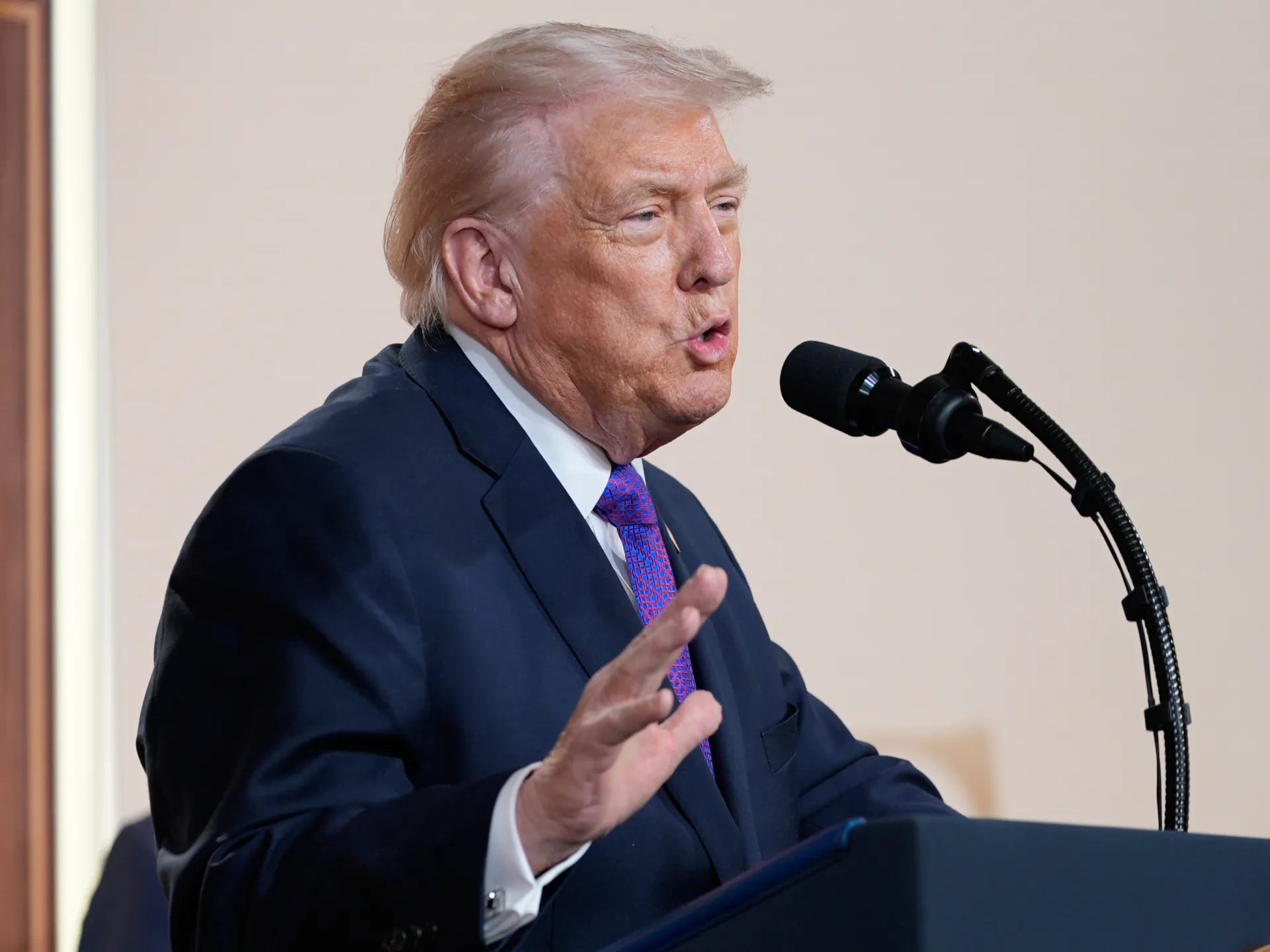
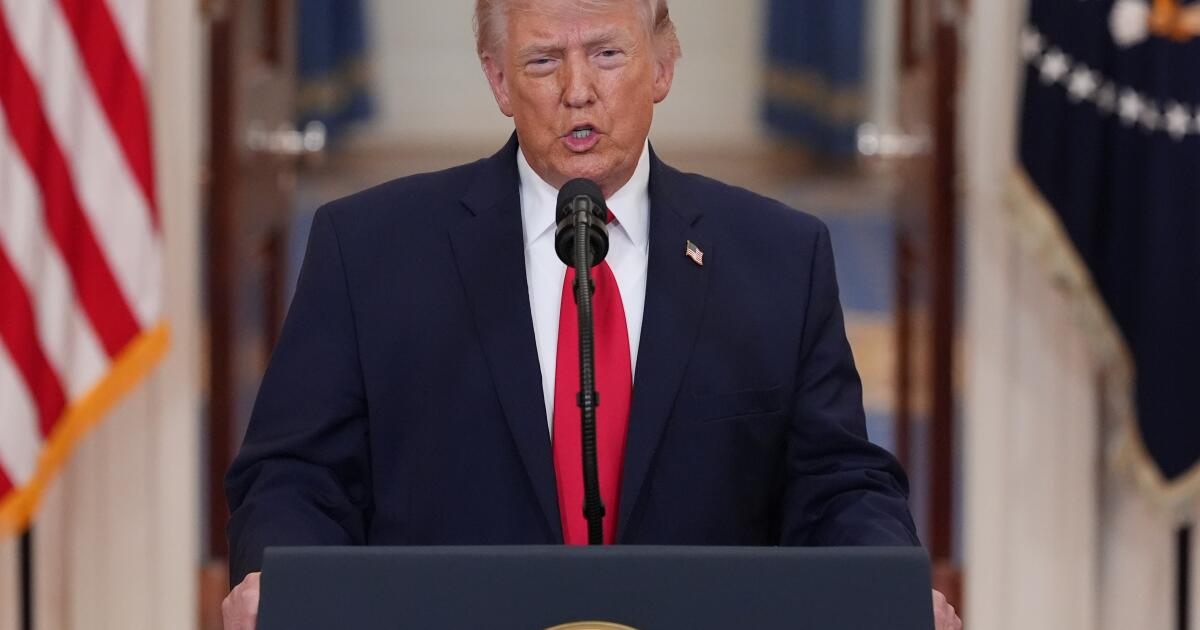
United States President Donald Trump said that one of the two National Guard troops shot a day earlier near the White House has died, while the other soldier is “fighting for his life”.
Trump said on Thursday evening that West Virginia National Guard member Sarah Beckstrom died from wounds following the double shooting on Wednesday, a short distance from the White House.
The president hailed Beckstrom as a “highly respected, young, magnificent person” and said the second member of the National Guard targeted in the gun attack was critical.
“He’s in very bad shape,” Trump said as he addressed troops in a video call to mark the Thanksgiving holiday in the US.
This is a breaking news story. More to follow soon.
Takaichi’s suggestion earlier this month that Tokyo could intervene militarily if Taiwan is attacked has enraged Beijing.
Japan has denied a report that said United States President Donald Trump had advised Prime Minister Sanae Takaichi not to provoke China over Taiwan’s sovereignty.
In a news briefing on Thursday, Japan’s top government spokesperson Minoru Kihara said “there is no such fact” about an article published in The Wall Street Journal claiming that Trump had made such a remark to the Japanese leader.
Recommended Stories
list of 3 itemsend of list
He declined to comment further on the details of the “diplomatic exchange”.
The row between Asia’s two biggest economies began after Takaichi had suggested earlier this month that Tokyo could intervene militarily in any attack on self-ruled Taiwan, which China claims as part of its territory.
Takaichi’s remark ignited anger in Beijing.
After the incident, Beijing’s Foreign Ministry said that Chinese leader Xi Jinping pressed the issue in a phone call with Trump on Monday, saying Taiwan’s return was an “integral part of the post-war international order”.
The WSJ reported on Thursday that, shortly after that phone call between the US and Chinese leaders, “Trump set up a call with Takaichi and advised her not to provoke Beijing on the question of the island’s sovereignty”. The report quoted unidentified Japanese officials and an American briefed on the call.
Takaichi said in her reporting of the call with Trump that they discussed the US president’s conversation with Xi, as well as bilateral relations.
“President Trump said we are very close friends, and he offered that I should feel free to call him anytime,” she said.
It summoned Tokyo’s ambassador and advised Chinese citizens against travelling to Japan.
As the diplomatic row escalated, the Chinese embassy in Tokyo issued a new warning to its citizens on Wednesday, saying there had been a surge in crime in Japan, and that Chinese citizens had reported “being insulted, beaten and injured for no reason”.
Japan’s Foreign Ministry denied any increase in crime, citing figures from the National Police Agency in response that showed the number of murders from January to October had halved compared with the same period in 2024.
Last week, Japanese media reported that China will again ban all imports of Japanese seafood as the diplomatic dispute between the two countries escalated.
Chinese Foreign Ministry spokesperson Guo Jiakun reiterated on Thursday a call for Japan to officially retract Takaichi’s comments.
“The Japanese side’s attempt to downplay, dodge, and cover up Prime Minister Takaichi’s seriously erroneous remarks by not raising them again is self-deception,” Guo told a regular news briefing.
Some officials worry that Trump may be prepared to soften support for Taiwan in pursuit of a trade accord with China, a move they fear will embolden Beijing and cause conflict in an increasingly militarised East Asia.
“For Trump, what matters most is US-China relations,” said Kazuhiro Maejima, a professor of US politics at Sophia University.
“Japan has always been treated as a tool or a card to manage that relationship,” Maejima told Reuters news agency.
Washington’s envoy to Tokyo has said the US supports Japan in the face of China’s “coercion”, but two senior ruling party lawmakers said they had hoped for more full-throated support from their top security ally in Washington, DC.
ICONIC spots like Yellowstone and The Grand Canyon are about to get much more expensive for Brits.
National Parks in the US are making entry fees more expensive for tourists in an effort to “put American families first”.
Sign up for the Travel newsletter
Thank you!
National Parks like Yellowstone will become more expensive for Brits to visitCredit: AlamyVisitors to The Grand Canyon will pay an additional $100 on top of the standard entry feeCredit: Alamy
The US government has announced that beginning January 1, 2026, non-residents will have to pay an additional fee to enter its National Parks.
Non-residents will have to choose between buying a $250 (£189.23) annual pass or paying $100 (£75.69) per person “to enter 11 of the most visited national parks, in addition to the standard entrance fee”.
The current entry cost for Yellowstone is $20 (£15.14) for anyone on foot – so in this case, the new fee would cost $120 (£90.82) under the new bill.
Passes can be bought online and downloaded onto mobile phone – or linked to physical cards for convenience.
President Trump signed an order back in July to raise entrance fees at national parks for overseas tourists.
The additional fees will go into funding for conservation and maintenance at each site.
The Annual Pass cost for residents of the US will be $80 (£60.55) and throughout the year there will be ‘resident-only patriotic fee-free days’.
These include Memorial Day (May 25, 2026), Independence Day weekend (July 3-5, 2026), and Veteran’s Day (November 11, 2026).
In 2024, National Parks around America saw a record number of tourists with more than 330 million visiting its sites.
The country’s most visited parks are the Everglades in Florida, Yosemite in California and Colorado‘s Rocky Mountains.
Yosemite Valley in California is one of the most popular sitesCredit: Alamy
Secretary of the Interior Doug Burgum said: “President Trump’s leadership always puts American families first.
“These policies ensure that U.S. taxpayers, who already support the National Park System, continue to enjoy affordable access, while international visitors contribute their fair share to maintaining and improving our parks for future generations.”
Along with the price hike for National Parks, visitors heading to America now face a ‘Visa Integrity Fee’ under new rules.
The new fee falls under President Donald Trump‘s ‘One Big Beautiful Bill’ and has seen Brits paying substantially more to visit America.
The fee applies to anyone who needs a ‘non-immigrant visa’ – which includes people travelling for business, study and temporary work for more than three months.
It will cost around $250 (£189.22) and was introduced on October 1, 2025
The cost is on top of all existing visa application fees.
Individuals will pay the fee once a visa is issued and if an application is denied, then you aren’t charged the fee.
US President Donald Trump has called for a review of all Afghans who entered the US under the Biden administration, after two National Guard members were shot and critically wounded in Washington DC. US immigration authorities have also halted all Afghan-related applications.
The American tradition ofThanksgivingdates back to 1621 when thepilgrimsgave thanks for their first bountiful harvest inPlymouth Rock. The settlers had arrived in November 1620, founding the first permanent English settlement in the New England region.
After barely surviving their first winter, the pilgrims encountered Squanto, who taught them to grow corn, identify poisonous plants, and catch fish.
November of 1621 was the pilgrims’ first successful harvest, and Governor William Bradford invited nearby Native American allies for a feast. This first Thanksgiving was celebrated for three days, with the settlers feasting with the natives on dried fruits, boiled pumpkin, turkey, venison and much more.
The celebration, however, was not repeated until many years later, when in 1789 George Washington proclaimed Thanksgiving to be a national holiday on Thursday November 26th that year – setting the precedent of the last Thursday in November. Despite this, the holiday was celebrated on different days from state to state and Thomas Jefferson later did away with the holiday.
New York was the first state to officially adopt an annual Thanksgiving holiday, in 1817.
Thanksgiving didn’t become a nationwide holiday until President Lincoln proclaimed the last Thursday in November a national day ofThanksgiving in 1863. Every year following, the President proclaimed a day of Thanksgiving.
Thanksgiving was switched from the final Thursday in November to the next-to-last Thursday in November by President Roosevelt in 1939 as he wanted to create a longer Christmas shopping period to simulate the economy which was still recovering after the Great Depression.
This decision was heavily opposed, and was termed “Franksgiving”. It caused widespread confusion with many states ignoring the change until Congress sanctioned the fourth Thursday in November as a legal holiday in 1941.
Sarah Josepha Hale, writer of ‘Mary Had a Little Lamb’, led a 17 year campaign to get Thanksgiving declared a national holiday. Many letters she sent in that time were ignored, but a letter to Abraham Lincoln finally convinced him to declare Thanksgiving as a holiday in 1863.
The Plymouth settlers did not refer to themselves as ‘Pilgrims’. The majority of the settlers were dissidents who had broken away from the Church of England. They would have called themselves ‘separatists’ or ‘puritans’. It was not until about 100 years later that the term ‘Pilgrims’ started to be commonly used to refer to the settlers.
International Rights Advocates also sued Tesla for a similar issue, but that case was dismissed.
Published On 26 Nov 202526 Nov 2025
Share
A United States-based advocacy group has filed a lawsuit in Washington, DC, accusing Apple of using minerals linked to conflict and human rights abuses in the Democratic Republic of the Congo (DRC) and Rwanda despite the iPhone maker’s denials.
International Rights Advocates (IRAdvocates) has previously sued Tesla, Apple and other tech firms over cobalt sourcing, but US courts dismissed that case last year.
Recommended Stories
list of 4 itemsend of list
French prosecutors in December also dropped a case filed by the DRC against Apple subsidiaries over conflict minerals, citing lack of evidence. A related criminal complaint in Belgium is still under investigation.
Apple denied any wrongdoing in response to the DRC’s legal cases, saying it had instructed its suppliers to halt the sourcing of material from the DRC and neighbouring Rwanda.
It did not immediately respond to requests for comment on the latest complaint.
IRAdvocates, a Washington, DC-based nonprofit that tries to use litigation to curtail rights abuses, said in the complaint filed on Tuesday in the Superior Court of the District of Columbia that Apple’s supply chain still includes cobalt, tin, tantalum and tungsten linked to child and forced labour as well as armed groups in the DRC and Rwanda.
The lawsuit seeks a determination by the court that Apple’s conduct violates consumer protection law, an injunction to halt alleged deceptive marketing and reimbursement of legal costs but does not seek monetary damages or class certification.
The lawsuit alleges that three Chinese smelters – Ningxia Orient, JiuJiang JinXin and Jiujiang Tanbre – processed coltan that United Nations and Global Witness investigators alleged was smuggled through Rwanda after armed groups seized mines in the eastern DRC and linked the material to Apple’s supply chain.
A University of Nottingham study published in 2025 found forced and child labour at DRC sites linked to Apple suppliers, the lawsuit said.
Ningxia Orient, JiuJiang JinXin and Jiujiang Tanbre did not immediately respond to requests for comment.
The DRC – which supplies about 70 percent of the world’s cobalt and significant volumes of tin, tantalum and tungsten used in phones, batteries and computers – did not immediately respond to a request for comment. Rwanda also did not immediately respond to a request for comment.
Apple has repeatedly denied sourcing minerals from conflict zones or using forced labour, citing audits and its supplier code of conduct. It said in December that there was “no reasonable basis” to conclude any smelters or refiners in its supply chain financed armed groups in the DRC or neighbouring countries.
Congolese authorities said armed groups in the eastern part of the country use mineral profits to fund a conflict that has killed thousands of people and displaced hundreds of thousands. The authorities have tightened controls on minerals to choke off funding, squeezing global supplies.
Apple says 76 percent of the cobalt in its devices was recycled in 2024, but the IRAdvocates lawsuit alleged its accounting method allows mixing with ore from conflict zones.
It has been a whiplash-inducing month for the American rancher, one of United States President Donald Trump’s most steadfast voting blocs.
Starting with an October 19 quip from Trump that the US would increase beef imports from Argentina to the ensuing rancher backlash against the announcement of an investigation into the hyperconsolidated US meatpacking industry and the dropping of tariffs on Brazilian beef, ranchers have found themselves caught between the president’s desires to appease both them and the American consumer in the face of high beef prices.
Recommended Stories
list of 4 itemsend of list
US ranchers have enjoyed rising cattle prices, largely the result of the lowest herd numbers for beef cattle since the 1950s. Other factors constricting supply include the closure of the Mexican border to live cattle due to concerns over screwworm and steep tariffs on foreign beef.
Cattle prices paid to ranchers are separate from consumer beef prices, which, as of September, were $6.32 for a pound (453 grams) of ground beef, an 11 percent rise from September 2024 when they were $5.67 a pound. The Bureau of Labor Statistics did not release economic data, including the consumer price index for last month, because of the government shutdown.
Trump had no patience for the typically loyal ranchers objecting to his plan to import more Argentinian beef, which they saw as a threat to their recent economic gains.
“If it weren’t for me, they would be doing just as they’ve done for the past 20 years – Terrible! It would be nice if they would understand that,” Trump wrote in an October post on his Truth Social platform.
While Corbitt Wall, a commercial cattle manager and market analyst, is clear that he “totally supports Trump and everything he does”, he also saw hubris and a misunderstanding of the cattle industry by the president.
“There was not a person in the cattle business on any level that was not insulted by that post,” he told Al Jazeera.
Wall religiously follows prices across the cattle trade from ranch to slaughterhouse and has watched the futures market for cattle slide down by more than 15 percent since Trump’s October 21 announcement.
Futures prices dictate what ranchers can expect to sell cattle for down the line and sway current sale prices as well. For ranchers’ sake, Wall said he hopes Trump leaves the cattle market alone.
“He doesn’t live in this world, in this cattle world, and doesn’t realise the impact that a statement can make in our business,” Wall said.
Years of rough seasons
Oregon rancher David Packham said that while cattle prices have jumped in ranchers’ favour, many are still struggling in the face of years of rough seasons.
Years of drought across the country raised feed costs for all and pushed some ranchers to sell off cattle. Sticker prices on farm equipment from tractors to pick-up trucks have ballooned as well, especially on the back of supply chain challenges during the COVID-19 pandemic, and are expected to rise further on account of Trump’s tariffs.
Packham said he has regularly sold cattle at a loss and doesn’t want consumers to think ranchers are living high off the hog.
“I’m looking at a 40-year-old tractor that I use on a daily basis just to keep putting off replacing it, making repairs, although it’s difficult to find parts for now, just to keep it limping along because I couldn’t afford $100,000 for a new tractor,” Packham said. “When I say we’re not really making a whole lot of money, it’s because we have all this loss carryover.”
Cattle are sold at Nevada Livestock Marketing in Fallon, Nevada [Courtesy of Corbitt Wall]
Packham was a registered Republican until Trump’s first term. The president’s Argentina comments and the subsequent chaos for the cattle industry have propped open a door for ranchers critical of Trump, but they represent a minority within the community, he said.
“I’m noticing more and more of them [ranchers] that had been cautiously neutral, that are now kind of like me and just saying, ‘You know what? No. This is bulls***. He’s a train wreck,’” Packham said.
‘Perennial issue’
One action ranchers can support, however, is Trump’s November 7 announcement of a Department of Justice investigation into the big four US meatpackers – Tyson, JBS, Cargill and National Beef – “for potential collusion, price fixing and price manipulation”.
Historically, ranchers looking to sell cattle have held little negotiating power as the four companies control more than 80 percent of the market.
However, a prior Department of Justice investigation into meatpacker price-fixing was started under the first Trump administration in 2020 due to a gulf created by falling cattle prices and rising consumer beef prices. The investigation continued under President Joe Biden’s administration but was never publicly concluded. According to Bloomberg News, the investigation was quietly closed with no findings just weeks before Trump announced the November antitrust probe.
James MacDonald, a research professor in agricultural and resource economics at the University of Maryland, views the administration’s antitrust investigation announcement as “entirely for political consumption”.
“It is a perennial issue that p***es off ranchers, and you can gain some political ground by attacking the packers,” MacDonald said.
Packham would prefer the new investigation to come at a different time and said that given the squeeze from the tight cattle market, packers are operating under slimmer margins and not from a position of absolute power.
On Friday, Tyson announced the closure of a Nebraska beef-processing plant that employed more than 3,000 people. MacDonald called the decision a “shock” indicative of the depths of the US beef shortage. The current low cattle inventory in the US came from years of drought, which wiped out grazing lands and slowed herd rebuilding. Replenishing the cattle supply chain is a years-long process.
“That’s sort of a fact and a fundamental, and it’s not going to change for a while,” MacDonald said.
MacDonald also doesn’t believe the increased Argentina imports will ease this shortage or lower prices as the country largely sends lower-grade, lean beef to the US, accounting for only 2 percent of imports. He expected that while the reintroduction of largely lean Brazilian beef will impact the import market, it holds less weight on overall beef supply.
McDonald also cited heifer retention numbers, which indicate how many female cattle that ranchers hold back to produce future herds years down the line, which are still low.
Tyson likely factored in these numbers when making the decision to shutter its Nebraska plant, and it doesn’t seem like the industry is expecting herd numbers to rebound either, McDonald told Al Jazeera.
“It’s Tyson saying we don’t think cattle supplies are going to recover anytime soon,” MacDonald said.
While the actual mechanisms of Trump’s recent policies might not budge consumers’ bottom lines or change the cattle market for the time being, Wall is more concerned about the ripple effects from the news cycle, saying ranchers “live and die” by the cattle markets. While his faith is shaken, Wall regardless believes that ranchers, conservative as ever, will show up for Trump when election time comes around.
“You look at what the other side has to offer, and there’s no way people are going to go for that,” Wall said. “So in the long run, they’ll stick with him.”
Trump’s Environmental Protection Agency says strict air quality standards were introduced without sufficient review.
Published On 26 Nov 202526 Nov 2025
Share
United States President Donald Trump’s administration has moved to roll back tougher limits on deadly soot pollution, prompting condemnation from environmental groups.
The Trump administration’s latest bid to weaken environmental standards comes after the Environmental Protection Agency (EPA) filed a court motion arguing that former President Joe Biden’s administration exceeded its authority when it tightened air quality standards in 2024.
Recommended Stories
list of 4 itemsend of list
In a motion filed on Monday, lawyers for Trump’s EPA asked a Washington, DC, appeals court to throw out the tougher standard, arguing it was introduced without the “rigorous, stepwise process” required under the 1963 Clean Air Act.
The EPA initially defended the tougher standard amid a flurry of legal challenges from Republican-led states and business groups, which argued the rule would raise costs, before reversing course under Trump appointee Lee Zeldin.
“EPA has concluded that the position it advanced earlier is erroneous,” lawyers for the EPA said in the filing, arguing that the agency should complete a “thorough review of the underlying criteria and corresponding standards” before revising the limit.
Under Biden appointee Michael S Regan, the EPA last year substantially lowered acceptable soot levels, from 12 micrograms per cubic metre of air to 9 micrograms per cubic metre of air.
The agency said at the time that the tougher standard would prevent up to 4,500 premature deaths and 290,000 lost workdays by 2032.
Upon taking office earlier this year, Zeldin, a former Republican lawmaker, pledged to roll back dozens of environmental regulations as part of what he dubbed the “largest deregulatory action in the history of the United States”.
Patrice Simms, an environmental lawyer at the nonprofit organisation Earthjustice, said lowering air quality standards would harm public health.
“Trump has made it clear that his agenda is all about saving corporations money, and this administration’s EPA has nothing to do with protecting people’s health, saving lives, or serving children, families or communities,” Simms said in a statement.
“We will continue to defend this life-saving standard.”
Patrick Drupp, the director of climate policy at the Sierra Club, also condemned the EPA’s move, calling it “reckless” and “a complete betrayal” of the agency’s mission.
“While this administration continues to strip away access to affordable healthcare, they are simultaneously allowing fossil fuel companies to cut corners and make Americans sicker,” Drupp said.
US President Donald Trump is sending senior negotiators to meet Vladimir Putin to push for a deal to end Russia’s war with Ukraine. Special envoy Steve Witkoff is expected to travel to Moscow next week, with Jared Kushner also involved in the process.
Immigration rights advocates says the new policy aims to ‘bully some of the most vulnerable’ people in US society.
The administration of United States President Donald Trump has confirmed that it will retroactively vet refugees who have already been admitted into the country, prompting concern from immigrant rights groups.
“Corrective action is now being taken to ensure those who are present in the United States deserve to be here,” Department of Homeland Security spokesperson Tricia McLaughlin said in a statement on Tuesday.
Recommended Stories
list of 3 itemsend of list
The Associated Press and Reuters news agencies had reported on Monday that they obtained a government memorandum ordering a review of more than 230,000 refugees who were legally resettled in the country under former President Joe Biden.
The memo, signed by US Citizenship and Immigration Services (USCIS) Director Joseph Edlow, said that refugees who are found to have failed to meet the standards for resettlement would have their legal status revoked.
“Given these concerns, USCIS has determined that a comprehensive review and a re-interview of all refugees admitted from January 20, 2021, to February 20, 2025, is warranted,” the memo stated.
“When appropriate, USCIS will also review and re-interview refugees admitted outside this timeframe.”
In 2024, the US admitted more than 100,000 refugees. The leading countries of origin for refugees were the Democratic Republic of the Congo, Afghanistan, Venezuela and Syria.
Unlike asylum seekers who apply for protections once they arrive in the US, refugees apply for legal status while they are outside of the country.
They are allowed to enter the US with the presumption that they will be longterm residents, safe from persecution in their home countries.
Refugee admission also offers a path to US citizenship, with newcomers able to apply for a legal permanent residency one year after arrival in the country.
Applicants for refugee admission undergo multiple levels of screening and interviews. That process often starts with a third party – usually the United Nations – referring them to the US refugee admissions programme.
Then, US immigration authorities rigorously vet the applicants, who must show they faced persecution for their race, religion, nationality, political beliefs or membership in a particular social group.
Sharif Aly, the president of the International Refugee Assistance Project (IRAP), said refugees are the most highly vetted immigrants in the country.
“This order is one more in a long line of efforts to bully some of the most vulnerable members of our communities, by threatening their lawful status, rendering them vulnerable to the egregious conduct of immigration enforcement agencies, and putting them through an onerous and potentially re-traumatizing process,” Aly said in a statement.
Mark Hetfield, president of the humanitarian organisation HIAS, called the Trump administration’s move “unnecessary, cruel and wasteful”. His group assists new refugees in the US.
“Refugees have already been more vetted than any other group of immigrants,” Hetfield told Reuters.
Trump drastically reduced refugee admission during his first term and all but gutted the programme after his return to the White House in January.
The second Trump administration set a historic low of 7,500 as the refugee admission cap for next year.
The president also ordered the programme to “primarily” resettle white South Africans, whom he says are facing discrimination by their government.
Overall, Trump has pushed to restrict new arrivals to the US and crack down on noncitizens in the country.
China’s Foreign Ministry said Trump initiated call with Xi Jinping and that communication was crucial for developing stable US-China relations.
Published On 26 Nov 202526 Nov 2025
Share
Chinese President Xi Jinping has “more or less agreed” to increase purchases of goods from the United States, President Donald Trump said, a day after a phone call between the two leaders was described by Beijing as “positive, friendly and constructive”.
Speaking to reporters on board Air Force One on Tuesday evening, Trump said he asked the Chinese leader during the call to accelerate purchases from the US.
Recommended Stories
list of 4 itemsend of list
“I think we will be pleasantly surprised by the actions of President Xi,” Trump said.
“I asked him, I’d like you to buy it a little faster. I’d like you to buy more. And he’s more or less agreed to do that,” he said.
Trump’s upbeat forecast on trade with China comes after Beijing announced last month that it would resume purchases of US soya beans and would halt expanded curbs on rare earths exports to the US amid detente in the tariff war with Washington.
US Treasury Secretary Scott Bessent said that China had pledged to buy 12 million metric tonnes of soya beans from US farmers this year, but the Reuters news agency reports that the pace of Chinese purchases had been less than initially expected.
China has so far ordered nearly two million metric tonnes of US soya beans, according to data by the US Department of Agriculture, Reuters reports.
The call on Monday between Trump and Xi comes just weeks after the two leaders met in South Korea, where they agreed to a framework for a trade deal that has yet to be finalised.
“China and the United States once fought side by side against fascism and militarism, and should now work together to safeguard the outcomes of World War II,” Xi was quoted as telling Trump in the call, China’s official Xinhua news agency reports.
Xi also told Trump that “Taiwan’s return to China is an integral part of the post-war international order”.
China regards Taiwan as part of its territory and has not ruled out the use of force to unite the self-ruled, democratic island with the Chinese mainland.
The US has been traditionally opposed to China’s potential use of force to seize Taiwan and is obligated by a domestic law to provide sufficient military hardware to Taipei to deter any armed attack.
But Trump has maintained strategic ambiguity about whether he would commit US troops in case of a war in the Taiwan Strait, while his administration has urged Taiwan to increase its defence budget.
Trump made no mention of Xi’s comments on Taiwan in a later post on Truth Social, where he spoke of a “very good” call with the Chinese leader, which he said covered many topics, including Ukraine, Fentanyl and US farm products.
“Our relationship with China is extremely strong! This call was a follow up to our highly successful meeting in South Korea, three weeks ago. Since then, there has been significant progress on both sides in keeping our agreements current and accurate,” Trump said.
“Now we can set our sights on the big picture,” he said.
The US leader also said that he had accepted Xi’s invitation to visit Beijing in April, and had invited Xi for a state visit to the US later in the year.
China’s Ministry of Foreign Affairs said on Tuesday that Washington had initiated the call between Trump and Xi, which spokesperson Mao Ning called “positive, friendly and constructive”.
Mao also said that “communication between the two heads of state on issues of common concern is crucial for the stable development of China-US relations”.
UNAIDS says millions across the world lost access to treatment and preventive care due to financial shortfalls.
The United Nations agency for combating AIDS has announced that global funding disruptions for treatment and prevention programmes are leaving millions of people without access to care.
In a report released on Tuesday, UNAIDS said the global response to the disease “immediately entered crisis mode” after the United States halted funding when President Donald Trump took office in January.
Recommended Stories
list of 3 itemsend of list
The Trump administration had suspended all new foreign aid funds on January 25, except for military assistance to Israel and Egypt.
Some of the HIV funding was restored in the second half of the year, but in the wake of Trump’s decision to dismantle the US Agency for International Development (USAID), certain programmes have not resumed.
UNAIDS said the cuts were compounded by “intensifying economic and financial pressures on many low and middle-income countries”.
The funding shortfalls, it added, are having “having profound, lasting effects” on the lives of people across the world.
“People living with HIV have died due to service disruptions, millions of people at high risk of acquiring HIV have lost access to the most effective prevention tools available, over 2 million adolescent girls and young women have been deprived of essential health services, and community-led organizations have been devastated, with many being forced to close their doors,” the report read.
Due to the funding cuts, the number of people using preventive HIV medication, known as PrEP, fell by 64 percent in Burundi, 38 percent in Uganda and 21 percent in Vietnam. Condom distribution in Nigeria dropped by 55 percent.
“The funding crisis has exposed the fragility of the progress we fought so hard to achieve,” said Winnie Byanyima, the executive director of UNAIDS.
“Behind every data point in this report are people … babies missed for HIV screening, young women cut off from prevention support, and communities suddenly left without services and care. We cannot abandon them.”
Despite the financial crisis, UNAIDS said there were some positive trends emerging, including national and regional initiatives to bolster health programmes and treat the disease.
“Communities are rallying to support each other and the AIDS response. Although the most impacted countries are also some of the most indebted, limiting their ability to invest in HIV, governments have taken swift action to increase domestic funding where they can,” the report read.
“As a result, some countries have maintained or even increased the number of people receiving HIV treatment.”
The report recommends restructuring the international debt of lower-income countries and pausing their payments until 2030 to allow them to direct more resources to HIV care and prevention.
It also called for “inspiring innovation with prizes instead of patents, and treating health innovations as global public goods in times of pandemics”.
On top of dwindling funds, the report highlighted another challenge in the fight against AIDS: “a growing human rights crisis”.
“In 2025, for the first time since UNAIDS began monitoring punitive laws in 2008, the number of countries criminalizing same-sex sexual activity and gender expression increased,” it said.
“Globally, anti-gender and anti-rights movements are growing in influence and geographic reach, jeopardizing gains made to date on the rights of women and girls, people living with HIV and LGBTIQ+ people.”
President Donald Trump pardoned Thanksgiving turkeys Gobble and Waddle — joking he nearly named them after Democrats Nancy Pelosi and Chuck Schumer — while also taking swipes at Joe Biden, stating last year’s turkey pardons were “invalid” because Biden used an autopen to sign them.
A sluggish job market lowers consumer confidence but may also lead to another rate cut from the Federal Reserve by the end of the year.
Published On 25 Nov 202525 Nov 2025
Share
United States consumer confidence sagged in November as households worried about jobs and their financial situation, likely in part because of the recently ended government shutdown.
The Conference Board said on Tuesday its consumer confidence index dropped to 88.7 this month, from an upwardly revised 95.5 in October, hitting its lowest level since April.
Recommended Stories
list of 4 itemsend of list
Economists polled by the Reuters news agency had forecast the index edging down to 93.4 from the previously reported 94.6 in October.
“Consumers’ write-in responses pertaining to factors affecting the economy continued to be led by references to prices and inflation, tariffs and trade, and politics with increased mentions of the federal government shutdown,” said Dana Peterson, chief economist at the Conference Board.
“Mentions of the labour market eased somewhat but still stood out among all other frequent themes not already cited. The overall tone from November write-ins was slightly more negative than in October.”
Consumer confidence remained low among all income brackets. While confidence among those who make less than $15,000 annually ticked up slightly, it still remained the group with the lowest consumer confidence.
The consumer confidence report was released amid a slowing labour market. The September jobs report, released late last week, showed 119,000 jobs were added to the US economy as the unemployment rate ticked up 0.1 of a percentage point to 4.4 percent.
However, there is limited economic data available to fully gauge the sentiment of the US economy because the government shutdown, the longest in US history, hindered federal agencies’ ability to gather the data needed to assess current conditions.
“More worries about what lies ahead … hence, putting purchases for major items on hold,” Jennifer Lee, senior economist at BMO, wrote to Reuters.
The economic data followed dovish comments from policymakers in the past few days that helped cement rate cut expectations.
On Monday, Federal Reserve Governor Christopher Waller said the job market was weak enough to warrant another quarter-point rate cut in December although action beyond that depended on a flood of data that was delayed by the federal government shutdown.
A new transparency feature on X has unwittingly revealed that many of the site’s top MAGA influencers are foreign actors sowing division in the US. It’s caused a storm on social media, as Soraya Lennie explains.
Trump signs order to integrate supercomputers and data assets in order to create ‘AI experimentation platform”.
United States President Donald Trump has unveiled a national initiative to mobilise artificial intelligence (AI) for accelerating scientific breakthroughs.
Trump signed an executive order on Monday to establish “The Genesis Mission”, the latest iteration of his administration’s aggressive strategy for spurring AI development through deregulation, infrastructure investment and public-private collaboration.
Recommended Stories
list of 4 itemsend of list
Trump’s order directs US Energy Secretary Chris Wright to unite scientists and technologies at the country’s 17 national laboratories into “one cooperative system for research”.
Under the initiative, US supercomputers and data resources will be integrated to create a “closed-loop AI experimentation platform”, according to the order.
The White House, which likened the initiative to the Apollo programme that put the first man on the moon, said priority areas of focus would include the “greatest scientific challenges of our time,” such as nuclear fusion, semiconductors, critical materials and space exploration.
Michael Kratsios, the White House’s top science adviser, said the initiative took a “revolutionary approach” to scientific research.
“The Genesis Mission connects world-class scientific data with the most advanced American AI to unlock breakthroughs in medicine, energy, materials science, and beyond,” Kratsios said.
Chipmaker Nvidia and AI startup Anthropic said on Monday that they were partnering with the Trump administration on the initiative.
“Uniting the National Labs, USG, industry, and academia, this effort will connect America’s leading supercomputers, AI systems, and next-generation quantum machines into the most complex scientific instrument ever built – accelerating breakthroughs in energy, discovery, and national security,” Nvidia said in a social media post, referring to the US government (USG).
Since re-entering the White House, Trump has made cutting red tape to fast-track the development of AI a key plank of his economic agenda.
Last week, Trump called on the US Congress to pass legislation to create a national standard for AI, while criticising state governments over their laws regulating the emerging technology.
“Overregulation by the States is threatening to undermine this Growth Engine,” Trump said on his platform, Truth Social.
“We MUST have one Federal Standard instead of a patchwork of 50 State Regulatory Regimes.”
Benjamin H Bratton, an AI expert at the University of California, San Diego, welcomed the initiative as a move towards the “diffusion” of the technology.
“It is less important ‘whose’ AI people have access to than they have universal access at all,” Bratton told Al Jazeera.
“Most attempts to throttle AI in the USA and EU [European Union] come from cultural, economic and political incumbents protecting their turf.”
“Those locked out of positions of artificially scarce social agency have the most to gain,” Bratton added. “I support diffusion, not any particular administration.”
Fletcher fought for greater recognition of one of the deadliest incidents of race violence in US history.
Published On 25 Nov 202525 Nov 2025
Share
Viola Ford Fletcher, one of the last survivors of Oklahoma’s 1921 Tulsa Massacre, has died at age 111.
Despite her advanced age, Fletcher was a well-known activist thanks to her work trying to win justice for the victims of one of the worst episodes of racial violence in United States history.
Recommended Stories
list of 4 itemsend of list
“Today, our city mourns the loss of Mother Viola Fletcher. She was a survivor of one of the darkest chapters in our city’s history and endured more than anyone should,” Tulsa Mayor Monroe Nichols wrote in a Facebook post. “Mother Fletcher carried 111 years of truth, resilience, and grace and was a reminder of how far we’ve come and how far we must still go.”
Fletcher was seven years old at the time of the Tulsa Massacre in Oklahoma, a state living under the Jim Crow system that segregated the US South from the end of the 1800s until the Civil Rights Movement of the 1960s.
The massacre began on May 31, 1921, when police arrested 19-year-old Dick Rowland, a Black shoeshiner, over allegations that he had assaulted a white woman, according to a report by the US Justice Department’s Civil Rights Division.
As a survivor of the Tulsa Race Massacre, Viola Ford Fletcher bravely shared her story so that we’d never forget this painful part of our history. Michelle and I are grateful for her lifelong work to advance civil rights, and send our love to her family. https://t.co/km7RXnDKcW
When a group of white men gathered at the courthouse calling for Rowland to be lynched, a group of Black men from a nearby community responded and tried to protect him before “all hell broke out”, the report said.
Over the next two days, vigilante groups and law enforcement looted and burned down 35 blocks of Tulsa’s Greenwood District, which was then home to one of the wealthiest Black communities in the US. The Bureau of Labour Statistics in 2024 estimated that the scale of the damage was around $32.2m when adjusted for inflation.
As many as 300 residents of Tulsa were killed and another 700 injured, the report said, although the final tally is unknown because many were buried in unmarked graves.
Survivors like Fletcher and her family were forced to leave the area. Left destitute, her family became sharecroppers, a form of subsistence work where farmers give over almost all their harvest to their landlord.
Rowland was never charged, after Sarah Page, the lift operator he was accused of assaulting, said that she did not want to prosecute the case.
Despite the scale of devastation, the Tulsa Massacre received limited national attention until Oklahoma state launched an investigative commission in 1997. Efforts to win compensation for victims in 2001, however, failed due to the statute of limitations.
On the centennial anniversary of the massacre, Fletcher testified before the US Congress in 2021 about her experiences and co-authored a memoir, Don’t Let Them Bury My Story, with her grandson in 2023.
Fletcher was mourned by US leaders like former President Barack Obama.
“As a survivor of the Tulsa Race Massacre, Viola Ford Fletcher bravely shared her story so that we’d never forget this painful part of our history. Michelle and I are grateful for her lifelong work to advance civil rights, and send our love to her family,” Obama posted on X.
White House cites groups’ alleged support for Hamas, accusing them of waging campaign against US interests and allies.
Published On 24 Nov 202524 Nov 2025
Share
Washington, DC – United States President Donald Trump has ordered his aides to start a process to label the branches of the Muslim Brotherhood in Egypt, Lebanon and Jordan as “terrorist” organisations, citing their alleged support for the Palestinian group Hamas.
Trump issued the decree on Monday as Washington intensified its crackdown on Israel’s foes in the region.
Recommended Stories
list of 3 itemsend of list
The decree accused Muslim Brotherhood leaders in Jordan of providing “material support” to Hamas and the Lebanese branch of the group – known as al-Jamaa al-Islamiya – of siding with Hamas and Hezbollah in their war with Israel.
It also claimed that an Egyptian Muslim Brotherhood leader “called for violent attacks against United States partners and interests” during Israel’s war on Gaza. But it was not clear what the White House was referring to. The Muslim Brotherhood has been banned in Egypt and mostly driven underground.
“President Trump is confronting the Muslim Brotherhood’s transnational network, which fuels terrorism and destabilization campaigns against US interests and allies in the Middle East,” the White House said.
Trump’s order directs the secretary of state and the treasury secretary to consult with the US intelligence chief and produce a report on the designation within 30 days.
A formal “foreign terrorist organisation” label would then officially apply to the Muslim Brotherhood branches within 45 days after the report.
The process is usually a formality, and the designation may come sooner. The decree also opens the door to blacklisting other Muslim Brotherhood branches.
The White House is also pushing to label the groups as “designated global terrorists”.
The designations would make it illegal to provide material support to the group. It would also mostly ban their current and former members from entering the US, and enable economic sanctions to choke their revenue streams.
Longstanding demand of right-wing activists
Established in 1928 by Egyptian Muslim scholar Hassan al-Banna, the Muslim Brotherhood has offshoots and branches across the Middle East in the shape of political parties and social organisations.
Across the Middle East, Muslim Brotherhood-affiliated parties take part in elections and say they are committed to peaceful political participation.
But the group has been outlawed by several countries across the region.
Blacklisting the Muslim Brotherhood has been a longstanding demand for right-wing activists in the US.
But critics say that the move could further enable authoritarianism and the crackdown on free political expression in the Middle East.
The decree could also be used to target Muslim American activists on allegations of ties to the Muslim Brotherhood or contributions to charities affiliated with the group.
Right-wing groups have long pushed to outlaw Muslim American groups with unfounded accusations of ties to the Muslim Brotherhood.
Nihad Awad, executive director of the Council on American-Islamic Relations (CAIR), said the designation should not have an impact on Muslim American advocacy groups and charities.
“The American Muslim organisations are solid,” Awad told Al Jazeera. “They are based in the US. The relief organisations serve millions of people abroad. I hope that this will not impact their work.”
But he noted that anti-Muslim activists have been trying to promote “the conspiracy theory that every Muslim organisation in the US is a front to the Muslim Brotherhood”.
Recently, Republican Texas Governor Greg Abbott designated both the Muslim Brotherhood and CAIR as “foreign terrorist organisations and transnational criminal organisations”.