‘Gulf countries may question US capability to protect them’ | US-Israel war on Iran
Former US Deputy Assistant Secretary of State Gordon Gray explains the short-term and long-term implications of US-Israeli war on Iran.
Published On 8 Mar 2026
Former US Deputy Assistant Secretary of State Gordon Gray explains the short-term and long-term implications of US-Israeli war on Iran.
Published On 8 Mar 20268 Mar 2026
Share
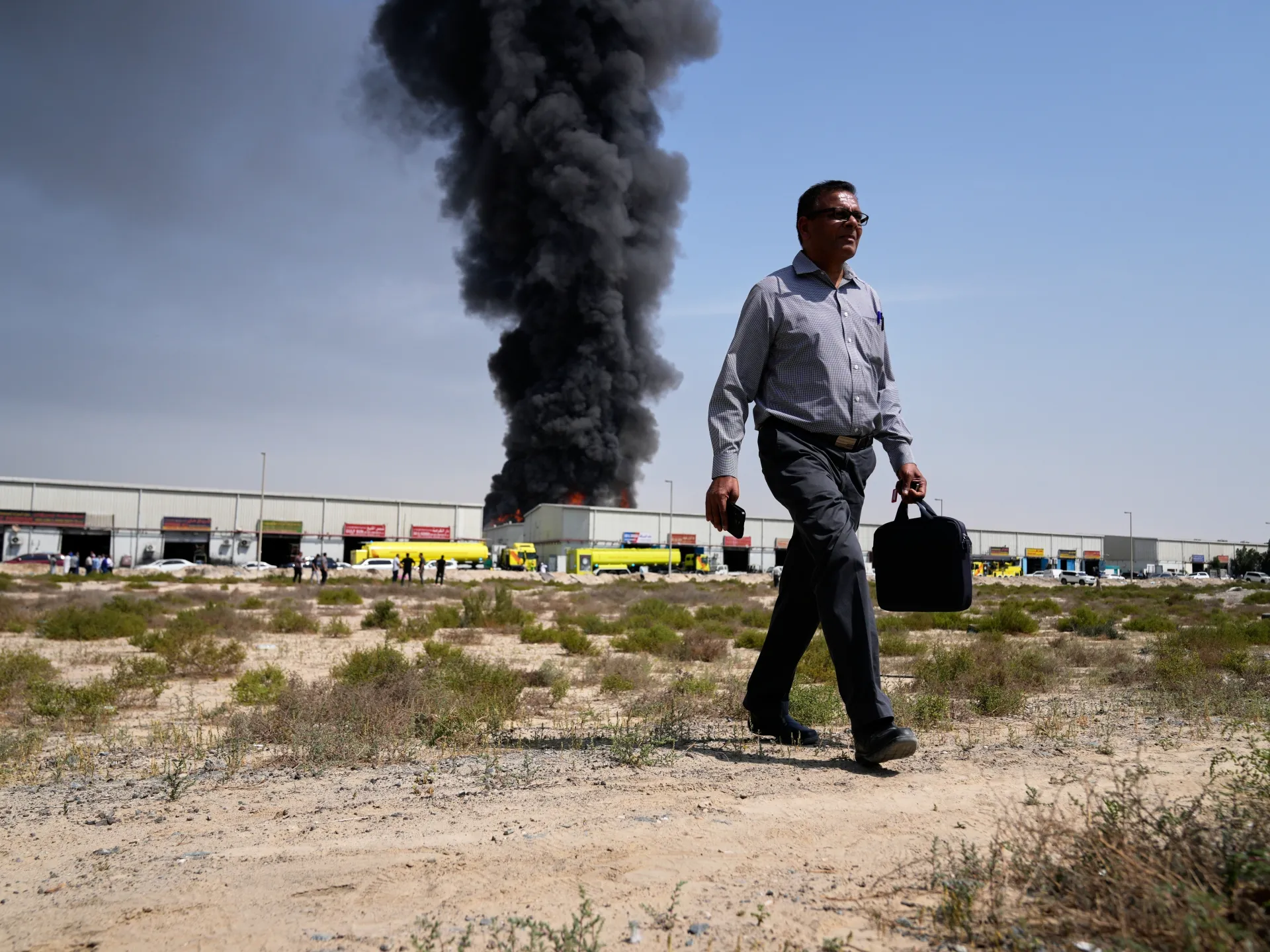
Bahrain has said an Iranian drone attack caused material damage to a water desalination plant in the country, marking the first time a Gulf nation has reported targeting any such facility during the eight days of the war between Iran and the US and Israel.
The attack on Sunday comes a day after Iranian Foreign Minister Abbas Araghchi said a freshwater desalination plant on Qeshm Island in southern Iran was attacked by the United States.
list of 3 itemsend of list
“Water supply in 30 villages has been impacted. Attacking Iran’s infrastructure is a dangerous move with grave consequences. The US set this precedent, not Iran,” he said on X on Saturday.
While Tehran has not yet commented on the Bahrain attack, it has raised questions about the vulnerability of the Gulf countries, which depend on desalination plants for the majority of their water supply.
How important are water desalination plants to the Gulf region? Can water security in the Gulf be guaranteed amid a widening of military targets to include energy and other civilian sites?
A desalination plant primarily converts seawater into water suitable for drinking purposes as well as for irrigation and industrial use.
The process of desalination involves removing salt, algae and other pollutants from seawater using a thermal process or membrane-based technologies.
According to the US Department of Energy, desalination systems “heat water so that it evaporates into steam, leaving behind impurities, and then condenses back into a liquid for human use”.
Meanwhile, membrane-based desalination involves “a class of technologies in which saline water passes through a semipermeable material that allows water through but holds back dissolved solids like salts”.
Reverse osmosis is the most popular membrane technology. Most countries in the Gulf Cooperation Council (GCC) use reverse osmosis since it is an energy-efficient technique.
Water is scarce in the Gulf region due to the arid climate and irregular rainfall. Countries in the Gulf also have very limited natural freshwater resources. Groundwater, together with desalinated water, accounts for about 90 percent of the region’s main water resources, according to a 2020 report by the Gulf Research Center.
But in recent years, as groundwater has also begun to deteriorate as a result of climate change, Gulf countries have begun relying heavily on energy-intensive seawater desalination to meet their water needs.
More than 400 desalination plants are located on the Arabian Gulf shores stretching from the United Arab Emirates (UAE) to Kuwait, providing water to one of the most water-scarce regions in the world.
According to a 2023 research paper published by the Arab Center Washington DC, GCC member states account for about 60 percent of global water desalination capacity, producing almost 40 percent of the total desalinated water in the world.
About 42 percent of the UAE’s drinking water comes from desalination plants, while that figure is 90 percent in Kuwait, 86 percent in Oman, and 70 percent in Saudi Arabia. Saudi Arabia also produces more desalinated water than any other country.
Desalination has also played a crucial role in enabling economic development in the region, according to Naser Alsayed, an environmental researcher specialising in the Gulf states.
He noted that after the discovery of oil in the late 1930s, Gulf states had very limited natural freshwater resources and could not meet the demands created by population growth and expanding economic activity.
“Desalination plants were therefore introduced,” he told Al Jazeera, adding that the importance of desalinated water in supporting the Gulf’s development is often overlooked.
“As a result, targeting or disrupting desalination facilities would place much of the region’s economic stability and growth at significant risk,” he said.
“Secondly, desalination is the main source of freshwater for most GCC states, especially smaller and highly water-scarce countries such as Bahrain, Kuwait and Qatar. Because this water is primarily used for human consumption, desalination carries a strong humanitarian dimension and is essential for sustaining daily life in the region, making any disruption to these facilities particularly significant for the population,” he added.
Iran also uses desalination plants, which have been installed in coastal areas such as Qeshm Island in the Gulf. But Iran also has many rivers and dams and is not as heavily reliant on desalination plants as other countries in the Gulf region.
The Gulf’s heavy reliance on desalination plants has made it vulnerable during times of conflict.
During the 1990-1991 Gulf War, Iraqi forces intentionally destroyed most of Kuwait’s desalination capacity, and the damage to its water supply was severe.
Raha Hakimdavar, a hydrologist, told Al Jazeera that in the long-term, attacking these plants can also impact domestic food production, which mostly uses groundwater.
“However, the pressures from competing needs can divert this water away from domestic production. This can be especially challenging because the region is also highly food import dependent and is facing potential food security challenges due to the compromising of the Strait of Hormuz,” said Hakimdavar, who is a Senior Advisor to the Deans at Georgetown University in Qatar and the Earth Commons.
A 2010 CIA report (PDF) also warned that while “national dependence on desalinated water varies substantially among Persian Gulf countries, disruption of desalination facilities in most of the Arab countries could have more consequences than the loss of any industry or commodity.”
According to Alsayed, the impact of a plant being attacked in the region, however, depends on the local scenario.
“For Saudi Arabia, which is the least dependent on desalination and has significant geographic space, facilities on the Red Sea provide resilience. The UAE has 45 days of water storage aligned with its 2036 water security strategy, so contingency plans are in place to manage potential disruptions,” he said.
“The effects are likely to be felt more acutely in smaller states that are highly dependent on desalination like Qatar, Bahrain, and Kuwait, which have minimal strategic reservoirs,” he noted.
“The most significant impact, in my view, is psychological,” Alsayed said. “Water is essential to human life, and the perception of risk can cause fear and panic, which is particularly challenging in the current environment in the region and where authorities are working to maintain calm.”
As attacks on Gulf countries continue, with energy and civilian infrastructure being targeted, Alsayed highlighted that it is important for GCC countries to view water security as a regional issue rather than an independent concern for each member state.
“The countries need to coordinate more closely and work together. The GCC has a strong platform to prepare for water challenges, but has not fully utilised it,” he said.
Alsayed noted that the GCC Unified Water Strategy 2035 called for all member states to have a national integrated energy and water plan by 2020, but this has not yet been achieved.
“Whether through unified desalination grids, shared regional strategic water reserves, or diversifying water resource goals, this is the way to usher a new era to strengthen Gulf water security,” he said.
Hakimdavar, the hydrologist, said there is no replacement for desalination in the GCC in the near-term.
But she added that the GCC countries can rely on strategic water storage reservoirs – many countries maintain large water reserves that can supply cities for several days or longer.
“Countries can also diversify water supply systems, and also invest in smaller, more distributed desalination plants powered by renewable energy to reduce reliance on a few very large facilities,” she added.
Qatar, Saudi Arabia and UAE report more attacks despite assurance from Iran’s president that the strikes will stop.

Published On 8 Mar 20268 Mar 2026
Share
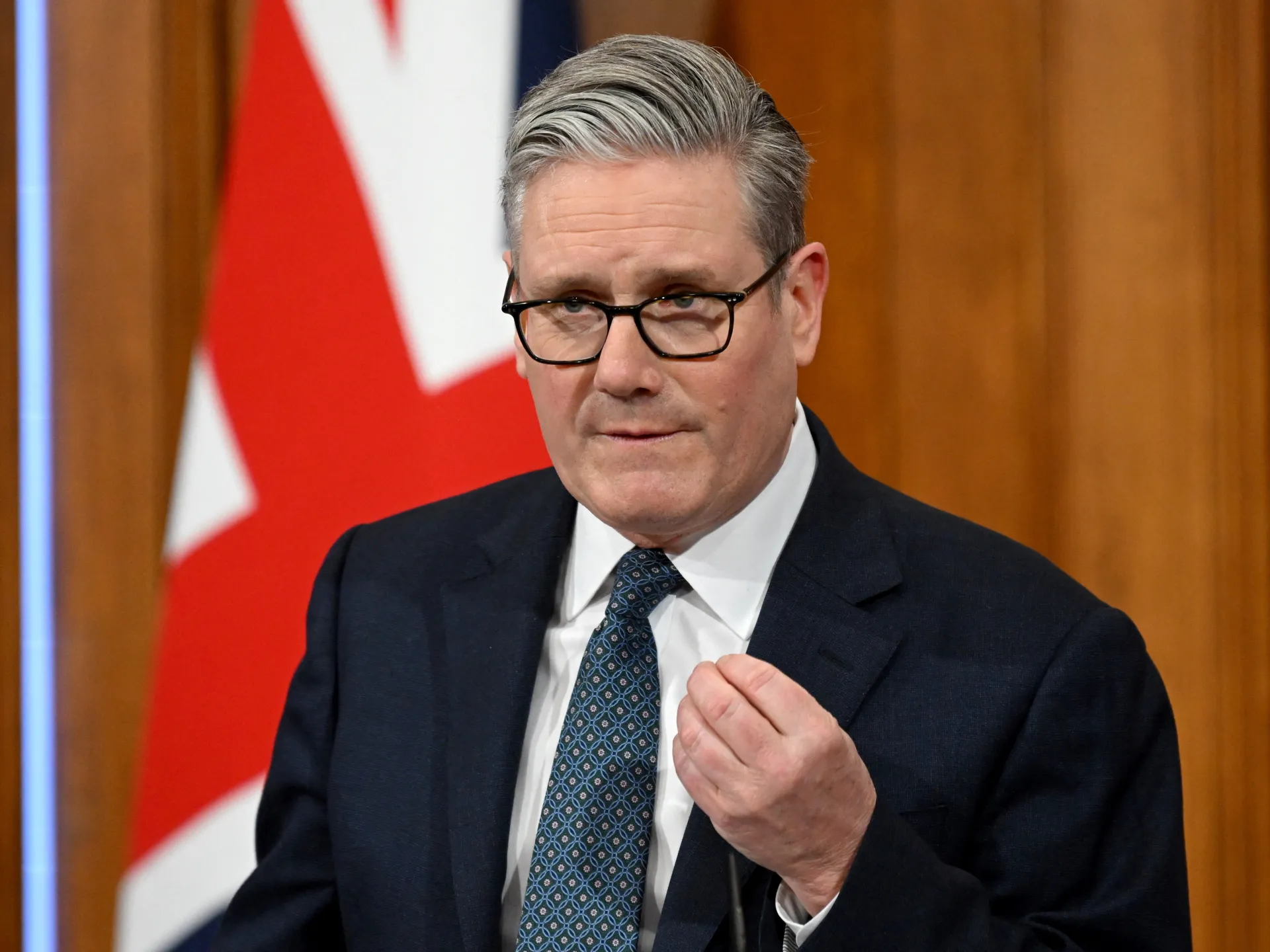
United States President Donald Trump has posted on social media that he does not need the United Kingdom to deploy aircraft carriers to the Middle East, amid the ongoing war with Iran.
Saturday’s post on Truth Social follows a statement from the UK’s Ministry of Defence that one of its two flagship aircraft carriers, the HMS Prince of Wales, has been placed on “high readiness”.
list of 3 itemsend of list
“The United Kingdom, our once Great Ally, maybe the Greatest of them all, is finally giving serious thought to sending two aircraft carriers to the Middle East,” Trump wrote.
“That’s OK, Prime Minister Starmer, we don’t need them any longer — But we will remember. We don’t need people that join Wars after we’ve already won!”
The post, with its reference to the UK as a “once great ally”, signals a deepening rift between the two countries that has emerged since Trump returned to office last year.
The divide appears to have deepened over the past week, as the US and Israel continue to hammer Iran as part of a war they launched on February 28.
The conflict has sparked fears across the Middle East, as retaliatory strikes from Tehran target US allies across the region.
Already, an estimated 1,332 people have been killed in Iran, and the US has confirmed the deaths of six of its service members. More deaths have been reported in countries like Lebanon, Kuwait, the United Arab Emirates and Iraq.
The UK government has increased its involvement in the war on Iran, widely considered illegal under international law.
The UK Defence Ministry, for instance, said on Saturday that the government of Prime Minister Keir Starmer had allowed the US to use its military bases for what it termed “limited defensive purposes”.
The bases include RAF Fairford in Gloucestershire and the Diego Garcia site in the Chagos Islands, located in the Indian Ocean. Initially, there had been reports that Starmer had blocked the US use of the bases.
In the immediate aftermath of the initial US-Israeli strike, Starmer appeared to blanche at the prospect of joining the war.
He and the leaders of France and Germany issued a joint statement, underscoring that any actions they might take would be defensive in nature.
“We will take steps to defend our interests and those of our allies in the region, potentially through enabling necessary and proportionate defensive action to destroy Iran’s capability to fire missiles and drones at their source,” the joint statement said.
“We have agreed to work together with the US and allies in the region on this matter.”
But Starmer has had to push back on domestic criticism both for and against joining the war.
On Monday, he told the UK Parliament, “We are not joining the US and Israeli offensive strikes”, citing the need to protect “Britain’s national interest” and “British lives”.
The war in Iran remains largely unpopular in the UK. The polling firm Survation conducted a survey over the last week of 1,045 British adults, in which 43 percent of respondents called the war not justifiable.
When asked if they supported Starmer’s initial decision not to allow the US to use UK bases, 56 percent of respondents approved. Only 27 percent said it was the wrong choice.
Thousands of protesters gathered outside the US Embassy in London on Saturday to call for an end to the ballooning conflict.
The US president, meanwhile, has upped his criticism of Starmer over the past week, further fraying relations with the UK government.
On March 3, for instance, Trump held an Oval Office meeting with German Chancellor Friedrich Merz, in which he said repeatedly he was “not happy with the UK”.
Of Starmer, Trump said, “This is not Winston Churchill that we’re dealing with.”
Trump has long admired Churchill, and last year installed a bust of the late UK wartime leader in the Oval Office, just as he had during his first term.
By contrast, Trump has issued a flood of criticism against Starmer, particularly for his 2024 decision to transfer control of the Chagos Islands to Mauritius.
The transfer came after the International Court of Justice found the UK acted unlawfully in 1965 by separating the islands from Mauritius to create a separate colony.
The deal with Mauritius allows the US and the UK to maintain a military base on Diego Garcia, part of the archipelago.
However, Trump has repeatedly slammed the transfer, writing on social media that “giving away extremely important land is an act of GREAT STUPIDITY”.
Tensions between the US and UK also rose in January after Trump told Fox News that NATO allies had “stayed a little off the front lines” during the US war in Afghanistan.
Starmer had responded that he found Trump’s comments “to be insulting and frankly appalling”.
The Trump administration has signalled it is pivoting away from its traditional European allies in favour of more politically aligned countries.
At a summit on Saturday with right-wing Latin American leaders, US Secretary of State Marco Rubio appeared to praise the attendees while casting shade on other allies.
“At a time when we have learned that, oftentimes, an ally, when you need them, maybe may not be there for you, these are countries that have been there for us,” Rubio told the summit.
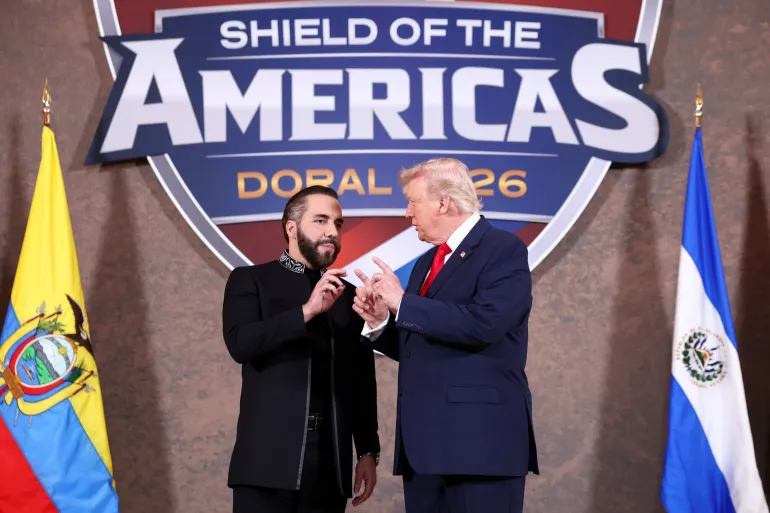
At the inaugural “Shield of the Americas” summit in South Florida, United States President Donald Trump announced the creation of what he calls the Americas Counter-Cartel Coalition: a group of a dozen politically aligned countries committed to fighting drug trafficking.
But as he signed a declaration to cement that commitment, Trump signalled that it came with the expectation that cartels would not be confronted with law enforcement action, but instead military might.
list of 3 itemsend of list
“ The only way to defeat these enemies is by unleashing the power of our military. So we have to use our military. You have to use your military,” Trump told the audience of Latin American leaders.
“You have some great police, but they threaten your police. They scare your police. You’re going to use your military.”
Saturday’s summit was the latest step in a larger foreign policy pivot under Trump.
Since taking office for a second term, Trump has distanced himself from some of the US’s traditional allies in Europe, instead forging tighter partnerships with right-wing governments around the world.
The attendance at the Shield of the Americas summit reflected that shift. Right-wing leaders, including Argentina’s Javier Milei, El Salvador’s Nayib Bukele and Ecuador’s Daniel Noboa, were among the guest list.
But notably absent was top-level leadership from Mexico, the US’s biggest trading partner, and Brazil, the largest country in the region by economy and population.
Both Mexico and Brazil are led by left-wing presidents who have resisted some of Trump’s more hardline policies.
The growing rift between the US and some of its longtime partners was a feature in the brief remarks delivered by US Secretary of State Marco Rubio, who praised attendees for their cooperation.
“They’re more than allies. They’re friends,” Rubio said of the leaders present.
“At a time when we have learned that oftentimes an ally, when you need them, maybe may not be there for you, these are countries that have been there for us.”
Secretary of Defense Pete Hegseth, meanwhile, reiterated his view that criminal networks and cartels pose an existential crisis for the entire Western Hemisphere, which he described as sharing the same cultural and religious roots.
“ We share a hemisphere and geography. We share cultures, Western Christian civilisation. We share these things together. We have to have the courage to defend it,” Hegseth said.

Latin America is one of several areas where Trump has launched military operations since returning to office in January 2025.
His rationale for authorising deadly operations in the region has centred primarily on the illicit drug trade.
Trump has repeatedly argued that Latin American criminal networks pose an imminent threat to national security, through the trafficking of people and drugs across US borders.
Experts in international law have pointed out that drug trafficking is considered a criminal offence — and it is not accepted as justification for acts of military aggression.
But the Trump administration has nevertheless launched lethal military strikes against alleged drug traffickers in Latin America.
Since September, for instance, the Trump administration has conducted at least 44 aerial strikes on maritime vessels in the Caribbean Sea and eastern Pacific Ocean, killing nearly 150 people.
The victims’ identities have never been publicly confirmed, nor has evidence been publicly released to justify the deadly strikes.
Some families in Colombia and Trinidad and Tobago have stepped forward to claim the dead as their loved ones, out on a fishing expedition or travelling between islands for informal work.
In Saturday’s remarks, Trump justified the attacks by arguing that cartels and other criminal networks had grown more powerful than local militaries — and therefore necessitated a lethal response.
“Many of the cartels have developed sophisticated military operations. Highly sophisticated, in some cases. They say they’re more powerful than the military in the country,” Trump said.
“Can’t have that. These brutal criminal organisations pose an unacceptable threat to national security. And they provide a dangerous gateway for foreign adversaries in our region.”
He then compared cartels to a disease: “They’re cancer, and we don’t want it spreading.”

In late December and early January, Trump also initiated attacks on Venezuelan soil, again defending his actions as necessary to stop drug traffickers.
The first attack targeted a port Trump linked to the gang Tren de Aragua. The second, on January 3, was a broader offensive that culminated in the abduction and imprisonment of Venezuela’s then-leader, President Nicolas Maduro.
On Saturday, Trump reflected on that military operation, which he characterised as an unmitigated success.
Maduro is currently awaiting trial on drug-trafficking charges in New York, though a declassified intelligence report last May cast doubt on Trump’s allegations that the Venezuelan leader directed drug-trafficking operations through groups like Tren de Aragua.
“America’s armed forces also ended the reign of one of the biggest cartel kingpins of all, with Operation Absolute Resolve to bring outlaw dictator Nicolas Maduro to justice in a precision raid,” Trump told Saturday’s summit.
He then described the military operation as “nasty”, though he underscored that no US lives were lost.
The early-morning raid, however, killed at least 80 people in Venezuela, including 32 Cuban military officers, dozens of Venezuelan security forces, and several civilians.
“We went right into the heart. We took them out, and it was nasty. It was about 18 minutes of pure violence, and we took them out,” Trump said of the operation.
Trump has since held up Venezuela as a model for regime change around the world, particularly as it leads a war with Israel against Iran.
Maduro’s successor, interim President Delcy Rodriguez, has so far complied with many of Trump’s demands, including for reforms to the country’s nationalised oil and mining sectors.
Just this week, the two countries re-established diplomatic relations for the first time since 2019, under Trump’s first term as president.
In Saturday’s remarks, however, Trump reiterated that his positive relationship with Rodriguez hinged on her cooperation with his priorities.
“She’s doing a great job because she’s working with us. If she wasn’t working with us, I would not say she’s doing a great job,” he said.
“In fact, if she wasn’t working with us, I’d say she’s doing a very poor job. Unacceptable.”

Trump did, however, express consternation with other presidents in the Latin American region, accusing them of allowing cartels to run amok.
“Leaders in this region have allowed large swaths of territory, the Western Hemisphere, to come under the direct control” of the cartels, Trump said.
“Transnational gangs have taken over, and they’ve run areas of your country. We’re not going to let that happen.”
He even delivered an ominous warning to the summit’s attendees: “Some of you are in danger. I mean, you’re actually in danger. It’s hard to believe.”
Many of the leaders in attendance, including El Salvador’s Bukele, have launched their own harsh crackdowns on gangs in their countries, employing “mano dura” or “iron fist” tactics.
Those campaigns, however, have elicited concerns from human rights groups, who have noted that presidents like Bukele used emergency declarations to suspend civil liberties and imprison hundreds of people, often without a fair trial.
Still, Trump dismissed alternative approaches in Saturday’s speech. Though he did not mention Colombia by name, he was critical of efforts to negotiate for the disarmament of cartels and rebel groups, as Colombian President Gustavo Petro has sought to do.
Instead, he offered to deploy military might throughout the region.
“We’ll use missiles. If you want us to use a missile, they’re extremely accurate — pew! — right into the living room, and that’s the end of that cartel person,” Trump said.
“A lot of countries don’t want to do that. They say, ‘Oh, sure. I’d rather not have that. I’d rather not have it. I believe they could be spoken to.’ I don’t think so.”

One country he did single out, though, was Mexico. Trump suggested that it had fallen behind other countries in the region in its efforts to combat crime.
“We must recognise the epicentre of cartel violence is Mexico,” he said.
“The Mexican cartels are fueling and orchestrating much of the bloodshed and chaos in this hemisphere, and the United States government will do whatever’s necessary to defend our national security.”
Since the start of his second term, Trump has pressured Mexico to step up its security efforts, threatening tariffs and even the possibility of military action if it does not comply.
Mexican President Claudia Sheinbaum has responded by increasing military deployments throughout the country.
In February 2025, for instance, she announced 10,000 soldiers would be sent to the US-Mexico border. For the upcoming FIFA World Cup, her officials have said nearly 100,000 security personnel will be patrolling the streets.
Just last month, her government also launched a military operation in Jalisco to capture and kill the cartel leader Nemesio Oseguera Cervantes, nicknamed “El Mencho”. She has also facilitated the transfer of cartel suspects to the US for trial.
But Trump reemphasised on Saturday his belief that Sheinbaum had not gone far enough, though he called her a “very good person” and a “beautiful woman” with a “beautiful voice”.
“I said, ‘Let me eradicate the cartels,’” Trump said, relaying one of his conversations with Sheinbaum.
“We have to eradicate them. We have to knock the hell out of them because they’re getting worse. They’re taking over their country. The cartels are running Mexico. We can’t have that. Too close to us, too close to you.”

Trump also used his podium to continue his threats against Cuba’s communist government.
Since the January 3 attack on Venezuela, Trump has increased his “maximum pressure” campaign against the Caribbean island, which has been under a full US trade embargo since the 1960s.
His administration severed the flow of oil and funds from Venezuela to Cuba, and in late January, Trump announced he would impose steep economic penalties on any country that provides the island with oil, a critical resource for the country’s electrical grid.
Already, the country has been struck with widespread blackouts, and the United Nations has warned Cuba is inching closer to humanitarian “collapse”.
But Trump framed the circumstances as progress towards the ultimate goal of regime change in Cuba.
“As we achieve a historic transformation in Venezuela, we’re also looking forward to the great change that will soon be coming to Cuba,” he told Saturday’s summit.
“Cuba’s at the end of the line. They’re very much at the end of the line. They have no money, they have no oil. They have a bad philosophy. They have a bad regime that’s been bad for a long time.”
He added that he thinks changing Cuba’s government will be “easy” and that a deal could be struck for the transition of power.
“Cuba’s in its last moments of life as it was. It’ll have a great new life, but it’s in its last moments of life the way it is,” Trump said.
But while Trump’s remarks largely focused on governments not represented at the summit, he warned that there could be consequences even for the right-wing leaders in attendance.
Trump’s “Shield of the Americas” coalition comes as he seeks to bring the whole of Latin America in line with US priorities. It’s a policy he has dubbed the “Donroe Doctrine”, a riff on the 19th-century Monroe Doctrine, which claimed the Western Hemisphere as the US’s sphere of influence.
To Trump, that means ousting rival powers like China as they seek to forge relationships and economic ties with Latin America. Trump has even mused about retaking the Panama Canal, based on his allegation that the Chinese have too much control in the area.
“As these situations in Venezuela and Cuba should make clear, under our new doctrine — and this is a doctrine — we will not allow hostile foreign influence to gain a foothold in this hemisphere,” Trump said.
He then made a pointed remark to Panama’s president, Jose Raul Mulino, who was in the audience.
“That includes the Panama Canal, which we talked about. We’re not going to allow it.”
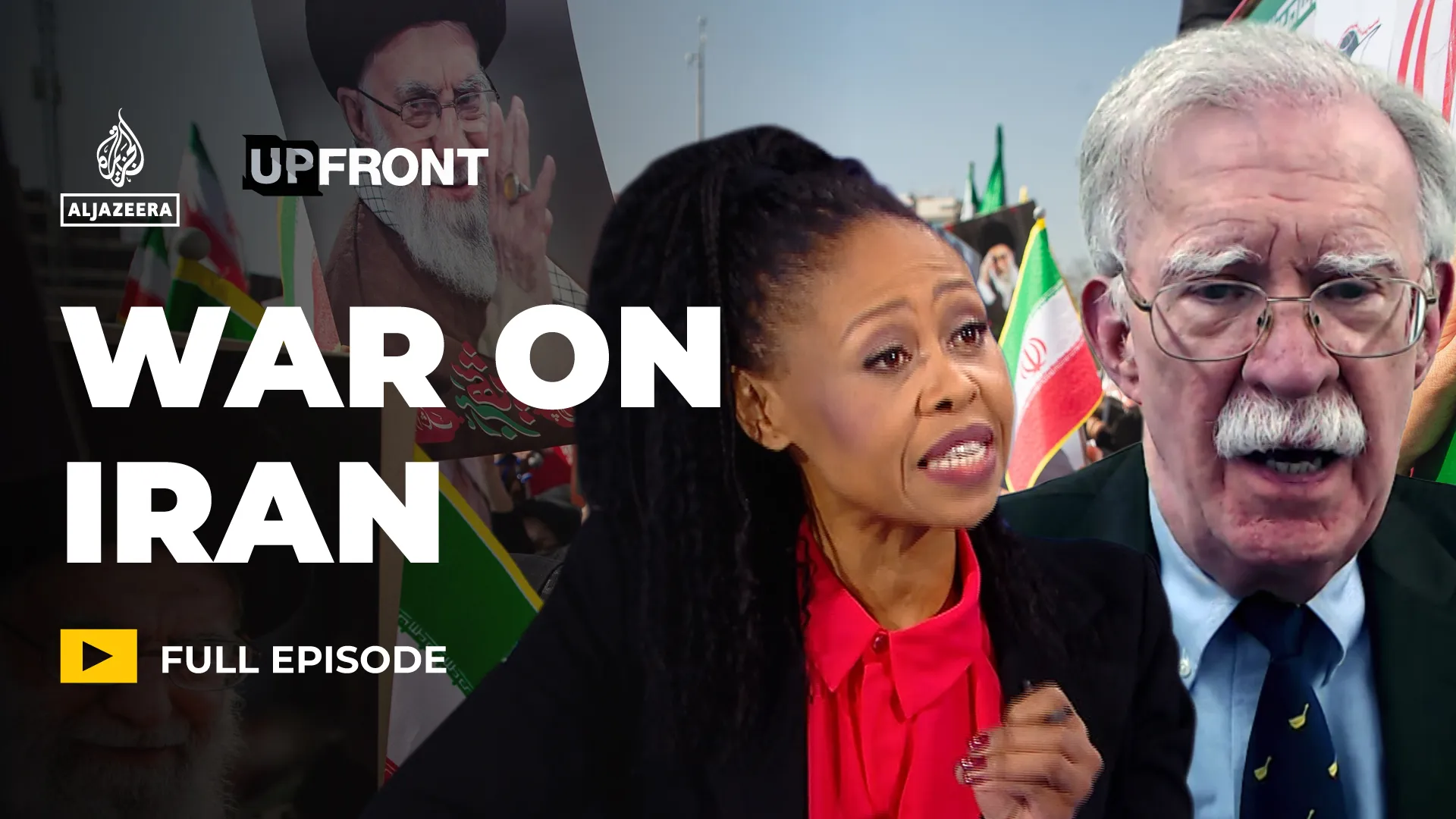
Redi Tlhabi challenges former US Ambassador to the UN John Bolton on why he supports war and regime change in Iran.
This past week, the United States and Israel launched a war on Iran under the banner of regime change. But as the war escalates and with Iran firing missiles at US bases across the region and at Israel – questions are mounting over how far this conflict could spiral.
This week on UpFront Redi Tlhabi challenges former National Security Adviser and former US Ambassador to the United Nations John Bolton on why he believes that a diplomatic end to the war would be a mistake, and we speak to Joe Cirincione, author of, Nuclear Nightmares: Securing the World Before it is Too Late, about the risk of nuclear proliferation.
Published On 7 Mar 20267 Mar 2026
Share
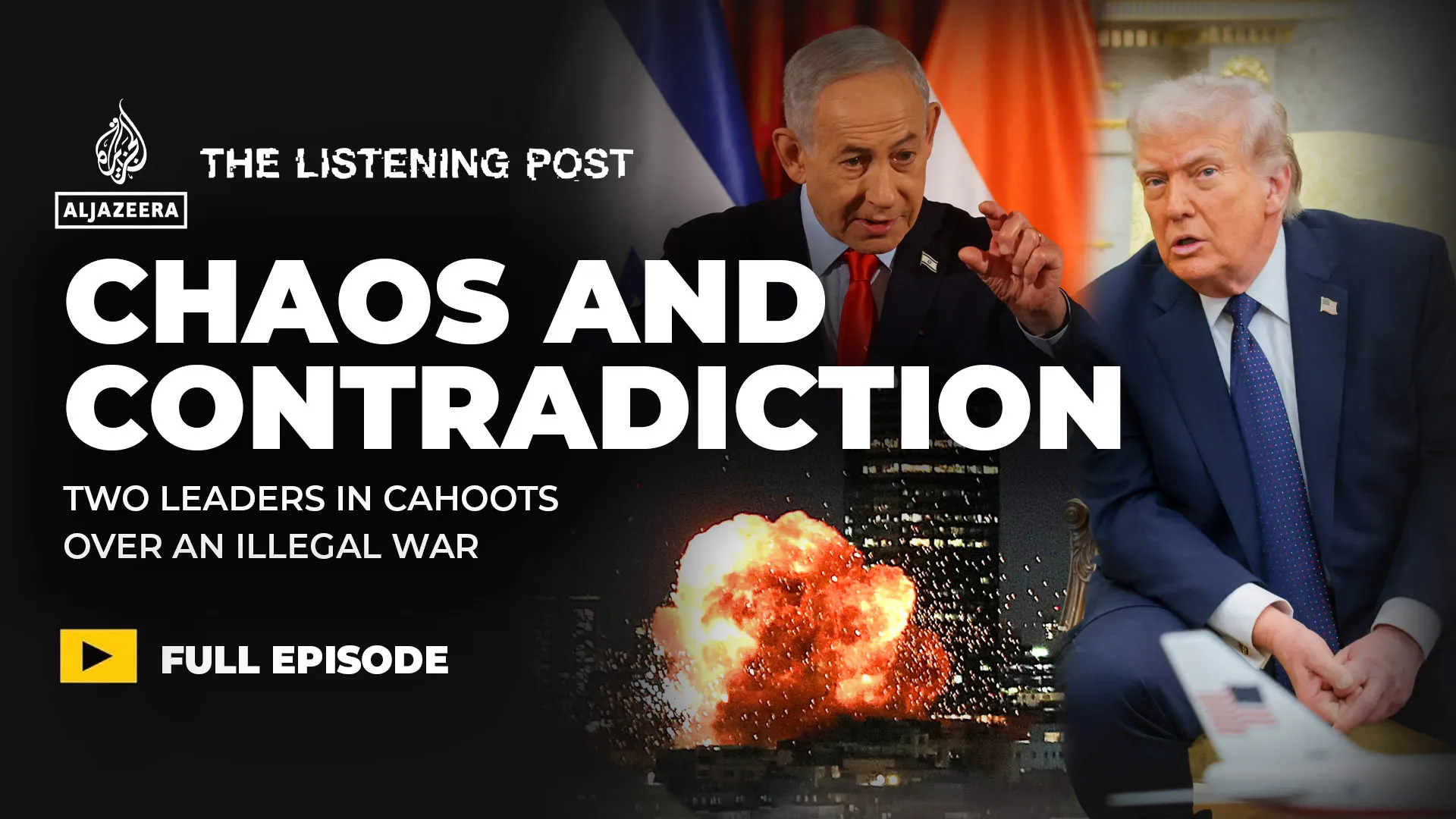
An illegal war, two leaders in cahoots and media outlets struggling to meet the moment.
Source link
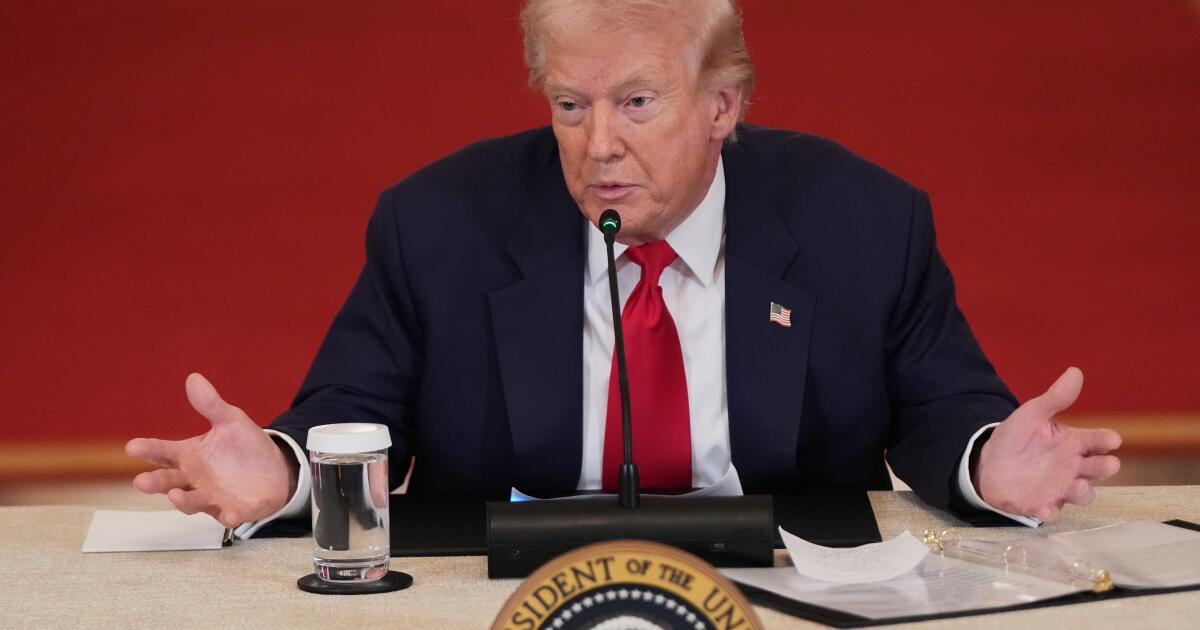
In recent days, tensions over the U.S. war in Iran have steadily mounted.
Polls have shown the campaign is widely unpopular. An entire flank of Trump’s MAGA base has criticized it as a clear departure from the “America First” mantra Trump has long espoused. Leaders within the Trump administration have pushed against claims it was about regime change, framing it instead as a necessary response to imminent threats.
Trump, meanwhile, has struck a decidedly defiant tone — offering few of the reassurances or rationalizations that past presidents have offered in the initial stages of war, and sounding more unbothered than embattled.
He has lamented American casualties but also seemed to shrug them off — along with additional deaths he expects to come and potential attacks on the U.S. homeland — as the simple cost of war, saying, “Some people will die.”
He has ignored concerns the war will turn into another unending Middle East quagmire, while openly flirting with taking over Cuba too.
Undermining his administration’s own messaging that the war is not about regime change, Trump wrote in a social media post Friday that there would be “no deal” with Iran without “UNCONDITIONAL SURRENDER” and new Iranian leadership “ACCEPTABLE” to him.
Sticking a thumb in the eye of his “America First” defectors, he said the U.S. and its allies are going to “work tirelessly” to make Iran “economically bigger, better, and stronger than ever before,” adding, “MAKE IRAN GREAT AGAIN (MIGA!)”
In the last week, Trump has instigated or been forced to navigate a stunning cascade of political threats. In addition to attacking Iran, he fired his Homeland Security secretary in charge of his signature immigration campaign, faced newly detailed allegations — which he denied — that he sexually assaulted a child alongside Jeffrey Epstein, saw his attorney general subpoenaed by fellow Republicans in Congress, and watched American jobs numbers drop as gas prices spiked.
And yet, Trump has also managed to avoid complex questions about those issues — the most pressing before his administration — and despite Democrats and some of his own supporters lashing out over them.
“I’ve seen a lot of Presidents fall short of their promises but I’ve never seen any President just doing the opposite of everything promised on purpose. Prices, Epstein, wars. Just absolutely racing to betray his voters,” Sen. Brian Schatz (D-Hawaii) wrote on X.
“This is Israel’s war, this is not the United States’ war. This war is not being waged on behalf of American national security objectives, to make the United States safer or richer,” said Tucker Carlson, one of Trump’s longtime allies.
Carlson said Trump committed U.S. forces to fighting in Iran for no other reason than because Israeli Prime Minister Benjamin Netanyahu “demanded it,” even though it “certainly wasn’t a good idea for the United States” and the Trump administration had “no real plan” for replacing the Iranian leadership it has now toppled.
The White House defended Trump’s actions across the board in statements to The Times on Friday.
On Iran, it said Trump “is courageously protecting the United States from the deadly threat posed by the rogue Iranian regime — and that is as America First as it gets.” On departing Homeland Security Secretary Kristi Noem and Atty. Gen. Pam Bondi, it said Trump “has assembled the most talented and competent cabinet in history,” and “continues to have faith in his Administration.”
On the economy, they said the Trump administration “is doing its part to unleash robust, private sector-led economic growth with tax cuts and deregulation,” and that Trump “has already initiated robust action” to control oil prices even amid the Iran war. And on the Epstein files, they said the latest claims unveiled “are completely baseless accusations, backed by zero credible evidence.”
Trump has also spoken out in defense of his handling of the various crises facing his administration — but not nearly with the sort of detail and solemnity that wartime presidents usually speak, experts said.
At his only public event on Friday — a nearly two-hour round-table with national leaders and sporting officials about college athletics — he ridiculed members of the media who asked about Iran and Noem.
“What a stupid question that is to be asking at this time,” he said, when asked about reports that Russia was helping Iran target and attack Americans there. “We’re talking about something else.”
When pressed as to why he was spending so much time talking about college sports when so much else is going on in the country and the world, Trump briefly talked about Iran — saying “people are very impressed by our military” and that the U.S. is now “more respected than we’ve ever been” — before concluding the event.
Jennifer Mercieca, a political historian and communications professor at Texas A&M and author of “Demagogue for President: The Rhetorical Genius of Donald Trump,” said she was surprised Trump didn’t make a stronger case for going to war in Iran during his recent State of the Union speech, and that he hasn’t been more aggressive about making the case for war since, including by using traditional language about bolstering American values around the world.
“In comparison to other presidents in a similar situation trying to lead a nation into war, that is surprising to me — and unusual,” she said.
Also unusual is the low public support for the war, Mercieca said, given that, since World War II, there has generally been high public approval for U.S. war efforts at their start.
Mercieca said she wonders if there is a correlation between Trump’s not providing a more vigorous rationale for the war and the low public approval for it — or perhaps between the low approval and the brash descriptions of the war as a merciless campaign of destruction and vengeance from others in the administration, such as Secretary of Defense Pete Hegseth.
She said Hegseth and others have shown a “lack of decorum, a lack of honor or dignity [in] their way of behaving, especially when we’re talking about warfare and human lives.”
Jack Rakove, a Stanford University professor emeritus of history and political science, said Trump’s posture is fitting with his character since he first entered politics and before, as he “can never take responsibility for anything that appears to be a mistake” and is “obsessed with the idea of appearing tough and tough-minded.”
Rakove said he does not believe, as some critics have suggested, that Trump launched the war in Iran specifically to distract from the Epstein files, which as of Thursday included newly released FBI descriptions of several interviews in which a woman accused Trump and Epstein of sexual assault in the 1980s when she was a child. Her accusations have not been verified.
But Rakove said he does wonder to what degree Trump is consciously pushing chaos in order to ensure that no one detrimental issue for him politically captures the public’s attention for too long.
Mercieca said Trump has always been “uniquely good at controlling the public conversation,” but that power has been tested recently by the Epstein files — which have held the public’s attention despite his repeatedly saying that “we should move on from that, that we should stop talking about it, that he’s been exonerated.”
She said Trump’s instinct in the current moment to push ahead aggressively despite waning support for his economic policies, his immigration policies and his war in Iran could be related to his desire to return people’s attention to his agenda, but is also in line with his long-held desire to go down in history — including by making big moves.
“I think he’s very much trying to leave his mark on the White House, I think he’s trying to leave his mark on the nation, I think he’s trying to leave his mark on the world, and I think war is a way that leaders have traditionally done that throughout history,” she said.
Pentagon asserts US forces are tracking Russian-Iranian operations amid escalating conflict in the region.

Published On 7 Mar 20267 Mar 2026
Share
Washington has downplayed reports that Russia is sharing intelligence with Iran about United States targets across the Middle East amid the burgeoning US-Israel war on Iran, first reported by The Washington Post.
Defense Secretary Pete Hegseth, in a CBS 60 Minutes interview on Friday, said the US is “tracking everything” and factoring it into battle plans when asked about the reports Moscow was aiding Tehran.
list of 4 itemsend of list
Since the war began on February 28, Russia has passed Iran the locations of US military assets, including warships and aircraft, three officials, who spoke on the condition of anonymity, told The Washington Post.
“It does seem like it’s a pretty comprehensive effort,” one of the sources told the newspaper.
Meanwhile, anonymous officials told The Associated Press news agency that US intelligence has not uncovered that Russia is directing Iran on what to do with the information, as the US and Israel continue their bombardment and Iran fires retaliatory salvoes at US assets and allies in the Gulf.
Hegseth said the United States is “not concerned” about the reports, also downplaying the possibility that Russia’s assistance could be putting US citizens in harm’s way.
“The American people can rest assured their commander-in-chief is well aware of who’s talking to who,” Hegseth said.
“And anything that shouldn’t be happening, whether it’s in public or back-channelled, is being confronted and confronted strongly.”
He continued: “We’re putting the other guys in danger, and that’s our job. So we’re not concerned about that. But the only ones that need to be worried right now are Iranians that think they’re gonna live.”
White House Press Secretary Karoline Leavitt on Friday also claimed to reporters that “[the report] clearly is not making any difference with respect to the military operations in Iran because we are completely decimating them.”
Leavitt declined to say if Trump had spoken to Russian President Vladimir Putin about the reported intelligence sharing or whether he believed Russia should face repercussions, saying she would let the president speak to that himself.
Trump, for his part, on Friday evening berated a reporter for raising the matter of the report when he opened the floor to questions from the media at the end of a White House meeting about how paying student-athletes has recalibrated college sports.
“I have a lot of respect for you, you’ve always been very nice to me,” the US president said to Peter Doocy, the Fox News reporter.
“What a stupid question that is to be asking at this time. We’re talking about something else.”
The intelligence is the first indication that Moscow has sought to get involved in the war that the US and Israel launched on Iran a week ago.
Asked whether Russia would go beyond political support and offer military assistance to Iran, Kremlin spokesman Dmitry Peskov said there has been no such request from Tehran.
“We are in dialogue with the Iranian side, with representatives of the Iranian leadership, and will certainly continue this dialogue,” he said on Friday.
Pushed on whether Moscow has provided any military or intelligence assistance to Tehran since the Iran war’s start, he refrained from comment.
Russia has tightened its relationship with Iran as it looked for badly needed missiles and drones to use in its four-year war against Ukraine. But the pair have long maintained friendly relations, even while Tehran has faced years of isolation from the West over its nuclear programme and its support of proxy groups in the Middle East.
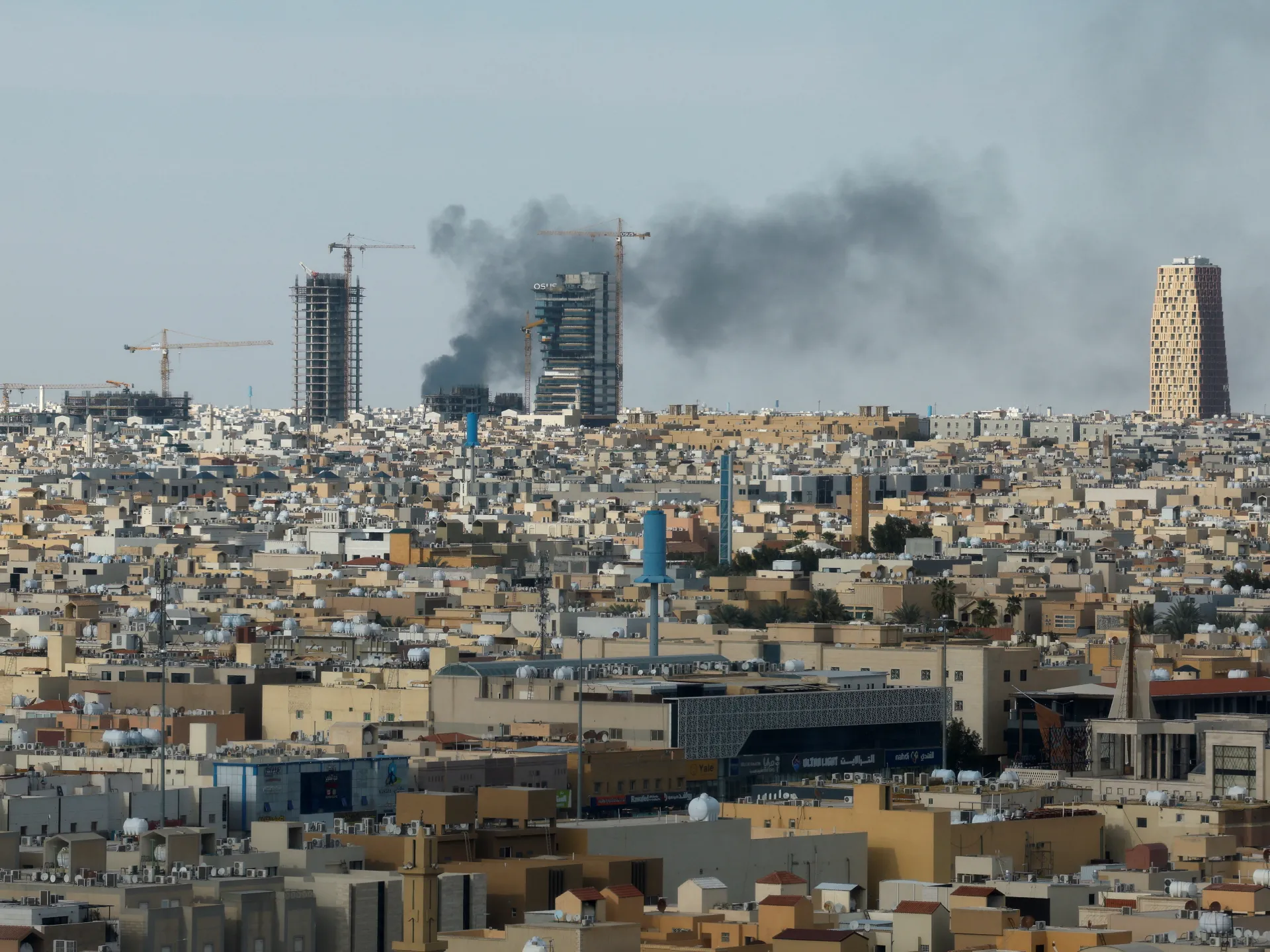
The Gulf states have spent years trying to broker peace between Iran and the West: Qatar brokered nuclear talks, Oman provided back-channel diplomacy, and Saudi Arabia maintained direct dialogue with Iran through 2024 and into 2025. Iran attacked them anyway. The idea that the Gulf states have a responsibility, a moral one, to protect Iran from the consequences of its actions because of good neighbourliness is now grotesque in context. Iran did not return good neighbourliness. Iran returned ballistic missiles.
Iran’s position is based on three propositions. First, that Iran acted in lawful self-defence pursuant to Article 51 of the UN Charter; that host countries relinquished territorial sovereignty by allowing US military bases on their territory; and that the definition of aggression in Resolution 3314 justifies the attack on those bases as lawful military objectives. Each of these propositions is legally flawed, factually skewed, and tactically wrong. Collectively, they add up to a legal argument that, if accepted, would ensure that the Gulf is permanently destabilised, the basic principles of international law are destroyed, and, in a curious twist, the very security threats that Iran is reacting to are reinforced.
The UN Charter, in Article 51, permits the use of force only in self-defence against an “armed attack”, and this term is not defined by reference to the state invoking it. The International Court of Justice, in cases such as Military and Paramilitary Activities in and against Nicaragua (Nicaragua v. United States) (1986) and Oil Platforms (Iran v. United States) (2003), has interpreted the requirement of an “armed attack” under Article 51 of the UN Charter restrictively. The Court distinguished between the most grave forms of the use of force, which qualify as armed attacks triggering the right of self-defence, and less grave uses of force that do not. Accordingly, not every use of force, such as minor incidents or limited military activities, amounts to an armed attack. In this light, the mere presence of foreign military bases in Gulf states, maintained for decades under defence agreements with host governments, would not in itself constitute an armed attack against Iran.
Necessity and proportionality are also part of customary international law, requiring that self-defence be necessary and proportional. Iran has not demonstrated either. Targeting the territory of other sovereign Arab states in response to the policy decisions of the United States is neither necessary, since diplomatic and United Nations avenues are still available, nor proportional, since it imposes military consequences on states that are not a party to any conflict with Iran.
Critically, Article 51 also has a mandatory procedural element, in that any state employing self-defence is immediately required to notify the Security Council. Iran has consistently evaded this requirement in each of its escalatory actions. While this may seem to be a minor element, it is in fact the means by which the international community is able to verify and check self-defence claims. A state that evades this requirement is not employing Article 51. It is exploiting the language of Article 51.
The provision of Article 3(f) of the Annex to United Nations General Assembly Resolution 3314 (XXIX) (1974) states that an act of aggression includes the “action of a State in allowing its territory, which it has placed at the disposal of another State, to be used by that other State for perpetrating an act of aggression against a third State”. Iran could rely on this provision to hold the Gulf states that host United States military bases liable for any act of aggression committed from their territories against Iran. Nevertheless, the mere presence of military bases is not sufficient to hold them to be lawful military objectives; this will depend on their actual contribution to military activities against Iran based on the rules of international humanitarian law.
Thus, such an Iranian reading would be wrong on three distinct legal grounds.
First, Resolution 3314 is definitional in nature. The resolution was adopted to assist the Security Council in determining when aggression has taken place, not to confer upon states the unilateral power to punish states deemed to have committed aggression through the use of force. The resolution itself, in Article 2, asserts the power of the Security Council to make the determination of what constitutes aggression. The self-application of Article 3(f) of the resolution is therefore bypassed altogether.
Second, Article 3(f) speaks of the active launching of an attack, not the passive hosting of a military base. The legal distinction is fundamental. A state, in signing a defence treaty with another and hosting the latter’s troops on its soil, is engaging in a measure of sovereignty. A state, actively launching, coordinating, or enabling military strikes against a third party, is engaged in a different matter altogether. Iran has not credibly shown this latter case. The presence of US troops or bases in the Gulf has been a fact for decades, and this has not constituted armed aggression against Iran under any legal standard.
Third, even if Article 3(f) were applicable, the appropriate course would be to bring the matter to the Security Council, not to launch unilateral military strikes. General Assembly resolutions do not override the Charter. Iran cannot rely upon a non-binding resolution defining terms to override the Chapter VII requirements for the use of force or the clear criteria of Article 51.
Iran, in invoking the principle of good neighbourliness, asks the Arab Gulf states to deny the United States basing rights. Good neighbourliness is a two-way principle, and it does not allow for interference in the internal affairs of other states, certainly not interference in the decisions of other states simply because they are deemed inconvenient to the interfering state. All UN states possess the inherent right to conclude defence treaties with whomever they choose, and this is so regardless of the opinion of their neighbours.
The asymmetry of Iran’s position is striking and self-disqualifying. Iran itself has active military relationships with Russia and China. Iran arms, finances, trains, and supports the activities of non-state military actors in Lebanon, Syria, Iraq, and Yemen. The Islamic Revolutionary Guard Corps Quds Force operates openly in various states, and this has been extensively documented in United Nations Panels of Experts reports, as well as other international monitoring reports. According to the standards that Iran applies to the Gulf states, any state that hosts the activities of the IRGC, the transfer of Iranian arms, or the coordination of Iranian proxies on its soil would be engaging in aggression against third parties. Iran will not accept this principle when it is applied to itself. A legal principle that is unacceptable to the party to whom it would be applied is not a legal principle at all; it is a political tool.
From the perspective of international relations theory, Iran’s position follows the logic of offensive realism, which seeks to remove the external balancing architecture of regional neighbours by claiming it to be hostile in nature. However, this approach is empirically self-defeating.
Under balance of threat theory, states react to offensive capability, geographic proximity, and aggressive intentions. Iran’s doctrine, in asserting the right to strike any state that hosts forces it perceives as a threat, drives each and every threat variable to maximum levels for each and every state in the region. The obvious consequence, evident in the data, is that the states in the region and external powers are becoming more, rather than less, securely integrated. The Fifth Fleet’s permanent base in Bahrain, the UAE’s negotiations over F-35s, Saudi Arabia’s deployments of THAADs, and Qatar’s expansion of the Al Udeid base are reactions to Iran’s escalation, not causes of it.
From the perspective of constructivism, the legitimacy of a legal argument is also partly based on the normative credibility of the state that presents the argument. The record of Iran’s compliance with IAEA regulations, including the enrichment of uranium to a purity level of 60 percent or more in 2023–2024, interference with inspections, the removal of monitoring cameras, and the overall violation of the non-proliferation regime, has undermined the credibility of the state significantly. A state that is itself a violator of the legal regime cannot claim the role of a law-abiding state seeking protection under the norms of the legal regime.
Iran’s legal rationale was always theoretically wrong. What has occurred since February 28, 2026, has made Iran’s actions morally and politically wrong. Iran did not simply target US military assets. The reality of the situation is now documented and undeniable. Ballistic missiles and drones were launched against Gulf states in the opening days of the conflict. This marked the first time one actor had simultaneously attacked all six GCC states. Iran escalated its attacks in deliberate stages. Day 1: Iranian missiles were fired against military bases. Day 2: Iranian missiles were fired against civilian infrastructure and airports. Day 3: Iranian missiles were fired against the energy sector. Days 3 and 4: The US Embassy in Riyadh was attacked by Iran. International airports in Dubai, Abu Dhabi, and Kuwait were attacked by Iranian missiles, resulting in the suspension of flights throughout the region. Videos from Bahrain documented an Iranian Shahed drone attacking an apartment building. This is not self-defence. This is the collective punishment of sovereign nations that went to extraordinary lengths to avoid the conflict.
The rationale provided by Iran falls flat when one considers the actions Iran itself took. Its doctrine held that only targets involved in the preparation or launch of an attack against Iran were legitimate targets. Civilian airports are not military bases. Hotels in Palm Jumeirah are not military command centres. An apartment complex in Manama is not a weapons storage facility. By Iran’s own stated legal rationale, none of these targets was legitimate, yet they were attacked. This was not a legal doctrine at all; it was a pretext for coercion, and the conduct of war revealed this to be the case.
The views expressed in this article are the author’s own and do not necessarily reflect Al Jazeera’s editorial stance.
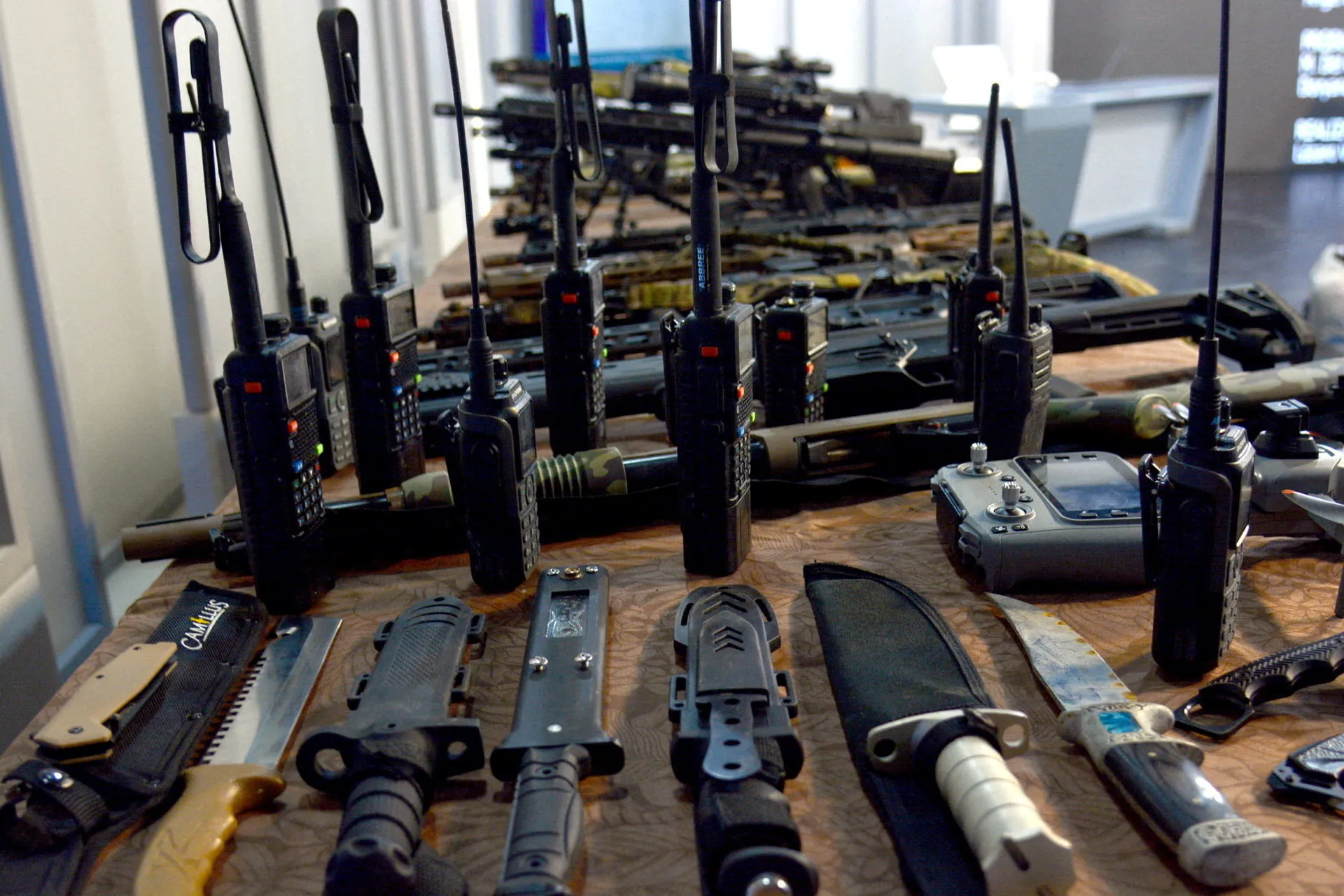
The government in Havana has claimed that the 10 people on board the speedboat had planned to unleash terrorism in Cuba.
Published On 7 Mar 20267 Mar 2026
Share
The government of Cuba has announced that a fifth person died as a consequence of a fatal shootout last month involving a Florida-flagged speedboat that allegedly opened fire on soldiers off the island nation’s north coast.
The island’s Ministry of Interior said late on Thursday in a statement that Roberto Alvarez Avila died on March 4 as a result of his injuries.
list of 3 itemsend of list
It added that the remaining injured detainees “continue to receive specialised medical care according to their health status”.
On February 26, authorities in Cuba said that Cuban soldiers confronted a speedboat carrying 10 people as the vessel approached the island and opened fire on the troops.
They said the passengers were armed Cubans living in the United States who were trying to infiltrate the island and “unleash terrorism”. Cuba said its soldiers killed four people and wounded six others.
“The statements made by the detainees themselves, together with a series of investigative procedures, reinforce the evidence against them,” the Cuban Interior Ministry said in its statement.
It added that “new elements are being obtained that establish the involvement of other individuals based in the US”.
Earlier this week, Cuba said it had filed terrorism charges against six suspects who were on the speedboat. The government also unveiled items it claimed to have found on the boat, including a dozen high-powered weapons, more than 12,800 pieces of ammunition and 11 pistols.
Cuban authorities have provided few details about the shooting, but they said the boat was roughly 1.6 kilometres (1 mile) northeast of Cayo Falcones, off the country’s north coast.
They also provided the boat’s registration number, but The Associated Press news agency was unable to readily verify the details because boat registrations are not public in the state of Florida.
The shooting threatened to increase tensions between US President Donald Trump and Cuban authorities.
The island’s economy was, until recently, largely kept economically afloat by Venezuela’s oil, which is now in doubt after a US military operation abducted and deposed former Venezuelan President Nicolas Maduro.