The UN’s nuclear watchdog says Iran’s Khondab heavy water production plant is no longer operational after suffering severe damage in an Israeli strike on March 27. The reactor, which contains no declared nuclear material, was hit along with other key infrastructure sites.
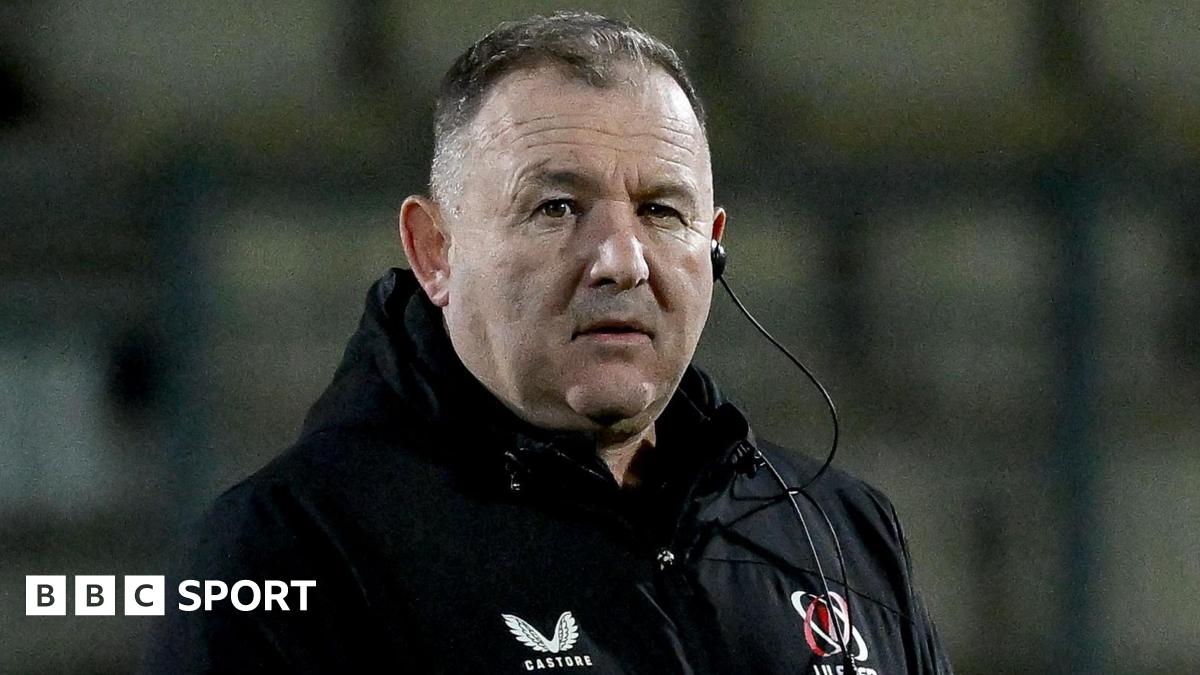
Ulster head coach Richie Murphy said his side “were a bit wasteful at times” during their 28-12 United Rugby Championship victory over Zebre in Parma.
Despite the home side being reduced to 14 men after Simone Gesi’s straight red card just before the half-hour mark, it was a tight and tense match.
The bonus-point win moves Murphy’s side up to third position in the URC table as they return to winning ways ahead of their Challenge Cup fixture against Ospreys at the Affidea Stadium.
“We expected it to be really physical over here and that is what we got,” Murphy said.
“I suppose the red card early in the game gave us a bit more of an advantage and I thought from our point of view, we have to look after the ball better as we were a bit wasteful at times.
“But very happy to get four tries. Coming over here is always very difficult.”
Player of the Match Werner Kok, who scored the bonus-point try, believed that the turning point in the game was the start of the second half.
Ulster scored three tries after the restart with Rob Herring, Zac Ward and Kok all able to cross the line.
“We stopped playing when they went down to 14 and we tried to regroup again and the boys stuck together and played as a team,” Kok said.
“I think the energy from the kick-off [in the second half] was the turning point. The boys stuck in there and that was the turning point for me.”
Winning tip: puffin-watching in the Inner Hebrides, Scotland
Last April, I based myself in Oban and took my teenagers puffin-watching at Lunga, off Mull, in the Treshnish Isles, with an organised tour (Staffa Tours) by ferry and foot. It was a real delight. The guides were brilliant and helpful, especially with my mobility issues, and we were surprised and amazed at how tame and friendly the puffins were – allowing us to get great views of their faces from as near as 5ft or so. Next spring, we are going again as this is the best time to see them arriving in their thousands. April
Profile
Readers’ tips: send a tip for a chance to win a £200 voucher for a Coolstays break
Show
Guardian Travel readers’ tips
Every week we ask our readers for recommendations from their travels. A selection of tips will be featured online and may appear in print. To enter the latest competition visit the readers’ tips homepage
–
Stunning architecture in the heart of Surrey
‘A National Trust gem’ … Homewood, architect Patrick Gwynne’s 1930s villa with a woodland garden, in Esher. Photograph: BritPics/Alamy
Grade I-listed Claremont Landscape Garden near Esher is great to visit in spring. But time your trip there right and you can also visit a National Trust gem just half a mile away: the Homewood, architect Patrick Gwynne’s 1930s modernist villa and accompanying woodland garden (for pre-booked guided tours only on specific Fridays and Saturdays, April-October). The house itself is stunning, with light pouring through the sitting room’s floor to ceiling windows, but on a sunny spring day the garden, complete with rhododendron tunnel, bamboo thicket, water gardens and stepping stones, proves a tranquil spot in which to linger and view the Le Corbusier-inspired abode. David M
Sheffield’s Tudor turret
The Turret House at Sheffield Manor Lodge. Photograph: Phil Wolstenholme/Alamy
One of our favourite days out as a family in spring is to explore the beautiful Sheffield Manor Lodge. There is a wealth of history to explore in the Turret – my young daughter loves telling everyone who’ll listen that Mary, Queen of Scots was detained here. There are also children’s trails, outdoor games and craft sessions – we’ve made stained glass kites, learned about a frog’s life cycle, had Easter egg hunts and completed outdoor yoga trails. On a warm spring afternoon, it is a stunning place – with a lavender maze, apothecary gardens, wildflower meadows and the amazing rhubarb shed cafe. Susan
Artistic treasure hunt on the North York Moors
Hanging Stones by Andy Goldsworthy in Rosedale. Photograph: Julian Broad/Ross Foundation
This magical mystery tour combines fresh air, beautiful, wild landscapes and art. The project is called Hanging Stones by Andy Goldsworthy, and it’s set in Rosedale. Several buildings that were in varying states of disrepair have been rebuilt as artworks and are connected by a six-mile walk encompassing Northdale, near Rosedale Abbey. You have to book a slot to find out where the key is, which you will pick up, together with a map, to get started. It’s the treasure hunt style that will get even the youngest in the group excited about the walk, allowing the adults to do something they wouldn’t otherwise dream of doing with children: admiring art and going for a decent walk. The cost is £10 per adult, while students and under-18s go free. Annelore
Dazzling azaleas in Gloucestershire
Springtime at Westonbirt Arboretum. Photograph: PA Images/Alamy
I always take my family to Westonbirt Arboretum near Tetbury in spring to celebrate the beautiful spectacle of nature exploding into a kaleidoscope of colour and life. The Arboretum is a breathtaking place, especially under a sunny sky. The well-marked paths mean you can easily wander through its 245 hectares (600 acres) and enjoy the fresh air filled with the delicate scent of blooming cherry blossoms. With more than 15,000 specimens and 2,500 species of trees and shrubs from across the globe, it serves as a stunningly beautiful living gallery. In spring, the arboretum dazzles with azaleas and rhododendrons bursting into brilliant shades of white, red and pink. My teenagers especially enjoy exploring the treetop walkway and quiet woodland trails – and a treat of tea and cake at the well-positioned cafe at the end of it all. Nicoletta
Wild garlic and lily ponds in Pembrokeshire
‘You might spot an otter or a heron’ … at Bosherston Lakes. Photograph: Edward Dyer/Alamy
For a springtime lift, head to Bosherston Lakes set in three limestone valleys with spectacular displays of lilies. Start in ancient woodlands, where there’s a shimmering, scented carpet of white wild garlic. It feels like a fairytale. Emerge at the serene lily ponds, where you might spot an otter or a heron, then follow the path to Broad Haven South. The moment you hit the dunes and see the beach open up is one of the finest coastal views in the UK. Finish with tea and cake at the nearby Stackpole Walled Gardens; it’s run by Mencap, so your pit stop supports a fantastic cause while you soak up the Pembrokeshire sunshine. Lucy Coast
Kites fluttering in the Chiltern skies
‘Really joyful’ … A kite festival at Dunstable Downs in Bedfordshire. Photograph: PA Images/Alamy
My favourite UK spring activity is flying kites with my family in the Dunstable Downs. The open hills and steady breeze make it the perfect spot to let our kites dance in the sky. There’s something really joyful about watching the colours flutter along with other kite-flyers. After some fun, we spread out a picnic blanket and enjoy homemade treats while soaking up the sunshine and taking in the beautiful views. It’s such a simple but special way to spend a bright spring day together outdoors. Victoria
A memorable walk in the Cotswolds
‘The perfect example of an idyllic Cotswolds village’ – Bourton-on-the-Water in Gloucestershire. Photograph: Ivan Okyere-Boakye Photography/Alamy
The circular walk from Bourton-on-the Water to the Upper and Lower Slaughters provides a buffet of springtime goodness, from trees in blossom and daffodils to wildflowers and nesting swans. Oh, and don’t worry, the Slaughters aren’t as morbid as they sound. They take their name from the Old English word slohtre, meaning “muddy place”, suggesting suitable footwear is needed. While Bourton-on-the-Water remains a tourist hotspot – the perfect example of an idyllic Cotswolds village – the walk towards the Slaughters via the Windrush Way and the Gloucestershire Way makes for a calming amble soundtracked by rivers and birdsong. Maxine Harris
Luscious blooms and afternoon tea in Devon
Killerton National Trust house and garden. Photograph: Peter/Alamy
Each spring, my family makes a pilgrimage to Killerton gardens in south Devon to see the glory of magnolia blossom on the south-facing slopes of Dolbury Hill, known locally as the Clump. The luscious blooms of pinks and ivory are the main attraction. It’s wonderful to see the children enjoy the release of running on the first-cut lawn and to watch their grandparents taking in the sight of the sea of daffodils. After a wet winter of grey skies, it’s also wonderful to have tea outside the house, basking in the sunshine. Simonetta Taylor
A Northumberland beach stroll
‘A great place for a leisurely wander’ … Beadnell beach. Photograph: Louise Heusinkveld/Alamy
Can anything beat standing on a beach getting a lungful of fresh sea air? I don’t care if I’m still having to wrap up in layers with a woolly hat, being on a beach feels like the start of summer. Beadnell beach in Northumberland is a great place for a leisurely wander, with cracking views and lots of dog-friendly places to refuel in the village. The breakfasts at the Courtyard Cafe have fuelled many a walk along the beach. Hannah S
Manchester United fan Pernille Harder scored twice against her childhood club at Old Trafford as Bayern Munich gained a precious first-leg advantage in their Champions League quarter-final tie.
Skinner’s counter to the idea his side may have been better advised to drop slightly deeper to prevent Harder making those runs was sound.
“There are two mistakes in there from us,” he said.
“If you get pressure on the ball, you can’t play the long ball. They tried it a few times and played the ball out of play.
“It worked for them tonight but if I stop those two chances, they don’t score.”
It sounds simple. But execution is key at the highest level. If you don’t do that properly, you will get punished.
There are a number of minor details to explain why United came out on the wrong side of a tight result.
One of them is unquestionably squad depth.
Take the case of Japan midfielder Hinata Miyazawa, who played in the final of the Asian Cup in Sydney on Sunday, then travelled back to start for United.
By contrast, Tanikawa, who did not get on the pitch against Australia, started on the bench for Bayern, who were mindful of the effects of jetlag and wanted the midfielder to make an impact, which she did, by setting up Harder, then scoring the winner.
Skinner simply does not have enough players to rotate like that.
It makes the next few days, which feature another Old Trafford outing against Women’s Super League leaders Manchester City on Saturday before the trip to Germany for the second leg with Bayern next Wednesday (17:45 BST), particularly tough.
“We’ve played the most football in Europe this year, and we’ve got a really small squad right now, so it will challenge us,” said Skinner.
“It will take us to the depths. But the carrot is there for us.
“We expect it to be difficult. You can kind of trench your mind into what you must do.
“That’s why my players are at Manchester United. If they didn’t want to do it, they wouldn’t be at this club. They’re going to give it absolutely everything.”
UN Special Rapporteur Francesca Albanese has said the world gave Israel a ‘licence to torture Palestinians’ as she presented her latest report to the Human Rights Council in Geneva. She criticised governments for allowing violations to continue with impunity.
Before we enter the clouds on snow-capped Helvellyn, I glance back down at Ullswater. The early morning sun is bursting around the dark corners of High Dodd and Sleet Fell, sending a flush of light across the golden bracken and on to the hammered silver of the lake.
Further away to the south, ragged patches of snow cling to the high gullies. The nearest village, Glenridding, can barely be seen behind the leafless trees and all I can hear is the gurgle of the stream. It is the quintessential Lakeland scene: the steep slopes above the water, the soft colours and hard rock, all combining into something inimitable. And judging by the photographic and artistic record, it is one that has hardly changed since the Cumbrian wind first ruffled a Romantic poet’s curls.
Our best loved national parks – the Lake District, Peak District, Eryri (Snowdonia) and Dartmoor – all officially opened 75 years ago, in 1951. It was the result of a long campaign, arguably begun by one of those Romantics, William Wordsworth, a poet whose particular love for the Lakes led him to observe that the area should be “a sort of national property, in which every man has a right and an interest who has an eye to perceive and a heart to enjoy”. The resident of Dove Cottage at Grasmere fought, successfully, against railway building, noting the stupidity of destroying something precious in the pretence of increasing its influence.
That niggling dilemma has dogged the national parks ever since, but if Wordsworth were here now, I think he might approve, at least at first glance. The fate of some Alpine beauty spots has been avoided: no high-rise buildings break through the trees, no sports infrastructure litters the summits, and engineers have not blasted tunnels for bigger, faster, road and rail connections.
The planning process is tortuous, and woe betide anyone who likes a colour not in the Farrow & Ball catalogue, but our national parks survive, without sacrificing too much of their original charm.
Back in the 1970s my dad began taking me on his hiking trips. In those days, I didn’t share his excitement at “the views”, but I instantly grasped the magic of swimming under waterfalls, scrambling along ridges and sitting on mountain tops to eat hard-boiled eggs dipped in salt. He took us to all the national parks, and introduced us to their highlights. It was the start of a lifetime of exploration.
Dartmoor
Hiking through mossy Lydford Gorge on Dartmoor, in Devon. Photograph: Jack Jango/Alamy
The only area in England and Wales that has legal wild camping, Dartmoor is also the most threatened. A recent report detailed the sorry decline in biodiversity on its sites of special scientific interest (SSSI), but the truth is it remains in a better state than many other places. What makes Dartmoor special is the sheer extent of heathland: over 11,000 hectares of heather, gorse, bilberry and moor grasses, inhabited by birds, lizards, snakes and some rare butterflies. The top bird here is the red grouse, recently recognised as a distinct species, making it only the second reliably identifiable endemic British bird species.
Dartmoor’s reputation for other, more controversial species, is firmly established. On my first visit as a boy, I was reading The Hound of the Baskervilles and also glued to reports of escaped large cats. When we hiked past the infamous prison, and dad told us about “the Mad Axeman” inside, Dartmoor was firmly established in my head as the single most exciting area of Britain. I’ve never had reason to change that view.
Arguably the most evocative place is Wistman’s Wood, which is accessed from Two Bridges hotel, but popularity tends to destroy mystery and this is now an Instagrammed honeypot. Other excellent woodlands can be found down the Lydford Gorge near Tavistock or the Bovey Valley near Lustleigh, a village of thatched roofs where a cream tea is the acme of snackery. Try the Primrose Tearooms.
Nearby is Haytor Rocks, a magnet for climbers, and everyone else. It’s beautiful but popular. For tranquillity, try the military firing ranges: there’s nothing like an M115 Howitzer to deter most hikers, or perhaps it’s simply the need to check live firing times. It does seem to put visitors off, and there are wonderful viewpoints to be found, such as Yes Tor and High Willhays.
Eryri
Scrambling above Cwm Idwal in Eryri, where the renowned ‘staircase’ begins. Photograph: Andy Teasdale/Alamy
In Eryri, the hunt for peace and tranquillity has one rule: avoid Yr Wyddfa (Snowdon). Any other peak will be quiet in comparison. If you must go up Wales’s highest mountain, I suggest taking a less-frequented path, like the Watkin or Rhyd Ddu and go early – and I mean headtorch early. Another good option is the Ranger Path (Cwellyn), where the wind blew me off my feet as a nine-year-old. You might escape the crowds, but you can’t escape the weather.
Yr Wyddfa’s Crib Goch, one of Britain’s greatest ridge scrambles, can be a bit of a trial when oversubscribed, but there are many fine alternatives. Try Crib Lem on Carnedd Dafydd, accessible from Bethesda, or the Idwal Staircase, a tougher challenge that some might prefer to do roped up. Steve Ashton’s book Scrambles in Snowdonia is the essential guide.
One feature I love about Eryri is the way its industrial heritage has been repurposed to contemporary needs: the various slate mine attractions and the steam railways go from strength to strength. Bala Lake Railway has started work on extending its line into Bala town, a significant addition.
Lake District
The Lake District village of Grasmere, home of the Romantic poet William Wordsworth. Photograph: Andrew Roland/Alamy
The opening of the first parks triggered a wave of interest in hiking and a demand for route information. Like many others, my dad discovered Alfred Wainwright, whose hand-drawn pictorial guides are still a good way to find routes. Wainwright’s own favourite was Haystacks Fell, with an ascent from Buttermere via Scarth Gap. My own initiation into the joys of scrambling started with Wainwright routes up Lord’s Rake on Scafell Pike and Jack’s Rake on Pavey Ark, both serious undertakings.
Scrambling and its sister sports, fell-running and scree-racing, have a proud history in Lakeland. Over in Wasdale, sheep farmer Joss Naylor was an inspiration. As a teenager, I witnessed his hell-for-leather approach to scree slopes, transforming them from places to be avoided into a new challenge.
Wasdale, with its historic inn, remains a favourite. If the trail to Scafell Pike is often busy, look out for classic treks like the Mosedale Horseshoe, taking in Pillar, a stiff challenge when torn shreds of cloud are whistling around your ears. For the sure-footed, the climbers’ trail passing beneath Napes Needle is another gem. The Needle is a satisfying climb with historic importance. Photos of early pioneers the Abraham brothers, standing on top in their 1890s hobnail boots, fuelled interest in the new sport of rock climbing.
Across to the east, the 17½-mile trek from Pooley Bridge to Troutbeck over High Street is an absolute gem, with sustained panoramas on a clear day. Another classic is theKentmere Round, which normally starts at St Cuthbert’s church, near Staveley. For sheer delight in Cumbrian topographical names, the Kentmere Round is a must: Yoke Fell is followed by Wander Scar, Toadhowe Well and Shipman Knotts, among others. The best advice is to find a fell with an unfamiliar name, get the OS map and devise a route. Asking a local also usually pays off.
After an epic day of snow and ice on Helvellyn, I take my own advice. I am staying at Another Place hotel along the Ullswater north shore. The lakeside panorama tells the tale of changing times: there are paddleboards and kayaks on the water; groups heading off on wild swims; and a mobile sauna by the shore. Hotel director and local man David Vaughan tips me off about a favourite walk, on nearby Gowbarrow Fell.
The path starts at Aira Force waterfall, a well-known attraction, and the car park is busy. Beyond the falls, however, things are quieter. At 481 metres, the Gowbarrow summit is not high, but the panorama is superb. Further on comes the real climax: a balcony walk around the contours and above the lake.
A kestrel swoops past, close enough to see the wind ruffle its chestnut feathers. At the end, the path drops down to the woods and there’s a young woman, hesitating. Her kit looks fresh from the packet.
“Is there any scrambling up there?” she asks nervously.
“No,” I say, noticing her immaculate nails. “But there’s lots of mud.”
She takes a deep breath and grins. “OK.” Then sets off. Joss Naylor, my dad and the Romantic poets would all be proud. Our parks are still doing their best for us.
BBC Sport contacted all WSL clubs about how they use these rules to shape their maternity provision.
Manchester United highlighted “a culture change” where players have all they need to “make an informed choice” about whether they wish to wait until their career is over before considering having children.
They said the measures they have established on top of the regulations, including personalised plans for areas such as nutrition, psycho-social and wellbeing, physiotherapy and sleep help “break down barriers” for expectant mothers.
For her part, Bizet Donnum praised United for their support, explaining she has also been given “so much freedom” to spend time with her husband, who plays and lives in Toulouse, France.
The pelvic floor physio however, did catch her by surprise.
“I didn’t have a clue about pelvic floor!” Bizet Donnum said. “But then when I got pregnant, the doctor at Manchester United introduced me and [the physio] has been game-changing for me.”
Arsenal and West Ham pointed out how they have built on the rules to offer bespoke support for pregnant players – including Sweden international Amanda Ilestedt at the former and Katrina Gorry among others at the latter – while Tottenham and Brighton spoke of how their maternity policy adheres to WSL, Fifa and FifPro guidance.
As for Bizet Donnum, alongside her joy at becoming a mother this year, she is also counting down the days until able to play football again.
“I am so excited to come back,” she said. “It’s hard when I’m watching the games and wishing I played.
“But then it’s one season I am missing. After my career, will I look back and think: ‘Damn, I didn’t play that season’ or will I just be happy that I’ve had a kid?”
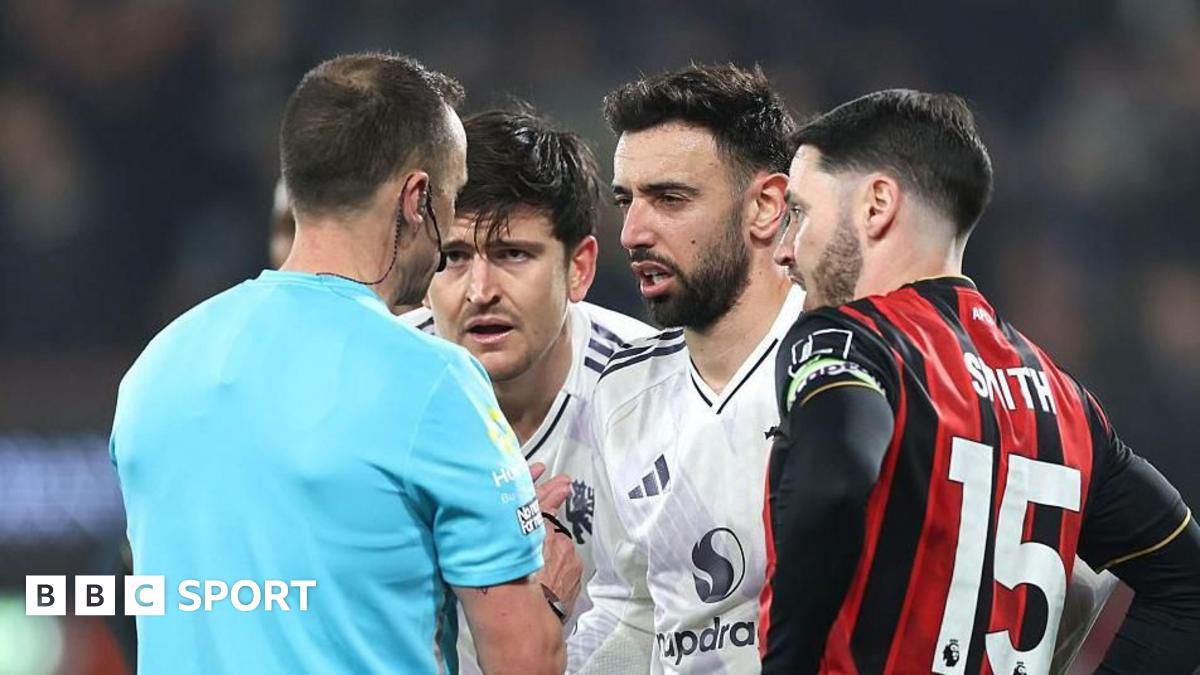
Manchester United were left furious about “astonishing” and “baffling” refereeing decisions as two penalties were awarded and one was not in their thrilling 2-2 draw at Bournemouth.
Harry Maguire’s special day – following his England recall – was spoiled by his sending off at Vitality Stadium, but it was the performance of the officials that had United fuming.
Maguire, who will return to the England squad for the first time in almost two years for upcoming friendlies with Uruguay and Japan, was sent off for pulling back Evanilson inside the box as Manchester United led 2-1 with 10 minutes to go.
Junior Kroupi subsequently scored the penalty but the decision not to award Manchester United an earlier spot-kick left interim manager Michael Carrick furious – especially after his side had been awarded a penalty for what he deemed to be a similar challenge earlier in the match.
The penalty the visitors were not given came when Amad Diallo appeared to be pulled back inside the box by Adrien Truffert, with Manchester United leading 1-0 after Bruno Fernandes’ penalty.
Carrick, who described the decisions made as “baffling”, said: “My first [thought] is he definitely got one of them wrong, because he’s given one penalty for the same thing that he’s not given one as a two-armed grab.
“So the Matheus Cunha one, he gives, the second one on Amad he doesn’t, which is, I think, almost identical, really, two hands on someone in the box, and they go over and they’re in control of the ball.
“Massive moment and I don’t understand how you can give one and not the other – it’s crazy. It’s as obvious as you can get.
“It’s clear, if that’s what he believes is a penalty to start with then the second one has to be. I don’t understand how you can’t give that. And then the goal and after that it was chaos. It’s astonishing.”
Manchester United captain Fernandes, meanwhile, felt that if Bournemouth‘s penalty was given for a foul by Maguire, then so should one for the Diallo incident.
“I think we could have gone 2-0 up, and then we ended up conceding a goal, not getting a penalty and then we get a penalty against, where more or less it’s the same situation as Amad,” he said.
“One is awarded as a penalty, the other one not. I know it’s difficult for the referee to give two penalties in the same game for the same team but what I don’t understand is why VAR doesn’t get involved in that situation.”
“Edging closer” is the right phrase. Leeds have not won in five league matches but have drawn their past three.
With fellow strugglers West Ham, Nottingham Forest and Tottenham all earning draws this weekend, 15th-placed Leeds have maintained the three-point gap between themselves and the relegation zone.
To misquote the likely apocryphal words of England cricketer George Hirst against Australia in the 1902 Ashes, Leeds will “get it in singles”.
Farke’s side also have the kindest run-in on paper, with just one game against a top-six team – Manchester United on 13 April – and home games against the bottom two, Burnley and Wolves.
But there is the nagging feeling their three-point gap to the drop zone should have been five.
Since the start of the 2022-23 season, only Liverpool and Fulham have failed to convert more penalties than Leeds in the top flight – despite the Yorkshire side being in the Championship in two of those campaigns.
It denied Leeds their first away win since September, when they beat rock-bottom Wolves. The only two teams with worse records away from home are the bottom two.
And it was more frustration for Calvert-Lewin, who overcame a late fitness test on a knee issue to play here and led the line with impressive physicality.
But after scoring twice against Palace in December – taking his personal tally to seven league goals versus the Eagles – he has scored only three times in 12 league games.
Farke, a former forward himself, was philosophical.
“I was happy with his overall performance, I was happy for him to take [the penalty]. Also, what he did in the second half, he was a crucial part today.
“Of course, you want to hit the target and he is disappointed. But this is football, even Harry Kane misses penalties.
“I was a striker – I missed more penalties than you can count.”
Manchester United manager Michael Carrick praises the “great” connection between Casemiro and Bruno Fernandes, after the duo combined for the opening goal in their 3-1 victory over Aston Villa.
Bruno Fernandes reaches 100 assists in all competitions after setting up two goals in crucial 3-1 win over Villa.
Manchester United bolstered their bid to qualify for the Champions League with a vital 3-1 win against top-four rivals Aston Villa.
Michael Carrick’s side took the lead through Casemiro’s second-half opener at Old Trafford on Sunday before Ross Barkley hauled Villa level.
Recommended Stories
list of 4 itemsend of list
United finished strongly with Matheus Cunha and Benjamin Sesko scoring in the closing stages to seal Carrick’s seventh win in nine games since taking over as interim boss.
Sitting third in the Premier League, United are three points clear of fourth-placed Villa in the race to reach the Champions League via a top-four finish.
United co-owner Jim Ratcliffe this week praised Carrick’s “excellent” work but stopped short of committing to the former Old Trafford star on a long-term basis.
However, Carrick is making a strong case to earn the job on a permanent basis after stabilising United after Ruben Amorim’s sacking.
United’s latest victory came after an 11-day break since the first defeat of his reign at Newcastle, and Carrick celebrated with a jig of delight on the touchline after Sesko wrapped up the points.
Spluttering Villa have lost their last three league games and have just one win in seven top-flight matches, leaving them three points above fifth-placed Chelsea with eight games left in the battle for European places.
After a lethargic first half, United finally prised open the Villa defence in the 53rd minute.
Bryan Mbeumo’s stinging strike was palmed away by Emiliano Martinez, earning a corner that brought the opener.
Bruno Fernandes curled a corner to the near post, and Casemiro made a perfectly timed run to glance a header past Martinez.
With Casemiro likely to leave when his contract expires at the end of the season, United fans serenaded the Brazilian midfielder with chants of “one more year”.
United lost focus and surrendered the lead in the 64th minute.
In his first Premier League start for 14 months, Barkley slammed a superb strike past Senne Lammens from 11 metres (12 yards) after United failed to clear the danger.
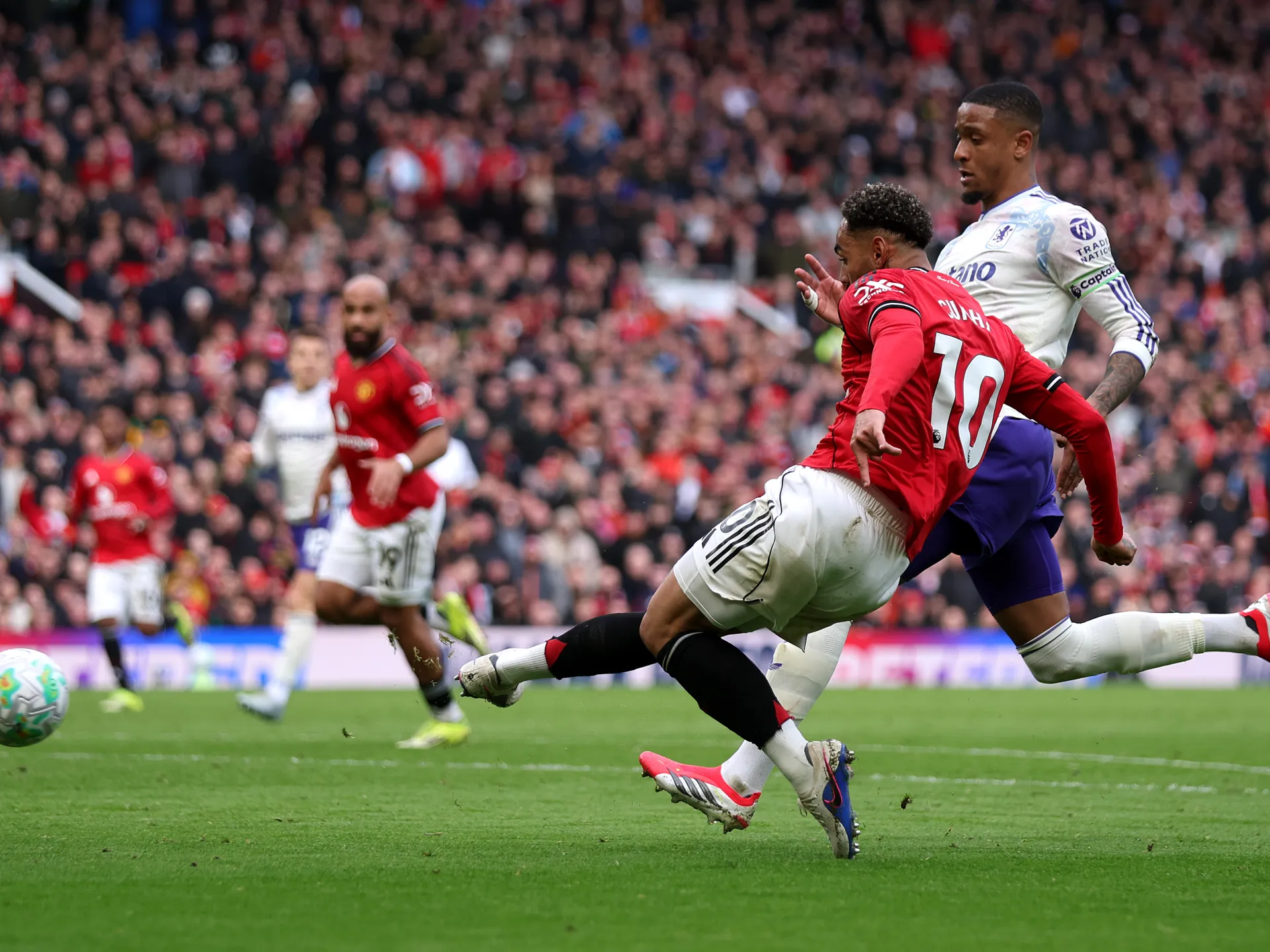
But Cunha netted in the 71st minute to ensure Carrick’s men did not pay for their stumble.
Bursting onto Fernandes’s sublime pass into the Villa area, the Brazilian forward slotted a fine finish into the far corner.
It was Fernandes’s 16th Premier League assist this term, moving the United captain past David Beckham’s previous club record of 15 in 1999-2000.
He has 100 assists for United in all competitions since signing from Sporting Lisbon in 2020.
Sesko came off the bench to prove a point to Carrick after being dropped, and the Slovenian striker fired home with a deflected effort in the 81st minute.
Fernandes said he was delighted to provide two assists for his teammates to move past Beckham’s record.
“I’m more proud and pleased because I did it serving my teammates. Giving joy to others is also very good,” he said.
“When you play in the position I play, I’m very happy I can help them to score and be happy in that moment. It’s a huge achievement for me, but the main achievement would be in the top spot at the end of the season.”
Elsewhere, Nottingham Forest climbed out of the relegation zone after a 0-0 draw against Fulham at the City Ground.
Still waiting for their first win under Vitor Pereira, fourth-bottom Forest, who have had four managers this term, are above third-bottom West Ham on goal difference.
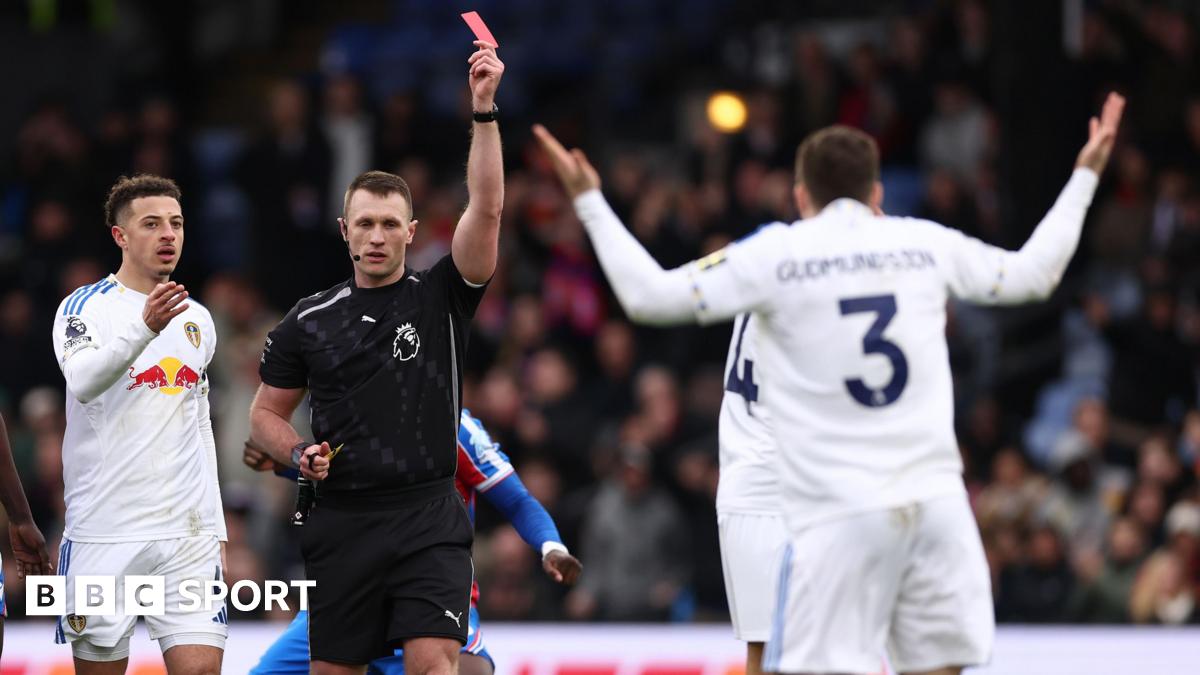
Ten-man Leeds held on for a 0-0 draw at Crystal Palace despite Dominic Calvert-Lewin’s missed penalty and a red card for Gabriel Gudmundsson.
Later on Sunday, troubled Tottenham head to Liverpool with only goal difference keeping them outside the relegation zone.
The stand-off between Ten Hag and Sancho lasted four months, before Sancho joined Dortmund on loan for the remainder of the season and helped them reach the Champions League final.
But they could not afford to keep him and, although United sporting director Dan Ashworth was credited with brokering the truce that allowed Sancho to join up with United in the pre-season of 2024, it was a temporary situation, which Chelsea seemed to solve by agreeing a loan that committed them to a permanent transfer at the end of the season.
Yet, after five goals in 41 appearances, Chelsea preferred to pay a £5m penalty to send Sancho back to Old Trafford.
This time, there was no olive branch. Sancho was placed in Ruben Amorim’s ‘bomb squad’ and had to train away from the first team until he joined Villa on 1 September.
United have an option to trigger an additional year on Sancho’s contract, which otherwise expires in the summer. In public, they are reserving their position on that. No-one expects it to happen.
At 25, Sancho still has a lot to offer. There have been glimpses of quality during his time at Villa, but it is by no means certain he will stay there beyond the end of the season.
“Seeing Jadon close up, technically, he’s got an awful lot of ability,” said current United interim head coach Michael Carrick, who worked with Sancho as part of Solskjaer’s backroom team and managed him for three games during his short stint in charge after the Norwegian’s dismissal.
“In and around the box; his ball carrying; his little plays; the connections; his creativity; the way he handles the ball – he’s got natural ability.
“He’s always had it all the way coming through. That’s one part of football.
“But – and I’m not talking about Jadon individually on this – it is just how it is and how it should be.
“You can’t just assume it’s all going to be smooth. It’s proven that it’s not always like that.
“You’ve got to find a way through it. If you are playing in a good team with good players and a good squad and depth, that’s part of the challenge to stay at the top.”
Chelsea manager Liam Rosenoir says his team’s huddle in the centre circle of the pitch is a “show of respect” to each other rather than to annoy the opposition, after referee Paul Tierney disrupts the pre-match ritual in Chelsea’s 1-0 defeat to Newcastle.
Who: Manchester United vs Aston Villa What: English football’s Premier League Where: Old Trafford, Manchester, United Kingdom When: Sunday March 15, at 2pm (14:00 GMT) How to follow: Al Jazeera’s live coverage begins at 11:00 GMT
Manchester United and Aston Villa face a crunch clash on Sunday in the race for UEFA Champions League qualification.
Recommended Stories
list of 4 itemsend of list
The pair hold third and fourth spots respectively in the Premier League, with United edging Villa on goal difference, while Chelsea and Liverpool sit three points behind the pair in fifth and sixth.
With only the top four being guaranteed a place at the top table of European football, the encounter at Old Trafford holds huge value to both with nine games to go of the season.
Al Jazeera Sport takes a closer look at the match.
Man Utd look to bounce back from first defeat under Carrick
Manchester United’s interim manager Michael Carrick on Friday said his players were “itching to get going” again, after suffering their first defeat under his leadership.
Last week, 10-man Newcastle United ended Carrick’s unbeaten run since he replaced Ruben Amorim in January.
“I understand the first defeat feels different but it was going to come at some point. Most teams have suffered that at some point,” Carrick told reporters.
“It has been a really good week in some ways, we have put ourselves in a position where there is a lot to play for.”
Carrick brushes off Scholes dig at Man Utd
United’s defeat by Newcastle prompted a dig from former player Paul Scholes, who wrote on Instagram: “Michael has definitely got something special about him … cos Utd have been crap last four games.”
Asked about his former teammate’s comment, Carrick said: “It was nothing really, nothing to say about it really.
“I think that is just where we are in terms of social media and things, and captions and quotes. It can be taken in different ways, so just be calm about it and understand the real meaning of things.
“Listen, there are different opinions out there and it’s fine. People can have different opinions.
“It’s just things get taken from one extreme to another. It is what it is. I am not worried about it and don’t make a big deal of it either.
“There’s nothing to say about it, really,” he said.
How have Aston Villa fared in the Premier League this season?
Villa had a turbulent start to the campaign, as they failed to register a win in their first five league matches – losing two. A run of 12 league wins in 13, however, propelled them into a title challenge by the turn of the year.
A 4-1 defeat at Arsenal on New Year’s Eve marked the start of another downturn, though, with only three wins recorded in 11 games starting with the defeat in London.
The midlands club have lost three of their last five on the road in the league, recording only one win in that time.
Last up for Man Utd
United suffered their first defeat under Carrick in their match at Newcastle United on March 4.
The home side were reduced to 10 men when Jacob Ramsey was sent off on the stroke of half-time.
It came in a frantic end to the first half that saw Anthony Gorden give Newcastle an injury-time lead from the penalty spot, only for Casemiro to head home an equaliser to send the sides in level.
William Osula netted the winner in the 90th minute to give Eddie Howe’s side all three points despite their numerical disadvantage.
“It was disappointing the way the game ended (against Newcastle) but we have digested that, looked at it and learned from it,” Carrick said ahead of the Villa match.
“We have trained really well this week and the boys are itching to get going.”
Last up for Aston Villa
Villa were 1-0 winners at Lille in the UEFA Europa League on Thursday, ending a four-game winless streak that included three defeats.
Ollie Watkins scored the only goal of the game in the 61st minute.
The return leg will be played at Villa Park on Thursday.
What happened the last time Man Utd played Aston Villa?
Villa recorded a 2-1 win in the reverse Premier League fixture at Villa Park in November, despite an encouraging display for Ruben Amorim’s United.
Morgan Rogers scored both goals for Villa – his first was scored in the 45th minute but United were level in first-half stoppage time through Matheus Cunha.
What happened in the corresponding fixture between Man Utd and Villa last season?
United were 2-1 winners in the Premier League match at Old Trafford last season.
The Red Devils were greatly aided by the sending off of Villa keeper Emiliano Martinez just before the break.
Amad Diallo and an 87th minute Christian Eriksen penalty sealed the win for the home side.
Head-to-head
This will be the 202nd meeting between the clubs with Manchester United winning 107 of the matches. Aston Villa have won 52 of the encounters, which date back to November 1892 and a 2-0 home win for United in the old Division One.
Manchester United team news
Carrick said Mason Mount had taken a “big step” and could return from a two-month absence against Villa this weekend.
The midfielder missed their last six league games due to injury.
“He is an important player for us,” he said.
“He is not 100 percent and he has only trained for a small period of time. But he is back and that’s good for us. We will see if he is involved on Sunday. That is it in terms of the players coming back.”
Matthijs de Ligt, Patrick Dorgu and Mason Mount all remain absent though, and Lisandro Martinez has been added to that list with a calf injury, while there remains an injury doubt over Luke Shaw.
The defender was forced off with injury in the defeat by Newcastle, but Noussair Mazraoui, who also came off injured in that game, is set to be available.
Aston Villa team news
Midfielder John McGinn returned to action at Lille on Thursday night and could be in line for a start at Old Trafford.
Youri Tielemans and Boubacar Kamara remain absent through injury, leaving a gaping hole in the middle of the Villa lineup.
Right-back Matty Cash is also a doubt having missed the Lille match after picking up a knock in Villa’s last Premier League outting.
With a population of just 900,000, Reunion is better known for its volcanoes, wildlife and tropical climate rather than professional footballers.
On the men’s side, former West Ham star Dimitri Payet and Newcastle winger Laurent Robert are two that fans may remember – but those that make it all the way form a short list.
Growing up, Malard tried her hand at boxing, karate, judo and handball before discovering football.
“When I tried football, I said ‘that is my sport’ because I could put in a lot of energy and could play free,” she says.
She began playing in the island’s capital for Saint-Denis FC before the chance meeting with Bompastor, who was managing the Lyon academy at the time.
“She tells me, ‘Mel, I like you, come to Lyon’. I had two months to think but I said yes right away because it was a big opportunity in my life,” Malard says.
The transition from sunny Reunion to the bitter winters of Lyon all alone at the age of 14 was a shock to her system.
“It was so difficult but I knew what I wanted and I knew it was football,” she says. “Every morning and every night, I would put my boots on, go to the pitch and I would be happy.”
Seizing those early opportunities has paid off handsomely for Malard – three league titles, four Champions League medals and the experience of playing alongside some of the best in the world at Lyon and the France national team.
Now, in Manchester, she is continuing to love her experiences – despite that gloomy weather.
“Every time I pass Old Trafford, it’s a dream for me,” Malard says. “The people are so nice when I play football, singing my name at the stadium. The club is very big, has a lot of history and I enjoy it a lot here.”
And it will be a full-circle moment for Malard against Chelsea, managed by Bompastor, in the cup final.
“I’m excited, it’s good for us and this club deserve that,” says Malard, who featured in the 4-0 win against Tottenham in the 2023-24 FA Cup final as United lifted their first major women’s trophy.
“I’m also excited to play against my [former] coach. If we win, we put the name again in history and that is what we want.
“I’m confident because I believe in this team – I believe in this club. We are here to win everything we can.”