unfolds

As hantavirus outbreak unfolds on ship, CDC is absent

No quick dispatching of disease investigators. No televised news conference to inform the public. No timely health alerts to doctors.

In the midst of a hantavirus outbreak that involves Americans and is making headlines around the world, the U.S. government’s top public health agency, the Centers for Disease Control and Prevention, has been uncharacteristically missing in action, according to a number of experts.

To President Trump, “we seem to have things under very good control,” as he told reporters Friday evening.

To experts, the situation aboard a cruise ship has not spiraled because, unlike COVID-19 or measles or the flu, hantavirus does not spread easily. It has been health experts in other countries, not the United States, who have been dealing primarily with the outbreak in the last week.

“The CDC is not even a player,” said Lawrence Gostin, an international public health expert at Georgetown University. “I’ve never seen that before.”

Not until late Friday did CDC actions accelerate.

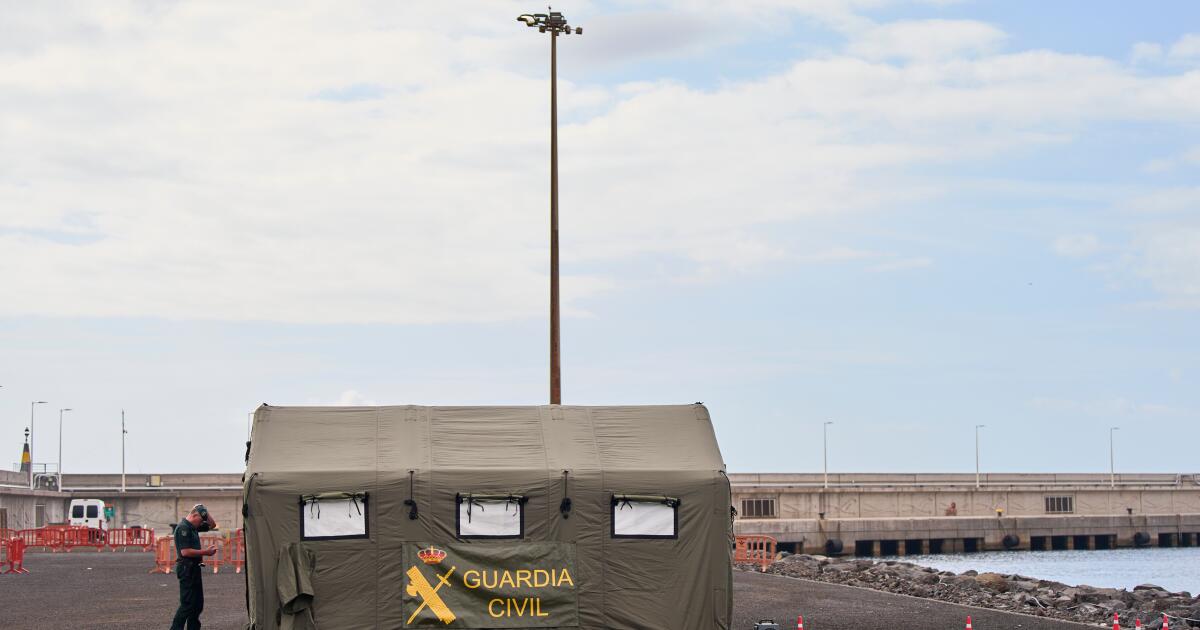
Health officials confirmed the deployment of a team to Spain’s Canary Islands, where the ship was expected to arrive early Sunday local time, to meet the Americans onboard. They said a second team will go to Offutt Air Force Base in Nebraska as part of a plan to evacuate U.S. passengers from the ship to a University of Nebraska quarantine center for evaluation and monitoring. Also, the CDC issued its first health alert to U.S. doctors, advising them of the possibility of imported cases.

At their first briefing, held Saturday by telephone only for invited reporters, officials pledged to be transparent in updating the public but said the media could not cite the speakers by name under rules set by aides to Health Secretary Robert F. Kennedy Jr. They did not directly answer a question about whether the U.S. passengers could leave the university medical facility when they wanted.

The CDC’s diminished role in this outbreak is an indicator the agency is no longer the force in international health or the protector of domestic health that it once was, some experts said.

The hantavirus outbreak is “a sentinel event” that speaks to “how well the country is prepared for a disease threat. And right now, I’m very sorry to say that we are not prepared,” said Dr. Jeanne Marrazzo, chief executive officer of the Infectious Diseases Society of America.

How the outbreak unfolded

Early last month, a 70-year-old Dutch man developed a feverish illness on a cruise ship traveling from Argentina to Antarctica and some islands in the South Atlantic. He died less than a week later. More people became sick, including the man’s wife and a German woman who both died.

Hantavirus was first identified as a cause of sickness of one of the cases on May 2. The World Health Organization swung into action and by Monday was calling it an outbreak. About two dozen Americans were on the ship, including about seven who disembarked last month and 17 who remained on board.

It’s WHO taking center stage

For decades, the CDC partnered with the WHO in such situations. The CDC acted as a mainstay of any international investigation, providing staff and expertise to help unravel any outbreak mystery, develop ways to control it and communicate to the public what they should know and how they should worry.

Such actions were a large reason why the CDC developed a reputation as the world’s premier public health agency.

But this time, the WHO has been center stage. It made the risk assessment that has told people the outbreak is not a pandemic threat.

“I don’t think this is a giant threat to the United States,” said Jennifer Nuzzo, director of Brown University’s Pandemic Center. But how this situation has played out “just shows how empty and vapid the CDC is right now,” she said.

Tumult under Trump

The current situation comes after 16 tumultuous months during which the Trump administration withdrew from the WHO, has restricted CDC scientists from talking to international counterparts at times and embarked on a plan to build its own international public health network through one-on-one agreements with individual countries.

The administration has laid off thousands of CDC scientists and public health professionals, including members of the agency’s ship sanitation program.

As this was playing out, Kennedy said he was working to “restore the CDC’s focus on infectious disease, invest in innovation, and rebuild trust through integrity and transparency.”

Waiting to hear from the CDC

The CDC has not been completely silent on hantavirus.

The agency on Wednesday issued a short statement that said the risk to the American public is “extremely low,” and described the U.S. government as “the world’s leader in global health security.”

Said Nuzzo: “Not only was that not helpful, it actually does damage because a core principle of public health communications is humility.”

The CDC’s acting director, Dr. Jay Bhattacharya, posted a message on social media that the agency was lending its expertise in coordinating with other federal agencies and international authorities. Arizona officials this week said they learned from the CDC that one of the Americans who left the ship — a person with no symptoms and not considered contagious — had already returned to the state. WHO officials said the CDC has been sharing technical information.

The CDC also is “monitoring the health status and preparing medical support for all of the American passengers on the cruise,” Bhattacharya wrote.

But federal health officials have mostly been tight-lipped, declining interview requests.

COVID-19 comparison

In interviews this week, some experts made a comparison with a 2020 incident involving the Diamond Princess, a cruise ship docked in Japan that became the setting of one of the first large COVID-19 outbreaks outside China.

The CDC sent personnel to the port, helped evacuate American passengers, ran quarantines, shared genetic data on the virus, coordinated with the WHO and Japan, held public briefings and rapidly published reports “that became the world’s reference data on cruise ship COVID transmission,” said Dr. Tom Frieden, a former CDC director.

Some aspects of the international response to the Diamond Princess were criticized, and it did not halt the outbreak or stop COVID-19’s spread across the world. But some experts say it was not for the CDC’s lack of trying.

“The CDC was right on top of it, very visible, very active in trying to manage and contain it,” Gostin said, while the agency’s work now is delayed and subdued.

Instead of working with nearly all of the world’s nations through the WHO, the Trump administration has pursued bilateral health agreements with individual nations for information sharing, public health support, and what it describes as “the introduction of innovative American technologies.” Roughly 30 agreements are currently in place.

That’s not sufficient, Gostin said. “You can’t possibly cover a global health crisis by doing one-on-one deals with countries here and there,” he said.

Stobbe writes for the Associated Press. AP writers Ali Swenson in New York, Darlene Superville in Washington and Susan Montoya Bryan in Albuquerque contributed to this report.
Source link

Orbán Down: María Corina’s Dream Scenario Unfolds in Hungary

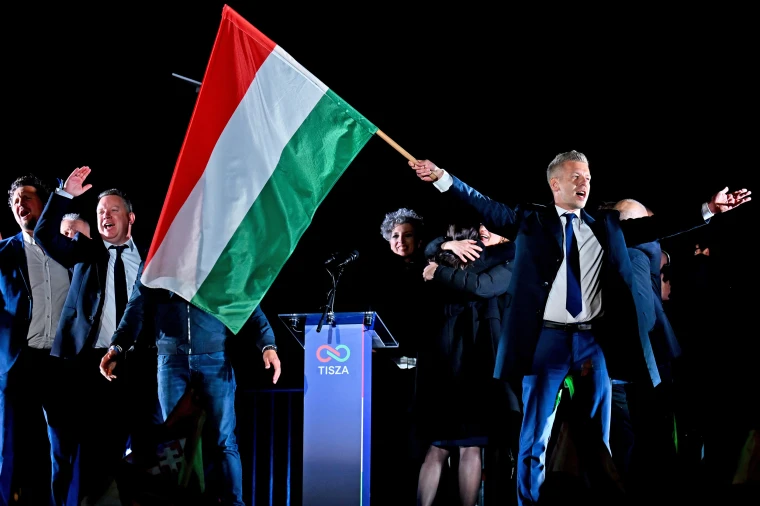
On Sunday night, tens of thousands of Hungarians packed the banks of the Danube waving flags, crying of joy, popping bottles. Celebrating something that political analysts had spent years telling them was almost impossible: the electoral defeat of Viktor Orbán, the autocrat whose ploys and manipulations made him a uniquely disturbing force in the European Union. After 16 years in power, Hungary’s self-proclaimed architect of “illiberal democracy” conceded defeat within hours of the polls closing.

His rival, Péter Magyar (the equivalent of Pedro Veneco), had won 137 seats in a 199-seat parliament, a two-thirds supermajority that gave him not just a government, but the ability to rewrite the very constitution Orbán had rigged to protect himself. This appears to be the plan.

Venezuelans watching from afar could be forgiven for feeling two things at once: genuine joy, and a familiar, creeping doubt. 

Sure, but that’s Hungary.

The doubt is understandable. It’s also, at this particular moment in Venezuelan history, worth interrogating.

To understand whether Hungary provides a useful lesson, we need to venture farther than our diasporic links, like La Danubio, Catherine Fulop and Shirley Varnagy. You first need a category distinction that political scientists call the difference between a closed authoritarian regime and a competitive one. A closed autocracy doesn’t bother with the pretense of real elections. Or when it does, it simply invents the results. Especially after July 2024, Venezuela had become exactly this: we all know what happened. Politically, there was no game to play unless you played by the regime’s rules. The game was a charade. 

Orbán’s Hungary was something different, more insidious. Similar to what Chávez did to the institutions in the 2000s, while using hyper-ideological and reactionary rhetoric. The European Parliament had classified it as a “hybrid regime of electoral autocracy.” Orbán bent every institution he could reach: the judiciary, the media, the electoral rules themselves.

The scene on the Danube on Sunday night was a piece of great news in a political era that doesn’t offer many of them. The scenes in Budapest matter to us. But it shouldn’t be mistaken for a mirror.

He gerrymandered the system to favor the largest single party, confident that party would always be his. But he never quite crossed the line into fabricating vote counts, à la Maduro or Lukashenko. The game was still real, even if the playing field was tilted.

That distinction is now relevant because Venezuela’s political reality has shifted in ways that were unimaginable five months ago. The current regime Delcy Rodríguez leads is not identical to that of 2024 and 2025. Under US pressure, a few hundred political prisoners have been released and an amnesty law was approved in February. albeit with mixed results (more than 500 political prisoners are still behind bars, and amnesty has been formally denied to high-profile politicians and NGO leaders like Javier Tarazona). Overall, we see gestures that try to transmit magnanimity, but are moves meant to look like compliance while chavismo waits for Washington’s attention to wander.

But here’s the thing: even performative openings create real cracks, and the cracks are showing. In February alone, Venezuela has recorded dozens of protests, an exponential increase compared to the same month in 2025. Workers and students have taken to the streets of Caracas four times this year demanding salary increases, openly calling on the Rodríguez siblings to answer for their pleas. Last weekend in Valencia, in a football game between Carabobo and Universidad Central (a game which has enough backdrop to make a book about it), football fans directed chants against the son of Alexander Granko Arteaga (who plays for UCV): “¡Dónde están que no se ven, los enchufados de la UCV,” loud enough so it could be hear transmission (that would translate roughly to “nowhere to be seen, the UCV cronies are nowhere to be seen”). In 2025, that chant would have landed them in jail. That was exactly the outcome in the last domestic football final.

Waiting for the opportunity

Venezuela is still not a democracy. But the differences remain significant: a regime slowly, reluctantly slipping out of its authoritarian fortress, coming to terms with the fact that it will eventually have to face a reckoning at the ballot box. That’s what happened to Orbán. He controlled the courts, the media, the electoral geometry, and still got swept out because of the accumulated weight of economic failure, corruption, and sheer exhaustion that eventually overwhelmed the machinery he had built.

The lesson is not that rigged systems are beatable through optimism. It is that rigged systems have structural limits, and that opposition alliances which survive long enough, and build broad enough coalitions, tend to be standing when those limits are reached. In our case, we’ve seen all possible iterations of what an opposition can be. In 2024, the Maria Corina-led movement became the most formidable electoral force the country has seen in a while. That should have been our Orbán down moment. Nonetheless, the inertia we have seen since the beginning of the year is too good to let it slip away.

Political scientist Yascha Mounk, writing about Magyar’s victory, made an interesting observation that some might believe applies to Venezuelan democratic forces: the Hungarian opposition ousted Orbán on its fourth try, after years of humiliation, internal divisions and strategic errors. Patience, he argues, is its own form of political discipline.

This is Mounk’s post-populist dilemma, live, and a miniature preview of what a potential democratic government in Caracas would have in front of itself.

Again, the Venezuelan opposition doesn’t need that lesson. It already learned it, the hard way, and on a harder playing field. In 2015, it won a supermajority in the Asamblea and watched its powers get neutered one by one. In July 2024, it beat Maduro overwhelmingly and proved its victory with the official tally sheets. Edmundo González Urrutia did not become president because the movement backing him lacked organization, or coalition-building, or the kind of credible leadership that Magyar built from scratch since leaving Orban’s party two years ago. González Urrutia failed to take power because the regime decided that electoral results were optional.

The question was never whether the Venezuelan opposition could win an election. They already did in a way that should clarify the terrain for future opportunities. The actas and the popular support are powerful symbols that should endure. The question is whether they can repeat that performance, seizing the minimal opening they have in front of them whatever the broader circumstances. Then yes, the patience Mounk mentions is relevant.

The post-autocracy trap

Mounk is right to poop the party a little bit with a warning he calls the “post-populist dilemma.” Even with his supermajority, Magyar inherits a State that Orbán hollowed out and refilled with loyalists. He has two options: either fire them and bring about an anti-Fidesz purge; or leave them in place and be sabotaged from within. In his first week in power, Magyar is showing he wants to go for the first option. He has already called for the resignation of several key ministers of the Orban regime.

Venezuela would face this dilemma on steroids. Chavismo has had 27 years to embed itself across nearly everything. Rodríguez herself operates within a questionable agency on security forces (a certain someone remains interior minister and vice president for security). Any future Venezuelan government elected under competitive conditions would inherit an institutional landscape far more captured and complex than anything Magyar faces in Budapest.

This is not a reason for despair, but it does require confronting an uncomfortable asymmetry. When Magyar navigated Hungary’s post-populist transition, he did so with the EU at his back, a bloc that had spent years dangling billions in frozen funds as an incentive for democratic reform, and whose membership gave Hungarian voters a concrete, tangible alternative to Orbán’s model. Venezuela’s external anchor is the Trump administration, which has been explicit about its priorities: oil first, stability second, elections somewhere further down the list. Rubio’s three-phase roadmap (stabilization, economic recovery, reconciliation and transition) is not an explicit democratic transition plan. It is a business plan with democracy on the side.

Preparation, then, means the opposition must be the one holding the democratic line demanding verifiable electoral conditions, refusing to let institutional reform become a performance to please DC, and cementing a coalition broad enough that can translate the popular inertia and mood towards a margin so big it can’t be tweaked. The EU didn’t save Hungary. Hungarians did. The lesson travels.

Magyar won because Hungarians were organized, patient and ready when the moment arrived. Venezuelans have already proven they can do the same.

Magyar isn’t waiting. Within 72 hours of his victory, he demanded that Hungary’s president resign immediately, and sent the same message to the heads of the Supreme Court, the Constitutional Court, the State Audit Office and the media authority calling them “puppets who have been in power for the past 16 years.” On Wednesday morning, in his first radio interview in over a year and a half, he told the State broadcaster its news operation would be shut down and relaunched as a true public service. Some are already calling it a witch hunt. Others call it the bare minimum required to transform the country.

This is Mounk’s post-populist dilemma, live, and a miniature preview of what a potential democratic government in Caracas would have in front of itself. If Magyar, armed with a two-thirds supermajority and the EU at his back, is already navigating accusations of overreach on day three, imagine what a Venezuelan opposition government would face trying to dismantle 27 years of institutional occupation in the police, intelligence agencies, the military, the public media, the judiciary. The task ahead is massive, and solving the dilemma probably requires an orderly phase-out agreed before the next presidential vote.

The scene on the Danube on Sunday night was a piece of great news in a political era that doesn’t offer many of them. The scenes in Budapest matter to us. But it shouldn’t be mistaken for a mirror.

Venezuela is not Hungary. Delcy is not Orbán, she is arguably more pragmatic, but also more constrained. Orbán was a standalone autocrat who built his system around his own political survival. Rodríguez governs by a permanent balancing act: between Washington’s demands, the military high command, the hardline faction and other peripheral actors. The competitive opening, if it comes, will be narrower, more fragile and more dangerous than anything Magyar navigated.

These are reasons to take the Hungarian lesson seriously without taking it literally. Magyar won because Hungarians were organized, patient and ready when the moment arrived. Venezuelans have already proven they can do the same. The question now is simpler, and harder: when the moment comes again, can the popular will (and not just the results) be allowed to stand?

Source link