Ukraine

Russia-Ukraine war: List of key events, day 1,361 | Russia-Ukraine war News

Here are the key events from day 1,361 of Russia’s war on Ukraine.

Here is how things stand on Sunday, November 16:

Fighting

  • The Ukrainian military said it struck Russia’s Ryazan oil refinery, located about 200km (125 miles) southeast of Moscow, as “part of efforts to reduce the enemy’s ability to launch missile and bomb strikes”.
  • The Ukrainian military said the strike caused multiple explosions and a large fire at the site.
  • The Russian Ministry of Defence said its forces have taken control of the village of Yablukove in Ukraine’s Zaporizhia region.
  • The Ukrainian military confirmed withdrawing from the village of Novovasylivske in Zaporizhia, saying the retreat was necessary in order to relocate to “more favourable defensive positions”.
  • Ukrainian President Volodymyr Zelenskyy said the widow of the first victim of the 1986 disaster at the Chornobyl power plant was among several people killed in a barrage of Russian strikes on the capital of Kyiv in recent days. He said Nataliia Khodemchuk’s death was the result of “a new tragedy caused once again by the Kremlin”.
  • Russia’s RIA Novosti news agency reported that conditions are stable at the Moscow-occupied Zaporizhzhia nuclear power plant in Ukraine after an external power line was switched off as a precautionary measure on Friday.
  • The Russian state-run TASS news agency reported that Ukrainian forces have launched a drone attack on residential buildings in the Russian city of Volgograd, damaging “the facades and glazing of apartment buildings and the surrounding area”.
  • The Russian Defence Ministry said it shot down eight Ukrainian drones in the course of four hours over the regions of Belgorod, Bryansk and Kursk, as well as Russian-occupied Crimea, according to TASS.

Politics and diplomacy

  • Russia and Ukraine have agreed to move forward with a prisoner exchange that will see the release of about 1,200 Ukrainians, according to a Ukrainian official. The announcement came after several days of talks overseen by Turkiye and the United Arab Emirates, rejuvenating an exchange process laid out during previous negotiations in Istanbul.
  • President Zelenskyy promised a “reboot” of state-owned energy companies, including reforms to root out corruption, as his government continues to grapple with a major scandal in which investigators said $100m was embezzled from power firms.
  • Polish President Karol Nawrocki signed a bill providing social assistance for Ukrainian refugees, but stated it was the “last time” he would do so until new solutions to the issue were found. The Polish leader has argued that the provision of assistance to Ukrainian refugees, about one million of whom are living in Poland, is “unfair to Poles”. The legal status of Ukrainian refugees in Poland is set to expire in March.
  • Serbian officials said that the United States will not ease sanctions on the Serbian oil firm NIS unless it changes the company’s majority-Russian ownership share, despite pleas for leniency from Belgrade. Energy Minister Dubravka Djedovic Handanovic said that the US “clearly and unequivocally” demanded changes to Russian ownership, giving Serbia until February 13 to find a solution.

Military aid

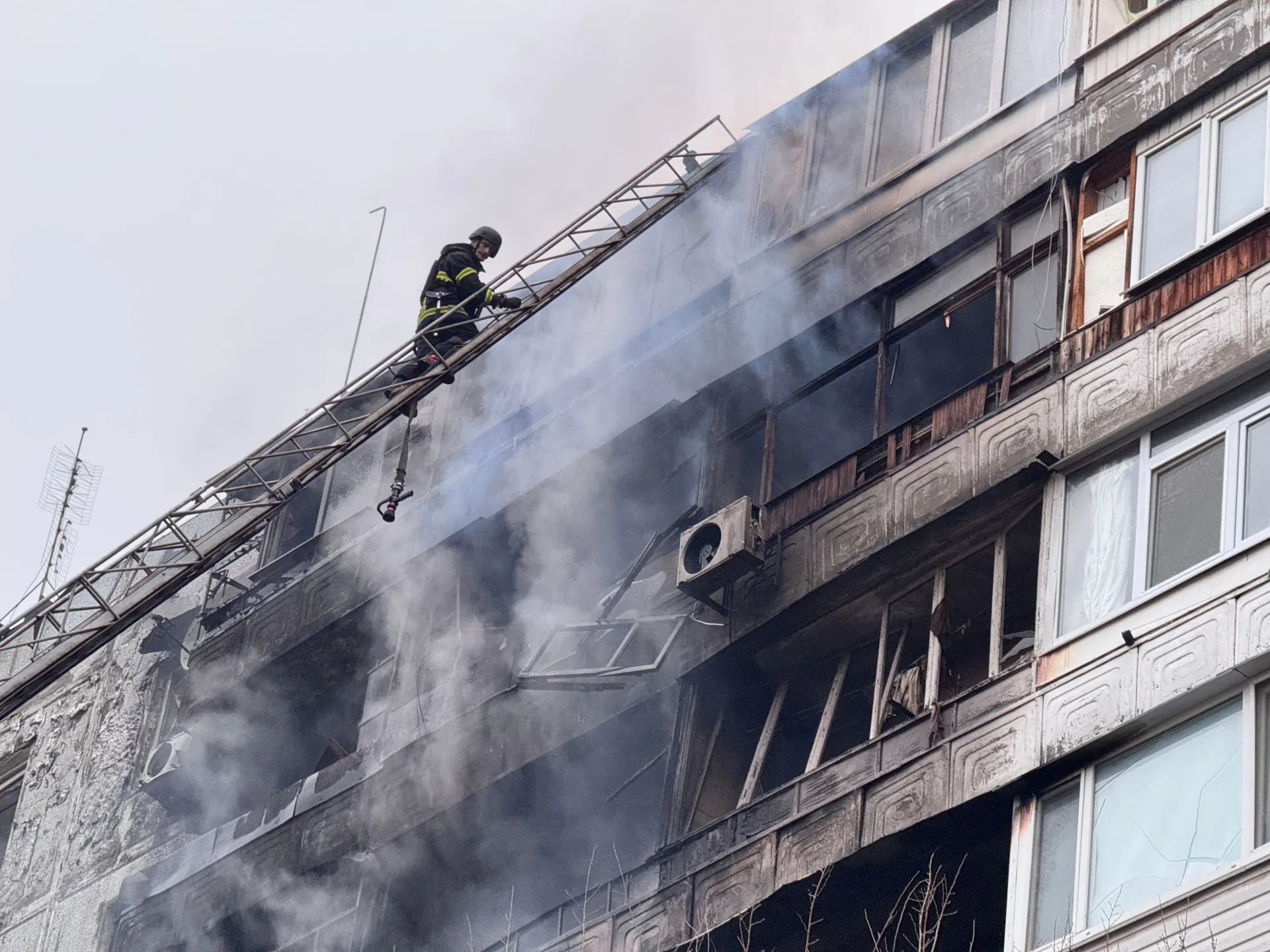
  • Zelenskyy called for additional air defence resources, following a wave of Russian strikes on Kyiv that killed at least seven people and injured dozens more. The Ukrainian leader said that the attacks underscore the need for more assistance and “greater resolve” from allies following the strikes, which struck apartment buildings across the capital city on Friday.


Source link

France secure spot at 2026 World Cup as Mbappe scores twice against Ukraine | Football News

Kylian Mbappe hit a brace while Michael Olise and Hugo Ekitike also scored as France thrashed Ukraine 4-0 to secure World Cup qualification, after an evening marked by tributes to the victims of the 2015 Paris attacks.

Captain Mbappe coolly chipped in from the spot 10 minutes into the second half at the Parc des Princes on Thursday, and the impressive Olise doubled France’s lead on 76 minutes.

Recommended Stories

list of 4 itemsend of list

Mbappe then struck again and Ekitike swept in a first goal for his country, as France got the win they required to clinch their spot at the 2026 finals in the United States, Canada and Mexico.

A minute’s silence was impeccably observed before kickoff by the 41,000 spectators as France marked the 10th anniversary of the attacks in and around Paris on November 13, 2015.

Most of the 130 victims of the attacks were killed at the Bataclan concert hall in the capital, where they were attending a concert.

One person also died near the Stade de France in the northern Paris suburb of Saint-Denis, where multiple explosions took place as suicide bombers attempted to enter the ground during a friendly between Les Bleus and Germany.

Didier Deschamps was the coach then and remains in charge now, with the approaching World Cup to be his final tournament before stepping down.

With one game still to come in Azerbaijan on Sunday, France have an unassailable six-point lead over both Iceland and Ukraine at the top of European qualifying Group D.

Winners of the World Cup in 2018 and runners-up in 2022, France maintain their record of having made it to every edition of the tournament since missing out on a place in the US in 1994.

While they can look forward to the draw for the finals, which takes place in Washington, DC, on December 5, Ukraine and Iceland meet each other on Sunday in a showdown to decide who continues into the playoffs next March.

France’s only slip-up in qualifying came in a draw in Iceland last month, although they have rarely found their fluid best during a low-key campaign.

Mbappe and Olise were in fine fettle here at Paris Saint-Germain’s home ground, though, while Bradley Barcola came closest to scoring in the first half with a curling effort from outside the area that was tipped onto the woodwork and behind for a corner.

Real Madrid superstar Mbappe, the France captain, then chipped in from the spot to open the scoring early in the second half after Olise had been fouled inside the area.

Olise, of Bayern Munich, really came into his own after being shifted from the right to a more central role.

It was shortly after setting up Ekitike to hit the post that Olise turned and fired in France’s second goal, and Ukraine caved in towards the end.

Mbappe scored from close range in the 83rd minute after Ekitike had been denied, taking him to 55 goals for his country and to within two of all-time top marksman Olivier Giroud’s tally of 57.

PARIS, FRANCE - NOVEMBER 13: Kylian Mbappe of France crosses the ball whilst under pressure from Illia Zabarnyi of Ukraine during the FIFA World Cup 2026 qualifier match between France and Ukraine at Parc des Princes on November 13, 2025 in Paris, France. (Photo by Franco Arland/Getty Images)
Mbappe fends off Illia Zabarnyi of Ukraine at Parc des Princes in Paris [Franco Arland/Getty Images]

Liverpool’s Ekitike then rounded off a fine move to wrap up the victory with his first senior international goal.

Deschamps said the performance was professional rather than spectacular, but enough to complete the mission.

“Always appreciate the good moments, even if it seems logical and natural for the France team to qualify. The objective was to qualify here tonight in a heavy, weighty context. The first half was difficult against a low block,” he said.

“I enjoy it, even if it’s not the first time – the France team has to be there at every major tournament.”

Elsewhere, Portugal star Cristiano Ronaldo was sent off for elbowing Ireland defender Dara O’Shea in the second half of a shock 2-0 defeat at Ireland.

Ronaldo now risks a two-game ban, which would see him missing the first match of the World Cup tournament if Portugal qualifies.

Portugal will host last-place Armenia in the final qualifying game on Sunday, when Hungary hosts Ireland at the same time. Portugal top Group F with 10 points, two ahead of Hungary. Ireland is third with seven points.

Earlier, Erling Haaland scored twice as Norway moved even closer to qualifying for the World Cup for the first time since 1998 by beating Estonia 4-1 in Oslo. The win virtually secures a spot for the high-scoring Norwegians in next year’s tournament.

Already-qualified England beat Serbia 2-0 at Wembley Stadium to keep a perfect record in Group K and are yet to concede a goal.

Albania beat Andorra 1-0 in the same group to secure the runner-up spot.

Source link

Russia-Ukraine war: List of key events, day 1,359 | Russia-Ukraine war News

Here are the key events from day 1,359 of Russia’s war on Ukraine.

Here is how things stand on Friday, November 14:

Fighting

  • Russian forces launched a “massive” attack on Kyiv early on Friday, Mayor Vitali Klitschko said, with air defences in action and a series of explosions reported in the capital.
  • Klitschko said falling debris had struck a five-storey apartment building in Dniprovskyi district on the east side of the Dnipro River, and a high-rise dwelling was on fire in Podil district on the opposite bank.
  • Ukrainian President Volodymyr Zelenskyy visited troops near Ukraine’s southeastern front line, where he warned of the need to shore up defences after his troops lost ground in increasingly high-intensity battles far from Russia’s main offensive in the east of the country.
  • President Zelenskyy said the situation near the city of Orikhiv in the Zaporizhia region was “one of the most difficult” along a sprawling front line and that thwarting Russian forces there was key to shielding Zaporizhzhia city.
  • Ukraine’s military said its troops hit a Russian oil terminal in occupied Crimea and also an oil depot in the occupied Zaporizhia region.
  • The Ukrainian General Staff said Russian oil facilities and other military targets were hit by domestically produced weapons, including the “Flamingo” ground-launched cruise missile, drone missiles, and drones.
  • Russia’s Ministry of Defence said its forces have captured two more Ukrainian settlements: Synelnykove in the Kharkiv region and Danylivka in the Dnipropetrovsk region.
  • Russian air defence units destroyed and intercepted 130 Ukrainian drones overnight over Russia, the state-run TASS news agency reports, citing daily data from the Defence Ministry in Moscow.

Peace talks

  • The Kremlin said Ukraine would have to negotiate an end to the war “sooner or later” and predicted that Kyiv’s negotiating position would worsen by the day.
  • Russian Foreign Minister Sergey Lavrov has said he hoped Washington would take no actions liable to escalate the Ukraine conflict.
  • Lavrov said United States President Donald Trump had long advocated dialogue with Russia, had sought to fully understand the Russian position on Ukraine and “demonstrated a commitment to finding a sustainable peaceful solution”.
  • “We are counting on common sense and that the maintaining of that position will prevail in Washington and that they will refrain from actions that could escalate the conflict to a new level,” Lavrov said.

Ukraine energy scandal

  • German Chancellor Friedrich Merz and President Zelenskyy have discussed the $100m energy corruption scandal that has engulfed Kyiv, the German government said in a statement.
  • Zelenskyy pledged complete transparency, long-term support for independent anticorruption authorities and further swift measures to regain the trust of the Ukrainian people, European partners and international donors, the statement said.
  • Ukrainian Prime Minister Yulia Svyrydenko also announced an audit of all state-owned companies, including in the energy sector, following the scandal that has led to the suspension of two cabinet ministers.
  • The European Bank for Reconstruction and Development (EBRD) said it is lending 22.3m euros ($26m) to a Ukrainian energy firm as part of a pipeline of deals, signalling its ongoing support for the sector despite the corruption scandal.
  • The EBRD cash will go to private Ukrainian energy company Power One to finance new gas-piston power plants and battery energy storage systems, the lender said in a statement.

Aid to Ukraine

  • The International Monetary Fund (IMF) will soon begin a staff mission to Ukraine to discuss its financing needs and a potential new lending programme, IMF spokesperson Julie Kozack said.
  • Ukraine is in talks with the IMF about a new four-year lending programme for the country that would replace its current four-year $15.5bn programme. Ukraine has already received $10.6bn of that amount.
  • European Commission President Ursula von der Leyen told the European Parliament that the European Union could either borrow the money needed to cover Kyiv’s financial needs in 2026 and 2027 against the collateral of its long-term budget, or each EU country could borrow on its own and extend a grant to Ukraine.
  • A third option was a proposal from the Commission to organise a loan that would effectively become a grant, on the basis of the Russian central bank assets frozen in the EU. European finance ministers agreed that funding Ukraine with a reparations loan based on immobilised Russian assets would be the most “effective” of the three options being considered.
  • Europe’s top development banks and Ukrainian energy firm Naftogaz signed a deal to provide an EU grant of 127 million euros ($127m) in additional funding to the firm, on top of a 300 billion euro loan ($349bn) it outlined last month to secure Ukraine’s natural gas supply, amid the ongoing attacks on Ukraine’s infrastructure by Russia.
  • Nordic and Baltic countries will together contribute $500m to the Prioritised Ukraine Requirements List arms initiative, their defence ministers said in a joint statement.

Russian sanctions

  • About 1.4 million barrels per day of Russian oil, or almost a third of the country’s seaborne exporting potential, remain in tankers as unloading slows due to US sanctions against energy firms Rosneft and Lukoil, according to US financial services firm JPMorgan.
  • Bulgaria’s parliament has overruled a presidential veto on legislation allowing the government to take control of Lukoil’s oil refinery and sell it to shield the asset from looming US sanctions.
  • Bulgarian President Rumen Radev had attempted to veto a move by lawmakers giving a government-appointed commercial manager powers to oversee the continued operation of Lukoil’s refinery in Bulgaria beyond November 21, when the US sanctions are due to take effect, and to sell the company if needed.
  • Russia’s Port Alliance group, which operates a network of sea cargo terminals, said foreign hackers had targeted its systems over three days in a distributed denial of service (DDoS) attack and an attempted hack.
  • The group said critical elements of its digital infrastructure had been targeted with the aim of disrupting export shipments of coal and mineral fertilisers at its sea terminals in the Baltic, Black Sea, Far East and Arctic regions. The attack was successfully repelled, and operations remained unaffected, Port Alliance said.

Source link

Battlefield Commander In Ukraine Details Russia’s Increasing Frontline Pressure

As Ukrainian forces struggle to hold onto the embattled eastern city of Pokrovsk, they are facing increasing pressure about 55 miles to the southwest in the Zaporizhzhia region. The Ukrainian Southern Command on Wednesday said its forces pulled out of the small hamlet of Rivnopillia, the latest in a string of withdrawals in the area since Tuesday. The retreat puts Russian troops a little more than 50 miles east of Zaporizhia, one of Ukraine’s biggest cities with a population of more than 700,000.

The two fronts, in adjacent regions, are related, given Russia’s overwhelming advantage in troop strength and Ukraine’s more limited ability to generate forces to defend both areas. As a result, there are serious questions about how much longer Ukraine can hold onto Pokrovsk and the strategic impact of its potential fall. So we reached out to one battlefield commander with troops in Pokrovsk who offered us some insights about the front-line situation. He spoke to us on the condition of anonymity to talk about operational details.

Ukrainian forces just withdrew from Rivnopillia in Zaporizhzhia oblast, about 55 miles southwest of where Ukraine is struggling to hold onto the Donestk city of Pokrovsk. (Google Earth)

“If Russia manages to advance deeper into Pokrovsk, it would be one of the most serious challenges for Ukraine in recent months,” the commander explained. “Pokrovsk is not just another city. It’s a logistical and strategic hub that connects multiple directions across the Donetsk front. Losing it would mean breaking one of the last strong defense lines before Kramatorsk and Slovyansk, the industrial heart of this part of Ukraine.”

Losing Pokrovsk would also have a cascading effect on the Zaporizhia front and elsewhere.

“For the enemy, Pokrovsk is a gate,” he added. “Once they control it, they can project artillery farther west and threaten supply lines feeding the entire eastern group of Ukrainian forces. For us, it would mean longer supply routes, higher risk for convoys, and pressure on our reserves.”

Meanwhile, “simultaneous pressure on adjacent sectors [like Zaporizhzhia] forces Ukraine to keep reserves thin and limits the ability to plug gaps quickly.”

Ukrainian police & volunteers evacuated 22 residents, mostly elderly civilians, from the frontline town of Huliaipole in the Zaporizhzhia region, as Russian troops advanced under heavy fog & drone threats, intensifying battles along the southern front#Zaporizhzhia #Huliaipolepic.twitter.com/D2mzKpxHfU

— CNBC-TV18 (@CNBCTV18News) November 12, 2025

Russia, which has been trying to capture Pokrovsk for more than a year, is paying a heavy price for its advances, the commander stated.

“Around Pokrovsk, the Russians are taking enormous losses,” he posited. “They’re throwing wave after wave of troops into the fight — mostly poorly trained men, often with no proper coordination or cover. Every assault costs them dozens, sometimes hundreds of lives.”

“You can feel it on the ground,” he continued. “The smell of burned vehicles, the sound of their medevacs running nonstop. It’s not a battlefield anymore; it’s a graveyard for their infantry. They’re losing entire assault groups just to take a few hundred meters, and they have to start over the next day.”

Russian forces launched a limited breakthrough toward Pokrovsk using light vehicles. Some reached the city, but most were destroyed. On Nov 11 alone, Ukrainian forces eliminated 10 vehicles. Fighting continues inside Pokrovsk as Ukrainian units strike enemy fire positions.

In… pic.twitter.com/Fpn2qQWfmr

— NOELREPORTS 🇪🇺 🇺🇦 (@NOELreports) November 12, 2025

🇺🇦 🇷🇺 Under the cover of fog, the Russian transport-military column (cars and motorcycles on the roadside) that entered Pokrovsk was almost completely destroyed thanks to Ukrainian drones.

See the latest updates with us: @visionergeo pic.twitter.com/wf1dNApyM2

— Visioner (@visionergeo) November 12, 2025

For a long time, Ukraine held an advantage in defending Pokrovsk. The city has high-rises, industrial buildings and underground passageways that made it difficult to attack and allowed Ukrainian troops freedom of movement. However, as more Russian troops pour into the city, they gained the upper hand.

“Russian units are fighting for high-rises and interior city blocks, which increases cost per meter held and reduces freedom of movement for defenders,” the commander noted. “Attacks from multiple axes (especially the west toward Myrnohrad, about a mile to the east), create the risk of semi-encirclement, and strain supply lines. Russia is massing forces and sustainment here — meaning Ukraine’s defense must absorb a high tempo of small assaults.”

POKROVSK, UKRAINE - OCTOBER 7: A general aerial view shows the destroyed city covered in morning fog, following months of intense fighting near the front line, on October 7, 2025 in Pokrovsk, Ukraine. Flying drones over the area is extremely difficult due to widespread use of electronic warfare systems that disrupt the signal. Over the past 24 hours, Ukrainian forces have repelled more than 20 attacks by Russian forces along the Pokrovsk frontline, with some clashes ongoing, according to reports by Ukraine's Armed Forces. (Photo by Kostiantyn Liberov/Libkos/Getty Images)
Intense battles are raging in the high-rise buildings of Pokrovsk. (Photo by Kostiantyn Liberov/Libkos/Getty Images) Libkos

Ukrainian logistic lifelines “are under fire from Russian drones and mining, complicating resupply and reinforcement.”

The weather is making matters worse, impeding drone operations and making it harder to pinpoint the location of Russian troops.

“Urban fog, poor visibility, and dense architecture favor attacker surprise and make defensive coordination harder,” the commander noted.

To hold onto Pokrovsk, “Ukraine must deny Russian resupply, prevent consolidation in high-rise anchors, keep constant counter-mobility (mines, obstacles), and rapidly move reserves into threatened zones,” according to the source.

Soldiers of the 425th Separate Assault Regiment “SKALA” are conducting clearing operations against Russian positions in the northern part of Pokrovsk. pic.twitter.com/unzsjG1HUO

— NOELREPORTS 🇪🇺 🇺🇦 (@NOELreports) November 12, 2025

Keeping the city in Ukrainian hands “is extremely challenging,” the source pointed out, “because of high-intensity urban combat within city limits, multi-directional Russian pressure (including attempts to envelop the city from the west), superior Russian troop and ammunition throughput on this sector, disrupted Ukrainian logistics under constant UAV surveillance, and worsening weather/visibility conditions that favor small-group assaults and reduce maneuver space.”

This is Pokrovsk. A city scarred by war. Ruins where life once thrived.

The world could have prevented this — but chose comfort over truth. pic.twitter.com/OmtsYJWoZP

— UAVoyager🇺🇦 (@NAFOvoyager) November 12, 2025

As dire as the waning defense of Pokrovsk is for Ukraine, a Russian takeover there will not necessarily result in easy future advances, the commander claimed.

“Let me be clear,” he proclaimed. “This won’t be an easy victory for them. They are paying for every street with heavy casualties. Our soldiers are fighting block by block, building by building. Even if they take ground, it doesn’t mean they hold it – we bleed them every day. Pokrovsk may become another Bakhmut for them, a victory that costs them too much to be worth it.”

“In short, yes, it’s dangerous strategically,” the commander postulated. “But if they break through, they’ll find not open space, but more resistance waiting for them.”

Contact the author: [email protected]

Howard is a Senior Staff Writer for The War Zone, and a former Senior Managing Editor for Military Times. Prior to this, he covered military affairs for the Tampa Bay Times as a Senior Writer. Howard’s work has appeared in various publications including Yahoo News, RealClearDefense, and Air Force Times.


Source link

Ukraine suspends justice minister for alleged link to $100m corruption case | Nuclear Energy News

Justice Minister German Galushchenko allegedly took part in the scheme involving state nuclear power firm Energoatom.

Ukraine has suspended Justice Minister German Galushchenko for his alleged involvement in a corruption scandal involving the state-run nuclear power company, Energoatom, during his tenure as the country’s energy minister.

Prime Minister Yulia Svyrydenko announced on Wednesday that Galushchenko had been suspended from his duties, which will be carried out by Deputy Justice Minister for European Integration Lyudmyla Sugak.

Recommended Stories

list of 3 itemsend of list

Galushchenko, who served as energy minister for four years before taking over the justice portfolio in July, is accused of profiting from a scheme that laundered money from Energoatom.

Ukraine’s Pravda news outlet reported that anticorruption authorities raided Galushchenko’s offices on Monday.

‘I will defend myself in court’

In a statement, Galushchenko said he had spoken with the prime minister and agreed his suspension is appropriate while he defends his case.

“A political decision must be made, and only then can all the details be sorted out,” said Galushchenko. “I believe that suspension for the duration of the investigation is a civilised and correct scenario. I will defend myself in court and prove my position.”

According to Ukraine’s Specialised Anti-Corruption Prosecutor’s Office (SAPO), the alleged $100m scheme was orchestrated by businessman Timur Mindich, a close ally of President Volodymyr Zelenskyy.

SAPO’s investigators say Galushchenko helped Mindich manage illicit financial flows in the energy sector, while contractors working with Energoatom were forced to pay bribes of 10 to 15 percent to avoid losing contracts or facing payment delays.

Accusations of kickbacks in the energy sector are particularly sensitive in Ukraine, much of which is facing lengthy daily blackouts as it fends off massive Russian attacks on its infrastructure.

The scandal also highlights a potential challenge to Ukraine’s European Union membership bid, for which eradicating corruption remains a key condition.

Addressing the country on Monday, Zelenskyy urged full cooperation with the anticorruption inquiry and said anyone implicated should be held to account.

Zelenskyy’s comments come just months after he was forced to reverse plans to curb the independence of the country’s key anticorruption watchdogs – SAPO and the National Anti-Corruption Bureau of Ukraine – following widespread protests.

Source link

Ukraine anticorruption agency alleges $100m energy kickback scheme | Corruption News

Ukranian president promises accountability after anticorruption bureau announces probe into alleged Energoatom scheme.

Ukraine’s anticorruption agency has launched an investigation into an alleged $100m kickback scheme involving Energoatom, the state-run nuclear power company that supplies more than half of the country’s electricity.

The National Anti-Corruption Bureau of Ukraine (NABU), which operates independently of the government, announced the probe on Monday as the country faces another harsh winter under daily Russian bombardment.

Recommended Stories

list of 3 itemsend of list

In a statement posted on social media, NABU said that a “high-level criminal organisation” orchestrated the alleged scheme, led by a businessman and involving a former adviser to the energy minister, Energoatom’s head of security, and four other employees.

“In total, approximately 100 million USD passed through this so-called laundromat,” NABU said, without naming the suspects.

“The minister’s adviser and the director of security at Energoatom took control of all the company’s purchases and created conditions under which all contractors had to pay illegal benefits,” according to NABU chief detective Oleksandr Abakumov.

He said the group discussed increasing the kickback rate during work on protective structures at the Khmelnytskyi nuclear plant last October.

Investigators said Energoatom’s contractors were forced to pay bribes of 10 to 15 percent to avoid losing contracts or facing payment delays.

“A strategic enterprise with annual income exceeding 200 billion hryvnias [$4.7bn] was managed not by authorised officials but by individuals with no formal authority,” NABU said.

Zelenskyy calls for ‘criminal verdicts’

President Volodymyr Zelenskyy, addressing the nation on Monday evening, urged full cooperation with the investigation. “Everyone who has been involved in corruption schemes must receive a clear legal response. There must be criminal verdicts,” he said.

Zelenskyy’s comments come just months after he was forced to reverse plans to curb the agency’s independence following widespread protests. Eradicating corruption remains a crucial condition for Ukraine’s European Union membership bid, a goal Kyiv views as central to its post-war future.

Energoatom confirmed on social media that its offices were being searched and said it was cooperating with investigators.

Deputy Minister of Energy of Ukraine Svitlana Grynchuk told reporters she was not yet familiar with the case details, but promised a “transparent process” and accountability for anyone found guilty. “I hope that the transparency of the investigation will reassure our international partners,” she said.

Ukraine’s power infrastructure has suffered extensive damage from Russia’s air strikes this autumn, leaving large parts of the country without electricity. Although Moscow has not targeted nuclear reactors directly, Ukrainian authorities say substations linked to them have been repeatedly hit.

NABU released photographs showing stacks of cash, Ukrainian hryvnias, US dollars and euros, stuffed into bags and piled on tables. The agency did not disclose the owners of the seized money.

The agency conducted 70 searches, reviewed more than 1,000 hours of audio recordings, and deployed its entire detective staff over 15 months.

Opposition lawmaker Yaroslav Zheleznyak, a strong supporter of anticorruption reform, said he would introduce a parliamentary motion to dismiss Grynchuk and her predecessor, German Galushchenko, now serving as justice minister. Hrynchuk declined to comment on the proposal, while Galushchenko did not respond to requests for comment.

As Ukraine continues to battle both corruption and Russia’s war, Kyiv’s ability to convince its international partners of reform may prove as critical to its future as the fighting on the front lines.

Source link

Millions endure power cuts in Ukraine as Russia strikes more energy sites | Russia-Ukraine war News

Ukraine says European allies can give up some of their Patriot missile systems now and get future deliveries.

Most regions of Ukraine are undergoing scheduled power outages amid a new wave of attacks on energy sites by Russian drones and missiles.

Ukrenergo, the state-run electricity transmission systems operator in Ukraine, said the blackouts will last at least until the end of Monday as repairs are conducted on infrastructure damaged over the weekend and demand remains high as the onset of winter approaches.

Recommended Stories

list of 3 itemsend of list

The Poltava and Kharkiv regions are suffering from a deficit of high-voltage capacity after damage to their power transmission lines while the areas of Dnipropetrovsk, Zaporizhia, Kyiv and other central and northern regions have been affected as well.

According to Ukraine’s military, Russian forces used two air-launched ballistic missiles, five surface-to-air guided missiles and 67 drones, including those of Iranian design, during their attacks overnight into Monday.

The Ukrainian army did not report shooting down any of the missiles, but it said 52 of the drones were intercepted and the remaining 15 conducted strikes on nine locations.

Russia has maintained its attacks on Ukrainian energy infrastructure as United States-led diplomatic efforts to end the war make little progress. Ukraine has also been hitting Russian oil and fuel infrastructure in a stated effort to disrupt resources going to the front lines.

An explosion rocked Russia’s port town of Tuapse on the Black Sea overnight after Ukrainian forces launched sea drones towards the major oil terminal and refinery in the town. No casualties were reported.

Ukraine blackout
Traffic moves through the city centre of Kharkiv, Ukraine, without electricity after critical civil infrastructure was hit by Russian drone and missile attacks on  November 8, 2025 [Vyacheslav Madiyevskyy/Reuters]

Russia’s Ministry of Defence announced on Monday that four naval drones were destroyed near the port in the northeastern Black Sea.

It added that its air defences shot down six US-made HIMARS rockets and 124 fixed-wing unmanned aerial vehicles.

Ukraine wants Patriots from Europe

While calling for tougher sanctions and asset freezes to punish Russia, Ukraine is also looking to buy more arms.

President Volodymyr Zelenskyy said on Monday that Ukraine would like to order 25 Patriot air defence systems from US weapons makers as it tries to fend off Russian attacks at the brink of winter.

Zelenskyy acknowledged that the missile systems are expensive and such a large order could take years to manufacture. But he suggested that European countries could give their Patriots to Ukraine and await replacements, stressing that “we would not like to wait.”

Ukraine is also advancing with an internal drive with a stated aim of weeding out corruption in the energy sector.

The National Anti-Corruption Bureau announced on Monday that it was conducting searches in cooperation with a specialised anticorruption judicial office in premises connected to Tymur Mindich, a former business partner of the president.

Mindich, who reportedly fled before the searches, is coowner of Zelenskyy’s Kvartal 95 production company. The Anti-Corruption Bureau said the searches are in relation to a “high-level criminal organisation in the energy and defence sectors” that engaged in money laundering and illegal enrichment.

Source link

Russia-Ukraine war: List of key events, day 1,355 | Russia-Ukraine war News

Here are the key events from day 1,355 of Russia’s war on Ukraine.

Here is how things stand on Monday, November 10:

Fighting

  • The Russian Ministry of Defence said its forces captured the Ukrainian settlement of Rybne in the southeastern Zaporizhia region.
  • Fighting also continues in and around the city of Pokrovsk in eastern Ukraine. The rate of Russian advances in the strategic city “remains temporarily decreased” as Moscow’s forces slow ground activity “to extend logistics and bring up reinforcements to southern Pokrovsk”, according to the Institute for the Study of War, a Washington, DC-based think tank.
  • Elsewhere in Ukraine, repair crews were racing to restore power to thousands of people after Russian drone attacks on Saturday targeted energy infrastructure across the country.
  • Ukraine’s central Poltava area, as well as the northeastern regions of Kharkiv and Sumy, were the hardest-hit, with 100,000 customers in Kharkiv alone without electricity, water and heating, Deputy Prime Minister for Restoration of Ukraine Oleksii Kuleba said on Sunday.
  • Russia faced its own power outages after Ukraine struck back with drone and missile attacks, cutting power and heating to thousands of households in the Russian cities of Belgorod and Voronezh.

Politics and diplomacy

  • In an interview with Russian state news agency RIA Novosti, Minister of Foreign Affairs Sergey Lavrov said that ending Moscow’s war on Ukraine is “impossible” without “fully taking into account Russia’s legitimate interests and addressing its root causes”.
  • Lavrov added that discussions with the US were under way, but “not as rapidly as we would prefer”, noting that he was ready to meet face-to-face with US Secretary of State Marco Rubio.
  • Russian Security Council Secretary Sergei Shoigu travelled to Egypt for meetings with top officials, including President Abdel Fattah el-Sisi, Russia’s state TASS news agency reported, with plans to discuss “military and military-technical cooperation”.
  • Hungarian Prime Minister Viktor Orban told reporters that the United States agreed to provide a “financial shield” to Hungary in the event of economic or budgetary pressures, though he did not explain further. The comments came after Hungary announced it had secured a one-year waiver from US sanctions on Russian oil and gas.

Sanctions

  • Ukrainian President Volodymyr Zelenskyy said Kyiv and its European partners were preparing a 20th package of sanctions on Russia.
  • Ukraine will propose “including Russian legal entities and individuals that are still profiteering from energy resources”. The package is expected to be signed within a month, the president added.
  • Zelenskyy also signed new Ukrainian sanctions against eight Russian individuals, including an FSB agent accused of “information sabotage” and financier Kirill Dmitriev, who runs Russia’s sovereign wealth fund and is President Vladimir Putin’s special envoy on international economic and investment cooperation.
  • Another set of new sanctions will target five Russian businesses, including publishing houses engaged in “justifying aggression” and “spreading Russian propaganda worldwide”, Zelenskyy’s office said.

Regional security

  • In Belgium, three drones were detected above the Doel nuclear power plant on Sunday evening, according to the Reuters news agency, the latest in a series of drone sightings that have prompted the temporary closure of two major airports over the past week.
  • The United Kingdom said it plans to provide equipment and personnel to Belgium in light of the incidents. Air Chief Marshal Richard Knighton told the BBC broadcaster that while the source of the drones was not yet known, Russia has been involved in a pattern of “hybrid warfare” in recent years.

Source link

Russia-Ukraine war: List of key events, day 1,354 | Russia-Ukraine war News

Here are the key events from day 1,354 of Russia’s war on Ukraine.

Here is how things stand on Sunday, November 9:

Fighting

  • Russian forces fired more than 450 drones and 45 missiles at Ukraine overnight on Saturday, targeting its energy infrastructure and killing seven people, according to Ukrainian officials.
  • Ukrainian Minister of Foreign Affairs Andrii Sybiha said that Russian forces targeted substations that power two nuclear power plants in Khmelnytskyi and Rivne, and condemned Moscow for “deliberately endangering nuclear safety in Europe”.
  • Energy facilities in Kyiv, Poltava and Kharkiv regions were also hit, disrupting the power and water supply for thousands of people, Prime Minister Yulia Svyrydenko said.
  • Ukrainian energy company Naftogaz said the attack on its gas infrastructure was the ninth since early October, according to the AFP news agency.
  • The Russian Ministry of Defence confirmed launching “a massive strike with high-precision long-range air, ground and sea-based weapons” on weapon production and gas and energy facilities in response to Kyiv’s strikes on Russia.
  • The ministry also said that Russian forces had taken more territory around the towns of Pokrovsk and Kupiansk, and captured the village of Volchye in eastern Ukraine.
  • Russia’s TASS news agency, citing the Defence Ministry, said that Russian forces had shot down 15 Ukrainian drones over Ukraine’s Crimea Peninsula, which Russia annexed in 2014, the Black Sea and Russia’s Rostov region on Saturday night. It also said Russian forces downed two guided bombs and 178 drones over the past day.
  • TASS also reported another Ukrainian drone attack in Russia’s Belgorod region late on Saturday, and said at least 20,000 people were without power.

Politics and diplomacy

  • Ukrainian President Volodymyr Zelenskyy called for Europe, the G7, and the United States to step up sanctions on Russia’s energy sector following its latest attack.
  • “So far, Russia’s nuclear energy sector is not under sanctions, and the Russian military-industrial complex still obtains Western microelectronics. There must be greater pressure on its oil and gas trade as well,” Zelenskyy wrote on X.
  • Sybiha, the Ukrainian foreign minister, meanwhile, called for the International Atomic Energy Agency to meet over the attacks on the substations supplying the nuclear power plants and address “these unacceptable risks”.
  • Sybiha also called for India and China to put pressure on Moscow to stop its “reckless attacks that risk a catastrophic incident”.
  • Hungary said it has secured an indefinite waiver from US sanctions on Russian oil and gas imports, as a White House official reiterated that the exemption was for only a period of one year.


Source link

Deaths, injuries after Russia hits residential and energy sites in Ukraine | Russia-Ukraine war News

Ukraine is calling for more sanctions and asset freezes on Russia as it fends off intensified attacks, with another harsh winter of war looming.

At least 10 people have been killed, and more parts of Ukraine have been plunged into darkness, after another night of intense Russian attacks across the country, local authorities said, as diplomatic momentum to end the nearly four-year war falters.

Ukraine’s military announced on Saturday morning that hundreds of Russian drones, as well as missiles launched from the air, ground and sea, targeted critical infrastructure, a frequent Kremlin target as another harsh winter of war looms.

Recommended Stories

list of 3 itemsend of list

Ukraine said its air force detected 503 air attacks, including 45 missiles and 458 drones, launched by Russian forces overnight. Most of the missiles went through defences, with only nine successfully shot down, but 406 of the drones were intercepted.

The Russian attacks concentrated mostly on gas and power infrastructure, leading to power cuts in several regions.

Ukraine blackouts
Residential buildings during a power blackout after critical civil infrastructure was hit by Russian missile and drone attacks, in Kyiv, Ukraine, November 8, 2025 [Gleb Garanich/Reuters]

In the front-line Zaporizhzhia region, Governor Ivan Fedorov said three people were killed and six wounded in overnight Russian attacks on several districts, which hit a residential building, among other targets.

Two more people were reported killed in two districts of Donetsk, according to local authorities. Oleksandr Prokudin, governor of Kherson, reported another two people killed and 10 wounded after several multistorey buildings, private homes and vehicles were hit.

Kyiv Governor Mykola Kalashnyk said an attack in the Vyshhorod district injured a woman and hit civilian areas and energy infrastructure.

At least two people were killed and 11 others, including children, wounded after a Russian strike hit a building in the eastern region of Dnipro, local authorities said.

A “massive” strike was reported by Governor Volodymyr Kohut in the Poltava region, where another person was injured and rolling blackouts are in place to compensate for damaged power infrastructure.

‘More pressure is needed’

Ukrainian President Volodymyr Zelenskyy renewed a call for further sanctions on Russia and freezing its assets in the European Union before winter, saying “Russian strikes show that the pressure must be stronger.

“Russian nuclear energy is still not under sanctions, Russian military-industrial complex still receives Western microelectronics, more pressure is needed on oil and gas trade as well,” he said in a statement.

Russia’s Ministry of Defence confirmed in its latest combat report overnight that it launched a “massive strike with high-precision long-range weapons from air, land and sea platforms”, including hypersonic ballistic missiles.

It said Russian air defences brought down two guided aerial bombs and 178 unmanned aerial vehicles launched by Ukrainian forces. Another eight drones were reportedly shot down before noon on Saturday.

Fierce house-to-house fighting also continues to rage in Pokrovsk, the city in Donetsk where tens of thousands of Russian troops have converged to push for control of more territory and to “liberate” buildings held for more than a year by Ukrainian soldiers, in intense close-range clashes.

Ukraine’s top general Oleksandr Syrskii said Kyiv’s troops were stepping up assaults on Russian forces around the eastern Ukrainian town of Dobropillia to ease pressure on Pokrovsk.

Source link

Is Ukraine a Viable State?

The Ukrainian parliament has disclosed that its public debt of over $190 billion will require close to four decades to repay—but this assumes the country remains viable as a “state,” the EU agrees to keep funding its budgets, and the IMF doesn’t balk at extending further loans.

There are valid reasons for concern over new Finance Ministry figures revealing that Ukraine’s public debt has expanded to unprecedented levels, requiring decades to extinguish.

The Finance Ministry’s latest report indicates Ukraine’s public and government-guaranteed debt surged to 8.02 trillion hryvnia ($194.2 billion) as of September 30. The pace and scale of borrowing have shocked MPs, who now face the grim reality that interest payments alone will drain more than 3.8 trillion hryvnia ($90.5 billion) from the state treasury over the coming decades.  

IMF Concerns

The IMF last month updated its forecasts for Ukraine’s public debt level, now expecting it to reach 108.6% of GDP by the end of 2025 and rise further to 110.4% in 2026. The IMF has revised its projections for Ukrainian debt higher despite the successful restructuring in 2024 of $20.5 billion in Eurobond securities. However, the same year, the country’s budget deficit reached $43.9 billion.

A recent report by Ukraine’s KSE Institute estimates the country’s budget gap for 2025-2028 at $53 billion per year, a sum that foreign sponsors would have to cover. These figures do not include additional military financing

The Economist recently estimated that Ukraine will require around $400 billion in cash and arms over the next four years to continue fighting and cover essential domestic costs.

The European Union’s plan to leverage frozen Russian sovereign funds to support Ukraine has hit a roadblock, with Belgium refusing to back the proposal due to legal risks. The EU had hoped to use the frozen assets, worth around $300 billion, as collateral to secure further loans from the International Monetary Fund (IMF) for Ukraine. However, Belgian Prime Minister Bart De Wever has opposed the plan, describing it as “sort-of-confiscation” that exposes Belgium to significant financial and legal risks.

The EU’s failure to approve a $160 billion “reparations loan” has significant implications for Ukraine, which remains heavily reliant on Western aid to support its war effort. Ukraine’s $15.5 billion IMF program is set to expire in 2027, and the country has requested an additional $8 billion in funding. However, talks have stalled due to concerns about Ukraine’s economic viability.

EU officials are reportedly concerned that the IMF may not grant further funding to Ukraine unless the EU approves the new loan. This could trigger a cascading loss of confidence in the country’s economic viability. The IMF program’s approval is seen as crucial in signaling to investors that Ukraine remains solvent, and its rejection could have far-reaching consequences for the country’s economy.

Keeping Ukraine afloat financially is largely expected to fall to the EU given decreased American involvement. However, such a prospect has faced internal opposition. Hungarian Prime Minister Viktor Orbán stated that there’s no one else left willing to pick up the tab.” Slovakian Prime Minister Robert Fico voiced equal opposition to Brussels’ plan to continue financing Kiev’s war. And just this week, the new Czech Republic President Andrej Babiš made good on his campaign promise to advocate against more funds and arms being transferred to Ukraine.

Orbán, a longtime critic of aid to Ukraine, criticized Brussels for seeking new funding through frozen Russian assets and fresh loans, rejecting the plan as not Hungary’s responsibility.  

A Failed State?

It is worth noting that a case can be made that Ukraine was not a thriving state prior to February 2022.

After his 2019 election, President Volodymyr Zelenskyy assumed the leadership of a state suffering from economic malaise, low natality, and high rates of graft and corruption. Ukraine’s population, after peaking at 52 million in 1993, had already fallen to 45.5 million by 2013—it is 32 million today, with UN estimates concluding that it would fall by a further 20% by 2050. More than 28 million now reside outside the country.

Widespread emigration has plagued Ukraine, which was suffering from extensive brain drain well before the war. Emigration and population decline are parts of a vicious cycle—citizens leave countries due to political instability or low economic prospects, which tends to exacerbate the problems.

In addition to a declining birthrate and negative net migration, Ukraine’s economy has floundered since the nation achieved independence in 1991. Ukraine is one of the poorest countries in Europe—before the war, its GDP per capita was comparable to that of Iraq, and unemployment was about 10 percent. Ukraine’s economy is the second-most corrupt in Europe. This corruption and lack of opportunity fueled Ukraine’s pre-war emigration and poverty.

The invasion and subsequent Russian military strikes have severely degraded Ukraine’s already weak economy. Infrastructure has been devastated, with an estimated $176 billion in damage. Power systems, roads, and other critical assets have been left in ruins. Ukrainian agricultural production, which made up 41 percent of Ukraine’s exports, has fallen by a third. Finally, Russian minefields and artillery attacks have also left much of eastern Ukraine inundated with unexploded ordnance, the effects of which will continue to be felt for decades.

Moreover, many of the 6.9 million refugees and 3.7 million internally displaced persons are either unable to contribute to the country’s war effort or dependent on state resources for survival. Many who fled will likely not return; a significant number of refugees have effectively assimilated within host communities in Germany and Poland—many have built lives in other countries. Those least likely to return are individuals with high education and key skills, fostering the flight of valuable human resources.

Even if the EU continues to fund Ukraine, its difficulties will only increase. With Russia already controlling 20% of Ukraine’s territory and continuing to gain ground, the most it can hope to achieve is a stalemate until peace terms are mutually agreed upon. Continuing to resist the Russian onslaught could take years, which would further damage and depopulate eastern Ukraine. Moreover, its economy would continue to be strangled by the displacement of workers, infrastructure damage, and investor fatigue and uncertainty. Protracted warfare may achieve political and moral objectives, but the loss of wartime unity and foreign aid, combined with the high cost of rebuilding and resettling ($524 billion), is likely to create further political instability. Even in peace, Ukraine’s future is bleak.

Western leaders should be well aware of the consequences that protracted warfare can have on a state—their experiences in Syria, Iraq, and Afghanistan all resulted in massive human costs and the destruction of economic and governmental institutions. Regardless of what happens at the peace table, Europe, the UK (and under Trump, to a lesser extent, the U.S.) will be forced to reckon with the specter of both a failed state dependent on foreign aid as well as a protracted migrant crisis, which Europe already faces with the Middle East and North Africa. The crisis is building, and it soon could be at the West’s doorstep.

Source link

U.S. Backs EU Plan to Use Frozen Russian Assets for Ukraine

The United States supports the European Union’s plan to use frozen Russian assets to help Ukraine and end the war with Russia. The European Commission has proposed that EU governments can access up to 185 billion euros of the 210 billion euros in Russian assets frozen in Europe, without actually taking ownership of them. This move follows the United States and allies’ decision to freeze about $300 billion of Russian sovereign assets after Russia’s invasion of Ukraine in 2022.

However, the proposal faces delays, particularly due to concerns from Belgium, where most frozen assets are stored. Germany raised worries that recent drone sightings in Belgium might be a warning from Russia. Moscow denies any involvement and has threatened consequences if its assets are taken. Recently, U. S. President Donald Trump imposed sanctions on major Russian oil companies, Rosneft and Lukoil, as part of ongoing efforts to pressure Russia economically and seek a peace deal. Washington is considering further actions to increase pressure on Russia.

With information from Reuters

Source link

Moscow-backed court jails two Colombians who fought for Ukraine | Russia-Ukraine war News

Colombian fighters Alexander Ante, 48, and Jose Aron Medina Aranda, 37 were each sentenced to 13 years in prison for serving with Ukrainian forces.

A court run by Moscow-installed authorities in Ukraine’s occupied Donetsk region has sentenced two Colombian nationals to 13 years in prison each for fighting on behalf of Kyiv.

The ruling, announced on Thursday, is the latest in a series of lengthy sentences handed to foreign fighters accused by Moscow-backed prosecutors of being “mercenaries”.

Recommended Stories

list of 4 itemsend of list

“For participating in hostilities on the side of the Armed Forces of Ukraine” – Alexander Ante, 48, and Jose Aron Medina Aranda, 37 – “were each sentenced to 13 years in prison”, the prosecutor’s office said on the Telegram messaging app.

According to reports, the pair fought for Ukraine in 2023 and 2024 before disappearing in July while transiting through Venezuela, a close ally of Russia, on their way home to Colombia after serving in the war.

Colombian newspaper El Tiempo reported in July 2024 that the men were detained in the Venezuelan capital Caracas while still wearing Ukrainian military uniforms.

A month later, Russian authorities said they had taken custody of the two, who both hail from the western Colombian city of Popayan.

Footage released by Russia’s FSB security service showed the men handcuffed and dressed in prison uniforms as masked officers escorted them through a court building.

News of the pair’s sentencing on Thursday was widely covered in Colombian media.

“I don’t know if we will see them again one day. That’s the sad reality,” said Medina’s wife, Cielo Paz, in an interview with the AFP news agency, adding that she had not heard from her husband since his arrest.

Translation: Alexander Ante and Jose Medina were convicted for participating as “mercenaries” in the hostilities on the side of the Armed Forces of Ukraine.

In June, Russian state news agency TASS reported that Pablo Puentes Borges, another Colombian national, was handed a 28-year prison term by a Russian military court on charges of terrorism and mercenary activity for fighting alongside Ukrainian forces.

Earlier, in April, Miguel Angel Cardenas Montilla, also from Colombia, received a nine-year sentence for fighting with Ukrainian forces.

While Russian investigators have labelled foreigners who fight alongside Ukrainian forces as “mercenaries”, the Kyiv Post notes that most foreign fighters serving in Ukraine’s armed forces are formally enlisted and receive the same pay and status as Ukrainian soldiers.

That formalisation of their status in the Ukrainian army means they do not meet the legal definition of a mercenary under international law, the media outlet reported.

But Moscow continues to prosecute captured foreign fighters as “mercenaries” – a charge that carries up to 15 years in prison – rather than recognising them as prisoners of war who are protected under the Geneva Conventions.

Colombia’s government says dozens of its citizens have been killed fighting in Ukraine since the war began in February 2022.

Apartment buildings damaged by a Russian military strike.
Apartment buildings damaged by a Russian military strike, amid Russia’s attack on Ukraine, in the front-line town of Kostiantynivka in the Donetsk region, Ukraine, on November 1, 2025 [Yan Dobronosov/Reuters]


Source link

Russia infiltrates Pokrovsk with new tactics that test Ukraine’s drones | Russia-Ukraine war News

Russian forces have spread rapidly through Pokrovsk, the city in Ukraine’s east where the warring sides have concentrated their manpower and tactical ingenuity during the past week, in what may be a final culmination of a 21-month battle.

Geolocated footage placed Russian troops in central, northern and northeastern Pokrovsk, said the Institute for the Study of War (ISW), a Washington-based think tank.

Recommended Stories

list of 4 itemsend of list

Russia sees control of Pokrovsk and neighbouring Myrnohrad as essential to capturing the remaining unoccupied parts of the Donetsk region.

It set its sights on the city almost two years ago, after capturing Avdiivka, 39km (24 miles) to the east.

Ukraine sees the defence of the city as a means of eroding Russian manpower and buying time for the “fortress belt” of Kostiantynivka, Druzhkivka, Kramatorsk, and Sloviansk, the largest remaining and most heavily defended cities of Donetsk.

FILE PHOTO: Members of the White Angel unit of Ukrainian police officers who evacuate people from the frontline towns and villages, check an area for residents, amid Russia's attack on Ukraine, in the frontline town of Pokrovsk in Donetsk region, Ukraine May 21, 2025. REUTERS/Anatolii Stepanov/File Photo
Members of the White Angel unit of Ukrainian police officers, who evacuate people from front-line towns and villages, check an area for residents, in Pokrovsk [File: Anatolii Stepanov/Reuters]

Russian President Vladimir Putin has demanded their surrender as part of a land swap and ceasefire he discussed with United States President Donald Trump last August. Ukraine has refused.

A recent US intelligence assessment said Putin was more determined than ever to prevail on the battlefield in Ukraine, NBC reported.

Russia seems to have outmanoeuvred Ukraine by striking its drone operators before they had time to deploy, and cutting off resupply routes at critical points.

“Operational and tactical aircraft, backed by drones, significantly disrupted the Ukrainian army’s logistics in Pokrovsk,” said Russia’s Ministry of Defence on Friday. It said it had destroyed two out of three bridges across the Vovcha River, used by Ukrainian logistics to reach the city.

“Unfortunately, everything is sad in the Pokrovsk direction,” wrote a Ukrainian drone unit calling itself Peaky Blinders on the messaging app Telegram. “The intensity of movements is so great that drone operators simply do not have time to lift the [drone] overboard.”

Ukrainian servicemen walk along a road covered with anti-drone nets, amid Russia's attack on Ukraine, in the frontline town of Kostiantynivka in Donetsk region, Ukraine November 3, 2025. REUTERS/Anatolii Stepanov TPX IMAGES OF THE DAY
Ukrainian servicemen walk along a road covered with anti-drone nets in the front-line town of Kostiantynivka in Donetsk region, Ukraine, on November 3, 2025 [Anatolii Stepanov/Reuters]

On October 29, Ukrainian commanders reported only 200 Russian soldiers in Pokrovsk.

Peaky Blinders said Russia was sending as many as 300 into the city a day, “in groups of three people with the expectation that two will be destroyed”.

By neutralising Ukraine’s drone operators and using fibre optic drones immune to jamming, Russia reportedly acquired a numerical drone advantage in the city’s vicinity.

Ukrainian commanders said Russia also took advantage of wet weather, which disadvantaged the use of light, first-person-view drones.

Ukrainian military observer Konstantyn Mashovets said the Russian command had developed these new infiltration tactics to exploit Ukrainian vulnerabilities – a lack of manpower and gaps among their units.

“The Russian command ‘tried different options’ for some time,” said Mashovets.

“Russian technical innovations, such as first-person-view drones with increased ranges, thermobaric warheads, and ‘sleeper’ or ‘waiter’ drones along [ground lines of communication], allowed Russian forces to … restrict Ukrainian troop movements, evacuations, and logistics,” the ISW said.

Residents sit in an armoured vehicle as members of the White Angel unit of Ukrainian police officers who evacuate people from the frontline towns and villages, evacuate them, amid Russia's attack on Ukraine, in the frontline town of Kostiantynivka in Donetsk region, Ukraine November 3, 2025. REUTERS/Anatolii Stepanov TPX IMAGES OF THE DAY
Residents sit in an armoured vehicle as members of the White Angel unit of Ukrainian police officers evacuate them, in the front-line town of Kostiantynivka in Donetsk region, Ukraine, on November 3, 2025 [Anatolii Stepanov/Reuters]

As recently as Saturday, Ukrainian commander-in-chief Oleksandr Syrskii framed the battle as one of counterattack rather than defence.

“A comprehensive operation to destroy and push out enemy forces from Pokrovsk is ongoing,” he wrote on his Telegram channel. “There is no encirclement or blockade of the cities.”

Yet there was clearly alarm. Ukraine sent its intelligence chief, Kyrylo Budanov, to the Pokrovsk area with military intelligence (GUR) forces to keep supply lines open.

Two Ukrainian military sources told the Reuters news agency that the GUR had successfully landed at least 10 operators in a Blackhawk helicopter near Pokrovsk on Friday.

On Saturday, Russia’s Defence Ministry claimed “an operation to deploy a GUR special operations group by a helicopter in 1km (0.6 miles) northwest of [Pokrovsk] was thwarted. All 11 militants who disembarked from the helicopter have been neutralised.”

It was unclear whether the two reports referred to the same group.

Deep air strikes

Russia kept up a separate campaign to destroy Ukraine’s electricity and gas infrastructure, launching 1,448 drones and 74 missiles into the rear of the country from October 30 to November 5.

Ukraine said it intercepted 86 percent of the drones but just less than half the missiles, such that 208 drones and 41 missiles found their targets.

With US help, Ukraine has responded with strikes on Russian refineries and oil export terminals.

Ukraine appeared on Sunday to strike both a Russian oil terminal and, for the first time, two foreign civilian tankers taking on oil there.

Video appeared to show the tankers at Tuapse terminal on the Black Sea on fire, and the governor of Russia’s Krasnodar region confirmed the hit.

“As a result of the drone attack on the port of Tuapse on the night of November 2, two foreign civilian ships were damaged,” he said.

Russia’s Defence Ministry said it intercepted another 238 Ukrainian long-range drones overnight.

On Tuesday, Ukraine’s Ministry of Defence said it struck the Lukoil refinery in Kstovo in Russia’s Nizhny Novgorod region, east of Moscow.

Russian regional authorities also said Ukraine attempted to damage a petrochemical plant in Bashkortostan, 1,500km (930 miles) east of Ukraine.

Russia’s Defence Ministry said it shot down 204 Ukrainian long-range drones overnight.

According to the head of Ukraine’s State Security Service, SBU, Kyiv’s forces have struck 160 oil and energy facilities in Russia this year.

Vasyl Maliuk said a special SBU operation had destroyed a hypersonic ballistic Oreshnik missile on Russian soil.

“One of the three Oreshniks was successfully destroyed on their (Russian) territory at Kapustin Yar,” Maliuk briefed President Volodymyr Zelenskyy on Friday.

Russia unveiled the Oreshnik with a strike on the city of Dnipro a year ago. It says it will deploy the missile in Belarus by December.

Ukraine has been lobbying the US government for Tomahawk cruise missiles, which have a range of 2,500km (1,550 miles). So far, Trump has refused, on the basis that “we need them too.”

The Pentagon cleared Ukraine to receive Tomahawk missiles, after determining this would not deprive the US military of the stockpile it needs, CNN reported last week, quoting unnamed US and European officials.

The political decision now rests with Trump on whether to send those missiles or not. The report did not specify how many Ukraine could have.

INTERACTIVE - What are Tomahawk missiles - September 30, 2025-1759225571
(Al Jazeera)

Source link

North Korea accuses US of ‘wicked’ hostility over cybercrime sanctions | Cybercrime News

US Treasury accuses Pyongyang of stealing $3bn in digital assets to finance its nuclear weapons programme over three years.

North Korea has denounced the latest United States sanctions targeting cybercrimes that the US says help finance its nuclear weapons programme, accusing Washington of harbouring “wicked” hostility towards Pyongyang and promising unspecified countermeasures.

The statement on Thursday by a North Korean vice foreign minister came two days after the US Department of the Treasury imposed sanctions on eight people and two firms, including North Korean bankers, for allegedly laundering money from cybercrime schemes.

Recommended Stories

list of 3 itemsend of list

The US Treasury accused North Korea of operating state-sponsored hacking schemes that have stolen more than $3bn in mostly digital assets over the past three years, an amount unmatched by any other foreign actor. The Treasury Department said the illicit funds helped finance the country’s nuclear weapons programme.

The department said North Korea relies on a network of banking representatives, financial institutions and shell companies in North Korea, China, Russia and elsewhere to launder funds obtained through IT worker fraud, cryptocurrency heists and sanctions evasion.

The sanctions were rolled out even as US President Donald Trump continues to express interest in reviving talks with North Korean leader Kim Jong Un. Their nuclear discussions during Trump’s first term collapsed in 2019 amid disagreements over trading relief from US-led sanctions on North Korea for steps to dismantle its nuclear programme.

“Now that the present US administration has clarified its stand to be hostile towards the DPRK to the last, we will also take proper measures to counter it with patience for any length of time,” the North Korean vice minister, Kim Un Chol, said in a statement.

He said US sanctions and pressure tactics will never change the “present strategic situation” between the countries or alter North Korea’s “thinking and viewpoint”.

Kim Jong Un has shunned any form of talks with Washington and Seoul since his fallout with Trump in 2019. He has since made Russia the focus of his foreign policy, sending thousands of soldiers, many of whom have died on the battlefield, and large amounts of military equipment for President Vladimir Putin’s war on Ukraine while pursuing an increasingly assertive strategy aimed at securing a larger role for North Korea in a united front against the US-led West.

In a recent speech, Kim Jong Un urged Washington to drop its demand for the North to surrender its nuclear weapons as a condition for resuming diplomacy. He ignored Trump’s proposal to meet while the US president was in South Korea last week for meetings with world leaders attending the Asia-Pacific Economic Cooperation summit.

Source link

Putin says Russia to take ‘reciprocal measures’ if US resumes nuclear tests | Nuclear Weapons News

Russian President Vladimir Putin has told top Kremlin officials to draft proposals for the possible resumption of nuclear weapons testing, as Moscow responds to President Donald Trump’s order that the United States “immediately” resume its own testing after a decades-long hiatus.

The Russian leader told his Security Council on Wednesday that should the US or any signatory to the Comprehensive Nuclear-Test-Ban Treaty (CTBT) conduct nuclear weapons tests, “Russia would be under obligation to take reciprocal measures”, according to a transcript of the meeting published by the Kremlin.

Recommended Stories

list of 3 itemsend of list

“In this regard, I instruct the Foreign Ministry, the Defence Ministry, the special services, and the corresponding civilian agencies to do everything possible to gather additional information on this matter, have it analysed by the Security Council, and submit coordinated proposals on the possible first steps focusing on preparations for nuclear weapons tests,” Putin said.

Moscow has not carried out nuclear weapons tests since the collapse of the Soviet Union in 1991. But tensions between the two countries with the world’s largest nuclear arsenals have spiked in recent weeks as Trump’s frustration with Putin grows over Russia’s failure to end its war in Ukraine.

The US leader cancelled a planned summit with Putin in Hungary in October, before imposing sanctions on two major Russian oil firms a day later – the first such measures since Trump returned to the White House in January.

Trump then said on October 30 that he had ordered the Department of Defense to “immediately” resume nuclear weapons testing on an “equal basis” with other nuclear-armed powers.

Trump’s decision came days after he criticised Moscow for testing its new Burevestnik missile, which is nuclear-powered and designed to carry a nuclear warhead.

According to the Kremlin transcript, Putin spoke with several senior officials in what appeared to be a semi-choreographed advisory session.

Defence Minister Andrei Belousov told Putin that Washington’s recent actions significantly raise “the level of military threat to Russia”, as he said that it was “imperative to maintain our nuclear forces at a level of readiness sufficient to inflict unacceptable damage”.

Belousov added that Russia’s Arctic testing site at Novaya Zemlya could host nuclear tests at short notice.

Valery Gerasimov, the Chief of the General Staff of the Russian Armed Forces, also cautioned that if Russia does not “take appropriate measures now, time and opportunities for a timely response to the actions of the United States will be lost”.

Following the meeting, state news agency TASS quoted Kremlin spokesman Dmitry Peskov as saying that Putin had set no specific deadline for officials to draft the requested proposals.

“In order to come to a conclusion about the advisability of beginning preparations for such tests, it will take exactly as much time as it takes for us to fully understand the intentions of the United States of America,” Peskov said.

Russia and the US are by far the biggest nuclear powers globally in terms of the number of warheads they possess.

The Center for Arms Control and Non-Proliferation (CACNP) estimates that Moscow currently has 5,459 nuclear warheads, of which 1,600 are actively deployed.

The US has about 5,550 nuclear warheads, according to the CACNP, with about 3,800 of those active. At its peak in the mid-1960s during the Cold War, the US stockpile consisted of more than 31,000 active and inactive nuclear warheads.

China currently lags far behind, but has rapidly expanded its nuclear warhead stockpile to about 600 in recent years, adding about 100 per year since 2023, according to the Stockholm International Peace Research Institute.

France, Britain, India, Pakistan, Israel and North Korea comprise the remaining nuclear-armed countries.

The US last exploded a nuclear device in 1992, after former Republican President George HW Bush issued a moratorium on nuclear weapons testing following the collapse of the Soviet Union a year earlier.

Since 1996, the year the CTBT was opened for signatures, only three countries have detonated nuclear devices.

India and Pakistan conducted tests in 1998. North Korea has carried out five explosive tests since 2006 – most recently in 2017 – making it the only country to do so in the 21st century.

Such blasts, regularly staged by nuclear powers during the Cold War, have devastating environmental consequences.

Trump has yet to clarify whether the resumption he ordered last week refers to nuclear-explosive testing or to flight testing of nuclear-capable missiles, which would see the National Nuclear Safety Administration test delivery systems without requiring explosions.

Security analysts say a resumption of nuclear-explosive testing by any of the world’s nuclear powers would be destabilising, as it would likely trigger a similar response by the others.

Andrey Baklitskiy, senior researcher at the United Nations Institute for Disarmament Research, said that the Kremlin’s response was a prime example of the “action-reaction cycle”, in which a new nuclear arms race could be triggered.

“No one needs this, but we might get there regardless,” he posted on X.


Source link

Russia-Ukraine war: List of key events, day 1,351 | Russia-Ukraine war News

Here are the key events from day 1,351 of Russia’s war on Ukraine.

Here is how things stand on Thursday, November 6:

Fighting

  • The Russian Ministry of Defence said encircled Ukrainian troops in the cities of Pokrovsk and Kupiansk should surrender as they have no chance to save themselves otherwise.
  • Russia said its forces were advancing north inside Pokrovsk in a drive to take full control of the Ukrainian city, but the Ukrainian army said its units were battling hard to try to stop the Russians from gaining new ground.
  • Ukraine has acknowledged its troops face a difficult situation in the strategic eastern city, once an important transport and logistics hub for the Ukrainian army, which Russia has been trying to capture for more than a year.
  • Russia sees Pokrovsk city as the gateway to its capture of the remaining 10 percent, or 5,000 square-kilometres(1,930 square miles), of Ukraine’s eastern industrial Donbas region, one of its key aims in the almost four-year-old war.
  • A Ukrainian drone attack caused minor damage to oil pumping stations in two districts of Russia’s Yaroslavl region, Mikhail Yevrayev, the regional governor, said.

Energy

  • Ukraine has resumed gas imports from a pipeline that runs across the Balkan peninsula to Greece, to keep its heating and electric systems running through the winter after widespread damage from intensified Russian attacks on Kyiv’s energy infrastructure.
  • Data from the Ukrainian gas transit operator showed that Ukraine will receive 1.1 million cubic metres (mcm) of gas from the Transbalkan route on Wednesday, after the import of 0.78 mcm on Tuesday. The route links Ukraine to LNG terminals in Greece, via Moldova, Romania and Bulgaria.
  • Poland is working on a deal to import liquefied natural gas from the United States to supply Ukraine and Slovakia, an agreement that would further tighten the European Union’s ties to US energy, the Reuters news agency reports, citing two sources familiar with the negotiations.

Nuclear weapons

  • Russian President Vladimir Putin ordered his top officials to draft proposals for a possible test of nuclear weapons, something Moscow has not done since the 1991 collapse of the Soviet Union.
  • Putin’s order – made in response to US President Donald Trump’s announcement last week that Washington would resume nuclear testing – is being seen as a signal that the two countries are rapidly nearing a step that could sharply escalate geopolitical tensions.
  • The US notified Russia in advance of its test launch of an unarmed Minuteman III intercontinental ballistic missile from Vandenberg Space Force Base in California on November 5, Russia’s Interfax news agency reported, citing Kremlin spokesperson Dmitry Peskov.
  • Russia-US relations have deteriorated sharply in the past few weeks as Trump, frustrated with a lack of progress towards ending the war in Ukraine, has cancelled a planned summit with Putin and imposed sanctions on Russia for the first time since returning to the White House in January.
  • Trump said he “may be working on a plan to denuclearise” with China and Russia, during a speech at the American Business Forum in Miami.

Sanctions

  • Bulgaria is drafting legal changes that will allow it to seize control of sanctioned Russian oil firm Lukoil’s Burgas refinery and sell it to a new owner to protect the plant from US sanctions, local media reported.
  • Estonian Foreign Minister Margus Tsahkna called on China to stop its economic support of Russia’s war in Ukraine and urged Beijing to join European and US efforts to pressure President Putin into a ceasefire.
  • “China says that they are not part of this military conflict, but I was very clear that China has huge leverage over Russia, every week more and more, because the Russian economy is weak,” Tsahkna told Reuters.

Economy

  • Ukraine plans to replace its kopek coins to shake off a lingering symbol of Moscow’s former dominance, Central Bank Governor Andriy Pyshnyi said, adding that he hoped the change could be completed this year.
  • Ukraine introduced its hryvnia currency in 1996, five years after it gained independence from the Soviet Union, minting its own coins but retaining the former Soviet name kopek – kopiyka in Ukrainian. The new coins will be known by the historical Ukrainian term “shah”.

Source link

Russia Halts Tuapse Fuel Exports After Ukrainian Drone Strike

Russia’s key Black Sea oil port of Tuapse has suspended all fuel exports after Ukrainian drones struck its infrastructure on November 2, igniting a fire and damaging loading facilities. The attack also forced the nearby Rosneft-operated refinery to halt crude processing, according to industry sources and LSEG ship tracking data.

Tuapse is one of Russia’s major export hubs for refined oil products, including naphtha, diesel, and fuel oil. The port plays a crucial role in supplying markets such as China, Malaysia, Singapore, and Turkey. The refinery, capable of processing around 240,000 barrels of oil per day, exports most of its production.

Why It Matters

The suspension underscores Ukraine’s ongoing campaign to weaken Russia’s wartime economy by targeting energy infrastructure deep inside Russian territory. These strikes not only disrupt export revenues but also stretch Russia’s military and logistical resources. For Moscow, losing Tuapse an export-oriented refinery on the Black Sea adds pressure to its already strained oil supply chain amid international sanctions and logistical bottlenecks.

The attack also signals Kyiv’s growing drone capabilities, with long-range operations increasingly aimed at strategic Russian energy sites. As the conflict nears its fourth year, energy infrastructure on both sides has become a critical front in the economic war underpinning the battlefield.

The regional administration in Tuapse confirmed the drone strike and subsequent fire but offered few details. State oil company Rosneft and Russia’s port agency did not respond to Reuters’ requests for comment.

According to data reviewed by LSEG, three tankers were docked during the attack, loading naphtha, diesel, and fuel oil. All vessels were later moved offshore to anchor safely near the port. Before the incident, Tuapse had been expected to increase oil product exports in November.

Ukraine has not directly claimed responsibility for the specific attack but reiterated that its drone strikes aim to erode Russia’s capacity to finance its invasion through energy exports.

What’s Next

Repair timelines for the Tuapse refinery and port infrastructure remain unclear, but the temporary halt is expected to disrupt Russia’s short-term fuel exports and trading flows in the Black Sea region. The strike may prompt Moscow to bolster air defenses along its southern coast and diversify export routes to reduce vulnerability.

Meanwhile, Ukraine is expected to continue leveraging drone warfare to target high-value Russian infrastructure as part of its asymmetric strategy to offset Moscow’s battlefield advantages.

With information from an exclusive Reuters report.

Source link

‘Nothing revolutionary’ about Russia’s nuclear-powered missile: Experts | Russia-Ukraine war News

Kyiv, Ukraine – The collective West is scared of Moscow’s new, nuclear-powered cruise missile because it can reach anywhere on Earth, bypassing the most sophisticated air and missile defence systems, the Russian Ministry of Foreign Affairs has claimed.

“They’re afraid of what we’ll show to them next,” Foreign Ministry spokeswoman Maria Zakharova told the RIA Novosti news agency on Sunday.

Recommended Stories

list of 4 itemsend of list

Days earlier, she said Moscow was “forced” to develop and test the cruise missile, which is named the Burevestnik, meaning storm petrel – a type of seabird, in response to NATO’s hostility towards Russia.

“The development can be characterised as forced and takes place to maintain strategic balance,” she was quoted by the Itar-Tass news agency as saying. Russia “has to respond to NATO’s increasingly destabilising actions in the field of missile defence”.

With much pomp, Russian President Vladimir Putin on Tuesday handed state awards to Burevestnik’s developers.

Also awarded were the designers of Poseidon, an underwater nuclear-powered torpedo which Putin has also claimed has been successfully tested.

Russia says Poseidon can carry nuclear weapons that cause radioactive tsunamis, wiping out huge coastal areas. The “super torpedo” can move at the speed of 200km/h (120mph) and zigzag its way to avoid interception, it says.

“In terms of flight range, the Burevestnik … has surpassed all known missile systems in the world,” Putin said in his speech at the Kremlin. “Same as any other nuclear power, Russia is developing its nuclear potential, its strategic potential … What we are talking about now is the work announced a long time ago.”

But military and nuclear experts are sceptical about the efficiency and lethality of the new weapons.

It is not unusual for Russia to flaunt its arsenal as its onslaught in Ukraine continues. Analysts say rather than scaring its critics, Moscow’s announcements are merely a scare tactic to dissuade Western powers from supporting Kyiv.

“There’s nothing revolutionary about,” the Burevestnik, said Pavel Podvig, director of the Russian Nuclear Forces Project at the the United Nations Institute for Disarmament Research.

“It can fly long and far, and there’s some novelty about it, but there’s nothing to back [Putin’s claim] that it can absolutely change everything,” Podvig told Al Jazeera. “One can’t say that it is invincible and can triumph over everything.”

The Burevestnik’s test is part of Moscow’s media stratagem of intimidating the West when the real situation on the front lines in Ukraine is desperate, according to a former Russian diplomat.

The missile is “not a technical breakthrough but a product of propaganda and desperation”, Boris Bondarev, who quit his Russian Foreign Ministry job to protest against the 2022 full-scale invasion of Ukraine, wrote in an opinion piece published by the Moscow Times.

“It symbolises not strength but weakness – the Kremlin’s lack of any tools of political influence other than threats.”

Few details about ‘unique’ missile

The problem is that officials have so far unveiled very little about the Burevestnik, which NATO has dubbed the SSC-X-9 Skyfall – a missile that has a nuclear reactor allegedly capable of keeping it in the air indefinitely.

On October 26, when fatigues-clad Putin announced Burevestnik’s successful test, he was accompanied by his top general Valery Gerasimov.

“This is a unique item; no one else in the world has it,” said Putin, in televised remarks.

Gerasimov said the Burevestnik had flown 14,000km (8,700 miles) in 15 hours during a recent test. It can manoeuvre and loiter midair, and unleash its nuclear load with “guaranteed precision” and at “any distance”.

“There’s a lot of work ahead” before the missile is mass-produced, Putin concluded, adding the test’s “key objectives have been achieved”.

A Ukrainian military expert ridiculed the Kremlin’s claims.

“Much of the news report is fake, the (Burevestnik) missile is subsonic, it can be detected and destroyed by missile defence systems,” Lieutenant General Ihor Romanenko, former deputy head of Ukraine’s general staff of armed forces who specialised in air and missile defence, told Al Jazeera.

As for the Poseidon nuclear drone, it is too destructive – and can be used only as a second-strike, retaliatory weapon after the start of a nuclear war, experts warned. As with the Burevestnik, the lack of detailed information about Poseidon casts doubt upon the Kremlin’s claims.

Trump decries ‘inappropriate’ tests

The announcements followed Washington’s scrapping of United States President Donald Trump’s summit with Putin in Budapest, Hungary.

Trump has called the Burevestnik’s test “inappropriate” and ordered the Pentagon to resume the testing of nuclear weapons and missiles.

But ahead of next year’s midterm elections, he may seek to show how he forced the Kremlin to stop hostilities in Ukraine.

“Trump will have to play with pressure on Russia,” Romanenko said. “Hopefully, the circumstances will force Trump to act.”

What Putin has not mentioned is that only two of the Burevestnik’s dozen tests, starting in 2019, have been successful.

Its 2019 launch near the White Sea in northwestern Russia killed at least five nuclear experts after a radioactive explosion, Western experts said at the time. Russia’s state nuclear agency acknowledged the deaths, but officials and media reports do not provide video footage, detailed photos or other specifics of the Burevestnik and its testing route – making Putin’s latest claims hard to corroborate or disprove.

Western experts were able to identify the Burevestnik’s probable deployment site in September. Known as Vologda-20 or Chebsara, it is believed to be 475km (295 miles) north of Moscow and has nine launch pads under construction, the Reuters news agency reported last year.

The missile’s capabilities have divided military analysts.

“In operation, the Burevestnik would carry a nuclear warhead (or warheads), circle the globe at low altitude, avoid missile defences, and dodge terrain; and drop the warhead(s) at a difficult-to-predict location (or locations),” the Nuclear Threat Initiative, a US nonprofit security group said in a 2019 report after the missile’s first somewhat successful test.

A year later, the US Air Force’s National Air and Space Intelligence Center said, if brought into service, Burevestnik would give Moscow a “unique weapon with intercontinental-range capability”.

‘Burevestnik is a mystification’

Others doubt the missile’s functionality.

“Burevestnik is a mystification for the whole seven-and-a-half years since it was first announced,” Pavel Luzin, a visiting scholar at Tufts University in Massachusetts, told Al Jazeera.

“It’s impossible to create a reactor that is compact and powerful enough to ensure a cruise missile’s movement,” Luzin said. “This is a basic physics textbook.”

Moscow claims that Burevestnik utilises nuclear propulsion instead of turbojet or turbofan engines used in cruise or ballistic missiles.

But Luzin said the smallest nuclear reactors used to power satellites weighed 1 metric tonne, supplying several kilowatts of energy – roughly equal to what a regular household consumes – while emitting some 150kw of thermal energy.

The experimental nuclear reactors developed in the 1950s and the 60s for aircraft weighed many tonnes and were the size of a railway carriage, he said.

An average engine for a cruise missile weighs up to 80kg, generates 4kw for onboard electric and electronic devices, and about 1 megawatt of energy for propelling the missile, he said.

Other analysts think that Burevestnik’s nuclear engine can function, but do not consider the weapon groundbreaking.

Source link