Uganda

DR Congo releases 15 prisoners to M23 rebels as part of Doha peace process | Conflict News

ICRC facilitates first known transfer of detainees between Congolese government and M23 rebels in North Kivu.

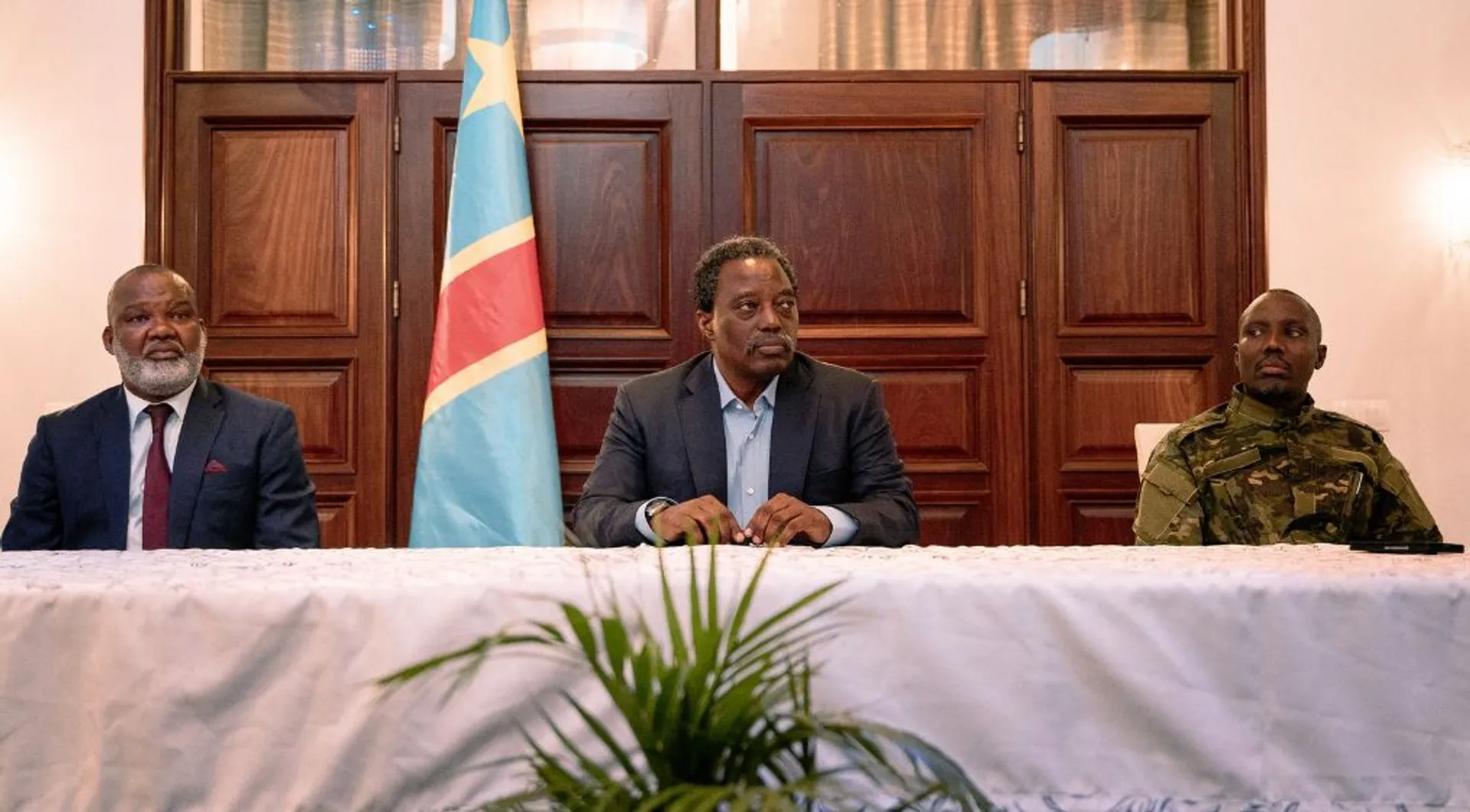
The Democratic Republic of the Congo (DRC) has released 15 prisoners and handed them over to rebels from ⁠the Congo River Alliance/March 23 movement (AFC/M23) in the east of the country.

The release was announced by the International Committee of the Red Cross (ICRC), which facilitated this first known transfer of prisoners under last year’s Qatar-mediated deal to end the fighting in the region.

Recommended Stories

list of 3 itemsend of list

The handover happened on Thursday and Friday after months of talks thrashing out the names of detainees to be freed.

An ICRC statement said the 15 prisoners agreed to be transferred before leaving the government-held eastern Congolese city of Beni in a convoy on Thursday evening.

The journey continued through Uganda before the convoy arrived in Rutshuru Territory in DRC’s North Kivu province, where the prisoners were ⁠⁠handed over to AFC/M23 on Friday, the statement added.

M23 seized the regional capitals in North and South Kivu from the Congolese government’s control in early 2025.

Stephanie Eller, head of ICRC operations in the capital ‌Kinshasa, said she hoped the transfer would pave the way for more releases.

“We hope that this ⁠operation will help bring relief ⁠to families who have been separated from their loved ones for a long time,” Eller said.

The release of detainees was one of the conditions in the Qatari-mediated agreement signed by the Congolese government and AFC/M23 in September.

Qatar welcomed the releases on Friday.

“The release of the detained persons represents an important step towards enhancing confidence between the parties and creating favourable conditions for further progress towards reaching peaceful and sustainable solutions,” Qatar’s Ministry of Foreign Affairs said in a statement.

It added that Qatar “expresses its hope that this step will serve as an impetus for further measures that enhance confidence-building between the parties and meet the aspirations of the Congolese people for peace, development and prosperity”.

DRC, the United Nations and Western powers have repeatedly accused neighbouring Rwanda of supporting the M23 with its ‌own ‌troops and weapons as the armed group has advanced in the east, a charge Rwanda denies.

Source link

Uganda football star Owori killed, weeks after death of rugby’s Gongodyo | Football News

SC Villa captain and Ugandan international David Owori was found unconscious by passers-by, but later pronounced dead.

Uganda international ‌David Owori, captain of one of the country’s ⁠biggest football clubs, ⁠has died after an assault in the capital Kampala, police said.

The 28-year-old, who was captain of Uganda’s record-breaking champions SC Villa, was ⁠critically injured by unidentified assailants in a suburb of Kampala on Tuesday, police spokesperson Racheal Kawala said.

Recommended Stories

list of 4 itemsend of list

His death comes only weeks after the killing of Rugby international Sydney Gongodyo in the Ugandan capital.

Owori was found unconscious ⁠by passers-by, who took him to a nearby hospital. He was transferred to another hospital where he was later pronounced dead, Kawala said.

“David was not just a footballer. He was both a leader ‌and an inspiration to a generation. As Captain of SC Villa, he led with courage, humility and passion. In the Uganda Cranes jersey, he carried the hopes of a nation,” the Federation of Uganda Football Associations said in a statement.

Crime is rampant in the capital of the East ⁠African country and many Ugandans expressed outrage ⁠at his death on X. They also condemned what some said was the inability of the authorities to tackle crime.

Owori’s death follows that of Gongodyo’s, who in June died after he was assaulted by a ⁠mob in Kampala after he was apparently ⁠mistaken for a thief, according to police.

“Sadly, Ugandan sport has been hit with many such tragedies lately, and we hope for justice and a lasting solution,” ‌the state-run National Council of Sports Uganda said.

Deputy Speaker Thomas Tayebwa asked authorities to address the wider security challenges in ‌the ‌country, according to a statement on parliament’s website.

SC Villa extended a 20-year wait for the Uganda league title last season, when Owori lifted the trophy as captain.

It was their record-extending 17th Uganda league crown.

Source link

Detained Ugandan opposition leader Besigye in intensive care, wife says | Politics News

Kizza Besigye, who faces treason charges, is reported to be ‘unconscious’ in hospital after collapsing in court.

Detained Ugandan opposition leader Kizza Besigye has been hospitalised in an unresponsive state after he collapsed during a court hearing on Wednesday, according to his wife.

Besigye, who has been in prison since late 2024 on treason charges, is now “unconscious, unable to speak, and unresponsive”, his wife, Winnie Byanyima, said in a post on X on Thursday.

Recommended Stories

list of 3 itemsend of list

He has been admitted to the intensive care unit at Mulago National Referral Hospital in the capital, Kampala, added Winnie Byanyima, who also ‌heads the United Nations AIDS programme UNAIDS.

Byanyima has called for her husband to be transferred out of Mulago hospital, a public facility, and into a private facility where he can be treated by his personal physician.

“[Besigye’s] family is saying he needs special treatment and they do not trust the government hospital,” reported Al Jazeera’s Catherine Soi from Nairobi in neighbouring Kenya.

“There’s a lot of frustration. The court has not granted that permission for him to be transferred.”

‘Not responding to anything’

Besigye, 70, was seen falling into the dock during his Wednesday courtroom session while protesting against his trial without lawyers of his own choosing, after authorities also detained and charged his main lawyer, Erias Lukwago.

“Before he collapsed, he cried out that he was being injured,” said Byanyima.

Ingrid Turinawe, a close confidant of Besigye, told The Associated Press that she and others were not allowed to see Besigye at Mulago hospital.

“He is in the ICU, and he is not responding to anything,” she said, adding that Besigye’s personal physician was able to see him several hours after he collapsed.

Besigye, a former ally-turned-critic of longtime President Yoweri ‌Museveni, has been in custody since November 2024. He was jailed together with his aide Obeid Lutale in Kenya and ⁠both were repatriated to Uganda where they were subsequently charged with treason.

Besigye’s lawyers, ⁠supporters and rights activists say ⁠that the charges are politically motivated and that his prolonged detention is part of an ongoing crackdown on opponents by ‌Museveni.

Both Museveni and his son, military chief Muhoozi Kainerugaba, have already weighed in against Besigye.

Kainerugaba, alleging that Besigye plotted to kill his father, has previously described the opposition figure as “a dead man walking”. And Museveni himself has said Besigye must answer for “the very serious offences he is alleged to have been planning”.

In recent days, prosecutors have moved to present evidence they say will prove Besigye and others plotted to overthrow the government

Museveni, 81, was declared winner of the last election in January although the results were rejected by ‌runner-up ‌Bobi Wine, who has since gone into exile in the United States.

Source link

Uganda declares itself Ebola-free as virus spreads in DRC

Uganda on Tuesday declared itself Ebola-free on Tuesday as the virus spreads through the Democratic Republic of Congo. File Photo Marie Jeanne Munyerenkana/EPA

July 29 (UPI) — Uganda has declared itself Ebola-free, as the virus continues to spread in neighboring the Democratic Republic of Congo.

Uganda’s Foreign Ministry made the declaration Tuesday, saying Uganda discharged its last confirmed Ebola patient on June 16.

“The declaration follows the successful completion of all outbreak response measures and confirms that there has been no further transmission of the virus,” the ministry said in a statement.

Uganda declared an Ebola outbreak on May 15, after infected individuals crossed into Uganda from the DRC.

A total of 20 people were infected in Uganda’s outbreak, including 15 Congolese nationals and five Ugandans — four health workers and a driver. Two patients died from the virus, according to ministry statistics.

Despite the declaration, the ministry said the risk of Ebola importation remains high due to the ongoing outbreak in the DRC.

Minister Chris Baryomunsi urged residents online to remain alert and continue to observe health measures.

“We shall continue to support our brothers and sisters in DRC to contain the Ebola disease there,” he said.

The outbreak that affected Uganda and remains ongoing in the DRC is caused by the Bundibugyo virus, with the first suspected case reported involving a DRC health worker on April 24. The health worker later died.

There is no approved vaccine for the Bundibugyo virus.

According to the World Health Organization, there were 3,262 cases and 1,437 deaths to the outbreak, making it the largest outbreak caused by the Bundibugyo virus to date.

The United Nations health agency said the outbreak in the DRC continued to “intensify” with sustained transmission, increasing mortality and ongoing geographic spread within the country.

“Although no new cases have been reported outside the Democratic Republic of the Congo, persistent transmission in areas connected by major national and cross-border mobility corridors continues to sustain a high risk of regional spread,” the WHO said earlier this week.

Source link

Uganda declares end to Ebola outbreak | Ebola News

Health minister urges people in the country ‘to remain alert’ and continue observing public health measures.

Authorities in Uganda have declared the country free of Ebola, as infections from the viral haemorrhagic disease continue to surge in neighbouring Democratic Republic of the Congo (DRC).

Ugandan Health ⁠Minister Chris Baryomunsi on Tuesday announced the “successful completion ⁠of the mandatory 42-day monitoring period which begun after the discharge of the last Ugandan national, a locally transmitted patient, on the 16 of June, 2026”.

“Throughout this ⁠period the Ministry of Health maintained intensive surveillance nationwide, and no new Ebola cases have been detected,” Baryomunsi said.

In a later statement on social media, Baryomunsi urged Ugandans “to remain alert” and continue observing public health measures.

Of the 20 confirmed ⁠cases, 18 were discharged while two died from the viral haemorrhagic disease, both of whom ⁠were from the DRC, where a much larger outbreak has been under way since mid-May.

According to the Congolese Ministry of Health, there have been at least 3,262 infections in the DRC, with 1,437 people killed. This is nearly the same as the 2018-2020 outbreak that is the largest ever recorded in the country.

The World Health Organization says the latest Ebola outbreak is the fastest spreading ever recorded, and that its true scale could be two to four times larger than reported data.

The virus strain spreading in the DRC is Bundibugyo, which is the rarest of the four variants of Ebola known to affect humans and currently has no approved vaccines or treatments.

Ebola is a viral haemorrhagic disease that can cause fever, vomiting, diarrhoea and internal bleeding. It spreads through direct contact with the bodily fluids of people who are sick with the virus or who have died from it.

Source link

Israel’s approval of limited Gaza force a calculated manoeuvre, experts say | Benjamin Netanyahu News

Months after the United Nations Security Council backed a comprehensive framework to end Israel’s genocidal war on Gaza, Israel’s security cabinet has approved a highly constrained pilot project to allow foreign security forces into a narrow pocket of the devastated territory.

Israeli media reported on Sunday that the so-called International Stabilization Force (ISF), part of United States President Donald Trump’s 20-point “peace plan”, will include 200 members from countries such as Morocco and Uganda deploying to a designated “test” zone in the southern city of Rafah.

While international officials have welcomed the move, analysts describe the limited deployment as a calculated diplomatic gesture with little practical effect that comes as the US-backed peace process has largely stalled and as Israel’s deadly attacks continue.

Instead of a genuine transition towards peace, they argue, the move is a political manoeuvre designed to deflect US pressure ahead of Prime Minister Benjamin Netanyahu’s visit to Washington this week, while simultaneously entrenching the geographic fragmentation of the Gaza Strip.

“Netanyahu is going to Washington to say ‘no’ to the broader demands of withdrawal” from the Strip, says Wissam Afifa, a Gaza-based political analyst. “Instead, he is offering this alternative: ‘Take this small appetiser, take this minor achievement, and play within this highly restricted space.’”

Scaled-back forces and ‘rubber batons’

The Israeli daily Haaretz reported that the original plan anticipated the deployment of 500 Moroccan troops to a refugee camp in the city. The drastic reduction to just 200 troops may indicate that Israel’s political-security cabinet has decided to divide the deployment into even smaller, heavily controlled stages.

The force will operate in full coordination with the Israeli military. According to the Israeli news outlet Ynet, National Security Minister Itamar Ben-Gvir was the sole cabinet member to vote against the measure, arguing that the Palestinian group Hamas had failed to fulfill its commitment to disarm and insisting that “the solution in Gaza is to encourage migration”.

Israeli media also reported that the government maintains that the Israeli military will retain control of the “Yellow Line” – a unilaterally imposed boundary that effectively places up to 70 percent of the Gaza Strip under tight Israeli control – and that no withdrawal will take place until Hamas has fully disarmed.

The original framework endorsed by UNSC Resolution 2803 called for the deployment of an international force alongside a transitional Palestinian administration.

Earlier this month, Hamas announced it would dissolve its government in Gaza and hand over power to a new, Palestinian technocratic governing authority called the National Committee for the Administration of Gaza (NCAG).

Analysts said Hamas’s move was likely designed to apply pressure on Israel and demonstrate the group’s commitment to handing over governance and allowing the rebuilding of the territory.

The pilot programme also envisions the NCAG’s entry to oversee civil affairs in Gaza. Yet, according to Haaretz, the Palestinian police accompanying them will be stripped of firearms, permitted to carry only “rubber batons and tasers”.

Meanwhile, preparations on the ground appear to be moving forward to accommodate this new security architecture. Israeli Army Radio recently broadcast a video showing a military base under construction in the southern “Gaza envelope” near the Karem Abu Salem (Kerem Shalom) crossing.

The station reported that the sprawling facility is being built specifically to host the incoming multinational forces before their deployment.

Despite the severe Israeli restrictions, Nickolay Mladenov, the high representative for the Board of Peace, welcomed the Israeli cabinet’s decision, praising it as a “critical part of the agreed framework for stabilizing Gaza, supporting demilitarization, and enabling the transition to effective Palestinian transitional administration”.

A ‘sweetener’ for Washington

To understand the timing and motivation behind the decision, experts pointed to the diplomatic deadlock surrounding the US-brokered peace initiative. Trump’s plan envisioned a phased approach, bridged by the handover of Gaza to a technocratic committee. However, this framework has been stalled by Israel’s refusal to link a ceasefire to the broader political situation and its rejection of a phased withdrawal.

Afifa said the “failure” of the US administration’s flagship initiative had left it “embarrassed” as the project that was repeatedly highlighted by Trump “as a great achievement, resulted in zero”.

With Netanyahu heading to Washington, the Israeli prime minister desperately needed a deliverable, said Afifa. The cabinet’s decision, passed hastily via a telephone vote during a Knesset recess to avoid internal coalition fractures, provides exactly that, he added.

Mamoun Abu Amer, an expert on Israeli affairs, echoed this assessment. He viewed the rushed cabinet vote as an attempt to preempt US pressure and present an image of compliance to Trump, while fundamentally altering the agreement’s core terms to suit Israel’s long-term security strategy.

Abu Amer also said that Israel has effectively turned Resolution 2803 upside down through selective and highly conditional implementation.

“This is an inverted process,” said Abu Amer. The original text implied that the NCAG would enter Gaza, the ISF would deploy and the Israeli military would withdraw to new lines to allow for stabilisation. Instead, Israel is demanding unilateral disarmament first, while keeping the technocratic committee besieged within an Israeli security envelope.

Abu Amer also suggested the requirement for the Palestinian police force to only carry rubber batons and tasers reflects a premeditated Israeli strategy to strip the Palestinian administration of genuine law enforcement capabilities, reducing them to subcontractors managing municipal decay in a thoroughly devastated environment under a strict military occupation.

The NCAG itself appeared to reject this Israeli paradigm. In a recent statement, the committee declared it would only assume responsibility for Gaza after UNSC approval of the force’s deployment and, crucially, a full Israeli military withdrawal.

‘False witnesses’

The spatial realities of the Israeli plan reveal a strategy of deep fragmentation and long-term control, experts said, pointing to the cabinet’s decision to explicitly restrict the ISF and the technocrats to operating strictly outside the “Yellow Line”.

Afifa warned that transforming a small pocket of Rafah into an “experimental bubble” subverts the idea of Gaza as a single, contiguous territorial entity.

“This raises a massive question about the fate of two million people,” he said. “If this entire project is reduced to a few thousand individuals selected under Israeli criteria, it means a tacit agreement from the international community to leave two million Gazans hostage to a catastrophic humanitarian crisis while Israel claims to be implementing a peace plan.”

This also carries significant diplomatic risks for the participating nations. Israeli media reported the cabinet’s decision stipulated that ISF contributors must be nations that have peace agreements with Israel and do not pursue legal actions against it in international forums.

“It is not wise for an Arab country like Morocco to be a party to helping Netanyahu implement his political agenda,” said Abu Amer, urging participating nations to reject the altered Israeli formula and insist on a comprehensive withdrawal.

Failing to do so, he cautioned, would reduce foreign troops to mere security buffers, acting as “false witnesses” to the continuation of the occupation and the destruction of the Palestinian society.

Source link

Nearly 1,000 people have died from Ebola in DR Congo | Ebola News

According to WHO figures, 999 people have died in DRC and two in Uganda due to the Bundibugyo strain of the virus.

Nearly 1,000 people have died from Ebola in the Democratic Republic of the Congo (DRC), the country’s health ministry says.

DRC’s National Institute of Public Health said on Wednesday that 999 deaths have been confirmed since the outbreak of the Bundibugyo strain of the virus began in May.

Recommended Stories

list of 3 itemsend of list

According to the World Health Organization (WHO), two people have also died from the virus in neighbouring Uganda.

DRC’s Health Ministry said that as of Monday, 2,473 cases had been recorded in the latest outbreak. At least 737 patients are currently in isolation and hospitals, it added.

The DRC outbreak was declared on May 15 after several deaths were recorded in the northeastern province of Ituri, where cases remain concentrated. Several cases linked to the DRC’s outbreak were then reported in Uganda.

This outbreak has killed more people at a quicker rate than any Ebola outbreak on record, including the 2013-2016 outbreak that is considered the worst on record with over 11,000 deaths out of at least 28,000 cases. That outbreak took about eight months to reach 1,000 deaths.

Last week, WHO chief Tedros Adhanom Ghebreyesus warned that the current outbreak had over the past month “expanded faster than any previous outbreak” of the virus.

Cases of Ebola, which spread through close contact and infected bodily fluids, have also been found in other Congolese provinces outside of Ituri.

‘We must act now’

The WHO’s incident manager for the Bundibugyo strain, Thierno Balde, told reporters on Tuesday that despite plans to ramp up responses to the virus, “the outbreak remains ahead of us and we are still in a phase of catching up”.

Currently, there are no approved vaccines or treatment for the Bundibugyo strain.

Separately, on Tuesday, the head of Africa’s Centres for Disease Control and Prevention (Africa CDC) also said the outbreak was “escalating at an alarming pace”.

“We must act now. If we do not stop it today, this will become the worst outbreak the world has ever documented,” Africa CDC Director-General Jean Kaseya said in a post on X.

“This is not the time for delay. We must mobilise every available resource, strengthen the response on the ground and stop this outbreak before more lives are lost.”

Kaseya also separately told a conference on Tuesday that he had written to US Health Secretary Robert F Kennedy Jr and asked him to lift Ebola-related travel restrictions on Uganda since the country has not reported any new infections in about a month.

Uganda’s last Ebola patient was discharged on July 16, beginning a 42-day countdown after which it can be declared free of the virus, according to WHO guidelines.

But the US is restricting entry for all travellers who were recently in DRC and some travellers who recently visited Uganda or South Sudan.

Source link

Ebola spreading more quickly in DRC, while Uganda is close to being virus-free | Ebola News

Uganda ⁠discharges last-remaining patient, as WHO says Ebola has ‘expanded faster than any previous outbreak’ in DRC.

The World Health Organization (WHO) has warned that Ebola is spreading in the Democratic Republic of Congo more quickly than in any previous outbreak.

WHO chief Tedros Adhanom Ghebreyesus told reporters on Thursday that the Ebola outbreak in the DRC in 2018-2020 “took more than 10 months to reach 2,000 confirmed cases”. But this time more than 2,000 cases were confirmed in only two months, including 796 deaths.

Recommended Stories

list of 4 itemsend of list

“It is now the third-largest Ebola outbreak on record,” Tedros said. “In the past month, it has expanded faster than any previous outbreak.”

The DRC reported 62 new cases on Thursday, increasing its total number of confirmed infections to 2,073, though the ⁠⁠WHO has said the ⁠⁠true tally could be at least double that.

The DRC’s 17th Ebola outbreak was declared on May 15 after several deaths in Ituri, the mineral-rich northeastern province patrolled by several armed groups.

Cases of Ebola, which spreads through close contact and infected bodily fluids, have so far been found in five DRC provinces and neighbouring Uganda, though the vast majority are in Ituri.

The WHO chief highlighted that over 80 percent of new cases were being detected “outside known contact lists, showing that transmission chains are still being missed”.

He added that 377 people have recovered from Ebola in the DRC, “showing that with early diagnosis and safe care, this disease can be survived and stopped”.

To compound problems in Ituri, healthcare workers began a strike and blocked the entrance to Bunia General Hospital on Wednesday. Staff said they had not received any compensation for their work since the outbreak began, despite working under extremely difficult conditions.

In Uganda, things were looking up as its last remaining Ebola patient was discharged on Thursday, starting a 42-day countdown after which it can ⁠⁠be declared Ebola-free, said the East African nation’s health ministry.

Uganda had 20 cases of the rare Bundibugyo strain of Ebola since mid-May. Fifteen were people infected in the DRC who then travelled to Uganda.

Unlike the surging number of infections in DRC, Uganda has not reported a new case since June 22 .

“Today, Uganda has discharged the last Ebola patient, a Congolese national who has successfully recovered and [is] ⁠⁠ready to be with his family,” Uganda’s health ministry posted on X.

“Uganda starts ‌‌counting down. If 42 days pass without a single new case, WHO guidelines stipulate ‌‌that we will be declared Ebola-free.”

Source link

Saving shea: How a Ugandan woman is turning waste into clean energy | News

Alebtong, Uganda – When Lucy Everlyn Atim returned home after six years working as a child rights activist in South Sudan’s refugee settlements, her favourite shea tree was gone.

Known locally as moyao, the tree had shaped her childhood. Every morning, she and her friends gathered beneath its branches to eat its sweet, creamy fruit before walking to school.

Its disappearance was not an isolated loss. Across northern Uganda, many more shea trees had been cut down for charcoal.

“I got concerned,” Atim, now in her mid-thirties and a climate activist, told Al Jazeera.

“The destruction of shea trees is alarming. These trees need to be protected, but people also need an alternative source of fuel.”

Uganda loses an estimated 122,000 hectares of forest each year, largely to charcoal production and logging. With about 90 percent of households relying on charcoal for cooking, indigenous species such as shea and Afzelia africana continue to disappear.

Research by Makerere University found that mature shea tree populations on fallow land fell from about 20 trees in 2008 to between 10 and 15 by 2017.

“There is still scant data on the declining shea tree population in northern Uganda,” Dr Patrick Byakagaba, the Makerere University environmental researcher who led the study, told Al Jazeera.

“More needs to be done to determine their density, sapling survival and regeneration.”

Tracking the decline is difficult, he said, because charcoal producers often uproot entire trees, leaving no stumps behind to count.

While working in South Sudan, Atim met a woman in Yida making fuel briquettes from discarded shea husks.

“I got curious. I knew this was something that could be replicated back home,” she recalled.

In 2023, she founded Moyao Africa Initiative, a social enterprise that turns shea waste into fuel briquettes, while helping women earn a living from processing shea butter.

The initiative employs six staff and works with more than 1,200 women organised in savings groups to collect shea waste, produce briquettes and process butter.

“In most households, women carry the burden of finding cooking fuel. By training them to make and sell briquettes and shea butter, we’re creating an income while providing an affordable alternative to charcoal,” she said.

Learning fuel

On a hot afternoon in Alebtong, 15 women sit on woven mats attending a training session led by Moyao Africa Initiative.

They are chairpersons of savings groups from across the district, learning to turn discarded shea husks into cooking fuel.

When the trainer asks about the process, the women answer almost in unison: collect the husks, crush them, mix them with clay and cassava flour, mould them, dry them and store them.

A hand moulded shea briquette. Photo by John Okot.
A shea briquette moulded into a ball [John Okot/Al Jazeera]

The lesson soon moves from theory to practice. Some women pound dried shea husks in wooden mortars while others dig up clay soil. Nearby, another group stirs thick cassava paste, the binder that holds the mixture together before it is pressed into moulds and left to dry in the sun.

Among them is Catherine Akello, chairperson of the Oteno Moyao Africa Women’s Group in Abwoc village.

Before joining the initiative, Akello valued only the shea kernels, which she processed into butter for her family. The husks were thrown away.

Now they have become a source of fuel.

“I don’t have to worry about buying charcoal whenever I want to cook because I make my own briquettes from shea husks,” Akello, a 47-year-old mother of five, told Al Jazeera.

“As a group, we’re also able to save money from the products we sell, and that helps us support our families when emergencies arise,” she said.

Demand is growing, but production remains limited by the seasonal shea harvest.

To meet it, Atim is saving to buy a carboniser, crusher and briquette-making machine costing about $530. The equipment would allow the initiative to process more shea waste and produce briquettes throughout the year.

“Our plan is to increase shea butter production from 600 litres to 6,000 litres. That means more shea husks and, in turn, more briquettes. It will help us meet demand even when raw materials are scarce,” she said.

Shared future

Renewable energy expert Bosco Odyek told Al Jazeera that turning shea husks into briquettes offers a practical alternative to charcoal by putting waste material to use.

Using a carboniser, he says, would produce cleaner-burning, smokeless briquettes that burn more efficiently.

Some women mould briquettes made from shea husks into different shapes. Photo by John Okot.
Moulding briquettes made from shea husks into different shapes [John Okot/Al Jazeera]

Beyond fuel production, Moyao Africa Initiative runs environmental clubs in 20 schools across Alebtong District and works with the National Agricultural Research Organisation (NARO) to distribute tree seedlings, encouraging communities to restore the landscape.

Paul Mwirichia, a humanitarian and development expert, told Al Jazeera that such initiatives are important but access to clean energy remains beyond the reach of many rural households.

“We have very good policies,” he said.

“The challenge is implementation. Government needs to support indigenous organisations like Atim’s because they understand the problems affecting their communities, and people trust them to address those challenges.”

For Atim, the work is about saving the tree that shaped her childhood.

The shea tree is gone, but she hopes turning discarded husks into fuel will mean fewer trees are cut down and more women can earn a living from keeping them standing.

“We are leaving no one behind.”

Source link

Nigeria sees no sign that anti-immigrant violence is waning in South Africa | News

South Africa’s government has been accused of not doing enough to crack down on xenophobic attacks.

The safety of African immigrants in South Africa is deteriorating, Nigeria’s foreign minister has warned, after two Nigerians were killed in disputed circumstances during anti-immigrant protests.

“There are no signs that the situation is improving,” Bianca Odumegwu-Ojukwu said on Monday, while announcing more evacuation flights.

Recommended Stories

list of 3 itemsend of list

The minister demanded South African authorities investigate the deaths of two Nigerians, Musa Yunana Joe and Charles Iroegbu, killed amid “the ongoing xenophobic protests and attacks on migrants”.

South African police said Joe’s killing did not appear to be related to the protests, but could not immediately comment on Iroegbu’s death.

Nigeria’s foreign ministry says Joe was killed in front of his shop in the northeastern city of ⁠⁠eMalahleni by unidentified criminals on June 28 , while Iroegbu was killed by South African police during interrogation in Pretoria on the same day.

In a statement on Sunday, the ministry said: “We wish to place the Government of South Africa on ‌‌notice that if the situation continues to persist, all options remain on the table, some of which will be activated if the uncultured and provocative trend of intolerance… against foreigners is not addressed”.

South African foreign ministry spokesman Chrispin Phiri said the government had asked Nigeria’s High Commission to submit “any actionable information to our law enforcement authorities, which will enable a thorough, objective investigation in accordance with the rule of law”.

Weeks of anti-immigrant marches

There have been weeks of protests against undocumented migrants, with many South Africans blaming workers from other African countries for taking their jobs and putting a strain on their social services.

South Africa’s government has been accused of not doing enough to crack down on the violence, which has claimed the lives of several foreigners and seen shops owned by immigrants looted and torched.

Mozambique said that five of its citizens were killed in xenophobic attacks in late May. South Africa ⁠⁠said the number was only two.

Ghana and South Africa were embroiled in a diplomatic row last week, following the killing of a Ghanaian national. The South African government said the death of Bashiru Isak was not linked to anti-immigrant protests.

Hundreds of Nigerians, among tens of thousands of foreigners, have already left South Africa, once a popular destination for documented and undocumented African immigrants due to its relatively strong economy.

Uganda’s High Commission in Pretoria announced on Monday that a fourth group of Ugandan nationals were voluntarily repatriating.

South Africa has had a longstanding violent crime problem that precedes the outbreak of xenophobic violence.

Source link

Uganda media shutdown sparks talks to reopen outlets

Negotiations are underway to reopen several Ugandan media outlets after the military ordered their closure, intensifying concerns over press freedom and political interference in the country’s media landscape. The shutdown, which targeted newspapers, television and radio stations owned by Kenya’s Nation Media Group, has drawn international criticism from human rights organisations and foreign lawmakers, adding to scrutiny of Uganda’s record on civil liberties.

The closures were ordered by Uganda’s military chief, Muhoozi Kainerugaba, who said the outlets would remain shut without his approval but did not publicly explain the reasons for the decision.

The military’s decision forced several leading newspapers, television channels and radio stations to suspend operations, with security personnel preventing staff from accessing their offices. The disruption has affected one of East Africa’s largest independent media organisations and raised concerns over the military’s growing influence over civilian institutions.

Nation Media Group has confirmed that discussions are taking place with military authorities to restore operations. While negotiations are continuing at multiple levels, employees remain locked out of company premises, underscoring the uncertainty surrounding the timeline for resuming normal broadcasting and publishing activities.

Stay ahead of the geopolitical week.

MD Briefing delivers expert analysis across five global fronts — the Indo-Pacific, energy, geoeconomics, European security, and the Middle East — every Monday morning. Free.

International criticism intensifies over press freedom

The shutdown has prompted strong condemnation from human rights organisations, which argue the move represents another attempt to suppress independent journalism. International observers have warned that restricting media operations undermines freedom of expression and weakens democratic accountability in Uganda.

Political spotlight falls on Muhoozi Kainerugaba

The incident has further focused attention on military chief Muhoozi Kainerugaba, who has increasingly become a controversial political figure through his public statements and actions. Widely viewed as a potential successor to President Yoweri Museveni, Kainerugaba has faced repeated criticism over his treatment of political opponents, civil society groups and independent media.

Diplomatic pressure adds to domestic scrutiny

The media shutdown has also attracted international political attention, with senior US lawmakers calling for a review of Washington’s security relationship with Uganda. The episode risks increasing diplomatic pressure on Kampala over governance, human rights and the role of the military in restricting fundamental freedoms.

Future Outlook

The immediate focus will be on whether negotiations lead to the reopening of the affected media outlets and the restoration of normal operations. Beyond the current dispute, the incident is likely to intensify domestic and international scrutiny of Uganda’s commitment to press freedom, with potential implications for its diplomatic relationships, human rights record and political environment ahead of future leadership transitions.

With information from Reuters.

Source link

Uganda’s military chief orders shutdown of two media outlets | News

The president’s son said he did not believe in a free press as military personnel were deployed to the media offices.

The chief of Uganda’s military says he has ordered the closure of two of the country’s biggest media outlets.

Muhoozi Kainerugaba said on Sunday that the Daily Monitor, the country’s largest independent daily newspaper, and NTV Uganda, one of the largest private broadcasters, were being shut down and would not reopen without his permission.

“In Uganda, I do not believe in a free press!” Kainerugaba, who is the president’s son, wrote on X.

“From now on ALL bad stories about Uganda have to be cleared by my office!” he said in one of a series of posts, adding that all media in Uganda would follow the rules, going forward.

Military personnel deployed

Both the Daily Monitor and NTV Uganda are owned by the Nation Media Group (NMG) conglomerate. The Daily Monitor said armed security personnel were outside NMG Uganda’s headquarters in Namuwongo, Kampala and its Serena Hotel location, with staff reporting “no one was being allowed to enter or leave.”

NTV Uganda, Spark TV and other TV and radio broadcasters owned by NMG were down in the country on Sunday, the Reuters news agency reported.

According to Kainerugaba, he has had the power to shut down any media outlet since 2017, when his father, President Yoweri Museveni, granted him this ability.

Kainerugaba is seen as the likely successor to his father, who has ruled Uganda since 1986 and is also known to write controversial social media posts.

His government shut down the Daily Monitor for 10 days in 2013, and in 2007, NTV Uganda was taken off air months after its launch, following government criticism of its coverage.

The Uganda People’s Defence Forces (UPDF), Uganda Police Force and Uganda Communications Commission (UCC) are yet to release a statement on the operation.

Uganda’s National Association of Broadcasters said it was closely monitoring the situation, adding that it was “deeply concerned about this action and its impact on the media ecosystem” and the rights enshrined in the constitution.

Source link

More than 70 medics infected with Ebola as DRC outbreak spreads ‘fast’ | Ebola News

Aid cuts and poor sanitation are deepening fears that Ebola is spreading through displacement camps.

Seventeen medics have died from Ebola in the Democratic Republic of the Congo (DRC) as the death toll surpasses 200 in an outbreak tearing through a health system already weakened by years of conflict, displacement and chronic underfunding.

A senior World Health Organization (WHO) official confirmed the death toll on Friday and said that 75 healthcare workers had contracted the virus since Congolese authorities declared the outbreak on May 15 .

Recommended Stories

list of 3 itemsend of list

“The outbreak remains serious” and is “evolving so fast”, said WHO emergency director Marie Roseline Belizaire.

“It is a really high price that the system, the healthcare system, is paying, because we don’t have enough of healthcare workers in DRC,” she told reporters by video link from the outbreak epicentre in eastern DRC.

Health officials believe the rare Bundibugyo strain of Ebola had been spreading for months before the government formally announced the outbreak, leaving doctors, nurses and other medical staff exposed before they knew the virus was present.

Even now, basic protective equipment remains in short supply, with some facilities struggling to secure gloves, masks and other essentials needed to limit infection.

The DRC has one of the world’s lowest ratios of healthcare workers to population, with about 11 health workers for every 10,000 people, according to WHO data. Belizaire said China and Uganda were sending medical teams to support the response.

She added that the WHO was providing psychological support to medics who feared treating patients after seeing colleagues fall sick.

“When they are explaining to you how they live it, how they were infected … [it] can break your heart.”

Outbreak yet to reach its peak

Congolese authorities said on Thursday that the outbreak has killed 232 people and infected 896 others across 31 health zones in the country.

African Union member states have pledged nearly $1bn to respond to the emergency in eastern DRC and neighbouring Uganda, which has confirmed 19 cases and two deaths.

Health officials warn that the outbreak has not yet reached its peak.

The crisis is also raising alarm in camps for displaced people, where overcrowding, poor sanitation and resistance to testing could allow the virus to spread undetected.

At least 30 people have died since early May in Kigonze camp in Bunia in Ituri province, the epicentre of the outbreak. Camp officials described the death rate as unprecedented.

Authorities could not confirm the causes of death because patients and relatives had refused testing of both the living and the dead until Thursday, according to a camp spokesperson and aid organisation Caritas.

But witnesses and aid sources told Reuters that the dead had symptoms linked to Ebola, including headaches, fever and vomiting.

“People didn’t just die like this before,” camp spokesperson Desire Grodya Bapi told Reuters.

Kigonze is home to more than 15,000 people. The rising number of deaths there has increased fears that Ebola may be spreading among the more than five million displaced people in eastern DRC.

Aid workers say funding cuts have made the emergency more dangerous. Donors, including the United States under President Donald Trump, have reduced support for water, hygiene, and sanitation programmes, which are vital in fighting the disease spread through bodily fluids.

UN data shows funding for toilets and handwashing stations in DRC more than halved between 2024 and 2025, falling to about $38m. This year’s $80m appeal is only 21 percent funded.

DRC has hundreds of displacement camps, some housing up to 100,000 people. Ebola deaths have already been recorded in another camp in Ituri province, which accounts for more than 90 percent of nearly 900 confirmed cases.

Source link

Ebola outbreak in DR Congo could become worst in history, Africa CDC warns | Ebola News

The ⁠number of confirmed cases in ⁠the country has ​increased to 837, including 196 deaths.

The current Ebola outbreak in the Democratic Republic of Congo (DRC) could become deadlier than the worst outbreak on record, which killed more than 11,000 people, says the head of Africa’s Centres for Disease Control and Prevention (Africa CDC).

⁠The ⁠number of confirmed cases in ⁠the country has increased to 837, including 196 deaths, ‌government data showed on Tuesday.

Recommended Stories

list of 3 itemsend of list

“If we don’t stop the outbreak very soon, it will be worse than what we had in West Africa and eastern DRC,” Africa CDC Director-General Jean Kaseya said during a virtual meeting of African leaders and international donors in Burundi on Tuesday.

Speaking to Al Jazeera, Kaseya said tens of thousands of people who may have been exposed to Ebola had not yet been traced or contacted.

“The contact tracing is a major indicator and a major issue. We are missing more than 26,000 people, and we don’t know where they are, and we don’t know if they are contaminating other people.”

A ⁠Red Cross official said that the epidemic had not yet peaked in the country.

“We ⁠are afraid that this could last one year to end this disease,” Bruno Michon, operations manager for the International Federation of Red Cross and Red Crescent Societies, said.

The response has been hampered by a lack of treatment centres and by community resistance to stringent hygiene measures. Health officials said that, more than a month since ⁠the outbreak was declared, the true scale was still unknown.

The bodies of ⁠Ebola victims are highly infectious after death, and unsafe traditional burials – in which family members handle ⁠the body without proper protective equipment – are a leading driver of transmission.

So far, the continent has raised less than a fifth of the $518 million it is seeking to bolster measures to contain the outbreak, according to Burundi’s President Evariste Ndayishimiye, who also chairs the African Union.

The shortfall has raised concern among authorities, who fear the consequences could be devastating if the virus is not brought under control quickly.

There is no approved treatment or vaccine for this strain of Ebola. The World Health Organization (WHO) says it could take up to nine months for a vaccine to be ready.

Neighbouring Uganda has recorded 19 cases, 14 of them among people who had travelled from the DRC. The country has also reported two deaths.

Source link

Wednesday 3 June Martyrs’ Day in Uganda

From the start of his reign in 1884, King Mwanga had viewed foreign missionaries as the greatest threat to his kingdom and power base. He expelled missionaries and threatened converts to renounce their new faith or face execution.

In total, 23 Anglican and 22 Catholic converts to Christianity were executed between January 31st 1885 and January 27th 1887. On June 3rd 1886, 32 young men were burned to death at Namugongo for their refusal to renounce Christianity. They were a combination of Anglican and Catholic converts.

Mwanga’s actions led to a British backed revolution which overthrew the King in 1888. Mwanga negotiated with the British and in exchange for handing over some of his sovereignty to the British East Africa Company, the British helped reinstate Mwanga to the throne in 1889. After a further spate of double-crossing, he was finally deposed in 1897. While in exile he was converted to an Anglican.

There are Catholic and Anglian shrines to the Martyrs’ close to each other in Namugongo. Each year Martyrs Day attracts millions of pilgrims to the area with many coming from beyond Uganda.

The Catholic Church beatified the 22 Catholic martyrs in 1920 and canonized them as Saints of the universal Church in 1964.

In 2015, Pope Francis visited Namugongo, where he celebrated Holy Mass. Before the Mass, Pope Francis paid homage to the Anglican martyrs at the Anglican shrine.

Women bear the brunt of DRC’s Ebola outbreak | Ebola News

NewsFeed

Women in eastern Democratic Republic of the Congo are disproportionately impacted by Ebola as shortages of protective gear amid funding cuts accelerate the spread of disease. Al Jazeera’s Imogen Kimber reports how these caregivers to the living and the dead are most at risk.

Source link