Trump strikes deal with Putin for Russian diesel
WASHINGTON — President Trump said that he has struck a deal to obtain diesel from Russia, a stunning reversal of years of U.S. pressure on Moscow over its war with Ukraine and an attempt to address high fuel prices ahead of the U.S. midterm elections.
Trump said on social media on Friday that he struck the deal with Russian President Vladimir Putin in a phone call in which he was expected to discuss a suspected case of plague in Russia. Instead, Trump announced that Russia will immediately supply more than 300,000 tons of diesel, followed by an additional 500,000 tons in November and 1 million tons “immediately thereafter.” Russia will deliver another 3 million tons “within a short period of time” after that, he wrote.
Trump’s shocking announcement comes after he signed a sweeping Russia sanctions law last month that aimed at clamping down on Russia’s energy economy, among other areas, that fuel its war against Ukraine.
His move casts doubt on the likelihood of the White House imposing sanctions on Russia this month, given that a bipartisan law passed by Congress directs the administration to target the top importers of Russian oil and gas.
Trump, in his announcement, did not address the sanctions or Russia’s war but said, “Lower prices for Americans, especially our Great Farmers, Ranchers, and Truckers, is my Greatest Priority.”
The White House did not immediately respond to questions about who was paying for the diesel from Russia and when the fuel being supplied under the agreement would become available. It also did not clarify whether subsequent supplies of Russian diesel set to come next month would be supplied prior to Election Day on Nov. 3.
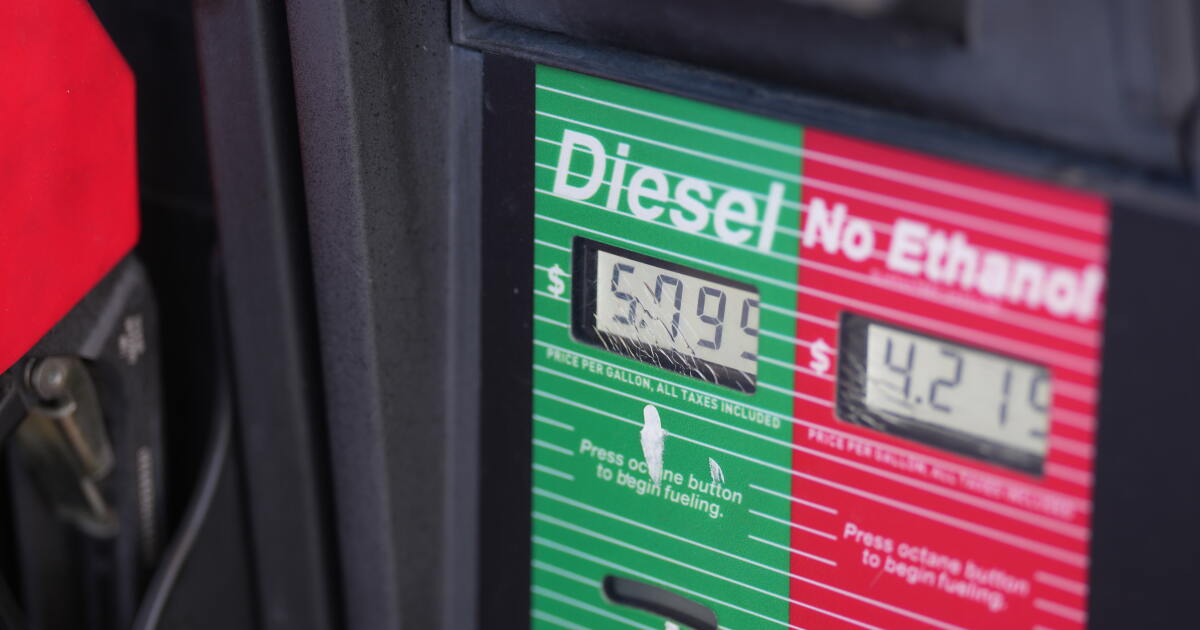
Gas prices globally have surged as the war in Iran upends the energy sector. The national average for a gallon of diesel in the U.S. was $6.23 on Friday, according to AAA, after hitting a record $6.52 on Sept. 22.
Russian presidential envoy Kirill Dmitriev reposted the Treasury Department’s announcement on X Friday and said that “Russia-US cooperation on diesel and energy will benefit the world.”
Rep. Don Beyer, the senior House Democrat on the Joint Economic Committee, called Trump’s announcement, “infuriating.”
“This is what we warned anyone who would listen: Trump isn’t the slightest bit trustworthy when it comes to Russia,” Beyer said in a statement on X. “Giving him expanded tariff powers in hopes he would use them to help Ukraine was a mistake. Now he’s lifting sanctions on Russian fossil fuels.”
The law Trump signed last month envisions sanctions on Russian officials, banks and a shadow fleet of tankers and bans all new U.S. investment in Russia and the handling of sovereign debt.
It also directed Trump to impose tariffs of up to 100% on the top five importers of Russian oil or natural gas, with an exception for countries that import less than 15% of Russia’s natural gas exports and have taken significant steps to reduce those imports.
The U.S. has not imported Russian oil or gas since 2022, when the Biden administration banned them because of Moscow’s invasion of Ukraine, according to the U.S. Energy Information Administration.
Shortly after Trump made the announcement, the Treasury Department said it was immediately issuing a temporary license allowing Russian diesel to be supplied to the global market.
This is the latest in several licenses the U.S. Treasury has issued regarding Russian fuel shipments since the start of the Iran war earlier this year. But it is the first such license to ease sanctions on diesel for a period lasting longer than the standard 30-day window since the start of the Ukraine war.
The new so-called general license means U.S. sanctions will not apply until April 2027 on deliveries of Russian diesel that has been loaded onto tankers as of Friday. The department extended similar easing of sanctions in March and April even though Treasury Secretary Scott Bessent had ruled out such a move earlier in the year.
The extensions continue to underscore how the fallout from the Iran war has boosted Moscow’s ability to profit from its energy exports, which had been restrained by the U.S. and other allies since the invasion of Ukraine.
Price and Binkley write for the Associated Press. AP writer Will Weissert in Washington and Farnoush Amiri in New York contributed to this report.