U.S.Iran

Oil price plunges back below $100 on hopes of U.S.-Iran peace deal

A gas station in South Africa displays the latest prices for petrol and diesel after they hit a record high on Wednesday despite global oil prices plunging back below $100 a barrel on hopes of a deal to end the war in Iran. Photo by Kim Ludbrook/EPA

May 6 (UPI) — Global oil prices fell sharply and financial markets rallied Wednesday after U.S. President Donald Trump paused a military operation to reopen the Hormuz Strait to commercial shipping to give advanced peace talks with Iran a chance to deliver “a complete and final deal.”

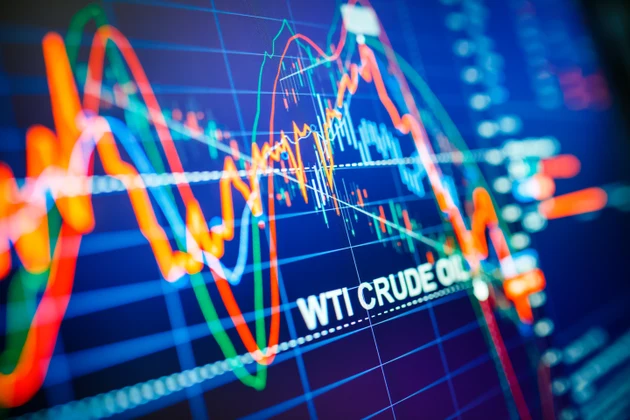
Falls in Brent crude of more than $10 a barrel to $99, American crude by $13 to $92 a barrel and rallies in Asian stock markets overnight that fed into Europe when bourses opened there failed to feed through to U.S. gas prices, which jumped 5 cents a gallon to their highest level of the war.

AAA motor club figures showed a national average of $4.54 for a gallon of petrol and $5.67 for diesel, meaning drivers were paying 53% and 51% more than before the war started on Feb. 28, with the caveat that fuel price adjustments normally lag crude oil price movements by several days.

The White House believes a draft one-page, 14-point memorandum of understanding to end the war and create a structure for more in-depth nuclear talks could succeed in breaking the deadlock, two U.S. officials and two other sources said.

An Iranian foreign ministry spokesman confirmed to CNBC that Iran was in receipt of the U.S. proposal and was “evaluating it.”

The Trump administration anticipates Iran will give its response with regard to the most critical elements of the plan in the next two days and although nothing has been finalized it was being seen as significant because it was the closest the sides had been to a deal since the beginning of the war.

However, Trump also appeared ambivalent, saying Wednesday it was “perhaps” too big of a stretch to believe Iran would take the deal and threatening to order the U.S. military to restart its airborne offensive against the country if it didn’t.

Analysts said investor confidence was boosted mainly by the fact the cease-fire was holding and signs that the economy was nowhere near as badly affected by the war as feared.

“This helped oil prices to come back down again and ease fears about a renewed escalation, with investors a bit more hopeful that an extended stagflationary shock would be avoided,” Deutsche Bank wrote in a note.

It added that investor confidence was also bolstered by new U.S. economic data showing among other positive indicators, that job vacancies declined less than anticipated in March, saying the numbers “cemented the case that the conflict’s wider economic impact was still fairly muted.”

“This helped oil prices to come back down again and ease fears about a renewed escalation, with investors a bit more hopeful that an extended stagflationary shock would be avoided,” they added.

Hopes were also riding on the possibility China would prevail on visiting Iranian foreign minister Abbas Araghchi to persuade Iran to uphold the current truce with the United States, so as not to throw a wrench into Trump’s visit to Beijing on May 14, the first by any U.S. president in almost a decade.

China is one of Iran’s largest customers for its oil exports.

President Donald Trump speaks before signing a proclamation inside the Oval Office at The White House on Tuesday. The memorandum is set to restore the Presidential Fitness Test Award, a competitive school-based fitness program last seen under the Obama administration. Photo by Tom Brenner/UPI | License Photo

Source link

U.S. gas prices hit new high as U.S.-Iran diplomatic deadlock continues

Gasoline prices per gallon are displayed at a BP service station on Sunday in Washington, D.C. Average gas prices throughout the United States hit a new high Tuesday, AAA numbers said. Photo by Pat Benic/UPI | License Photo

April 28 (UPI) — Average gas prices in the United States hit $4.18 on Tuesday, their highest level since the Iran conflict started, as peace talks between the country and Iran stalled again over proposals on reopening the Strait of Hormuz.

The price jump of 1.6% over Monday’s price was the highest increase in more than a month, The New York Times reported. AAA numbers show that the average price for a gallon of regular gas marks an increase from $4.11 on Monday and $3.98 a month ago.

The price is the highest since April 2022, soon after the Russia-Ukraine conflict started, and about a 40% increase for drivers since the Iran conflict began. Diesel prices are at $5.46, up about 45% in that time.

Meanwhile, officials from the United States and Iran appear at an impasse over reopening the strait and an Iranian proposal to postpone discussion of that country’s nuclear program, something that President Donald Trump has said he will not agree to, USA Today reported. The conflict, as of midday Tuesday, is in a ceasefire, but both countries continue to limit shipping in the region and face off over the Strait of Hormuz.

Trump on Tuesday posted on Truth Social in an apparent response to German Chancellor Friedrich Merz’s comments Monday criticizing the conflict. Merz said in comments to students that he hopes the conflict ends soon and that United States is being “humiliated” by Iranian leaders, USA Today reported.

“He doesn’t know what he’s talking about!” Trump wrote. “If Iran had a Nuclear Weapon, the whole World would be held hostage. I am doing something with Iran, right now, that other Nations, or Presidents, should have done long ago.”

A missile identified as “Khorramshahr-4” was on display during a public rally in Tehran’s Enghelab Square on April 21, 2026. Photo by Behnam Tofighi/UPI | License Photo

Source link

As U.S.-Iran ceasefire deadline nears, uncertainty hangs over possible talks

Last-minute ceasefire talks between the United States and Iran looked uncertain Tuesday as a two-week truce was set to expire and both countries warned that, without a deal, they were prepared to resume fighting.

U.S. Vice President JD Vance, expected to lead U.S. negotiators if talks continue in Pakistan, remained in Washington on Tuesday, a White House official said. And Pakistan, which has been urging both sides to return to Islamabad, said it was still awaiting confirmation on whether Iran would participate.

Earlier in the day, two regional officials said Washington and Tehran had signaled they would hold a second round of talks, with Vance leading the U.S. team and Iranian parliament speaker Mohammad Bagher Qalibaf as its top negotiator. Both spoke on condition of anonymity because they were not authorized to brief reporters.

But Pakistan’s information minister, Attaullah Tarar, said later Tuesday on X that Iran had not formally confirmed its participation, which was set to expire Wednesday.

Vance had policy meetings scheduled at the White House on Wednesday morning, said a White House official who was not authorized to speak publicly and spoke on condition of anonymity. The vice president’s office and the White House did not immediately respond to messages asking whether Vance still intends to travel to Pakistan.

Trump says he doesn’t favor extending ceasefire

Both sides remain dug in rhetorically. President Trump has warned that “lots of bombs” will “start going off” if there’s no agreement before the ceasefire deadline, and Iran’s chief negotiator said that Tehran has “new cards on the battlefield” that haven’t yet been revealed.

The ceasefire, which began April 8, could be extended if talks resume, though Trump said in an interview Tuesday with CNBC: “Well, I don’t want to do that.”

“We don’t have that much time,” Trump said, adding that Iran “had a choice” and “they have to negotiate.”

White House officials have said that Vance would lead the American delegation, but Iran hasn’t said who it might send. Iranian state television on Tuesday broadcast a message saying that “no delegation from Iran has visited Islamabad … so far.”

U.S. says its forces board sanctioned oil tanker

On Tuesday, the U.S. said its forces boarded an oil tanker previously sanctioned for smuggling Iranian crude oil in Asia. The Pentagon said in a social media post that U.S. forces boarded the M/T Tifani “without incident.”

The U.S. military did not say where the vessel had been boarded, though ship-tracking data showed the Tifani in the Indian Ocean between Sri Lanka and Indonesia on Tuesday. The Pentagon statement added that “international waters are not a refuge for sanctioned vessels.”

The U.S. military on Sunday seized an Iranian container ship, the first interception under a blockade of Iranian ports. Iran’s joint military command called the armed boarding an act of piracy and a violation of the ceasefire.

Strait of Hormuz control key to negotiations

The U.S. imposed the blockade to pressure Tehran into ending its stranglehold on the Strait of Hormuz, a key shipping lane through which 20% of the world’s natural gas and crude oil transits in peacetime.

Iran’s grip on the strait has sent oil prices soaring. Brent crude, the international standard, was trading at close to $95 per barrel on Tuesday, up more than 30% from Feb. 28, the day that Israel and the U.S. attacked Iran to start the war.

Before the war began, the Strait of Hormuz had been fully open to international shipping. Trump has demanded that vessels again be allowed to transit unimpeded.

European Union transportation ministers were meeting Tuesday in Brussels to discuss how to protect consumers after the head of the International Energy Agency warned that Europe has “ maybe six weeks ” of jet fuel supplies remaining.

Over the weekend, Iran said that it had received new proposals from Washington, but also suggested that a wide gap remains between the sides. Issues that derailed the last round of negotiations included Iran’s nuclear enrichment program, its regional proxies and the strait.

Qalibaf on Tuesday accused the United States of wanting Iran to surrender.

“We do not accept negotiations under the shadow of threats,” he wrote in an X post.

Pakistan hopeful talks will proceed

Pakistani officials have expressed confidence that Iran will also send a delegation to resume talks that mark the highest-level negotiations between the U.S. and Iran since the 1979 Islamic Revolution. The first round April 11 and 12 ended without an agreement.

Pakistan said Foreign Minister Ishaq Dar met Tuesday with the acting U.S. ambassador in Islamabad to urge a ceasefire extension. Dar also met with the ambassador from China, a key trading partner with Iran.

Security has been tightened across Pakistan’s capital, where authorities have deployed thousands of personnel and increased patrols along routes leading to the airport.

Israel jails soldiers for defacing Jesus statue in Lebanon

Israel’s military said Tuesday it has sentenced two soldiers to 30 days in jail and removed them from combat duty for smashing a statue of Jesus Christ in Lebanon. Images of an Israeli soldier with a sledgehammer smashing the statue’s head emerged over the weekend, bringing widespread condemnation.

Israel said one of the soldiers being punished hammered the statue to the ground. The other filmed the destruction. The Israeli military said it replaced the statue.

Meanwhile, historic diplomatic talks between Israel and Lebanon were set to resume on Thursday in Washington, an Israeli, a Lebanese and a U.S. official said. All three spoke on condition of anonymity to discuss the behind-the-scenes negotiations.

The Israeli and Lebanese ambassadors met last week for the first direct diplomatic talks in decades. Israel says the talks are aimed at disarming Hezbollah and reaching a peace agreement with Lebanon.

A 10-day ceasefire began on Friday in Lebanon, where fighting between Israel and Iranian-backed Hezbollah militants broke out two days after the U.S. and Israel launched joint strikes on Iran to start the war. Fighting in Lebanon has killed more than 2,290 people.

Since the war started, at least 3,375 people have been killed in Iran, according to authorities. Additionally, 23 people have died in Israel and more than a dozen in Gulf Arab states. Fifteen Israeli soldiers in Lebanon and 13 U.S. service members throughout the region have been killed.

Ahmed, Gambrell and Bynum write for the Associated Press. Gambrell reported from Dubai, and Bynum reported from Savannah Ga. AP journalists Michelle Price, Aamer Madhani and Darlene Superville in Washington; Samy Magdy in Cairo; David Rising and Huizhong Wu in Bangkok; Sam McNeil in Brussels; Julia Frankel in New York; Bill Barrow in Atlanta and Russ Bynum in Savannah, Ga., contributed to this report.

Source link