u. s. immigration

ICE acting director Todd Lyons will resign at end of May, DHS says

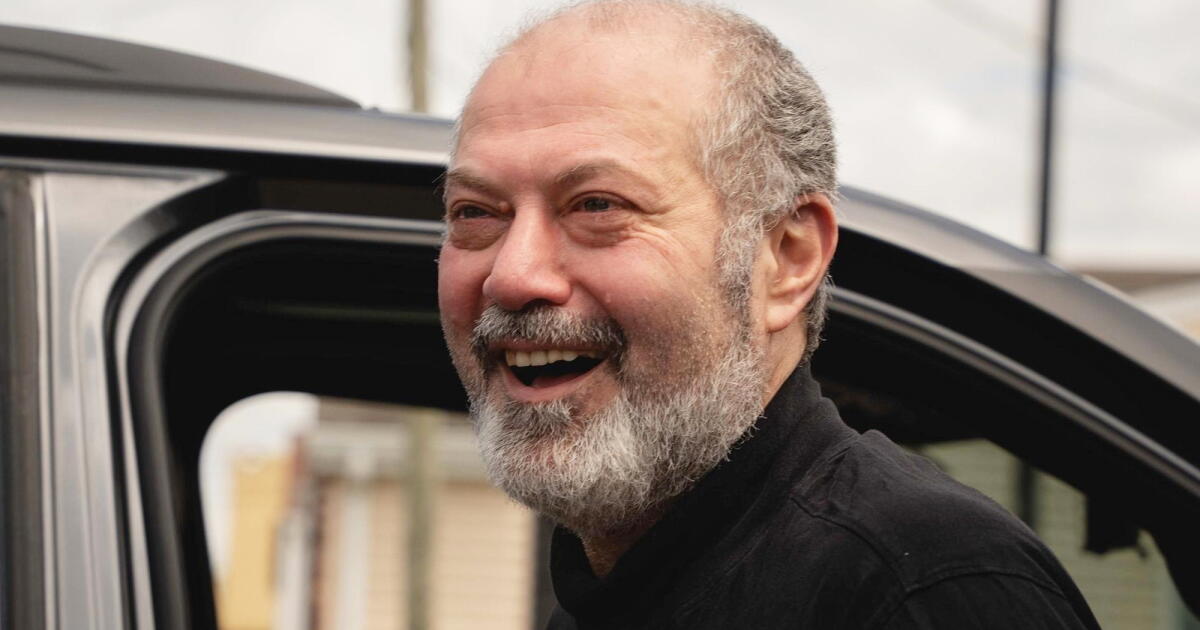
U.S. Immigration and Customs Enforcement acting director Todd Lyons, a key executor of President Trump’s mass deportations agenda, will resign at the end of May, federal officials announced Thursday.

Homeland Security Secretary Markwayne Mullin announced Lyons’ departure, calling him a great leader of ICE who helped to make American communities safer. Mullin said Lyons’ last day will be May 31.

“We wish him luck on his next opportunity in the private sector,” Mullin said in a statement. The Department of Homeland Security did not immediately respond to an email from the Associated Press asking why he is resigning.

Lyons, who was named acting director in March 2025, led the agency at the center of President Trump’s plans to reshape immigration to the U.S.

Under his leadership, the agency was granted a massive infusion of cash through Congress, which it used to expand hiring and detention capabilities, and it ramped up arrests to meet demand from the administration.

ICE was also central to a series of high-profile immigration enforcement operations in American cities, including Chicago and Minneapolis, a deployment that ended after backlash erupted over the deaths of two American protesters at the hands of federal immigration officers.

Stephen Miller, the president’s deputy chief of staff and the main architect of his immigration policy, called Lyons a “dedicated leader.”

“His courageous work at ICE has saved countless thousands of American lives and helped deliver safety and tranquility to millions of Americans,” Miller said in a statement.

White House spokesperson Abigail Jackson described Lyons in a post on X as “an American patriot who made our country safer.”

It’s not clear who might replace Lyons. But whoever does will take over an agency flush with cash while still a flashpoint for controversy. ICE is at the center of a battle in Congress, with Democratic lawmakers demanding restraints on immigration officers before agreeing to restore routine funding for DHS.

On Thursday, Lyons, along with two other top immigration officials, appeared before a House subcommittee to argue for his agency’s budget and faced continued scrutiny from lawmakers of ICE’s actions.

Lyons’ departure also comes as DHS is under new leadership after Trump fired former Secretary Kristi Noem, who led the department through the administration’s major immigration policy changes.

Mullin, who took over as secretary last month, is likely to continue to advance the president’s agenda but has struck a softer tone on some of the administration’s most contentious policies.

Public perceptions of ICE during Lyons’ tenure were low. In a February AP-NORC poll, most U.S. adults, including independents, said they have an unfavorable view of the agency.

Lyons faced questions in Congress over the shooting deaths of Renee Good and Alex Pretti and was asked if he would apologize for the way some Trump administration officials characterized Good as an agitator. He declined to do so.

“I welcome the opportunity to speak to the family in private. But I’m not going to comment on any active investigation,” Lyons said.

Lyons said he had seen video that captured Pretti’s shooting but said he could not comment, citing an active investigation.

Lyons, who joined ICE in 2007 as an immigration enforcement agent in Texas, signed off on a memo, first obtained by the Associated Press, that granted federal immigration officers sweeping powers to forcibly enter homes and make arrests without a judge’s warrant.

Trump’s border advisor Tom Homan described Lyons as serving selflessly and “a highly respected and effective acting Director of ICE.”

Goldenberg and Golden write for the Associated Press. Golden reported from Seattle.

Source link

France’s foreign minister says 85-year-old widow detained by ICE returns home

French Foreign Minister Jean-Noël Barrot said an 85-year-old French widow of an American military veteran who was in immigration custody in the United States returned home on Friday.

U.S. Immigration and Customs Enforcement agents detained Marie-Thérèse Ross in Alabama on April 1 after she overstayed her 90-day visa, according to the U.S. Department of Homeland Security.

“She returned to France this morning, this is a satisfaction for us,” Barrot told reporters during a visit to the southern city of Montpellier on Friday.

Barrot said he would not comment on the specific case, but said some of ICE methods are “not in line” with French standards and “not acceptable to us.” Barrot referred to “violence that raised our concerns,” without elaborating.

Ross was being held at a federal immigration detention facility in Louisiana.

She was among the thousands of people targeted by the Trump administration’s mass deportation agenda that has detained the spouses of U.S. soldiers and military veterans who previously received greater leniency under scrapped policies.

Ross married Alabama resident William Ross in April last year, Calhoun County marriage records show. Ross died in January, according to an obituary from his family, which says he was a former captain in the U.S. Army.

Source link

U.S. still wants to deport Kilmar Abrego Garcia to Liberia, despite new agreement with Costa Rica

U.S. government attorneys on Tuesday told a federal judge the Department of Homeland Security still intends to deport Kilmar Abrego Garcia to Liberia, despite a new agreement with Costa Rica to accept deportees who cannot legally be returned to their home countries.

The Salvadoran national’s case has become a focal point in the immigration debate after he was mistakenly deported to El Salvador last year. Since his return, he has been fighting a second deportation to a series of African countries proposed by Homeland Security officials.

U.S. District Judge Paula Xinis, of Maryland, previously barred U.S. Immigration and Customs Enforcement from deporting him or detaining him. She has written that the agency has no viable plan to actually deport Abrego Garcia, referring in February to “one empty threat after another to remove him to countries in Africa with no real chance of success.”

Abrego Garcia has argued that if he is going to be deported, it should be to Costa Rica, which previously agreed to accept him. But Todd Lyons, the acting head of U.S. Customs and Immigration Enforcement, said in a March memo that deporting Abrego Garcia to Costa Rica would be “prejudicial to the United States.” Abrego Garcia should be sent to Liberia because the U.S. has spent government resources and political capital negotiating with the West African nation to accept third-country nationals, Lyons wrote.

At a Tuesday hearing in Xinis’ court, Ernesto Molina, director of the Department of Justice’s Office of Immigration Litigation, suggested that Abrego Garcia could “remove himself” to Costa Rica.

Xinis pointed out that the Justice Department is prosecuting him in Tennessee on human smuggling charges. She called it a “fantasy” to say that he can remove himself anywhere while the criminal case is pending. Xinis set a schedule for a briefing on the matter and scheduled a new hearing for April 28.

Abrego Garcia, 30, has an American wife and child and has lived in Maryland for years, but he immigrated to the U.S. illegally as a teenager. In 2019, an immigration judge ruled that he could not be deported to El Salvador because he faced danger there from a gang that had threatened his family. By mistake, he was deported there anyway last year.

Facing public pressure and a court order, President Trump’s administration brought him back in June, but only after securing an indictment charging him with human smuggling in Tennessee. He has pleaded not guilty and asked the judge to dismiss that case.

Loller writes for the Associated Press.

Source link

As Europe seeks to increase deportations, some see signs of Trump-like tactics

The European Union is expanding its powers to track, raid and deport migrants to “return hubs” in third countries in Africa and elsewhere, quietly adopting tactics of the Trump administration that have drawn public criticism across the 27-nation bloc.

The EU continues to tighten migration policies after right-wing parties took power in some countries in 2024. European Commission President Ursula von der Leyen, from the center-right European People’s Party coalition, has said that the new measures will prevent a repeat of the 2015 crisis caused by Syria’s civil war, when about 1 million people arrived to seek asylum.

“We have learned the lessons of the past. And today, we are better equipped,” Von der Leyen has said. The new policies, known as the Pact on Migration and Asylum, go into effect June 12.

Far-right parties in Europe have praised the deportation policies of President Trump and called for the EU to adopt a similar approach. Human rights groups warn that authorities are already illegally blocking migrants at EU borders and hollowing out their legal protections.

Italy provides a model

The EU already spends millions of dollars to deter migrants before they reach its shores, and has supported tens of thousands of Africans returning home, voluntarily or by force.

What’s envisioned now is an expansion of what Italy has created under Prime Minister Giorgia Meloni and her “tough on migration” stance. It operates two migrant detention centers for rejected asylum seekers in Albania. One currently holds at least 90 migrants, said lawmaker Rachele Scarpa, who said that she found people confused and scared during a recent visit.

In addition, Meloni’s Cabinet has approved an anti-immigration package that would allow the navy to halt vessels in international waters for up to six months if they are deemed a threat to public order, return intercepted migrants to countries of origin or third countries and speed up the deportation of foreign nationals convicted of crimes.

An “informal group” of EU nations including Germany, Austria, the Netherlands, Denmark and Greece are pursuing deportation center agreements, said Bernd Parusel, a researcher at the Swedish Institute for European Policy Studies.

Kenya is one country they are speaking with, said Tineke Strik, a Dutch member of the European Parliament. Whether consciously or not, the plan is similar to Trump’s deals with nations like El Salvador to take in deported migrants, she said.

Other countries are exploring similar ideas. Sweden’s migration minister has said the conservative ruling coalition approves setting up hubs outside Europe, especially for Afghan and Syrian asylum seekers.

Competing views

During the recent Winter Olympics in Italy, protests erupted over the deployment of U.S. Immigration and Customs Enforcement agents to provide security to the U.S. delegation. But others in Europe have praised ICE’s actions in Trump’s deportation campaign and called for setting up similar deportation-focused police units.

In 2024, Belgium passed a law allowing the EU border service Frontex to operate in the country, stoking fears among activists that it could join in on raids.

But Frontex’s mandate covers only borders, said spokesperson Chris Borowski, and the current role in voluntary or involuntary returns for the service includes “coordinating flights, helping with travel documents and making sure fundamental rights are respected throughout the process.”

The European Commission has declined requests to take a position on U.S. immigration policies.

In Britain, which left the EU several years ago, the center-left Labor Party government has made curbing unauthorized immigration a key focus.

In February, the Home Office said that almost 60,000 people had been deported since the government was elected in July 2024. It said 9,000 arrests were made of people working without permission in 2025, up by more than half from the year before.

Raids, surveillance and ‘pushbacks’

Under the principle of non-refoulement in EU and international law, a person can’t be returned to a country where they would face persecution.

But European immigration enforcement tactics include so-called pushbacks, where people trying to cross into the EU are forced back across a border without access to asylum procedures.

Authorities in Europe carry out an average of 221 pushbacks a day, according to a February report by a group of humanitarian organizations. More than 80,000 pushbacks were recorded in 2025, the report said, mostly in Italy, Poland, Bulgaria and Latvia.

“Men, women and children — including individuals in critical medical condition — are routinely subjected to beatings, attacks by police dogs, forced stripping, forced river crossings and theft of personal belongings,” according to the report.

European agents are brutalizing migrants just like in the U.S., said Flor Didden, migration policy expert at the Belgian human rights group 11.11.11. Some, like in Greece, even wear masks, as ICE agents typically do.

“The images are shocking and the outrage is justified,” he said of the U.S. “But where is that same moral clarity when European border authorities abuse, rob and let people die?”

Weakening of migrant protections seen

The groups also have recorded an expansion of surveillance technology like drones, thermal cameras and satellites to monitor people on the move.

Other human rights groups warn of a weakening of legal protections.

The EU’s new migration regulations allow for more police raids in private homes and public spaces and more use of surveillance and racial profiling, said a letter to EU institutions in February from 88 nonprofit groups including the Brussels-based Platform for International Cooperation on Undocumented Migrants.

“We cannot be outraged by ICE in the United States while also supporting these practices in Europe,” said the platform’s director, Michele LeVoy.

Olivia Sundberg Diez, EU migration advocate for Amnesty International, said Europe retains more protections for vulnerable migrants than the United States does but shares much of the political momentum toward harsher policies.

“There’s a level of institutions’ and courts’ independence and human rights compliance in Europe that you can’t disregard,” she said. “But the fundamental political impulse is the same, and I worry that the human consequences will be the same.”

McNeil and Zampano write for the Associated Press and reported from Brussels and Rome, respectively. AP writers Elena Becatoros in Athens, Jill Lawless in London, Paolo Santalucia in Rome, Claudia Ciobanu in Warsaw and Kirsten Grieshaber in Berlin contributed to this report.

Source link