FCC will vote on lifting TV ownership cap next month
TV station ownership groups may finally get their wish to own more outlets.
Federal Communications Commission Chairman Brendan Carr announced Wednesday that the agency will vote next month to end the rule that allows companies to own no more than two TV stations in a single market. The cap also limits the national coverage of any station owner to 39% limit of the U.S.
Carr said the agency will consider a “case by case” review on station merger and acquisition deals that would result in exceeding the current limits. The commission, which has two Republicans and one Democrat, will vote on Aug. 6.
“Previously, the cap operated as a blanket prohibition on any and all deals that would combine stations in [excess] of the 39% limit — regardless of whether it was a good deal or bad deal for the country,” Carr wrote on the right-wing website Breitbart. “Our new proposal would allow the FCC to approve deals that exceed the 39% cap, but only if doing so would promote the public interest.”
TV station owners and its lobbying group the National Assn. of Broadcasters have been clamoring for a change in the rule, citing the changes in technology that have occurred since the ownership limit. The 39% threshold was set in 2004 when streaming video was still a nascent business.
The station groups say the ability of tech companies such as Google and Netflix to reach every consumer in the U.S. puts them at a disadvantage. At the same time, streaming now accounts for more than 40% of all viewing, according to Nielsen, pulling consumers away from traditional TV. TV stations are also seeing their share of carriage fees from cable and satellite companies shrink due to cord-cutting.
The station groups also argue that declining viewership and revenue make it more challenging to support multiple local TV.news operations in a single market.
But proposed changes to the cap limits have been met with push back from consumer groups and state government officials. They have said station consolidation will result in journalist layoffs and fewer voices for the communities they serve.
Earlier this year, a group of attorneys general filed suit to block Nexstar Media Group’s proposed $6.2-billion acquisition of Tegna, arguing it violates a 112-year-old U.S. antitrust law by knocking out a major competitor. The deal would give Irving, Texas-based Nexstar control of 265 television stations across the country, up from 164. And, in dozens of markets, including San Diego and Sacramento, Nexstar would own multiple TV network affiliates.
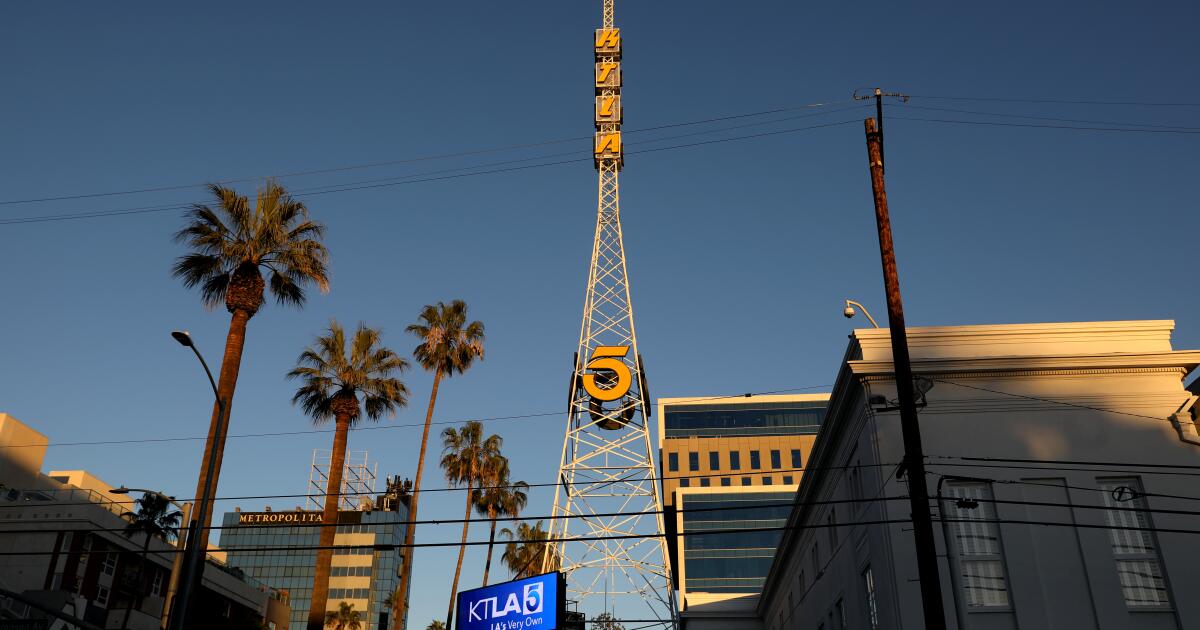
U.S. District Court Chief Judge Troy L. Nunley issued a preliminary injunction in April that forbids Nexstar — which owns KTLA-TV Channel 5 in Los Angeles — and Tegna, from combining operations. Nexstar is appealing.
Carr’s proposal would largely put the FCC in charge of picking winners and losers on a case-by-case basis.
When faced with a merger proposal, Carr said the commission would consider such issues as commitment to local journalism and “viewpoint diversity.”
Carr has made his name by threatening to pull the over-the-air broadcast licenses of TV stations that irritate President Trump with their coverage and commentary.
In April, the FCC called for an early review of the licenses for Disney’s eight broadcast TV stations, a day after Trump demanded that ABC fire late-night host Jimmy Kimmel over a joke about First Lady Melania Trump.
Carr also questioned whether ABC’s daytime show “The View,” where negative Trump commentary is rampant, should qualify as a bona fide news program that is exempt from giving equal time to qualified candidates.
Carr’s Breitbart column also reiterated his view that large media companies such as Disney and NBCUniversal parent Comcast hold too much sway over their affiliates.
“New York and Hollywood interests have steamrolled those local TV stations and the broader media market in recent years in ways that run directly counter to the regulatory framework that Congress and the FCC put in place,” he wrote. “Their national programs naturally reflect the values of the New York and Hollywood executives that produce them. This power imbalance has contributed to a steady decline in locally produced news — and with it, a weakening of the public’s trust in the media.”
How owning more stations would give groups leverage in their dealings with networks is unclear. The networks control the rights to the NFL — the No. 1 TV ratings attraction for broadcast television by a mile. Stations pay the networks compensation for those games, which they use when negotiating the carriage fees they receive from cable and satellite companies.
Times staff writer Meg James contributed to this report.