Tunisia

Tunisia floods disrupt capital as heavy rain traps motorists and residents | Climate News

Recurring floods disrupt daily life in Tunis, raising questions about drainage, transport and flood preparedness.

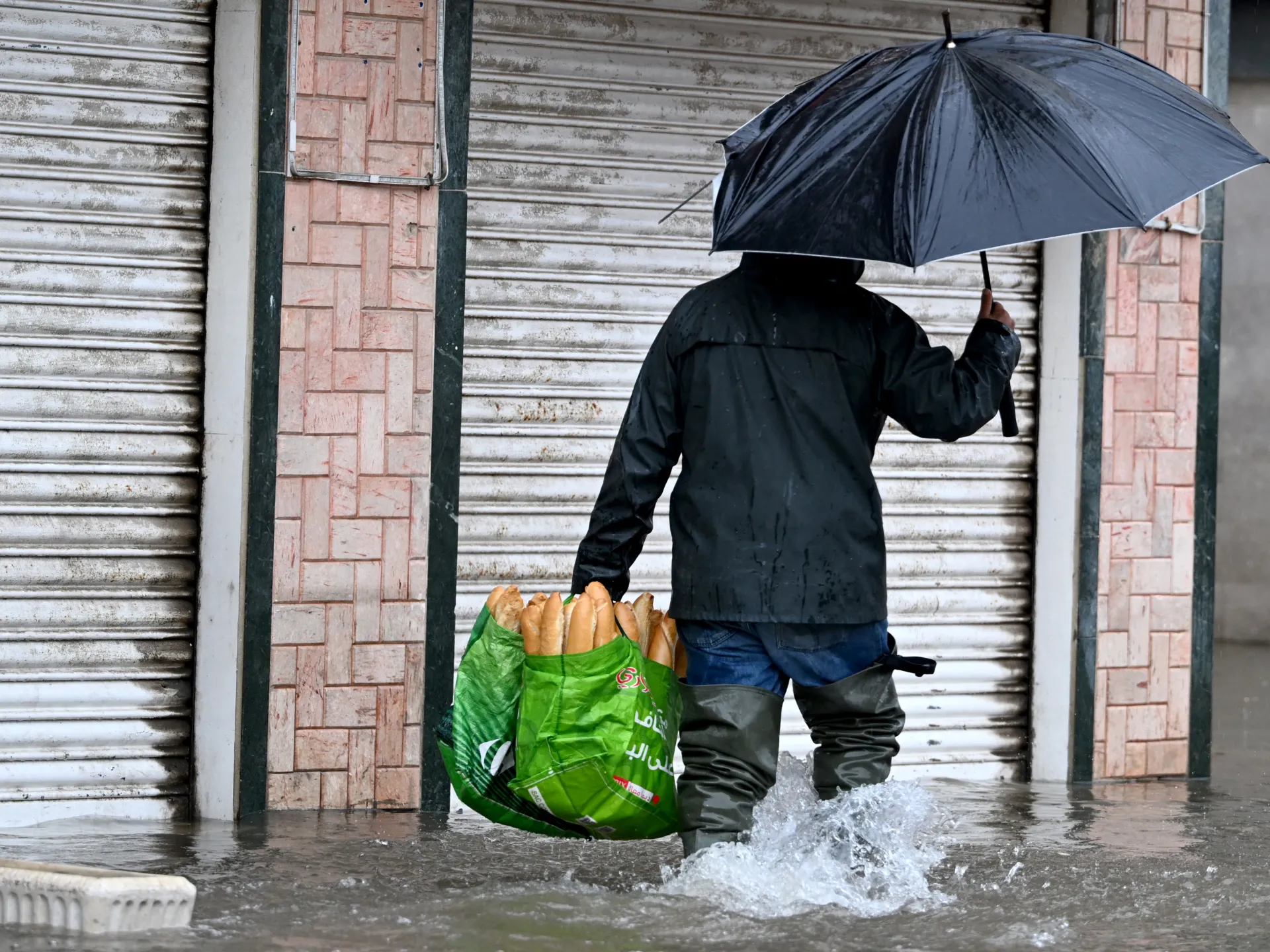
Tunis, Tunisia – Heavy rain brought parts of Tunisia’s capital to a standstill on Thursday, flooding roads and homes, trapping people in cars and disrupting electricity and internet services.

Home to nearly three million people, the Greater Tunis region has faced repeated flooding in recent years. Thursday’s flooding came only months after severe January rains caused widespread disruption across the capital and other parts of the country, leaving several people dead and causing significant damage.

Weather warnings had been issued in advance, but the decision to suspend classes in Tunis was announced only shortly before it took effect. Parents rushed to schools to collect their children as the rain intensified and traffic backed up across the capital.

Videos shared online showed flooded streets, cars stranded in rising water and what appeared to be power lines catching fire. Residents also reported power and internet cuts and water entering homes.

‘The road became almost unrecognisable’

Fatma, a 35-year-old employee in Tunis, said the situation deteriorated quickly as she struggled to get home safely.

“At about 4pm, the road became almost unrecognisable. The tunnel leading to Bab Saadoun was completely closed because of the rain,” she told Al Jazeera.

“Most people were stranded by the roadside for hours, waiting for public transport that never came. I saw three cars that filled with water and broke down, and people carrying their children on their shoulders.”

“Every season, the same thing happens. Roads close and traffic comes to a complete standstill. All the drains start overflowing with waste,” she said.

The National Institute of Meteorology had warned of locally heavy thunderstorms on Thursday, including heavy rain over short periods that could cause flooding, disrupt traffic and overwhelm drainage networks. It also warned of potential power cuts.

Residents question flood preparedness

“Tunisia has become used to these disasters. Every year, we end up flooded even when there is little rain,” said Intissar, 33, from the Lafayette area of Tunis.

She blamed local authorities for failing to carry out preventive work before the rainy season.

“This is work that should have been done during the summer,” she said.

But she also acknowledged the role of residents.

“We cannot deny the responsibility of citizens who dump waste that blocks drainage channels,” she said.

At a government meeting in August, officials called for drainage networks and waterways to be cleaned and flood-protection work to be accelerated. The government said 29 flood-protection projects were under way across the country.

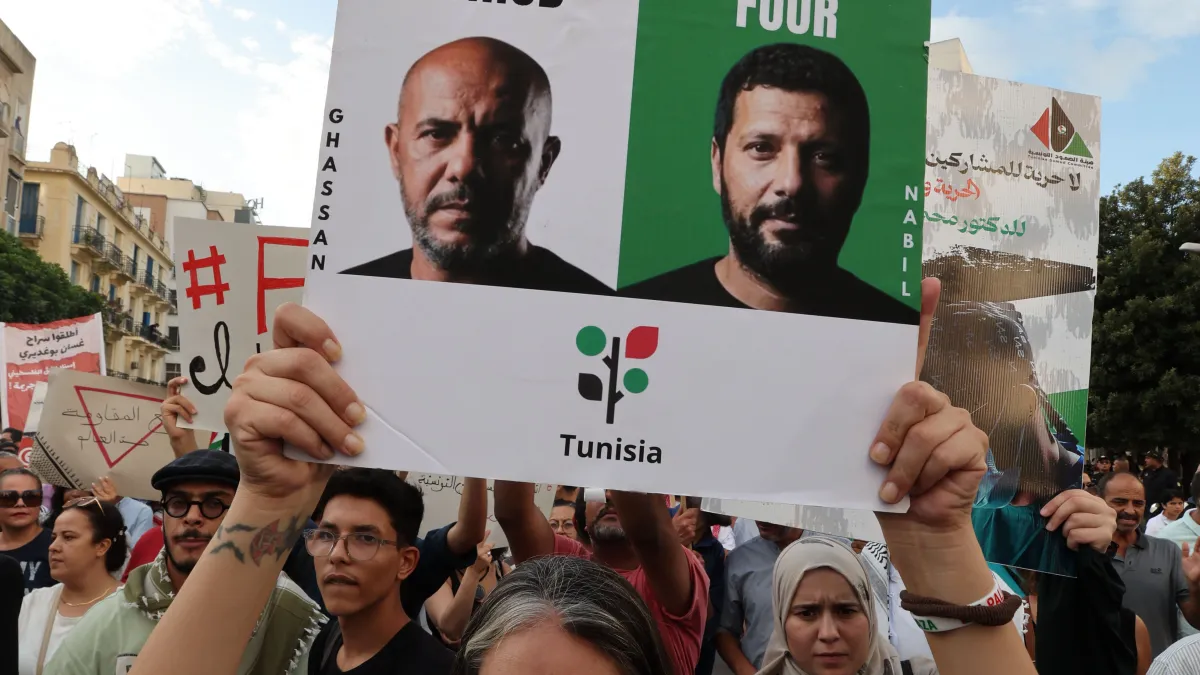
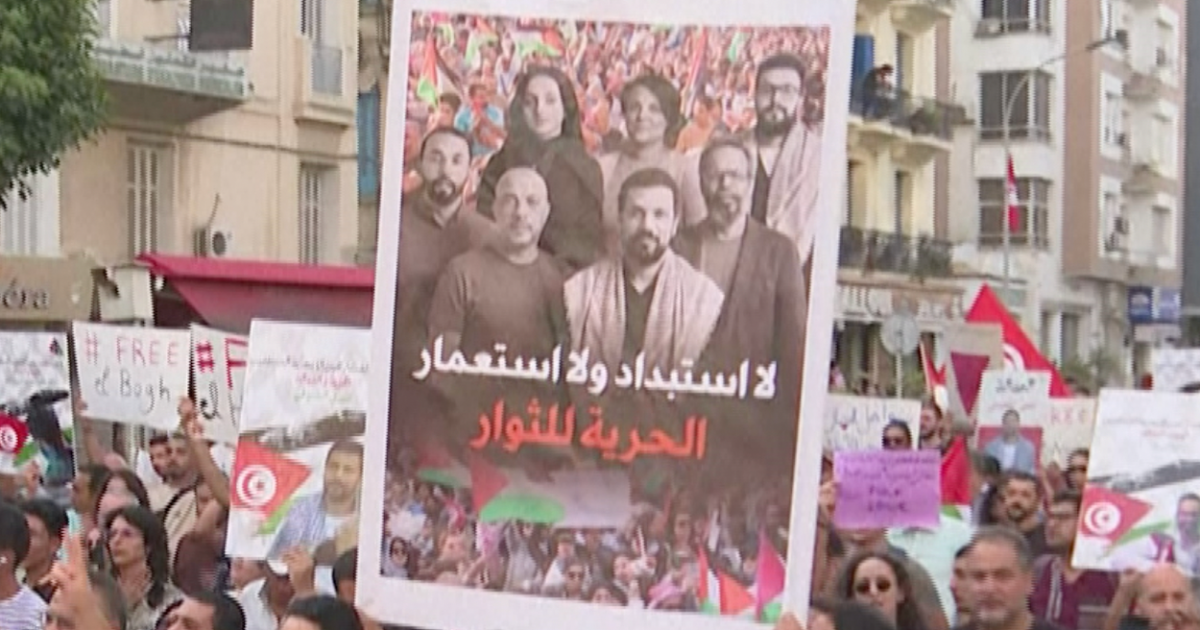
The flooding comes as Tunisia prepares for a national march in Tunis on Saturday, with organisers calling for the release of four activists detained in connection with the Al-Soumoud Flotilla. The march is scheduled for 5pm, as rain is forecast to continue through Saturday.

A struggle to get home

Fatma said the lack of reliable public transport, combined with repeated flooding, was making it increasingly difficult for people to manage without cars.

“The problem makes people look for their own solutions. That is why most people are trying to find a way to buy a car, because it has become difficult to live without one with these recurring problems,” she said.

The flooding also came as students returned to schools and universities this week, adding pressure to roads and public transport.

For Fatma, the disruption is becoming a familiar pattern.

“This shows that the state has no vision. It is caught off-guard just like citizens are,” she said.

Source link

Here are the ACTUAL cheapest ‘magic period’ destinations from Spanish sun to African coastal resorts with £38pn stays

TO ESCAPE the chaos of summer and enjoy the delights of quieter hotels, lots of us like to book holidays between September and November.

Those three months have lots of names like the ‘magic period’ or ‘shoulder season‘ and taking a break then can save you some serious cash.

Two coastlines in Spain came up trumps for cheap autumn holidays Credit: Alamy
The beautiful Albanian coastline also came in as being very affordable for Brits Credit: Alamy

Whether you want a quick trip to Spain or a holiday to African resorts for winter sun, there are some great deals out there, and lastminute.com have helped us find some of the best.

They told us: “Once the peak summer period has passed, travellers can often find significantly better value on flights and holidays, while still enjoying warm weather and everything a destination has to offer, proving that it is better to leave it until the last minute.”

The cheapest spot is Costa Dorada in Spain where on average holidays cost £79pppn.

The Costa Dorada is a region along the Mediterranean coastline and includes popular spots like Tarragona and Salou.

ACT FAST

MEGA Last minute Loveholidays deals for October half term – from £149pp


TOP STAYS

Best-rated UK hotels as voted for by guests – with rooms from just £31 a night

What’s even better is that you can definitely still spend time on the beaches too as in October there are average daytime temperatures of around 22C.

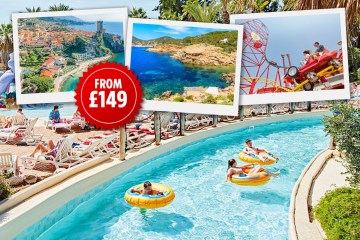
It’s also home to the enormous PortAventura World which is one of Europe’s biggest theme parks – and is home to Europe’s tallest and fastest accelerator coaster Red Force in Ferrari Land.

If it tickles your fancy, check into Hotel Best Negresco in Salou.

It’s a beach front spot with rooms that have views of the coast along with a restaurant, bar, swimming pool, sun terrace and spa.

A four-night stay for two with return flights to London Luton in October starts from £248pp – or £62pppn.

If you want to add half-board to have breakfast and dinner included it’s an extra £26pp.

Hotel Best Negresco in Spain costs as little as £62per night with lastminute.com Credit: Unknown

The second cheapest destination for autumn is Sousse in Tunisia.

The coastal resort city is known for having bright blue waters and plenty of beach clubs.

Visitors can explore the Medina of Sousse – a historic walled quarter that is an open-air market where you can pick up ceramics, leather bags, shoes and jewellery.

With lastminute.com you can book to stay at the Hotel Royal Jinene Beach & Spa from £66pn – and it includes return flights and half board.

The hotel has an indoor pool, outdoor pool with a big slide, bar, restaurant and coffee house as well as activities like tennis and mini golf.

There’s also a spa and live music nights and a short walk away is the sandy Plage El Menchia.

A four-night stay for two people with half board and return flights to London Southend in October is £264pp – or £66pppn.

It’s back to Spain for the third cheapest destination in autumn which is the Costa Brava where on average a holiday is £87pppn – although there are cheaper deals to be found.

The coastal region in northeastern Spain has lots of beaches with cliff backdrops and coves.

Sousse in Tunisia is the second most affordable spot according to lastminute.com Credit: TripAdvisor
Hotel Tahití Playa & Suites 4Sup in the Costa Brava is a few steps away from the beach Credit: lastminute

The Costa Brava has 300 days of sunshine every year and is mild throughout September and October.

Hotel Tahití Playa & Suites 4Sup is right on the Mediterranean coastline and is just a few steps away from the beach.

It also has a swimming pool, restaurant with themed dinner nights, sun terrace, pool bar, activities like table tennis and yoga classes.

There’s also a spa as well as live performances and entertainment.

A four-night room only stay for two in October at Hotel Tahití Playa & Suites 4Sup including return flights to London Stansted is £153pp – or £38pppn.

The Albanian Coast is emerging as a cheap alternative to other coastlines – with white sand beaches, no wonder it’s loved by celebs like Dua Lipa.

Sarandë is known as the the ‘city’ of the Riviera.

It’s surrounded by the blue waters of the Ionian Sea with seafood restaurants and cheap beer, with pints as little as £1.30.

Here, you can book a stay in the four-star Bougainville Bay Hotel which is considered a gallery itself full of sculptures, paintings and mosaics.

The hotel is next to the sea and you can enjoy the views from its beautiful infinity pool.

Bougainville Bay Hotel has an infinity pool looking over the Albanian coastline Credit: Lastminute
Stay at the Yocca Hotel Residence in Tunisia – it has an outdoor pool and pretty garden Credit: Lastminute

It also has four bars, two restaurants and four swimming pools.

In October, temperatures in the daytime sit around 21C – although they do drop in the evening.

A four-night stay for two including breakfast in October at the Bougainville Bay Hotel including return flights to London Stansted is £229pp – or £57.25pppn.

Coming in fifth position for being one of the cheapest spots for a holiday in autumn is Hammamet.

The coastal resort town in northeastern Tunisia boasts golden beaches and there’s plenty of historical sites to explore if you fancy a wander.

Hammamet is a great spot for anyone wanting a dose of sunshine and heat as in October temperatures can be as high as 26C.

For Brits it’s ideal as it’s as little as three and a half hours away from the UK.

The Yocca Hotel Residence is slightly outside of the city with spacious rooms some of which have balconies, swimming pool, garden, terrace and restaurant.

A six-night stay for two at the Yocca Hotel Residence including return flights from London Gatwick is £308pp – or £51.34pppn.


Source link

Five years after Saied’s power grab, Tunisia’s old grievances resurface | News

Tunis, Tunisia – More than 15 years after Tunisians rose up to topple longtime President Zine El Abidine Ben Ali, familiar grievances are again being heard on the streets from north to south.

A slogan from the 2011 revolution is being heard again: “employment, freedom and national dignity”.

This time, those demands are being fuelled by water cuts, electricity outages, rising prices, medicine shortages and a struggle to make ends meet, problems increasingly affecting Tunisians across social and economic divides.

But the anger is unfolding in a very different political environment.

The discontent comes as Tunisia marks five years since President Kais Saied suspended parliament, dismissed the government and began ruling by decree, moves he described as necessary to end years of political paralysis and corruption.

Many Tunisians welcomed the move at the time, frustrated with a political system that had failed to address the country’s economic problems after the 2011 revolution.

Five years later, many of those grievances remain while the political space for challenging those in power has narrowed sharply.

Old demands, new anger

The decade that followed Ben Ali’s ouster brought competitive elections and greater space for political parties and civil society, but it also brought frequent government changes, political disputes and little improvement in the lives of many Tunisians.

Unemployment remained high, particularly among young people and in the country’s interior. Public services remained weak while rising prices continued to put pressure on household incomes. By the end of 2020, unemployment stood at 17.4 percent, according to the World Bank.

Tunisia also faced serious security threats, including attacks and political assassinations, adding to economic pressures and hitting sectors such as tourism.

Those frustrations helped Saied build support as an outsider promising to break with the traditional political establishment and what many Tunisians saw as a dysfunctional system.

On July 25, 2021, Saied suspended the Assembly of the Representatives of the People, dismissed Prime Minister Hichem Mechichi and lifted parliamentary immunity. He said he was acting to address a national crisis.

His opponents described the move as a coup.

Saied later dissolved parliament and oversaw the adoption of a new constitution in 2022 that significantly strengthened presidential powers.

Since then, opposition figures, journalists, lawyers and activists have been jailed or prosecuted in cases that rights groups describe as politically motivated. Civil society has faced increasing restrictions while critics have said institutional checks on presidential power have been weakened. Human Rights Watch, for example, has described the “conspiracy case” as part of a broader crackdown on dissent.

What is the “conspiracy case”?

The case centres on allegations by Tunisian authorities that opposition politicians, lawyers, activists and other public figures were involved in a conspiracy against state security and sought to destabilise the country and undermine the government. The defendants included figures from different parts of the political spectrum.

Tunisians protest against President Kais Saied in Tunis, demanding the restoration of democracy and the release of jailed activists and journalists amid growing anger over deteriorating living conditions and an economic crisis [Jihed Abidellaoui/Reuters]

In April 2025, a Tunis court sentenced 37 defendants to prison terms ranging from four to 66 years. Human Rights Watch described the case as politically motivated and criticised the trial for failing to provide adequate due-process protections.

On November 27, 2025, a Tunis appeals court upheld convictions against 34 of the 37 defendants, sentencing them to between five and 45 years in prison, and acquitted three.

Human Rights Watch and other rights groups continued to criticise the proceedings and describe the case as part of a wider crackdown on dissent.

The authorities reject those accusations and maintain that the defendants were prosecuted for serious offences against state security.

But the political transformation has yet to produce the economic turnaround Saied promised.

Unfulfilled promises

Many of Tunisia’s economic problems predate Saied. Years of underinvestment, financial pressures and ageing infrastructure have left public utilities and other state services struggling to meet demand.

But those failures have become harder to separate from Saied’s record because he came to power promising that a stronger state could overcome the weaknesses of the old political system.

Tunisians protest against President Kais Saied, demanding the restoration of democracy and calling for the release of jailed activists and journalists amid a worsening economic and social crisis, in Tunis, Tunisia, August 20, 2026. REUTERS/Jihed Abidellaoui
Tunisians protest against President Kais Saied in Tunis amid growing frustration over political restrictions, rising living costs and deteriorating public services [Jihed Abidellaoui/Reuters]

This summer, temperatures approached 50 degrees Celsius (122 degrees Fahrenheit) in parts of Tunisia, pushing electricity demand to record levels. Kairouan reached 49.8C (121.6F) on Thursday, according to the Tunisian Observatory for Weather and Climate. The Tunisian Company of Electricity and Gas introduced rotating power cuts in several regions, and the outages affected water-pumping stations in some areas.

Some people reported going days without running water. Bottled water shortages added to the pressure. Long queues formed outside shops and water trucks delivering supplies to some areas.

For Rebh, a 40-year-old cleaner from Tunis, the demands are not about luxuries but about being able to afford and access the basics of everyday life.

“People are tired. They are choosing to cross the sea and die [trying to reach Europe] instead. I hope we can stand together and find a solution now,” she told Al Jazeera. “We are not asking for the impossible. This is about water and electricity. We want to live as humans. We are feeling dead while we’re still alive.”

For many Tunisians, the shortages are part of a broader squeeze on purchasing power that has made it increasingly difficult to afford basic necessities.

The extreme heat has also put pressure on an already strained health system as doctors warned of increased pressure on emergency departments.

The point, however, is not that Saied created Tunisia’s economic problems. He did not.

The question is whether the more centralised system he built has delivered the more effective government he promised.

A shrinking space for dissent

For journalist Manel Derbali, the change has been visible not only in the media but in the wider public space.

After the 2011 revolution, she said, Tunisians gained a new ability to speak openly and access information. Despite the protests and political turmoil of the period, journalists felt they were not alone in challenging those in power.

“After years of censorship and police repression, everything opened up. The journalist felt that the street was with you in one way or another,” Derbali said.

She said journalists also had channels to raise concerns about their working conditions and make proposals to officials, including through parliament and ministries, while access to decision-makers remained possible.

“After July 25, all of these spaces became closed,” she said.

Derbali said journalists now struggle to obtain even basic responses from government institutions with official bodies sometimes leaving requests unanswered for months.

Tunisians take part in a demonstration against President Kais Saied in Tunis, reviving demands for political freedoms and better living conditions that have remained unresolved since the 2011 revolution [Ons Abid/AP]

“Unfortunately, history is repeating itself, and we have returned to relying on citizens’ videos to investigate and verify information,” she said.

Her account reflects a broader concern among critics of Saied that the institutions and public spaces that emerged after the revolution have been steadily weakened.

Could economic anger become political?

The current protests are not limited to Tunisia’s traditional opposition.

The Nafas movement, which has organised recent demonstrations in Tunis, seeks to bring together political parties and independent figures beyond the country’s established opposition to Saied. Its protests have also attracted citizens who had not previously taken part in political demonstrations.

Rabii Qassem, a member of the Nafas collective, said comparisons between the past five years and the decade after the revolution should not be reduced to whether Tunisia was simply better or worse before Saied.

“I’m not saying that Tunisia between 2011 and 2021 was paradise,” he said. “There were very serious crises: unemployment, corruption, economic fragility, political conflicts and a failure to achieve a large part of the revolution’s goals.”

But according to Qassem, that period also brought gains, including greater freedom of expression and protest, a stronger civil society, a more diverse media and elections that allowed for peaceful transfers of power.

“After July 25, the economic and social problems that already existed were not solved,” he said. “They were joined by a decline in political checks and balances, freedoms and the space for civil society.”

For Qassem, many of the demands raised in 2011 remain unresolved.

“Where is employment? Where is the water? Where are the public services? Where is the dignity?” he asked.

He said economic hardship and political repression have been increasingly feeding into each other as people struggling with rising prices and deteriorating services have also found fewer avenues to express their frustration.

That does not mean Tunisia is experiencing another 2011.

Protesters voice anger as shortages and rising living costs increasingly converge with demands for political change under President Kais Saied [Mohamed Messara/EPA]
Protesters voice anger as shortages and rising living costs increasingly converge with demands for political change under President Kais Saied [Mohamed Messara/EPA] (EPA)

Many Tunisians remain wary of the political parties and politicians who dominated the decade after Ben Ali while Saied continues to have supporters who blame that period for years of economic stagnation and political instability.

Nor does every person angry about a water cut, electricity outage or rising price necessarily oppose the president.

But the protests show how economic and political grievances can increasingly overlap.

Before 2021, Tunisians could blame a democratic political system they saw as ineffective for failing to improve their lives.

After 2021, Saied dismantled much of that system and promised that a stronger presidency would deliver better government.

Five years later, many of the same grievances remain.

The difference is that the avenues for challenging them have become narrower.

“Employment, freedom and national dignity” was a demand of the revolution that ended Ben Ali’s rule.

Fifteen years later, Tunisians are again asking for jobs, basic services and greater freedoms – but now from a president who came to power promising to address the failures of the system that followed the revolution.

Source link

Antigovernment protesters take to Tunisia’s streets for second month | News

Tunisia has seen an uptick in protests as economic conditions in the country have deteriorated.

Hundreds of protesters have taken to the streets of Tunisia’s capital to call for the ousting of President Kais Saied and the restoration of democracy.

Protesters in Tunis said on Thursday that they reject “one-man rule” and “a slide towards dictatorship”, and urged the release of jailed opposition figures, activists and journalists.

Recommended Stories

list of 3 itemsend of list

Thursday’s protest follows a similar one on July 25, which was scheduled to coincide with the anniversary of President Saied’s 2021 dismissal of the government and suspension of parliament. He began ruling by decree later that year and dissolved parliament in 2022.

One demonstrator at Thursday’s march, activist Wissem Sghaier, said the country is “experiencing a complete collapse”, the Reuters news agency reported.

Tunisians are facing mounting economic and cost-of-living pressures, ⁠with deteriorating public services and shortages of some basic goods and medicines.

Tunisia’s inflation rate currently sits at 5.2 percent, according to the World Bank. Investment in the country has fallen precipitously, and Saied’s government has introduced a series of cost-saving measures, including halting public sector hiring and reducing imports.

Protests have broken out in several parts of the country in recent weeks over water and power cuts and environmental problems, suggesting that public anger is spreading beyond political disputes with Saied to the mounting hardships of everyday life. The country was also one of a number of North African countries to be hit by major wildfires this summer.

Rights groups, meanwhile, say that Saied has presided over a broad crackdown targeting opposition leaders, independent civil society groups, journalists and activists.

Who is Tunisian President Kais Saied?

Saied, a 68-year-old independent politician and former constitutional lawyer, was elected in 2019 in a victory that he described at the time as “like a revolution”. His campaign refused to take money and instead relied on a diverse array of Tunisian volunteers, and its messaging focused heavily on tackling corruption.

Saied was one of the legal advisers who helped draft Tunisia’s 2014 democratic constitution, though he soon spoke out against elements of the document.

Since coming to power, Saied has drawn the ire of international rights groups for a series of measures perceived as anti-democratic. That includes reforms of the judiciary that gave Saied unprecedented control over Tunisia’s courts via the creation of a new governing body with him at the head, and mass trials of political opponents.

Source link