Tudor Corporation Ltd.

Preserved Tudor village used for movie set is like a real-life time machine

Lavenham in Suffolk is home to over 300 preserved Tudor houses and charming timber-framed buildings – and was used as the filming location for Godric’s Hollow in Harry Potter and the Deathly Hallows

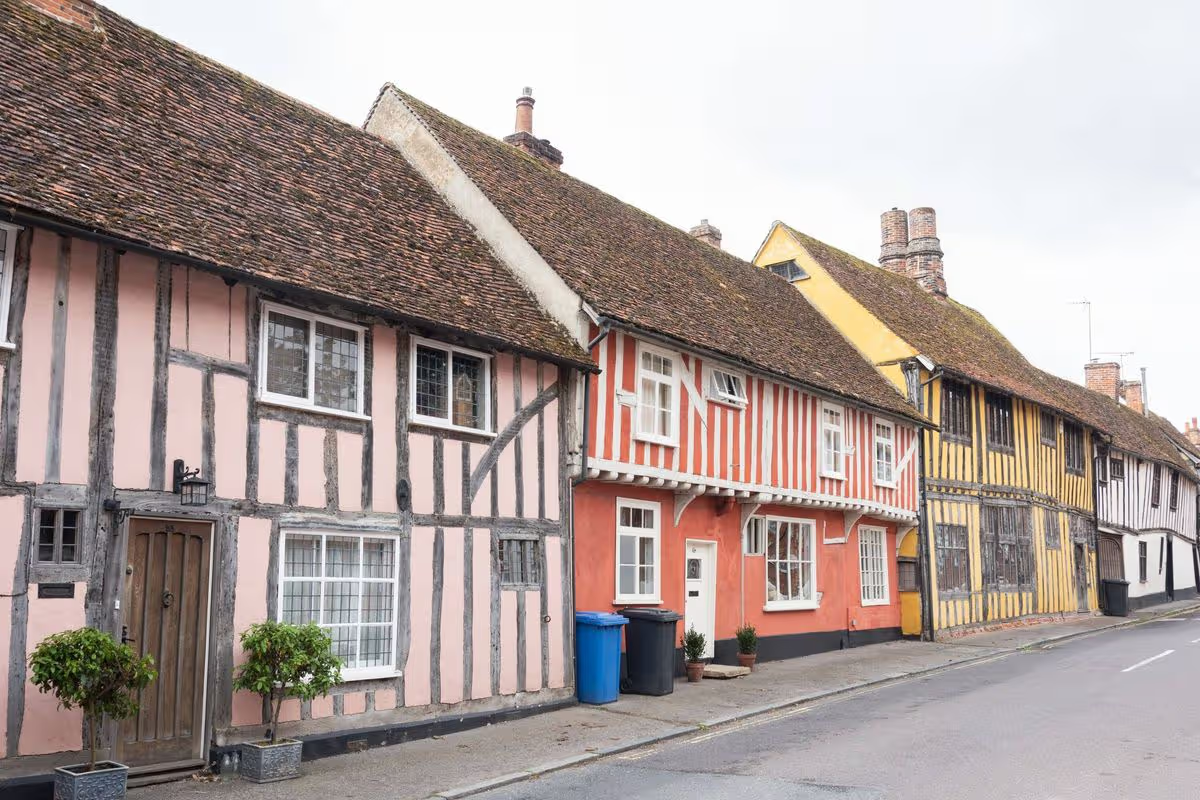
Tucked away in Suffolk lies a remarkably well-preserved village, famed for its collection of over 300 Tudor houses, instantly recognisable by their timber-framed design.

During England’s Tudor period, this very village was among the country’s most affluent areas, but today it serves as a living museum for history enthusiasts and tourists seeking a glimpse into the past.

Lavenham is the quintessential ‘higgledy-piggledy village’, boasting a variety of architectural styles, but it’s the Tudor buildings that truly set it apart.

So much so, that hundreds of its structures are listed and thus protected to maintain their original appearance, whilst the National Trust owns some of its most significant sites, renowned for their historical importance within the village.

Best UK holiday cottage deals

This article contains affiliate links, we will receive a commission on any sales we generate from it. Learn more
Sykes Cottages

From £27 per night

Sykes Cottages

See the deals

Sykes Cottages offers a wide range of handpicked holiday homes across the UK and Ireland, from cosy countryside retreats to stunning coastal escapes. Prices start from £27 per night

The area’s grandiose atmosphere is rooted in the village’s wool trade history, as it gained fame for producing high-quality lavender blue broadcloth.

However, when the trade declined in the 17th century, there were no attempts to rebuild; instead, efforts were focused on preserving what already existed.

Historic Buildings

Among these stunning structures stands a 15th-century Tudor building located on Main Street, known as the Crooked House.

This particular spot inspired the well-known nursery rhyme There Was A Crooked Man, and much like the Leaning Tower of Pisa, its upper section exhibits a noticeable tilt.

Dating back to 1395, this stunning edifice, now adorned in a vibrant orange hue, is owned by two ‘crooked men’, husbands Alex and Oli.

Visitors are invited to explore the interior and receive a warm greeting from its owners, complete with a guided tour of its captivating rooms.

In addition, the village is home to the Lavenham Guildhall, currently under the stewardship of the National Trust, and serves as a showcase for local history.

This bewitching structure sits at the very heart of the village and has functioned as a community hub throughout its 500-year existence, assuming new roles and changing hands over time.

A recent guest shared on TripAdvisor: “Was very impressed with our visit to this NT property. Instead of being stuffed with display cases full of historic relics, the approach here is to set up the Guildhall how it would have been used through its history and have minimal information boards and artefacts that support and demonstrate that approach.

“But the real stars here are the volunteer guides, and all three who were working the different rooms at the time we visited had fantastic knowledge that could bring the building to life.”

Harry Potter

Already famous in its own right, Lavenham elevated its status when it featured on the silver screen as the filming location for Godric’s Hollow in Harry Potter and the Deathly Hallows Part 1.

The idyllic setting portrayed the location of Harry’s parents’ graves in the film. In a poignant and memorable scene in the movie, he and Hermione visit the village on Christmas Eve.

De Vere House served as the exterior of the Potters’ ruined home, which was later modified for the screen using computer-generated imagery. The Guildhall was also utilised, depicted as the abandoned house sitting in the backdrop of the village.

The already serene village gained an added sense of tranquillity when it was blanketed by a thin layer of snow as the two characters strolled down its Main Street.

However, it is widely understood that the Hollywood actors themselves did not actually set foot in Lavenham and were instead superimposed onto the village’s backdrop after filming in a studio.

Source link

Traditional village feels like stepping back in time with fairytale castle and cobbled streets

Located an hour from London, this National Trust village features half-timbered Tudor buildings and a grand castle with world treasures

Venture just an hour from London to discover this fairytale village, transporting you backwards through time as its period buildings recreate a world from centuries past that has largely vanished today.

Chiddingstone stands as one of Britain’s finest preserved Tudor villages, making it an exceptional discovery for heritage enthusiasts and anyone seeking respite from life’s relentless pace.

The settlement is largely owned and maintained by the National Trust, helping safeguard its centuries-old structures and character which consistently attract inquisitive travellers.

This Kent village is cherished for its unmistakably English charm and period architecture, featuring half-timbered properties with stone-hung gables and red-tiled roofs. What’s more, it boasts an impressive castle and a bustling high street, perfect for leisurely wandering.

Best UK holiday cottage deals

This article contains affiliate links, we will receive a commission on any sales we generate from it. Learn more
Sykes Cottages

From £27 per night

Sykes Cottages

See the deals

Sykes Cottages offers a wide range of handpicked holiday homes across the UK and Ireland, from cosy countryside retreats to stunning coastal escapes. Prices start from £27 per night

The castle

Whilst the castle’s exterior presents stunning architecture, typical of what you’d anticipate seeing across England, its interior offers quite the juxtaposition.

What renders the structure so distinctive is its museum, which houses collections from across the globe spanning different eras and civilisations – Japanese, Egyptian, Stuart and Jacobite and Buddhist. Everything is accessible to visitors between March and October, allowing them to experience an entire world under one roof.

Beyond its impressive collections, the venue itself is steeped in history and magnificence, as guests explore the corridors of a 16th-century residence. Within, they can admire the Great Hall, discover a Victorian kitchen, library, and servant’s hall, and delve into its fascinating past in the Streatfeild room.

Henry Streatfeild was the figure who dramatically transformed the property during the 1800s, moving away from its Tudor design to mirror that of a mediaeval fortress.

Though, it was collector Denys Eyre Bower whose stewardship of the castle witnessed it evolve into a cultural landmark, sharing his passion with visitors worldwide.

One guest commented on TripAdvisor: “What a lovely property, from the massive holdings on display throughout the home to the acres of relaxing grounds. The reception gal was quite informative upon our arrival as to the layout for our self-guided tour as well as answering our questions post-tour. Don’t miss this gem.”

This year, guests can purchase a day ticket and enjoy complimentary returns for an entire year. Current door prices are £15.25 for an adult and £10.50 for a child, with reduced rates available for those who book online beforehand.

High street and village

With its genuine half-timber Tudor structures and cobbled walkways, wandering along the high street of Chiddingstone Road feels like stepping back through the centuries. Notable highlights include a café, shop and the 15th-century pub.

The historic Chiddingstone Stores and post office, which dates back to 1453, is situated within a traditional Tudor building and continues to function as such today.

Similarly unchanged is the village pub, known as the Castle Inn, boasting a welcoming atmosphere and superb beer garden.

It retains its Grade II*-listed status with numerous original features intact, including delightful fireplaces, tiled floors, oak panelling and bars. One visitor described their experience at the Castle Inn as ‘atmospheric’.

They commented: “If you’re looking for a traditional, friendly, country pub, this is it. Clean and friendly, with everything you need on your doorstep that goes with a village pub. Highly recommend.”

The village name, Chiddingstone, is believed to originate from the enormous sandstone located outside the settlement. Whilst unconfirmed, the ‘Chidding Stone’ is thought to mark where it all started, with several folklore tales surrounding its origins.

Source link