TrumpXi

US, China list goods recommended for tariff cuts following Trump-Xi summit | International Trade News

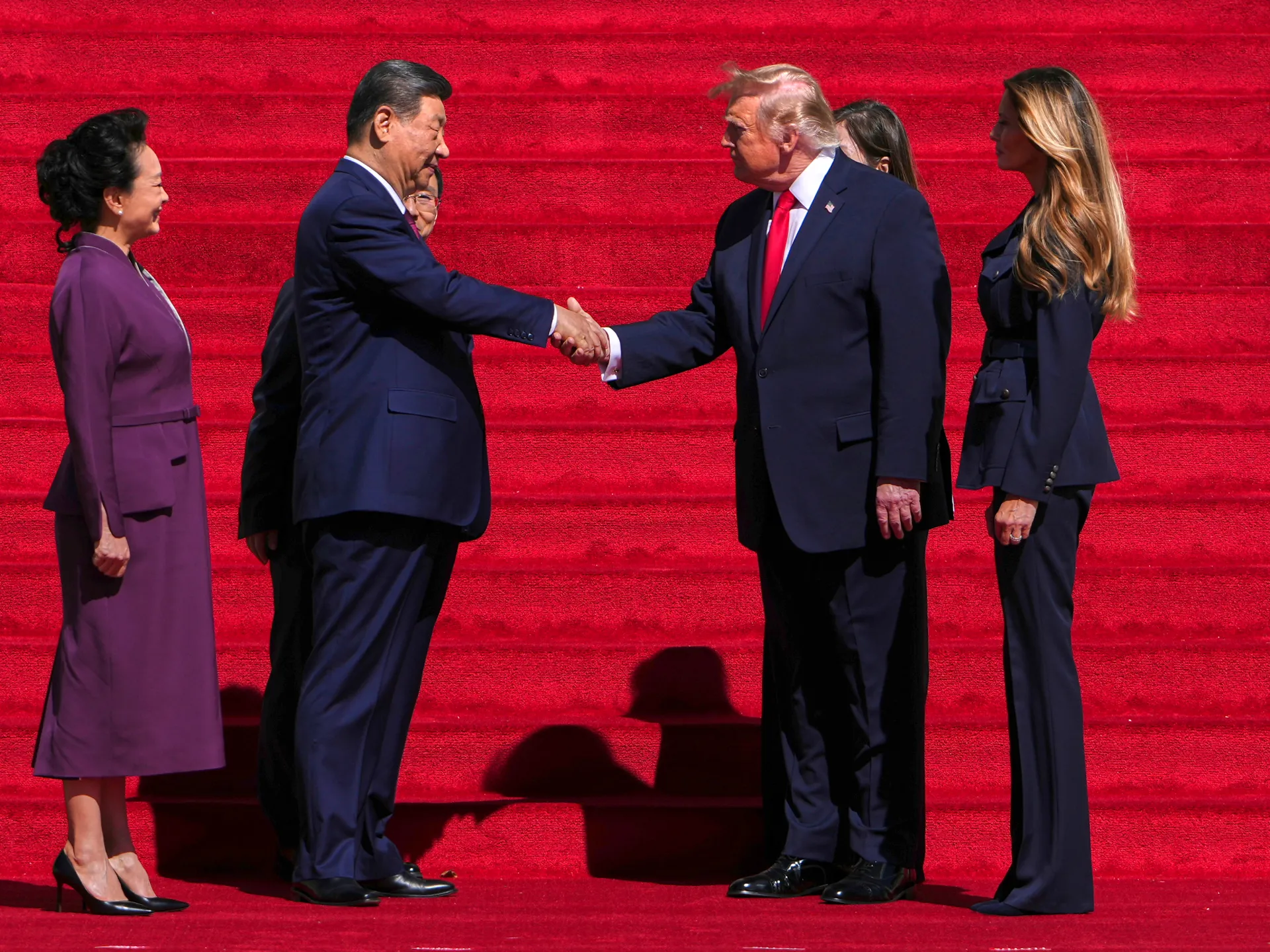
The United States and China have unveiled a list of goods recommended for reduced tariffs following last week’s summit between Presidents Donald Trump and Xi Jinping.

The release of the list on Sunday comes after Trump and Xi agreed to work towards lowering tariffs on $60bn worth of trade.

Recommended Stories

list of 4 itemsend of list

The agreement, which covers $30bn of each side’s imports, identifies 77 Chinese goods and more than 1,600 US products to be considered for more favourable tariff treatment.

Chinese goods on the list include microwave ovens, fish hooks, artificial flowers and weighing scales.

US exports identified for lower tariffs include poultry, dairy products, noodles, eggs, peanuts, canned tomatoes, pure-breed breeding horses, and silk.

US Trade Representative Jamieson Greer said the agreement would improve market access for about 30 percent of US exports to China and also benefit US consumers.

“The Trump Administration will continue to pursue fair, balanced, and reciprocal trade with China by ensuring compliance with commitments on agricultural and energy purchases, pursuing balanced trade in non-sensitive goods, and securing market access for American farmers, manufacturers, businesses, and workers,” Greer said in a statement.

China’s Ministry of Commerce, which confirmed the list on Monday, shortly after the White House announcement, said the sides would discuss “a reciprocal tariff reduction framework of $30 billion for $30 billion, aiming to reach a consensus”.

“This arrangement will help stabilize China-US trade, create better conditions for Chinese exports of relevant products to the US, meet domestic market demand, and strengthen trade cooperation in agricultural products, energy, manufactured goods, and consumer goods,” the ministry said in a statement.

While Trump and Xi’s summit was heavy on pomp and ceremony, their talks wrapped up on Friday with few concrete announcements on the myriad divisions between the superpower rivals, which span everything from trade to artificial intelligence and Taiwan.

Trump and Xi, who have held three face-to-face summits since last October, are expected to meet again at the Asia-Pacific Economic Cooperation (APEC) summit in Shenzhen, China, in November, and the Group of 20 gathering in Miami, Florida, in December.

Trade between the US and China, the world’s two largest economies, has declined substantially since Trump, a longtime critic of free trade policies, returned to the White House in January last year.

Two-way trade totalled $495bn in 2025, down 25 percent from the previous year, according to the US Trade Representative.

Deborah Elms, head of trade policy at the Hinrich Foundation in Singapore, said the latest announcement did not point to a major shift in US-China trade.

“Instead, both sides have largely listed goods that do not move the needle on overall trade flows,” Elms told Al Jazeera.

“They may reduce some prices in the US for consumers, but none is going to make a dramatic difference in inflation figures or result in meaningful sighs of relief by most US buyers,” Elms added.

“The same is broadly true with the Chinese list. Although there are many different agricultural products on the list, most are not actually exported to China or not exported in meaningful quantities.”

Source link

US, China open high-level talks ahead of Trump-Xi summit | Donald Trump News

Scott Bessent and He Lifeng meet in New York for US-China talks ahead of the Trump-Xi meeting later this week.

Top economic officials from China and the United States have begun talks in New York City aimed at clearing the way for possible agreements on trade, artificial intelligence and critical minerals ahead of a meeting between US President Donald Trump and Chinese President Xi Jinping later this week.

US Treasury Secretary Scott Bessent and Chinese Vice Premier He Lifeng began talks at JPMorgan Chase’s Manhattan headquarters on Sunday morning, with US Trade Representative Jamieson Greer also taking part.

Recommended Stories

list of 4 itemsend of list

The talks come four days before Trump is due to host Xi at the White House, with both sides looking to ease tensions between the world’s two largest economies.

“I’m looking forward to having focused, fulsome and constructive talks today that will set the stage for our leaders’ meeting,” Bessent told reporters as he arrived.

At the top of the agenda is a fragile US-China trade truce due to expire on November 10.

The agreement, reached in Busan, South Korea, last November, capped US tariffs on Chinese goods at about 20 percent after a tit-for-tat trade fight briefly pushed tariffs into the triple digits.

Washington is also pressuring Beijing over its supply of rare-earth magnets and other critical minerals, crucial to industries ranging from cars to advanced semiconductors.

China promised to restore the flow of critical minerals under last year’s truce, but a senior US official said on Friday that Beijing’s performance had “not been up to par”.

AI enters the talks

Artificial intelligence (AI) is also expected to feature prominently, adding a relatively new issue to negotiations long dominated by trade.

Bessent has said the countries could discuss AI “guardrails” aimed at addressing shared risks, including preventing powerful models from falling into the hands of malign non-state actors.

The talks are expected to cover both open- and closed-weight AI models. Chinese open-weight models have increasingly attracted US companies, in part because they can be cheaper than closed systems developed by US firms such as OpenAI and Anthropic.

“The United States remains the leader in AI,” Bessent said. “And we are open to discussions on avoiding shared risks and avoiding bifurcation of our two systems.”

Another potential point of friction is Iran. China remains one of Tehran’s most important economic partners and buys much of its oil, making Beijing an important target of Washington’s efforts to increase economic pressure on Iran as the US-Israel war on Iran enters its seventh month.

Expectations remain low

Despite the packed agenda, analysts are not expecting a sweeping breakthrough.

“I think there will be some show of deliverables because of the fact that it’s a presidential summit coming, but I don’t feel like we’re on the verge of some sort of breakthrough,” Anna Ashton, a China trade analyst and founder of Ashton Intelligence, told Reuters.

“I think status quo is probably both sides’ general best expectation.”

Former US Deputy Secretary of State Kurt Campbell similarly said the immediate goal may simply be keeping tensions contained.

“One of the only things we can hope for in the short term is a truce, and that this will likely continue through the remainder of this year,” Campbell said.

Sunday’s negotiations are part of a series of meetings between Bessent, He and Greer over the past 16 months aimed at hammering out areas of agreement before Trump and Xi meet face to face.

Source link