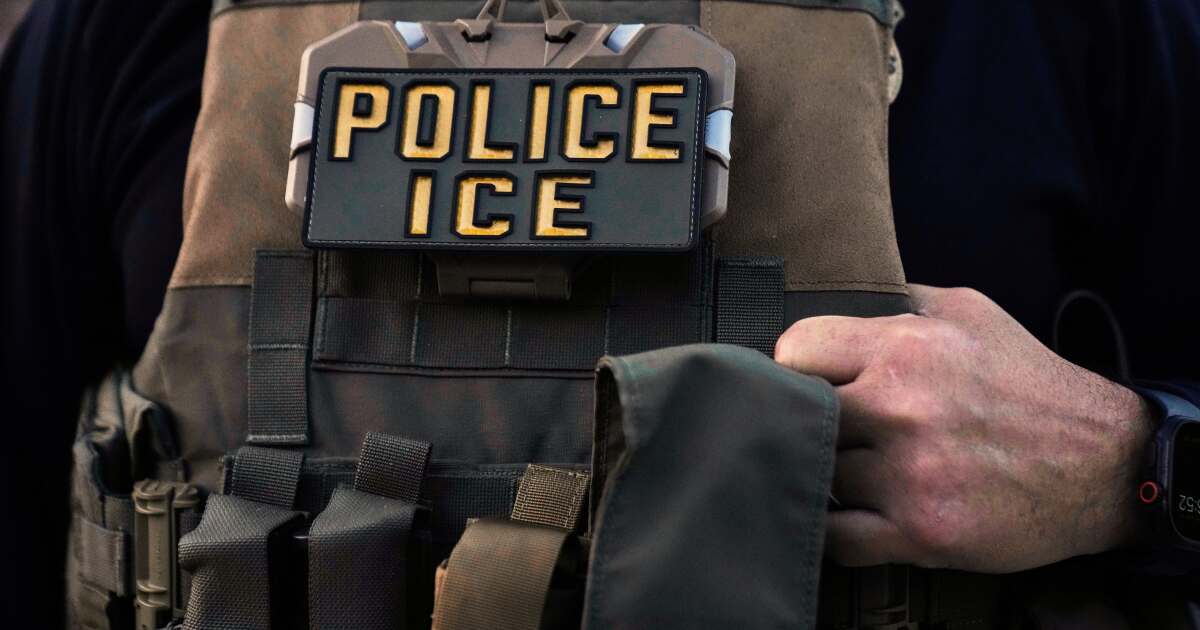
WASHINGTON — David Venturella, a former executive at a private prison operator, will serve as the acting head of U.S. Immigration and Customs Enforcement, the Trump administration says, after the agency’s current leader steps down at the end of the month.
A spokesperson for the Department of Homeland Security said late Tuesday that Venturella would succeed Todd Lyons, who led the agency through much of the administration’s tumultuous crackdown on immigration. ICE did not immediately respond to an email seeking additional information Wednesday.
Venturella left the Geo Group in early 2023 and has been working at ICE leading the division that oversees detention contracts, members of Congress wrote in a public letter earlier this year.
At the Geo Group, which houses around one-third of ICE detainees, Venturella served in a number of posts, including executive vice president overseeing corporate development, according to a Securities and Exchange Commission filing. He also oversaw removal operations for ICE in 2011 and 2012 after working for federal contractors, including one that specializes in security clearances and background checks.
Geo has benefited from President Trump’s mass deportation push, garnering big contracts to open three shuttered facilities. Among them was a $1-billion, 15-year deal for a detention center in New Jersey’s largest city.
“Last year was the most successful period for new business wins in our company’s history,” Geo’s CEO George Zoley said during an earnings call last week.
Geo owns and operates 23 ICE detention facilities, with about 26,000 available beds. Zoley also said that ICE’s air transportation subcontract had continued to steadily increase and that it secured a new contract last year for electronic monitoring.
Venturella will lead ICE at a time when the public mood has soured on Trump’s immigration crackdown, which sent surges of federal immigration officers into American cities to round up immigrants. Those raids sent tensions soaring and prompted clashes between protesters and law enforcement, leading to the fatal shootings of two U.S. citizens in Minneapolis earlier this year.
Trump returned to the White House on a promise of mass deportations, and ICE has been a central executor of that vision. Under Lyons’ leadership, the agency used a massive infusion of cash to expand hiring and detention capabilities, and it ramped up arrests to meet demand from the Republican administration.
Federal officials announced Lyons’ departure last month from ICE, which had gotten $75 billion from Congress to fulfill Trump’s mass deportation campaign.
Venturella’s appointment comes as Homeland Security Secretary Markwayne Mullin settles into his role atop the Cabinet agency overseeing ICE. Mullin has promised to keep his department out of the headlines and has indicated a softer tone on immigration, although he is expected to align with the president’s priorities on mass deportations.
One contentious issue confronting Homeland Security now is a plan for converting warehouses into immigrant detention centers. Conceived while Kristi Noem led the department, the effort has encountered multiple lawsuits and intense community blowback, including in Republican-led states.
The $38.3-billion plan would increase detention capacity to 92,000 beds and mean acquiring eight large-scale facilities, capable of housing 7,000 to 10,000 detainees each, and 16 smaller regional processing centers.
Those, and other sites, were supposed to be running by the end of November. But after Noem’s departure, the department paused the purchase of new warehouses as it scrutinizes all contracts signed during her tenure.
Last month a judge extended a pause on transforming a massive Maryland warehouse into a processing facility for immigrants, and there are signs that federal officials are scaling back the plans.
This could be good news for Geo. The Florida-based company has about 6,000 idle beds at six company-owned facilities, Zoley said last week.
Zoley had offered a note of skepticism about the warehouse plan during an earlier earnings call in February, noting that renovating a warehouse is “more complicated than you may think.” At that point, he said the company was “cautiously” looking at whether to bid to help operate some of them.
BEIJING — An extraordinary display of power and precision along Tiananmen Square greeted President Trump in Beijing on Thursday, kicking off a two-day summit with particularly high stakes for the Americans.
Trump’s meetings with his Chinese counterpart, Xi Jinping, began at the Great Hall of the People moments after a welcome ceremony that seemed to impress the president, featuring a Chinese military honor guard and a greeting from excited school children. American flags waved as “The Star Spangled Banner” rang out on a smoggy day in the heart of the capital.
Children holding Chinese and U.S. flags rehearse before the welcome ceremony for President Trump.
(Maxim Shemetov / Associated Press)
Trump reflected on the stakes of his visit at the top of the meeting, telling Xi that the ceremony was an honor “like few I’ve seen before.”
“There are those who say it may be the biggest summit ever,” he said. “I have such respect for China, the job you’ve done.”
Both men struck a conciliatory tone, despite the agenda for the summit featuring some of the thorniest issues facing the two superpowers today, from the U.S. war in Iran to trade relations and the future of Taiwan.
“We’ve gotten along — when there have been difficulties, we’ve worked it out,” Trump added. “We’re going to have a fantastic future together.”
Trump is expected to ask Xi for help reopening the Strait of Hormuz, a vital commercial waterway disrupted by Iran since the start of the war, and for the extension of a truce in the trade war he started at the beginning of his second term.
China, in turn, will ask the Trump administration not to proceed with arms sales to Taiwan, despite their approval by Congress, and for a declaration of opposition to Taiwanese independence. Beijing also seeks access to top-end chips made by American manufacturers.
Chinese President Xi Jinping and President Trump shake hands at the Great Hall of the People.
(Kenny Holston / Associated Press)
The agenda exposes the mutual dependence of the two rival superpowers, marked by distrust but driven by a quest for cooperation and stability.
The welcome ceremony outside of the Great Hall kicked off with Xi shaking the hands of Trump’s delegation, including figures such as his political advisor, James Blair, his communications director, Steven Cheung, and his daughter-in-law, Lara Trump.
They were just a few members of a U.S. delegation accompanying Trump filled with curiosities.
Chinese officials were surprised to learn that Pete Hegseth was joining Trump in Beijing this week, marking the first time a president has brought his secretary of defense on an official state visit. It wasn’t immediately clear to the Chinese what his inclusion was meant to convey.
Eric Trump, the president’s son, is here, seeking to leverage the family name for lucrative business deals as Beijing aggressively campaigns against government corruption at home. And First Lady Melania Trump decided to stay at home, an unusual snub of such a high-level event.
A contingent of U.S. business leaders was given little notice to prepare for the trip, including the CEO of Nvidia, who raced to join Trump aboard Air Force One at a refueling stop in Alaksa.
The diplomatic faux pas follow weeks of Chinese frustration over what they see as the Trump administration’s lack of preparation — a perceived display of incompetence that boosts their confidence heading into the negotiations.
Over the course of the visit, Trump is expected to visit the Temple of Heaven, a monument to imperial China and Confucian thought in the center of Beijing. Ahead of Trump’s arrival, an area roughly the size of 400 American football fields was closed in preparation for a stop here.
On Thursday night, local time, Trump will return to the Great Hall of the People for a banquet dinner. Additional meetings are scheduled for Friday morning before Trump departs midday for home.
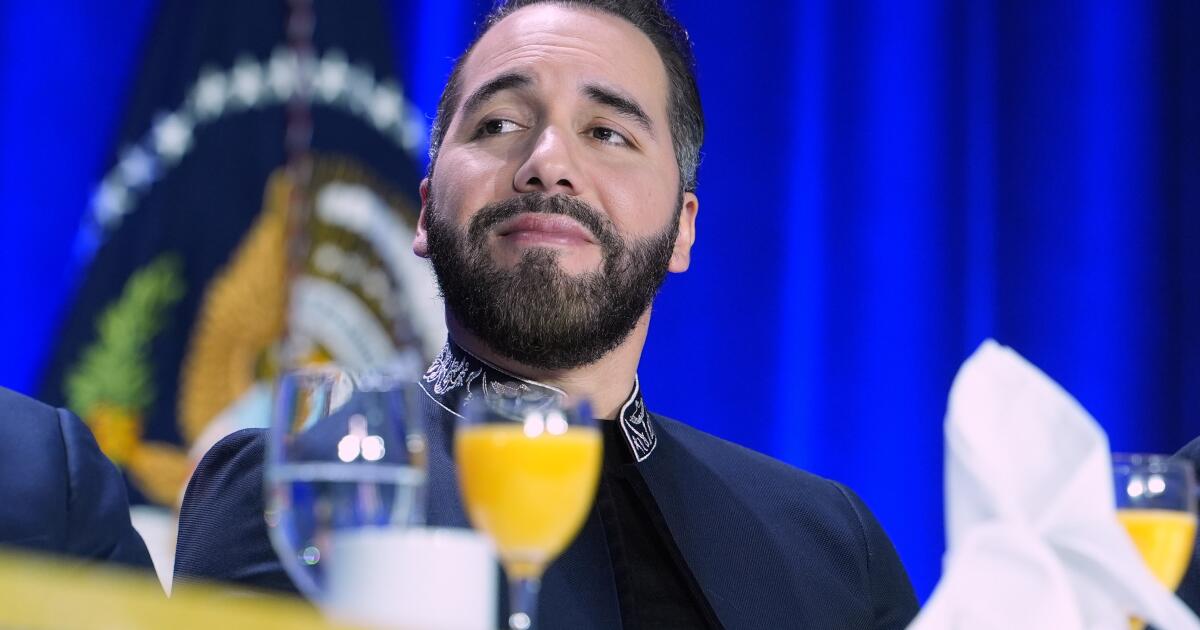
SAN SALVADOR — The number of people deported to El Salvador from the U.S. nearly doubled in the first months of 2026, according to official figures, coming as Salvadoran President Nayib Bukele has positioned himself as an ally willing to help the Trump administration accelerate deportations, a central priority.
The U.S. deported 5,033 Salvadorans back to their country in the first three months of 2026 compared with 2,547 deportees in the same period in 2025, according to El Salvador migration authority figures obtained by the Associated Press on Tuesday.
That marks nearly a 98% increase at the same time that the Trump administration has boosted deportation flights across the world. Globally, deportation flights from the U.S. rose an estimated 61% between 2024 and 2025, according to data compiled by the Asociación Agenda Migrante El Salvador, or AAMES, and other organizations.
The U.S. has stopped regularly releasing deportation data, so experts instead are relying on other information from countries such as El Salvador, deportation flights and other numbers.
The sharp increase in deportations “confirms a real hardening of the U.S. immigration system toward the region,” said César Ríos of AAMES.
The jump comes as Bukele, a tough-on-crime politician, has sought to align himself with President Trump, and the U.S. government has lined up allies across Latin America to help the Republican carry out his agenda. While Mexico and other Central American nations have quietly accepted deportees from third countries, Bukele has boldly embraced Trump’s efforts in Latin America.
In March 2025, Bukele most notably accepted 238 Venezuelan deportees accused of being members of the Venezuelan gang Tren de Aragua and locked them up in a mega-prison built for accused gang members in the Salvadoran leader’s ongoing offensive on domestic gangs. The incident fueled widespread accusations of human rights abuses.
The geopolitical firestorm came after Trump’s government struck a deal with Bukele to accept what they described as transfer and imprisonment of foreign criminals to El Salvador. Under the agreement, El Salvador would receive $6 million from the U.S.
In March 2025, the Trump administration mistakenly deported Kilmar Abrego García, a Maryland resident and Salvadoran citizen with protected status in the U.S., setting off yet another legal and political controversy. Bukele originally refused to return Abrego García and denied accusations of beating and torture — which have been widely documented by human rights groups in Salvadoran prisons.
He was returned to the U.S. in June to face charges that he helped bring immigrants to the U.S. illegally, something his lawyers call “baseless.” Abrego García has pleaded not guilty and asked a judge to dismiss his case as the U.S. Department of Homeland Security announced that it hoped to deport Abrego García to Liberia.
Even more recently, Bukele joined a coalition of other right-leaning Trump allies in a group of countries that the Republican president dubbed the Shield of the Americas, purportedly aimed at cracking down on criminal groups in Latin America, even though the two most essential countries in that effort — Mexico and Colombia — refused to attend.
Meanwhile, many migrants in the U.S. are turning their eyes on U.S. Supreme Court arguments as Trump seeks to stop shielding hundreds of thousands of migrants from Haiti and Syria, a decision many of the more than 200,000 Salvadoran migrants with temporary protections worry might eventually affect them.
Bukele has helped the U.S. with its immigration agenda even before Trump entered office.
In 2023, El Salvador’s government began to slap a $1,130 fee on travelers from dozens of countries connecting through the nation’s main airport, amid pressure from the Biden administration to help control the number of migrants moving toward the United States’ southern border. At the same time, migration from El Salvador, fueled by gang violence and poverty, dipped after Bukele’s contentious war on the gangs.
Analysts said that Bukele’s government used dips in migration as a bargaining chip to offset human rights criticisms by the U.S.
Alemán and Janetsky write for the Associated Press. Janetsky reported from Mexico City.
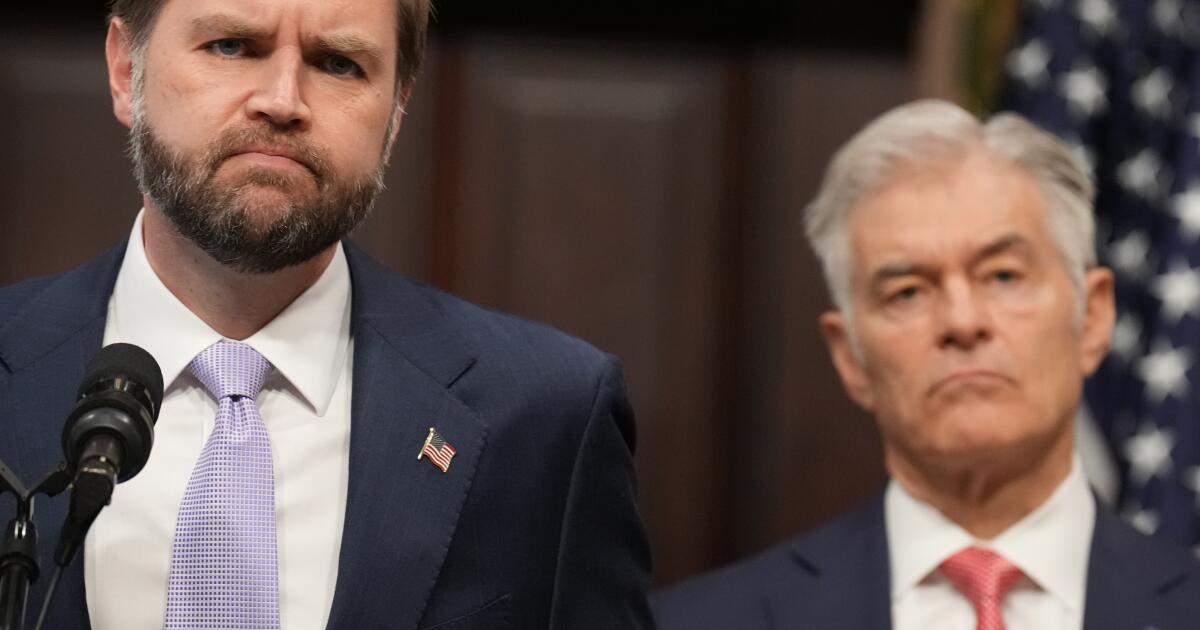
Vice President JD Vance said Wednesday that the Trump administration is deferring $1.3 billion in Medicaid reimbursements to California over concerns the state is allowing “fraudsters” to drive up costs to taxpayers, including by pushing unnecessary medications on unsuspecting patients.
“There are California taxpayers and American taxpayers who are being defrauded because California isn’t taking its program seriously. But also, you have people who’ve been prescribed medications that they don’t even need,” Vance said. “Sometimes they’ve had drugs put into their bodies that they don’t need because fraudsters have actually encouraged false prescriptions and false administration and medications.”
Vance, standing alongside Dr. Mehmet Oz, the administrator for the Centers for Medicare and Medicaid Services, said the administration is also sending letters to all 50 states informing them that if they do not “effectively and aggressively prosecute Medicaid fraud in their states,” they will see federal funding cut off as well.
“We want California to get serious about this fraud,” said Vance, who President Trump named his “fraud czar” last month.
Oz called out what he said was widespread fraud in hospice services and similar in-home care programs nationally — and particularly in the Los Angeles region — and announced a six-month moratorium on new Medicare enrollment for hospices and home health agencies.
“A third of all these programs in the entire country are in Los Angeles. Ask yourself, how is that possible? It’s not,” Oz said. “They’re not that many people dying in Los Angeles. We’re not talking about California, just Los Angeles.”
He said he and others in the administration determined that “at least half of the hospices, in the entire area around Los Angeles, are fraudulent,” and had shut down 800 of them that last year had “charged the federal taxpayer $1.4 billion,” which “will no longer be paid.” That is a major increase from the 450 providers the administration said it had suspended as of last month.
The announcement was the latest attempt by the Trump administration to highlight and rein in fraud in federal healthcare benefits programs, particularly in blue states. The actions were met with immediate push back from California officials.
“We hate fraud. But that’s NOT what this is,” Gov. Gavin Newsom’s office posted on the social media site X. “Vance and Oz are attacking programs that keep seniors and people with disabilities OUT of nursing homes. Pretty sick.”
Newsom’s office said that the growth of In-Home Supportive Services placements in California was “simple,” and due to California “keeping more people OUT of far more expensive nursing homes!”
Such services cover assistants who help people with daily tasks such as bathing, laundry or cooking; provide needed care such as injections under the direction of a medical professional; and accompany them to and from doctor’s appointments. A 2020 report by the California state auditor found that nearly three-quarters of IHSS caregivers assist a family member.
Newsom’s office wrote IHSS care costs $30,000 a year, while nursing home care costs $137,000 a year. “SAVING TAXPAYERS: $107K per person,” it wrote.
California Atty. Gen. Rob Bonta also criticized the administration’s moves.
“Once again, California appears to be targeted solely for political reasons,” Bonta said. “The Trump administration is planning to defer over $1 billion in Medicaid funding for vital programs that helps seniors and people with disabilities remain safely in their homes.
“My team is carefully reviewing all available information. We have not hesitated to challenge unlawful actions by the Trump administration, and we will continue to act whenever Californians’ rights or access to critical services are threatened,” he said.
Democratic Sen. Alex Padilla also lashed out at the Trump administration.
“The Trump Administration is attacking California over claims that they can’t back up,” Padilla wrote on social media. “Let’s be real, this isn’t about fraud — it’s about punishing a state that didn’t vote for him. Political retribution plain and simple.”
Fraud in California’s hospice industry has been a problem for years.
Authorities in the state promised to crack down on the issue after a Times investigation in late 2020 revealed that unscrupulous providers were billing Medicare for hospice services and equipment for patients who were not actually dying — with the hospice industry in the state exploding in size.
California’s Medicaid program, known as Medi-Cal, is expected to cost about $222 billion for the budget year starting July 1, including both state and federal funding. Roughly 15 million Californians, more than a third of the state, are on Medi-Cal.
Vance, a potential 2028 presidential hopeful, has taken up his work as “fraud czar” with vigor, traveling around the country to drive home the idea that the Trump administration is working diligently to bring down healthcare costs by addressing waste, fraud and abuse that is rampant across the system.
He has said that waste and abuse is particularly prevalent in Democratic-led states such as California, New York and Minnesota.
“We have red states and blue states that go after fraud aggressively, but we also, unfortunately, have some states, mostly blue states, unfortunately, that do not take Medicaid fraud very seriously,” he said Wednesday.
Vance specifically threatened to cut off what he said is billions in federal funding for state-run fraud control units that are meant to prosecute people who abuse the system, but which he said aren’t doing the work. “This is a tool that we want the states to use, but unfortunately, a lot of states aren’t using these tools at all,” he said.
The focus on fraud comes against a backdrop of criticisms that other policy measures pushed by the administration have driven healthcare costs up or made it harder for people to access healthcare — including cuts to Obamacare subsidies and new work requirements in Medicaid, which are expected to strain hospitals around the country and led to millions of people losing healthcare coverage.
Democrats and Republicans have argued over who is to blame for rising healthcare costs, and Vance and Oz have clashed with California leaders before.
In January, Newsom filed a civil rights complaint against Oz after he posted a video accusing Armenian crime groups of carrying out widespread healthcare fraud in Los Angeles. In the video, Oz was shown driving around Van Nuys, saying about $3.5 billion worth of Medicare fraud had been perpetrated by hospice and home care businesses — and “run, quite a bit of it, by the Russian Armenian mafia.”
Newsom called Oz’s claims “baseless and racist.”
The administration previously launched investigations into potential healthcare fraud in at least five states — California, Florida, Maine, Minnesota and New York — and halted some $243 million in Medicaid payments to Minnesota over fraud concerns.
The Centers for Medicare & Medicaid Services has also acknowledged using errant figures to justify a fraud probe in New York, deepening concerns in the administration’s methods for identifying problematic activity.
Vance said the deferral of funds to California and the letters warning other states to get serious is not about political retribution, but a wake up call. He said the Trump administration wants to help states root out fraud and abuse, including with new technologies — but can’t do so if they are not “willing to help themselves” first.
“We don’t want to turn off any money. What we want to do is ensure that people are taking fraud seriously. We want to protect Medicaid, we want to protect Medicare,” Vance said. “But we can’t do that if the states that are administering those programs are allowing those programs to be fleeced by fraudsters.”
WASHINGTON — A new Immigration and Customs Enforcement policy requires members of Congress to seek advanced approval in order to speak with detainees during oversight inspections at detention facilities.
It’s the latest twist in a months-long effort by ICE to restrict such visits by lawmakers, which have skyrocketed amid the Trump administration’s mass deportation campaign.
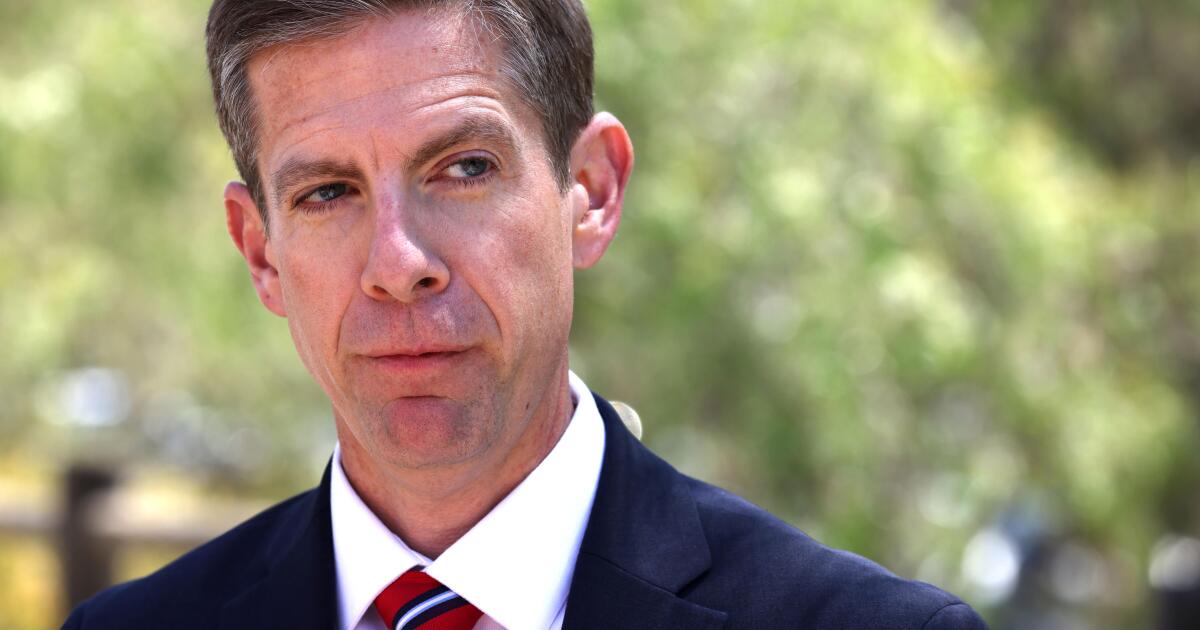
California Reps. Mike Levin (D-San Juan Capistrano) and Sara Jacobs (D-San Diego) learned about the new policy when they made a surprise visit on Monday to the Otay Mesa Detention Center in San Diego.
ICE allowed them to enter, Levin said, but when the members asked to speak with detainees, local personnel handed them a memo outlining the new policy — dated the same day and signed by acting ICE Director Todd Lyons.
In it, Lyons calls the visits disruptive and resource-intensive because they pull staff away from law enforcement duties. Lawmakers sometimes request to speak with a particular kind of detainee — for example, people held longer than 90 days — and Lyons said meeting such requests takes up too much time.
“This is an unsustainable burden for ICE employees and a hindrance to ICE operations given the exceptional growth in congressional visits,” he wrote.
Moving forward, members must identify detainees by name at least two business days in advance of a visit and provide a signed consent form from each detainee.
The Department of Homeland Security and ICE did not immediately respond to a request for comment.
Levin said the new policy effectively defeats the purpose of unannounced oversight visits.
“I think it’s a deliberate effort to make sure we don’t hear from people in ICE custody,” he said.
Democratic House members sued the Trump administration last July after they were repeatedly denied access to immigrant detention facilities in California and across the country.
Under federal law, funds appropriated by Congress cannot be used to prevent a member of Congress from entering or inspecting a detention facility operated by or for Homeland Security.
Monday’s unannounced visit was Levin’s first to the Otay Mesa facility since a federal judge in February blocked a previous Trump administration policy requiring members of Congress to give seven days notice before visiting ICE detention centers.
The administration appealed, and on Friday an appellate court in Washington denied the administration’s request to restore the seven-day policy while the case proceeds, saying the government hadn’t provided enough evidence that the visits are harmful.
That win for the lawmakers could be short-lived — the panel of judges who denied the administration’s request also wrote in their order that the members of Congress “have no standing to maintain this lawsuit, so the government is very likely to succeed on the merits of its appeal.”
In the memo on ICE’s new policy, Lyons noted that in the 10 fiscal years before 2025, ICE facilitated roughly 45 congressional visits to detention centers each year.
After Trump took office, the agency facilitated more than 150 visits in fiscal year 2025. As of May 11, ICE had facilitated about 200 congressional visits since the start of this fiscal year.
Levin said the increased visits by himself and other members have become necessary because Homeland Security has slashed the vast majority of staff at the Office for Civil Rights and Civil Liberties, as well as the Office of the Immigrant Detention Ombudsman.
“The volume Lyons is citing is a direct consequence of his own department dismantling all the alternatives,” Levin said. “They gutted the internal oversight and then complained that the external oversight is too active, then issued a memo to restrict it. All of that only makes sense if the goal is no oversight.”
During previous visits, Levin said he would ask for detainees who met specific criteria, such as those held in a unit of the detention center that was the source of complaints to his office. Those detainees would write their names on a sheet of paper if they were interested in speaking with him.
Barred from speaking with detainees, Levin inspected what he could at Otay Mesa on Monday. Levin said he drank the facility’s water (it tasted like regular tap water) and tried the food — chili, salad, corn, chips and cake that won’t “win any culinary awards, but it was fine.”
At one point, Levin said he saw a detainee using a tablet and asked how it works. An employee interjected and reminded him of the new policy, he said.
Observation is a necessary part of any inspection, Levin said, but you don’t really know what’s going on without talking to people in a way that’s unplanned.
The facility held 1,008 ICE detainees — 864 men and 144 women, as well as others in U.S. Marshals Service custody, Levin said. Nearly a third of the detainees were from Mexico, with smaller numbers from Guatemala, China and other countries. On average, they had been detained 130 days.
Levin said he sent the ICE memo to Rep. Joe Neguse (D-Colo.), who is the main plaintiff in the lawsuit over the oversight visits, and lawyers in the case are now reviewing its legality.
Eighteen people have died so far this year in immigrant detention facilities, leaving 2026 on track to be the agency’s deadliest year in more than two decades. Last year, 32 people died in detention facilities.
Since Trump returned to the White House, reports from detention centers have highlighted issues of overcrowding, insufficient medical care and widespread use of force.
CHONGQING, China — Three years ago, in the idyllic town of Woodside south of San Francisco, the United States and China held their first high-level talks on the dangers posed by artificial intelligence. President Xi Jinping and his longtime foreign minister appeared serious in their conviction that a channel should be a established between Beijing and Washington — a red phone for AI in case of emergencies.
They authorized a diplomatic effort that would begin in 2024 in Switzerland, only months before the U.S. presidential election. A large U.S. delegation arrived with high hopes that were abruptly dashed, according to four sources who attended the talks. The Chinese contingent dismissed American concerns over runaway AI as academic, almost theoretical, quickly turning the conversation to export controls seen in Beijing as yet another U.S. effort to hold China back.
“They naturally view any American diplomatic initiative involving limitations or restrictions of one flavor or another on a capability as being a trap,” Jake Sullivan, U.S. national security advisor under President Biden, said in an interview.
Despite the distrust — and Democrats losing the White House to Donald Trump — an accord was struck in November of that year in Peru, where both sides agreed to keep AI out of the command and control of nuclear weapons.
“It was a breaking of the seal that we could actually do something on AI,” Sullivan said. “In the transition, I told the incoming Trump team that they should really pick up that dialogue. But the Trump administration’s view was just far more laissez-faire, and they didn’t seem particularly interested in it.”
“That’s all changed in the past few weeks,” he added.
A Trump administration once eager to gun for technological supremacy is now, for the first time, reckoning with the power AI could unleash if left unchecked.
In a surprise reversal, quiet discussions have taken place ahead of President Trump’s state visit to China this week to explore reviving talks on an emergency channel, officials told The Times, prompted by shared alarm in Beijing and Washington over the debut of Mythos, Anthropic’s powerful new model.
One senior administration official told reporters Sunday that the White House was looking to create a channel of communication for AI like others that they have “in many areas that have intense focus with the U.S. and China.”
“I think what that channel of communication looks like, its formality and what that looks like, is yet to be determined,” the official said, “but we want to take this opportunity with the leaders meeting to open up a conversation. We should establish a channel of communication on that matter.”
Mythos’ capabilities are seen across the industry and government as those of an unprecedented cyberweapon, able to infiltrate and exploit digital communication systems — including government databases, financial institutions and healthcare programs — with untold consequences.
Whether an announcement will come to fruition this week is not yet clear. Any talks between the United States and China over AI regulations — designing some kind of arms control agreement governing the use of a technology that neither side fully understands or controls — will be fraught with suspicion, misunderstandings and risk, experts say.
“Right now, there is almost no support from U.S. policymakers to engage in formal discussions on AI governance with China,” said Aalok Mehta, director of the Wadhwani AI Center at the Center for Strategic and International Studies.
“The logic is that this is a winner-takes-all race,” Mehta said, “and that it’s imperative to accelerate AI progress to ensure that the United States wins that race.”
America in the lead
China would enter those discussions with a powerful argument, that U.S. leadership in AI — and the prevailing strategy of American AI companies — is propelling the world to a fraught frontier.
Every major U.S. player in the arena — OpenAI, Google, Anthropic, Microsoft and Meta Platforms — is racing to be the first to build a model capable of artificial general intelligence, or AGI, a threshold without a common definition, but that most agree will require a model to perform any intellectual human task.
The prevailing theory is that the first to achieve AGI will secure a prize that multiplies itself: a self-training, recursively improving intelligence, growing exponentially and leaving all competitors in its wake.
Chinese companies, by contrast, are following a state-sanctioned strategy focused on integrating AI into siloed industries and systems, training models to improve individual tasks and accelerate growth in a more tailored approach.
“The Chinese believe there is no single race, but multiple races,” said Scott Kennedy, senior advisor on Chinese business and economics at the Center for Strategic & International Studies. “The U.S. is focused on achieving AGI, while China is focused on diffusion and applications of AI into the rest of their economy — manufacturing, humanoid robotics, all aspects of the internet of things.”
China scholars, AI industry insiders and successive administrations have questioned Beijing’s strategic thinking and forthrightness.
“It’s so baked into the community here that AGI will have this transformative potential that people can’t believe China isn’t focused on this, as well,” said Matt Sheehan, a scholar of global technology issues at the Carnegie Endowment for International Peace with a focus on China. “It says it’s focused on applications, but is that a fake out for an AGI program hidden in the mountains somewhere?”
But most insiders believe that Beijing’s guidance to Chinese companies reveals its true intentions.
“They are not as AGI-pilled as the United States is, and I think that remains the case today,” Sullivan said, “so they regarded a lot of the conversation in the U.S. around extreme frontier risk — misalignment and loss of control — as a bit abstract, and not really as relevant to how they saw AI diffusing in China.”
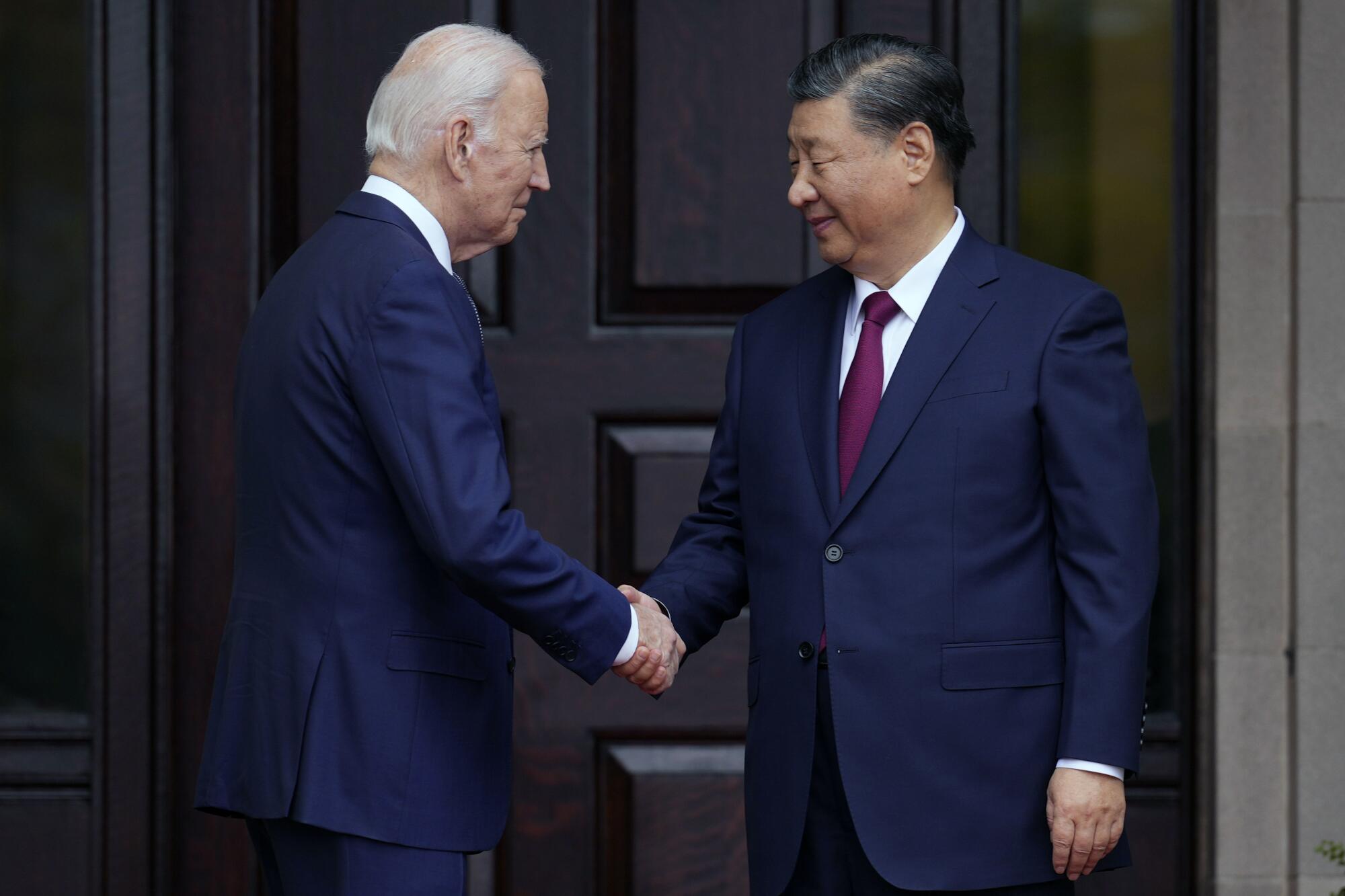
President Biden greets Chinese President Xi Jinping in Woodside, Calif., in 2023.
(Doug Mills / Pool Photo)
Although China’s progress has exceeded U.S. expectations — especially since DeepSeek released its model over a year ago — the state has focused computer power on specific applications rather than the broad strategy needed to develop more powerful models capable of advancing toward AGI.
“It’s not just chips. It’s money,” Sheehan added. “China’s leading companies are much more financially constrained than U.S. companies. There’s concern over a bubble here, but OpenAI is valued at something near $800 billion. Leading Chinese companies that have gone public are valued at $20 billion. There’s just an orders-of-magnitude gap in available financing.”
Still, some in the U.S. government fear China won’t need comparable computing power if it simply steals the technology wholesale.
Doing so isn’t simple. But last month, in a memo, the White House Office of Science and Technology Policy accused Chinese actors of “industrial-scale campaigns to distill U.S. frontier AI systems,” in effect replicating the performance of the most advanced existing models “at a fraction of the cost.” The memo did not accuse Beijing of endorsing the activity.
In the process, the memo added, carefully constructed security protocols are deliberately stripped away.
China’s negotiating advantage
Whatever its strategic calculus may be, China would enter talks with the Trump administration trailing in the race — while disagreeing on the nature of the finish line.
AGI, in theory, could reach a stage of recursive self-improvement that results in a loss of human understanding or control. But if it is only the Americans, and not the Chinese, seeking to reach that threshold, then who is responsible to stop it?
Daniel Remler, who led AI policy at the State Department during the Biden administration and took part in the Geneva talks, cast doubt on Chinese claims of disinterest in AGI and ignorance of its risks. China falling behind in the race is no strategic design, he said.
“Chinese technologists are close observers of the U.S. AI ecosystem, and sometimes they say what they think,” Remler said. “Many were impressed by the [Mythos] model to the point of despair. Leaders in China’s top AI labs have been vocal in recent months, even before Mythos, about how compute-constrained they are at the frontier. Some have said they may never catch their American competitors.”
Talks at this point in the race could follow a familiar pattern in the recent history of U.S.-China diplomacy, in which Beijing claims it is behind the United States in development, ultimately securing a handicap and greater concessions at the negotiating table.
In other competitive domains — such as with China’s entry into the World Trade Organization and in cybersecurity negotiations between Beijing and the Obama administration — agreements were ultimately reached that Washington believes in hindsight disadvantaged American companies.
The Trump administration, Remler added, “needs to approach AI diplomacy with China with clear-eyed expectations anchored to our own national interests.”
Silicon Valley itself is divided over regulating AI. Anthropic, which was founded on concerns that other AI companies were failing to take safety and alignment concerns seriously, raised alarms over Mythos, its own model, to the Trump administration, a moment that has prompted reflection at the White House on the best path forward.
Spooked after meeting with leaders from America’s top banks over their vulnerabilities, Treasury Secretary Scott Bessent internally advised U.S. government reviews of future model releases — a practice already underway in China, where the training parameters for models, known as “weights,” have been publicly released.
Even the suggestion of government oversight sparked backlash from Silicon Valley. Last week, the White House sent out a memo to reassure industry allies that submitting new models for federal review would be strictly voluntary.
If talks ultimately resume between Washington and Beijing on AI, experts believe the negotiations would be far more complex than those that resulted in arms control agreements governing nuclear weapons in the Cold War.
The superpowers would not only be discussing threats of instability to the global financial system, but also fears of proliferation — advanced AI tools getting into the hands of bad actors interested in using bio- or cyberweapons that could target both countries.
And they ultimately would have to decide whether to discuss regulating the integration of AI into the Chinese and U.S. militaries, an almost unfathomable goal between the world’s biggest adversaries, where trust is lowest and verification would be hardest.
Those in the industry who most fear what artificial superintelligence could bring have told the Trump administration that talks with China are an existential necessity.
Dario Amodei, the chief executive and co-founder of Anthropic, speaks at an event in New York in 2025.
(Michael M. Santiago / Getty Images)
But even within Anthropic, which has championed diplomacy, there are concerns that Beijing could exploit its current disadvantage to entangle American industry at the cusp of its crowning achievement.
Rather than pushing for a single sweeping agreement, industry insiders are advising the administration to pursue targeted deals with Beijing to mitigate specific risks, like the pact on nuclear command and control, two industry sources said.
In private, both Xi and Chinese Foreign Minister Wang Yi seemed to understand that the gravity of the emerging technology before them required some form of cooperation, Sullivan said.
“At a conceptual level, I believe they had a conviction on that and authorized it,” Sullivan said, “but I believe their level of urgency was considerably lower than ours, and saw this as a longer-term process that would play out over time.”
“Their level of urgency and their stake in it has gone up,” he added.
The National Science Foundation suspended at least 18 research grants to UC Berkeley last month despite a court injunction restricting such suspensions, according to an attorney representing university scientists in a class-action lawsuit.
The NSF declined to comment on the suspensions.
The grants include at least one that the NSF had previously canceled and was compelled by a federal court order to restore, for a series of mixed-reality exhibits at the Lawrence Hall of Science showcasing Indigenous Ohlone knowledge about the natural world, said one of the project’s leaders, Jedda Foreman.
Foreman, an associate director at the Lawrence Hall of Science, said another researcher on her team received an email from UC Berkeley’s vice chancellor of research, Katherine Yelick, notifying them that the National Science Foundation had suspended the $1.4-million grant. Foreman said she viewed the email, which said the university had received a letter from the NSF raising concerns about “foreign funding.” The email did not provide a copy of the letter or explain further, she said.
Foreman said the Lawrence Hall of Science had not received any foreign funding for the project.
“The grantees were given near-zero information about what was problematic in the execution of their grant,” said Claudia Polsky, a professor at UC Berkeley School of Law who is representing Foreman and other researchers in a suit they filed last year contesting a previous round of grant cancellations by the Trump administration.
Polsky said her legal team was seeking more information about the 18 suspensions, but was concerned that the freezing of Foreman’s grant may violate a court order a federal judge issued in that case restoring the defunded projects.
UC Berkeley spokesperson Dan Mogulof said in a statement that the university “is engaged with the government on matters pertaining to research grants, and remains committed to compliance with all federal laws, rules and regulations.”
He declined to comment on the types of grants affected, the amount of funds at stake, or the potential effect on the campus.
One of the Lawrence Hall of Science exhibits, which were co-designed with Ohlone youth, is scheduled to open Sunday, with another set for the fall of 2028. Researchers also are studying whether participating in creating exhibits sparks more interest in science among Indigenous young people and makes them more likely to pursue STEM careers.
“We’re doing a lot of hoping and finger-crossing that something works out,” Foreman said. “It was such a powerful project and we really want to be able to share what we’ve learned.”
National Science Foundation turmoil
The University of California received $525 million in National Science Foundation grants in the 2024-25 budget year. But that funding source has become increasingly volatile under the Trump administration as the federal agency has terminated nearly 2,000 grants nationwide that it said did not align with its priorities — including those focusing on diversity, equity and inclusion — and has been slower to approve and disburse new awards.
Other federal agencies also terminated research grants en masse last year. Some of the cancellations have been reversed by the courts.
UC researchers are contesting grant reversals by the National Science Foundation, Department of Energy, National Institutes of Health, Department of Transportation, Department of Defense, Environmental Protection Agency and National Endowment for the Humanities in the class-action lawsuit, filed last year. The University of California is not a party to the suit.
Last June, the researchers won a key legal victory when U.S. District Judge Rita Lin issued a preliminary injunction restoring grants canceled by the NSF, EPA and NEH — including for the Ohlone-focused exhibits co-led by Foreman, one of six named plaintiffs in the case. The judge barred the agencies from revoking funds using form letters that didn’t include an explanation specific to the grant at stake, or because of Trump’s anti-DEI executive orders.
Judge Lin stepped in again after the NSF froze hundreds of grants to UCLA in August, amid attempts by the Trump administration to secure a $1-billion settlement from the university over allegations of campus antisemitism. Indefinitely suspending a grant was the same as terminating it, Lin said in a ruling requiring the agency to reinstate the funds.
Polsky said last month’s suspension of Foreman’s grant raised concerns that the Trump administration was seeking a way around those orders. “It seems to us like something that should not have been canceled on the merits and raises suspicion that this was just a different way to cancel the grant,” she said.
UC looks to state for alternative funding
The University of California is ramping up efforts to find alternative funding for its multibillion-dollar research enterprise as federal support becomes less reliable. On Monday, UC President James Milliken spoke alongside state Sen. Scott Wiener and United Auto Workers president Shawn Fain at a Sacramento rally in support of state legislation to create a $23-billion fund for scientific research.
If successful, the bill will place a bond measure on the November ballot. Money from the bond would go toward research in wildfire and pandemic preparedness, new medical treatments and other areas, with revenue from inventions shared with the state. The state Assembly’s appropriations committee is set to consider the bill Thursday.
“If the federal government is going to continue to attempt to reduce funding for the research that has been so important to UC — that saves lives, that drives the economy — then the state of California, I hope, will be able to step up,” Milliken said at a meeting of the university’s Board of Regents on Wednesday.
UC Provost Katherine Newman told the regents she has been meeting with leaders of the Russell Group, a consortium of the United Kingdom’s top universities, to discuss collaborating on research in climate change, clean energy and public health — all areas that have seen federal funding threatened under the current administration.
Mello writes for Berkeleyside, which originally published this story. It wasdistributed through a partnership with the Associated Press.
When political commentator Ana Navarro recently arrived at Mercado Little Spain, the José Andrés-owned food hall downstairs from CNN’s New York studios, a seat was ready for her constant companion, a rust-colored miniature poodle named ChaCha.
“I am her service human because I’m servicing her all day,” Navarro said of the well-behaved pooch who has been by her side since the 2020 COVID-19 lockdown.
As Navarro and a reporter order tapas dishes for the next two hours, patrons at nearby tables raise their cellphone cameras. Andrés’ daughter Carlota stops by and gives an update on her father, a Navarro pal. Later, a Spanish-speaking young woman comes over and thanks Navarro, a political exile from Nicaragua, for defending immigrants amid the aggressive deportation efforts of the Trump administration.
In a fragmented media world where critical mass is becoming harder to attain, Navarro has become one of media’s most recognizable political talking heads thanks to her two high-profile TV roles.
She is a co-host of ABC’s “The View,” the No. 1-rated daytime talk show that has become a target in Federal Communications Commission Chairman Brendan Carr’s efforts to discipline President Trump’s broadcast media critics. She is also a regular panelist on CNN’s roundtable program “NewsNight with Abby Phillip,” which extends its reach far beyond its modest ratings through frequent viral clips on social media.
In February, Navarro, 54, joined the growing list of media personalities who have launched a digital platform to reach consumers no longer watching traditional TV with a weekly podcast for iHeart called “Bleep! With Ana Navarro.”
Navarro is her uncut self on “Bleep!” She interviews guests but can also go into a 30-plus minute monologue without a script when she records at iHeart’s midtown Manhattan studios, where ChaCha looks on from a cushy pillow.
Navarro delivers her arguments against the Trump administration as if she’s schmoozing with friends across a kitchen table. She always appears calm but as the podcast title suggests, she serves up a few four-letter words she doesn’t use on TV.
“Bleep!” gives Navarro her own platform at a time when the legacy media networks she works at are under pressure. Upheaval is expected at CNN if parent company Warner Bros. Discovery becomes a part of Paramount and its Trump-friendly owners David and Larry Ellison.
Carr recently called for an early review of ABC’s TV station licenses. He said its related to an investigation into parent company Disney’s diversity practices but it comes amid the administration’s criticism of the network’s Trump coverage, which has included “The View.”
Ana Navarro on the set of ABC’s “The View.”
(Lou Rocco (ABC))
Navarro was pulled into the fray last year when she was approached by Walt Disney Co. Chief Executive Bob Iger at ABC’s upfront advertiser presentation in New York. The huddle led to reports that they discussed the anti-Trump commentary on “The View.”
“We had an honest conversation but I’m not going to tell you what it was,” she said. “Nobody is muscling us. All I’ve got to do is show up and do the same thing that I’ve always done, which is be as truthful, and authentic and informed.”
(On Friday, ABC filed a petition with the FCC over the agency’s recent scrutiny of “The View,” and whether the program qualifies for an exemption from seldom enforced equal time rules for political candidates. The network accused the FCC of actions violating its 1st Amendment right to free speech.)
Navarro has been pounding at Trump for so long, it’s hard to remember that her rise as a TV pundit began 14 years ago when she was a loyal conservative Republican. Jeff Zucker, who ran CNN from 2012 to 2022, said her personal evolution sets her apart from other pundits.
“She’s funny, insightful, knows how to turn a phrase and she’s gone on a political journey,” Zucker said in a recent interview. “So she understands the entire political spectrum as well as anyone.”
Navarro was eight years old in 1980 when her family fled Nicaragua and sought political asylum in the U.S. after the socialist Sandinista National Liberation Front took power. Her father stayed behind to fight with the anti-communist rebel Contras in the country’s civil war.
“Reagan was taking on the Sandinistas when Bernie Sanders wasn’t,” she said.
She was granted amnesty and became a U.S. citizen under the immigration reform bill signed by President Reagan in 1986.
Growing up in Miami, Navarro was part of the enclave of Latinos whose political perspectives were shaped by having fled Fidel’s Castro’s Cuba and other communist regimes in Latin America. She became a political operative in Republican politics, starting in local Miami races and eventually served as national Hispanic chair for 2008 GOP presidential nominee John McCain. Her Cuban-born husband, Al Cardenas, was on Reagan’s transition team and once led the Republican Party in Florida.
Navarro watched in dismay in 2015 when Trump came down the escalator of the midtown Manhattan skyscraper that bears his name to announce he was seeking the Republican presidential nomination. “Calling Mexicans rapists and criminals — that just hurt my heart,” she said.
When Trump mocked a disabled journalist during a campaign rally, Navarro was reminded of family struggles with one of her older brothers, who has non-verbal autism and is self-injurious. “That brought back so much outrage and anger,” she said. “For me that was a line I could never forgive.”
But being an anti-Trump Republican has become a lonelier job in recent years as the party establishment’s support solidified behind Trump during the historically successful campaign in 2024 that returned him to the White House. For Navarro, it has meant the end of many long-standing relationships.
“I’ve lost some very close friends over Donald Trump,” she said. “And I’ve had to make peace with that. They feel that I’ve betrayed the Republican Party. Some of them think I’m an opportunist, doing this for today.”
One of those friends is Secretary of State Marco Rubio, who she’s known her entire adult life. Navarro still has his cell number in her contacts, but it’s been awhile since she’s called. She still respects Rubio‘s credentials in foreign policy but doesn’t see herself ever supporting him if he runs for president.
“Unless he was running against Satan incarnate, no, I would not go over to him,” she said.
Navarro keeps her cool on “NewsNight,” which occasionally erupts into bedlam when guests clash with Scott Jennings, the show’s resident MAGA Republican. But she misses the days of sparring with Democratic operative Donna Brazile when they were on opposing sides on CNN’s Washington set, and then went out for oysters and wine at Old Ebbitt Grill afterward.
“It’s a completely different world than it was,” Navarro said.
The highly self-confident Navarro has always spoken her mind, encouraged by her father and the Sacred Heart nuns who operated her private school in Miami where she still resides. “Those nuns could run Fortune 500 companies,” she said.
She is not afraid to draw on her own painful, personal experiences to deliver a point. Another older brother died of a heart attack at age 38. Her cousin’s son was a fatality at the 2016 Pulse night club shooting in Orlando, Fla.
“I refuse to live in hopelessness and trauma,” she said. “The things I’ve gone through have shaped me into who I am and made me resilient and empathetic. One of the reasons I abhor Donald Trump is because he completely lacks empathy.”
Where Navarro often separates herself from most Democrats is foreign policy. When Venezuela President Nicolás Maduro was ousted and arrested by U.S. forces, Navarro, on holiday in Madrid, joined exiles from the country as they celebrated in Puerta del Sol.
Navarro expects to have the same reaction if Trump makes good on his threats to end Cuba’s communist regime.
“I will go out there with my metal pan and my metal spoon and I will bang the drums in joy,” she said.