When things go awry, Trump deflects blame
WASHINGTON — It is among the most famous phrases in presidential history: “The buck stops here.” Except with President Trump, it almost never does.
Concerns about a weak economy and still-high inflation? His predecessor, President Biden, saddled him with that, he says, even though the Democrat has been out of office for 18-plus months and despite Trump once promising an immediate turnaround.
The problem-plagued revamp of the Lincoln Memorial Reflecting Pool? That was marred by vandalism, the president insists, even though the office of a prosecutor he put in the job has said the damage was due to shoddy workmanship.
The increasingly unpopular war in Iran that has kept oil prices high, Trump’s approval rating low and sent shock waves through the global economy? Actually, this was Trump making up for timid earlier presidents who, he argues, squandered nearly 50 years of opportunities to curb Iran’s nuclear ambitions.
Pithy slogans aside, all modern presidents shift responsibility onto others to some degree, frequently blaming the White House occupant who preceded them or Congress — or both. But Trump has taken it to a new level, essentially embracing a de facto political strategy of being in charge of everything but responsible for nothing when things go badly.
“Taking responsibility being a characteristic of presidential leadership — or any kind of leadership — is absolutely true,” said Nicole Anslover, a history professor at Florida Atlantic University and author of “Harry S. Truman: The Coming of the Cold War.”
Trump’s tendency to point fingers at others is increasingly in the spotlight in the run-up to November’s midterm elections, when Republicans are trying to retain control of Congress. His unwillingness to accept blame sometimes leads him to deny that there are problems at all, and could leave GOP leaders in tight races with little reassurance for voters that their concerns are being addressed.
The White House counters that Trump is working to correct long-festering challenges, not simply throwing up his hands and ignoring them.
The president is “rightfully addressing the failures of his predecessors while taking action to deliver big wins for the American people,” spokesperson Taylor Rogers said, pointing to a series of policies that she said Republicans can run on, including tax cuts, efforts to lower prescription drug prices, cracking down on immigration and the U.S.-Mexico border, increasing domestic energy production and a strong stock market.
A pattern dating to Trump’s first term
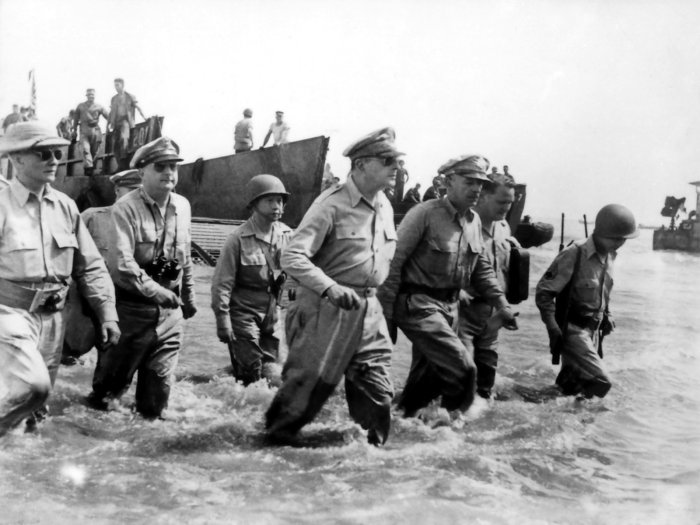
Truman famously kept a “the buck stops here” sign on his desk as president. That came from “pass the buck,” which, according to Truman’s presidential library, dates to frontier times, when poker players would pass a buckhorn handle knife to the person whose turn it was to deal the cards.
“The president, whoever he is, has to decide,” Truman said during his farewell address in 1953. “He can’t pass the buck to anybody. No one else can do the deciding for him. That’s his job.”
The understanding of the phrase has broadened over the years to include taking responsibility for the outcome of tough decisions. Trump used to espouse similar beliefs, saying back in 2013 that in running a business, “Whatever happens, you’re responsible. If it doesn’t happen, you’re responsible.”
Accepting the 2016 presidential nomination, Trump said, “Nobody knows the system better than me, which is why I alone can fix it.” But as president, he has often suggested that the solution and blame rest elsewhere.
“The buck stops with everybody,” Trump said in 2019, during a lengthy government shutdown. In 2020, on the same day he declared the COVID-19 pandemic a national emergency, he said, “I don’t take responsibility at all” for a lack of coronavirus testing.
Anslover said Truman took full responsibility for dropping atomic bombs on Japan even though he was not informed that the U.S. was developing such weapons until his predecessor, President Franklin Delano Roosevelt, died.
President Kennedy saw his approval ratings rise after he acknowledged he was to blame for the failed Bay of Pigs invasion in Cuba. President Reagan said he was sorry for any involvement he may have had in the Iran-Contra scandal even while saying he wasn’t sure he was to blame. “The buck stops here with me,” he said then.
At his final news conference in early 2009, President George W. Bush listed a series of mistakes he had made, including failing to find weapons of mass destruction in Iraq. His successor, President Obama, said, “I screwed up,” after his nominee for health chief, Tom Daschle, withdrew because of unpaid back taxes.
Presidents before Trump “really usually take accountability,” Anslover said.
‘We inherited a total catastrophe,’ Trump says
The president acknowledged in a recent Punchbowl interview that voters are angry, but he said they are not mad at him but at congressional Republicans.
Trump believes his party can hold its congressional majorities after November, but he was clear that if Republicans lose, it won’t be his fault — echoing his comments before the 2018 midterms that he would not accept blame if his party lost control of the House, which it did.
Trump’s approval rating on the economy, once seen as among his strongest issues, has fallen throughout his time in office, from 40% in March 2025 to 32% in July, according to Associated Press-NORC Center for Public Affairs Research polling. About 6 in 10 U.S. adults say Trump’s economic policies have made economic conditions worse, according to Pew Research Center polling.
“The public certainly expects the president to be concerned about, and focused on, making life more affordable,” Republican pollster Frank Luntz said.
Trump instead points to Biden, under whom inflation hit a four-decade peak of 9.1% in 2022 as the pandemic was still roiling the world economy, before declining to 2.7% by November 2024. Last month, pressured by the Iran war, it was 3.4%.
“When we took office, we inherited a total catastrophe,” Trump said at a recent rally, later adding, “I inherited those high prices, just so you understand.”
Andrew Bates, a Democratic strategist and former Biden White House spokesperson, noted that Trump no longer mentions his campaign promise to “immediately end inflation” on Day One.
“He may not remember having made those promises, but swing voters sure as hell do,” Bates said.
Iran and the Reflecting Pool
The president has characterized the Iran war as “a little excursion” or “detour.” To play down how long it has lasted, he frequently notes that U.S. wars in Vietnam and Afghanistan dragged on for years, though the Iran conflict — which he initially said would be over in four or five weeks — is now in its sixth month with no clear end in sight.
Trump has sought to shift blame to the past on the Lincoln Memorial Reflecting Pool, falsely suggesting that Biden and Obama spent “hundreds of millions of dollars” trying unsuccessfully to fix it.
But Trump’s main defense claim has been vandalism. And so far at least four cases alleging that, including the most prominent case against an Olympic canoeist, have been dropped due to a lack of evidence.
Anslover said that, after more than a decade in politics, Trump has proved he is not afraid to violate norms of presidential comportment. Lots of his core supporters do not seem bothered.
“For many Americans, it has either been a shift in how they view the presidency, or, like with so many things, they just feel empowered to say, ‘These are my priorities. My priority is not the facts,’” she said.
Weissert writes for the Associated Press. AP writer Amelia Thomson DeVeaux contributed to this report.