Toronto, Canada – When Diana Gallego listened to Canadian Prime Minister Mark Carney’s widely touted speech at the World Economic Forum at the start of this year, she couldn’t help but feel a disconnect.
Carney had made an impassioned plea to the world’s “middle powers” to break with a United States-led international order that he said was no longer working, and his words found receptive audiences around the world.
Recommended Stories
list of 3 itemsend of list
But for Gallego, co-executive director of FCJ Refugee Centre, an organisation that supports refugees and asylum seekers in Canada’s largest city, the prime minister’s statements rang hollow amid his government’s hardening approach to immigration.
“We saw the [prime] minister going to Davos [with] this beautiful discourse, saying we should not copy our neighbours … But internally, the policies are telling us another story,” Gallego told Al Jazeera. “Canada is closing the doors now.”
Gallego is among more than a dozen experts – from lawyers to professors, rights advocates and former government officials – who told Al Jazeera that Canada is at a “troubling” crossroads in its policies towards migrants and refugees.
As Canadians have grappled with rising economic and social pressures in recent years, a decades-old consensus on the benefits of immigration has frayed.
Hostile rhetoric blaming newcomers for Canada’s ills has intensified, and Carney’s government has slashed temporary visas and restricted access to asylum. Experts say a “generational shift” is under way.
“The general rhetoric is, ‘We don’t want you here’,” said Gallego.
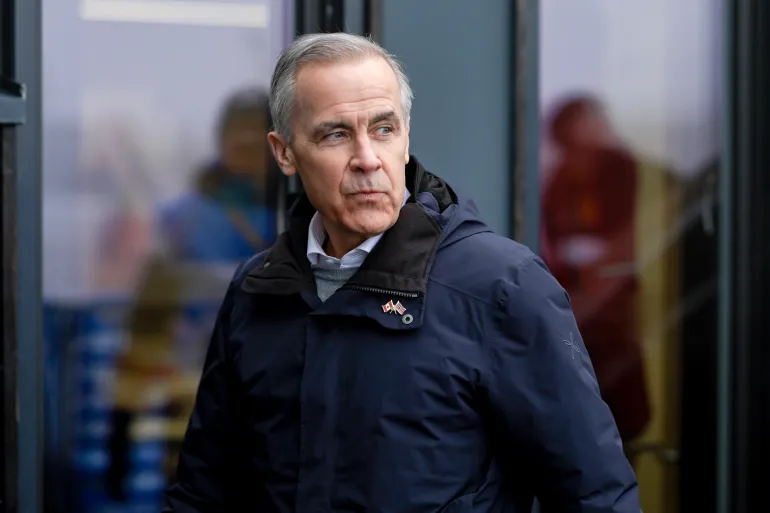
Canadian Prime Minister Mark Carney’s Liberal Party won the 2025 elections [File: Christoffer Andersen/EPA]
Influx in temporary migration
A settler-colonial state, Canada has encouraged successive waves of immigration throughout its history, from largely European settlement in the early to mid-1900s to specialised programmes that brought refugees and high- and low-skilled workers to Canadian shores.
For decades, that influx of newcomers was widely viewed as a positive thing: immigration was fuelling the country’s economy, staffing key job sectors and counteracting a rapidly ageing population.
But over the past few years, Canada has seen one of the most dramatic shifts in how the public views immigration – and the government has tapped into increasingly negative sentiment to cut programmes and pass new, restrictive laws.
The policy changes began under former Prime Minister Justin Trudeau, whose Liberal Party government had dramatically increased temporary immigration during the COVID-19 pandemic to fill labour market gaps.
The figures shot up rapidly and, by October 2024, there were nearly 3.15 million non-permanent residents in Canada, accounting for roughly 8 percent of the population, according to official figures.
At the same time, systemic issues – from a shortage of affordable housing to high grocery costs and long hospital wait times – were putting the squeeze on many Canadian households.
Public attitudes quickly hardened, and a 2024 poll (PDF) found a majority of Canadians saying for the first time in decades that there was “too much immigration”.
Since then, several incidents of xenophobic violence have been reported, including in some of Canada’s largest cities, where the influx of migrants has been among the most visible.
Under pressure as angry discourse soared, the Trudeau government promised in 2024 to get immigration back to “sustainable” levels, and the cuts began, including most notably to international student visas.
“The reality is that not everyone who wants to come to Canada will be able to – just like not everyone who wants to stay in Canada will be able to,” Marc Miller, Canada’s former immigration minister, said in September that year.
A major intersection in Toronto, Canada’s largest city [Jillian Kestler-D’Amours/Al Jazeera]
‘Erroneous beliefs’
The numbers of arrivals dropped quickly as student and work visas were cancelled, forcing thousands of people to leave Canada or remain without legal status. By the start of this year, non-permanent residents totalled about 2.67 million, according to government figures, a 15 percent drop from the peak in October 2024.
“I don’t think you can blame the housing crisis in Canada on immigration, but there’s no doubt that the radically increased numbers under Justin Trudeau’s regime had a political effect,” Allan Rock, a former Canadian justice minister and Liberal lawmaker, told Al Jazeera.
The government, Rock explained, has been “reading the room and sensing that Canadians were connecting local economic and financial difficulties with migration”.
At the same time, right-wing politicians have seized on those public attitudes, with the opposition Conservative Party earlier this year pushing the governing Liberals to cut healthcare for people it described as “fake refugees”.
The Conservatives, also, have echoed US President Donald Trump in advocating for changes to “birthright citizenship”, claiming that the “outdated rule” that grants citizenship to anyone born in Canada “presents yet another strain on our immigration system that Canada can’t handle”.
“With over 7 per cent of Canada’s population here on temporary status – and arrivals massively outpacing the capacity of our housing, healthcare and jobs markets – something needs to change,” the party said.
Rights advocates have denounced that rhetoric while accusing policymakers of falsely linking migrants and refugees to social problems to absolve themselves of responsibility for a years-long failure to properly fund healthcare, education and other services.
On the housing issue, for instance, experts have found (PDF) that, while immigration increases demand for housing stock, its effect on prices is far less important than public discourse would have people believe.
“Leadership means not simply caving into public opinion when it’s based on erroneous beliefs,” Rock told Al Jazeera. “We’re buying into, and we’re supporting, a growing international trend to tighten borders and build walls and validate erroneous beliefs about refugees and migrants.”
“It’s a betrayal of values that this country has always stood for, and I find it troubling.”
Carney doubles down
Yet, since taking office in April 2025, Carney – the prime minister – has continued where his predecessor Trudeau left off on immigration.
In late March, Carney’s Liberal government passed a sweeping new law that grants Ottawa the power to cancel visas en masse, including for permanent residents, if it deems it in the “public interest” to do so.
The law, known as Bill C-12, also restricts access to Canada’s refugee status determination system in ways that lawyers told Al Jazeera are “arbitrary” and likely run counter to the country’s constitution, the Canadian Charter of Rights and Freedoms.
The government has justified the measure – which is expected to face a constitutional challenge in court – as part of an effort to streamline a backlogged asylum system and prevent “fraud”.
At the end of last year, nearly 300,000 cases were pending at the independent tribunal that adjudicates refugee claims in the country, known as the Immigration and Refugee Board of Canada (IRB).
A spokesperson for Immigration, Refugees and Citizenship Canada (IRCC), the federal immigration department, told Al Jazeera that it had introduced Bill C-12 “as global migration pressures intensify”.
The law introduces “measures to address challenges such as sudden increases in asylum claims and situations where existing processes may be used to circumvent regular immigration pathways”, the spokesperson said in an emailed statement.
“This means we can provide faster protection for those in need,” they said, adding that Bill C-12 also respects Canada’s obligations under the United Nations Refugee Convention as well as the Canadian Charter of Rights and Freedoms.
But experts say the law will do little to address the backlog at the IRB. They have also accused lawmakers of failing to dispel – and even of playing into – xenophobic rhetoric rather than addressing the real concerns of Canadians or structural problems in the asylum system.
The government is “creating this sense in the public that people are scamming us, they’re taking advantage of the system [and] there’s something broken that needs to be fixed”, said Julia Sande, a lawyer at Amnesty International Canada.
“People’s struggles are real. People are facing a housing crisis, inflation and unemployment, wage stagnation and widening inequality,” she told Al Jazeera.
“Then, instead of taking responsibility or making the changes needed to address these things, governments look for a group to blame – and who’s better to blame than people who don’t have the right to vote and can’t vote you out?”
Healthcare workers protest against cuts to a refugee health programme in Toronto, Canada, in April 2026 [Jillian Kestler-D’Amours/Al Jazeera]
Carney’s ‘honeymoon’ phase
Despite such concerns raised by rights advocates, Canada’s changing immigration policies do not appear to have drawn much attention – or pushback – from the wider public.
A wide-reaching effort by civil society groups earlier this year to get the government to make amendments to Bill C-12 failed to secure any meaningful changes.
In addition to that law, the Carney government also has rolled back a healthcare programme for refugees, extended a freeze on refugee resettlement applications, and announced significant funding cuts to several ministries, including the immigration department.
Planned cuts at the IRB – the board that adjudicates refugee claims – have also been reported, fuelling concerns that delays may get worse.
“The fact that there is no real plan in place to deal with this backlog [at the IRB] then contributes to negative opinion by the public about refugees,” said Maureen Silcoff, a refugee lawyer who previously served as a member of the tribunal.
“I think the government has a responsibility to proactively undo some of the myths that are circulating,” Silcoff told Al Jazeera. “This is especially important in times where we see in other countries that there’s a surge of anti-immigrant and anti-refugee rhetoric.”
Nevertheless, Carney continues to enjoy high approval ratings as he has justified government policies during his first year in office as part of an “elbows up” response to pressure from the Trump administration.
“The Carney government still seems to be [enjoying] a honeymoon of sorts,” said John Carlaw, an assistant professor at Toronto Metropolitan University who specialises in Canadian politics and immigration.
“We’re seeing a major withdrawal of social spending and then an investment in militarism and border enforcement,” Carlaw told Al Jazeera, describing it as a “troubling period” in Canada.
“I think C-12 really showed the government is not interested in hearing from communities that work with migrants and immigrants to make policies that are consistent with a human rights framework. They just don’t want to listen to dissent.”
Luisa Ortiz-Garza, a migrant rights organiser at Parkdale Community Legal Services, speaks during an event in support of migrants and refugees in Toronto in late April [Jillian Kestler-D’Amours/Al Jazeera]
‘Not immune’ to backsliding on human rights
Despite that, rights advocates say they will continue to push back against the direction Canada is heading on immigration.
“We can’t stop fighting,” Luisa Ortiz-Garza, a migrant rights organiser at Parkdale Community Legal Services, told a packed gymnasium at Trinity-St Paul’s United Church in downtown Toronto in late April.
Several dozen people joined the event, dubbed “No More Divide and Rule”, to denounce xenophobia and urge the government to grant legal immigration status for all migrants and refugees in Canada.
“What [the government is] doing is actually just putting people against each other,” Ortiz-Garza told Al Jazeera in an interview at her organisation’s office a few days before the gathering.
“It’s citizens against migrants [and] migrants against migrants because there is this idea that some migrants did things right and other migrants just jumped the queue or abused the system,” she said.
“We’re trying to have these conversations and bring people together: allies, citizens, migrants … so that we can actually talk about this and remind people about unity.”
That was echoed by Sande at Amnesty International, who warned that Canada is “not immune” to a backsliding on human rights. “Things will just continue to get worse until governments feel they’re held to account,” she said. “Yes, scapegoating may start with migrants, but it never ends there.”
Brits planning trips to Portugal this summer have been urged to stay vigilant, as there is a ‘troubling’ scam on the rise that targets tourists
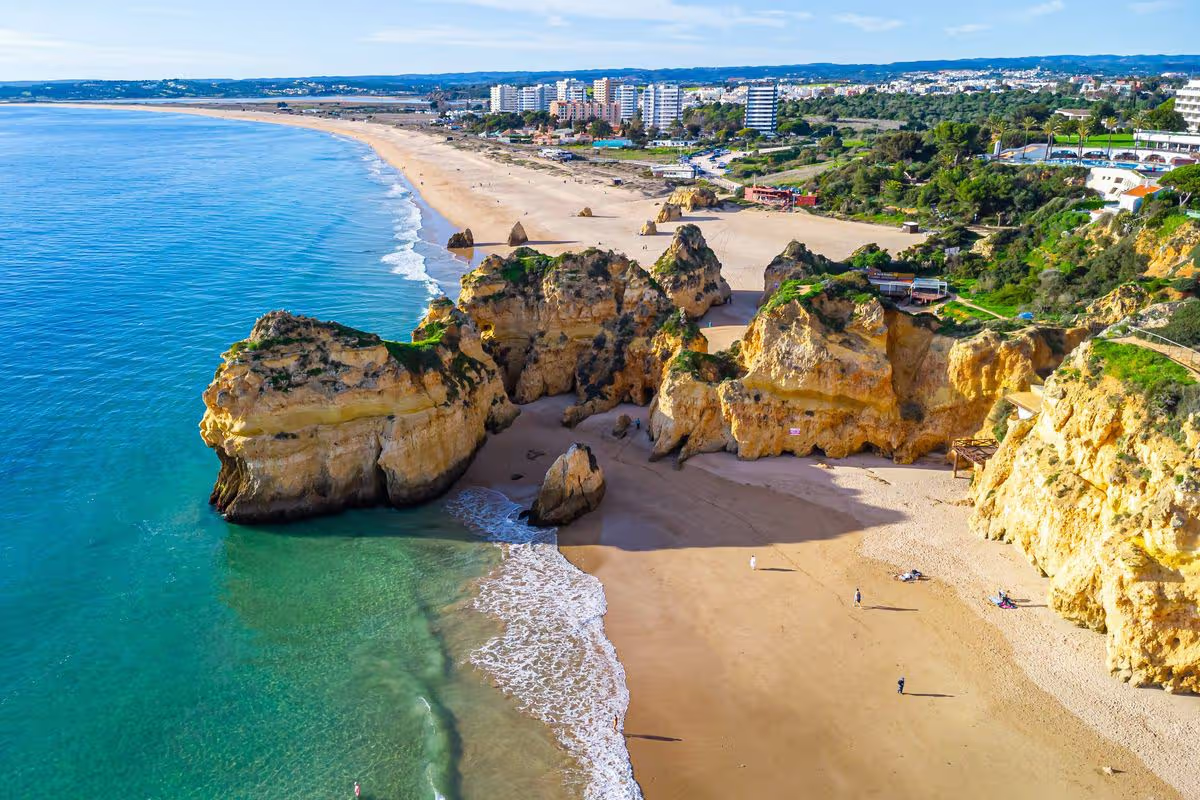
Holidaymakers must be wary when travelling in Portugal (stock photo)(Image: ThomasFluegge via Getty Images)
If you’re jetting off to Portugal this summer, there’s one “troubling” threat facing tourists that you need to know about. Portugal ranks among the most sought-after holiday spots for Brits, with roughly 3 million of us flocking to sun-drenched destinations such as Porto, The Algarve, and Madeira each year.
However, for those planning to chase the sunshine in the months ahead, there’s an important warning to heed. According to travel experts on social media, Portugal is grappling with a crisis that sees criminals deliberately targeting tourists to turn a quick profit – all while the nation’s cultural heritage pays the price.
Eric and Josien, a couple based in Portugal who frequently post travel content on Instagram, revealed that thieves across the country are pinching the iconic ceramic tiles adorning buildings and flogging them on the street, mainly to unsuspecting tourists who have no clue about the tiles’ origins.
The tiles, known as azulejos, are hand-painted ceramic pieces used to decorate churches, palaces, train stations, and even some residential properties. They represent a cherished element of Portugal’s culture and heritage, yet according to locals, there’s an “illegal black market” centred around stealing these tiles and hawking them on the street.
They explained: “Azulejos – those beautiful, hand-painted ceramic tiles – are one of Portugal’s most iconic and treasured art forms. Dating back over 500 years, these tiles cover churches, palaces, train stations, and even ordinary homes, turning buildings into vibrant storytellers of Portuguese history, culture, and craftsmanship.
Content cannot be displayed without consent
“But behind this beauty lies a troubling reality: an illegal black market that thrives on stealing these tiles.
“Thieves often target abandoned or under-renovation buildings, or even occupied homes late at night, using special tools to remove the tiles without damaging them. Once taken, these tiles are sold as ‘vintage’ or ‘reclaimed’ pieces through online shops, antique markets, and tourist areas – sometimes even shipped abroad.
“Because buyers rarely ask where these tiles come from, and regulations around these sales are limited, thieves profit while Portugal’s heritage suffers.”
Visitors to Portugal can purchase genuine azulejos from local craftspeople throughout the country, and the Instagram duo encouraged travellers to seek out artisan boutiques rather than purchasing from street sellers.
They added: “Never buy tiles without knowing their origin. If it looks like an authentic azulejo, ask questions and proof of its source. And support local artisans and shops that create or sell new, authentic tiles.”
What are azulejos?
Azulejos are intricately decorated ceramic tiles that typically measure around 5 to 6 inches (13 to 15cm) square. They’re most commonly found in Portugal and Spain, where they’ve been crafted since the 14th century. In Portugal, the tiles have predominantly featured in religious architecture, including adorning the Coimbra Cathedral.
While Spain largely stopped making the tiles by the 18th century, Portugal pressed on, eventually shipping them to the Azores, Madeira, and Brazil. They’re now frequently manufactured in Puebla, Mexico, where they’re regarded as the finest in the Western Hemisphere.
Due to their historical and cultural importance, they’ve become a sought-after keepsake for holidaymakers visiting Portugal. That said, you should always ensure what you’re purchasing has been ethically sourced, and its origins can be verified. If you suspect the tiles being offered could be stolen, steer clear of buying them.
The Portuguese National Tourist Board has been contacted for comment.
The CPJ says the ‘lack of concrete progress’ in the FBI investigation represents a failure by the US government.
Published On 8 May 20268 May 2026
The Committee to Protect Journalists (CPJ) has demanded a “public progress update” from United States authorities on the FBI probe into the Israeli military’s killing of Palestinian-American Al Jazeera journalist Shireen Abu Akleh, 51, who was shot dead in the occupied West Bank in 2022.
In an open letter to the Department of Justice (DOJ) and FBI chief Kash Patel, the CPJ said on Thursday evening that “the effectively stagnant status of this case is inconsistent with ensuring the security of US citizens anywhere in the world.”
It said the “lack of concrete progress” represents a failure by the US government to respond to the “killing of one of its citizens by a foreign military”.
It noted that there had been no formal interviews with witnesses, “despite the willingness of multiple witnesses to cooperate”, and no signs of FBI activity to gather evidence in Israel or Palestine.
Longtime TV correspondent for Al Jazeera Arabic, Abu Akleh, was covering Israeli army raids in the West Bank city of Jenin when she was killed by Israeli forces on May 11, 2022. She was wearing a clearly marked press vest when she was shot dead.
Shireen Abu Akleh shows her reporting from Jerusalem on May 22, 2021 [AFP]
Israel initially accused Palestinian fighters of her death, but the Israeli military later released a statement saying “it is not possible to unequivocally determine the source of the gunfire which hit” Abu Akleh. It added that there was a “high possibility” that she was hit by Israeli gunfire.
Many independent investigations conducted by CNN, The Associated Press news agency, and The Washington Post concluded that Abu Akleh was deliberately targeted, the CPJ letter noted.
‘Justice remains elusive’
The CPJ asked for a public update on the status of the investigation, a commitment to a timeline for the investigation, and the public release of its findings. It also said the investigation needs to be “impartial and independent, free from political considerations”.
Abu Akleh’s family said in a statement on Thursday, “despite the passage of time, justice remains elusive,” adding that the lack of justice “sends a dangerous message that journalists can be targeted without consequence”.
Abu Akleh’s death became a symbol of the wider Palestinian struggle. Murals of her have adorned the cities of the occupied territory as people remember her for her fearless reporting.
Since her killing, Israel has killed 258 journalists and media workers, the CPJ reported. Israel has acknowledged killing a number of journalists, alleging they had links to armed groups, accusations their employers deny and the CPJ calls “deadly smears”.
“The prevailing culture of complete impunity enjoyed by Israel is a direct factor in the continued targeting of journalists without deterrence,” said Sara Qudah, CPJ’s regional director. “Without an independent investigation and real accountability, such attacks will only continue to escalate, emboldening those who seek to silence the truth through violence.”