
trek

Contributor: We need more of the hopeful sci-fi that ‘Star Trek’ gave us 60 years ago

Rod RoddenberryGuest contributor 

A few years ago, I received a call I’ll never forget. Jeanette Epps, an astronaut aboard the International Space Station, Zoomed into my living room from 250 miles above Earth. During our conversation, she told me that one of the reasons she chose her career was a television show my father created in 1966.

She wasn’t alone. I’ve heard versions of that same story from countless people over the years. Engineers. Scientists. Astronauts. People who saw possibility on a television screen before they ever saw it in the real world.

They credit “Star Trek” for showing them a future they wanted to help build. That’s an extraordinary thing for a television series to accomplish. It didn’t just entertain millions of people. It gave many of them a direction.

And I don’t think that was because of the ships, the gadgets or the aliens. It was because, underneath all of it, was a profoundly human belief that we are capable of becoming something better.

There was a time when science fiction made a bet on humanity. A bet that humanity was worth rooting for. We need storytellers willing to make that bet again.

I don’t think we have an innovation problem. We have an inspiration problem.

We talk a lot about what we’re leaving the next generation. The debt. The climate. The geopolitical mess. But there’s another inheritance we don’t talk about enough: what we show them is possible.

Today, many visions of the future are dominated by collapse, dystopia and fear. Those stories can have value. But conflict doesn’t always have to come from destruction. It can come from discovery. Two minds encountering an idea neither had considered. A crew facing the unknown with curiosity instead of fear. That kind of conflict doesn’t leave you feeling like the world is ending. It leaves you feeling like it’s just beginning.

Most storytelling holds a mirror up to who we are. Our flaws, our failures, our contradictions. But there is another kind. Stories built around characters a step or two ahead of where humanity is. Not perfect. But people who have learned how to cooperate, how to lead, how to stay curious and how to put something larger than themselves first. Characters you don’t just recognize. Characters you want to become one day.

That distinction changes what a story asks of you. And what you walk away believing is possible.

This year, “Star Trek” celebrates its 60th anniversary.

That’s not a milestone you reach by accident. Franchises built on spectacle fade. Ones built on something people actually needed tend to stick around.

The engineers who built Silicon Valley, the astronauts who went to space, the scientists pushing the edges of medicine and artificial intelligence — many of them trace a line back to this show. That wasn’t the plan. Nobody set out to build an innovation pipeline out of a television series. But that’s exactly what happened. When you give people a future worth believing in, they go build it — or sometimes they get inspired to imagine other hopeful destinations and lead us toward them. That’s not nostalgia. That’s a model.

One thing my dad understood that I think gets overlooked: “Star Trek” wasn’t going out into the galaxy to find aliens that looked different. It was going out to find aliens that thought different.

Diversity of perspective is how a species grows. My father gave that idea a name: IDIC. Infinite Diversity from Infinite Combinations. It didn’t mean you had to abandon your own point of view. It meant staying open to someone else’s. Because that’s how you grow. That idea has never been more relevant. And it has never been more achievable.

For the first time in history, a creator anywhere in the world can tell a story that reaches everyone, and now it can come from anywhere. The future belongs to everyone. The stories that shape it should too.

That astronaut who called me from space didn’t just watch a television show. She saw a future worth dedicating her life to.

Every generation needed something to build toward before they ever picked up a tool. A vision. A direction. A story that made the future feel worth the work. And right now, we’re not building enough of that.

We need stories that don’t just entertain us, but also become our compass. We need the kind of storytelling that doesn’t ask what could go wrong, but asks what could go right.

Rod Roddenberry, founder of the Roddenberry Foundation and son of “Star Trek” creator Gene Roddenberry and actor Majel Barrett Roddenberry, is an executive producer on current “Star Trek” television shows.

Insights

L.A. Times Insights delivers AI-generated analysis on Voices content to offer all points of view. Insights does not appear on any news articles.

Perspectives

The following AI-generated content is powered by Perplexity. The Los Angeles Times editorial staff does not create or edit the content.

Ideas expressed in the piece

  • The article argues that optimistic science fiction can do more than entertain: it can give audiences a constructive vision of the future and inspire people to pursue careers in science, engineering and space exploration. “Star Trek” is presented as an example of storytelling that made human progress feel attainable.

  • It contends that contemporary culture is overly saturated with collapse, dystopia and fear. Although such stories can be useful, the article suggests that narratives centered on discovery, cooperation and curiosity can encourage audiences to imagine what might go right rather than merely anticipate disaster.

  • The piece maintains that aspirational characters—people who have learned to cooperate, remain curious and serve purposes larger than themselves—can function as moral examples. In this view, fiction should not only reflect present flaws but also depict people and societies worth becoming.

  • It further argues that “Star Trek’s” emphasis on cultural and intellectual diversity remains especially relevant. The franchise’s principle of “Infinite Diversity in Infinite Combinations” is presented as a model for learning through different perspectives, while the series’ enduring influence is cited as evidence that hopeful stories can shape real-world ambitions.[1][2]

Different views on the topic

  • A contrasting perspective holds that dystopian and cautionary science fiction serves an essential purpose by exposing the consequences of reckless behavior, political failure and technological overreach. Recent commentary argues that many influential works were intended as warnings or satire, not as blueprints for an attractive future.[3]

  • Feminist dystopian fiction offers another counterpoint: bleak speculative narratives can make systemic problems—including misogyny, violence against women, gender inequality and threats to reproductive rights—more visible. From this perspective, darkness is not simply pessimism; it can be a way to represent harms that already exist and demand attention.[4]

  • Critics also caution that “Star Trek’s” hopeful vision can obscure tensions within its own world. The franchise combines ideals of cooperation and equality with armed exploration, alien conflict and interventionist politics, making it both an image of peaceful progress and a vehicle for examining militarism and political failure.[2]

  • Consequently, the strongest science fiction may not choose between hope and warning. Utopian stories can provide direction, while dystopian stories can identify dangers and test whether an envisioned future genuinely addresses exclusion, power and conflict. Treating either mode as sufficient on its own risks producing either inspiration without scrutiny or criticism without a constructive destination.[3][4]
Source link

Europe’s wildest pilgrimage route: a trek through the mountains of north-west Sweden | Sweden holidays

I wasn’t exactly in “Sunday best”, but I had made some effort. Well, I’d changed my underwear for the first time in a couple of days and given myself a baby-wipe bath. Still, as we filed into the chapel at Alkavare, I felt more a member of an expedition than a congregation. We sat on the low wooden benches, waterproof jackets rustling and leather walking boots stamping on the flagstone floor to keep warm. Fortunately, the priest, Mogens Amstrup Jacobsen, appeared to be a “man of the Gore-Tex”, as well as a man of the cloth, as he unzipped his own black rain jacket to reveal his dog collar. As the service began, the Arctic wind whipped through cracks in the dry stone walls, insulated only with reindeer hair, and candles flickered in their brass sconces.

I had hiked to Alkavare following the Präststigen, or “Priests’ trail”, a 37-mile (60km) route from Kvikkjokk that could stake a claim as Europe’s wildest pilgrimage route, and certainly one of its most beautiful. The Präststigen follows the path that priests would once have taken to the chapel, built in 1788, to perform a service each summer, and today, on the last weekend in July, intrepid hikers and perseverant pilgrims can attend that same service.

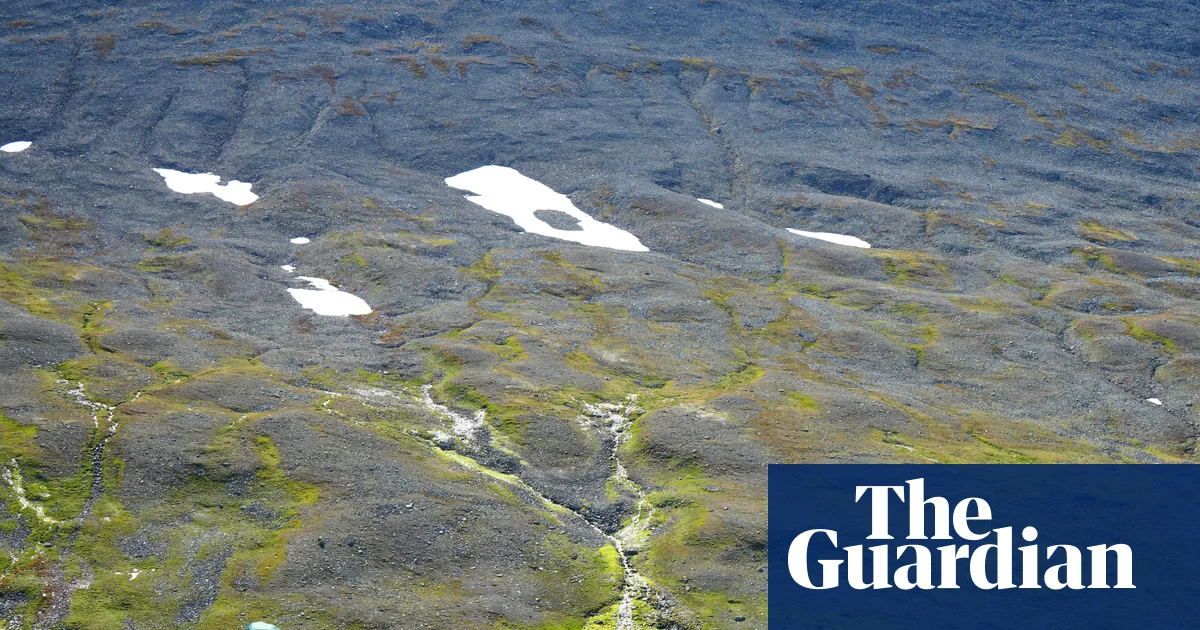
Alkavare sits on the western border of Sweden’s Sarek national park, home to many of the country’s highest mountains and steepest valleys, yet with no campsites or tourist huts and only scant sections of the more famous Kungsleden trail. There are no other marked paths and to hike here means wild camping, a heavy backpack and a sense of adventure. It was described by famed Swedish diplomat Dag Hammarskjöld in 1926 as vår sista stora vildmark – “our last great wilderness”.

Wild camping en route. Photograph: Arctic Sweden

“I hate it when people use the term ‘wilderness’,” Christian Heimrot from Laponia Adventures, a local guiding operator, told me, as I joined him on the research exhibition for a new Präststigen group trip launching next year. “This is a living landscape, people have lived, worked and shaped this land for thousands of years.” Indeed, Sarek national park, (as part of the wider Laponia region), was recognised as a Unsesco World Heritage Site in 1996 for both its cultural and natural value.

The Sami, Europe’s last Indigenous population, have braided themselves into these landscapes as tightly and beautifully as the thread of pewter in their traditional handicrafts. The Sami word for the Laponia area is Sápmi, the same word they use to refer to themselves, highlighting the indelible link between people and their environment. Sarek sits on the Sami’s traditional reindeer herding grounds. While they might now use motorcycles and snowmobiles to follow and herd the reindeer, their knowledge of and kinship with this landscape remains undimmed.

So, not wilderness, then, but certainly wild. To even reach the start of the Präststigen, I had crossed the Arctic Circle on the road north from Luleå, met with Christian at his warehouse in Jokkmokk (home to the famous Sami winter markets each February) to load up our rucksacks for the six-night trip, and journeyed an hour farther west to the town of Kvikkjokk. From there the trailhead was a short boat ride across Sakkat lake.

The first section of the trail climbed steeply, switchbacks tightly coiled in birch woodland; wild blueberries and cloudberries littered the path. Eventually we left the woodland and reached the ridge for our first proper view of Sarek. Away to the north was the cloud-covered summit of Bårddetjåhkkå, where in 1911 Swedish geologist Axel Hamberg built an observatory to conduct meteorological and glacial studies.

The trail involves walking through icy rivers, as there are no bridges. Photograph: Arctic Sweden

We slept soundly, as we eased into the rhythms of wild camping – water collected from a gin-clear lake, a hearty supper of reindeer stew, and an eye mask to keep out the midnight sun. The next day we hiked deeper into Sarek via the Vállevágge, the skies the blue of the Swedish flag, the silence only disrupted by the occasional breath of wind.

We were following the guidebook Priest’s Path by Hans Fowelin (currently only published in Swedish), and while there was no marked trail, Fowelin had plotted a path of cairns we were supposedly to follow. While some were solidly built square towers, most were little more than one rock propped up against another, mere whispers of waymarkers in a landscape of scree and moraine.

Alongside the familiar buttercups and heather there were bright blue blossoms of mountain gentian, red ptarmigan berries and otherworldly looking wild angelica, a source of vitamin C for the Sami. Sarek was visited by botanist Carl Linnaeus during his epic expedition through northern Sweden in 1732, and the first part of the Priest’s trail is sometimes referred to as Linnaeus’s trail.

On our fourth day of hiking Alkavare chapel appeared on a bluff above the glacial blue waters of Alggajavvre lake, surrounded by high peaks and valleys. It was utterly beautiful. I had a grin on my wind-burnt face for most of the day, one that even wading across rivers (a common feature of hiking in Sarek), shin-high in glacial meltwater, failed to dim.

After rowing across the Miellätno river, using one of the rowing boats left on each bank by the park rangers, we climbed up to the chapel late on Saturday evening where Jacobsen greeted us with a beaming smile.

Priest Mogens Amstrup Jacobsen was flown in by helicopter to lead the service.

Over tea, he told us he had been dropped off by helicopter at Alkavare with his family on Friday morning and this was his first time leading the service here. Others in the diocese no longer volunteered. “It is physical, hard work and the days are long,” he said, before heading off to re-tar the chapel’s roof and fix one of the rowing boats that had come loose and floated away down the river – returned, later, swinging beneath a helicopter.

Sunday mass began promptly at 11am the following morning for our small band of pilgrims (we numbered 11 in total, including the priest). The altar had a simple wooden cross and cloths on loan from the church in Jokkmokk. They were in the poster paint palate of traditional Sami clothing and a reminder that it was for the Sami that the chapel had been originally built – not an act of benevolence, but as part of the forced Christianisation and eradication of their shamanistic beliefs in the 18th century.

Alkavare chapel. Photograph: Habip Kocak

After the service we sat outside for coffee and pastries, before beginning our hike home. Christian was keen that we hiked via Sweden’s point of inaccessibility or otillgänglighetspunkten, just over the border from Sarek in the Padjelanta national park. This is the country’s point furthest from any road or town, about 31 miles (50km) in fact, and is often cited as western Europe’s remotest too. Marked with no cairn or monument, just a circle of quartz stones and a trio of reindeer antlers, it felt no more or less remote than most of the previous week’s hiking. And I was struck that what made Sarek and the Präststigen special wasn’t just the scenery, as beautiful as it was, it was the people – the Sami, Hamberg and Linneaus, and the motley congregation we’d briefly joined, and it was a route firmly deserving of more visitors. “I told you,” Christian said, grinning, “It isn’t a wilderness.”

The trip was provided by Laponia Adventures, which will lead a guided, small-group trip along the Priest’s Path to Alkavare in July 2027, and offers equipment rental and advice for independent hikers. For more information on Sarek national park and northern Sweden, visit arcticsweden.com

Source link