“I sometimes feel like the mayor of Larchmont,” Rosenthal says over the phone as he greets diners who notice him at the counter. “When people come in and realize I’m involved, they’re always surprised to see me. It’s a bit like being at Disneyland and running into Goofy.”
In Sunday Funday, L.A. people give us a play-by-play of their ideal Sunday around town. Find ideas and inspiration on where to go, what to eat and how to enjoy life on the weekends.
Rosenthal is probably best known for creating the popular TV show “Everybody Loves Raymond” and hosting Netflix’s “Somebody Feed Phil,” which is moving to YouTube in 2027, but he is more than just a famous foodie. He’s now touring the country for his live show, “An Evening With Phil Rosenthal,” and he recently published his second children’s book, “Just Try It! Someplace New!,” which he wrote with his daughter Lily. (They’ll sign books at Barnes & Noble at the Grove on March 14.)
“The book series started when my daughter called and said, ‘Kids love your show. Why don’t you do a kids’ book?’ “ he says, before adding with a laugh: “I told her, ‘Yes, if you’ll do it with me.’ That’s a dad trick to get more time with your daughter.”
Rosenthal believes stories about kids feeling nervous or afraid to try new things connect with both children and adults. “When you write a kids’ book, you realize that it is not just a kids’ book,” he says. “It’s really a book for everyone.”
Although he travels a lot, Rosenthal likes to spend Sundays close to home. He enjoys walking his dog Murray to Larchmont Village and hosting movie night with friends at his place in Hancock Park.
Here’s what his perfect Sunday in L.A. looks like, with lots of good food along the way, of course.
This interview has been lightly edited for length and clarity.
7:45 a.m.: Coffee with Murray and neighborhood friends
Every Sunday morning, I walk my dog Murray to Larchmont Village and stop at Go Get Em Tiger. It’s our daily ritual. Over time, we’ve built a great community there, and I always invite others to join us. We sit outside, talk and have become close friends. I usually post a photo of Murray on Instagram each day. He’s a rescue mutt, and I like to joke he’s part Pyrenees, part psychopath.
9 a.m.: Shop for produce at the Larchmont Village Farmers’ Market
After about an hour, I head across the street to the Larchmont Village Farmers’ Market, which is held on Wednesdays and Sundays. I usually pick up some fruit for the house. It’s a great community spot.
9:30 a.m.: Breakfast at Max and Helen’s
Next I walk down the street to Max and Helen’s, the diner my family opened. I’m about to order the L.E.O., which is Gingrass Smoked salmon lox, three eggs and onions. So if I sound like my mouth is full, you’ll know why.
One of my favorite things on the menu is the sourdough waffle Nancy [Silverton] created, topped with butter mixed with maple syrup. I also love the hot chocolate, and the tuna melt is a special, more romanticized version of the classic. If you eat there every day, it’s smart to pick something healthy, like I’m having today — high protein and no carbs.
11 am: Browse titles at a neighborhood bookstore
I love visiting Chevalier’s Books, the oldest independent bookstore in Los Angeles. I’ve been going there since I moved to Los Angeles from New York in 1989. It’s just two doors down from the diner and feels like our community bookstore.
Noon: Hit the gym
Afterwards, I walk home and fit in a workout. I have to exercise every day because I eat a lot. If I didn’t walk everywhere, I’d probably weigh 300 pounds. My gym is simple — just some weights and a bench — but it works for me. Since I travel often, I stick to a routine I can do anywhere.
1 p.m.: Enjoy a surprising meal at a Michelin-noted restaurant
If I weren’t hosting movie night, I’d love to stop by République. It’s an amazing place, maybe the best restaurant in L.A. Every menu is great. I usually eat just about anything there, and sometimes I ask them to surprise me. It’s an all-day restaurant and I’ve gone for breakfast, lunch and dinner. Their egg dishes are excellent, the burger is top-notch and the roasted chicken, which is cooked over an open fire in the kitchen, is superb. I often let the chef decide what to bring me, especially when I’m with a group. It’s fun to be surprised and try shareable dishes.
I also really enjoy Connie and Ted’s in West Hollywood, Michael Cimarusti’s casual spot. The seafood is just as good as it is at Providence, his fine dining place. Their fresh Maine lobster roll is excellent, and they have the best oysters in L.A. It’s pretty awesome. Check before you head over there, though, as I’ve heard it’s for lease.
3 p.m.: Go for a hike
I used to hike more before I started traveling so much, but I still enjoy it. After all, this is L.A. While other places deal with bad weather, we get to be outside. I love hiking in Runyon Canyon and Griffith Park. It’s great to make the most of the outdoors here.
6 p.m.: Movie night and Pizzeria Mozza at home
On Sundays, we host movie nights at home. We have a dedicated screening room, a wood-burning pizza oven in the kitchen and a chef from Pizzeria Mozza, who comes over to make pizza. The best part is that someone connected to the film often joins us. Sometimes we watch new movies, other times old favorites. Aaron Sorkin came for “The Social Network,” and when we screened “Tootsie,” Elaine May, Dustin Hoffman and Bill Murray joined us. We usually have about 25 to 30 people.
I really love my neighborhood and the people in it. One of the best things about traveling so much is that it makes you appreciate home even more.
I’ve had my fair share of bad neighbors over the years. Ones who’d stomp their feet above my bedroom at odd hours of the night or who’d block my parking garage without warning every time they had guests over. Talking to friends in L.A., such experiences seem to be the norm rather than the exception — people either have gripes about their neighbors or no feelings at all. A Stanford study showed that the percentage of Americans who frequently interact with their neighbors declined among all age groups from 2017 to 2023.
As someone who doesn’t live near any family, I know that good neighbors can be a godsend. And though I’ve had some questionable ones, I’m lucky to have also had some of the best. Like Joseph, who let me borrow his portable air conditioner — and even installed it — when a heat wave hit Los Angeles. Or Mr. Art, who’d close my garage whenever I was in a hurry and forgot to do it. And my current neighbor, Ms. Cassandra, who always makes sure to save me a plate when she grills her mouthwatering barbecue ribs.
Neighbors can become your friends — or even your family. That’s why we’re looking for Los Angeles’ most neighborly neighbors. And we want you tell us about yours. What’s the most remarkable thing they’ve done for you, big or small? Did they lend you a cup of sugar when you were baking a five-layer cake? Did they offer you a ride to work? Did they babysit for you last minute? Or invite you over for a holiday dinner so you wouldn’t have to spend it alone?
Nominate your favorite neighbor below. We may feature them in a future story.
Visiting this Spanish archipelago is like winning the lottery
A short ferry ride from Vigo (daily and overnight visitor numbers are capped) took us to the tiny archipelago of the Cíes Islands, a protected cluster of islands where seabirds rule and tiny beaches remain unspoilt. There are no cars on the island and only a few small restaurants dotted about. There is one campsite, with little else but the waves of the Atlantic to lull you to sleep. I felt as if I had won the lottery when we visited and knew this would be an experience not easily matched. Helen E
Ischia in Italy is best by bus
Ischia, in the Bay of Naples. Photograph: Alxpin/Getty Images
Italy has brilliant public transport. We found it so easy to use the ferries and buses during our visit to Ischia in the Bay of Naples. The simple circular routes on the island mean there is almost zero chance of getting lost. You can buy a day ticket for a few euros, hopping on and off at your leisure until quite late in the evening. Much more fun to experience the lovely island like the locals and cheaper than a taxi. Jane
Profile
Readers’ tips: send a tip for a chance to win a £200 voucher for a Coolstays break
Show
Guardian Travel readers’ tips
Every week we ask our readers for recommendations from their travels. A selection of tips will be featured online and may appear in print. To enter the latest competition visit the readers’ tips homepage
–
A serene corner of Elba
‘Heaven’ … Cavo on Elba, in Italy. Photograph: Image Professionals/Alamy
Tiny Cavo on the island of Elba is my idea of heaven. Some of the hydrofoils from Piombino on the mainland stop there; some continue round to the busier Portoferraio with its mega yachts and bustle. Cavo is much quieter, more serene, and the iron-rich landscape means that the sea glitters with tiny flecks of iron as you swim underwater. A few hotels, a beach, prawns the size of your head, a jazz festival in the summer: what’s not to like? Porto Azzurro is more glamorous, but the quiet of Cavo is what I want. Angharad
An overlooked Greek island
The Temple of Aphaea at Aegina, in Greece. Photograph: Panagiotis Karapanagiotis/Alamy
I recently revisited Aegina, off Athens, which was my childhood holiday spot for many years. It’s more than just “a small island near Piraeus”; it was once, very briefly, the capital of Greece and still has impressive ancient temples from a time when it stood strong among larger Greek city states. The town has changed, but it was great to see once again the port with its colourful mansions, market, and the mix of boats bobbing in the water. Returning felt like a trip down memory lane, and I’m grateful that Aegina remains charming and slightly off the usual tourist path. Michael Castelli-Coats
For a nostalgic escape, head to Rügen, Germany’s Baltic jewel and largest island. Famed for its white chalk cliffs, the island’s soul lies in its fine sands and unspoilt towns. In Binz and Sellin, ornate belle époque villas line the promenade, feeling wonderfully frozen in time. We took the Rasender Roland steam train from Putbus to Göhren, stopping at charming seaside resorts along the way. Whether soaking up the architecture or lounging in a wicker strandkorb (beach basket), Rügen is a masterclass in coastal serenity. We stayed at Hotel Am Meer & Spa (€165 B&B) and enjoyed its panoramic views. Daniela
The UK’s ultimate north
A puffin in Hermaness national nature reserve, on Unst, in the Shetland Islands. Photograph: FLPA/Alamy
Unst, the UK’s most northerly inhabited island, is reached via two small ferries through Shetland. The journey is part of the pleasure. Rolling, heather-covered hills greet you. Hermaness national nature reserve is a highlight, with boardwalks to dramatic cliffs and the UK’s northernmost point. May to August offers the best chance of good weather and puffins, though neither is guaranteed. Nor were the otters that we glimpsed. Richard Waters
Kayaking around Vis, Croatia
‘You can kayak round the island in a week’ … Stiniva Beach on Vis. Photograph: Mauritius Images/Alamy
The cliffs on the north side of the Croatian island of Vis rise straight up from the sea, a crumpled mass of limestone. You can kayak round the island in a week – if the weather gods are kind – but it’s the desolate north coast that makes the greatest impression. Eleonora’s falcons nest there and screech as you paddle past. At one point along the shore, a blowhole erupts in a burst of spray with each wave. Small bays with sandy beaches let you take a break from kayaking, but you won’t see another person until you reach Vis port, tired but deeply satisfied. Andrew Cassely
A timeless slice of village life in Sicily
‘Sicily slowed to a human pace’ … The hilltop Novara di Sicilia. Photograph: Danita Delimont/Alamy
Perched high in the Nebrodi mountains, Old Noar Villa in Novara di Sicilia offers a rare kind of island escape: Sicily slowed to a human pace. Fruit trees, grapevines and walnut trees surround the house, scented by mountain air and deep quiet. Ancient churches and a beautifully preserved 200-year-old theatre anchor village life, alongside the butcher, baker and biscotti maker, cafes and softly buzzing bars. The sea is never far – the almost Grecian Aeolian Islands are just a hop away. Neil Masey
Cycle to huge beaches off the Netherlands
‘One of the largest beaches in Europe’ … at Schiermonnikoog. Photograph: Westend61/Alamy
Schiermonnikoog is well off the beaten track in the north of the Netherlands. Only permanent residents are allowed to drive; everyone else cycles or walks. It has one of the largest beaches in Europe, where you can go seal spotting or birding. It’s brilliant for kids because there’s hardly any traffic – they can safely roam around by themselves. Sabine
Winning tip: We glimpsed our future on a Scottish island
Stags at Lochranza, on Arran. Photograph: John Rae/Alamy
Arran is stunning and diverse. We went just after finding out my partner was pregnant, so it holds a special place in our hearts. In Lochranza, we stepped off the bus and immediately saw a herd of deer and seals on the beach. We walked the rugged coast to Hutton’s Unconformity, where it was realised the Earth is millions not thousands of years old, and imagined our future. In the cosy community pub, a friendly barman shared his whisky knowledge. We returned for our first family holiday. We took a slower pace, pottering along the seafront and castle gardens in Brodick. Auchrannie spa pool was perfect for our baby’s first swim. We’ll go back again when he’s old enough to enjoy more of an adventure on Arran. Nic
YouTuber Wendall flew to the Isles of Scilly off Cornwall and found stunning golden sandy beaches that he compared to the Caribbean, with experts also praising the remote islands as a UK paradise
YouTuber Wendall went to the Isles of Scilly(Image: YouTube/@WendallExplores)
A traveller who journeyed to some of England’s most isolated islands has insisted certain beaches rival those found in the Caribbean.
YouTuber Wendall, who shares content on the video platform through his eponymous channel, travelled to the Isles of Scilly. The Isles of Scilly comprise five inhabited islands including St Mary’s, Tresco, St Martin’s, Bryher, and St Agnes.
The Isles of Scilly are a compact archipelago situated just off the Cornish coast and have been recognised for generations as a location of significant interest and cultural value to the United Kingdom, reports the Express.
Whilst touring the region by boat, Wendall questioned the vessel’s operator about the standard of the beaches. He observed: “I’ve heard St Martin’s has got the nicest beaches.”
The boat operator responded: “It does have nice, golden, sandy beaches, yes. Nice golden sandy beaches.”
Wendall then remarked: “Caribbean-esque.”
Wendall isn’t alone in highlighting the Isles of Scilly’s beaches, with those at Tresco’s Pentle Bay also garnering considerable acclaim.
Specialists from GO Outdoors recently named Pentle Bay among the finest beaches to explore this spring, thanks to temperatures hovering around 10C and approximately 7.2 hours of daily sunshine.
This reputation is echoed in numerous Google Reviews. One visitor described it as “one of the most beautiful beaches I’ve ever seen,” while another called it a “mini paradise” and a “private gem.”
Discussing the subject, Calum Jones, author at GO Outdoors, commented: “As the days get longer and the weather warms up, spring is the perfect time to explore the stunning coastlines across the UK. From Druridge Bay Beach in the North East to Immeridge Bay in the South West, there are breathtaking beaches to discover all around the country.”
Beaches in this region are not the only ones to attract attention; Cornwall’s shores have also earned widespread acclaim, including Kynance Cove.
Located just a short drive from Falmouth, Kynance Cove has drawn comparisons to beaches on the opposite side of the globe in New South Wales, Australia.
Research conducted by Parkdean Resorts found that Kynance Cove boasts the whitest sand in the UK.
They stated: “Topping the list as the UK’s whitest beach is Kynance Cove in Cornwall. This Cornish cove boasts powder-soft sands made primarily of quartz, giving the beach its bright, white appearance. This breathtaking spot gives even Australia’s iconic coastline a run for its money.”
This article contains affiliate links, we will receive a commission on any sales we generate from it. Learn more
This is the best beach for spring(Image: Patricia Hamilton via Getty Images)
As temperatures begin to climb, thoughts naturally turn towards seaside escapes. There’s nothing quite like the sound of crashing waves and the sensation of sand between your toes – but with countless stunning locations dotted around the UK, how do you decide where to visit?
For an ideal spring beach getaway, you’ll want maximum sunshine, pleasant temperatures and minimal rainfall – and that’s precisely where the specialists at Go Outdoors come in. They’ve put together a ranking of Britain’s finest beaches based on average spring temperatures, precipitation levels, hours of sunshine and Googlereviews to identify the absolute cream of the crop.
Every beach featured received a rating out of 10 according to its weather conditions, rainfall and visitor feedback.
Taking the top spot is Cuckmere Haven with an impressive score of 9.60. This breathtaking beach sits in East Sussex and boasts a remarkable 7.8 hours of daily spring sunshine alongside just 52mm of monthly rainfall.
Those visiting the beach can first take in spectacular views of the Seven Sisters — England’s famous white cliffs overlooking the channel — before embarking on a picturesque stroll along the Cuckmere River as it winds its way towards the coast. Hear the cries of seagulls circling above, and feel the fresh sea breeze against your skin, reports the Express.
Claiming second position is Southwold Beach with a rating of 8.68 out of 10. This expanse of sand extends from the River Blyth’s mouth, passing Southwold Pier which offers plenty to discover.
There are arcade games and numerous cafés and restaurants where you can pop in for refreshments or a bite to eat. Securing the third spot, and boasting the highest Google review rating amongst all the beaches, is Druridge Bay Beach.
Google reviews rate this beach at a stellar 4.9 out of five, and the Go Outdoors research awarded it an impressive overall score of 8.53 out of 10.
The beach itself extends for seven miles, and the adjacent woodlands are teeming with wildlife such as roe deer and red squirrels.
I couldn’t stop looking at the thick bunches of California brittlebush, their bright yellow daisy-like flowers bursting alongside the sandy trail at Eaton Canyon.
I’d last walked the path a week after the Eaton fire, when I observed that “charred limbs of manzanita and other small trees and shrubs jerked out of the earth like seared skeletal remains. Heaps of leathery brown prickly pear pads sagged into the dirt and ash. Even the rocks were burned.”
Last Saturday, almost 14 months later, I marveled at how healthy Eaton Canyon looked as I attended L.A. County Department of Parks and Recreation’s launch of its Landscape Recovery Center. This is in large part thanks to volunteers who’ve dedicated hundreds of hours to restoring the canyon. I’m excited to tell you how you can be a part of those efforts.
You are reading The Wild newsletter
Sign up to get expert tips on the best of Southern California’s beaches, trails, parks, deserts, forests and mountains in your inbox every Thursday
The Department of Parks and Rec’s effort is a major step in repairing the damage wreaked by the Eaton fire that started Jan. 7 of last year.
The center includes a nursery full of native plants that will be used not only in Eaton Canyon but also in six other parks damaged by fire, including five in Altadena, and Castaic Lake State Recreation Area. Workers will also reestablish vital tree canopy lost in the fire, planting coast live oak, Engelmann oak and Western sycamores.
Native plants at the nursery at the Landscape Recovery Center at Eaton Canyon.
(Jaclyn Cosgrove / Los Angeles Times)
L.A. County is partnering with the Theodore Payne Foundation and the Altadena Seed Library to achieve two key goals: 1) Grow the plants in the recovery center’s nursery from locally sourced seeds. 2) Build decentralized seed banks by procuring seeds from L.A. County nature centers.
The latter involves the “process of conserving plant genetics by dehydrating and securely storing seeds for future potential restoration or research projects,” said ecologist Nina Raj, founder of Altadena Seed Library, who is working with the county to develop the seed bank project.
“By carving out space at existing nature centers for a bit of tabletop equipment and storage space, the seeds from their adjacent natural areas [will] be conserved alongside backup populations from partnering nature centers — like an insurance policy in case of, or rather, in preparation for the next natural disaster,” Raj said.
A path near the parking lot of Eaton Canyon Natural Area, as seen on Jan. 14, 2025, and on Saturday.
(Jaclyn Cosgrove / Los Angeles Times)
In the coming months, officials estimate that more than 100,000 seeds sourced from Eaton Canyon will be propagated to aid recovery efforts. The county has also purchased more than 1,000 native shrubs and understory plants, chosen not only for their ecological value but also their cultural significance to the San Gabriel Band of Mission Indians Gabrieleno/Tongva, whose leaders have been advising the county on its canyon restoration efforts.
The county also bought 200 native trees whose seeds came from “mother” trees grown in soil “extremely compatible with the organic matter here at Eaton Canyon,” said Norma Edith García-González, director of L.A. County Parks and Recreation.
All of this intentional sowing and planting is a 180-degree turn from previous recovery efforts. After the Kinneloa fire burned through Eaton Canyon in 1993, officials rushed to stabilize the hillsides. An expert team recommended grass seed be dropped from helicopters all over the hillsides, which present-day experts say may have introduced nonnative grasses to the region.
The nursery at L.A. County’s Landscape Recovery Center at Eaton Canyon.
(Jaclyn Cosgrove / Los Angeles Times)
“The Landscape Recovery Center represents a best-practice model for restoring nature, rebuilding habitat diversity and supporting disaster recovery,” García-González said. “[We are] rebuilding with intention, using climate-resilient native species informed by both ecological science and cultural knowledge.”
Most of Eaton Canyon, including its beloved nature center, burned in the 2025 fire. The recovery center’s modular building and the land around it are among the first built improvements, and the area now has electricity, water access, irrigation systems and restrooms. (The recovery center’s footprint is south of the burned nature center, and no announcement was made Saturday regarding when it might be rebuilt.)
These improvements will allow the Landscape Recovery Center, which will have five full-time and four part-time staff members, to host volunteers interested in caring for habitat, supporting the plant nursery or working in local outreach or on community science.
Volunteer events, including hands-on nursery work, will be scheduled Tuesday through Saturday, with times varying depending on the program. Those age 14 and older can sign up by calling or texting (626) 662-5091. (A quick note: Eaton Canyon remains closed to the public, outside of volunteer opportunities.)
A cultural sign welcomes visitors to Eaton Canyon.
(Jaclyn Cosgrove / Los Angeles Times)
Many volunteers have already been hard at work. Organized by the Eaton Canyon Nature Center Associates, volunteers have donated hundreds of hours to clear out short-pod mustard, castor bean, tree tobacco and fountain grass, which choke out native plants and serve as flashy fuel for wildfires.
All of this work must be done before hikers and other outdoors lovers can return to Eaton Canyon.
Jeremy Munns, a trails planner for L.A. County Parks and Recreation, said rebuilding the Eaton Canyon Trail and other county trails in the Eaton Canyon Natural Area will be part of a future phase.
The fire and subsequent flooding washed out the trail and caused hillsides to collapse into and around the canyon. Contractors, county staff and conservation corps crews will need to install retaining walls, repair drainages and add rock walls (called rock armoring) to stabilize the canyon and protect it from further erosion, Munns said.
A path near the Landscape Recovery Center.
(Jaclyn Cosgrove / Los Angeles Times)
Munns said there isn’t currently a plan to include volunteers in that work because of safety concerns.
“In the future, there will be opportunities for volunteers to help with the maintenance of these trails, but the timing of that has not yet been determined,” he said.
As I walked through the nursery during Saturday’s event, I found myself feeling hopeful. Several rows of California sagebrush, California buckwheat, chaparral beard tongue, sticky monkey flower and more sat in their pots, awaiting their new homes in the nearby ground.
It’s easy to imagine a future in which the entire canyon is healthy once again.
3 things to do
Workers tend to plants growing at the Santa Monica Mountains Fund seed farm.
(Jacsen Donohue / Santa Monica Mountains Fund)
1. Nurture yourself and nature in Newbury Park The Santa Monica Mountains Fund and Second Nature Collective will host a yoga and volunteer day from 8 a.m. to noon Saturday in Newbury Park. Participants will first be led through a 45-minute mindful and meditative yoga session before placing hundreds of native plants in the ground. Register at eventbrite.com.
2. Nosh on nonnative plants in Studio City Urban forager Nick Mann will lead a 3-mile foraging walk from 9:30 a.m. to noon Saturday through Fryman Canyon. He will teach participants how to identify edible nonnative plants commonly found along local trails. Donations requested but not required. Register at eventbrite.com.
3. Ride the river near Azusa Active SGV will host a 12.4-mile bike ride from 9 a.m. to noon Saturday along the West Fork National Scenic Bikeway north of Azusa. Carpooling is encouraged, as the parking lot at the trailhead fills up. Register at eventbrite.com.
The must-read
Condor A1 (a.k.a. Hlow Hoo-let) soars across the sky in far Northern California.
(Matt Mais / Yurok Tribe)
In a potentially historic win for condor conservation, Yurok wildlife officials say there might be a condor pair tending to an egg in the tribe’s Northern California homeland — where condors haven’t nested for more than a century. Times staff writer Lila Seidman wrote that condors vanished from the state’s North Coast because of violence carried out by European settlers. “The pair believed to be nesting in Yurok country were captive born and released in 2022, as part of the first group reintroduced in that region,” Seidman wrote. “The pair, formally known as A1 and A0, are the oldest birds from their release cohort at nearly 7 years old — and the only ones old enough to reproduce.”
Happy adventuring,
P.S.
It’s officially baby season at the San Dimas Raptor Rescue. The L.A. County facility, which rehabilitates birds of prey, took in its first great horned owlet in early February. The center anticipates taking in dozens of great horned owlets who are found starving and need to be nursed back to health before being released. Generally, the center tries to release a bird back to the area where it was found. In this little baby’s case, that would be Venice Beach. The center is run, in part, by volunteers who are trained by the county before working with the birds. If you ever find a raptor that you perceive is in need, you can call the center at (626) 559-5732 before interacting with the animal. A great service to our local wildlife!
For more insider tips on Southern California’s beaches, trails and parks, check out past editions of The Wild. And to view this newsletter in your browser, click here.
FAMILY holidays are most fun when children reach eight years old, according to research.
A poll of 2,000 mums and dads who’ve ever been on holiday with their child found this is the age when parents and little ones alike get the most out of getaways.
Sign up for the Travel newsletter
Thank you!
To ensure the kids in particular are happy, 30 per cent ‘often’ or ‘always’ get them involved in the planning of a family breakCredit: Tom Maddick / SWNS
At this stage, 55 per cent believe they start to form lasting holiday memories, 64 per cent think they get genuinely excited about new places and can contribute to the planning (22 per cent).
They’re better able to relax themselves (41 per cent), enjoy more shared hobbies and activities together with their kids (41 per cent) and have longer attention spans (40 per cent) then too.
Commissioned by Jet2holidays ahead of Mother’s Day, the research found 76 per cent of mums who go on one or more getaways a year consider family holidays to be their calendar highlight.
A spokesperson for the tour operator said: “Family holidays are special at all ages.
“With the research highlighting just how meaningful family getaways are across the board.
“However, there appears to be something especially great once kids reach eight years old – with the findings suggesting many kids are more curious, more engaged and better able to take in new experiences at this age.”
The study also identified what parents look for in a family getaway – with value for money (29 per cent), a place which suits the whole family (28 per cent) and good weather (28 per cent) coming top.
Activities everyone can enjoy together are also considered key (17 per cent), along with a destination which is easy to get around (15 per cent) and genuinely family friendly accommodation (14 per cent).
To ensure the kids in particular are happy, 30 per cent ‘often’ or ‘always’ get them involved in the planning of a family break.
They do so because it makes their little ones feel included and valued (46 per cent), creates shared excitement (37 per cent) and ensures activities suit their interests (34 per cent).
And taking such steps to ensure family holidays are a success appear to be worth it – 86 per cent said memories spent with their kids on such getaways are among their most meaningful.
The research carried out through OnePoll also identified the holiday milestones those polled consider to be the most significant, with going abroad as a family for the first time (35 per cent) coming top.
Flying together for the first time (24 per cent), the first theme park or major attraction visit as a family (15 per cent) and staying away from home overnight for the first time as a unit (14 per cent) are also significant.
A spokesperson for Jet2holidays added: “It’s clear involving children in the planning process plays a big part in making a holiday memorable.
“And this is just one of a host of memorable holiday milestones they’ll be part of – whether that’s flying together for the first time or going abroad as a family stay with parents for years.
“This is why considerations like the right destination and accommodation are so important.
“We’re proud to help families make those memories by offering great value, family friendly holidays which cater to everyone, whatever stage of family life they’re in.”
THE Easter school holidays are fast approaching and if you are thinking of a getaway for those two weeks, you are not too late to snap up a great offer.
Whether you want to head on a city break or fly and flop to a sunny beach spot, there is something for everyone.
Sign up for the Travel newsletter
Thank you!
If you are looking for a family holiday this Easter, you could head away for less than £200 per personCredit: Travel Supermarket
And many of the hotels have great kids’ facilities including outdoor pools and evening activities.
Greece
You may think Greece can be expensive, but there are a number of good deals across the country.
For example, you could head to Mitsis La Vita in Rhodes, with Love Holidays between April 11 and 15 for £199 per person.
It would be on a bed and breakfast board basis flying from London Stansted with Ryanair.
The flights travel from Liverpool to Faro and you’d be flying with Ryanair.
Albufeira Old Town and new town are both within easy reach and the self-catering accommodation is only 190metres from the beach.
The hotel also features an outdoor pool, kid’s pool and a sun terrace with a pool bar.
If you prefer Portugal, head to ChoroMar, which is a short walk from Montechoro centreCredit: On The Beach
Or opt for ChoroMar Hotel also in Albufeira from April 5 to 9 for £128 per person.
Flights are also from Liverpool to Faro, with Ryanair.
The ChoroMar Hotel is a short walk from Montechoro centre where you will find local restaurants.
Breakfast is included and snacks and drinks are also available from the bar.
For things to do at the hotel, you can enjoy an outdoor pool and sun terrace and for parents wanting a pamper, there is a spa with a hot tub, sauna and Turkish bath.
Germany
With OnTheBeach, you could travel to a&o Frankfurt Galluswarte in Frankfurt between April 8 and 12 for £113 per person.
You’d fly from London Stansted with Ryanair.
The a&o Frankfurt Galluswarte is in the prime place to explore Frankfurt, and when in the hotel you can enjoy a rooftop bar with views of the city, a sun terrace, library, games room and kid’s playground.
The rooms feature a modern style and in the morning you can help yourself to the breakfast buffet.
When in the city make sure to look out for the contrasting timber-framed houses and glass skyscrapers.
You can also head to Frankfurt’s Gothic Cathedral and climb the tower for a small fee.
For a city break, you could head to a&o Frankfurt GalluswarteCredit: On The Beach
Italy
If you want to head to Italy, there are a couple of great offers for different spots in the country.
For example, you could head to Hotel Della Volta Brescia in Brescia between April 4 and 9 for £130 per person, flying from Newcastle to Milan.
With 29 comfy rooms, the hotel comes with all the modern amenities you need and a buffet breakfast.
The hotel is in the centre of Brescia, which is known for is history, art and theatre.
For example, you could head to the Roman Forum and Capitolium.
In Italy, you could enjoy Lake Garda at Resort The Garda VillageCredit: On The Beach
Instead, you could visit Resort The Garda Village in Sirmione, Lake Garda between April 5 and 9 for £140 per person, also flying from Newcastle to Milan.
The hotel has a private beach access, an outdoor pool and bustling restaurant.
About a 10 minute walk away is Spiaggia Brema beach, which is a great spot to watch the sunset.
Rooms all boast their own kitchenette making it super easy to make food for yourself and family throughout your holiday.
LOOKING for a city that has it all with vibrant restaurants and shops as well as beautiful beaches? Check out Valencia.
What’s even better for Brits is that flights to the Spanish city are as little as £15, it’s just over two hours away – and travel experts at A Place in the Sun love it too.
Sign up for the Travel newsletter
Thank you!
A Place in the Sun presenters love the city of ValenciaCredit: Craig RowePlaya de la Malvarrosa is one of the most famous beaches in the cityCredit: Alamy
When it comes to exploring cities looking for properties as well as a general vibe, A Place in the Sun presenters can get a real feel for a place.
And when Sun Travel spoke to two of the stars asking where in Spain their go-to city is, both had the same answer – Valencia.
Craig Rowe told us: “What I love about Valencia is that it has it all – it’s a city, and the beach is there as well.
“It has amazing coasts and beautiful architecture, it’s got everything you need from a city.
“It’s great for a weekend break, and it’s the third largest city in Spain with around 800,000 people – but it doesn’t feel too busy like Madrid or London, it’s a relaxing place to go.”
In fact, Craig loves the city so much so that he’s planning on buying a property there himself one day.
He added: “My partner Paul and I are hoping to buy a property in Spain, we’re not in a position to do it yet, but hopefully we’ll be able to in the next couple of years.
“I love Valencia as a city, whereas my partner loves Barcelona – but I think he’s coming round to my idea.”
Talking to Jean Johansson, who has been presenting A Place in the Sun since 2018, she also was full of love for Valencia.
She said: “I’m a massive fan of Spain, and Valencia especially; it’s got that beach and city vibe.
“As soon as you get out of the city centre, there are big properties there too.
“But it has great food, nice people, and it’s not as talked about as some of Spain’s other cities, but I think that will change in the next few years.”
“Personally, I much prefer it to Barcelona, which can get very busy in the summer – Valencia has more of a laid-back vibe to me.
“I only really discovered the city while working on A Place in the Sun, I’d never been to Valencia before – it’s a great place for a girls weekend, or a romantic weekend away.”
The City of Arts and Science museum is a major attractionCredit: Alamy
Brits can fly to Valencia from London Stansted in April from just £15 with Ryanair.
From there, you can get into the city by car in around 15 minutes.
Being a bustling Spanish city there are plenty of restaurants to grab a bite to eat.
Some of the top on Tripadvisor include Esquinita Mía, one visitor said: “The tapas dishes were fabulous – very tasty and great value. The empanadas were so good we re-ordered.”
Other top spots include Osteria da Gianni, El Garaje Foodie and Arrocería El Rek.
There’s plenty of things to see too and one popular activity is biking through the Turia Gardens and exploring the market which is one of the biggest in Europe.
In peak season the market has around 900 stalls with lots of baked foods, fresh seafood as well as perfumeries, and souvenir spots.
A SEAFRONT attraction has taken a major step closer to being restored to its former glory.
The seaside town of Worthing is looking to save its lido – but it could come at a cost of £4.5million.
Sign up for the Travel newsletter
Thank you!
The former lido sits on the beachfront at Worthing in West SussexCredit: AlamyThe lido was popular when it opened in 1957 up until its closure in the 1980sCredit: Alamy
Worthing Lido sits right on the front of the town’s beach minutes from its popular art deco pier.
It was once a popular seawater swimming pool between 1957 and 1988.
And it might be making a comeback as the local council has said it will commit £1.29million towards the first step of its redevelopment.
Councillor Sophie Cox, leader of the council, said: “The community has made it clear how much the lido means to them and that they want us to invest in it for the decades to come.
“Using more than £1m from the Community Infrastructure Levy shows our commitment to turning plans into action, but we know that more is needed to cover even the least expensive substructure solution.”
The funding marks the first time ever that a cash sum has been set aside for the former lido.
While the £1.29million will cover initial works, there are predictions that the work will cost at least £4.5 million.
The lido on Worthing Beach was originally built as a bandstand in 1925 and was used as a performing space for 30 years.
In 1957, the space was converted into an unheated swimmingpool.
It was a popular spot for swimmers up through into the 1980s.
In 1988, Worthing Lido was even used as a temporary home to dolphins from Brighton Sealife Centre.
The dolphins were relocated to the lido while their permanent enclosure at the Sealife Centre was undergoing renovations.
In 1989 the pool was covered over and the site transformed into an entertainment centre.
It’s now home to a cafe, arcade, and is occasionally used as an event space.
Long security lines snaked into baggage claim areas and parking garages at some U.S. airports over the weekend, a possible indicator of more widespread travel problems as the latest government shutdown drags on.
That kind of disruption, while not yet widespread, is not a concern that typically surfaces at San Francisco International Airport, the largest of nearly two dozen U.S. airports where screening checkpoints are staffed by private contractors under a little-used federal program that allows airports to outsource security screenings while maintaining TSA oversight.
Because contractors’ pay comes from a federal contract, it often continues even when the government shuts down.
“The money’s already been allocated, the payments have already been made, and that continues without interruption,” SFO spokesperson Doug Yakel told the Associated Press. “That is a very nice place to be.”
The contrast draws attention to a long-running debate in the aviation industry: Can private contractors operating under TSA oversight provide a stopgap — and shield airport security operations from the political impasses that can disrupt U.S. air travel?
Some aviation experts see the TSA screening program as a potential model for keeping security lines moving with fewer disruptions during shutdowns. At SFO, that system helped maintain screening operations during last year’s record 43-day shutdown, Yakel said.
But critics caution that privatization is not a silver bullet and could introduce new risks. The union representing federal screeners argues that moving operations to private companies could erode job protections and reduce pay and benefits for workers already facing high turnover amid demanding conditions.
How the program works
Established in 2004, TSA’s screening partnership program allows airports to use private security companies chosen by the federal government to run checkpoints while TSA retains authority over procedures and oversight. The agency says private screeners receive the same security background checks as their federal counterparts.
The program “provides needed relief to staffing shortages brought on by a government shutdown,” TSA said in a statement to AP.
In addition to SFO, other participating airports include Kansas City International Airport, Atlantic City International Airport and Orlando Sanford International Airport.
The vast majority of the nation’s roughly 400 commercial airports, meanwhile, rely on federal screening officers employed directly by TSA. During shutdowns, those workers must continue reporting for duty even though they stop getting paid — a dynamic that has historically led to higher absenteeism and slower-moving checkpoints the longer a shutdown lasts.
The current partial shutdown affects only the Department of Homeland Security, which includes TSA. Democrats in Congress refused to fund the department over objections to its immigration enforcement tactics. The lapse marks the third shutdown in less than a year to leave TSA workers temporarily without pay — and once the government reopens, to have to wait for backpay.
Those disruptions can ripple through the travel system, cascading problems across already crowded flight schedules. The strain is especially acute this time of year as airlines and airports brace for what they expect will be one of the busiest spring break travel seasons on record.
San Francisco’s airport is a ‘litmus test’
Aviation security expert Sheldon Jacobson, whose research contributed to the design of TSA PreCheck, said the program’s success at SFO, a large international airport, shows that privatization “is something that needs to be explored.”
SFO is among the top 15 busiest airports in the U.S. when measured by passenger traffic. A major hub for international travel, it is the second-busiest airport in California behind Los Angeles International Airport.
“It’s operated just as well as any other airport,” Jacobson said, adding that SFO’s multiple concourses and status as a hub for United Airlines demonstrate that even large-scale operations can be managed effectively under this model. “If SFO is the litmus test for delivering this privatized product, then many other airports can do it, too.”
Jacobson noted that most airports currently using the program are smaller, but “the scale issue should not be a limiting factor,” and he called for a broader conversation on how such options could deliver government services efficiently and benefit travelers.
“Of course TSA would have oversight. It’s not like they’re freewheeling on their own,” he said of privately contracted screeners. “We might as well use a government shutdown that affects air travel as an opportunity to begin that discussion.”
Why TSA’s union opposes the private model
The American Federation of Government Employees, which represents TSA officers, has long opposed privatization.
“We will never advocate for any privatization of any federal employees. We don’t believe that’ll work,” Johnny Jones, secretary-treasurer of the TSA union’s bargaining unit, said in a brief phone call this week.
In a blog post on its website, the union argues it could weaken accountability for aviation security — one of the reasons Congress chose to federalize airport screening after the Sept. 11 attacks.
The union also warned that private companies could face pressure to cut costs in ways that affect training, staffing levels and employee benefits. Relying on contractors, the union says, could create inconsistencies between airports if different companies operate checkpoints across the country, potentially complicating oversight of a system designed to maintain uniform national security standards.
“We have to remember the TSA was created in the wake of 9/11 when there were no security standards or very minimal security standards,” said airline industry analyst Henry Harteveldt, president of Atmosphere Research Group. “The TSA came around, they established very stringent airport screening security requirements, which exist to this day.”
Others say there are simpler ways to address the shutdown problem.
Industry groups — including the U.S. Travel Assn., Airlines for America and the American Assn. of Airport Executives — are urging Congress to pass legislation that would ensure aviation workers are paid regardless of the government’s funding status.
“Every time Washington fails to fund the government, these essential workers pay the price. So do travelers. So does the economy,” Geoff Freeman, U.S. Travel Assn.’s president, said in a statement. “That is why America’s travel industry has come together, because this workforce is too important, and the stakes are too high, for this to keep happening.”
An unintended benefit of outsourcing screeners
Republican lawmakers have pushed in recent years to dismantle the agency entirely. Last year, two GOP senators introduced the “Abolish TSA Act,” which would phase out the agency and transfer oversight to a new office charged with aviation security. Supporters of the long-shot legislation say privatized screening could be more efficient and less vulnerable to shutdowns.
TSA leadership has signaled an openness to discussion. Speaking at a House Appropriations subcommittee hearing last year, Ha Nguyen McNeill, a senior official performing the duties of TSA administrator, said “nothing is off the table” regarding potential privatization.
“If a new privatization scheme makes sense, then we’re happy to have that discussion to see what we can come up with,” McNeill said. “It’s not an all-or-nothing game.”
At SFO, officials say its screening model was adopted more than 20 years ago for reasons unrelated to government shutdowns. But with shutdowns in recent years growing longer and more disruptive, the airport says its arrangement has revealed an unintended benefit: fewer staffing disruptions at checkpoints.
“The benefits, I think, are compelling,” Harteveldt said. “The real issue is making sure that any vendor, any partner to the TSA, upholds the strict standards that TSA has established and works with TSA to ensure that screening remains efficient and finds ways to make it even better.”
Yamat writes for the Associated Press. AP video journalist Haven Daley contributed to this report from San Francisco.
A travel expert claims he has saved money by looking for flights at a specific time, and early risers could bag a bargain, but there are also other ways to cut the cost of your flight
Night owls could pay less for their flights(Image: MEN MEDIA)
A travel expert has claimed that the time you book a flight can be just as important as the day you choose to travel, and that setting your alarm at a very specific time could help you land the best deals.
Jamie Fraser, owner of Wild Packs, claims that the cheapest time to book flights is exactly 2:48am in what could be good news for night owls and insomniacs. He also claims that evening searches between 8pm and 2pm can also be around 5% cheaper than searching during peak morning hours.
Airlines will often raise prices when they see heavy demand for a destination, so if lots of other people are up at the same time looking for the same route and dates, this could potentially put prices up. Jamie says: “Most people search for flights first thing in the morning while they’re having coffee, but that’s exactly when everyone else is doing the same thing.
“When airline systems see that spike in demand, prices can rise quickly. It’s one of the easiest ways travellers overpay. The cheapest time to book is usually in the early hours of the morning, around 2:48 am, when far fewer people are searching, and airline pricing systems have reset overnight.”
He added: “If you’re not willing to set a 2 am alarm, the next best option is late evening. Booking between 8 pm and 10 pm can still save around 5% compared to that busy morning window.”
So does this hack work? In the early years of internet travel booking, airlines and other sites would update their fares manually overnight. This meant that savvy travellers could sometimes pick up middle of the night bargains. However, nowadays, it’s more complex because systems have evolved, so you may still need a bit of luck on your side.
You could also potentially save money by using Jamie’s other suggested hack, which is to set up price alerts rather than checking fares repeatedly. Jamie also reiterated the often given advice that travellers should be flexible with travel plans, looking out for different airlines, dates, or nearby airports.
If you use sites such as Skyscanner, you can often tick a ‘nearby airports’ box, as an airport a short drive away could end up being cheaper. If you’re flexible on destination, for example you simply want to go somewhere sunny with a beach, then choosing ‘everywhere’ as a destination will show you the cheapest options for your dates.
It’s also worth signing up for emails from specific airlines and looking out for deals such as flash sales or kids fly for free offers, which often have limited availability and need to be snapped up quickly.
Have a story you want to share? Email us at webtravel@reachplc.com
SEVERAL cruises have been cancelled amid growing regional tensions in the Middle East, as some ships have been left ‘stuck’ in ports.
A number of cruise lines are cancelling European sailings following a number of ships getting stuck in ports in Dubai, Doha and Abu Dhabi amid conflict in the Middle East.
Sign up for the Travel newsletter
Thank you!
A number of cruises are being cancelled including European sailings due to the conflict in the Middle EastCredit: EPA
European cruises cancelled include two Celestyal Cruises sailings on March 20 and March 23 in the Aegean Sea.
This is because the Celestyal Discovery has not yet been able to leave Dubai as it needs to travel through The Strait of Hormuz which is currently closed due to the ongoing conflict in the Middle East.
Guests who were booked on the Greek sailings have been offered a full refund or can opt for cruise credit.
MSC Cruises has cancelled its three remaining wintercruises from Dubai that were due to set sail between March 14 and 28 as MSC Euribia remains docked in Dubai port.
Aroya Cruises has also cancelled all cruises for the remainder of the season.
As for TUI, two ships previously stuck in the Strait have resulted in cruises being cancelled up to March 16 for Mein Schiff 4 and March 12 for Mein Schiff 5.
While the final passengers are on their way home via flight, the ships remain in the area.
The main issue for cruise ships at the moment in regards to the conflict, is that since March 2 the Strait of Hormuz has been closed.
This means any ships, so not just cruise ships, are currently not travelling the Strait of Hormuz.
This impacts cruises mainly heading to Doha, Dubai and Abu Dhabi.
Normally, between 10 and 14 cruises travel through the Strait each week during the winter season (November to March).
A spokesperson for AROYA Cruises commented: “Due to ongoing regional operational considerations and in coordination with the relevant maritime and national authorities, AROYA Cruises will not proceed with the remaining sailings scheduled in the Arabian Gulf for the current season.
“All guests were safely disembarked in Dubai on March 7, with the safety, security, and wellbeing of our guests and crew guiding this process.
“We are supporting our guests as they arrange their onward travel and providing guidance and assistance throughout this process.
“The safety, security, and comfort of our guests and crew remain our highest priority and continue to guide every operational decision we make.”
TUI, MSC, Celestyal Cruises, Viking Cruises, Royal Caribbean and Avalon Waterways have been contacted for comment.
Some ships have been stuck in the Strait of Hormuz, which they must travel through to dock in DubaiCredit: Alamy
What does it mean for British cruise passengers?
The UK government is working to support Brits in all of the impacted areas including the United Arab Emirates.
Official guidance advises Brits who are due to head off on a cruise with stops at the impacted ports to check in with their cruse line to see if their sailing has been cancelled, postponed or rerouted.
For Brits heading on fly-cruises, you should also check with your airline to see if they are still operating your scheduled flight.
Lisa Minot, The Sun’s Head of Travel said: “Six cruise ships are stuck in ports in Dubai, Abu Dhabi and Doha, unable to sail to safer waters without entering the Strait of Hormutz.
“Assistance will be provided to all impacted guests, and cruisers on cancelled sailings will receive full refunds or a future cruise credit to reschedule.”
March 12 (UPI) — Police divers in Australia’s Greater Sunshine Coast region on Thursday recovered the bodies of two missing Chinese backpackers after they were found dead inside their SUV vehicle beneath floodwaters.
The 26-year-old man and 23-year-old woman were found near Kilkivan, 100 miles northwest of Brisbane, after a major search operation by police and the State Emergency Service using helicopters and drones when the pair failed to arrive at their destination.
“Dive squad officers from the state dive unit arrived and retrieved two deceased persons from a car that had been washed off the road at Kilkivan. The formal identification process is still underway but it is believed that the two, as reported, are a 26-year-old male and a 23-year-old female who are international tourists,” said Queensland Police Minister Dan Purdie.
Purdie said their families had been notified and authorities were working with the Chinese Consulate in Brisbane.
Bundaberg Police Chief Inspector Grantley Marcus said the pair were driving from Brisbane to Mundubbera, where they were due to begin jobs picking fruit.
“They didn’t arrive and a friend of theirs from Australia contacted police on Tuesday and reported them as missing.”
Marcus said the families of the deceased were en route to Australia and pledged police would do everything they could to assist them when they arrived.
The couple was named by 7News as Yuchen Guo, 23, from Shandong Province in eastern China, and Qingwei Qiu, 26, from Fujian Province in the southeast of the country.
Extreme rainfall has seen large areas of Queensland hit with severe flooding in recent days, with some river levels still rising. Parts of the state recorded their highest three-day rainfall totals Sunday through Tuesday.
Glen Hartwig, mayor of nearby Gympie, said the deaths of the pair were “an absolute tragedy” and called for more to be done to make tourists aware of the danger from flooding.
“These people have come to Australia to see our beautiful country and tragically they’ve ended up losing their lives. We warn people about biosecurity when they come into the country, but I also think we need to warn them about the dangers of floodwaters,” he said.
“We’re very grateful that they chose to come and see our country and we’re so sorry for their loss and the pain that [family members] are now feeling,” added Hartwig.
Founder of the Women’s Tennis Association and tennis great Billie Jean King (C) smiles with representatives after speaking during an annual Women’s History Month event in celebration of the 50th anniversary of Title IX in Statuary Hall at the U.S .Capitol in Washington on March 9, 2022. Women’s History Month is celebrated every March. Photo by Bonnie Cash/UPI | License Photo
A MAJOR £185 million rail project will see five new train stations open in the UK over the next few weeks.
The works will improve connections across the West Midlands, with some of the services reinstated for the first time in decades.
Sign up for the Travel newsletter
Thank you!
Willenhall Station (pictured) is one of five rail stations set to re-open in the West Midlands over the coming weeksCredit: West Midlands Combined Authority
New stations will open at Willenhall and Darlaston in Walsall next week, on Thursday, March 19.
These sites, which are located on the Black Country line, were last visited by trains in 1965.
And on Tuesday, April 7, stations will open on the Camp Hill Line at Moseley Village, Kings Heath, and Pineapple Road in south Birmingham.
This will mark the first time these services have been in place for the communities since World War II.
These areas on the Camp Hill Line will see services run between Birmingham city centre and Kings Norton every 30 minutes.
Meanwhile, Willenhall and Darlaston stations will be added to an hourly timetable for the Shrewsbury to Birmingham New Street Station service via Wolverhampton.
West Midlands Rail Executive (WMRE) said it was working with partners to secure further regular services to the areas, with the project described as a “rail revolution”.
Each of the five stations features sheltered platforms, accessible lifts, ticket machines and cycle racks, while there are 300 parking spaces available at Darlaston and 33 at Willenhall.
West Midlands Mayor Richard Parker described the previous closures of the stations as a “short-sighted mistake”, describing the latest update as “a new lifeline for local people”.
WMRE is spear-heading the scheme alongside the Transport for West Midlands (TfWM), in partnership with Network Rail, West Midlands Railway, Birmingham City Council, Walsall Council, and the Department for Transport.
Works have been partially funded by a £126 million government grant, with a further £30 million obtained for the completion of the Camp Hill line.
Transport Secretary Heidi Alexander said: “Thanks to government investment, fast and frequent rail services will arrive at new stations across Birmingham and the Black Country next month for the first time in decades, reducing congestion and improving local transport connections.”
TfWM said final authorisation for the openings is expected in the coming days from the Office of Rail and Road.
THE best hotels in the country have been revealed and one even has rooms for under £70 a night.
It has also been praised for being family-friendly and sits on the estate of a stately home that appeared in the film, Pride and Prejudice.
Sign up for the Travel newsletter
Thank you!
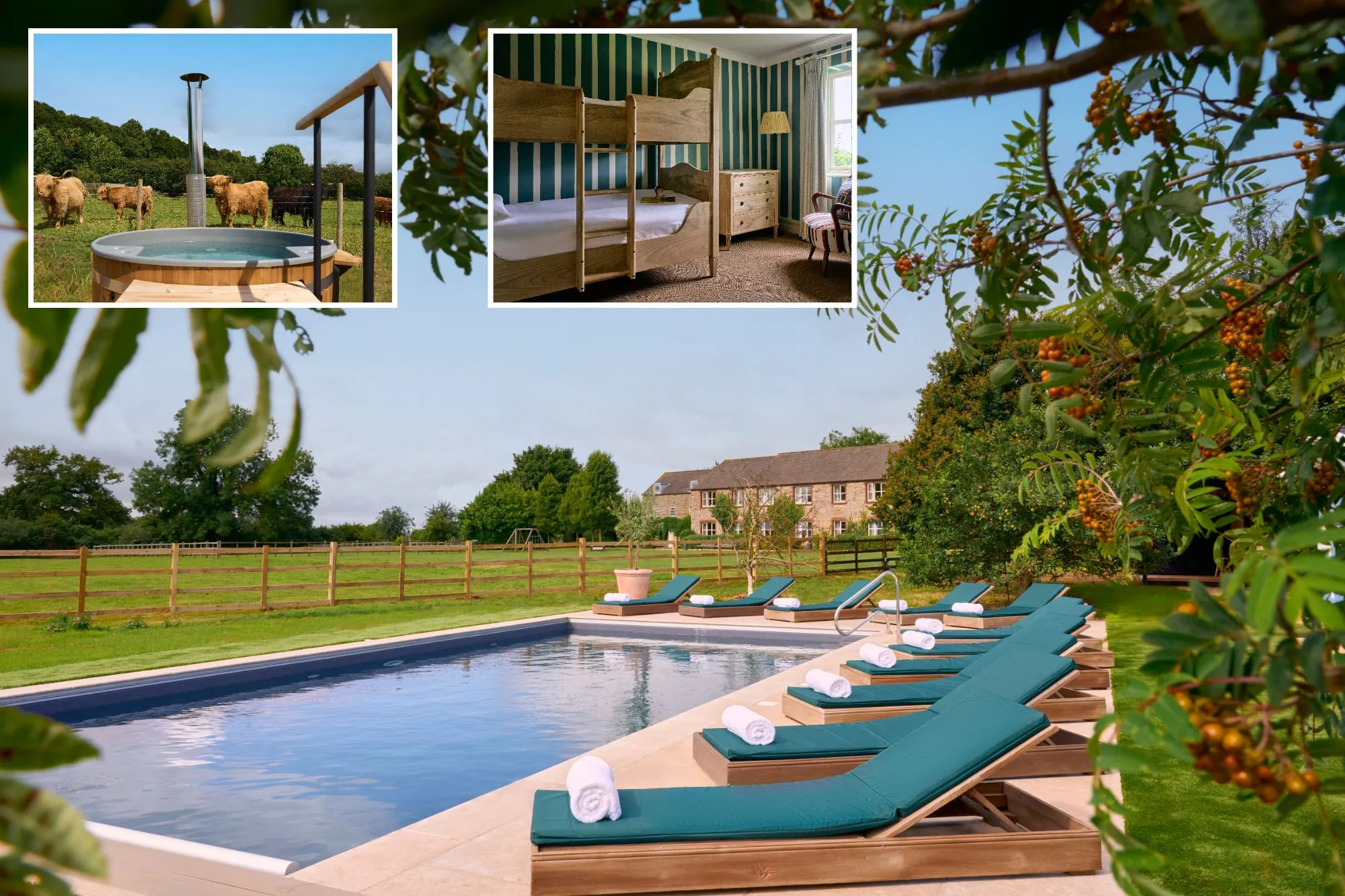
The Hide has appeared as the ‘great-value’ 2026 hotel stay by The TimesCredit: Chatsworth Escapes/The HideThe restaurant serves up all day dining, breakfast buffets and Sunday roast dinnersCredit: Chatsworth Escapes/The Hide
The Times has revealed its ’50 best places to stay in 2026′ and The Hide was declared the winner for ‘great-value’.
The cosy 19th century hotel was formerly a Premier Inn, before being converted and reopened in October 2025.
The Hide sits on the Chatsworth Estate in the rolling Peak District hills – so guests can enjoy magnificent views.
The Times praised it highly and said: “It’s laid-back and unpretentious while still offering Chatsworth hospitality including produce from the estate farm, curated art on the walls and bespoke textiles in the bedrooms plus hand-painted room numbers.”
It was awarded the title of ‘Great-value winner’ with rooms starting from £69.
They added: “The idea is that all are welcome – dogs, children, walkers in muddy boots.”
The hotel has a mix of bright and spacious rooms from doubles to triple, quad, bunk rooms and accessible ones too.
Each come with a double or king size bed, power shower and freeWi-Fi.
Meanwhile the triple or bunk rooms are suited towards families of three or four.
Guests can eat in from the All Day Dining menu available, with options such as fish and chips and beef and ale pie, as well as stone baked pizzas, burgers, steak, salads and BBQ ribs.
During the summer months, The Hide opens up its patio for outdoor dining with a pizza oven and BBQ.
There’s even a fire pit for s’mores – guests can get a sharing board for two for £10.
The breakfast buffet option starts from £15.95, or there are cook to order options including The Full Hide (essentially a full English).
There’s also a veggie option, pancakes and waffles too.
Rooms vary from cosy doubles to triple and bunk roomsCredit: Anna BatchelorThe restaurant offers Sunday lunches from £18 per personCredit: Chatsworthescapes/ TheHide
Sunday lunch is from £18 per person with a choice of Chatsworth beef, roast chicken, lamb or butternut squash, spinach and chestnut wellington.
As The Hide sits on the Chatsworth Estate, it’s easy for staying guests to explore the house.
Chatsworth House was built in the 1600s and famously appeared in the 2005 adaptation of Pride and Prejudice as Mr Darcy’s house, Pemberley.
It has also appeared on screen in The Duchess and Peaky Blinders.
Guests can buy a multi-entry ticket to Chatsworth to use throughout their stay, for less than the cost of a single day ticket.
This can be added to your booking or bought while at the hotel.
Chatsworth House is around a 15 minute drive away from The Hide.
On the grounds of Chatsworth House there’s also a farmyard and adventure playground.
On the estate is a farm and adventure playgroundCredit: Chatsworth Chatsworth House sits in the Peak District surrounded by countrysideCredit: Alamy
At the farm are small animals like pigs, horses, goats and guinea pigs.
The playground has ladders, a climbing wall, rope bridges and racing slides – there’s also a zip wire, swings, and a giant sand play area
Tickets can be bought from £10 for both adults and children.
Visitors strolling along the River Derwent will feel like they’re by the seaside as it’s lined with fish and chip shops, ice cream parlours and arcades.
You can get beautiful cliff-top views over the water, and there are boat parades too – also known as the Matlock Bath Illuminations.
The nearest city is Sheffield and it’s a 17-minute walk to Chesterfield.
A POPULAR seaside attraction will reopen later this month with two big changes – a new ride and free entry.
Adventure Coast Southport, which used to be known as Southport Pleasureland, will reopen on March 28 with a free-entry model.
Sign up for the Travel newsletter
Thank you!
Adventure Coast Southport will reopen later this month with free entryCredit: Google maps
The new system will mean you can access the attraction – which is one of the UK’s oldest seaside amusement parks – for free and pay-as-you-go for each ride instead.
The park will also feature a new ride, and while little details about the attraction have been revealed, CEO Norman Wallis said that it is “something really big”.
The Adventure Coast Southport team added it will be a “spectacular new addition” that will be visible as part of Southport’s coastline.
Full details of the ride are expected in due course, but visitors can expect a “brand new BIG 50metre showstopper ride arriving from Easter”.
Wallis added: “We are looking forward to welcoming visitors back for 2026 with a refreshed approach that puts flexibility for families first.
“By removing the entry fee, families can decide what works for them.
“They might come for a couple of rides, meet friends by the coast or make a full day of it.
“Guests often tell us they love coming back because every year it feels bigger and better.”
The park is split into four themed areas: Cartoon Boardwalk, Viking Landing, Steampunk Bay and Pirate Cove.
Across the different themed areas there are a number of different rides, starting from just £1 a ride.
For example, you can head on a ghost train, swing ride, flying chairs and dodgems.
There are also a number of arcades onsite to explore and gardens with waterfalls.
Visitors can grab food at the park, including new street food options like loaded fries – but you can also bring your own picnic.
Many locals have welcomed the news of free entry on social media with one person commenting: “So glad it’s gone back to free entry and just pay for what you want, better for people with only a certain amount to spend.
It also is launching a new 50metre rideCredit: Google maps
“Also grandparents can now join in and watch grandkids ride.”
The park is also dog-friendly, has onsite parking and will be open every weekend and daily during the school holidays, from 11am.
If you want to extend your stay and explore more of Southport, then there is a motorhome site that is part of the park where you can pitch your caravan or camper van for £24 a night.
Then, just across the road from Adventure Coast Southport is Splash World waterpark.
It costs £16.20 per person to visit and includes three slides and a lazy river.
You can also head for a stroll along Southport Beach and see the pier, which is the second longest in the UK but currently closed.
Though, the Victorian pier is due to undergo £20million repairs starting this year.
YOUR holiday sangria or paella could be much more expensive on your next trip to the Spanish islands.
Officials have said that destinations like the Canaries and Balearics will experience a price hike when it comes to food and drink because of the ongoing conflict in the Middle East.
Sign up for the Travel newsletter
Thank you!
Price of food and drink on popular Spanish islands are set to increaseCredit: AlamyThe increasing price of fuel will impact goods heading to the Canary and Balearic IslandsCredit: Alamy
The Spanish islands are incredibly popular with Brits, especially during the summerholidays.
The Canary Islands welcomes up to six million British tourists each year and it’s where you’ll find the likes of Tenerife and Lanzarote.
Meanwhile, around three million tourists visit the Balearics – with over two million heading to Majorca alone.
Both locations are popular thanks to their high temperatures and direct flights from multiple locations across the UK.
Now, industry chiefs have said the increase in cost of food and drink at these destinations will be worse than 2022 when prices shot up after the war in the Ukraine began.
Urgent meetings are already being held in the Balearic Islands and in the Canaries which are very dependent on imports due to their more isolated locations.
In July 2022, inflation climbed to 10.8 per cent in Spain.
President of the Association of Food and Beverage Distributors of the Balearic Islands, Mr Bartolomé Servera is warning of severe increases, which will depend on the duration of the crisis in Iran.
Mr Servera said the new impact will be much greater if the conflict is prolonged as the weight of the Middle East is much greater, especially through the Strait of Hormuz, through which 20 per cent of oil and gas pass.
Mr Servera says carriers have already begun to raise prices because the price of fuel has skyrocketed.
Brits flock to the likes of Majorca each year with around two million visitingCredit: Alamy
Diesel has risen by 32 cents per litre, around 22 per cent; while Gasoline 95 has become between 18 and 20 cents per litre more expensive, which represents 12 per cent.
In addition, it is not ruled out that the barrel of Brent will continue to rise: this Wednesday (March 11) it is around 90 dollars, but this past Monday (March 9) it was close to 120 dollars.
This is likely to then effect everything on the island from hotels and resorts.
The association president said “Milk, eggs, bread, fruit will rise.
“Everything needs fuel for its production or transport, so they will not escape the escalation of costs and producers will have to pass them on to consumers.”
The Canary Islands also fear soaring prices and will meet with transport leaders shortly.
President of the Cabildo de La Gomera, Casimiro Curbelo said official need to be monitoring the impact of the war on the islands and prepare contingency plans.
The Government of the Canary Islands says it is “very attentive” to the consequences of the war in the Middle East and plans to hold a meeting with the transport sector in the coming days in view of the increase in fuel prices.
Faced with this situation, the Government of Spain is working on an aid package, as it did at the beginning of the war in Ukraine, to alleviate the looming rise in prices.
BRITAIN’s third busiest airport has shut one of the terminals for good.
The terminal, which first opened in 1962, has closed as part of the airport’s £1.3billion transformation.
Sign up for the Travel newsletter
Thank you!
Manchester airport is closing down its Terminal 1Credit: Alamy
Manchester airport is turning into a two-terminal operation under the new layout.
All airlines have moved into the expanded Terminal 2, which now handles more than 75% of passengers, while Ryanair flights will operate solely from Terminal 3.
Chris Woodroofe, managing director of Manchester Airport, said: “While this is the end of an era for Terminal 1, it’s really the start of a whole new chapter for Manchester Airport.
“We’re proud to connect the North to the world and our £1.3bn investment in Terminal 2 means that we’re now bigger and better than ever – serving our passengers in a setting that rivals any airport Terminal across Europe.
“It’s also allowing us to continue our growth and operate more flights to more destinations every single day. And we’ve achieved this at the same as making things more simple and straightforward for our passengers.
The closure also frees up space for new facilities at the airport, including hundreds of extra seats, a new bar called Sporting Chance and an Italian restaurant.
More than 2,000 signs across the airport have been replaced to reflect the changes, alongside a new parking system where all car parks are labelled P1 to P16 to make them easier to find.
The redevelopment forms part of the long-running Manchester Airport Transformation Programme, launched in 2015 to modernise the airport for future growth.
The first phase of the revamped Terminal 2 opened in 2021, with the full expansion completed in 2025, paving the way for Terminal 1 to be decommissioned.
The overhaul comes as Manchester Airport continues to grow, serving a record 32 million passengers in 2025.
This February has become the busiest on record with more than 2.05 million travellers.
The HM Passport Office has issued a warning to Brits about passport checks they must carry out well in advance of any impending holidays over spring and summer
10:30, 12 Mar 2026Updated 10:38, 12 Mar 2026
HM Passport Office has issued a warning to holidaymakers (Image: Getty Images)
HM Passport Office has issued a warning to Brits ahead of the peak travel season.
With the Easter half-term just weeks away and plans already made for a summer getaway, thousands of holidaymakers will be jetting off abroad during one of the busiest travel periods. To ensure their journey gets off to a flying start, Brits are being urged to check their passports; otherwise, they risk being turned away at the airport.
In a stark reminder, the HM Passport Office advised Brits to “check your passport now” in a post shared on X, ahead of any spring or summer trips. A link in the post directed travellers to the government website, where they can apply online to renew, replace, or update their passports.
There are two key dates you should check on your document; the expiry date, and the issue date, especially if you’re planning to head to a European hotspot such as France, Spain or Greece. This is because of a post-Brexit regulation on travel to the European Union or Schengen countries, which stipulates that UK passports must have been issued less than 10 years before your departure and must be valid for at least 3 months after your return.
Meanwhile countries such as Australia, China, Thailand, the United Arab Emirates, Indonesia, and India require at least 6 months of passport validity from the date of arrival. It’s vital to check any entry requirements and passport validity before making any travel plans.
You must also ensure your passport has not been physically damaged, as this may render it invalid. This could include ripped pages, water damage, separated covers, or anything else that might make the personal information difficult to read.
Travel expert Jamie Fraser at Wild Packs warned that the general wear and tear of a passport can also be problematic when passing through automated scanners or at airport border control points. So it’s vital to check that your passport is in good condition, or if you need to apply for a replacement.
There must also be a blank page at the back of the passport for any necessary stamps or visas. If the passport is crammed with stamps from past trips, it could create problems at the border if there aren’t enough blank pages, leaving you unable to travel.
If your passport has expired or needs to be replaced, you can apply for a new one through the government website. However, it’s crucial to do it well in advance, as it can take around three weeks and sometimes longer.
There are fast-track passport services available, but Jamie cautioned that these are not “always guaranteed and appointments can be limited during peak travel periods”. HM Passport Office also advised: “Do not book travel until you have a valid passport – your new passport will not have the same number as your old one.”
To renew or replace your standard passport online, it will cost £94.50, or £107 if you opt for a paper application. Meanwhile, a child’s passport will cost £61.50 online or £74 by post.
Do you have a travel story to share? Email webtravel@reachplc.com
Hannah Britt and her family fell in love with Scotland while on a road trip through the highlands in a Skoda Superb Estate SportLine 2.0 – here’s how you can do the same
10:07, 12 Mar 2026Updated 16:09, 12 Mar 2026
This article contains affiliate links, we will receive a commission on any sales we generate from it. Learn more
Hannah, John, Molly and Poppy loved their road trip through Scotland
When you think of a Scottish road trip, what comes to mind? The NC500 probably. Two children aged six and one… probably not so much. And yet I’m here to tell you that it can be done, all it takes is the right car – and lots of snacks. A frequent yet fearful flyer last summer I became a convert to the good old family road trip when we borrowed a Skoda Kodiaq vRS and drove from our home in Manchester to France. Being able to get there under our own steam and haul 35 tonnes of equipment for the children was a gamechanger. I was chomping at the bit to do it again. So you can imagine my delight when my pals at Skoda got in touch again, offering to lend us a Superb Estate SportLine 2.0 this time – if we drove it to Scotland. My partner John’s bags were packed before I’d finished asking if he wanted to go.
The Superb is a long and spacious family car. You won’t get into a small parking space, but boy can you cram it full of stuff. It’s quite low to the ground, meaning those of us over 30 will make an oof noise getting in and out, but it feels how I imagine Lewis Hamilton must in his F1 car. I loved it right away.
As we set off from our home in Manchester, the four of us settled in – me, John, six year old Molly and one year old Poppy. Our route would take us to Langbank near Glasgow, where we would stay the night at Gleddoch Golf and Spa Resort, before continuing on the next day to Cameron House on Loch Lomond. From there we would loop up through Glencoe to Oban, before driving back home via Loch Lomond once more.
As was now customary, John did most of the driving with me the passenger princess and queen on snacks, handing out Pringles and Haribo on demand and restarting Golden from the K Pop Demon Hunters soundtrack each time it dared to stop. The Skoda’s big sat nav screen made it easy to work out where to go, and its built in black out screens allowed Molly and Poppy to doze off.
Four hours later, with just one stop to walk off a tantrum (not mine, promise), we arrived at Gleddoch, on the banks of the Clyde. I was impressed with this golf hotel, which welcomed children with open arms. Our room, a Residence Four Poster, was newly renovated, with a sleek bathroom, view out over the water, sofa bed for Molly and – as the name suggests – a gargantuan four poster for her parents. Arriving with fussy kids, we ate in the room, and the food was lovely, with a good kids menu and an excellent wine list.
But the jewel in Gleddoch’s crown is the Imperia spa, a newly opened, multimillion pound delight. It recently won the accolade of “best new spa” and, once I tore myself away from my family, I had a sublime old time checking it out. The space boasts the UK’s largest outdoor sauna with panoramic views over the estuary and rolling Renfrewshire hills to Ben Lomond.
Children are not allowed in the pool at all, which was a shame for me – but a bonus for the other guests who didn’t have to endure their spa time with a side of my little ones’ splashing. In the morning, I sat down in Gleddoch’s cosy Dram whisky and gin bar to do some work, before packing our rabble back into the Skoda to head to our second stop, 30 minutes away – Cameron House on Loch Lomond.
Now, Cameron House is a Scottish institution. Barack Obama has stayed here. Guests don’t really get cooler than that. And the moment you arrive it’s easy to see why it’s so beloved. Sweeping the Skoda up to the hotel, which sits right on the water, we were immediately greeted by a valet, who whisked the car off to park it and brought in our bags. Good lord, the crumbs, I thought to myself as the chic valet sat himself down on two days worth of digestive biscuits.
Inside, Cameron House is stylish, cosy and unmistakably Scottish, with nods to its rich heritage in everything from the pictures on the walls to the tartan prints of the cushions. Staff remember names, coffee orders and chatted to the children as if they were long lost friends. It’s a home from home – albeit an incredibly luxurious one.
The food is delicious, whether you choose to eat in the Michelin-starred Loma by Greme Cheevers, the Tavern, the Great Scots Bar, or anywhere in between. The room service is good too, and the chefs are happy to rustle up anything your little one desires off menu. Our room, a family suite, was spacious, sparklingly clean and modern, with an undisturbed view of the Loch.
Cameron House has a brilliant adults-only spa, which I’ve heard is exceedingly relaxing. However during my time at the hotel, I was to be found in the large family pool. With floor to ceiling windows out onto the grounds, areas shallow enough for Poppy to paddle in and areas deep enough for Molly to swim, and with a large and genuinely fun water slide, there was enough to keep everyone entertained for hours. When we finally tempted the children outside, a falconry lesson was equally enthralling. The next day, our be-crumbed valet returned the Skoda to us and waved us on our way to Oban – via Glencoe.
Glencoe is a stunning, historic glen in the Scottish Highlands, renowned for its dramatic, volcanic, and glacial landscape. It is a premier spot for hiking, mountaineering, and – luckily for us – scenic drives, often featured in films like Harry Potter and James Bond. From Loch Lomond to Glencoe takes around 90 minutes, and there’s an excellent visitor centre to greet you once you arrive, with nappy changing facilities, a shop selling various miniature models of highland cow, and a cafe that makes a good flat white.
The Glencoe drive is best done slowly, to ensure one takes in the insanely gorgeous scenery, and to make sure you don’t miss the turning down Glen Etive Road. The “Skyfall” road is the single-track B8074, famous for the scene where Bond (Daniel Craig) and M (Judi Dench) stop with the Aston Martin DB5 against the backdrop of Buachaille Etive Mòr. The spot is roughly halfway along the 12-14 mile road. I didn’t have an Aston Martin, but one better – my Skoda.
Another 50 odd minutes later and we arrived at the furthest point of our road trip – Oban. Or to be precise, Rhunacairn, a little Sykes Cottages house on the banks of Loch Etive, a couple of miles out of the town. Down a tiny road, with just one other house nearby, it was a white washed child’s drawing of a house, set in the most stunning scenery imaginable.
Sat next to a mussel farm, the house had all we needed for the next few days – a swing, a log burner and sea otters in the water outside. It was absolutely idyllic – a real find. And while we did go into Oban to sample the delights of the seafood capital of Scotland – and to buy a bottle of local whisky – I must admit the house had a magic to it that I was loath to leave. Before we left we began plotting our return, wondering which Skoda might fit paddleboards and fishing rods for a summer staycation.
1. Plan Ahead – Time journeys around naps, mealtimes, or toilet breaks to reduce stress and disruption to routines.
2. Leave at Nap Time – If you can, start longer journeys when little ones are most likely to sleep.
3. Entertainment is Key – Mix up old-school games like I Spy with sticker books, reusable window stickers, or magnetic boards.
4. Car-eoke – A family singalong is a fun way to pass the miles (and yes, Disney soundtracks count!).
5. Tech Can Help – Tablets on headrests with headphones make for a peaceful drive when everyone needs downtime – don’t feel bad or guilty for using them, but be clear about the boundaries on using them and use them more as a last resort, rather than the default.
6. The Quiet Game – When things get noisy, challenge the kids to see who can stay quiet the longest.
7. Snacks & Drinks – Pack snack boxes for older children and keep drinks in the front with you to avoid unnecessary stops for the loo when they have necked a whole bottle of water! Be very mindful of giving younger children snacks if an adult is not sitting in the back with them, as it is a choking hazard!
8. Safety First – Use child locks, remind kids about seatbelt safety, and follow The Lullaby Trustadvice on babies sleeping in car seats.
9. Be Prepared – Keep wipes, tissues, and the nappy bag within easy reach. Blankets and comfy clothing are also essential.
10. Break It Up – If traffic hits or the car gets tense, don’t be afraid to stop somewhere safe, stretch legs, and reset before heading off again.
In 1936, Irish Bostonian entertainment lawyer Tom Bergin founded L.A.’s first Irish pub, the Old Horseshoe Tavern, on Wilshire Boulevard. The bar was later renamed in his honor and relocated to its current Tudor Revival-style building off Fairfax Avenue in 1949.
The tavern claims to have introduced Irish coffee to the U.S. — though some argue that San Francisco’s Buena Vista Cafe holds that title. Either way, Tom Bergin’s is one of the oldest bars in continuous operation in L.A. and boasts the second-oldest liquor license in the city. And its Irish coffee is still one of the best you’ll find.
Today, L.A.’s Irish pub tradition extends to Santa Monica, Long Beach and Woodland Hills, with many founded by Irish immigrants seeking to bring a bit of their homeland to the West Coast in the form of Guinness pints, corned beef and cabbage and traditional Irish folk music.
Whether you’re celebrating St. Patrick’s Day or just looking for somewhere to split the G, here are 13 Irish pubs to check out in L.A. — Danielle Dorsey